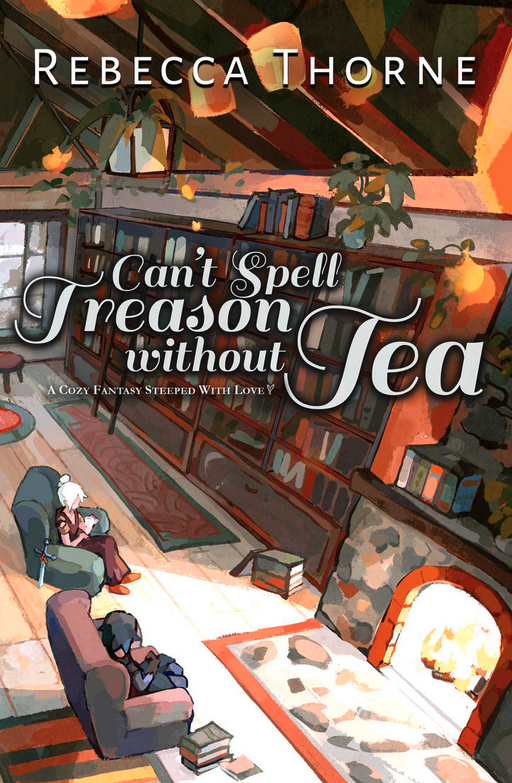
Book Review: Can’t Spell Treason Without Tea (Tomes & Tea, #1) by Rebecca Thorne

Title: Can’t Spell Treason Without Tea
Series: Tomes & Tea, #1
Author: Rebecca Thorne
Publisher: Bramble
Publication date: September 15, 2022
Length: 345 pages
Genre: Fantasy
Source: Purchased
Rating:

Rating: 3.5 out of 5.

“You like tea. I like books. Care to open a shop and forget the world exists?”

All Reyna and Kianthe want is to open a bookshop that serves tea. Worn wooden floors, plants on every table, firelight drifting between the rafters… all complemented by love and good company. Thing is, Reyna works as one of the Queen’s private guards, and Kianthe is the most powerful mage in existence. Leaving their lives isn’t so easy.

But after an assassin takes Reyna hostage, she decides she’s thoroughly done risking her life for a self-centered queen. Meanwhile, Kianthe has been waiting for a chance to flee responsibility–all the better that her girlfriend is on board. Together, they settle in Tawney, a town nestled in the icy tundra of dragon country, and open the shop of their dreams.

What follows is a cozy tale of mishaps, mysteries, and a murderous queen throwing the realm’s biggest temper tantrum. In a story brimming with hurt/comfort and quiet fireside conversations, these two women will discover just what they mean to each other… and the world.

Author Rebecca Thorne states clearly in her author’s notes that she was inspired by Travis Baldree’s Legends & Lattes… and the footprints of that cozy fantasy can be seen all over Can’t Spell Treason Without Tea.

If you’re a fan of the cozy fantasy genre, then prepare for delight — all the genre’s major beats are here: Renovations, baking, steeping tea, lots of books, settling in a new town, finding community… Can’t Spell Treason has them all!

And yet, despite treading familiar ground, this sweet book is still quite lovely to read. It may not be 100% new or different, but the author take the basics of the genre and spins a charming tale of love, magic, and adventure, with characters to care about… even if, most of the time, the stakes are either relatively low or easily overcome.

Reyna is one of the Queensguard, raised from birth to protect the (terrible) Queen at all costs, including sacrificing her own life, if necessary. Kianthe is the Arcandor, the most powerful mage in the land. After a chance meeting at the palace, they’ve fallen in love, but neither has the ability to choose a life together. Or do they?

After one particularly violent incident, Reyna has had enough. All she wants is the life she and Kianthe have been fantasizing about for two years. It doesn’t take much (or any) convincing for Kianthe to agree to run away with Reyna and build a life together, one where they’ll open a tea and book shop and live happily ever after.

It’s easier for Kianthe — she’s the Arcandor and can do whatever she likes. Sure, the other mages aren’t thrilled that she’s not going to live full-time at the Magicary any longer, but she’ll still be available to carry out her duties. Reyna is actually committing treason by leaving the Queen’s service without permission (which would not be given, even if asked; hers is a lifetime post). She knows that eventually, someone may track her down, but for now, she’s determined to pursue happiness with the love of her life.

We get long stretches of Kianthe and Reyna finding an unused barn in a remote town near the border with dragon country, then renovating it, stocking it, and opening up their business, which immediately draws the community together. It’s very sweet, but not exactly full of drama.

Eventually, there’s more action as Kianthe saves the town from a dragon attack and figures out why they’ve been attacking, ultimately committing to a quest on behalf of the dragons (which sets up the plot for the next book). Plus, Reyna is eventually discovered, and must find a way to avoid execution for treason — lots of negotiations ensue.

All in all, this is indeed a cutely cozy fantasy, which kept me entertained despite the overall fluffy nature of the story. The characters are quite fun. Gotta love how Kianthe, most powerful mage in the land, is at her most gleeful when she’s making simply awful puns — it’s actually quite charming:

The mage paused. “Sorry. This is sappy.”

“Is that a tree pun?” Reyna’s tone was bone dry.

“Maybe. But don’t worry, I’ll leaf it at that.”

The story beats, while having a familiar feel, still manage to entertain and introduce plenty of nice little moments along the way.

If you’re looking for a bit of uplifting joy in fantasy form — with tea and a bookshop — this book makes a very nice reading diversion. I enjoyed it enough to want to continue with the series.

Up next:

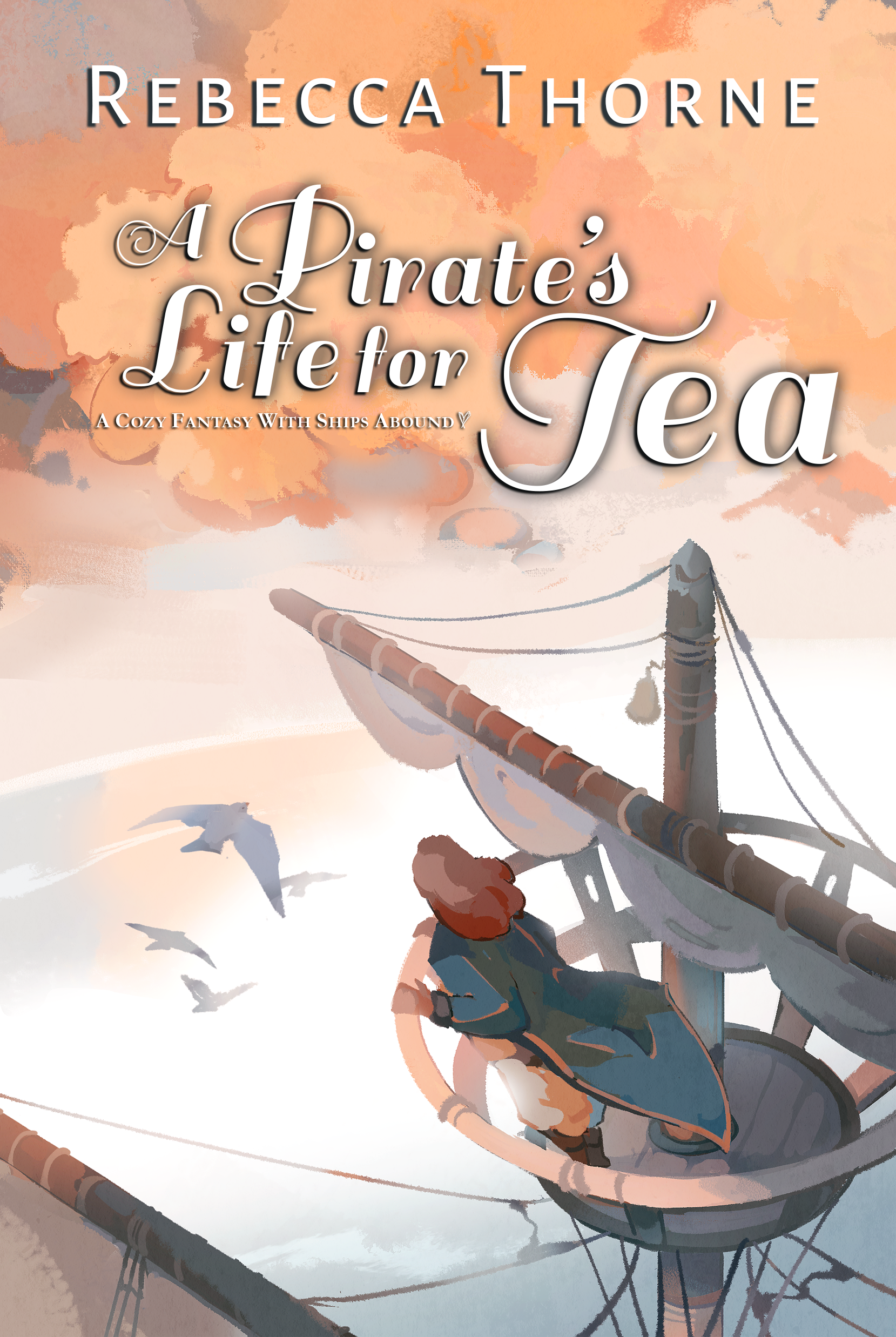
Tomes & Tea, #2: A Pirate’s Life for Tea

Purchase linksAmazon – Bookshop.orgLibro.fm
Disclaimer: When you make a purchase through one of these affiliate links, I may earn a small commission, at no additional cost to you.
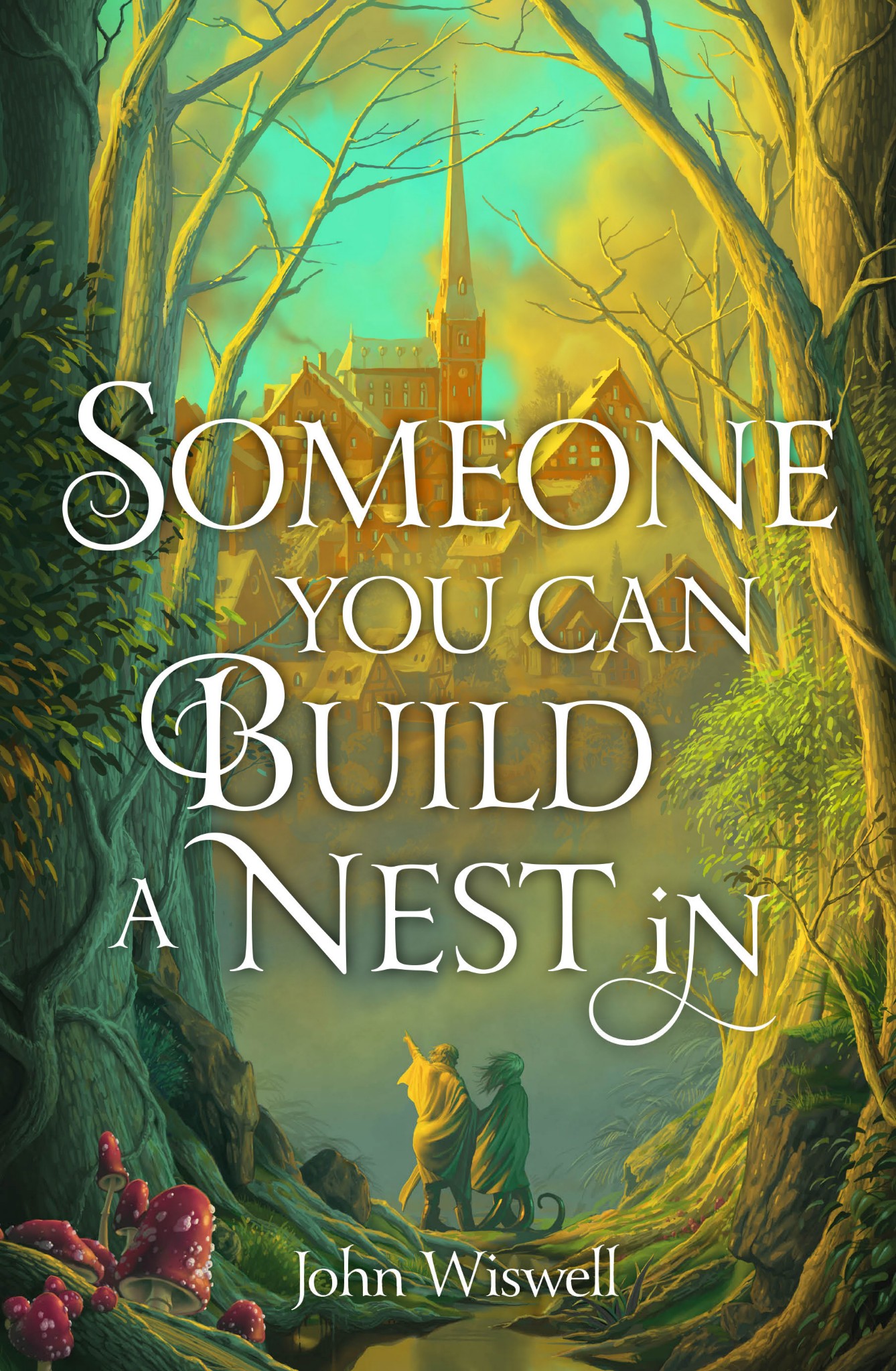
Book Review: Someone You Can Build a Nest In by John Wiswell

Title: Someone You Can Build a Nest In
Author: John Wiswell
Publisher: DAW
Publication date: April 2, 2024
Length: 310 pages
Genre: Horror/fantasy
Source: Purchased
Rating:

Rating: 2.5 out of 5.

Discover this creepy, charming monster-slaying fantasy romance—from the perspective of the monster—by Nebula Award-winning debut author John Wiswell

Shesheshen has made a mistake fatal to all monsters: she’s fallen in love.

Shesheshen is a shapeshifter, who happily resides as an amorphous lump at the bottom of a ruined manor. When her rest is interrupted by hunters intent on murdering her, she constructs a body from the remains of past meals: a metal chain for a backbone, borrowed bones for limbs, and a bear trap as an extra mouth.

However, the hunters chase Shesheshen out of her home and off a cliff. Badly hurt, she’s found and nursed back to health by Homily, a warm-hearted human, who has mistaken Shesheshen as a fellow human. Homily is kind and nurturing and would make an excellent co-parent: an ideal place to lay Shesheshen’s eggs so their young could devour Homily from the inside out. But as they grow close, she realizes humans don’t think about love that way.

Shesheshen hates keeping her identity secret from Homily, but just as she’s about to confess, Homily reveals why she’s in the area: she’s hunting a shapeshifting monster that supposedly cursed her family. Has Shesheshen seen it anywhere?

Eating her girlfriend isn’t an option. Shesheshen didn’t curse anyone, but to give herself and Homily a chance at happiness, she has to figure out why Homily’s twisted family thinks she did. As the hunt for the monster becomes increasingly deadly, Shesheshen must unearth the truth quickly, or soon both of their lives will be at risk.

And the bigger challenge remains: surviving her toxic in-laws long enough to learn to build a life with, rather than in, the love of her life.

This icky, squicky, plain old weird fantasy/horror novel has won a ton of awards, is gushed over by many authors who I admire, and yet… it left me cold and basically speeding through the 2nd half just for the sake of being done.

Someone You Can Build a Nest In starts off strong, with a fascinating narrative voice that randomly throws in something gross to cap off a paragraph or passage in an unexpected way.

Her father’s ribs, rich in marrow, cracking delicately in their mouths, and providing the first feast of their lives. His fat deposits were generous, and his entrails sheltered them from the cruel winter elements.

Shesheshen (what a name!) is some ill-defined creature, mostly slime that can form itself into different shapes, and can build itself a body by absorbing raw materials (iron chains, sticks, animal bones) into itself and forming itself a skeletal structure. Shesheshen has early memories of how delicious it was to consume the father in whose body she developed from an egg, loving how much nutrition he provided, and later eating the siblings growing alongside her as well.

When Shesheshen’s hibernation is rudely interrupted by a trio of monster hunters seeking the infamous Wyrm of Underlook, she fights back, fends them off, and realizes she’d better construct herself a body to defend herself with and figure out what’s behind this newest human attack. As she learns, the hunters were sent by the Baroness of Underlook, a brutal woman whose children have been raised with the sole purpose of slaying the wyrm and ending its curse on their family. (Shesheshen is confused — sure, you could call her a wyrm if that works for you, but there’s no such thing as curses, and she certainly hasn’t cursed anyone).

The one exception to the Baroness’s cruel pack of offspring is her daughter Homily, who seems torn between carrying out her mother’s orders and following her inner sense of compassion. When Homily stumbles across a severely injured Shesheshen (in human disguise), she tends her wounds, comforts her, and stirs up something unusual for Shesheshen: feelings, possibly even affection.

Of course, Shesheshen has a hard time understanding her attraction at the start:

She had a husky, stuffy-sounding voice, like her sinuses were packed. Yet her tone was accustomed and comfortable with itself, so this clearly wasn’t allergic irritation. It gave the woman’s words a bawdy rasp, which enticed Shesheshen. People who sounded like that had the most delicious-tasting heads.

But over time, it’s clear that there’s much more between these two:

True love was a woman sinking up to her elbows in her viscera, delicately removing hooks from her rigid tissues.

I chuckled — a lot — during the introductory chapters, enjoying the odd wordplay and sheer absurdity of the human-eating main character.

On a rack beside the door was a set of wigs she’d made from the scalps that people hadn’t been using anymore.

And yet… as the plot revolves around Shesheshen posing as human, trying to evade the Baroness’s mad pursuit, and scene after scene of battles and confrontations… I was bored. Once the narrative language stopped being new and surprising, there just wasn’t a good enough story for me to invest in.

The relationship between Shesheshen and Homily is awkward, the endless battles and threats become tedious, and honestly, after a while I just didn’t care. As I mentioned at the start, by the time I got even close to the halfway mark, I couldn’t wait to be done, and forced myself to plow through until I reached the end. (If I hadn’t purchased a paperback edition earlier in the year, I would likely have DNFd this one, but I just couldn’t bring myself to DNF a book I actually own!)

An interesting premise and clever language couldn’t save this odd book for me. Reading it felt like a chore. If you’re at all interested in this book, I’d recommend taking a look at the Goodreads reviews — it has an overall rating of 3.92 and lots of glowing comments from readers and well-regarded authors. Clearly, I’m in the minority on this one!

Purchase linksAmazon – Bookshop.org – Libro.fm
Disclaimer: When you make a purchase through one of these affiliate links, I may earn a small commission, at no additional cost to you.

Final note: I just stumbled across the UK version of this book, and I can’t get over how different the vibe is:

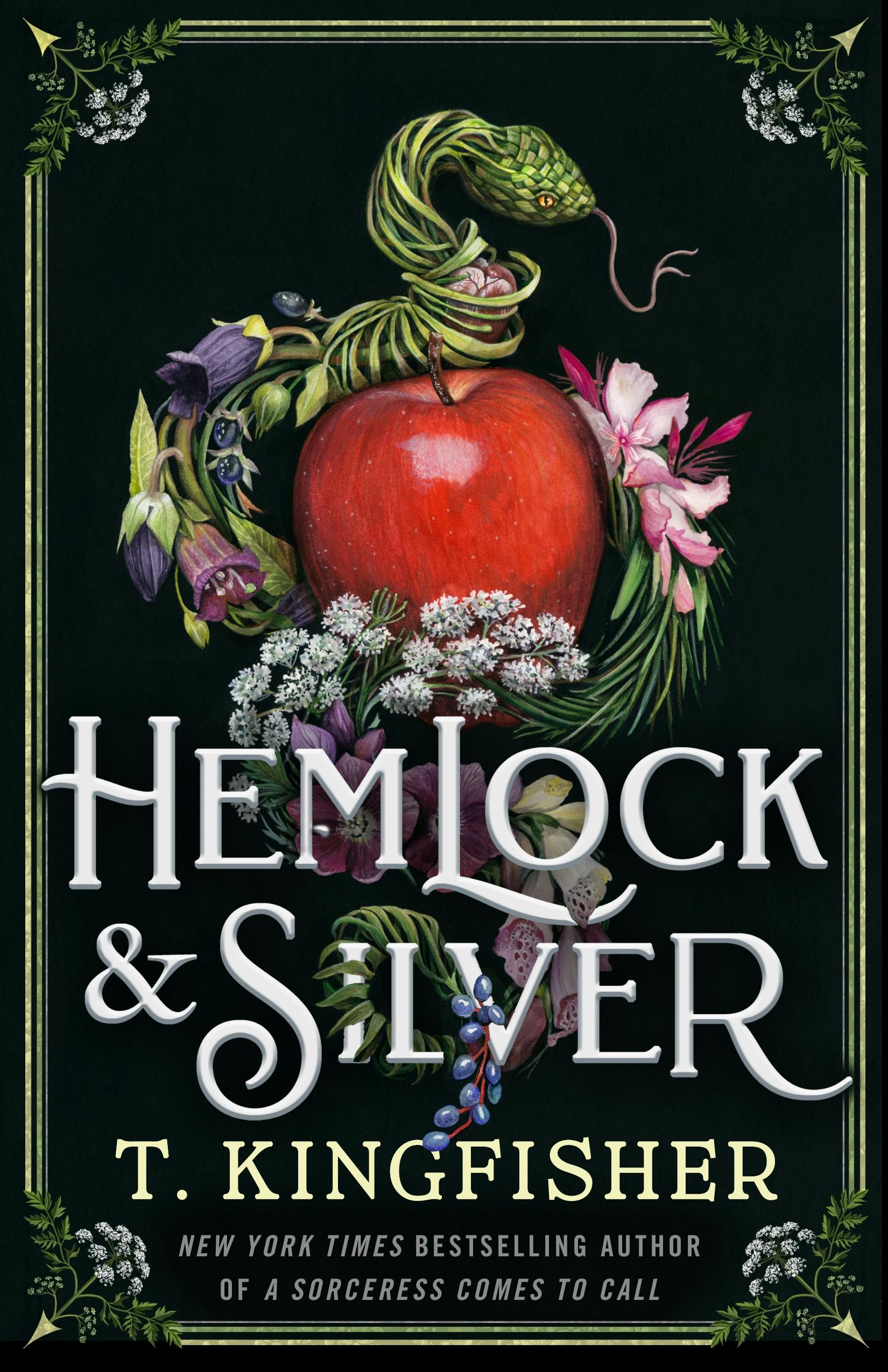
Book Review: Hemlock & Silver by T. Kingfisher

Title: Hemlock & Silver
Author: T. Kingfisher
Publisher: Tor
Publication date: August 19, 2025
Length: 368 pages
Genre: Fantasy
Source: Review copy courtesy of the publisher via NetGalley
Rating:

Rating: 4.5 out of 5.

From New York Times bestselling and Hugo Award-winning author T. Kingfisher comes Hemlock & Silver, a dark reimagining of “Snow White” steeped in poison, intrigue, and treason of the most magical kind.

Healer Anja regularly drinks poison.

Not to die, but to save— seeking cures for those everyone else has given up on.

But a summons from the King interrupts her quiet, herb-obsessed life. His daughter, Snow, is dying, and he hopes Anja’s unorthodox methods can save her.

Aided by a taciturn guard, a narcissistic cat, and a passion for the scientific method, Anja rushes to treat Snow, but nothing seems to work. That is, until she finds a secret world, hidden inside a magic mirror. This dark realm may hold the key to what is making Snow sick.

Or it might be the thing that kills them all.

T. Kingfisher’s fairy tale retellings have become favorites of mine, and Hemlock & Silver is a great addition to this growing collection.

In this slightly off-kilter reinterpretation of the Snow White story, our main character is Anja — a large, plain-spoken woman in her mid-thirties who’s devoted her life to learning everything there is to know about poisons and how to cure them. She’s not a traditional healer: Don’t expect her to mend your broken bones! But if a snake-bite or opium overdose is the problem, she’s the one person most likely (but not guaranteed) to be able to offer even a glimmer of hope.

Anja’s relatively quiet life in a small desert town is upended when the king himself unexpectedly shows up in her workroom one day. He needs Anja’s help: His 12-year-old daughter Snow is fading away, and he suspects poison. Her mother and sister are already dead, and he can’t lose Snow as well — but with the possibility that someone in his court is secretly a poisoner, he needs an outsider’s help. Anja has no choice but to agree to accompany the king and his retinue to the villa where Snow suffers. If it truly is a poisoning case, then perhaps Anja really can make a difference — although she fears what it could mean for her family if she were to fail.

Snow’s case is puzzling and Anja makes little progress until she discovers Snow secretly eating some odd-looking apples. Anja takes a piece to test, and after trying it herself, accidentally finds herself falling against — and through — one of the vast mirrors that seem to be everywhere within the villa. There, Anja discovers a mirror world full of danger and horrific creatures, and learns that the threats against Snow are even more dire than anyone could have imagined.

Anja is a wonderful main character, her lack of tact balanced by her professionalism, honesty, and practicality.

The problem with being plump, middle-aged, and a woman was that people expected you to be motherly, as if that was your default state. I am not. I am actually terrible with children. On the other hand, I have saved the lives of multiple toddlers who licked flypaper, which I feel should count for something

Anja is joined in her desperate quest by her gruff guard Javier — who is steady and supportive, despite communicating mainly in grunts — and an especially delightful and supercilious cat named Grayling, who is able to speak with Anja and has attitude for miles.

“Are you sure I haven’t gone mad?” I asked.

“Your questions are remarkably unoriginal ‘Am I mad, is this a dream, oh no, what’s going on, why is this happening?'” He gazed off into the distance as if I were no longer worth considering

Strange as it sounds, this stung a bit. It’s one thing to know that a cat holds you in mild contempt, quite another to have it actually insult you in language you can understand.

The otherworldly adventure in the mirror world is eerie and unsettling, and there are moments that move this fantasy story toward a horror vibe as Anja discovers something that will give her (and all readers, I suspect) some lasting nightmares:

… the hands reached out and went creeping over the floor, dragging sections of arm behind them. The faces lay tumbled across each other, in a pile that blinked and twitched and moved, the corners of mouths working madly as if in pain.

Shudder.

But even this creature has some unexpected twists in store — the author seem to delight in setting up scenarios that have a hint of familiarity from other stories, then turning them upside down and having them come out completely different in feel and meaning.

Hemlock & Silver provides a fairy tale foundation, then builds upon it to include fascinating characters and a new, distinct story arc, with high stakes and imaginative dangers. I did find the back and forth between the real world and the mirror world occasionally hard to follow… but then again, I was slightly under the weather when I read this book, so this could be a case of “it’s not you, it’s me”.

Overall, I thoroughly enjoyed Hemlock & Silver. It’s not every book that can make you laugh out loud on one page, leave you entirely creeped out on the next, and provide a baffling array of twists and turns to confuse readers before tying the plot up with a convincing conclusion.

Highly recommended!

Purchase linksAmazon – Bookshop.orgLibro.fm
Disclaimer: When you make a purchase through one of these affiliate links, I may earn a small commission, at no additional cost to you.

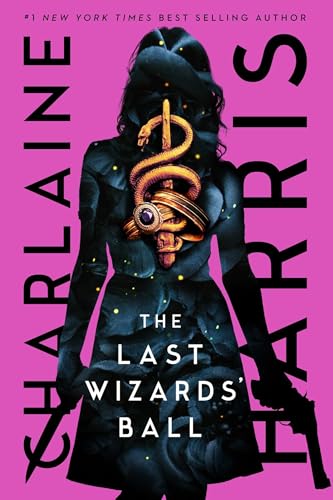
Book Review: The Last Wizards’ Ball (Gunnie Rose, #6) by Charlaine Harris

Title: The Last Wizards’ Ball
Series: Gunnie Rose, #6
Author: Charlaine Harris
Publisher: Saga Press
Publication date: July 22, 2025
Length: 272 pages
Genre: Fantasy / speculative fiction
Source: Review copy courtesy of the publisher via NetGalley
Rating:

Rating: 4 out of 5.

#1 New York Times and USA TODAY bestselling author Charlaine Harris returns with the sixth and final installment in the critically acclaimed Gunnie Rose series as sisters Lizbeth Rose and Felicia must face their fates at the last Wizards’ Ball.

Lizbeth Rose’s sister Felicia attends the Grand Wizards’ Ball, and as one of the most powerful—and beautiful—death wizards in a generation, she is highly sought after as one of the belles of the ball.

However, war and violence are on the rise in Europe as German and Japanese wizards are also courting Felicia…and some are refusing to take no for an answer.

As the façade of genteel wizard society turns deadly, Lizbeth must learn to not only protect her sister, but also navigate the arcane world that is pulling her sister and husband into a dangerous dance with death that could change the world as they know it.

#1 New York Times and USA TODAY bestselling author Charlaine Harris has crafted a murderous and magical family drama in this sixth and final installment to the beloved and bestselling Gunnie Rose series.

As if there were any doubt… Charlaine Harris knows how to tell a story! As the Gunnie Rose series demonstrates so well, this author is a master when it comes to creating fascinating new worlds, familiar yet decidedly other, and filling them with characters we readers can’t help getting involved with.

The Last Wizards’ Ball is the sixth and final book in the Gunnie Rose series. To provide a quick refresher/overview: The Gunnie Rose series takes place in an alternate world in which the United States fractured during the 1930s. The continent is now divided into separate, independent countries, among them the Holy Russian Empire (our California and Oregon), New America, Dixie, Britannia, and Texoma (our Texas and Oklahoma), home to main character Lizbeth Rose.

Lizbeth is a “gunnie”, a talented sharpshooter for hire who earns a living protecting people and cargo. Over the course of the series, she’s met and fallen in love with Eli Savarov, an aristocrat from the HRE and a gifted “grigori”, a term used for Russian magicians. In this world, magic is real and powerful, and while in some circles grigoris are esteemed, in Texoma, they are generally feared.

As book six opens, the world is on the brink of change. It’s apparently the late 1930s, and the rise of Germany’s new leader is causing fear and uneasy alliances around the world. Closer to home, Lizbeth and Eli are escorting her sister Felicia to the Wizards’ Ball in San Diego in the Holy Russian Empire — an event through which powerful magical families introduce their eligible younger members to one another in hopes of securing marriages that will enhance their families’ strengths, abilities, and influence. As the most gifted magician among her peers, with a terrifying talent for death magic, Felicia is highly sought after… but potentially also a target.

As the week of the ball unfolds, Lizbeth and Eli fend off threats and outright attacks — and meanwhile, Lizbeth must try to fit herself into the refined, snobby atmosphere of high society in the HRE. If not for Felicia’s sake, she’d much rather be back home living her simple life in Texoma, but she’s becoming increasingly (and uncomfortably) aware that what she wants might not match up with what Eli wants. What does this mean for their future as a couple?

Meanwhile, events of the outside world exert a huge amount of pressure on what Lizbeth had originally envisioned as a fancy mating ritual. The German and Japanese contingents at the ball seem to be plotting something, and appear to be focusing in on Felicia for their own purposes. Lizbeth and Eli must figure out who to trust if they’re all going to make it through the ball alive.

The Last Wizards’ Ball is an interesting wrap-up to this unique, highly creative and engaging series. It’s a bit startling to find elements of our own world seeping into this fictional alternative reality. There are little benign moments, such as Lizbeth ruminating that the Wizards’ Ball reminds her of the London Season as presented in Georgette Heyer’s books. Wait, Georgette Heyer books exist in Lizbeth’s world?? That’s pretty awesome.

But on a more serious note, it’s shocking to see Hitler’s rise, foretellings of the Holocaust, and the beginning of war in Europe within this alternate world. While there’s no United States in Gunnie Rose’s world, the various countries and territories that occupy this section of North America still face choices that feel familiar from our own history — who to back, whether to join the fight, or whether to stay out of it altogether and stick to an isolationist policy.

Thrusting Lizbeth, Eli, Felicia, and all the other characters we’ve come to know into the WWII build-up is an interesting move which creates new sets of stakes. It does make the series feel like it’s taking a very different turn than expected, with a geopolitical focus that’s a departure from the emphasis on competition for magical power. Still, as each character faces challenges and choices, it’s rewarding to the reader to see how what we’ve come to know about them all plays out along this new and different story trajectory.

I was sorry to see this book come to an end, knowing that this represents the end of the Gunnie Rose saga. Many characters’ future are left up in the air as war looms. We’re left knowing their general intentions, but I’d certainly like to see what happens next in their lives. I think some readers will feel frustrated or upset by certain developments in the characters’ personal lives. I don’t want to get spoilery, so I’ll just say that I understood why things turned out as they did and possibly even feel like the outcomes are the most logical choice, but still had a bit of heart-ache along the way (and a bit of a flashback to some of my more upset feelings about certain outcomes in the Sookie Stackhouse series).

All in all, I’m very happy that I chose to start this series two years ago, and I’ve loved following the story from beginning to end. The world of Gunnie Rose is fascinating, and I’ll miss it — and especially Lizbeth — very much.

I’ll look forward to whatever new worlds Charlaine Harris creates in her next book! Meanwhile, if you’re a Charlaine Harris fan, which are your favorite books or series of hers? Beyond Sookie Stackhouse and Gunnie Rose, I’ve also read the Harper Connelly books — I’m open to suggestions on which others to try!

Purchase linksAmazon – Bookshop.org – Libro.fm
Disclaimer: When you make a purchase through one of these affiliate links, I may earn a small commission, at no additional cost to you.
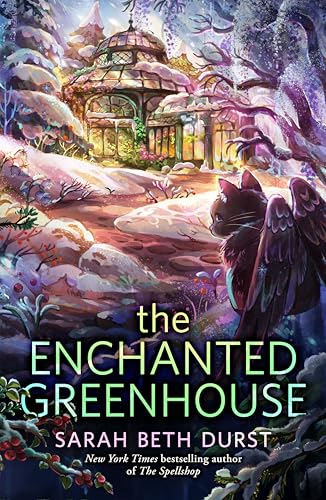
Book Review: The Enchanted Greenhouse by Sarah Beth Durst

Title: The Enchanted Greenhouse
Series: The Spellshop, #2
Author: Sarah Beth Durst
Publisher: Bramble
Publication date: July 15, 2025
Length: 375 pages
Genre: Fantasy
Source: Review copy courtesy of the publisher via NetGalley
Rating:

Rating: 3 out of 5.

New York Times bestselling author Sarah Beth Durst invites you to her new standalone novel nestled on a far-away island brimming with singing flowers, honey cakes, and honeyed love. The hardcover edition features beautiful sprayed edges.

Terlu Perna broke the law because she was lonely. She cast a spell and created a magically sentient spider plant. As punishment, she was turned into a wooden statue and tucked away into an alcove in the North Reading Room of the Great Library of Alyssium.

This should have been the end of her story . . . Yet one day, Terlu wakes in the cold of winter on a nearly-deserted island full of hundreds of magical greenhouses. She’s starving and freezing, and the only other human on the island is a grumpy gardener. To her surprise, he offers Terlu a place to sleep, clean clothes, and freshly baked honey cakes—at least until she’s ready to sail home.

But Terlu can’t return home and doesn’t want to—the greenhouses are a dream come true, each more wondrous than the next. When she learns that the magic that sustains them is failing—causing the death of everything within them—Terlu knows she must help. Even if that means breaking the law again.

This time, though, she isn’t alone. Assisted by the gardener and a sentient rose, Terlu must unravel the secrets of a long-dead sorcerer if she wants to save the island—and have a fresh chance at happiness and love.

Funny, kind, and forgiving, The Enchanted Greenhouse is a story about giving second chances—to others and to yourself.

If you’re looking for cozy fantasy with magical, whimsical creatures, sweet treats, and talking roses… have I got a book for you!

The Enchanted Greenhouse is Sarah Beth Durst’s follow up to her 2024 novel The Spellshop. Both books epitomize the cozy fantasy trend — light on plot, but filled with sweetness, moments of delight, and a sense of wonder.

The Enchanted Greenhouse opens with drama and high stakes. Main character Terlu, a librarian at the Great Library of Alyssium, breaks the law governing control of magic: Lonely, she casts a spell to grant sentience to a spider plant in order to create a companion for herself. When she’s caught, she’s quickly convicted and condemned to spending the rest of her life as a wooden statue, to serve as a warning to anyone else who might be tempted to commit unsanctioned sorcery.

From this point onward, the story slows way, way down, and we enter the realm of cozy gardening and baking and magical cuteness.

Terlu’s life is saved when she ends up on a remote snow-covered island, where a taciturn gardener, Yarrow, wakes her from her fate as a statue and restores her to living, breathing life. After some confusion, it becomes clear that he thought he was rescuing a sorcerer, who could then work magic to save the vast greenhouses that cover his island. The greenhouses were created and enchanted by a sorcerer many years earlier, but after that sorcerer’s death, some of the greenhouses have started to fail. Yarrow fears that without intervention, they’ll all eventually collapse — and as the sole caretaker and resident of the island, that would utterly destroy all sense of purpose for his life.

Terlu is not a sorcerer, but she does have skill with unraveling unfamiliar language, and commits herself to trying to understand the enchantments on the greenhouses. Meanwhile, Yarrow grudgingly accepts Terlu’s help and introduces her to the wonders of the greenhouses — which include flying cats, singing flowers, and honey-loving miniature dragons. With each new greenhouse she enters, Terlu discovers something else spectacular and delightful, making her more determined than ever to save the greenhouses.

There’s a slow-burn, sweet and chaste romance that simmers between Terlu and Yarrow throughout the book, but meanwhile, they also develop trust and companionship and a shared purpose. Terlu and Yarrow both carry baggage from their pasts and have to overcome their fears in order to imagine any sort of safe and happy future.

Plot-wise, well, The Enchanted Greenhouse is pretty lightweight. A lot of the book depends on introducing readers to new moments of cozy cuteness (I mentioned the talking, singing flowers already, right?) There are big chunks of the book where not much happens at all; your enjoyment of this will depend on how much you like hearing about magical, sparkly decor and delicious baked goods.

I didn’t dislike The Enchanted Greenhouse — but there’s just not much there there. It’s a sweet story, but the actual narrative development could probably have fit into about half as many pages. I enjoyed some of the set pieces, but felt a sense of impatience after a while, having had my fill of descriptions of cakes and flowers and magical creatures.

As with the first book, The Enchanted Greenhouse has positive messages about connection, community, acceptance, and honesty, as well as being emotionally vulnerable, taking chances, and being a good friend. All this is lovely… I just wish there had been more of a plot to keep me interested.

Purchase linksAmazon – Bookshop.orgLibro.fm
Disclaimer: When you make a purchase through one of these affiliate links, I may earn a small commission, at no additional cost to you.
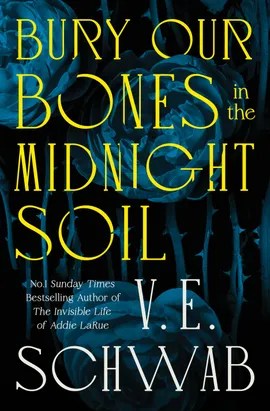
Book Review: Bury Our Bones in the Midnight Soil by V. E. Schwab

Title: Bury Our Bones in the Midnight Soil
Author: V. E. Schwab
Publisher: Tor
Publication date: June 10, 2025
Length: 544 pages
Genre: Fantasy/historical
Source: Purchased
Rating:

Rating: 5 out of 5.

From V. E. Schwab, the #1 New York Times bestselling author of The Invisible Life of Addie LaRue: a new genre-defying novel about immortality and hunger.

This is a story about hunger.
1532. Santo Domingo de la Calzada.
A young girl grows up wild and wily—her beauty is only outmatched by her dreams of escape. But María knows she can only ever be a prize, or a pawn, in the games played by men. When an alluring stranger offers an alternate path, María makes a desperate choice. She vows to have no regrets.

This is a story about love.
1827. London.
A young woman lives an idyllic but cloistered life on her family’s estate, until a moment of forbidden intimacy sees her shipped off to London. Charlotte’s tender heart and seemingly impossible wishes are swept away by an invitation from a beautiful widow—but the price of freedom is higher than she could have imagined.

This is a story about rage.
2019. Boston.
College was supposed to be her chance to be someone new. That’s why Alice moved halfway across the world, leaving her old life behind. But after an out-of-character one-night stand leaves her questioning her past, her present, and her future, Alice throws herself into the hunt for answers . . . and revenge.

This is a story about life—
how it ends, and how it starts.

Bury Our Bones in the Midnight Soil is the vampire book I didn’t know I needed. In this hefty, intricate book, author V. E. Schwab weaves together three characters’ voices and experiences, spanning centuries, to create an epic tale of love, need, hunger, and regret.

We open with Maria, a girl growing up in 16th century Spain, whose only possible future is getting married and having babies. As a young woman, she finds a way to ensure a promising marriage to a viscount, then realizes that her marriage is not the path to freedom that she’d anticipated. After meeting a mysterious, youthful widow with an apothecary shop near her husband’s estate, she’s given the key to a new life.

Charlotte, in 19th century England, is sent to her aunt’s home in London for the Season, mainly to learn how to be a proper, marriageable young woman after being caught kissing her best friend. Charlotte finds the etiquette and corsets equally restrictive, and none of the men she encounters at the endless balls interest her — but the beautiful widow Sabine is intriguing, and their friendship blooms into something much more.

Alice is a modern-day Harvard freshman, attending college in Boston far from her home in Scotland, hoping to reinvent herself after leaving behind painful family secrets. But Alice is still the shy, isolated girl she’s always been, even in her new setting, until she attends a party and decides to be bold — and ends up completely transformed in ways she neither anticipated nor consented to.

Never walk alone at night, they tell you, if you’re a girl.

And it isn’t fair.

Because the night is when the world is quiet.

The night is when the air is clear.

This is a vampire story, and it doesn’t take a huge leap of imagination on the reader’s part to understand how these characters’ stories connect. The beauty lies in seeing it all unfold. Each character’s past is carefully established, pieced out bit by bit in overlapping timelines and alternating chapters. There are elements kept hidden, only revealed as the story progresses, and these work especially well to explain events we may think we understand — but may not have the entire picture of.

Alice may be the most sympathetic of the main characters. She’s given no choice in what happens to her, and her rage and dismay are completely understandable. Of course, we could also consider Maria and Charlotte as not particularly having choices either: They make the decisions that propel them into their new lives — but each is so hemmed in by society’s restrictions that a radical departure is the only way to free themselves.

We may expect Sabine to be the villain of the piece, and she does many villainous things… but she’s not at all one-dimensional. No matter how terrible her later actions are, we never lose some sense of compassion for her. We know her backstory, and know what she’s experienced. There’s a reason (multiple reasons) she becomes who she becomes; we may hate what she does, but we know how she got there.

Without giving away any further plot points, I’ll just point out that the writing in Bury Our Bones in the Midnight Soil is lush and delicious, vivid enough to want to sink into, dreamy and evocative, yet also propulsive. This is a long book, but it never lags. I always wanted to know more, and hated to have to pause when real life pulled me away.

I read the author’s debut adult novel, The Invisible Life of Addie LaRue, several years ago, and loved it. Bury Our Bones in the Midnight Soil is another beautiful, imaginative story that’s a completely immersive reading experience. I haven’t read any of the author’s young adult novels or series, but I know I need to!

I enjoyed every moment of my reading journey through the world of Bury Our Bones in the Midnight Soil, and found myself fascinated by the characters, their lives, and their choices. Don’t miss this incredible book!

Purchase linksAmazon – Bookshop.orgLibro.fm
Disclaimer: When you make a purchase through one of these affiliate links, I may earn a small commission, at no additional cost to you.
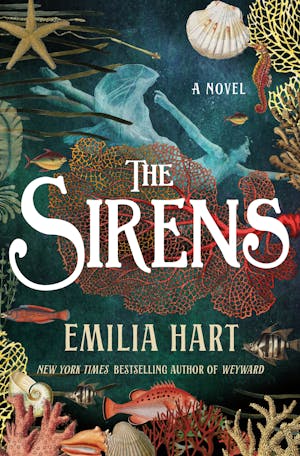
Book Review: The Sirens by Emilia Hart

Title: The Sirens
Author: Emilia Hart
Publisher: St. Martin’s Press
Publication date: April 1, 2025
Length: 352 pages
Genre: Fantasy
Source: Purchased (hardcover); eARC via NetGalley
Rating:

Rating: 5 out of 5.

A story of sisters separated by hundreds of years but bound together in more ways than they can imagine

2019: Lucy awakens in her ex-lover’s room in the middle of the night with her hands around his throat. Horrified, she flees to her sister’s house on the coast of New South Wales hoping Jess can help explain the vivid dreams that preceded the attack—but her sister is missing. As Lucy waits for her return, she starts to unearth strange rumours about Jess’s town—tales of numerous missing men, spread over decades. A baby abandoned in a sea-swept cave. Whispers of women’s voices on the waves. All the while, her dreams start to feel closer than ever.

1800: Mary and Eliza are torn from their loving home in Ireland and forced onto a convict ship heading for Australia. As the boat takes them farther and farther away from all they know, they begin to notice unexplainable changes in their bodies.

A breathtaking tale of female resilience, The Sirens is an extraordinary novel that captures the sheer power of sisterhood and the indefinable magic of the sea.

After reading author Emilia Hart’s debut novel Weyward last fall, I knew I’d read whatever she wrote next. I’m happy to report that The Sirens more than lives up to expectations, and is a beautiful, compelling story that matches the greatness of Weyward.

The Sirens follows two different sets of women across two different timelines. Our main viewpoint throughout is Lucy, a college student who’s had to deal with a strange skin ailment all her life, which leaves her with scars and marks across her body. When she wakes from a sleepwalking episode to discover that she’s attempting to strangle someone, she flees.

Lucy decides to seek shelter with her older sister Jess, whom she’s always loved, but who’s distanced herself from Lucy and their parents. Jess lives in Comber Bay, a small seaside village in New South Wales. Comber Bay has a certain notoriety thanks to a popular podcast focused on a string of disappearances in the town — over the past few decades, eight different men, seemingly with nothing in common, have vanished without a trace.

When Lucy arrives at Jess’s last known address — Cliff House, a ramshackle, dilapidated old house perched precariously over the wild sea — Jess is not there, although her keys, car, and phone are. With few options, Lucy settles in to wait for Jess’s return. She’s intrigued and disturbed by Jess’s paintings, depicting two young women and an old sailing ship. The paintings are beautiful, but the women in them exactly match the sisters Lucy sees in a series of recurring dreams. How is this possible?

Meanwhile, in 1800, sisters Mary and Eliza have been sentenced to transportation to Australia, leaving behind their home and beloved father in Ireland. Two of eighty women convicts crammed into the prison hold onboard the Naiad, they’re subjected to a terrifying sea journey in horrific conditions, with barely enough food or water to sustain them. Mary and Eliza are devoted to one another, terrified by their experiences and the rumors of what await them all in Australia, and desperate for survival. As they bond with the other women on the ship, the sense of community sustains them — but Mary is also concerned by the physical changes she and Eliza seem to be experiencing, and can’t help but wonder over what this might mean for them.

Without giving anything away, I’ll just say that the connections between Lucy and Jess’s story and Mary and Eliza’s becomes clear over time. What unfolds is a story of women living through harsh but recognizable experiences, yet also a tale filled with fantastical elements that add a haunting sense of beauty and magic to the overall feel of the novel.

The writing here is absolutely gorgeous. With every chapter, the author provides insights into the characters’ lives and inner turmoil, but also shows us the beauty of their surroundings, especially the sea, cliffs, and caves of Comber Bay.

I loved the two sets of sisters — each pair has their own special relationship and shared trauma, and obviously the different eras they live in play a huge role in what they go through, yet their stories also share common elements and resonate one to the other across time.

Reading The Sirens is an immersive experience that’s powerful, emotional, and practically hypnotic. I hated to pull away and put the book down, and was sad at the end, not because of unhappiness with the concluding chapters, but because I didn’t want to leave these characters and their world.

The Sirens is a must-read. Don’t miss it!

Purchase linksAmazon – Bookshop.org
Disclaimer: When you make a purchase through one of these affiliate links, I may earn a small commission, at no additional cost to you.
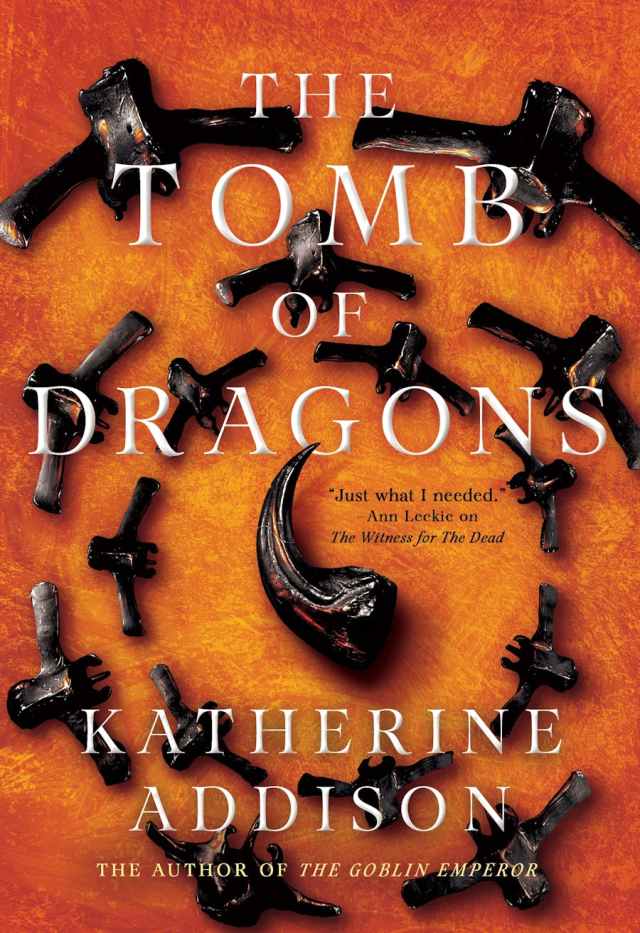
Book Review: The Tomb of Dragons by Katherine Addison

Title: The Tomb of Dragons
Author: Katherine Addison
Publisher: Tor Books
Publication date: March 11, 2025
Length: 352 pages
Genre: Fantasy
Source: Purchased (hardcover); ARC via NetGalley
Rating:

Rating: 4 out of 5.

Thara Celehar has lost his ability to speak with the dead. When that title of Witness for the Dead is gone, what defines him?

While his title may be gone, his duties are not. Celehar contends with a municipal cemetery with fifty years of secrets, the damage of a revethavar he’s terrified to remember, and a group of miners who are more than willing to trade Celehar’s life for a chance at what they feel they’re owed.

Celehar does not have to face these impossible tasks alone. Joining him are his mentee Velhiro Tomasaran, still finding her footing with the investigative nature of their job; Iäna Pel-Thenhior, his beloved opera director friend and avid supporter; and the valiant guard captain Hanu Olgarezh.

Amidst the backdrop of a murder and a brewing political uprising, Celehar must seek justice for those who cannot find it themselves under a tense political system. The repercussions of his quest are never as simple they seem, and Celehar’s own life and happiness hang in the balance.

The Tomb of Dragons is the 3rd book in author Katherine Addison’s Cemeteries of Amalo series (or the 4th book in the Chronicles of Osreth series, depending on how you look at all these inter-related books). The start of it all is the superb book The Goblin Emperor — but the three Cemeteries of Amalo books are set in the same world, which is always a great place to visit.

We first met Thara Celehar in The Goblin Emperor, and have followed him as the main character in The Witness for the Dead and The Grief of Stones. Celehar serves the god Ulis and is a witness for the dead — someone gifted with the ability to speak with the deceased and gain final words, requests, or information from them. His charge then becomes acting on behalf of the deceased, whether to bring peace to their family, settle a dispute, or seek justice for the wrongs committed against them. Celehar is an honest man who’s devoted to his work: As he reminds those who thank him, he follows his calling.

But the end of The Grief of Stones showed Celehar suffering a terrible blow, by which he loses the ability to speak with the dead. Without his calling, he lacks purpose or official status. Still, he has the favor of the top cleric in the empire, who assigns him tasks to carry out on his behalf, and manages to do good for others even when not able to pursue his calling.

The plot becomes complicated when Celehar is kidnapped and forced into a dangerous situation, which soon embroils him in a pursuit of justice that threatens to shake the foundations of the empire. We follow him on his day-to-day tasks and errands, but also on the greater mission that he takes on. The book as a whole is a mix of the mundane with more tension-filled dramatic moments. After a somewhat slow start, the pace picks up quite a bit.

Let’s be clear: You absolutely cannot start with The Tomb of Dragons and hope to get anywhere at all. This series is dense and detailed. The world-building is pretty awe-inspiring, but even the very language is a barrier to getting situated within the books’ world. I don’t think a reader coming to these books without starting with The Goblin Emperor would have the slightest chance of making it past the first page or two.

Don’t believe me?

“We are Thara Celehar, a prelate of Ulis. We have come about the revethmerai of Ulnemenee.”

Got that?

How about…

But that was nonsense. There couldn’t be such a thing as a revethvezvaishor’avar. Could there?

I could go one. From forms of address to official titles to place and ethnicity names, not to mention names of building, families, locations, and religious sects, there is just an overwhelming amount to keep track of. Because it’s been three years since the last book in the series was released, I had a very difficult time readjusting to the language of this world. Fortunately, the addenda to The Goblin Emperor (an explanation of language plus a glossary/guide to people) and a wiki page all helped me through it.

After struggling a bit with the first third or so of The Tomb of Dragons, I found myself pulled back into Celehar’s life and pursuits, and ended up very absorbed by the story. It’s a worthy addition to the series, and for those who’ve read the earlier books, I think it’ll be a hit.

The Tomb of Dragons is apparently the final book in the Cemeteries of Amalo series, and it makes me a bit sad to think that Katherine Addison may be signing off for good from this incredible fantasy world that she’s created. I do hope we’ll see more in the future, perhaps focusing on another character or location within the empire.

Meanwhile, we’ll always have The Goblin Emperor… and although I’ve read it twice already, reading The Tomb of Dragons makes me want to go back to it (at least!) once again.

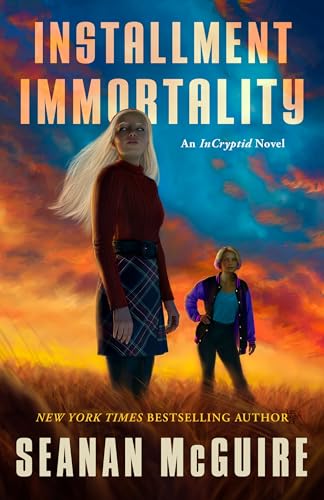
Book Review: Installment Immortality (InCryptid, #14) by Seanan McGuire

Title: Installment Immortality
Series: Incryptid, #14
Author: Seanan McGuire
Publisher: Tor Books
Publication date: March 11, 2025
Length: 432 pages
Genre: Urban fantasy
Source: Review copy courtesy of the publisher via NetGalley
Rating:

Rating: 4 out of 5.

Seanan McGuire’s New York Times-bestselling and Hugo Award-nominated InCryptid series continues with a whirlwind adventure….

After four generations of caring for the Price family, Mary Dunlavy has more than earned a break from the ongoing war with the Covenant of St. George. Instead, what she’s getting is a new employer, in the form of the anima mundi, Earth’s living soul made manifest, and a new assignment: to hunt down the Covenant agents on the East Coast and make them stop imprisoning America’s ghosts.

All in a day’s work for a phantom nanny, even one who’d really rather be teaching her youngest charges how to read.

One ghost can’t take on the entire Covenant without backup, which is how she winds up on a road trip with the still-mourning Elsie and the slowly collapsing Arthur, both of whom are reeling in their own way from the loss of their mother. New allies and new enemies await in Worcester, Massachusetts, where the path of the haunting leads.

With the anima mundi demanding results and Mary’s newfound freedom at stake, it’s down to Mary to make sure that everyone gets out of this adventure alive.

It’s been a long afterlife, but Mary Dunlavy’s not ready to be exorcised quite yet.

When you’re on the 14th book in an ongoing series, it feels practically impossible to talk about it in a way that will make sense to anyone who hasn’t been along for the journey. And in fact, even though I have read every one of these books, I needed a serious refresher before feeling ready to dive in. Um, what happened last time around? The details are a little fuzzy…

Fortunately, the narrator of Installment Immortality, ghost babysitter Mary Dunlavy, is just bouncing back from a major trauma and missed quite a bit, so her opening in the first chapter is quite helpful:

All right, this is where I recap. Because we’re dealing with five generations of family history here, and that’s a lot, even when you’ve been there from the beginning. I can’t count on anyone having been here from the beginning anymore, myself included, so I’ll give you the basic shape of things and hope that will be enough to ground you in this glorious ghost story already in progress.

Thanks, Mary!

The first chapter is Mary giving us a speed-recap, and it was just what I needed. (That, plus keeping the Incryptids wiki page bookmarked for easy reference.)

A brief explanation on the series (from my review of one of the earlier books):

The InCryptid series is a big, sprawling, interconnected story about the varied and sundry members of the Price/Healy clan — humans (mostly) who specialize in cryptozoology, the study and preservation of non-human people who live among us here on Earth. The arch-enemies of the Price gang (and all non-human species) is the Covenant, a powerful organization dedicated to hunting down and eliminating all cryptids — ostensibly to protect humans, but really, at this point, it’s more from deeply ingrained hatred and a desire to rid the world of everything non-human.

The series has had several different narrators, most of whom get a couple of books in a row before we move on to the next. Installment Immortality is Mary’s second book, and she picks up right where she left off in the previous book, Aftermarket Afterlife.

The Price-Healy family has inflicted serious harm on the Covenant, and now the Covenant wants payback. They’re trying to get it by rounding up and either destroying or weaponizing ghosts, and Mary’s new boss — the anima mundi, the living spirit of the world — wants it stopped before irreversible damage is done. Mary is tasked with finding these wannabe ghostbusters and doing whatever it takes to shut them down.

Meanwhile, the family is in tatters, having suffered two devastating losses in the last book. No one is operating at full speed, but Mary recognizes that siblings Elsie and Arthur need both a distraction and a purpose, and the three set off on a road trip to carry out her mission.

As we get into the main action of the story, the pace quickens and the stakes get higher and higher. Without going too far into the details, I’ll just say that the suspense becomes intense, and I was on the edge of my seat! You might think that when a main character is a ghost and therefore already dead, there wouldn’t be much risk… and you’d be wrong. Mary faces incredible danger, but her devotion to her kids (yes, Elsie and Arthur are adults, but once Mary has been someone’s babysitter, they’re always going to be her kids, no matter their age) keeps her focuses on her mission and determined to do whatever it takes to protect them.

Installment Immortality is another terrific addition to a great series. It can feel somewhat dense at times — there is A LOT to keep track of. But it’s worth it. With a series this big and sprawling, the mythology and interconnectedness is intense (and seriously, those wikis are essential!), but the emotional payoff of seeing the latest developments for characters we’ve had this much time to get to know and love is really rewarding.

Obviously, starting an ongoing series at book 14 is not going to be a satisfying reading experience. Each book builds upon the one before — so really, the only way to enjoy it is to start at the beginning (Discount Armageddon)… and then keep going!

As for me, I’m all in, and can’t wait for #15!

As with other books in the Incryptid series, this one includes a novella at the end, Mourner’s Waltz. The story features the same main character as in the previous novella, picking up the story several months later. There are strong emotional beats plus a nifty adventure. I can’t talk about it without major spoilers, but it was engaging and lovely… and makes me hope that the next main Incryptid book will bring this character back to center stage.

**Save

Save

Save

Save

Save

Save

Save

Book Review: Greenteeth by Molly O’Neill

Title: Greenteeth
Author: Molly O’Neill
Publisher: Orbit
Publication date: February 25, 2025
Length: 304 pages
Genre: Fantasy
Source: Review copy courtesy of the publisher via NetGalley
Rating:

Rating: 4 out of 5.

From an outstanding new voice in cozy fantasy comes Greenteeth, a  tale of fae, folklore, and found family, narrated by a charismatic lake-dwelling monster with a voice unlike any other, perfect for fans of T. Kingfisher.

Beneath the still surface of a lake lurks a monster with needle sharp teeth. Hungry and ready to pounce.

Jenny Greenteeth has never spoken to a human before, but when a witch is thrown into her lake, something makes Jenny decide she’s worth saving. Temperance doesn’t know why her village has suddenly turned against her, only that it has something to do with the malevolent new pastor.

Though they have nothing in common, these two must band together on a magical quest to defeat the evil that threatens Jenny’s lake and Temperance’s family, as well as the very soul of Britain.

Greenteeth, a debut novel from author Molly O’Neill, is a delightful fantasy adventure with a unique main character. Jenny Greenteeth is a water-dwelling fae, inspired by a figure from English folklore. According to Wikipedia, “Jenny Greenteeth” is a river hag, a creature who lives in bodies of water and pulls unsuspecting humans to their deaths.

I wasn’t a human, nor a goblin, nor a high fae. I was Jenny Greenteeth, fangs and claws and unholy strength. I was a nightmare, a scary story, the dark shape glimpsed through the weeds.

Yet the Jenny Greenteeth we come to know is much less malevolent that the tales would have us believe. Yes, she loves to eat all sorts of plants and animals that come into her lake, but she doesn’t threaten, and certainly has never lured the nearby townsfolk into her waters. She enjoys a peaceful life, and thinks fondly of the years she spent with her daughter (also called Jenny, as are all women in her line) before little Jenny went off to a lake of her own.

All this changes when she spots a gathering of humans on her shores, led by a stern man in black. A human woman, bound in manacles, is thrown into the lake to drown. Jenny is interested, rescues the woman, and brings her to her underwater cave to learn more. Temperance is a wife and mother, and has been respected as the village healer (and yes, she is a witch), but never had any trouble with her neighbors until the new pastor came along.

Although Jenny has saved her life, Temperance doesn’t dare return to her home. She’s desperate to get back to her family, but when Jenny suggests that she run away and then send for her husband and children, Temperance is reluctant. She loves her village, and suspects there’s more going on than just a witchhunt. Jenny works with Temperance to try to confront the pastor, and discovers that there’s a powerful evil presence at work, one which they can’t overpower or defeat on their own. Joined by Jenny’s goblin friend Brackus, they set out on a quest to learn how to challenge this evil force, and win.

“A witch, a goblin and Jenny Greenteeth are off to seek the King of the Fairies,” he said. “What a delicious disaster this could be.”

Jenny Greenteeth is a wonderful main character. She’s non-human and clearly has a different moral compass and worldview, yet she shows great compassion and an enormous capacity for loyalty and friendship. As she journeys with Temperance and Brackus, her inner workings repeatedly come into conflict with Temperance’s sense of right and wrong. Seeing them navigate their differences and reach for understanding is fascinating and quite touching.

The quest itself is full of danger and adventure and magical obstacles. To be honest, this is the only element of the story that dragged for me — but quite possibly, I’ve just had my fill of quest stories. The specific challenges the trio face are fine, but never felt impossible to me; I was never in any doubt that they’d find a solution without too much difficulty.

Several scenes take place in the court of the high fae, and these were lovely. There’s a sense of power and magic, but also sorrow: The book repeatedly makes clear that the old ways are fading from the world, and that Jenny and all the fae may soon be remnants of a long-gone past.

The final chapters of the book provide a very satisfying ending, and there are some terrific surprises and twists that I won’t reveal here, other than to say that Jenny’s story ends up intersecting with English folklore and mythology in a wonderful, unexpected way.

Jenny and Temperance are both well-developed, strong characters, and I enjoyed spending time with them very much. Brackus is fun too, but less essential, and I’d didn’t get as good a sense of him as an individual. I loved Jenny’s world and her perspective on life as seen from her lake. I can’t say I’ve come across a character quite like Jenny before.

Greenteeth is a wonderful read, and I’ll look forward to whatever Molly O’Neill writes next!

For more on Greenteeth, check out reviews at:

Books, Bones & Buffy
CJRTB Books