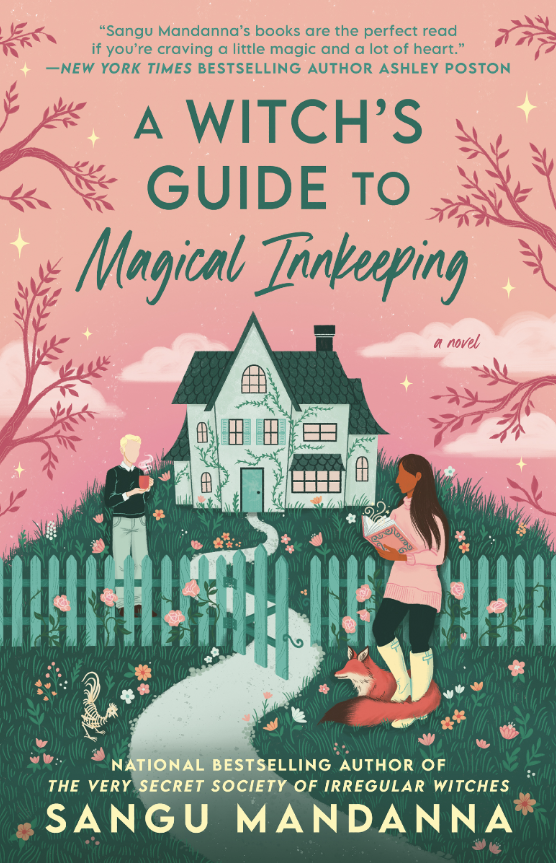
Book Review: A Witch’s Guide to Magical Innkeeping by Sangu Mandanna

Title: A Witch’s Guide to Magical Innkeeping
Author: Sangu Mandanna
Publisher: Berkley
Publication date: July 15, 2025
Print length: 352 pages
Genre: Fantasy
Source: Review copy courtesy of the publisher via NetGalley
Rating:

Rating: 4.5 out of 5.

An enchanting novel about a witch who has a second chance to get her magical powers—and her life—back on track, from the national bestselling author of The Very Secret Society of Irregular Witches .

Sera Swan was once one of the most powerful witches in Britain. Then she resurrected her great-aunt Jasmine from the (very recently) dead, lost most of her magic, befriended a semi-villainous talking fox, and was exiled from her magical Guild. Now she ( slightly reluctantly and just a bit grumpily) helps Aunt Jasmine run an inn in Lancashire, where she deals with her quirky guests’ shenanigans, tries to keep the talking fox in check, and longs for the magical future she lost.

When she learns about an old spellbook that holds the secret to restoring her power, she turns to Luke Larsen, a gorgeous historian who might just be able to help her unlock the book’s mysteries. Luke, who has his own reasons for staying at the inn, never planned on getting involved in the madcap goings-on around him and certainly had no intention of letting certain grumpy innkeepers past his icy walls, so no one is more surprised than he is when he not only agrees to help, but also finds himself thawing .

Running an inn, reclaiming lost magic, and staying one step ahead of the watchful Guild is a lot for anyone, but Sera is about to discover that she doesn’t have to do it alone… and that the weird, wonderful family she’s made might be the best magic of all.

This tale of found family, witchcraft, and magic hits the sweet spot of being just cozy enough without turning saccharine, and includes enough silliness to make a reader smile even when there’s quite a bit of sadness too.

Sera Swan was once one of the most powerful witches in Britain:

Once, she had been glorious. Once, she had bent the universe to her will.

She wasn’t that person anymore.

Sera’s incredible magical powers were identified when she was ten years old, and for a time in her youth, she was trained directly by Albert Grey, head of the Guild and the most powerful magical person in the country. But at age 15, Sera uses her powers to resurrect her beloved Aunt Jasmine, something strictly forbidden… and in doing so, drains nearly all of her own powers. She abruptly finds herself bereft of her great gifts, and even worse, exiled from the magical community.

As the story picks up fifteen years later, Sera runs the inn that her former family home has been converted into. It’s shabby and quirky, but thanks to a spell cast by Sera in her younger days, it acts as a beacon to anyone needing sanctuary, and is unfindable for those with bad intentions. Along with Sera and Jasmine, the inn has taken on permanent lodgers, including Sera’s young magically-gifted cousin Theo, an older woman named Mathilda who loves to garden, and a noble young man named Nicholas who spends his days working as a knight at the local Medieval Fair, and who embraces his knighthood even during his off-hours.

The inn is also home to Clemmie, a witch trapped in fox form, who originally showed Sera the resurrection spell. Clemmie is waiting for Sera to get her powers back so she can release Clemmie from the curse that turned her into a fox — but there’s little hope of that, since Sera has no access to the magical books that might hold the answer.

When Luke Larsen shows up at the inn with his nine-year-old sister Posy, a bright, eager girl whose parents don’t know what to do with her, as her autism interferes with her understanding that she needs to hide her magic from the non-magical world, Sera welcomes the pair into their mismatched, oddball group. Luke is a magical history scholar, and he offers Sera insights into how she might finally restore her own powers — but there are risks involved. Complicating matters is the growing attraction between Luke and Sera, who each carry a lifetime’s worth of hurt and rejection, and find it hard to open up and trust anyone.

The story provides plenty of ups and downs as Sera pursues the restoration spell, while also navigating threats from the Guild, her found family’s dynamics, and the sense that Luke is always half-way out the door. The magical elements combine nicely with the more personal parts of the story, and the cast of characters is quirky, likable, and immensely entertaining.

As with this author’s previous book, The Very Secret Society of Irregular Witches, much of the book feels fairy-tale-esque in tone. There’s a sense of wonder and delight. I’d say this book is strictly PG-13, except there are some f-bombs, sexy talk, and one sex scene that feel tonally different than the rest of the book; otherwise, this could easily have been a story to share with younger readers.

Sera goes through a lot, and the story does explore the darker side of her loss and depression, as well as the grief she feels over her lost magic and the pain she’s carried since childhood from being rejected by her own parents. Still, while not sugar-coated in any way, these sadder elements are balanced by the book’s overall cheeriness and whimsy, and it’s hard not feel joy while reading about the quirky family that’s formed on its own at the inn.

The ending wraps up the story quite well, although it left me a bit sad. There was nothing wrong with the writing or the ending itself, but it wasn’t the way rose-colored-glasses-me wished it would end. I actually think it made a lot of sense for the author to give the characters this ending, showing that happiness and love come in many different forms, and that life doesn’t have to turn out exactly as you’d hoped in order for you to end up with what you truly want… and yet (without getting into spoilers), I kept hoping for that last little bit of perfection that (let’s be honest) probably would have been a step too far for the story. Silly me…

A Witch’s Guide to Magical Innkeeping is a fast, fanciful read that never lags. The lovable characters, lovely setting, and funny sense of detail (there’s a room at the inn that rains apple blossom tea once per week, as just one minor example) make this a delightful, appealing reading escape.

Purchase linksAmazon – Bookshop.org – Libro.fm
Disclaimer: When you make a purchase through one of these affiliate links, I may earn a small commission, at no additional cost to you.
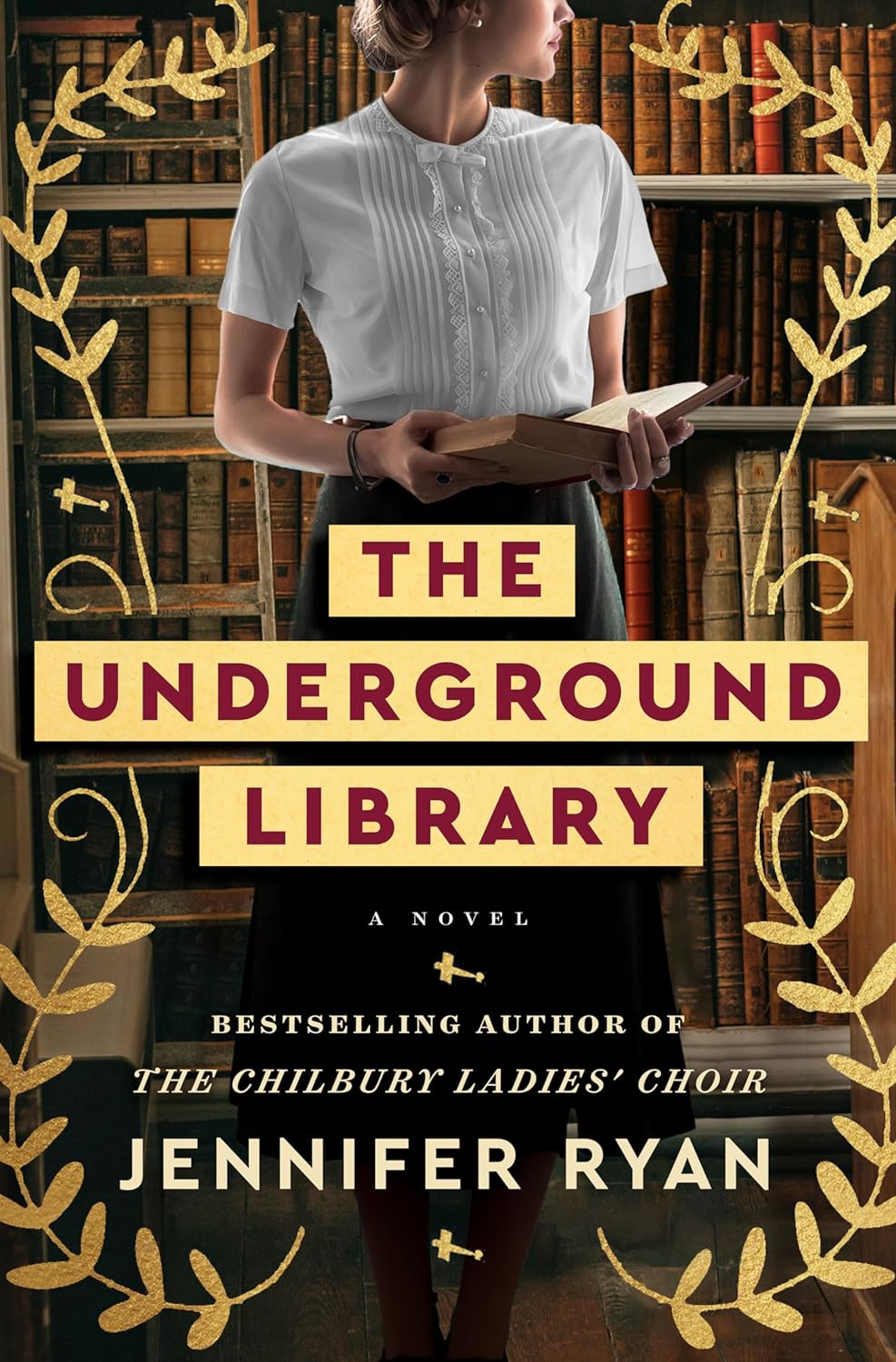
Book Review: The Underground Library by Jennifer Ryan

Title: The Underground Library
Author: Jennifer Ryan
Publisher: Ballantine Books
Publication date: March 12, 2024
Print length: 368 pages
Genre: Historical fiction
Source: Review copy courtesy of the publisher via NetGalley
Rating:

Rating: 4 out of 5.

When the Blitz imperils the heart of a London neighborhood, three young women must use their fighting spirit to save the community’s beloved library in this heartwarming novel from the author of The Chilbury Ladies’ Choir

When new deputy librarian, Juliet Lansdown, finds that Bethnal Green Library isn’t the bustling hub she’s expecting, she becomes determined to breathe life back into it. But can she show the men in charge that a woman is up to the task of running it, especially when a confrontation with her past threatens to derail her?

Katie Upwood is thrilled to be working at the library, although she’s only there until she heads off to university in the fall. But after the death of her beau on the front line and amid tumultuous family strife, she finds herself harboring a life-changing secret with no one to turn to for help.

Sofie Baumann, a young Jewish refugee, came to London on a domestic service visa only to find herself working as a maid for a man who treats her abominably. She escapes to the library every chance she can, finding friendship in the literary community and aid in finding her sister, who is still trying to flee occupied Europe.

When a slew of bombs destroy the library, Juliet relocates the stacks to the local Underground station where the city’s residents shelter nightly, determined to lend out stories that will keep spirits up. But tragedy after tragedy threatens to unmoor the women and sever the ties of their community. Will Juliet, Kate, and Sofie be able to overcome their own troubles to save the library? Or will the beating heart of their neighborhood be lost forever?

The Underground Library is the newest book by talented historical fiction author Jennifer Ryan, showing the strengths and struggles of women on the homefront during World War II.

Three main characters are our points of focus, each with a memorable story of her own. Through these characters and their friends and connections, a sense of a strong, resilient community is beautifully presented.

The lead characters, Juliet, Katie, and Sofie, each end up at the Bethnal Green library in London by different paths. Juliet leaves her small town, where she lives with uncaring parents, after her fiancé disappears during battle and is believed to be a deserter. Juliet needs both a fresh start and a chance to make something of herself, and is delighted to land a role as deputy librarian — a role available to a woman only because qualified men are scarce during wartime.

Katie, a Bethnal Green local, works at the library temporarily as she prepares to leave for university, eager to pursue her education and escape the pressures of her social-climbing father and a mother who only cares about reputation and what the neighbors think. When Katie receives word that her boyfriend is missing and presume dead, her world falls apart in more ways than one.

Sofie is a Jewish resident of Berlin whose family urges her to leave while she still can, and secures her a British visa conditional on domestic employment — something Sofie has never done before, having been raised in a well-off family with domestic help of their own. She’s reluctant to leave her family, but is finally convinced of the necessity of doing so. After a hair-raising and dangerous trip, she arrives in London. There, she finds safety from the Nazi terrors of Germany, but at a price: Her employer is cruel, demanding, and abusive, and she lives in constant fear for the family she left behind. When she happens to stop by the library while on an errand for her employer, a new world opens to her, as she’s welcomed and encouraged to keep coming back.

As the women meet and come together, new opportunities for community emerge. The head librarian is stuffy and bound by tradition, wanting to keep the library a quiet, dignified space for the privileged, but Juliet is determined to infuse new life into it, planning book discussions and activities during the hours when her boss is away.

When air raids begin, the people of Bethnal Green eventually begin using the underground station as a shelter, and it becomes a place of refuge, where night after night, people sleep, share stories, seek medical care, and find a place of relative safety while bombs are dropped overhead. When the library itself is hit in an air raid, the head librarian wants to shut it down, but Juliet has another idea: With the help of her trusted group of friends and the women who form the inner circle of her reading groups, she relocates as many books and resources as possible down into the shelter, and the underground library is born.

The Underground Library is a wonderful portrayal of women’s strength and the glory of friendship, as well as the absolutely awesome power of books to bring people together, provide an escape from the harsh realities of daily life, and offer inspiration and hope. It’s also a realistic depiction of life during wartime, showing the struggles of people on the homefront to feed and clothe their families, find medical care, and find safety from nightly dangers — all while worrying about loved ones serving on the front and mourning terrible losses.

Juliet, Katie, and Sofie each have their own struggles and heartbreaks, and each is given ample space to grow as characters and face their challenges. Each of their storylines is well developed and affecting. In some books with multiple main characters, there’s often one who outshines the others, but here, all three are interesting and provoke sympathy and emotional connection.

In addition to the main characters, it’s fascinating to see how their friends and associates find their own paths forward and take on new and different roles through their involvement with the Underground Library. By the end of the book — which includes plenty of tears but is ultimately uplifting — we see how friends can become family, how families can rebuild, and how people who’ve suffered loss can find reasons to keep going.

The Underground Library has a gentle tone, even when frightening events are happening around the characters. The focus is on the people — this is less a story about war and more a story about how people impacted by war find hope and strength in unexpected ways. I came to care deeply about the characters and their lives, and felt thoroughly immersed in the book as a whole. In fact, my only complaint is that there are some secondary characters I wish we’d gotten to see more of — I felt like there were even more stories to be told about the people who made up the Bethnal Green community.

The Underground Library is Jennifer Ryan’s 5th novel, and I’ve enjoyed each and every one. She has a talent for showing the ordinary people affected by historical events, and especially, the importance of community during times of great struggles.

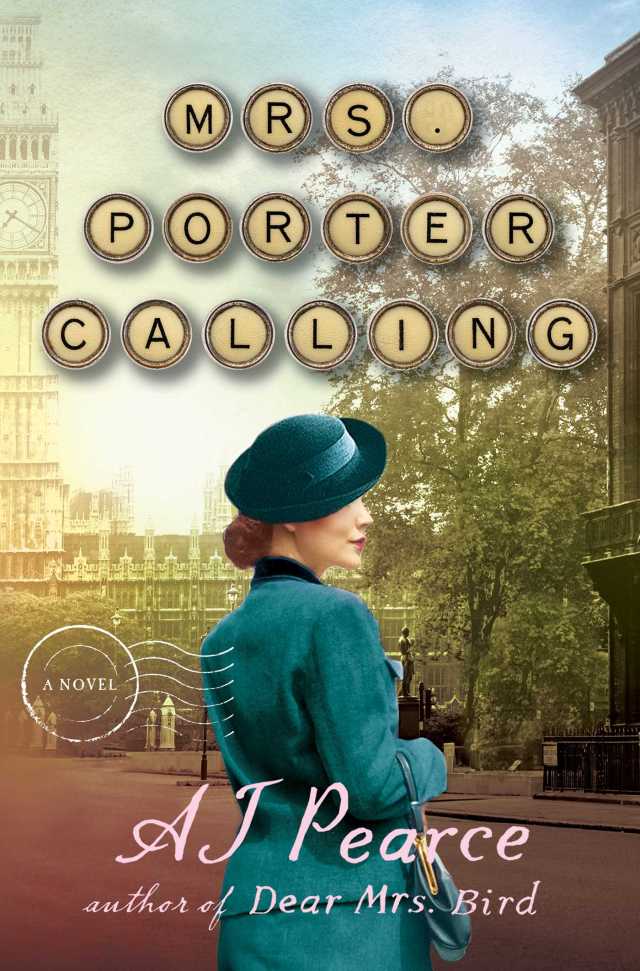
Book Review: Mrs. Porter Calling by AJ Pearce

Title: Mrs. Porter Calling
Author: AJ Pearce
Publisher: Scribner
Publication date: August 8, 2023
Length: 320 pages
Genre: Historical fiction
Source: Review copy courtesy of the publisher via NetGalley
Rating:

Rating: 4 out of 5.

London, April 1943. A little over a year since she married Captain Charles Mayhew and he went away to war, Emmy Lake is now in charge of “Yours Cheerfully,” the hugely popular advice column in Woman’s Friend magazine. Cheered on by her best friend Bunty, Emmy is dedicated to helping readers face the increasing challenges brought about by over three years of war. The postbags are full and Woman’s Friend is thriving.

But Emmy’s world is turned upside down when glamorous socialite, the Honorable Mrs. Cressida Porter, becomes the new publisher of the magazine, and wants to change everything the readers love. Aided by Mrs. Pye, a Paris-obsessed fashion editor with delusions of grandeur, and Small Winston, the grumpiest dog in London, Mrs. Porter fills the pages with expensive clothes and frivolous articles about her friends. Worst of all, she announces that she is cutting the “Yours Cheerfully” column and her vision for the publication’s future seems dire. With the stakes higher than ever, Emmy and her friends must find a way to save the magazine that they love.

Emmy Lake is back! Mrs. Porter Calling is the third in a series of books about a magazine journalist and her group of close friends and colleagues, navigating life on the homefront in WWII-era London. In the first two books, Dear Mrs. Bird and Yours Cheerfully, we see Emmy land a job at Woman’s Friend magazine, where she eventually takes over the advice column, seeing it as her mission to offer compassionate, practical advice to women in need. Over the course of these two books, she also meets and marries a lovely man, and supports her best friend through horrible loss and recovery.

As Mrs. Porter Calling opens, the year is 1943, and Emmy continues her work at Woman’s Friend as well as with the fire service, which monitors and responds to disasters caused by air raids. Emmy’s beloved husband Charles is off on the front lines, the couple having had only a few short days together following their wedding before his deployment. Emmy shares a home with her best friend Bunty, and they lead busy, productive lives — they’ve learned to adapt and carry on, despite the constant fear and rationing.

Emmy’s professional life is thrown into a tailspin when the magazine’s owner dies. He’s bequeathed ownership to his niece, who turns out to be a spoiled upper-class woman who feigns delight with the magazine, provided they implement just a few of her “tiny ideas”. She finds the current version “A Bit Mis” — miserable — and decides that what the readers really need is more stories that are pleasant. Rather than focus on food columns about how to make good meals with limited rations or knitting/sewing clothing when supplies aren’t available, she wants glamour, fashion, and a focus on the beautiful lives of her own class. The staff of the magazine is appalled — this is not what their readers rely on them for — but having no choice, the magazine is changed to Mrs. Porter’s standards, and of course, readership and then advertising drop off. Soon, the future of Woman’s Friend is in doubt, and Emmy and her colleagues become desperate to save it.

Meanwhile, at home, Emmy and Bunty welcome a woman with three young children into their home, and soon their days are filled with activity and joyful chaos — but the realities of war are always present, and soon enough Emmy’s woes at the magazine are eclipsed by a more personal tragedy.

I enjoyed Mrs. Porter Calling so much! Mrs. Porter herself is an insidiously vapid character who acts sweetly haughty, until she hits the team with her “ideas”, all with the most saccharine of smiles and eyelash batting. As Emmy reflects:

I was beginning to feel as if I was being run over by a steamroller made from petals and kittens. It was delightful, but also somewhat immobilizing.

Beyond the work crises, where we can’t help but root for the underdogs — the hardworking, dedicated team of Woman’s Friend — the book delves sensitively into the lives of the women and children struggling to make ends meet on the home front.

“Don’t worry, Em, we’ll do what all the other women in Britain are doing.”

“What’s that?” I said.

“Cope,” said Bunty.

Again and again, Emmy, Bunty, and their circle of friends show what true bravery is, as well as devotion and determination.

While there’s sorrow and conflict in Mrs. Porter Calling, there’s a chipper, upbeat air that carries the story along — the “Keep Calm and Carry On” attitude that lets the characters find happiness even in the darkest of days. I loved the found family aspect of the characters’ lives — despite fears for loved ones on the battlefield or sorrow for those lost, they bond together to get through it all, and clearly show how love and friendship can mend broken hearts.

“War’s bad enough as it is. Imagine if you’re trying to get through this on your own.”

The Emmy Lake books are emotional, entertaining, and heart-warming. I recommend starting at the beginning of the series, and continuing on from there. I understand there’s at least one more book planned, and also read a comment by the author that she hopes to continue writing books that will take Emmy and friends through to the end of the war. I hope that’s the case! I’d really love to see more of Emmy’s story (and will be waiting to see what I hope will be a happy ending for her once the war ends).

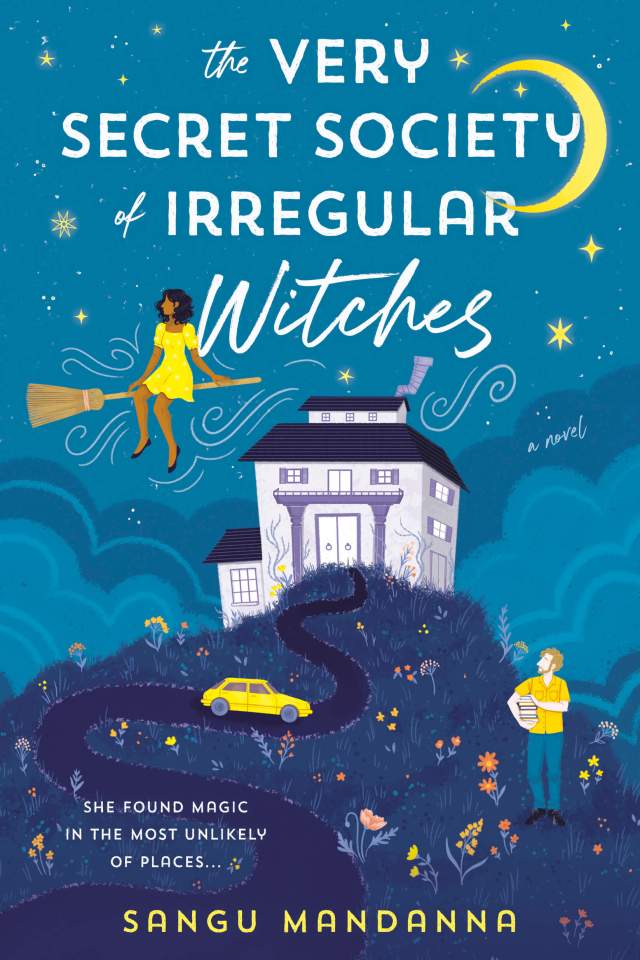
Book Review: The Very Secret Society of Irregular Witches by Sangu Mandanna

Title: The Very Secret Society of Irregular Witches
Author: Sangu Mandanna
Publisher: Berkley
Publication date: August 23, 2022
Print length: 336 pages
Genre: Fantasy
Source: Review copy courtesy of the publisher via NetGalley
Rating:

Rating: 4 out of 5.

A warm and uplifting novel about an isolated witch whose opportunity to embrace a quirky new family–and a new love–changes the course of her life.

As one of the few witches in Britain, Mika Moon knows she has to hide her magic, keep her head down, and stay away from other witches so their powers don’t mingle and draw attention. And as an orphan who lost her parents at a young age and was raised by strangers, she’s used to being alone and she follows the rules…with one exception: an online account, where she posts videos pretending to be a witch. She thinks no one will take it seriously.

But someone does. An unexpected message arrives, begging her to travel to the remote and mysterious Nowhere House to teach three young witches how to control their magic. It breaks all of the rules, but Mika goes anyway, and is immediately tangled up in the lives and secrets of not only her three charges, but also an absent archaeologist, a retired actor, two long-suffering caretakers, and…Jamie. The handsome and prickly librarian of Nowhere House would do anything to protect the children, and as far as he’s concerned, a stranger like Mika is a threat. An irritatingly appealing threat.

As Mika begins to find her place at Nowhere House, the thought of belonging somewhere begins to feel like a real possibility. But magic isn’t the only danger in the world, and when a threat comes knocking at their door, Mika will need to decide whether to risk everything to protect a found family she didn’t know she was looking for….

This witchy book is sweet, a bit romantic, and very whimsical. It’s a bit Mary Poppins, a bit House on the Cerulean Sea… and just a wee bit naughty too (more on that later).

Mika is a young, kind-hearted witch who grew up in loneliness and isolation — because the biggest rule for witches is to stay very, very far away from one another. When witches gather, so does magic, and when a lot of magic gets concentrated in one place, all sorts of unwanted outcomes can result — and when there are big magical accidents, it attracts attention. As history has shown, attention can be very bad for witches, so it’s best to just avoid it at all costs.

But Mika is lonely, and to keep herself amused and engaged, she creates a web series where she pretends to be a witch offering videos on potion-making. It’s cute and silly, and she doesn’t expect anyone to actually believe her… but of course, as the synopsis points out, someone does.

She’s invited to Nowhere House, where three young, orphaned witches are being raised by an assortment of adult caretakers. They’re sheltered and fed and clothed (and completely doted upon), but they have no control over their magic, and no one to teach them. Without some sort of intervention, the adults in charge are afraid of what might happen. Mika seems to be the answer to their prayers.

Before long, she’s made herself a part of the household, captivating the girls with her magical abilities, and captivating the sexy librarian with her sweetness and smiles. There are some outside threats to their happy household, but I felt pretty confident throughout that nothing too bad could happen, given the light, bubbly tone of the book.

The Very Secret Society of Irregular Witches could almost be a children’s story, if the point-of-view characters changed a bit and if you stripped away the romance. There are some adorable scenes of wide-eyed wonder, as Mika shows the girls the possibilities of a life infused with magic — like, for example, when she arrives at Nowhere House with an entire koi pond in the backseat of her car.

The romance elements are for the most part understated, although (as I hinted earlier) there is one scene that’s fairly steamy in nature (not anatomical, in terms of graphicness, but more than just implied). Side note: I was annoyed that the characters did NOT use a condom! Most contemporary romances incorporate safe sex practices into the sex scenes these days, so it’s very noticeable (and not okay!!) when one doesn’t.

The cast of characters is nicely diverse, with many different ethnicities, national origins, genders, ages, and orientations represented. I appreciated that this element was all very matter of fact, too — the diversity is just part of the whole, and not presented in a “hey, I’m being so hip and inclusive!” sort of way (if that makes any sense).

Overall, the mood and tone of this book is light, cheery, and yes, very whimsical. Nothing terrible ever happens, the characters are delightfully quirky, there are plenty of silly little moments, and there’s an overarching sense of wonderful awe whenever magic is involved.

This is a sweet, quick read, good for when you’re looking for a fanciful diversion with lovable characters. A great choice to read with a mug of hot cocoa and some fuzzy slippers!

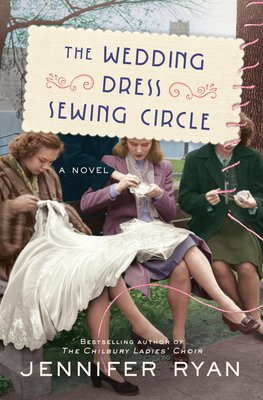
Book Review: The Wedding Dress Sewing Circle by Jennifer Ryan

Title: The Wedding Dress Sewing Circle
Author: Jennifer Ryan
Publisher: Ballantine Books
Publication date: May 31, 2022
Print length: 432 pages
Genre: Historical fiction
Source: Review copy courtesy of the publisher via NetGalley
Rating:

Rating: 4 out of 5.

Three plucky women lift the spirits of home-front brides in wartime Britain, where clothes rationing leaves little opportunity for pomp or celebration–even at weddings–in this heartwarming novel based on true events, from the bestselling author of The Chilbury Ladies’ Choir.

After renowned fashion designer Cressida Westcott loses both her home and her design house in the London Blitz, she has nowhere to go but the family manor house she fled decades ago. Praying that her niece and nephew will be more hospitable than her brother had been, she arrives with nothing but the clothes she stands in, at a loss as to how to rebuild her business while staying in a quaint country village.

Her niece, Violet Westcott, is thrilled that her famous aunt is coming to stay–the village has been interminably dull with all the men off fighting. But just as Cressida arrives, so does Violet’s conscription letter. It couldn’t have come at a worse time; how will she ever find a suitably aristocratic husband if she has to spend her days wearing a frumpy uniform and doing war work?

Meanwhile, the local vicar’s daughter, Grace Carlisle, is trying in vain to repair her mother’s gown, her only chance of a white wedding. When Cressida Westcott appears at the local Sewing Circle meeting, Grace asks for her help–but Cressida has much more to teach the ladies than just simple sewing skills.

Before long, Cressida’s spirit and ambition galvanizes the village group into action, and they find themselves mending wedding dresses not only for local brides, but for brides across the country. And as the women dedicate themselves to helping others celebrate love, they might even manage to find it for themselves.

The Wedding Dress Sewing Circle is now the 4th book I’ve read by Jennifer Ryan, and like her earlier books, it presents a warm-hearted look at the homefront challenges and triumphs of women during wartime.

The year is 1942, London is being terrorized by air raids, and in the countryside, families are making do with less and less. Even clothing is rationed — materials are prioritized for the benefit of the war effort, so the local sewing circles are forced to become skilled at repairing and reworking the clothing that they do have.

In the village of Aldhurst, the vicar’s 24-year-old daughter is soon to be married. Grace and her widowed father find her mother’s wedding dress stored away, but the years have not been kind to the once-beautiful gown. Grace is looking forward to her marriage to a young curate, although she’s mostly motivated by duty and a need to be useful to the parish rather than by sentiments of true love.

But when Cressida, a famous designer whose home and business are both destroyed in a night-time bombing raid, returns to her family’s manor in Aldhurst, life in the village starts to change. Cressida lends her skills to the local sewing circle, encourages Grace to think bigger and explore her own talents, and even manages to get her niece Violet to see that there’s more to life than being the pretty little wife of an aristocrat.

As the women spend time together, they become tightly bonded, and manage to find creative inspiration in their sewing projects, eventually coming up with the idea of organizing what’s essentially a wedding dress lending library. Soon, women from all across Britain are donating their wedding dresses, and eager brides are now able to have the beautiful weddings they’ve dreamed of, rather than getting married in uniforms or practical clothing.

The Wedding Dress Sewing Circle focuses on friendship and finding purpose. The women at the heart of the book all, in their own ways, reevaluate the assumptions they’ve made about their lives and find different, more meaningful paths for themselves. Through Cressida’s example, they learn to think differently, challenge expectations, and pursue careers and lives that are more fulfilling than what they’d thought they should want or expect.

I enjoyed getting to know the main characters and seeing each of them blossom in different ways. Each has a love story as well, none of which run particularly smoothly — but never fear, there are plenty of happy endings to go around.

As in her other books, Jennifer Ryan uses village life and characters to portray the effects of war on ordinary people. Her characters aren’t out risking their lives on battlefields or engaging in high-stakes espionage; these are the everyday women and men who must do the best they can in the face of shortages and hardships, holding on to their homes, their friends, and their communities the best they can. The Wedding Dress Sewing Circle is a portrait of a generous community, whose individuals come together to not just make do, but make better.

This is a gentle read, with drama on the more intimate and personal side. While the opening scenes of Cressida’s experiences in the air raid are very frightening and dramatic, and while there’s another incident later on of an air raid on a neighboring village that’s also quite scary and intense, the rest of the book is quieter and more restrained. The focus is on day to day life and the people of the village — the war is the constant backdrop, but it’s filtered through the experiences of the women and families on the homefront.

I enjoyed The Wedding Dress Sewing Circle very much. In fact, my only slight complaint is that it seems to echo the author’s other books in certain ways, so that the overall story feels less fresh this time around. In three of the four books of hers that I’ve now read, the main story is about plucky women in a small town who come together to make it through the war years — in one book, it’s about a choir, in another, a cooking competition, and here, a sewing group. The plots arcs and characters here feel familiar, not because we’ve seen them before, but because the overall tone is so similar to those of her previous novels.

That said, I did think it was an engaging, often moving read, and I enjoyed seeing the characters grow and change over the course of the story. Jennifer Ryan has a gift for bringing out the beauty in simple lives, and I always enjoy her light touch when it comes to dialogue and banter.

If you enjoy historical fiction, especially historical fiction focused on women’s lives, don’t miss The Wedding Dress Sewing Circle!

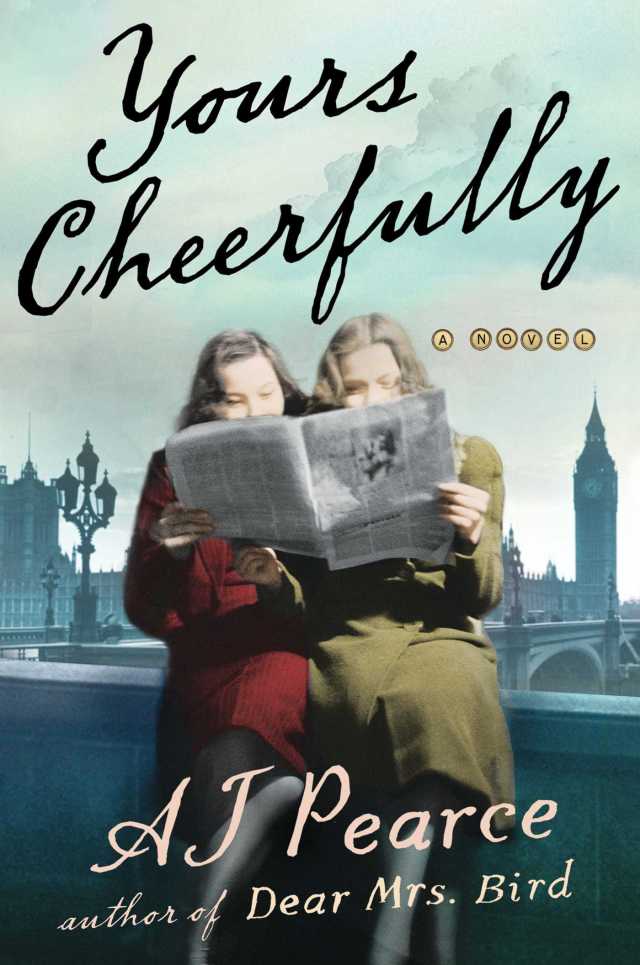
Book Review: Yours Cheerfully by AJ Pearce

Title: Yours Cheerfully
Author: AJ Pearce
Publisher: Scribner
Publication date: August 10, 2021
Length: 304 pages
Genre: Historical fiction
Source: Review copy courtesy of the publisher via NetGalley
Rating:

Rating: 3.5 out of 5.

London, November 1941. Following the departure of the formidable Henrietta Bird from Woman’s Friend magazine, things are looking up for Emmeline Lake as she takes on the challenge of becoming a young wartime advice columnist. Her relationship with boyfriend Charles (now stationed back in the UK) is blossoming, while Emmy’s best friend Bunty, still reeling from the very worst of the Blitz, is bravely looking to the future. Together, the friends are determined to Make a Go of It.

When the Ministry of Information calls on Britain’s women’s magazines to help recruit desperately needed female workers to the war effort, Emmy is thrilled to be asked to step up and help. But when she and Bunty meet a young woman who shows them the very real challenges that women war workers face, Emmy must tackle a life-changing dilemma between doing her duty and standing by her friends.

In this follow-up to Dear Mrs. Bird, the story of Emmy Lake continues — although Yours Cheerfully works perfectly well as a stand-alone. Emmy is a young woman who’s just learning the journalism ropes at Woman’s Friend magazine, while also juggling her wartime volunteer work as part of the fire watch, spending time with her best friend Bunty, and squeezing in precious visits with her boyfriend Charles whenever he can get leave. It’s 1941, and the war dominates every aspect of life in London.

As the story opens, the British Ministry of Information convenes a briefing for representatives of women’s magazines, urging them to do their patriotic duty by promoting recruitment of women workers to support the war effort. For Emmy, this represents a chance to advance in her journalism career, but as she visits a munitions factory as part of her research, she learns that there’s a darker side to women’s factory work: For those with small children, childcare can be difficult to impossible to find, and women who sneak their children into the factories so they can watch them face immediate firing.

Emmy learns as well that some of these women are war widows or have husbands missing in action, so that the factory work is not only patriotic, but is essential to their families’ financial survival.

Despite the magazine needing to keep up the positive portrayal of woman’s war work, Emmy can’t help feeling that she’s letting their readers down by not advocating for more attention to the needs of the workers — especially since there are supposed to be government-funded nurseries, but only if the factory owners make the effort to make the arrangements, and apparently, many of them don’t bother.

The story of the factory workers with whom Emmy becomes friends becomes a main thread of the plot of Yours Cheerfully. Interspersed with this is Emmy’s friendship with Bunty, recovering from injury and terrible loss after events in Dear Mrs. Bird, and the story of Emmy’s romance with Charles. There are sweet romantic moments, as well as a depiction of the challenges of everyday life during war and the fragility of every moment of happiness, knowing sorrow could be just around the corner.

I enjoyed Yours Cheerfully, although it starts very slowly. My interest was slow to engage, but eventually I was drawn in by the story of the factory workers, whom we come to know as individuals, each with their own backstory, and by the ups and downs faced by Emmy and Charles as they try to juggle courtship and engagement with the realization that Charles is likely to be sent overseas at any moment.

Yours Cheerfully is a quiet book — even the moments of greater action, such as a march to promote nurseries for the munitions workers, are fairly mild affairs. The characters are all lovely, but the book doesn’t build a great sense of drama or urgency. It’s a very nice read, but I can’t say I ever felt compelled by the plot or totally engrossed.

Overall, Yours Cheerfully provides a thoughtful look at women on the homefront during war, depicting the bravery embodied in carrying on during a time of heightened tragedy and crisis, and the power of friendship and joy to see the characters through the worst of times.

**********

Through affiliate programs, I may earn commissions from purchases made when you click through these links, at no cost to you.

Buy now at Amazon – Book Depository – Bookshop.org

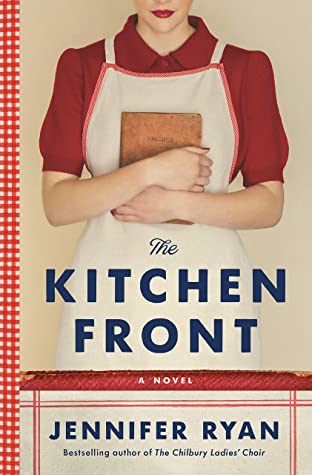
Book Review: The Kitchen Front by Jennifer Ryan

Title: The Kitchen Front
Author: Jennifer Ryan
Publisher: Ballantine Books
Publication date: February 23, 2021
Length: 416 pages
Genre: Historical fiction
Source: Review copy courtesy of the publisher via NetGalley
Rating:

Rating: 4 out of 5.

In a new World War II-set story from the bestselling author of The Chilbury Ladies’ Choir, four women compete for a spot hosting a wartime cookery program called The Kitchen Front – based on the actual BBC program of the same name – as well as a chance to better their lives.

Two years into WW2, Britain is feeling her losses; the Nazis have won battles, the Blitz has destroyed cities, and U-boats have cut off the supply of food. In an effort to help housewives with food rationing, a BBC radio program called The Kitchen Front is putting on a cooking contest–and the grand prize is a job as the program’s first-ever female co-host. For four very different women, winning the contest presents a crucial chance to change their lives.

For a young widow, it’s a chance to pay off her husband’s debts and keep a roof over her children’s heads. For a kitchen maid, it’s a chance to leave servitude and find freedom. For the lady of the manor, it’s a chance to escape her wealthy husband’s increasingly hostile behavior. And for a trained chef, it’s a chance to challenge the men at the top of her profession.

These four women are giving the competition their all–even if that sometimes means bending the rules. But with so much at stake, will the contest that aims to bring the community together serve only to break it apart?

The Kitchen Front is a fascinating look at World War II’s impact on the women and children back on the home front, who face not battlefield danger but the perils of bombing raids and food shortages.

Set in 1942, the story centers on a competition hosted by the (historically real) BBC radio program The Kitchen Front. The purpose of the program is to promote the creative use of wartime rations, aimed at British housewives struggling to feed their families when so many basics just aren’t to be had. The competition is open to professional cooks, and the prize is a co-hosting role on the radio program.

In the small town of Fenley Village, located not far from London, life is bleak for many of the town’s residents. While rare food items can still be had through the black market, most families get by on their rations and what they can grow in their own gardens. Everything can and must be repurposed, and the creativity required to actually make edible and nutritious food is remarkable.

The four main characters of the story are all very different, and each has her own reason for wanting — or needing — to win the competition. For Audrey, a grieving war widow deeply in debt trying to keep her three sons housed and fed, it’s a chance to finally get back on her feet financially. For her sister Gwendolyn, it’s a way to boost her bullying, wealthy husband’s prestige and keep his anger at bay. For Nell, a kitchen maid who’s finally learning to stand on her own two feet, it’s a dream of a life outside of service. And for Zelda, a Cordon Bleu chef facing sexism in the world of haute cuisine, it’s a means of staking a claim on the professional respect and opportunities that continually elude her.

As the four compete, they form bonds as well, and as secrets are revealed, they come together to form a new family and envision a future that benefits them all.

The book is divided into three sections, corresponding with the three rounds of the competition — starters, main courses, and desserts. In each, we learn more about the four women, and also see the different processes each uses as she invents and creates her dish for the competition. The book includes recipes for all the meals discussed, and it’s truly amazing to learn about the substitutions needed to get by on wartime rations. Who knew that the British government promoted whale meat as an alternative to beef?

I found the aspects of the book related to how the women on the home front used their wits and resources to feed their families really fascinating, and I enjoyed the picture of village life during war, the bonds of the four main characters, and the sense of sisterhood that ultimately makes all of them stronger.

Somehow, though, the overarching plotlines felt a little predictable and bland to me. I liked each of the characters well enough, but they often felt more like types than fully-fleshed out people. Maybe because the focus was split between the four, it didn’t give any one of them the opportunity to fully blossom as a main character.

Still, I enjoyed this book very much. As with her previous novels, especially the wonderful The Chilbury Ladies’ Choir, author Jennifer Ryan uses her meticulous research to bring out the feel of the era, and in this case, to bring out the flavors of family life in wartime England. The story is heartwarming, and gave me a sense of peering behind the headlines of war to see the impact on the people left behind to carry on. A recommended read!

Shelf Control #252: The Stranger’s Child by Alan Hollinghurst

Shelves final

Welcome to Shelf Control — an original feature created and hosted by Bookshelf Fantasies.

Shelf Control is a weekly celebration of the unread books on our shelves. Pick a book you own but haven’t read, write a post about it (suggestions: include what it’s about, why you want to read it, and when you got it), and link up! For more info on what Shelf Control is all about, check out my introductory post, here.

Want to join in? Shelf Control posts go up every Wednesday. See the guidelines at the bottom of the post, and jump on board!

Title: The Stranger’s Child
Author: Alan Hollinghurst
Published: 2012
Length: 564 pages

What it’s about (synopsis via Goodreads):

In the late summer of 1913, George Sawle brings his Cambridge friend Cecil Valance, a charismatic young poet, to visit his family home. Filled with intimacies and confusions, the weekend will link the families for ever, but its deepest impact will be on George’s sixteen-year-old sister Daphne.

As the decades pass, Daphne and those around her endure startling changes in fortune and circumstance, reputations rise and fall, secrets are revealed and hidden and the events of that long-ago summer become part of a legendary story, told and interpreted in different ways by successive generations.

Powerful, absorbing and richly comic, ‘The Stranger’s Child’ is a masterly exploration of English culture, taste and attitudes over a century of change. 

How and when I got it:

I bought a copy on a whim, at least 6 or 7 years ago.

Why I want to read it:

This was a total impulse buy! On a weekend trip with my daughter, we happened to find a really great bookstore, and this book was prominently displayed on their front rack. I loved the look of the cover, and while I didn’t feel like the back copy gave me a whole lot of information, I just needed to buy it!

I think the main reason I haven’t actually read the book yet is its length. It’s a big book! I do still want to get to it eventually, which is why it hasn’t ended up in my library donation piles just yet.

Have you read this book? Does it sound like something you’d want to read?

Please share your thoughts!


__________________________________

Want to participate in Shelf Control? Here’s how:

  • Write a blog post about a book that you own that you haven’t read yet.
  • Add your link in the comments or link back from your own post, so I can add you to the participant list.
  • Check out other posts, and…

Have fun!

Book Review: The Jane Austen Society by Natalie Jenner

Title: The Jane Austen Society
Author: Natalie Jenner
Publisher: St. Martin’s Press
Publication date: May 26, 2020
Length: 320 pages
Genre: Historical fiction
Source: Review copy courtesy of the publisher via NetGalley
Rating:

Rating: 3 out of 5.

Just after the Second World War, in the small English village of Chawton, an unusual but like-minded group of people band together to attempt something remarkable.

One hundred and fifty years ago, Chawton was the final home of Jane Austen, one of England’s finest novelists. Now it’s home to a few distant relatives and their diminishing estate. With the last bit of Austen’s legacy threatened, a group of disparate individuals come together to preserve both Jane Austen’s home and her legacy. These people—a laborer, a young widow, the local doctor, and a movie star, among others—could not be more different and yet they are united in their love for the works and words of Austen. As each of them endures their own quiet struggle with loss and trauma, some from the recent war, others from more distant tragedies, they rally together to create the Jane Austen Society.

The Jane Austen Society is historical fiction set in post-war England, in the small town of Chawton. The main estate of the village has been in the Knight family for generations, and centuries earlier, became the home of Jane Austen’s brother and Jane herself.

But after World War II, the last remaining members of the Knight family are Frances Knight, a woman in her 40s who never leaves her home, and her ailing, elderly, unpleasant father. With Mr. Knight’s demise looming, the future of the estate is at risk — and if the estate passes out of the family hands, so too will the priceless objects and books that once belonged to Jane Austen.

The characters of the book all seem to have some sort of special connection to Jane Austen, her fiction, and her memory. Through their love of her fiction, the various characters find common ground, and ultimately band together to find a way to save the cottage that was once Jane’s home and to preserve the books that were an important part of her life.

As these people form the Jane Austen Society, we get to know them as individuals as well. There’s the widowed doctor who may be ready for love again, the young war bride who suffers unimaginable loss, the local farmer who never got to pursue his dreams of higher learning, and the teen-aged girl whose passion for Austen leads to some truly amazing discoveries.

And then there’s the outsider, a Hollywood star whose love for Jane Austen and her admiration of the author’s works and life inspire her to imagine a different sort of career and life for herself, other than being a property of the studios who want to make money off of her beauty — but only until she ages out of starlet status.

I enjoyed The Jane Austen Society and its characters, but I can’t say that I felt particularly invested. The story develops slowly, and it was only at around the midpoint that I started to feel any sort of excitement building.

This is a quiet sort of story, and it’s lovely to see how these very different group of people, all suffering and struggling to recover from loss after the war, find new purpose and connection through their love of literature. I really enjoyed all of their conversations about the meaning they find in Austen’s works, which characters they most relate to, and how the characters’ actions help them understand elements of their own life.

I wished for something more, somehow. It’s a sweet book, but just lacked a real oomph as far as I was concerned. I can’t quite put my finger on it. It was a nice read, and I didn’t mind it a bit, but I also couldn’t quite care very strongly about the stakes or how the various personal entanglements would all work out.

The Jane Austen Society is a good choice for fans of historical fiction, and of course, for fans of Jane Austen! And after reading this book, I’m feeling the need to go reread a little Austen myself… maybe Persuasion or Mansfield Park this time around?

Book Review: Ellie and the Harpmaker by Hazel Prior


A rich, heartwarming and completely charming debut that reminds us that sometimes, you don’t find love–love finds you.

Dan Hollis lives a happy, solitary life carving exquisite Celtic harps in his barn in the countryside of the English moors. Here, he can be himself, away from social situations that he doesn’t always get right or completely understand.

Ellie Jacobs is a lonely housewife, her days filled with walks and poetry she writes in secret.

One day, she comes across Dan’s barn and is enchanted by his collection. Dan gives her a harp made of cherry wood to match her cherry socks. He stores it for her, ready for whenever she’d like to take lessons.

Ellie begins visiting Dan almost daily, drifting deeper into his world. But when she accidentally discovers a secret, she must make a choice: keep it from him and risk their friendship, or change the course of their lives forever

Ellie and the Harpmaker is a sweet, lovely debut novel that crept up on me and then completely entranced me! Such a magical and deceptively simple tale.

Told through alternating chapters, we get to see the world through Dan and Ellie’s eyes. Dan is unusual, to say the least. He loves his solitude, the peace of Exmoor, the woods and streams and pebbles all around him, and most of all, the hand-carved harps that are his passion and his livelihood. He view the world and understands interactions completely literally — he’s presented here as someone who appears to be somewhere on the Asperger’s spectrum, although this is never actually stated. He functions well, but lacks the ability to interpret many of the social constructs and behaviors that others take for granted.

A woman came to the barn today. Her hair was the color of walnut wood. Her eyes were the color of bracken in October. Her socks were the color of cherries, which was noticeable because the rest of her clothes were sad colors.

Ellie is an unfulfilled housewife in her 30s, a woman whose father’s death has prompted her to make a list of things to do before she’s 40 — and one of these is to learn to play music. When she happens upon the Harp Barn, she’s astonished by Dan’s workmanship and the beauty of his harps, and is intrigued by Dan himself. Dan insists on gifting her with a harp, but Ellie’s husband Clive forces her to return it, believing that she misunderstands Dan’s intentions. But Dan then insists that the harp is and always will be Ellie’s, and tells her he’ll keep it for her, for her to play whenever she wants.

It was her harp, and always would be. I never took back a gift. The harp would sit here in my barn and wait for her. It would sit and wait until all the cows had come home. This did not sound like a very long time, so I made it longer. The harp would wait, I told her, until the sea dried up (which someday it would if you gave it long enough) and the stars dropped out of the sky (which someday they would if you gave them long enough), but nevertheless this harp would never, ever belong to anyone else.

Thus begins a warm and unusual friendship between two people whose paths would likely have never crossed. Each adds to the other’s life. As Ellie gets to know Dan better, she digs into his world and his assumptions about the people in it, opening his eyes to new and different aspects of his life that he’d never realized before.

(Being vague here… no spoilers!)

Although the book started slowly for me, I was soon swept away by the lovely writing and the wonderful characters. At first, I was afraid that Ellie and the Harpmaker would feel too much like a clone of The Rosie Project and other recent reads about people who present with social difficulties and/or on the spectrum. Not so. Very quickly Ellie and the Harpmaker won my heart in its own way, erasing thoughts of comparisons to other books from my mind.

Sometimes the ifs work for you and sometimes they work against you. Sometimes you think they are working for you whereas in fact they are working against you, and sometimes you think they are working against you whereas in fact they are working for you. It is only when you look back that you realize, and you don’t always realize even then.

I grew to love Dan and Ellie, and felt all the feels as I read about their journeys, alone and together. Ellie’s marriage is frustrating to read about and I wanted to give her a good shake, but she becomes more self-aware as the book progresses, and I was proud of her for the realizations she finds along the way. Dan is simply lovely — a giving, creative, uncomplicated person who only knows how to be good. He’s really marvelous, and someone I won’t soon forget.

Please do yourself a favor and read this book! Ellie and the Harpmaker is a delicious read that left me hungry for beautiful music and a forest to wander through.
_________________________________________

The details:

Title: Ellie and the Harpmaker
Author: Hazel Prior
Publisher: Berkley Publishing
Publication date: August 6, 2019
Length: 288 pages
Genre: Contemporary fiction
Source: Review copy courtesy of the publisher via NetGalley