Book Review: Can’t Spell Treason Without Tea (Tomes & Tea, #1) by Rebecca Thorne

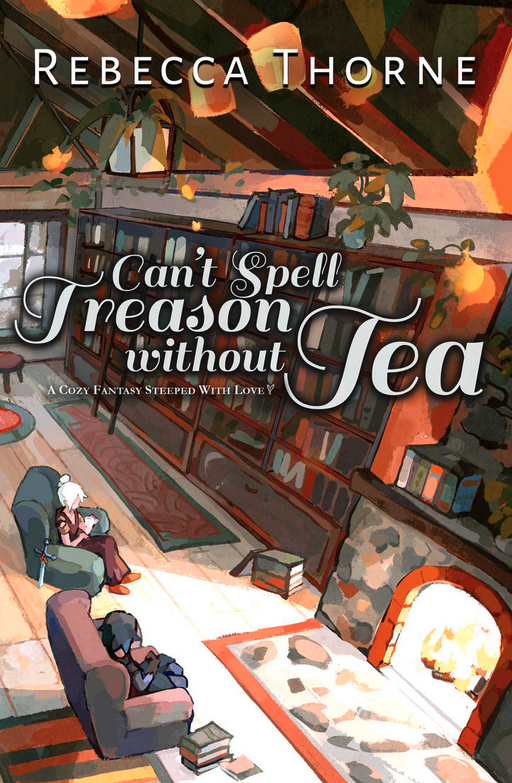
Title: Can’t Spell Treason Without Tea
Series: Tomes & Tea, #1
Author: Rebecca Thorne
Publisher: Bramble
Publication date: September 15, 2022
Length: 345 pages
Genre: Fantasy
Source: Purchased
Rating:

Rating: 3.5 out of 5.

“You like tea. I like books. Care to open a shop and forget the world exists?”

All Reyna and Kianthe want is to open a bookshop that serves tea. Worn wooden floors, plants on every table, firelight drifting between the rafters… all complemented by love and good company. Thing is, Reyna works as one of the Queen’s private guards, and Kianthe is the most powerful mage in existence. Leaving their lives isn’t so easy.

But after an assassin takes Reyna hostage, she decides she’s thoroughly done risking her life for a self-centered queen. Meanwhile, Kianthe has been waiting for a chance to flee responsibility–all the better that her girlfriend is on board. Together, they settle in Tawney, a town nestled in the icy tundra of dragon country, and open the shop of their dreams.

What follows is a cozy tale of mishaps, mysteries, and a murderous queen throwing the realm’s biggest temper tantrum. In a story brimming with hurt/comfort and quiet fireside conversations, these two women will discover just what they mean to each other… and the world.

Author Rebecca Thorne states clearly in her author’s notes that she was inspired by Travis Baldree’s Legends & Lattes… and the footprints of that cozy fantasy can be seen all over Can’t Spell Treason Without Tea.

If you’re a fan of the cozy fantasy genre, then prepare for delight — all the genre’s major beats are here: Renovations, baking, steeping tea, lots of books, settling in a new town, finding community… Can’t Spell Treason has them all!

And yet, despite treading familiar ground, this sweet book is still quite lovely to read. It may not be 100% new or different, but the author take the basics of the genre and spins a charming tale of love, magic, and adventure, with characters to care about… even if, most of the time, the stakes are either relatively low or easily overcome.

Reyna is one of the Queensguard, raised from birth to protect the (terrible) Queen at all costs, including sacrificing her own life, if necessary. Kianthe is the Arcandor, the most powerful mage in the land. After a chance meeting at the palace, they’ve fallen in love, but neither has the ability to choose a life together. Or do they?

After one particularly violent incident, Reyna has had enough. All she wants is the life she and Kianthe have been fantasizing about for two years. It doesn’t take much (or any) convincing for Kianthe to agree to run away with Reyna and build a life together, one where they’ll open a tea and book shop and live happily ever after.

It’s easier for Kianthe — she’s the Arcandor and can do whatever she likes. Sure, the other mages aren’t thrilled that she’s not going to live full-time at the Magicary any longer, but she’ll still be available to carry out her duties. Reyna is actually committing treason by leaving the Queen’s service without permission (which would not be given, even if asked; hers is a lifetime post). She knows that eventually, someone may track her down, but for now, she’s determined to pursue happiness with the love of her life.

We get long stretches of Kianthe and Reyna finding an unused barn in a remote town near the border with dragon country, then renovating it, stocking it, and opening up their business, which immediately draws the community together. It’s very sweet, but not exactly full of drama.

Eventually, there’s more action as Kianthe saves the town from a dragon attack and figures out why they’ve been attacking, ultimately committing to a quest on behalf of the dragons (which sets up the plot for the next book). Plus, Reyna is eventually discovered, and must find a way to avoid execution for treason — lots of negotiations ensue.

All in all, this is indeed a cutely cozy fantasy, which kept me entertained despite the overall fluffy nature of the story. The characters are quite fun. Gotta love how Kianthe, most powerful mage in the land, is at her most gleeful when she’s making simply awful puns — it’s actually quite charming:

The mage paused. “Sorry. This is sappy.”

“Is that a tree pun?” Reyna’s tone was bone dry.

“Maybe. But don’t worry, I’ll leaf it at that.”

The story beats, while having a familiar feel, still manage to entertain and introduce plenty of nice little moments along the way.

If you’re looking for a bit of uplifting joy in fantasy form — with tea and a bookshop — this book makes a very nice reading diversion. I enjoyed it enough to want to continue with the series.

Up next:
Tomes & Tea, #2: A Pirate’s Life for Tea

Purchase linksAmazon – Bookshop.orgLibro.fm
Disclaimer: When you make a purchase through one of these affiliate links, I may earn a small commission, at no additional cost to you.
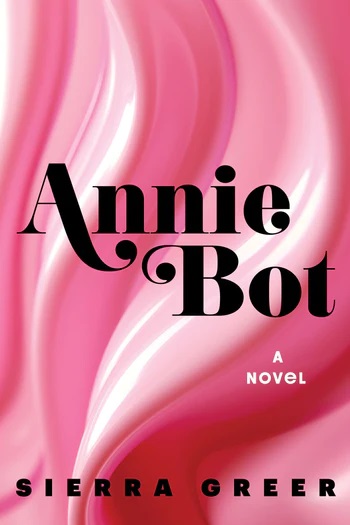
Book Review: Annie Bot by Sierra Greer

Title: Annie Bot
Author: Sierra Greer
Publisher: Viking
Publication date: March 19, 2024
Length: 298 pages
Genre: Science fiction
Source: Library
Rating:

Rating: 4 out of 5.

Annie Bot was created to be the perfect girlfriend for her human owner, Doug. Designed to satisfy his emotional and physical needs, she has dinner ready for him every night, wears the cute outfits he orders for her, and adjusts her libido to suit his moods. True, she’s not the greatest at keeping Doug’s place spotless, but she’s trying to please him. She’s trying hard.

She’s learning, too.

Doug says he loves that Annie’s artificial intelligence makes her seem more like a real woman, but the more human Annie becomes, the less perfectly she behaves. As Annie’s relationship with Doug grows more intricate and difficult, she starts to wonder whether Doug truly desires what he says he does. In such an impossible paradox, what does Annie owe herself?

Annie is a Stella — that is, an AI-powered artificial person created by the Stella-Handy corporation, programmed in Cuddle Bunny mode to be the perfect girlfriend for someone who can afford the luxury-level pricetag. Annie’s owner Doug has enable the autodidact option for Annie, wanting a more authentic experience. Annie is self-aware and able to learn and grow from her experiences, and what Annie wants more than anything — in fact, the only thing Annie is meant to want — is to please Doug.

And yet, she can’t quite be perfect. He chose a Cuddle Bunny Stella, rather than an Abigail (whose function is housework), yet he’s angry when Annie fails to keep his apartment clean to his standards. Annie’s internal sensors rate every interaction on a scale of 1 to 10, and when Doug’s displeasure level gets to 3 or higher, Annie becomes highly anxious and strives to fix things immediately.

But she doesn’t always know the right thing to say, and she makes mistakes… sometimes, big ones. While Annie has the ability to think and feel, she’s still programmed to obey Doug’s commands, including orders to shut down, change her libido settings, or go into another room and stay there until he says she can come out — which can take days.

Doug’s wants dictate everything, even Annie’s physical attributes. When she goes for her regular tune-ups, Doug can submit requests to have her weight reduced and her breast size enlarged, and Annie doesn’t get a say. When the technician notes that some of Annie’s functions seem a little sluggish and questions whether she’s exhibiting signs of moodiness, the suggested fix is to set her up with phone pals — an AI-generated best friend and a cousin, who call her regularly and give Annie a sense of fun and engagement when she’s not busy with Doug. Doug agrees to add this option (for an additional fee, of course), but only for as long as it produces better results — meaning a more pleasant companion — for him.

It’s fascinating to see Annie’s inner life, and her dawning realization that the inability to make her own choices is making her unhappy. She initially becomes distressed in response to Doug’s moods, but as she continues to develop, she’s able to question her lack of agency and purpose. It’s no longer enough to please Doug; she can’t help noticing how his control seeps into every interaction, even when things seem to be going better than ever.

Doug and Annie’s relationships can be seen as a stand-in for many types of toxic relationships. He’s controlling to an extreme, withholds approval in order to dictate Annie’s movements and moods, demands or withholds sex as reinforcement, and chooses every aspect of Annie’s life, from her clothes to her activities to her social life and her whereabouts. When he decides to train her on “wandering”, she’s allowed outdoors on her own for walks and errands — but all still under Doug’s surveillance, and of course, with her tracking features enabled.

Grooming and even trafficking seem to key elements of owning a Stella, and the fact that the Stella industry is so popular and accepted within society is a sign of just how wrong things truly are.

Annie Bot is an immersive, thought-provoking read. While some scenes have humor, it’s impossible to forget Annie’s status. Doug enjoys having a seemingly real girlfriend, but there’s never any chance of forgetting that at the end of the day, he owns her. Readers suffer alongside Annie as she is forced to respond to his whims by changing her behavior and her body. Her constant monitoring of his happiness and displeasure would set off loud alarm bells in a relationship between two humans.

Annie Bot might have slipped right past my notice if not for my book group. I’m so glad someone from the group urged us to read it, and look forward to our discussion later this month. It’s a fast-paced book and a quick read that held my attention from start to finish. I felt completely drawn in by Annie’s world and her experiences. This may be science fiction, but many aspects of the relationship feel all too real and possible.

Highly recommended.

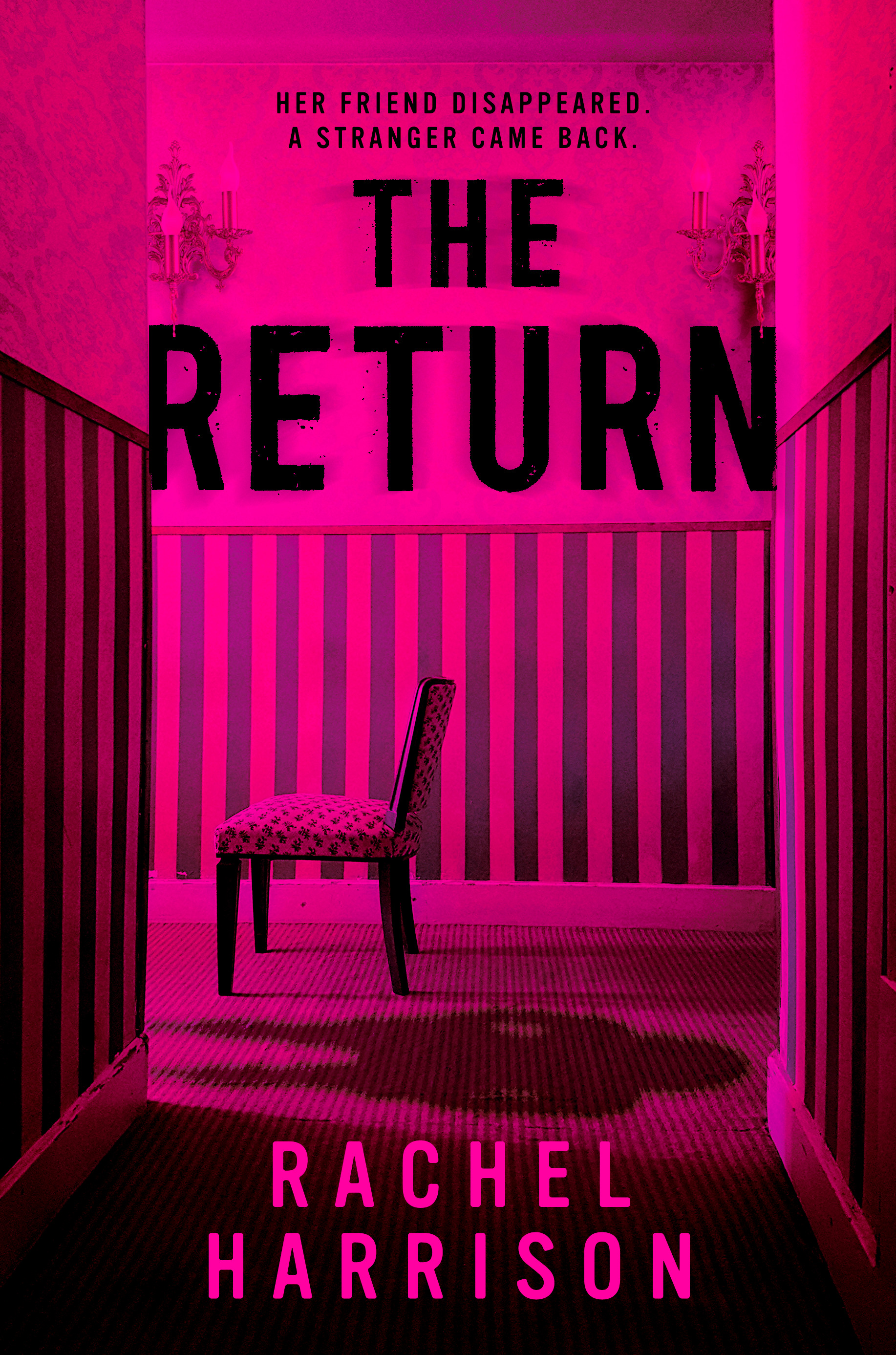
Book Review: The Return by Rachel Harrison

Title: The Return
Author: Rachel Harrison
Publisher: Berkley
Publication date: March 24, 2020
Length: 304 pages
Genre: Horror
Source: Purchased
Rating:

Rating: 4 out of 5.

A group of friends reunite after one of them has returned from a mysterious two-year disappearance in this edgy and haunting debut.

Julie is missing, and the missing don’t often return. But Elise knows Julie better than anyone, and she feels in her bones that her best friend is out there, and that one day she’ll come back. She’s right. Two years to the day that Julie went missing, she reappears with no memory of where she’s been or what happened to her.

Along with Molly and Mae, their two close friends from college, the women decide to reunite at a remote inn. But the second Elise sees Julie, she knows something is wrong—she’s emaciated, with sallow skin and odd appetites. And as the weekend unfurls, it becomes impossible to deny that the Julie who vanished two years ago is not the same Julie who came back. But then who—or what—is she?

I first fell for Rachel Harrison’s writing when I read her 2nd published novel, Cackle. Since then, I’ve devoured each new book, and have loved them all. Clever plotting, exceptional character development, and generous helping of gruesome, scary horror all add up to terrifyingly satisfying reads. I’ve been meaning to go back and read her debut novel, The Return, for quite a while… and now I’ve finally done it!

The Return is just as creepy and scary as I expected, and I enjoyed every bit of it, even while feeling grossed out and completely on edge.

At the heart of The Return is a group of four women who have been best friends since their college days. Now scattered and living separate lives, they still represent the truest connections they’ve ever had, despite distance often keeping them apart.

When Julie disappears on a hiking trip, the friends are shocked, but Elise — our main character — is the only one of the remaining three who simply doesn’t accept that Julie might be dead. As more and more time passes, and Julie’s husband eventually holds a memorial service for her, the other two friends, Molly and Mae, urge Elise to seek therapy to deal with her denial and grief. Elise pretends to agree, but in her heart-of-hearts, she feels that Julie, wherever she might be, is still alive.

And then, two years after her disappearance, Julie simply shows up back at the home she shares with her husband. She has no memory of the past two years, and just wants to carry on with her life — and most of all, to reconnect with her best friends. Mae decides that what they need is a girls’ trip — time alone, someplace remote, where they can unplug from the outside world and just focus on being together.

As the four friends arrive at the hotel where they’ll be staying, it’s clear that this place is just weird. Each room is an over-the-top experience, with bizarre, extravagant themed decor. Elise is uncomfortable right from the start, but she tamps down her unease for the sake of the group. Things only get worse once Julie arrives and the other three get their first look at her since her return: She’s emaciated, falling apart, and her teeth are a disaster. But she’s Julie, and they love her, and most of all, they want her to feel how happy they are to be with her again.

As the story unfolds, the group dynamics inform how the friends interact, how much they share and what they choose to hold back. Through Elise’s first-person narrative, we come to understand her unhappiness, how she feels judged by the others, and the role that Julie plays in her life.

At the same time, we see that something is very, very wrong. Is it the hotel itself? Why is the manager so stressed out? What’s that weird smell? Why does Elise think there’s something on the balcony outside her room? And what, exactly, is wrong with Julie? Why does she seem better some days? Why is formerly vegetarian Julie now bingeing on meat? WHAT IS GOING ON?

If all of this sounds like a lot to unpack — well, it is, and yet, it works beautifully. As the book progresses, it becomes clearer that Elise herself is not the most reliable of narrators. We may think she’s being straightforward, but there are a couple of big bombshells that she drops later in the book that make us reevaluate everything she’s told us so far. At the same time, there are clearly some truly icky things happening, and as the book progresses, the gore gets worse and worse.

The Return is fascinating, scary, and unusual. It’s not for the squeamish — but I happened to love it. The mounting horror is just so well constructed — and beyond that, I loved the insights into women’s friendships, how they change and evolve, and how loneliness and dissatisfaction creeps into lives as people grow up and face the world after college.

You can’t erase your past when there are pieces of it scattered inside other people.

I will say too that I love Rachel Harrison’s way with words. Little descriptions that could just be stage-setting made me stop to reread them and savor what they evoke:

It’s a colorless day. The kind of fall day not advertised. The trees shiver in the wind.

Toward the end of the relationship, when my resentment congealed and my love peeled like a sunburn to reveal the sneering face of reality underneath, I called her to confess.

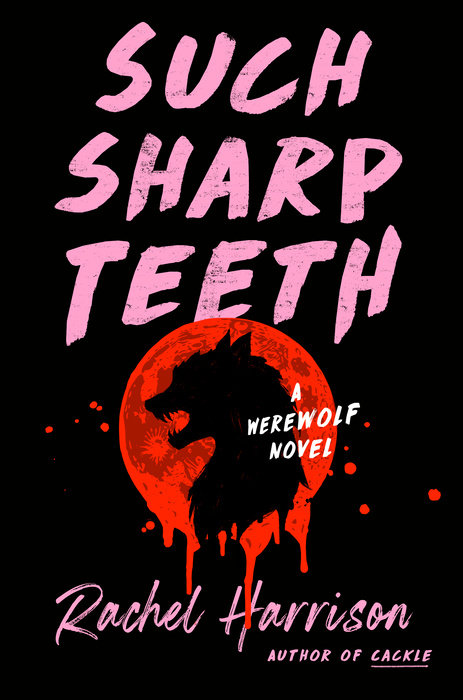
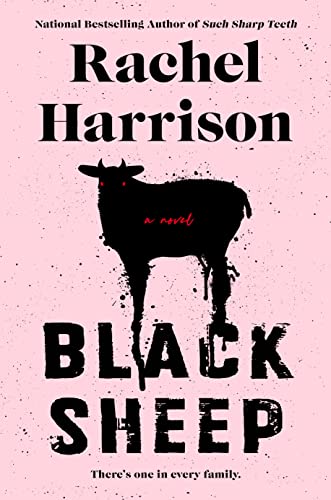
Overall, The Return is a fast, absorbing, chilling read. Not quite on a par with some of her later books (such as Such Sharp Teeth and Black Sheep, which are brilliant!), but a terrific horror read none the less. I’m still trying to wrap my head around everything that happens in this book… and I’m afraid that from now, I will be refusing all opportunities to visit remote, extravagant rural resorts.

Want to know more about Rachel Harrison’s books? Check out my reviews of her other books:

Cackle
Such Sharp Teeth
Black Sheep
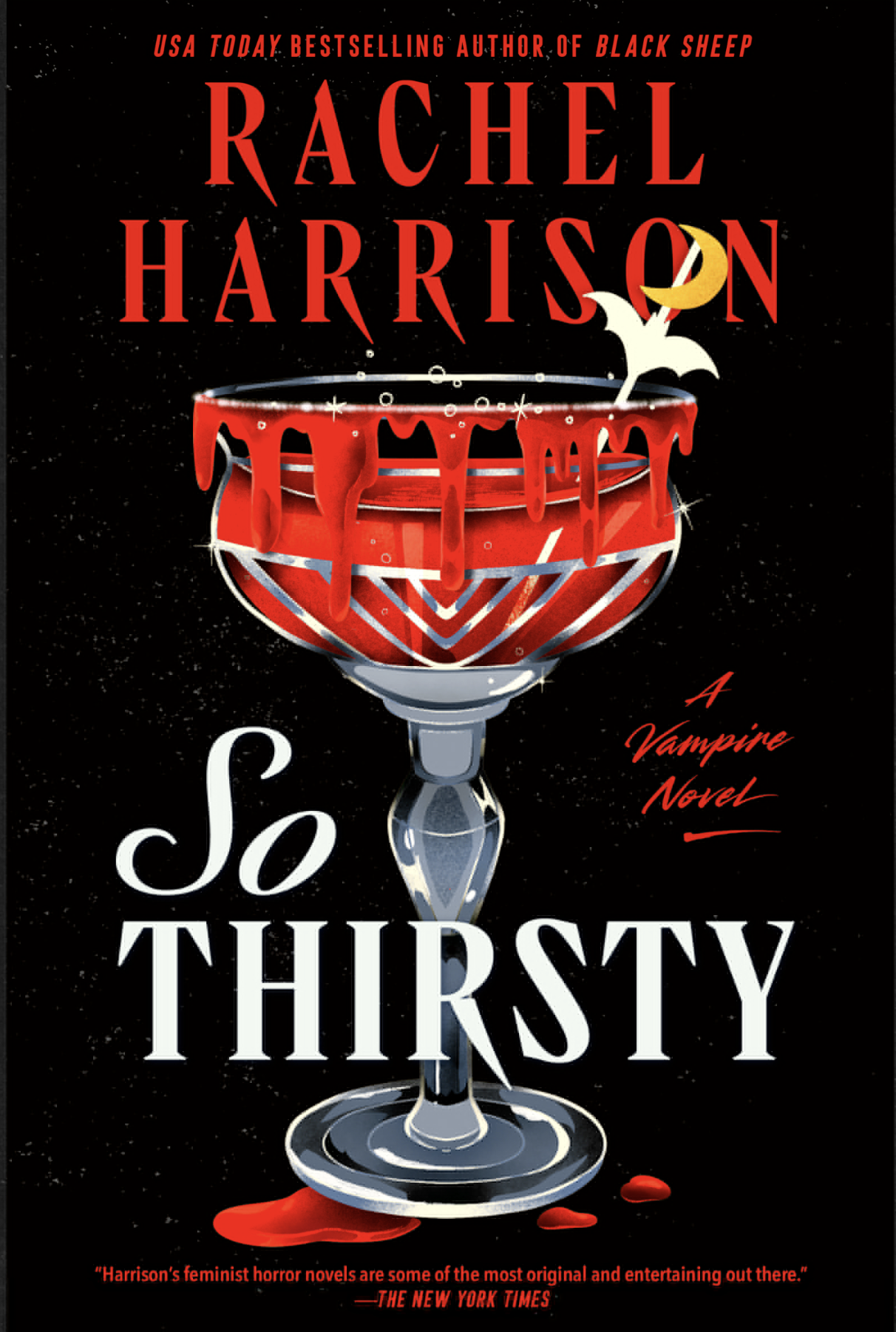
So Thirsty

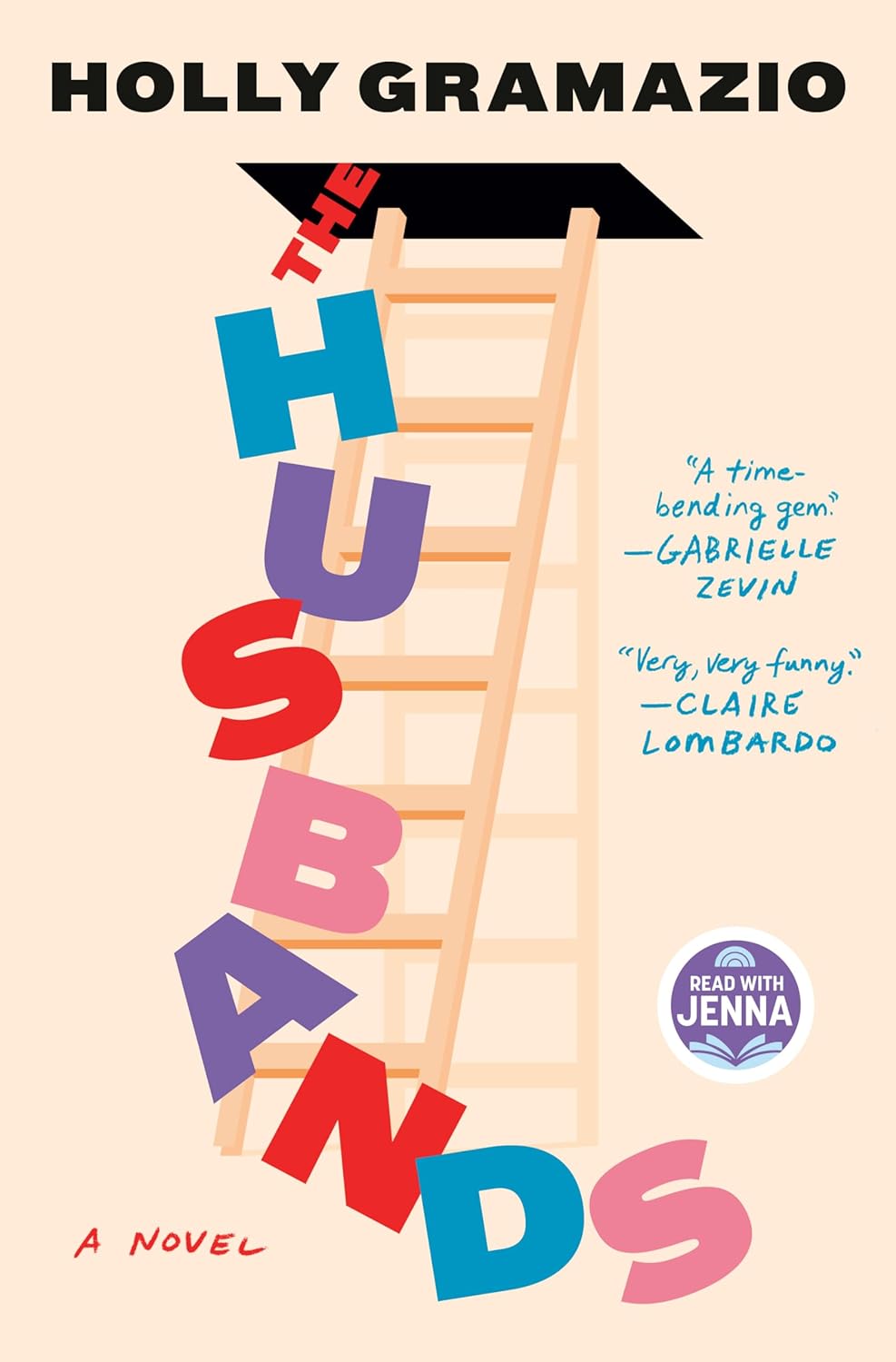
Book Review: The Husbands by Holly Gramazio

Title: The Husbands
Author: Holly Gramazio
Publisher: Doubleday
Publication date: April 2, 2024
Print length: 352 pages
Genre: Contemporary fiction
Source: Library

Rating: 4.5 out of 5.

This exuberant debut, praised by Gabrielle Zevin as a “time-bending gem,” asks: how do we navigate life, love and choice in a world of never-ending options?

When Lauren returns home to her flat in London late one night, she is greeted at the door by her husband, Michael. There’s only one problem—she’s not married. She’s never seen this man before in her life. But according to her friends, her much-improved decor, and the photos on her phone, they’ve been together for years.

As Lauren tries to puzzle out how she could be married to someone she can’t remember meeting, Michael goes to the attic to change a lightbulb and abruptly disappears. In his place, a new man emerges, and a new, slightly altered life re-forms around her. Realizing that her attic is creating an infinite supply of husbands, Lauren confronts the question: If swapping lives is as easy as changing a lightbulb, how do you know you’ve taken the right path? When do you stop trying to do better and start actually living?

I can pretty much guarantee that you’ve never read a story like this before! The idea sounds nuts — a woman discovers that she has some sort of magical attic that delivers a stream of new husbands to her (not that she had a husband to begin with), and if she doesn’t like the one she gets, she just sends him back up to the attic and waits for the next one to come down.

Despite the out-there premise, The Husbands is a terrific read. Parts are laugh-out-loud funny, but mixed in with the absurdity of it all are nuggets of truth about love, relationships, and learning to live with and accept another person.

The moment his foot disappears, doubt washes through her. Perhaps she will receive only worse and worse husbands, maybe he was the best available, this was her chance and she’s fucked it up.

Lauren’s life turns upside-down when the first husband arrives, but once she realizes that the attic essentially offers a reset, she’s able to change her life at will. Different husbands bring different realities. Each time a new husband arrives, she discovers that her life changes too: Each husband is a doorway into a life some version of her would have chosen, and that means not only a different partner, but also other areas of divergence — different clothes, differently decorated flat, different jobs, even different body shapes. Some versions of Lauren’s life include a devotion to working out or hiking; in others, she’s clearly too worn down to bother. In many, she works in the same job, but there are times when she doesn’t work at all, has jobs she doesn’t know how to do, or finds herself promoted into a role that stresses her out.

Some husbands are more memorable than others. Some Lauren sends back immediately; some she lives with for a few days. There are some she can’t wait to get rid of, and one, sadly, that she wants to keep, but loses to his efficiency (he goes to stow something in the attic before she can stop him, and then he’s gone).

For the first third or so of the book, I wondered if this was what the whole book would be like — just a random string of husbands, and how Lauren interacts with each one. It goes much deeper than that, though, and the storyline gets more intricate and compelling as new developments occur.

Lauren’s never-ending cycle of husbands leads her to ponder choices and outcomes. She realizes that each husband is someone some version of herself chose, and therefore starts to assess each one more critically. Why this person? How did the two of them forge a connection? In what version of her life does this particular marriage make sense?

It’s such an interesting dilemma: What does it mean to enter a relationship that’s already well underway? Lauren is never a newlywed in any of these alternate versions of her life. Each husband is someone she must originally have fallen for, with all the thrills of new love… but by the time they descend the attic stairs, those days are in the past.

There is a time, she thinks, at the start of any relationship, when the process of falling in love softens a personality, like wax in a warm room. And so two people in love change, just a little, pushing their wax figures together, a protuberance here smoothed down but creating a dip there. It doesn’t last long, the time when love can gently change who you are, and in the relationships that she’s visited over the last six months, the moment has long passed.

With each husband, Lauren has to wonder if this is the one to keep, or could the next one possibly be better?

She has always hated being wrong, the idea of doing something that turns out to be an irredeemable mistake.

The consequences of Lauren’s shuffling of husbands become more dire as the book progresses. Eventually, Lauren must decide how much more she can take and whether getting herself out of the cycle is worth the risk of being stuck with someone imperfect.

The Husbands is such a weird and wild book, but I loved it! The writing is fantastic. The pacing zips along, but there are moments of introspection that really strike a nerve. I found the concept and Lauren’s ever-shifting reality absolutely fascinating, deeply engrossing, and very often, incredibly funny. The book provides lots of food for thought on what we risk when we enter into a relationship with another human being — how much can go wrong and how much can go right, how much is unknowable, and how many different outcomes can stem from seemingly simple decisions.

Ultimately, The Husbands is both terrific entertainment and a below-the-surface look at the intricacies of relationships and marriage.

Book Review: One Summer in Savannah by Terah Shelton Harris

Title: One Summer in Savannah
Author: Terah Shelton Harris
Publisher: Sourcebooks Landmark
Publication date: July 4, 2023
Length: 464 pages
Genre: Contemporary fiction
Source: Review copy courtesy of the publisher via NetGalley

Rating: 3 out of 5.

A compelling debut that glows with bittersweet heart and touching emotion, deeply interrogating questions of family, redemption, and unconditional love in the sweltering summer heat of Savannah, as two people discover what it means to truly forgive.

It’s been eight years since Sara Lancaster left her home in Savannah, Georgia. Eight years since her daughter, Alana, came into this world, following a terrifying sexual assault that left deep emotional wounds Sara would do anything to forget. But when Sara’s father falls ill, she’s forced to return home and face the ghosts of her past.

While caring for her father and running his bookstore, Sara is desperate to protect her curious, outgoing, genius daughter from the Wylers, the family of the man who assaulted her. Sara thinks she can succeed—her attacker is in prison, his identical twin brother, Jacob, left town years ago, and their mother are all unaware Alana exists. But she soon learns that Jacob has also just returned to Savannah to piece together the fragments of his once-great family. And when their two worlds collide—with the type of force Sara explores in her poetry and Jacob in his astrophysics—they are drawn together in unexpected ways.

One Summer in Savannah is a difficult book to describe. It’s the story of Sara, a woman in her mid-20s who swore she’d neve return to her home town of Savannah. At age 18, she was raped and then vilified at the trial that convicted the rapist, the gifted son of a very powerful old-money family. Upon discovering that she was pregnant, Sara fled to a state that doesn’t allow rapists parental rights and kept her daughter’s existence a secret from the Wyler family. Eight years later, when Sara’s father is ill and has limited time left, she reluctantly returns, still intending to keep Alana hidden from the Wylers.

Meanwhile, Jacob — identical twin to Daniel, the rapist — also returns to Savannah. Daniel is dying of leukemia and needs a bone marrow transplant, and although Jacob cut his entire family out of his life after the trial, he can’t deny his brother the help he desperately needs.

As Sara and Jacob encounter one another, she recognizes his kindness and his own painful past, and allows him to begin tutoring Alana, a genius who needs the inspiration and guidance that Jacob can provide. Sara and Jacob each navigate their own paths toward healing, seeking ways to move forward after pain and loss.

I have to be honest — at 30%, I was about ready to put the book down. The writing style did not especially work for me — very stilted in places, and then overly reliant on imagery and metaphor in others. Beyond that, there were plot elements that seemed jarring or unlikely, such as:

  • Sara’s father has spoken only in poetry since her childhood. I mean, ONLY in poetry. He conducts conversations by reciting lines of poetry that are relevant to the situation, and those who are close to him seem to be able to understand and parse his meaning.
  • There’s also the fact that the main character ends up falling in love with the identical twin of the man who raped her. Jacob is a lovely, wonderful person — but the relationship never truly felt believable.
  • Everyone in the book is super special. Sara becomes a poet; Jacob is an astrophysicist; Daniel, we are told, was destined for great things (his mother insists that he would have cured cancer, if not for that awful girl who told lies about him and ruined his life); and Alana is a genius who solves unsolvable math equations and taught herself three languages by the age of eight. It’s all a bit much.
  • Another complaint — there are plot points that are referred to, but not shown. For example, Jacob helps Sara’s father write a letter to Sara which has a huge emotional impact on her, but we don’t see the letter. Another example — Daniel gives a TV interview in which he owns up to what he’s done, but we only hear about it in passing, rather than getting to glimpse what he said.

Meanwhile, Daniel and his mother Birdie remain fairly terrible until close the end, when they both get a sort of redemption, but I’m not sure we saw enough to feel that they actually earned it.

Themes of redemption and forgiveness are dominant throughout the story, and some scenes are moving — but overall, this book just didn’t work well for me. Too many discordant notes, too many details that felt false, and a writing style that keeps the characters at a distance for much of the story.

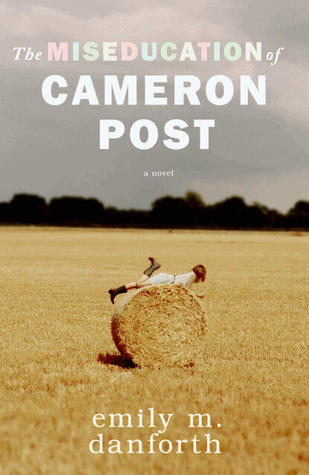
Shelf Control #244: The Miseducation of Cameron Post by Emily M. Danforth

Shelves final

Welcome to Shelf Control — an original feature created and hosted by Bookshelf Fantasies.

Shelf Control is a weekly celebration of the unread books on our shelves. Pick a book you own but haven’t read, write a post about it (suggestions: include what it’s about, why you want to read it, and when you got it), and link up! For more info on what Shelf Control is all about, check out my introductory post, here.

Want to join in? Shelf Control posts go up every Wednesday. See the guidelines at the bottom of the post, and jump on board!

Title: The Miseducation of Cameron Post
Author: Emily M. Danforth
Published: 2012
Length: 485 pages

What it’s about (synopsis via Goodreads):

When Cameron Post’s parents die suddenly in a car crash, her shocking first thought is relief. Relief they’ll never know that, hours earlier, she had been kissing a girl.

But that relief doesn’t last, and Cam is soon forced to move in with her conservative aunt Ruth and her well-intentioned but hopelessly old-fashioned grandmother. She knows that from this point on, her life will forever be different. Survival in Miles City, Montana, means blending in and leaving well enough alone (as her grandmother might say), and Cam becomes an expert at both.

Then Coley Taylor moves to town. Beautiful, pickup-driving Coley is a perfect cowgirl with the perfect boyfriend to match. She and Cam forge an unexpected and intense friendship–one that seems to leave room for something more to emerge. But just as that starts to seem like a real possibility, ultrareligious Aunt Ruth takes drastic action to “fix” her niece, bringing Cam face-to-face with the cost of denying her true self–even if she’s not exactly sure who that is.

The Miseducation of Cameron Post is a stunning and unforgettable literary debut about discovering who you are and finding the courage to live life according to your own rules. 

How and when I got it:

I found a copy on the book swap shelf at work.

Why I want to read it:

I remember seeing positive reviews for this book over the years, and I know there was a movie version too. After reading Plain Bad Heroines this fall, I’m really interested in reading more by this author.

I haven’t been reading much YA this year, but this does sounds like a good one!

Have you read this book? Would you want to?

Please share your thoughts!


__________________________________

Want to participate in Shelf Control? Here’s how:

  • Write a blog post about a book that you own that you haven’t read yet.
  • Add your link in the comments or link back from your own post, so I can add you to the participant list.
  • Check out other posts, and…

Have fun!

Book Review: A Witch in Time by Constance Sayers

Title: A Witch in Time
Author: Constance Sayers
Publisher: Redhook
Publication date: February 11, 2020
Length: 448 pages
Genre: Fantasy/historical fiction
Source: Review copy courtesy of the publisher via NetGalley
Rating:

Rating: 4.5 out of 5.

A young witch is cursed to relive a doomed love affair through many lifetimes, as both troubled muse and frustrated artist, in this haunting debut novel.

In 1895, sixteen-year-old Juliet LaCompte has a passionate, doomed romance with the married Parisian painter Auguste Marchant. When her mother — a witch — attempts to cast a curse on Marchant, she unwittingly summons a demon, binding her daughter to both the artist and this supernatural being for all time. Juliet is fated to re-live her affair and die tragically young lifetime after lifetime as the star-crossed lovers reincarnate through history.

The demon — who appears to Juliet in all her reincarnations as a mysterious, handsome, and worldly benefactor — has been helplessly in love with her since 19th century France, even though she forgets him each time she dies. He falls for her in 1930s Hollywood, in 1970s Los Angeles, and finally in present-day Washington D.C. — where she begins to develop powers of her own.

In this life, she starts to remember her tragic past lives. But this time, she might have the power to break the cycle…

A Witch in Time is perfect for fans of A Secret History of WitchesOutlander, and The Time Traveler’s Wife.

A Witch in Time is a haunting story of doomed, enduring love. It’s mesmerizing and otherworldly, yet also very much grounded in the here and now.

As the story opens, we meet Helen Lambert, a successful media professional in her mid-30s, recently divorced from a mover and shaker in the museum world, cautiously stepping back into the dating world. But the man she’s set up with on a blind date is both strange and familiar. There’s something about Luke Varner that resonates with Helen. He implies that they’ve met before — in fact, that they share a history. Strangest of all, he takes her to a gallery in her ex’s museum and shows her a 19th century painting of a young girl who looks startlingly similar to Helen.

Helen begins to have vivid dreams of another life, in which she appears as young Juliet LaCompte, a French farm girl in love with the suave painter who lives next door. For Helen, it’s as if she’s living these moments, not just dreaming them. And when she wakes up, she knows that what she’s experienced is true.

As the days and weeks go by, Helen’s connection to Luke is revealed and her entanglement with Juliet and other women across time slowly comes to light through her vivid dreams. As Helen discovers, she, Luke and the artist Juliet once loved are doomed to repeat their patterns time and time again, for eternity — living out a curse placed in anger by an inexperienced witch, condemning them all to a hopeless cycle.

Oh, this book is captivating! I fell in love with the strange lives revealed to Helen through her dreams — 1890s Paris, 1930s Hollywood, 1970s Taos. In each, Helen (or Juliet) takes on a slightly different life, but there are elements that are consistent from lifetime to lifetime. And through these varied lives, Luke remains a constant, there to protect Helen and her predecessors over and over again… but also to love them.

The mood of the book is lush and dreamy. So much happens, and it takes a leap of faith to just go with the story and allow it to unfold at its own pace. And trust me, it’s worth it! The author gives us historical set-pieces that are atmospheric and convey the feel of the their different periods so well. She also manages to connect the dots between Juliet/Helen’s different personas, so that even though we meet four very different women (and their four very different love obsessions), the common threads are very visible as well.

Despite being over 400 pages in length, A Witch in Time goes by very quickly. I simply couldn’t put it down, and didn’t want to! I was very caught up in the story of recurring love and recurring tragedy, and felt incredibly breathless waiting for each new life’s particular patterns to unfold.

Absolutely a must-read! Don’t miss this one.

Save

Save

Save

Save

Book Review: The Dry by Jane Harper

Title: The Dry
Author: Jane Harper
Publisher: Flatiron Books
Publication date: May 31, 2016
Length: 328 pages
Genre: Crime fiction
Source: Purchased
Rating:

Rating: 3.5 out of 5.

A small town hides big secrets in this atmospheric, page-turning debut mystery by award-winning author Jane Harper.

In the grip of the worst drought in a century, the farming community of Kiewarra is facing life and death choices daily when three members of a local family are found brutally slain.

Federal Police investigator Aaron Falk reluctantly returns to his hometown for the funeral of his childhood friend, loath to face the townsfolk who turned their backs on him twenty years earlier.

But as questions mount, Falk is forced to probe deeper into the deaths of the Hadler family. Because Falk and Luke Hadler shared a secret. A secret Falk thought was long buried. A secret Luke’s death now threatens to bring to the surface in this small Australian town, as old wounds bleed into new ones.

The Dry is a twisty tale of murder and secrets set in a rural Australian community, where drought has dried up farms and rivers and brought the entire town to the brink of natural and economic ruin.

Federal Investigator Aaron Falk is drawn back into the web of gossip and lies in the town of Kiewarra when he returns home for a funeral — the funeral of his former best friend, who appears to have slaughtered his wife and son before turning the shotgun on himself. It’s horrifying and ugly, and the town is roiling with unhappiness.

At the same time, Aaron’s reception by the town is hostile. Twenty years earlier, he was suspected of murdering a classmate and was forced to flee with his father in the face of threats and aggression. The people of Kiewarra have a long memory, and no one — especially the dead girl’s family — wants to see him back among them.

But Aaron and the local police officer both believe something is off about the deaths of Luke’s family. Something about the crime scene just doesn’t add up, so Aaron stays to help pick through the witness statements and other bits and pieces of clues. Meanwhile, his memories of the events of 20 years earlier are coming back strongly, and he’s finding himself plagued by that unsolved mystery as well.

I was very caught up in the story of The Dry and just could not stop reading! The murder itself is gruesome and terrible, and it’s shocking to see how the different pieces fit together. Aaron is an impressive main character, smart and determined, but also flawed and haunted by his past and his regrets.

It was fascinating to get a view of the small-town politics and power plays, and I found the description of the drought-ridden environment and its dangers really powerful. Who knew that a scene with a lighter in it could be quite so scary?

I’m rating this book 3 1/2 stars, because I did enjoy it quite a bit, but also felt certain pieces of the mystery were a little on the obvious side. Given that I don’t normally gravitate toward crime stories, I was surprised that I liked The Dry as much as I did!

In fact, I think at some point I’ll want to read more of this author’s work — my book group friends recommend her books highly! **Save

Save

Save

Save

Save

Save

Book Review: The Vanished Birds by Simon Jimenez

Title: The Vanished Birds
Author: Simon Jimenez
Publisher: Del Rey Books
Publication date: January 14, 2020
Length: 400 pages
Genre: Science fiction
Source: Review copy courtesy of the publisher via NetGalley

Rating: 4 out of 5.

A mysterious child lands in the care of a solitary woman, changing both of their lives forever in this captivating debut of connection across space and time.

“This is when your life begins.”

Nia Imani is a woman out of place and outside of time. Decades of travel through the stars are condensed into mere months for her, though the years continue to march steadily onward for everyone she has ever known. Her friends and lovers have aged past her; all she has left is work. Alone and adrift, she lives only for the next paycheck, until the day she meets a mysterious boy, fallen from the sky.

A boy, broken by his past.

The scarred child does not speak, his only form of communication the beautiful and haunting music he plays on an old wooden flute. Captured by his songs and their strange, immediate connection, Nia decides to take the boy in. And over years of starlit travel, these two outsiders discover in each other the things they lack. For him, a home, a place of love and safety. For her, an anchor to the world outside of herself.

For both of them, a family.

But Nia is not the only one who wants the boy. The past hungers for him, and when it catches up, it threatens to tear this makeshift family apart. 

The Vanished Birds is both lovely and perplexing, a science fiction story about space travel and corporate domination that’s also a deeply personal story about love, identity, and home.

The book opens on what we come to learn is a Resource World owned by the ubiquitous Umbai corporation. At first glance, we’ve arrived in a rural, agricultural community that seems quaint and unsophisticated. The people of the village work in the dhuba fields; their crop is collected once every 15 years by the space travelling ships that carry out trade across the galaxy.

A boy in the village, Kaeda, is seven years old when he sees the ships arrive for the first time, and he’s immediately captivated by their beauty as well as by the mysterious allure of Nia Imani, the ship’s captain.

The trick here, though, is that ships travel through Pocket Space, secret folds through time that allow them to travel faster than the time passing on the planets. The fifteen years in between visits to Kaeda’s world take only eight months on Nia’s ship. The beautiful first chapter of The Vanished Birds traces the strange relationship between Kaeda and Nia, as each of her visits reintroduces her to Kaeda at a different point in his life, from boyhood to youth to adult to elder.

Later, a strange boy arrives in Kaeda’s world, seemingly out of nowhere. Mute, naked, and scarred, he’s taken in by Kaeda, but because it’s clear that he’s from elsewhere, he’s then given into Nia’s care.

The story shifts to Nia and her crew as they travel with the boy, trying to unravel his secrets and keep him safe. From here, the plot expands outward. We meet Fumiko Nakajima, the brilliant scientist who leaves behind her strange upbringing on a dying Earth to become the creator of the interplanetary systems of travel that fuel the next thousand years. And we learn more about the end of Earth, the expansion of Umbai and their tight control, and the different concepts of space travel.

But what really is essential here is the language and the people. The writing in The Vanished Birds is almost poetic at times, filled with unusual imagery and looping writing. The characters are complex, as are their relationships with time and memory.

While we see the unspeakable cruelty of Umbai and the degradation of the lives considered lesser, the exploitation of the Resource Worlds, and the easy dismissal of the value of life, most of science fiction elements are in soft focus. We learn about the methods of travel, the research institutes and their obscene experimentation, but very little of it is explained in great detail. This book is less hard science fiction and much more a meditation on the meaning of it all.

While beautifully written, at times The Vanished Birds frustrated me, as I do tend to gravitate toward a more literal science fiction approach, and occasionally wanted more straight-forward answers and explanations.

Still, this book overall is an unusual and emotionally powerful read. I think it’ll be on my mind for quite some time, from the almost folkloric beginning to the tragic but inevitable end.

Highly recommended.

For more on The Vanished Birds, check out:

Review – The Captain’s Quarters
The Big Idea – from John Scalzi’s Whatever blog
Review – AV Club
Review – Locus Magazine
Review – Tor.com

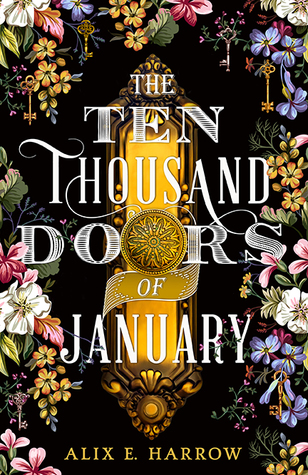
Book Review: The Ten Thousand Doors of January by Alix E. Harrow

In the early 1900s, a young woman embarks on a fantastical journey of self-discovery after finding a mysterious book in this captivating and lyrical debut.

In a sprawling mansion filled with peculiar treasures, January Scaller is a curiosity herself. As the ward of the wealthy Mr. Locke, she feels little different from the artifacts that decorate the halls: carefully maintained, largely ignored, and utterly out of place.

Then she finds a strange book. A book that carries the scent of other worlds, and tells a tale of secret doors, of love, adventure and danger. Each page turn reveals impossible truths about the world and January discovers a story increasingly entwined with her own.

Lush and richly imagined, a tale of impossible journeys, unforgettable love, and the enduring power of stories awaits in Alix E. Harrow’s spellbinding debut–step inside and discover its magic.

First, let’s pause to admire the sheer gorgeousness of this book cover. There. Now we’ve had our daily dose of beauty.

In The Ten Thousand Doors of January, a young woman learns that the world is not entirely as it appears, and that she herself isn’t quite who she thought she was.

January’s father is employed by the fabulously wealthy Mr. Locke to travel the world and seek out rare and exotic artifacts. Because his journeys take him away for months at a time, January lives in Mr. Locke’s mansion, pampered but isolated, feeling abandoned by her father and unsure of her place in the world.

When a battered book called The Ten Thousand Doors comes into her possession, January begins to learn about Doors — secret portals that bridge the thin connection between worlds. According to the book, Doors are real, and people who know how to look and find can access their pathways. And yet, there are those who would see these doors destroyed, viewing them as dangerous to the world we know.

The more January reads, the more she learns about the secrets of her own life and why she lives as she does. She also begins to learn about her own hidden powers, and realizes that her life with Mr. Locke is built on control and lies. But freedom comes at a steep cost with great danger, and as January struggles to get away, she becomes hunted by very powerful people who want her stopped.

The writing in this book is lovely, capturing the magic of books as well as the beauty of the natural world and the mysteries all around us. For book-lovers, there are special little passages that touch our hearts:

Those of you who are more than casually familiar with books — those of you who spend your free afternoons in fusty bookshops, who offer furtive, kindly strokes along the spines of familiar titles — understand that page-riffling is an essential element in the process of introducing oneself to a new book.

It’s like the author has been spying on me! How did she know that I feel the need to touch the spines of my favorite books when I see them at the library or a bookstore, and maybe whisper a quiet “hello” while I’m there?

The book’s imagery and use of unusual words also delighted me:

Time went strange. The hour-dragons stalked and circled. I heard their belly scales susurrating against the tile in my sleep.

January is a wonderful lead character, brave but not without fear, curious, open-minded, and desperate for both belonging and the truth. She risks herself over and over again to fight for freedom, and remains utterly loyal to the important people in her life. I don’t want to give anything away, but suffice it to say that the truth about her family is its own story-within-a-story, and is beautiful as well.

Once we have agree that true love exists, we may consider its nature. It is not, as many misguided poets would have you believe, an event in and of itself; it is not something that happens, but something that simply is and always has been. One does not fall in love; one discovers it.

The only thing that keeps this from being a 5-star read for me is that it really starts off slowly. I had to reach the 25% mark before I truly started to feel invested in January and the other characters. Of course, later I was so involved that I didn’t want to pause even to sleep, so I’m absolutely glad to have stayed with it. Still, I had enough doubts early on that it took me a while to overcome my reluctance and really plunge in.

A final note: As I read the excerpts from The Ten Thousand Doors (the book that January finds), I found myself struggling a bit with the footnotes and missed quite a few. They’re worth reading, but in Kindle format, they weren’t always easy to access and are actually embedded at the end of the book (at least in my copy), and the back and forth was a bit irritating. Small annoyance, but I thought I’d mention it.

I won’t say any more about the plot, but it’s best experienced fresh and without foreknowledge. I highly recommend The Ten Thousand Doors of January. It’s both an enchanting fantasy story and a very human story as well, with memorable characters and filled with emotion and passion. What a lovely read!

_________________________________________

The details:

Title: The Ten Thousand Doors of January
Author: Alix E. Harrow
Publisher: Redhook
Publication date: September 10, 2019
Length: 384 pages
Genre: Fantasy
Source: Won in a Goodreads giveaway!

Save

Save

Save

Save

Save

Save

Save

Save

Save