Book Review: Lucy Undying by Kiersten White

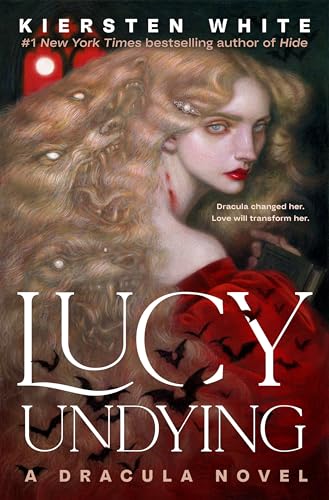
Title: Lucy Undying
Author: Kiersten White
Publisher: Del Rey
Publication date: September 10, 2024
Length: 464 pages
Genre: Horror
Source: Purchased
Rating:

Rating: 4 out of 5.

In this epic and seductive gothic fantasy, a vampire escapes the thrall of Dracula and embarks on her own search for self-discovery and true love.

Her name was written in the pages of someone else’s story: Lucy Westenra was one of Dracula’s first victims.

But her death was only the beginning. Lucy rose from the grave a vampire, and has spent her immortal life trying to escape from Dracula’s clutches–and trying to discover who she really is and what she truly wants.

Her undead life takes an unexpected turn when, in twenty-first-century London, she meets another woman who is also yearning to break free from her past. Iris’s family has built a health empire based on a sinister secret, and they’ll do anything to stay in power.

Lucy has long believed she would never love again. But she finds herself compelled by the charming Iris, while Iris is mesmerized by the confident and glamorous Lucy. But their intense connection and blossoming love is threatened by forces from without. Iris’s mother won’t let go of her without a fight, and Lucy’s past still has fangs: Dracula is on the prowl again.

Lucy Westenra has been a tragically murdered teen, a lonesome adventurer, and a fearsome hunter, but happiness always eluded her. Can she find the strength to destroy Dracula once and for all, or will her heart once again be her undoing?

Dracula stories never seem to go out of style, and it’s a pleasure to discover a new Dracula tale that remains faithful to the original in most details while also spinning the story out into new directions, with new interpretations of familiar events and characters.

“Lying about the existence of monsters never saved anyone from falling victim to them.”

Lucy Undying is set mainly in the present day, with flashbacks told through journal entries and other recorded documents. Surprisingly, the first character we meet in the modern era is not Lucy, but Iris, daughter of a recently deceased, utterly ruthless businesswoman. Iris is in London to take possession of a family property that she’s inherited, but it’s obvious from the start that there are an infinite number of strings attached. With her mother’s death, Iris is the sole heir to her family’s billion dollar business — but all she wants is out.

Crossing a busy street, American-raised Iris looks the wrong way and is saved from being flattened by a passing taxi by a beautiful stranger. She’s young, lovely, and kind, offers helpful tips on dealing with London traffic, and then disappears into a crowd. But their paths cross again: Iris discovers that the London property is in terrible shape, and she’s determined to sell whatever antiques or valuables she can find there, then attempt to disappear for good. When Iris calls a museum to ask for a referral to an appraiser, it’s that same stranger who shows up at Iris’s door — just as beautiful as Iris remembers, and more than willing to help Iris with her project.

Meanwhile, other narrative threads provide different storylines. The journals of Lucy Westenra take us back to Dracula’s time, as Lucy provides a first-person account of her life with a sickly, controlling mother, her secret love for her former governess Mina Murray, and the unwanted courtships of three men who seem to circle Lucy — John Seward, Quincey Morris, and Arthur Holmwood. And in still another thread, we have transcripts of Lucy’s sessions with a therapist… showing that Lucy is very much alive (or at least undead) in the present day, despite the version of events we may have learned from Bram Stoker.

As the various threads weave together, what emerges is a fascinating what-if: What if Lucy Westenra rose from her grave after being turned by Dracula — not to be staked and vanquished, as we’ve been told, but to roam the earth for over a century since then? Parallel to this is Iris’s journey, as she attempts to unravel the secrets of her family’s cult-like, multi-level marketing conglomerate, which has its own weird ties to Lucy’s world.

Without giving too much away, all I can say is that author Kiersten White has created a complicated, fascinating story that pulls together the essentials of Stoker’s novel and blends these with a chilling, modern day horror tale. The corporate entanglements of Iris’s family seem bizarre at first, but as the connections become clear, it all makes a hideous sort of sense.

I loved how faithfully the author depicts the core beats of the original Dracula story, then spins them into a version whose interpretations — while certainly different — never actually contradict the source material. I would highly recommend a basic familiarity with Dracula before reading Lucy Undying — yes, it could still be enjoyable without, but I think it would lose quite a bit of its “oomph” otherwise.

I did find it curious that in the world of Lucy Undying, the cultural/literary phenomenon of Dracula seems to be an unknown. This is a modern world where the Bram Stoker novel never existed? The name Dracula does not seem to have larger cultural connotations beyond the events unfolding in Iris’s world; he’s a figure from Lucy’s past whose influence is felt across the years, but that’s it. I kept waiting for Iris to say, “Dracula?? For real? Oh, you’re THAT Lucy??” — but it never happened.

There comes a point in the story where Lucy’s past (and connection to the origin story) has been fully explored, and the narrative focus shifts primarily to the modern-day storyline. That’s the point in the book where I started feeling a little less invested. It’s still a good story, but unravelling the sinister corporate secrets behind Iris’s family fortune is slightly less compelling than learning how Lucy evolved over the many years since her transformation.

Lucy Undying is a long book, but my attention never wavered. At times, the story becomes almost too complicated… but fear not! With a bit of focus and patience, it all makes sense by the end, and answers that were hidden or withheld for much of the book are finally provided.

The writing is engaging, sometimes dwelling on the horror — lots of body parts and gore — but often with funny, sly twists or clever phrasing to offer a bit of light-hearted relief.

Then I sat and thought of Mina and had a nice, self-indulgent cry. Sometimes a girl finds herself alone at the feet of an unknown land, covered in grime, having just decapitated a stranger, and it’s all too much.

I truly enjoyed Lucy Undying, and while I strongly recommend reading Dracula first, I’m sure Lucy Undying could be enjoyed on its own as well. This is a fast-paced, deeply detailed story that skillfully weaves different timelines and narrative approaches into one cohesive, compelling whole. Fans of horror and vampire fiction should not miss this one!

Purchase linksAmazon – Audible – Bookshop.orgLibro.fm
Disclaimer: When you make a purchase through one of these affiliate links, I may earn a small commission, at no additional cost to you.
Book Review: The Shocking Experiments of Miss Mary Bennet by Melinda Taub

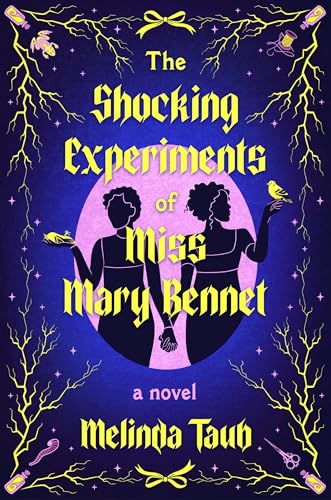
Title: The Shocking Experiments of Miss Mary Bennet
Author: Melinda Taub
Publisher: Grand Central Publishing
Publication date: September 30, 2025
Length: 320 pages
Genre: Classics mashup / scifi
Source: Review copy courtesy of the publisher via NetGalley
Rating:

Rating: 4.5 out of 5.

An utterly fantastical and undeniably queer melding of Pride and Prejudice and Frankenstein that recasts Mary Bennet as an insatiable scientist, one who creates a monster in an attempt to save herself from spinsterdom

Mary Bennet is the middlest middle child of all time. Awkward, plain, and overlooked, she’s long been out of favor not only with her own family but with generations of readers of Pride and Prejudice.

But what was Mary really doing while her sisters were falling in love? Well, what does any bright, hardworking girl do in an age when brains and hard work are only valued if they come with a pretty face? Take to the attic and teach herself to reanimate the dead of course. The world refuses to make a place for peculiar Mary, but no Bennet sister ever gives up on happiness that easily. If it won’t give this fierce, lonely girl a place, she’ll carve one out herself. And if finding acceptance requires a husband, she’ll get one. Even if she has to make him herself, too.

However, Mary’s genius and determination aren’t enough to control what she unwittingly unleashes. Her desperate attempts to rein in the destruction wreaked by her creations leads her to forge a perhaps unlikely friendship with another brilliant young woman unlike any she’s ever known. As that friendship blossoms into something passionate and all-consuming, Mary begins to realize that she may have to choose between the acceptance she’s always fought for and true happiness.

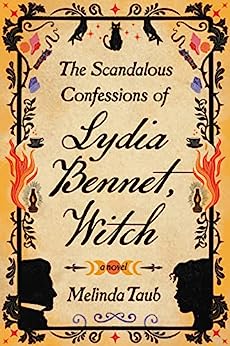
The 2023 novel The Scandalous Confessions of Lydia Bennet, Witch was a dose of pure fun, a terrifically entertaining Pride and Prejudice retelling that recasts Lydia’s story in utterly surprising ways and turns her into an unexpectedly memorable heroine.

Now, author Melinda Taub is back with another fresh take on P&P, this time making Mary Bennet the star… and inserting a very clever Frankenstein-inspired story, making this the Austen/Shelley mashup I never knew I needed.

Mary Bennet seems destined for spinsterhood all her life. Bookish, not socially adept, not especially witty or attractive, Mary’s the one who shows off without actually having talent and quotes preachy books ad nauseum. Not exactly the life of the party. But what if there was more to Mary than meets the eye?

In this terrific tale, Mary is a bright, inquisitive child who is constantly underestimated and undervalued by her family. Still, she reads everything she can get her hands on, and develops a passion for science that she must keep hidden from her family. When she discovers a secret passageway from her closet to a stairway to an unused attic, Mary realizes that it would make the perfect laboratory for her scientific explorations (Oh, the idea of Longbourn having a mad scientist’s lair tucked up under the roof — that no one knows about — made me just laugh and laugh…)

Mary is especially fascinated by experiments with electricity, and discovers a formula for new dyes that produces colors no manufacturer has access to. Of course, a proper young woman can’t actually conduct business, so she enlists her uncle’s young clerk, Septimus Pike, to act as her business agent. The sale of dyes produces a tiny amount of income for Mary, nowhere near the fortune she’d hoped would offer a sense of security for her future if she never marries (which seems like the most likely fate awaiting her).

But if the business isn’t actually successful, as Pike reports back, why is she suddenly seeing ribbons and fabrics in her unique colors everywhere? And why is Pike suddenly well dressed and courting the daughters of wealthy men?

What follows is a silly romp through science and society, as Mary’s electrical experiments eventually lead to a Frankenstein-esque turn of events. Can she control the monster she’s created? And at what cost?

Further complicating matters is the arrival of Georgiana Darcy, sister-in-law to Mary’s sister Lizzy and a fellow science enthusiast, who’s also hiding a serious secret of her own. (Readers of the Lydia book will know what that secret is, but it doesn’t actually matter if you’ve read that one first — all will be revealed soon enough).

Mary and Georgiana share a passion for science… and more?… as they work together to control Mary’s experiment, gain the materials and knowledge they need, and keep the rest of the Bennet household in the dark about what’s going on.

Mary’s innocence about certain possibilities is depicted with such seriousness that it’s really funny:

At twelve, I had a fascination with female elegance. I often found my gaze lingering on their faces and forms, which I realized must be because of a sort of collegial curiosity.

Collegial curiosity? Sure, Mary.

After attending a party with a demonstration of electricity, where a current was passed through a circle of people holding hands — including Mary and the young girl next to her — she notes:

It seemed as though that strange awakening the shock brought about never entirely went away Whenever I see a girl or lady who reminds me of my electrical companion , I feel a phantom shock pass through me.

For all the silliness, Shocking Experiments has a more serious undertone as it contemplates the lack of options for girls like Mary. Marriage is really the only path, but that means undermining one’s own nature and intellect, and allowing oneself to be molded into the complacent type of person who makes an acceptable wife. Mary’s lack of options, plus her sense of duty toward her parents, whose hold on Longbourn becomes more tenuous with each passing year, drive her toward actions and decisions that are clearly against her own interests, but which might possibly grant her the social acceptance they all so desperately need her to attain.

Never fear, the serious elements related to Mary’s plight never derail the pace or the delights of the storytelling. With its mad-scientist vibe, plus dangerous hijinks, lightning strikes, and plenty of misadventures. The Shocking Experiments of Miss Mary Bennet is a treat from start to finish.

End note: Believe it or not, this book is actually the second Mary Bennet/Frankenstein mashup that I’ve read. For a different approach, check out the excellent Pride and Prometheus by Jonathan Kessel.

Purchase linksAmazon – Bookshop.org – Libro.fm
Disclaimer: When you make a purchase through one of these affiliate links, I may earn a small commission, at no additional cost to you.
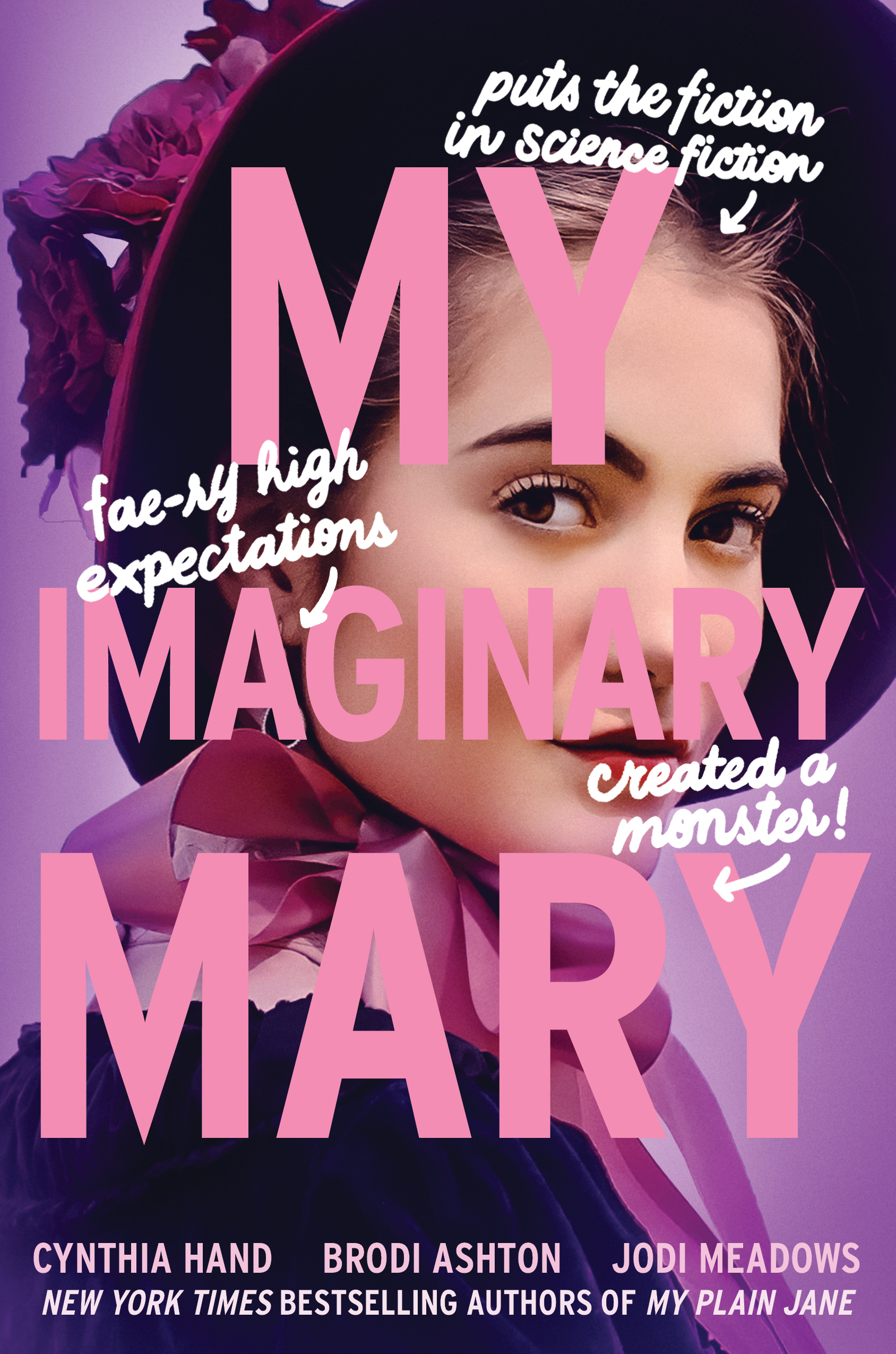
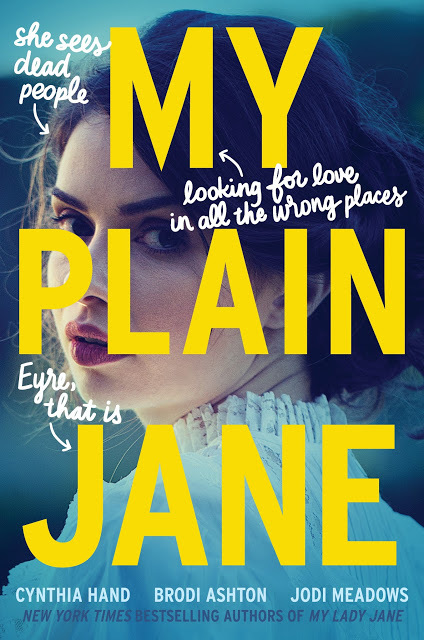
Book Review: My Plain Jane by Cynthia Hand, Brodi Ashton, & Jodi Meadows

Title: My Plain Jane
Series: The Lady Janies, #2
Author: Cynthia Hand, Brodi Ashton, Jodi Meadows
Publisher: HarperTeen
Publication date: June 26, 2018
Length: 447 pages
Genre: Young adult
Source: Purchased
Rating:

Rating: 4 out of 5.

You may think you know the story. After a miserable childhood, penniless orphan Jane Eyre embarks on a new life as a governess at Thornfield Hall. There, she meets one dark, brooding Mr. Rochester. Despite their significant age gap (!) and his uneven temper (!!), they fall in love—and, Reader, she marries him. (!!!)

Or does she?

Prepare for an adventure of Gothic proportions, in which all is not as it seems, a certain gentleman is hiding more than skeletons in his closets, and one orphan Jane Eyre, aspiring author Charlotte Brontë, and supernatural investigator Alexander Blackwood are about to be drawn together on the most epic ghost hunt this side of Wuthering Heights.

Long live the Lady Janies! Which are, for those wondering, a series of silly, imaginative books that turn history and classic fiction inside out and upside down. I adored My Lady Jane, the first book in the series, and finally picked up #2, My Plain Jane… and had a smashing good time reading it.

Poor Jane Eyre, an impoverished orphan who has endured a cruel aunt, hard years of cold and starvation at the awful Lowood school, and seems destined for a life as a governess — really the only option available for a young woman of her circumstances. It’ll be sad to leave her good friend Charlotte Brontë behind when she leaves Lowood, but Jane is ready to start the next chapter of her life — and fortunately, her best best friend Helen Burns can go with her. Helen is a ghost, you see, and Jane has the rare gift of seeing and communicating with ghosts.

When Alexander Blackwood, an agent of the Royal Society for the Relocation of Wayward Spirits, arrives at Lowood to dispense with a troublesome ghost, he recognizes Jane as a fellow Seer, and tries to recruit her for the Society. Jane is determined to stick to her plan of becoming a governess, but Charlotte is intrigued. She spends her days writing and dreaming of excitement, and she wants more than anything to join the Society too.

Once Jane arrives at Thornfield Hall for her governess gig and meets her employer, Mr. Rochester, her priorities start to shift. It’s not just devotion to her student that keeps her at Thornfield — Mr. Rochester is dreamy… despite being kind of rude, broody, and much older than Jane. (The authors take a great deal of delight in mentioning Mr. Rochester’s… um… maturity… at every opportunity.)

Mr. Rochester, due to age, was falling farther behind.

Hijinks ensue. You don’t really want to know the details, do you? Let’s just say, there are ghosts and ghostly possessions, a madwoman in the attic who may not be what she seems, sword fights, getting lost on the moors, and royal confrontations, among other adventures.

My Plain Jane is oodles of fun, and so very, very silly. The writing sparkles with good-natured wit and sly humor. I lost track of how many times it’s mentioned that Jane is plain… it gets ridiculously funny after a while.

Here are just a few little tastes of My Plain Jane:

“I assure you, sir, I am no one worth noting,” she said, although this did nothing to stop his obvious noting of her in his notebook.

From the ad for a governess that Jane finds:

WANTED: A GOVERNESS FOR ONE ADORABLE CHILD.

THE YOUNG LADE IN QUESTION SHOULD BE AT LEAST EIGHTEEN YEARS OF AGE, WELL EDUCATED, PROFICIENT IN THE PIANOFORTE, ABLE TO CONJUGATE LATIN VERBS, AND WELL VERSED IN CLASSIC LITERATURE. MOREOVER IT IS PREFERRED THAT SAID YOUNG LADY HAVE A CHEERY DISPOSITION, ROSY CHEEKS, AND ABSOLUTELY NO WARTS. SHE SHOULD BE AMENABLE TO PLAYING GAMES (ALL SORTS).

Everything turned out exactly as Charlotte had planned. (Just kidding. As skilled as Charlotte was at concocting wild-but-ingenious schemes, they almost never turned out as she planned. Remember this for future reference, dear reader.)

She threw the door open, propriety be darned. But right before she did, she made sure her nightgown was buttoned all the way up, because propriety shouldn’t be totally darned.

(Reader, your narrators understand Jane has fallen for Mr. Rochester rather quickly. The reasons for this could be threefold: first, it was pre-Victorian England, and courtships could last the length of an egg timer. Second, Jane’s lack of experience with men. And third, Jane’s perception of men, which was gleaned mostly from books and art that tended to glorify tall, dark, and brooding ones. The broodier the better. And Mr. Rochester was among the broodiest.)

Finding the intersections between Jane Eyre (the classic novel) and the antics of Jane Eyre and Charlotte Brontë as characters makes My Plain Jane extra fun. The plot itself is entertaining, and it’s cute to see all the ways in which (fictional) Charlotte uses her (fictional) friend Jane’s escapades as fodder for her work-in-progress novel (working title Jane Frere), which will of course become the (real) classic novel Jane Eyre.

As it’s been a few years since I last read Jane Eyre, I’m sure there are references and lines in My Plain Jane that went right past me. Still, I had a great time reading this book. I loved it maybe a smidge less than My Lady Jane (so awesome!!), but still thought it was clever and enjoyable, and a great way to spend a few summer days.

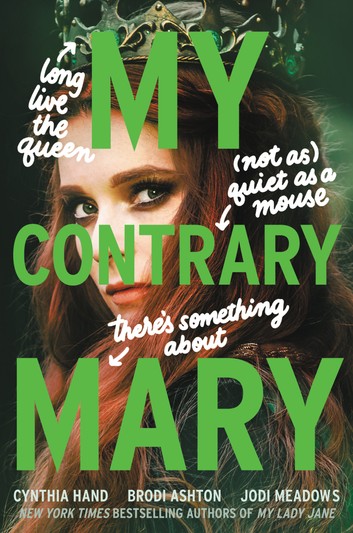
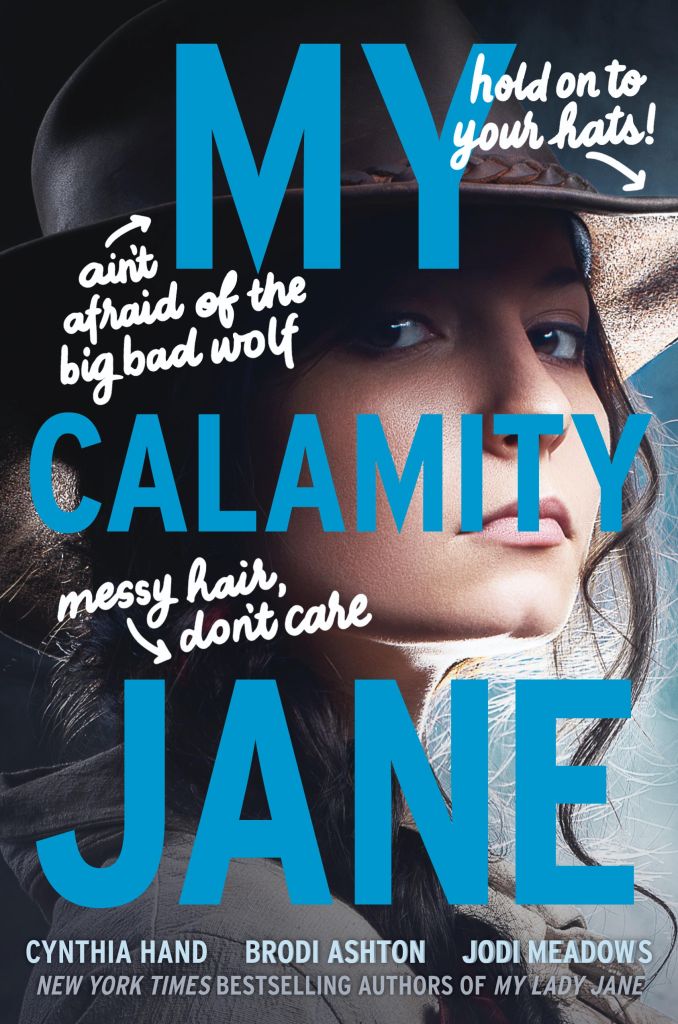
I’m looking forward to the next Lady Janie book, My Calamity Jane — I’ll aim to start it a bit later this summer, and I’m extra excited to get to the next book after that (which is actually a Mary book) — My Contrary Mary, about Mary, Queen of Scots. How great does that sound? After which, there are still two more books to look forward to… and given how much I’ve enjoyed the Lady Janies so far, I’m pretty sure I’ll end up reading them all.

Book Review: The Scandalous Confessions of Lydia Bennet, Witch by Melinda Taub

Title: The Scandalous Confessions of Lydia Bennet, Witch
Author: Melinda Taub
Publisher: Grand Central Publishing
Publication date: October 3, 2023
Length: 400 pages
Genre: Contemporary fiction
Source: Review copy courtesy of the publisher via NetGalley
Rating:

Rating: 4.5 out of 5.

A sparkling, witchy reimagining of Pride and Prejudice, told from the perspective of the troublesome and—according to her—much-maligned youngest Bennet sister, Lydia.

In this exuberant reimagining of Jane Austen’s Pride and Prejudice, Lydia Bennet puts pen to paper to relate the real events and aftermath of the classic story from her own perspective. Some facts are well known: Mrs. Bennet suffers from her nerves; Mr. Bennet suffers from Mrs. Bennet, and all five daughters suffer from an estate that is entailed only to male heirs.

But Lydia also suffers from entirely different concerns: her best-loved sister Kitty is really a barn cat, and Wickham is every bit as wicked as the world believes him to be, but what else would you expect from a demon? And if you think Mr. Darcy was uptight about dancing etiquette, wait till you see how he reacts to witchcraft. Most of all, Lydia has yet to learn that when you’re a witch, promises have power . . .

Full of enchantment, intrigue, danger, and boundless magic, The Scandalous Confessions of Lydia Bennet, Witch, has all the irreverent wit, strength, and romance of Pride and Prejudice—while offering a highly unexpected redemption for the wildest Bennet sister.

Who knew that we needed a witchy retelling of Pride and Prejudice? Just when I thought I’d had my fill of P&P retellings, along comes The Scandalous Confessions of Lydia Bennet, Witch to prove me wrong.

It is a truth universally acknowledged that the seventh daughter of a seventh daughter must be a witch.

In her Scandalous Confessions, Lydia tells us what was really going on behind the scenes at Meryton, Brighton, and beyond. Lydia is a talented young witch, so inseparable from her beloved cat as a child that she eventually turned Kitty into her familiar — and Lydia’s magic was powerful enough to have the entire Bennet family believe that they had this additional daughter all along.

Lydia is bright and gifted, but with a flair for mischief. Fortunately, her aunt also is a witch, and teaches her spellcraft — a good thing, since Lydia never does seem to have the patience to develop the more expected skills of needlework or musical performance.

The arrival of the regiment in Meryton is a source of great fun and romance for the local girls, but Lydia’s life get significantly more complicated with the introduction of Wickham. Here, Wickham is a demon who inhabits the body of a formerly human man, and is the son of a major magical force who wants to “eat” the power of Lydia and other witches. But Lydia doesn’t give up easily, and she’s willing to fight to protect her beloved Kitty.

Narrated by Lydia as she writes an accounting of her adventures, this book is fast-paced, funny, and very clever. Lydia’s story follows the plot beats of P&P, but as told from Lydia’s perspective, there’s more going on behind the scenes than we might imagine. There’s adventure, danger, and plenty of spells, but also balls, garden clubs, and lots of flirtation with handsome and/or fortune-seeking soldiers.

The author weaves together the familiar storylines (plus a bit of Sanditon too) with a plot involving witchcraft, magical forces, cruel hexes, and clever twists. Lydia herself is such a fun character, and I loved seeing Kitty’s story unfold as well. Lizzy doesn’t appear in many scenes, but she’s always a presence from a distance, especially as Darcy gets caught up in the Wickham crisis and has problems with Georgianna to solve as well.

Remember, always, not to judge people too hastily, for everyone is living out a story of their own, and you only get to read the pages you appear on.

Smart, funny, and well plotted, The Scandalous Confessions of Lydia Bennet, Witch is a perfect October read. Highly recommended!

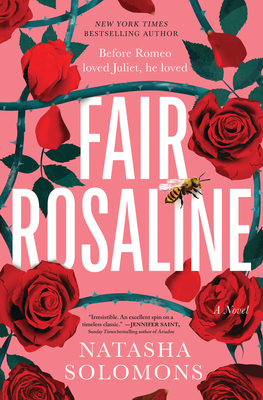
Book Review: Fair Rosaline by Natasha Solomons

Title: Fair Rosaline
Author: Natasha Solomons
Publisher: Sourcebooks Landmark
Publication date: August 3, 2023
Length: 336 pages
Genre: Historical fiction
Source: Review copy courtesy of the publisher via NetGalley
Rating:

Rating: 4.5 out of 5.

Was the greatest ever love story a lie?

The first time Romeo Montague sees young Rosaline Capulet he falls instantly in love.

Rosaline, headstrong and independent, is unsure of Romeo’s attentions but with her father determined that she join a convent, this handsome and charming stranger offers her the chance of a different life.

Soon though, Rosaline begins to doubt all that Romeo has told her. She breaks off the match, only for Romeo’s gaze to turn towards her cousin, thirteen-year-old Juliet. Gradually Rosaline realises that it is not only Juliet’s reputation at stake, but her life.

With only hours remaining before she will be banished behind the nunnery walls, will Rosaline save Juliet from her Romeo? Or can this story only ever end one way?

A subversive, powerful untelling of Shakespeare’s best-known tale, narrated by a fierce, forgotten voice: this is Rosaline’s story.

Fair Rosaline is a powerful retelling of Romeo and Juliet, faithful to the major plot beats of Shakespeare’s tragedy, but with a shift in perspective that changes everything. It’s fascinating, fast-moving, and now that I’ve finished, hard to stop thinking about.

In the traditional version, Romeo is first introduced as lovestruck over “fair Rosaline” — until he attends a Capulet party and suddenly falls completely in love with Rosaline’s cousin Juliet. Rosaline is forgotten, and we all know how things turn out for Juliet.

Here in Fair Rosaline, we see life in Verona through Rosaline’s eyes, and it isn’t pretty. With her mother a recent plague victim, Rosaline mourns her loss mostly alone, as her father is consumed by his own grief and has little patience for his 15-year-old daughter. After passing the required period of being locked up to make sure they don’t spread the plague further, Rosaline’s father shares devastating news: It was her mother’s wish that she be sent to the nunnery, and he intends to carry out this plan immediately.

There are no good choices here for Rosaline. Marriage or the convent are the only options, and as her brother is already married and has children, there’s no need to worry about further heirs. Rosaline’s dowry will go instead to the convent, and she’ll be locked behind its walls forever. Her wishes don’t matter. Desperate to prolong her freedom, Rosaline bargains with her father, and in the end, gets a concession — he’ll give her twelve days more at home, but then she must go.

Into Rosaline’s sad life, Romeo bursts like a ray of light. She sneaks away to attend the forbidden Montague ball, wanting a taste of life before she’s locked away, and there meets the handsome, smooth-talking Romeo, who seems instantly enamored by beautiful young Rosaline. Where Fair Rosaline differs sharply from the story we think we all know is that Romeo is clearly older — late twenties or early thirties, at least. As the author’s notes tell us, it’s just custom that Romeo is usually portrayed as a teen: Shakespeare specifies that Juliet is thirteen, but Romeo’s age is never stated.

What becomes clear in Fair Rosaline is that Romeo is a predator. His beautiful words are creepy here, as he uses his sleek, skillful speeches as tools of seduction, preying on much younger, innocent girls, whose sheltered lives leave them susceptible to his grooming. He doesn’t use physical violence to get his way — instead, he seduces with poetic pronouncements and over-the-top romantic gestures, promises of immediate marriage, and depictions of a future life together that’s always just out of reach.

Love with him was carnal and delicious and all consuming; he wasn’t just a hunter but a thief, stealing from girls their very selves.

When Rosaline finally faces the cruel reality of Romeo’s true nature and confronts him, he turns his attentions to her younger cousin Juliet, another easy victim for his manipulation. Rosaline and her beloved cousin Tybalt are desperate to save Juliet, who is too swept up by Romeo’s suave charm to hear their warnings.

Fair Rosaline sweeps us up into Rosaline’s misery as well as her moments of joy. This is clearly a young woman hungry for life, literature, and music, yearning for freedom that can never be hers. Between mourning her mother and dreading her incarceration behind convent walls, it’s no wonder that she’s an easy target for an experienced man who seems to offer her everything she could want.

Life in Verona at this time is presented at a tangible, visceral level, full of dirt, disease, and smells. The upper class lives of Rosaline’s world are adjacent to the terrible poverty and filth of the poorer quarters, and disease isn’t the only threat, as we see example after example of women dying in childbirth or losing children.

Even Juliet, pampered and protected, isn’t truly safe — even before she meets Romeo. After all, to the wealthy and powerful, a pretty thirteen-year-old girl is considered a candidate for marriage. Juliet’s parents plan her marriage to Paris despite her youth.

It was because of Lauretta and Nurse and Old Capulet and the good honest hypocrites of Verona that Juliet believed it was well and good for her to wed a man when she was still a child. While trying to break her in for Paris or his like, her family had seen to it that she was nicely softened for Romeo. Her arms had already been open and ready for him.

The crypts and graveyards themselves loom menacingly throughout the story. They’re not austere, holy sites to remember loved ones, but reeking pits where the dead rot and stink. Juliet’s pretend death and placement in the family crypt is horrifying: This isn’t a beautiful tableau of a young woman in eternal sleep, but a horror of a scene in which a young girl is entombed among rotting corpses.

I won’t say how the author ends her version of the story, but it’s quite powerful and masterfully told. The author weaves in phrases and moments from Shakespeare, but has them feel like natural parts of the story. Events and people fall in line with the origin story, but only on the surface. There’s more going on, and while the major set-pieces still happen, there are different elements, emotions, and motives at play as well. It’s utterly fascinating to see these pieces come together.

Rosaline is a sympathetic character. It’s easy to understand how she’d be vulnerable to someone like Romeo, and while we know she’s making bad decisions, given her lack of experience and dire circumstances, it’s impossible to fault her in any way. She’s a young girl who’s being preyed upon, and we can only admire her for wanting to take action and protect Juliet once she realizes the truth.

Fair Rosaline is a compelling read, upsetting and moving and thought-provoking. I’ll never think of Romeo and Juliet in quite the same way again.

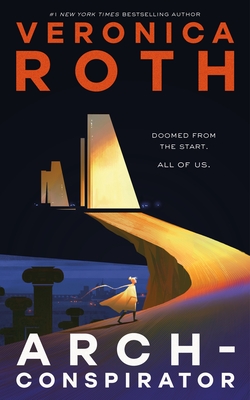
Novella review: Arch-Conspirator by Veronica Roth


Title: Arch-Conspirator
Author: Veronica Roth
Publisher: Tor Books
Publication date: February 21, 2023
Length: 128 pages
Genre: Science fiction
Source: Review copy via the publisher
Rating:

Rating: 4.5 out of 5.

From dystopian visionary and bestselling phenomenon Veronica Roth comes a razor-sharp reimagining of Antigone. In Arch-Conspirator, Roth reaches back to the root of legend and delivers a world of tomorrow both timeless and unexpected.

Outside the last city on Earth, the planet is a wasteland. Without the Archive, where the genes of the dead are stored, humanity will end.

Passing into the Archive should be cause for celebration, but Antigone’s parents were murdered, leaving her father’s throne vacant. As her militant uncle Kreon rises to claim it, all Antigone feels is rage. When he welcomes her and her siblings into his mansion, Antigone sees it for what it really is: a gilded cage, where she is a captive as well as a guest.

But her uncle will soon learn that no cage is unbreakable. And neither is he.

This slim novella is tautly written and beautiful presented. Word to the wise: It does help to have a passing familiarity with the classic story of Antigone before reading Arch-Conspirator… but I suppose it would work even without reference to the source.

In this dystopian reimagining of the tale, humanity has reached the brink of its own end. The planet is mostly uninhabitable. There’s one city left; outside it is the wilderness. All goods are scarce, buildings are decaying, and blowing dust covers everything. The only hope for humanity’s future is the Archive, where genetic material taken from people after death is stored. A quasi-religious value is attached to these Archives — the stored samples represent immortality for the dead, a way of saving and then resurrecting their souls.

It was hard to imagine a time when it hadn’t been this way — when plants grew untended in the wild, maintained by their own seeds spreading; when the plains beyond the city were overrun with animals that we had not bred ourselves; when genes persisted through the generations, presenting a person with their grandmother’s brow, their great-grandfather’s jaw. Everything required effort now. Everything required editing.

Antigone and her siblings are considered soulless abominations — their parents conceived them naturally, rather than going through genetic manipulation to achieve best results. They’re scorned and shunned, but as the living children of the murdered king and queen, they also represent power and legitimacy. With their uncle Kreon, now the ruler, looking to consolidate power and squash all attempts at rebellion, it’s only a matter of time until Antigone herself is caught at the center of the resulting devastation.

Arch-Conspirator is chilling to read. Being aware of the basics of the classic story, I knew that this would be a story with a tragic ending. Feeling the inevitable looming makes every page an exercise in suspense and sadness. Author Veronica Roth weaves this brief tale together with gorgeous writing and precise plotting. The end took my breath away!

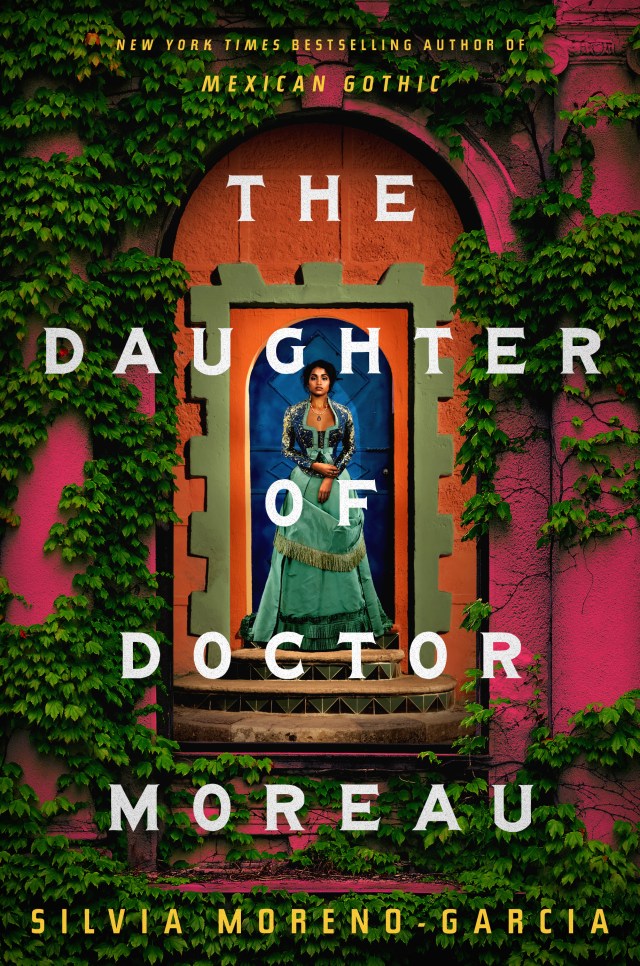
Book Review: The Daughter of Doctor Moreau by Silvia Moreno-Garcia

Title: The Daughter of Doctor Moreau
Author: Silvia Moreno-Garcia
Publisher: Del Rey
Publication date: July 19, 2022
Print length: 320 pages
Genre: Science fiction
Source: Review copy courtesy of the publisher via NetGalley
Rating:

Rating: 3.5 out of 5.

From the New York Times bestselling author of Mexican Gothic and Velvet Was the Night comes a lavish historical drama reimagining of The Island of Doctor Moreau set against the backdrop of nineteenth-century Mexico.

Carlota Moreau: a young woman, growing up in a distant and luxuriant estate, safe from the conflict and strife of the Yucatán peninsula. The only daughter of either a genius, or a madman.

Montgomery Laughton: a melancholic overseer with a tragic past and a propensity for alcohol. An outcast who assists Dr. Moreau with his scientific experiments, which are financed by the Lizaldes, owners of magnificent haciendas and plentiful coffers.

The hybrids: the fruits of the Doctor’s labor, destined to blindly obey their creator and remain in the shadows. A motley group of part human, part animal monstrosities.

All of them living in a perfectly balanced and static world, which is jolted by the abrupt arrival of Eduardo Lizalde, the charming and careless son of Doctor Moreau’s patron, who will unwittingly begin a dangerous chain reaction.

For Moreau keeps secrets, Carlota has questions, and in the sweltering heat of the jungle, passions may ignite.

THE DAUGHTER OF DOCTOR MOREAU is both a dazzling historical novel and a daring science fiction journey.

Doctor Moreau is certainly having a moment!

Originally introduced in the sci-fi classic The Island of Doctor Moreau by H. G. Wells, published in 1896, this character has remained in the public imagination ever since, as shown by movie adaptations across the years as well as more recent novels that put various spins on the original story. (See my links/notes at the end of this post for more).

In the original, Doctor Moreau works on a remote island, where he uses the practice of vivisection to surgically transform animals into humans. Here in The Daughter of Doctor Moreau, the story is set in the Yucatan, against a backdrop of a Mayan uprising against the colonial landowners.

The main characters are Carlota, the doctor’s daughter, and Montgomery, the new majordomo of the estate, a broken man who drinks to forget, but develops a strong loyalty to both Dr. Moreau and his unusual, beautiful daughter.

Through their shifting perspectives, we follow Carlota over the years as she grows from a young teen to a young woman, obedient to her father and dedicated to caring for the hybrids, whom she sees as family rather than as creations.

Despite the estate’s isolated location, the outside world intrudes, precipitating events that endanger the hybrids and Carlota herself. Secrets are revealed, and Carlota and Montgomery are forced into a battle for survival.

While there are interesting twists to this interpretation of the Doctor Moreau story, I did not find myself particularly absorbed or invested in the story. The narrative feels very episodic and exposition-heavy, and while I enjoyed the descriptions of the natural world of the Yucatan, the characters and the plot did not pull me in to any great extent.

The hybrids remain mostly in the background — unfortunately, since they’re the most interesting part of the story — and Carlota’s secrets, when finally shared, didn’t surprise me at all.

After a very slow start, the book takes a turn for the better and picks up the pace by the mid-point, but overall, for reasons I can’t quite define, I always felt at arms-length from the characters and the story. I wasn’t bored exactly, but I also felt that I could have put the book down and walked away at any point without experiencing much curiosity about the rest of the story. Despite the potential of the overarching story, this book felt a little too flat for me, which was disappointing.

As for Doctor Moreau having a moment — I’ve read two other books in the past couple of years that use The Island of Doctor Moreau as a jumping-off point:

The Strange Case of the Alchemist’s Daughter by Theodora Goss is the first book in a very creative YA trilogy, which stars the daughters of famous (fictional) scientists as the central characters — including a very different version of a daughter of Doctor Moreau.

And for something truly different, bizarre, and totally amazing, there’s The Album of Doctor Moreau by Daryl Gregory, which centers on a pop music boy band made up of animal/human hybrids. It’s so weird… and I loved it.

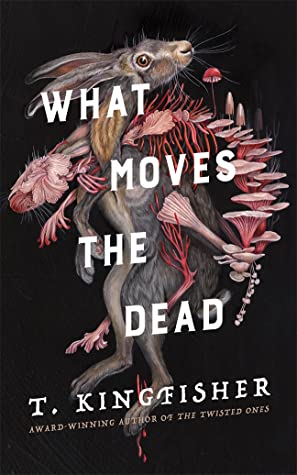
Book Review: What Moves the Dead by T. Kingfisher

Title: What Moves the Dead
Author: T. Kingfisher
Publisher: Tor Nightfire
Publication date: July 12, 2022
Print length: 176 pages
Genre: Horror
Source: Review copy courtesy of the publisher via NetGalley
Rating:

Rating: 5 out of 5.

From the award-winning author of The Twisted Ones comes a gripping and atmospheric retelling of Edgar Allan Poe’s classic “The Fall of the House of Usher.”

When Alex Easton, a retired soldier, receives word that their childhood friend Madeline Usher is dying, they race to the ancestral home of the Ushers in the remote countryside of Ruritania.

What they find there is a nightmare of fungal growths and possessed wildlife, surrounding a dark, pulsing lake. Madeline sleepwalks and speaks in strange voices at night, and her brother Roderick is consumed with a mysterious malady of the nerves.

Aided by a redoubtable British mycologist and a baffled American doctor, Alex must unravel the secret of the House of Usher before it consumes them all.

I’m convinced that the coming apocalypse will be the work of killer fungi. There are certainly enough works of horror fiction to back me up! What Moves the Dead further cements my belief that fungi are the creepiest life form there is. Prove me wrong!

What Moves the Dead is a twisted retelling of Edgar Allan Poe’s The Fall of the House of Usher. As in the original, the main character is summoned to a dark, disturbing, decrepit mansion located on the shores of a dark, scary tarn (lake), where a childhood friend cares for his dying sister and seeks companionship and support in their looming disaster.

In What Moves the Dead, Poe’s unnamed narrator is replaced by Lieutenant Alex Easton, a retired “sworn” soldier from the country of Gallacia, who once served as Roderick Usher’s officer during wartime, and who even earlier was close friends with Madeline Usher. Alex is shocked and horrified at the sight of the siblings, who appear gaunt, withered, and years older than their actual age. Madeline truly does seem to be on the verge of death, and Roderick appears unwell himself. The entire house and surrounding countryside (and that darned tarn) seem menacing, perhaps even poisonous.

Alex arrives at the house to find an American doctor already in residence, whose brashness eventually gives way to common cause. Dr. Denton doesn’t quite know what’s ailing Madeline either, but she does appear to be on the point of death.

Alex also meets Eugenia Potter, an Englishwoman whose chief passion in life is mycology (and who fumes against the stupid men-only rule of the English scientific societies of the time). Alex, Denton, and Potter all share the belief that something is wrong, not just with the Ushers but with the natural world too. What’s up with all the strangely-behaving hares in the area?

This short work is delightfully, deliciously creepy! The house is moldy, there are awful looking mushrooms all over the grounds, and the lake is stagnant and gross and seems too terrible to want to be anywhere near. I’ve read enough creepy fungi horror stories to have a pretty good sense of where the story would end up, but it was so much fun getting there, and the author still managed to surprise me time after time with all the crazy, strange, awful details.

Beyond the horror plotline, other delights await. Alex’s background in Gallacia is too good to reveal in a review, but trust me when I say that the explanations of how the Gallacian language adapts gender and pronoun formations based not just on biology but also on station in life, age, and other factors is absolutely wonderful and so fascinating. I’d read a whole book just about that!

Miss Potter is a secondary character, but she’s lots of fun, as is the reveal of who her one of her family members is. (I’m not telling!)

When I requested a review copy of What Moves the Dead, it was based on (a) how much I’ve loved everything else I’ve read by this amazing author and (b) the gorgeously creepy cover (*shudder*). I hadn’t realized at the time that this book would be a retelling of The Fall of the House of Usher — I actually didn’t know that until I started What Moves the Dead and happened to finally read the Goodreads blurb.

At that point, I took a small detour to read Poe’s story, which isn’t very long (the edition I read was 36 pages). I’m glad I did. It gave me great context for What Moves the Dead, and made it really fun to compare and contrast the two versions of the story, especially the character portrayals, the explanations, and the outcomes.

Note: The Fall of the House of Usher is easy to find online at no cost! Here’s one resource, and there are free versions available for Kindle too.

What Moves the Dead is an excellent read, perhaps not for the squeamish — but if you enjoy creepy, understated horror, definitely check it out!

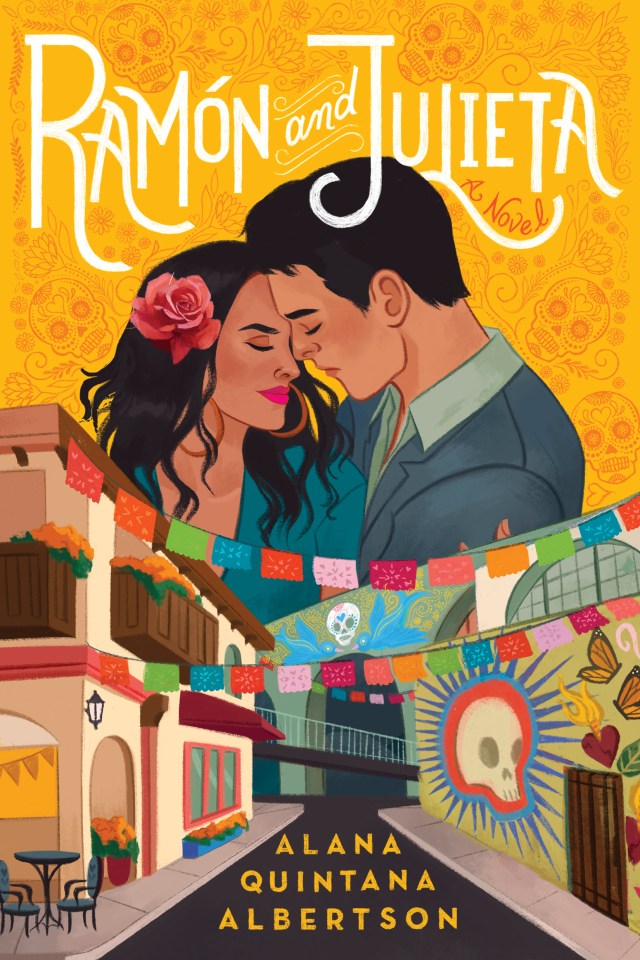
Audiobook Review: Ramón and Julieta by Alana Quintana Albertson

Title: Ramón and Julieta
Author: Alana Quintana Albertson
Narrators:  Alexander Amado, Vanessa Vasquez
Publisher: Berkley
Publication date: February 1, 2022
Print length: 304 pages
Audio length: 8 hours, 25 minute
Genre: Contemporary romance
Source: Library
Rating:

Rating: 3 out of 5.

When fate and tacos bring Ramón and Julieta together on the Day of the Dead, the star-crossed pair must make a choice: accept the bitter food rivalry that drives them apart or surrender to a love that consumes them.

Ramón Montez always achieves his goals. Whether that means collecting Ivy League degrees or growing his father’s fast-food empire, nothing sets Ramón off course. So when the sexy señorita who kissed him on the Day of the Dead runs off into the night with his heart, he determines to do whatever it takes to find her again.

Celebrity chef Julieta Campos has sacrificed everything to save her sea-to-table taqueria from closing. To her horror, she discovers that her new landlord is none other than the magnetic mariachi she hooked up with on Dia de los Muertos. Even worse, it was his father who stole her mother’s taco recipe decades ago. Julieta has no choice but to work with Ramón, the man who destroyed her life’s work–and the one man who tempts and inspires her.

As San Diego’s outraged community protests against the Taco King take-over and the divide between their families grows, Ramón and Julieta struggle to balance the rising tensions. But Ramón knows that true love is priceless and despite all of his successes, this is the one battle he refuses to lose. 

The vibrancy of Mexican culture in a San Diego neighborhood is threatened by gentrification — and in this contemporary romance version of Romeo and Juliet (spoiler alert — with a much happier ending!), a Day of the Dead meet-cute throws together members of rival families with a long, bitter history.

from the author’s website

Dia de los Muertos is a very big deal in Old Town, San Diego. Besides attracting tourists, for the Mexican community, it’s a day of beautiful traditions honoring their loved ones who’ve passed away. Julieta, chef at a popular, authentic local restaurant in Barrio Logan, plans to sell her specialty tacos at a pop-up stand at the festival, and Ramón, CEO of the multi-million-dollar family business that owns a hugely successful chain of Taco King fast food joints, is planning to schmooze up the local politicians and gain a little last-minute publicity before sealing the deal to buy an entire block of Barrio Logan.

Dressed in full Dia de los Muertos costumes and face paint, when Ramón and Julieta have a chance encounter in a garden near the festival, there’s instant attraction and a deeper connection as well — but they don’t exchange real names and can’t see one another’s faces. Tired of her responsiblities and lack of pleasure in her life, Julieta makes the impulsive decision to go home with Ramón, but once back in his La Jolla mansion, about to remove her face paint, she realizes who he really is — he’s the enemy.

Decades earlier, as Julieta’s been told countless times, her mother was a young woman selling home-made fish tacos at a stand in Mexico, when a Mexican-American student on a surfing trip during spring break fell in love with her and her tacos. He never returned as promised, but he stole her family’s secret recipe and turned it into the key to Taco King’s success. When Julieta realizes that Ramón is the son of her family’s nemesis, who profited off of her family’s recipe all these years without ever acknowledging or compensating them, she’s livid and appalled.

Things become even worse the following day when Ramon’s offer on the block in Barrio Logan is accepted. Ramón’s father plans to raise all the rents, force the existing businesses out, and replace Julieta’s lovely restaurant with a flagship location for a new Taco King. This is war! But also, this is love… because despite their stance on opposing sides of this gentrification battle, Ramón and Julieta can’t deny their feeling or their attraction for one another.

from the author’s website

I enjoyed the depiction of the close-knit community of Barrio Logan, the sense of tradition and pride in the Mexican culture of the residents, and the absolutely amazing-sounding descriptions of spices and flavors and foods. But, these great elements are in many ways background to the romance, and that’s where the book didn’t particularly work for me.

First of all, the characters: Not only is Ramón CEO of the family empire, he’s also Stanford and Harvard educated. Not only is Julieta an amazing chef, but she’s been trained at Michelin-starred restaurants. [Side note: Why does every romance novel about foodies throw around Michelin stars? Why does everyone in business need a Harvard MBA?] They’re both gorgeous and have amazing bodies, of course. They’re not just reasonably nice people who meet and connect — they’re both stellar in every way. It’s too much.

Second, I just couldn’t help cringing over their dialogue and their inner thoughts. Within seconds of meeting, Julieta is admiring how good Ramón looks in his costume, including “that huge bulge in his pants”. But don’t worry, the ogling is two-sided, as Ramón notes about Julieta: “That ass was the kind that songs were written about”.

The supposedly romantic moments are super corny, and the sexy/steamy scenes are unnecessarily specific and graphic. Then again, I recognize that preferences about graphic vs implied sex vary widely among romance readers, so while this aspect didn’t work for me, it may not be a deal-breaker for other readers.

The audiobook features different narrators for chapters from Ramón and Julieta’s perspectives, although they each still have to depict the other character whenever there are scenes together, which means there are two different voices each for Ramón and Julieta — a little weird at times, since they sound so different. It’s a light listen, and overall, the audiobook presentation is well done and entertaining.

I gave Ramón and Julieta 3 stars: I really liked the creative use of Shakespearean inspiration in telling a modern tale and the way the story honors and depicts elements of Mexican heritage and the strong sense of community. It doesn’t rise above 3 stars for me, though, because of the hokiness of the love story — which, in a romance, should be its strongest element.

Ramón and Julieta is enjoyable, despite the cringe-factor. Apparently, it’s the first in a planned series called Love and Tacos. The pieces that didn’t work for me are enough to make me doubt whether I’d want to come back for more.

Book Review: So Many Beginnings: A Little Women Remix by Bethany C. Morrow

Title: So Many Beginnings
Author: Bethany C. Morrow
Publisher: Feiwel Friends
Publication date: September 7, 2021
Length: 304 pages
Genre: Historical fiction
Source: Library
Rating:

Rating: 4.5 out of 5.

Four young Black sisters come of age during the American Civil War in So Many Beginnings, a warm and powerful YA remix of the classic novel Little Women by national bestselling author Bethany C. Morrow.

North Carolina, 1863. As the American Civil War rages on, the Freedmen’s Colony of Roanoke Island is blossoming, a haven for the recently emancipated. Black people have begun building a community of their own, a refuge from the shadow of the old life. It is where the March family has finally been able to safely put down roots with four young daughters:

Meg, a teacher who longs to find love and start a family of her own.

Jo, a writer whose words are too powerful to be contained.

Beth, a talented seamstress searching for a higher purpose.

Amy, a dancer eager to explore life outside her family’s home.

As the four March sisters come into their own as independent young women, they will face first love, health struggles, heartbreak, and new horizons. But they will face it all together.

So Many Beginnings takes the classic Little Women story outline and turns it into something new and unexpected — truly a remix, rather than a retelling.

As the author explained during an interview with NPR:

Were you one of those people who read Little Women over and over when you were young, and was that part of the reason you agreed to write your new book?

I want to start by saying I have no recollection of reading the original.

Seriously? And you didn’t read it before you started writing?

I had no intention of reading it. As I told the editor, it would not matter. I am writing a story about four Black girls in 1863. It does not matter what a group of white girls was doing; that has no bearing on it. I will say that I, like a lot of people my age, was very in love with the 1994 film adaptation, so if there’s any similarity, I would expect it to be closer to a couple of elements from that film. Basically, Little Women is considered historical fiction, but as a Black woman, I have been excluded from that narrative. It seems like the kind of property that no matter how many times it’s revisited, it’s the same. It’s for white girls.

Read the full interview at https://www.npr.org/sections/codeswitch/2021/09/12/187316369/little-women-remixed-but-not-reimagined

Here, the March family is recently freed from enslavement, living in the Freedmen’s Colony of Roanoke Island off the coast of North Carolina. While the father is away working with the Corinth Freedmen’s Colony, Mammy and her four daughters live together in a life full of love, but not without struggle.

The sisters are absolutely devoted to one another and to Mammy, but they’re each very different. Their lives are full of work and often frustrations. Being free does not mean being truly in control of their lives or free from discrimination and otherness, as is made plain by the white missionaries and Union soldiers who control so much of the day-to-day life of the people of Roanoke.

I don’t believe I’ve ever read a book told from the perspective of formerly enslaved young women, and the writing here is incredibly powerful in showing the impact on the sisters’ worldview, sense of self, and need for true liberation. The book absolutely shows that even those abolitionists devoted to emancipation weren’t necessarily devoted to the concept of equality. While the term micro-aggression wouldn’t have existed at the time, the concept itself is very plainly evident in even the most well-meaning but still hurtful of exchanges. As Meg and Jo discuss:

“…So why does it enrage me?”

“Because,” Jo told her. “They’re only ever speaking for us, and about us. Rarely with us. Even when they have our best interest in mind, how could they know it without our input? The person who believes they know best, still, in some small way in some interior place they’ve yet to interrogate, does not truly comprehend equality…”

So Many Beginnings preserves many of the characteristics of the March sisters, but with shifts in meaning and importance. Amy is not a spoiled, obnoxious brat here (yes, my anti-Amy bias is showing!) — instead, Amethyst, called Amy, is cherished and protected. As the youngest child, she doesn’t remember enslavement the way the older sisters do, and the family is determined to help her hold onto the joy of innocence for as long as possible, even if that means indulging her and not making demands of her. Beth is really interesting here as well. While still sickly, she’s also inspired by a higher purpose and an ambition that propel her forward. Meg and Jo too, while sticking to some basic framework (Meg dreams of marriage, Jo uses her words to change the world), have a completely different set of experiences and motivations. The characters are each unique and fascinating.

I was not aware of the American Colonization Society or of the history of Roanoke Island before reading this book, and it’s eye-opening to realize how much of the American past is still not discussed in meaningful ways. Hopefully, So Many Beginnings will bring awareness and stimulate discussions amongst its readers, particularly within its target YA audience.

So Many Beginnings is a powerful, moving, and lovely novel. I enjoyed both the Little Women framework and the new take on the story, and most especially, the March sisters themselves.

Highly recommended.

**********

Through affiliate programs, I may earn commissions from purchases made when you click through these links, at no cost to you.

Buy now at Amazon – Book Depository – Bookshop.org