Book Review: The Silence of the Girls by Pat Barker

The ancient city of Troy has withstood a decade under siege of the powerful Greek army, which continues to wage bloody war over a stolen woman—Helen. In the Greek camp, another woman—Briseis—watches and waits for the war’s outcome. She was queen of one of Troy’s neighboring kingdoms, until Achilles, Greece’s greatest warrior, sacked her city and murdered her husband and brothers. Briseis becomes Achilles’s concubine, a prize of battle, and must adjust quickly in order to survive a radically different life, as one of the many conquered women who serve the Greek army.

When Agamemnon, the brutal political leader of the Greek forces, demands Briseis for himself, she finds herself caught between the two most powerful of the Greeks. Achilles refuses to fight in protest, and the Greeks begin to lose ground to their Trojan opponents. Keenly observant and coolly unflinching about the daily horrors of war, Briseis finds herself in an unprecedented position, able to observe the two men driving the Greek army in what will become their final confrontation, deciding the fate not only of Briseis’s people but also of the ancient world at large.

Briseis is just one among thousands of women living behind the scenes in this war—the slaves and prostitutes, the nurses, the women who lay out the dead—all of them erased by history. With breathtaking historical detail and luminous prose, Pat Barker brings the teeming world of the Greek camp to vivid life. She offers nuanced, complex portraits of characters and stories familiar from mythology, which, seen from Briseis’s perspective, are rife with newfound revelations. Barker’s latest builds on her decades-long study of war and its impact on individual lives—and it is nothing short of magnificent.

The opening lines of The Silence of the Girls let us know that this is not just a retelling of the glory of Achilles:

Great Achilles. Brilliant Achilles, shining Achilles, godlike Achilles… How the epithets pile up. We never called him any of those things; we call him “the butcher.”

The Silence of the Girls is narrated by Briseis, a noble woman of Lyrnessus who is taken into captivity by the Greeks when her city is sacked during the endless Trojan War. The men, including Briseis’s husband, father, and brothers, are slaughtered. Male children are killed; even pregnant women are run through with swords to prevent them giving birth to sons. The women who survive the attack are now prisoners, slaves and war prizes, at the mercy of their fierce captors.

Briseis is claimed by Achilles, the godlike warrior who leads the Greek armies throughout the long war against Troy. Through Briseis’s eyes, we see the grit and gore behind the glamour of the Greek heroes — men like Achilles, Ajax, and Odysseus, about whom legends and poems and ballads have been written. History is written by the victors — but who writes about the women? The women represented here by Briseis are not fighters. They have everything at stake in the war, but absolutely no power. As the book demonstrates over and over again, the women are the true victims here: They are the ones who are raped as part of the division of loot when a city is sacked; they are the ones forced into servitude; they are the ones sacrificed to appease the gods or to mourn a hero’s death or to settle a score.

This book tells the other side of the story, showing life in camp, the daily struggles of the enslaved women, and how powerless they are to change their own fates. The women are at the mercy of their captors, and their lives have no meaningful security other than what’s given to them and what can easily be taken away.

In The Silence of the Girls, Briseis gives voice to all the silent women victimized by war. These women have been erased from the narrative, so that the story that is told is all about brilliant military conquests and the struggles of men:

What will they make of us, the people of those unimaginably distant times? One thing I do know: they won’t want the brutal reality of conquest and slavery. They won’t want to be told about the massacres of men and boys, the enslavement of women and girls. They won’t want to know we were living in a rape camp. No, they’ll go for something altogether softer. A love story, perhaps? I just hope they manage to work out who the lovers were.

Is this meant to be a direct rebuke to the narrative focus of The Song of Achilles by Madeline Miller, which focuses on the love between Achilles and Patroclus? Having only recently read The Song of Achilles, I must say that it’s jarring to go from that book to The Silence of the Girls. The Song of Achilles is just such a beautifully written book, and I loved the love between Achilles and Patroclus. It’s hard to let go of the glory of that book and re-read the same events through a much different lens, as we’re forced to do in The Silence of the Girls.

I found The Silence of the Girls a powerful read, compelling but brutal and difficult to stomach. The writing is straight-forward, although I was a bit confused by the inclusion of several chapters told from Achilles’s perspective. In a book that’s supposed to be expressing the voices of the women, I wasn’t sure why it was necessary to include his point of view. The events as narrated by Briseis differ in some key ways from their portrayal in The Song of Achilles, so readers of that book should be aware that an open mind is needed.

War is hell… and as The Silence of the Girls makes clear, the hell of war doesn’t stop at the edge of the battlefield. In giving voice to the silent women. The Silence of the Girls unveils a fresh perspective on classic myths and legends, and makes sure that those who suffered aren’t written out of history. Highly recommended.

Save

_________________________________________

The details:

Title: The Silence of the Girls
Author: Pat Barker
Publisher: Doubleday Books
Publication date: September 4, 2018
Length: 291 pages
Genre: Historical fiction
Source: Library
Save

Save

Save

Save

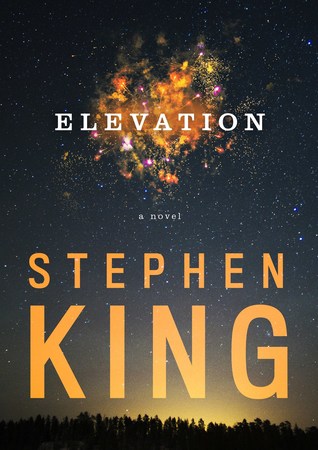
Take A Peek Book Review: Elevation by Stephen King

“Take a Peek” book reviews are short and (possibly) sweet, keeping the commentary brief and providing a little peek at what the book’s about and what I thought.

Synopsis:

(via Goodreads)

The latest from legendary master storyteller Stephen King, a riveting, extraordinarily eerie, and moving story about a man whose mysterious affliction brings a small town together—a timely, upbeat tale about finding common ground despite deep-rooted differences.

Although Scott Carey doesn’t look any different, he’s been steadily losing weight. There are a couple of other odd things, too. He weighs the same in his clothes and out of them, no matter how heavy they are. Scott doesn’t want to be poked and prodded. He mostly just wants someone else to know, and he trusts Doctor Bob Ellis.

In the small town of Castle Rock, the setting of many of King’s most iconic stories, Scott is engaged in a low grade—but escalating—battle with the lesbians next door whose dog regularly drops his business on Scott’s lawn. One of the women is friendly; the other, cold as ice. Both are trying to launch a new restaurant, but the people of Castle Rock want no part of a gay married couple, and the place is in trouble. When Scott finally understands the prejudices they face–including his own—he tries to help. Unlikely alliances, the annual foot race, and the mystery of Scott’s affliction bring out the best in people who have indulged the worst in themselves and others.

My Thoughts:

I’m not sure what to say about Elevation, or even how to categorize it. Is it horror? Not in the jump-scare, things-that-go-bump-in-the-night, monsters-eating-your-face sort of way. But does the idea of losing weight without losing size, and with a day you’ll weigh zero pounds looming, scare you? Then yes, you might call this horror. Or fantasy, in that I’m pretty sure there’s no such documented case of a person being perfectly healthy, losing weight, and causing anything he/she touches to have zero weight — sounds pretty fantastical to me.

All that being said, my main take-away here is that Elevation is a truly excellent read — brief, spare, and finely crafted, with sharply defined characters, mounting tension, and an overall feeling of both well-being and loss permeating the entire story. Scott Carey is a likable guy stuck in a weird situation, who tries to make the best of things by doing his part to make a small difference in the lives of the people he cares for.

And despite the short length of the story, it was plenty of time to get emotionally involved. Was that a lone tear making its way down my cheek as I read the last few pages? I’ll never tell.

Beautifully written, Elevation is a quick, low-commitment read that will leave you feeling — dare I say it? — elevated.

_________________________________________

The details:

Title: Elevation
Author: Stephen King
Publisher: Scribner
Publication date: October 30, 2018
Length: 146 pages
Genre: Fantasy/horror
Source: Purchased

**Save

Save

Save

Save

Save

Save

Save

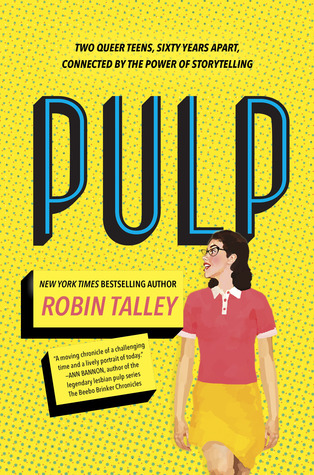
Book Review: Pulp by Robin Talley

In 1955, eighteen-year-old Janet Jones keeps the love she shares with her best friend Marie a secret. It’s not easy being gay in Washington, DC, in the age of McCarthyism, but when she discovers a series of books about women falling in love with other women, it awakens something in Janet. As she juggles a romance she must keep hidden and a newfound ambition to write and publish her own story, she risks exposing herself—and Marie—to a danger all too real.

Sixty-two years later, Abby Zimet can’t stop thinking about her senior project and its subject—classic 1950s lesbian pulp fiction. Between the pages of her favorite book, the stresses of Abby’s own life are lost to the fictional hopes, desires and tragedies of the characters she’s reading about. She feels especially connected to one author, a woman who wrote under the pseudonym “Marian Love,” and becomes determined to track her down and discover her true identity.

In this novel told in dual narratives, New York Times bestselling author Robin Talley weaves together the lives of two young women connected across generations through the power of words. A stunning story of bravery, love, how far we’ve come and how much farther we have to go.

This remarkable book pulls off the tricky feat of making us care about characters in two separate narratives, with neither one feeling like filler or killing time before returning to the important part of the story.

In Pulp, we follow a contemporary storyline about a high school senior, Abby, who is out and proud and very matter-of-fact about how diverse and free her world is. Most of her friends fall somewhere within the queer rainbow, gay, bi, non-binary, and various permutations of all sorts. And it’s all good. Abby is part of a close-knit group of friends who delight in being politically active, attending rallies, fighting for justice, and making demands for society to be better than it is.

Abby’s life is not perfect, though. She still pines for her ex-girlfriend Linh, she’s stuck on her senior project, and her parents are doing a lousy job of hiding their inability to tolerate one another. She chooses the topic of her senior project at the last possible second, deciding to study lesbian pulp fiction of the 1950s and write her own version of these novels, inverting the tropes that were mandatory in the genre.

In the historical timeline, we meet Janet Jones, also a high school senior, whose life is highly regimented by her overly protective and rigid parents and their world of country clubs and social correctness. Janet stumbles across a lesbian pulp paperback, reads it, and realizes that these unnamed feelings of hers are actually shared by other people. She becomes desperate to connect with the author of one of these books, and at the same time, realizes that her feelings toward her best friend Marie are much more than just friendship.

The two narratives intersect in fascinating and unpredictable ways. Janet’s storyline is the more upsetting of the two for much of the book, largely because the world it shows is so hostile and repressive. Pulp does an excellent job of showing the terror of being gay at a time when there were no legal protections or rights for anyone who dared step outside the bounds of “normal”. Set during the Lavender Scare, this novel shows good, decent, hard-working people being hounded out of their families and jobs, spied upon, and having their lives ruined, all because of who they love and how they identify. Being closeted was a necessity, and the danger of discovery drove countless people to deny their own identities out of a desperation for survival.

Through Abby’s eyes, the awfulness of the 1950s for the LGBTQ community is especially vivid, as Abby’s modern perspective is challenged by her research into what others’ lives once were like. Seeing Abby come to realize the importance of the brave people who created new ways to live, form a community, and remain true to the themselves is quite beautiful.

I was less invested in the love story aspects of both Abby and Janet’s arcs, but very much loved getting to know them as people, to appreciate their challenges and strengths, and how each struggled in different ways and at different times to find themselves and to find a way to lead an authentic life.

Pulp is both a great novel and a great lesson on 20th century history. Reading about this chapter in LGBTQ history is moving and upsetting. The world has come so far, and there’s still a long way to go, but I think especially for the target YA audience, Pulp provides a fascinating and important perspective on social action, diversity, and identity.

Save

_________________________________________

The details:

Title: Pulp
Author: Robin Talley
Publisher: Harlequin Teen
Publication date: November 13, 2018
Length: 416 pages
Genre: Young adult fiction
Source: Review copy courtesy of the publisher via NetGalley

Save

Save

Save

Save

YA double feature: What If It’s Us and The Lady’s Guide to Petticoats and Piracy

Two delightful YA books this week! Once again, a big THANK YOU to the public library for being all-around awesome and for getting me my hold books in record time. Here’s my quick take on my YA reading from the past week:


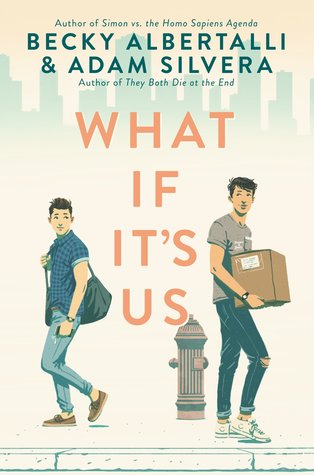
What If It’s Us by Becky Albertalli & Adam Silvera: Two YA authors come together to give us a romantic New York story of first love and do-overs. Arthur is a Georgia boy spending the summer in the big city; Ben is New York born and bred, stuck repeating chemistry in summer school so he can graduate on time. A chance encounter at a post office makes a big impression on both Arthur and Ben — but in the blink of an eye, it’s over, without names or contact info exchanged. But the sparks that flew can’t just die… so each boy does we he can to track the other down — and when, miracle of miracle, they actually find one another again, a sweet romance blooms. What If It’s Us is utterly charming, with plenty of laughs and tears. The ending may disappoint folks who believe in happily-ever-after, but I found it hopeful, grounded in reality but with a definite sense of optimism for whatever might yet happen. And I couldn’t help but love the endless geeky pop culture references, from Hamilton to Harry Potter!

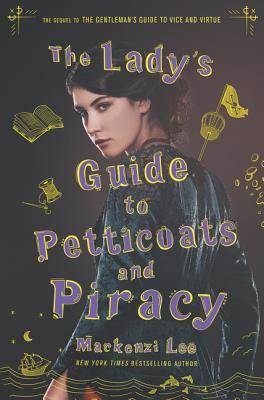
The Lady’s Guide to Petticoats and Piracy by Mackenzi Lee: The sequel to the super fun The Gentleman’s Guide to Vice and Virtue is a treat, shifting the focus from trouble-making Monty and his true love Percy to Felicity, Monty’s younger sister (who was a delight in the first book). Felicity is a scientist and scholar, but with one problem: In the 18th century, no medical school or physician will deign to even consider taking on a female student. But that doesn’t stop Felicity, who is so determined to achieve her dreams that she ends up traipsing all across Europe and getting into all sorts of wild adventures in pursuit of her goals. Along the way, she teams up with two fabulous friends, young women with their own hopes and dreams, and shows just how strong a woman can be. This book has it all — friendship, adventure, feminism, and fun — and is a terrifically entertaining read. I hope there will be more about these characters in the future — I’d love to know how their lives turn out!

Two terrific teen reads! Check ’em out! You don’t have to actually be a young adult (*cough* I’m not! *cough*) to enjoy these.

Book Review: The Wild Dead (The Bannerless Saga, #2) by Carrie Vaughn

A century after environmental and economic collapse, the people of the Coast Road have rebuilt their own sort of civilization, striving not to make the mistakes their ancestors did. They strictly ration and manage resources, including the ability to have children. Enid of Haven is an investigator, who with her new partner, Teeg, is called on to mediate a dispute over an old building in a far-flung settlement at the edge of Coast Road territory. The investigators’ decision seems straightforward — and then the body of a young woman turns up in the nearby marshland. Almost more shocking than that, she’s not from the Coast Road, but from one of the outsider camps belonging to the nomads and wild folk who live outside the Coast Road communities. Now one of them is dead, and Enid wants to find out who killed her, even as Teeg argues that the murder isn’t their problem. In a dystopian future of isolated communities, can our moral sense survive the worst hard times?

The Wild Dead is a sequel to last year’s Bannerless, which I loved. (Check out my review of Bannerless, here.) In Bannerless, author Carrie Vaughn does an amazing job of creating a post-apocalyptic world in which the focus is not on the disaster itself (known here as the Fall), but on life 100 years later. Humanity has survived, and in the Coast Road community (California), life revolves around households — groups of adults who build a home together, a communal dwelling where all are invested in the success of the whole. Communities are groups of households with a central committee and a commitment to the greater good. It’s a mostly agrarian society, where everyone contributes according to their abilities, and all are provided for… provided, that is, that some basic rules are followed.

The guiding principle in this world is producing enough, but not more. Quotas govern all farming, so that no one destroys the scarce natural resources by using up too much, too quickly. Households that demonstrate that they can support themselves may be granted banners, the most coveted reward of all. A Banner is a license to have a baby. A household may earn a banner through hard work and dedication — but a household that tries to skirt the rules may be denied a banner forever.

Enid of Haven is an investigator — the closest thing this society has to law enforcement. In this post-technology world, Enid can’t rely on firearms or fingerprint dusting or forensic science; she has to use her brain and her people skills to ask questions, dig deep, and find the truth of a community’s secrets. Enid is good at her job, but as The Wild Dead opens, she’s mostly annoyed about being called away from her home in Haven to carry out a seemingly pointless investigation right as her household is expecting its first baby.

The investigation is set in the community of Estuary, a marshy, unpleasant location where the people live in uneasy proximity to one another. There’s no true closeness or cooperation in Estuary — the people seem argumentative and suspicious. And while Enid’s case is simply about determining whether an old house should be preserved, the situation becomes complicated by the discovery of a body belonging to an outsider. As the investigation shifts from mediation to a murder case, Enig and her partner Teeg try to find a way to get the people of Estuary to share their secrets.

The Bannerless world is opened up further in this second book in the series. In the first book, the author did an amazing feat of world-building, showing us the Coast Road society, the nature of this post-tech world and how the people live. At the same time, she gives us a glimpse into the history of the Fall and how civilization re-formed in the century since then. In The Wild Dead, we explore further, and learn for the first time about the people who live outside the society of the Coast Road, choosing to live wild and with fewer resources rather than be restricted by the rules that dictate so many basic elements of life, including child-bearing.

The puzzle of the dead body is intriguing, and I enjoyed seeing Enid use her wits and intuition to read the situation in Estuary and finally arrive at the truth. The mystery aspects of the story are quite good, and held my attention from beginning to end. But truly, what I really love about these books is the detailed description of this unique world and how it works, and getting to understand the psychology of a society which has survived what could have been the end and has created a new version of the future.

(In some ways, I’m reminded of The Walking Dead — minus the zombies, of course — particularly the newest season, when the communities have rediscovered non-industrial era technology such as plows and windmills as a way of surviving and building after a disaster. But I digress…)

Enid is a terrific main character — smart, strong, fair, and devoted to her people and to doing what’s right. She’s not perfect, and she struggles with herself quite a bit, but in the end, she’s committed to the essence of being an investigator: helping others, and being kind.

I highly recommend both Bannerless and The Wild Dead. I’m really hoping this will be an ongoing series. I can’t see myself ever getting tired of Enid or her world.

Save

_________________________________________

The details:

Title: The Wild Dead
Author: Carrie Vaughn
Publisher: John Joseph Adams/Mariner Books
Publication date: July 17, 2018
Length: 264 pages
Genre: Speculative fiction
Source: Purchased

Save

Save

Save

Save

Book Review: Someone Like Me by M. R. Carey

SHE LOOKS LIKE ME. SHE SOUNDS LIKE ME. NOW SHE’S TRYING TO TAKE MY PLACE.

Liz Kendall wouldn’t hurt a fly. She’s a gentle woman devoted to bringing up her kids in the right way, no matter how hard times get.

But there’s another side to Liz—one which is dark and malicious. A version of her who will do anything to get her way, no matter how extreme or violent.

And when this other side of her takes control, the consequences are devastating.

The only way Liz can save herself and her family is if she can find out where this new alter-ego has come from, and how she can stop it.

There are actually two interwoven storylines focusing on two different characters in Someone Like Me. First, there’s Liz, a single mother whose ex-husband is an abusive creep. Second, there’s Fran Watts, a 16-year-old girl who’s known at school as a freak. Ever since a bizarre and traumatic abduction ten years earlier, Fran has suffered from a host of symptoms of mental illness, and fears that she’s just plain crazy.

During a particularly bad encounter with her ex, when he turns violent and seems on the verge of killing her, Liz finds herself responding by bashing Mark with a broken bottle — but she’s not the one controlling her own body. Someone else seems to be pulling the strings, and yes, it saves her life, but it also leaves her terrified.

Meanwhile, Fran is accompanied by an imaginary friend, a fox known as Jinx, who has been with her ever since the kidnapping and who’s always ready to protect her. And sometimes, Fran sees the world change — the color of a blanket or a figurine or something else in the background will change from one thing to another. Desperate, Fran returns to her psychiatrist to beg for stronger meds, anything to make these hallucinations go away. When Fran sees Liz and her teen-aged son Zac at the clinic as well, a strange connection is forged between the two teens, and they start to discover that the oddities in Fran and Liz’s lives may be linked.

Someone Like Me is a gripping story of psychological terror. We alternate between Liz and Fran, seeing their world views and the (figurative) demons they each battle. Each is desperate to just live a normal life, and fears that she’s losing her grip on sanity and reality. Of course, there’s something else going on here, and it’s weird and scary — and neither Fran nor Liz feel that they’ll be believed if they find a way to describe it to anyone.

At 500+ pages, Someone Like Me is a bit longer than it needs to be. Some of the chapters, particularly the chapters focused on Liz and her family and her struggles, seem overly long, and the story takes a while to really build up steam. Still, it’s worth sticking with. By the halfway mark, the plot really picks up and the crazy twists become more and more absorbing.

M. R. Carey knows how to tell a fast-moving story with great action sequences. I loved The Girl With All The Gifts. This book doesn’t quite measure up, possibly because it’s a story set in our day-to-day world, with just a taste of supernatural/mysterious forces/unexplained phenomena, whereas The Girl With All The Gifts was a marvelous example of horror world-building, creating an entire post-apocalyptic new world order for the characters to navigate. But leaving the comparisons aside, Someone Like Me is very good, very creepy, and very inventive. Definitely check it out if you enjoy stories of psychological horror and twisty mindgames!

Save

_________________________________________

The details:

Title: Someone Like Me
Author: M. R. Carey
Publisher: Orbit
Publication date: November 6, 2018
Length: 500 pages
Genre: Psychological horror
Source: Review copy courtesy of the publisher via NetGalley

Save

Save

Save

Save

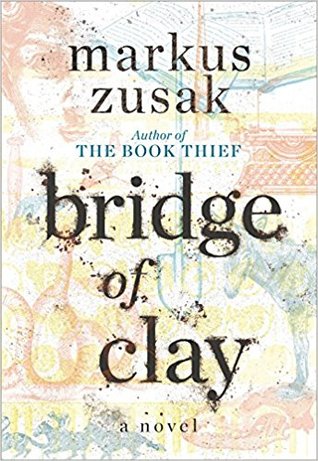
Take A Peek Book Review: Bridge of Clay by Markus Zusak

“Take a Peek” book reviews are short and (possibly) sweet, keeping the commentary brief and providing a little peek at what the book’s about and what I thought.

Synopsis:

(via Goodreads)

Let me tell you about our brother.
The fourth Dunbar boy named Clay.
Everything happened to him.
We were all of us changed through him.

The Dunbar boys bring each other up in a house run by their own rules. A family of ramshackle tragedy – their mother is dead, their father has fled – they love and fight, and learn to reckon with the adult world.

It is Clay, the quiet one, who will build a bridge; for his family, for his past, for his sins. He builds a bridge to transcend humanness. To survive.

A miracle and nothing less.

Markus Zusak makes his long-awaited return with a profoundly heartfelt and inventive novel about a family held together by stories, and a young life caught in the current: a boy in search of greatness, as a cure for a painful past.

My Thoughts:

Have you ever devoured a book in two days, not because you loved it, but because you wanted to be done? Yeah. That. Me. This book.

Bridge of Clay is long, and involved, and made me absolutely batty. At heart, it’s the story of a family of five boys — their odd, endearing home, their unbreakable bonds as brothers, the tragedies that befall their family, and the loss of their parents. There are elements that are powerful, sad, and moving… and it’s all buried beneath writing that is just too artful and precious by far. Some may find it poetic. For me, the writing felt like slogging through mud to get to the essence of the story, and it was neither satisfying nor enriching.

What a shame. I loved The Book Thief (didn’t everybody?), and was so excited to read the author’s first new book after more than a decade. Look, maybe it’s me. Maybe I’m the wrong reader for this book. I like my stories straight-forward and clear — maybe I just lack an appreciation for something that feels more like a painting in words. The timeline is backwards and forwards, there are items and words that become practically holy but without explanation until the very end, and the author presupposes some knowledge of things like horse-racing which honestly, I knew nothing about and could barely follow.

I did enjoy some portions about the Dunbar brothers, reading about their strange wildness and the way they survived together as a unit, despite the truly lousy events that seemed to plague them. Some of the brothers’ antics are almost comical, except for the thread of sorrow that runs through it all, always casting a shadow.

Clearly, I’m conflicted about this book. It packs in a lot of emotion, and there are moments of great power — yet the plot itself, so disjointed and out of order, as well as the unusual, twisty writing style, kept me from actual enjoyment while reading.

I’d love to hear from anyone who read and loved this book. Stepping away, I might be able to be convinced that there’s something more, something valuable here… but I just couldn’t find it myself.

_________________________________________

The details:

Title: Bridge of Clay
Author: Markus Zusak
Publisher: Alfred A. Knopf Books for Young Readers
Publication date: October 9, 2018
Length: 537 pages
Genre: Young adult fiction
Source: Library

**Save

Save

Save

Save

Save

Save

Save

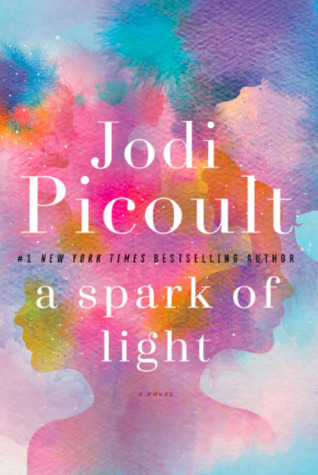
Book Review: A Spark of Light by Jodi Picoult

The warm fall day starts like any other at the Center—a women’s reproductive health services clinic—its staff offering care to anyone who passes through its doors. Then, in late morning, a desperate and distraught gunman bursts in and opens fire, taking all inside hostage.

After rushing to the scene, Hugh McElroy, a police hostage negotiator, sets up a perimeter and begins making a plan to communicate with the gunman. As his phone vibrates with incoming text messages he glances at it and, to his horror, finds out that his fifteen-year-old daughter, Wren, is inside the clinic.

But Wren is not alone. She will share the next and tensest few hours of her young life with a cast of unforgettable characters: A nurse who calms her own panic in order save the life of a wounded woman. A doctor who does his work not in spite of his faith but because of it, and who will find that faith tested as never before. A pro-life protester disguised as a patient, who now stands in the cross hairs of the same rage she herself has felt. A young woman who has come to terminate her pregnancy. And the disturbed individual himself, vowing to be heard.

Told in a daring and enthralling narrative structure that counts backward through the hours of the standoff, this is a story that traces its way back to what brought each of these very different individuals to the same place on this fateful day.

Jodi Picoult—one of the most fearless writers of our time—tackles a complicated issue in this gripping and nuanced novel. How do we balance the rights of pregnant women with the rights of the unborn they carry? What does it mean to be a good parent? A Spark of Light will inspire debate, conversation . . . and, hopefully, understanding.

In A Spark of Light, Jodi Picoult presents yet another ripped-from-the-headlines scenario: At the last remaining clinic that provides abortions in the state of Mississippi, women seeking services must brave a gauntlet of protesters to get inside the doors, where they’re treated with kindness, despite the convoluted laws that dictate timing, method, and communications around care. But on the day this story unfolds, the normal tensions and emotions are disrupted by a gunman who bursts into the clinic, shooting indiscriminately and taking hostages, so blinded by his own rage that he feels no compassion for the people whose lives he’s endangering.

We see events through the eyes of multiple characters: The doctor, who flies from state to state to perform the services that give women choices; the teen seeking birth control for the first time; the older woman who trusts the clinic staff to help her understand a medical diagnosis; the woman seeking an abortion; the relative there as an escort, and more. The author has chosen an unusual approach to this story: Instead of starting at the beginning of the day and taking us through it step by step, the narrative starts at the end, at the climax of the hostage situation. From there, the story moves backward, hour by hour, so that with each chapter, we learn a little more about the people involved, the events that have already happened, and how these different people all ended up in this crisis together.

I have mixed feelings about the backwards chronology. There are plenty of “aha” moments with each chapter, as another piece of the puzzle slides into place. So THAT’s why this person came to the clinic! So THAT’s why this other character acted this way! So THAT’s how these scenarios are connected. As with all of the Picoult books I’ve read, there’s a fairly large twist toward the end that further explains things. But does this work in terms of the actual power of the story? Well, for me, not so much. Yes, it’s satisfying to see the pieces come together, yet the horrific opening scenes would have been more powerful if I’d actually felt like I knew the people involved. Instead, we start with a bunch of strangers in a terrible situation, and have to work through each chapter, each going backward by one hour, in order to get to know their backstories, their personalities, and their motivations.

At the same time, A Spark of Light does a good job of making the various sides of the reproductive rights battle comprehensible. The author does not depict anti-choice protesters as mindless fanatics. Instead, as we get to know characters from all sides of the issue, we’re given insight into why they believe what they believe. Whether we agree with a particular character’s viewpoint or not, we come out of this reading experience at least understanding why a person could feel what they do, and even more importantly, get to understand how a person’s individual experiences and struggles often play into the stance they take as adults.

To be clear, there’s a sharp distinction between belief and action, and the author in no way supports the actions of the shooter in this story. What he does is unforgivable. Still, there’s a backstory provided, to explain how a man might snap and take such extreme action. I have to say that this is where the story feels weakest to me: I don’t really buy the chain of events that led this man, in the blink of an eye, to change from family man to mass murderer.

In the author’s notes at the end of the book, the author provides some fascinating statistics about abortion law and how it’s changed, the restrictions placed on women who need care, and the ways in which choice continues to be curtailed. She also makes compelling arguments for the need for greater access to contraception and healthcare in order to reduce the need for abortions. She draws on interviews with countless medical providers, political advocates from both sides of the issues, and women who’ve contemplated or chosen termination of pregnancies, and presents a powerful portrait of what this means for the people involved.

A Spark of Light is though-provoking and absorbing. While I do feel that the backwards chronology is not effective, I still found myself caught up in the characters’ lives by the end of the book. This book has both dramatic action and interesting moral dilemmas, and is sure to be a hit with Picoult’s many fans.

Warning: In addition to the gun violence, some readers may find the graphic description of the abortion process particularly disturbing. 

Save

_________________________________________

The details:

Title: A Spark of Light
Author: Jodi Picoult
Publisher: Ballantine Books
Publication date: October 2, 2018
Length: 352 pages
Genre: Contemporary fiction
Source: Library

Save

Save

Save

Save

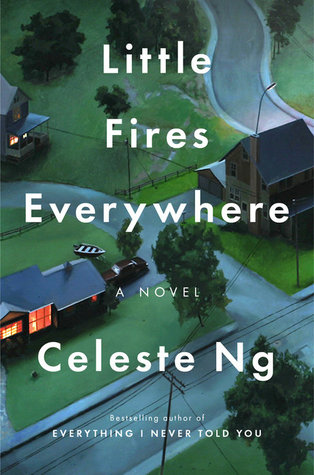
Take A Peek Book Review: Little Fires Everywhere by Celeste Ng

“Take a Peek” book reviews are short and (possibly) sweet, keeping the commentary brief and providing a little peek at what the book’s about and what I thought.


Synopsis:

(via Goodreads)

Everyone in Shaker Heights was talking about it that summer: how Isabelle, the last of the Richardson children, had finally gone around the bend and burned the house down.

In Shaker Heights, a placid, progressive suburb of Cleveland, everything is meticulously planned – from the layout of the winding roads, to the colours of the houses, to the successful lives its residents will go on to lead. And no one embodies this spirit more than Elena Richardson, whose guiding principle is playing by the rules.

Enter Mia Warren – an enigmatic artist and single mother – who arrives in this idyllic bubble with her teenage daughter Pearl, and rents a house from the Richardsons. Soon Mia and Pearl become more than just tenants: all four Richardson children are drawn to the alluring mother-daughter pair. But Mia carries with her a mysterious past, and a disregard for the rules that threatens to upend this carefully ordered community.

When the Richardsons’ friends attempt to adopt a Chinese-American baby, a custody battle erupts that dramatically divides the town and puts Mia and Mrs. Richardson on opposing sides. Suspicious of Mia and her motives, Mrs. Richardson becomes determined to uncover the secrets in Mia’s past. But her obsession will come at unexpected and devastating costs to her own family – and Mia’s.

Little Fires Everywhere explores the weight of long-held secrets and the ferocious pull of motherhood-and the danger of believing that planning and following the rules can avert disaster, or heartbreak.

My Thoughts:

I read Little Fires Everywhere all in one sitting (on a flight from east coast to west), and that may not have been the best approach. I tore through the book to see how it would all work out, but didn’t give myself much breathing or digesting room. That said, Little Fires Everywhere is an absorbing read. I wouldn’t describe it as action-packed by any means — it’s really a character study, looking at families and neighborhoods and the strange and unintended dynamics that can overtake people and change their lives.

The story is a little too scattered for me to fully embrace. I would have liked to understand the characters better, especially the members of the Richardson family, but some of them are presented as sketches rather than fully formed people. This felt particularly true with Izzy — we only see her sporadically throughout the book, and I never felt that I truly had a sense of her as a person. Mr. Richardson is basically absent from the story, which maybe is indicative of his traditional father role — his realm is outside in the world, rather than in the domestic life of the family. Even Trip and Moody, the two Richardson sons, felt vague to me. I would have needed to know these characters in a more meaningful way to fully embrace the story and care about them.

On the other hand, I did really enjoy the parts of the story more focused on Mia Warren. Her backstory was the most interesting part of the plot. However, the adoption/custody battle seemed an odd choice as the event that divided the neighborhood and the families.

All in all, I did enjoy Little Fires Everywhere, especially the depiction of suburban life in the 90s — but the scattered feeling of the story and the lack of deeper character development keep me from calling this a five-star read.

_________________________________________

The details:

Title: Little Fires Everywhere
Author: Celeste Ng
Publisher: Penguin Press
Publication date: September 12, 2017
Length: 338 pages
Genre: Contemporary fiction
Source: Purchased

**Save

Save

Save

Save

Save

Save

Save

Library Reading Round-Up: A classic re-told, spooky scarecrows, and the invention of a monster

It’s been a busy week, but not so busy that I couldn’t pick up the books waiting for me on the library hold shelf! Here are the three library books I’ve read in the past few days:


Pride by Ibi Zoboi: A contemporary YA retelling of Pride and Prejudice, Pride is the story of Zuri Benitez, who lives in the Bushwick neighborhood of Brooklyn. When the wealthy Darcy family moves into the mini-mansion across the street, it seems that gentrification has really and truly arrived, and Zuri is not at all happy. What will become of the neighborhood’s way of life? Zuri’s sister Janae falls for Ainsley Darcy, but his brother Darius is rude and stuck-up and immediately sets Zuri’s teeth on edge. Well, if you’ve read Pride and Prejudice, you know where this story is going, but it’s nice to read this take on the classic. Jane Austen’s stories don’t necessarily translate well to the 21st century, but Pride does a pretty good job of sticking to the bones of the original while infusing a new and different vibe. Will the target YA audience love it? No idea. I think Pride works well as a contemporary story about family, culture, loyalty, and teen romance, even without the context of the Austen original. As an adult who’s an Austen fan, I wasn’t 100% sold, but then again, I’m more than a little bit outside the demographic for this book!

Small Spaces by Katherine Arden: Moving on to middle grade fiction… Small Spaces is a spooky treat, perfect for the month of October, with some great scares and a memorable main character. Ollie is a sixth-grade girl in a small rural town. In the year since her mother’s death, she’s withdrawn from friends, activities, and everything that once gave her joy. When she’s forced to go on the class field trip to visit a local farm, she sneaks along a copy of an old book to keep her company. The book tells a ghostly story, and as the class explores the farm, Ollie starts to realize that the story may be true. There are sinister scarecrows, spooky fog, a creepy corn maze… and daring escapes, lots of bravery, and the forging of strong bonds of friendship. Katherine Arden is the author of the beautiful adult novels The Bear and the Nightingale and The Girl in the Tower. It’s fun to see her turn her writing skill to a middle grade ghost story!

Mary Who Wrote Frankenstein by Linda Bailey, illustrated by Julia Sarda: A gorgeous picture book about the life of Mary Shelley, showing her early years and the events that shaped her development into a writer. The story is told simply, and the beautiful illustrations give life to Mary’s imaginations and dreams. A lovely book.


Three books, three target age ranges, all quite fun — overall, a nice way to amuse myself during an otherwise crazy week. And now I can return them, and come home with even more new books to stack on my nightstand.