Audiobook Review: The Last Wish by Andrzej Sapkowski

Title: The Last Wish
Author: Andrzej Sapkowski
Narrator: Peter Kenny
Publisher: Orbit
Publication date: December 14, 2008 (originally published in 1997 in Poland)
Print length: 360 pages
Audio length: 10 hours, 17 minutes
Genre: Fantasy
Source: Purchased
Rating:

Rating: 4.5 out of 5.

Geralt of Rivia is a witcher. A cunning sorcerer. A merciless assassin. And a cold-blooded killer. His sole purpose: to destroy the monsters that plague the world. But not everything monstrous-looking is evil and not everything fair is good… and in every fairy tale there is a grain of truth.

A collection of short stories introducing Geralt of Rivia, to be followed by the first novel in the actual series, The Blood of Elves. Note that, while The Last Wish was published after The Sword of Destiny, the stories contained in The Last Wish take place first chronologically, and many of the individual stories were published before The Sword of Destiny. 

For anyone who developed an instantaneous obsession for the Netflix series The Witcher (*raising my hand*), the story collection The Last Wish is an absolute must!
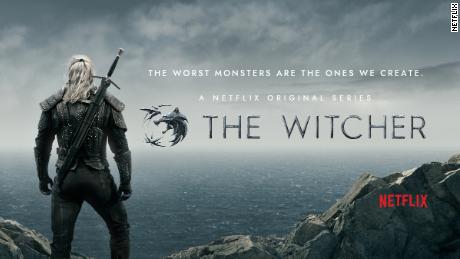
The Last Wish introduces Geralt of Rivia, a solitary man who travels from place to place earning money by fighting monsters on behalf of the humans who hire him. He’s a Witcher, member of a profession of highly trained, magically enhanced people who take on the monsters of the world through their power with spells and swords.

Geralt is gruff, sometimes mean, straightforward, and never afraid of a fight. He has a strict moral code, and uses it to set his own path, even when men of power tried to oppose him or sway him with threats or bribery.

The book is structured as connected tales of Geralt’s adventures, with a through-story between chapters, called “The Voice of Reason”, where we keep up with Geralt after a particularly nasty escapade. Through the interwoven stories, we learn about his past adventures and how he got to this point.

The six stories in The Last Wish seem to be rooted in various fairy tales, but with some pretty big twists and variations along the way. This isn’t too surprising — as Geralt points out, all stories start from a grain of truth.

For viewers of the Netflix series, most of these stories will be at least partially familiar. We see the story of Renfri and the battle at Blaviken — which, by the way, is really a version of a Snow White story, which I totally didn’t get from watching the TV series. There’s also the feast at Cintra where Pavetta’s potential marriage is at stake (a great scene in both the book and the series), a Beauty & the Beast-inspired tale, and the story of the striga.

And, obviously from the title, The Last Wish includes the story of Yennefer and Geralt’s first meeting and the role of the djinn, although in many ways it’s pretty different from the presentation on Netflix.

Overall, I loved this book. There are pieces I missed, like Yennefer’s entire origin story, but so much added detail and explanation of various elements that it all evens out. Also, the fall of Cintra and the introduction of Ciri are not included in this book, but will be important in later books, from what I understand.

Jaskier, the delightful bard on the TV series who is responsible for the ultimate earworm, Toss a Coin to Your Witcher, appears in the books as Dandelion (pronounced by the narrator not like the flower, but as danDElion, which makes it sounds pretty charming). He’s still a totally fun character, but of course, I missed the singing!

Regarding the narration, I got off to a difficult start with the audiobook. I typically listen to audiobooks at 1.25x speed, and it took me a chapter or two to really accept that that just wouldn’t work for me in this case. Between the narrator’s speaking patterns and the heavy accents and rather incomprehensible names of certain characters, I finally realized that I’d need to either slow down the listening speed or give up and switch to print.

Once I took the speed down to 1.0x (normal speed), most of my problems were resolved, and I was much better able to follow conversations and narration. I ended up loving some of the voices, particularly the narrator’s approach to Geralt himself.

Fantasy character names can be tricky, so I ended up having to refer to a print version anyway because it drove me a bit batty not to have a clear idea of how certain names might be spelled. Nivellen, Coodcoodak, Eist Tuirseach, Drogodar, Crach an Craite… see what I mean?

Reading the book made me even more impressed with the Netflix series, because it made me appreciate how well they wove together so many different storylines into one cohesive whole. In fact, now that I’ve finished this book, I may have to watch the series all over again to see what I missed the first time around!

The Last Wish was a really fun, enjoyable listen, and I will absolutely be continuing with The Witcher books, either in print or via audio. After all, what else am I supposed to do with my time between now and whenever season 2 comes around?


Book Review: Only Mostly Devastated by Sophie Gonzales

Title: Only Mostly Devastated
Author: Sophie Gonzales
Publisher: Wednesday Books
Publication date: March 3, 2020
Length: 288 pages
Genre: Young adult fiction
Source: Review copy courtesy of the publisher via NetGalley
Rating:

Rating: 4 out of 5.

SIMON VS. THE HOMO SAPIENS AGENDA meets CLUELESS in this boy-meets-boy spin on Grease

Summer love…gone so fast.

Ollie and Will were meant to be a summer fling—casual, fun, and done. But when Ollie’s aunt’s health takes a turn for the worse and his family decides to stay in North Carolina to take care of her, Ollie lets himself hope this fling can grow to something more. Dreams that are crushed when he sees Will at a school party and finds that the sweet and affectionate (and comfortably queer) guy he knew from summer isn’t the same one attending Collinswood High.

Will is more than a little shocked to see Ollie the evening of that first day of school. While his summer was spent being very much himself, back at school he’s simply known as one of the varsity basketball guys. Now Will is faced with the biggest challenge of his life: follow his heart and risk his friendships, or stay firmly in the closet and lose what he loves most.

Summer loving had me a blast
Summer loving happened so fast.
..Save

Well, you know how it goes.

Two cute teens meet on their summer vacation, fall head over heels, say sad good-byes… and then end up attending the same high school in the fall.

But in Only Mostly Devastated, we’re not talking good girl Sandy and bad boy Danny. Instead, we have two adorable boys, Ollie and Will, who have a magical summer together. They should be thrilled to end up at the same school unexpectedly, right?

The problem is (and of course, there has to be a problem): Ollie is out; Will is not. And while Ollie came out to supportive parents and a chill circle of friends and school acquaintances back in California, Will grew up in more conservative North Carolina, where homophobic jokes are de rigeur for the cool jock crowd and their hangers-on.

When Ollie and his parents relocate to North Carolina to be near his terminally ill aunt and help with her children, he doesn’t really expect to run into Will without some effort. Not to mention that Will appears to have ghosted him right after their final summer good-bye kiss.

So when Ollie tells the group of girls who befriend him on his first day of school about his summer love — and shows them a picture — complications almost immediately crop up. Because of course, Will goes to the same school, and of course, the girls are thrown for a loop by this news that straight hot basketball star Will is maybe not so straight after all.

Ollie is sweet as can be, and it’s so sad and painful to go through all his emotions alongside him. He’s firmly out and will never accept a situation where’s he’s forced back in the closet — but he has to respect Will’s choice, even if it means accepting that Will has to pretend not to know Ollie, and can’t hang out with him too visibly for fear of being teased about turning gay.

The author does a great job of helping us (and Ollie) understand why Will might fear being outed, showing the social environment at school and the not-so-subtle pressure to conform, as well as the scorn reserved for those who don’t fall nicely into socially acceptable gender and relationship roles.

Meanwhile, Ollie forms close friendships with a trio of girls who seem to adore him and take him under their wings. They’re all interesting and varied, not just a generic crowd of high school girls but real people with distinct personalities and conflicts and challenges.

Ollie’s family life is also portrayed sensitively, and it’s quite sad to see Ollie processing his aunt’s decline while also being there for his two little cousins. As if Ollie wasn’t adorable and sweet enough already, he’s also a terrific babysitter and loves his family unconditionally, and it’s heartbreaking to witness his grief when the inevitable finally happens.

The cast of characters in Only Mostly Devastated is nicely diverse without making a big fuss over it, which I really appreciated. The romance at the heart of the story is so well done, and even though it’s almost too sad at times to see how hurt Ollie is, by the end, it feels like a realistic journey that the boys go through to get to where they end up. (Being vague here, so as not to spoil too much…)

If you enjoy sweet, sensitive young adult romances with well-earned happy endings, definitely check out Only Mostly Devastated!Save

Book Review: A Witch in Time by Constance Sayers

Title: A Witch in Time
Author: Constance Sayers
Publisher: Redhook
Publication date: February 11, 2020
Length: 448 pages
Genre: Fantasy/historical fiction
Source: Review copy courtesy of the publisher via NetGalley
Rating:

Rating: 4.5 out of 5.

A young witch is cursed to relive a doomed love affair through many lifetimes, as both troubled muse and frustrated artist, in this haunting debut novel.

In 1895, sixteen-year-old Juliet LaCompte has a passionate, doomed romance with the married Parisian painter Auguste Marchant. When her mother — a witch — attempts to cast a curse on Marchant, she unwittingly summons a demon, binding her daughter to both the artist and this supernatural being for all time. Juliet is fated to re-live her affair and die tragically young lifetime after lifetime as the star-crossed lovers reincarnate through history.

The demon — who appears to Juliet in all her reincarnations as a mysterious, handsome, and worldly benefactor — has been helplessly in love with her since 19th century France, even though she forgets him each time she dies. He falls for her in 1930s Hollywood, in 1970s Los Angeles, and finally in present-day Washington D.C. — where she begins to develop powers of her own.

In this life, she starts to remember her tragic past lives. But this time, she might have the power to break the cycle…

A Witch in Time is perfect for fans of A Secret History of WitchesOutlander, and The Time Traveler’s Wife.

A Witch in Time is a haunting story of doomed, enduring love. It’s mesmerizing and otherworldly, yet also very much grounded in the here and now.

As the story opens, we meet Helen Lambert, a successful media professional in her mid-30s, recently divorced from a mover and shaker in the museum world, cautiously stepping back into the dating world. But the man she’s set up with on a blind date is both strange and familiar. There’s something about Luke Varner that resonates with Helen. He implies that they’ve met before — in fact, that they share a history. Strangest of all, he takes her to a gallery in her ex’s museum and shows her a 19th century painting of a young girl who looks startlingly similar to Helen.

Helen begins to have vivid dreams of another life, in which she appears as young Juliet LaCompte, a French farm girl in love with the suave painter who lives next door. For Helen, it’s as if she’s living these moments, not just dreaming them. And when she wakes up, she knows that what she’s experienced is true.

As the days and weeks go by, Helen’s connection to Luke is revealed and her entanglement with Juliet and other women across time slowly comes to light through her vivid dreams. As Helen discovers, she, Luke and the artist Juliet once loved are doomed to repeat their patterns time and time again, for eternity — living out a curse placed in anger by an inexperienced witch, condemning them all to a hopeless cycle.

Oh, this book is captivating! I fell in love with the strange lives revealed to Helen through her dreams — 1890s Paris, 1930s Hollywood, 1970s Taos. In each, Helen (or Juliet) takes on a slightly different life, but there are elements that are consistent from lifetime to lifetime. And through these varied lives, Luke remains a constant, there to protect Helen and her predecessors over and over again… but also to love them.

The mood of the book is lush and dreamy. So much happens, and it takes a leap of faith to just go with the story and allow it to unfold at its own pace. And trust me, it’s worth it! The author gives us historical set-pieces that are atmospheric and convey the feel of the their different periods so well. She also manages to connect the dots between Juliet/Helen’s different personas, so that even though we meet four very different women (and their four very different love obsessions), the common threads are very visible as well.

Despite being over 400 pages in length, A Witch in Time goes by very quickly. I simply couldn’t put it down, and didn’t want to! I was very caught up in the story of recurring love and recurring tragedy, and felt incredibly breathless waiting for each new life’s particular patterns to unfold.

Absolutely a must-read! Don’t miss this one.

Save

Save

Save

Save

Book Review: The Dry by Jane Harper

Title: The Dry
Author: Jane Harper
Publisher: Flatiron Books
Publication date: May 31, 2016
Length: 328 pages
Genre: Crime fiction
Source: Purchased
Rating:

Rating: 3.5 out of 5.

A small town hides big secrets in this atmospheric, page-turning debut mystery by award-winning author Jane Harper.

In the grip of the worst drought in a century, the farming community of Kiewarra is facing life and death choices daily when three members of a local family are found brutally slain.

Federal Police investigator Aaron Falk reluctantly returns to his hometown for the funeral of his childhood friend, loath to face the townsfolk who turned their backs on him twenty years earlier.

But as questions mount, Falk is forced to probe deeper into the deaths of the Hadler family. Because Falk and Luke Hadler shared a secret. A secret Falk thought was long buried. A secret Luke’s death now threatens to bring to the surface in this small Australian town, as old wounds bleed into new ones.

The Dry is a twisty tale of murder and secrets set in a rural Australian community, where drought has dried up farms and rivers and brought the entire town to the brink of natural and economic ruin.

Federal Investigator Aaron Falk is drawn back into the web of gossip and lies in the town of Kiewarra when he returns home for a funeral — the funeral of his former best friend, who appears to have slaughtered his wife and son before turning the shotgun on himself. It’s horrifying and ugly, and the town is roiling with unhappiness.

At the same time, Aaron’s reception by the town is hostile. Twenty years earlier, he was suspected of murdering a classmate and was forced to flee with his father in the face of threats and aggression. The people of Kiewarra have a long memory, and no one — especially the dead girl’s family — wants to see him back among them.

But Aaron and the local police officer both believe something is off about the deaths of Luke’s family. Something about the crime scene just doesn’t add up, so Aaron stays to help pick through the witness statements and other bits and pieces of clues. Meanwhile, his memories of the events of 20 years earlier are coming back strongly, and he’s finding himself plagued by that unsolved mystery as well.

I was very caught up in the story of The Dry and just could not stop reading! The murder itself is gruesome and terrible, and it’s shocking to see how the different pieces fit together. Aaron is an impressive main character, smart and determined, but also flawed and haunted by his past and his regrets.

It was fascinating to get a view of the small-town politics and power plays, and I found the description of the drought-ridden environment and its dangers really powerful. Who knew that a scene with a lighter in it could be quite so scary?

I’m rating this book 3 1/2 stars, because I did enjoy it quite a bit, but also felt certain pieces of the mystery were a little on the obvious side. Given that I don’t normally gravitate toward crime stories, I was surprised that I liked The Dry as much as I did!

In fact, I think at some point I’ll want to read more of this author’s work — my book group friends recommend her books highly! **Save

Save

Save

Save

Save

Save

Book Review: The Cruel Prince (Folk of the Air, #1) by Holly Black

Title: The Cruel Prince (Folk of the Air, #1)
Author: Holly Black
Publisher: Little, Brown Books for Young Readers
Publication date: January 2, 2018
Length: 370 pages
Genre: Fantasy
Source: Purchased
Rating:

Rating: 4.5 out of 5.

Of course I want to be like them. They’re beautiful as blades forged in some divine fire. They will live forever.

And Cardan is even more beautiful than the rest. I hate him more than all the others. I hate him so much that sometimes when I look at him, I can hardly breathe.

Jude was seven when her parents were murdered and she and her two sisters were stolen away to live in the treacherous High Court of Faerie. Ten years later, Jude wants nothing more than to belong there, despite her mortality. But many of the fey despise humans. Especially Prince Cardan, the youngest and wickedest son of the High King.

To win a place at the Court, she must defy him–and face the consequences.

As Jude becomes more deeply embroiled in palace intrigues and deceptions, she discovers her own capacity for trickery and bloodshed. But as betrayal threatens to drown the Courts of Faerie in violence, Jude will need to risk her life in a dangerous alliance to save her sisters, and Faerie itself. 

The Cruel Prince is a book that practically everyone but me had already read. But now…

I’m in! I finally read The Cruel Prince, and I can see what all the fuss is about. Call me late to the party, but guys! This book is good!

The book starts off with a horrifying, sad scene: In a normal suburban home, 7-year-old twin sisters Taryn and Jude and their older sister Vivi are lounging about watching TV, when a strange man enters, murders their parents, and steals them away. The man is Madoc, and he is Vivi’s biological father. The mother of the three girls used to dwell in Faerie with him, but she ran off years earlier with the mortal man who became the twins’ father. Now, years later, Madoc has taken what he considers his.

The girls are brought to Faerie and raised among the fae gentry. Vivi, half-fae herself, fits in pretty well, but the twins are always aware of how other they are. They’re mortal, and have no powers. Even worse, they have no innate ability to fight off the magical compulsions and other torments directed at them by their fae classmates.

As the story kicks in, Jude and Taryn are seventeen, still trying to find a way to belong. Madoc has raised them with riches and privilege, but they can never forget that he murdered their parents. Jude wants strength — she wants to prove she belongs in the fae court by becoming a knight. Taryn, on the other hand, wants to secure her place through marriage. And Vivi? She, the one who should belong, wants no part of it at all, instead preferring to sneak back to the human world whenever she can to see her mortal girlfriend and plan a future with her.

Jude and Taryn are constantly tormented by their classmates, especially Prince Cardan and his cronies. But when the king decides to step down and pass along the crown, the intrigue and the danger escalates.

I’m not going to go further into the plot, but let me just say… I was hooked! I could not put this book down once I started. I loved the depiction of Faerie, its beauty and wonders, and how utterly alien and hostile this world would feel to children who didn’t belong.

The casual cruelty of the ruling class is scary and heartless, and I felt awful for Taryn and Jude for having no defenses and no way to stand up for themselves in any meaningful way. And even when some of the crowd appear to be more inclined to be friendly, it seems obvious that no one can be trusted.

Jude is our hero, and she’s awesome. She’s smart and brave, and refuses to scrape and bow, even when that’s the most obvious way to get the bullies off her back. She’s devoted to protecting her family, and doesn’t take the easy way out. I like how she goes through the book having to figure who to trust, and even when forced into pretty bad situations, how to turn those situations to her advantage and achieve her goals.

I definitely want more! I’m really looking forward to reading book #2, and feel pretty safe in predicting that I’ll want to read straight through to the end of the trilogy!

**Save

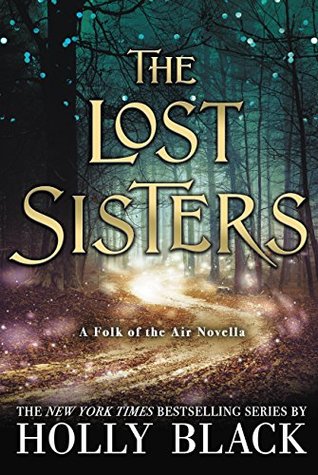
I also really enjoyed The Lost Sisters, a novella that tells about some of the same events from The Cruel Prince, but from Taryn’s perspective.

It’s really interesting to get the other side of parts of the story, and I’m glad I stumbled across it!

And now, on to The Wicked King!Save

Save

Save

Save

Save

Save

Book Review: Imaginary Numbers (InCryptid, #9) by Seanan McGuire

Title: Imaginary Numbers (InCryptid series, book #9)
Author: Seanan McGuire
Publisher: DAW
Publication date: February 25, 2020
Length: 448 pages
Genre: Urban fantasy
Source: Won in a Goodreads giveaway!
Rating:

Rating: 4 out of 5.

The ninth book in the fast-paced InCryptid urban fantasy series returns to the mishaps of the Price family, eccentric cryptozoologists who safeguard the world of magical creatures living in secret among humans.

Sarah Zellaby has always been in an interesting position. Adopted into the Price family at a young age, she’s never been able to escape the biological reality of her origins: she’s a cuckoo, a telepathic ambush predator closer akin to a parasitic wasp than a human being. Friend, cousin, mathematician; it’s never been enough to dispel the fear that one day, nature will win out over nurture, and everything will change.

Maybe that time has finally come.

After spending the last several years recuperating in Ohio with her adoptive parents, Sarah is ready to return to the world–and most importantly, to her cousin Artie, with whom she has been head-over-heels in love since childhood. But there are cuckoos everywhere, and when the question of her own survival is weighed against the survival of her family, Sarah’s choices all add up to one inescapable conclusion.

This is war. Cuckoo vs. Price, human vs. cryptid…and not all of them are going to walk away.

It makes me so happy to have a new InCryptid book in my hands, especially since I won this one in a Goodreads giveaway, which pretty much never happens for me!

In Imaginary Numbers, the ongoing InCryptid series turns to two new point-of-view characters, Sarah Zellaby and Artie Harrington. Sarah and Artie are both members of the sprawling Price-Healy clan, a group of cryptozoologists dedicated to protecting non-human species from the persecution of the deadly Covenant, and equally dedicated to protecting humans from the deadlier of cryptid species. To that end, the Prices are all highly skilled with weaponry of all sorts, learning to become excellent shots and to throw knives with precision from childhood.

Sarah is the first non-human main character in this series. She’s a cuckoo, the common term for Johrlacs, which are a human-appearing species that are more or less descended from telepathic wasps. Cuckoos are apex predators. They can take over anyone’s mind and make them do whatever they want, and the effects can be fatal. Sarah was adopted into the Price family as a child, and so was raised with a different set of influences than a typical cuckoo, making her more aware of her responsibility to respect others’ boundaries and giving her a deep, true love for her family. As well as a different and very strong love for her cousin Artie, which the two of them have been too shy and awkward to ever acknowledge.

In this book, Sarah’s return to the family compound after a lengthy recovery from injury brings the attention of unknown cuckoos, who want to use her for their own purposes, and don’t care who they have to kill to make it happen. The action is intense and fast-paced, with a plot that’s occasionally confusing but always fun.

The InCryptid books tend to be a little less dire than Seanan McGuire’s October Daye series, which regularly rips out my heart. This series is generally light-hearted, not that there aren’t perilous situations and heartbreaks here as well. Still, with a family that includes a sorcerer whose boyfriend is a human-sized monkey, a grandfather who’s patched together from dead bodies, and a time-traveling grandma who appears to be in her teens, things can’t get all that serious for too extended a time.

The author’s trademark quippiness and cleverness is on full display in Imaginary Numbers:

It wouldn’t stop the cuckoos on the lawn from pouring into the house if they got the signal — it would barely even slow them down — but every little bit helps when you’re going up against telepathic killers from another dimension.

… [T]hat made it better than standing around waiting for the invisible floor to drop out from under my feet and send me plummeting into the void. I am not a big fan of plummeting. If I had to commit to a position, I’dd probably have to say that I was anti-plummeting.

“She seems nice.”

“No, she doesn’t,” I said. “She seems like an unstable old lady who somehow keeps aging backward, and who carries grenades that are older than I am way too frequently for comfort’s sake.”

Normal people get meet-cutes. I get crime scene cleanup.

Imaginary Numbers ends with a sort-of cliffhanger — the main plot is resolved, but ends up dumping a few key characters into a brand-new situation in the last lines… and I’m dying to know what will happen! It sounds as though the next in the series, Calculated Risks, will pick up where this one leaves off. Too bad we have to wait a year for it!

As an added treat, Imaginary Numbers includes a bonus novella, Follow the Lady, which takes place chronologically between books 8 and 9. It’s fun, not earth-shattering, and a nice way to de-stress after the high-pitched excitement at the end of Imaginary Numbers.

This series is a delight, and I’ll echo my previous advice to start at the beginning. These books do not work as stand-alones, not if you want to have any hope of getting what’s going on and the complex, convoluted family trees. All of the InCryptid books are fast reads, so even though this is the 9th book in the series, it really won’t be too hard to catch up.

I love these books! Check ’em out.

**Save

Save

Save

Save

Save

Save

Save

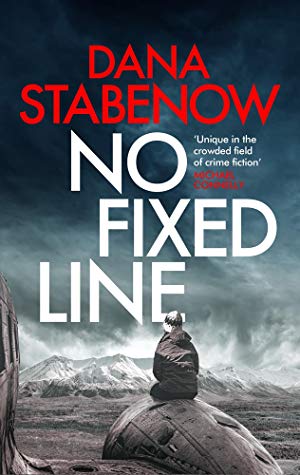
Book Review: No Fixed Line (Kate Shugak, #22) by Dana Stabenow

Title: No Fixed Line (Kate Shugak, #22)
Author: Dana Stabenow
Publisher: Head of Zeus
Publication date: January 14, 2020
Length: 400 pages
Genre: Mystery/crime
Source: Purchased
Rating:

Rating: 4 out of 5.

… though there is no fixed line between wrong and right,
There are roughly zones whose laws must be obeyed.

It is New Year’s Eve, nearly six weeks into an off-and-on blizzard that has locked Alaska down, effectively cutting it off from the outside world.

But now there are reports of a plane down in the Quilak mountains. With the National Transportation Safety Board unable to reach the crash site, ex-Trooper Jim Chopin is pulled out of retirement to try to identify the aircraft, collect the corpses, and determine why no flight has been reported missing. But Jim discovers survivors: two children who don’t speak a word of English.

Meanwhile, PI Kate Shugak receives an unexpected and unwelcome accusation from beyond the grave, a charge that could change the face of the Park forever.

A quick word before diving into the review: The synopsis above is not entirely accurate. The details of finding the children are off. Kate gets something from a dead man, but not exactly an accusation. The whole thing is not quite right… just know that ahead of time if such things matter to you.

Anyhoo… let’s talk about No Fixed Line!

Kate Shugak is one of my favorite fictional characters, and naturally, I’m beyond thrilled to get a new volume in this terrific ongoing series — three years after the last book came out, and believe me, it’s been a long three years!

Kate is a Native Alaskan of Aleut descent, a former investigator for the Anchorage DA’s office who now works as a private investigator, generally at risk to her own neck in one way or another. She lives on an isolated homestead in the fictitious Niniltna Park, and associates with a wide array of quirky and unusual characters, from aunties to state troopers to law enforcement types to bush pilots and beyond.

The Kate books also feature a Very Good Dog. Mutt is half wolf, half husky, is Kate’s constant companion, and is truly one of the very best dogs in fiction.

In No Fixed Line, book #22, Kate finds herself drawn into a mystery after two young children are recovered from a plane crash in the remote mountains, leading to a complex conspiracy involving drug distribution and human trafficking. The case itself is harrowing and disturbing.

But beyond the mystery driving the plot, one of the main pleasures of the Kate books is the community that we come to know over the course of the series. I love the beautiful Alaska setting, the gritty reality of life in Anchorage as well as the more remote locations, and the variety of characters who represent the different factions and strata within Alaskan society, from tribal elders to oil and mining tycoons to isolationist homesteaders — it’s a unique and eclectic bunch. All are present and accounted for in No Fixed Line, and the web of politics and corruption and influence sneaks its way into all of the day-to-day concerns of the Park folks just trying to live their lives.

As in all of the books, Kate herself is marvelous — fierce and loyal and strong as steel, but with internal and external scars that she carries with her always. She’s incredibly devoted to her family and the wide group of people she considers hers, and will do whatever it takes to keep the people she loves safe.

I would not suggest starting anywhere but at the beginning of the series, with book #1, A Cold Day for Murder. It’s worth the effort, I promise! I binged the entire series a few years ago, and loved every moment.

No Fixed Line is an engaging addition to the Kate Shugak series, and leaves me hungry for more! Here’s hoping that #23 will come along before another three years go by.

Book Review: Long Way Down by Jason Reynolds

Title: Long Way Down
Author: Jason Reynolds
Publisher: Atheneum
Publication date: May 2, 2019
Length: 306 pages
Genre: Young adult fiction
Source: Purchased

Rating: 5 out of 5.

An ode to Put the Damn Guns Down, this is New York Times bestselling author Jason Reynolds’s electrifying novel that takes place in sixty potent seconds—the time it takes a kid to decide whether or not he’s going to murder the guy who killed his brother.

A cannon. A strap.
A piece. A biscuit.
A burner. A heater.
A chopper. A gat.
A hammer
A tool
for RULE

Or, you can call it a gun. That’s what fifteen-year-old Will has shoved in the back waistband of his jeans. See, his brother Shawn was just murdered. And Will knows the rules. No crying. No snitching. Revenge. That’s where Will’s now heading, with that gun shoved in the back waistband of his jeans, the gun that was his brother’s gun. He gets on the elevator, seventh floor, stoked. He knows who he’s after. Or does he?

I picked up Long Way Down knowing next to nothing about it. I’d been searching for examples of realistic urban fiction for teens, at the request of my son, and stumbled across a recommendation for Jason Reynolds’s books in general and Long Way Down in particular.

Fortunately for me, I think, I only read the back of the book before starting it, rather than the detailed synopsis above (which I’ve shortened, because I feel like it gives away way too much).

Long Way Down is not what I expected! For starters, I had no idea that it was written in verse. This isn’t an approach I usually gravitate toward, but once I got past my initial reluctance, it completely sucked me in.

The story is sad and straight-forward. Will’s older brother Shawn has been shot and killed. But Will knows where Shawn kept his gun, and he knows what he has to do — find the person who killed Shawn and get revenge.

As Will gets on the elevator from his apartment down to the ground level, Shawn’s gun in his waistband, he starts encountering different people who all have a connection to Will, to Shawn, and to the never-ending cycle of violence that has taken so many lives.

As each new person gets on the elevator, Will learns a little bit more about events of the past, and has one final minute to consider whether or not to get off the elevator, whether or not to go after Shawn’s killer and become a killer himself.

Jason Reynolds’s words are stark and powerful:

I HAD NEVER HELD A GUN.

Never even
touched one.

Heavier than
I expected,

like holding
a newborn

except I
knew the

cry would
be much

much much
much louder.

I tore through this book in an hour, and really do need to go back through it again more slowly to savor the language and the story development.

Jason Reynolds has just been named the newest National Ambassador for Young People’s Literature by the Library of Congress, which is amazing and awesome. Here’s a clip of an interview with the author:

And here’s a clip of him reading from Long Way Down:

Finally, I love this tweet from a teacher whose students wrote six-word responses to Long Way Down:

I will definitely want to read more books by this talented author. Do you have any recommendations?

Check out Long Way Down, and give a copy to all the teens in your life. It’s an important book, and I’m so glad I gave it a try.

Book Review: The Beekeeper of Aleppo by Christy Lefteri

Title: The Beekeeper of Aleppo
Author: Christy Lefteri
Publisher: Ballantine
Publication date: May 2, 2019
Length: 317 pages
Genre: Contemporary fiction
Source: Purchased

Rating: 3.5 out of 5.

The unforgettable love story of a mother blinded by loss and her husband who insists on their survival as they undertake the Syrian refugee trail to Europe.

Nuri is a beekeeper; his wife, Afra, an artist. They live a simple life, rich in family and friends, in the beautiful Syrian city of Aleppo–until the unthinkable happens. When all they care for is destroyed by war, they are forced to escape. But what Afra has seen is so terrible she has gone blind, and so they must embark on a perilous journey through Turkey and Greece towards an uncertain future in Britain. On the way, Nuri is sustained by the knowledge that waiting for them is Mustafa, his cousin and business partner, who has started an apiary and is teaching fellow refugees in Yorkshire to keep bees.

As Nuri and Afra travel through a broken world, they must confront not only the pain of their own unspeakable loss, but dangers that would overwhelm the bravest of souls. Above all, they must journey to find each other again.

Moving, powerful, compassionate, and beautifully written, The Beekeeper of Aleppo is a testament to the triumph of the human spirit. It is the kind of book that reminds us of the power of storytelling. 

The Beekeeper of Aleppo is a harrowing story, following a refugee couple who flee the Syrian civil war and then endure the dangers and harsh conditions facing the refugee population in Europe.

The synopsis is a tiny bit misleading — the main character here is Nuri. And while his wife Afra is a key part of the story, the entire novel takes place through Nuri’s eyes and perspectives.

The storyline jumps back and forth quite a bit along Nuri and Afra’s timeline. We meet them at a B&B in England, where they reside with other refugees awaiting their asylum hearings. From here, we go back in Nuri’s memories to the family’s peaceful life in beautiful Aleppo, where he finds pleasure every day in the apiary he shares with his cousin Mustafa.

But when war breaks out, their happy lives are completely shattered, as is the city itself. They live amidst the rubble of their lives until the danger and tragedy escalates to the point where they either need to flee or die.

Nuri and Afra undertake the perilous journey from Syria across the border into Turkey by means of hired smugglers, but safety is still a long way off. From dirty, decrepit shelters to life-threatening sea crossings to living in a park with only a blanket to call home, the experience is terrifying and soul-deadening, on top of which the couple is dealing with the loss of their beloved son and everything they’ve ever valued in their lives.

Author Christy Lefteri’s depiction of the refugee experience is informed by her years volunteering with refugee relief organizations, where she witnessed first-hand the horrors that follow refugees into their new lives. The story is unflinching, and Nuri and Afra’s journey often seems too much to bear.

In terms of minor quibbles, once Nuri and Afra make the decision to leave Syria, they seem to be able to do it relatively quickly and easily. They connect with a smuggler and make it across the border right away. I had to wonder how realistic that is — could this couple, at this advanced stage of the war, really have gotten out like that? Also, working in Nuri and Afra’s favor is the fact that they have plenty of money, so being able to pay smugglers never seems to be an issue. Again, I wonder how realistic this is, and how their journey might have gone differently if they didn’t have the financial resources to make it happen.

As an illustration of the terrors of the refugee experience, The Beekeeper of Aleppo is highly effective and quite powerfully moving. I did somehow feel that the emotional connection to Nuri and Afra was off — while I felt horror while reading of their losses and suffering, I didn’t necessarily feel connected to them as people, especially Afra, who we really only get to know through Nuri’s eyes, not as an individual on her own.

We’ve all seen the news coverage for years now about the terrible conditions that refugees endure. And while the people on the news are real people, not fictional, it’s through fiction like The Beekeeper of Aleppo that we can get a more internal view of individual pain and hope and loss.

The Beekeeper of Aleppo is an important read. The subject matter is often difficult to take, yet it’s important that we see these lives and not look away. I’m very glad that my book group chose this book for our January read — I’m really looking forward to the discussion, and definitely recommend the book for others looking for a thought-provoking novel on a very current and weighty subject.

Book Review: The Vanished Birds by Simon Jimenez

Title: The Vanished Birds
Author: Simon Jimenez
Publisher: Del Rey Books
Publication date: January 14, 2020
Length: 400 pages
Genre: Science fiction
Source: Review copy courtesy of the publisher via NetGalley

Rating: 4 out of 5.

A mysterious child lands in the care of a solitary woman, changing both of their lives forever in this captivating debut of connection across space and time.

“This is when your life begins.”

Nia Imani is a woman out of place and outside of time. Decades of travel through the stars are condensed into mere months for her, though the years continue to march steadily onward for everyone she has ever known. Her friends and lovers have aged past her; all she has left is work. Alone and adrift, she lives only for the next paycheck, until the day she meets a mysterious boy, fallen from the sky.

A boy, broken by his past.

The scarred child does not speak, his only form of communication the beautiful and haunting music he plays on an old wooden flute. Captured by his songs and their strange, immediate connection, Nia decides to take the boy in. And over years of starlit travel, these two outsiders discover in each other the things they lack. For him, a home, a place of love and safety. For her, an anchor to the world outside of herself.

For both of them, a family.

But Nia is not the only one who wants the boy. The past hungers for him, and when it catches up, it threatens to tear this makeshift family apart. 

The Vanished Birds is both lovely and perplexing, a science fiction story about space travel and corporate domination that’s also a deeply personal story about love, identity, and home.

The book opens on what we come to learn is a Resource World owned by the ubiquitous Umbai corporation. At first glance, we’ve arrived in a rural, agricultural community that seems quaint and unsophisticated. The people of the village work in the dhuba fields; their crop is collected once every 15 years by the space travelling ships that carry out trade across the galaxy.

A boy in the village, Kaeda, is seven years old when he sees the ships arrive for the first time, and he’s immediately captivated by their beauty as well as by the mysterious allure of Nia Imani, the ship’s captain.

The trick here, though, is that ships travel through Pocket Space, secret folds through time that allow them to travel faster than the time passing on the planets. The fifteen years in between visits to Kaeda’s world take only eight months on Nia’s ship. The beautiful first chapter of The Vanished Birds traces the strange relationship between Kaeda and Nia, as each of her visits reintroduces her to Kaeda at a different point in his life, from boyhood to youth to adult to elder.

Later, a strange boy arrives in Kaeda’s world, seemingly out of nowhere. Mute, naked, and scarred, he’s taken in by Kaeda, but because it’s clear that he’s from elsewhere, he’s then given into Nia’s care.

The story shifts to Nia and her crew as they travel with the boy, trying to unravel his secrets and keep him safe. From here, the plot expands outward. We meet Fumiko Nakajima, the brilliant scientist who leaves behind her strange upbringing on a dying Earth to become the creator of the interplanetary systems of travel that fuel the next thousand years. And we learn more about the end of Earth, the expansion of Umbai and their tight control, and the different concepts of space travel.

But what really is essential here is the language and the people. The writing in The Vanished Birds is almost poetic at times, filled with unusual imagery and looping writing. The characters are complex, as are their relationships with time and memory.

While we see the unspeakable cruelty of Umbai and the degradation of the lives considered lesser, the exploitation of the Resource Worlds, and the easy dismissal of the value of life, most of science fiction elements are in soft focus. We learn about the methods of travel, the research institutes and their obscene experimentation, but very little of it is explained in great detail. This book is less hard science fiction and much more a meditation on the meaning of it all.

While beautifully written, at times The Vanished Birds frustrated me, as I do tend to gravitate toward a more literal science fiction approach, and occasionally wanted more straight-forward answers and explanations.

Still, this book overall is an unusual and emotionally powerful read. I think it’ll be on my mind for quite some time, from the almost folkloric beginning to the tragic but inevitable end.

Highly recommended.

For more on The Vanished Birds, check out:

Review – The Captain’s Quarters
The Big Idea – from John Scalzi’s Whatever blog
Review – AV Club
Review – Locus Magazine
Review – Tor.com