Book Review: Princess Floralinda and the Forty-Flight Tower by Tamsyn Muir

Title: Princess Floralinda and the Forty-Flight Tower
Author: Tamsyn Muir
Publisher: Subterranean Press
Publication date: November 30, 2020
Length: 216 pages
Genre: Fantasy
Source: Purchased
Rating:

Rating: 4 out of 5.

When the witch built the forty-flight tower, she made very sure to do the whole thing properly. Each flight contains a dreadful monster, ranging from a diamond-scaled dragon to a pack of slavering goblins. Should a prince battle his way to the top, he will be rewarded with a golden sword—and the lovely Princess Floralinda.

But no prince has managed to conquer the first flight yet, let alone get to the fortieth.

In fact, the supply of fresh princes seems to have quite dried up.

And winter is closing in on Floralinda… 

The idea of the princess rescuing herself isn’t exactly new anymore, thanks to the (incredibly welcome) surge in grrl-power fairy tale retellings. Still, in the hands of Tamsyn Muir, this princess story feels fresh and so, so entertaining.

Princess Floralinda and the Forty-Flight Tower is a slim book (with a wonderful cover!), but it’s jam-packed with humor and adventure (and all sorts of guts and gore, but in a FUNNY gross way).

A witch has imprisoned the beautiful princess at the top of a tower. It’s a classic concept — princes will come, battle their way to the top, and win the lovely princess (and a rocking golden sword). The problem is, the very first flight is guarded by a fearsome diamond-coated dragon, and for the first several days, all Floralinda can hear from way up in her tower is the crunch-crunch-crunch of prince bones. Eventually, the princes stop coming, and Floralinda’s tower prison starts to feel dismal.

Joined by a wayward fairy named Cobweb, Floralinda is spurred into action. If the two of them don’t do something about it, she’ll be stuck in the tower forever — and the magically regenerating bread and oranges that felt like a treat at first are just not enough to sustain a princess forever.

Floralinda and Cobweb begin to battle their way down the flights of the tower, crafting weapons and poisons, using their wits and their muscles (Cobweb assigns Floralinda a workout regimen) to defeat sirens, goblins, giant rats, and sorts of other ghastly, deadly adversaries.

I love how Floralinda sheds her princessy exterior, becoming grimier and tougher, turning her silk gown into bandages and her curtain rods into spears, turning into a warrior without ever really meaning to. The relationship beween her and Cobweb is funny and sweet, even though Cobweb spends most of her time hating on Floralinda (even while making sure she’s got the weapons and training needed to kill all the monsters that stand between them and freedom).

Princess Floralinda and the Forty-Flight Tower is a funny delight, and I’m so glad I treated myself to a copy. I think I’m the last person on the planet who hasn’t read Gideon the Ninth yet, but now that I’ve read this short treat by Tamsyn Muir, I definitely want to read her full-length works too.

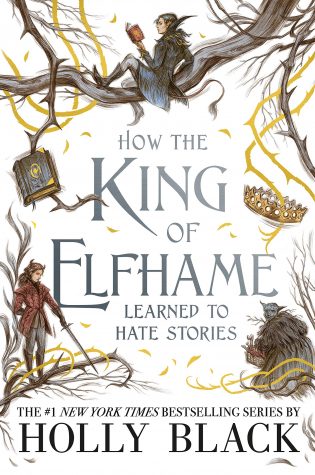
Book Review: How the King of Elfhame Learned to Hate Stories by Holly Black

Title: How the King of Elfhame Learned to Hate Stories
Author: Holly Black
Illustrated by: Rovina Cai
Publisher: Little, Brown Books for Young Readers
Publication date: November 24, 2020
Length: 173 pages
Genre: Fantasy
Source: Purchased
Rating:

Rating: 5 out of 5.

An illustrated addition to the New York Times bestselling Folk of Air trilogy, that started with The Cruel Prince, from award-winning author Holly Black.

An irresistible return to the captivating world of Elfhame.

Once upon a time, there was a boy with a wicked tongue.

Before he was a cruel prince or a wicked king, he was a faerie child with a heart of stone. #1 New York Times bestselling author, Holly Black reveals a deeper look into the dramatic life of Elfhame’s enigmatic high king, Cardan. This tale includes delicious details of life before The Cruel Prince, an adventure beyond The Queen of Nothing, and familiar moments from The Folk of the Air trilogy, told wholly from Cardan’s perspective.

This new installment in the Folk of the Air series is a return to the heart-racing romance, danger, humor, and drama that enchanted readers everywhere. Each chapter is paired with lavish and luminous full-color art, making this the perfect collector’s item to be enjoyed by both new audiences and old.

A beautiful, wonderful book — a must for anyone who loves the Folk of the Air trilogy!

You many have seen my lovefests about Holly Black’s excellent trilogy (which I ended up reading twice in 2020!). I was delighted to treat myself to a hardcover copy of this new book, and so happy to finally have a peaceful day to sit and enjoy it.

In How the King of Elfhame Learned to Hate Stories, we are treated to ten brief tales about Cardan, the High King of Elfhame. While the first and last stories in this book take place after the events of the trilogy, the other stories follow Cardan from childhood into adulthood, showing how he became the “cruel prince” we first encounter in the trilogy. This book is told entirely from Cardan’s perspective, so we get a different view of some of the incidents we read about in the trilogy, and understand a little better why Cardan acted the way he did.

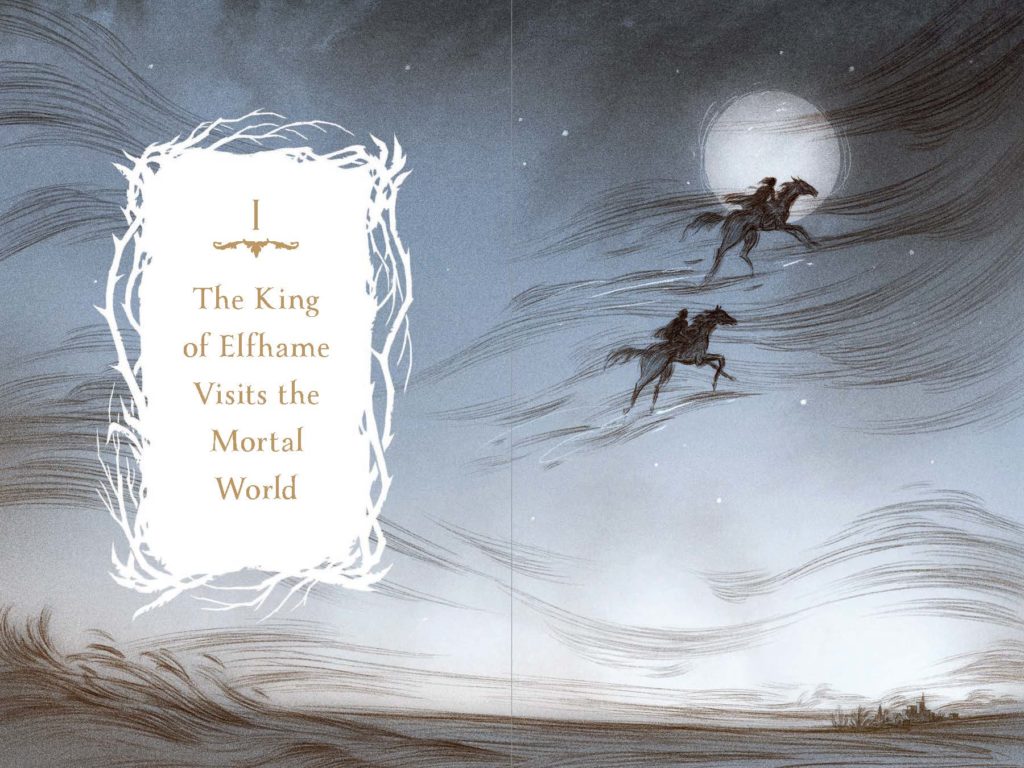
The book is illustrated by the very talented Rovina Cai, and it’s gorgeous! I especially love her artwork showing Cardan, but every page has special flourishes and treats to make the entire book a delight.

I loved, loved, loved this slim but lovely book! Don’t start here if you haven’t read the Folk of the Air books — but why not dive into the trilogy, and save this book for dessert?

Book Review: Outlawed by Anna North

Title: Outlawed
Author: Anna North
Publisher: Bloomsbury Publishing
Publication date: January 5, 2021
Length: 272 pages
Genre: Western/speculative fiction
Source: Review copy courtesy of the publisher via NetGalley
Rating:

Rating: 3.5 out of 5.

The Crucible meets True Grit in this riveting adventure story of a fugitive girl, a mysterious gang of robbers, and their dangerous mission to transform the Wild West.

In the year of our Lord 1894, I became an outlaw.

The day of her wedding, 17 year old Ada’s life looks good; she loves her husband, and she loves working as an apprentice to her mother, a respected midwife. But after a year of marriage and no pregnancy, in a town where barren women are routinely hanged as witches, her survival depends on leaving behind everything she knows.

She joins up with the notorious Hole in the Wall Gang, a band of outlaws led by a preacher-turned-robber known to all as the Kid. Charismatic, grandiose, and mercurial, the Kid is determined to create a safe haven for outcast women. But to make this dream a reality, the Gang hatches a treacherous plan that may get them all killed. And Ada must decide whether she’s willing to risk her life for the possibility of a new kind of future for them all.

Featuring an irresistibly no-nonsense, courageous, and determined heroine, Outlawed dusts off the myth of the old West and reignites the glimmering promise of the frontier with an entirely new set of feminist stakes. Anna North has crafted a pulse-racing, page-turning saga about the search for hope in the wake of death, and for truth in a climate of small-mindedness and fear. 

Hey, look! I guess feminist westerns are a thing now? After reading Upright Women Wanted earlier this year, I was excited to get my hands on yet another revisionist/feminist western adventure.

In Outlawed, we meet 17-year-old Ada at what should be the start of a happy future. Newly married, she loves her husband and is enjoying a robust married life with him. Except she’s not getting pregnant. As the months go by, the pressure mounts, until finally, after a year of marriage, she’s kicked out by her in-laws.

Being barren is considered the utmost failure for a woman, and failing to conceive is always considered the woman’s fault. Maybe it’s her family background? Maybe it’s punishment for sin? Or worst of all, she could be a witch, and most likely to blame for all the miscarriages and other tragedies in her town.

In the world of Outlawed, a terrible Flu years back wiped out 90% of the world’s population. In the pandemic’s aftermath, a new religion has blossomed, teaching the gospel of the Baby Jesus, who promises healthy futures to people — so long as they go forth and be fruitful, to repopulate the Earth. Barrenness, therefore, is not just a personal misfortune, but a sin against Baby Jesus. Barren women are outcasts, and once facing accusations of wrong-doing, are more likely than not to be hanged or imprisoned.

Ada, the daughter of the town’s only midwife, has been trained all her life by her mother to follow in her footsteps, and she understands that there must be scientific reasons for why some women get pregnant and some don’t. This conviction doesn’t save her when she’s accused of witchcraft, and she’s forced to flee for her life, eventually ending up with the Kid and the Hole in the Wall Gang, a group of outcast women who band together for survival. As Ada is given a place with the gang, she begins her days as an outlaw.

From this point, we follow Ada and the gang as they plot a daring heist that should enable them to provide a haven for other outcast women, but their plans are risky, the group faces divisions about their mission, and the Kid, their leader, suffers through bouts of depression that leave them unable to lead at a critical moment.

I mostly enjoyed Outlawed, but a few elements hold me back from giving this book a rave review. The pacing sags in the middle, once Ada arrives at the Hole in the Wall’s hideout, as she struggles for acceptance and to learn their ways. At this point, the plot slows down and becomes mainly focused on arguments and resentments within the group. Also, Ada’s transformation into a western outlaw seems a little too abrupt, and given her vocation as a healer, she appears to accept the more violent aspects of their lives without too many qualms.

My other complaint, which may just be a “me” thing rather than an issue with the book, is that the gang’s members are introduced all at once. We see them all as Ada first approaches, with physical descriptions of the people she sees around a campfire. Later, we learn their names as Ada does too. And for the life of me, I could not match the names and the people — while a few were distinct, for the most part, I could not really distinguish the characters as individuals or figure out who was who. It was annoying, and I gave up trying after a while.

Still, there’s a lot to love about Outlawed. The Western setting is familiar, but it’s turned upside down in this new version of the Old West, with fertility being the highest measure of a woman’s worth and a belief in witchcraft that seems like it should already be a thing of the distant past. I liked the sense of inclusion among the outcasts — any woman in trouble is welcome, and as we see later, there are plenty of reasons for people to end up ostracized, cast away, and forced to seek sanctuary among the outlaws.

I also loved Ada’s devotion to healing and to learning. The desire to learn what causes barrenness is what drives her, not only for her own sake but for the purpose of helping other women who suffer.

Once I’d picked up Outlawed and read the author bio, I realized that I have an earlier book by this author (America Pacifica) on my shelves. While I wouldn’t say that Outlawed was a complete hit for me, it intrigued me enough that I’ll definitely want to read more by this author.

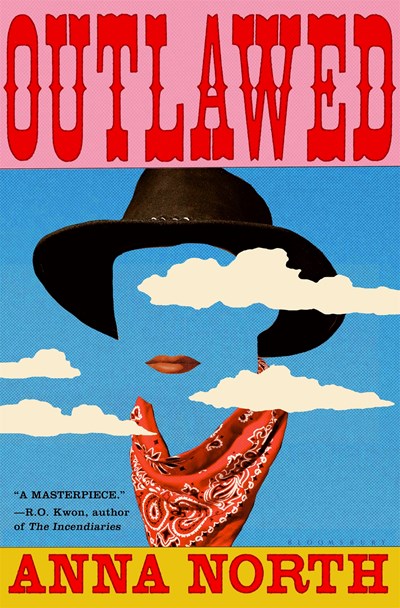
And PS – is that cover amazing or what?

Book Review: My Italian Bulldozer by Alexander McCall Smith

Title: My Italian Bulldozer
Author: Alexander McCall Smith
Publisher: Abacus
Publication date: April 4, 2017
Length: 240 pages
Genre: Contemporary fiction
Source: Library
Rating:

Rating: 3.5 out of 5.

The best-selling author of the No. 1 Ladies’ Detective Agency series returns with an irresistible new novel about one man’s adventures in the Italian countryside.

Paul Stuart, a renowned food writer, finds himself at loose ends after his longtime girlfriend leaves him for her personal trainer. To cheer him up, Paul’s editor, Gloria, encourages him to finish his latest cookbook on-site in Tuscany, hoping that a change of scenery (plus the occasional truffled pasta and glass of red wine) will offer a cure for both heartache and writer’s block. But upon Paul’s arrival, things don’t quite go as planned. A mishap with his rental-car reservation leaves him stranded, until a newfound friend leads him to an intriguing alternative: a bulldozer.

With little choice in the matter, Paul accepts the offer, and as he journeys (well, slowly trundles) into the idyllic hillside town of Montalcino, he discovers that the bulldozer may be the least of the surprises that await him. What follows is a delightful romp through the lush sights and flavors of the Tuscan countryside, as Paul encounters a rich cast of characters, including a young American woman who awakens in him something unexpected.

A feast for the senses and a poignant meditation on the complexity of human relationships, My Italian Bulldozer is a charming and intensely satisfying love story for anyone who has ever dreamed of a fresh start. 

Once again, a book group selection is responsible for me reading a charming book that I probably never would have encountered otherwise. Yay, book group!

In My Italian Bulldozer, writer Paul Stuart heads to Tuscany for a few weeks of rest and relaxation while finishing his newest foodie book. His girlfriend of four years has just dumped him, and he’s in need of a change of scenery, so what better choice than to head to the site of the delicious food and wine he’s writing about?

The trip does not go as planned. Immediately upon arrival, he has some rather comical mishaps with the rental car company. When no cars are available, a new acquaintance connects him with a commercial vehicle rental agency, which is able to offer him the only rental they have: a bulldozer. With no other option, Paul sets off on the road to Montalcino, the rural hilltop village where he’ll be staying, enjoying the vantage point of his rather odd ride.

Once settled in Montalcino, Paul begins to meet the locals, who seem to take a shine to him right away. He quickly becomes a regular at the coffee houses and restaurants, and also meets an American woman who sparks his interest. Picnics, meals, and all sorts of outings via bulldozer make up his days, and he also makes great progress with his book.

My Italian Bulldozer isn’t exactly a plot-heavy book. It’s a peaceful, calming story about a man’s encounter with a quieter way of life, giving him time to think and reflect on what really matters and what he wants. It’s sweet, charming, and quirky, a quick read, and altogether a very good book for the holiday season.

Describing a book as “nice” doesn’t really sound like great praise, but this book really and truly is nice. The people are sympathetic and likable, the setting is lovely, the food and wine sound delicious, and the adventure is on the mild side. I had a nice time reading My Italian Bulldozer. It didn’t make me work hard to enjoy it, it went by fast, and was enjoyable all the way through.

Perhaps not (definitely not) the most exciting book I’ve read all year, but I’m glad I read it, especially as a way to cleanse my palate after some heavier, less pleasant reading. I’d recommend My Italian Bulldozer as a sweet diversion for when you’re looking for a pick-me-up.

Book Review: American Dirt by Jeanine Cummins

Title: American Dirt
Author: Jeanine Cummins
Publisher: Flatiron Books
Publication date: January 21, 2020
Length: 400 pages
Genre: Contemporary fiction
Source: Received as a gift
Rating:

Rating: 3 out of 5.

También de este lado hay sueños. On this side, too, there are dreams.

Lydia Quixano Pérez lives in the Mexican city of Acapulco. She runs a bookstore. She has a son, Luca, the love of her life, and a wonderful husband who is a journalist. And while there are cracks beginning to show in Acapulco because of the drug cartels, her life is, by and large, fairly comfortable.

Even though she knows they’ll never sell, Lydia stocks some of her all-time favorite books in her store. And then one day a man enters the shop to browse and comes up to the register with a few books he would like to buy—two of them her favorites. Javier is erudite. He is charming. And, unbeknownst to Lydia, he is the jefe of the newest drug cartel that has gruesomely taken over the city. When Lydia’s husband’s tell-all profile of Javier is published, none of their lives will ever be the same.

Forced to flee, Lydia and eight-year-old Luca soon find themselves miles and worlds away from their comfortable middle-class existence. Instantly transformed into migrants, Lydia and Luca ride la bestia—trains that make their way north toward the United States, which is the only place Javier’s reach doesn’t extend. As they join the countless people trying to reach el norte, Lydia soon sees that everyone is running from something. But what exactly are they running to?

It’s impossible to read American Dirt without awareness of the controversy surrounding this book seeping into the reading experience. Which is okay — it’s controversial for a reason, and I actually had no intention of reading this book, until a family member gave it to me as a gift. So, with hesitation, I jumped in.

American Dirt is a story of pain and violence. Lydia’s life is permanently ravaged when a cartel murder squad invades her family’s backyard celebration. Purely by chance, Lydia and her eight-year-old son Luca survive, while sixteen other members of her family, including her husband, are killed. Recognizing their immediate danger, Lydia flees with Luca, knowing that the cartel won’t stop hunting them and that their only chance at safety is to head north to the US and try to cross the border.

As the book progresses, we learn more about the escalating violence in Acapulco as well as across all of Mexico, as the cartels exert more and more power. Lydia’s husband is a reporter who specializes in profiling cartel violence. Lydia herself runs a bookstore, where she ends up befriending a seemingly kind, intellectual man… who turns out to be none other than the head of the cartel ruling Acapulco. When Sebastian’s expose of Javier runs, it sets off a course of tragedy and violence that leads directly to the massacre of their family.

Lydia and Luca’s journey is harrowing, as they join the crowds of migrants riding La Bestia, the network of freight trains that run through Mexico, which migrants risk life and limb to ride atop in the hopes of making it north. Along the way, they face physical danger from the train itself as well as severe threats from police and cartel soldiers who round up migrants and inflict torture, death, and demands for ransom as part of their standard operating procedures.

Is this a good book? Not really, no. It’s dramatic for sure, and a compelling read, but it’s hard for me to actually praise it. Despite problems (more on those in a second), it’s a fast read that’s hard to put down once started. Yet the book really is more melodrama than anything else, indulging in nonstop violence and horrific situations, and presenting a portrait of Mexico as a place with not one ounce of safety or happiness.

The friendship (almost romantic) with Javier is unnecessary and feel soap opera-worthy. What are the odds that the wife of the journalist who exposes him would also be this man’s good friend and close confidante?. Why does Lydia, a woman grieving her slaughtered family, need to be also burdened by what-ifs about putting trust in Javier’s friendship?

Teen sisters Soledad and Rebeca become traveling companions for Lydia and Luca. We’re hit over the hit repeatedly with how remarkably beautiful the girls are — and, the book makes clear, how their beauty singles them out to become targets of rapists, again and again and again throughout the book. Why is their beauty relevant? Don’t women not at this pinnacle of beauty also get raped? Not in American Dirt.

The coyote who takes Lydia, Luca, and a group of others across the border is, of course, one of the good ones. He’s a coyote with a soul. Despite his tough talk and enforcement of rules, one tragedy one this journey in particular is enough to transform him and change him permanently. Really? As if he’s never lost anyone on a crossing before?

These are just a few examples, but I found the whole story to be over the top and voyeuristic. I could go on (why does it matter that Luca is a geography protege?), but I’ll turn instead to my other annoyances with this book, namely the writing.

First, the point of view shifts from paragraph to paragraph between Luca and Lydia, with no sense of why, and it’s confusing and distracting. Lydia will be thinking about something, and it’s not until midway through the following paragraph that a reference to Mami alerts us that we’re now seeing Luca’s perspective. Other character’s points-of-view are randomly included, seemingly so that the author can offer us first-person narratives of terrible experiences that Lydia wasn’t present for.

Also, the writing itself and the author’s descriptions are often over the top or simply incomprehensible. A few examples, but I could really open up the book practically at random and find more:

She loved that boy with her whole heart, but my God, there were days when she couldn’t fully breathe until she’d left him at the schoolyard gate. That’s all over now; she would staple him to her, sew him into her skin, affix her body permanently to his now, if she could. She’d grow her hair into his scalp, would become his conjoined twin-mother.

Her face is splotchy but dry, and there are dark circles beneath her eyes. Her expression is one Luca has never seen before, and he fears it might be permanent. It’s as if seven fisherman have cast their hooks into her from different directions and they’re all pulling at once. One from the eyebrow, one from the lip, another at the nose, one from the cheek. Mami is contorted.

In the half-light left over from Soledad’s corona, Rebeca glimmers like a secret sun.

Your mileage may vary, but repeatedly throughout the book, I had to pause to try to turn the author’s imagery into a picture in my mind that actually made sense. It didn’t always work.

I’m not directly addressing the controversy about the author, I realize, and that’s simply because it’s been covered elsewhere in depth. For more, I recommend:
The Seattle Review of Books: “The Dirt on American Dirt”
Tropics of Meta: Pendeja, You Ain’t Steinbeck
Vulture: “Why Is Everyone Arguing About the Novel American Dirt?”
New York Times: “American Dirt is Proof the Publishing Industry is Broken”

I with the author had explained more about her sources or the research that went into writing this book. The migrant experience is a compelling and important topic, but I don’t feel that American Dirt is the right book for really learning about it.

It does, however, make me want to seek out more authentic accounts by #ownvoices authors. I know there’s a lot to learn — I just don’t think American Dirt is the book to learn from.


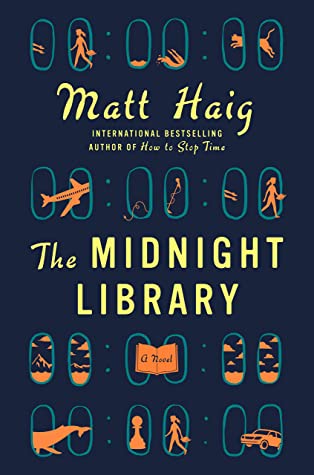
Book Review: The Midnight Library by Matt Haig

Title: The Midnight Library
Author: Matt Haig
Publisher: Viking
Publication date: September 29, 2020
Length: 288 pages
Genre: Contemporary fiction
Source: Purchased
Rating:

Rating: 5 out of 5.

Somewhere out beyond the edge of the universe there is a library that contains an infinite number of books, each one the story of another reality. One tells the story of your life as it is, along with another book for the other life you could have lived if you had made a different choice at any point in your life. While we all wonder how our lives might have been, what if you had the chance to go to the library and see for yourself? Would any of these other lives truly be better?

In The Midnight Library, Matt Haig’s enchanting new novel, Nora Seed finds herself faced with this decision. Faced with the possibility of changing her life for a new one, following a different career, undoing old breakups, realizing her dreams of becoming a glaciologist; she must search within herself as she travels through the Midnight Library to decide what is truly fulfilling in life, and what makes it worth living in the first place.

At age 35, Nora Seed makes a choice that should be fatal. Estranged from her best friend and from her brother, let go from an unfulfilling job, with a broken engagement in her past, she’s finally pushed too far when she learns that her beloved cat has died. Nora’s life once seemed full of promise, but now, she sees nothing ahead of herself but more loneliness and bleakness. So she decides to end her life.

But in the moments between life and death, Nora ends up in the Midnight Library, a seemingly magical place where choices are endless. In this infinite library, each volume on the shelves represents a different path her life might have taken. Nora is full of regrets for all the missed opportunities and seemingly wrong decisions she’s made during her lifetime, and in fact, one of the key books in the library is the Book of Regrets, capturing everything in Nora’s life that she wishes she could have done differently.

Under the guidance of Mrs. Elm, her former school librarian who represented kindness and safety at a difficult time in her life, Nora chooses different volumes of her life to try again. In each, she inhabits the life she might have had if she’d chosen differently. From sticking with the swimming career that could have led her to the Olympics, to signing the recording contract with the band that might have launched her into international stardom, to a life pursuing her academic career in philosophy while also raising a daughter with a man she loves, Nora gets to experience alternate realities and how she might feel in each different version of her life.

As in real life, there are no easy answers. While Nora seeks the right life, each ends up with flaws. If only she could find the one that’s perfect for her, she’d be able to stay in it… but with each, there comes a point where she returns to the library to try again.

Over the course of the book, Nora learns to let go of regret. She also learns the importance of perspective — that what she sees isn’t necessarily true for the people she’s interacting with, and that each person’s life can have far greater impact than they realize.

The Midnight Library is so meaningful, and so beautifully written. There are life lessons throughout, but never in a way that feels preachy or patronizing. Nora’s experiences feel real, and in each version of her life, it becomes clearer and clearer that the right life doesn’t equate to perfect happiness, as no life can be nothing but happy. Ultimately, it’s about choosing to live, to find purpose, and to find connection. As Nora progresses, we’re able to journey with her and discover some truths that make perfect sense, yet are rarely said.

I really loved this book, and will be pushing it into the hands of several bookish friends. Highly recommended — it’s uplifting and life-affirming, and left me feeling hopeful and renewed.

For more by this terrific author, check out my reviews of:
The Humans
How To Stop Time
The Dead Fathers Club

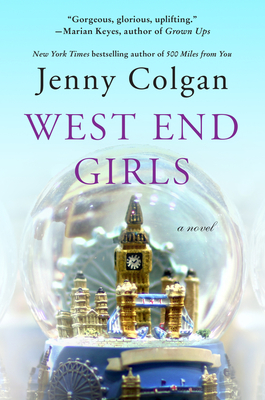
Book Review: West End Girls by Jenny Colgan

Title: West End Girls
Author: Jenny Colgan
Publisher: William Morrow Paperbacks
Publication date: January 5, 2021 (originally published 2006)
Length: 336 pages
Genre: Contemporary fiction
Source: Review copy courtesy of the publisher via NetGalley
Rating:

Rating: 3 out of 5.

They may be twins, but Lizzie and Penny Berry are complete opposites. Penny is the life of the party—loud and outrageous, while quiet and thoughtful Lizzy is often left out of the crowd. The one trait they do share is a longing to do something spectacular with their lives, and as far as these two are concerned, there’s no better place to make their dreams come true than London.

Presented with a once-in-a-lifetime house-sit at their grandmother’s home in a very desirable London neighborhood, it finally seems like Lizzie and Penny are a step closer to the exciting cosmopolitan life they’ve always wanted. But the more time they spend in the big city, they quickly discover it’s nothing like they expected. They may have to dream new dreams…but are they up to the challenge?

Jenny Colgan has become a go-to author for me for when I need something bright and uplifting to cheer me up or lighten my day. West End Girls, to be published in early 2021, is actually a re-release of a book from earlier in her career, and it shows.

Lizzie and Penny are non-identical twins who at age 27 live with their mother in a cramped apartment, work at dead-end jobs, and have no prospects. When their paternal grandmother, with whom they’ve had no contact since their childhood, moves into a care facility, she offers her Chelsea flat to the girls, provided they protect her stuff while she’s away.

Jumping on the opportunity, Lizzie and Penny show up at their swanky new address, only to discover that Gran was basically a hoarder. Still, while the inside of the flat is a mess, they’ve arrived in an exclusive London neighborhood and are determined to launch new lives.

Penny is obsessed with looks and landing a rich man, and sets out to do so by going to clubs, being outrageous, dressing provocatively, and throwing herself into a wealthy crowd. Lizzie, the shy one, just wants a job, and ends up being hired by a cafe owner who’s large, gregarious, and a true talent in the kitchen.

During their time in London, both Penny and Lizzie experience romantic ups and downs, disappointments, career opportunities, and awkward social scenarios. They’re often in opposition to one another, but when push comes to shove, they have each other’s backs.

West End Girls is a fairly predictable rags-to-riches story, with each sister getting what she needs by the end — which isn’t necessarily what she thought she wanted at the start. It’s cute and light, but not problem-free.

Some of the pop culture references are dated (which makes sense, considering this book was first published in 2006), but thankfully, there aren’t enough of these to be seriously distracting. The book is much less body positive than it would be if written today, I suspect. Lizzie is overweight at the start of the story and dresses drably to hide her pounds, having survived on microwaved dinners for two many years. As Georges, the cafe owner, teaches her how to find her way around a kitchen and appreciate quality food, she ends up slimming down and getting healthier, and toward the end, even gets a wardrobe, hair, and makeup makeover. Which, good for Lizzie if she feels better about herself, but I felt like I was hearing about Lizzie’s weight and how much better she looked slimmer a bit too often for my taste.

Jenny Colgan’s more recent books have a depth and richness that I love, with wonderful settings, quirky and funny characters, and some true emotional heft. Here, I got entertainment, but not that much more.

Still, West End Girls was a fun way to spend my weekend reading hours, and I had a good time with it. It just made me look forward to summer 2021, when Jenny Colgan next new book will be released!

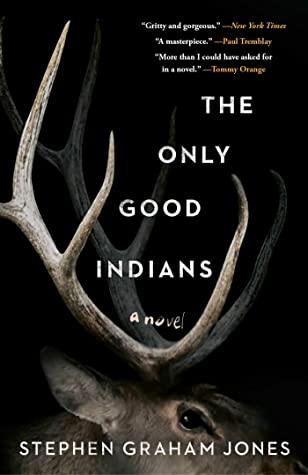
Book Review: The Only Good Indians by Stephen Graham Jones

Title: The Only Good Indians
Author: Stephen Graham Jones
Publisher: Gallery / Saga Press
Publication date: July 14, 2020
Length: 310 pages
Genre: Horror
Source: Library
Rating:

Rating: 4 out of 5.

A tale of revenge, cultural identity, and the cost of breaking from tradition in this latest novel from the Jordan Peele of horror literature, Stephen Graham Jones.

Seamlessly blending classic horror and a dramatic narrative with sharp social commentary, The Only Good Indians follows four American Indian men after a disturbing event from their youth puts them in a desperate struggle for their lives. Tracked by an entity bent on revenge, these childhood friends are helpless as the culture and traditions they left behind catch up to them in a violent, vengeful way.

Best friends Ricky, Lewis, Cassidy, and Gabe grew up together on a Blackfeet reservation. Then, in their 20s, they went their separate ways, after an even they refer to as the Thanksgiving Classic. One week before Thanksgiving, the friends went hunting in forbidden territory and illegally brought down many elk, before getting caught by the game warden and being forced to throw away all the meat they’d claimed as their prize.

Now, ten years later, strange events begin to occur. First, Ricky is killed in what the newspapers call a bar fight, but it’s much more involved than that. Next, Lewis appears to have a mental breakdown, in which he seems to be hallucinating visions of an elk in his living room and experiencing violent episodes that he may or may not be responsible for.

Up to this point, I wasn’t sure whether the characters were actually having supernatural experiences or if Lewis in particular was having some sort of psychotic break. But, it soon becomes clear that this is not all in their minds. Cassidy and Gabe are also soon the victim of a vengeful spirit coming back to punish the men for their part in slaughtering a vulnerable member of the herd.

The Only Good Indians is both a terrifying horror tale and a sad, straightforward look into the lives of Native Americans on their reservation as well as the lives of those who leave. (I can hear Gabe laughing right now — to him, “Native American” is an affectation of the younger generation. He considers himself Indian.)

It’s really questionable whether any of these men deserve what happens, and there are certainly some innocent victims as well — although to the elk spirit, I suppose none of the two-leggeds who hunt the herds are actually innocent. We get inside the spirit’s head as well as the main characters, and it’s all quite sad and disturbing.

One of the best characters in the book, in my opinion, is Gabe’s daughter Denorah, a middle school basketball star who takes over for the final section of the book, and is pretty astounding with her skill and courage.

I don’t feel like I’m capturing how powerful this book is, yet I don’t want to disclose too many details. The writing is evocative, sometime funny, and the characters are sharp, well-drawn, and memorable. Be warned that there are some very violent and gruesome aspects to the story, so if you shy away from books with blood and guts, this might not be a good choice for you.

Tammy at Books, Bones & Buffy wrote one of the best reviews of this book that I’ve seen, and I think she says it all better than I do! Check out her review (here), which is what convinced me that I needed to read this book.

I’m so glad my library hold finally came through! I’ll definitely want to read more by this talented author.

I never considered elk scary before… but I’ll never look at them the same way again.

For more, check out this NPR interview with the author:

Visit the author’s website at https://www.demontheory.net/

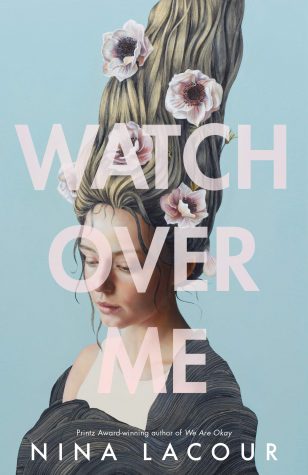
Book Review: Watch Over Me by Nina LaCour

Title: Watch Over Me
Author: Nina LaCour
Publisher: Dutton Books for Young Readers
Publication date: September 15, 2020
Length: 272 pages
Genre: Young adult
Source: Purchased
Rating:

Rating: 5 out of 5.

Nina LaCour delivers another emotional knockout with Watch Over Me, the eagerly anticipated follow-up to the Printz Award-winning We Are Okay.

Mila is used to being alone. Maybe that’s why she said yes to the opportunity: living in this remote place, among the flowers and the fog and the crash of waves far below.

But she hadn’t known about the ghosts.

Newly graduated from high school, Mila has aged out of the foster care system. So when she’s offered a job and a place to stay at a farm on an isolated part of the Northern California Coast, she immediately accepts. Maybe she will finally find a new home, a real home. The farm is a refuge, but also haunted by the past traumas its young residents have come to escape. And Mila’s own terrible memories are starting to rise to the surface.

Watch Over Me is another stunner from Printz Award-Winning author Nina LaCour, whose empathetic, lyrical prose is at the heart of this modern ghost story of resilience and rebirth. 

This book was not what I was expecting. It’s so much more.

Watch Over Me is a gorgeously written story of survival, found families, and coming to peace with one’s past. It’s a story of suffering and recovery, of facing one’s fears and choosing a way forward.

Mila, at age eighteen, has finished high school, and after living with kind foster parents who are eager to start over with a new baby to care for, she needs a place to put down roots at the start of her life as a young adult. She’s thrilled to be offered a place at The Farm, a refuge run by a warm couple named Terry and Julia, who take in abandoned and hopeless children and give them a safe place to grow.

Mila will be one of three interns, young adults who teach school for the younger children and who work as part of the farm’s collective, cooking, cleaning, and taking the farm’s flowers and produce to the weekly farmers market. Meanwhile, she’ll be living in a small no-frills cabin heated by a wood-burning stove, sharing meals with the family in the big house, and participating in the simple, isolated life that the group enjoys, far from the nearest town.

Though she tries to fit in, Mila is constantly worried about her place. She has secrets from her past, and while she tries to reassure herself that she is good, she’s fearful that the family will turn her away if they know the truth about what she’s done. Still, she bonds quickly with Lee, the 9-year-old boy who she’ll be teaching. She recognizes that he’s been hurt in his past, and by sharing some of her own pain, she hopes to help him open up and start to be less afraid.

And one more thing: There are ghosts. Each night, shimmering ghostly children play on the fields of the farm, visible to all the farm’s residents. No one seems particularly freaked out by them — they’re just part of what makes the place unique.

As Mila settles in, memories of her past creep back in, slowly at first, then threatening to overwhelm her. The story of what she’s been through is horrible, and it quickly becomes clear that this is a girl who no one protected, and who was endangered by the person who should have put Mila’s safety first.

I won’t explain how the ghosts fit into the story, but the more I read, the more captivated I was by the farm, its people, and how Mila’s past comes to haunt her present. I loved the characters and the relationships, but most of all loved Mila, with her doubts and uncertainties and fears — but also because of her big heart and capacity for love, and how badly she needs a place to belong.

Watch Over Me is unsettling and beautiful, and I’m pretty sure I’ll want to go back to it and read it all over again, just to let it all sink in. Highly recommended.

The beautiful inside front page

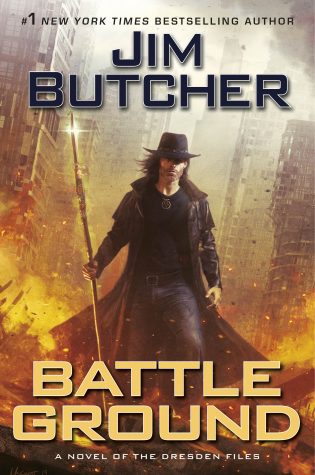
Quick Take: Battle Ground (Dresden Files, #17) by Jim Butcher

Title: Battle Ground (Dresden Files, #17)
Author: Jim Butcher
Publisher: Ace
Publication date: September 29, 2020
Length: 432 pages
Genre: Urban fantasy
Source: Library
Rating:

Rating: 2.5 out of 5.

THINGS ARE ABOUT TO GET SERIOUS FOR HARRY DRESDEN, CHICAGO’S ONLY PROFESSIONAL WIZARD, in the next entry in the #1 New York Times bestselling Dresden Files.

Harry has faced terrible odds before. He has a long history of fighting enemies above his weight class. The Red Court of vampires. The fallen angels of the Order of the Blackened Denarius. The Outsiders.

But this time it’s different. A being more powerful and dangerous on an order of magnitude beyond what the world has seen in a millennium is coming. And she’s bringing an army. The Last Titan has declared war on the city of Chicago, and has come to subjugate humanity, obliterating any who stand in her way.

Harry’s mission is simple but impossible: Save the city by killing a Titan. And the attempt will change Harry’s life, Chicago, and the mortal world forever.

Considering I’m up to volume 17 in the Dresden Files series, it’s safe to say that I’m a fan. And yet, I can’t give Battle Ground more than 2.5 stars.

Battle Ground is basically part two of the story begun in Peace Talks, the 16th book, published just three months earlier. I guess if they’d been combined, it would have made for one super massive book, so the publisher decided to break it in two — there’s really no other reason I can think of for not telling the entire story in one volume (and might have been a good opportunity to cut out some of the endless battle scenes…)

As you’d guess from the title, Battle Ground is all about a massive battle that threatens the destruction of Chicago, and from there, all of humankind. Our hero, Harry Dresden, charges in on the side of good alongside every ally he’s ever made, plus some former/future adversaries who’ve declared a truce for now in order to attempt to defeat the even worse bad guys.

Zzzzz…. oh, sorry, my eyes keep glazing over when I think about what a slog this book was.

If you like big, booming battles with lots of firepower, explosions, magical energy, and devastation of a major metropolis, you’ll probably love Battle Ground. As for me, a book that’s basically one long, extended battle for at least 80% of its length does not make for great reading.

I read the Dresden books for the characters, the escapades, the life-or-death struggles… but not never-ending action sequences where it’s almost impossible to tell who’s who or what awful creature has which awful powers, to be brought down by which even more awful weaponry. Sorry, but chapter after chapter after chapter of Harry throwing his power around, being outmatched, and then somehow soldiering on just doesn’t make for great reading.

There are some significant developments, including a major, heart-breaking loss, as well as the groundwork for what will likely be significant changes to come. And hey, 17 books in, of course I’ll keep going with the series. This particular book, though, just was not a stellar read for me.

Still, even though few and far between, there are still some great bits of Harry being a wise-ass that snapped me back to life in the midst of the more tedious firepower and spell-slinging, so I’ll close by sharing a few choice bits:

Then he made a fist and, carefully, bumped knuckles with me. The shock of it threatened to dislocate my shoulder again, but being all manly I didn’t make any high-pitched noises or anything. And you can’t prove otherwise.

“We didn’t see them until they got there! The foe has sneakily snucked a sneak attack behind our lines, like a sneaky sneak!”

I spun back to the enemy, brought my shield up—and stood tall. “You!” I said, relishing the moment. “Shall not! Pass!”

I’d never been in an epic mythology fight quite this epic before.

Don’t care how Titanic you are. No one expects an orbital-drop grizzly.