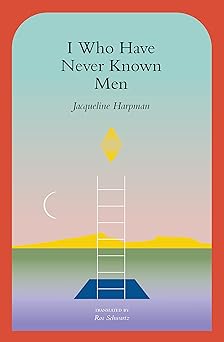
Book Review: I Who Have Never Known Men by Jacqueline Harpman

Title: I Who Have Never Known Men
Author: Jacqueline Harpman
Publisher: Transit Books
Publication date: 1995
Length: 173 pages
Genre: Speculative fiction
Source: Purchased
Rating:

Rating: 4 out of 5.

Deep underground, forty women live imprisoned in a cage. Watched over by guards, the women have no memory of how they got there, no notion of time, and only a vague recollection of their lives before.

As the burn of electric light merges day into night and numberless years pass, a young girl—the fortieth prisoner—sits alone and outcast in the corner. Soon she will show herself to be the key to the others’ escape and survival in the strange world that awaits them above ground.

Jacqueline Harpman was born in Etterbeek, Belgium, in 1929, and fled to Casablanca with her family during WWII. Informed by her background as a psychoanalyst and her youth in exile, I Who Have Never Known Men is a haunting, heartbreaking post-apocalyptic novel of female friendship and intimacy, and the lengths people will go to maintain their humanity in the face of devastation. Back in print for the first time since 1997, Harpman’s modern classic is an important addition to the growing canon of feminist speculative literature.

Published in 1995, I Who Have Never Known Men came roaring back in recent years as a BookTok sensation. After hearing the buzz from so many sources, I finally decided to check it out for myself.

In this strange, moving, puzzling work of speculative fiction, our unnamed narrator introduces us to a harsh new world. As the story opens, she is one of forty women locked in a cage in an underground bunker, watched constantly by a rotating set of male guards who patrol outside the cage, armed with whips. They do not interact with the prisoners, using the whips to threaten if the women break rules, such as touching, hiding, or expressing strong emotions. The women have been there for years, and have only vague memories of a life before or how they ended up in the cage.

But our narrator is different. Caged as a child, she knows nothing of any other life. The women share stories of families, husbands, homes… but she has no understanding of what these concepts are. As she enters her teen years, she holds herself apart, but eventually learns to count her heartbeats as a way of making sense of the unknowable passage of time. When the routine finally breaks and the guards flee, she’s able to secure the key that will allow them out of the bunker… but the world they find above is not what they expect.

The women are finally free, but for what? They find themselves on a vast plain, with no other people anywhere within sight. Out in the open, but with no direction or answers, they must fend for themselves and find a way to survive yet another type of existence they have no understanding of.

She wondered when it had dawned on us that we were as much prisoners out in the open as we had been behind bars.

The narrator tells the women’s stories through her own unique voice, mostly devoid of emotion, keen to find sense in the vast nothingness, connected to but never quite understanding her companions. As years and then decades pass, the women forge a community together, surviving their isolated existence in a world devoid of other living beings.

What has happened to lead to this point? Where are they? What became of all the other people? Why are there no animals or seasons? Why are there so many bunkers and cages identical to the one they escaped? And why are these bunkers the only buildings they’ve ever found in all their years of wandering?

If you pick up I Who Have Never Known Men expecting answers… well, this isn’t that sort of book. The narrator makes it clear early on that she’s lived a long, strange life, that she’s the last one left, and that she’ll never truly know what happened to the world that came before. This is the only life she knows or remembers. Readers go along with her and the other women as they journey over the course of many years. The narrator’s inner thoughts provide an odd sort of focus, centering this existence through the perspective of someone who begins as a clean slate and finds purpose, skills, and perseverance through sheer stubbornness and an innate sense of curiosity, a desire to learn and understand.

While described as a work of feminist speculative fiction, I don’t know that I’d stick with that label completely. The story’s focus is about the women, first as prisoners and then through the experiences they have once they achieve freedom. And yet, this doesn’t fit the mold of many works of dystopian fiction, in which women are oppressed by a misogynistic, authoritarian society. We really have no idea why the women are in a cage — but as we learn later, the cages aren’t exclusively for women. As this group of women travel and find bunker after bunker, they find many that had once held forty men as prisoners as well. (The cages always hold forty people. Why forty? Yet another unknown.) The reason for the bunkers isn’t necessarily related to misogyny — we get the impression that there was a total collapse of civilization, perhaps war or some other sort of disaster. But I suppose the fact that what we focus on is how this group of women survivors chooses to live and move forward is where the feminist fiction categorization applies. I don’t have a problem with that — it’s just that the book was definitely not what I expected it to be.

That’s a good thing, actually. It’s nice to have expectations turned upside down. Starting a book with no real idea of where it will go and feeling totally immersed along the way is one of the joys of reading, after all. I Who Have Never Known Men is a short book — under 200 pages — that contains powerful language and imagery on every page.

A note on the reading experience: There are no chapter breaks, or even section breaks. This is one long unbroken narrative, as the narrator — approaching the end of her life — thinks back on the earliest days she remembers, already in the cage, and tells the story of everything she’s experienced since then. Being inside her head is a unique, unsettling experience. Yes, I prefer my books to have chapters! But once I got into the rhythm of this story, it moved so quickly that I was willing to just go with it.

I recommend checking out I Who Have Never Known Men. It’s definitely not like anything else I’ve read lately. Thought-provoking and disquieting, this is a book that will stay with you long after reading the final pages.

For more about this book, check out this essay from The New Yorker and this article from The Guardian. More about the book’s resurgence thanks to social media buzz:
Medium
The Cut

Purchase linksAmazon – Audible audiobook – Bookshop.org – Libro.fm
Disclaimer: When you make a purchase through one of these affiliate links, I may earn a small commission, at no additional cost to you.

My Classics Club Spin book for fall 2023 will be…

Last week, I shared a post with my list of books for the newest Classics Club Spin challenge (see it here), and a few days ago, this spin’s number was announced. (For those keeping track, it’s CC Spin #35, and for me personally, #7!)

Hosted by The Classics Club blog, the Classics Club Spin is a reading adventure where participants come up with a list of classics they’d like to read, number them 1 to 20, and then read the book that corresponds to the “spin” number that comes up.

For CCSpin #35, the lucky number is:

And that means I’ll be reading:

Cranford by Elizabeth Gaskell (published 1853)

Synopsis:

The women of an English country village star in this Victorian classic that inspired a BBC series, from the author of North and South.
 
Welcome to Cranford, where everyone knows one another and a cow wears pajamas. It’s a community built on friendship and kindness, where women hold court and most of the houses—and men—are rarely seen. Two colorful spinster sisters at the heart of Cranford, Miss Matty and Miss Deborah Jenkyns, are daughters of the former rector, and when they’re not playing cards or drinking tea, they’re feeding an endless appetite for scandal and weathering commotions to their peaceful lives, from financial troubles to thieves to an unexpected face from the past.
 
First published in installments in Household Words, a magazine edited by Charles Dickens, Cranford was a hit of its time and today offers modern readers a glimpse into a small English town during the mid-nineteenth century.

In case you’re wondering — yes, I’m happy with this spin! I’d been holding my breath thinking that I’d end up with a really long book this time around, and I’m perfectly content not to feel that kind of pressure. At 145 pages, Cranford should be very doable… and we have until December 3rd to finish our spin books this time around.

What do you think of my newest spin result?

Here’s my list of 20 titles for Classics Club Spin #35:

  1. Frenchman’s Creek by Daphne DuMaurier
  2. Cranford by Elizabeth Gaskell
  3. An Old-Fashioned Girl by Louisa May Alcott
  4. Dracula by Bram Stoker
  5. Peony by Pearl Buck
  6. David Copperfield by Charles Dickens
  7. The Tenant of Wildfell Hall by Anne Bronte
  8. Howards End by E. M. Forster
  9. The Mysterious Affair at Styles by Agatha Christie
  10. I Capture the Castle by Dodie Smith
  11. The Silmarillion by J. R. R. Tolkien
  12. In Cold Blood by Truman Capote
  13. Tevye the Dairyman and Motl the Cantor’s Son by Sholom Aleichem
  14. The Painted Veil by W. Somerset Maugham
  15. Frankenstein by Mary Shelley
  16. The Grapes of Wrath by John Steinbeck
  17. The Sound of Waves by Yukio Mishima
  18. The Mayor of Casterbridge by Thomas Hardy
  19. The Left Hand of Darkness by Ursula K. Le Guin
  20. A Night to Remember by Walter Lord

My previous Classics Club Spin books:

Are you participating in this Classics Club Spin? If so, what book will you be reading?

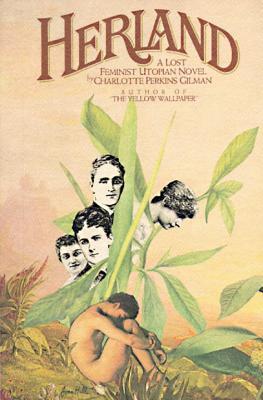
Book Review: Herland by Charlotte Perkins Gilman (Classics Club Spin #34)

Title: Herland
Author: Charlotte Perkins Gilman
Publication date: 1915
Length: 147 pages
Rating:

Rating: 4 out of 5.

Synopsis (Goodreads):

A prominent turn-of-the-century social critic and lecturer, Charlotte Perkins Gilman is perhaps best known for her short story “The Yellow Wallpaper,” a chilling study of a woman’s descent into insanity, and Women and Economics, a classic of feminist theory that analyzes the destructive effects of women’s economic reliance on men.

In Herland, a vision of a feminist utopia, Gilman employs humor to engaging effect in a story about three male explorers who stumble upon an all-female society isolated somewhere in South America. Noting the advanced state of the civilization they’ve encountered, the visitors set out to find some males, assuming that since the country is so civilized, “there must be men.” A delightful fantasy, the story enables Gilman to articulate her then-unconventional views of male-female roles and capabilities, motherhood, individuality, privacy, the sense of community, sexuality, and many other topics.

Decades ahead of her time in evolving a humanistic, feminist perspective, Gilman has been rediscovered and warmly embraced by contemporary feminists. An articulate voice for both women and men oppressed by the social order of the day, she adeptly made her points with a wittiness often missing from polemical writings.

Herland by Charlotte Perkins Gilman is an ahead-of-its-time feminist novel imaging a secret society of women living in an isolated utopia that’s existed for 2,000 years. The plot is narrated by one of a trio of male explorers who “discover” Herland and must learn to adapt to its highly evolved society.

According to Wikipedia:

Herland is a utopian novel from 1915, written by American feminist Charlotte Perkins Gilman. The book describes an isolated society composed entirely of women, who bear children without men (parthenogenesis, a form of asexual reproduction). The result is an ideal social order: free of war, conflict, and domination. It was first published in monthly installments as a serial in 1915 in The Forerunner, a magazine edited and written by Gilman between 1909 and 1916, with its sequel, With Her in Ourland beginning immediately thereafter in the January 1916 issue. The book is often considered to be the middle volume in her utopian trilogy, preceded by Moving the Mountain (1911). It was not published in book form until 1979.

As the book opens, narrator Van and his traveling partners, Terry and Jeff, become obsessed with the idea of locating a hidden land that’s rumored to be inhabited only by women. The men are all scientists of one sort or another, and each has his own attitude toward women. All find it hard to believe that such a place could actually exist, but they finally organize an expedition to discover the truth.

Before arrival, they seem to share a belief that there must be men in this land somewhere, whether residents or occasional guests. How else could this society continue to exist? As well, there’s a doubt about a society of women’s ability to manage — they can’t conceive of women as builders, providers, or growers, and deduce that they must have men’s help. On the other hand, Terry is the womanizer of the group, and while he’s doubtful about the rumors, he’s also sure that a group of women deprived of male company will be absolutely delighted to have him in their midst.

Once the men arrive in Herland, it becomes clear that their expectations are completely off-base. After initial tensions that seem likely to erupt into violence, the men are treated as guests — although without permission or opportunity to leave, they’ve more like gently-treated prisoners. They’re provided shelter, food, and clothing, and the women of Herland begin a lengthy, patient process of teaching the men their ways, culture, and habits.

The men are astonished — Herland is civilized and thriving, with beautiful cities, rich agriculture, and swarms of happy, healthy children. Motherhood is valued above all else, and the women eventually teach the men how their country came to be, and how parthenogenesis spontaneously occurred many generations back, allowing their people to continue to reproduce and flourish.

The men bring with them the expected sexism of their time, and only Terry seems to find it difficult to let the old attitudes go once faced with the reality of a women’s utopia.

Herland examines early 20th century attitudes toward femininity and masculinity, gender-based social roles, appearance and age, and the dynamics of relationships and marriage. Nothing is as the men expect, and their firmly-held beliefs about women’s abilities, about the purpose and goals of wives and mothers, and about the necessity of men to a healthy society are all proved wrong, time and time again.

The writing flows well and contains plenty of amusing outbursts and exclamations each time the men discover some new and unexpected aspect of Herland. I had to laugh over Van’s description of the clothing they’re provided with:

I see that I have not remarked that these women had pockets in surprising number and variety. They were in all their garments, and the middle one in particular was shingled with them.

See? Even in 1915, it’s clear that women’s clothing with pockets absolutely ruled.

After hearing about Herland for years, I’m glad to have finally read it. There is apparently a sequel, With Her In Ourland, which follows immediately upon the events of Herland, showing what happens when a woman from Herland accompanies the men back to the United States. Right now, I don’t feel all that inclined to read the sequel, although I may come back to it at some point down the road.

All in all, Herland is a fast, enjoyable read, with a style reminiscent of the works of H. G. Wells, The Lost World by Arthur Conan Doyle, or other adventure tales of the era. Herland provides a compelling look at the state of feminist theory and literature in the early 20th century. It’s a fascinating story about cultural and gender-based biases and expectations from that time, and has many concepts and situations that resonate even today.

Another terrific read thanks to a Classics Club Spin!

My Classics Club Spin book for summer 2023 will be…

Earlier this week, I shared a post with my list of books for the newest Classics Club Spin challenge (see it here), and today, this spin’s number was announced. (For those keeping track, it’s CC Spin #34, and for me personally, #6!)

Hosted by The Classics Club blog, the Classics Club Spin is a reading adventure where participants come up with a list of classics they’d like to read, number them 1 to 20, and then read the book that corresponds to the “spin” number that comes up.

For CCSpin #34, the lucky number is:

And that means I’ll be reading:

Herland by Charlotte Perkins Gilman (published 1915)

Synopsis:

A prominent turn-of-the-century social critic and lecturer, Charlotte Perkins Gilman is perhaps best known for her short story “The Yellow Wallpaper,” a chilling study of a woman’s descent into insanity, and Women and Economics, a classic of feminist theory that analyzes the destructive effects of women’s economic reliance on men.

In Herland, a vision of a feminist utopia, Gilman employs humor to engaging effect in a story about three male explorers who stumble upon an all-female society isolated somewhere in South America. Noting the advanced state of the civilization they’ve encountered, the visitors set out to find some males, assuming that since the country is so civilized, “there must be men.” A delightful fantasy, the story enables Gilman to articulate her then-unconventional views of male-female roles and capabilities, motherhood, individuality, privacy, the sense of community, sexuality, and many other topics.

Decades ahead of her time in evolving a humanistic, feminist perspective, Gilman has been rediscovered and warmly embraced by contemporary feminists. An articulate voice for both women and men oppressed by the social order of the day, she adeptly made her points with a wittiness often missing from polemical writings.

This wasn’t necessarily the book I was most hoping for this time around, but I’m happy with the spin results regardless! I do think I may have read an excerpt from Herland for a women’s studies class way back in my college years — but I’m not 100% sure, so this will be a good chance to find out. This is a relatively short book (under 150 pages, in the edition I checked out from the library), and I look forward to diving in!

What do you think of my newest spin book?

Here’s my list of 20 titles for Classics Club Spin #34:

  1. Frenchman’s Creek by Daphne DuMaurier
  2. Cranford by Elizabeth Gaskell
  3. An Old-Fashioned Girl by Louisa May Alcott
  4. Dracula by Bram Stoker
  5. Peony by Pearl Buck
  6. David Copperfield by Charles Dickens
  7. The Tenant of Wildfell Hall by Anne Bronte
  8. Howards End by E. M. Forster
  9. The Mysterious Affair at Styles by Agatha Christie
  10. I Capture the Castle by Dodie Smith
  11. The Silmarillion by J. R. R. Tolkien
  12. In Cold Blood by Truman Capote
  13. Herland by Charlotte Perkins Gilman
  14. The Painted Veil by W. Somerset Maugham
  15. Passing by Nella Larsen
  16. The Grapes of Wrath by John Steinbeck
  17. The Sound of Waves by Yukio Mishima
  18. The Mayor of Casterbridge by Thomas Hardy
  19. The Left Hand of Darkness by Ursula K. Le Guin
  20. A Night to Remember by Walter Lord

My previous Classics Club Spin books:

Are you participating in this Classics Club Spin? If so, what book will you be reading?

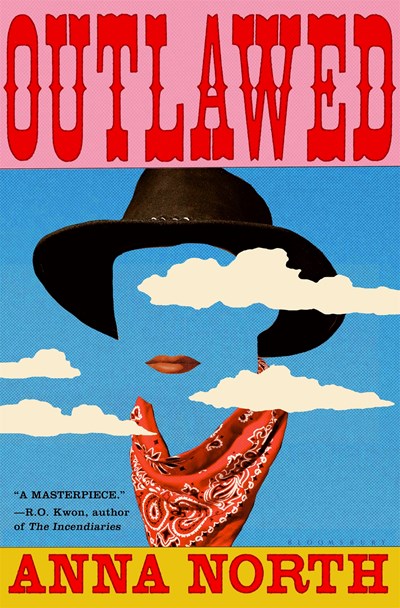
Book Review: Outlawed by Anna North

Title: Outlawed
Author: Anna North
Publisher: Bloomsbury Publishing
Publication date: January 5, 2021
Length: 272 pages
Genre: Western/speculative fiction
Source: Review copy courtesy of the publisher via NetGalley
Rating:

Rating: 3.5 out of 5.

The Crucible meets True Grit in this riveting adventure story of a fugitive girl, a mysterious gang of robbers, and their dangerous mission to transform the Wild West.

In the year of our Lord 1894, I became an outlaw.

The day of her wedding, 17 year old Ada’s life looks good; she loves her husband, and she loves working as an apprentice to her mother, a respected midwife. But after a year of marriage and no pregnancy, in a town where barren women are routinely hanged as witches, her survival depends on leaving behind everything she knows.

She joins up with the notorious Hole in the Wall Gang, a band of outlaws led by a preacher-turned-robber known to all as the Kid. Charismatic, grandiose, and mercurial, the Kid is determined to create a safe haven for outcast women. But to make this dream a reality, the Gang hatches a treacherous plan that may get them all killed. And Ada must decide whether she’s willing to risk her life for the possibility of a new kind of future for them all.

Featuring an irresistibly no-nonsense, courageous, and determined heroine, Outlawed dusts off the myth of the old West and reignites the glimmering promise of the frontier with an entirely new set of feminist stakes. Anna North has crafted a pulse-racing, page-turning saga about the search for hope in the wake of death, and for truth in a climate of small-mindedness and fear. 

Hey, look! I guess feminist westerns are a thing now? After reading Upright Women Wanted earlier this year, I was excited to get my hands on yet another revisionist/feminist western adventure.

In Outlawed, we meet 17-year-old Ada at what should be the start of a happy future. Newly married, she loves her husband and is enjoying a robust married life with him. Except she’s not getting pregnant. As the months go by, the pressure mounts, until finally, after a year of marriage, she’s kicked out by her in-laws.

Being barren is considered the utmost failure for a woman, and failing to conceive is always considered the woman’s fault. Maybe it’s her family background? Maybe it’s punishment for sin? Or worst of all, she could be a witch, and most likely to blame for all the miscarriages and other tragedies in her town.

In the world of Outlawed, a terrible Flu years back wiped out 90% of the world’s population. In the pandemic’s aftermath, a new religion has blossomed, teaching the gospel of the Baby Jesus, who promises healthy futures to people — so long as they go forth and be fruitful, to repopulate the Earth. Barrenness, therefore, is not just a personal misfortune, but a sin against Baby Jesus. Barren women are outcasts, and once facing accusations of wrong-doing, are more likely than not to be hanged or imprisoned.

Ada, the daughter of the town’s only midwife, has been trained all her life by her mother to follow in her footsteps, and she understands that there must be scientific reasons for why some women get pregnant and some don’t. This conviction doesn’t save her when she’s accused of witchcraft, and she’s forced to flee for her life, eventually ending up with the Kid and the Hole in the Wall Gang, a group of outcast women who band together for survival. As Ada is given a place with the gang, she begins her days as an outlaw.

From this point, we follow Ada and the gang as they plot a daring heist that should enable them to provide a haven for other outcast women, but their plans are risky, the group faces divisions about their mission, and the Kid, their leader, suffers through bouts of depression that leave them unable to lead at a critical moment.

I mostly enjoyed Outlawed, but a few elements hold me back from giving this book a rave review. The pacing sags in the middle, once Ada arrives at the Hole in the Wall’s hideout, as she struggles for acceptance and to learn their ways. At this point, the plot slows down and becomes mainly focused on arguments and resentments within the group. Also, Ada’s transformation into a western outlaw seems a little too abrupt, and given her vocation as a healer, she appears to accept the more violent aspects of their lives without too many qualms.

My other complaint, which may just be a “me” thing rather than an issue with the book, is that the gang’s members are introduced all at once. We see them all as Ada first approaches, with physical descriptions of the people she sees around a campfire. Later, we learn their names as Ada does too. And for the life of me, I could not match the names and the people — while a few were distinct, for the most part, I could not really distinguish the characters as individuals or figure out who was who. It was annoying, and I gave up trying after a while.

Still, there’s a lot to love about Outlawed. The Western setting is familiar, but it’s turned upside down in this new version of the Old West, with fertility being the highest measure of a woman’s worth and a belief in witchcraft that seems like it should already be a thing of the distant past. I liked the sense of inclusion among the outcasts — any woman in trouble is welcome, and as we see later, there are plenty of reasons for people to end up ostracized, cast away, and forced to seek sanctuary among the outlaws.

I also loved Ada’s devotion to healing and to learning. The desire to learn what causes barrenness is what drives her, not only for her own sake but for the purpose of helping other women who suffer.

Once I’d picked up Outlawed and read the author bio, I realized that I have an earlier book by this author (America Pacifica) on my shelves. While I wouldn’t say that Outlawed was a complete hit for me, it intrigued me enough that I’ll definitely want to read more by this author.

And PS – is that cover amazing or what?

Shelf Control #75: The Gate To Women’s Country

Shelves final

Welcome to Shelf Control — an original feature created and hosted by Bookshelf Fantasies.

Shelf Control is a weekly celebration of the unread books on our shelves. Pick a book you own but haven’t read, write a post about it (suggestions: include what it’s about, why you want to read it, and when you got it), and link up! Fore more info on what Shelf Control is all about, check out my introductory post, here.

Want to join in? Shelf Control posts go up every Wednesday. See the guidelines at the bottom of the post, and jump on board!

cropped-flourish-31609_1280-e1421474289435.png

My Shelf Control pick this week is:

Title: The Gate To Women’s Country
Author: Sheri S. Tepper
Published: 1987
Length: 382 pages

What it’s about (synopsis via Goodreads):

Tepper’s finest novel to date is set in a post-holocaust feminist dystopia that offers only two political alternatives: a repressive polygamist sect that is slowly self-destructing through inbreeding and the matriarchal dictatorship called Women’s Country. Here, in a desperate effort to prevent another world war, the women have segregated most men into closed military garrisons and have taken on themselves every other function of government, industry, agriculture, science and learning.

The resulting manifold responsibilities are seen through the life of Stavia, from a dreaming 10-year-old to maturity as doctor, mother and member of the Marthatown Women’s Council. As in Tepper’s Awakeners series books, the rigid social systems are tempered by the voices of individual experience and, here, by an imaginative reworking of The Trojan Woman that runs through the text. A rewarding and challenging novel that is to be valued for its provocative ideas.

How I got it:

I bought it at a used book store.

When I got it:

A couple of years ago.

Why I want to read it:

This is considered a feminist sci-fi classic, so I’m a bit embarrassed never to have read it. The reviews on Goodreads are all over the place, from 5-stars (including from reviewers I usually trust) to a whole slew of 1-star ratings from people who absolutely hated the book. I think I owe it to myself to at least give it a try.

__________________________________

Want to participate in Shelf Control? Here’s how:

  • Write a blog post about a book that you own that you haven’t read yet.
  • Add your link in the comments!
  • If you’d be so kind, I’d appreciate a link back from your own post.
  • Check out other posts, and…

Have fun!

Save

Save

Save

Save

Save

Save

Save

Save