Book Review: The Love Hypothesis by Ali Hazelwood

Title: The Love Hypothesis
Author: Ali Hazelwood
Publisher: Berkley
Publication date: September 14, 2021
Length: 352 pages
Genre: Contemporary romance
Source: Purchased
Rating:

Rating: 4 out of 5.

As a third-year Ph.D. candidate, Olive Smith doesn’t believe in lasting romantic relationships–but her best friend does, and that’s what got her into this situation. Convincing Anh that Olive is dating and well on her way to a happily ever after was always going to take more than hand-wavy Jedi mind tricks: Scientists require proof. So, like any self-respecting biologist, Olive panics and kisses the first man she sees.

That man is none other than Adam Carlsen, a young hotshot professor–and well-known ass. Which is why Olive is positively floored when Stanford’s reigning lab tyrant agrees to keep her charade a secret and be her fake boyfriend. But when a big science conference goes haywire, putting Olive’s career on the Bunsen burner, Adam surprises her again with his unyielding support and even more unyielding… six-pack abs.

Suddenly their little experiment feels dangerously close to combustion. And Olive discovers that the only thing more complicated than a hypothesis on love is putting her own heart under the microscope.

EVERYBODY seems to either have read or to be reading this contemporary romance — so I gave in to temptation and joined the crowd! And mostly, it’s a really enjoyable, sweet tale.

But — ugh — let me just say that I do not like the synopsis (above). It just doesn’t convey the charm of the characters or what’s special about the book’s set-up.

So… Olive is a Ph.D. student working her butt off, living off her meager grad stipend, and basically focused solely on her work. A complication arises when it becomes clear that the guy she’d started casually dating is actually much more interested in Olive’s best friend, who seems to return the interest. But Anh would never agree to date him and break the friend code, even if Olive insists she’s just not that into him.

When Olive lies to Anh and says she’ll be out on a date with a new love interest, leaving Anh free to start a romance with Jeremy, things get complicated. Anh sees Olive in the lab building — clearly not on a date. So, as the synopsis says: Olive panics and kisses the first man she sees — who just happens to be Dr. Adam Carlsen, a young powerhouse in the academic field, with a reputation of being an arrogant ass when it comes to his grad students.

Olive is embarrassed and super awkward… but as it turns out, a fake dating scenario would benefit both Olive and Adam. Olive needs Anh to believe that Olive is in a relationship so that she can pursue her own love life guilt-free, and Adam needs Stanford to believe he’s in a relationship so they don’t consider him a flight risk and cut off his grant money. So hey, what’s a little fake-dating between (kind of) colleagues? Olive assumes a weekly coffee date is enough to seal the deal and make it believable.

Of course, it’s more complicated than that, as Olive and Adam are constantly thrown together, and (of course) develop an easy rapport, ridiculously cute banter, physical attraction, and, eventually, real and actual feelings.

The Love Hypothesis follows many of the standard story beats of the fake dating trope, but it’s got a lot of unique elements going for it as well. First of all, the science and academia setting is terrific. I love seeing a woman in science, here presented as dedicated to the point of obsession when it comes to her profession and her research. Olive is smart, motivated, and committed, and her struggle to be taken seriously and get the opportunities she deserves is well portrayed and convincing.

Also, the academic setting provides a structure that I haven’t come across much in contemporary romances. The science and lab work and dissertation meetings are all part of the plot. I’ve seen too many romances where we’re informed that the lead character is a respected professional, but we never see her doing any actual work. Here, we follow Olive in and out of meetings and labs and conferences, and get a real feel for the texture of her life as a graduate student (as well as the truly minimal financial resources she has… so yes, it’s a big deal when Adam pays for her pumpkin spice lattes!).

An added unique element is Olive’s sexuality, which I’d describe (although not labeled as such in the book) as demisexuality. Olive is fairly inexperienced when it comes to sex, mostly having tried it a few times during her college years as something to check off a list, rather than experiencing desire. As she explains, she’s only able to feel sexual attraction when with someone she likes and trusts, and this hasn’t really happened for her previously in her life.

Olive and Adam do have great chemistry, and I enjoyed them together as a couple. Despite Adam’s fearsome reputation in the department, he warms up around Olive, and they’re able to joke and exchange quips together that would probably make his grads’ heads spin.

I’m not typically a big fan of awkward encounters, which seem to be a staple in contemporary romances, and this is an obstacle for me in The Love Hypothesis as well. There’s a lap-sitting scene and a sunscreen scene, to name but a couple, that are kind of clunky and weird — I think they’re meant to be funny, but really, just made me cringe and feel uncomfortable.

Also, some of the lying really bugged me after a while. Olive persists in lying about the fake-dating to Anh even well past the point where she should have just come clean. She also lies to Adam after he overhears a conversation that could reveal her feelings about him, and continues to allow him to misinterpret her feelings even after it’s clear that she should be honest. She’s way too smart for some of the dumb decisions she makes about her emotions and her personal life, and even though she’s portrayed as someone so focused on science that she’s neglected her inner life, I feel like this goes overboard and undersells Olive’s maturity and good sense.

If you’ve read any of my other romance reviews, you may know that I prefer my romances with steaminess on the implied rather than explicit side of things. In The Love Hypothesis, there’s really just one major sex scene, but it is very explicit. Because it was limited to one encounter, I didn’t feel that it took over the book or overwhelmed the reading experience — but still, if you prefer these kind of scenes to be off-screen or fuzzy, just be aware in advance that the sex in The Love Hypothesis is graphic.

Overall, I really enjoyed The Love Hypothesis and found the characters and the set-up charming and off-beat. I love seeing women in STEM professions, especially when the professional aspect is treated seriously and not just as a side note. I’ll definitely want to read more by this author!

Book Review: Elder Race by Adrian Tchaikovsky

Title: Elder Race
Author: Adrian Tchaikovsky
Publisher: Tordotcom
Publication date: November 16, 2021
Length: 201 pages
Genre: Science fiction
Source: Purchased

Rating: 5 out of 5.

In Adrian Tchaikovsky’s Elder Race, a junior anthropologist on a distant planet must help the locals he has sworn to study to save a planet from an unbeatable foe.

Lynesse is the lowly Fourth Daughter of the queen, and always getting in the way.

But a demon is terrorizing the land, and now she’s an adult (albeit barely) and although she still gets in the way, she understands that the only way to save her people is to invoke the pact between her family and the Elder sorcerer who has inhabited the local tower for as long as her people have lived here (though none in living memory has approached it).

But Elder Nyr isn’t a sorcerer, and he is forbidden to help, for his knowledge of science tells him the threat cannot possibly be a demon… 

This stunning, inventive, beautifully crafted novella is a living, breathing embodiment of Arthur C. Clarke’s Third Law:

Any sufficiently advanced technology is indistinguishable from magic.

In Elder Race, Lynesse Fourth Daughter, daughter of the queen of Lannesite, takes the forbidden trail up the mountain to the Tower of Nyrgoth Elder, the revered sorcerer who has not been seen for generations. Lynesse is not taken seriously by her mother or older sisters, all of whom prefer to focus on trade and diplomacy rather than indulge Lynesse’s flights of fancy. But Lynesse has heard refugees from outlying lands plea for help after their towns and forests were overrun by a demon, and she’s determined to take action, even if her mother won’t.

That’s the opening set-up of Elder Race. It feels like the start of an epic quest, and hurray for girl power too!

Stop reading here if you want to avoid spoilers completely, because there’s a doozy coming…

Ready?

The next chapter is told from the perspective of Nyrgoth Elder… and it turns everything upside down. It turns out that his name is really Nyr Illim Tevitch, and he’s not a sorcerer. Nyr is an anthropologist with Earth’s Explorer Corps, and he’s there in his remote outpost to study and observe the local populations.

Thousands of years earlier, Earth sent out generation ships to colonize planets throughout the universe. And some thousands of years after that, groups of scientists followed to check on how the colonies turned out. Nyr was a part of one of these expeditions, and after his fellow scientists were recalled to Earth, he was left behind, the sole member of the expedition remaining to continue their studies.

The problem is, he hasn’t heard back from Earth in centuries. Nyr stays alive through advanced science, including long periods of sleeping in suspended animation. He last awoke a century earlier, and broke one of the cardinal rules of anthropologists by getting involved with the local people. His mission is to study and report; by mingling with the people, he’s potentially contaminating the study.

When Lynesse and her companion Esha show up at his tower, there begins a remarkable story of cultural differences and miscommunications. The early colonies on the planet were rudimentary, starting life over without technology. Their culture is agrarian and feudal and deeply superstitious. Anything unexplainable is attributed to magic and demons and sorcerers. And so even when Nyr tries to explain himself, the language gap between the cultures makes it literally impossible for him to translate the term scientist — every word he tries to use comes out as some form of magician or sorcerer or wizard.

“It’s not magic,” he insisted, against all reason. “I am just made this way. I am just of a people who understand how the world works.”

“Nyrgoth Elder,” Esha said slowly. “Is that not what magic is? Every wise man, every scholar I have met who pretended to the title of magician, that was their study. They sought to learn how the world worked, so that they could control and master it. That is magic.”

As their quest proceeds, Nyr goes against every principle of his training, as he realizes that he can actually serve a different purpose:

I am only now, at the wrong end of three centuries after loss of contact, beginning to realise just how broken my own superior culture actually was. They set us here to make exhaustive anthropological notes on the fall of every sparrow. But not to catch a single one of them. To know, but very emphatically not to care.

I can’t even begin to explain how gorgeously crafted this slim book is. Particularly mind-blowing is a chapter in which Nyr tells Lynesse and Esha the story of how his people came to the planet millennia ago. On the same page, in parallel columns, we read Nyr’s science-based story and right next to it, the same story as it’s heard by Lynesse in the context of her own culture and language. It’s a remarkable writing achievement, and just so fascinating to read.

Also fascinating is Elder Race‘s treatment of depression and mental health, which for Nyr is managed through the use of advanced technology that allows him to separate from his feelings — but not permanently. He can shut off feeling his feelings, but is still aware that they’re there, and can only go so long before he has to let down the wall and experience the emotions that have been walled away. The descriptions of dealing with depression are powerful, as is the way he explains knowing the depression is waiting for him, even in moments when he’s not living it.

I absolutely loved the depiction of a tech-free culture’s interpretation of advanced scientific materials and equipment, and the way the books chapters, alternating between Lynesse and Nyr’s perspectives, bring the cultural divide to life.

Elder Race is beautifully written and expertly constructed. The balancing act between science fiction and fantasy is just superb. This book should not be missed!

Book Review: Where the Drowned Girls Go (Wayward Children, #7) by Seanan McGuire

Title: Where the Drowned Girls Go
Series: Wayward Children, #7
Author: Seanan McGuire
Publisher: Tor
Publication date: January 4, 2022
Length: 150 pages
Genre: Fantasy
Source: ARC via Netgalley; hardcover purchased

Rating: 4.5 out of 5.

Welcome to the Whitethorn Institute. The first step is always admitting you need help, and you’ve already taken that step by requesting a transfer into our company.

There is another school for children who fall through doors and fall back out again.
It isn’t as friendly as Eleanor West’s Home for Wayward Children.

And it isn’t as safe.

When Eleanor West decided to open her school, her sanctuary, her Home for Wayward Children, she knew from the beginning that there would be children she couldn’t save; when Cora decides she needs a different direction, a different fate, a different prophecy, Miss West reluctantly agrees to transfer her to the other school, where things are run very differently by Whitethorn, the Headmaster.

She will soon discover that not all doors are welcoming…

If it’s January, it must be time for a new Wayward Children book!

Children have always been drawn to the doors.

In the 7th in the series, Where the Drowned Girls Go, the main character is Cora, whom we’ve met in previous installments as a secondary character. Here, she takes center stage.

Cora is a mermaid. That is, she was an ordinary human child until she went through a door to the world of the Trenches, an undersea world where Cora became a hero and a mermaid. Even though she was returned to her “real” world, she knows she belongs back in the Trenches… or she did, until (in book #5, Come Tumbling Down), she accompanies her friends through a door to the Moors, where she has a fateful encounter with the Drowned Gods.

She used to put her head down on the pillow and let the night take her away, off into dreams full of deep, diamond-dappled water, diving down where the currents were warm and the waters were always welcoming.

Since the Moors, though… since the Moors, her dreams were still full of water and waves, but the sea she swam in while she slept was no longer remotely kind. It was filled with teeth, and colder than she would have believed the water could be.

Now, back at Eleanor West’s Home for Wayward Children, Cora can’t shake the memories of the Moors and the awful whispers of the Drowned Gods, who want to drag her back down to their terror-filled realm. Feeling hopeless, Cora requests a transfer to the Whitethorn Institute, the other school for children who journey through portals to strange worlds and come back again. Against Eleanor West’s advice, Cora insists on the transfer, and soon finds herself in a very different type of school.

Days at the Whitethorn Institute always followed the same pattern, as perfect and predictable as a spider’s web.

At Whitethorn, the emphasis in on conformity. The students are urged through behavioral control to abandon any thought of other worlds. They must learn that this is the only world that exists, and give up the fantasies and delusions of other lives. It’s harsh, full of punishments and insistence on obedience, with an overwhelming grayness to it all.

But Cora is still a mermaid at heart, and soon comes to realize what an awful mistake she’s made. And when her friend Sumi shows up at Whitethorn on a rescue mission… well, things really get interesting.

I love the world of the Wayward Children, and despite the bleakness of the new school, there’s still plenty of magic and nonsense to appreciate in Where the Drowned Girls Go.

One of the truly special things about this series is how it celebrates otherness. The children in these books struggle to fit in in their “normal” worlds, and finding their doors is key to discovering who they truly are. What’s clear throughout this series is that the children’s differences aren’t the problem — the problem is a world that has no place for children who don’t conform.

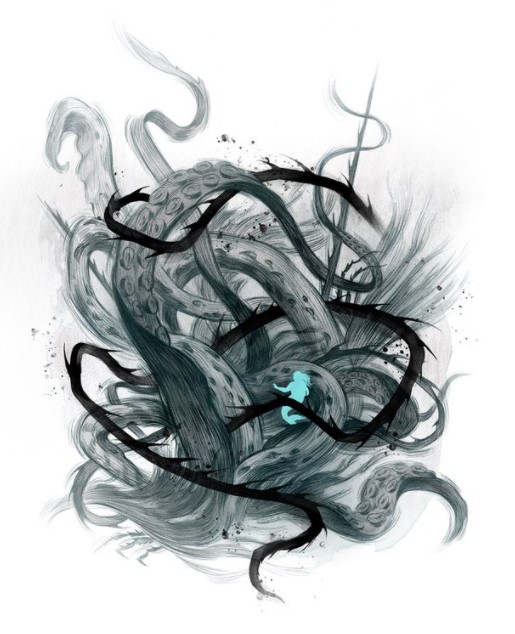
As always, the writing is spectacular. Rovina Cai is back as the illustrator, and her drawings (again, as always) are beautiful and perfectly in tune with the narrative of the story.

Illustration by @RovinaCaiArt

I love this series so, so much. If you haven’t tried these books yet, start at the beginning! I’m thrilled that three more books in the series are listed on Goodreads — here’s hoping the Wayward Children thrive for years to come!

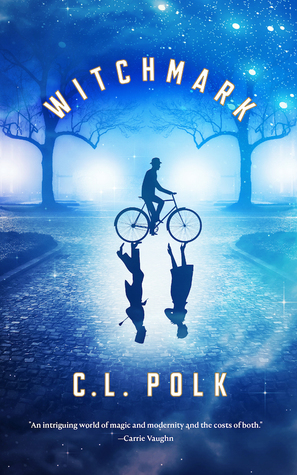
Book Review: Witchmark (The Kingston Cycle, #1) by C. L. Polk

Title: Witchmark
Series: The Kingston Cycle, #1
Author: C. L. Polk
Publisher: Tor
Publication date: June 19, 2018
Length: 318 pages
Genre: Fantasy
Source: Purchased
Rating:

Rating: 3.5 out of 5.

C. L. Polk arrives on the scene with Witchmark, a stunning, addictive fantasy that combines intrigue, magic, betrayal, and romance.

In an original world reminiscent of Edwardian England in the shadow of a World War, cabals of noble families use their unique magical gifts to control the fates of nations, while one young man seeks only to live a life of his own.

Magic marked Miles Singer for suffering the day he was born, doomed either to be enslaved to his family’s interest or to be committed to a witches’ asylum. He went to war to escape his destiny and came home a different man, but he couldn’t leave his past behind. The war between Aeland and Laneer leaves men changed, strangers to their friends and family, but even after faking his own death and reinventing himself as a doctor at a cash-strapped veterans’ hospital, Miles can’t hide what he truly is.

When a fatally poisoned patient exposes Miles’ healing gift and his witchmark, he must put his anonymity and freedom at risk to investigate his patient’s murder. To find the truth he’ll need to rely on the family he despises, and on the kindness of the most gorgeous man he’s ever seen. 

I’ve had my eye on Witchmark for a few years now — I’m so glad I finally sat down with the book and gave it a try!

In Witchmark, we’re introduced to a steampunk-flavored world in which aether lines power lighting and telephones, while average people get around the city on bicycles or in horse-drawn carriages. Witchcraft exists, but it’s divided very sharply along class lines: There is a secret inner circle of nobility with magical powers, known as the Invisibles. They serve the Queen, and keep Aeland protected from storms and natural disasters through quarterly rituals to sing in the seasons.

Invisibles have powers that run through the generations of their families, and in general, there’s one main mage in the family, who uses a lesser-powered family member (known as a Secondary) essentially as a backup battery. The Secondary is magically bound to the family mage, and their own strength is drained as needed in order to power the required spells.

In the lower classes, however, witchcraft is feared and something to be punished. A person accused of witchcraft is tried and examined, and if found guilty, is committed to a witches’ asylum — permanently. It’s a scary, gruesome fate.

The main character in Witchmark is Dr. Miles Singer. A son of the powerful Hensley family, Miles fled home years earlier to join the army and pursue a medical education. He let it be known that he was killed in the vicious war with Laneer; meanwhile, he actually returned home to the city of Kingston, where he works in psychiatric medicine at a veterans’ hospital.

When a dying man, claiming to have been poisoned, identifies Miles as a Starred One — someone gifted with magic — he sets off a chain reaction that leads to Miles becoming embroiled in investigating the possible murder, as well as strange occurrences involving war veterans, otherworldly interest in missing souls, and dire scheming and jockeying for political power among the nobility. He also becomes unwillingly reintroduced to his estranged family and forced to participate in their power plays.

Something sinister is happening behind the scenes, threatening all of Aeland society, and with an unexpected companion, it’s up to Miles to figure it out before it’s too late, even at the risk of his own life.

Witchmark is an engaging read, thanks especially to Miles. Miles is a complex character, with his aristocratic background, his war service and resulting psychological damage, and his commitment to treating and supporting the wounded veterans in his care. His compassion makes him a sympathetic character, one whom it’s easy to root for.

There’s an enigmatic love interest who is very interesting, but I don’t feel as though I understood enough about this individual, their powers, and what they represent.

That brings me to my chief complaint about Witchmark: The world-building is insufficient, from my point of view.

There are a lot of names and terms thrown around — Invisibles, Secondaries, Amaranthines, Solace — which only get minimal explanations. I liked what I saw of this world, but felt like I was missing a deeper knowledge of the types of power, the mystical elements, and more. I often felt like I was trying to catch up, but I think this was because of the lack of specifics in some key areas. I think we’re meant to get a feel for this world and its societies through the plot of the story, but I couldn’t help feeling as though I needed more in order to truly become immersed and connected.

There are two more books in the Kingston Cycle, and I do plan to continue. I like the characters and the overarching story enough to want to see what happens next. I’m hoping that I get deeper into the trilogy, some of the more confusing elements will become clearer.

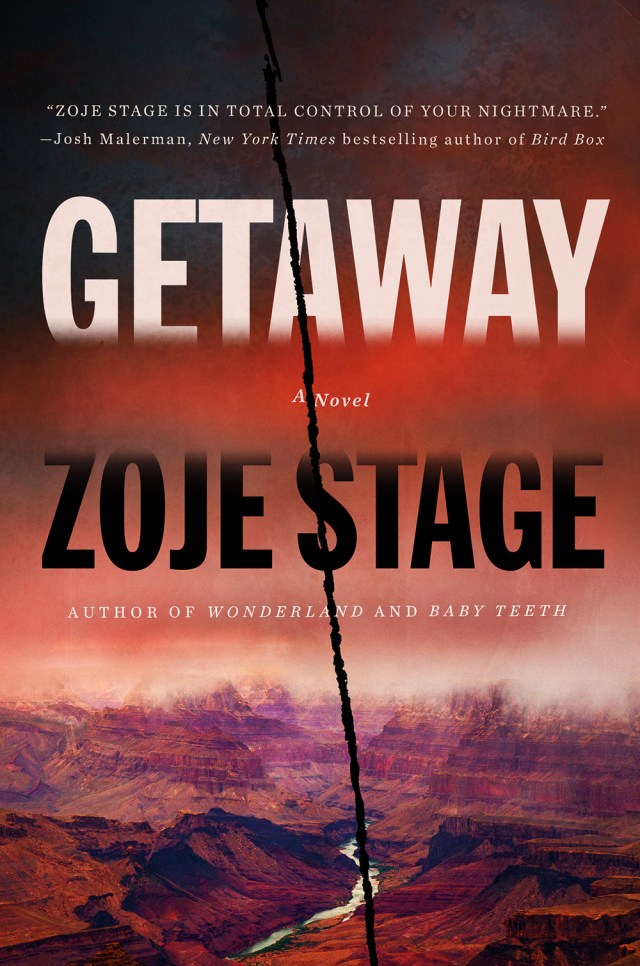
Book Review: Getaway by Zoje Stage

Title: Getaway
Author: Zoje Stage
Publisher: Mulholland Books
Publication date: August 17, 2021
Length: 352 pages
Genre: Thriller
Source: Review copy courtesy of the publisher via NetGalley
Rating:

Rating: 5 out of 5.

A cinematic and terrifying new novel from “the master of the psychological thriller” and the bestselling author of Baby Teeth and Wonderland, about three friends who hike into the wilds of the Grand Canyon—only to find it’s not so easy to leave the world behind (Entertainment Weekly).

It was supposed to be the perfect week away . . . 

Imogen and Beck, two sisters who couldn’t be more different, have been friends with Tilda since high school. Once inseparable, over two decades the women have grown apart. But after Imogen survives a traumatic attack, Beck suggests they all reunite to hike deep into the Grand Canyon’s backcountry. A week away, secluded in nature . . . surely it’s just what they need.

But as the terrain grows tougher, tensions from their shared past bubble up. And when supplies begin to disappear, it becomes clear secrets aren’t the only thing they’re being stalked by. As friendship and survival collide with an unspeakable evil, Getaway becomes another riveting thriller from a growing master of suspense and “a literary horror writer on the rise” (BookPage).

I went into Getaway not knowing much about it other than that it takes place in the Grand Canyon and that something ominous happens. The cover image makes it clear that this will not be a happy book! But I truly had no idea what awaited me, and that was a good thing. With no foreknowledge, I was shaken and then terrified by every new development.

That said, if you haven’t read Getaway and want to experience it the way I did, stop reading this review right now! Just know that this is a five-star reading experience, steel yourself to be truly disturbed, and go for it.

Onward, though, to discussing more of the book. First off, I must say that I had no idea that there would be a Jewish component to this book, and that’s always something that speaks to me. The book starts off shockingly, as we learn that main character Imogen survived the horrific attack on the Etz Chayim synagogue in Pittsburgh, by chance arriving just as the shooting began and being able to hide outside rather than being inside the building to be massacred.

Although physically unharmed, Imogen bears psychological scars that only intensify those she already carried from “the thing” (which we learn about over the course of the novel) that happened to her in college. Over her adult years, Imogen has become more and more reclusive, to the point of agoraphobic. She doubts herself, her worth, and her ability to function in the world.

Imogen and her sister Beck grew up in an outdoorsy family, with frequent backpacking and wilderness trips. It’s been years since Imogen has felt secure enough to venture out like this, but Beck has arranged for the two of them plus their friend Tilda to spend a week in the Grand Canyon. Once inseparable, Tilda and Imogen have been estranged since “the thing”. Beck hopes that their week together, away from society and distractions, basking in the beauty of the wilderness, will provide an opportunity for the three of them to come back together, heal, and reestablish the closeness they once had.

Needless to say, things go horribly wrong. I wont’ say how or why, but the beautiful getaway that Beck envisioned turns into a nightmare in which their lives are on the line, and any wrong move can spell disaster. The three women must rely on each other and on their own internal resources if they have even a tiny hope of making it out of the Grand Canyon again.

Getaway is a thriller that introduces its dangers in an almost innocuous way. As with the characters, I was lulled into thinking “how bad could this be?” But the danger becomes more and more clear, and the escalation is terrifying yet also insidious. There seems to be hope, again and again, that reason and compassion and conversation can yield a solution… but that hope gets dashed repeatedly, and it quickly becomes clear that only drastic action can save them.

(Sorry, being deliberately vague here… but honestly, it’s best not to know much in advance.)

I loved the complexity of the women’s relationships, and how this informs the way they interact as well as how they initially respond to the threats they face. Imogen, as our point of view character, is fascinating — we see her doubts and fears, her resentment toward Tilda, her sense of inadequacy when comparing herself to Beck, and the self-doubt she’s harbored for years about whether she’s good enough, whether she’s able to defend herself, whether she lets herself and others down in times of urgency. In order to survive, Imogen has to face her inner turmoil and put herself on the line in ways that would seem unimaginable in any other facet of her life.

Truly, Getaway is rich and complex, and scary as hell. I was creeped out and terrified throughout much of the book, and had a hard time envisioning any outcome that wasn’t devastating. At the same time, I loved the main characters, loved the Grand Canyon setting, and really marvelled at the author’s ability to weave together the elements of an engrossing thriller with a moving story about friendship and resilience.

This is my first encounter with Zoje Stage, but I hope it won’t be my last! I know she has two previously published novels, and I’m eager to find out more about them. If you’ve read either Baby Teeth or Wonderland, please let me know what you thought and if you recommend them!

Getaway is highly recommended, a powerful and frightening read that’s also redemptive and empowering. Don’t miss it.

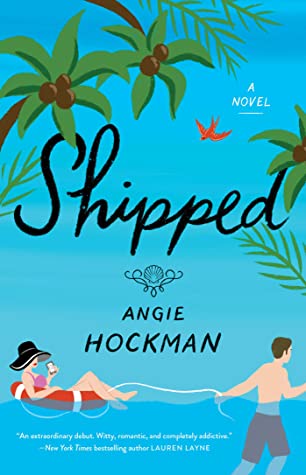
Book Review: Shipped by Angie Hockman

Title: Shipped
Author: Angie Hockman
Publisher: Gallery Books
Publication date: January 19, 2021
Length: 335 pages
Genre: Contemporary romance
Source: Purchased
Rating:

Rating: 3 out of 5.

The Unhoneymooners meets The Hating Game in this witty, clever, and swoonworthy novel following a workaholic marketing manager who is forced to go on a cruise with her arch-nemesis when they’re up for the same promotion.

Between taking night classes for her MBA and her demanding day job at a cruise line, marketing manager Henley Evans barely has time for herself, let alone family, friends, or dating. But when she’s shortlisted for the promotion of her dreams, all her sacrifices finally seem worth it.

The only problem? Graeme Crawford-Collins, the remote social media manager and the bane of her existence, is also up for the position. Although they’ve never met in person, their epic email battles are the stuff of office legend.

Their boss tasks each of them with drafting a proposal on how to boost bookings in the Galápagos—best proposal wins the promotion. There’s just one catch: they have to go on a company cruise to the Galápagos Islands…together. But when the two meet on the ship, Henley is shocked to discover that the real Graeme is nothing like she imagined. As they explore the Islands together, she soon finds the line between loathing and liking thinner than a postcard.

With her career dreams in her sights and a growing attraction to the competition, Henley begins questioning her life choices. Because what’s the point of working all the time if you never actually live?

Perfect for fans of Christina Lauren and Sally Thorne, Shipped is a fresh and engaging rom-com that celebrates the power of second chances and the magic of new beginnings.

In this office romance (set on a cruise ship!), two people competing for one job end up finding romance and chemistry while forced to spend time together. Henley has harbored anger and resentment toward Graeme ever since he joined the marketing team of Seaquest Adventures, although they’ve only ever met via video conferences. She is not thrilled to learn that he’s being considered for the promotion that she thought she had in the bag, and is especially unhappy to learn that part of the selection process for the promotion involves going on the company’s Galapagos tour — with Graeme.

While enjoying the gorgeous setting, Henley continues to bump heads with Graeme, but between their instant physical attraction and the fact that he actually seems nice in person, she’s forced to reevaluate her opinions of him.

Shipped is pretty standard fare when it comes to contemporary romance. It’s the enemies-to-lovers trope, every step of the way, and while the Galapagos setting makes it fun, the plot beats are exactly what you’d expect.

I had a hard time with main character Henley pretty much the entire way through the book. Her impression of Graeme and the way she interacts with him are so uncalled for — she comes across as unreasonable and extreme, and I doubt that was the author’s intention. He’s clearly not an awful person, and the way she talks to him and acts around him just doesn’t make sense. As Henley puts it:

The fact is, I acted like a lunatic today […]

Some of the writing is a little clunky, with language that left me scratching my head:

We barely make it through the door before we’re on each other like duct tape.

That sounds… painful? sticky? Not sexy, which I think was the intent. And then there’s this, which… I don’t even know.

My nether-kitty yowls and hisses at this interruption.

Of course, I also should disclose that office romance storylines are probably my least favorite romance plots, so that factors in as well. I didn’t find the office dynamics believable, and don’t even get me started on the promotion competition or the book’s tidy resolution for Henley’s career.

Still, there are some cute moments, and I liked Henley’s relationships with her friends and her sister, as well as the importance she places on giving credit where credit is due. The descriptions of the sights and wildlife of the Galapagos makes me want to go there, immediately! And I appreciate that the author includes all sorts of information on how to support wildlife preservation initiatives in the area as part of her notes at the end.

Maybe this book will work better for those who enjoy the specific romance tropes included here. Alas, while it was a quick and light read, it just wasn’t really my cup of tea.

Book Review: The Unfamiliar Garden (The Comet Cycle, #2) by Benjamin Percy

Title: The Unfamiliar Garden
Series: The Comet Cycle
Author: Benjamin Percy
Publisher: Mariner Books
Publication date: January 4, 2022
Length: 224 pages
Genre: Science fiction
Source: Review copy courtesy of the publisher via NetGalley
Rating:

Rating: 4 out of 5.

The night the sky fell, Jack and Nora Abernathy’s daughter vanished in the woods. And Mia’s disappearance broke her parents’ already fragile marriage. Unable to solve her own daughter’s case, Nora lost herself in her work as a homicide detective. Jack became a shell of a man; his promising career as a biologist crumbling alongside the meteor strikes that altered weather patterns and caused a massive drought.

It isn’t until five years later that the rains finally return to nourish Seattle. In this period of sudden growth, Jack uncovers evidence of a new parasitic fungus, while Nora investigates several brutal, ritualistic murders. Soon they will be drawn together by a horrifying connection between their discoveries—partnering to fight a deadly contagion as well as the government forces that know the truth about the fate of their daughter.

Award-winning author Benjamin Percy delivers both a gripping science fiction thriller and a dazzling examination of a planet—and a marriage—that have broken. 

The Comet Cycle, a three-part look at the effects of a devastating meteor fall, began with the 2021 release of The Ninth Metal (reviewed here). The premise of this trilogy is chilling: A comet passes by earth, close enough that people around the globe gather to celebrate and enjoy the beautiful sight. But… a year later, Earth’s orbit takes the planet through the comet’s debris field, and it’s here that things go terribly wrong.

Earth is inundated with meteors and meteorites, and beyond the immediate destruction of the massive impacts, the biology and chemical makeup of the planet is forever changed.

In The Ninth Metal, we see the effect of the introduction of a strange, never-before-seen metal into the world of humans. Known as omnimetal, this element has strange properties that change the world in terms of huge leaps forward in technology as well as changing the economy, power balances, and in some cases, humans themselves.

In the 2nd book, The Unfamiliar Garden, the action moves from the Minnesota setting of the 1st book to the Seattle and Northwest rainforest area. The main characters are Jack, a professor of biology specializing in mycology, and Nora, Jack’s ex-wife, a neuro-atypical detective with the Seattle PD. Five years earlier, as the meteorites were striking Earth, their 8-year-old daughter Mia disappeared while out in the forest with Jack. No trace was ever found.

Now, after a long drought, rains have returned to the area, and with the rain comes a huge growth spurt for fungi and other plant matter. Also, and maybe not coincidentally, Nora’s department faces a rash of gruesome murders and seemingly ordinary people having sudden psychotic breaks.

As their work overlaps, Jack and Nora have to join forces to try to understand what’s causing this outbreak of violence, and along the way, may finally get answers to the mystery of their daughter’s disappearance.

The Unfamiliar Garden is a fast-paced, tautly-written thriller with sinister government agents, alien organisms, and a wave of bizarre illness and madness. Through Jack and Nora, we see the way the baffling clues start to form patterns, while also getting a sense of the horror of finding oneself in the midst of what’s actually happening.

Without giving too much away, let me just say… fungi = ewwwwww. I’ve now read several books in which fungi in some way or another basically spell the end of human life as we know it, and honestly, it’s terrifying!!

There are some scenes that are pretty gross, so this book may not be for you if you have a weak stomach and a low tolerance for an ick factor.

I found it fascinating, and I loved the relatively short length, which meant that the storytelling stays lean and propulsive throughout. I also love how each book in this trilogy focuses on a different geographic area and a different aspect of the comet’s aftermath.

Book #3, The Sky Vault, will be released in June 2022. I can’t wait!

Book Review: When You Get the Chance by Emma Lord

Title: When You Get the Chance
Author: Emma Lord
Publisher: Wednesday Books
Publication date: January 4, 2022
Length: 320 pages
Genre: Young adult
Source: Review copy courtesy of the publisher via NetGalley
Rating:

Rating: 3.5 out of 5.

Nothing will get in the way of Millie Price’s dream to become a Broadway star. Not her lovable but super-introverted dad, who after raising Millie alone, doesn’t want to watch her leave home to pursue her dream. Not her pesky and ongoing drama club rival, Oliver, who is the very definition of Simmering Romantic Tension. And not the “Millie Moods,” the feelings of intense emotion that threaten to overwhelm, always at maddeningly inconvenient times. Millie needs an ally. And when a left-open browser brings Millie to her dad’s embarrassingly moody LiveJournal from 2003, Millie knows just what to do. She’s going to find her mom.

There’s Steph, a still-aspiring stage actress and receptionist at a talent agency. There’s Farrah, ethereal dance teacher who clearly doesn’t have the two left feet Millie has. And Beth, the chipper and sweet stage enthusiast with an equally exuberant fifteen-year-old daughter (A possible sister?! This is getting out of hand). But how can you find a new part of your life and expect it to fit into your old one, without leaving any marks? And why is it that when you go looking for the past, it somehow keeps bringing you back to what you’ve had all along?

Millie Price is a LOT, and she knows it. Almost 17, done with junior year of high school, and completely obsessed with musical theater, Millie is ecstatic when she finds out that she’s been accepted ot a competitive “pre-college” (a combination senior year of high school plus four-year undergraduate program) that claims to have huge success in turning wannabes into Broadway stars. The problem? She never told her dad that she’d applied, and he’s absolutely opposed to her going.

But Millie is nothing if not determined, and she decides to convince her dad to let her attend in the weirdest way possible: After stumbling across her dad’s awful LiveJournal musings about his sad college romances, she decides to track down her mother — who, she’s sure, will back her up on this pre-college thing, since one of the few things Millie knows about her is that she was also a performer.

On her quest, Millie ends up taking an internship at a talent agency, where she’s forced to work side-by-side with Oliver, the grumpy stage manager from her high school theater department with whom she’s had a serious battle of the wills (not to mention ongoing very loud conflicts) for three years now. But working together, she finds out there’s more to Oliver than she realized.

When You Get the Chance is a cute story, sure to appeal to anyone who (a) loves New York and (b) loves musical theater — but even if you don’t happen to love either of those, Millie’s out-there personality, her relationship with her father and her aunt, and the madcap search for her mother are sure to charm you anyway.

Millie’s extroverted personality, in person, would make me hugely uncomfortable. She’s someone who craves the spotlight, and her big emotions and reactions are constantly on display. While these traits carry her where she needs to go, she also steps on people’s toes and gets into all sorts of awkward situations, not to mention hurting the people she loves most by not talking to them directly instead of carrying out her wild schemes. Still, as a fictional character, she’s funny and charming, and we readers know that her heart is in the right place, even when her actions are over the top.

There are a lot of cute and engaging elements in this story: Millie’s search for her mother, based on the sparse cues she and her best friend find, take her all over the city and introduce her to people who all enrich her life in various ways. The mother “candidates” are interesting women who share some traits with Millie (and whose scenes with Millie are very entertaining), and the travels around New York are lively and enjoyable. Also, Millie’s aunt owns the Milkshake Club, a performance space that serves amazing milkshakes, which is such a fabulous concept… and now I desperately want a huge milkshake of my own!

The family conflicts and drama get resolved in satisfying ways, the romantic element is sweet (and I appreciated that the romance doesn’t overwhelm the rest of the story), and as a musical theater fan myself, I appreciate all the silly ways that various lyrics, plotlines, and characters get woven into Millie’s daily conversations and thoughts.

When You Get the Chance is a engaging read with an entertaining (and occasionally exasperating) main character. It releases the first week in January — what a fun way to start the new year!

Book Review: The Matzah Ball by Jean Meltzer

Title: The Matzah Ball
Author: Jean Meltzer
Publisher: MIRA
Publication date: September 28, 2021
Length: 416 pages
Genre: Contemporary romance
Source: Library
Rating:

Rating: 3.5 out of 5.

Rachel Rubenstein-Goldblatt is a nice Jewish girl with a shameful secret: she loves Christmas. For a decade she’s hidden her career as a Christmas romance novelist from her family. Her talent has made her a bestseller even as her chronic illness has always kept the kind of love she writes about out of reach.

But when her diversity-conscious publisher insists she write a Hanukkah romance, her well of inspiration suddenly runs dry. Hanukkah’s not magical. It’s not merry. It’s not Christmas. Desperate not to lose her contract, Rachel’s determined to find her muse at the Matzah Ball, a Jewish music celebration on the last night of Hanukkah, even if it means working with her summer camp archenemy—Jacob Greenberg.

Though Rachel and Jacob haven’t seen each other since they were kids, their grudge still glows brighter than a menorah. But as they spend more time together, Rachel finds herself drawn to Hanukkah—and Jacob—in a way she never expected. Maybe this holiday of lights will be the spark she needed to set her heart ablaze. 

This Hanukkah-themed romance was a nice winter treat, with surprising depth amidst some of the goofier shenanigans.

Rachel Rubenstein-Goldblatt is the daughter of a prominent Long Island rabbi. She’s an observant Jew… and a secret writer of bestselling Christmas romance novels. She’s spent her life in the public eye, always being monitored by her father’s congregation — is she following all the traditions? is she living a good Jewish life? is she a dutiful daughter? — so how would the congregation react if they knew about her hidden obsession with all things Christmas?

When her publisher declines to renew her contract for more Christmas romances, instead requesting a Hanukkah romance, Rachel panics. To her, Hanukkah is yet another Jewish tradition, nice, but not evoking that sparkly holiday magic like Christmas. But if she’s going to get a contract for a new book, she’ll have to find a way to find the magic in Hanukkah as well… and for inspiration, she’s needs to get a ticket to the sold-out Hanukkah blowout, Matzah Ball Max.

Matzah Ball Max is being produced by Jacob Greenberg, a famous and very successful producer of massive celebrity parties and music festivals and the like. But now, for the first time, Jacob is looking to reconnect with his Jewish background, as well as his problematic family history, by throwing the Hanukkah party of the century.

Back when Rachel and Jacob were twelve, they attended Jewish summer camp together, where they were each other’s first loves and first kisses — but a major conflict left them holding lifelong grudges against one another. Still, Rachel needs a ticket to the Matzah Ball, and reconnecting with Jacob may be her only hope.

The Matzah Ball deals nicely with Rachel and Jacob’s respective backstories and current challenges. For Rachel, this means exploring how she lives with Chronic Fatigue Syndrome — yet another part of her life that she tries to keep secret. For Jacob, it’s coming to terms with his late mother’s years of chronic illness and his father’s abandonment, which led him to teen years full of acting out and resentment toward everyone who cared about him.

As adults, Rachel and Jacob are cautious when they encounter one another again after so many years, but their old connection is still there, and each reluctantly recognizes that their feelings may be more than just dislike and old hurts. They have to be willing to be honest and open up in order to deal with the past and move forward, and this proves difficult for both of them.

There’s a lot to love about The Matzah Ball. For me, well, they had me at “Jewish summer camp”. As the author explains in the notes following the story, she grew up in an Ashkenazi Jewish family in the Northeast, and so much of what she describes absolutely rings true for me. And as for the summer camp piece, all I can say is that if you grew up attending a Jewish summer camp, you’ll get it. The lifelong friendships, the way those brief summers become life-shaping experiences… yes, yes, yes, so true!

I also really loved the warmth with which the author describes Jewish traditions and home life. She’s clearly lived all of this, and while I was afraid initially that the book would include too many stereotypical Jewish-isms, it’s all conveyed with respect and appreciation.

The romance is sweet, and builds nicely along the course of the novel — with the usual amount of miscommunications and nearly-impossible obstacles that you’d expect in a romance novel. Also very well done is the portrayal of Rachel’s chronic illness, shown with sensitivity and compassion — again, based on the author’s own real-life experiences. Here, Rachel’s CFS informs every aspect of her life, and while she’s not looking for pity, she’s also very much aware of how her illness keeps her from living the life she once thought she’d have.

On the downside, there are some slapstick-y scenes that I’m sure were intended to be humorous, but to me, they were just cringey. Putting Rachel in an awful matzah ball costume, having her get stuck in doorways, and colliding with a giant menorah? Just, no.

I also didn’t love a scene with Jacob’s grandmother, in which she shares her Holocaust experiences with Rachel as a sort of pep talk for getting out there and facing her fears. I appreciated hearing about Toby’s experiences, of course, but didn’t like how something this tragic was being spun as a device for getting Rachel to go after Jacob when all hope appeared to be lost.

Overall, though, I did really like The Matzah Ball. Despite its occasionally cornier scenes, there’s a sweetness and warmth that shines through, and I loved the portrayal of Jewish family life as a vibrant way of experiencing the world. This was a very enjoyable read, and I’ll be on the lookout for more by this author.

Book Review: Dava Shastri’s Last Day by Kirthana Ramisetti

Title: Dava Shastri’s Last Day
Author: Kirthana Ramisetti
Publisher: Grand Central Publishing
Publication date: November 30, 2021
Length: 384 pages
Genre: Contemporary fiction
Source: Review copy courtesy of the publisher via NetGalley
Rating:

Rating: 5 out of 5.

In this thought-provoking and entertaining debut novel about of a multicultural family, a dying billionaire matriarch leaks news of her death early so she can examine her legacy–a decision that horrifies her children and inadvertently exposes secrets she has spent a lifetime keeping.

Dava Shastri, one of the world’s wealthiest women, has always lived with her sterling reputation in mind. A brain cancer diagnosis at the age of seventy, however, changes everything, as she decides to take her death—like all matters of her life—into her own hands.

Summoning her four adult children to her private island, she discloses shocking news: in addition to having a terminal illness, she has arranged for the news of her death to break early, so she can read her obituaries.

As someone who dedicated her life to the arts and the empowerment of women, Dava expects to read articles lauding her philanthropic work. Instead, her “death” reveals two devastating secrets, truths she thought she had buried forever.

And now the whole world knows, including her children.

In the time she has left, Dava must come to terms with the decisions that have led to this moment—and make peace with those closest to her before it’s too late.

Compassionately written and chock-full of humor and heart, this powerful novel examines public versus private legacy, the complexities of love, and the never-ending joys—and frustrations—of family.

This will sound weird — but I’m tempted to not read any further books for the few days remaining in 2021. Why? So I can end on a high note! I can’t tell you how much I loved Dava Shastri’s Last Day. It feels good to think about ending my reading year with such a terrific 5-star read!

In this sensitive, compelling book, we meet the awesome Dava Shastri at age 70. She’s a world-famous philanthropist, having devoted her adult life to using her billions to support worthwhile causes around the world. She’s also a mother, a grandmother, and a widow, and as the book opens, Dava has called her family to their private island for reasons not yet disclosed.

As the family gathers, she shares her big secret: Dava has terminal cancer, and faced with months of painful treatments that may prolong her life but not sustain it in any sort of quality, she decides to leave on her own terms. A doctor is on stand-by, already on the island. After a final day with her family, Dava will be ending her life via assisted suicide.

The family, naturally, is shocked. They’re even more shocked to learn that Dava’s attorney has already announced her death to the world. Faced with the end, Dava has decided to indulge her curiosity and see how she’s remembered — because hasn’t everyone always wondered about attending their own funeral?

The news, while full of praise for Dava’s generosity, soon turns to gossip and scandal, as a decades-old rumor of an extramarital affair with a rock singer resurfaces in the wake of the death announcements. Dava is dismayed that these old stories have taken over the headlines, so instead of the tributes she expected, she’s faced once again with the rumors she could never quite shake.

As the book progresses, each of Dava’s four adult children tries to come to terms with Dava’s legacy and their own relationships to their powerful, hard-working, often absent mother. In devoting her life to serving others, Dava’s homelife by necessity came second. And while she raised her children to follow in her footsteps and devote themselves to the family foundations and charitable causes, each has to face their own soul-searching to find their purpose in life — and to figure out whether Dava is someone they want to emulate or rebel against.

There are so many lovely moments, as the siblings explore their connections, their own marriages and relationships, and their place in the world. Even the grandchildren have important roles to play, as they get a final chance to learn the truth about their grandmother — who she is, what her life has meant, and what paths she’s blazed for them.

Dava herself is a fascinating character, a self-made woman whose life contains heartbreak and challenge and ultimate success. She often enigmatic, and at first seems to be a woman who places too much emphasis on physical comfort and luxuries, but we soon learn that there’s so much more to this powerful, determined woman.

The one element that rang a little oddly for me is the setting — the main events surround Dava’s last day take place in 2044. I suppose this is so that the author could root some of Dava and her children’s earlier years in our own contemporary times. The fact that it’s 2044 in this book isn’t particularly explored, beyond a couple of references to climate and the ease of accessing Dava’s chosen end-of-life medical treatment.

Other than that, there’s really not a false note in this beautiful book. I loved the characters, the relationships, the secrets that emerge, and the lovely way the stories all tie together by the end.

This would be a fabulous book group selection — there’s so much to think about and discuss!

Dava Shastri’s Last Day seems to have been an under-the-radar release for the end of 2021. Fortunately, I stumbled across a mention of the book in a year-end list, and the beautiful cover caught my eye. I’m so happy to have read this book, and will be sharing it with lots of friends and family.