Book Review: This Fallen Prey (Rockton, #3) by Kelley Armstrong

Title: This Fallen Prey
Series: Rockton, #3
Author: Kelley Armstrong
Publisher: Minotaur Books
Publication date: February 6, 2018
Length: 359 pages
Genre: Thriller/mystery
Source: Library
Rating:

Rating: 4.5 out of 5.

In This Fallen Prey, the next installment of New York Times bestselling author Kelley Armstrong’s thriller series, Casey Duncan is about to face her toughest job as police detective in Rockton yet. When Casey first arrived at the off-the-grid town, an isolated community built as a haven for people running from their pasts, she had no idea what to expect, with no cell phones, no internet, no mail, and no way of getting in or out without the town council’s approval. She certainly didn’t expect to be the homicide detective on two separate cases or to begin a romantic relationship with her boss. But the very last thing she expected was for the council to drop a dangerous criminal into their midst without a plan to keep him imprisoned and to keep others safe. Of course, Oliver Brady claims he’s being set up. But the longer Brady stays in town, the more things start to go wrong. When evidence comes to light that someone inside Rockton might be working as his accomplice, helping him to escape, Casey races to figure out who exactly Brady is and what crimes he’s truly responsible for committing. In the next page-turning entry in Kelley Armstrong’s gripping series, life in Rockton is about to get even more dangerous.

To say I’m hooked on Kelley Armstrong’s Rockton series might be an understatement. I’m obsessed! These stories build one upon the other, and so far, each leaves me thirsty for more immediately after turning the final page.

This Fallen Prey is the 3rd book in this 7-book series, and it’s a fast-paced, adrenaline-fueled race through danger — and yet, it also gives us time to spend with the characters and in the town that we’ve come to know.

Quick recap (or see links below for my reviews of earlier books): Rockton is a secret hidden town in the Yukon wilderness, a haven for those seeking extreme shelter from dangers in their real lives — or those who’ve committed some sort of wrongdoing and need a place to start over. Rockton, population 200, is filled with an uneasy mix of crime victims and white-collar criminals — although as Sheriff Eric Dalton and Detective Casey Butler come to discover, the town council is willing to defy its own rules for a price and allow more dangerous people to take advantage of Rockton’s protection.

As This Fallen Prey opens, a plane arrives on Rockton’s hidden airstrip, delivering a man named Oliver Brady into the town’s custody. The note accompanying his arrival explains that he’s a serial killer, being sent to Rockton for detention by his wealthy stepfather, who hopes to shield Brady’s mother from the grief of a trial and sentencing. There are all sorts of problems with this, especially (a) Rockton was given no warning of his arrival and (b) the town has no detention facilities except one jail cell, typically used for those needing to sleep off a bar fight for a night. With no preparation yet no way to refuse or send Brady back, Eric and Casey are stuck with a dangerous killer to keep under lock and key.

Complicating matters is Brady’s insistence that he’s innocent, set up by his greedy stepfather who just wants him out of the way in order to grab his share of the family fortune. A further complication is that half the town seem to believe him. Some want to free him, but many others want to lynch him. Eric and Casey need to discover the truth, but when Brady manages to escape into the wilderness surrounding Rockton, they find themselves on a hunt for a man they can’t trust but can’t quite condemn.

As with the previous Rockton books, the danger ratchet up page by page, and the chase through the woods is scary and full of new threats and enemies with each turn of the path. The plot is twisty and misleading and full of contradictions, which all come together by the end with a bang.

This Fallen Prey wraps up the core mystery surrounding Brady, but leaves many more big picture questions hanging — which is probably what makes this series so additive. The main story has a conclusion, but there are several thing that occur that seem like critical new wrinkles in our understanding of how the town works and what the roles of various characters are. I’m desperate to know more!

Meanwhile, Casey and Eric’s relationship continues to be a wonderful centerpiece, as their two wildly different backstories add complications to their already complex work and love lives. I love seeing them navigate their differences, their needs, and their respective roles in the town, while also establishing a loving, respectful, supportive commitment to their lives together.

I can’t wait to start the next book in the series — although I’m trying to force myself to take breaks in between and enjoy a bit of the suspense!

Next up:
Book #4, Watcher in the Woods

Interested in this series? Check out my reviews of the previous books:
City of the Lost (Rockton, #1)
A Darkness Absolute (Rockton, #2)

Purchase linksAmazon – Bookshop.org – Libro.fm
Disclaimer: When you make a purchase through one of these affiliate links, I may earn a small commission, at no additional cost to you.
Book Review: The Bones Beneath My Skin by TJ Klune

Title: The Bones Beneath My Skin
Author: TJ Klune
Publisher: Tor
Publication date: Originally published 2018; reissued February 4, 2025
Length: 416 pages
Genre: Fantasy
Source: Purchased (Kindle); ARC (reissued edition)
Rating:

Rating: 5 out of 5.

A spine-tingling thriller by New York Times bestselling author TJ Klune, about a 10-year-old girl with an impossible power, her father, and an unlikely stranger, who come together to confront the dangerous forces that want her at all costs. A strange story of family, love, comets, and bacon. Perfect for fans of Stranger Things.

In the spring of 1995, Nate Cartwright has lost everything: his parents are dead, his older brother wants nothing to do with him, and he’s been fired from his job as a journalist in Washington DC. With nothing left to lose, he returns to his family’s summer cabin outside the small mountain town of Roseland, Oregon to try and find some sense of direction. The cabin should be empty. It’s not. Inside is a man named Alex. And with him is an extraordinary little girl who calls herself Artemis Darth Vader. Artemis, who isn’t exactly as she appears.

Soon it becomes clear that Nate must make a choice: let himself drown in the memories of his past, or fight for a future he never thought possible. Because the girl is special. And forces are descending upon them who want nothing more than to control her.

The Bones Beneath My Skin, originally published in 2018, is getting a gorgeous new hardcover edition this year for its re-release by Tor Publishing. Not only is it beautiful to look at, but it’s a terrific book, and I’m only sorry I didn’t read it earlier.

As the book opens, Nate Cartwright has been fired from his DC journalism job due to a pretty major indiscretion. Long estranged from his parents, he learns that they’ve left him their remote cabin by a lake in Oregon. With nowhere else to go and no one in his life, he heads to the cabin to recover, spend time in isolation, and figure out what options he has left.

To Nate’s surprise, the cabin is already occupied by a gruff ex-Marine and a 10-year-old girl who introduces herself with the unlikely name of Artemis Darth Vader. Alex is injured, quick to point a gun at Nate, and highly suspicious and protective. Artemis (Art), on the other hand, is full of sunshine and questions and precocity, and seems to be obsessed with the large collection of Western paperbacks lining the walls of the cabin.

“Besides, Nate will be sad if we leave. He likes us.”

“I don’t like either of you at all,” Nate said.

“You made us bacon.”

“That doesn’t mean I like you.”

“It certainly seemed that way,” she said. “If you give someone something that good, it has to mean something. You can’t just give a gift without having feelings behind it.”

“It was just breakfast.”

Nate is tempted to flee — but doesn’t. As he spends time with Alex and Art, he recognizes that something mysterious and beyond his understanding is going on, but also starts to feel a strange connection to these intruders. Even when dangerous outside forces arrive and force them to make a desperate attempt at escape, Nate finds himself firmly on Alex and Art’s side. As the three hit the road, danger follows — and yet, as they spend time together, the loveliest of found families is formed.

I’m being deliberately vague. There’s isn’t much to say outright about the details of this book that won’t be major plot spoilers. I have a feeling many reviews will reveal exactly what’s going on with Alex and Art — but I enjoyed seeing the pieces come together, and want to leave that sense of discovery for others to enjoy as well.

The plot includes action sequences, but also lovely scenes of personal connection, humor, sharing, and meditations on the intricacies of life and emotions. Nate, Alex, and Art are all terrific characters — I dare anyone to read this book and not fall completely under the spell of Artemis Darth Vader.

There are intense moments that seems pointed toward tragedy and heartbreak, and also moments of calm and quiet beauty. The ending is very satisfying, and made my heart happy.

It’s interesting to read the author’s notes from the Kindle edition (from the original publication in 2018), and then see the author’s notes from the reissue. They’re different, but both explain how he decided to self-publish this book, which was a thematic departure for him from his previous, traditionally published books, and how the self-publishing process worked out.

With the re-release coming in February, The Bones Beneath My Skin should reach a much wider audience, and that’s a very good thing indeed. I loved this book, and already know I’ll want to do a re-read.

Fans of the Green Creek series will love this book too. And hey, the town of Green Creek even gets a mention! If you love quirky, emotional stories about found family, with clever, quippy dialogue and unforgettable characters, don’t miss The Bones Beneath My Skin.

Audiobook Review: My Oxford Year by Julia Whelan

Title: My Oxford Year
Author: Julia Whelan
Narrator: Julia Whelan
Publisher: William Morrow
Publication date: April 24, 2018
Print length: 352 pages
Audio length: 9 hours 58 minutes
Genre: Contemporary fiction
Source: Purchased
Rating:

Rating: 5 out of 5.

Set amidst the breathtaking beauty of Oxford, this sparkling debut novel tells the unforgettable story about a determined young woman eager to make her mark in the world and the handsome man who introduces her to an incredible love that will irrevocably alter her future—perfect for fans of JoJo Moyes and Nicholas Sparks.

American Ella Durran has had the same plan for her life since she was thirteen: Study at Oxford. At 24, she’s finally made it to England on a Rhodes Scholarship when she’s offered an unbelievable position in a rising political star’s presidential campaign. With the promise that she’ll work remotely and return to DC at the end of her Oxford year, she’s free to enjoy her Once in a Lifetime Experience. That is until a smart-mouthed local who is too quick with his tongue and his car ruins her shirt and her first day.

When Ella discovers that her English literature course will be taught by none other than that same local, Jamie Davenport, she thinks for the first time that Oxford might not be all she’s envisioned. But a late-night drink reveals a connection she wasn’t anticipating finding and what begins as a casual fling soon develops into something much more when Ella learns Jamie has a life-changing secret.

Immediately, Ella is faced with a seemingly impossible decision: turn her back on the man she’s falling in love with to follow her political dreams or be there for him during a trial neither are truly prepared for. As the end of her year in Oxford rapidly approaches, Ella must decide if the dreams she’s always wanted are the same ones she’s now yearning for.

Warning: Do not listen to My Oxford Year in public. I can’t be responsible for what happens. (But embarrassing ugly crying is a strong possibility…)

I’m a little baffled as to how to write this review. I had a major plot point spoiled for me ahead of time, and I wish I hadn’t known to expect it. So, on the one hand, I don’t want to give spoilers here… on the other hand, it’ll be hard to discuss this book in any meaningful way without it.

But here goes… I’ll give it a try.

(But first, a further note: The content could be upsetting for someone to encounter without forewarning… so I’m going to put content warnings over on my Goodreads review, under a spoiler blur. Check if out here if you want to know.)

24-year-old Ella Durran heads to Oxford on a Rhodes Scholarship, something she’s dreamed of all her life. As her magical, longed-for year kicks off — literally as she’s arriving at Heathrow — she’s also offered a dream job opportunity, working as the education consultant for the woman who stands a good chance of becoming the party nominee for President in the next election. Ella’s future lies in political organizing, and while she’ll be studying literature at Oxford, she also has her eye on what happens after Oxford. Ella’s return ticket is already booked for June 11th of the next spring, and she works out a deal with the campaign: She’ll work remotely while at Oxford, then return next June and commit full-time to the race.

Initially, Ella experiences fish-out-of-water mishaps at Oxford — such as nearly getting run over due to looking the wrong way while crossing the street. The “posh prat” at the wheel ends up being Ella’s literature lecturer, and their unfortunate first meeting leads to attraction, and eventually, a no-strings hook-up plan that’s hot, exciting, and low commitment. It’s good for as long as it’s good, and that — they both agree — will be that.

Meanwhile, Ella also settles in, forms a handful of close friendships, and starts to truly relax into and appreciate her Oxford experience. And as things with Jamie continue to be thrilling, Ella’s having the time of her life.

All is not as perfect as it seems, though… and then Ella’s life (and the book) become more intense and complicated. One of Ella’s go to responses is “It’s a plan” as a form of agreeing or making a commitment, but what happens when life gets in the way of well thought-out plans?

I really can’t say more, but trust me when I say this book packs an emotional punch. There were times when I wanted nothing more than to give Ella a good shake, but her visceral responses to certain challenges, as well as her unwillingness or inability to see what’s right in front of her, feel real and true to life. It makes sense that Ella takes so long to acknowledge what she truly wants, or to recognize that having a plan doesn’t mean that the plan is actually the right course of action. As frustrating as she can be, Ella is a character who clicks precisely because she doesn’t always make perfect decisions or react the way we’d want her to react. She’s definitely flawed, and that helps us root for her.

And what can I say about Jamie? He’s sheer perfection, an absolute cupcake, and I challenge any reader not to be absolutely mad about him.

The larger cast of characters is terrific as well, rounding out Ella’s life in a way that gives her experiences more depth and connection. I loved getting to know the various people in her and Jamie’s lives, and seeing each of their journeys as well.

Author Julia Whelan narrates the audiobook. For any audiobook fans, you’ll know that this means the listening experience will be fabulous. Julia Whelan is the queen of audiobook narration, and hearing her narrate her own book is a chance to be transported into the feel of of the story and utterly absorbed.

My Oxford Year puts the reader through the emotional wringer in a way I hadn’t anticipated (until I was told a spoiler). At first, when I thought I was just reading a book about a year in a rarified academic setting, I didn’t feel entirely engaged. Do I care about stuffy universities and lecture halls and dissection of poetry? (Maybe just a smidge…) But when the more personal aspects of the plot kicked in, I was hooked, heart and soul.

I was a mess by the end of this book, but also uplifted and moved and satisfied. My Oxford Year is lovely and powerful, and should not be missed.

PS – My Oxford Year is coming to Netflix! No information yet on exactly when, but a preliminary casting announcement was recently shared… good stuff!


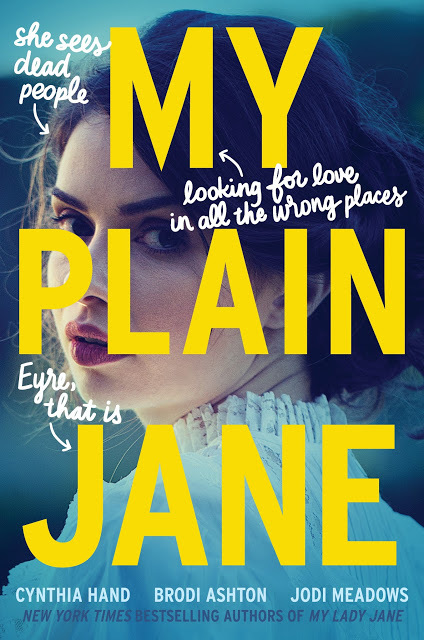
Book Review: My Plain Jane by Cynthia Hand, Brodi Ashton, & Jodi Meadows

Title: My Plain Jane
Series: The Lady Janies, #2
Author: Cynthia Hand, Brodi Ashton, Jodi Meadows
Publisher: HarperTeen
Publication date: June 26, 2018
Length: 447 pages
Genre: Young adult
Source: Purchased
Rating:

Rating: 4 out of 5.

You may think you know the story. After a miserable childhood, penniless orphan Jane Eyre embarks on a new life as a governess at Thornfield Hall. There, she meets one dark, brooding Mr. Rochester. Despite their significant age gap (!) and his uneven temper (!!), they fall in love—and, Reader, she marries him. (!!!)

Or does she?

Prepare for an adventure of Gothic proportions, in which all is not as it seems, a certain gentleman is hiding more than skeletons in his closets, and one orphan Jane Eyre, aspiring author Charlotte Brontë, and supernatural investigator Alexander Blackwood are about to be drawn together on the most epic ghost hunt this side of Wuthering Heights.

Long live the Lady Janies! Which are, for those wondering, a series of silly, imaginative books that turn history and classic fiction inside out and upside down. I adored My Lady Jane, the first book in the series, and finally picked up #2, My Plain Jane… and had a smashing good time reading it.

Poor Jane Eyre, an impoverished orphan who has endured a cruel aunt, hard years of cold and starvation at the awful Lowood school, and seems destined for a life as a governess — really the only option available for a young woman of her circumstances. It’ll be sad to leave her good friend Charlotte Brontë behind when she leaves Lowood, but Jane is ready to start the next chapter of her life — and fortunately, her best best friend Helen Burns can go with her. Helen is a ghost, you see, and Jane has the rare gift of seeing and communicating with ghosts.

When Alexander Blackwood, an agent of the Royal Society for the Relocation of Wayward Spirits, arrives at Lowood to dispense with a troublesome ghost, he recognizes Jane as a fellow Seer, and tries to recruit her for the Society. Jane is determined to stick to her plan of becoming a governess, but Charlotte is intrigued. She spends her days writing and dreaming of excitement, and she wants more than anything to join the Society too.

Once Jane arrives at Thornfield Hall for her governess gig and meets her employer, Mr. Rochester, her priorities start to shift. It’s not just devotion to her student that keeps her at Thornfield — Mr. Rochester is dreamy… despite being kind of rude, broody, and much older than Jane. (The authors take a great deal of delight in mentioning Mr. Rochester’s… um… maturity… at every opportunity.)

Mr. Rochester, due to age, was falling farther behind.

Hijinks ensue. You don’t really want to know the details, do you? Let’s just say, there are ghosts and ghostly possessions, a madwoman in the attic who may not be what she seems, sword fights, getting lost on the moors, and royal confrontations, among other adventures.

My Plain Jane is oodles of fun, and so very, very silly. The writing sparkles with good-natured wit and sly humor. I lost track of how many times it’s mentioned that Jane is plain… it gets ridiculously funny after a while.

Here are just a few little tastes of My Plain Jane:

“I assure you, sir, I am no one worth noting,” she said, although this did nothing to stop his obvious noting of her in his notebook.

From the ad for a governess that Jane finds:

WANTED: A GOVERNESS FOR ONE ADORABLE CHILD.

THE YOUNG LADE IN QUESTION SHOULD BE AT LEAST EIGHTEEN YEARS OF AGE, WELL EDUCATED, PROFICIENT IN THE PIANOFORTE, ABLE TO CONJUGATE LATIN VERBS, AND WELL VERSED IN CLASSIC LITERATURE. MOREOVER IT IS PREFERRED THAT SAID YOUNG LADY HAVE A CHEERY DISPOSITION, ROSY CHEEKS, AND ABSOLUTELY NO WARTS. SHE SHOULD BE AMENABLE TO PLAYING GAMES (ALL SORTS).

Everything turned out exactly as Charlotte had planned. (Just kidding. As skilled as Charlotte was at concocting wild-but-ingenious schemes, they almost never turned out as she planned. Remember this for future reference, dear reader.)

She threw the door open, propriety be darned. But right before she did, she made sure her nightgown was buttoned all the way up, because propriety shouldn’t be totally darned.

(Reader, your narrators understand Jane has fallen for Mr. Rochester rather quickly. The reasons for this could be threefold: first, it was pre-Victorian England, and courtships could last the length of an egg timer. Second, Jane’s lack of experience with men. And third, Jane’s perception of men, which was gleaned mostly from books and art that tended to glorify tall, dark, and brooding ones. The broodier the better. And Mr. Rochester was among the broodiest.)

Finding the intersections between Jane Eyre (the classic novel) and the antics of Jane Eyre and Charlotte Brontë as characters makes My Plain Jane extra fun. The plot itself is entertaining, and it’s cute to see all the ways in which (fictional) Charlotte uses her (fictional) friend Jane’s escapades as fodder for her work-in-progress novel (working title Jane Frere), which will of course become the (real) classic novel Jane Eyre.

As it’s been a few years since I last read Jane Eyre, I’m sure there are references and lines in My Plain Jane that went right past me. Still, I had a great time reading this book. I loved it maybe a smidge less than My Lady Jane (so awesome!!), but still thought it was clever and enjoyable, and a great way to spend a few summer days.

I’m looking forward to the next Lady Janie book, My Calamity Jane — I’ll aim to start it a bit later this summer, and I’m extra excited to get to the next book after that (which is actually a Mary book) — My Contrary Mary, about Mary, Queen of Scots. How great does that sound? After which, there are still two more books to look forward to… and given how much I’ve enjoyed the Lady Janies so far, I’m pretty sure I’ll end up reading them all.

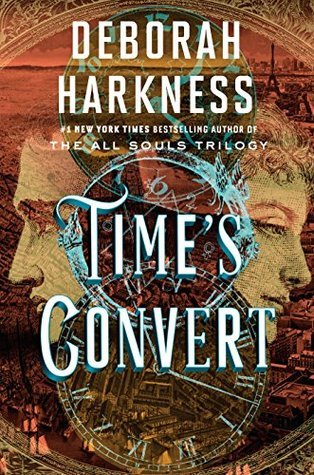
Book Review: Time’s Convert (All Souls, #4) by Deborah Harkness

Title: Time’s Convert
Series: All Souls
Author: Deborah Harkness
Publisher: Viking
Publication date: September 18, 2018
Length: 436 pages
Genre: Supernatural/contemporary/historical fiction
Source: Purchased
Rating:

Rating: 4 out of 5.

From the #1 New York Times bestselling author of A Discovery of Witches, a novel about what it takes to become a vampire.

Set in contemporary Paris and London, and the American colonies during the upheaval and unrest that exploded into the Revolutionary War, a sweeping story that braids together the past and present.

On the battlefields of the American Revolution, Matthew de Clermont meets Marcus MacNeil, a young surgeon from Massachusetts, during a moment of political awakening when it seems that the world is on the brink of a brighter future. When Matthew offers him a chance at immortality and a new life, free from the restraints of his puritanical upbringing, Marcus seizes the opportunity to become a vampire. But his transformation is not an easy one and the ancient traditions and responsibilities of the de Clermont family clash with Marcus’s deeply-held beliefs in liberty, equality, and brotherhood.

A passionate love story and a fascinating exploration of the power of tradition and the possibilities for change, Time’s Convert will delight fans of the All Souls trilogy and all readers of magic, the supernatural, and romance.

I adored the world of Deborah Harkness’s All Souls books back when I first read them, and gobbled up each book in the original trilogy as soon as they were released. At the time of the 3rd book’s publication, it seemed like the story had reached its conclusion. But then, in 2018, the author released a fourth book, Time’s Convert, to continue the story and expand the world of All Souls even further. Naturally, I couldn’t resist, and bought a copy right away… and there it sat on my bookshelf for six years!

With the announcement of a new book in the series coming this summer, I realized it was finally time to dive back in. Fortunately, having recently watched the TV adaptation of A Discovery of Witches, I wasn’t going in cold, which ended up being a very good thing. This is a big, sprawling, complicated fictional world, and without the reminders provided by watching the series, I probably would have been lost.

The framing of Time’s Convert is a human-to-vampire transformation. Phoebe Taylor, the human beloved by Matthew’s son Marcus Whitmore, is ready to be reborn as a vampire in order to truly unite with Marcus and spend eternity with him. Making a vampire is serious business, with many terrible ways it can go wrong, and the de Clermont clan is taking no chances. Under the supervision of elder family members Miriam and Freyja, Phoebe’s rebirth will be carefully controlled and monitored each step of the way.

Unfortunately for Marcus, part of the process means that he cannot see Phoebe again until she is 90 days old as a vampire — infant vampires are too unpredictable and impulsive to make good choices, and Phoebe must actually choose to be with Marcus before they are officially mated. This leaves Marcus with a summer of anxious waiting, and he passes the time with Matthew and Diana, who hope to support him and ease his obsessive revisiting of the old memories that plague him.

Meanwhile, Matthew and Diana are dealing with potential crises of their own. Their toddler twins, Becca and Philip, are something unheard of in their world — a melding of vampire and witch genetics. Both display unusual traits, and raise alarms for others in the family, who worry that their powers, if not placed under tight control, could spell disaster for them all.

The book shifts focus between the three main plotlines: Phoebe’s transformation, Marcus’s history, and Matthew, Diana, and the twins.

Phoebe’s story is fascinating. We’ve never spent this kind of time in the series on the day to day ritual and challenges of vampire infancy and development. Through Phoebe, we learn all sorts of interesting bits and pieces about vampire appetites, food sources, sensitivity to light and sound, and more.

Marcus’s story is truly the heart of Time’s Convert, taking up more space than the other two plotlines. We go back to colonial New England, where we see Marcus’s life as the son of a cruel, domineering father, and what he must do to break free. Eventually, Marcus leaves home to join the revolution, and is present at the battle of Bunker Hill as well as with Washington’s forces in Pennsylvania and elsewhere. He learns about healing and becomes a surgeon, although without the means to get a formal education in medicine. Dying of one of the rampant fevers in a military camp, Marcus is offered the chance for new life by Matthew, and the next phase of his life begins.

We spend the next large chunk of time with Marcus in Paris, where he becomes embroiled with Marat, Danton, and other leaders of the French revolution. Only through the intervention of the de Clermont patriarch is Marcus finally forced to leave Paris before the Terror of the revolution ensnares him. From there, Marcus’s life continues in Edinburgh, New Orleans, and elsewhere, and finally leads him to where we know him in the present day.

As for Diana and Matthew, it’s quite interesting to see them grapple with understanding their children’s powers. They must struggle with raising their children as they wish while also addressing the concerns and even demands of the family’s leader, who wants them controlled no matter what. Also, there’s a very cute griffin!

Time’s Convert is under 500 pages, but it feels much longer. It’s jam-packed with people, places, historical events, and the internal mythology of the series. Many chapters and interludes move quickly, but there’s an overall heaviness to the reading experience — there’s just so much to take in.

The Marcus sections seem to move the slowest, especially before his vampire transformation. Until that point, it’s straight-up historical fiction set during the American revolution, which is fine, but not really what I come to the All Souls books to experience. Once Matthew gets involved, things pick up quite a bit, and the sections set in Paris and New Orleans are much more engaging as well.

Overall, I’m very happy to have returned to the world of All Souls! Part of me wishes I’d taken the time to reread the first three books before reading Time’s Convert — but honestly, who has the time? If I’d waited to do a reread, chances are I never would have gotten to Time’s Convert.

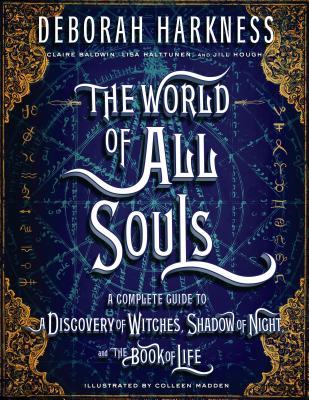
Being familiar with the details of the earlier books in the series is crucial for appreciating Time’s Convert and making sense of the complicated interconnectedness of the details and plot points. As I mentioned, the TV adaptation of the trilogy is a great shortcut — it’s not perfectly faithful to the books, but it’s close enough to provide an immersion back into that world. Another wonderful resource is The World of All Souls, a reference book (also released in 2018) that includes detailed synopses, character information, maps, and more. I kept it handy throughout this past week while reading Time’s Convert.

The next book in the series, The Black Bird Oracle, will be released in July 2024. I’ve already preordered my copy, and can’t wait to get started!

Synopsis (Goodreads):

Diana Bishop journeys to the darkest places within herself—and her family history—in the highly anticipated fifth novel of the beloved #1 New York Times bestselling All Souls series.

Deborah Harkness first introduced the world to Diana Bishop, Oxford scholar and witch, and vampire geneticist Matthew de Clairmont in A Discovery of Witches. Drawn to each other despite long-standing taboos, these two otherworldly beings found themselves at the center of a battle for a lost, enchanted manuscript known as Ashmole 782. Since then, they have fallen in love, traveled to Elizabethan England, dissolved the Covenant between the three species, and awoken the dark powers within Diana’s family line.

Now, Diana and Matthew receive a formal demand from the Congregation: They must test the magic of their seven-year-old twins, Pip and Rebecca. Concerned with their safety and desperate to avoid the same fate that led her parents to spellbind her, Diana decides to forge a different path for her family’s future and answers a message from a great-aunt she never knew existed, Gwyneth Proctor, whose invitation simply reads: It’s time you came home, Diana.

On the hallowed ground of Ravenswood, the Proctor family home, and under the tutelage of Gwyneth, a talented witch grounded in higher magic, a new era begins for Diana: a confrontation with her family’s dark past, and a reckoning for her own desire for even greater power—if she can let go, finally, of her fear of wielding it.

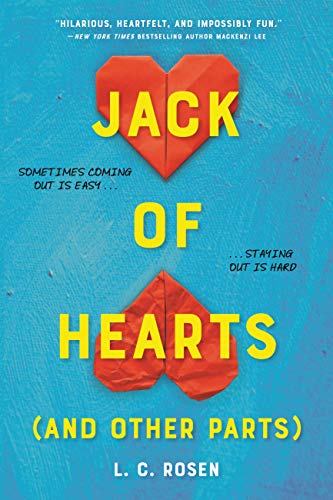
Book Review: Jack of Hearts (And Other Parts) by L. C. Rosen

Title: Jack of Hearts (And Other Parts)
Author: L. C. Rosen
Publisher: Little, Brown Books for Young Readers
Publication date: October 30, 2018
Length: 385 pages
Genre: Young adult
Source: Purchased
Rating:

Rating: 4.5 out of 5.

Riverdale meets Love, Simon in this modern, fresh, YA debut about an unapologetically queer teen working to uncover a blackmailer threatening him back into the closet.

Jack has a lot of sex–and he’s not ashamed of it. While he’s sometimes ostracized, and gossip constantly rages about his sex life, Jack always believes that “it could be worse.”

But then, the worse unexpectedly strikes: When Jack starts writing a teen sex advice column for an online site, he begins to receive creepy and threatening love letters that attempt to force Jack to curb his sexuality and personality. Now it’s up to Jack and his best friends to uncover the stalker–before their love becomes dangerous.

Ground-breaking and page-turning, Jack of Hearts (and other parts) celebrates the freedom to be oneself, especially in the face of adversity.

Jack of Hearts (And Other Parts) is a book sure to set book-banners’ hair on fire… which is just one indication that this is a book that absolutely should be available to teen readers. Yes, it’s extremely frank about sex — and I’m sure that there are plenty of teen readers who’d absolutely benefit from the novel’s fresh, positive approach.

Jack is a high school boy who loves sex, isn’t interested in a relationship (at least, not for now), believes in consent, communication, and positivity, and isn’t crazy about how much his alleged sexual antics become the fodder for school gossip. He has good friends he can count on, is happy to be out of the closet and enjoys the various boys he hooks up with, and overall, has a pretty good life.

Everything changes when he starts receiving creepy notes in his school locker, which at first seem to be secret admirer messages but quickly turn into creepy, threatening, stalker-y demands. Jack’s confidence and sense of safety are on the line, as the stalker threatens not just him, but his friends and his mother, and it seems as though the only way to protect everyone is to give into the stalker’s demands… and sacrifice his true self along the way.

Meanwhile, Jack’s best friend Jenna convinces him to write a sex advice column for her blog, and he’s soon dispensing sex and life advice that’s personal and informative — but his school principal, among others, wants him to cease and desist, and even insists that Jack’s column and personal appearance are to blame for the stalker’s fixation.

Jack of Hearts (And Other Parts) contrasts the tension and fear of the stalker plotline with the joy that otherwise defines Jack’s life. As such, it’s highly readable, entertaining, and emotional, and once I started, I didn’t want to stop until I finished.

Jack’s advice columns are explicit, in that they provide clear, detailed accounts of sexual encounters that help Jack answer questions or explain various situations. Jack’s actual sexual encounters are presented less explicitly — we see before and after, but aren’t actually in the room during. For my own reading experience — an adult reading a YA novel — I was perhaps a tad uncomfortable with that much detail about teen sex… but I’m not the target demographic for this book, so that really is irrelevant. What I think really matters is that there are probably many teens who will feel seen and heard after reading this book, and who may gain some important new pieces of information and things to consider — and to me, that makes this book an important one to keep accessible for a teen audience.

I’ll wrap up by sharing the author’s statement on attempts to ban Jack of Hearts (And Other Parts). It’s far more eloquent than anything I could say myself, and absolutely conveys why this book matters.

Save

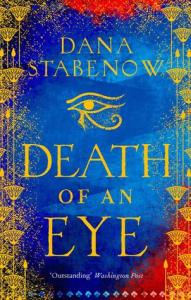
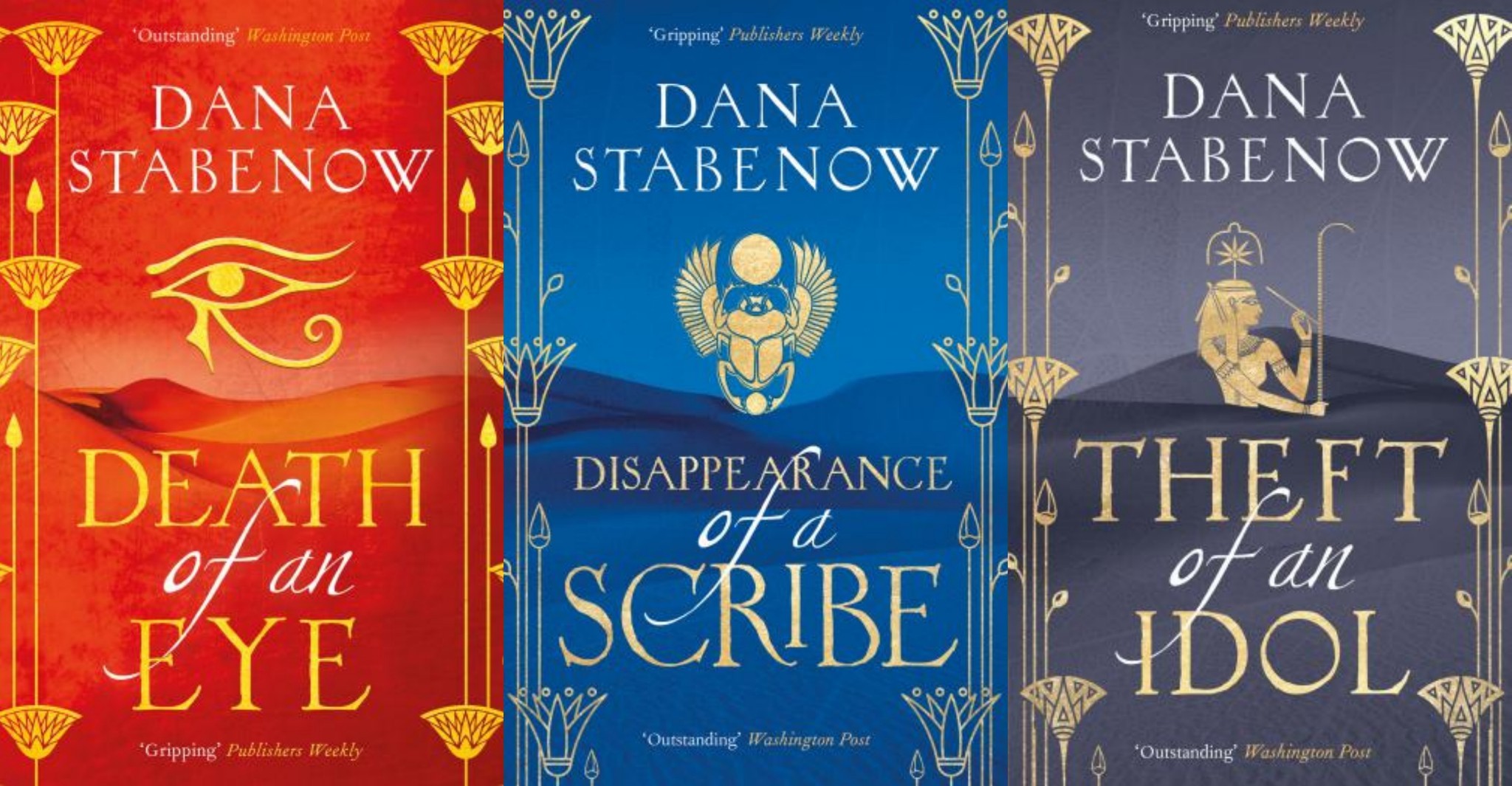
Book Review: Death of an Eye (Eye of Isis, #1) by Dana Stabenow

Title: Death of an Eye
Series: Eye of Isis, #1
Author: Dana Stabenow
Publisher: Head of Zeus
Publication date: December 6, 2018
Length: 254 pages
Genre: Historical fiction
Source: Purchased
Rating:

Rating: 4 out of 5.

ALEXANDRIA, 47 BC. For three centuries, the House of Ptolemy has governed the Kingdom of Egypt. Cleopatra – seventh of her name – rules from Alexandria, that beacon of commerce and learning that stands between the burning sands of the desert and the dark waters of the Middle Sea. But her realm is beset by ethnic rivalries, aristocratic feuds and courtly intrigues . Not only that, she must contend with the insatiable appetite of Julius Caesar who needs Egyptian grain and Egyptian gold to further his ambitions. The world is watching the young Queen, waiting for a misstep …

And now her most trusted servant – her Eye – has been murdered and a vast shipment of newly minted coin stolen. Cleopatra cannot afford for the coins to go unrecovered or the murderers unpunished, so she asks childhood friend, Tetisheri Nebenteru, to retrace the dead Eye’s footsteps. Tetisheri will find herself plunged into the shadowy heart of Alexandria . As she sifts her way through a tangle of lies and deceit, she will discover that nothing can be taken at face value, that she can’t trust anyone – not even the Queen herself .

As a devoted fan of Dana Stabenow’s Kate Shugak series, I was curious to see what her non-Kate/non-Alaska books were like. Fortunately, my book group selected Death of an Eye as our February read, which was the perfect opportunity for me to finally read a book I’ve had my eye on for quite a while.

In this historical novel, the main character is a young woman named Tetisheri, the niece and business partner of a successful merchant in Alexandria at the time of Cleopatra’s reign. Tetisheri was close to Cleopatra as a child, and when the queen finds herself in need of a trusted ally, she calls on Tetisheri.

Cleopatra’s “eye” — a person unknown to any but the queen herself, authorized by her to carry out investigations on her behalf — has been murdered while investigating a crime that could spell disaster for Cleopatra. The queen asks Tetisheri to take on the role of Eye and track down both the murderer and the solution to the earlier crime. As she does so, Tetisheri is herself subject to danger, and must also contend with the slippery politics of Alexandrian and Roman nobility.

Once I began wrapping my head around the people, places, and culture, I was quickly immersed in both the historical setting and the crime story. I really know next to nothing about this time period or the society of Alexandria, apart from film and TV depictions and classic dramas (yes, I’ve read both Caesar and Cleopatra and Antony and Cleopatra, but both were a very long time ago).

The Cleopatra we meet in Death of an Eye is not the Elizabeth Taylor version. Here, she’s a young, strong-willed, and incredibly intelligent ruler, struggling to maintain her throne despite the machinations of her co-ruler and brother Ptolemy XIV and his minions, while also pregnant with Julius Caesar’s child and making every effort to stay in his favor. Cleopatra is interested in science and logic, and cares for her people, but has very few whom she can actually trust.

Tetisheri is not a historical figure; rather, she’s a citizen of Alexandria who, as a monetarily secure merchant, has access to many levels of society, but doesn’t personally wield much power. Having survived a cruel marriage, she makes it her mission to rescue enslaved women and give them the means to start new lives. Tetisheri is smart and dedicated, and while she’s not entirely happy about her assignment from Cleopatra, she’s loyal to the queen and determined to see the investigation through.

I really enjoyed Death of an Eye. As I mentioned, it’s not a setting or period that I’m very familiar with, so there was a pretty steep learning curve at the beginning, and all the way through I found myself confusing people and place names. (Helpfully, there’s both a map and a cast of characters list at the front of the book — and I used both quite a lot). The plot is intricate but not hard to follow, and I found myself more and more interested in the mystery as the various pieces came together toward the end of the book.

While the central mystery of Death of an Eye is solved by the end, Tetisheri’s involvement with Cleopatra is by no means concluded, and her personal life — including a love interest — is left very much open-ended. Fortunately, there are two more books in the Eye of Isis series currently available, with a 4th book planned for 2025.

Books 1 – 3; currently available

Book Review: The Cabin at the End of the World by Paul Tremblay

Title: The Cabin at the End of the World
Author: Paul Tremblay
Publisher: William Morrow Paperbacks
Publication date: June 26, 2018
Length: 336 pages
Genre: Horror
Source: Purchased
Rating:

Rating: 4 out of 5.

Seven-year-old Wen and her parents, Eric and Andrew, are vacationing at a remote cabin in northern New Hampshire. Far removed from the bustle of city life, they are cut off from the urgent hum of cell phones and the internet. Their closest neighbors are more than two miles away in either direction.

On a summer day, as Wen catches grasshoppers in the front yard, a stranger unexpectedly appears. Leonard is the largest man Wen has ever seen, but he is friendly, with a warm smile that wins her over almost instantly. Leonard and Wen continue to talk and play, until three more strangers, two women and a man, all dressed like Leonard in jeans and button-down shirts, come down the road carrying strange, menacing objects.

In a panic, Wen tells Leonard that she must go back inside the cabin. But before she goes, her new friend tells her, “None of what’s going to happen is your fault. You haven’t done anything wrong, but the three of you will have to make some tough decisions. I wish with all my broken heart you didn’t have to.” As Wen sprints away to warn her parents, Leonard calls out, “Your dads won’t want to let us in, Wen. But they have to. We need your help to save the world.”

The Cabin at the End of the World is a terrifying tale of the impending apocalypse… or of a group delusion… or of evil masquerading as people with a mission. What’s actually happening here is open to interpretation, but no matter the truth, it’s scary, violent, and claustrophobic.

We open with a lovely little family — 8-year-old Wen and her dads Eric and Andrew — enjoying a peaceful country vacation. The pretty cabin they’ve rented is remote but comfortable, a landline and a large flatscreen television the only devices to connect with the outside world. All is well, until a huge stranger appears from out of the woods and talks to Wen while she’s outside.

Leonard seems kind and Wen — even though she knows she’s not supposed to talk to strangers — is oddly drawn to his open manner — until three more people begin walking up the driveway, all dressed similarly to Leonard and carrying scary-looking implements. She doesn’t know it, but by the time she runs to the house and urges her dads to lock the doors, it’s already too late. The strangers start by knocking, but it’s clear that they’re coming in, no matter what.

Even once the cabin’s haven has been invaded, Leonard’s kindness, overlaid with deep sadness, persists. He won’t hurt the family. None of them will. But Eric, Andrew, and Wen must make a choice. The apocalypse is coming, and only they can stop it… by choosing one of their own to sacrifice. Eric, Andrew, and Wen must willingly choose which of them will die, and then carry out their decision by killing their sacrifice. Otherwise, billions of people will die and the world will be left a wasteland.

Does this make sense? Of course not. Eric and Andrew fight as much as they can. But the crazy people stay, and have the family at their mercy, and they are fanatically determined to see their mission through.

Why these four people are involved, who they are, and how they ended up at this cabin in New Hampshire is revealed over time. The events they foretell seem to be backed up by the momentary glimpses of news events when they occasionally turn on the TV. But are these real, or pre-recorded programming? Is any of this really happening? Even if it were, how could this one family in any way have anything to do with the outcome?

Horror stories set in isolated cabins have a certain vibe all their own — the helplessness, the idea of a beautiful escape from the world turning into a hellish trap, the lack of resources and impossibility of rescue. Here, the elements add up to a riveting story that features bursts of terrible violence, with a psychological tension that never lets up.

The story does not provide succinct answers, and even at its end, there’s a huge amount of ambiguity about what actually happened. And while that frustrated me in some ways (because apparently I need clear answers), it also makes the book especially haunting. I haven’t been able to shake if off since reading the final pages, and keep turning it over and over in my mind.

This is my first book by this author, but I’ll certainly be seeking out more… once I recover from this one!

The Cabin at the End of the World was adapted into a movie, A Knock at the Cabin, which was released earlier in 2023. I’ve seen very mixed reviews, but plan to watch it in the next week or so. Based on the trailer, it looks terrifying.

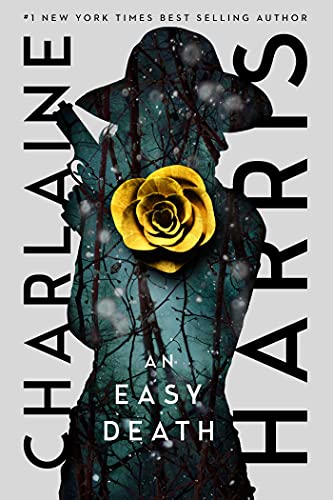
Book Review: An Easy Death (Gunnie Rose, #1) by Charlaine Harris

Title: An Easy Death
Series: Gunnie Rose, #1
Author: Charlaine Harris
Publisher: Saga Press
Publication date: October 2, 2018
Length: 306 pages
Genre: Fantasy / speculative fiction
Source: Library
Rating:

Rating: 4 out of 5.

In a fractured United States, a new world where magic is acknowledged but mistrusted, a young gunslinger named Lizbeth Rose takes a job offer from a pair of Russian wizards. Lizbeth Rose has a wildly fearsome reputation but these wizards are desperate. Searching the small border towns near Mexico, they’re trying to locate a low-level magic practitioner believed to be a direct descendant of Grigori Rasputin.

As the trio journey through an altered America—shattered into several countries after the assassination of Franklin Roosevelt and the Great Depression—they’re set on by enemies. It’s clear that a powerful force does not want them to succeed in their mission. Lizbeth Rose has never failed a client, but this job may stretch her to her deadly limits.

In this fantasy novel set in an alternate version of the United States, the US as we know it no longer exists. Instead, after the assassination of FDR prior to his inauguration, the country has split apart. What was once California is now the Holy Russian Empire, ruled by Tsar Alexei after settlement by the exiled Romanovs. The East Coast states have largely sworn allegiance back to the UK and are now Britannia, the South is Dixie, and the southern border of Canada has moved further south, now enclosing the Great Lakes territories and then some.

Meanwhile, the action of An Easy Death takes place in Texoma (our current Texas, more or less) and Mexico. It’s a lawless area, or so it would seem. There’s a very old West vibe here, jarred somewhat by the existence of trucks and cars, electricity, and even refrigerators (for those lucky enough to afford them). People like main character Lizbeth Rose earn a living as “gunnies”, hired gunslingers who provide a variety of protection services. In Gunnie Rose’s case, she works as part of a crew who specialize in helping folks cross the dangerous territory from Texoma into New America, through mostly empty lands ravaged by bandits and wild, vicious dogs.

After a job gone bad, Lizbeth is the last person left from her former crew. Shocked and in mourning, the last thing she wants is to have a couple of Russian wizards, known as grigoris, show upon her doorstep. They want to hire her to help them find a man whose blood could be key to keeping their tsar alive… but they have many enemies working against them, who almost immediately begin trying to kill them and their gunnie.

As the trio sets out into Mexico, they face trial after trial — the dangers of deserts and wild lands, plus the even greater threat posed by assassins and deadly wizards. Lizbeth is continually forced to think fast and shoot faster, all the while questioning whether her clients have told her the whole truth and wondering who the true enemy really is.

An Easy Death (which is what gunnies say to one another when heading out on a job, rather than, you know “good luck” or “see ya”) is a fast-paced adventure in a world that occasionally made my head swim, especially in the early chapters. In fact, I originally tried the audiobook, and just couldn’t wrap my head around the setting and situation. Fortunately, the print edition comes with a handy map, and that helped me settle in and start truly appreciating the story.

The world of Gunnie Rose

The world-building here is so creative. Situating a Western adventure in the mid-20th century leads to some weird moments of cognitive dissonance — and add to that the existence of magic and wizards, and well, it’s utterly odd but also utterly absorbing.

I could possibly have done with a little bit less time spent chasing or being chased through the desert, but that’s a minor quibble. As the first book in a series, An Easy Death does the heavy lifting of establishing a world, its politics and factions, and the various types of people who live in it.

Lizbeth is a terrific character, hard as nails, always heavily armed and excellent with her firepower, and with hidden depths that I think we’ll see more of as the series moves forward. As of now, there are four published works in the series, with a fifth scheduled for release in fall of 2023. I’m not quite ready to commit to the entire series just yet, but I do know that I’ll be looking for book #2 on my next library visit! I will definitely want to continue onward with the series and see where it all goes!

A Longer Fall – #2 in the Gunnie Rose series

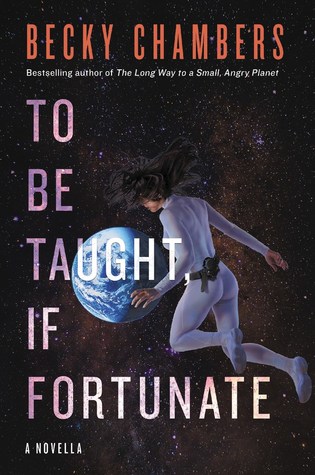
Novella review: To Be Taught, If Fortunate by Becky Chambers


Title: To Be Taught, If Fortunate
Author: Becky Chambers
Publisher: Harper Voyager
Publication date: August 8, 2019
Length: 153 pages
Genre: Science fiction
Source: Purchased
Rating:

Rating: 5 out of 5.

A stand-alone science fiction novella from the award-winning, bestselling, critically-acclaimed author of the Wayfarer series.

At the turn of the twenty-second century, scientists make a breakthrough in human spaceflight. Through a revolutionary method known as somaforming, astronauts can survive in hostile environments off Earth using synthetic biological supplementations. They can produce antifreeze in subzero temperatures, absorb radiation and convert it for food, and conveniently adjust to the pull of different gravitational forces. With the fragility of the body no longer a limiting factor, human beings are at last able to journey to neighboring exoplanets long known to harbor life.

A team of these explorers, Ariadne O’Neill and her three crewmates, are hard at work in a planetary system fifteen light-years from Sol, on a mission to ecologically survey four habitable worlds. But as Ariadne shifts through both form and time, the culture back on Earth has also been transformed. Faced with the possibility of returning to a planet that has forgotten those who have left, Ariadne begins to chronicle the story of the wonders and dangers of her mission, in the hope that someone back home might still be listening.

The title of this novella is a line from former UN Secretary General Kurt Waldheim’s message carried on the Voyager space probe in 1977:

We step out of our solar system into the universe seeking only peace and friendship — to teach, if we are called upon; to be taught, if we are fortunate.

These lines provide a beautiful summary of the theme of Becky Chambers’ deeply thoughtful novella, To Be Taught, If Fortunate. The novella tells the story of the four-person crew of the Lawki 6 mission — a team of astronauts sent on a decades-spanning mission to explore four potentially life-supporting planets located outside Earth’s solar system. The astronauts embark on their journey knowing that their friends, families, and colleagues will all be gone by the time they return to Earth some 80 years in the future — but knowledge is their holy grail, and they’re devoted to their higher purpose.

We learn about the mission through Ariadne, the mission engineer, who writes a letter back to Earth — this is the narrative we read. Ariadne describes the ship’s journey through space — the years of torpor (deep sleep/stasis in which the crew members pass the years of long transit, awakening when they reach their destinations), the glory of discovery as they set foot on each new world, and the traumatizing despair that sets in when they seem to have reached a dead end with no means of continuing the journey.

The story is full of moments of sheer joy, as the team revels in each new world and its wonders — but there’s also sorrow, as communications from Earth inexplicably stop arriving, and the crew is left to consider what, if anything, they might find upon their eventual return.

I’ve described Becky Chambers’ books as “gentle science fiction”, and I’d say the same applies here. Not gentle as in boring or uneventful, but gentle meaning focusing on the people, their emotions and relationships, their hopes and fears. There are no evil forces, no catastrophic invasions, no epic tragedies, and certainly no space battles or laser guns! This is science fiction on a human scale — it’s what the people experience, think, and feel that matters here, and that’s plenty.

We are human. We are fragile. Are we who you want out here?

The writing is lovely, and through the medium of Ariadne’s letter back to Earth, we get to know her on a deep and intimate level. What would a person feel in these circumstances, cut off from home, living in a restricted space with three other people, seeing the passage of time by the changing length of her hair and fingernails each time she emerges from torpor? This book makes the reader feel it all as well, all within just 153 pages.

To Be Taught, If Fortunate is a spare, finely-tuned portrait of humanity’s quest for knowledge and pursuit of higher purpose, as well as a moving depiction of particular people in a unique circumstance.

Don’t miss it!