My Monday tradition, including a look back and a look ahead — what I read last week, what new books came my way, and what books are keeping me busy right now. Plus a smattering of other stuff too.
Life.
It was not a good week last week…
I guess you could call it the domino effect of COVID. My husband returned from an overseas trip and was experiencing his usual jetlag… until we realized it wasn’t just jetlag. We had an emergency room visit due to COVID complications, but he’s now on the mend, thank goodness. Two days later, my son tested positive, and then over the weekend, it was my turn.
Amazingly, neither my son nor I had had COVID before — but admittedly, we were pretty lax about wearing masks and keeping our distance around the house.
In any case, after a miserable few days, we’re all bouncing back. On the plus side, my head has cleared enough for me to be able to start reading again!

What did I read during the last week?
The Serpent in Heaven (Gunnie Rose, #4) by Charlaine Harris: Such a great series! My review is here.
Queen Charlotte by Julia Quinn & Shonda Rhimes: A lovely read. My review is here.
The Fire Never Goes Out by Noelle Stevenson: A memoir in graphic novel format, by the author of Nimona. I enjoyed it.
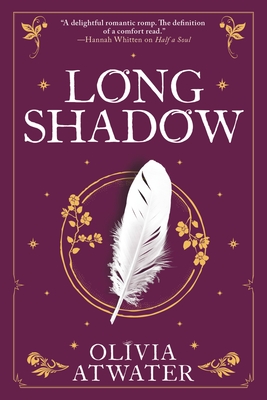
Half a Soul (Regency Faerie Tales, #1) by Olivia Atwater: Really enjoyable tale with unusual characters. My review is here.
One Summer in Savannah by Terah Shelton Harris: Review to follow.
And… one DNF:
Camp Zero by Michelle Min Sterling: I quit at 20%. Grim and confusing — and when I realized I just didn’t care enough to keep going, I felt relieved to put it down.
Pop culture & TV:
Due to the craziness of this week, I did very little streaming of any sort — but prior to all that, I finally got around to watching Downton Abbey: A New Era. Meh. It was basically a family reunion in search of a plot. Nice to see all the familiar faces again, but that’s about it.
Fresh Catch:
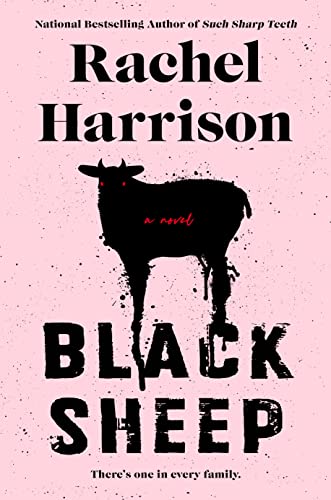
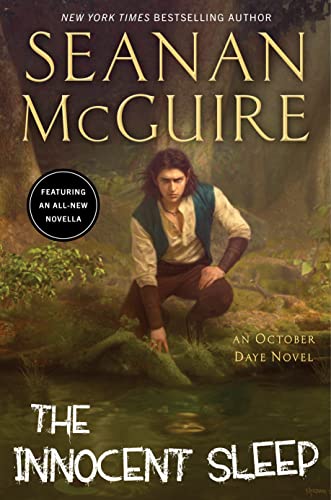
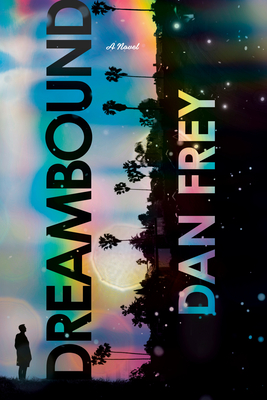
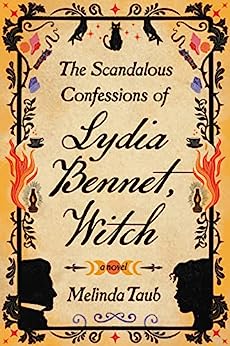
No new physical books this week, but I did pick up a few books from my wishlist thanks to Kindle deals:
Puzzle of the week:
This one was a lot trickier than I expected… although I worked on it while I had COVID, so that’s maybe a factor…
What will I be reading during the coming week?
Currently in my hands:
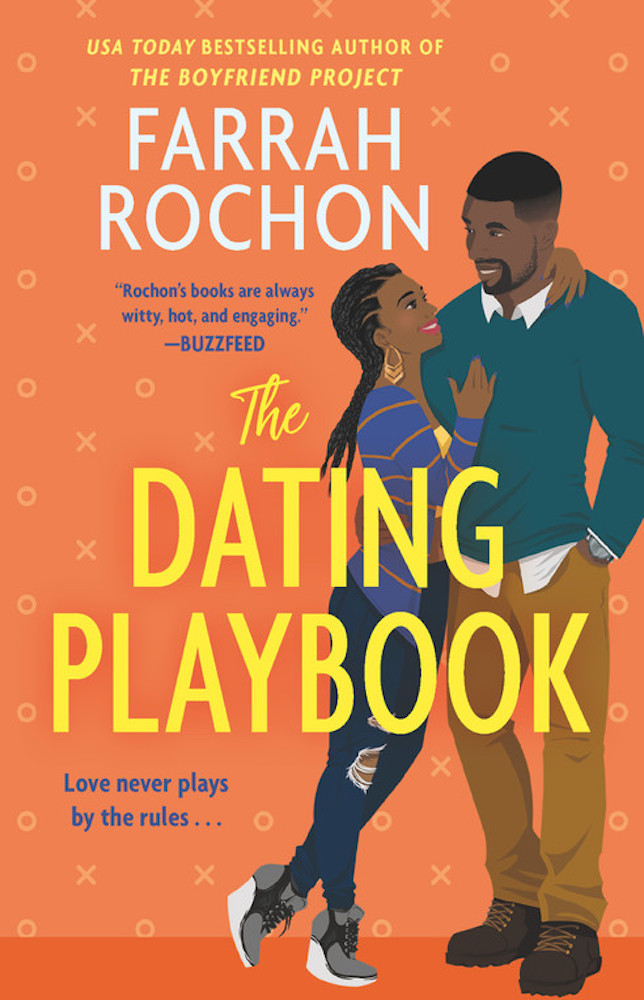
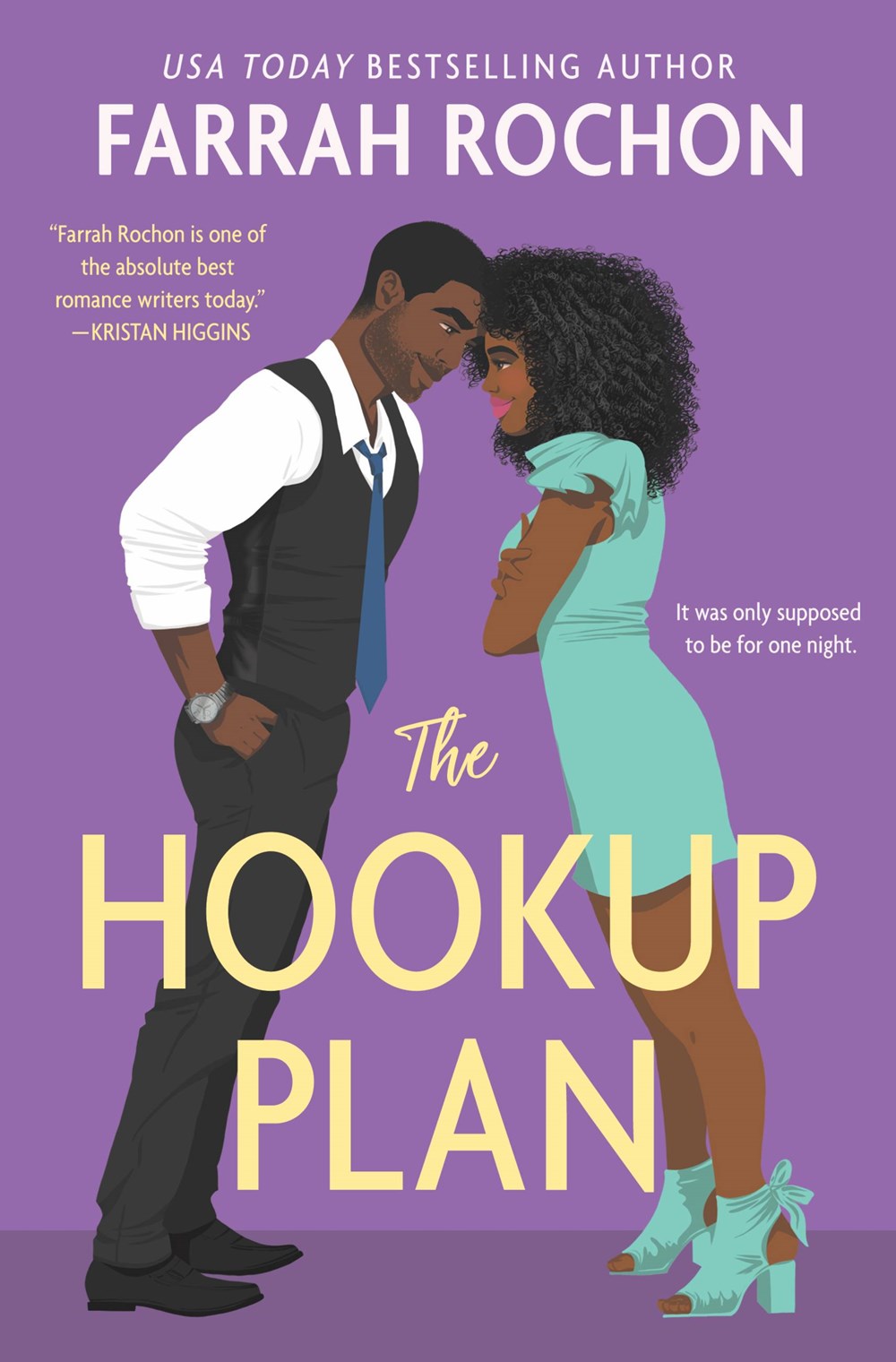
The Boyfriend Project by Farrah Rochon: I really needed something upbeat this week, and this seems to be a great choice.
Now playing via audiobook:
The Mostly True Story of Tanner & Louise by Colleen Oakley: I got through about 75% of this audiobook before I got sick, and haven’t gotten back to it yet. I’ve been loving it so far! Looking forward to finishing up in the next few days.
Ongoing reads:
My longer-term reading commitments:
Until our next group classic read starts, I’m down to just one ongoing book at the moment:
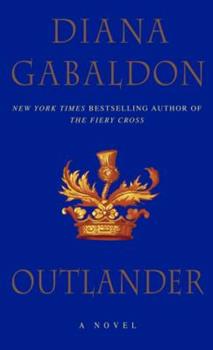
Go Tell the Bees That I Am Gone by Diana Gabaldon: Over at Outlander Book Club, we’re doing a group read of BEES, reading and discussing two chapters per week. Coming up this week: Chapters 132 and 133 (of 155).
Title: Half a Soul Series: Regency Faerie Tales #1 Author: Olivia Atwater Publisher: Orbit Publication date: March 29, 2020 Length: 304 pages Genre: Fantasy Source: Purchased
⭐⭐⭐⭐
Rating: 3.5 out of 5.
It’s difficult to find a husband in Regency England when you’re a young lady with only half a soul.
Ever since she was cursed by a faerie, Theodora Ettings has had no sense of fear or embarrassment – a condition which makes her prone to accidental scandal. Dora hopes to be a quiet, sensible wallflower during the London Season – but when the strange, handsome and utterly uncouth Lord Sorcier discovers her condition, she is instead drawn into dangerous and peculiar faerie affairs.
If Dora’s reputation can survive both her curse and her sudden connection with the least-liked man in all of high society, then she may yet reclaim her normal place in the world. . . but the longer Dora spends with Elias Wilder, the more she begins to suspect that one may indeed fall in love, even with only half a soul.
Bridgerton meets Howl’s Moving Castle in this enchanting historical fantasy, where the only thing more meddlesome than faeries is a marriage-minded mother.
Pick up HALF A SOUL, and be stolen away into Olivia Atwater’s charming, magical version of Regency England!
Half a Soul is a fun, light-hearted romantic caper set in Regency England — and yet, there’s a darker element that’s unusual for this type of book, and it makes it very much worth checking out.
Dora is captured by a Lord of Faerie as a young child, and loses half her soul to him — only saved from losing her entire soul by the intervention of her devoted cousin Vanessa. But from that point onward, Dora experiences all emotions on a very low setting. She’s aware of feeling warmth toward her cousin, aware of things that seem wrong or might bother her, but it’s all very distant.
As a result, Dora has a hard time following society’s rules — she has no in-built filter to make her feel uncomfortable when she steps out of line (which is often).
After the Napoleonic War, England’s head magician, known as the Lord Sorcier, is both a hero and an object of scorn. High society is forced to accept him, but they neither like nor trust him. Still, he may be the only person who has a shot at restoring to Dora what was lost — but as their paths cross, their focus instead turns to the wretched conditions in London’s workhouses and an insidious, seemingly incurable plague that strikes the poorest of children.
The plot of Half a Soul is interesting and offers new twists on tales of enchantment and the dangers of being stolen away to the world of Faerie. Dora and Elias (the Lord Sorcier) have a strong connection, and I enjoyed seeing them work together to solve problems, right wrongs, and reclaim Dora’s missing soul.
The supporting characters are quite enjoyable too, and I appreciated how Dora and Elias are united in their commitment to force their friends and relatives to see the underlying ugliness and imbalances of their world and take action to help.
Half a Soul is a quick, light read, with entertaining plot twists and interesting approaches to the conflict between the human and Faerie worlds. As a bonus, the book also includes a novella, Lord Sorcier, that provides a prequel look at Elias’s backstory — it’s very good and sheds new light on on how Elias became who he is in Half a Soul.
Half a Soul is the first in a loosely-connected trilogy (Regency Faerie Tales), and I’m looking forward to reading more!
Title: Queen Charlotte Authors: Julia Quinn & Shonda Rhimes Publisher: Avon Publication date: May 9, 2023 Length: 352 pages Genre: Historical fiction Source: Purchased Rating:
⭐⭐⭐⭐⭐
Rating: 4.5 out of 5.
From #1 New York Times bestselling author Julia Quinn and television pioneer Shonda Rhimes comes a powerful and romantic novel of Bridgerton’s Queen Charlotte and King George III’s great love story and how it sparked a societal shift, inspired by the original series Queen Charlotte: A Bridgerton Story, created by Shondaland for Netflix.
“We are one crown. His weight is mine, and mine is his…”
In 1761, on a sunny day in September, a King and Queen met for the very first time. They were married within hours.
Born a German Princess, Charlotte of Mecklenburg-Strelitz was beautiful, headstrong, and fiercely intelligent… not precisely the attributes the British Court had been seeking in a spouse for the young King George III. But her fire and independence were exactly what she needed, because George had secrets… secrets with the potential to shake the very foundations of the monarchy.
Thrust into her new role as a royal, Charlotte must learn to navigate the intricate politics of the court… all the while guarding her heart, because she is falling in love with the King, even as he pushes her away. Above all she must learn to rule, and to understand that she has been given the power to remake society. She must fight—for herself, for her husband, and for all her new subjects who look to her for guidance and grace. For she will never be just Charlotte again. She must instead fulfill her destiny… as Queen.
Fans of the Bridgerton series will absolutely want to grab a copy of this prequel, which focuses on the early love story of Queen Charlotte and King George III.
As a preface by none other than Lady Whistledown herself makes clear, this isn’t meant to be a history lesson… so go into this romantic, often heartbreaking and just as often uplifting story with an open mind, and accept that this book is not attempting to stick to the historical facts.
First, the context: Queen Charlotte (the Netflix series) has already aired, so I would guess that most people reading the novel have already watched the series and have the basics of the story firmly in mind. Yes, the book was written by Julia Quinn based on the scripts written by Shonda Rhimes — and yet, it’s a fully developed novel with fresh perspectives and points of view, not just a rehash of what we’ve already seen on the screen.
In the novel, Queen Charlotte’s story is told through four shifting points of view: We get chapters from the perspectives of Charlotte, George, Agatha (Lady Danbury), and Brimsley, Charlotte’s faithful servant. Through their thoughts and voices, the story opens up in ways not possible on the screen, and getting scenes from these shifting perspectives offers insights that might not otherwise have been apparent.
Interestingly, the novel sticks with Shonda Rhimes’s vision of the ton as shown in the Bridgerton TV series — a thoroughly integrated society including all races. This is decidedly not the case in Julia Quinn’s original Bridgerton books, but in Queen Charlotte (the novel), we’re sticking with Shonda’s version. Here, we get the origin story — Queen Charlotte has brown skin and is of African descent, which is most shocking to Princess Augusta, mother of the King.
What to do? Look foolish and admit that she wasn’t aware of this when the bargain for the marriage was struck? Or, make it look intentional by launching “the Great Experiment” — essentially, claim that it was the Crown’s intention to integrate society all along, and marrying Charlotte to the King is an important first step in achieving this goal. Hastily, on the day of the royal wedding, upper class black members of the London world (but not the ton) are elevated to nobility. How can anyone doubt the Crown’s intentions, when there are so many new Lords and Ladies as proof?
The true heart of the story is the romance between Charlotte and George. While meeting only on their wedding day, they find connection and chemistry and seemed poised for true happiness — until George pushes Charlotte firmly away with no explanation, insisting that they live separately.
I won’t go into further plot details — the “madness” of King George III is well known as historical fact (although a specific diagnosis has never been completely established). George’s mental illness is the central tragedy of this story, driving a sharp wedge between him and Charlotte even as she struggles to understand. Their love proves to be unshakable even in the face of this unconquerable barrier. The book captures all the powerful romance of the TV version, and it’s lovely.
I loved getting to know Brimsley more through his chapters, and Agatha Danbury is just as wonderful here as expected. Some elements of the TV version are omitted, most notably the friendships and interactions between the women characters later in life; Violet Bridgerton is completely absent, and the related storyline involving Agatha is omitted as well. That’s fine, though — the book is still strong and full of emotion, and doesn’t feel like it’s missing anything.
Having finished the book within 24 hours of starting it (I dare you to put it down once you start!), I’m really pining for more time with these characters… and have a feeling I’ll be doing a rewatch of the TV version before two long.
Meanwhile, for all the Bridgerton fans, Queen Charlotte is a must-read!
Title: The Serpent in Heaven Series: Gunnie Rose, #4 Author: Charlaine Harris Publisher: Saga Press Publication date: November 15, 2022 Length: 304 pages Genre: Fantasy / speculative fiction Source: Library Rating:
⭐⭐⭐⭐
Rating: 4 out of 5.
#1 New York Times and USA TODAY bestselling author Charlaine Harris returns to her alternate history of the United States where magic is an acknowledged but despised power in this fourth installment of the Gunnie Rose series.
Felicia, Lizbeth Rose’s half-sister and a student at the Grigori Rasputin school in San Diego—capital of the Holy Russian Empire—is caught between her own secrets and powerful family struggles. As a granddaughter of Rasputin, she provides an essential service to the hemophiliac Tsar Alexei, providing him the blood transfusions that keep him alive. Felicia is treated like a nonentity at the bedside of the tsar, and at the school she’s seen as a charity case with no magical ability. But when Felicia is snatched outside the school, the facts of her heritage begin to surface. Felicia turns out to be far more than the Russian-Mexican Lizbeth rescued. As Felicia’s history unravels and her true abilities become known, she becomes under attack from all directions. Only her courage will keep her alive.
Ah, I love this series, and book #4 is a great addition to the ongoing story! Because I’ve basically read them all in a row, I didn’t bother reading the synopsis before starting The Serpent in Heaven… and was very startled to realize that we’d shifted main character and point of view!
In the first three books in the Gunnie Rose series, all events have been narrated by (and centered around)… well… Gunnie Rose herself. Lizbeth Rose, a sharpshooter/gunslinger from the nation of Texoma, whose skill with guns keeps her and her crew safe and protected, has been the focal point of the series, even as we meet her network of friends, allies, and (in book #1) her previously unknown half-sister Felicia.
The 3rd book ends with Lizbeth happily married and relatively safe with her beloved Eli back in Texoma, after a dangerous rescue mission in the Holy Russian Empire (our California and Oregon), so I suppose it shouldn’t have been a complete surprise to see the focus shift elsewhere. Let Lizbeth have a little downtime!
In this 4th book, Lizbeth’s younger sister Felicia takes center stage. Felicia has always been something of a question mark. When we first meet her, she appears to be about age 10 or 11, raised in poverty in Ciudad Juarez, Mexico by an unreliable father — a Russian grigori (magician) barely getting by, with a very shady past, who also happens to be Lizbeth’s father. When Lizbeth discovers Felicia, she’s on her own and unprotected, and Lizbeth decides to see her safely sheltered in San Diego, where she can get an education at the grigori school… and also fulfill her destiny as a blood donor for the ailing Tsar.
What’s been hinted at, but finally becomes clear here, is that Felicia has a store of great magical power herself, and that she’s also quite a few years older than she appeared to be. With her father’s influence now gone, the anti-aging spells he’d placed on her have dissipated, and Felicia has quickly grown into the size and appearance of her true age, fifteen.
Felicia also becomes the subject of a botched kidnapping plot, and soon learns that her mother was the descendant of a powerful magical family in Mexico, who now want Felicia back. What follows is a dangerous scheme to gain control of Felicia, involving raids on the school and other types of interference and infiltration. Meanwhile, the school and the city are ravaged by the Spanish influenza, and Felicia finds herself needing to draw on her strange new powers in order to survive and protect the people she cares about.
As the story unfolds, Felicia really blossoms as a lead character, and her alliance with the older, powerful grigori Felix as well as her puppy-love first romance with Peter give her interesting characters to bounce off of (and get into trouble with). The involvement of her maternal family adds a huge element of threat and conspiracy, and the action is quite good and unrelenting.
While the main plot threads are mostly tied up by the end of the book, there are many open questions still to be resolved. I really enjoyed Felicia as the main character, although I missed spending time with Lizbeth and Eli and can’t wait to see them back in action.
The series continues with book #5, All the Dead Shall Weep, to be published in September. At this point, I’m totally invested and can’t wait for more (so I may need to read the ARC for #5 early, rather than waiting until the publication date is a little closer).
I’m so glad I was introduced to this terrific series thanks to my book group. Highly recommended!
Up next:All the Dead Shall Weep – #5 in the Gunnie Rose series
Top Ten Tuesday is a meme hosted by That Artsy Reader Girl, featuring a different top 10 theme each week. This week’s topic is Things That Make Me Instantly NOT Want to Read a Book (what are your immediate turn-offs or dealbreakers when it comes to books?). I read pretty broadly, so it’s hard to come up with absolute dealbreakers — but there are some genres, covers, and other elements that tend to be big NOs for me.
My top 10:
This kind of cover:
Book covers with shirtless men are SO unappealing to me (and how hilarious is it that there are websites that provide templates exactly for this purpose?)
2. Overly dramatic historical romances: I do enjoy Regency fiction, so no disrespect, but in general, Regency or other historical romances that are serious (as opposed to humorous or spoofy) rarely appeal to me. So… the book on the left might be a maybe for me, but the book on the right would not. (Of course, there are exceptions, such as the fact that I gobbled up the entire Bridgerton series…)
3. Gimmicky comparisons — if the blurb says that a book is the next Harry Potter or Hunger Games, chance are (a) I won’t believe it and (b) I won’t read it.
4. Literary fiction: Not a hard and fast rule, but I’ve learned over the years that the big award winners tend not to be my kind of books.
5. Spies and/or military action. No tanks or submarines for me, thanks (although I had a brief Tom Clancy phase many, many years ago).
6. Crime/thriller/domestic thriller genres: There are exceptions, but overall, I’m just not into it. No interest in murders, blackmail, cheating spouses, corporate drama, nannies with secret identities…
7. Movie tie-in covers: This isn’t a deal-breaker… but movie tie-in covers are a big turnoff for me, and I won’t pick them up unless I really and truly want the book and there are no other options.
YupNope
8. Lack of worldbuilding: This applies especially to science fiction or fantasy, but if the world-building or basic scene-setting isn’t strong enough, I’m not going to stick with the book (or I’ll finish, but I’ll be mad about it.)
9. Sequels that come out so many years after the first/previous book that I’ve stopped caring. (Pretty self-explanatory, right?)
10. Plotlines about social media influencers: This is a minor issue and easy enough to avoid, but if I pick up a book to consider and see a character described as an influencer, I put it down in a hurry. Nope, nope, nope.
That’s all I can think of! It was hard to get to 10… I guess there really isn’t all that much I’d consider an absolute dealbreaker when it comes to picking up a book.
How about you? What instantly makes you not want a book?
My Monday tradition, including a look back and a look ahead — what I read last week, what new books came my way, and what books are keeping me busy right now. Plus a smattering of other stuff too.
Life.
After two weeks of solitude, people are back at my house! It’s nice to hear other people bustling around once again. (Of course, I did do quite a bit of reading and TV watching while I had the house to myself, but I still prefer it when my family is home.)
What did I read during the last week?
The Woman Beyond the Sea by Sarit Yishai-Levi: A novel about family secrets and trauma that carry down through three generations. My review is here.
The Russian Cage (Gunnie Rose, #3) by Charlaine Harris: I’m loving this series! My review is here.
Citizen of the Galaxy by Robert A. Heinlein: My books group’s pick for May. I really enjoyed this classic sci-fi adventure! My review is here.
Pop culture & TV:
I went out to another movie! This time, I saw Guardians of the Galaxy, vol. 3 — and found myself pretty unengaged most of the time. The novelty has worn off, I guess, and the movie seemed to drag on forever. Maybe I’m just done with Marvel at this point?
For streaming this week, I watching XO Kitty on Netflix, which was quick, light, and cute. It’s the story of the little sister from To All the Boys I’ve Loved Before, now a high school junior who impetuously decides to study abroad in Korea for the year (mainly so she can be with her long-distance boyfriend). It was very entertaining, and it actually went in some directions that I didn’t anticipate!
Also this week, I watched the Survivor (season 44) finale, and definitely had thoughts. You can check out my reaction, here.
Fresh Catch:
I bought used copies of my book group’s next two classic reads:
We’ll be starting Cold Comfort Farm in June, and will likely start Daniel Deronda sometime in early fall.
Puzzle of the week:
I’m back on a roll with doing puzzles! This was a fun, bright 1,000-piece puzzle from Eeboo — and I jammed through it about a day.
What will I be reading during the coming week?
Currently in my hands:
Queen Charlotte by Julia Quinn and Shonda Rhimes: I’m so excited to start this book!
Now playing via audiobook:
The Serpent in Heaven (Gunnie Rose, #4) by Charlaine Harris: How could I resist? After this book, I’ll be caught up with the series until the new book comes out in the fall.
Ongoing reads:
My longer-term reading commitments:
Until our next group classic read starts, I’m down to just one ongoing book at the moment:
Go Tell the Bees That I Am Gone by Diana Gabaldon: Over at Outlander Book Club, we’re doing a group read of BEES, reading and discussing two chapters per week. Coming up this week: Chapters 130 and 131 (of 155).
Title: Citizen of the Galaxy Author: Robert A. Heinlein Publication date: 1957 Length: 282 pages Genre: Science fiction Source: Purchased
⭐⭐⭐⭐
Rating: 4 out of 5.
In a distant galaxy, the atrocity of slavery was alive and well, and young Thorby was just another orphaned boy sold at auction. But his new owner, Baslim, is not the disabled beggar he appears to be: adopting Thorby as his son, he fights relentlessly as an abolitionist spy. When the authorities close in on Baslim, Thorby must ride with the Free Traders — a league of merchant princes — throughout the many worlds of a hostile galaxy, finding the courage to live by his wits and fight his way from society’s lowest rung. But Thorby’s destiny will be forever changed when he discovers the truth about his own identity…
What a treat to “discover” a classic sci-fi that I might have missed if not for my book group. This was an unusual choice for us, but we do like to mix things up on occasion, and I’m so glad Citizen of the Galaxy made this year’s list!
Citizen of the Galaxy is the story of Thorby, a boy captured and enslaved at such a young age that he has no memory of anything else. Alone, mistreated, and hopeless, he’s sold at auction to a beggar named Baslim the Cripple, who is not at all what he seems. Baslim raises Thorby with love, morality, and an education. Upon Baslim’s death, teenaged Thorby must escape from the repressive planet they lived on and find his own way, assisted by subliminal messages implanted in his mind by Baslim. From there, Thorby’s adventures take him to a family of Free Traders, a military ship, and finally back to Terra, where he discovers his true origins once and for all.
This is a fast-paced book, and Thorby is a sympathetic, likable main character. His adventures take us into unusually structured societies which are fascinating to read about. Ultimately, as he reclaims his heritage on Terra and assumes adult responsibilities, he realizes that freedom isn’t about running off to follow his heart’s desire, but taking on the job he knows he needs to do in order to fix at least some of his family’s wrong-doings.
I had a great time reading Citizen of the Galaxy, although the final sections bog down a bit in untangling corporate schemes and dealing with the legal system. Still, this is a top-notch science fiction from an earlier era of sci-fi writing, and I appreciate the messages and themes tucked in amidst the fun and action.
It’s been ages since I’ve read any Heinlein, and Citizen of the Galaxy has sparked my interest in reading more.
Are you a Heinlein fan? Any favorites to recommend?
Another season of Survivor has come and gone — and color me surprised, but this was a good one! While I felt fairly unenthused during the early episodes, by the back half of the season, I was all in.
Mainly, I think this is due to particularly good casting this time around. While the players eliminated in the first half have already completely been erased from my memory, the players who made the merge and beyond were, for the most part, interesting, entertaining, and full of surprises.
For the most part… there were still a few in there who made zero impression, but overall — great job, casting team!
Survivor has been around a LONG time by now, and while the show continues to add new twists, some basics remain. There are challenges, there are alliances, there are players making overly orgasmic sounds when Jeff mentions food…
Fortunately, some of the most annoying gimmicks from past seasons were not included this time around — fire tokens, redemption island, the prisoner’s dilemma option. One fun new element this season was the appearance of locked bird cages with advantages inside — seeing the players frantically try to find keys, figure out their options, and either conceal or reveal their advantages was goofy and silly entertainment.
By the end, there was a core trio who worked their way from underdog status, outnumbered by members of other tribes, to running the game, and I loved them. Carolyn, Carson, and Yam Yam were delightful — solid alliance, really interesting and quirky people, and great game play.
Unfortunately, Carson lost the fire challenge, making him the final jury member rather than earning a seat in the final three. I would have loved to see these three (#TikaStrong #ThreeStooges) battling it out at final tribal, but sadly that was not to be. Instead, a player who I never particularly noticed, Heidi, ended up at the final, and the win went to Yam Yam.
I was mostly okay with the end results. I was a Carolyn fan all the way, and can’t believe she didn’t get a single vote. I liked Yam Yam, and had he not been up against Carolyn, I would have been excited for his win. I can’t quite figure out what the the jury was thinking, except maybe they didn’t see the amount of strategy Carolyn was applying day by day. The TV edit made it clear that behind her outbursts and kookiness, Carolyn was super smart and was on top of every element of the game, but who knows? Maybe the jury just didn’t get that from the tribal council sessions.
My main complaint about the current Survivor format remains the fire challenge — once it’s down to four players, the person who wins the final immunity challenge picks one person to make it to the final three, and the remaining two have to compete to see who makes fire faster. And that’s just a dumb way to have people get to the end.
In this season, Heidi won the last immunity challenge, and made the decision to give up immunity and build fire against Carson, giving Carolyn and Yam Yam seats in the final three. Heidi did this, apparently, to build her Survivor “resume” and show the jury what a great competitor she was. A couple of problems with this: She played a really lackluster game throughout — I never particularly paid attention to her, or noticed anything special about her strategy. She also chose Carson to go up against in fire building, and it was clear that all four of the remaining players knew he was weakest at fire.
So yes, you could call it a risk to give up immunity and do the fire challenge, except I’m sure she realized that Carson wouldn’t have much of a chance. If you want to really go big, battle Carolyn or Yam Yam!
As expected, Heidi won the fire challenge, and then was declared to have set a record for making the fastest fire in Survivor history. But… who cares? She kept bragging about it at the final tribal, but how does that matter? It’s one fire. What about the rest of the season?
Fortunately, the jury ultimately wasn’t impressed enough to vote for her (except for Danny, who was her closest ally all along), and the win went to Yam Yam. He’s terrific, and like I said, I’d be happy for him in any other season.
The winner of Survivor 44
Funny, all of my real life friends who watch Survivor were Team Carolyn all the way to the end, and we all were shocked at the outcome. I hope they bring her and Carson back for future seasons. Justice for Carolyn!
See the bottom of this post for more Carolyn love and some great news!
Re Carson, I loved his enthusiasm, his nerdy dedication to the game, and how much he blossomed playing the show. This is the engineering student who 3D-printed past Survivor puzzles at home prior to playing, so he killed it every single time he had a puzzle to do. Good for Carson — he was smart to give himself every possible advantage — but I hope Survivor now retires all past puzzles and starts fresh!
My #1 plea to Survivor production: Get rid of the fire challenge! It’s been done to death at this point, and is such an unsatisfactory way to determine who gets to the final. I’ve talked about this before, so I’ll just copy and paste my earlier thoughts on this here:
There’s got to be a way that’s better than a fire-making challenge for determining the final three. Maybe when it’s down to four, you have one person win immunity, then let the remaining three battle it out for the next two spots? Otherwise, the one who wins that particular immunity challenge gets an outsized amount of power.
I hate seeing weak players at final tribal, with great players voted out (or eliminated by fire) in the 4th or 5th position. I get it — you want to win, so you try to make sure you’re sitting next to someone you can beat. But wouldn’t it be cool to have three amazing players at the end, each with a really strong argument to pitch to the jury?
The fire challenge has to go. The tribes make fire at camp every single day. So making one fire on one day, faster than your competitor, doesn’t make you more deserving of the Survivor prize. It just means you got lucky that particular day.
If I wanted to dwell on a #2 complaint (which has nothing to do with gameplay), I’d say ditch the immediate reading of votes and the afterparty. Granted, it must suck to be a player and have to wait a year for the reunion show and reading of the votes, as they used to handle this pre-pandemic. Still, how can the finalists — especially the two who didn’t end up winning — get into the mood of the party when they literally JUST found out they lost, and they’re still sitting there unwashed and tired after 26 days? Let them at least take showers and put on clean clothes first!
Anyway…
All in all, a fun season to watch. Jeff Probst’s hosting remains terrific — I love his play-by-play narration of the challenges and the way he handles tribal council. The emergencies early on added some drama, and overall strong casting made this group really entertaining to watch week after week.
I still intend (at some point) to go back and watch one or two earlier seasons that I missed. Meanwhile, I’ll look forward to whatever fresh twists show up in season 45 this fall!
And now, back to the person I truly thought deserved to win this season…
Here’s a quick scene that shows just a little of Carolyn’s personality and quirkiness:
On the #JusticeforCarolyn front, it was welcome news to hear she’d received the Sia Award! (Sia is a huge Survivor fan, and awards money to her favorite player each season). This time around, Sia gave three awards — the biggie went to Carolyn ($100,000), with two smaller awards to Carson and Lauren ($15,000 each). Great choices, no question. Here’s Carolyn’s reaction to the news, being (as always) very Carolyn about the whole thing:
Despite some unevenness early on, this ended up being one of the best Survivor seasons in recent years. As I mentioned, many of the folks voted off in early episodes are completely gone from my memory, but the second half of the season more than made up for an earlier duds.
The next season airs in September. As always, I feel pretty skeptical when I watch the trailer for the upcoming season — these always feel kind of samey. But, after the fun of season 44, I’m willing to remain open-minded and hope the casting pays off once again.
Title: The Russian Cage Series: Gunnie Rose, #3 Author: Charlaine Harris Publisher: Saga Press Publication date: February 23, 2021 Length: 304 pages Genre: Fantasy / speculative fiction Source: Library Rating:
⭐⭐⭐⭐⭐
Rating: 4.5 out of 5.
#1 New York Times and USA TODAY bestselling author Charlaine Harris is at her best in this alternate history of the United States where magic is an acknowledged but despised power in this third installment of the Gunnie Rose series.
Picking up right where A Longer Fall left off, this thrilling third installment follows Lizbeth Rose as she takes on one of her most dangerous missions rescuing her estranged partner, Prince Eli, from the Holy Russian Empire. Once in San Diego, Lizbeth is going to have to rely upon her sister Felicia, and her growing Grigori powers to navigate her way through this strange new world of royalty and deception in order to get Eli freed from jail where he’s being held for murder.
Russian Cage continues to ramp up the momentum with more of everything Harris’ readers adore her for with romance, intrigue, and a deep dive into the mysterious Holy Russian Empire.
Call me hooked. I read An Easy Death, the first book in Charlaine Harris’s Gunnie Rose series, just a few months ago when my book group chose it for our January book of the month. Since then, I’ve been dying for more, and this month finished book #2 (A Longer Fall) and now, #3 (The Russian Cage).
For those not familiar with the series, the Gunnie Rose books take place in an alternate history in which the United States no longer exists, having broken up into a handful of separate countries in the early 1930s or thereabouts. Main character Lizbeth Rose is a gunslinger (a profession known as “gunnies”), a sharpshooter who works for hire protecting people or cargos, and using her wicked aim with a Colt when needed to carry out her job. At age 20, she’s wise and skilled beyond her years, and has had more than her share of adventures.
Lizbeth lives in the country of Texoma (the lands formerly known as Texas and Oklahoma), and her life has a distinctly Wild West feel to them. Her adventures in the past two books left her entangled with Russian magicians — grigoris — and here in The Russian Cage, the entanglement continues.
Our California and Oregon, in the world of Gunnie Rose, are the Holy Russian Empire, ruled by the Tsar and filled with an odd mix of Russian refugee descendants and former Americans. The HRE is the home base of most powerful grigoris — and Eli, the man Lizbeth loves, just happens to be one of these.
As The Russian Cage opens, Lizbeth receives word that Eli is in danger. He’s been arrested and imprisoned, but no one in his family seems to know why. Lizbeth is determined to do whatever it takes to set Eli free, and travels to San Diego, the HRE capitol, to carry out her dangerous plan.
Once there, she quickly becomes involved in unraveling the political forces at play, protecting Eli’s family, and ingratiating herself with the Tsar and Tsarina, among other crazy events. Lizbeth is determined to not just save Eli, but to ensure the safety of his entire family, and she’s willing to do whatever it takes to achieve her goals.
The action in The Russian Cage is exciting and fast-paced, and I loved the mix of personal connections and perilous escapades that make up the bulk of the story. Lizbeth and Eli continue to have amazing chemistry, and their love story is the true payoff for this action/adventure story.
At this point, I absolutely have to continue! As soon as book #4 is available from my library — tomorrow, perhaps? — I’ll be diving in. I love the world Charlaine Harris has created in these books, and I adore the characters.
Up next:The Serpent in Heaven – #4 in the Gunnie Rose series
Title: The Woman Beyond the Sea Author: Sarit Yishai-Levi Translated by: Gilah Kahn-Hoffmann Publisher: Amazon Crossing Publication date: March 21, 2023 (originally published in Hebrew in 2019) Print length: 413 pages Genre: Historical fiction Source: Purchased
⭐⭐⭐⭐
Rating: 3.5 out of 5.
A mesmerizing novel about three generations of women who have lost each other—and the quest to weave them back into a family.
An immersive historical tale spanning the life stories of three women, The Woman Beyond the Sea traces the paths of a daughter, mother, and grandmother who lead entirely separate lives, until finally their stories and their hearts are joined together.
Eliya thinks that she’s finally found true love and passion with her charismatic and demanding husband, an aspiring novelist—until he ends their relationship in a Paris café, spurring her suicide attempt. Seeking to heal herself, Eliya is compelled to piece together the jagged shards of her life and history.
Eliya’s heart-wrenching journey leads her to a profound and unexpected love, renewed family ties, and a reconciliation with her orphaned mother, Lily. Together, the two women embark on a quest to discover the truth about themselves and Lily’s own origins…and the unknown woman who set their stories in motion one Christmas Eve.
Content warning: Suicide, rape, childhood neglect and abandonment
Sarit Yishai-Levi is the author of The Beauty Queen of Jerusalem, an immersive novel about a Sephardic family in 20th century Israel, which has been adapted into an addictive Netflix series (and just when are we getting season 3???).
In her new novel, The Woman Beyond the Sea, we open in the 1970s with Eliya, a woman in her mid-20s who has been used and then dumped by her self-centered husband. Eliya completely falls apart, and her parents Shaul and Lily are at a loss about how to help her.
Lily herself is a strange and troubled woman. Abandoned at a convent as a newborn, she was raised by nuns with no knowledge of her past, no family and no connections. After running away from the convent as a teen, she bounces from one temporary living arrangement to another until she finally meets Shaul, a man who adores her and offers her a future that she never thought she’d have. But Lily, raised without love or family, doesn’t know how to trust or give love, and after experiencing a particularly harsh tragedy, is unable to raise Eliya with a mother’s love.
The cycle of strangled feelings and alienation continue until Eliya is able, after enduring her own psychological crises, to bridge the distance between herself and her mother. After great struggle, Eliya and Lily finally join together to understand Lily’s past and to search for the answers that have always been missing.
The Woman Beyond the Sea is quite intense emotionally, and the two women, Eliya and Lily, are not kind to themselves or to each other. It’s disturbing to see how much hurt they carry internally and the ways they hurt one another.
My reactions to this book are mixed. I loved the setting and the time period, loved seeing Tel Aviv through the characters’ experiences, loved the elements of culture that permeate the characters’ lives.
I didn’t love the writing style — although I wonder if some of this is a translation issue. Originally published in Hebrew, there are phrases and expressions that feel clunky or awkward here in English — but I know just enough Hebrew to pick up occasional moments where certain colloquial expressions in the original language might have felt more natural. (Sadly, I definitely do not have enough Hebrew to read an entire novel!)
Beyond the translation issues, the storytelling itself is not in a style that particularly works for me. Especially in the first half, chapters are painfully long (30 – 60 pages), and the narrative jumps chronologically within a character’s memories — so a character remembering her early married life will interrupt these thoughts to remember something from her school days, and then perhaps interrupt yet again for an earlier memory before coming back to the original set of thoughts. It’s confusing and often hard to follow, and kept me from feeling truly connected to the characters until much later in the book.
There’s a terrific twist and big reveal late in the book that really redeemed the reading experience for me and pulled me in completely. Truly fascinating, although I can’t say a single thing about it without divulging things better not known in advance.
Still, even this high point in the book is offset by some unforgivably cruel shaming and harsh judgments about actions taken to survive and situations outside of a character’s control. Again, I don’t want to reveal details, but I was really angered by the words used by certain characters and found their reactions totally unacceptable and awful.
Overall, there’s a compelling story at the heart of The Woman Beyond the Sea and I always wanted to know more. And yet, the problematic elements and weirdly structured storytelling left me frustrated too often to rate this book higher than 3.5 stars.
A note on content warnings: I don’t typically include these, but felt the topics of suicide and rape need to be called out in advance, for readers who are triggered by or prefer to avoid these topics.