Book Review: Love, Theoretically by Ali Hazelwood

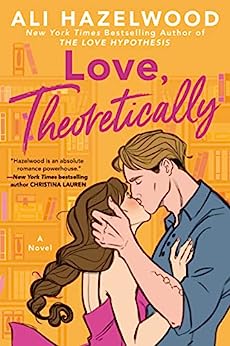
Title: Love, Theoretically
Author: Ali Hazelwood
Publisher: Berkley
Publication date: June 13, 2023
Length: 389 pages
Genre: Contemporary romance
Source: Library
Rating:

Rating: 3 out of 5.

The many lives of theoretical physicist Elsie Hannaway have finally caught up with her. By day, she’s an adjunct professor, toiling away at grading labs and teaching thermodynamics in the hopes of landing tenure. By other day, Elsie makes up for her non-existent paycheck by offering her services as a fake girlfriend, tapping into her expertly honed people pleasing skills to embody whichever version of herself the client needs.

Honestly, it’s a pretty sweet gig—until her carefully constructed Elsie-verse comes crashing down. Because Jack Smith, the annoyingly attractive and broody older brother of her favorite client, turns out to be the cold-hearted experimental physicist who ruined her mentor’s career and undermined the reputation of theorists everywhere. And that same Jack who now sits on the hiring committee at MIT, right between Elsie and her dream job.

Elsie is prepared for an all-out war of scholarly sabotage but…those long, penetrating looks? Not having to be anything other than her true self when she’s with him? Will falling into an experimentalist’s orbit finally tempt her to put her most guarded theories on love into practice?

Love, Theoretically is author Ali Hazelwood’s third novel… and I think I’ve reached the point of diminishing returns. This book on its own may be fine — but after reading the previous two, I can’t help but feel that Love, Theoretically is just more of the same.

Main character Elsie Hannaway is desperate for a good job in academia — one that allows her to focus on research, earn a steady paycheck, and have the health benefits she so desperately needs she she can afford her insulin supply. Her job as an adjunct professor keeps her finances unstable and her nerves fried, not to mention her reserve of patience absolutely tapped out dealing with the neverending flimsy excuses of slacker undergrads.

Being one of two finalists for a prestigious post at MIT is a dream come true, except one of the members of the selection committee is Jack Smith, the brother of a man she’s been fake-dating as well as someone who’s been ruthless in his criticism of her branch of physics. It seems likely that he’ll torpedo her candidacy, but despite his clear mistrust, he ends up showing her unexpected kindness.

Inevitably, these two supposed enemies are forced to acknowledge their mutual attraction and actual feelings, although there are plenty of barriers to break through before they get there. Elsie has spent her life trying to please everyone, pushing her own needs to the back of the priority line in order to give others what they want from her. She’s never her authentic self (doesn’t even admit to her best friend that she actually hates the art films they watch together), until Jack calls her on her lack of honesty and forces her to be true to herself while she’s around him.

Elsie and Jack have immediate chemistry… and, well, it’s clear from the start where this is going. As in the author’s previous books, the love story is well-established-professional-who’s-maybe-evil vs rising-star-needing-a-break-and-to-break-free-of-internalized-obstacles. (OK, from what I’ve read online, Ali Hazelwood started out writing ReyLo fanfic, and it shows… although I have only the barest of familiarities with that particular ship).

Perhaps I might have appreciated this book more if I hadn’t read the others, but I struggled with a been-there, done-that feeling throughout this particular reading experience. Yes, the particulars of the plot are different, but the overall dynamics are very much aligned.

It didn’t help for me that Jack, while ostensibly empowering Elsie to recognize and express her own desires rather than fit herself to everyone else’s, comes off as domineering and controlling. Further mucking things up for me is that Elsie’s character never actual seemed to make sense — I understood what I was told about her people-pleasing nature, but just didn’t buy it.

Love, Theoretically isn’t a bad read. It goes by quickly and kept my interest. It just didn’t seem to offer much new — so yes, it was fine, but perhaps I’ve just read enough by this author at this point. I don’t think I’ll need to read more of her books, unless she does something completely different and moves away from the love-amongst-scientists theme.
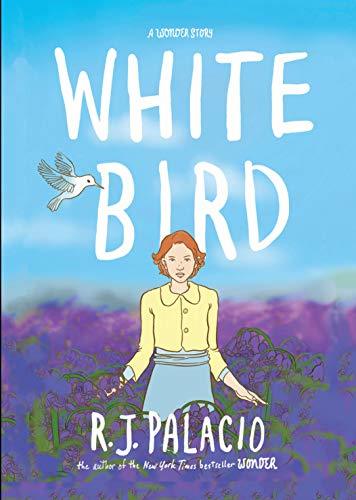
Book Review: White Bird by R. J. Palacio

Title: White Bird
Author: R. J. Palacio
Publisher: Knopf Books for Young Readers
Publication date: 2019
Length: 224 pages
Genre: Middle grade
Source: Library
Rating:

Rating: 4.5 out of 5.

Soon to be a major motion picture, starring Helen Mirren and Gillian Anderson!

Inspired by her blockbuster phenomenon Wonder, R. J. Palacio makes her graphic novel debut with an unforgettable, Sydney Taylor Book Award-winning story of the power of kindness and unrelenting courage in a time of war.

In R. J. Palacio’s bestselling collection of stories Auggie & Me, which expands on characters in Wonder, readers were introduced to Julian’s grandmother, Grandmère. Here, Palacio makes her graphic novel debut with Grandmère’s heartrending story: how she, a young Jewish girl, was hidden by a family in a Nazi-occupied French village during World War II; how the boy she and her classmates once shunned became her savior and best friend.

Sara’s harrowing experience movingly demonstrates the power of kindness to change hearts, build bridges, and even save lives. As Grandmère tells Julian, It always takes courage to be kind, but in those days, such kindness could cost you everything. With poignant symbolism and gorgeous artwork that brings Sara’s story out of the past and cements it firmly in this moment in history, White Bird is sure to captivate anyone who was moved by the book Wonder or the blockbuster movie adaptation and its message.

I’ve never read Wonder (am I the only person left who hasn’t?), and hadn’t heard of White Bird before either, until I went to a movie theater over the weekend and saw a trailer for the film adaptation of White Bird… and just had to know more about it. Luckily, my library had a copy available to borrow immediately, and I read the whole book over the course of a day.

White Bird is a middle-grade graphic novel, with the bulk of the story set in occupied France during the Holocaust. The framing device is a contemporary story about a boy named Julian (who apparently is a character from Wonder). Julian’s grandmother speaks to him about kindness and helping others, and shares her own story with him for the first time.

In the tale within a tale, Sara is a young girl living a charmed life with her parents in a small town in France, where she attends a lovely school, has good friends, and is very happy. The family is Jewish, but doesn’t fear for their own safety at first, even as the Nazis invade France. They live in the free zone, and feel secure knowing that they are French citizens. Even as Jews are restricted in their movements and forced to wear yellow stars, Sara’s parents don’t feel a need to escape, until suddenly it is too late.

At school, Sara sits in her assigned seat beside a boy called by the nickname Torteau in all her classes. Having survived polio, the boy is mocked and treated cruelly by their classmates due to his twisted legs and reliance on crutches. While not actively mean to Torteau, Sara isn’t friendly either — she mostly ignores him, until one day she drops her sketchbook and the boy returns it to her.

When Nazis arrive at school one day and order all the Jewish children to come with them, Sara hides instead, and it’s only a matter of time until she’s discovered — but Torteau finds her first, shows her a secret tunnel out of the school, and brings her to hide in his family’s barn. The boy’s name is actually Julien, and he and his parents become Sara’s protectors for years to come, keeping her hidden, safe, and cared for while the world falls apart around them.

I won’t say more about the plot, but it’s powerful, heartbreaking, and lovely. The graphic novel’s art style is simple but affecting, and mixes in Sara’s sketches and dreams with her day-to-day experiences in a way that lends a magical feel to key scenes.

The author includes a great deal of historical notes at the end that are informative and yet easy to digest, and this section seems like it would be very accessible and helpful for younger readers who are new to reading about the Holocaust.

Themes of love, loyalty, friendship, taking a stand when witnessing wrong-doing, and helping those in need are strongly depicted without being preachy or heavy-handed.

White Bird is a powerful, moving reading experience that actually brought me to tears at certain points — not something I typically expect when I pick up a graphic novel.

I highly recommend this book, and plan to check out the movie version when it’s released. Meanwhile, having finally tasted this author’s storytelling, I hope to read Wonder in the near future as well.

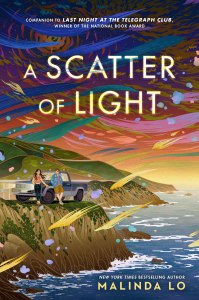
Book Review: A Scatter of Light by Malinda Lo

Title: A Scatter of Light
Author: Malinda Lo
Publisher: Dutton Books for Young Readers
Publication date: October 4, 2022
Length: 325 pages
Genre: Young adult fiction
Source: Purchased
Rating:

Rating: 3 out of 5.

Award-winning author Malinda Lo returns to the Bay Area with another masterful coming-of-queer-age story, this time set against the backdrop of the first major Supreme Court decisions legalizing gay marriage. And almost sixty years after the end of Last Night at the Telegraph Club, Lo’s new novel also offers a glimpse into Lily and Kath’s lives since 1955.

Aria Tang West was looking forward to a summer on Martha’s Vineyard with her best friends—one last round of sand and sun before college. But after a graduation party goes wrong, Aria’s parents exile her to California to stay with her grandmother, artist Joan West. Aria expects boredom, but what she finds is Steph Nichols, her grandmother’s gardener. Soon, Aria is second-guessing who she is and what she wants to be, and a summer that once seemed lost becomes unforgettable—for Aria, her family, and the working-class queer community Steph introduces her to. It’s the kind of summer that changes a life forever.

After absolutely loving Last Night at the Telegraph Club, I was excited to read author Malinda Lo’s next novel, which promises (per the synopsis) a more contemporary story plus more about Lily and Kath, whose love story was so powerful in Telegraph. Sadly, A Scatter of Light lacks the impact of the previous book and felt like quite a let-down.

In A Scatter of Light, main character Aria plans to spend her summer partying with her best friends before starting college at MIT in the fall. When a boy she hooks up with shares nude photos of her online, she’s the one who gets blamed and shamed. Suddenly, her invitations from her friends’ families are revoked, and her parents decide she’ll spend the summer with her grandmother Joan in California.

Aria loves Joan, but she’s resentful at her friends’ betrayal, as well as the fact that her divorced parents — her father a writer, her mother an opera singer who’s mostly absent from Aria’s life — seem to be punishing her for something outside of her control. Joan is an artist and a free-spirit who lives in a lovely, airy cottage in a rural Marin setting, but Aria will have absolutely nothing to do there.

Until… she arrives at Joan’s, and meets Steph, a young woman just a few years older than Aria who does gardening work for Joan. Aria feels an immediate spark around Steph and doesn’t understand why. She’s straight… isn’t she? Running into Steph again soon afterward, she begins meeting some of Steph’s friends, and soon is included in their social circle. Aria ends up spending the summer with this group of lesbians, attending music festivals and the annual Dyke March, and although Steph is in a long-term relationship, it seems clear that Aria’s attraction to her is returned.

Set in 2013, the timeframe has a backdrop of the legalization of gay marriage. For Aria, this means that the possibilities she sees are both new and much more open than they were previously. Ultimately, though, I’m not sure how much this element truly matters. The novel is about Aria, her family dynamics, and her intense crush on Steph — it’s very much about Aria’s internal world, and there’s very little that seems to cross her consciousness that isn’t about herself or her feelings.

I really wanted to love this book, but couldn’t. Aria is selfish in many ways, especially in her pursuit of Steph, who she knows from the outset isn’t available. It’s a positive for Aria that this summer helps her understand who she is, but the cheating element is a huge turn-off, as is the fact that even when there’s a crisis with Joan, Aria can’t seem to shift her focus away from Steph.

It was a little difficult to understand Aria’s interests and passions as well. She’s headed for MIT and her academic passion is astronomy. She spends the summer sorting through her late grandfather’s academic records, including VCR tapes of his astronomy lectures. At the same time, she reconnects with her artistic side, with Joan’s encouragement, and begins painting for the first time in years. There seems to be an attempt to meld her artistic and scientific sides through imagery and thoughts about light, but none of this really gelled for me.

The synopsis and blurbing for this book do it no favors, promising that we’ll see Kath and Lily… which really only happens through information shared by Aria’s mother’s cousin, not by seeing them in person. Yes, it’s a “glimpse”, as stated, but I expected… more? Something else? There seemed little point in including them specifically, rather than addressing the social dynamic via new characters.

All that being said, A Scatter of Light is a fast read that held my attention, but overall, I found too much of the plot — as well as Aria herself — frustrating or troubling.

Plot peeves: Make it stop!

We all have our pet peeves when it comes to books, and I’ve certainly shared a bunch over the years. Most recently, I’ve been noticing two plot points that keep cropping up in fiction, and I say:

I mean, really…

Ready? My two most recent plot peeves are:

1) Killing the old people: Can we please have a book with a heartwarming intergenerational connection where the older person doesn’t end up dead? It’s gotten to the point that it’s utterly predictable: Introduce a wise / sassy / artistic / ahead-of-their-time / crotchety-but-secretly-nice / awe-inspiring older person — usually with a phenomenal sense of style and/or glamorous past — and I can pretty much guarantee that we’ll be attending their funeral by the end of the book. I can think of at least three or four instances where I’ve come across this plot within the past year, and more beyond that. STOP! Let them live!!

2) Interview surprises: Okay, I’m now up to three cases of the interview surprise — you know this one already, I’m sure: The main character has (select one) a random hookup, an embarrassing drunken escapade, an uncomfortable-yet-sexy tension with an inappropriate person… and wouldn’t you know, the very next day the main character shows up for a VERY important interview and… voila!… there’s that hookup (or whatever) right there at the interview. Ugh. Awkward! My current read started with a weird encounter with a date’s relative in the first chapter, a thought about the next day’s super important, life-changing interview at the end of that chapter… and guess who’s on the crucial interview selection panel the next night? Nooooooo!!

Please, please, please…

Whew. End of rant. Thanks for listening!

What about you? What plot points are you SO over right now?

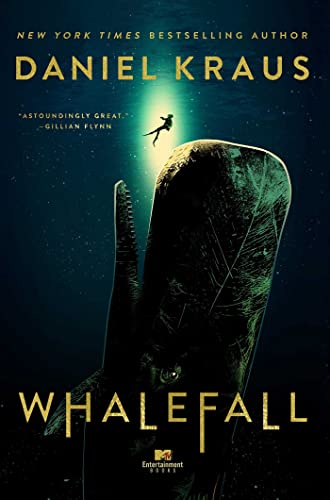
Book Review: Whalefall by Daniel Kraus

Title: Whalefall
Author: Daniel Kraus
Publisher: MTV Books
Publication date: August 8, 2023
Length: 336 pages
Genre: Contemporary fiction
Source: Purchased
Rating:

Rating: 4.5 out of 5.

Whalefall is a scientifically accurate thriller about a scuba diver who’s been swallowed by an eighty-foot, sixty-ton sperm whale and has only one hour to escape before his oxygen runs out.

Jay Gardiner has given himself a fool’s errand—to find the remains of his deceased father in the Pacific Ocean off the coast of Monastery Beach. He knows it’s a long shot, but Jay feels it’s the only way for him to lift the weight of guilt he has carried since his dad’s death by suicide the previous year.

The dive begins well enough, but the sudden appearance of a giant squid puts Jay in very real jeopardy, made infinitely worse by the arrival of a sperm whale looking to feed. Suddenly, Jay is caught in the squid’s tentacles and drawn into the whale’s mouth where he is pulled into the first of its four stomachs. He quickly realizes he has only one hour before his oxygen tanks run out—one hour to defeat his demons and escape the belly of a whale.

I can promise you that you’ve never read a book like Whalefall before! I’ve seen some comparisons to The Martian, and that’s pretty fair… more on that below!

In Whalefall, our protagonist is 17-year-old Jay, a teen wracked by guilt over his fractured relationship with his deceased father. Mitt Gardiner was revered in the Monterey dive community, but as a father, he inspired fear in his son. Mitt’s focus was 100% on the ocean and its mysteries, but his fury at the encroachment of humans and his dissatisfaction with daily life made him a man whose anger and bitterness cost him job after job.

While Jay’s older sisters were mostly immune to Mitt’s moods, Jay spent all his life as the focus of Mitt’s obsessions, forced out on dives from a young age, forced to parrot back Mitt’s teachings and support his ill-thought-out pipe dreams and get-rich-quick schemes. After a terrible confrontation, Jay left home and spent the last years of his father’s life, as Mitt deteriorated due to mesothelioma, living with friends and refusing to see his father.

We learn about Jay’s history and the torturous relationship with Mitt through flashback chapters, interwoven with the “now” of Jay’s story. As the book opens, Jay is heading for Monastery Beach, a dangerous area on Monterey Bay, to search for his father’s remains. Preferring to die at sea than in a hospital bed, Mitt committed suicide there by throwing himself off a boat while loaded down with dive weights. Jay has convinced himself that if he can retrieve Mitt’s bones from the Bay’s floor, he’ll find some sort of peace or redemption.

He definitely doesn’t believe in closure. People aren’t doors. They’re whole floor plans, entire labyrinths, and the harder you try to escape, the more lost inside them you become.

Using shoddy, second-hand gear, Jay heads into the water, at first allowing himself to marvel at the undersea world and its beauty, his father’s words echoing in his mind. Disaster strikes soon enough: Jay ventures across the edge of an undersea canyon that leads to true depths, is awed by the sight of a giant squid, and realizes too late that the squid is being hunted by a sperm whale. Caught up in the squid’s tentacles, Jay is pulled into the whale’s mouth, and then swallowed.

As the chapter headings show us, Jay’s oxygen tank will sustain him for no more than an hour. As each chapter passes, we see the tank’s readings decrease. He’s in a seemingly hopeless situation — how could a small human possibly manage to escape from a whale’s belly? And yet, Jay looks around and determines not to give up… at least, not until he has to.

As the situation deteriorates, and possibly due to the dangerous levels of nitrogen and methane, Jay begins to hear his father’s voice. Is it real? Is it in his mind? Is the whale channeling Mitt? Doesn’t matter — this voice reminds him again and again of incidents from his past, and through these memories, Jay is given hints of knowledge that he can use.

Depending only on what he has with him, as well as the weird flotsam floating in the whale’s stomach, Jay begins to fight a seemingly unwinnable battle to save himself. And little by little, as his father’s voice guides him, Jay begins to find an inner peace with his past as well.

The descriptions in Whalefall are brutal and terrifying. Jay’s body goes through unimaginable degrees of punishment, from acid burns to bone-breaking compression due to the whale’s stomach’s peristalsis, to the painful pressure damage caused by the whale’s sudden dive for the depths. Readers with weak stomachs and/or an inclination toward claustrophobia might want to think twice before starting this book!

So how is the story of a teen inside a whale similar to The Martian, the story of an astronaut stranded on Mars? In both cases, a person in an apparently hopeless, fatal situation finds a way to survive through science, knowledge, and a McGyver-ish ability to take what he has and use it to his advantage. For Jay, that means using neoprene, a squid’s beak, Brillo pads, batteries, and more to create tools, first aid supplies, and other devices necessary to last just a little bit longer and try to find a way out before his air is gone.

While a harrowing tale of danger and escape, Whalefall is also a deeper story of love, regret, and the complicated power of parent-child expectations and disappointments. Mitt is not a nice guy by any means, yet it’s his presence that enables Jay to survive, and as we learn through Jay’s memories, there are kernels of value buried deep in Jay’s subconscious that let him see that life with Mitt wasn’t only the nightmare he remembers.

I first heard about Whalefall thanks to Tammy at Books, Bones & Buffy, who featured it months ago as a Future Fiction pick. Thank you, Tammy! Don’t miss her review, here.

Whalefall is a tense, addictive read that’s impossible to put down once started. I did wish to know more about what happens next at the end, even though I recognize that that’s not the point of the story. (Can’t help that I’m super practical and curious…)

I’m so glad that I decided to read Whalefall. I loved the Monterey setting, the references to Steinbeck, the glimpses of lives devoted to the sea, and the depiction of the power and mystery of whales and other deep-dwelling creature. More than anything, this story of survival and desperation is a look inside a young man’s pain, longing, and regret, and these elements — the personal and the thriller — come together to make a compelling whole. Highly recommended.

Book Review: With the Fire on High by Elizabeth Acevedo

Title: With the Fire on High
Author: Elizabeth Acevedo
Publisher: Quill Tree Books
Publication date: May 7, 2019
Length: 400 pages
Genre: Young adult fiction
Source: Library
Rating:

Rating: 5 out of 5.

With her daughter to care for and her abuela to help support, high school senior Emoni Santiago has to make the tough decisions, and do what must be done. The one place she can let her responsibilities go is in the kitchen, where she adds a little something magical to everything she cooks, turning her food into straight-up goodness.

Still, she knows she doesn’t have enough time for her school’s new culinary arts class, doesn’t have the money for the class’s trip to Spain—and shouldn’t still be dreaming of someday working in a real kitchen. But even with all the rules she has for her life—and all the rules everyone expects her to play by—once Emoni starts cooking, her only real choice is to let her talent break free.

I’m going to stick to a quick take on With the Fire on High: I loved it.

Told with beautifully descriptive language, this first-person story follows Emoni through her senior year of high school. She navigates college essays, caring for her toddler, and thinking about her future while also working part-time to help her abuela pay the bills. Emoni never regrets her daughter Emma, but she does dream of using her astonishing gifts with food to someday have a career as a chef, maybe even open her own restaurant.

Her charter high school adds a culinary arts elective that seems tailor-made for Emoni, even when her more practical side thinks it might make more sense to take an extra study hall instead and really get her grades up. Even once she starts culinary arts, she has doubts — why must she follow the instructor’s detailed recipes when she’s itching to put her own spin on the flavors?

Emoni is a strong, sensitive character who hasn’t had it easy. She’s had to learn responsibility the hard way and embraces her role as a mother, even while sometimes despairing that she’ll ever be able to work, study, and find a way to explore her dreams. She loves her family, her neighborhood, her hometown of Philly, but she’s also still a teen who loves her friends and maybe even is interested in the cute new guy who just transferred to her school.

I loved the writing in this book, and loved Emoni’s openness and vulnerability. She has doubts and worries, but also knows what’s right and where her priorities need to be. She’s loving and generous, and having ended up pregnant as a high school freshman, she’s learned to hold her head up even when the world seems to want to drag her down into shame.

I listened to the audiobook, narrated by the author — it was wonderful. I’ve been hearing great things about this author’s books for years, and now I see why. I will definitely be reading more by Elizabeth Acevedo, and recommend With the Fire on High wholeheartedly!

Top Ten Tuesday: Water, water, everywhere…

Top Ten Tuesday is a meme hosted by That Artsy Reader Girl, featuring a different top 10 theme each week. This week’s topic is Water — as a topic, title, book cover element, or whatever we want.

I decided to keep it simple and feature ten books I’ve read that have Water in the title:

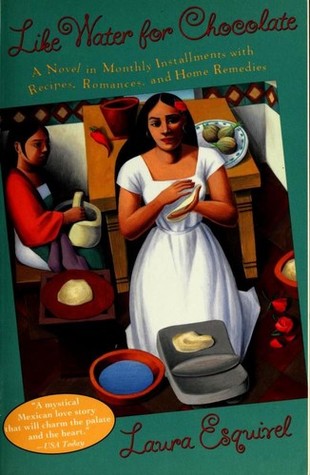
  1. Like Water for Chocolate by Laura Esquivel
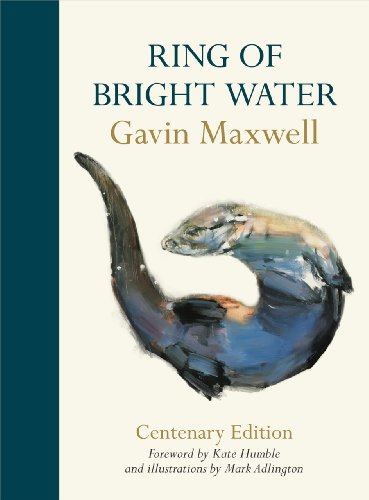
  2. Ring of Bright Water by Gavin Maxwell
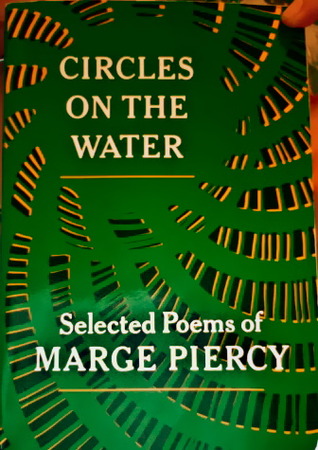
  3. Circles on the Water by Marge Piercy
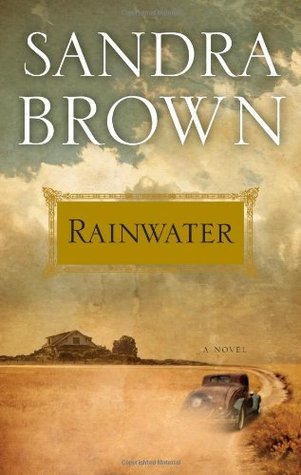
  4. Rainwater by Sandra Brown
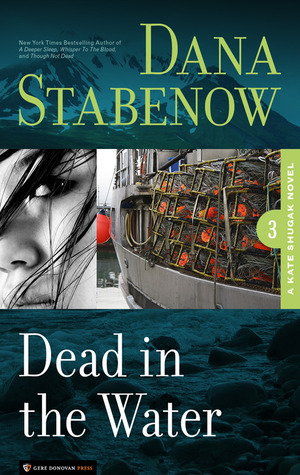
  5. Dead in the Water by Dana Stabenow
  6. A Yellow Raft in Blue Water by Michael Dorris
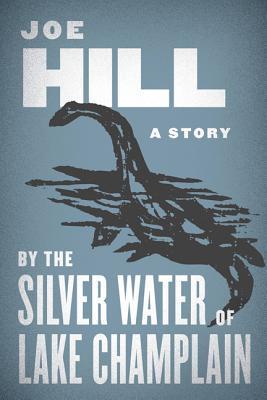
  7. By the Silver Water of Lake Champlain by Joe Hill
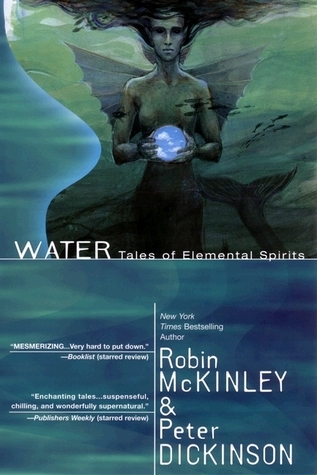
  8. Water: Tales of Elemental Spirits by Robin McKinley & Peter Dickinson
  9. Water for Elephants by Sara Gruen
  10. The Water is Wide by Pat Conroy

What “watery” books have you read?

If you did a TTT post this week, please share your link!

The Monday Check-In ~ 8/28/2023

cooltext1850356879

My Monday tradition, including a look back and a look ahead — what I read last week, what new books came my way, and what books are keeping me busy right now. Plus a smattering of other stuff too.

Life.

We had some gorgeous sunny days this week… and of course I was indoors working for most of them. So despite the fog over the weekend, I got out for long walks anyway. Grey skies won’t stop me!

What did I read during the last week?

Mika in Real Life by Emiko Jean: I loved this audiobook! My review is here.

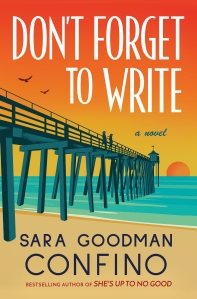
Don’t Forget to Write by Sara Goodman Confino: I picked this book up on a whim, knowing nothing about it, and ended up really enjoying it. My review is here.

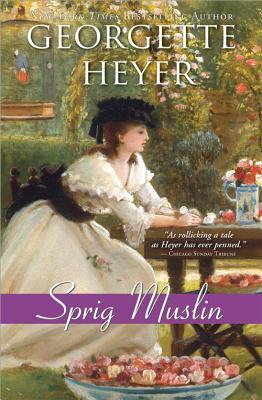
Sprig Muslin by Georgette Heyer: After finishing Cotillion the previous week, I couldn’t resist starting another GH book. This one was sweet and silly, and so much fun. My review is here.

With the Fire on High by Elizabeth Acevedo: Amazing audiobook! Review coming soon… and I can’t wait to read more by this talented author.

Whalefall by Daniel Krause: You’ve definitely never read anything like this! Review to follow later this week.

And the truly big accomplishment:

After 18 months of discussing two chapters per week, my book group has reached the end of our re-read of Go Tell the Bees That I Am Gone by Diana Gabaldon, the 9th book in the Outlander series. With 155 chapters and over 900 pages, this felt like a huge undertaking when we first started — hard to believe we’re finally done! My group is amazing and I loved all our discussions. We’ll be starting our next big ongoing read in late September…

Pop culture & TV:

I’ve been enjoying the weekly new episodes of Men in Kilts and What We Do in the Shadows, but haven’t felt like starting any new binges. Still looking for inspiration, I guess.

Meanwhile, my husband and I actually left our house and went to a movie theater! I’ve been going to movies here and there, but I don’t think he’s been to one since 2020. We saw Golda, and thought it was very well done.

Fresh Catch:

No new books this week.

What will I be reading during the coming week?

Currently in my hands:

A Scatter of Light by Malinda Lo: Just getting started… but since this is a companion to an earlier book (Last Night at the Telegraph Club) — which I loved — I have really high hopes!

Now playing via audiobook:

The Bookstore Sisters by Alice Hoffman: I started this audio short story (approx. 1 hour of listening time) on Sunday afternoon, knowing I had a day to fill before a preorder arrives on Tuesday.

The book I’m waiting for is:

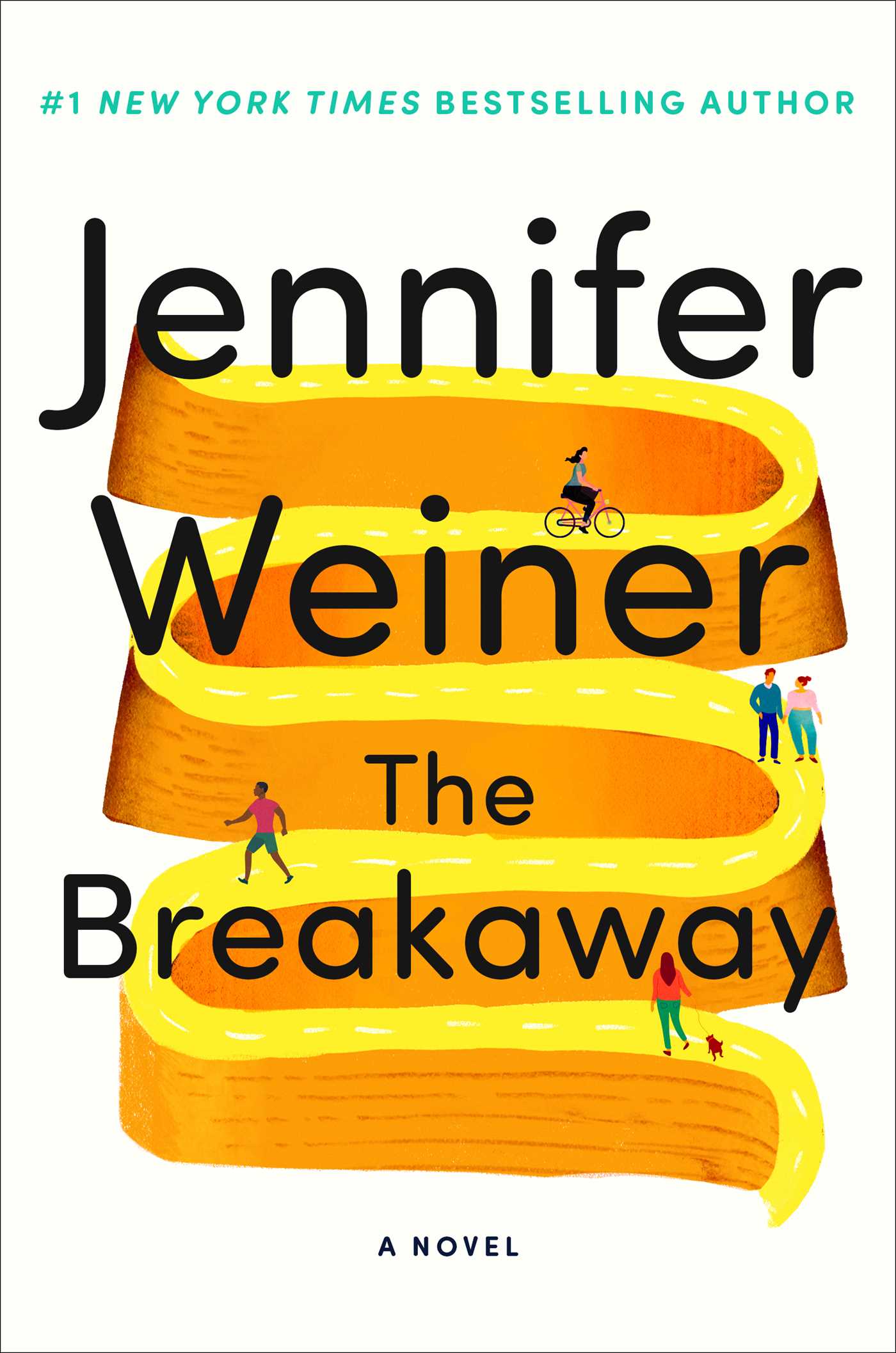
The Breakaway by Jennifer Weiner: I’ve listened to the audio version of Jennifer Weiner’s last few books and really enjoyed them, so even though I had an e-ARC of The Breakaway via NetGalley, I decided to wait for the release date so I could listen to the audiobook. I’ll be starting it as soon as it downloads to my Audible library on Tuesday!

Ongoing reads:

My longer-term reading commitments:

Only one at the moment, and the end is in sight!

  • Cold Comfort Farm by Stella Gibbons: My book group’s classic read — we’re reading and discussing two chapters per week. Progress: 85%

So many books, so little time…

boy1

Book Review: Sprig Muslin by Georgette Heyer

Title: Sprig Muslin
Author: Georgette Heyer
Publisher: Sourcebooks Casablanca
Publication date: 1956
Length: 298 pages
Genre: Historical fiction/romance
Source: Purchased
Rating:

Rating: 4.5 out of 5.

A dashing man of honor…

En route to propose to his sensible acquaintance Lady Hester, Sir Gareth Ludlow finds young, pretty Amanda wandering unattended and knows it is his duty to bring her back to her family. This turns out to be a challenge as Amanda seems to possess an imagination as intriguing as it is dangerous.

A shocking refusal…

Lady Hester stuns both him and her family when she refuses him. At her age, no one would expect her to turn down such an eligible suitor. But Lady Hester has met the indomitable Amanda. How can the quiet, intelligent Hester hope to compete with such a lively young lady?

After finishing Georgette Heyer’s Cotillion, I felt like my appetite for her books was reignited, and turned to Sprig Muslin, a paperback I’d picked up a few years ago. I’m so happy I did! Sprig Muslin is silly, sweet-natured, fun — and a refreshing contrast to some of Heyer’s more dramatic books about rakes and rogues and dashing men with terrible reputations.

In Sprig Muslin, the two anchors of the story are good-natured, respectable adults who nonetheless find themselves caught up in a whirlwind of shenanigans. Sir Gareth Ludlow, at age 35, is fashionable, well-off, and after losing his fiancée in a tragic accident many years earlier, still single. It’s time for him to take a wife and start producing heirs.

Sir Gareth decides to propose to Lady Hester Theale, a kind, intelligent woman he’s been friends with all his life. Lady Hester, at age 29, is on the shelf and seemingly content with her lot, although she does seem to get bossed around by her overbearing brother and sister-in-law quite a bit. Hester is appalled to learn that Sir Gareth has declared his intentions to her father and is en route to propose to her; although she won’t give a reason, she definitely does not want this proposal.

Sir Gareth’s plans are interrupted when he stops for refreshment along the way and discovers a young girl on the verge of trouble. Amanda, not quite 17, has apparently run away and is determined to remain at large. Clearly belonging to an upper class family, she states that she intends to marry an up-and-coming soldier, and by running away, she intends to force her grandfather to give his consent. Amanda is headstrong and passionate, and Gareth realizes that his duty is to see her safely returned to her family rather than leaving her to make her way unchaperoned and without an actual plan.

There’s a hitch, however: Amanda refuses to name her family, where they live, or even who her soldier fiancé is. She spins story upon story, and while initially thankful that Gareth seems willing to help her, she soon realizes that he’s going to keep her from her schemes, and attempts to get away from him too.

Thus begins a madcap series of escapades, as Amanda creates one fabulous story after another to explain her situation, drawing in Gareth and then others met along the way. Each tale leads to further complications, and before too long even Hester is drawn into Amanda’s web of stories and fake identities.

Sprig Muslin is utterly delightful. As Amanda’s stories get more and more inventive, various bystanders take on roles, and her tales result in all sorts of rescue attempts, misguided escapes, and even a daring kidnap attempt that goes disastrously wrong. It’s all quite ludicrous, and so very, very enjoyable.

As with all Georgette Heyer books, the unusual words and expressions make the reading experience extra entertaining — here are a few from Sprig Muslin that I highlighted:

  • nodcock (fool or idiot)
  • marplot (one who ruins a plan through meddling)
  • bosky (drunk)
  • daffish (stupid, silly)
  • spinney (small area of trees and bushes)
  • gammon (trick)
  • nonesuch (a person or thing unrivaled or unequaled)
  • gaby (a foolish person)
  • elbow-crooker (drinker)
  • bobbery (a squabble, a noisy disturbance)
  • humdudgeon (loud complaint or noise)
  • flat (as in, “A flat, my child, is one who is easily duped”)

And as for phrases, can’t beat:

  • a fashionable fribble
  • a real top-of-the-trees, slap up to the echo (top-of-the-trees = someone of high esteem)
  • chuffy thing to do
  • in the petticoat line (associating with women of “easy virtue)

While I always enjoy Georgette Heyer’s books, Sprig Muslin may have just become my new favorite. It’s so good-natured, and the sense of fondness for Kitty’s exploits makes this a sweet read. I came away from it really appreciating all the main characters, and had plenty of giggles along the way. If you’re looking for a GH book but aren’t crazy about rakish men being cast as heroes, Sprig Muslin is a great choice!

Book Review: Don’t Forget to Write by Sara Goodman Confino

Title: Don’t Forget to Write
Author: Sara Goodman Confino
Publisher: Lake Union Publishing
Publication date: September 1, 2023
Length: 334 pages
Genre: Historical fiction
Source: Prime First Reads (free during August)
Rating:

Rating: 4 out of 5.

In 1960, a young woman discovers a freedom she never knew existed in this exhilarating, funny, and emotional novel by the bestselling author of She’s Up to No Good.

When Marilyn Kleinman is caught making out with the rabbi’s son in front of the whole congregation, her parents ship her off to her great-aunt Ada for the summer. If anyone can save their daughter’s reputation, it’s Philadelphia’s strict premier matchmaker. Either that or Marilyn can kiss college goodbye.

To Marilyn’s surprise, Ada’s not the humorless septuagenarian her mother described. Not with that platinum-blonde hair, Hermès scarf, and Cadillac convertible. She’s sharp, straight-talking, takes her job very seriously, and abides by her own rules…mostly. As the summer unfolds, Ada and Marilyn head for the Jersey shore, where Marilyn helps Ada scope out eligible matches—for anyone but Marilyn, that is.

Because if there’s one thing Marilyn’s learned from Ada, it’s that she doesn’t have to settle. With the school year quickly approaching and her father threatening to disinherit her, Marilyn must make her choice for her future: return to the comfortable life she knows or embrace a risky, unknown path on her own.

What a treat to take a chance on a book I’d never heard of… and end up loving it! I came across Don’t Forget to Write through a promotional email for this month’s free Prime Reading choices. The cover caught my eye, and I once I read the description, I figured… why not?

Set in the summer of 1960, Don’t Forget to Write starts with a bang, as a rebellious 20-year-old — whose father only agreed to send her to college so she could find a husband — decides to make out with the cute son of the rabbi during Saturday morning services… and ends up crashing through a stained glass window with him, mid-kiss, in front of everyone. It’s a scandal — a scandal, I tell you!

While the rabbi and Marilyn’s parents all seem to feel that the only solution is for Marilyn and Daniel to get married, Marilyn has no intention of doing so. She’s grown up seeing her mother’s boredom as a housewife (dinner is often burned because her mother is too busy reading to check on the food), and she’s determined that she will not have that same fate.

Facing parental wrath, Marilyn is forced into the only acceptable alternative: She’ll go spend the summer with her great-aunt Ada, a matchmaker in Philadelphia, with a reputation for strictness and keeping a tight rein on anyone under her control. Upon arrival, Marilyn finds that Ada is a no-nonsense free spirit, and yes, she has very strict rules for Marilyn, but she’s also fierce, outspoken, generous, and a big believer in thinking for oneself.

Before long, the two head for Ada’s home on the island of Avalon on the Jersey Shore, where further adventures await, including glamorous nights out in Atlantic City and sunbathing (with Coppertone!) on the beach while wearing the latest fashionable bikini. Ada is not what Marilyn expected, and under her care, Marilyn starts to bloom into the independent young woman she was meant to be.

Don’t Forget to Write is such an enjoyable read, in so many ways. I loved the depiction of the era — we know the looser vibe of the late 60s is just a little way in the future, but for Marilyn, those freedoms will be too late unless she comes up with her own plans. She’s very much still a hostage to the morals and traditions of the 1950s, when any woman who breaks the mold of wife and mother is judged and scorned.

Avalon is described wonderfully, as is the sense of Atlantic City in its heyday. Ada herself is marvelous — feisty, smart, strong, entrepreneurial, seemingly hard as nails but with quite a loving heart underneath her tough exterior.

The Jewish elements are really engaging as well, and I couldn’t help but laugh at the scenes of scandal in the synagogue! While this takes place before my own time, it definitely mirrors the era in which my parents were young adults, and knowing their stories, I could really relate to some of the scenes and dialogue here.

The relationship between Marilyn and Ada deepens over the course of the book, and is both funny and touching. Marilyn’s growth and the realizations she has about her life and her choices are well-developed, and I really enjoyed seeing her figure out what she wants out of life, what she’s willing to accept, and what she’s prepared to fight for.

The ending may have been a smidge predictable, but that’s okay. Overall, Don’t Forget to Write is an entertaining look at women’s lives in a bygone era, with a terrific mix of nostalgia, summer breezes, and strong characters.

I’m so happy I decided to pick up this book! It’s rare these days that I read something that I know nothing about ahead of time — what fun to just go for it and have it turn out so well!