Take A Peek Book Review: The Agony House by Cherie Priest

“Take a Peek” book reviews are short and (possibly) sweet, keeping the commentary brief and providing a little peek at what the book’s about and what I thought.

Synopsis:

(via Goodreads)

Denise Farber has just moved back to New Orleans with her mom and step-dad. They left in the wake of Hurricane Katrina and have finally returned, wagering the last of their family’s money on fixing up an old, rundown house and converting it to a bed and breakfast. Nothing seems to work around the place, which doesn’t seem too weird to Denise. The unexplained noises are a little more out of the ordinary, but again, nothing too unusual. But when floors collapse, deadly objects rain down, and she hears creepy voices, it’s clear to Denise that something more sinister lurks hidden here. Answers may lie in an old comic book Denise finds concealed in the attic: the lost, final project of a famous artist who disappeared in the 1950s. Denise isn’t budging from her new home, so she must unravel the mystery-on the pages and off-if she and her family are to survive…

My Thoughts:

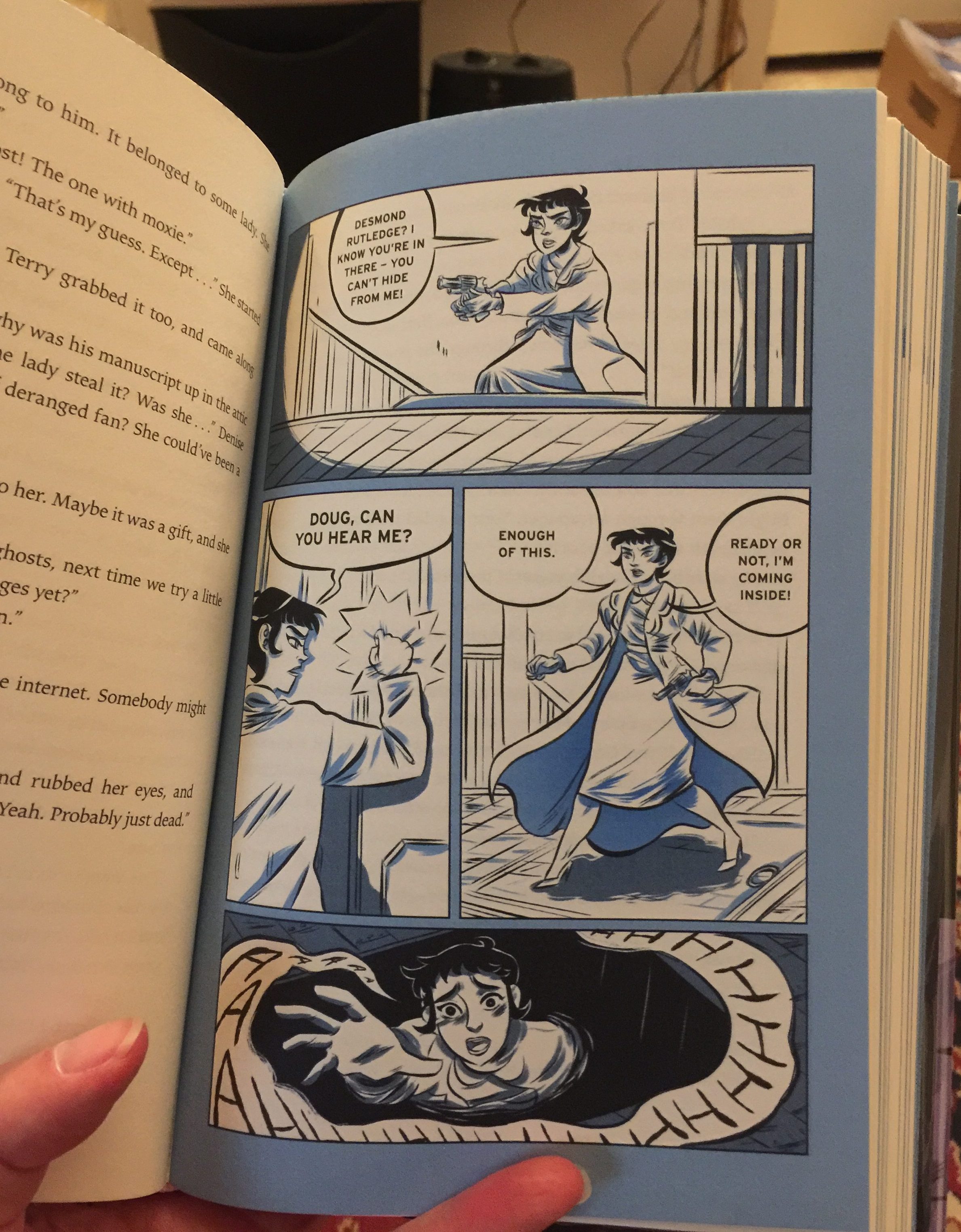
Similarly to her work in the terrific I Am Princess X, in The Agony House author Cherie Priest tells a gripping story with comic book illustrations mixed in to tell a piece of the tale. When Denise discovers the hidden comic book in the creepy attic of her new house (which she bluntly refers to as a “craphole” at all times), the book seems to be a clue to the unexplainable events happening to the family as they try to make the old place livable once again.

Denise is a great main character — clearly very smart, devoted to her family, but unhappy with being dragged away from her friends back in Houston and forced to live in this awful house. As she settles in and gets to know some of the teens in her neighborhood, we get a picture of the devastation left by the Storm (as they refer to it), even after so many years. The book deals with issues around economic hardship, gentrification, and privilege, not in a preachy way, but by showing the struggles and resentments of the characters and the new understandings they need to reach in order to get along. The social lessons here feel organic and important to the story, and I appreciated seeing the characters come to terms with one another in all sorts of interesting ways.

I’d place The Agony House somewhere between middle grade and young adult fiction. The main characters are high school seniors, but the events and the narrative would be fine for younger readers, middle school or above, so long as they’re okay with ghosts and spookiness. I really enjoyed the comic book pages and how they relate to the main story, and thought it was all very cleverly put together. As an adult reader, I saw the plot resolution twist coming pretty early on, but that didn’t lessen the satisfaction of seeing it all work out, and I think it’ll be a great surprise for readers in the target audience.

_________________________________________

The details:

Title: The Agony House
Author: Cherie Priest
Illustrator: Tara O’Connor
Publisher: Arthur A. Levine Books
Publication date: September 25, 2018
Length: 272 pages
Genre: Young adult fiction
Source: Library

**Save

Save

Save

Save

Save

Save

Save

Book Review: Josh & Hazel’s Guide to Not Dating by Christina Lauren

Hazel Camille Bradford knows she’s a lot to take—and frankly, most men aren’t up to the challenge. If her army of pets and thrill for the absurd don’t send them running, her lack of filter means she’ll say exactly the wrong thing in a delicate moment. Their loss. She’s a good soul in search of honest fun.

Josh Im has known Hazel since college, where her zany playfulness proved completely incompatible with his mellow restraint. From the first night they met—when she gracelessly threw up on his shoes—to when she sent him an unintelligible email while in a post-surgical haze, Josh has always thought of Hazel more as a spectacle than a peer. But now, ten years later, after a cheating girlfriend has turned his life upside down, going out with Hazel is a breath of fresh air.

Not that Josh and Hazel date. At least, not each other. Because setting each other up on progressively terrible double blind dates means there’s nothing between them…right?

Ah, what fun! In my head, I don’t think of myself as someone who enjoys contemporary romance reading… but my recent track record seems to prove me wrong, over and over and over again.

Josh & Hazel’s Guide to Not Dating is a totally delicious and enjoyable story about two people who are determined to stay firmly in the friend zone… but we all know that intentions can be very different than what happens in real life.

In alternating chapters narrated by Hazel and Josh, we see these two come together in their late 20s, reunited by Josh’s sister, who just happens to be Hazel’s best friend. Hazel declares to Josh that she’s going to be his best friend too, and things certainly seem to head in that direction.

Let’s talk about Hazel for a moment. She is very out there, and at first, I was a little put off. Would I be able to handle a friend like that — someone who blurts, has no filters, and lives purely in the moment, going with what feels good and not worrying about tidiness or public opinion? She really would be hard to take — and yet, as the book progressed, I came to love her more and more. First of all, Hazel is all heart. She’s an elementary school teacher, for goddess’s sake! She loves 8-year-olds, with all their chaos and creativity and mess. When Josh first sees her in her classroom, he’s reminded of Ms Frizzle, and that’s really so on the nose. She’s a whirlwind of energy and good will, and it’s just impossible not to be charmed.

Josh is a little harder to pin down. He’s the older child of Korean immigrant parents whom he loves, he’s a successful physical therapist, and he’s a serial monogamist. He believes in committed relationships, and likes his world neat and sensible.

Josh and Hazel are clear that they’d be disastrous romantic partners, but they turn into excellent friends. Hazel pushes Josh’s boundaries and makes him laugh; Josh appreciate’s the Hazel-ness of Hazel without ever telling her to tone it down. Their series of blind dates, in which they each set up the other and then go on a double-date, are predictably epic failures, but it takes an awfully long time for Josh and Hazel to acknowledge that they’d rather be with one another than with anyone else.

My typical complaint with contemporary romances is about the communication factor. Surely, in real life, people would be just a little bit clearer about their feelings and intentions, right? There’s a lot of time wasted during which Josh thinks Hazel is interested in an ex-boyfriend and Hazel thinks Josh thinks that she should pursue things with the ex. They’re both wrong, of course, having completely misread each other and not spoken clearly enough to set each other straight. Of course, if everyone said everything they were thinking directly and without delay, there’d be no drama and no big payoff, so there you go.

This book surprised me in all the right ways. Sure, we know exactly where Josh and Hazel are headed, but it’s so much fun to see how they get there. I gobbled up this book in one day, and was left hungry for more. Apparently, I’ve been missing out by never having read this author (actually, two authors writing together) before, but I plan to rectify the situation as soon as I can!

Save

_________________________________________

The details:

Title: Josh & Hazel’s Guide to Not Dating
Author: Christina Lauren
Publisher: Gallery Books
Publication date: September 4, 2018
Length: 309 pages
Genre: Contemporary fiction
Source: Library

Save

Save

Save

Save

Book Review: Little Beach Street Bakery by Jenny Colgan

For fans of Sophie Kinsella, Jojo Moyes, and Jennifer Weiner, a moving, laugh-out-loud novel—with recipes!—about a young woman who begins her life anew as a baker in Cornwall.

Amid the ruins of her latest relationship, Polly Waterford moves far away to the sleepy seaside resort of Polbearne, where she lives in a small, lonely flat above an abandoned shop.

To distract her from her troubles, Polly throws herself into her favorite hobby: making bread. But her relaxing weekend diversion quickly develops into a passion. As she pours her emotions into kneading and pounding the dough, each loaf becomes better than the last. Soon, Polly is working her magic with nuts and seeds, olives and chorizo, and the local honey-courtesy of a handsome local beekeeper. Drawing on reserves of determination and creativity Polly never knew she had, she bakes and bakes . . . and discovers a bright new life where she least expected it.

This is my third Jenny Colgan book — and in each, the pattern seems to be: Young woman, beat down by city life, escapes to a remote, quaint location, and discovers joy and meaning in her new life. Plus a dreamy, hot love interest. And hey, it may be a pattern, but it works!

In Little Beach Street Bakery, Polly and her grumpy ex have been driven into bankruptcy by the failure of their graphic design business (he’s the designer, she handles the office). With no money, the relationship in tatters, and no place to live, Polly chances upon a flat for rent in Mount Polbearne, a location she remembers fondly from childhood field trips. Polbearne is an island attached to Cornwall by a causeway that’s only accessible when the tide is out. The town features a fishing fleet, a pub, some worn-down local businesses, and for Polly, a place of refuge to lick her wounds and retreat from the world.

It’s Polly’s love of bread that finally draws her out of her shell. The one and only bakery on the island is run by a grumpy old woman, Polly’s landlady, who makes atrocious bread but refuses to allow anyone to sell anything else. Polly starts baking as a hobby, to relieve her own stress and anxiety, but as her baking becomes popular with the local fishermen, she starts to find a place for herself in this isolated community.

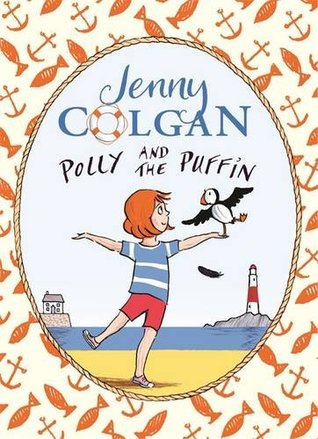
Little Beach Street Bakery is quite a fun read. Polly is a relatable young woman, who has been through tough times but still maintains enough hope to start rebuilding. She’s goofy too — after rescuing an injured puffin, she develops a quirky relationship with the bird and the two become inseparable. (Side note, I’ve only just discovered that the author has written some children’s books about Polly and Neil the Puffin — how adorable is that?)

The love story in this book takes a while to build, and Polly makes a big mistake along the way. (Not her fault — he didn’t tell her he was married! Ahem.) But eventually, she realizes who it is that she really loves and wants, and after a prolonged period of misunderstanding, there are fireworks. (Yes, there really are fireworks!)

Along the way, we meet a host of quirky locals, get immersed in the battle between newly arrived trendy folks who want to modernize and the old-timers who want to keep things as they are, experience the trauma of waiting for the fishing fleet to come home after a storm, and get to know a beautiful little corner of the world. It’s no wonder Polly loves it there!

This is pure escapist delight. Who wouldn’t want to run away to a remote, gorgeous location and find true love, friendship, and a way to turn a favorite pastime into a successful and fulfilling career?

I had a lot of fun reading this book. Sometimes, light and frothy is just the right choice! Once again, many thanks to my book group for picking this book for discussion. After a bunch of heavier reads, it’s nice to turn to something that just feels good.

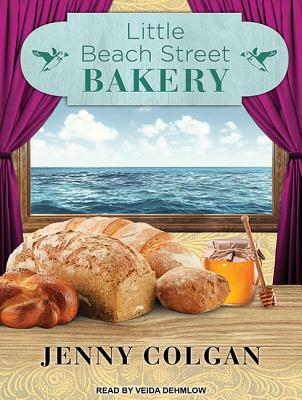
A note on the covers: The image at the top of this post is the cover of the Kindle edition, which I find a little funny, since Polly is a bread baker and never once mentioned baking cupcakes. The audiobook image — with loaves of bread, a jar of honey, and a view of the sea — is a much better fit for the story, in my humble opinion. And just yummy.

And a final comment: There are two follow-up books, Summer at Little Beach Street Bakery and Christmas at Little Beach Street Bakery. I’m not planning to read them immediately (SO much else to read right now!)… but I’ll definitely keep them in mind for when I need a nice little reading getaway.


Save

_________________________________________

The details:

Title: Little Beach Street Bakery
Author: Jenny Colgan
Publisher: William Morrow
Publication date: March 13, 2014
Length: 448 pages
Genre: Contemporary fiction
Source: Purchased

Save

Save

Save

Save

Shelf Control #144: Beartown by Fredrik Backman

Shelves final

Welcome to Shelf Control — an original feature created and hosted by Bookshelf Fantasies.

Shelf Control is a weekly celebration of the unread books on our shelves. Pick a book you own but haven’t read, write a post about it (suggestions: include what it’s about, why you want to read it, and when you got it), and link up! For more info on what Shelf Control is all about, check out my introductory post, here.

Want to join in? Shelf Control posts go up every Wednesday. See the guidelines at the bottom of the post, and jump on board!

cropped-flourish-31609_1280-e1421474289435.png

Title: Beartown
Author: Fredrik Backman
Published: 2017
Length: 432 pages

What it’s about (synopsis via Goodreads):

People say Beartown is finished. A tiny community nestled deep in the forest, it is slowly losing ground to the ever encroaching trees. But down by the lake stands an old ice rink, built generations ago by the working men who founded this town. And in that ice rink is the reason people in Beartown believe tomorrow will be better than today. Their junior ice hockey team is about to compete in the national semi-finals, and they actually have a shot at winning. All the hopes and dreams of this place now rest on the shoulders of a handful of teenage boys.

Being responsible for the hopes of an entire town is a heavy burden, and the semi-final match is the catalyst for a violent act that will leave a young girl traumatized and a town in turmoil. Accusations are made and, like ripples on a pond, they travel through all of Beartown, leaving no resident unaffected.

Beartown explores the hopes that bring a small community together, the secrets that tear it apart, and the courage it takes for an individual to go against the grain. In this story of a small forest town, Fredrik Backman has found the entire world.

How and when I got it:

I found a used copy at the big library sale last year.

Why I want to read it:

Well, like everyone else, I loved A Man Called Ove. I haven’t read anything else by Fredrik Backman, and I’ve been wanting to — and I’ve heard nothing but great things about Beartown. Plus, with a sequel released this year, I’m falling behind! Have you read Beartown? If so, what did you think? And what other Backman books do you recommend?

__________________________________

Want to participate in Shelf Control? Here’s how:

  • Write a blog post about a book that you own that you haven’t read yet.
  • Add your link in the comments!
  • If you’d be so kind, I’d appreciate a link back from your own post.
  • Check out other posts, and…

Have fun!

Save

Save

Save

Save

Save

Save

Save

Save

Save

Save

Save

Save

Save

Book Review: The Silence of the Girls by Pat Barker

The ancient city of Troy has withstood a decade under siege of the powerful Greek army, which continues to wage bloody war over a stolen woman—Helen. In the Greek camp, another woman—Briseis—watches and waits for the war’s outcome. She was queen of one of Troy’s neighboring kingdoms, until Achilles, Greece’s greatest warrior, sacked her city and murdered her husband and brothers. Briseis becomes Achilles’s concubine, a prize of battle, and must adjust quickly in order to survive a radically different life, as one of the many conquered women who serve the Greek army.

When Agamemnon, the brutal political leader of the Greek forces, demands Briseis for himself, she finds herself caught between the two most powerful of the Greeks. Achilles refuses to fight in protest, and the Greeks begin to lose ground to their Trojan opponents. Keenly observant and coolly unflinching about the daily horrors of war, Briseis finds herself in an unprecedented position, able to observe the two men driving the Greek army in what will become their final confrontation, deciding the fate not only of Briseis’s people but also of the ancient world at large.

Briseis is just one among thousands of women living behind the scenes in this war—the slaves and prostitutes, the nurses, the women who lay out the dead—all of them erased by history. With breathtaking historical detail and luminous prose, Pat Barker brings the teeming world of the Greek camp to vivid life. She offers nuanced, complex portraits of characters and stories familiar from mythology, which, seen from Briseis’s perspective, are rife with newfound revelations. Barker’s latest builds on her decades-long study of war and its impact on individual lives—and it is nothing short of magnificent.

The opening lines of The Silence of the Girls let us know that this is not just a retelling of the glory of Achilles:

Great Achilles. Brilliant Achilles, shining Achilles, godlike Achilles… How the epithets pile up. We never called him any of those things; we call him “the butcher.”

The Silence of the Girls is narrated by Briseis, a noble woman of Lyrnessus who is taken into captivity by the Greeks when her city is sacked during the endless Trojan War. The men, including Briseis’s husband, father, and brothers, are slaughtered. Male children are killed; even pregnant women are run through with swords to prevent them giving birth to sons. The women who survive the attack are now prisoners, slaves and war prizes, at the mercy of their fierce captors.

Briseis is claimed by Achilles, the godlike warrior who leads the Greek armies throughout the long war against Troy. Through Briseis’s eyes, we see the grit and gore behind the glamour of the Greek heroes — men like Achilles, Ajax, and Odysseus, about whom legends and poems and ballads have been written. History is written by the victors — but who writes about the women? The women represented here by Briseis are not fighters. They have everything at stake in the war, but absolutely no power. As the book demonstrates over and over again, the women are the true victims here: They are the ones who are raped as part of the division of loot when a city is sacked; they are the ones forced into servitude; they are the ones sacrificed to appease the gods or to mourn a hero’s death or to settle a score.

This book tells the other side of the story, showing life in camp, the daily struggles of the enslaved women, and how powerless they are to change their own fates. The women are at the mercy of their captors, and their lives have no meaningful security other than what’s given to them and what can easily be taken away.

In The Silence of the Girls, Briseis gives voice to all the silent women victimized by war. These women have been erased from the narrative, so that the story that is told is all about brilliant military conquests and the struggles of men:

What will they make of us, the people of those unimaginably distant times? One thing I do know: they won’t want the brutal reality of conquest and slavery. They won’t want to be told about the massacres of men and boys, the enslavement of women and girls. They won’t want to know we were living in a rape camp. No, they’ll go for something altogether softer. A love story, perhaps? I just hope they manage to work out who the lovers were.

Is this meant to be a direct rebuke to the narrative focus of The Song of Achilles by Madeline Miller, which focuses on the love between Achilles and Patroclus? Having only recently read The Song of Achilles, I must say that it’s jarring to go from that book to The Silence of the Girls. The Song of Achilles is just such a beautifully written book, and I loved the love between Achilles and Patroclus. It’s hard to let go of the glory of that book and re-read the same events through a much different lens, as we’re forced to do in The Silence of the Girls.

I found The Silence of the Girls a powerful read, compelling but brutal and difficult to stomach. The writing is straight-forward, although I was a bit confused by the inclusion of several chapters told from Achilles’s perspective. In a book that’s supposed to be expressing the voices of the women, I wasn’t sure why it was necessary to include his point of view. The events as narrated by Briseis differ in some key ways from their portrayal in The Song of Achilles, so readers of that book should be aware that an open mind is needed.

War is hell… and as The Silence of the Girls makes clear, the hell of war doesn’t stop at the edge of the battlefield. In giving voice to the silent women. The Silence of the Girls unveils a fresh perspective on classic myths and legends, and makes sure that those who suffered aren’t written out of history. Highly recommended.

Save

_________________________________________

The details:

Title: The Silence of the Girls
Author: Pat Barker
Publisher: Doubleday Books
Publication date: September 4, 2018
Length: 291 pages
Genre: Historical fiction
Source: Library

Save

Save

Save

Save

The Monday Check-In ~ 11/19/2018

cooltext1850356879 My Monday tradition, including a look back and a look ahead — what I read last week, what new books came my way, and what books are keeping me busy right now. Plus a smattering of other stuff too.

Life.

Still in the midst of family stuff, but all is well. How’s that for vague? The upside of the semi-craziness of the past week is that I ended up with a lot of sit-around-and-wait time on my hands, which of course translates to sit-around-with-a-book time for me.

What did I read during the last week?

The Human Division (Old Man’s War, #5) by John Scalzi: This is a set of interconnected stories rather than a novel, but it’s still set in the Old Man’s War universe and quite fun. I have one more book left in the series, and then I’ll write up some thoughts to wrap things up.

Pulp by Robin Talley: A terrific YA story set in both contemporary and historical time periods. My review is here.

Elevation by Stephen King: A surprisingly moving novella. My thoughts are here.

In graphic novels:

Saga, volume 9: Wow, this one really hurt me. That ending! And I’m more than a little heart-broken that the creators are taking a one-year break before returning to the story. I need more Saga, now!

Runaways: Best Friends Forever: The new Runaways run, written by Rainbow Rowell, continues to be light and fun.

Outlander, baby!

I’m writing reaction posts for each episode of season 4:

Episode 401, “America the Beautiful” (aired 11/4/2018) – check out my thoughts here.
Episode 402, “Do No Harm” (aired 11/11/2018) – my reaction post is here.
NEW: Episode 403, “The False Bride” (aired 11/18/2018) – my reaction from last night is here.

Pop culture goodness:

I saw TWO movies this weekend!

Quick take: I loved the music and the performance scenes, but wish there’d been more actual insight into Freddie as a person. A lot, whether about Freddie himself or Queen as a band and family, felt too surface-y. Actually, this movie made me realize that I’d be perfectly happy with a 2-hour long movie of Queen’s performances! *scurrying off to watch Queen videos on YouTube*

Quick take: Hmm. Quite a lot of spectacle, but I’m not sure what the movie was hoping to achieve. It’s pretty dark, losing most of the quirkiness of the first Fantastic Beasts movie in favor of dark-wizard doings. My copy of the screenplay book arrived this week, but I didn’t want to read it until I’d seen the movie. And now that I have, I’ll pick up the book and see if reading the story gives me a different feeling. Overall, my issue with the Fantastic Beasts franchise is that they’re kind of kids’ movies (or so it would seem), but since all the characters are adults, we lose the sense of wonder that the Harry Potter films provided as we saw this incredible world through young, unjaded eyes. The Hogwarts scenes in this new movie stand out as lovely little moments, but they’re really just minor snippets. (But hey, it was fun to see a different take on Hogwarts robes!) Overall, the movie is very dark and crowded, and definitely the middle of a story that’s still has plenty left to unveil. Maybe it’ll take a repeat viewing to find the charm that must be there.

Fresh Catch:

This week’s new book arrivals:

What will I be reading during the coming week?

Currently in my hands:

The Silence of the Girls by Pat Barker: I’m at about the half-way point. It’s fascinating to read this book about the Trojan War so soon after reading The Song of Achilles.

Now playing via audiobook:

Squire (Protector of the Small, #3) by Tamora Pierce: I do most of my audiobook listening while out walking, and there just hasn’t been much of that this past week… hence a lack of any real progress with this book, despite loving it. I hope to get back to it this coming week.

Ongoing reads:

Book group reads — getting close to the end for both!

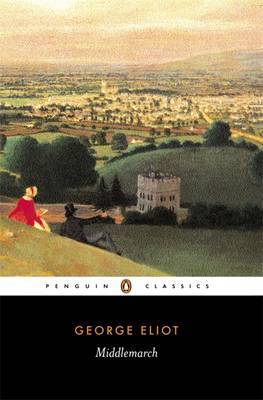
  • Classic read: My book group’s current classic read is Middlemarch by George Eliot.  We’re reading and discussing two chapters per week, aiming to finish in January.
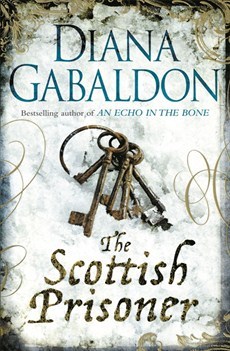
  • The Scottish Prisoner by Diana Gabaldon. An ongoing group read, two chapters per week — we’ll be finished in December.

So many books, so little time…

boy1Save

Save

Save

Save

Save

Save

Save

Save

Save

Save

Save

Save

Save

Save

Save

Save

Save

Save

Save

Save

Save

Save

Save

Save

Save

Save

Save

Save

Save

Save

Save

Save

Save

Save

Save

Save

Save

Save

Save

Save

Save

Save

Save

Save

Save

Save

Save

Save

Save

Save

Save

Save

Save

Save

Save

Save

Save

Save

Save

Save

Save

Save

Save

Save

Save

Save

Save

Save

Save

Save

Save

Save

Save

Save

Save

Save

Save

Save

Save

Save

Save

Save

Save

Save

Save

Save

Save

Save

Save

Save

Save

Save

Save

Save

Save

Save

Save

Save

Save

Save

Save

Save

Save

Save

Save

Save

Save

Save

Save

Save

Save

Save

Save

Insta-Reaction: Outlander, Season 4, Episode 3

Season 4 is here! My intention is to write an “Insta-Reaction” post for each episode soon after viewing, to share some initial thoughts, questions, reactions — you name it.

Warning:

Spoilers

I may be talking about events from this episode, other episodes, and/or the book series… so if you’d rather not know, now’s your chance to walk away!

Outlander, episode 403: “The False Bride”

The official synopsis (via Starz):

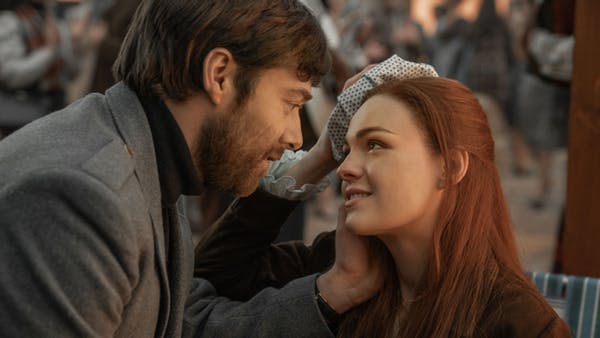
Jamie and Claire search for a place to call home. Meanwhile, in the 20th century, Brianna and Roger’s romance heats up and then fizzles during a road trip that winds up highlighting their differences.

My take:

Major plot points:

  • Jamie and Claire leave River Run to set out for the mountains, planning to settle in a town there and start a new life.
  • A thunderstorm strands them in the woods, where Claire discovers a strange skull.
  • They find a beautiful location and decide to settle there.
  • In 1970, Roger and Brianna go to a Scottish festival in North Carolina.
  • Roger proposes to Brianna, but she’s not ready for marriage.
  • This seems to be the end of their relationship. *sniff*

Insta-reaction:

Episode 403, “The False Bride”, is not particularly action-packed, but it does present some iconic moments and emblems near and dear to book-readers’ hearts, and sets the tone for both Claire and Jamie’s new life as well as the 20th century story involving Brianna and Roger.

Jocasta blames Claire for denying Jamie a good life as a landowner, a chance to become the laird he was meant to be, but Claire holds her own. Jocasta is one tough cookie, but Claire’s spine is just as strong. Meanwhile, Ian asserts himself to Jamie and makes Jamie see that Ian isn’t a “lad” to have all his decisions made for him anymore. Jamie graciously concedes that Ian is man enough to make up his own mind now, and Ian chooses to stay in America with Jamie and Auntie Claire. Luckily for all concerned, there aren’t any telephones, so they won’t be on the receiving end of some choice words from Jenny when she finally finds out that her boy isn’t coming home to her after all.

And we meet yet another important four-legged Outlander character: Clarence the mule! I admit it — I giggled when he was introduced. Clarence, like Rollo, is a part of the story and a member of the Fraser family.

Claire and Jamie get some quality time together in the woods, riding, talking, and camping under the stars. Jamie worries that he has nothing to offer Claire, but as she makes clear, all she really wants and has dreamed of is the chance to finally create a home with him. Just think of it — all these years, all these adventures, and yet Claire and Jamie have never truly had a home together. They also discuss Brianna’s future and her lack of career plans. For Jamie, it’s unheard of for a young adult to be trying to find their direction in life — either they have a calling, such as Claire being born to be a healer, or they go into their family’s trade. No such thing as being “undeclared” in the 18th century!

The discovery of the skull and Claire’s vision of the Native American ghost is pretty much straight from the book. Hate to say it, but the bit with her shoes comes off a bit silly on the screen, but that’s okay — I don’t suppose it’s any sillier than touching a big stone and traveling 200 years, is it?

There are key discoveries on the trip — a patch of strawberries, the opal, the silver fillings on the skull. I love how the show keeps to the important visuals that really call back to the source material, yet feel organic as presented. The view of Fraser’s Ridge is just absolutely lovely. It’s easy to see how Jamie and Claire could be swept away by the sight, and feel so strong a connection to this place, enough to want to make it their own.

Meanwhile, I was really charmed by the 20th century storyline. As always, the show does a great job of setting the tone through the clothing, music, cars, and even fast-food choices that surround the characters. It was so nice to see Brianna and Roger again, and the juxtaposition of a Highland fair in the North Carolina hills with Jamie and Claire’s travels through the same land worked really well. The festival was perfect, and I loved seeing Brianna and Roger enjoying themselves together, especially in a setting where Brianna could feel connected to her Scottish roots.

Ah, and let’s not forget the silver bracelet! Another book element, nicely done.

It all falls apart, of course. Roger is in love with Brianna, and while she’s ready to sleep with him, he only wants her sexually in the context of committing to a life together. He is a bit much in this scene, although with the best of intentions and the biggest heart. Still, he’s not doing a great job of reading Brianna — the more he gushes on about getting married, having a home, having a bunch of kids, the more freaked out Brianna gets. It’s not just that she’s young, still in college, still trying to figure out what she wants in life. She’s also haunted by not knowing what’s become of her mother. Did she make it back to Jamie? Are they together? Are they safe? What’s more, Brianna is well aware of her mother’s own history, having fallen in love at a young age and gotten married, then finding that her heart belonged elsewhere. Brianna is worried that it’s too soon for her to make a big decision like marriage, but Roger takes this as rejection.

I can relate to Brianna’s reaction, absolutely — it does feel quick, and so much in her life is up in the air. She has feelings for Roger, but she’s not ready to decide her whole life at the moment. Sigh. An ongoing refrain for so many fans while reading the books is “Poor Roger!” — Diana Gabaldon just isn’t kind to his character. Sadly, the end of this episode is the first “Poor Roger” moment, but it won’t be the last.

(Poor Roger!)

Insta-reaction wrap-up:

This was a slower episode, in many ways, yet I loved it. The focus here is on the characters and their relationships, and I felt like this episode gave the two couples room to talk, to relate, and to plan. Sadly for Roger and Brianna, things are bumpy, but of course this is just the beginning of their story. Meanwhile, Jamie and Claire have a mostly peaceful ride together, and it’s just right and sweet and deserved for these two to have time to be happy and safe in one another’s company.

And furthermore…

I know this season was filmed in Scotland, but damn! They’re making fake North Carolina look so, so beautiful!

Save

Save

Save

Save

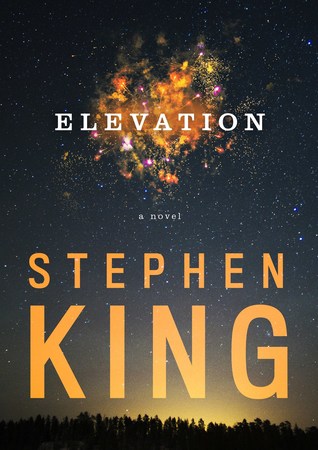
Take A Peek Book Review: Elevation by Stephen King

“Take a Peek” book reviews are short and (possibly) sweet, keeping the commentary brief and providing a little peek at what the book’s about and what I thought.

Synopsis:

(via Goodreads)

The latest from legendary master storyteller Stephen King, a riveting, extraordinarily eerie, and moving story about a man whose mysterious affliction brings a small town together—a timely, upbeat tale about finding common ground despite deep-rooted differences.

Although Scott Carey doesn’t look any different, he’s been steadily losing weight. There are a couple of other odd things, too. He weighs the same in his clothes and out of them, no matter how heavy they are. Scott doesn’t want to be poked and prodded. He mostly just wants someone else to know, and he trusts Doctor Bob Ellis.

In the small town of Castle Rock, the setting of many of King’s most iconic stories, Scott is engaged in a low grade—but escalating—battle with the lesbians next door whose dog regularly drops his business on Scott’s lawn. One of the women is friendly; the other, cold as ice. Both are trying to launch a new restaurant, but the people of Castle Rock want no part of a gay married couple, and the place is in trouble. When Scott finally understands the prejudices they face–including his own—he tries to help. Unlikely alliances, the annual foot race, and the mystery of Scott’s affliction bring out the best in people who have indulged the worst in themselves and others.

My Thoughts:

I’m not sure what to say about Elevation, or even how to categorize it. Is it horror? Not in the jump-scare, things-that-go-bump-in-the-night, monsters-eating-your-face sort of way. But does the idea of losing weight without losing size, and with a day you’ll weigh zero pounds looming, scare you? Then yes, you might call this horror. Or fantasy, in that I’m pretty sure there’s no such documented case of a person being perfectly healthy, losing weight, and causing anything he/she touches to have zero weight — sounds pretty fantastical to me.

All that being said, my main take-away here is that Elevation is a truly excellent read — brief, spare, and finely crafted, with sharply defined characters, mounting tension, and an overall feeling of both well-being and loss permeating the entire story. Scott Carey is a likable guy stuck in a weird situation, who tries to make the best of things by doing his part to make a small difference in the lives of the people he cares for.

And despite the short length of the story, it was plenty of time to get emotionally involved. Was that a lone tear making its way down my cheek as I read the last few pages? I’ll never tell.

Beautifully written, Elevation is a quick, low-commitment read that will leave you feeling — dare I say it? — elevated.

_________________________________________

The details:

Title: Elevation
Author: Stephen King
Publisher: Scribner
Publication date: October 30, 2018
Length: 146 pages
Genre: Fantasy/horror
Source: Purchased

**Save

Save

Save

Save

Save

Save

Save

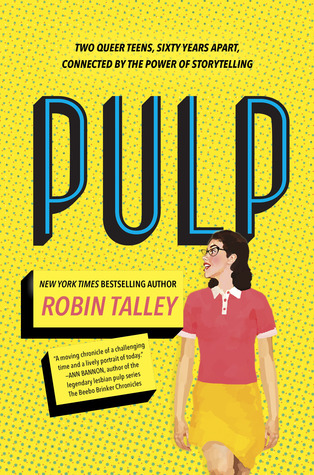
Book Review: Pulp by Robin Talley

In 1955, eighteen-year-old Janet Jones keeps the love she shares with her best friend Marie a secret. It’s not easy being gay in Washington, DC, in the age of McCarthyism, but when she discovers a series of books about women falling in love with other women, it awakens something in Janet. As she juggles a romance she must keep hidden and a newfound ambition to write and publish her own story, she risks exposing herself—and Marie—to a danger all too real.

Sixty-two years later, Abby Zimet can’t stop thinking about her senior project and its subject—classic 1950s lesbian pulp fiction. Between the pages of her favorite book, the stresses of Abby’s own life are lost to the fictional hopes, desires and tragedies of the characters she’s reading about. She feels especially connected to one author, a woman who wrote under the pseudonym “Marian Love,” and becomes determined to track her down and discover her true identity.

In this novel told in dual narratives, New York Times bestselling author Robin Talley weaves together the lives of two young women connected across generations through the power of words. A stunning story of bravery, love, how far we’ve come and how much farther we have to go.

This remarkable book pulls off the tricky feat of making us care about characters in two separate narratives, with neither one feeling like filler or killing time before returning to the important part of the story.

In Pulp, we follow a contemporary storyline about a high school senior, Abby, who is out and proud and very matter-of-fact about how diverse and free her world is. Most of her friends fall somewhere within the queer rainbow, gay, bi, non-binary, and various permutations of all sorts. And it’s all good. Abby is part of a close-knit group of friends who delight in being politically active, attending rallies, fighting for justice, and making demands for society to be better than it is.

Abby’s life is not perfect, though. She still pines for her ex-girlfriend Linh, she’s stuck on her senior project, and her parents are doing a lousy job of hiding their inability to tolerate one another. She chooses the topic of her senior project at the last possible second, deciding to study lesbian pulp fiction of the 1950s and write her own version of these novels, inverting the tropes that were mandatory in the genre.

In the historical timeline, we meet Janet Jones, also a high school senior, whose life is highly regimented by her overly protective and rigid parents and their world of country clubs and social correctness. Janet stumbles across a lesbian pulp paperback, reads it, and realizes that these unnamed feelings of hers are actually shared by other people. She becomes desperate to connect with the author of one of these books, and at the same time, realizes that her feelings toward her best friend Marie are much more than just friendship.

The two narratives intersect in fascinating and unpredictable ways. Janet’s storyline is the more upsetting of the two for much of the book, largely because the world it shows is so hostile and repressive. Pulp does an excellent job of showing the terror of being gay at a time when there were no legal protections or rights for anyone who dared step outside the bounds of “normal”. Set during the Lavender Scare, this novel shows good, decent, hard-working people being hounded out of their families and jobs, spied upon, and having their lives ruined, all because of who they love and how they identify. Being closeted was a necessity, and the danger of discovery drove countless people to deny their own identities out of a desperation for survival.

Through Abby’s eyes, the awfulness of the 1950s for the LGBTQ community is especially vivid, as Abby’s modern perspective is challenged by her research into what others’ lives once were like. Seeing Abby come to realize the importance of the brave people who created new ways to live, form a community, and remain true to the themselves is quite beautiful.

I was less invested in the love story aspects of both Abby and Janet’s arcs, but very much loved getting to know them as people, to appreciate their challenges and strengths, and how each struggled in different ways and at different times to find themselves and to find a way to lead an authentic life.

Pulp is both a great novel and a great lesson on 20th century history. Reading about this chapter in LGBTQ history is moving and upsetting. The world has come so far, and there’s still a long way to go, but I think especially for the target YA audience, Pulp provides a fascinating and important perspective on social action, diversity, and identity.

Save

_________________________________________

The details:

Title: Pulp
Author: Robin Talley
Publisher: Harlequin Teen
Publication date: November 13, 2018
Length: 416 pages
Genre: Young adult fiction
Source: Review copy courtesy of the publisher via NetGalley

Save

Save

Save

Save

Shelf Control #143: Secrets of the Sea House by Elisabeth Gifford

Shelves final

Welcome to Shelf Control — an original feature created and hosted by Bookshelf Fantasies.

Shelf Control is a weekly celebration of the unread books on our shelves. Pick a book you own but haven’t read, write a post about it (suggestions: include what it’s about, why you want to read it, and when you got it), and link up! For more info on what Shelf Control is all about, check out my introductory post, here.

Want to join in? Shelf Control posts go up every Wednesday. See the guidelines at the bottom of the post, and jump on board!

cropped-flourish-31609_1280-e1421474289435.png

Title: Secrets of the Sea House
Author: Elisabeth Gifford
Published: 2013
Length: 303 pages

What it’s about (synopsis via Goodreads):

In 1860, Alexander Ferguson, a newly ordained vicar and amateur evolutionary scientist, takes up his new parish, a poor, isolated patch on the remote Scottish island of Harris. He hopes to uncover the truth behind the legend of the selkies—mermaids or seal people who have been sighted off the north of Scotland for centuries. He has a more personal motive, too; family legend states that Alexander is descended from seal men. As he struggles to be the good pastor he was called to be, his maid Moira faces the terrible eviction of her family by Lord Marstone, whose family owns the island. Their time on the island will irrevocably change the course of both their lives, but the white house on the edge of the dunes keeps its silence long after they are gone.

It will be more than a century before the Sea House reluctantly gives up its secrets. Ruth and Michael buy the grand but dilapidated building and begin to turn it into a home for the family they hope to have. Their dreams are marred by a shocking discovery. The tiny bones of a baby are buried beneath the house; the child’s fragile legs are fused together—a mermaid child. Who buried the bones? And why? To heal her own demons, Ruth feels she must discover the secrets of her new home—but the answers to her questions may lie in her own traumatic past. The Sea House by Elisabeth Gifford is a sweeping tale of hope and redemption and a study of how we heal ourselves by discovering our histories.

How and when I got it:

I bought a copy several years ago, after hearing recommendations from book group friends.

Why I want to read it:

Okay, a) Scotland! But b) it just sounds like a good story, with a dual timeline, the myth of the selkies, and family secrets. I’ve heard really good things about this author, but haven’t read any of her work. Have you?

__________________________________

Want to participate in Shelf Control? Here’s how:

  • Write a blog post about a book that you own that you haven’t read yet.
  • Add your link in the comments!
  • If you’d be so kind, I’d appreciate a link back from your own post.
  • Check out other posts, and…

Have fun!

Save

Save

Save

Save

Save

Save

Save
Save

Save

Save
Save
Save

Save