You know things are bad…

… when you can’t even enjoy a good book.

Sigh.

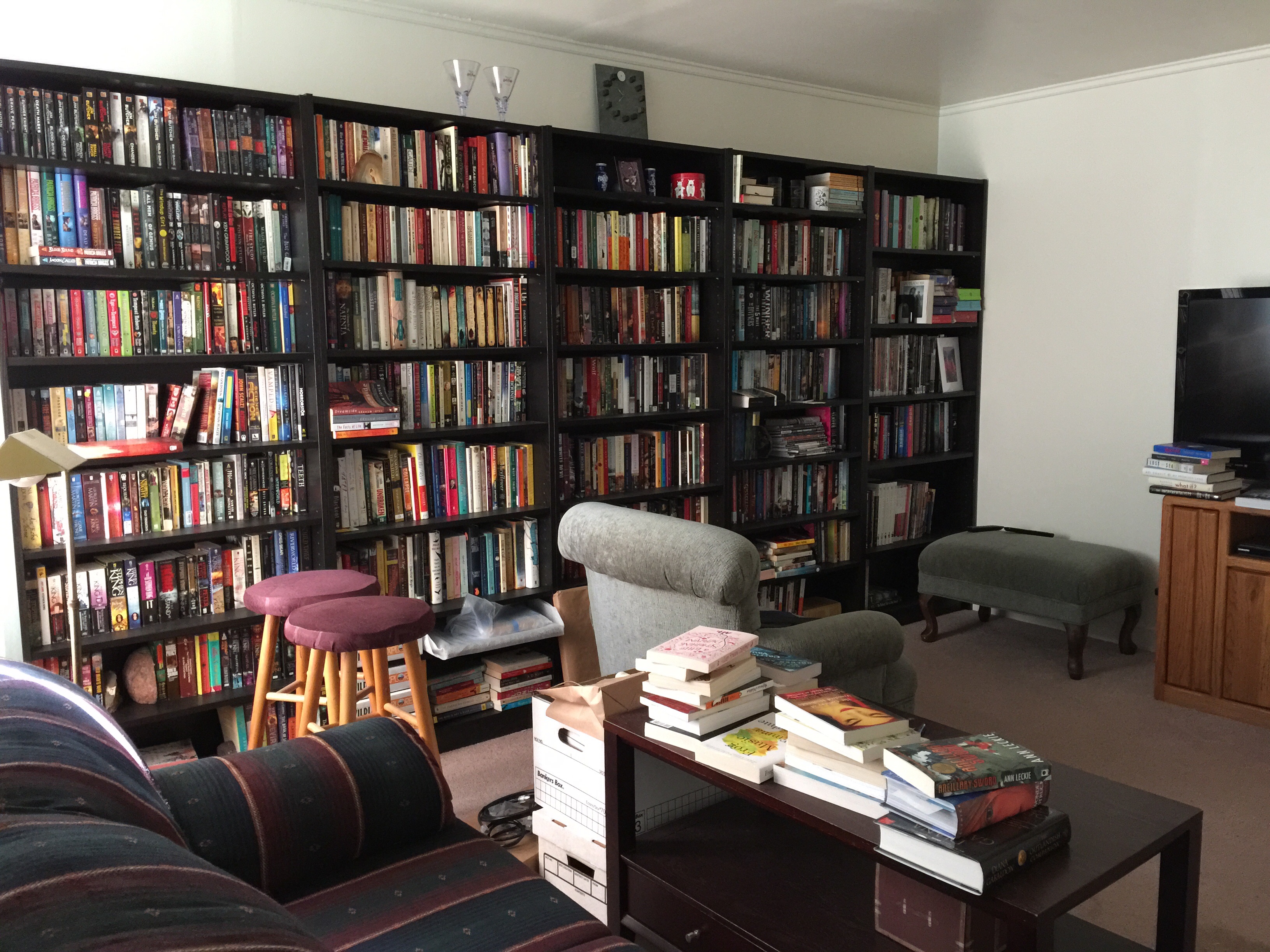
Dealing with some unexpected stuff in my “real” (aka, non-book-related) life that’s turned kind of icky. And the worst part is, when I try to escape into the pages of a book, I’m completely unable to concentrate.

Not fair!

When life sucks, the book cure should always work!

books5

Tried to listen to an audiobook while driving home, as I usually do, but it was completely pointless. I kept having to hit the “back” button when I’d realize that my mind had drifted away.

books

I shall persevere! I refuse to let the yuck keep me from my #1 cure for everything.

books4

If only I could get my brain to turn off the distractions…

books 2

But I’ll be brave, march forward, and go stick my nose inside my book one more time! If I try hard enough, I’m pretty sure I can make the rest of the world go away.

books6

After all:

books3


My Year of Austen

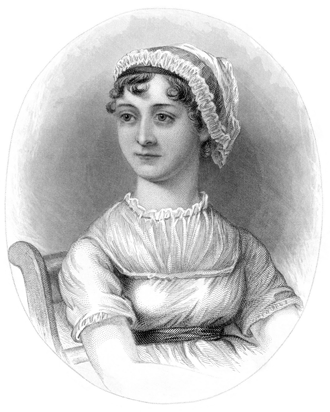
janeaustenQuite unintentionally, 2015 has turned into the year of Jane Austen for me… and that’s a very, very good thing!

How did it happen? Two major causes, really:

1) I happened to stumble across a promo for Alexander McCall Smith’s retelling of Emma several months ago, soon after reading (finally!) The No. 1 Ladies’ Detective Agency. I’d been planning on checking out more of AMS’s books, and thought this sounded like great fun.

2) I’ve gotten hooked on audiobooks in the last year or so. I listen to them during my daily commute, and I’ve become really addicted to doing my weekend walks with a bookish soundtrack.

So, I thought I’d like to read the new Emma, but realized that I should probably re-read the original first, since it’s been many a year since I first read it. Audiobook to the rescue! I listened to Emma as narrated by Juliet Stevenson, and thought it was simply brilliant! Juliet Stevenson is a remarkable audiobook reader, giving such personality to all the characters. And the story itself! It just cracked me up. I hadn’t remembered Emma as being quite so funny, but trust me on this one — given the times I started laughing in public while plugged into my IPod listening to this book (and the number of bizarre looks I got), it’s definitely got some hilarious moments.

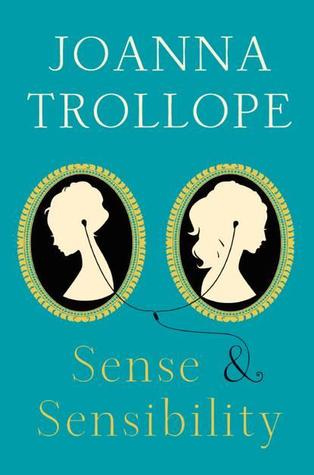
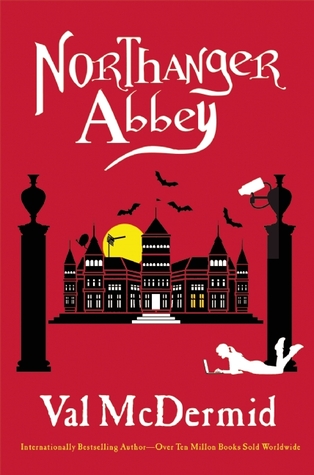
Moving on, I decided that I needed to know more about The Austen Project, which was conceived several years ago as a major publishing to-do. The concept? Invite contemporary fiction writers to re-write Jane Austen’s classic novels, setting them in modern times and giving them a new spin while remaining faithful to the original. I suppose the point is to show the timelessness of Austen’s works.

To date, there have been three books published as part of The Austen Project:

  • Sense and Sensibility by Joanna Trollope
  • Northanger Abbey by Val McDermid
  • Emma by Alexander McCall Smith

Sense & Sensibility_TAPNorthanger Abbey 2Adobe Photoshop PDF

Supposedly, the next book to be issued as part of the project is Pride and Prejudice, written by Curtis Sittenfeld, although I haven’t found a firm release date yet. Apparently, Persuasion and Mansfield Park have yet to be assigned.

(And also, apparently, The Austen Project has not been all that enthusiastically received, so perhaps the remaining books are being “shelved”, so to speak? I haven’t found anything to indicate future plans, one way or another.)

For me and my year of Austen, I haven’t quite made it to any of the re-tellings yet, although I now have the three books ready and waiting — and once I read them, I’ll be sure to share my thoughts. Meanwhile, having the modern versions on hand has definitely piqued my interest in re-reads. Hence, the audiobooks.

So far, I’ve listened to Emma and Northanger Abbey, and am now in the early chapters of Sense and Sensibility. The audiobooks are awesome, yo. I’m so completely enraptured by Juliet Stevenson’s ability to give voice to each character in a way that’s fresh and easy to identify, plus the way she infuses the lines with such snark and humor is just amazing.

Once I finish with the Austen Project books, I do believe I’ll keep going with my Austen mania. I’ve been wanting to revisit Persuasion for quite some time now. And to be honest, while I’m almost completely sure that I’ve read all of Jane Austen’s books, some niggling doubt is telling me that maybe I only think I’ve read Mansfield Park. I do have a battered old paperback on my shelf, and it certainly looks read. But then again, I know that I’ve seen the movie… no, no, I’m really 99% sure that I’ve read the book… I think.

In any case, I’ll be continuing on with Austen audiobooks all year. And meanwhile, I haven’t even scratched the surface of my Austen movie collection! First up, I think, will be Emma and then Clueless for contrast. (And – PS – it’s the 20th anniversary of the release of Clueless! Feeling old yet?)

Then onward… so many options!

And after all, there’s really never a bad time to re-watch Bride and Prejudice.

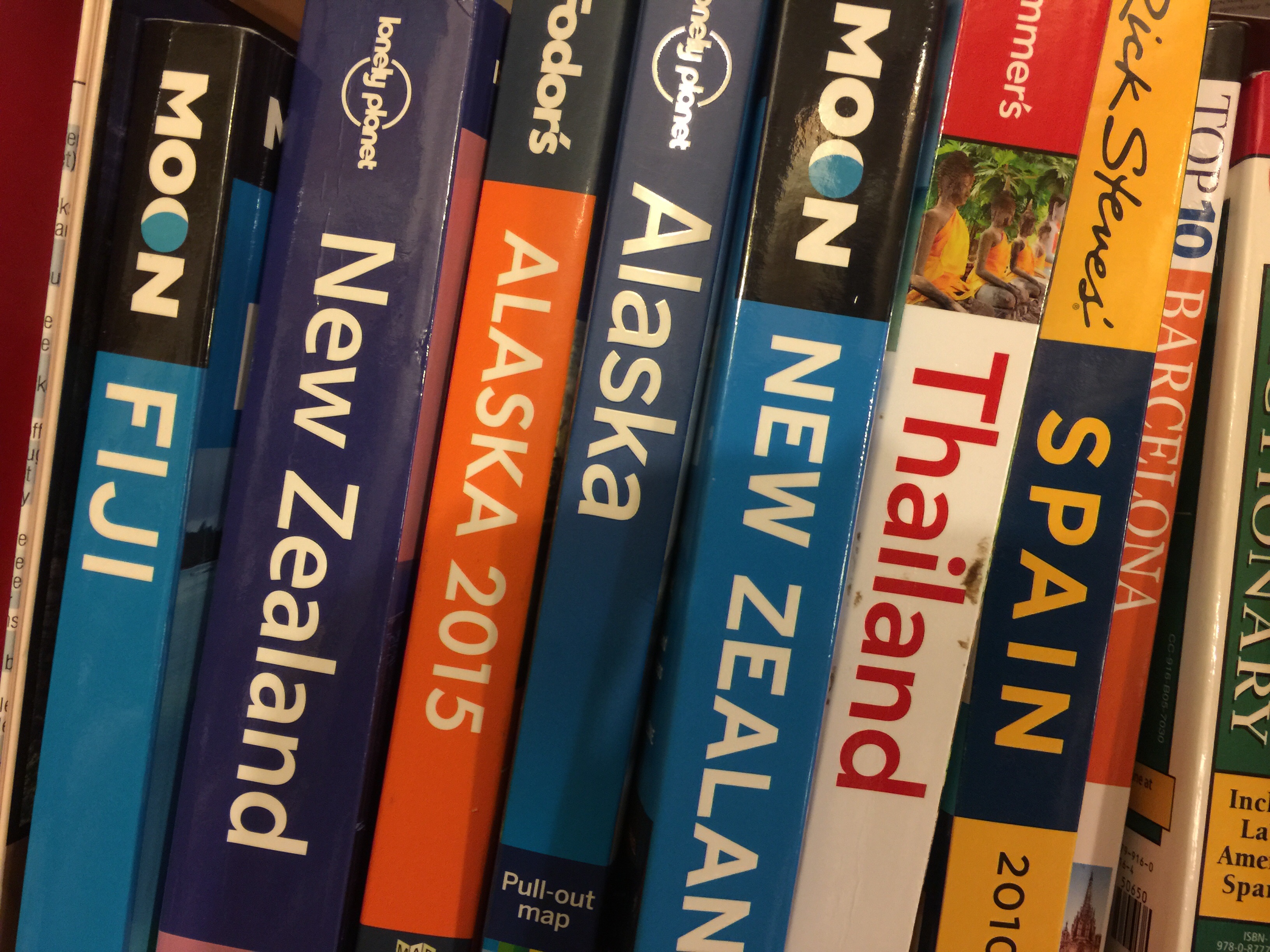
Travel guidebooks: Still useful, or too old-school?

image

I seem to have done a lot of travel planning this year, between a mother-daughter trip to Alaska, a fun trip with kids to Orlando, and a grown-ups only trip (coming up next week!) to Canada with my hubby.

I still use travel books, but I wonder if they’re becoming relics of ye olden days.

Because on the one hand, anything and everything can be looked up online, right? For hotels, I usually got to TripAdvisor before anywhere else. Flights? Kayak. Cars? AAA, but I shop around. In terms of attractions, museums, sightseeing, etc, going straight to Google yields a ton of links. And then there are the travel publishers themselves, all of whom seem to have some sort of online version of their printed books.

So why do I bother scooping up travel books?

For starters, I like getting a picture of the scope of my travel plans. Online, I flit from one link to another, mostly by whim, ending up in random places for brief snippets of time. When I sit down with a travel guidebook, I slow down and take my time. I look at the maps to get an overview, and check out the table of contents to see what the major areas to consider are. I use my handy-dandy post-it flags to mark off anything that catches my eye, and then flip back and forth between maps and listings to see how much I can do in a day. My first time through, I’ll usually read the intro sections, which generally talk about peak experiences, best times to visit, and give sample itineraries. Once I have a general sense of what I think I want to do, then I go back and start getting more details on the must-sees and must-dos.

I tend not to go by the books for hotel and restaurants, although I do use their recommendations as a general guidepost for what areas of a city offer what type of accommodations, what neighborhoods to aim for depending on what type of trip it is, and to get a sense of what the overall feel of a given city or area is. (For actual bookings, it’s definitely time to use the various online travel booking sites — Booking.com has really been coming through for me lately!)

What books to use? To a certain extent, they all tend to cover the same ground. I mean, no one is going to publish a travel guide to Alaska and not devote a lot of pages to Denali. But different books have slightly different flavors. Of the ones I’ve used lately:

Frommer’s: I’ve found these a bit dull. Sure, they’ve got all the basics, but the few I’ve looked at recently haven’t been particularly eye-catching, and I didn’t find them fun to use.

Fodor’s: I’d been thinking of Fodors as pretty drab, but on my recent trip to Alaska, Fodors was the only book I could get before my trip that had a 2015 revised edition. I ended up liking it a lot. Lots of maps, color pictures throughout, interesting and well-written background pieces on history, native cultures, and nature, and well thought out features such as “Quintessential Alaska”, “If You Like”, and “Great Itineraries”. The planning sections were really helpful, and we found that their restaurant and lodging recommendations were very good choices that helped us narrow down our options quite well. Two thumbs up!

Lonely Planet: Most of the time, my favorite. If there’s a new-ish Lonely Planet available for a trip I’m planning, I’ll grab it. I like their sample itineraries, color maps, detailed guides to sights and itineraries, and overall find their attitude and suggestions very much in line with my style of travel. I like to go, try, see, and do — less emphasis on shopping and tourist crowds, more emphasis on being outdoors, trying local experiences, and exploring sites and neighborhoods to get a true feel of a destination.

Moon Guides: These are fun! They have a low-budget feel, being all black and white except for the intro pages, but they also have a slightly funky, adventurous tone that I like. Their guide to Yosemite was a real favorite, especially useful for figuring out which trails would be great experiences but also appropriate for the various family members in my group and their different preferences and abilities.

DK: I haven’t used these much, and tend to see them as too photo-heavy and too light on text, but I did really like their skinny little volume that I took on a trip to Barcelona (Top 10 Barcelona). The book is organized around top 10 lists, making it super easy to use and really helpful for planning, especially with a limited number of days.

Of course, there are reasons both for and against using travel guide books:

Pros:

  • All in one resource
  • Always accessible, even without a wifi connection
  • Can be highlighted, dog-eared, and bookmarked to your heart’s content
  • Usually organized in an easy to use way
  • Handy sample itineraries
  • Generally pretty easy to carry around
  • I like the random factor: Flipping through the pages may happen to reveal a roadside stop or small-town attraction that you’d never hear of otherwise.

Cons:

  • Another book to lug around
  • Limited to the contents, versus the endless links online
  • Still need online resources to make reservations, get directions, etc
  • Travel books tend to be pricey
  • Can become outdated quickly, especially for information like museum hours, prices, restaurants, and other variables that can change from year to year

There are work-arounds to some of the cons — for example, at my library’s big sale each year, there’s always a huge table full of used travel guides. If you don’t mind one that’s 5 – 10 years old, you can scoop ’em up for a dollar or two. Or for a free option, the library itself seems to have a huge selection. My library allows an initial check-out period of 3 weeks, so for short trips, that’s plenty of time to borrow a book, use it on the trip, and return it when I’m done.

For me, the books still win out over relying on electronic resources. Besides liking the tactile experiences of flipping pages, opening at random, and using bookmarks, there are a couple of other key factors. One crucial point in favor of physical books is the constant (and free) access — no need to worry about being near a wifi hub, or running up expensive data roaming charges when you’re traveling overseas. As a secondary notion,  I think there’s a potential safety factor as well, although I haven’t really dealt with this much: Would you feel safer consulting a guidebook on a street corner in a foreign city, or pulling out your tablet or smartphone to look up information? It could make a big difference if you’re traveling in an area known for opportunistic pickpockets.

I’ll continue carrying travel books in my backpack as I roam the world… and I hope I’ll have many more opportunities to travel in all the years to come!

How about you? Do you use hard-copy travel books, or do you rely on Kindles or smartphones to guide you on your way? And if you like using travel books, do you have any particular favorites? Share your thoughts and recommendations, please!

So over it

Do you ever get to the point in your reading that if you pick up ONE MORE BOOK about [insert your most over-exposed genre here], you’ll simply run screaming into the night?

No?

Just me?

I think not.

We all have those moments, I’m pretty sure. Call it genre burn-out, plot overdose, or simply too much of a good thing — but I’d be surprised if there are any avid bookworms out there who haven’t had these moments in their bookish lives.

Some readers find a genre or subject or style that they love, and that’s all they want to read. And there’s nothing wrong with that! If you like what you like, and you’re happy reading what you like, go for it!

It just doesn’t work for me.

I guess I’m a hopper. I can’t read any one genre, any one setting, any one time period for more than a few books before I start getting a little batty. Sometimes, it’s just a matter of taking a break or switching things up. Sure, I’ll read a horror book or two, but then I’ll need to switch off with a historical novel, a contemporary love story, or a thriller or two before I’ll even consider horror again. Variety is the spice of life.

Still, there are certains types of books that I am JUST SO OVER at the moment, and I can’t imagine wanting to read more of these… is ever too strong a statement? Well, at least for a long, long time.

I am SO OVER… anything you might describe as “dystopian”. I don’t want weirdly artificial social groupings. No bizarre rituals to select careers, spouses, or social castes. No common objects or foods that are randomly illegal in a future society. No battles to the death for survival, no high-tech arenas or stages, no bizarre contests of wits or strength in order to be selected for… anything.

I am SO OVER… historical novels with a split timeline framework. A 21st century woman finds [insert <relic/artwork/journal/rare book/other old-timey-thing-of-value> here] — and then, poof! wouldn’t you know it, the very next chapter is all about the 18th or 16th or 12th or whatever-th century woman who originally owned or handled or created that MacGuffin-ish thing.*

*Carving out a very big exception here for Susanna Kearsley, because I love her books no matter what, and if she keeps writing dual timeline novels, I’ll keep reading ’em. Period.

I am SO OVER… YA novels in which a geeky/shy/not-exactly-popular ordinary boy winds up in the orbit of a mysterious, slightly damaged, unforgettable wild girl. And his life will never be the same. No more. Just no.

These are my “over it” types of books at the moment, although I’m sure if you asked me again in two months, I might come up with something completely different that I’m just so over.

What about you? What type of book are you just done with? Is there a particular storyline or plot device that you never want to see again?

Share your thoughts!

Blogger Spotlight: Meet Eugenia!

I have so many wonderful people in my life who are just as crazy about books and reading as I am! I thought I’d put together some reader and blogger spotlight posts to highlight some of the folks who I love talking books with. Getting the ball rolling…

image

Meet Eugenia! My friend Eugenia is someone I know from real life, an avid reader, and one smart cookie. She’s recently joined the book blogging world, and I’m thrilled to be able to chat with her about her new blog, Jewish Books Are Awesome:

Introduce yourself! Who are you, what’s your background, hobbies, interests, etc..

My name is Eugenia, coming to the web waves courtesy of Shargorod, Ukraine and Berkeley, California. I am a Jewish accountant (one of several in my family’s current generation) working for a Jewish Bay Area organization. I have absolutely no background in literature other than my abundant twenty-five years of love of reading and few dozen essays I had to write in college. I haven’t had an interest in writing books since my teenage years of poorly written poetry. I read. That’s what I do.

Why did you decide to start a blog? Why “Jewish Books Are Awesome?” How did you come up with the name, and what does it mean to you?

I started this particular blog as a bit of a joke initially. I’ve written in diaries for as long as I can remember and I have every single one I’ve written since the age of 13. I experimented with online diaries back in the ’90s and early ’00s with the help of Open Diary and LiveJournal, but those blogs had no real purpose other than spewing out my inner thoughts and experiences onto the world. They gave me an opportunity to share myself behind the anonymity of a computer screen, but eventually life got in the way and I found less and less time to talk about myself. And yet, the nagging thoughts continued. At one point about three years ago, I almost had it when I thought that I could turn my reading obsession into something tangible and started a generic book review blog…..but I got lazy and it never went past 4 entries. It may still live somewhere in the web clutches, but I can’t even find it. 🙂

Anyway, enough history (as if such thing is possible – I LOVE and LIVE history). About six months ago, I was having a silly conversation with my best friend (who is like a sister and is a rabbi!) on Facebook. Prior to this, I had started giving her Facebook community group Judaica book recommendations. She had recently self-published her first book and was telling me about an idea to promote her book. She offered bloggers a free copy of her book in exchange for a special feature on her author page complete with blogger bio and photo. So she says to me, “So it would look something like this – Example: Eugenia, Blogger at JewishBooksAreAwesome.com and provide link to their site.” I being the giant nerd, thought the name was brilliant and for some infernal reason decided to right then and there create a blog with that name before it had been taken. So really, blame my sister.

Can you tell us a bit about your blog? What’s your main focus? What types of posts might we expect to see?

Ultimately I had started a blog because I felt I had something unique to say. As a Jew I am very proud of my people and my heritage and it felt so natural to want to show the world, those who may know a little about us and those who may know a lot, that we are not just characters in news headlines and protests. Jews as a people have four thousand years of culture to offer the world. I wanted to try and offer a tiny slice of that. And what better way to share it with the world than through my love of reading? What better way to show the world that Jews are awesome than through written word?

My focus is specifically Jewish-themed books. These are books about Jewish culture, Jewish history, Jewish art, Jewish characters written by and large by Jewish authors but that is not in any way a requirement. So far I’ve done an even mix of fiction and non-fiction works and would really love to continue maintaining that mix. I noticed that I enjoy not just writing a single post about a book of choice, but often write a mid-read reflection of it as well. Occasionally I do throw in posts about my love of reading in general, I try not to be too partial to memes but sometimes they capture how I feel about reading so much that THEY MUST BE SHARED!

Has anything about blogging taken you by surprise?

I have been most surprised by the amount of work blogging takes. I used to think that I could just pick a book, sit down, read it, and then go right to talking about it. Book reviews are actual legitimate work. I found that I can do most of the above mentioned things easily (though reading a book in one sitting is a bit of a stretch) except the last. It’s rather hard to just get to talking. It’s hard to talk without any kind of a framework because without some form of structure, I feel that the reviews just become babble. No one wants to read a disorganized mess. In line with that, I was surprised by the fact that in order to have a structure in my reviews, I actually needed to take notes. Kind of like where I was in college. Notes about the characters, notes about the events I thought pivotal. And the odd curious quote.

What’s been your best experience as a blogger so far?

I am very easy to please. All it takes is the little WordPress notification at the top of my tablet toolbar and I am happy as a clam. I’m just excited people are giving it the time of day. I knew that with a niche blog like mine it would be a challenge getting people interested, but I’ve had the pleasure of knowing that people on multiple continents have dropped in on my blog. Australia, India, UK, Philippines. How cool is that? It just blows my little heart that people are interested in what I have to say.

What book that you’ve featured on your blog has meant the most to you or had the strongest effect on you, and why?

When one reads books about Jews, one can never escape the specter of the Holocaust. Three Minutes in Poland has had the most profound effect on me and my readers’ reactions to it have reassured me that I was on the right path with this blog and its purpose. I wouldn’t want to turn this particular answer into yet another discussion of the book (ok, I actually would but I don’t think we have time for that so here is a link to the review instead.) But let it suffice that reading about Glenn Kurtz’s doggedly determined search of the people featured in his grandfather’s film shows to me how relevant history still is. They always say “Never Forget” and yet, we are human so we do. Books like Three Minutes serve as more than a testament to the dead, they are reminders of our relevance as a people and how extremely important it is for people to continue to be educated about what could be. One should never ever stop learning.

Tell us about your reading habits – what do you read for fun?

FYI, I do not just read Jewish-themed books. I’d probably lose my mind a bit if that were the case. I’ve been trying to read a non-blog book while reading something for the blog. I have been known to indulge in chick lit though I have my standards. I am a big fan of Marian Keyes and Jennifer Weiner.

What’s your favorite reading spot?

I like to read in bed the most but I have been blessed with the ability and desire to read just about anywhere. In a passenger seat of a moving car, standing on a packed commuter train, walking through a hallway at work, occasionally in the bathroom…..

Do you have any requirements for when you’re reading (music, location, no talking, etc.)?

If I am really focused on a book, I can’t handle much noise. Music generally isn’t a good idea though I can handle talking around me as long as no one is expecting me to fully pay attention to the conversation. I’ve been known as a child to read in the presence of classmates while ignoring them completely.

Besides the books you feature on your blog, what’s your favorite book from the last 12 months?

I’ve really fallen in love with Patricia Briggs’ Mercy Thompson series. I think I wolfed down all 8 books in less than three months.

LOL. “Wolfed” down. Oh, that’s awesome…

What book do you find yourself recommending most often?

Other than Three Minutes in Poland? You might think I am a bit of a weirdo, but Great Mortality by John Kelly was fantastic. It’s the history of the European Black Death aka the Black Plague that took out millions in the late 1340s and beyond. I am also a huge fan of Mary Roach’s work, especially Bonk. Anything by Lisa See and Jim Butcher. Hands down.

Any books you regret reading?

I haven’t thought much of Jane Green’s and Sophie Kinsella’s last -oh I don’t know- 3 books each? Either I grew up or their story telling ability just went out the window.

What are your hopes and dreams for Jewish Books Are Awesome?

I hope people keep reading and enjoying my musings. Now is not the easiest time to be a Jew and I want to continue conveying to people how fascinating my people and our stories are. We are the People of the Book (Shout out to Geraldine Brooks!) and it’s only appropriate that through books I can share our history and culture.

Anything else curious readers should know?

I can read in two and a half languages! I am also a pretty bad-ass embroiderer and a halfway decent crocheter.

Thank you, Eugenia!

Don’t forget to check out her reviews and musings at Jewish Books Are Awesome!

cropped-flourish-31609_1280-e1421474289435.pngDid you enjoy this post? I did! I plan to continue shining a spotlight on the readers and writers in my life, whenever inspiration strikes (and I can find willing victims). If you have suggestions for future spotlight posts, please let me know! And I’d really love it if you’d leave a comment or two on my chat with Eugenia. Thanks!
The Fault in My Stars (or, why I don’t use a ratings system)

If you’ve read any of my book reviews — well, first of all, thank you!

But as I was saying, if you’ve read my reviews, you’ll notice something missing that seems to be almost standard on book blogs — a ratings system. And that’s a deliberate choice, not just an oversight or poor planning.

I’ve debated adding in a ratings system off and on since I started blogging. And I always come back to the same conclusion — stars or their like just don’t really work for me.

Let’s look at Goodreads: The ratings system on Goodreads does actually have an official set of definitions:

1-star: Did not like it
2-stars: It was ok
3-stars: Liked it
4-stars: Really liked it
5-stars: It was amazing

That’s kind of vague, isn’t it? How do you differentiate between “it was ok” and “liked it”? If all I can say about a book is that I liked it, then that probably means that it was okay. Hmm. *scratching head in befuddlement*

So are the stars meants to be a comparison? A 5-star book should be the best ever, a 3-star book would be average among all books read, and a 1-star book would be the bottom of the barrel. But compared to what? Here’s where I get completely mixed up.

If I read a YA novel by a new writer and I think it was really good, I’ll give it four stars. Fine.

But then what does that mean in terms of well established, truly excellent writers? Is a 4-star debut YA novel equivalent in quality to, say, The Two Towers by J. R. R. Tolkien? Of course not. Yet by the Goodreads ratings scale definitions, I’d give The Two Towers four stars because, while I really liked it, I wouldn’t call it amazing.

And then I fall into the same-author-relativity trap. I love Stephen King, but I love some of his books more than others. My absolute favorites get 5 stars, without a doubt. But when I read a Stephen King book that doesn’t appeal to me as much, do I give it 3 stars because relative to other SK books, I only liked it? Or would I say that in the grand scheme of all books ever, any SK book should be at least 4 or 5 stars simply because even at his less-stellar, he outwrites a good percentage of other writers?

Argh. I’m overthinking things, I know. And on Goodreads, I play along and assign stars. I try to have some level of consistency, and reserve 5-stars only for books that stand out as the best of the best. But below that, it gets murky. I tend to give 4-stars to any book that I like a lot, but wouldn’t consider the very tip-top. Three stars tend to be my “fine” books — you know, the book was fine, but I wouldn’t write home about it or anything. Two-stars are already in the realm of not liking. My two-star books aren’t “okay” (as Goodreads would have us think) — they’re books that I didn’t care for. And one-star? Hated. That’s all, plain and simple. (For the sake of fairness, I don’t give any rating to DNF books, since I don’t have enough information to assess the overall quality — unless I quit because the writing was atrocious, in which case, 1-star!)

How does that relate to what I do here on my blog? It’s the same thing, really. When I read a book, I have so many feels. Did it make me laugh? Did I tear up just a bit? Maybe I gave an unladylike snort over a particularly snarky passage, or I shook my head in bewilderment over some bone-headed plot twist. Did I like the characters but thought their actions were silly? Did I think it was well-written, but something about it just didn’t really appeal to me? Was it a foray into a genre I don’t typically read, and therefore I don’t feel well-equipped to judge its success?

How do I boil all that down to a quantitative rating, whether it’s stars, happy faces, or dancing bears?

Generally speaking, I can’t. I can tell you if I enjoyed reading a book, and if so, what I especially liked about it. I can tell you when I have mixed feelings about a book, and what are the different factors that play into my reaction. If I think some people might enjoy a book, but not others, I’ll say so. And on and on and on. So much goes into reacting to a book, and for me, I need to write it all out.

On the flip side, I do sometimes appreciate it when I’m visiting other book blogs and see a review for a book I’m curious about. Especially if it’s one I still plan to read, I’d rather not know much about it ahead of time, but I do want to know if the blogger liked it or not. So seeing someone else giving a book 5-stars or 3-stars or 1-star is helpful in that case — a quick and easy summary of the person’s opinion that I can get at a glance without reading through the details.

If anything, I could see myself using a report card style of ratings. I think I know what an A+ means, relative to a C or a D-. If I graded the books I read, rather than tried to assign stars, I think I could achieve a greater level of consistency in terms of what the grade means.

Of course, there’s still the Stephen King problem. Is second-tier Stephen King (or Tolkien or Austen or whoever you consider top of the heap) still better than some other writer’s absolutely best work? Is it fair to grade everyone relative to the best? Are there different standards for different genres, different topics, different levels of comedy and tragedy?

I keep coming back to the same old conclusion: For me, as a reviewer, I need words to express my thoughts, not stars. (Or smiley faces. Or dancing bears.) I don’t seem to be capable of assigning a number — which I think of as objective, definite, and purely quantitative — to something that is essentially subjective, personal, and qualitative.

What do you think? As a reviewer, do you like using ratings or do you feel boxed in by them? When you read reviews, do you prefer the written word or to see a grade or star-rating?

Please share your thoughts!

ARCs. Argh.

I think I’m giving up on ARCs.

More specifically, I’ve just had it up to here with badly formatted e-ARCs.

In theory, digital review copies should make my life as a reader, reviewer, and blogger easier, but lately, I’m finding them nothing but frustrating.

tux-161439_1280My most recent DNF was an e-ARC, and while the story itself didn’t particularly grab me, there were substantial formatting issues that certainly didn’t help. This historical novel included a map at the beginning showing key story locations and landmarks. Unfortunately, whether I tried using my Kindle, IPad, or phone app, the map appeared in three separate sections and was impossible to read. Funny, but if there had been no map, I wouldn’t have missed it. But knowing that I should be able to see it, but having it be unreadable, just ticked me off.

Beyond that, it was the usual litany of digital ARC woes:

No paragraph breaks. Dialogue without line breaks. No chapter breaks built into the document — so flipping back to the beginning of a chapter to check a date or a title is impossible.

Problems like these just make the reading experience so unenjoyable. I’ve read digital ARCS where the sections breaks were missing, so from one paragraph to another, a whole week has gone by in the narrative. I’m sure that would be clearer in the printed version, but until I figured this out, I just thought it was a badly written book!

And that’s really the crux of the matter: When the formatting gets in the way of being able to follow the story, or is so clunky that I have to stop and think about whose line of dialogue I just read, then my brain is focused on the wrong thing. How can I concentrate on the narrative and enjoy it if I’m constantly having to figure out the book’s layout issues?

girl-160172_1280If I had one suggestion to make to publishers, it would be to provide Kindle-ready ARCs rather than PDF versions.

I hate to say it, but even knowing that the finished product will not have all the format flaws, they’re really hard to ignore. I know better than to criticize the formatting in my reviews, but at the same time, I do believe I feel less favorably toward books when I have to struggle with bad formatting to get through them. If I don’t enjoy the reading experience, how can I enjoy the book itself?

At this point, I think I’ve reached some sort of moment of truth when it comes to digital ARCs. Right now, I have a backload of eARCs from NetGalley, and I want to honor my commitments and work my way through them… slowly. But going forward, I’ve more or less decided to cut back on (or eliminate altogether) any new NetGalley requests.

Let’s face it. I have plenty of books to read without getting digital review copies. Plenty. Piles. Boatloads. And if I don’t read the newest new releases the second they come out, I’ll survive. Hey, that’s what libraries are for.

Meanwhile, I’m happy to read physical ARCs (hint, hint, in case anyone who cares is reading this!) — but mostly, I’ll stick to the books on my shelf, the books I borrow from the library or my kind bookish friends, and the perfectly formatted books on my Kindle.

After all…

Life’s too short to read badly formatted books.

How about you? Does bad formatting get in the way of your enjoyment of ARCs? Or do you consider it a reasonable trade-off for access to early copies of upcoming releases?

Please share your thoughts!

2015: Reading on a Whim

2015 reading

I know it’s time to make resolutions and set goals for 2015, and I’ll do that… soon-ish.

But for now, there’s one main goal that I have in mind, and while it should be a no-brainer, I’m finding that I actually have to say it, write it down, and carve it in stone. (Or I would, if I had a chisel and a block of marble handy.)

My goal is this:

In 2015, I’m going to concentrate on reading… whatever I feel like.

Shouldn’t that go without saying? But it’s really not that easy.

Over and over again, despite my best intentions, I find my reading life consumed by commitments and obligations. There are book groups. Challenges. Discussions I’ve agreed to take part in. And all of it means that my reading is determined ahead of time and marked on a calendar… and I end up feeling frustrated and unfulfilled.

Biggest culprit? The domineering, dictatorial spreadsheet I set up to track my ARCs. I thought it was brilliant at the time — a clear, concise way of tracking all of the review books I’d yet to read, sortable by publication date, source, and whether I’d committed to a particular blog post date or other publicity event. It is actually great for all of those purposes — but when I find myself consulting the spreadsheet to figure out what to read next in order to stay on track, well, something is wrong with the system.

I get really antsy. I start feeling like I’m being told what to do (which I do not respond to well, in reading and in life in general).

This is why I’m not a very good book club participant. I’m fine, so long as we’re reading books that I want to read anyway. But when I start feeling compelled to read something that’s not really my choice, I get resentful.

This is also why I’ve stopped doing book-related challenges. I don’t want to pick books based on a category I need to check off or what letter of the alphabet the title starts with. It’s fun to see how well my reading fits in (sometimes), but it’s not how I want to decide what I read.

The bottom line, for me, is that I’ll never have enough time to read all of the books that I want to read. And when I pick and choose, I want it to be based on what I want AT THAT MOMENT.

During the last two weeks, I put aside all my lists and just started picking up the books that I felt like reading. How ridiculous is it that this felt like a big break-through for me, a special sort of treat?

Answer: It’s completely ridiculous.But at the same time, I had the weirdest feeling of freedom. I felt like proclaiming from the rooftops, “I can read whatever I feel like reading!” Crazy, right?

And so… here I am. I find myself in the odd situation of having to remind myself, yet again, that I read for fun and because I love it. Period.

I have enough responsibilities and commitments in my life. I read for me.

How does this translate into a resolution for 2015?

Resolved

In 2015, I commit to reading on a whim. I will read whatever book suits my mood or catches my eye. I will not be bound by calendars or deadlines. I commit to reading the books that I want to read, when I want, on whatever schedule I want.

In 2015, reading will be fun. And also, I hope, stimulating, inspiring, moving, educational, thought-provoking, laughter-inducing, and surprising. But overall, I want to enjoy reading 100% of the time.

Reading on a whim. Oh yes, 2015 will be a very good year!

2014: My year in books

book stack best ofI started working on a big end-of-year wrap-up post, with snazzy graphics and statistics… and realized that I just didn’t feel like it this year. So, skipping all the bells and whistles, here’s a quick peek at what I really loved in my bookish life in 2014:

[Note: Click on the links to see my reviews if you’re interested!]

Goodreads stats as of 12/27/2014:

Total number of books read: 145
Total number of pages read: 45,345
Star rating used most often: 4 stars (57 total)
Star rating used least often: 1 star (only 1 this year!)
Number of five-star ratings: 51

Longest book read: The Fiery Cross by Diana Gabaldon, 1443 pages (a re-read)
Shortest book read (excluding graphic novels and novellas):
Fahrenheit 451 by Ray Bradbury, 180 pages


Bests & Other Stuff of Note

Best children’s (middle grade): Dealing with Dragons by Patricia C. Wrede
Best young adult: Lies We Tell Ourselves by Robin Talley
Best contemporary: The Storied Life of A. J. Fikry by Gabrielle Zevin
Best graphic novel: Serenity: Leaves on the Wind by Zack Whedon
Best sci-fi/fantasy: The Martian by Andy Weir
Best love story: Anything by Jojo Moyes! (Including One Plus One, The Ship of Brides, Me Before You, and The Last Letter From Your Lover)
Best historical fiction: I Shall Be Near to You by Erin Lindsay McCabe
Best urban fantasy: Skin Game by Jim Butcher
Best domestic drama: The Husband’s Secret and Big Little Lies by Liane Moriarty

Best new volume in an ongoing series: Big surprise — it’s gotta be Written in My Own Heart’s Blood by Diana Gabaldon.

Best end to a great series: The Book of Life by Deborah Harkness

Best book that defies categorization: Midwinterblood by Marcus Sedgwick

globe-32812_1280Around the world in a book: My reading took me to some amazing places this year…

Botswana: The No. 1 Ladies’ Detective Agency by Alexander McCall Smith
Yemen: Henna House by Nomi Eve
Iceland: Burial Rites by Hannah Kent
Australia: Hello From the Gillespies by Monica McInerney
Spain: The Mapmaker’s Daughter by Laurel Corona
France: The Splendour Falls by Susanna Kearsley
Syria: City of Jasmine by Deanna Raybourn

Journeys through time: I traveled to many different eras via terrific books; most notably…

American Revolution: Written in My Own Heart’s Blood by Diana Gabaldon
Civil War: I Shall Be Near to You by Erin Lindsay McCabe
World War II: Unbroken by Laura Hillenbrand, The Ship of Brides by Jojo Moyes, Hotel on the Corner of Bitter and Sweet by Jamie Ford

Speculation and science fiction: The medical sci-fi thrillers I enjoyed most were:

Archetype and Prototype by M. D. Waters
The Curiosity by Stephen P. Kiernan

Oh, the horror!

Best subtle creepiness: We Have Always Lived in the Castle by Shirley Jackson
Best horror/love story: Horns by Joe Hill
Best horror/furniture catalog: Horrorstör by Grady Hendrix
Best horror involving huge insects: Grasshopper Jungle by Andrew Smith

Best new obsession: The Lunar Chronicles series by Marissa Meyer

Biggest let-down: I finally got around to reading The Unwritten graphic novel series by M. R. Carey… and found it increasingly incomprehensible (and unenjoyable) the farther along I went.

Best return to childhood: I reread the D’Aulaires books on Greek and Norse mythology, and loved them all over again.

Best author event: Hands down, my biggest bookish thrill this year was traveling to Phoenix, Arizona for an appearance and book signing by Diana Gabaldon.

DG 011

She’s signing my book! She’s signing my book! She’s signing my book. (Um, yes, it was a bit exciting.)


Best bookish TV event of 2014: The debut of Outlander on Starz!

Claire and Jamie!

Claire and Jamie!


Most eye-catching covers:

jacksonbreak-up artistharrowgate

Quirkiest titles:

The Serpent of Venice by Christopher Moore
Six Feet Over It by Jennifer Longo
The Shambling Guide to New York City by Mur Lafferty

Best getting-thrown-for-a-loop: Books with twists or plots that took me by surprise:

We Were Liars by E. Lockhart
The Girl With All the Gifts by Mike Carey

Books about bookstores…

The Storied Life of A. J. Fikry by Gabrielle Zevin
The Moment of Everything by Shelly King
Goodnight June by Sarah Jio

Bookish delight, all year long:

All the many, many books which, for whatever reason, I can’t quite categorize but still really enjoyed (plus a few that are probably better off forgotten). It’s been a great year of reading. I can’t wait to see what treasures I’ll discover in 2015!

What were your favorite books of 2014? What surprised or excited you the most? Please share your top reads and recommendations in the comments!

Mood Rings & Mood Reading

Remember these from ye olden days?

mood ringMood rings! Gah, we were obsessed with these (briefly) in my middle school days. Every girl had to have one — and we took them seriously. Blue means you’re happy! Orange was… angry, I think? Red was supposedly in love. I don’t even remember any more, except that we loved them, we teased each other over what our rings said about our moods, and then the fad faded away, as such things do.

What does this have to do with reading?

Well, I’m having one of THOSE kind of days, stuck in the reading doldrums. Perhaps it’s a result of the reading week I’ve just had. I read a highly anticipated sequel that was mostly a disappointment, and then read another book that really fell flat for me. And now I look around at all the stacks of books waiting to be read, and I just don’t know what to read next.

Nothing is particularly calling my name. Choices abound. On the tops of my piles are a history book, some YA contemporary, a few random ARCs, and a classic or two. I want to read them all… but I don’t know what I want to read right now.

I need a reading mood ring!mood rings 2

Wouldn’t that be awesome? Instead of starting a book and reading a few pages, then sighing and looking for something else, wouldn’t it be great to have a magical mood ring that could identify exactly what the perfect next choice would be?

Blue ring? Pick up some epic fantasy, like Mistborn or The Lies of Locke Lamora!

Red? How about something with battles and blood, like a war epic or a history book or historical fiction? Maybe even some war-themed sci-fi, like Old Man’s War by John Scalzi?

Green? I’m thinking hints of magic, like a fairy tale retelling (Bitter Greens, perhaps) or some new urban fantasy, like Nicole Peeler’s Jinn and Juice.

Yellow? Hmm, I don’t know, perhaps some contemporary dramatic novels?

Purple? I’d go with YA, anything current and fun and bestselling, of course.

cootieThink of the possibilities! How about a Magic 8 ball that picks a genre for you? Or maybe a cootie catcher with eight different book titles inside?

For now, though, I’m kind of stuck. I have no magical devices or cheesy 70s artifacts to pick my next book for me! I guess I’ll have to do it the old-fashioned way… and just dive in, start a few books, and hope something clicks in a big way.

If not, I’ll be wandering the streets looking for a palm-reader to help me figure it all out.

Should I read some Stephen King today?

Should I read some Stephen King today?