
Book Review: Horrorstör by Grady Hendrix

HorrorstorYou’ll be forgiven for mistaking this unusual novel for an Ikea catalog. That’s the whole point, after all.

This square, chunky book features the Swedish design elements we know so well, where pieces of furniture have unpronounceable names and the product is really a lifestyle, not just individual items to buy. Glancing at Horrorstör quickly, you’ll see a floor map of the showroom, a guide to ordering and assembly, and even a job announcement… only the tiniest bit ominous, perhaps:

It’s Not Just a Job.

It’s the Rest of Your Life.

Hmmmm.

Welcome to Horrorstör, and the world of Orsk. Orsk is a US-based company acknowledged to be a cheap knock-off version of Ikea. At Orsk, you can buy a Brooka sofa or a Liripip wardrobe, enjoy meatballs in the cafe and let the children play, then stroll through the market floor, picking up a cart full of impulse buys before finally hitting the registers. The whole point of Orsk is to immerse the consumer, to make the process slightly disorienting, to ensure that no one just comes in and buys a chair, but rather, walks through the entire showroom viewing all the various lifestyles available for purchase.

Main character Amy is a floor partner, showing up each day to her low-paying hourly job, resentfully not quite buying the corporate-speak that is the foundation of the Orsk experience. In her early 20s, Amy is a bit of a mess, with no career plan, no drive, and no money to fall back on. She needs Orsk, even if she doesn’t want to. Her manager, Basil, is the embodiment of everything she hates. He’s drunk the Kool-Aid, and spouts inspirational drivel like “Way to live the ethos, man!”

On the verge of being fired, Amy is instead offered one last chance to prove she has what it takes: Basil needs her to stay at night after closing, along with him and one other Orsk employee. Weird things have been happening overnight in the store — stray acts of vandalism, damaged products — and no one can figure out how. The trio plan to spend the night in the empty Orsk establishment, patrolling the floors and keeping an eye out, with the goal of catching someone in the act and becoming company heroes — and maybe even getting a shot at the next step up the corporate ladder.

Joined by two other Orsk partners, Matt and Trinity, who sneak in to shoot a Ghost Hunters-style video, the night gets off to a bumpy start as Amy spots creepy graffiti in the women’s room and later encounters a rat. And that’s only the beginning. An ill-advised seance unleashes a true influx of terror, and the nightmare begins, full of creeps and horrors galore, and threatening not just the employees’ jobs but also their sanity and even their lives.

A scream ripped through the dark. Ruth Anne’s scream.

This place is tricking you, she reminded herself. That’s what it does does.

Orsk is all about scripted disorientation.

It wants you to surrender to a programmed experience.

Horrorstör starts off as satire, but about midway shifts into truly scary horror. Suddenly, the featured products in the “catalog” shift: No longer just couches and seating units, the products are suddenly reconfigured Orsk items that double as torture devices. Orsk is built on the remains of a horrifying prison run by a deranged warden, and as the penitents come out of the walls to ensnare new prisoners for reform, Amy and the rest are in a fight for survival.

It’s an odd tonal shift, but somehow it works. I’m not sure that I’ll ever look at an Ikea store the same way again. If you enjoy your horror stories with a touch of sarcasm and snark, check out Horrorstör — althought I’d recommend reading it during daylight hours, with a teddy bear to hug and a fully charged cell phone nearby, just in case.

_________________________________________

The details:

Title: Horrorstor
Author: Grady Hendrix
Publisher: Quirk Books
Publication date: September 23, 2014
Length: 256 pages
Genre: Horror/satire
Source: Review copy courtesy of Quirk Books

Book Review: The Moment of Everything by Shelly King

moment everythingHave we readers become a bunch of bookstore fetishists? How else to explain the popularity of the bookstore trope in contemporary fiction? You know what I mean — a main character who hits a roadblock with either relationships, career, or both, suddenly finds the key to happiness by working in (and reinvigorating) a dusty old bookshop. I feel like I keep seeing this pattern in books lately… not that that’s not my own personal fantasy!! Me, a bookstore, piles of books, a cup of coffee or two… bliss!

Author Shelly King addresses this idealization of bookstore ownership toward the end of her fine new novel, The Moment of Everything:

Bookstores are romantic creatures. They seduce you with their wares and break your heart with their troubles. All great readers fantasize about owning one. They think spending a day around all those books will be the great fulfillment of their passion.

Of course, she goes on to point out:

They don’t yet know about the sorting of what comes in, the tracking of what goes out, the backaches from carrying and shelving, and the little money that comes from any of it. All those readers just think about the wedding without giving much thought to the marriage. Books make for a heavy load, and there’s no getting around it.

What’s it all about? In The Moment of Everything, main character Maggie has come unmoored. After being laid off from the Silicon Valley tech company that she helped start, Maggie spends her days lounging in a big comfy chair at Dragonfly Books, consuming romance novels by the armload. She doesn’t really want to put any effort into a job search, and definitely doesn’t want her overbearing Southern mama to interfere either. Maggie coasts along, until the day she encounters a beat-up old copy of Lady Chatterley’s Lover, and discovers love notes written in the book margins by two mysterious souls named Henry and Catherine.

Suddenly, Maggie has a mission. She decides to track down the book-loving lovers, using her best social media strategies, and coincidentally backs into a supposedly temporary job at Dragonfly. Meanwhile, she forms a family of sorts with store owner Hugo, a 50-something mellowed hippy, and Jason, her prickly coworker (and ardent D&D player, among his other nerdy habits). And then there’s sexy Rahjit, who breezes into Maggie’s life and may (or may not) have the key to her heart.

The Moment of Everything has romance, true, but it’s also about connections, friendship, and finding a place to belong. The weird and off-beat folks who prowl the Dragonfly stacks form a community of sorts. The more deeply involved Maggie becomes, the less appealing a return to a shiny corporate career seems. Ultimately, Maggie has to figure out what truly makes her happy — and that involves making decisions about work, love, family, and friends.

I enjoyed The Moment of Everything very much. True, I wasn’t particularly surprised by much that happens here. Wanna guess whether Maggie takes a new tech job or sticks with the bookstore? The romantic subplot takes a twist that I hadn’t seen coming, and that was probably the nicest unexpected element of the book — the fact that the Henry and Catherine mystery doesn’t have the neat and tidy answer that we’d most likely predict. (I did think the Lady Chatterley’s Lover piece of the story was mostly unnecessary; as plot device, it was a tad clunky at times.)

The writing is funny and fresh, with enough honesty to make even the more clichéd plot elements feel new and engaging. Even in the more serious or even sorrowful moments, the writing keeps it all human and down-to-earth — and in the lighter moments, the prose crackles with wit, humor, and unusual descriptions. Some prime examples:

I spotted Gloria’s porthole glasses scanning the titles as if we weren’t there, like one of those dinosaurs who could see you only if you moved.


I hooked my fingers into the neck of his T-shirt, pulled him to me, and kissed him. It was a soft thank-you kiss at first, full of a certain compatible comfort. But then there was more. We held each other tighter, leaning back on the ladder, and I felt my cells fly in the air like confetti.


Like everything in Avi’s home, the room felt feminine, but powerful. It was the room of a woman who knew exactly who she was and her place in the world. A chenille-covered Fortress of Fuck You. Someday, I told myself. Someday.


And finally, a long one but a good one, an ode to fanboys everywhere:

Because they actually did read the books they bought, instead of skimming over the trivial stuff and getting to the good parts like I did. They remembered impossibly complex names, alliances, languages, cultures, and family trees… They were in a constant search for that one, that special book that would satisfy their desire for mind-blowing plots, jaw-dropping wizardry, and emotional knife-twisting all at once. And when they found it they treated the author like a god, traveling across the country and sometimes oceans to attend conventions to meet anyone attached to the stories they loved. They lived in fear of  sequels being scrapped by the nonbelievers running the publishing houses, or the author dying before finishing the series. Laugh if you like. Call them pathetic even. But I’d like to see Jonathan Franzen inspire that kind of passion.

Do I recommend The Moment of Everything? Yes, absolutely. It’s a sweet and thoughtful contemporary romance with enough nitty-gritty, dusty book love thrown in to appeal to all book lovers… especially those who nurture that not-so-secret fantasy of quitting their day jobs and opening up a cute little used book store, preferably with a big comfy armchair and a cranky cat meandering through the stacks.

_________________________________________

The details:

Title: The Moment of Everything
Author: Shelly King
Publisher: Grand Central Publishing
Publication date: September 2, 2014
Length: 288 pages
Genre: Adult contemporary fiction
Source: Review copy via NetGalley

Book Review: Sway by Kat Spears

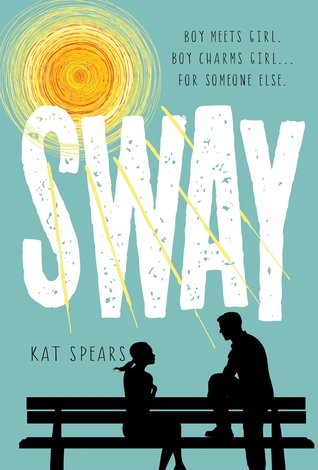
SwayThe synopsis for Sway, on Goodreads and elsewhere, describes the book as “hilarious” — and that’s not the way I’d put it.

Snarky, snide, clever, with humorous dialogue? Yes. But a laugh riot? No.

Sway is told from the point-of-view of high school senior Jesse Alderman, a kid who knows how to make things happen and get things done. He’s a fixer. People come to him for solutions, for answers, for connections. He’ll take on any job, it would seem. He arranges protection for a kid who’s being bullied. He makes sure that the bane of the principal’s existence gets expelled. He guarantees that a school fundraiser is a success — for a cut of the earnings. He also deals drugs (more on this later) and term papers, and seems to be welcomed everywhere he goes.

Jesse doesn’t really have many friends, though, having shut himself off emotionally after a family tragedy a year before. He doesn’t allow himself to feel, doesn’t even play his beloved guitar any longer. He floats through life, living by his wits, seemingly above it all. And then Ken, the star football player, hires Jesse to help him win a certain girl… and the girl is amazing. Jesse has never met anyone like Bridget before — beautiful, yet not focused on her beauty, and truly committed to doing good works. As Jesse gets to know Bridget in order to carry out his task, he can’t quite recognize what’s happening to himself at first, but slowly it becomes clear: He’s falling in love.

That doesn’t stop Jesse from completing his mission, and before you know it, Ken is dating Bridget, Jesse has earned his money, and all should be well. Except Jesse is now friends with Bridget as well as with her younger brother Pete, who’s a pissed-off kid with cerebral palsy and a chip on his shoulder, and Jesse can’t quite pull himself away. Things go south, as you’d expect, and it’s interesting to see Jesse pick up the pieces and finally start to repair the damage to his own life.

Along the way, Jesse falls more and more into good-guy mode, although he’d never admit it. As part of his ruse to get to know Bridget, he befriends an old man in an assisted living facility — but even after the ruse has been completed, Jesse continues to hang out with Mr. D., each providing the other with the sense of family both are missing. Jesse would consider himself a heartless business person, but his actions continually lead to good, even selfless results.

More troubling? Jesse’s drug dealing is just no big deal throughout most of the book. Jesse is a charmer and a welcome addition to every party — but how much of this is his personality and how much of it is the pot and X that he supplies? I found the morality of the drug aspects a bit slippery. Even when Jesse wants out of the drug business, he finds another kid from the high school to take his place with his pot connection, and it’s presented as a good thing for the kid, a way to win friends and fit in. The situation with the X dealer is a lot hairier and scarier, but even that dire situation is resolved fairly quickly.

There are a few loose plot threads that could have used more explanation, particularly in regard to Jesse’s two closest allies. I’d have liked to get to know each of them better and to find out more about how they connected with Jesse in the first place and why their bonds are so strong. I would also have liked to know more about Jesse’s family life and his childhood; we know about the tragedy from a year prior and have a sketchy understanding of what his life had been like prior to that, but I think a bit more fleshing out of that part of the story would have been helpful. Perhaps the biggest omission is an explanation of how Jesse came to be the success he is at influencing and fixing — when did he get started, and how? And how much of his business was already in place prior to a year ago?

Overall, I found Sway to be fast-moving and captivating. I read it all in one day, and had a hard time taking a break for little things like eating and talking to my family. Jesse is a wounded boy who acts out in all sorts of ways, and yet he’s clearly smart and funny… and underneath the gruff, never ruffled exterior lurks a kid who actually cares.

For what it’s worth, I’d say ignore the book blurbs that describe Sway as “a Cyrano de Bergerac story with a modern twist”. The comparison is only vaguely relevant, and doesn’t really set the right expectations for reading this young adult novel. Just go into knowing that it’s a well-written, clever story with heart, focused on unusual characters, and enjoy!

_________________________________________

The details:

Title: Sway
Author: Kat Spears
Publisher: St. Martin’s Griffin
Publication date: September 16, 2014
Length: 320 pages
Genre: Young adult contemporary fiction
Source: Review copy via NetGalley

Series Wrap-Up: Frontier Magic by Patricia C. Wrede

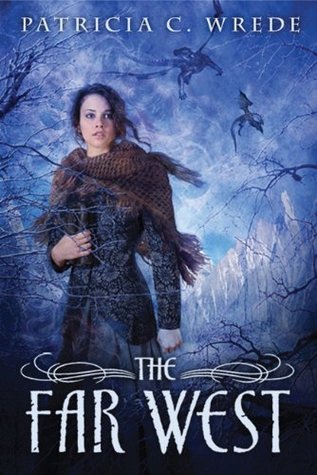
Thirteenth Child (Frontier Magic, #1)Across the Great Barrier (Frontier Magic, #2)The Far West (Frontier Magic, #3)

The Frontier Magic trilogy by Patricia C. Wrede presents a puzzling dilemma for me as a reviewer:

On the one hand, I never doubted that I wanted to finish reading the trilogy — and even more importantly, my son remained engaged throughout, which is no small accomplishment.

On the other hand, these books contain certain problematic pieces that remain consistent across all three books.

Is it contradictory to say that I wouldn’t rate this series any higher than three stars, and at the same time state that I mostly enjoyed it all?

In Frontier Magic, we view an alternate America (known here as Columbia) through the eyes of Eff. Eff is one of twins, and is the family’s thirteenth child, in a society which believes that the 13th child will be full of bad magic. Because, yes, in the world of Frontier Magic, magic is part of the every day fabric of life. Magic is an advanced scientific field of study in the academic world, and even mundane tasks are routinely done by means of magic. In this tale of westward exploration and discovery, the civilized world stops at the Mammoth River (think Mississippi), and all land east of the river is protected by the Great Barrier Spell, which keeps out dangerous creatures like steam dragons and medusa lizards. Yet exploration of the West beckons, and expeditions regularly set out across the river, some never to return.

I wrote quite a bit about my reaction to the first book in the series, Thirteenth Child, in my review here. And the same issues that I had with the first book continue into the second. As I wrote on Goodreads about Across the Great Barrier:

Book #2 in the Frontier Magic series continues — for good and for not-so-good — along the same path as the first book, Thirteenth Child.

On the plus side, we continue to explore this alternate history of the United States, in which magic is commonplace and an actual necessity. The challenges and adventure of living life on the frontier are still here, and main character Eff is still pursuing her own non-standard magical skills.

On the negative side, the same problems that detract from the overall success of the first book are still present. The magical systems are overly complicated, so that it’s never quite clear what’s happening, and the solutions and big confrontations are so full of this jargon-heavy magical hoo-ha that it’s hard to tell who did what or why. Eff should be a powerful character, but she never really comes into her own. That is, she clearly has talents that are rare, but she doesn’t get to do a whole lot with them. She’s always just a part of, not the lead actor — she assists a professor, she participates in expeditions, she’s on the team when danger strikes — but she never is out in front, making decisions and standing out. Finally, the plot suffers from odd pacing. Many of the chapters (as in the first book) have time jumps that basically say, well, for the rest of that year, not much happened, or for the next few months, I kept doing my job. There’s a lot of summarizing, with action sequences popping up occasionally, but overall there’s a static feeling, as if the whole plot was being described in synopsis rather than actually taking place.

The Frontier Magic series thus far strikes me as a very interesting idea without the execution to fully back it up.

As for book #3, my feelings are pretty much the same. There’s further adventure, and Eff, now in her early 20s, finally comes into own in terms of flexing her magical powers and being recognized as having unique talents. She’s invited to participate in the most far-reaching expedition yet, and the group’s travels are full of danger and excitement. And yet, the same issues that plague the earlier books show up here as well. Nothing ever feels terribly urgent, despite the fact that a lot does actually happen. Events are described in a way that feels very episodic, and the point-of-view has a distant to feel to it. Eff narrates all that happens, and her voice simply isn’t particularly distinct. We never do really get a full picture of what Eff is capable of, although we do see her pretty much save the day.

The most serious problem, for me, is that the magical systems are fairly incomprehensible. We get long passages describing how Eff uses her magic to save the expedition (and perhaps civilization as a whole) — but it’s practically impossible to envision what she and the others are actually doing or how any of their magic truly works.

There’s quite a bit of outrage expressed in the reviews on Goodreads and elsewhere over the absence of a native population in the world of Frontier Magic. Others have gone into great detail on this issue; I don’t need to repeat them. Suffice it to say that the books are controversial because of this omission, and if you want to know more, there’s quite a lot written elsewhere on the topic.

Approaching these books, then, purely as an adventure tale and leaving aside the social commentary, I find myself back where I started. Unmitigated success? No. But enjoyable and engaging? Yes.

Even when my own attention wandered from time to time, my son remained interested throughout. Neither of us was exactly on the edge of our seats… but we still wanted to see it through and find out more. So all in all, not a bad choice for advanced middle grade readers or for adults who enjoy middle grade fiction featuring magical world-building.

Book Review: Shifting Shadows by Patricia Briggs

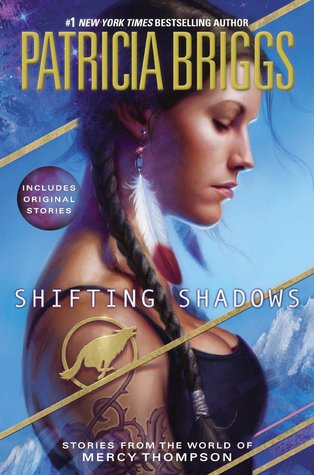
Shifting Shadows: Stories from the World of Mercy ThompsonIn a way, it’s silly to write a review of a book of stories such as Shifting Shadows. If you’re a fan of the Mercy Thompson series by Patricia Briggs, then you’ll want to read this. If you’re not, this is not the place to enter Mercy’s world. Which, by the way, is amazing… so if you like urban fantasy filled with unique characters, exciting plots, and fascinating relationships, start with Moon Called, and then keep reading! I dare you to stop.

Shifting Shadows is definitely a gift for fans, and it’s a pretty wonderful gift at that. There are 10 stories in Shifting Shadows, all set in Mercy’s world. Six stories have appeared previously in various anthologies, and four stories are new. Although I’d read all  of the six older stories already, I still enjoyed re-reading them in the context of this collection.

The previously published stories are:

“Fairy Gifts”  – Set in Butte, Montana, this is a short, sweet tale of redemption and old debts focusing on a vampire and a fae, with a distinctly old West feel to it.

“Gray” – A ghost story/love story set in Chicago, “Gray” is quite lovely. This story of vampire Elena and her quest to reconnect with her late husband has both action and emotion.

“Seeing Eye” – The story of werewolf Tom and white witch Moira, set in Seattle.

“Alpha & Omega” – Even though I’ve read this story 3 or 4 times already, I never get tired of it. This novella was the original work that started the Alpha & Omega spin-off series of novels, and tells the story of Charles and Anna’s first meeting. Such wonderful characters, and a truly great addition to the Mercy-verse.

“The Star of David” – Focusing on werewolf David Christiansen, this is a holiday tale of family connection and personal redemption. Action-packed, and touching as well.

“In Red, With Pearls” – Werewolf Warren is the star of this one. Need I say more? Warren rocks, always.

New stories include:

“Silver” – An origin story for Bran and Samuel, which mostly focuses on Samuel’s first encounter with Ariana. I would have liked more Bran, but that wasn’t the point of this story. Still, quite interesting to finally hear the tale of how Bran and Samuel were turned.

“Roses in Winter” – Tells the story of Kara, a young girl introduced in the Mercy books, and how old wolf Asil cares for her when her life is on the line.

“Redemption” – Ben gets a story! I’ve always loved the character of Ben — so outwardly awful at first, until we learn more about his history and the traumas and abuse he’s suffered. Here, he really gets a chance to shine and be the good guy — even a hero! — for once. Plus, this story is really funny. Loved it.

“Hollow” – Mercy finally shows up in one of the stories! “Hollow” isn’t really about Mercy for the most part, but more about a troubling case of a haunting that Mercy helps solve. But hey, all Mercy is good Mercy, and we even get some Adam!

In addition, Shifting Shadows wraps up with two outtakes from published novels — deleted scenes, I suppose — from Silver Borne and Night Broken.

If any or all of the above made any sense to you, then congratulations! You’re a Mercy fan! And in that case, make sure you grab a copy of Shifting Shadows, and enjoy.

And just to repeat myself… if all of this seems like gobbledegook to you, that’s a sure sign that you haven’t yet been introduced to the wonderful world of Mercy Thompson. Moon Called is waiting for you…

_________________________________________

The details:

Title: Shifting Shadows
Author: Patricia Briggs
Publisher: Ace Hardcover
Publication date: September 2, 2014
Length: 450 pages
Genre: Urban fantasy (short stories)
Source: Purchased

Book Review: Big Little Lies by Liane Moriarty

Big Little LiesIn Liane Moriarty’s newest bestseller, the Australian mommies at the heart of the story have a boatload of secrets and lies, and the schoolyard is practically on fire with hostility, passive-aggressive snarkiness, and not very grown-up-like behavior.
While we’re introduced pretty quickly to a large cast of characters, we mainly follow a group of three women who become best friends:

  • Madeline, happily married to her second husband and mother of two young ‘uns… but still plagued by resentment as she and her ex-husband wrangle time-sharing of their teen-aged daughter and deal with the fact that they’ll each have a little girl in kindergarten this year — in the same class.
  • Celeste, stunningly beautiful and fabulously wealthy, with a perfect husband and twin boys — but hiding a devastating secret from even her closest friends.
  • Jane, young single mom whose son Ziggy is accusing of bullying during kindergarten orientation. But did he do it? And what happened in Jane’s past that makes her so insecure about herself… and makes her wonder whether the accusations against her sweet Ziggy could be true?

We know from the very first chapter that something goes terribly wrong at a school fundraiser, and through quotes from assorted school parents sprinkled throughout the book, we see the the power of gossip and the way events gets distorted through the lens of personal bias and predisposition. Oh, and there’s a dead body and a police investigation, and a whole slew of unreliable witnesses.

Big Little Lies is a roller coaster ride of a book, full of twists and turns, ups and downs. The plot is fast-paced and engrossing, and the characters are just so damn good!

I’ll be honest: I almost closed this book and walked away within the first couple of chapters. Having read (and loved) The Husband’s Secret, I was getting a “been there, done that” feeling at the beginning of Big Little Lies. Another drama centered on the schoolyard? Yawn.

But something told me to keep reading, and wow, what a pay-off. The author is masterful at portraying people who feel real, but with that added oomph that makes them leap off the page. We all know people like Madeline and her ex, or like the “Blonde Bobs”, the ultra-involved moms who rule the school and look down their noses at all the less-perfect mothers — the ones who never quite manage to have the right snacks or finish their kids’ school projects on time.

While there’s real pain and drama here, the humor quotient is also quite high. I couldn’t help but cringe when reading certain characters’ lines, realizing that some of these same ridiculous-sounding statements have come out of my own mouth from time to time. All of the embarrassingly petty thoughts of parents under stress can be found here, and they’re hilarious… and also — almost — uncomfortably true to life. Yup, Madeline’s rants about her ex-husband felt a little too close for comfort to me… to the extent that my own daughter laughed hysterically when I read them to her, clearly pointing a finger back at me and some of my more ridiculous statements about my daughter’s dad.

The underlying story, beneath the surface of snarky humor and quippy one-liners, is sad and powerful. The through-story is about domestic violence and abuse, and it’s conveyed with heartbreaking sympathy and realism. When told from the victim’s point of view, it’s possible to understand why she stays for as long as she does, why she feels trapped, and how no solution or escape plan feels possible to her. Likewise, the deep shame that another character feels over an event from her past may objectively be illogical, but told from her own point of view, we can easily see how her current doubts and worries relate back to this terrible incident and can understand why she feels as she does.

Liane Moriarty does an excellent job of telling a compelling story that gets the balance of entertainment and empathy just right. It’s a sad, sad story in many ways, and yet the writing is so crisp and full of humor that I found myself laughing throughout as well.

I highly recommend Big Little Lies. It’s both a fast and absorbing read and a deep look at friendship, marriage, pain, and healing. I’m really looking forward to reading more by this outstanding Australian novelist.

For a look at another book by Liane Moriarty, see my review of The Husband’s Secret.

_________________________________________

The details:

Title: Big Little Lies
Author: Liane Moriarty
Publisher: Putnam Adult
Publication date: July 29, 2014
Length: 480 pages
Genre: Adult contemporary fiction
Source: Library


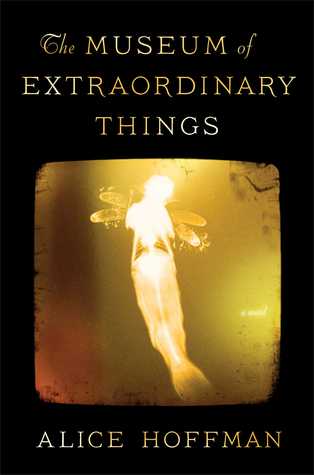
Fields & Fantasies presents… The Museum of Extraordinary Things by Alice Hoffman

Welcome to the August/September pick for the Fields & Fantasies book club! Each month or so, in collaboration with my wonderful co-host Diana of Strahbary’s Fields, we’ll pick one book to read and discuss. Today, we’re looking at The Museum of Extraordinary Things by Alice Hoffman:

The Museum of Extraordinary ThingsSynopsis (Goodreads):

Mesmerizing and illuminating, Alice Hoffman’s The Museum of Extraordinary Things is the story of an electric and impassioned love between two vastly different souls in New York during the volatile first decades of the twentieth century.

Coralie Sardie is the daughter of the sinister impresario behind The Museum of Extraordinary Things, a Coney Island boardwalk freak show that thrills the masses. An exceptional swimmer, Coralie appears as the Mermaid in her father’s “museum” alongside performers like the Wolfman, the Butterfly Girl, and a one-hundred-year-old turtle. One night Coralie stumbles upon a striking young man taking pictures of moonlit trees in the woods off the Hudson River.

The dashing photographer is Eddie Cohen, a Russian immigrant who has run away from his father’s Lower East Side Orthodox community and his job as a tailor’s apprentice. When Eddie photographs the devastation on the streets of New York following the infamous Triangle Shirtwaist Factory fire, he becomes embroiled in the suspicious mystery behind a young woman’s disappearance and ignites the heart of Coralie.

With its colorful crowds of bootleggers, heiresses, thugs, and idealists, New York itself becomes a riveting character as Hoffman weaves her trademark magic, romance, and masterful storytelling to unite Coralie and Eddie in a sizzling, tender, and moving story of young love in tumultuous times. The Museum of Extraordinary Things is Alice Hoffman at her most spellbinding.

True confession time: I did not finish this book.

I seem to have a love/hate relationship with Alice Hoffman’s novels. The ones I love, I love wholeheartedly — The Dovekeepers, Practical Magic, Second Nature, among others. But when I don’t like them, I really don’t (Here on Earth comes to mind… with a big shudder to go with it).

I started Museum with high expectations — the setting, the era, and the description all appealed to me. But as I began to read, I found myself in the weird situation of loving the beautiful writing… and having no compelling interest in the story itself. To me, it felt slow and disjointed. Each chapter begins with pages upon pages of a character’s history — all in italics, which is annoying to read after a while — and then more pages picking up the story in the main timeline of the book. As a portrait of odd characters, it’s an impressive piece of writing, and the language itself is lovely. Still, the storyline as a whole simply didn’t hold my attention. Finally, at around page 130, I couldn’t convince myself to continue forward, and closed the covers.

I will say that one particular section, a detailed description of the Triangle Shirtwaist Factory fire, is especially breathtaking and beautifully crafted. Unfortunately, the individual moments of great writing never coalesced into a story engaging enough to keep me motivated to stick with it.

___________________________________

My F&F partner Diana has a different take on Museum. You can view her review in its entirety on her blog, and it’s excerpted here:

Overall I liked the story. I haven’t read that much about New York City during the turn of the century. The culture clashes and new immigrants made it dangerous and exotic. I think Alice created a good glimpse into the world at that time. Each story progressed on its own and then merged about half way through the book. Which created a slow build that eventually paid off.

I really like Coralie and Eddie. Especially once they met. They both matured as the story progressed. There were a number of secondary characters that I really enjoyed, though I have to say I prefer the freaks that were around Coralie more so because they felt like complete characters. In many ways, the people that Eddie interacted with in the first half of the book felt like stereotypes in some parts.

I wanted to know more about our different takes on the story. Did Diana see something in it that I didn’t? And so, I asked her. Here’s a Q&A between Diana and me about The Museum of Extraordinary Things. Warning: SPOILERS from this point forward. Proceed at your own risk!

What was your favorite part of the story?

I really enjoyed the secondary characters. I have a good friend who is always more fond of the secondary characters in most books that we read and right now I feel like her.  As much as I like Eddie and Coralie, I like the secondary characters more. We start to see a relationship form between Maureen, the “professor’s maid” and the wolf man (whom I loved btw) and I really liked their story. Likewise, why was Maureen so attached to Coralie so much so that she would put up with an abusive father? I would love to have known more about what was going in Maureen’s head.

What was your least favorite part?

Some of the immigrant characters seemed  like stereotypes.  They were just a generalized mass of people, those that did have character development didn’t really seem logical. For example Eddie’s father. He was a runner, and came off as a fairly weak character but all of a sudden at the end we find out his dad was some tough labor activist. It didn’t fit.

What three words come to mind when you think about the plot?

Slow: if I hadn’t been so curious about the historical elements to the book I probably would have dropped it before I became invested in the main characters.

Simple: there aren’t any major revelations that you don’t see coming. But the plot adequately gets you from point a to point b.

Accurate: one of my biggest pet peeves in historic fiction is when the author doesn’t do their homework. The history of Coney Island and the Labor movement was spot on.

Is this more of a character study or more plot-driven?

It’s hard to say. I would like to say that it’s more of a character study because of the detail that is put into the main characters and those closest to them.

What would you say to try to convince me to read this?

I haven’t convinced you so far?? The second half of the book is SO much better.  Give it just a little more time. The characters will grow on you.

Is there any one thing about this book that makes it really stand out for you?

The whole historic freak show/circus element.  It’s actually started me on a Gothic/steampunk circus kick. There was a period in our history where these circuses and freak shows were big attractions. I have really found it fascinating.

Have you read other books by this author? If so, how would you rank this one compared to the others?

You know this is the first book by Alice Hoffman that I have read. Which is odd because the movie Practical Magic is one of my favorite movies. I have heard people on a number of occasions say they weren’t fond of her writing but I quite liked this book and plan on reading more.

Thanks, Diana! I can’t say I’m convinced, but at least I have a sense of what you liked about the book and what I might have come to appreciate if I’d gone a bit further! I don’t think I’ll go back to this one, but I can see that the historical elements probably would have continued to be the most interesting part of the book for me.

_________________________________________


Next for Fields & Fantasies:

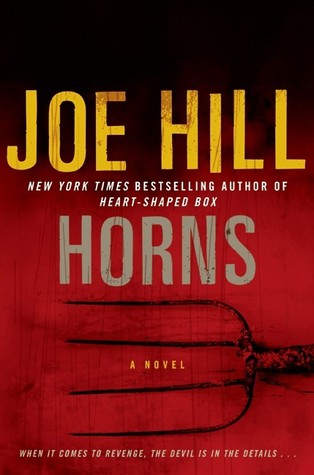
HornsTo get in the mood for Halloween, we’re picking a horror story for October. Can’t wait to finally read Horns by Joe Hill.
Book Review: Six Feet Over It by Jennifer Longo

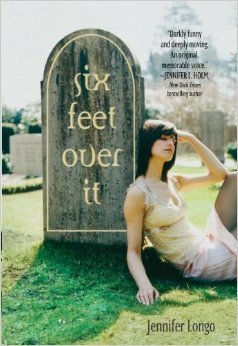
Six Feet Over ItIn this moving young adult novel, main character Leigh is stuck working in her family business… which just happens to be running a graveyard. On a whim, her self-centered dad Wade has relocated his family from beautiful coastal Mendocino to the hot, boring inland town of Hangtown (yes, really, that’s its name), where he’s bought a graveyard. Shell-shocked, Leigh is forced into working in the graveyard office, selling plots and services to families at the worst moments of their lives. Does it make sense for an inexperienced teen to be a source of comfort for mourners? Wade doesn’t seem to care.
There’s more here than meets the eye. Only six months prior to the move, Leigh’s older sister Kai finally went into remission after a two-year battle with cancer. And what the family doesn’t know is that Leigh is battling major demons of guilt and self-blame. While Kai was ill, Leigh made a friend, the adorable and bubbly Emily. But Leigh always felt that she was abandoning Kai to spend time with Emily, so kept their friendship a secret. When Kai’s health returned and the girls were sent off to spend the summer with their grandparents, Leigh could have chosen to go with Emily instead to a week of camp — but telling herself that Kai always had to come first, Leigh stuck with her sister, and then discovered only through a newspaper clipping that Emily had died in a freak accident. More guilt. Would Emily have died if Leigh had been there? Would Kai have still beaten her cancer if Leigh hadn’t been by her side the whole time? And if Leigh now allows a new friend into her life, will she be betraying Emily all over again?

The parents in Six Feet Over It are truly appalling. Continuing the trend of absent/clueless parents in YA fiction, Leigh’s parents can, in the kindest interpretation, be accused of benign neglect. No one notices what Leigh is going through. No one notices that she wears the same jeans every single day (Emily gave them to her), that she has no friends, that she’s barely eating, that she’s on the verge of collapse from all of her misery. Instead, her mother retreats into painting and incessant solo trips back to Mendocino, and her dad is… well, he’s just a selfish, insensitive jerk, always quick with a joke but never bothering to listen. It’s awful. Sure, they’ve been through hell almost losing Kai, but their neglect of Leigh is unconscionable.

Six Feet Over It goes a lot deeper than I had anticipated. Leigh’s inner turmoil is painful to read about, yet it feels real. Her burden of guilt and responsibility may not make objective sense to an outsider, but it’s what she feels, and the author gives Leigh a voice that makes her struggles understandable.

There’s a subplot about the graveyard caretaker who becomes Leigh’s only source of support and comfort, but this piece of the story meanders into a rescue/road trip/border crossing story that is more of a distraction than it is a key part of the plot. Quite refreshingly, Leigh is not rescued from darkness by romance; there’s no love story hidden in Six Feet Over It, and that makes for a nice change from so much of the current crop of YA novels.

Overall, I found Six Feet Over It to be deeply affecting, while showcasing a brave young woman with a decidedly unusual life. I enjoyed seeing Leigh’s journey through such a painful and difficult period of her life, and felt that the book ended in a way that seemed both hopeful and realistic. I’d recommend this book for anyone who enjoys contemporary fiction with a slightly off-the-beaten-path feel to it.

_________________________________________

The details:

Title: Six Feet Over It
Author: Jennifer Longo
Publisher: Random House Books for Young Readers
Publication date: August 26, 2014
Length: 352 pages
Genre: Young adult fiction
Source: Review copy courtesy of Random House via NetGalley

Book Review: The Geography of You and Me by Jennifer E. Smith

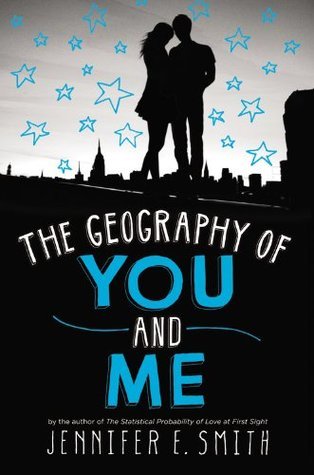
The Geography of You and MeMeeting cute doesn’t get much cuter than this: Two Manhattan teen-aged loners get stuck in an elevator together during a city-wide blackout. Perfect, right?

For Lucy and Owen, the stuck elevator is just the beginning of a magical night. Once freed, they roam the streets and their building with no parents, no electricity, and no interference from normal daily life. They go up to the roof and watch the stars, they talk, and they dream. And the next day, it’s all over — but each is permanently marked by their brief time together.

Meanwhile, Lucy and Owen each have some real life drama as well. Lucy is the youngest child of busy, successful, jet-setting parents, who seem to think nothing of leaving her home alone while they travel the world, sending postcards from every perfect tourist destination they visit. Owen and his father have been drifting for months since Owen’s mother died in a car accident, and the sadness of their lives is overwhelming.

Lucy and Owen are deeply lonely people, and the connection they feel is sudden and strong. But their family ties pull them apart almost immediately, and though they keep up a connection via goofy “wish you were here” postcards, their paths seem to take them further and further away from one another. Was their connection a fluke? Is it just an illusion? Should they forget about it and move on along their new paths, or is the chemistry between them something worth trying to recapture?

The Geography of You and Me is a light and charming young adult romance, but it doesn’t skimp on real dilemmas and honest conflicts. Family loyalty is explored, and the parent-child relationships here are complex and sad. Lucy and Owen both have imperfect parents in their lives, and each has to step up in ways that might seem unfair, yet they love their parents and want more than anything to make their family lives work out. Both characters dream of each other, yet each is also determined to move forward, to find happiness, and to find a place to fit in.

I liked both main characters quite a bit. They’re smart and devoted, wise for their years yet not above being silly and spontaneous. Over the course of the novel, we see them grow and change, and their trajectories feel real. The storyline never sags, and despite spending most of the story apart, the connection between Lucy and Owen is always present between the lines.

My only quibble with this book is less about the book itself and more about overall trends. Perhaps this book might have grabbed me a little bit more or felt fresher if I hadn’t read Gayle Forman’s Just One Day and Just One Year recently. The Geography of You and Me treads familiar ground, focusing as it does on two characters who seem destined to get together, but spend most of the story apart, struggling to reconnect. As with the Forman books, it’s the journey that counts, and the ending scenario is remarkably similar. I feel like the trend of keeping characters apart and ending with a reunion is becoming more prevalent in contemporary young adult fiction, and unfortunately, that means that even when there’s one that succeeds, it may not feel entirely new or different.

That doesn’t mean that The Geography of You and Me isn’t worth reading; it certainly is. It’s fun, sweet, and even touching, and it’s quite a fast read as well, so you’ll be tempted to read it straight through to keep the storyline flowing along. This tale of connection and belonging is entertaining and never sappy. If you enjoy teen love stories with a hip, urban feel, this is definitely a book to check out.

Want to know about another Jennifer E. Smith book? Here’s my review of This Is What Happy Looks Like.

_________________________________________

The details:

Title: The Geography of You and Me
Author: Jennifer E. Smith
Publisher: Poppy/Little, Brown and Company
Publication date: April 15, 2014
Length: 337 pages
Genre: Young adult fiction
Source: Library


Book Review: Hotel on the Corner of Bitter and Sweet by Jamie Ford

Hotel on the Corner of Bitter and SweetTalk about being late to the party. I’ve been hearing about this book for years (since its publication in 2009, to be more precise), and yet it never quite made it into my hands until this month. Thanks to an upcoming book club discussion, I’ve finally read Hotel on the Corner of Bitter and Sweet… and all I can say is, what took me so long?

This sad, sweet, and ultimately hopeful book is about love, friendship, family, and second chances. Centered around a shameful period in US history, Hotel is set at the height of anti-Japanese sentiment during World War II, as communities of Japanese Americans are forced from their homes and into internment camps. In 1942 Seattle, 12-year-old Chinese-American Henry Lee attends an all-white school, wearing the “I Am Chinese” button that his father forces on him to make sure everyone knows that Henry isn’t one of the enemy. Bullied and alone, Henry hates his new school until he meets the lovely, artistic new student, Keiko, daughter of a Japanese-American family. Henry and Keiko become fast friends, but Henry knows he’s breaking his father’s rules every moment he spends in Keiko’s company. When Keiko’s family is forced out in the evacuation of Japantown, Henry is bereft — but with the assistance of his musician friend Sheldon, he finds a way to stay connected with Keiko even in the distant and desolate camp to which she and her family are relocated.

Family is really at the heart of this slim book. Henry’s parents are so determined that he should be an American that he’s forbidden to speak Cantonese in their home — but since neither parent speaks English, the family spends years never really speaking to one another. Family loyalty is tested again and again, as Henry must choose between obedience to his parents — Chinese loyalists who are virulently anti-Japanese — and his need to help Keiko and her family. Keiko too must choose between the possibility of shelter and escape or staying with her parents and brother.

The time period of the books switches between the 1940s and the 1980s, when we see Henry as a recent widower with a cordial but distant relationship with his only child. When a trove of war-era items is found in a boarded-up old hotel in Japantown, Henry’s memories of Keiko are rekindled, and he begins a journey of rediscovery that starts to heal the rift between Henry and his son as well as presenting the possibility of recapturing a long lost love.

Through it all, these well-defined characters struggle for understanding and connection, forced apart by circumstances beyond their control, fighting to do what’s right, even when what’s right isn’t always clear. Loyalty, love, and friendship are all tested in different ways, and the recurring theme of jazz music nicely highlights the characters’ feelings and experiences.

Hotel on the Corner of Bitter and Sweet is a lovely book about a tragic piece of history. More than just a glimpse of the past, though, Hotel offers a glimpse into the hearts of its characters. Deeply affecting and full of period detail, this is a book that will be in my thoughts for quite some time to come.

_________________________________________

The details:

Title: Hotel on the Corner of Bitter and Sweet
Author: Jamie Ford
Publisher: Ballantine Books
Publication date: 2009
Length: 290 pages
Genre: Historical fiction
Source: Purchased