Take A Peek Book Review: The Rest of Us Just Live Here by Patrick Ness

“Take a Peek” book reviews are short and (possibly) sweet, keeping the commentary brief and providing a little peek at what the book’s about and what I thought.

The Rest of Us

Synopsis:

(via Goodreads)

What if you aren’t the Chosen One? The one who’s supposed to fight the zombies, or the soul-eating ghosts, or whatever the heck this new thing is, with the blue lights and the death?

What if you’re like Mikey? Who just wants to graduate and go to prom and maybe finally work up the courage to ask Henna out before someone goes and blows up the high school. Again.

Because sometimes there are problems bigger than this week’s end of the world, and sometimes you just have to find the extraordinary in your ordinary life.

Even if your best friend is worshipped by mountain lions.

Award-winning writer Patrick Ness’s bold and irreverent novel powerfully reminds us that there are many different types of remarkable.


My Thoughts:

I loved quite a bit of this book, but was left with an overall “meh” feeling by the end. I thought the set-up was pretty brilliant. Think of Buffy and her gang of Scoobies. Now think of all the other kids who weren’t running around staking vampires or chasing demons. The characters in The Rest of Us Just Live Here are the equivalent of all the Sunnydale High students who aren’t part of Buffy’s gang — the kids who just want to graduate, enjoy prom, and chill with their friends, despite all the end-of-the-world shenanigans happening in the world of the chosen, special kids.

Everyone knows the indie kids don’t use the internet — have you noticed? They never do, it’s weird, like it never occurs to them, like it’s still 1985 and there’s only card catalogs — so we can’t find them discussing anything online. The vibe seems to be that it’s totally not our business. Historically, non-indie kids were pretty much left alone by the vampires and the soul-eating ghosts, so maybe they have a point.

The main character and his friends and family are all interesting and quirky, with their own challenges and gifts, and they just kind of notice that in the background of their more immediate crises, the “indie” kids (hilariously named Satchel, Dylan, and Finn, Finn, and Finn — there are lots of Finns) are being chased through the woods by zombie deer and bizarre columns of blue light keep appearing in their town.

“Listen to me,” he says, sounding angry. “We’ve got prom, we’ve got graduation, we’ve got the summer. Then everything changes. Are you going to live all that time until we go afraid?”

“Probably.”

“Please don’t.” He’s still weirdly angry. “Not everyone has to the be Chosen One. Not everyone has to be the guy who saves the world. Most people just have to live their lives the best they can, doing the things that are great for them, having great friends, trying to make their lives better, loving people properly. All the while knowing that the world makes no sense but trying to find a way to be happy anyway.”

The Rest of Us Just Live Here shows how all kids (all people, really) are the center of their own worlds, and that even if you’re not the one who saves the world, your problems and issues matter too. There are some really nice elements about loyalty, friendship, and protecting the people you love, but somehow, the book didn’t really come together for me or deliver on its early promise. The writing is clever, funny, and touching, but the end left me feeling a bit unsatisfied.
_________________________________________

The details:

Title: The Rest of Us Just Live Here
Author: Patrick Ness
Publisher: Harper Teen
Publication date: October 6, 2015
Length: 336 pages
Genre: Young adult fiction
Source: Purchased

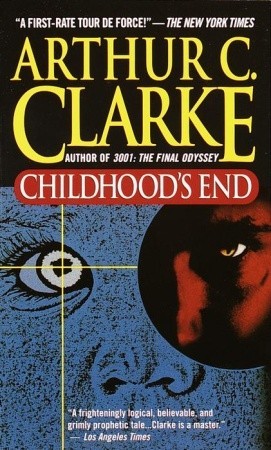
Take A Peek Book Review: Childhood’s End by Arthur C. Clarke

“Take a Peek” book reviews are short and (possibly) sweet, keeping the commentary brief and providing a little peek at what the book’s about and what I thought.

Childhoods End


Synopsis:

(via Goodreads)

The Overlords appeared suddenly over every city–intellectually, technologically, and militarily superior to humankind. Benevolent, they made few demands: unify earth, eliminate poverty, and end war. With little rebellion, humankind agreed, and a golden age began.

But at what cost? With the advent of peace, man ceases to strive for creative greatness, and a malaise settles over the human race. To those who resist, it becomes evident that the Overlords have an agenda of their own. As civilization approaches the crossroads, will the Overlords spell the end for humankind… or the beginning?


My Thoughts:

I’m so glad to have read this sci-fi classic! I recently watched the incredibly well-done TV version of Childhood’s End (a three-part mini-series on Syfy), and couldn’t wait to read the original novel for more insights and explanations.

Where to start? The book differs from the TV show in many ways, but the overall storyline remains more or less the same. In some ways, the book has fewer big, dramatic set-pieces, and we get less involved with certain characters or places. The book is a story of all of Earth and the fate of mankind. It’s fascinating to see the evolving relationship between the humans and Overlords, and what this relationship will mean for the next chapter of life on Earth.

The writing is intelligent and though-provoking. We see the events unfold through many different characters’ perspectives, and come to understand the role of the Overlords as well as the way Earth’s inhabitants grow over the years from fear to acceptance, curiosity to complaisance.

The moment of the Overlords’ arrival, as seen by an astrophysicist, is an early indication this book is really something special:

He felt no regrets as the work of a lifetime was swept away. He had labored to take man to the stars, and, in the moment of success, the stars — the aloof, indifferent stars — had come to him. This was the moment when history held its breath, and the present sheared asunder from the past as an iceberg splits from its frozen, parent cliffs, and goes sailing out to sea in lonely pride. All that the past ages had achieved was as nothing now: only one thought echoed and re-echoed through Reinhold’s brain:

The human race was no longer alone.

If you’re interested in classic science fiction, this is a great place to start. While it was written in 1953, Childhood’s End really does not feel dated. As an aside, at least one small moment where a character expressed dissatisfaction with what passes for the arts in this golden age seems quite prescient:

Do you realize that every day something like five hundred hours of radio and TV pour out over the various channels? If you went without sleep and did nothing else, you could follow less than a twentieth of the entertainment that’s available at the turn of a switch! No wonder that people are becoming passive sponges — absorbing but never creating. Did you know that the average viewing time per person is now three hours a day? Soon people won’t be living their own lives any more. It will be a full-time job keeping up with the various family serials on TV!

Childhood’s End is fascinating, beautifully written, and with so much food for thought and discussion. Highly recommended!

_________________________________________

The details:

Title: Childhood’s End
Author: Arthur C. Clarke
Publisher: Del Rey
Publication date: 1953
Length: 212 pages
Genre: Science fiction
Source: Purchased

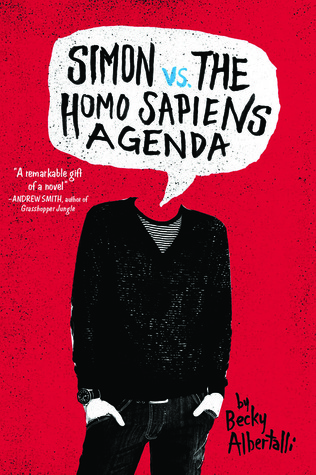
Book Review: Simon vs. the Homo Sapiens Agenda by Becky Albertalli

SimonI dare anyone to read this book and not fall at least a little bit in love with Simon, the main character of this sweet, funny, touching young adult novel.

Simon is a 17-year-old high school junior, a good student, in the school musical (Oliver!), and with a reliable circle of friends, among them his life-long besties Nick and Leah and his new BFF Abby. What Simon hasn’t shared with anyone is that he’s gay. It’s not that he’s unsure — he’s quite, quite certain about his identity. He’s just not quite ready to stop being private and have to deal with the reactions he’s sure to face.

But life gets complicated. On the Tumblr where students from his school share secrets, he’s found a kindred spirit — a kind, smart boy going by the name of Blue, who is also a junior at the same school. Simon and Blue start an intense email correspondence, each using his “secret” gmail account to maintain anonymity. Over the course of the weeks and then months since they began emailing, they’ve opened up to one another to  a remarkable degree. Simon wants to meet; Blue isn’t sure that it’s a good idea.

And then Simon makes the ultimate online error — he checks his email using the computers in the school library and forgets to log back out. Before long, he’s facing a geeky, awkward student named Martin who lets Simon know that he has screenshots of his emails and will let the entire school know that Simon’s gay unless Simon helps him get Abby to go out with him. It’s blackmail, but carried out with a smile. Martin refuses to see that he’s doing something evil, and apart from this unforgivable act, Martin isn’t a terrible person or a bully, which makes it all the more confusing for Simon.

Simon himself is a sweetheart. He’s funny and smart, tries to do the right thing, and has good intentions, although he still manages to hurt some of his friends along the way. Above all, he’s a boy who’s falling in love with someone from the inside out, learning everything about Blue but still not knowing which of the boys he sees at school everyday is the actual man of his dreams.

Simon’s voice in the novel is engaging and full of humor. Even in his moments of doubt or discouragement, he’s funny as hell.

I take a sip of my beer, and it’s — I mean, it’s just astonishingly disgusting. I don’t think I was expecting it to taste like ice cream, but holy fucking hell. People lie and get fake IDs and sneak into bars, and for this? […] Anyway, it really makes you worry about all the hype surrounding sex.

Simon’s email flirtation with Blue is incredibly adorable:

I’m glad I was cute and grammatical. I think you’re cute and grammatical, too.

The truth eventually comes out, and Simon comes out, and all is finally revealed. I don’t want to say more, because seeing it unfold is a big part of the fun.

Beneath all the humor and cute teen escapades are real feelings, beautifully expressed, about family, identity, safety, trust, and friendship. Simon’s journey in Simon vs. the Homo Sapiens Agenda involves sharing himself, really and truly, with the people in his life, and pursuing his truth even when it means taking risks.

It’s a lovely and engaging story, full of flirting and happy moments as well as heartache, and I loved every bit of it. Highly recommended — check it out!

_________________________________________

The details:

Title: Simon vs. the Homo Sapiens Agenda
Author: Becky Albertalli
Publisher: Balzer + Bray
Publication date: April 7, 2015
Length: 303 pages
Genre: Young adult fiction
Source: Purchased


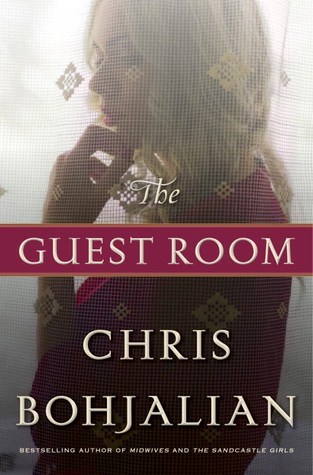
Book Review: The Guest Room by Chris Bohjalian

Guest RoomThe Guest Room by Chris Bohjalian is a dark, disturbing look into the world of sex trafficking, as well as a meditation on love, marriage, and the tests a relationship can withstand.

Richard Chapman — 40 years old, a well-off investment banker with a beautiful Westchester home, a lovely wife, and terrific 9-year-old daughter — has the best of intentions when he agrees to host a bachelor party for his younger brother at his home. His brother is a careless, selfish sort with a bunch of equally immature friends, but Richard figures having the party at his house is better than ending up in a strip club. And sure, everyone espects that there will be a stripper showing up — but what they don’t expect is two beautiful, young strippers who seem willing, for a price, to do much more than strip. And they definitely don’t expect the two intimidating guys who seem to be the girls’ handlers, bodyguards… or something even shadier.

Things get out of control, and quickly. And before the night is through, one of the strippers has stabbed one of the guards in the throat, the other guard has been shot, and the girls have run off, leaving behind a group of shocked and terrified men, a house that’s a bloody mess, and at least one husband with a lot of explaining to do.

Richard’s world is immediately turned upside down. He has to explain to his wife that while he was tempted by the offer of sex (and in fact, went upstairs with one of the girls), he did not actually have sex with her. He has to face the fact that the girls involved may have been minors. He has to deal with the immediate tabloid headlines about orgies in the suburbs and the subsequent damage to his reputation. And on top of all this, he can’t get the girl named Alexandra out of his mind. He went upstairs with her, even took off his clothes, but was somehow so touched by her youth and vulnerability that all he wanted to do was protect her.

At the same time, each chapter ends with a segment told from Alexandra’s point of view. Alexandra is not her real name, but it’s the name she’s used for the past five years, ever since she was lured away at age 14 from her small town in Armenia by the promise of ballet lessons in Moscow. What she got in Moscow was not ballet, but rape, imprisonment, and forced sexual slavery. Deprived of all access the to outside world, Alexandra was brutalized and forced into a life as (as she puts it) a “courtesan” and a “sex toy”. She and other girls her age are kept locked up, kept pretty, and trained to please the endless stream of wealthy and powerful men whom they service. There’s no other word for it — it’s horrifying.

The intersection of Richard’s world and Alexandra’s world blows both of their lives apart. Richard’s marriage is in crisis, his daughter is disgusted, his home feels violated, and he’s been placed on leave by his banking firm, which wishes to distance themselves from the lurid, sordid details that the press is delighting in sharing. Richard’s brother’s friends are being shady, and while Richard is not in legal trouble, he has plenty of reason to worry about his future.

Meanwhile, Alexandra and the other girl, Sonja, are on the run, but without resources — no place to turn for help, no ID or credit cards, nothing but the clothes on their backs, the cash in their pockets, and the guns they’ve taken from the dead guards. They know that they can’t stay in New York, with the Russian gangsters who own them wanting them dead, but they have no experience being free or making their own way, and have no one they can trust.

To say that this book is upsetting is an understatement. I couldn’t put it down or look away, but it left me feeling so bleak and full of despair. The fact that Alexandra’s story is fictional doesn’t mean that these sorts of things aren’t taking place in the real world. The Guest Room provides a peek into the world of sexual slavery, and it’s grim and dirty and depressing as hell.

Which is not to say that The Guest Room is not a good read. It’s actually completely engrossing, and once I started, I couldn’t stop reading. The main characters are all so well-developed that we get to really understand them as complex people, not cookie-cutter characters. Richard screws up, but he’s still a good person. He loves his wife and child, and wants to do the right thing, and still, inadvertently, brings all sorts of horror and chaos into their previously perfect lives. Richard’s wife Kristin is humiliated and hurt, but she also loves her husband and values their life together. She doesn’t always do what’s expected, and the author avoids the more clichéd roads with Kristin by showing the deeply thought-out choices that she makes.

Alexandra is a tragic, fascinating character. Seeing the world through her eyes in the parts she narrates, we get to understand what hopelessness truly is. Her voice is distinct and feels very real, and it’s incredibly disturbing to enter into Alexandra’s intensely awful existence and understand why she thinks and behaves as she does.

The Guest Room is powerful, upsetting, and impossible to put down. Chris Bohjalian is a masterful writer who seems to be at home in any genre. This book is a crime thriller, but it’s also a character study and even, in an odd way, a story about what makes a good marriage. I can’t say that it’s a pleasant read, but it’s certainly a great one.

_________________________________________

The details:

Title: The Guest Room
Author: Chris Bohjalian
Publisher: Doubleday
Publication date: January 5, 2016
Length: 336 pages
Genre: Contemporary fiction/thriller
Source: Review copy courtesy of the publisher via NetGalley

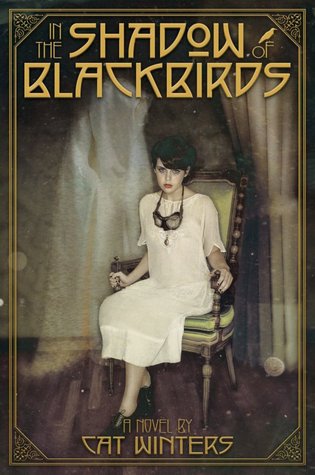
Take A Peek Book Review: In the Shadow of Blackbirds by Cat Winters

“Take a Peek” book reviews are short and (possibly) sweet, keeping the commentary brief and providing a little peek at what the book’s about and what I thought.

In the Shadow of Blackbirds


Synopsis:

(via Goodreads)

In 1918, the world seems on the verge of apocalypse. Americans roam the streets in gauze masks to ward off the deadly Spanish influenza, and the government ships young men to the front lines of a brutal war, creating an atmosphere of fear and confusion. Sixteen-year-old Mary Shelley Black watches as desperate mourners flock to séances and spirit photographers for comfort, but she herself has never believed in ghosts. During her bleakest moment, however, she’s forced to rethink her entire way of looking at life and death, for her first love—a boy who died in battle—returns in spirit form. But what does he want from her?

Featuring haunting archival early-twentieth-century photographs, this is a tense, romantic story set in a past that is eerily like our own time.


My Thoughts:

Bravo to Cat Winters for creating a chilling yet realistic world in her debut novel! In the Shadow of Blackbirds is set in a time of absolute horror in the United States, as the awful combination of a brutal war and a deadly flu pandemic makes death feel like a constant presence. The author does a masterful job of creating the feel of the time period, with paranoia and terror rampant in the cities and streets, and with no safe place to hide.

Surely, though, I must have stolen into the future and landed in an H. G. Wells-style world — a horrific, fantastical society in which people’s faces contained only eyes, millions of healthy young adults and children dropped dead from the flu, boys got transported out of the country to be blown to bits, and the government arrested citizens for speaking the wrong words. Such a place couldn’t be real. And it couldn’t be the United States of America, “the land of the free and the home of the brave.”

But it was.

I was on a train in my own country, in a year the devil designed.

1918.

Mary Shelley is a smart, courageous young woman who sees her whole world turned upside down as her father is imprisoned for treason after daring to speak out against war. As she flees Portland to take shelter with her aunt in San Diego, she seeks word of the boy she loves, only to be told that he’s died a hero’s death in the war. But as Stephen visits her in her dreams and then in waking moments, she realizes that her skepticism about spiritualism may be challenged by a voice trying to reach her from the other side.

This book conveys so much without ever feeling like a history lesson. Through Mary Shelley’s experiences, we see the impact of the war on the homefront, the sickeningly high death toll of the influenza epidemic and the futility of the home remedies used to ward off disease (garlic-flavored chewing gum, bathing in onion water — ugh), the horrible condition of the injured, maimed soldiers home from the battlefields, and the desperation of the bereaved that makes them easy prey for charlatans claiming to be able to channel their dead loved ones.

The plot is tautly woven and fast-paced, but never at the expense of character development. We learn so much about Mary Shelley’s character and her relationship with Stephen through their letters sprinkled throughout the book, as well as by seeing Mary Shelley’s determination to figure out the secrets surrounding Stephen’s messages and help him find peace.

I highly recommend In the Shadow of Blackbirds for anyone who enjoys historical fiction — as well as for anyone who enjoys a good, suspenseful tale, grounded in reality but with a hint of the supernatural. Cat Winters is an extremely talented author, and I can’t wait to read more of her work!

_________________________________________

The details:

Title: In the Shadow of Blackbirds
Author: Cat Winters
Publisher: Amulet Books
Publication date: April 2, 2013
Length: 387 pages
Genre: Young adult/historical fiction
Source: Library

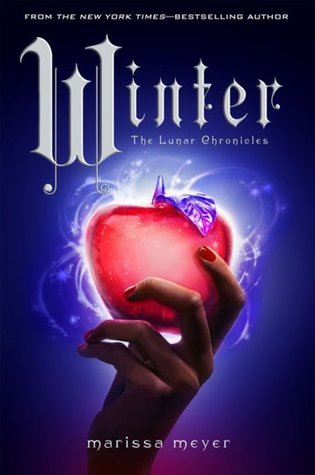
Book Review: Winter by Marissa Meyer

WinterAt long last, I’ve read the final volume in Marissa Meyer’s stunning Lunar Chronicles series! By now, all the die-hard fans have probably gobbled it up, maybe more than once. Being a fan but not quite as die-hard, I waited for my library to finally gets its copies and make one available to me… and I’ve spent the entire past week reading this big, long-awaited book.

I won’t bother with a recap or synopsis. If you’re still reading this review, it’s likely because you’ve either read Winter already or have read at least part of the series and want to know how it turns out.

Well, maybe a teensy bit of a recap. Here’s what you need to know: Winter is the 4th novel in the series (with a novella, Fairest, the most recently published, prior to Winter). The overarching storyline is about a mistreated cyborg mechanic named Cinder, her crush on the Prince (later Emperor) of the Commonwealth, Kai, and the struggle against the evil Queen Levana of Luna.

Woven throughout the four books are reimaginings of fairy tale characters: Cinder is Cinderella, Scarlet is Red Riding Hood, Cress is Rapunzel, and Winter is Snow White. Each gets to headline her own book, but Cinder is the ultimate hero, and hers is the through-story that ties it all together.

I binge-read the earlier books at the beginning of 2015, and adored them. However, it was a little tough getting into Winter at first, after a gap of so many months, and I had to rely on online recaps to feel up to speed enough to be able to move forward.

So what did I think of Winter?

First, the good:

All the action and world-building that we’ve come to love in this series continues in Winter, which plunges us immediately back into the battle for world domination. Cinder and her gang are the underdogs, trying to find a way to take down Levana, who seems to have every advantage possible. She has incredibly powerful mind-control abilities (the Lunar gift), and can make almost anyone within her reach do anything she wants, including self-mutilation, harming a loved one, and worse. How can you fight against power like that?

It’s pretty great to see Cinder’s transformation from unloved outcast to worthy leader. She’s fighting the good fight, standing up for the little guy, trying to take the throne not for her own glory, but for the freedom of the people. All the familiar friends are by her side, doing their parts for the greater good, all at great personal risk to themselves. Winter is a nice addition to the cast of characters, although… well, I’ll get into my “althoughs” below.

The ending is just as satisfying as you’d expect. This is a YA series based on fairy tales, and there’s just no way it’s not going to work out to a happily-ever-after. It’s the getting there that’s such fun.

What I didn’t love quite so much:

Oh, where to start? It’s hard to criticize a series that I mostly loved. I mean, really, it’s just so incredibly rich, detailed, and inventive. That said, there are a few things that felt a bit off to me.

WARNING: LIGHT SPOILERS AHEAD!

  • Artemisia: Is it just me, or did everyone else immediately think “oh hey, it’s the Capitol from The Hunger Games!”? A glittery, extravagantly beautiful city, filled with the privileged upper class, who are pampered, silly, and frivolous, wearing ridiculous fashions, utterly reliant on the underfed, overworked laborers from the outer districts in order to keep up their wealth and resources.
  • Length: Each book in the series has been longer than the one before. Cinder is 390 pages; Scarlet, 452; Cress, 550 — and Winter is a whopping 824. Yes, it’s the wrap-up to the entire series, and perhaps deserves to be big. But, there are scenes and chapters that could have been cut or whittled down, and the book would have been fine. It felt a little overstuffed to me.
  • Winter and Jacin: Look, I like them both — it just feels a bit late in the game to get invested in yet another couple.
  • Cast of characters: What can I say? The story sometimes loses focus because of the need to involve every single character in the story. The series is really and truly Cinder’s story, and while the others may be wonderful, by Winter, many of them are serving mostly a supporting function. We continue seeing them all because they’re a part of the series, but honestly, Scarlet didn’t seem all that important here, and while I understand that she had to be included, she’s just one of many who didn’t seem particularly necessary.

Finally, my two big issues:

  • Romance: I get it, these are fairy tales, and fairy tales need a happily ever after. But does every single character need to be coupled off? Is each love story so truly perfect and meant to be? It’s too much. Each of the four power couples is just so, so, so devoted and right and madly, truly, self-sacrificingly in love from the bottom of their perfect hearts.
  • Teens and politics: The incongruities get harder and harder to ignore, the further along we go in the series. Kai is the son of the Emperor when we first meet him, a teen heartthrob, adorable, a bit unruly, the boy every girl in the Commonwealth swoons over. Okay, fine. When his father dies, Kai becomes Emperor. Still fine. But there’s something off when we see Kai bouncing between the role of world leader and adorable boy crush. The better he gets at ruling and making the hard decisions needed to protect his people, the weirder it becomes to see him interacting with Cinder and the others — a politician hanging out with a gang of teen rebels. This little exchange made me laugh and wince at the same time:

(Again, spoilers!)

Levana sighed. “Why, Selene? Why do you want to take everything from me?”

Cinder narrowed her eyes. “You’re the one who tried to kill me, remember? You’re the one sitting on my throne. You’re the one who married my boyfriend!”

Wrapping it all up:

This may make it sound like I didn’t enjoy Winter, and that’s just not the case. I did enjoy it, quite a bit in fact. The writing is fresh and fun, mixing humorous moments with absolutely horrific scenes and pulse-pounding action.

The author takes a moment that was making me uncomfortable — showing the true face of Levana, scarred and burned, that lurks beneath the outward glamour she shows the world. At first, it felt as though her looks alone were being shown as making her worthy of contempt, but fortunately, that’s not what we end up getting:

Cinder hated her own mind for labeling the queen as grotesque. She had once been a victim, as Cinder had once been a victim. And how many had labeled Cinder’s own metal limbs as grotesque, unnatural, disgusting?

No. Levana was a monster, but it wasn’t because of the face she’d kept hidden all these years. Her monstrosities were buried much deeper than that.

Sometimes even a little throwaway moment is so well-written that it shines:

She wiped her nose with the back of her hand. She was not pretty when she cried, and Winter liked this about her.

So really, what’s the deal?

I liked Winter. I really did. Somehow, the plot felt a bit overcomplicated and jumbled, and the large cast of characters kept the focus scattered rather than firmly on Cinder, which would have created greater dramatic tension. The book is clearly a must-read for anyone who’s been reading the series, and it’s a much more satisfying series ender than a few others I can think of (like Mockingjay or Breaking Dawn). The book didn’t need to be 800+ pages long, and I missed some of the awkward quirkiness and self-doubt that made Cinder so special earlier on in the series. Still, I’m glad to have read it, and overall, I still give high marks to the series as a whole.

Reading tip:

Truly, my best advice for someone thinking about getting involved with this series is to read Cinder, decide if you want to continue, and then read straight through. I think one of the reasons Winter fell a little short of my hopes is that I had about a 10-month gap in between the rest of the series and this book. The Lunar Chronicles is a series that demands to be binge-read. I’d lost all momentum by the time I read Winter, but I think if I’d read it right after Cress and Fairest, I might still have been so swept up in the energy of the story that the little irritants I mentioned wouldn’t even have caught my notice.

Interested in the series? Check out my post about binge-reading the earlier books, here.

_________________________________________

The details:

Title: Winter
Author: Marissa Meyer
Publisher: Feiwel & Friends
Publication date: November 10, 2015
Length: 824 pages
Genre: Young adult/science fiction/fairy tale reimagining
Source: Library

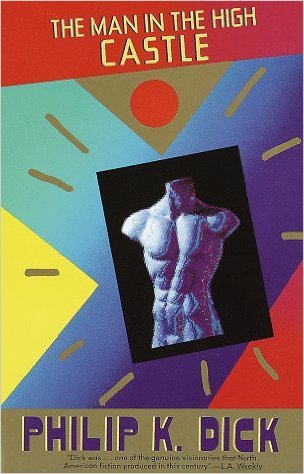
Take A Peek Book Review: The Man in the High Castle by Philip K. Dick

“Take a Peek” book reviews are short and (possibly) sweet, keeping the commentary brief and providing a little peek at what the book’s about and what I thought.

Man in the High Castle


Synopsis:

(via Goodreads)

It’s America in 1962. Slavery is legal once again. The few Jews who still survive hide under assumed names. In San Francisco the I Ching is as common as the Yellow Pages. All because some 20 years earlier the United States lost a war, and is now occupied jointly by Nazi Germany and Japan.

This harrowing, Hugo Award-winning novel is the work that established Philip K. Dick as an innovator in science fiction while breaking the barrier between science fiction and the serious novel of ideas. In it Dick offers a haunting vision of history as a nightmare from which it may just be possible to awake.

My Thoughts:

The world created by Philip K. Dick in The Man in the High Castle is fascinating, horrible, and mundane all at the same time. A lot of people just go about their daily lives, accepting the fact that the war has been won by the Axis powers and that the United States is now under Japanese and Nazi control.

I was inspired to read this book after watching the Amazon series. Call me shallow, but I enjoyed the series much more. Maybe I just didn’t get the book. There’s also the letdown factor, as the plotlines are dramatically different than what I’d already seen (for example, New York isn’t ever shown here and there’s no John Smith). Also, it’s quite a different thing to have a bootleg novel in circulation speculating on a different outcome from the war, as happens in the book, versus newsreel footage on film showing an Allied victory, as in the TV show.

There are some thought-provoking elements here, mainly about how easily people adapt to going along with whatever the governing principles say they need to do. The average people in San Francisco aren’t in active rebellion; they accept their world and focus on functioning within it. Another concept is the factor of “historicity” — does an object have value in and of itself, or does value come from knowing the history of it? Intriguing subplots revolve around the Japanese fascination with American historical artifacts and the odd way in which the Americans are complicit in cannibalizing their own pasts. Additionally, the speech of the characters is oddly choppy, with awkward vocabulary usage and phrasing, as if the Americans have become so deeply subserviant to Japanese rule that they’ve even adapted the Japanese style of speaking English.

I’ll be honest and say that I think a lot of the meaning of this book may have gone right over my head. Then again, the incessant references to the I Ching drove me a bit batty, and some of the ways in which the Nazis have changed and destroyed the world seem just too far-fetched. Not the atrocities which, tragically, are quite believable, but things like draining the Mediterranean and turning it into farmland.

I think I’d need to put a lot more thought and effort into puzzling out the layers of this book in order to fully appreciate it, and I’m afraid that I’m just not willing to put in the work to do so. This book isn’t dull, and parts are truly fascinating. It’s not a simple read, and not one that I’d likely recommend to anyone looking for casual entertainment, but for those who enjoy speculative fiction that requires effort on the part of the reader, it’s likely to be a rewarding read.

For my thoughts on the Amazon series of The Man in the High Castle, check out my post here.

_________________________________________

The details:

Title: The Man in the High Castle
Author: Philip K. Dick
Publisher: Vintage
Publication date: 1962
Length: 259 pages
Genre: Speculative/science fiction
Source: Purchased

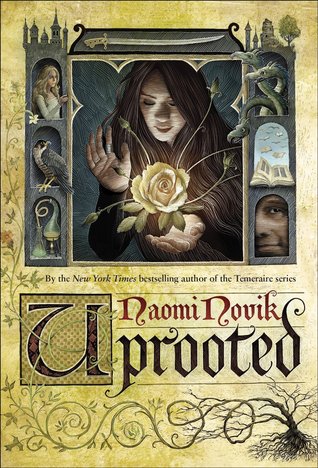
Audiobook Review: Uprooted by Naomi Novik

Uprooted“Our Dragon doesn’t eat the girls he takes, no matter what stories they tell outside our valley. We hear them sometimes, from travelers passing through. They talk as though we were doing human sacrifice, and he were a real dragon. Of course that’s not true: he may be a wizard and immortal, but he’s still a man, and our fathers would band together and kill him if he wanted to eat one of us every ten years. He protects us against the Wood, and we’re grateful, but not that grateful.”

Agnieszka loves her valley home, her quiet village, the forests and the bright shining river. But the corrupted Wood stands on the border, full of malevolent power, and its shadow lies over her life.

Her people rely on the cold, driven wizard known only as the Dragon to keep its powers at bay. But he demands a terrible price for his help: one young woman handed over to serve him for ten years, a fate almost as terrible as falling to the Wood.

The next choosing is fast approaching, and Agnieszka is afraid. She knows—everyone knows—that the Dragon will take Kasia: beautiful, graceful, brave Kasia, all the things Agnieszka isn’t, and her dearest friend in the world. And there is no way to save her.

But Agnieszka fears the wrong things. For when the Dragon comes, it is not Kasia he will choose.


This tale of magic and love is infused with an old-world fairy tale sensibility, and the entire experience is truly special.

Agnieszka is a simple village girl, but she’s well aware of the danger of the Wood. When she is chosen by the Dragon to be the next girl to be kept in his tower, she’s startled and resentful, and feels completely out of place. She’s always messy, unable to get through an hour without ripping her dress, snarling her hair, and coming out stained and mussed. This irks the fastidious Dragon no end. But as she spends time with him, Agnieszka slowly comes to realize that she has magic of her own — not the formal, “scientific” magic of the Dragon, but something uniquely hers, rooted in her beloved Valley and infused with the power of the earth, water, and sky around her, much like her inspiration, the legendary Baba Yaga.

Little by little, Agnieszka and the Dragon discover an ability to work together and combine their magic into something that’s greater than either can do on their own. Before they can get too far with their discovery, though, disaster strikes as Kasia is taken by the Wood, and it’s up to Agnieszka to find a way to reclaim her best friend before she’s consumed by corruption.

The Wood stared back at me out of Kasia’s face: an endless depth of rustling leaves, whispering hatred and longing and rage. But the Dragon paused; my hand had clenched on his. Kasia was there, too. Kasia was there. I could see her, lost and wandering in that dark forest, her hands groping ahead of her, her eyes staring without seeing as she flinched away from branches that slapped in her face, thorns that drank blood from deep scratches on her arms. She didn’t even know she wasn’t in the Wood anymore. She was still trapped, while the Wood tore at her little by little, drinking up her misery.

The stakes build and build throughout the story, as the entire kingdom is plunged into strife and ultimately war as the Wood’s influence extends to the capitol city and threatens the world beyond as well. Agnieszka and the Dragon have to lead the fight against the Wood, but more than that, they have to find a way to get to the source of the Wood’s malignant power if their home and their people are to survive.

Uprooted is a captivating tale, start to finish. Agnieszka is an unusual main character — strong willed, able to stand up for herself, and devoted to those she loves. It’s thrilling to see her develop from a young, unskilled girl full of self-doubt into a talented, capable, strong woman. She thinks on her feet, defies authority when she knows she needs to, and devotes herself to figuring out what’s right and what’s wrong.

The evil of the Wood is terrifying. At times, all seems lost. The descriptions of the Wood’s poisonous intent and seemingly undefeatable power are scary and haunting, creating a mood of despair and horror.

The story culminates with a battle between good and evil, but even there, there are nuances and shades of grey. There’s a deeply affecting story beneath the Wood’s awful terror, and Agnieszka has the wisdom to understand that finding out the past is the only way to see a path toward the future.

The language and imagery of the story is beautiful, especially Agnieszka’s growing magical powers and the descriptions of her spell-weaving and enchantments.

And what’s a good fantasy without a love story? The love story in Uprooted is mostly a quiet thread woven throughout the greater tale of good and evil, malice and redemption — but when it comes to a boiling point, it’s steamy and sexy in all the right ways.

I listened to the audiobook of Uprooted, which was both a great and frustrating experience. The narrator, Julia Emelin, is not (as far as I could tell) a native English speaker. Her Russian accent was an irritant at the beginning, as I found some of her phrasing and rhythm slightly odd and off-putting. But, as I got more into the story, I started to find the narrator’s accent a plus. The people and place names in Uprooted are all Polish and Russian-flavored (Dvernik, Marek, Rosya, Alosha, Marisha), and the voice of the narrator became, for me, yet another piece of the whole, creating a mood that felt magical and outside of the everyday.

As to why the audiobook was frustrating: If I’d had a physical copy of this book in my hands, there’s no doubt that I would have binge-read until all hours of the morning. Uprooted is the kind of story that I’d normally gobble up as quickly as possible. It was so difficult to go at the speed of the recording. I ended up listening in 1.25x speed, because I didn’t have the patience to listen at normal speed, but even so, I was so caught up in the story that I couldn’t wait to keep going. I came close a few times to switching over to a hard copy, but by then, I was under the spell of the narrator’s voice and didn’t want to lose the mood created by the audio, which made me feel as though I was listening to Agnieszka telling her own tale.

Ultimately, listening to Uprooted was a magical experience. The story itself is gorgeous, and the audiobook’s rhythms add to the total effect. I loved the narrative, the characters, and the folktale feel of the book, and know that it’s one I’ll want to read again… and perhaps again after that.

_________________________________________

The details:

Title: Uprooted
Author: Naomi Novik
Narrator: Julia Emelin
Publisher: Del Ray
Publication date: May 19, 2015
Audiobook length: 17 hours, 43 minutes
Printed book length: 435 pages
Genre: Fantasy
Source: Library (Overdrive)

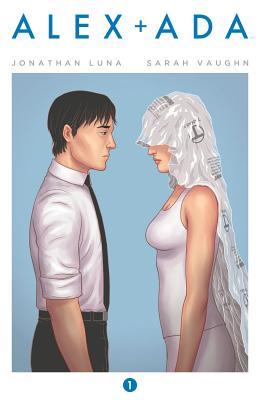
Graphic Reaction: Alex + Ada

Let’s talk about the terrific trilogy I just read! Presenting…

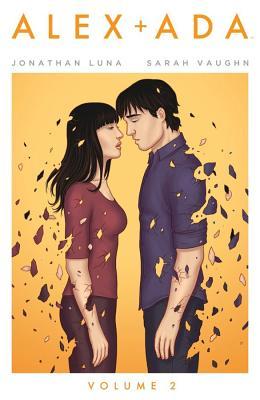
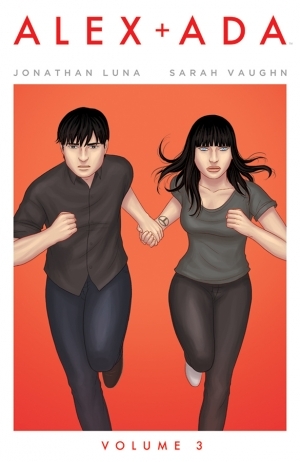
Alex + Ada Alex + Ada 2A+A

Alex + Ada by Jonathan Luna and Sarah Vaughn is a futuristic love story set not too far from now, when robots are a part of everyday life, people’s smart phones have been replaced by devices implanted directly into their temples, and the search for meaning and humanity is as present as always.

Alex is a disaffected twenty-something at the start of the story, lonely after the end of a relationship, and lacking much purpose in his life. To cheer him up, his wealthy grandmother gives him a gift — an X5, the latest in life-like androids. The X5 looks and feels like a real person, and is programmed to please its owner. Yes, in all ways.

Alex is perturbed by this gift — he has no interest in having an android for a companion. But as he spends more time with Ada, he wonders whether there’s more than meets the eye. When he learns about an underground movement that holds the secret to enabling androids’ sentience, he realizes that he can only be happy with Ada if she’s capable of choosing to be with him as well. Sentience for robots, however, is strictly against the law — and when a sentient robot goes on a rampage and kills humans, there’s an immediate backlash against all robots.

Alex and Ada, meanwhile, pursue their goal of sentience, and in the process, fall deeply in love. There’s no place in the world for a couple like them, and they’re forced to hide and go on the run. Meanwhile, the political debate concerning equal rights for sentient artifical intelligence continues to rage, and social change seems inevitable.

The Alex + Ada trilogy tells a powerful story of love and connection, while also asking some fundamental questions about what makes a person a person. Does one need bones and blood to be human? Are feelings that stem from a constructed system any different from feelings generated by an organic human brain? And what about free will?

The artwork in Alex + Ada is minimalistic and spare, but beautiful all the same. The eyes of the characters are expressive, and their body language is clear and evocative. The illustration style supports the narrative, and I really appreciated the uncluttered but eye-catching look of the books.

The three volumes of the story work together to tell one seamless story, and my only regret is that I read them with intervals in between. I’d love to go back at some point and read all three straight through, as I think the dynamics and flow of the story would be even more powerful when read as a whole.

Alex + Ada is graphic storytelling at its finest. I highly recommend this gorgeous trilogy

_________________________________________

The details:

Title: Alex + Ada, volumes 1 – 3
Author: Sarah Vaughn
Illustrator: Jonathan Luna
Publisher: Image Comics
Publication date: 2014 – 2015
Length: 128 – 136 pages
Genre: Graphic novel
Source: Library

Book Review: The Aeronaut’s Windlass by Jim Butcher

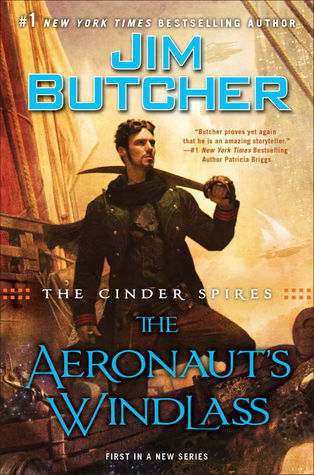
Aeronauts WindlassI’ll admit it up front: I’m a Jim Butcher fan. I’ve read all of the Dresden Files novels (15 so far), and various and sundry related stories, novellas, and graphic novels. Heck, I own the DVD of the (sadly short-lived) Dresden Files TV series. I binge-read the six volumes of the Codex Alera series a few years back. So, I guess you could say there was a decent chance that I’d love The Aeronaut’s Windlass too.

Yup. I did. Loved it a bunch.

The Aeronaut’s Windlass is the first book in a new series (The Cinder Spires), and it’s a remarkable feat of world-building. The book is set in a world in which mankind lives in huge, multi-storied towers (which are miles high and about two miles in diameter) that function as independent countries. The surface of Earth is dangerous and uninhabitable, covered by mists that conceal all sorts of dangers. Commerce is conducted in the air by fleets of airships that use etheric currents and power crystals to swoop, soar, dive, and attack.

Our loyalty is to Spire Albion (which I assume is more or less England, between the name and all the tea-drinking), and we meet a sprawling cast of characters right from the start. The main hero is Captain Grimm, commander of the AMS Predator, a non-military ship that makes its money from privateering. Grimm has a shadowy past that includes a dishonorable discharge from the Fleet, but from the first instant, it’s clear that he’s brave, noble, and a kick-ass air captain.

In addition to Captain Grimm and the crew of the Predator, we meet Gwen, a military recruit who stems from the very upper crust Lancaster family, which basically holds the monopoly on crystal production; Gwen’s cousin Benedict, who is a genetically-mixed warriorborn human; and Bridget, a large, self-conscious girl who finds an inner core of strength and courage.

And let’s not forget my very favorite character (and I suspect he’d resent anyone but himself being considered the hero of the piece): Rowl of the Silent Paws tribe, kit to Maul, chief of the Silent Paws. Rowl is a cat, and the cats in this book absolutely rock. They’re fierce warriors with an elegant and intricate system of power dynamics, clan politics, and etiquette. They mostly look down on clumsy humans, apart from the few (like Bridget, whom Rowl refers to as Littlemouse) who can speak Cat fluently.

Littlemouse was in danger, doubtless a prisoner, and the humans could not be trusted to handle her rescue with appropriate violence. They might be willing to leave someone alive, and Rowl was not prepared to tolerate incompetence where his personal human was concerned. He had just gotten her properly trained.

The action kicks into high gear when Spire Albion is attacked by a Marine contingent from Spire Aurora (Spain, as far as I can figure). The attack is sudden and devastating, and seems to have a sinister mastermind behind it whose motives are unclear. The good guys seems to be constantly outnumbered and outgunned, and the danger is vivid and terrifying — especially when highly venomous icky things called silkweavers seem to be serving the Aurorans, killing and maiming everything in their path.

Our little band of heroes is aided by a master etherealist, who has strange and inexplicable powers that allow him to see the unseen currents all around him, and his apprentice Folly, who’s another amazing and wonderful character. Folly is odd and off-kilter, but is possessed of incredible skill and instinct and comes to the rescue more than once (or twice, or thrice).

It’s all quite thrilling and absorbing. Jim Butcher does many things well, and he truly excels at writing action sequences. The extended airship battles are breathtaking, with booming cannons and swooping maneuvers, and a brave captain who never waivers in the face of enemy attack. (Okay, maybe I have just a teensy crush on Grimm at this point, but can you blame me?)

As always, Butcher knows just how to mix tense drama and high danger with sparkling, witty dialogue. The scenes narrated by Rowl are, of course, my favorites, but you don’t have to turn many pages in a Butcher book to find some clever wordplay or smart-ass retorts to lighten the mood.

Gwen sighed, and fetched another pair of mugs for the etherealist.

“Lovely,” Ferus said, and gulped some more. “Perceptions of etheric energy change from mind to mind, just as you and Sir Benedict demonstrate with your weapons crystals. And if one changes one’s mind, that also changes the nature of those perceptions. This will allow me to perceive those energies in ways in which I would not normally be able to do so.”

“You’re getting drunk,” Gwen said slowly, “so that you can experience etheric energy differently?”

Ferus held up his mug and said solemnly, “Think of it as goggles for one’s mind, instead of one’s eyes.”

The Aeronaut’s Windlass is a BIG book, over 600 pages. That would be huge, in and of itself, but considering this is just the first in a series, reading it feels like a pretty major undertaking. If I didn’t already know and love Jim Butcher’s books, I might be scared off, I suppose. There’s obviously much more yet to come in this series. While the book’s conclusion wraps up the first wave of battle, it’s clear that the war is just getting underway, and there are major questions left unanswered.

I struggled a bit at the beginning to understand the structure of the Spires and some of the fundamentals of the world of this book, but the action and the characters drew me in immediately, and it didn’t really take all that long for the more obscure elements to start to make sense and feel natural. By about the midpoint, I really hated to put the book down. And now that I’ve finished, I can say with certainty that I’m all in. I can’t wait for more of this excellent series, and just wish I could move straight on to the next book, instead of having to wait the year or two it’ll probably take for #2 to be released.

You really can’t go wrong with a Jim Butcher series. Fans will absolutely want to dive into the world of The Cinder Spires, and I think The Aeronaut’s Windlass is a great introduction for people who haven’t read his books too. (Although, if you haven’t read any Butcher, I’d urge you to run right out and find a copy of Storm Front, the first Dresden book).

So there you have it — a lengthy review which all boils down to: I loved this book. Go read it.

I’ll let Rowl have the final word, because he deserves it:

Each creature had something it excelled at, he supposed. Humans could manage knots easily, and cats could do everything else.

_________________________________________

The details:

Title: The Aeronaut’s Windlass (The Cinder Spires, #1)
Author: Jim Butcher
Publisher: Roc
Publication date: September 29, 2015
Length: 630 pages
Genre: Fantasy/steampunk
Source: Purchased