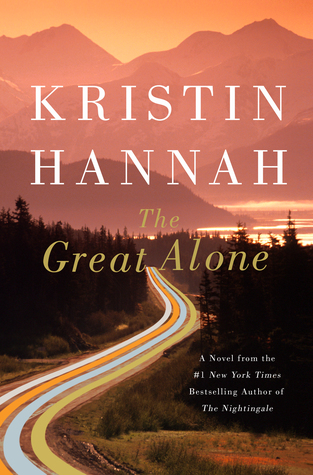
Book Review: The Great Alone by Kristin Hannah


Alaska, 1974.
Unpredictable. Unforgiving. Untamed.
For a family in crisis, the ultimate test of survival.

Ernt Allbright, a former POW, comes home from the Vietnam war a changed and volatile man. When he loses yet another job, he makes an impulsive decision: he will move his family north, to Alaska, where they will live off the grid in America’s last true frontier.

Thirteen-year-old Leni, a girl coming of age in a tumultuous time, caught in the riptide of her parents’ passionate, stormy relationship, dares to hope that a new land will lead to a better future for her family. She is desperate for a place to belong. Her mother, Cora, will do anything and go anywhere for the man she loves, even if means following him into the unknown.

At first, Alaska seems to be the answer to their prayers. In a wild, remote corner of the state, they find a fiercely independent community of strong men and even stronger women. The long, sunlit days and the generosity of the locals make up for the Allbrights’ lack of preparation and dwindling resources.

But as winter approaches and darkness descends on Alaska, Ernt’s fragile mental state deteriorates and the family begins to fracture. Soon the perils outside pale in comparison to threats from within. In their small cabin, covered in snow, blanketed in eighteen hours of night, Leni and her mother learn the terrible truth: they are on their own. In the wild, there is no one to save them but themselves.

In this unforgettable portrait of human frailty and resilience, Kristin Hannah reveals the indomitable character of the modern American pioneer and the spirit of a vanishing Alaska―a place of incomparable beauty and danger. The Great Alone is a daring, beautiful, stay-up-all-night story about love and loss, the fight for survival, and the wildness that lives in both man and nature.

The Great Alone is many things — a portrait of life in rugged Alaska, a story of the damage done by war, a tale of the horrible secrets lurking underneath a family’s facade… and also, a story of love and devotion and commitment.

We first meet Leni as a 13-year-old who never fits in anywhere, thanks to her parents’ inability to settle. Ever since her father returned from his years as a POW in Vietnam, Leni has been pulled from home to home and school to school, as her father’s instability and nightmares make him unable to keep a job or stay put for very long. Meanwhile, Leni’s mother Cora remains madly in love with her husband Ernt, and constantly tells Leni that she wishes she could remember how he was before. Out of options, Ernt comes up with a seemingly crazy idea — they’ll move to Alaska, to a plot of land left him by a war buddy, and live off the land, off the grid, as homesteaders.

Leni, of course, has no say in this, just as she has no say in most of what happens in her life. Cora is desperate to find the answer to making Ernt happy again, so off they go in their battered VW bus, completely unprepared for the realities of the life ahead of them. When they finally reach their land in Kaneq, they find a falling-down dirty cabin, and not much else. Fortunately, the neighbors in this tiny community rally around to teach them what they need to know, with an emphasis on the all-important preparations for their first Alaskan winter.

The land and its surroundings are breathtakingly beautiful, of course… but the winter is harsh, leaving the small family isolated in their cabin for months on end. For Leni and Cora, life becomes increasingly dangerous, not because of the natural threats such as wildlife and climate, but because of the man they live with. Ernt does not do well in the dark, under stress, and he takes out his inner demons on Cora.

Over the years, the family becomes intertwined with their neighbors, and Cora and Leni develop deep bonds with their new friends, but Ernt becomes more and more obsessed with survivalism, his paranoia and nightmares becoming more and more intense. Leni grows up in the shadow of domestic violence, witnessing her father’s brutal treatment of Cora, but unable to do anything to stop it.

And as Leni matures, she falls in love with the boy who was her first friend in Alaska — but her father hates his father and everything he stands for, and it’s clear that the relationship must be kept hidden from Ernt before it pushes him into even more violence.

I have to be honest and admit that I wasn’t so sure about this book for the first third or so. I was interested, but it was slow-going. The description of Alaska and what it takes to build a life there are intriguing, of course, but I’ve read other stories about life in Alaska, so this wasn’t exactly new. I had a hard time at first with the viewpoint, as this section of the book is seen mainly through 13-year-old Leni’s eyes, and there was just something a little limiting about that. Still, it was sadly fascinating to see Leni’s experience of her parents’ toxic marriage — the loving moments, when the two were so obsessed with each other that they couldn’t see anyone else — and the explosively painful moments, when Ernt’s rage would boil over into fists and abuse.

Later, when Leni is an older teen, her story becomes much more compelling. Suddenly, I couldn’t put the book down. (Seriously, I read the 2nd 50% of the book in one sitting.) Leni’s love story builds along a Romeo and Juliet trajectory, and while we can see the inevitable tragedy looming ahead, it’s still a shock when Leni’s life is turned upside down.

In some ways, the story of Ernt’s violence is simply tragic. It’s hard not to hate him as the years go by and his craziness and violence escalate — but there’s an element of pity, too. In today’s world, his PTSD would be recognized for what it is and he’d be able to get help. In the early 1970s, just back from hellish years as a captive in Vietnam, not only was there no psychological help, but he also was subject to the derision of anti-war America when he returned. It might be easy to view Ernt as simply an evil character, but we can’t. He is horrible and abusive and destructive, but his horror stems from his own status as a victim of war and torture. We can absolutely condemn his behavior and his treatment of his family, but I can’t help but feel sorrow too for how different this man might have been without the trauma of Vietnam.

The depiction of domestic violence is harrowing but has a ring of truth. At that time, there was much less support for “battered women”, and a woman who fought back could easily end up either dead or behind bars, without much in the way of legal defense or public awareness. Seeing Leni’s need to protect her mother, and Cora’s inability to find a way to leave, is painful and tragic.

At the same time, I loved the way Leni’s life in Alaska grows. She becomes a part of the community, part of Alaska itself, and this stays with her and changes her in deep and unalterable ways.

I won’t say more about the love story or its outcome, other than WOW and SOB and TEARS and… well, read it yourself to find out!

The Great Alone is powerful and moving, with a unique setting and memorable characters. Check it out.

_________________________________________

The details:

Title: The Great Alone
Author: Kristin Hannah
Publisher: St. Martin’s Press
Publication date: February 6, 2018
Length: 448 pages
Genre: Contemporary fiction
Source: Review copy courtesy of the publisher via NetGalley

Save

Save

Save

Save

Save

Save

Save

Save

Save

Save

Save

Novella: The Only Harmless Great Thing by Brooke Bolander


In the early years of the 20th century, a group of female factory workers in Newark, New Jersey slowly died of radiation poisoning. Around the same time, an Indian elephant was deliberately put to death by electricity in Coney Island.

These are the facts.

Now these two tragedies are intertwined in a dark alternate history of rage, radioactivity, and injustice crying out to be righted. Prepare yourself for a wrenching journey that crosses eras, chronicling histories of cruelty both grand and petty in search of meaning and justice.

The Only Harmless Great Thing is weird and wonderful, cruel and beautiful. Can you possibly believe that two awful chapters from history — the “radium girls” and an electrocuted elephant — would fit together in one story? Author Brooke Bolander pulls off this seemingly impossible task in a new novella that almost defies description — you just need to experience it.

The narration shifts between elephant and human characters, in language that’s often hauntingly strange and beautiful.

At night, when the moon shuffles off behind the mountain and the land darkens like wetted skin, they glow. There is a story behind this. No matter how far you march, O best beloved mooncalf, the past will always drag around your ankle, a snapped shackle time cannot pry loose.

The human parts of the story are heart-breaking and outrage-inducing… but so are the elephants’ sections. As I read, the story of the radium factory workers’ treatment left me feeling furious. The involvement of elephants in the radium story is startling but makes sense in this alternate world in which humans and elephants converse via sign language, and the elephant language (Proboscidian) is taught in universities.

Then came the Atomic Elephant Hypothesis.

The Only Harmless Great Thing is a quick but powerful read, unusual and a little crazy and definitely something that will stick in my mind for quite some time. It made me angry and sad, and also made me think. Highly recommended.

But chains can be snapped, O best beloved mooncalf. Sticks can be knocked out of a Man’s clever hands. And one chain snapping may cause all the rest to trumpet and stomp and shake the trees like a rain-wind coming down the mountain, washing the gully muddy with bright lightning tusks and thunderous song.

PS – The story of Topsy, the elephant electrocuted at Coney Island, is changed and reinvented here in this novella — but yes, there was a real Topsy, and she really was put to death in 1903 by being electrocuted in front of a crowd as part of a public spectacle. It’s a horrible story that seems too outrageous to be true, but sadly, it really happened. You can read more about Topsy’s awful fate here.

PPS – Reading this novella reminded me that I picked up a copy of the non-fiction book The Radium Girls (winner of the 2017 Goodreads Choice Award for history and biography), and really need to read it!

_________________________________________

The details:

Title: The Only Harmless Great Thing
Author: Brooke Bolander
Publisher: Tor
Publication date: January 23, 2018
Length: 96 pages
Genre: Alternate history
Source: Purchased

Save

Save

Save

Save

Save

Save

Save

Save

Save

Save

Save

Book Review: Still Me by Jojo Moyes


From the #1 New York Times bestselling author Jojo Moyes, a new book featuring her iconic heroine of Me Before You and After You, Louisa Clark

Louisa Clark arrives in New York ready to start a new life, confident that she can embrace this new adventure and keep her relationship with Ambulance Sam alive across several thousand miles. She steps into the world of the superrich, working for Leonard Gopnik and his much younger second wife, Agnes. Lou is determined to get the most out of the experience and throws herself into her new job and New York life.

As she begins to mix in New York high society, Lou meets Joshua Ryan, a man who brings with him a whisper of her past. Before long, Lou finds herself torn between Fifth Avenue where she works and the treasure-filled vintage clothing store where she actually feels at home. And when matters come to a head, she has to ask herself: Who is Louisa Clark? And how do you reconcile a heart that lives in two places?

Funny, romantic, and poignant, Still Me follows Lou as she navigates how to stay true to herself, while pushing to live boldly in her brave new world.

Still Me is the third Louisa Clark story, taking the young woman we know and love and putting her in a decidedly new and strange environment — New York’s Upper East Side.

In the beautiful Me Before You, Louisa’s life changes through her relationship with Will Traynor, a man she loves but cannot save. In After You, we see Louisa grieve and suffer, finally starting to rebuild a new version of a life as she allows new friends and connections into her world and begins to open up to the possibility of a new love.

Still Me picks up right where After You leaves off, as Louisa leaves her family and new boyfriend Sam behind in England to accept a job working for a super posh family in New York. The Gopniks are incredibly rich and live a life of utter luxury and intense busy-ness, with husband and wife requiring personal assistants to keep their days on track and to get them from one charity event to another. Lou’s role is to be Agnes’s companion as well as assistant, providing reassurance and steadiness to the young wife who is scorned by the more established society matrons.

Lou and Sam plan to continue their relationship, but as we all know, long-distance relationships are tough, no matter the good intentions. Misunderstandings crop up. Communication is strained. Sam’s visits to New York never seem to work out as wonderfully as planned. And then a disastrous visit home leads to even more trouble.

Meanwhile, back in New York, Lou’s career as a companion takes an unexpected turn… but soon new opportunities and friendships come her way. And Lou — finally, slowly — begins to understand that she has the opportunity Will always wanted for her: the chance to decide for herself who she will be, and what she wants her life to look like.

I won’t say any more about the plot — who wants to give away the good stuff? Louisa is, as always, an original — a funky, upbeat, unusual young woman who’s headstrong, loving, creative, and assertive; who also drinks too much when nervous, rolls with the punches, but is decidedly vulnerable too. Will Traynor will always be an indelible influence on her life, but Sam holds her heart… or does he? And is he as devoted to her as she’d like him to be?

Still Me introduces some memorable, delightful new characters, especially Mrs. DeWitt — the feisty, slightly mean old woman who lives down the hall from the Gopniks — and her dog Dean Martin, a pug who’s got just as much of a bite as his owner.

In her New York setting, Louisa gets a new chance to shine, whether wearing her unique style of outrageous fashion or finding her way around Fifth Avenue. It’s fun and heartening to see “our” Lou turn into this new version of herself, whistling for cabs like a New York pro.

In some ways, Still Me could almost be a stand-alone. There are many sections that read like a fish-out-of-water story. Take one small-town English girl and place her in the world of New York billionaires — it’s bound to be entertaining. And yet, for those of us who have read the earlier books, it’s especially heart-warming to see the unsure, broken-hearted heroine of Me Before You finally coming out the other side of a world of grief and taking steps toward becoming who she’s meant to be.

Still Me wraps up a lovely trilogy that’s full of pathos, humor, warmth, and characters who feel like real people, flawed but lovable all the same. I’d love to think that Jojo Moyes might continue writing about Louisa Clark — I haven’t seen anthing that says, one way or the other, whether Still Me is the end of Louisa’s story. I hope not! I think I’d be happy following Lou through the many glorious years ahead of her. Still, if Still Me is the final Louisa Clark book, we can all take satisfaction in seeing the life Louisa has built for herself by the end of the book, and imagine the great things yet to come.

_________________________________________

The details:

Title: Still Me
Author: Jojo Moyes
Publisher: Pamela Dorman Books
Publication date: January 30, 2018
Length: 400 pages
Genre: Contemporary fiction
Source: Review copy courtesy of the publisher via NetGalley
Save

Save

Save

Save

Save

Save

Save

Save

Save

Save

Save

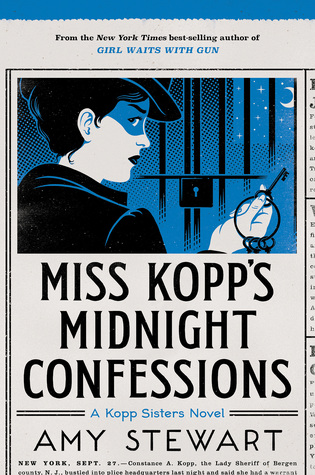
Aubiobook Review: Miss Kopp’s Midnight Confessions by Amy Stewart


The feisty, fiery Kopp sisters are back in another unforgettable romp by international bestseller Amy Stewart.

Deputy sheriff Constance Kopp is outraged to see young women brought into the Hackensack jail over dubious charges of waywardness, incorrigibility, and moral depravity. The strong-willed, patriotic Edna Heustis, who left home to work in a munitions factory, certainly doesn’t belong behind bars. And sixteen-year-old runaway Minnie Davis, with few prospects and fewer friends, shouldn’t be publicly shamed and packed off to a state-run reformatory. But such were the laws — and morals — of 1916.

Constance uses her authority as deputy sheriff, and occasionally exceeds it, to investigate and defend these women when no one else will. But it’s her sister Fleurette who puts Constance’s beliefs to the test and forces her to reckon with her own ideas of how a young woman should and shouldn’t behave.

Against the backdrop of World War I, and drawn once again from the true story of the Kopp sisters, ‘Miss Kopp’s Midnight Confessions’ is a spirited, page-turning story that will delight fans of historical fiction and lighthearted detective fiction alike.

My Thoughts:

The third book in the Kopp Sisters series is another terrific adventure starring Deputy Sheriff Constance Kopp and her sisters. In this installment, the main trouble is young girls looking for freedom and purpose, and the fear the authorities seem to have at the prospect of “waywardness”. Blameless girls can be scooped up and put in jail at the request of their parents, simply for leaving home without permission. Constance becomes convinced that there has to be another way, and does her best to find it.

I love the characters in these books. Amy Stewart does an amazing job of bringing to vibrant life these audacious, unusual women, and shows us the incredible biases they faced on a daily basis. It’s great fun knowing Constance was a real person, and I couldn’t help but admire her devotion to her principles and her job, even while being scoffed at for doing “men’s work”.

Book #3 isn’t perfect, though: The plot itself is a tad flat compared to the previous two books, which featured dangerous criminal cases, pursuits, threats, and imminent risk to the Kopps. Here, it’s a quieter sort of story, as the plights of Minnie and Edna are interwoven with Fleurette’s own escapade. The story is never dull, but it lacks the adrenaline and speed of the previous two.

Still, it’s absolutely worth reading. The characters continue to be delightful, and it’s interesting to see how the looming involvement of the United States in WWI begins to cast a shadow over the events in the story. I definitely want to see what happens next!

A final note: I listened to the audiobook, and it’s wonderful! Narrator Christina Moore has a gift when it comes to these characters, making each sister distinct, as well as the rest of the characters, whether working class New Jersey girls or New York cops or traveling vaudeville stars. Their voices are sharp and funny and full of personality, just like Amy Stewart’s characters themselves.

If you haven’t had the pleasure of reading the Kopp Sisters books yet, start with Girl Waits With Gun, and then keep going!

_________________________________________

The details:

Title: Miss Kopp’s Midnight Confessions
Author: Amy Stewart
Narrator: Christina Moore
Publisher: Houghton Mifflin Harcourt
Publication date: September 5, 2017
Audiobook length: 10 hours, 4 minutes
Printed book length: 365 pages
Genre: Detective story/historical fiction
Source: Audible download (purchased)

**Save

Save

Save

Save

Save

Save

Save

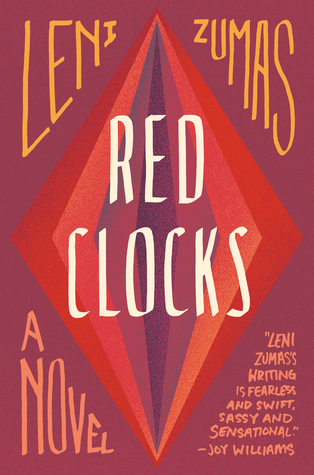
Book Review: Red Clocks by Leni Zumas


In this ferociously imaginative novel, abortion is once again illegal in America, in-vitro fertilization is banned, and the Personhood Amendment grants rights of life, liberty, and property to every embryo. In a small Oregon fishing town, five very different women navigate these new barriers alongside age-old questions surrounding motherhood, identity, and freedom.

Ro, a single high-school teacher, is trying to have a baby on her own, while also writing a biography of Eivør, a little-known 19th-century female polar explorer. Susan is a frustrated mother of two, trapped in a crumbling marriage. Mattie is the adopted daughter of doting parents and one of Ro’s best students, who finds herself pregnant with nowhere to turn. And Gin is the gifted, forest-dwelling homeopath, or “mender,” who brings all their fates together when she’s arrested and put on trial in a frenzied modern-day witch hunt.

This book is getting a ton of buzz, with non-stop comparisons to The Handmaid’s Tale, among others. But I’ll tell you up front, I just don’t see it, and feel like the hype is pretty undeserved too.

Also, just to get this out of the way, the synopsis is misleading as well — the book is not about “five very different women” “in a small Oregon fishing town” — it’s about four women, and there are notes from one character’s unfinished biography of a female explorer. But Eivor is certainly not a woman in the small Oregon town. Nitpicky, I know, but accuracy matters.

Okay, so what’s it all about? Through chapters alternating between the four main characters and the notes on Eivor, we get a view of life in an America much like our own, but with a scary difference. Since the Personhood Amendment became the law of the land, abortions are illegal, and by law, life starts at conception, conveying the rights of full humans on embryos. Women who miscarry are forced to pay for funerals for their dead babies. Getting an abortion will result in murder charges. Canada has enacted an agreement to close the border to women seeking abortions; this is known as the “Pink Wall”.

And yet, in all other ways, it’s just a small town with the usual assortment of odd characters overly involved in one another’s lives.

Ro is desperate to become pregnant, but as the clock seems to be running out on her fertility chances, she’s also aware of the law about to take effect (Every Child Needs Two) that bans adoption by single parents. Ro’s student Mattie is bright and ambitious, but finds herself trapped by an unwanted pregnancy. Susan feels trapped in her marriage and family life, and seems not quite stable in a self-destructive way. Gin is a healer with a talent for herbal medicine and the courage to provide care for women with nowhere to turn. All, in different ways, feel trapped by their own circumstances and the laws that take away their choices.

Oddly, Red Clocks is much less compelling than it should be. Yes, the twist about the Personhood Amendment and the return to a world of back-alley abortions is frightening, clearly intended as a cautionary tale for those who take rights for granted and who assume someone will do something about the slow creep of rising conservatism. But in execution, the events of the novel feel narrow in scope — the small town, rather than feeling representative, is just its own odd little locale.

The writing in Red Clocks suffers from literary affectation that’s distracting and even laughable in places. The main characters are referred to only by their generic descriptions in their own chapters — so in Ro’s chapters, she’s referred to only as “the biographer”. Susan is “the wife”, Mattie is “the daughter”, and Gin is “the mender”. Yet they get names when they feature in chapters about the other characters… so what’s the point of not using their names? Are they supposed to be iconic in some way? Perhaps it’s the author’s way of showing the roles that women are assigned, but it doesn’t feel necessary or effective; rather, it feels like someone trying too hard to be different.

And oh, the writing itself drove me a bit batty. Are we supposed to be seeing how these women think? Is that why everything is so disjointed? And yet, the chapters all sound kind of alike, without distinct voices. Here are a few samples — judge for yourself if this is the kind of thing you can stomach:

Labiaplasty surgeons earn up to $250,000 per month.

A little animal — possum? porcupine? tries to cross the cliff road.

Sooty, burnt, charred to rubber.

Shivering, trying to cross.

Already so dead.

(opening lines of a “The Wife” chapter)

A witch who says no to her lover and no to the law must be suffocated in a cell of the hive. She who says no to her lover and no to the law shall bleed salt from the face. Two eyes of salt in the face of a witch who says no to her lover and no to the law shall be seen by policeman who come to the cabin.

(“The Mender”)

There is an egg bracing to burst out of its sac into the wet fallopian warmth.

(“The Biographer”)

Babies once were abstractions. They were Maybe I do, but now now. The biographer used to sneer at talk of biological deadlines, believing the topic of baby craziness to be crap for lifestyle magazines. Women who worried about ticking clocks were the same women who traded salmon-loaf recipes and asked their husbands to clean the gutters. She was not and never would be one of them.

Then, suddenly, she was one of them. Not the gutters, but the clock.

(“The Biographer”)

After Clementine leaves, the mender misses her, wants back the soft white thighs. She likes her ladies big-sirenic, mermaids of land, pressing and twisting in fleshful bodies.

(“The Mender”)

Red Clocks isn’t boring, and the plot does include dramatic and moving moments — but few and far between. Otherwise, it’s all very introspective, and the political and social impact gets drowned under the droning of the inner monologues. The book held my interest, but wasn’t the buzz-worthy read I’d expected.

And a final note: I keep seeing people describe Red Clocks as “dystopian”, but I find that not quite accurate either. While it’s disturbing to see the impact of the Personhood Amendment, the world of Red Clocks is no where near the societal upheaval and tyranny of a dystopian society. It’s our world as it could be, which is scary enough without the “dystopian” label attached to it.

_________________________________________

The details:

Title: Red Clocks
Author: Leni Zumas
Publisher: Little, Brown and Company
Publication date: January 16, 2018
Length: 368 pages
Genre: Contemporary fiction
Source: Review copy courtesy of the publisher via NetGalley
Save

Save

Save

Save

Save

Save

Save

Save

Save

Save

Save

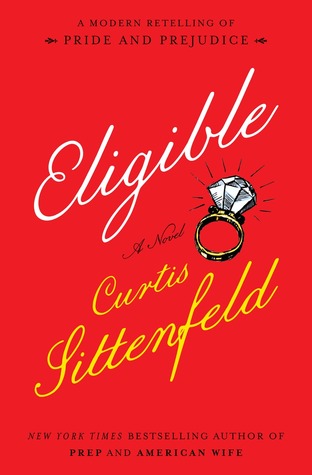
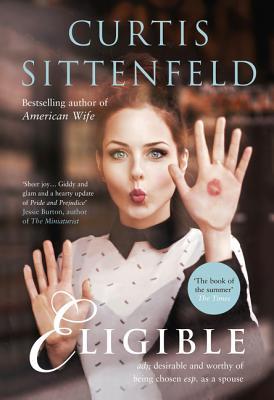
Book Review: Eligible by Curtis Sittenfeld


This version of the Bennet family and Mr. Darcy is one that you have and haven’t met before: Liz is a magazine writer in her late thirties who, like her yoga instructor older sister, Jane, lives in New York City. When their father has a health scare, they return to their childhood home in Cincinnati to help and discover that the sprawling Tudor they grew up in is crumbling and the family is in disarray.

Youngest sisters Kitty and Lydia are too busy with their CrossFit workouts and Paleo diets to get jobs. Mary, the middle sister, is earning her third online master’s degree and barely leaves her room, except for those mysterious Tuesday-night outings she won’t discuss. And Mrs. Bennet has one thing on her mind: how to marry off her daughters, especially as Jane’s fortieth birthday fast approaches.

Enter Chip Bingley, a handsome new-in-town doctor who recently appeared on the juggernaut reality TV dating show Eligible. At a Fourth of July barbecue, Chip takes an immediate interest in Jane, but Chip’s friend, neurosurgeon Fitzwilliam Darcy, reveals himself to Liz to be much less charming. . . . And yet, first impressions can be deceiving.

This is the most fun I’ve had with a book all year! (Okay, it’s only January 20th, but that sounds impressive, doesn’t it?)

Eligible is a Jane Austen retelling, part of The Austen Project, in which modern-day authors are matched up with Austen novels, retelling Austen’s classic tales in a modern setting. Eligible is the 4th of the Austen Project books to be published, and I’d have to say it’s the most enjoyable so far.

The author opens this Pride and Prejudice reinterpretation with a quote by Mark Twain about Cincinnati being 20 years behind every one else… and thank goodness she does, because this mindset certainly help Eligible make sense. The problem I have with most modern-day interpretations of Austen stories is the unrelenting emphasis on marrying well, which definitely isn’t a notion that fits with a 21st century outlook.

In Eligible, Mrs. Bennet is a Cincinnatian who wants nothing more than for her five daughters to be married off to wealthy, successful men, so she can go brag about it at the country club. Mrs. Bennet is just as insufferable here as she is in Austen’s original. Liz and Jane have found lives and careers in New York, but when they return home due to their father’s health crisis, they’re sucked right back into the Bennets’ world, full of gossip and obnoxious younger sisters and oblivious parents.

The story is quite fun. Darcy is a snobbish neurosurgeon who forms terrible impressions of Cincinnati and the Bennets. And he does have good reason, as Kitty and Lydia are crass and embarrassing every time they open their mouths. Jane is lovely, of course, and Chip is smitten… but complicating matters is the fact that Jane had decided to pursue single motherhood right before returning to Cincinnati, and a pregnancy could definitely throw a wrench in the romance.

The modern-day touches are sprinkled throughout the story. The use of a reality TV show as a catalyst is quite brilliant, especially as Chip’s ongoing connection to the show comes back into play later in the book. Lydia’s story take an unexpected turn as well, and fortunately, she ends up being more sensible and much happier in Eligible than she does in the original.

MINOR SPOILERS AHEAD!

I don’t want to get too far into the details, because the fun is in encountering all the little ways in which the author takes the original P&P story elements and turns them on their head and makes them fit in a contemporary novel. Still, I’ll mention just a few things that I thought were great twist, such as Jasper Wick (Eligible‘s version of Wickham), a married man with whom Liz has an affair for far too long (prior to the events of the story), and who ends up being just the sort of ass we’d expect. Fortunately, Lydia does NOT get involved with Wick/Wickham in this story… but the way the author makes Lydia’s elopement work out is fitting, and I only just now got the play on names that the author pulls off with Lydia’s love interest.

The one thing I had a really hard time with in Eligible is that about mid-way through, as Liz and Darcy keep running into each other, being rude to one another, and clearly expressing their dislike… Liz asks Darcy if he wants to have hate sex, and he agrees, and they end up in bed together! A lot! Okay, fine, I don’t have any problem with consenting adults doing whatever they like, but somehow it’s shocking to think about Lizzie Bennet and Darcy getting physical! I felt like I was going to have an attack of the vapors. Quick, fetch the smelling salts! It actually all works in the context of the plot, but somehow putting those characters in that situation was quite outrageous for my poor, proper sensibilities.

Okay, end of spoilers.

The writing in Eligible is fun and light-hearted, and the short chapters keep the plot moving right along, even though the book itself, by pure page-count, is on the long side. Despite knowing overall how the story must work out, given the premise, getting there was really a blast.

I haven’t entirely loved the Austen Project books that I’ve read so far, because I do find the notion of Austen’s plots really hard to force into modern retellings. In the case of Eligible, though, it’s a great fit, and so well done. If you’re an Austen fan, Eligible is worth checking out, and I suppose even someone not familiar with Pride and Prejudice (gasp!) would enjoy the story as well.

For more on Austen Project books, check out my reviews of:
Northanger Abbey by Val McDermid
Sense and Sensibility by Joanne Trollope
Emma by Alexander McCall Smith

_________________________________________

The details:

Title: Eligible
Author: Curtis Sittenfeld
Publisher: Random House
Publication date: April 19, 2016
Length: 512 pages
Genre: Contemporary fiction
Source: Purchased

Save

Save

Save

Save

Save

Save

Save

Save

Save

Save

Save

Saga and Neverwhere: Cool-looking stuff that I read this week

Instead of writing lengthy reviews (as I have a tendency to do), I thought I’d share quick looks at two of my reading obsessions from this past week.

SAGA by Brian K. Vaughan and Fiona Staples:

I love Lying Cat. And that’s the truth.

What can I say about the glories of the Saga series? In a nutshell, this comic series tells the story of two star-crossed lovers, Alana and Marko. Their worlds have been at war for generations, and when they desert their respective armies and begin life on the run together, they’re hunted and despised by both sides. The world of Saga is utterly wonderful, with bizarre beings such as Lying Cat, a race of robots with TV screens for heads, an adorable little seal-like creature who’s dangerous AF, and so much more. The artwork is astounding, with a mind-blowing array of gorgeous, strange, and often disgusting creatures and people and planets. The storyline is intense and always surprising, with plenty of danger and violence, but also some truly funny dialogue and situations.

Take note that Saga is definitely NSFW — between gory violence and explicit illustrations of sex acts and genitalia, this isn’t something you want your coworkers reading over your shoulders. (Unless they’re very cool coworkers, but you might be at risk of violating some company policies… )

Saga is available as standard comic editions, but I prefer to wait and read the trade-paperback editions. The 8th paperback volume just came out this month, which is what prompted my Saga binge this week — I re-read #5, then continued straight through 6, 7, and 8. There are also deluxe hardcover editions available, and if I’m ever feeling super rich, I will absolutely treat myself to those as well.

Saga is amazing, people! Don’t miss out.

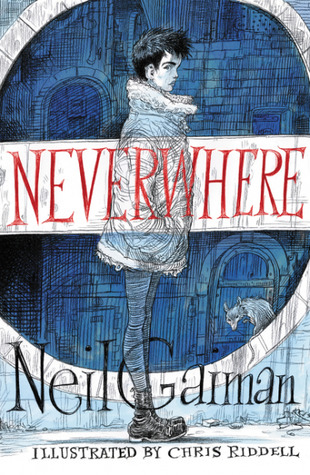
NEVERWHERE by Neil Gaiman, with illustrations by Chris Riddell

Neverwhere is a classic Neil Gaiman fantasy, originally written as a teleplay for BBC in 1996 before being turned by Gaiman into a novel… which he then continued to tinker with over the years, until now, more than 20 years since its inception, Neverwhere has been published in the author’s “preferred” version of the text, with gorgeous, haunting black-and-white illustrations by the talented Chris Riddell throughout the book.

Neverwhere is the story of Richard Mayhew, an every-man who stumbles out of his normal life and into the dark, hidden, magical world of London Below. Swept away from everything and everyone he thought he knew, Richard finds himself embarking on a quest with the Lady Door, a bodyguard named Hunter, and the mysterious yet dashing Marquis de Carabas. As they avoid the deadly assassins Mr. Croup and Mr. Vandemar, Richard and his comrades journey through sewers and non-existent underground platforms, meet angels and beasts, and visit the Floating Market. Finally, when Richard has a chance to return to his former life, he has to decide whether he really wants “normal” after all.

I originally read Neverwhere years ago, and gave it only 3-stars at the time. To be honest, I’m not entirely sure that I even finished it, since the last half of so of the book seemed completely new to me. The illustrations here really add to the story, bringing the strange characters to life and adding interest and intrigue to practically every page.

At its heart, Neverwhere is a portal story, where a character steps from our world into something new and different, facing dangers but also encountering wonders beyond imagination. Perhaps my appreciation for this type of tale has grown over the years, but I did enjoy the story a lot more this time around — and the illustrations definitely helped me get into the strange world of Neverwhere in a new and marvelous way.

For more on the artist’s process of illustrating Neverwhere, see this article. And below, enjoy a few snippets of pages from the book. (Click to view larger versions).

This slideshow requires JavaScript.

Audiobook Review: Unorthodox: The Scandalous Rejection of My Hasidic Roots by Deborah Feldman


The instant New York Times bestselling memoir of a young Jewish woman’s escape from a religious sect, in the tradition of Ayaan Hirsi Ali’s Infidel and Carolyn Jessop’s Escape, featuring a new epilogue by the author.

The Satmar sect of Hasidic Judaism is as mysterious as it is intriguing to outsiders. In this arresting memoir, Deborah Feldman reveals what life is like trapped within a religious tradition that values silence and suffering over individual freedoms.

Deborah grew up under a code of relentlessly enforced customs governing everything from what she could wear and to whom she could speak to what she was allowed to read. It was stolen moments spent with the empowered literary characters of Jane Austen and Louisa May Alcott that helped her to imagine an alternative way of life. Trapped as a teenager in a sexually and emotionally dysfunctional marriage to a man she barely knew, the tension between Deborah’s desires and her responsibilities as a good Satmar girl grew more explosive until she gave birth at nineteen and realized that, for the sake of herself and her son, she had to escape.

Unorthodox is a fascinating look into a world that’s largely unknown and hidden. The insular Satmar Hasidic community in which Deborah was raised has no tolerance for outside influence or interference, and at the same time, leaves no room for individuality or privacy.

All aspects of life are strictly governed, from what to wear to how to speak to what to eat to when to have sex with your husband. As a child, Deborah’s world revolved around family — the grandparents who raised her, the strict aunt who dictated every step of Deborah’s upbringing and education. Even so, Deborah was different, which can be unforgiveable among the Satmar — her father was either “crazy” or “retarded”, depending on who you asked, and her mother left the Satmar world when she left her unhappy marriage, leaving young Deborah behind.

As Deborah grows, she follows the rules carefully, always fearful of the contant watchful eyes and incessant gossip in their close-knit community, yet also yearning to expand her horizons. She sneaks forbidden books from a library from a different neighborhood, hiding Harry Potter and A Tree Grows in Brooklyn under her mattress, and takes the subway into Manhattan to be dazzled by the glimpse of another kind of life.

Still, Deborah does what is expected of her, married at age 17 to a groom she barely knows, enjoying the trappings of being a bride even while the horrible reality of her situation is driven home. The chapter on Deborah’s introduction to marriage is horrifying. Prior to the wedding, Deborah takes the mandatory “bride classes” that all Satmar girls take, learning essential requirements about going to the mikveh (ritual bath), about being unclean for two weeks due to her period (and the ridiculous steps women have to take before being considered clean enough to resume marital relations), how to run a good Jewish home, and then finally, in the last lesson, what sex is and what’s expected of her.

The sex talk Deborah gets is less than informative:

A man and a woman’s bodies were created like two interlocking puzzle pieces, she says. I hear her describe a hallway with walls, leading to a little door, which open to a womb, the mekor, she calls it, “the source.” I can’t imagine where an entire system like that could be positioned. She tries to tell me about the passageway that leads to “the source,” how this passageway is entered, demonstrating with her forefinger inserted into the ring of the thumb and forefinger of her other hand, and making ridiculous thrusting motions. I’m guessing that that motion is referring to the part where they click into place. Still, I can’t see where that spot, that entryway, can exist on my own body. As far as I know, the place where the pee comes out isn’t that stretchy. I finally stop her.

“Um, I don’t have that,” I say, giggling nervously.

The girls of the community are kept so utterly ignorant of their own bodies that she has no comprehension of having a vagina! Things go from bad to worse, as the couple is unable to consummate their marriage for a full year, as clumsy fumbling leads to frustration, which leads to deep anxiety and tension on Deborah’s part, making her physically unable to relax enough to permit her husband to complete the act. It’s horrible to hear the suffering that this young girl endures, with emotional damage heaped on top of physical suffering.

Finally, after becoming a mother at age 19, Deborah begins to secretly seek an outlet for her unfulfilled yearning for independence and knowledge, enrolling in classes, learning to drive, and venturing outside of her community and its heavy expectations. The more she encounters of the outside world, the more strongly she’s convinced that her future lies elsewhere. Ultimately, she finds a way to start a new life for herself and her young son, and finds the freedom she’s longed for all her life.

The narrative is intimate and informative, as Deborah walks us through the phases of a girl’s life, from early education through puberty and into young adulthood, when the entire focus becomes making a good match. We see the structures in place to enforce obedience and strict adherence to the religious rules that govern all aspects of life. The imbalance between the sexes is laughable — a woman’s life has as its purpose creating a home for her husband and raising children. There’s no room for individuality, and people with other interests are either shunned or, like Deborah and her mother before her, must leave entirely in order to have a life that feels true.

The audiobook, narrated by Rachel Botchan, captures the dialogue and the patterns of conversations quite well, as well as conveying the Yiddish terms that are peppered throughout the book. The narration flows nicely, and gives the listener a real sense of Deborah’s inner life, moods, and emotional struggles.

Quibbles:

While I found the story overall quite powerful, there are a few aspects that stuck out and were problems for me.

  • While talking about how unhappy she is in her marriage, Deborah states that she’d never be able to leave without leaving her son behind, because the rabbinical courts would never allow a Satmar woman to leave and take a child with her. Yet in the end, Deborah and her husband decide to divorce, and Deborah leaves with their son. How? Why was she allowed to take the child? What was the legal process? Was there some sort of agreement put into place? There’s no explanation offered, and considering that she pointed this out as a reason for her feeling trapped in her marriage, I needed to get some of information about why this worked out for her.
  • The author has a tendency to ascribe emotions to people based on her interactions with them, and this often rings false. When she goes to the mikveh for the first time in preparation for her wedding, she decides that the attendant “thinks she is better than I am” based on the tone of her voice, and later, when she feels embarrassed during the highly personal inspection that’s entailed, she says:

The attendant’s face is stern, but there is a faint whiff of triumph about her movements… She’s baiting me.

It all comes across as a big case of projection, as far as I can tell. Yes, the ritual is invasive and scary for a young woman who’s never been naked in front of others before and who has no knowledge of her own body, but the author presents the attendant’s feelings as facts, rather than showing that it’s her interpretation of what she sees. And this comes across in several places in the book — Deborah makes assumptions about other’s feelings and motivations, but we have no reason to think that she’s actually right.

  • I would have liked more explanation about Deborah and her husband Eli’s financial situation, as she describes them struggling to afford the basics, and yet they spend an enormous amount of time (and, I assume, money) visiting doctors and therapists and other specialists regarding their sexual difficulties, and later, for prenatal treatment once the pregnancy becomes high-risk. I assume the families support the couple, but it would have been good to have a better understanding of where the money they spent came from.


Wrapping it all up:

Unorthodox is a powerful story that provides a startling look into a world that must seem utterly alien to anyone with a secular upbringing. While there are areas that could use more factual grounding and additional information, overall this book provides quite a lot of detail into what constitutes childhood, adolescence, and young adulthood in the Satmar community. It’s easy to understand how an intelligent girl who questions everything and thirsts for knowledge would feel stifled, and perhaps the most remarkable thing is that the author survived in this world for as long as she did.

_________________________________________

The details:

Title: Unorthodox: The Scandalous Rejection of My Hasidic Roots
Author: Deborah Feldman
Narrator: Rachel Botchan
Publisher: Simon Schuster
Publication date: October 2, 2012
Length (print): 272 pages
Length (audiobook): 10 hours, 31 minutes
Genre: Memoir
Source: Purchased

Save

Save

Save

Save

Save

Save

Save

Save

Save

Save

Save

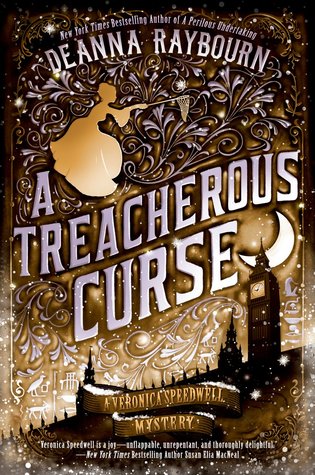
Take A Peek Book Review: A Treacherous Curse (Veronica Speedwell, #3) by Deanna Raybourn

“Take a Peek” book reviews are short and (possibly) sweet, keeping the commentary brief and providing a little peek at what the book’s about and what I thought.


Synopsis:

(via Goodreads)

Members of an Egyptian expedition fall victim to an ancient mummy’s curse in a thrilling Veronica Speedwell novel from the New York Times bestselling author of the Lady Julia Grey mysteries. 
 
London, 1888. As colorful and unfettered as the butterflies she collects, Victorian adventuress Veronica Speedwell can’t resist the allure of an exotic mystery—particularly one involving her enigmatic colleague, Stoker. His former expedition partner has vanished from an archaeological dig with a priceless diadem unearthed from the newly discovered tomb of an Egyptian princess. This disappearance is just the latest in a string of unfortunate events that have plagued the controversial expedition, and rumors abound that the curse of the vengeful princess has been unleashed as the shadowy figure of Anubis himself stalks the streets of London.

But the perils of an ancient curse are not the only challenges Veronica must face as sordid details and malevolent enemies emerge from Stoker’s past. Caught in a tangle of conspiracies and threats—and thrust into the public eye by an enterprising new foe—Veronica must separate facts from fantasy to unravel a web of duplicity that threatens to cost Stoker everything. . . .

My Thoughts:

This series is so much fun! I’ve written lengthier reviews of the first two Veronica Speedwell books (A Curious Beginning and A Perilous Undertaking), so I’ll keep this one brief. Veronica Speedwell, a (mostly) proper Victorian lady with a penchant for butterflies, scientific expeditions, and hot men, once again becomes embroiled in solving a mystery in order to stave off potential disgrace for her partner Stoker. The plot involves a mummy’s curse, shady explorers, Egyptian gods… and perhaps most importantly, figures from Stoker’s dark past.

The mystery itself is quite fun, and it’s satisfying to get some of the answers we’ve been waiting for about Stoker’s dismal reputation and the scandal that haunts him. Veronica and Stoker still have that red-hot (but unfulfilled) chemistry between them, and the door is definitely open for further adventures and further romantic entanglement.

Veronica is a terrific heroine, and the books in the series feature just the right combination of danger, adventure, and witty dialogue. Highly recommended!

_________________________________________

The details:

Title: A Treacherous Curse (Veronica Speedwell, #3)
Author: Deanna Raybourn
Publisher: Berkley
Publication date: January 16, 2018
Length: 352 pages
Genre: Mystery/historical fiction
Source: Review copy courtesy of the publisher via NetGalley
**Save

Save

Save

Save

Save

Save

Save

Book Review: I Am Not Your Perfect Mexican Daughter by Erika L. Sánchez


Perfect Mexican daughters do not go away to college. And they do not move out of their parents’ house after high school graduation. Perfect Mexican daughters never abandon their family.

But Julia is not your perfect Mexican daughter. That was Olga’s role.

Then a tragic accident on the busiest street in Chicago leaves Olga dead and Julia left behind to reassemble the shattered pieces of her family. And no one seems to acknowledge that Julia is broken, too. Instead, her mother seems to channel her grief into pointing out every possible way Julia has failed.

But it’s not long before Julia discovers that Olga might not have been as perfect as everyone thought. With the help of her best friend Lorena, and her first kiss, first love, first everything boyfriend Connor, Julia is determined to find out. Was Olga really what she seemed? Or was there more to her sister’s story? And either way, how can Julia even attempt to live up to a seemingly impossible ideal?

I Am Not Your Perfect Mexican Daughter is a moving, disturbing, and vibrant story of a girl trying to find her own way while under the out-sized pressure of family expectations, poverty, and inner city life.

Julia is a gifted student whose dream is to become a writer. Thanks to the mentorship of a dedicated English teacher, she may have a shot at college — anywhere, so long as it’s away — and a full scholarship.

But Julia’s parents just don’t understand, and since Olga’s death, Julia is reminded over and over again that she’s not what her parents want her to be. She’s not content to be at home, and chafes under the harsh curfews and ceaseless surveillance of her life. Julia’s mother cleans houses of rich people and her father works a fatiguing job in a candy factory. Both undocumented, they crossed the border from Mexico before their daughters’ births, so while the girls are both US citizens, the threat of deportation hangs over the family every waking moment.

The descriptions of the family’s poverty are heartbreaking, and so is the despair Julia feels over the lack of freedom and trust she experiences on a daily basis. She yearns to break free, to pursue her education, to be something and someone different — but she faces constant punishments and groundings every time she steps out of line, and finally gets to a breaking point.

This book deals with the pain of family secrets — everyone in Julia’s family has something they’ve chosen not to share. As she learns more about her parents and her sister, Julia discovers that the bland or hard surfaces hide painful pasts and secrets that could be truly destructive if brought to life. Julia’s understanding of her own family deepens as she learns more, and she starts finally to understand where the harshness and rules and need for control really come from.

I thought the book was very well written, with a sense of immediacy conveyed through Julia’s narrative. We see the world through Julia’s eyes, and understand how the world affects her own sense of self. The way she’s viewed by outsiders because she’s poor and Mexican, the way the boys at home and at school look at her body rather than looking at her as a person, the way her parents see her as untrustworthy because she doesn’t fit the image of a “perfect” daughter the way Olga did — all of these drive Julia’s suffering and the damage to her self-image.

There’s a section of the book that’s set in Mexico, as Julia is sent to visit her relatives there, and while the descriptions of the village are colorful, this interlude felt like it meandered a bit to me. Still, if the point was to show that even in situations that seem cheerful and safe on the surface, there is still darkness underneath, then it’s effective as well.

Overall, I Am Not Your Perfect Mexican Daughter is a powerful read that really moved me, even while making me very uncomfortable in many parts too. It’s definitely not like anything else I’ve read, and Julia’s distinctive voice is a delight. Touching on subjects such as economic disadvantage, cultural insensitivity and prejudice, sexual health, and mental health, it’s an ambitious book packed with heavy topics, but manages to still keep rays of hope alive as Julia finds her way forward. I’m so happy that I made time to read this book, and definitely recommend it.

_________________________________________

The details:

Title: I Am Not Your Perfect Mexican Daughter
Author: Erika L. Sánchez
Publisher: Knopf Books for Young Readers
Publication date: October 17, 2017
Length: 352 pages
Genre: Young adult
Source: Purchased

Save

Save

Save

Save

Save

Save

Save

Save

Save

Save

Save