Book Review: The Thorns Remain by JJA Harwood

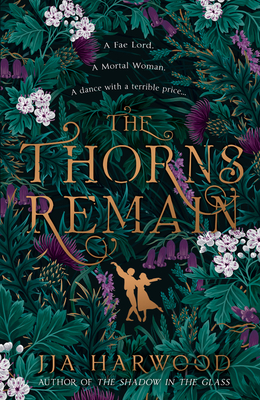
Title: The Thorns Remain
Author: JJA Harwood
Publisher: Ballantine Books
Publication date: February 23, 2023
Length: 416 pages
Genre: Fantasy
Source: Purchased
Rating:

Rating: 4 out of 5.

A dance with the fae will change everything

1919. In a highland village forgotten by the world, harvest season is over and the young who remain after war and flu have ravaged the village will soon head south to make something of themselves.

Moira Jean and her friends head to the forest for a last night of laughter before parting ways. Moira Jean is being left behind. She had plans to leave once – but her lover died in France and with him, her future. The friends light a fire, sing and dance. But with every twirl about the flames, strange new dancers thread between them, music streaming from the trees.

The fae are here.

Suddenly Moira Jean finds herself all alone, her friends spirited away. The iron medal of her lost love, pinned to her dress, protected her from magic.

For the Fae feel forgotten too. Lead by the darkly handsome Lord of the Fae, they are out to make themselves known once more. Moira Jean must enter into a bargain with the Lord to save her friends – and fast, for the longer one spends with the Fae, the less like themselves they are upon return. If Moira Jean cannot save her friends before Beltane, they will be lost forever…

Completely bewitching, threaded with Highland charm and sparkling with dark romance, this is a fairytale that will carry you away.

In The Thorns Remain, the boundary between a small Highlands community and the world of the Fae is breached one fateful night, with devastating consequences for all involved… and only one young woman with the ability to set things right.

It’s 1919, and the small town of Brudonnock is teetering on the brink of extinction. Too many young men have been lost to war or the flu pandemic; others of the younger population have left for new lives in Glasgow or Edinburgh or beyond. Those who remain work nonstop, sunup to sundown, to plow and harvest and keep their families fed, dreading the day when the estate owners will decide to turn them all out and force them from their cottages.

Moira Jean is our main character, a young woman mourning the loss of her true love Angus. Childhood sweethearts who grew up together and got engaged before he departed for war, they’d intended to marry as soon as he returned home, but despite surviving the war itself, he was killed by the flu before they were reunited. As the story opens, Moira Jean lives with her mother, the village healer, and works around the clock on the daily chores of village life, with Angus never far from her mind.

When the villagers learn that they’ve been given a reprieve from a feared eviction for one more year, Moira Jean and her friends decide to let loose for once and celebrate. They sneak off into the forest to drink, sing, and dance, but their dance is joined by strangers. Only Moira Jean, clutching Angus’s iron medal, can see that something is wrong and that these others aren’t actually people. When she wakes the next day, she discovers that her five friends are all gone — but no one else in Brudonnock realizes that they’re missing. For everyone but Moira Jean, false memories are firmly in place, and the missing friends are either traveling or away for work in the cities.

Moira Jean is scared and desperate, and returns to the forest to seek her friends. There, she finds the lord of the Land Under the Hill, whom she refers to as the Dreamer; a ruler of the Fae, who is both terrifying and mesmerizing. He seems fascinated by Moira Jean and her resistance to his glamours, and offers her a bargain: He’ll trade her for the return of her friends — but what he wants in exchange is difficult and costly, and there’s no guarantee that the people who come back will be in the same condition as when they left.

While the remote setting of Brudonnock gives old-timey vibes, it’s important to remember that the story is set in the years following the First World War. The village lacks electricity, running water, and other conveniences, but these do exist in the broader world. The effects of the war are evident on every page: The young men who still live in Brudonnock are all physically changed by the war or illness in some way, and too much of the village’s population has been brutally lost.

It’s no wonder, then, that the world of the Fae seems so enticing to those who have been taken.

‘It was wonderful,’ Callum said again, still breathless. ‘No one wanted for anything. Nothing hurt. There was no work. No war. There was only dancing and feasting and singing – oh, Moira Jean. It was everything I hoped the world would be.’

Even Moira Jean, who can see through the enchantments, can’t help but be tempted by a world that can be whatever she wishes — a place where she can be warm, and well-fed, free from back-breaking work and the constant fear of disease and injury.

At times, especially in the first half of the book, The Thorns Remain felt slow to me — but I think some of that is due to one of my pet peeves when it comes to book formatting. The Thorns Remain is divided into five parts, but within those parts, there are no chapters. Books without chapter breaks really frustrate me, especially because I typically read on a Kindle, and the chapter lengths help me track my progress. This isn’t an unusually long book, but the format makes it feel that way.

I will say that by the second half of the book, the storytelling pace picks up as the stakes get higher, the danger mounts, and Moira Jean’s situation becomes even more precarious. She’s forced to take risks for the sake of her community, even when the enchantment at play turns the village against her. Her strength and determination are remarkable, but she’s never made out to be some sort of superhero: She’s just a village girl who’s determined to do right by her family and friends, because they need her and she’s the only one who knows it.

I originally picked up a copy of The Thorns Remain on a whim after seeing it on a bookstore shelf. I hadn’t heard of it before, but the cover and the synopsis drew me in right away. I’ve had this book on my shelves for over a year now, and I’m so glad I took advantage of my holiday reading time to finally pick it up.

The Thorns Remain is a beautifully written blend of the fantastical and the day-to-day. Moira Jean is a terrific main character: She’s an ordinary person who’s thrust into an illogical, unreal reality, and chooses to take the difficult path of fighting for her friends rather than running away or giving into the lures of magic.

There’s an action-packed climax and an ending that’s just right. The Thorns Remain is both a fantasy story and a moving, introspective meditation on the horrors of war and its aftermath. It’s a thoughtful, descriptive, and emotional story, and it’s simply too good to miss!

Book Review: The Warm Hands of Ghosts by Katherine Arden

Title: The Warm Hands of Ghosts
Author: Katherine Arden
Publisher: Del Rey
Publication date: February 13, 2024
Length: 336 pages
Genre: Historical fiction
Source: Review copy courtesy of the publisher via NetGalley
Rating:

Rating: 5 out of 5.

During the Great War, a combat nurse searches for her brother, believed dead in the trenches despite eerie signs that suggest otherwise, in this hauntingly beautiful historical novel with a speculative twist from the New York Times bestselling author of The Bear and the Nightingale

January 1918. Laura Iven was a revered field nurse until she was wounded and discharged from the medical corps, leaving behind a brother still fighting in Flanders. Now home in Halifax, Canada, she receives word of Freddie’s death in combat, along with his personal effects—but something doesn’t make sense. Determined to uncover the truth, Laura returns to Belgium as a volunteer at a private hospital. Soon after arriving, she hears whispers about haunted trenches, and a strange hotelier whose wine gives soldiers the gift of oblivion. Could Freddie have escaped the battlefield, only to fall prey to something—or someone—else?

November 1917. Freddie Iven awakens after an explosion to find himself trapped in an overturned pillbox with a wounded enemy soldier, a German by the name of Hans Winter. Against all odds, the two men form an alliance and succeed in clawing their way out. Unable to bear the thought of returning to the killing fields, especially on opposite sides, they take refuge with a mysterious man who seems to have the power to make the hellscape of the trenches disappear.

As shells rain down on Flanders, and ghosts move among those yet living, Laura’s and Freddie’s deepest traumas are reawakened. Now they must decide whether their world is worth salvaging—or better left behind entirely.

After reading and loving Katherine Arden’s Winternight trilogy, I expected great things from her new novel, The Warm Hands of Ghosts. Those expectations were met, and then some.

In The Warm Hands of Ghosts, we’re plunged into the nightmare of war through the experiences of Laura Iven, a Canadian battlefield nurse, and her brother Freddie, a soldier on the frontlines in Belgium. As the novel weaves their stories together, we’re given an up-close look at the horrors of World War I.

As the book opens, Laura is back home in Halifax in early 1918, having been discharged from the army after suffering serious injury when her hospital in Belgium was bombed. But life in Halifax is not peaceful either; shortly before the book opens, the ship explosion of 1917 (a devastating historical event — read more here) kills thousands in the city, including Laura and Freddie’s parents.

When Laura receives a package containing her brother’s bloody uniform and his ID tags, she’s thrust into even more severe grief, but feels that something’s not right. No one she writes to can tell her about his final days or provide information about what might have happened to him. When she meets a woman heading back to Belgium to organize a hospital, Laura volunteers to go along, desperate to learn more about Freddie’s fate.

Meanwhile, through alternating chapters, we learn that Freddie did survive… barely. After being trapped in a collapsed pillbox on the battlefield, he and a German soldier, Hans Winter, save one another and navigate through the hellscape of the battlefield back to the relative safety of the Allied hospital. But saving Winter makes Freddie a traitor, and he finds shelter with a strange, eerie man whose violin-playing and eerie, ornate hotel promise oblivion and escape from the war.

Soldiers exchange stories of someone called “the fiddler”, whose music both captivates and repels, and who is rumored to steal men’s souls in exchange for relief from their worst nightmares. Freddie falls under the spell of the fiddler, but as he loses bits of himself, he doesn’t find the peace he seeks. Meanwhile, Laura refuses to give up on finding the truth about her lost brother, and the siblings endure greater and greater dangers in their quest to discover one anothers’ fates.

The Warm Hands of Ghosts incorporates an other-worldly element as it examines the toll of war and horror on people’s inner selves. We see wounded and shell-shocked soldiers, people maimed or whose minds have been destroyed. Is it any wonder that they embrace the idea of a supernatural presence that feeds off souls and promises ease? As Laura ponders:

Was remembered agony better than feeling nothing at all?

That’s the crux of the dilemma facing the characters who encounter the fiddler. Life amidst the hell of war promises pain and suffering, and even out of the warzone, as Laura experienced back in Halifax, there’s no escape from the torment of memories. The characters, again and again, face this impossible decision: Give in and forget, or hold on and suffer?

They all drank. The wine was glorious. Like getting hit in the face by an ocean wave; it was a shock, then a pleasure, then a numbness.

There’s so much more to the story, of course. Underneath the horror of it all, there are strong threads of love running throughout the lives of the characters we come to know. The bonds between Laura and Freddie, Freddie and Winter, and Laura and the women she befriends are all strong, forged in a shared experience that those who haven’t been to war will never be able to fully comprehend.

Laura is a marvelous characters. As a nurse, she’s extremely brave, competent, and compassionate. She’s also damaged, both physically and emotionally, and makes decisions following her heart, even when logic would dictate otherwise. Freddie is fascinating as well — wounded to his core, suffering in his psyche from the horrors he’s both seen and inflicted, and unable to envision any sort of future for himself.

The battlefield scenes are vivid and terrible and utterly visceral. The terror and butchery are shown plainly, and the psychological toll is clear and awful to read about.

Despite the disturbing nature of reading about World War I battlefield experiences, I was struck over and over again by how beautiful Katherine Arden’s writing is. Little phrases and moments would catch my attention from time to time, just because I so admired the words and sentences.

London felt like limbo to her, the glittering center of the modern world become merely the war’s antechamber.

I would imagine that the supernatural element might not work for every reader, particularly for those who pick up The Warm Hands of Ghosts looking for a more traditional historical fiction reading experience. (Then again, the title does have the word ghosts in it, so it’s not like the supernatural piece is hidden in any way.) For me, I found The Warm Hands of Ghosts a powerful, sad, evocative book, and it’s fully deserving of a 5-star rating. Highly recommended.

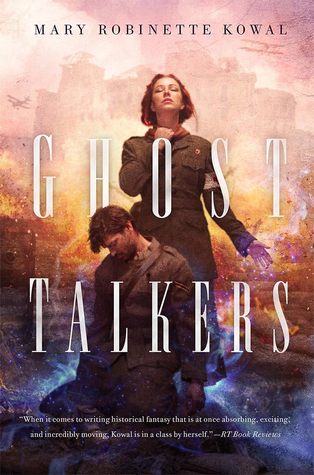
Book Review: Ghost Talkers by Mary Robinette Kowal

Title: Ghost Talkers
Author: Mary Robinette Kowal
Publisher: Tor Books Books
Publication date: August 16, 2016
Length: 304 pages
Genre: Historical fiction / fantasy
Source: Purchased
Rating:

Rating: 3.5 out of 5.

Ginger Stuyvesant, an American heiress living in London during World War I, is engaged to Captain Benjamin Harford, an intelligence officer. Ginger is a medium for the Spirit Corps, a special Spiritualist force.

Each soldier heading for the front is conditioned to report to the mediums of the Spirit Corps when they die so the Corps can pass instant information about troop movements to military intelligence.

Ginger and her fellow mediums contribute a great deal to the war efforts, so long as they pass the information through appropriate channels. While Ben is away at the front, Ginger discovers the presence of a traitor. Without the presence of her fiance to validate her findings, the top brass thinks she’s just imagining things. Even worse, it is clear that the Spirit Corps is now being directly targeted by the German war effort. Left to her own devices, Ginger has to find out how the Germans are targeting the Spirit Corps and stop them. This is a difficult and dangerous task for a woman of that era, but this time both the spirit and the flesh are willing…

How might the Great War have been different if soldiers killed in battle could report back, in real time, on what they saw and experienced?

In Ghost Talkers, the British army employs a top-secret corps of mediums, known as the Spirit Corps, to receive the ghosts of newly dead soldiers and take their final reports. The ghosts appear to the spirit circles and can, in some cases, provide useful information — such as where the German soldiers were firing from, or what they saw immediately before dying. The information gathered is sent directly back to the front, and then the mediums take any final messages before the ghosts move on through the veil to the next plane.

Ginger is one of the lead mediums, working double shifts to take reports — an exhausting process that involves extending her soul beyond her physical body to interact with with ghosts on the spirit plane. This is dangerous for the mediums: Being on the spirit plane is freeing in many ways, and there’s a risk that the medium will lost contact with their body, perhaps never to return. The spirit circle grounds the medium to the physical realm, but the danger is constant.

These spiritual risks are amplified when evidence comes through the reports of the deceased that the Germans are aware of the Spirit Corps and have plans to sabotage them. Ginger finds herself pursuing leads that the top brass choose to ignore, and soon finds both her physical and spiritual self in grave peril.

Ghost Talkers has a fascinating premise, and I mostly enjoyed it. However a couple of small points kept me from fulling engaging. Chief among these is the lack of emotional connection. We’re thrust right into the action, and I did enjoy Ginger and Ben as characters, but because the plot is so in-the-moment, there’s no backstory. I don’t necessarily need every moment of their past to appreciate them in the present, but I would have liked to know more about how Ginger ended up in the war in the first place, what her family life back home was like, and most importantly, at least a little bit more about her romance with Ben.

My other issue is that the plot is rather convoluted, and there are so many soldiers and officers named and involved, some of whom only appear in the briefest of scenes, that it’s difficult to sort them all out. By the time the traitor is revealed, I’d lost track of some of the potential suspects, so the impact was a bit lost on me.

Ghost Talkers has been on my shelf for several years now — it was my last remaining book by Mary Robinette Kowal that I hadn’t read, and now I can say that I’ve read all of her novels! This author is one of my favorites, and I’m glad to have experienced Ghost Talkers, but in terms of total immersion and investment, it doesn’t quite reach the greatness of many of her other books.

Still, I appreciated the interesting premise and the spotlight on women’s roles during a time when their contributions were not valued. If you enjoy historical fiction with a ghostly twist, this is a good one to check out.


Washington Post review
The Guardian review

Book Review: A Single Thread by Tracy Chevalier

Title: A Single Thread
Author: Tracy Chevalier
Publisher: Viking
Publication date: September 17, 2019
Length: 336 pages
Genre: Historical fiction
Source: Library
Rating:

Rating: 3 out of 5.

1932. After the Great War took both her beloved brother and her fiancé, Violet Speedwell has become a “surplus woman,” one of a generation doomed to a life of spinsterhood after the war killed so many young men. Yet Violet cannot reconcile herself to a life spent caring for her grieving, embittered mother. After countless meals of boiled eggs and dry toast, she saves enough to move out of her mother’s place and into the town of Winchester, home to one of England’s grandest cathedrals. There, Violet is drawn into a society of broderers–women who embroider kneelers for the Cathedral, carrying on a centuries-long tradition of bringing comfort to worshippers.

Violet finds support and community in the group, fulfillment in the work they create, and even a growing friendship with the vivacious Gilda. But when forces threaten her new independence and another war appears on the horizon, Violet must fight to put down roots in a place where women aren’t expected to grow. Told in Chevalier’s glorious prose, A Single Thread is a timeless story of friendship, love, and a woman crafting her own life.

A Single Thread is a quiet, low-key historical novel that I probably never would have picked up on my own, so I’m glad my book group picked it for our June read.

Set in 1932, Violet Speedwell’s story unfolds as she settles into her new independent life in Winchester. At age 38, Violet is a spinster, one of the many women left alone after losing a loved one during the Great War. Still grieving her lost brother and fiance, Violet felt crushed by the demands of living with her embittered mother, and moved to Winchester to create distance and find a new path for herself.

In Winchester, she works as a typist at an insurance office, and happens by chance to discover the society of “broderers” — the embroidery group who create beautiful cushions and kneelers for the cathedral. Although Violet has never embroidered, she’s fascinated by the group’s work, and longs to create something of beauty of her own, as a way to leave her own mark on the world.

Joining the broderers, she not only becomes absorbed by her new craft, but also finds friendship and a sense of belonging and purpose. She also meets Arthur, one of the cathedral’s bell-ringers, a kind older man who cares for his fragile wife, yet seems to share a mutual attraction with Violet.

Over the course of the novel, we see Violet emerge from her loneliness and grief and start to make a life for herself, finding new hope and meaning in the community she’s chosen.

Violet’s story is lovely in its own quiet way. An action-packed plot this is not — and if this weren’t a book group book, I’m not sure I would have made it past the early chapters, with all their details on cathedrals and embroidery. I’m glad I stuck with it. A Single Thread is a gently, lovely read, and while the ending was perhaps a little too rosy to be entirely believable, I found it overall to be a thoughtful, graceful experience.

**********

Through affiliate programs, I may earn commissions from purchases made when you click through these links, at no cost to you.

Buy now at AmazonBook DepositoryBookshop.org

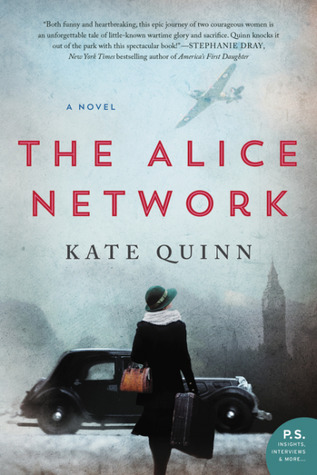
Shelf Control #258: The Alice Network by Kate Quinn

Shelves final

Welcome to Shelf Control — an original feature created and hosted by Bookshelf Fantasies.

Shelf Control is a weekly celebration of the unread books on our shelves. Pick a book you own but haven’t read, write a post about it (suggestions: include what it’s about, why you want to read it, and when you got it), and link up! For more info on what Shelf Control is all about, check out my introductory post, here.

Want to join in? Shelf Control posts go up every Wednesday. See the guidelines at the bottom of the post, and jump on board!

Title: The Alice Network
Author: Kate Quinn
Published: 2017
Length: 503 pages

What it’s about (synopsis via Goodreads):

In an enthralling new historical novel from national bestselling author Kate Quinn, two women—a female spy recruited to the real-life Alice Network in France during World War I and an unconventional American socialite searching for her cousin in 1947—are brought together in a mesmerizing story of courage and redemption.

1947. In the chaotic aftermath of World War II, American college girl Charlie St. Clair is pregnant, unmarried, and on the verge of being thrown out of her very proper family. She’s also nursing a desperate hope that her beloved cousin Rose, who disappeared in Nazi-occupied France during the war, might still be alive. So when Charlie’s parents banish her to Europe to have her “little problem” taken care of, Charlie breaks free and heads to London, determined to find out what happened to the cousin she loves like a sister.

1915. A year into the Great War, Eve Gardiner burns to join the fight against the Germans and unexpectedly gets her chance when she’s recruited to work as a spy. Sent into enemy-occupied France, she’s trained by the mesmerizing Lili, code name Alice, the “queen of spies”, who manages a vast network of secret agents right under the enemy’s nose.

Thirty years later, haunted by the betrayal that ultimately tore apart the Alice Network, Eve spends her days drunk and secluded in her crumbling London house. Until a young American barges in uttering a name Eve hasn’t heard in decades, and launches them both on a mission to find the truth…no matter where it leads.

How and when I got it:

I bought a paperback about two years ago.

Why I want to read it:

I think I’m the only person who hasn’t read The Alice Network! I know it’s been incredibly popular with book groups and book bloggers. I’m a fan of historical fiction, and of course there are so many excellent novels set against the backdrop of the World Wars. I love seeing strong female characters taking on unusual roles, and the synopsis makes this story of a women’s spy ring sound thrilling.

I’ve been seeing a lot of buzz for Kate Quinn’s upcoming new release, The Rose Code, and feel like I should read The Alice Network (finally!) before trying to score a copy of her new book.

What do you think? Have you read The Alice Network? And if not, would you want to?

Please share your thoughts!


__________________________________

Want to participate in Shelf Control? Here’s how:

  • Write a blog post about a book that you own that you haven’t read yet.
  • Add your link in the comments or link back from your own post, so I can add you to the participant list.
  • Check out other posts, and…

Have fun!

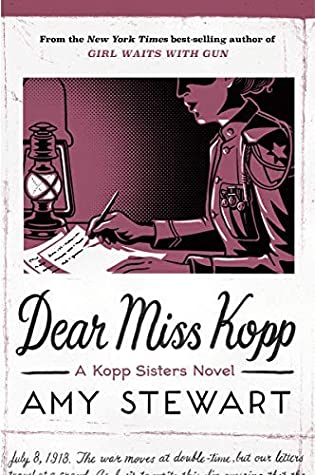
Book Review: Dear Miss Kopp by Amy Stewart

Title: Dear Miss Kopp (Kopp Sisters, #6)
Author: Amy Stewart
Publisher: Houghton Mifflin Harcourt
Publication date: January 12, 2021
Length: 320 pages
Genre: Historical fiction
Source: Review copy courtesy of the publisher and author
Rating:

Rating: 5 out of 5.

The indomitable Kopp sisters are tested at home and abroad in this warm and witty tale of wartime courage and camaraderie.

The U.S. has finally entered World War I and Constance is chasing down suspected German saboteurs and spies for the Bureau of Investigation while Fleurette is traveling across the country entertaining troops with song and dance. Meanwhile, at an undisclosed location in France, Norma is overseeing her thwarted pigeon project for the Army Signal Corps. When Aggie, a nurse at the American field hospital, is accused of stealing essential medical supplies, the intrepid Norma is on the case to find the true culprit.

The far-flung sisters—separated for the first time in their lives—correspond with news of their days. The world has irrevocably changed—will the sisters be content to return to the New Jersey farm when the war is over?

Told through letters, Dear Miss Kopp weaves the stories of real life women into a rich fiction brimming with the historical detail and humor that are hallmarks of the series, proving once again that “any novel that features the Kopp Sisters is going to be a riotous, unforgettable adventure” (Bustle).

The Kopp Sisters are back! In Dear Miss Kopp, we follow the sisters into war, as each of the characters has her own mission to follow, each serving the country in her own way during the years of World War I.

The sixth book in the series, Dear Miss Kopp is the first to be told exclusively through letters, which makes sense: Constance, Norma, and Fleurette find themselves on very separate paths, far from one another geographically, and they must rely on their letters to keep in touch and to continue to support each other as they always have, even from a distance.

Constance has started her work with the Bureau of Investigation (the early FBI), one of the only women serving as an agent. She uses her unique talents to chase down and apprehend saboteurs, and her adventures in this book illustrate the threats faced domestically during the war years.

Norma is in the thick of things in France, where she applies her prickly, stubborn ways to making sure her messenger pigeons are able to serve the US armed forces. Norma being Norma, she manages to rub just about everyone the wrong way, but is ultimately instrumental in solving a spy mystery in the small French village where she’s stationed.

And lovely youngest sister Fleurette is on the go, touring the country with a vaudeville act, entertaining soldiers at army bases all across the US. Fleurette too has her share of challenges, and she always adds a bit of levity to any situation.

As always, a Kopp Sisters book is an utter delight. I love seeing the sisters’ dynamics, and also getting to see them each in action, deploying their varied talents and fighting for the chance to make a difference in a man’s world. At this point in the series, I feel that we readers know the characters so well, and it’s a treat to see them in these new settings, standing up for what they believe in and making unique contributions to the war effort.

Through the sisters’ adventures in Dear Miss Kopp, we also get an inside look as aspects of World War I that don’t necessarily get a lot of attention, including the support efforts abroad, away from the front lines, the devastating war injuries suffered by the soldiers, and the intense work at home to combat sabotage aimed at impeding the war efforts.

As a whole, the Kopp Sisters books are wonderful, and I loved this new installment. Can’t wait for more!

_________________________________

The series so far:
Girl Waits With Gun
Lady Cop Makes Trouble
Miss Kopp’s Midnight Confessions
Miss Kopp Just Won’t Quit
Kopp Sisters on the March

Shelf Control #142: The Foreshadowing by Marcus Sedgwick

Shelves final

Welcome to Shelf Control — an original feature created and hosted by Bookshelf Fantasies.

Shelf Control is a weekly celebration of the unread books on our shelves. Pick a book you own but haven’t read, write a post about it (suggestions: include what it’s about, why you want to read it, and when you got it), and link up! For more info on what Shelf Control is all about, check out my introductory post, here.

Want to join in? Shelf Control posts go up every Wednesday. See the guidelines at the bottom of the post, and jump on board!

cropped-flourish-31609_1280-e1421474289435.png

Title: The Foreshadowing
Author: Marcus Sedgwick
Published: 2005
Length: 304 pages

What it’s about (synopsis via Goodreads):

It is 1915 and the First World War has only just begun.

17 year old Sasha is a well-to-do, sheltered-English girl. Just as her brother Thomas longs to be a doctor, she wants to nurse, yet girls of her class don’t do that kind of work. But as the war begins and the hospitals fill with young soldiers, she gets a chance to help. But working in the hospital confirms what Sasha has suspected–she can see when someone is going to die. Her premonitions show her the brutal horrors on the battlefields of the Somme, and the faces of the soldiers who will die. And one of them is her brother Thomas.

Pretending to be a real nurse, Sasha goes behind the front lines searching for Thomas, risking her own life as she races to find him, and somehow prevent his death.

How and when I got it:

I bought this book several years ago from an online resale site.

Why I want to read it:

After reading Midwinterblood, I just had to read more by this author. I’ve read a few of his books now, and to be honest, I haven’t loved any nearly as  much as I loved Midwinterblood — but I keep trying! The synopsis of The Foreshadowing definitely caught my attention. World War I books are always harrowing, and I like the sound of the supernatural element combined with the war story.

__________________________________

Want to participate in Shelf Control? Here’s how:

  • Write a blog post about a book that you own that you haven’t read yet.
  • Add your link in the comments!
  • If you’d be so kind, I’d appreciate a link back from your own post.
  • Check out other posts, and…

Have fun!

Save

Save

Save

Save

Save

Save

Save

Save

Save

Save

Save

Save

Save

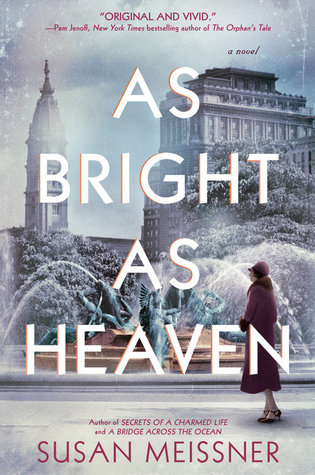
Take A Peek Book Review: As Bright As Heaven by Susan Meissner

“Take a Peek” book reviews are short and (possibly) sweet, keeping the commentary brief and providing a little peek at what the book’s about and what I thought.


Synopsis:

(via Goodreads)

From the acclaimed author of Secrets of a Charmed Life and A Bridge Across the Ocean comes a new novel set in Philadelphia during the Spanish flu epidemic of 1918, which tells the story of a family reborn through loss and love.

In 1918, Philadelphia was a city teeming with promise. Even as its young men went off to fight in the Great War, there were opportunities for a fresh start on its cobblestone streets. Into this bustling town, came Pauline Bright and her husband, filled with hope that they could now give their three daughters–Evelyn, Maggie, and Willa–a chance at a better life.

But just months after they arrive, the Spanish Flu reaches the shores of America. As the pandemic claims more than twelve thousand victims in their adopted city, they find their lives left with a world that looks nothing like the one they knew. But even as they lose loved ones, they take in a baby orphaned by the disease who becomes their single source of hope. Amidst the tragedy and challenges, they learn what they cannot live without–and what they are willing to do about it.

As Bright as Heaven is the compelling story of a mother and her daughters who find themselves in a harsh world, not of their making, which will either crush their resolve to survive or purify it.

My Thoughts:

When we hear about the flu pandemic of 1918, we can be blown away by the number — as many as 50 million people died, many more than the number who died on the battlefields of World War I. In As Bright As Heaven, this unfathomable global catastrophe is made personal as we see the flu and its devastating impact through the experiences of one family. The Bright family, having already suffered the loss of an infant to a heart condition some months earlier, relocates to Philadelphia from the countryside so that the father can start a new career as partner and heir to his uncle’s funeral home business. For the mother Pauline and her three daughters, it’s a chance at a new life in a new city, moving away from the location of their recent heartbreak and starting over.

Between living in the family quarters of the funeral home, the continuing war in Europe, and then the onslaught of the flu, the family can’t escape death. Through the eyes of Pauline and each of the girls, we see the darkness of the time period as loss piles upon loss, with no rhyme or reason for who lives and who dies.

The story of the Spanish Flu pandemic is tragic and fascinating, but I found the individual characters and their perspectives less compelling than I would have hoped. Perhaps having so many narrators — not just Pauline, but also the three daughters, one of whom is only nine years old — dilutes the immediacy. The book gets off to a slow start, although the pace picks up quite a bit from about 40% onward, once the flu begins to spread and the family’s life begins to change. The subplot about the orphaned baby adds some suspense, but it’s fairly simple to see where that storyline is going.

I liked the characters well enough, and overall thought this was a fine read about an interesting time period. I can’t really put my finger on why the book as a whole just didn’t particularly grab me.

_________________________________________

The details:

Title: As Bright As Heaven
Author: Susan Meissner
Publisher: Berkley Books
Publication date: February 6, 2018
Length: 400 pages
Genre: Historical fiction
Source: Review copy courtesy of the publisher via NetGalley

**Save

Save

Save

Save

Save

Save

Save

Shelf Control #96: Ghost Talkers

Shelves final

Welcome to Shelf Control — an original feature created and hosted by Bookshelf Fantasies.

Shelf Control is a weekly celebration of the unread books on our shelves. Pick a book you own but haven’t read, write a post about it (suggestions: include what it’s about, why you want to read it, and when you got it), and link up! For more info on what Shelf Control is all about, check out my introductory post, here.

Want to join in? Shelf Control posts go up every Wednesday. See the guidelines at the bottom of the post, and jump on board!

cropped-flourish-31609_1280-e1421474289435.png

Title: Ghost Talkers
Author: Mary Robinette Kowal
Published: 2016
Length: 304 pages

What it’s about (synopsis via Goodreads):

Ginger Stuyvesant, an American heiress living in London during World War I, is engaged to Captain Benjamin Harford, an intelligence officer. Ginger is a medium for the Spirit Corps, a special Spiritualist force.

Each soldier heading for the front is conditioned to report to the mediums of the Spirit Corps when they die so the Corps can pass instant information about troop movements to military intelligence.

Ginger and her fellow mediums contribute a great deal to the war efforts, so long as they pass the information through appropriate channels. While Ben is away at the front, Ginger discovers the presence of a traitor. Without the presence of her fiance to validate her findings, the top brass thinks she’s just imagining things. Even worse, it is clear that the Spirit Corps is now being directly targeted by the German war effort. Left to her own devices, Ginger has to find out how the Germans are targeting the Spirit Corps and stop them. This is a difficult and dangerous task for a woman of that era, but this time both the spirit and the flesh are willing…

How and when I got it:

I was dying to read this book as soon as I heard of it, so I preordered and got it right when it was released in August 2016.

Why I want to read it:

I can’t believe this book has been sitting on my nightstand for a year now! I’m ridiculous. I still really want to read it — I love the idea of mediums working in military intelligence! It sounds really awesome, and I’m picking this as my Shelf Control book to try to shame myself. Really, I have to stop buying books and then not reading them, especially when they appeal to me so much! Too many books, too little time… I need to be better at prioritizing my reading in 2018!

__________________________________

Want to participate in Shelf Control? Here’s how:

  • Write a blog post about a book that you own that you haven’t read yet.
  • Add your link in the comments!
  • If you’d be so kind, I’d appreciate a link back from your own post.
  • Check out other posts, and…

Have fun!

Save

Save

Save

Save

Save

Save

Save

Save

Save

Save

Save

Save

Save

Month of Maisie Readalong: Birds of A Feather by Jacqueline Winspear

birds-of-a-feather

Welcome to the Month of Maisie Readalong Blog Tour, celebrating the Maisie Dobbs series by Jacqueline Winspear. I’m delighted to be participating in this blog tour, which features each book in the Maisie Dobbs series, leading up to the newest release, In This Grave Hour (release date March 14th – book #13 in the series).

For my stop along the blog tour, I’m focusing on the 2nd book in the series, Birds of a Feather.

Note: See the bottom of this post for the schedule of the rest of the tour. The Month of Maisie Readalong is sponsored by TLC Book Tours.

Synopsis:

An eventful year has passed for Maisie Dobbs. Since starting a one-woman private investigation agency in 1929 London, she now has a professional office in Fitzroy Square and an assistant, the happy-go-lucky Billy Beale. She has proven herself as a psychologist and investigator, and has even won over Detective Inspector Stratton of Scotland Yard’s Murder Squad—an admirable achievement for a woman who worked her way from servant to scholar to sleuth, and who also served as a battlefield nurse in the Great War.

It’s now the early Spring of 1930. Stratton is investigating a murder case in Coulsden, while Maisie has been summoned to Dulwich to find a runaway heiress. The woman is the daughter of Joseph Waite, a wealthy self-made man who has lavished her with privilege but kept her in a gilded cage. His domineering ways have driven her off before, and now she’s bolted again.

My thoughts:

I read the first Maisie Dobbs novel two years ago (review), and was instantly intrigued by the fascinating main character. Maisie is a strong, independent, but damaged woman. A nurse who lost her beloved to his incurable war injury, Maise returns from the battefields of the Great War a changed woman. With the patronage of the wealthy woman who once employed her as a housemaid and the tutelage of a respected professor and psychologist, Maisie develops her intuitive skills and applies them to the pursuit of investigations. Maisie dedicates herself not just to solving cases, but to understanding the deeper issues leading to the individuals’ pain and suffering, and works to help her clients achieve not just closure, but also healing.

In Birds of a Feather, set in 1930, the war may be long over, but its lasting devastation is not. As Maisie investigates a missing-persons case, she unearths the terrible damage wrought by guilt and blame. While the people involved all bear some burden of wrong-doing and bad decisions, it’s clear that the war itself is the villain here, leaving lasting wounds and ripping huge holes into families, villages, and communities.

Maisie herself is a wonderful lead character. She’s not a typical woman of her time. Maisie clearly considers herself a committed loner, as she still makes weekly visits to the man she loved, even though he can’t recognize or remember her, and she mourns the life she never got to have with him. But as we see in Birds of a Feather, Maisie finally starts to open herself to the thought of what the rest of her life might look like. Meanwhile, she’s doing very well professionally, incorporating her unique blend of mindfulness and physical empathy into her investigative approach.

I enjoyed Birds of a Feather, although I was a bit less caught up in the story than I was in the first book. Maisie Dobbs has all the details of Maisie’s sad backstory, and as such, really lets us into her life and mind. The 2nd book is much more focused on the case than on Maisie herself, and I missed the focus on the personal.

That said, the case itself ends up being entwined with a murder case under investigation by Scotland Yard, and Maisie is at her best when she’s in hot pursuit of the truth, even after being cautioned to stay out of the way by her police contacts. As the case becomes more complicated, it’s fascinating to see Maisie’s determination and resourcefulness in tracking down the pieces that connect and putting together a solution that only she could find, with her holistic approach to sleuthing.

I highly recommend the Maisie Dobbs series for readers who love historical fiction, great detective stories, or both!

Links:

Goodreads:

Purchase links:

Amazon  **  Barnes & Noble

About the Author:

jacqueline-winspearJacqueline Winspear is the author of the New York Times bestselling Maisie Dobbs series, which includes In This Grave Hour, Journey to Munich, A Dangerous Place, Leaving Everything Most Loved, Elegy for Eddie, and eight other novels. Her standalone novel, The Care and Management of Lies, was also a New York Times bestseller and a Dayton Literary Peace Prize finalist. Originally from the United Kingdom, she now lives in California.

Find out more about Jacqueline at her website, www.jacquelinewinspear.com, and find her on Facebook.

_________________________________________

The details:

Title: Birds of a Feather
Author: Jacqueline Winspear
Publisher: Penguin
Publication date: 2005
Length: 320 pages
Genre: Mystery
Source: Review copy courtesy of TLC Book Tours

tlc logo

Don’t forget to check out the rest of the Maisie tour!

Monday, February 20th: Life By Kristen – Maisie Dobbs
Tuesday, February 21st: Bookshelf Fantasies – Birds of a Feather
Wednesday, February 22nd: Reading Reality – Pardonable Lies
Thursday, February 23rd: A Bookish Way of Life – Messenger of Truth
Monday, February 27th: Back Porchervations – An Incomplete Revenge
Tuesday, February 28th: Mel’s Shelves – Among the Mad
Wednesday, March 1st: History from a Woman’s PerspectiveThe Mapping of Love and Death
Thursday, March 2nd: Book by Book – A Lesson in Secrets
Monday, March 6th: Bookish Realm Reviews – Elegy for Eddie
Tuesday, March 7th: My Military Savings – Leaving Everything Most Loved
Tuesday, March 7th: Barbara Khan on Goodreads – Leaving Everything Most Loved
Wednesday, March 8th: Lit and Life – A Dangerous Place
Thursday, March 9th: #redhead.with.book – Journey to Munich
Tuesday, March 14th: Reading Reality – In This Grave Hour
Wednesday, March 15th: M. Denise Costello – In This Grave Hour
Thursday, March 16th: Mel’s Shelves – In This Grave Hour
Friday, March 17th: A Bookish Way of Life – In This Grave Hour
Monday, March 20th: Helen’s Book Blog – In This Grave Hour
Tuesday, March 21st: Book by Book – In This Grave Hour
Wednesday, March 22nd: Jathan & Heather – In This Grave Hour
Thursday, March 23rd: #redhead.with.book – In This Grave Hour
Friday, March 24th: Diary of a Stay at Home Mom – In This Grave Hour
Monday, March 27th: History from a Woman’s Perspective – In This Grave Hour
Tuesday, March 28th: What Will She Read Next – In This Grave Hour
Wednesday, March 29th: Bookish Realm Reviews – In This Grave Hour

Save

Save

Save

Save

Save

Save