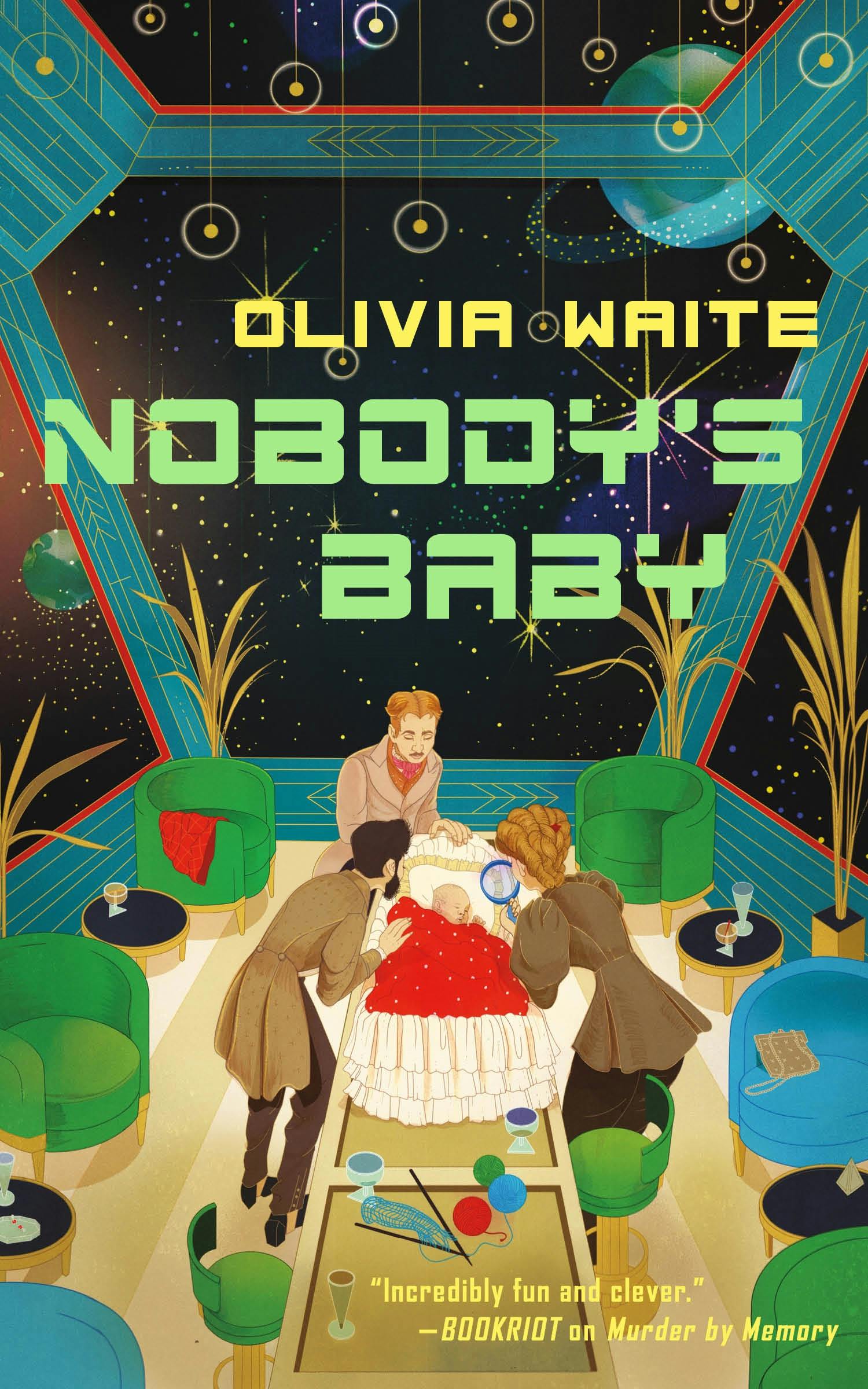
Top Ten Tuesday: Science fiction and fantasy that will stand the test of time

Top Ten Tuesday is a meme hosted by That Artsy Reader Girl, featuring a different top 10 theme each week. This week’s topic is Modern Books You Think Will Be Classics In The Future.

I could digress into a whole discussion of what constitutes a classic… but I’ll spare everyone! My feeling is that “classics” are very much in the eye of the beholder. That said, I’m interpreting this week’s prompt in terms of staying power. What book from the past 20 – 30 years (or so) are likely to continue being read and appreciated in the future, and for many years to come?

I’ve decided to focus on science fiction and fantasy for this week’s list. Here are 10 books that I believe will continue to amaze and delight for many, many years!

(Note: After finalizing this list, I realized I’d done a version of this topic in 2022! At least I’m consistent… three of these books were on that list too, which didn’t only focus on sci-fi/fantasy)

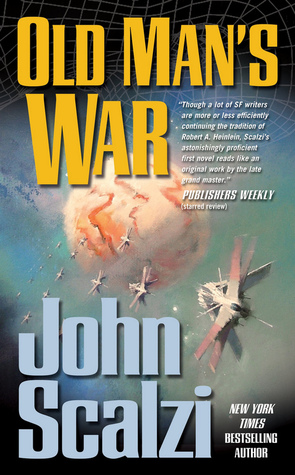
  • Old Man’s War (series) by John Scalzi
  • The Hunger Games (series) by Suzanne Collins
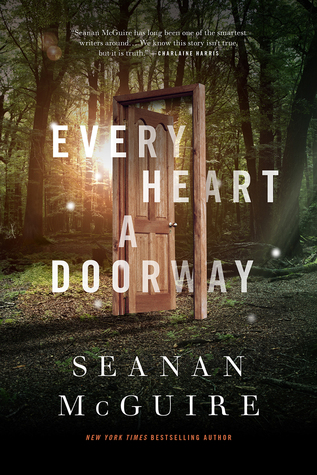
  • Wayward Children (series) by Seanan McGuire
  • The Everlasting by Alix E. Harrow
  • A Discovery of Witches (series) by Deborah Harkness
  • The Expanse (series) by James S. A. Corey
  • Station Eleven by Emily St. John Mandel
  • Jonathan Strange & Mr. Norrell by Susanna Clarke
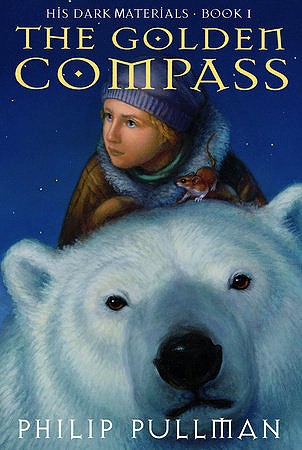
  • His Dark Materials (series) by Philip Pullman
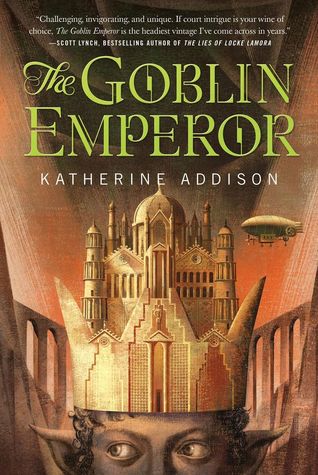
  • The Goblin Emperor by Katherine Addison

Do you have any favorite sci-fi/fantasy books that you can see as future classics?

If you wrote a TTT post, please share your link!

Save

Save

Save

Save

Save

Save

Book Review: Children of Time (Children of Time, #1) by Adrian Tchaikovsky

Title: Children of Time
Series: Children of Time, #1
Author: Adrian Tchaikovsky
Publisher: Orbit
Publication date: June 4, 2015
Length: 600 pages
Genre: Science fiction
Source: Purchased
Rating:

Rating: 5 out of 5.

A race for survival among the stars… Humanity’s last survivors escaped earth’s ruins to find a new home. But when they find it, can their desperation overcome its dangers?

WHO WILL INHERIT THIS NEW EARTH?

The last remnants of the human race left a dying Earth, desperate to find a new home among the stars. Following in the footsteps of their ancestors, they discover the greatest treasure of the past age—a world terraformed and prepared for human life.

But all is not right in this new Eden. In the long years since the planet was abandoned, the work of its architects has borne disastrous fruit. The planet is not waiting for them, pristine and unoccupied. New masters have turned it from a refuge into mankind’s worst nightmare.

Now two civilizations are on a collision course, both testing the boundaries of what they will do to survive. As the fate of humanity hangs in the balance, who are the true heirs of this new Earth?

Children of Time is a big, detailed, complex work of science fiction. It requires focus and concentration… and is absolutely worth the effort.

In Children of Time, humanity’s time on Earth has come to an end. While expanding out beyond the solar system and exploring other worlds, factions at home and throughout Earth’s space colonies go from adversarial politics to all-out war. The few remnants of humans on Earth find ways to survive an ice age, only to discover, as the ice finally recedes, that the ice actually protected life from the toxins that now doom them all to extinction — unless they can recreate the ancient tech of their space-faring ancestors and journey to a new planet to start again.

Meanwhile, the earlier humans’ space exploration included an ambitious terraforming agenda, journeying to far-flung solar systems to seed likely planets with the potential for new homes for humanity. As we learn early on, though, even this undertaking comes to ruin due to the factionalism and wars that devastate life on Earth.

One scientist heading a terraforming project succeeds, however… in a way. The pioneer of a project known as exaltation, Dr. Avrana Kern’s mission is to seed a terraformed planet with monkeys and a nanovirus to speed their evolution — then have the humans remain in suspension for centuries until the monkeys have evolved enough to support human settlement on their planet. But thanks to the war between humans, something goes very, very wrong with her plans.

Without giving too much away, I’ll just say that the story of what happens on this planet is utterly fascinating. Essentially, an unintended species is infected by the nanovirus — and over the course of Children of Time, we see an intensely interesting version of human evolution as played out by another species entirely. Thanks to the relatively short life span of this species, many generations pass over the course of the decades and centuries that follow — and we see them evolved from basic hunting skills to complex reasoning, strategy, building, communication, religious ideology, and eventually, highly advanced biochemistry and technology.

Meanwhile, in alternating chapters, we see the final remnants of the human race aboard the ark ship Gilgamesh, following the star maps and recovered documents of the last space-exploring humans in a desperate search to locate the old terraformed planets. Because they mainly exist in suspension, millennia pass during the Gilgamesh’s journey. We see familiar characters as they come out of suspension, often after decades or centuries have passed, in order to deal with new threats or discoveries. The concepts of time and what constitutes a life span are investigated in strange and wonderful new ways.

I don’t want to go too far into specifics, as there’s a real joy in seeing just how inventively the author spins out this story. The chapters alternate between life on the Gilgamesh and life on the planet, and it’s done so well that by the time the inevitable conflict between the two arrives near the end of the book, it’s impossible for a reader to favor one side over the other.

I’m thrilled that I’ve finally read Children of Time. Despite the book’s length, it’s so engrossing that the pages just fly by. For science fiction fans, this book is a must!

There are two more volumes in the series currently available, with a fourth set for publication in early 2026. On the one hand, Children of Time does wrap up very well, so I’d say it’s perfectly fine and satisfying to approach it as a single-volume stand-alone. On the other hand, I enjoyed Children of Time so much that I’m eager to read more set in this sci-fi universe!

Purchase linksAmazon – Audible audiobook – Bookshop.org 
Disclaimer: When you make a purchase through one of these affiliate links, I may earn a small commission, at no additional cost to you.

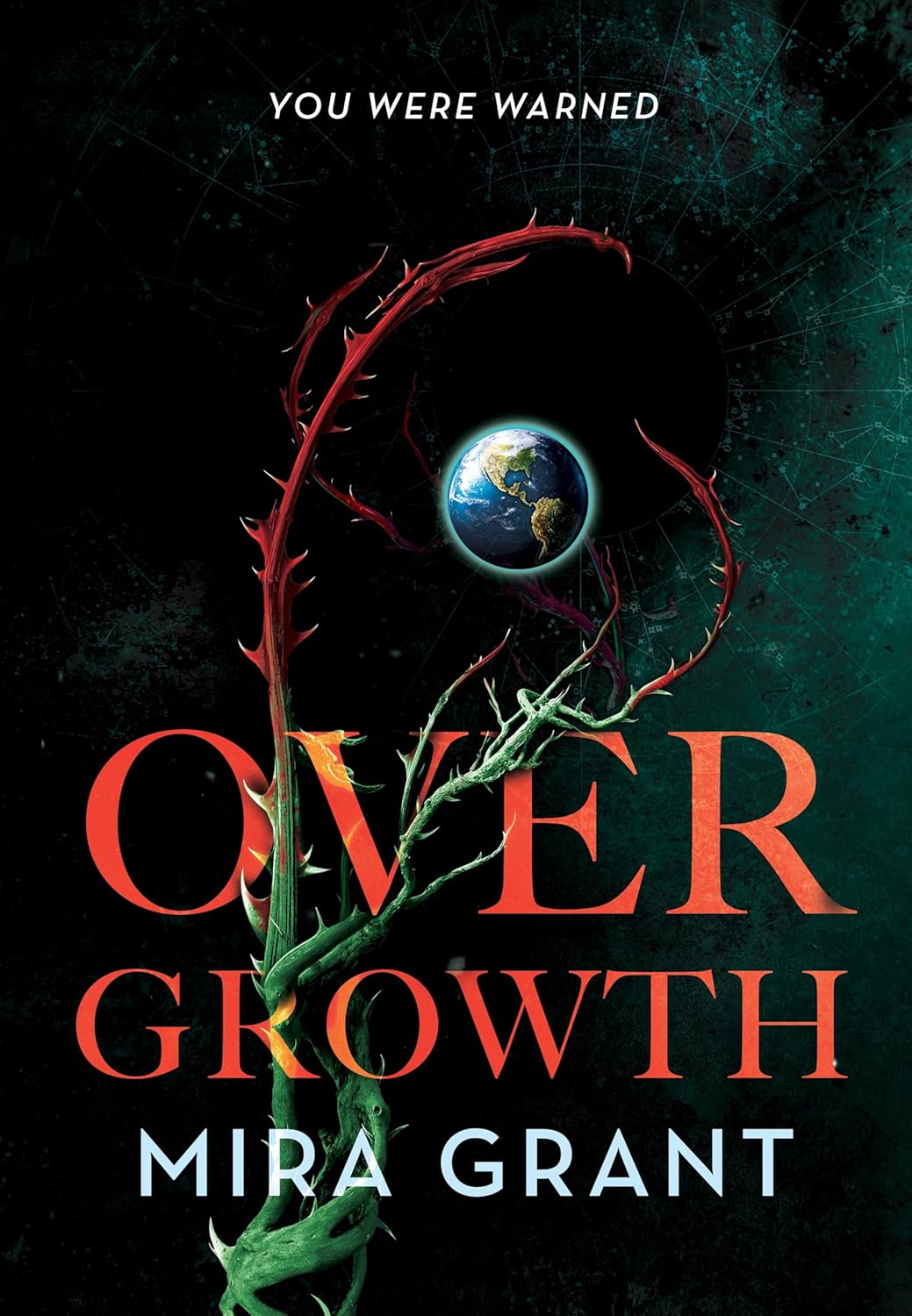
Book Review: Overgrowth by Mira Grant

Title: Overgrowth
Author: Mira Grant
Publisher: Tor Nightfire
Publication date: May 6, 2025
Length: 480 pages
Genre: Science fiction / horror
Source: Review copy courtesy of the publisher via NetGalley
Rating:

Rating: 4.5 out of 5.

Annihilation meets Day of the Triffids in this full-on body horror/alien invasion apocalypse.

This is just a story. It can’t hurt you anymore.

Since she was three years old, Anastasia Miller has been telling anyone who would listen that she’s an alien disguised as a human being, and that the armada that left her on Earth is coming for her. Since she was three years old, no one has been willing to listen.

Now, with an alien signal from the stars being broadcast around the world, humanity is finally starting to realize that it’s already been warned, and it may be too late. The invasion is coming, Stasia’s biological family is on the way to bring her home, and very few family reunions are willing to cross the gulf of space for just one misplaced child.

What happens when you know what’s coming, and just refuse to listen?

Mira Grant is the horror pen name for prolific author Seanan McGuire… and basically, I’ll read pretty much whatever she writes, under whichever name. With Mira Grant books, you can count on a certain ickiness (I mean, one of her series has to do with tapeworms!), but always with a strong foundation in character development and relationships.

Here, in Overgrowth, the aliens are coming… although many of their children are already here. Set about five years from now, we follow unfolding events through the eyes of main character Stasia (Anastasia) Miller, a customer service rep and self-described misanthrope who has fewer than a handful of friends, a boyfriend she loves very much, and a cat named Seymour.

Also, since the age of three, Stasia has been telling anyone who’s asked (and even those who haven’t) that she’s an alien, and that her people will be coming to bring her home. You can imagine the flurry of notes from teachers, progressing over time from praise for her precocious imagination to concern about how her insistence on these bizarre fantasies is leading to ostracism by her classmates.

Despite years of therapy as a child, and several managers telling me the joke has gotten old and I’d have an easier time getting promoted if I’d knock it off, I’ve never been able to swallow the urge to tell everyone I spend any extended period of time with that hey, by the way, I’m here because the invasion is coning, and people should probably know. It’s like a nervous tic. Hi, nice to meet you, my name’s Anastasia, I’m secretly an intelligent alien plant and one day everything you love will be devoured.

But as we readers know from the start, it’s not fantasy or imagination. At the age of three, little Anastasia wandered into the woods behind her home, and never came back. Instead, she was consumed and then replaced by an alien plant. The child who came out of the woods was not the child who went into them. But no one has ever actually believed her when she’s insisted on what she is.

We were the changelings of the science fiction age, and that made us both terrifying and untrue.

As the story unfolds, an astronomer releases a recording of a signal that’s definitely alien, causing a massive uproar and worldwide panic. Stasia and her boyfriend Graham decide to go investigate, because there’s something in that signal that seems to be triggering a change in Stasia. Events are set in motion that connect Stasia to others like her. As the invasion gets closer, the alien-humans start to physically change, and they’re targeted by secretive government agents for research and imprisonment. Meanwhile, Stasia has started being able to communicate with her people through a quasi-dream state, and realizes that hard choices are coming. Who does she side with? To whom does her loyalty belong? Can she be blamed for something that she had no control over? And if her friends stick with her, does that make them traitors to their own species?

Overgrowth is complex and multi-faceted, and there’s so much more going on than I can possibly describe. It’s a long book, and requires focus — but it’s absolutely worth the effort. I could not put it down, and could barely come up for air.

There are elements that puzzled me throughout, but the author sticks the landing and ties all the hints and loose plot point together by the end in a way that answers all of my nagging questions. The action is consistently well thought out, the characters are fascinating, and the story arc builds in ways that are unexpected, even as we know that the invasion is inevitable.

The author makes some interesting points about identity and acceptance. Stasia’s boyfriend is a trans man. Even having met him before he transitioned, Stasia immediately accepted his identity.

This could be the moment when I lost him. Because I had always believed him when he told me he was a man, and we had always pretended his belief in me was the same thing, but it wasn’t, was it? It wasn’t the same thing at all. Gender was a social construct and a part of the soul, and humans had always been capable of getting it wrong. I, though…

I was something alien and new, and while we had built a relationship on believing each other, our secrets weren’t the same at all.

Only Graham was still looking at me the way he always had, with love and sincere concern, like he believed I was a human being and deserved to be treasured like one. Or… maybe he’d never believed I was a human being. Maybe I’d been lucky enough to fall in love with one of the only people in the world who understood what it was to tell the truth about your identity, over and over again, until you found the few people who could believe in you.

Stasia’s transformation from weird human who says she’s an alien into a person who realizes that her truth has been more true than she ever knew is startling and evocative and powerful. As she becomes more and more “other”, she has to deal with a changing biology as well as complicated thoughts and feelings about family and survival.

This book is hard to slot neatly into a specific genre. The blurb refers to it as “body horror”, which doesn’t feel entirely accurate to me. I think of body horror as being much more extreme — mutilation, grotesque changes, lots of gore. Here, yes, Stasia’s body changes, but it’s more interesting than gross. There are violent moments with bloody/gory results, but overall, I’d categorize this book as much more heavily science fiction than horror.

However you might describe or shelve it, Overgrowth is fascinating. Stasia is an amazing main character, and I loved seeing her journey. The alien invasion is strange and different and scary, and the plotlines are tightly built and well described. This is a terrific read, and I recommend it highly for anyone who doesn’t mind the idea of creepy plants taking over the world.

Invasion of the Body Snatchers + Little Shop of Horrors. What could go wrong?

Purchase linksAmazon – Bookshop.orgLibro.fm
Disclaimer: When you make a purchase through one of these affiliate links, I may earn a small commission, at no additional cost to you.

For more by this author, check out these outstanding books:

  • Newsflesh series (review) — zombies!
  • Rolling in the Deep (review) — killer mermaids!
  • Into the Drowning Deep (review) — even more killer mermaids!
  • Parasite (review) — those tapeworms I mentioned! (ewwwww….)

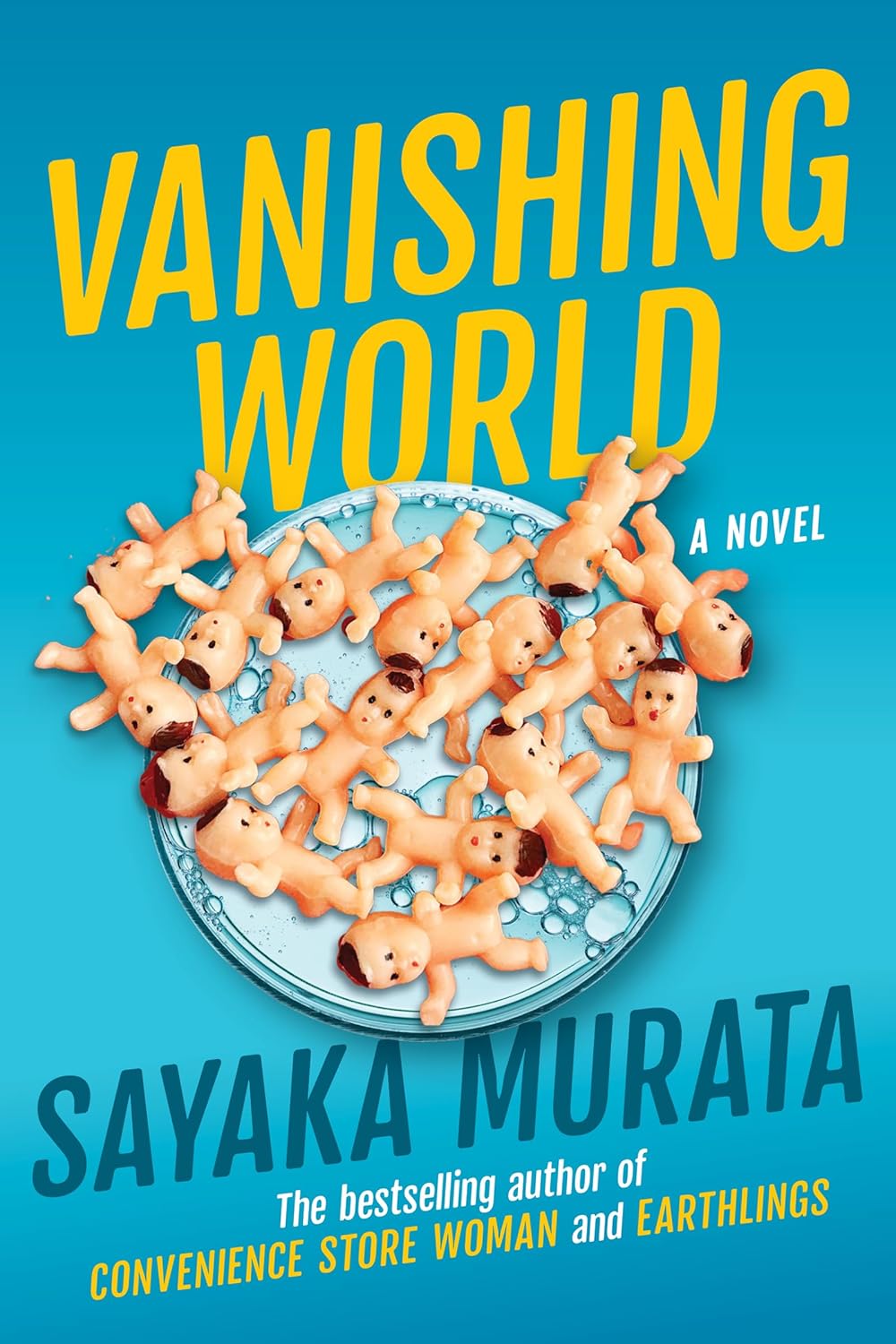
Book Review: Vanishing World by Sayaka Murata

Title: Vanishing World
Author: Sayaka Murata
Publisher: Grove Press
Publication date: April 15, 2025
Length: 240 pages
Genre: Contemporary fiction / science fiction
Source: Library
Rating:

Rating: 2 out of 5.

From the author of the bestselling literary sensations Convenience Store Woman and Earthlings comes a surprising and highly imaginative story set in a version of Japan where sex between married couples has vanished and all children are born by artificial insemination.

Sayaka Murata has proven herself to be one of the most exciting chroniclers of the strangeness of society, x-raying our contemporary world to bizarre and troubling effect. Her depictions of a happily unmarried retail worker in Convenience Store Woman and a young woman convinced she is an alien in Earthlings have endeared her to millions of readers worldwide. Vanishing World takes Murata’s universe to a bold new level, imagining an alternative Japan where attitudes to sex and procreation are wildly different to our own.

As a girl, Amane realizes with horror that her parents “copulated” in order to bring her into the world, rather than using artificial insemination, which became the norm in the mid-twentieth century. Amane strives to get away from what she considers an indoctrination in this strange “system” by her mother, but her infatuations with both anime characters and real people have a sexual force that is undeniable. As an adult in an appropriately sexless marriage—sex between married couples is now considered as taboo as incest—Amane and her husband Saku decide to go and live in a mysterious new town called Experiment City or Paradise-Eden, where all children are raised communally, and every person is considered a Mother to all children. Men are beginning to become pregnant using artificial wombs that sit outside of their bodies like balloons, and children are nameless, called only “Kodomo-chan.” Is this the new world that will purify Amane of her strangeness once and for all?

What did I just read?

Vanishing World falls squarely into the WTF category for me. If there was a point to this work of speculative fiction, then it sailed right over my head.

In Vanishing World, all conception is done via artifical insemination. Copulation is something from history — kind of gross, and why would anyone want to do it? Love is emotional, and can be for real people or people from the “other world” — anime or manga characters, for example, although protagonist Amane objects to calling them “characters”. They’re all her lovers, whether she interacts with them in person or through her feelings about them when she looks at their images.

When a man and woman are ready for children, they marry in order to form a family. Because a husband and wife are family members, sexual contact between them is considered incest, and is simply unimagineable.

As Amane becomes more and more convinced of the need to remove sexual urges and impurities from her life, she and her husband eventually move to Experiment City, where all adults are Mother to all children, women and men can both become pregnant thanks to external wombs, and the children are more or less indistinguishable from one another.

This has to be one of the weirdest books I’ve read in a long time. I honestly don’t know what to make of it — so rather than blather on, I’ll just share a few lines and passages to give a taste of what this book is like:

Copulation was the norm before the war, but when adult men were sent off to fight, research into artificial insemination progressed rapidly in order to produce lots of children for the war effort. People stopped going to all the bother of copulating like animals. We’re a more advanced creature now.

“Sensei, have you ever imagined a world that is parallel to this one? Everyone would still be copulating if there hadn’t been so much progress in artificial insemination, wouldn’t they?”

“Hmm, probably only reluctantly, though. After all, if that was the only way to procreate, then people would have no choice but to resort to primitive copulation. But still, there’s no point imagining that. The human race has advanced.”

His parents gave him a good grilling as he sat hanging his head. “That’s the sort of thing people only do outside the home. I can’t believe you tried to have sex with your wife!”

Still holding hands, we went downstairs to Mizuto’s apartment and sat on the sofa bed in the living room. “Do we have to make any preparations, like with some tools or something?” “No, it’s okay. All we need are our sexual organs.”

I hoped my husband’s love affair would go well too. He was like a little sister I had to keep an eye on.

Recent research has shown that children raised to feel loved by the whole world are more intelligent and more emotionally stable than those brought up under the former family system. Please be present to shower affection on children and thus continue the life of humankind. Please make sure to love all of the children as their Mother. Please make sure to shower affection continually!

Normality is the creepiest madness there is. This was all insane, yet it was so right.

Fortunately, this book was on the shorter side, so even when I felt that the story wasn’t what I’d signed up for, it was a quick enough read that I decided to see it through to the end.

Oh, and that ending! It’s icky. A quick scan of Goodreads and Storygraph reviews shows that even for people who appreciated this book a lot more than I did, the ending freaked them out. (I’ll admit that by the time I got there, I was so ready to be done that I just read it, thought “ewwwwww”, and then closed the book.)

Vanishing World was originally published in Japan in 2015, and has just been released in English translation this month. I previously read Convenience Store Woman by the same author, and I’m pretty sure I liked it, although I couldn’t tell you a thing about it at this point.

As I said as the start of this rambling post, if there was a deeper meaning to Vanishing World… well, I missed it. This was a truly bizarre reading experience that just got odder and odder as it went along. I don’t know what the overall message was supposed to be, and I’m sorry to say that I was mainly left wondering why I stuck with it.

Audiobook Review: When the Moon Hits Your Eye by John Scalzi

Title: When the Moon Hits Your Eye
Author: John Scalzi
Narrator: Wil Wheaton
Publisher: Tor
Publication date: March 25, 2025
Print length: 326 pages
Audio length: 10 hours 5 minutes
Genre: Science fiction
Source: Purchased
Rating:

Rating: 5 out of 5.

From the New York Times bestselling author of Starter Villain comes an entirely serious take on a distinctly unserious subject: what would really happen if suddenly the moon were replaced by a giant wheel of cheese.

It’s a whole new moooooon.

One day soon, suddenly and without explanation, the moon as we know it is replaced with an orb of cheese with the exact same mass. Through the length of an entire lunar cycle, from new moon to a spectacular and possibly final solar eclipse, we follow multiple characters — schoolkids and scientists, billionaires and workers, preachers and politicians — as they confront the strange new world they live in, and the absurd, impossible moon that now hangs above all their lives.

If you’re shocked to see a 5-star rating for a book about the moon turning to cheese… well, join the club!

Actually, I can’t even pretend to be all that surprised. We’re talking about a John Scalzi book, after all. No matter how silly or ridiculous the plot synopsis sounds, it’s a safe bet that the execution will be delicious.

So it goes with When the Moon Hits Your Eye. As the book opens, a moon rock on display in a space museum has been replaced by… something. The display case hasn’t been tampered with, and yet, the rock is clearly no longer there. Instead, it’s something distinctly un-rocklike… and why does the sliver of crescent moon visible in the night sky seem so unusually bright?

Within 24 hours, it becomes clear: It’s not just the museum’s artifact (and every other sample of moon rock anywhere on Earth) — the entire moon is now composed of cheese. Or, the NASA scientists put it, an organic matrix. But really, it’s cheese. How? Why? What does this all mean? As the ensuing month unfolds, the effects of this cheesy mystery are felt far and wide.

The story is told day by day, with each chapter highlighting a new setting and group of characters experiencing life following the great moon-to-cheese change. It’s a terrific and bizarre mix of subject matter and people, including a small-town pastor and his flock, a team of astronauts who’d been about to launch on the first moon mission in decades, an egotistical tech billionaire who happens to own a space company (hmmmm…..), the President and his staff, a popular science writer, a cheese shop proprietor, and many, many more. Through these characters, we see how ordinary people’s lives — as well as the lives of the rich, famous, and powerful — are dramatically affected by the moon. Their stories weave together to create a rich, meaningful story of human connection, scientific inquiry, and big helping doses of WTF situations.

I listened to the audiobook, and of course, Wil Wheaton’s delivery make this a funny, fast-moving, totally engaging experience.

I’m finding myself at a loss for what else to say about this book. YES, IT’S ABOUT THE MOON TURNING TO CHEESE. And also, yes, it’s simply awesome and utterly entertaining. You’ve just got to experience it for yourself.

One final note: The author photo on the back flap of the book should win its own award:

Purchase links: AmazonBookshop.org
This post contains affiliate links. If you click and buy, we may earn a small commission at no extra cost to you.
Book Review: The Martian Contingency (Lady Astronaut, #4) by Mary Robinette Kowal

Title: The Martian Contingency
Series: Lady Astronaut, #4
Author: Mary Robinette Kowal
Publisher: Tor Books
Publication date: March 18, 2025
Length: 400 pages
Genre: Science fiction
Source: Review copy courtesy of the publisher via NetGalley
Purchase links: AmazonBookshop.org
Rating:

Rating: 4.5 out of 5.

Years after a meteorite strike obliterated Washington, D.C.—triggering an extinction-level global warming event—Earth’s survivors have started an international effort to establish homes on space stations and the Moon.

The next step – Mars.

Elma York, the Lady Astronaut, lands on the Red Planet, optimistic about preparing for the first true wave of inhabitants. The mission objective is more than just building the infrastructure of a habitat – they are trying to preserve the many cultures and nuances of life on Earth without importing the hate.

But from the moment she arrives, something is off.

Disturbing signs hint at a hidden disaster during the First Mars Expedition that never made it into the official transcript. As Elma and her crew try to investigate, they face a wall of silence and obfuscation. Their attempts to build a thriving Martian community grind to a halt.

What you don’t know CAN harm you. And if the truth doesn’t come to light, the ripple effects could leave humanity stranded on a dying Earth…

The Martian Contingency is an outstanding addition to the excellent Lady Astronaut series — and while my understanding was that this was meant to be the 4th and final book in the series, I can’t actually find anything definitive that says that this is the last book.

The first Lady Astronaut book, The Calculating Stars (published 2018), is one of my all-time favorites. To set the stage for those new to the series: This alternate history version of the space race starts with a catastrophic meteor strike in 1952, which obliterates much of the eastern seaboard of the US and plunges the world into an escalating sequence of climate disasters that will, eventually, lead to planet-wide extinction.

In response to the disaster, there’s an international focus on space exploration. Humanity’s future on Earth is doomed; to survive, people must look beyond the planet for new homes. In this version of history, as envisioned by author Mary Robinette Kowal, the space race begins about ten years ahead of real-world historical events, fueled by an urgent, desperate need find solutions to Earth’s life-threatening problems.

Our point-of-view character throughout much of the series is Dr. Elma York, a scientist, mathematician, and WWII-era pilot who becomes one of the first women astronauts — used by NASA and the IAC (International Aerospace Coalition) for publicity purposes, and gaining fame as the “Lady Astronaut”. (Which, by the way, is better than how some refer to the women in the space program — would you want to be called an “astronette”?)

Elma and her husband Nathaniel (also Dr. York — he’s a brilliant engineer) are vital to the emerging space program. Read the earlier books in the series to find out more! Here in The Martian Contingency, Elma and Nathaniel have finally made it to Mars, as part of the Second Mars Expedition. Their job is to build out the Mars base, expanding it and making it safe for future expeditions, with the ultimate goal of creating a livable, viable, long-term home for humans.

Elma is a gifted pilot, an amazing human “computer”, and an adept leader. She’s appointed to the role of deputy administrator for the Mars base, and is devoted to her colleagues and to the mission. But as she settles in on Mars, she starts noticing some oddities — a patched wall that hadn’t been reported, a mural that clearly been painted to cover up something else, hatch marks etched into an airlock. Something must have happened during the First Expedition — something that didn’t make it into the official reports — but no one is talking. As Elma tries to dig, she’s told clearly that it was nothing, that everything is fine, and that she should leave it alone. But as her time on Mars progresses, the aftereffects of whatever happened show up in shocking ways, and have ripple effects that could imperil the people Elma cares about and the entire mission.

The world of this series is brilliantly depicted, as always. The author’s attention to details is meticulous. Each chapter opens with a news article from the era (most fictitious, although she includes one or two tidbits of real news from the same time period) — and even more amazing, indicates the date. What’s so amazing about the date? She provides both the Earth date and the Mars date — read the afterward of the book to learn more about her approach (and the “massive spreadsheet” she used to figure it all out). Not only does she have to provide both sets of dates, but she also layers in the many different cultural and religious holidays observed by the multicultural crew on Mars — it’s an impressive feat.

The Martian Contingency opens in 1970. In the world of these books, the global disaster has sped up not just science, but also social reckonings that came later in our own history. Because the IAC is truly an international presence, certain social issues come to the fore in startling ways — such as the acceptance of women into male-dominated roles, expedited racial integration at a time when being a racist was more normalized (South Africa is still an apartheid state at this time, which has repercussions for the mission), and the slow recognition that humanity’s future off-planet will by necessity include people of all ethnic, racial, religious, and national identities.

One example that provides a powerful storyline in The Martian Contingency centers on abortion rights and a woman’s right to choose. In the IAC, the norm is for each astronaut to be bound by their country of origin’s laws — so if a woman seeking an abortion is from a country that bans it, it would not be available to her, and likewise, a doctor from a country that bans abortions would not legally be allowed to perform the procedure, even if it were legal for the patient to receive it. It’s complicated, and the dilemmas and political pressures involved are remarkably well portrayed.

The heart of The Martian Contingency is Elma’s marriage with Nathaniel. Theirs is a beautiful love story. They’ve gone through disasters together, and have journeyed into space together, and their love never flags, despite stress, disagreements, and the separations forced upon them by their missions. There’s heartache and despair, but overall, a wonderful, mature, mutually beneficial connection that’s lovely to see.

There are times when the plot in The Martian Contingency doesn’t quite progress as evenly as I’d like, especially as relates to uncovering what happened on the First Mars Expedition. I would have liked some of those events to have surfaced and been explained more clearly, and earlier in the story. That’s a minor quibble — it does all come together eventually, and the story works.

One other truly small quibble: There’s a scene late in the book in which Elma and Nathaniel add to quotes etched into a wall in various languages. Elma (whose Judaism is an important part of her identity) adds a Hebrew phrase — but the Hebrew in the book is printed backwards! (The words themselves are fine; the sentence order is printed left to right, rather than right to left, as it should be.) I’ll note here that I read an e-ARC of the book; I’ll provide an update once my hard copy arrives and I cross-check against the finished book.

UPDATE: I’m pleased to report that the Hebrew issue is fixed in the finished version of the book! It now reads right to left… which is right!

For fans of the series, its been a long wait for The Martian Contingency! The previous book, The Relentless Moon, was published in 2020. As I mentioned, it’s not clear whether The Martian Contingency is the final book in the series — but if it is, it’s not a bad place to stop! The story wraps up with a satisfying ending, and while there could definitely be more stories to tell in the world of the Lady Astronaut, The Martian Contingency provides us with a conclusion to the book itself that resolves the key storylines, makes sense overall, and provides hope for the future.

I highly recommend The Martian Contingency — but do start at the beginning of the series with The Calculating Stars. You won’t want to miss a moment!

Final note: This fictional world all started with the short story Lady Astronaut of Mars — a wonderful work of fiction originally published in 2012. It’s a terrific story — and basically, the entire series of novels is a prequel to this story, which is set much later, when Elma is in her 60s and facing impossible choices. You can read Lady Astronaut of Mars online via Reactor Magazine, download a PDF version via the author’s website here, or find it as an e-book standalone as well as in the story collection Word Puppets through any book retailer.

Purchase links: AmazonBookshop.org
This post contains affiliate links. If you click and buy, we may earn a small commission at no extra cost to you.

Book Review: The Third Rule of Time Travel by Philip Fracassi

Title: The Third Rule of Time Travel
Author: Philip Fracassi
Publisher: Orbit
Publication date: March 18, 2025
Length: 325 pages
Genre: Science fiction
Source: Review copy courtesy of the publisher via NetGalley
Rating:

Rating: 3.5 out of 5.

Rule One: Travel can only occur to a point within your lifetime.
Rule Two: You can only travel for ninety seconds.
Rule Three: You can only observe.
The rules cannot be broken.

In this riveting science fiction novel from acclaimed author Philip Fracassi, a scientist has unlocked the mysteries of time travel. This is not the story you think you know. And the rules are only the beginning.

Scientist Beth Darlow has discovered the unimaginable. She’s built a machine that allows human consciousness to travel through time—to any point in the traveler’s lifetime—and relive moments of their life. An impossible breakthrough, but it’s not perfect: the traveler has no way to interact with the past. They can only observe.

After Beth’s husband, Colson, the co-creator of the machine, dies in a tragic car accident, Beth is left to raise Isabella—their only daughter—and continue the work they started. Mired in grief and threatened by her ruthless CEO, Beth pushes herself to the limit to prove the value of her technology.

Then the impossible happens. Simply viewing personal history should not alter the present, but with each new observation she makes, her own timeline begins to warp.

As her reality constantly shifts, Beth must solve the puzzles of her past, even if it means forsaking her future.

The Third Rule of Time Travel is a fast-paced, compelling story about (obviously) time travel, altered realities, consequences, and corporate greed. You won’t want to stop once you start… but when you do take the inevitable pause, there’s room enough for some doubts and quibbles to slide in.

Beth Darlow and her late husband Colson have done the seemingly impossible. They’ve created a time travel machine, but it’s not like something out of H. G. Wells or Doctor Who. The “traveler” doesn’t actually — physically — go anywhere at all. Instead, using negative energy, the traveler’s consciousness is sent through a wormhole into their own past. The destination can’t be set in advance; the machine targets a random point in the traveler’s life, where they relive the event they’ve already experienced. It’s like they become a visitor to themselves — they see what’s going on from behind their own eyes, but they’re a second consciousness present in the moment.

The traveling has absolute rules — the traveler is powerless to actually change anything or interact with the moment they’re visiting, and they can only visit for 90 seconds, which is all the machine can sustain. What would happen if they’re not pulled back within 90 seconds? Beth’s not really sure… but the guess is, it would be disastrous for the traveler, and could result in their consciousness never returning to their body.

Years earlier, Beth and Colson sold their machine to the Langan Corporation in order to get the funding investment needed to continue their work. Jim Langan, the CEO, treats them like his prize pet scientists and keeps the money flowing — but something seems to be going wrong at Langan. Fewer and fewer cars are in the employee parking lot, security is even tighter than ever, and long-time colleagues seem to be disappearing as projects are cancelled and departments close. When Jim starts pressuring Beth to move faster and to show the machine to a hand-picked reporter, Beth balks at the idea, but she really has no choice. Forced to travel more often than is safe, Beth’s experiences leave her emotionally battered… and worse, seem to have had consequences that no one expected.

The action in The Third Rule of Time Travel is nonstop, making for a propulsive reading experience. The story is fascinating, and the author does a great job of weaving together Beth’s professional and personal lives. She’s a hard-charging, brilliant scientist, but she’s also devoted to her young daughter and is a loving mother, although getting home from the lab in time for dinner and bedtime with Isabella is a challenge.

As the continued traveling starts to unravel Beth’s life, causing her emotional distress, physical exhaustion, and questions about pieces that seem to have gone missing, the stakes get higher and higher. Traveling via the machine is supposed to be purely observational… but after each round of travel, Beth feels as though something isn’t right. Could the machine have done something unimaginable — could visiting the past have changed Beth’s present?

I mostly enjoyed this book, and really couldn’t stand having to put it down and take breaks for, you know, life and stuff. Still, I had some quibbles, especially later in the book, that make me drop my star rating a bit:

  • The purpose of the machine doesn’t really make sense. Maybe as a first step toward achieving actual time travel, but I fail to see the point of witnessing random past moments for 90 seconds. Call me a skeptic — I didn’t buy how the machine is treated as the most significant scientific achievement of all time.
  • When I read books like this, at some point the science-y bits go over my head and I just have to accept that things like negative energy and quantum entanglement and wormholes make sense as depicted. Even so, the book’s approach to altered realities, with a hint of higher powers and cosmic woo-woo, rang a bit false. Some elements just don’t quite fit together.
  • Certain characters play a role and are never mentioned again; some scenes aren’t quite explained.
  • The CEO, the clear villain of the piece, is so mustache-twirlingly evil by the end that it’s a bit comical. He even gets to do some villain monologuing, and it feels quite over the top.
  • I didn’t buy the ending. Can’t say why, without getting into spoilers, but it all felt a bit neat and convenient..

Okay, that’s a whole bunch of quibbles; hence my 3.5 stars. I enjoyed myself while reading The Third Rule of Time Travel, but my doubts about some of the plot elements kept me at a distance, and the final third or so of the book felt less credible the further along it went.

Still, as someone who’s read a lot of variations on the time travel theme, I was interested in this different approach, and felt invested in the characters’ lives and dilemmas — and couldn’t peel my eyes away once the unintended consequences started to pile up. Readers who enjoy speculative sci-fi — and the brain twistiness of thinking about alternate realities — will likely find plenty to puzzle over and savor with The Third Rule of Time Travel.

Purchase linksAmazon – Bookshop.org
This post contains affiliate links. If you click and buy, we may earn a small commission at no extra cost to you.

Novella review: Murder by Memory by Oliva Waite

Title: Murder by Memory
Series: Dorothy Gentleman, #1
Author: Olivia Waite
Publisher: Tor Books
Publication date: March 11, 2025
Length: 112 pages
Genre: Science fiction
Source: Review copy courtesy of the publisher via NetGalley
Rating:

Rating: 4 out of 5.

A Memory Called Empire meets Miss Marple in this cozy, spaceborne mystery, helmed by a no-nonsense formidable auntie of a detective.

Welcome to the HMS Fairweather, Her Majesty’s most luxurious interstellar passenger liner! Room and board are included, new bodies are graciously provided upon request, and should you desire a rest between lifetimes, your mind shall be most carefully preserved in glass in the Library, shielded from every danger.

Near the topmost deck of an interstellar generation ship, Dorothy Gentleman wakes up in a body that isn’t hers—just as someone else is found murdered. As one of the ship’s detectives, Dorothy usually delights in unraveling the schemes on board the Fairweather, but when she finds that someone is not only killing bodies but purposefully deleting minds from the Library, she realizes something even more sinister is afoot.

Dorothy suspects her misfortune is partly the fault of her feckless nephew Ruthie who, despite his brilliance as a programmer, leaves chaos in his cheerful wake. Or perhaps the sultry yarn store proprietor—and ex-girlfriend of the body Dorothy is currently inhabiting—knows more than she’s letting on. Whatever it is, Dorothy intends to solve this case. Because someone has done the impossible and found a way to make murder on the Fairweather a very permanent state indeed. A mastermind may be at work—and if so, they’ve had three hundred years to perfect their schemes…

This short, sharp novella presents a murder mystery on board a generation ship — a spaceship a few centuries into a millenium-long journey to a new planet. In the world of the Fairweather (referred to as Ferry), passengers can more or less live forever, by recycling their minds through a series of new bodies once their current body reaches its natural end. Minds are uploaded into the ship’s vast library, and when a new body is needed, the saved memories from a person’s memory book are downloaded and installed into their newest living vessel.

It’s all pretty perfect, except for the day when Dorothy Gentleman, ship’s detective, wakes up in a body that’s not her own. She’d placed herself into a years-long sleep after her last body’s death, but hadn’t intended to come back to life so soon. Now, though, she’s in someone else’s body, with no idea why.

It turns out that her memories have been transferred into the body of a woman named Gloria Vowell, and that Dorothy’s own memory book had been erased, something that shouldn’t have been possible to do. Luckily, there was a backup, but still… something doesn’t add up, and in her role as detective, Dorothy is determined to figure it out.

What follows is a tightly woven tale of a murder investigation, made distinctly odd by the fact that murder isn’t actually permanent on board the Fairweather. Since memories are saved in the library, even a murder victim gets a chance to return to life. Meanwhile, as Dorothy digs, she discovers an intricate pattern of crime going back centuries, along with flaws in the system that Ferry will need to fix if the ship’s way of life is to be maintained.

At just over 100 pages, Murder by Memory is a quick read. It’s written with a nimble touch, immediately immersing the reader into the strange new world of the ship and its way of life (and death). The concept of the memory books and the library is terrific, and the mystery as a whole provides entertainment and food for thought. It did lose me a bit when the focus shifts to unraveling financial records, but fortunately the story moves on quickly and the exact details don’t matter a great deal in the overall scheme of things.

Murder by Memory is apparently the first story in an expected series about Dorothy, and this may explain why it feels like there are several loose threads left dangling at the end of the story — people, concepts, groups that factor into the plot, but seem like they have secrets yet to be revealed. But since there’s more to come, I’m guessing these hints of open questions are intentional, and I already know I’ll want to continue.

Dorothy is a great character, and the fluid concept of age is a piece of what makes her so fascinating. I can’t wait to see what future adventures await her!

Book Review: Annie Bot by Sierra Greer

Title: Annie Bot
Author: Sierra Greer
Publisher: Viking
Publication date: March 19, 2024
Length: 298 pages
Genre: Science fiction
Source: Library
Rating:

Rating: 4 out of 5.

Annie Bot was created to be the perfect girlfriend for her human owner, Doug. Designed to satisfy his emotional and physical needs, she has dinner ready for him every night, wears the cute outfits he orders for her, and adjusts her libido to suit his moods. True, she’s not the greatest at keeping Doug’s place spotless, but she’s trying to please him. She’s trying hard.

She’s learning, too.

Doug says he loves that Annie’s artificial intelligence makes her seem more like a real woman, but the more human Annie becomes, the less perfectly she behaves. As Annie’s relationship with Doug grows more intricate and difficult, she starts to wonder whether Doug truly desires what he says he does. In such an impossible paradox, what does Annie owe herself?

Annie is a Stella — that is, an AI-powered artificial person created by the Stella-Handy corporation, programmed in Cuddle Bunny mode to be the perfect girlfriend for someone who can afford the luxury-level pricetag. Annie’s owner Doug has enable the autodidact option for Annie, wanting a more authentic experience. Annie is self-aware and able to learn and grow from her experiences, and what Annie wants more than anything — in fact, the only thing Annie is meant to want — is to please Doug.

And yet, she can’t quite be perfect. He chose a Cuddle Bunny Stella, rather than an Abigail (whose function is housework), yet he’s angry when Annie fails to keep his apartment clean to his standards. Annie’s internal sensors rate every interaction on a scale of 1 to 10, and when Doug’s displeasure level gets to 3 or higher, Annie becomes highly anxious and strives to fix things immediately.

But she doesn’t always know the right thing to say, and she makes mistakes… sometimes, big ones. While Annie has the ability to think and feel, she’s still programmed to obey Doug’s commands, including orders to shut down, change her libido settings, or go into another room and stay there until he says she can come out — which can take days.

Doug’s wants dictate everything, even Annie’s physical attributes. When she goes for her regular tune-ups, Doug can submit requests to have her weight reduced and her breast size enlarged, and Annie doesn’t get a say. When the technician notes that some of Annie’s functions seem a little sluggish and questions whether she’s exhibiting signs of moodiness, the suggested fix is to set her up with phone pals — an AI-generated best friend and a cousin, who call her regularly and give Annie a sense of fun and engagement when she’s not busy with Doug. Doug agrees to add this option (for an additional fee, of course), but only for as long as it produces better results — meaning a more pleasant companion — for him.

It’s fascinating to see Annie’s inner life, and her dawning realization that the inability to make her own choices is making her unhappy. She initially becomes distressed in response to Doug’s moods, but as she continues to develop, she’s able to question her lack of agency and purpose. It’s no longer enough to please Doug; she can’t help noticing how his control seeps into every interaction, even when things seem to be going better than ever.

Doug and Annie’s relationships can be seen as a stand-in for many types of toxic relationships. He’s controlling to an extreme, withholds approval in order to dictate Annie’s movements and moods, demands or withholds sex as reinforcement, and chooses every aspect of Annie’s life, from her clothes to her activities to her social life and her whereabouts. When he decides to train her on “wandering”, she’s allowed outdoors on her own for walks and errands — but all still under Doug’s surveillance, and of course, with her tracking features enabled.

Grooming and even trafficking seem to key elements of owning a Stella, and the fact that the Stella industry is so popular and accepted within society is a sign of just how wrong things truly are.

Annie Bot is an immersive, thought-provoking read. While some scenes have humor, it’s impossible to forget Annie’s status. Doug enjoys having a seemingly real girlfriend, but there’s never any chance of forgetting that at the end of the day, he owns her. Readers suffer alongside Annie as she is forced to respond to his whims by changing her behavior and her body. Her constant monitoring of his happiness and displeasure would set off loud alarm bells in a relationship between two humans.

Annie Bot might have slipped right past my notice if not for my book group. I’m so glad someone from the group urged us to read it, and look forward to our discussion later this month. It’s a fast-paced book and a quick read that held my attention from start to finish. I felt completely drawn in by Annie’s world and her experiences. This may be science fiction, but many aspects of the relationship feel all too real and possible.

Highly recommended.

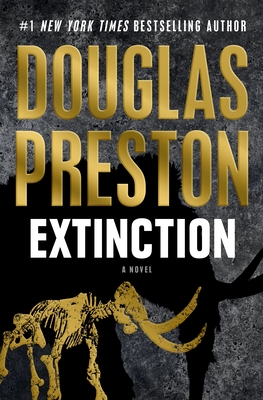
Book Review: Extinction by Douglas Preston

Title: Extinction
Author: Douglas Preston
Publisher: Forge books
Publication date: April 23, 2024
Length: 370 pages
Genre: Science fiction / thriller
Source: Library
Rating:

Rating: 4.5 out of 5.

Erebus Resort, occupying a magnificent, hundred-thousand–acre valley deep in the Colorado Rockies, offers guests the experience of viewing woolly mammoths, Irish Elk, and giant ground sloths in their native habitat, brought back from extinction through the magic of genetic manipulation. When a billionaire’s son and his new wife are kidnapped and murdered in the Erebus back country by what is assumed to be a gang of eco-terrorists, Colorado Bureau of Investigation Agent Frances Cash partners with county sheriff James Colcord to track down the perpetrators. As killings mount and the valley is evacuated, Cash and Colcord must confront an ancient, intelligent, and malevolent presence at Erebus, bent not on resurrection but on extinction.

A secret luxury resort where the ultra-rich can walk among “de-extincted” creatures from the Pleistocene era. What could possibly go wrong?

This is no Jurassic Park, as the Erebus head of security informs newly arrived visitors to the resort. But that doesn’t mean that the expected series of disasters don’t result from the ill-advised combination of advanced science and hubris.

As Extinction opens, a newlywed couple is enjoying a camping trip through the backcountry of the Erebus Resort. Their elation at seeing woolly mammoths roaming free is cut short by a brutal attack. When the couple are determined to have been either kidnapped or murdered, the Colorado Bureau of Investigation sends in Frankie Cash, newly appointed agent in charge, accompanied by local sheriff James Colcord.

As Cash and Colcord investigate the grisly crime scene, inexplicable evidence begins to pile up. Their investigation widens to include the Erebus security team, its billionaire CEO, and the high-tech labs hidden in converted mines in the mountains. The resort and labs are supposed to be impenetrable, completely safe, and completely controlled — but as more attacks follow, it’s clear that something deadly and relentless has also taken up residence at the resort, and it’s coming for them all.

Extinction is a taut, tension-filled thriller that starts off with high action and never lets up. The science is definitely something like Jurassic Park dialed up to eleven. Sure, Erebus has only “de-extincted” herbivorous creatures with genes linked to aggression carefully edited out, but something bent on bloody, vicious murder is out there. As we know from countless sci-fi movies and books, when humans figure out how to do something, they’re going to do it… even if it’s clear to most rational people that the outcome will be terrible.

Crime thrillers are not usually my jam, but I enjoyed this one a lot — I started it at the beginning of a flight, and by the time we landed, I’d read about 90%. Unputdownable, to say the least! The author’s decision to have local law enforcement investigating an unimaginable scientific disaster is a masterful choice. The main characters feel relatable — they’re ordinary people thrust into an insane situation, applying investigative techniques and approaches to a crime scene that contains layers upon layers of secrets, lies, and threats. Ultimately, Cash and Colcord find themselves fighting for their lives in a nightmarish hellscape… and the adrenaline-fueled, breathless sense of danger and terror just never lets up.

Sure, I question some of the science, and a few elements regarding timelines, how events unfolded, and motivations left me scratching my head. But I can put these small quibbles aside. Overall, Extinction is a terrific, engrossing read, and I could not look away once I started.

Be warned, though: There’s quite a bit of blood and violence throughout the book, and parts are downright terrifying. This book will leave you on edge, frightened, and possibly prone to nightmares!

Extinction is not a book I’d likely have picked up on my own. I was intrigued after reading a review by a favorite author, Dana Stabenow, and knew I needed to know more! I’m so glad I gave it a try. What a crazy ride!