Thursday Quotables: Bellman & Black

quotation-marks4

Welcome back to Thursday Quotables! This weekly feature is the place to highlight a great quote, line, or passage discovered during your reading each week.  Whether it’s something funny, startling, gut-wrenching, or just really beautifully written, Thursday Quotables is where my favorite lines of the week will be, and you’re invited to join in!

His mother was dead: he had seen the body; yet this knowledge refused to find a settled place in his mind. It came and went, surprised him every time he chanced upon it, and there were a million reasons not to believe it. His mother was dead, but look: here were her clothes and here her teacups, here her Sunday hat on the shelf over the coat hook. His mother was dead, but hark: the garden gate! Any moment now she would come through the door.

Source: Bellman & Black
Author: Diane Setterfield
Atria, 2013

What lines made you laugh, cry, or gasp this week? Do tell!

If you’d like to participate, it’s really simple:

  • Write a Thursday Quotables post on your blog. Try to pick something from whatever you’re reading now. And please be sure to include a link back to Bookshelf Fantasies in your post (http://www.bookshelffantasies.com), if you’d be so kind!
  • Click below (next to the cute froggy face) to link up your post! And be sure to visit other linked blogs to view their Thursday Quotables too.
  • Have a quote to share but not a blog post? Leave your quote in the comments.
  • Have fun!

Top Ten Tuesday: Top Ten Sequels I Can’t Wait To Get My Hands On

fireworks2

Top Ten Tuesday is a meme hosted by The Broke and the Bookish, featuring a different top 10 theme each week. This week’s topic is Top Ten Sequels I Can’t Wait To Get My Hands On. Wow, there are so many sequels that I’m just dying for! The hard part will be sticking with just 10. Here goes:

March 2014

Please let it be March already!

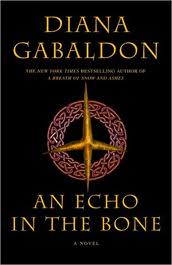
1) First and foremost, the book I’m most eager to grab and immediately gobble up: Written in My Own Heart’s Blood by Diana Gabaldon. It’s not exactly a secret that I’m a fan of the Outlander series :), and I’m practically frothing at the mouth waiting for book #8 to be released in March. Meanwhile, I’ll be starting a chapter-a-day re-read of book #7, An Echo in the Bone, in December, along with the amazing Outlander Book Club. More details to follow!

By Blood We Live (The Last Werewolf, #3)

2) By Blood We Live by Glen Duncan: Can’t wait for the final book in the Last Werewolf trilogy! Due February 2014.

Lair of Dreams (The Diviners, #2)

3) Lair of Dreams by Libba Bray: Sequel to the scrumptious The Diviners! Release date August 2014.

4) The Winds of Winter by George R. R. Martin: I found this cover image online, but I have no idea if it’s official. No publication date yet, so it may be years before we get to find out what happens next in A Song of Ice and Fire.

The Book of Life (All Souls Trilogy, #3)

5) The Book of Life by Deborah Harkness. At last, there’s a release date for the final book in the All Soul’s Trilogy! No cover art yet, but at least we know that we only have to wait until July 2014 to find out what’s happened to Matthew and Diana!

5thwave2

6) The Infinite Sea by Rick Yancey. I loved The 5th Wave; can’t wait for #2, due out in May.

Locke and Key, Vol. 6: Omega & Alpha

7) Locke & Key, volume 6: Omega & Alpha by Joe Hill and Gabriel Rodriguez. The final volume in the amazing (and super creepy) Locke & Key graphic novel series. To be published February 2014.

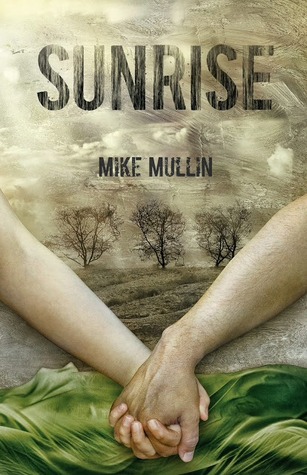
Sunrise (Ashfall, #3)

8) Sunrise by Mike Mullin. The conclusion to the Ashfall trilogy will be released in April 2014.

Doc

Bring on the sequel!

9) Epitaph by Mary Doria Russell. Sadly, we’ll have to wait until 2015 for the sequel to MDR’s outstanding Doc.

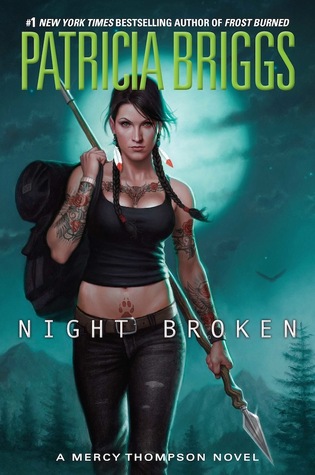
Night Broken (Mercy Thompson, #8)

10) Night Broken by Patricia Briggs. I just love the Mercy Thompson books, and hope the series continues for a long, long time. Book #8 will be released in March 2014.

There are a few more I can think of, but I’ll save those for another week’s Top 10! What sequels are you just dying to read?

If you enjoyed this post, please consider following Bookshelf Fantasies! And don’t forget to check out our regular weekly features, Thursday Quotables and Flashback Friday. Happy reading!

♥♥♥♥♥♥♥♥

Do you host a book blog meme? Do you participate in a meme that you really, really love? I’m building a Book Blog Meme Directory, and need your help! If you know of a great meme to include — or if you host one yourself — please drop me a note on my Contact page and I’ll be sure to add your info!


Book Review: The Tulip Eaters by Antoinette van Heugten

Book Review: The Tulip Eaters by Antoinette van Heugten

The Tulip Eaters

Synopsis (Goodreads):

In a riveting exploration of the power the past wields over the present, critically acclaimed author Antoinette van Heugten writes the story of a woman whose child’s life hangs in the balance, forcing her to confront the roots of her family’s troubled history in the dark days of World War II…

It’s the stuff of nightmares: Nora de Jong returns home from work one ordinary day to find her mother has been murdered. Her infant daughter is missing. And the only clue is the body of an unknown man on the living-room floor, clutching a Luger in his cold, dead hand.

Frantic to find Rose, Nora puts aside her grief and frustration to start her own search. But the contents of a locked metal box she finds in her parents’ attic leave her with as many questions as answers—and suggest the killer was not a stranger. Saving her daughter means delving deeper into her family’s darkest history, leading Nora half a world away to Amsterdam, where her own unsettled past and memories of painful heartbreak rush back to haunt her.

As Nora feverishly pieces together the truth from an old family diary, she’s drawn back to a city under Nazi occupation, where her mother’s alliances may have long ago sealed her own–and Rose’s—fate.

In this novel of family history and secrets, the past is never truly the past. Nora thinks she has finally achieved real happiness in her life, with a fulfilling career, a home shared with her beloved mother, and a perfect little daughter to love and cherish. When the brutal murder and kidnapping take everything Nora loves away from her, she refuses to sit and wait for the police investigation to play itself out, when there are no leads and no substantial clues.

As Nora begins to dig, she starts to realize that there are secrets that her mother never shared, and if she is to have any hope of finding Rose, Nora must understand who her mother’s enemies are and why.

The Tulip Eaters opens in 1980s Houston, but the action and the central drama quickly move to Amsterdam and other points in the Netherlands. It soon becomes apparent that the secrets of Nora’s mother’s identity and actions during the Nazi occupation of the Netherlands in WWII are enormously important to someone — enough to kill for, even 30 years later.

As Nora starts uncovering fragments of clues that may lead to answers, she is increasingly at risk, both physically, as the killer’s associates want to scare her off and perhaps stop her for good, and emotionally, as she is forced to confront the possibility that her mother’s secrets may be uglier than she could have imagined.

The details that emerge about the Dutch experience under Nazi occupation are startling and eye-opening. As one contact points out to Nora, most Americans’ conceptions of what happened start and end with Anne Frank. But the experience of the Dutch Jews was much worse than that might imply, as most were shipped off to concentration camps while their non-Jewish compatriots turned a blind eye, whether out of malice or simply to protect their own families.

The early chapters of The Tulip Eaters felt a bit melodramatic to me, as well as unfocused. When the police detective arrives to view the crime scene, is it necessary to describe the fact that he has “No wedding band, the but the pale ring of flesh on his left hand showed it had not been long since it had been removed”? This, plus a few other descriptions of his looks, gave me the impression (thankfully false) that he would become a love interest or at least play a significant role in the book, but he actually fades into the background after a few chapters. It almost felt as though the author was going to make him more important to the plot, and then changed her mind.

The title itself is a bit of a misnomer. During the war, starvation among the Dutch people was so extreme that they had nothing to eat except tulip bulbs pulled from the fields and boiled into a barely edible soup. Interesting, but this has practically nothing to do with the plot, other than getting a brief mention as background to everything else going on.

Still, despite these minor quibbles, overall The Tulip Eaters is quite good. It provides a window into a chapter of history that is relatively unknown, and as the novel moves farther along and we delve deeper into the clues to Nora’s mother’s past, the tension mounts and the suspense and dread become much more intense. There are elements within the novel that give it a somewhat soapy tone, but the overall mystery centered around the murder and kidnapping was intriguing enough to keep me reading until I got some answers.

As a reminder that the past is never really gone, as well as a lesson on some of the horrors of the Holocaust, The Tulip Eaters is quite effective. That, combined with a crime to be solved and clues to be unraveled, make The Tulip Eaters a fast-paced, moving, and engaging read.

_________________________________________

The details:

Title: The Tulip Eaters
Author: Antoinette van Heugten
Publisher: Harlequin MIRA
Publication date: 2013
Genre: Contemporary adult fiction
Source: Review copy courtesy of Harlequin MIRA via NetGalley

Thursday Quotables: Parasite

quotation-marks4

Welcome back to Thursday Quotables! This weekly feature is the place to highlight a great quote, line, or passage discovered during your reading each week.  Whether it’s something funny, startling, gut-wrenching, or just really beautifully written, Thursday Quotables is where my favorite lines of the week will be, and you’re invited to join in!


This week, I decided to highlight a few of the lighter moments in a truly creepy and disturbing book:

She was the kind of girl who would probably greet Godzilla while he was attacking downtown by asking whether he’d ever considered adopting a kitten to help him with his obvious stress disorder.

And:

“I hate it when you’re reasonable,” she grumbled. “You should be freaking out.”

“You’re freaking out enough for both of us,” I said. “I just want to know what I’m going to be freaking out about before I waste energy freaking out about the wrong things. Conservation of panic is important.”

One more:

My parents would be pissed if they came home and SymboGen had kicked the front door in, but I assumed they’d be even angrier if they came home and found me dead in the kitchen.

Parasite (Parasitology, #1)

Source: Parasite
Author: Mira Grant
Orbit, 2013

This sci-fi/thriller about medical science gone wrong is keeping me up at night and giving me chills galore! And yet, the writing is full of little zingers and clever bits, just enough to make me break out an occasional smile while hiding under the covers!

What lines made you laugh, cry, or gasp this week? Do tell!

If you’d like to participate, it’s really simple:

  • Write a Thursday Quotables post on your blog. Try to pick something from whatever you’re reading now. And please be sure to include a link back to Bookshelf Fantasies in your post (http://www.bookshelffantasies.com), if you’d be so kind!
  • Click below (next to the cute froggy face) to link up your post! And be sure to visit other linked blogs to view their Thursday Quotables too.
  • Have a quote to share but not a blog post? Leave your quote in the comments.
  • Have fun!

The Monday Agenda 10/28/2013

MondayAgendaNot a lofty, ambitious to-be-read list consisting of 100+ book titles. Just a simple plan for the upcoming week — what I’m reading now, what I plan to read next, and what I’m hoping to squeeze in among the nooks and crannies.

How did I do with last week’s agenda?

Science fiction, contemporary fiction, YA fiction, and a graphic novel — what a fun week it’s been!

incrementalistsgood wife

Reality BoyRASL

The Incrementalists by Steven Brust and Skyler White: Done! My review is here.

How To Be a Good Wife by Emma Chapman: Done! My review is here.

Reality Boy by A. S. King: Done! My review is here.

RASL by Jeff Smith: This newly released hardcover compilation of Jeff Smith’s RASL comic series is about parallel universes, art theft, Nikola Tesla, quantum physics, and government conspiracies, among other things. Plus there’s a very creepy little girl, lots of desert landscapes, and plenty of sex and violence. In other words, not for kids! Jeff Smith is the creator of one of my all-time favorites, the Bone series, which my son and I both love. RASL is not one that I’ll be sharing with him any time soon! That said, I really enjoyed RASL. It’s mind-bendy, twisty, smart, and fast-paced, with a great hero and plenty of food for thought to go with all that action. If you like a good graphic novel every once in a while, check it out!

The Expeditioners by S. S. Taylor: Such a great kids’ adventure story! The end is in sight…

Fresh Catch:

I’m still respecting my self-imposed reading diet — no reading books from my shelves (or the library’s shelves) until I catch up on all of my review copies! I did get one new book this week, preordered some time ago:

17333261

Argh! It’s so hard to be good!

What’s on my reading agenda for the coming week?

This week I’ll be reading:
Parasite (Parasitology, #1)Palace of SpiesThe Tulip Eaters

I’ve just started Parasite by Mira Grant. This is going to be a good one!

Once I’m done, next up will be two more review books:

  • Palace of Spies by Sarah Zettel
  • The Tulip Eaters by Antoinette van Heugten

Bellman & Black: A Ghost StoryAnd if by some miracle I get through all of these (which is unlikely), then I’ll move on to Bellman & Black by Diane Setterfield, which I’ve really been looking forward to.

Believe it or not, after these four books, I’ll be caught up (for now!), and can start sprinkling in some of my new on-my-shelves books in between upcoming review copies! Oh, happy day!

So many book, so little time…

That’s my agenda. What’s yours? Add your comments to share your bookish agenda for the week.

boy1

Book Review: How To Be A Good Wife by Emma Chapman

Book Review: How To Be A Good Wife by Emma Chapman

How To Be a Good WifeDon’t let the title fool you: This is not a feel-good story, it’s not a happy story about marriage, and it’s certainly not chick lit.

In How To Be A Good Wife, Marta is a sad and lonely middle-aged housewife suffering terribly from empty nest syndrome now that her only child, son Kylan, has grown up and moved to the city. Marta is left behind in her spotlessly clean home in an unnamed small Scandinavian village, where she compulsively keeps an eye on the clock and makes sure everything is perfect for her husband Hector. As a new bride some 25 years earlier, Marta’s mother-in-law gave her a gift of the how-to guide “How To Be A Good Wife”, and Marta follows it to the letter: “Make your home a place of peace and order”, “Your husband belongs in the outside world. The house is your domain, and your responsibility”, and “Never hurry or nag him along. His time is precious, and must be treated as such” are some of the words of wisdom which Marta has memorized and tries to live by.

Marta has been on medication for years — anti-depressants, I initially assumed, although soon enough it becomes clear that there’s more going on here than just depression. Marta decides to go off her meds, just for the sake of making something happen — and something does indeed happen. She starts having flashes, seeing things and hearing things that aren’t there. She begins seeing a young girl in pajamas, who starts appearing more and more frequently, until Marta cannot tell what is real and what is not. As these flashes become more frequent, Marta becomes convinced that they are buried memories coming to the surface — but are they?

Bit by bit, Marta’s rediscovered memories present to her a version of her marriage that doesn’t match at all with what she’s believed all these years. Early on, I found it curious that all of Marta’s memories of her wedding and a vacation are couched in terms of how Hector described the events. Why doesn’t she have her own memories to rely on? As the bits and pieces keep popping up, we see a new twist on what we’ve been told, and the picture shifts dramatically toward terror and nightmares.

But is any of it real? Marta has lived in isolation for so many years; apparently, she has no friends or real connections in the village. Hector and Kylan are her entire world, but if what she remembers is true, then Hector is not what he seems. As Marta becomes desperate to discover what really happened and to escape from what she perceives as a dangerous life, she has to try to convince Kylan of the truth of her memories — but at the same time realizes that if she succeeds, Kylan may very well be the one to suffer the most.

How To Be A Good Wife is a gripping psychological thriller that reminded me in some ways of Before I Go To Sleep by S. J. Watson. Memory is the key here — but in this book, the reliability of Marta’s memories is not at all certain. Her instability and fear could very well stem from the memories that have resurfaced — but they could also be signs of a deep psychosis.

I suppose this book could also be looked at in a more symbolic way, showing how the old-fashioned expectations of a wife’s role completely eat away at a woman’s individuality, until she can’t even be sure of who she really is without guidance from her husband. But for me, I found myself pretty convinced by Marta’s memories, and thus found it especially painful as she is continuously treated as someone with a mental illness needing treatment rather than being listened to and taken seriously.

The writing here flows quickly, and even the detailed descriptions of housework take on an ominous tone as they paint a picture of a woman trapped in a sterile, outwardly beautiful environment that is empty at its core. Marta does exhibit signs of being “off” — her obsession with the time, her desperate clinging to her grown son, her attention to every smudge and mark in her perfect house — so when she also starts acting out based on her flashes of memory, it’s understandable that it might look like crazy to an observer.

How To Be a Good Wife moves quickly and is practically impossible to put down once you get past the mid-point. It’s chilling and disturbing and utterly engrossing. Even when I thought I knew what had happened and what was going on, I kept being surprised by the way things turned out, and found myself getting VERY upset on Marta’s behalf as she struggles to be heard and to be believed.

And really, if a book can upset its reader in such a personal way, then you know the author is doing something right! If you like suspenseful writing and characters with depth, check out How To Be A Good Wife. Just don’t expect a tidy ending with rainbows and sunshine. The ending is bleak and ambiguous, and totally in keeping with the tone of the entire story. I think this is one book that will stay with me and eat away at me for quite a while, and that’s a testament to its power.

Whew. I feel like I’ve really been put through the ringer with this one. If you’ve read it, let me know! You know how some books just beg to be discussed? How To Be a Good Wife definitely is one of those.

Note: After finishing the book, I Googled the title and found out that there really was a small book published in the 1930s called How To Be A Good Wife, which I assume is the same book that Marta receives here. It’s been reprinted and is available from Amazon and other online booksellers — not that I want to buy it, but it might be amusing to read through someday.

__________________________________________

The details:

Title: How To Be a Good Wife
Author: Emma Chapman
Publisher: St. Martin’s Press
Publication date: 2013
Genre: Contemporary fiction
Source: Review copy courtesy of St. Martin’s Press via NetGalley

Thursday Quotables: How To Be a Good Wife

quotation-marks4

Welcome back to Thursday Quotables! This weekly feature is the place to highlight a great quote, line, or passage discovered during your reading each week.  Whether it’s something funny, startling, gut-wrenching, or just really beautifully written, Thursday Quotables is where my favorite lines of the week will be, and you’re invited to join in!

This week’s Thursday Quotable:

Today, somehow, I am a smoker.

I did not know this about myself. As far as I remember, I have never smoked before.

How To Be a Good Wife

Source: How To Be A Good Wife
Author: Emma Chapman
St. Martin’s Press, 2013

What a terrific start to a book about memories and mysteries. If the main character doesn’t know that she’s a smoker, what else doesn’t she know? These opening lines were enough to get me hooked.

What lines made you laugh, cry, or gasp this week? Do tell!

If you’d like to participate, it’s really simple:

  • Write a Thursday Quotables post on your blog. Try to pick something from whatever you’re reading now. And please be sure to include a link back to Bookshelf Fantasies in your post (http://www.bookshelffantasies.com), if you’d be so kind!
  • Click below (next to the cute froggy face) to link up your post! And be sure to visit other linked blogs to view their Thursday Quotables too.
  • Have a quote to share but not a blog post? Leave your quote in the comments.
  • Have fun!

Recently Read: The Incrementalists by Steven Brust and Skyler White

The Incrementalists by Steven Brust and Skyler White

The Incrementalists

The Incrementalists—a secret society of two hundred people with an unbroken lineage reaching back forty thousand years. They cheat death, share lives and memories, and communicate with one another across nations, races, and time. They have an epic history, an almost magical memory, and a very modest mission: to make the world better, just a little bit at a time. Their ongoing argument about how to do this is older than most of their individual memories.

Phil, whose personality has stayed stable through more incarnations than anyone else’s, has loved Celeste—and argued with her—for most of the last four hundred years. But now Celeste, recently dead, embittered, and very unstable, has changed the rules—not incrementally, and not for the better. Now the heart of the group must gather in Las Vegas to save the Incrementalists, and maybe the world.

My reaction:

I’ve been fascinated by the concept behind The Incrementalists since I first stumbled across a “coming soon” mention of it several months ago. In fact, back in July, this was one of my Wishlist Wednesday selections, and I was really excited to finally get my hands on a copy.

So did it live up to my expectations?

Yes and no.

I’m reminded of the line from Julius Caesar (oh, shush, stop rolling your eyes at me just because I’m quoting Shakespeare!): “The fault, dear Brutus, is not in our stars but in ourselves…”

In the case of The Incrementalists, I think the fact that this book didn’t entirely work for me is less about the book itself than about me.

Me, me, me… and now I sound incredibly self-centered. It’s all about me!

But seriously… I think I expected much more of a paranormal thriller of some sort. Secret societies! Shared memories! Cheating death! But that’s not really what The Incrementalists is.

Instead, it’s a smart, intellectual science fiction brain-teaser centered almost entirely around something called The Garden, an “exo-brain” or virtual world that all Incrementalists can access mentally. It’s a non-material space in which Incrementalists can store (or “seed”) their memories, then invite other members of the group to “graze” their “seeds”. When an Incrementalist’s body dies, the others choose a new “Second” to receive the deceased’s “stub” — his or her essence, which will then basically fight the recipient’s personality for dominance until the weaker personality is integrated into the stronger. In this way, the personalities live on in an unbroken chain for hundreds or even thousands of years, being “spiked” into new bodies whenever needed.

The terminology of the Incrementalists includes terms like “switches”, “pivots”, and “sugar spoons”, and just boggled my mind after a while. While the plot is fast-paced and included some really clever and unusual characters, I often felt that I was missing something.

More about me — I consider myself a fairly smart reader and it’s not often that I feel that I can’t keep up. The Incrementalists made me feel like a cave-dweller at times. As the virtual worlds — and virtual chase scenes — became more and more complex, I increasingly felt like I was losing the plot thread and didn’t understand what was going on.

Which was frustrating. Because I like The Incrementalists quite a bit, and especially liked main characters Phil and Ren. Their story and their growing relationship was marvelous and tricky and intellectual and challenging. And yet, I finished the book feeling like I’d only understood a portion of the details, and while I got the big picture, I couldn’t tell you exactly why it had worked out the way it did, or even what specifically had transpired.

To sum it all up: For someone who enjoys virtual worlds, artificial intelligence and constructs, symbols and multiple realities, this would probably be a great choice. It’s certainly not your run-of-the-mill thriller, and it definitely will send your brain into overdrive. I do think The Incrementalists is quite a good book. I just think that perhaps I wasn’t the right reader for it.

__________________________________________

The details:

Title: The Incrementalists
Author: Steven Brust and Skyler White
Publisher: Tor/Forge
Publication date: 2013
Genre: Science Fiction
Source: Review copy courtesy of Tor/Forge via NetGalley

The Monday Agenda 10/21/2013

MondayAgendaNot a lofty, ambitious to-be-read list consisting of 100+ book titles. Just a simple plan for the upcoming week — what I’m reading now, what I plan to read next, and what I’m hoping to squeeze in among the nooks and crannies.

How did I do with last week’s agenda?

What with one thing and another, it’s been a pretty slow (but fun) reading week:

Longbournbad housesincrementalists

Longbourn by Jo Baker: Done! I loved this inside-out look at the world of Pride and Prejudice, as told from the perspective of the Bennets’ servants. My review is here.

Bad Houses by Sara Ryan and Carla Speed McNeil: Done! A quick and engaging graphic novel. My preview of this upcoming new release is here.

The Incrementalists by Steven Brust and Skyler White: Still reading — about 70 pages to go. A lot of the virtual reality stuff is going pretty much over my head, but it’s still interesting and puzzling enough for me to keep going and see if I can make it all make sense.

The Expeditioners by S. S. Taylor: My read-aloud book with my son — going great! I think we have another week or two to go.

Fresh Catch:

I’m still trying to be good and stick to the plan of finishing off all my current (and a teeny bit late) review books before digging into all the new books begging to be read. Meanwhile, two of my requests came in at the library this week:

The Rosie ProjectRASL

Two very different books, but I’m looking forward to both!

What’s on my reading agenda for the coming week?

Still sticking with my commitment to focus on review copies, this week I’ll be reading:

incrementalistsgood wife
Reality BoyParasite (Parasitology, #1)

First, I’ll be trying to finish up with The Incrementalists. And after that, I have a few more books lined up that I’m excited about:

  • How To Be a Good Wife by Emma Chapman
  • Reality Boy by A. S. King
  • Parasite by Mira Grant

I realize that I’m being overly ambitious and probably completely unrealistic in thinking that I’ll make it through four books this week… but hey, a reader can dream, can’t she?

So many book, so little time…

That’s my agenda. What’s yours? Add your comments to share your bookish agenda for the week.

boy1

Coming Soon in Graphic Novels: Bad Houses by Sara Ryan and Carla Speed McNeil

Bad Houses by Sara Ryan and Carla Speed McNeil

Bad HousesSynopsis:

Lives intersect in the most unexpected ways when teenagers Anne and Lewis cross paths at an estate sale in sleepy Failin, Oregon. Failin was once a thriving logging community. Now the town’s businesses are crumbling, its citizens bitter and disaffected. Anne and Lewis refuse to succumb to the fate of the older generation as they discover – together – the secrets of their hometown and their own families. Bad Houses is a coming-of-age tale about love, trust, hoarding, and dead people’s stuff from award-winning creators Sara Ryan (Empress of the World) and Carla Speed McNeil (Finder).

Bad Houses is an interesting, unusual graphic novel about sad lives in a run-down, has-been town. Failin, Oregon is on a long, downhill slide, with shuttered stores and abandoned industries. Anne and Lewis represent the next generation, seeing the lives that have come before by means of estate sales and other people’s stuff. As they grow closer and learn more about their own families’ histories and mysteries, they try to find a way not to repeat their parents’ pasts, but to create a more hopeful future for themselves.

The story is warm and affecting, and often incredibly sad. The town itself just reeks of melancholy and failure, and it’s no wonder that the people still living there seem so downtrodden and disillusioned. Bad Houses is, among other things, a meditation on things — the objects that fill up our lives, which we imbue with meaning, yet which ultimately have little or no intrinsic value beyond the emotional attachments we form. We come to understand a character who is a serious hoarder; her attachment to physical representations of the loss in her life is the explanation for why her home is so dangerously cluttered. It’s no wonder that her daughter craves nothing more than empty spaces — an absolutely clean slate where life can be lived in the present without being under the constant threat of being buried by the past.

The black-and-white illustrations in Bad Houses are clean and sparse, with well-drawn and well-defined characters. Anne is especially cute, with funky hair and clothes, and it’s fun to see her adapt to new situations by changing her look as well.

I recommend Bad Houses for anyone who enjoys a creative approach to storytelling and a narrative that gives its characters room to breathe and grow.

__________________________________________

The details:

Title: Bad Houses
Author: Sara Ryan and Carla Speed McNeil
Publisher: Dark Horse Books
Publication date: November 12, 2013
Genre: Graphic novel
Source: Review copy courtesy of Dark Horse Books via NetGalley