Book Review: The Mystery of Mrs. Christie by Marie Benedict

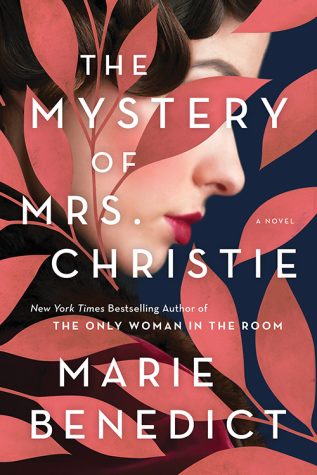
Title: The Mystery of Mrs. Christie
Author: Marie Benedict
Publisher: Sourcebooks Landmark
Publication date: December 29, 2020
Length: 288 pages
Genre: Historical fiction
Source: Review copy courtesy of the publisher via NetGalley
Rating:

Rating: 5 out of 5.

Marie Benedict, the beloved New York Times bestselling author of The Only Woman in the Room, uncovers the untold story of Agatha Christie’s mysterious eleven day disappearance.

In December 1926, Agatha Christie goes missing. Investigators find her empty car on the edge of a deep, gloomy pond, the only clues some tire tracks nearby and a fur coat left in the car—strange for a frigid night. Her husband and daughter have no knowledge of her whereabouts, and England unleashes an unprecedented manhunt to find the up-and-coming mystery author. Eleven days later, she reappears, just as mysteriously as she disappeared, claiming amnesia and providing no explanations for her time away.

The puzzle of those missing eleven days has persisted. With her trademark exploration into the shadows of history, acclaimed author Marie Benedict brings us into the world of Agatha Christie, imagining why such a brilliant woman would find herself at the center of such a murky story.

What is real, and what is mystery? What role did her unfaithful husband play, and what was he not telling investigators?

A master storyteller whose clever mind may never be matched, Agatha Christie’s untold history offers perhaps her greatest mystery of all. 

In this fascinating new release, author Marie Benedict creates an Agatha Christie-worthy mystery out of a real-life mystery from Christie’s own life.

Agatha Christie really did disappear for eleven days in 1926, and when she was located, her missing days were attributed to amnesia. That was it — a rather vague and unsatisfying resolution to a headline-making missing person story. (Read more about the actual events, here.)

But what really happened? Is there more to the story than meets the eye? In The Mystery of Mrs. Christie, we get a tantalizing view of a possible (and highly entertaining) answer.

The novel follows two narrative streams in alternating chapters: Agatha’s courtship and marriage to Archie Christie, told from Agatha’s perspective starting in 1912, and Agatha’s disappearance in 1926, told from Archie’s point of view. As the two weave together, we come to understand Agatha’s brilliance, and just how much of herself she sacrificed in order to please her moody, controlling husband.

I laughed at his rare joke, a mad cackle that I knew was a mistake the moment it escaped my lips. It sounded brash and overreactive, and Archie wouldn’t like it. It smacked of disorderly emotions.

I really don’t want to give too much away, so I won’t talk about outcomes at all. What I will highlight is the shock and dismay I felt reading Agatha’s narration of how she devoted herself to her husband, pushing down her own successes, her natural vivacity, and even her love for her daughter in order to cater to a man who demanded to be constantly at the center of his wife’s attention. It’s heartbreaking.

On those nights when I longed to hold my baby in my arms, even sleep with her in my bed, I told myself that this distance was necessary practice. How else could I ensure that Archie maintained his position at the center of my affections?

Even after her beloved mother dies, Agatha is made to feel responsible for neglecting Archie and causing his infidelity:

It was likely my fault that he’d become fascinated with Nancy. Hadn’t Mummy always warned me never to leave my husband alone for too long? And hadn’t I emotionally and physically abandoned him this summer in my grief? Even when he was in Spain, he knew my heart and mind weren’t with him but lost to my sorrow over Mummy.

Argh. It’s just so upsetting to see this amazing woman tie herself in knots as a result of her husband’s passive-aggressive, emotionally manipulative and abusive behavior. He even manages to suck the joy out of Agatha’s early writing successes, making her feel unsupportive of her husband if she became too happy about her publishing contracts and the beginnings of her fame.

I mostly write because I adore creating worlds and puzzles, and I want to succeed at it wildly. But ambition is a dirty word when it’s used by women; it’s decidedly unladylike, in fact.

The author weaves together the historical facts to create a police procedural crime investigation in the chapters set in 1926. If it starts to feel like we’re in an Agatha Christie novel, well, kudos to Marie Benedict! She employs Agatha’s wittiness and intelligence to create a puzzle out of Agatha’s own life. According to The Mystery of Mrs. Christie, Agatha first started writing her stories as a result of a dare from her sister, who just didn’t believe that Agatha could create an unsolvable puzzle for readers — so naturally, she had to prove her sister wrong. As in an Agatha Christie mystery, this book delivers clever plotting and intriguing twists that manage to surprise and delight.

I was a little hesitant about reading The Mystery of Mrs. Christie, as I’ve only read one Agatha Christie novel (And Then There Were None), although I’ve seen adaptations of several others. I needn’t have worried. The Mystery of Mrs. Christie is perfectly accessible for a Christie novice like myself, and I imagine that it’ll be very enjoyable for the great lady’s more ardent fans too.

And now, of course, I need to read more Agatha Christie books! Do you have any favorites? Where should I start? I’m also definitely going to want to read more by Marie Benedict! So far, I’ve only listened to an audiobook novella written by her, Agent 355, and I loved it.

For anyone who’s a Christie fan, or for those who just enjoy a good literary puzzle with a strong, smart woman at its center, I highly recommend The Mystery of Mrs. Christie.

Book Review: Dear Miss Kopp by Amy Stewart

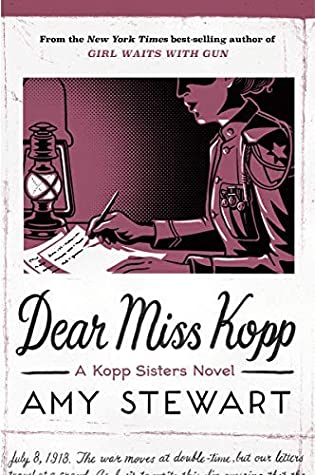
Title: Dear Miss Kopp (Kopp Sisters, #6)
Author: Amy Stewart
Publisher: Houghton Mifflin Harcourt
Publication date: January 12, 2021
Length: 320 pages
Genre: Historical fiction
Source: Review copy courtesy of the publisher and author
Rating:

Rating: 5 out of 5.

The indomitable Kopp sisters are tested at home and abroad in this warm and witty tale of wartime courage and camaraderie.

The U.S. has finally entered World War I and Constance is chasing down suspected German saboteurs and spies for the Bureau of Investigation while Fleurette is traveling across the country entertaining troops with song and dance. Meanwhile, at an undisclosed location in France, Norma is overseeing her thwarted pigeon project for the Army Signal Corps. When Aggie, a nurse at the American field hospital, is accused of stealing essential medical supplies, the intrepid Norma is on the case to find the true culprit.

The far-flung sisters—separated for the first time in their lives—correspond with news of their days. The world has irrevocably changed—will the sisters be content to return to the New Jersey farm when the war is over?

Told through letters, Dear Miss Kopp weaves the stories of real life women into a rich fiction brimming with the historical detail and humor that are hallmarks of the series, proving once again that “any novel that features the Kopp Sisters is going to be a riotous, unforgettable adventure” (Bustle).

The Kopp Sisters are back! In Dear Miss Kopp, we follow the sisters into war, as each of the characters has her own mission to follow, each serving the country in her own way during the years of World War I.

The sixth book in the series, Dear Miss Kopp is the first to be told exclusively through letters, which makes sense: Constance, Norma, and Fleurette find themselves on very separate paths, far from one another geographically, and they must rely on their letters to keep in touch and to continue to support each other as they always have, even from a distance.

Constance has started her work with the Bureau of Investigation (the early FBI), one of the only women serving as an agent. She uses her unique talents to chase down and apprehend saboteurs, and her adventures in this book illustrate the threats faced domestically during the war years.

Norma is in the thick of things in France, where she applies her prickly, stubborn ways to making sure her messenger pigeons are able to serve the US armed forces. Norma being Norma, she manages to rub just about everyone the wrong way, but is ultimately instrumental in solving a spy mystery in the small French village where she’s stationed.

And lovely youngest sister Fleurette is on the go, touring the country with a vaudeville act, entertaining soldiers at army bases all across the US. Fleurette too has her share of challenges, and she always adds a bit of levity to any situation.

As always, a Kopp Sisters book is an utter delight. I love seeing the sisters’ dynamics, and also getting to see them each in action, deploying their varied talents and fighting for the chance to make a difference in a man’s world. At this point in the series, I feel that we readers know the characters so well, and it’s a treat to see them in these new settings, standing up for what they believe in and making unique contributions to the war effort.

Through the sisters’ adventures in Dear Miss Kopp, we also get an inside look as aspects of World War I that don’t necessarily get a lot of attention, including the support efforts abroad, away from the front lines, the devastating war injuries suffered by the soldiers, and the intense work at home to combat sabotage aimed at impeding the war efforts.

As a whole, the Kopp Sisters books are wonderful, and I loved this new installment. Can’t wait for more!

_________________________________

The series so far:
Girl Waits With Gun
Lady Cop Makes Trouble
Miss Kopp’s Midnight Confessions
Miss Kopp Just Won’t Quit
Kopp Sisters on the March

Shelf Control #246: When the Emperor Was Divine by Julie Otsuka

Shelves final

Welcome to Shelf Control — an original feature created and hosted by Bookshelf Fantasies.

Shelf Control is a weekly celebration of the unread books on our shelves. Pick a book you own but haven’t read, write a post about it (suggestions: include what it’s about, why you want to read it, and when you got it), and link up! For more info on what Shelf Control is all about, check out my introductory post, here.

Want to join in? Shelf Control posts go up every Wednesday. See the guidelines at the bottom of the post, and jump on board!

Title: When the Emperor Was Divine
Author: Julie Otsuka
Published: 2002
Length: 144 pages

What it’s about (synopsis via Goodreads):

On a sunny day in Berkeley, California, in 1942, a woman sees a sign in a post office window, returns to her home, and matter-of-factly begins to pack her family’s possessions. Like thousands of other Japanese Americans they have been reclassified, virtually overnight, as enemy aliens and are about to be uprooted from their home and sent to a dusty internment camp in the Utah desert.

In this lean and devastatingly evocative first novel, Julie Otsuka tells their story from five flawlessly realized points of view and conveys the exact emotional texture of their experience; the thin-walled barracks and barbed-wire fences, the omnipresent fear and loneliness, the unheralded feats of heroism. When the Emperor Was Divine is a work of enormous power that makes a shameful episode of our history as immediate as today’s headlines.

How and when I got it:

I bought a used copy about 2 – 3 years ago.

Why I want to read it:

This book was a required summer reading assignment for my son right before his junior year of high school. No big surprise — he didn’t end up reading it. (I don’t think he’s clear on the meaning of “required”.) But once we had a copy in the house, I knew I’d need to read it eventually.

I’ve always been interested in learning more about the horrific treatment of Japanese Americans during WWII. I’ve read both historical and fictional accounts of the experiences of those sent to the internment camps. I know When the Emperor Was Divine is highly rated, although I don’t know anyone directly who’s read it.

I’m glad to have stumbled across our copy while looking for a Shelf Control book this week! I’m going to try to make it a priority in 2021.

Have you read this book? Would you want to?

Please share your thoughts!


__________________________________

Want to participate in Shelf Control? Here’s how:

  • Write a blog post about a book that you own that you haven’t read yet.
  • Add your link in the comments or link back from your own post, so I can add you to the participant list.
  • Check out other posts, and…

Have fun!

Book Review: To Have and To Hoax by Martha Waters

Title: To Have and To Hoax
Author: Martha Waters
Publisher: Atria
Publication date: April 7, 2020
Length: 367 pages
Genre: Historical fiction/romance
Source: Review copy courtesy of the publisher via NetGalley
Rating:

Rating: 3.5 out of 5.

In this fresh and hilarious historical rom-com, an estranged husband and wife in Regency England feign accidents and illness in an attempt to gain attention—and maybe just win each other back in the process.

Five years ago, Lady Violet Grey and Lord James Audley met, fell in love, and got married. Four years ago, they had a fight to end all fights, and have barely spoken since.

Their once-passionate love match has been reduced to one of cold, detached politeness. But when Violet receives a letter that James has been thrown from his horse and rendered unconscious at their country estate, she races to be by his side—only to discover him alive and well at a tavern, and completely unaware of her concern. She’s outraged. He’s confused. And the distance between them has never been more apparent.

Wanting to teach her estranged husband a lesson, Violet decides to feign an illness of her own. James quickly sees through it, but he decides to play along in an ever-escalating game of manipulation, featuring actors masquerading as doctors, threats of Swiss sanitariums, faux mistresses—and a lot of flirtation between a husband and wife who might not hate each other as much as they thought. Will the two be able to overcome four years of hurt or will they continue to deny the spark between them?

With charm, wit, and heart in spades, To Have and to Hoax is a fresh and eminently entertaining romantic comedy—perfect for fans of Jasmine Guillory and Julia Quinn. 

Needing a light-hearted read this week, I turned to an ARC that’s been on my to-read list since earlier this year. To Have and To Hoax by Martha Waters perfectly fit my mood, giving me a nice little break from reality by means of a Regency romance and a battle of wits.

Violet and James were a true love match, falling in love at first sight during Violet’s first season out in society, and marrying within four weeks of meeting. They enjoyed a loving, passionate first year together, and when they quarreled, they fought hard and then made up even harder.

But one year into their marriage, there was an argument that struck to the very core of their relationship and their trust in one another. In the four years since, Violet and James have lived in stony silence, neither willing to forgive or ask forgiveness, avoiding each other as much as possible.

This cold war stand-off is disturbed when Violet receives word that James has been gravely injured — although James has no idea that his friend has sent for Violet. When they meet, and Violet sees that James is both recovered and surprised that she’d been notified, years of anger boil to the surface.

In a game of one-up-manship, Violet decides to feign illness and make James suffer. He, in turn, sees through her game and treats her as an invalid, confining her to a sick room and making her miserable. When she suspects that he he knows the truth, he escalates matters by publicly flirting with another woman, yet Violet manages to turn even that scandalous situation to her own advantage.

Through it all, it’s absolutely clear that Violet and James still love one another, and just need a breakthrough (or a good shaking) to finally talk about their grievances and put them behind for good. There are plenty of fights, heavy doses of flirtation and teasing, a few good dances, proddings from friends, and some rather naughty encounters too.

It’s all great fun. Chapters alternate between Violet and James’s points of view, so we’re treated to both sides of the great divide between them and can see just how badly they’ve misunderstood and reacted to one another — but we also become aware well before the characters do that the love and passion between Violet and James are still there beneath the surface, just waiting to come out.

As a historical romance, To Have and To Hoax is very entertaining, and I was mostly convinced by the Regency society norms, manners, and settings. There are a few moments where more modern terminology jarred me out of the story (for example, a moment when Violet has thoughts about men’s “emotional intelligence”), but overall, I enjoyed this read.

A follow-up book featuring two secondary characters from To Have and To Hoax is due out in 2021 (To Love and To Loathe), and I will certainly want to read that too. Meanwhile, for a light romantic reading escape, check out To Have and To Hoax.

Shelf Control #242: Mrs. Everything by Jennifer Weiner

Shelves final

Welcome to Shelf Control — an original feature created and hosted by Bookshelf Fantasies.

Shelf Control is a weekly celebration of the unread books on our shelves. Pick a book you own but haven’t read, write a post about it (suggestions: include what it’s about, why you want to read it, and when you got it), and link up! For more info on what Shelf Control is all about, check out my introductory post, here.

Want to join in? Shelf Control posts go up every Wednesday. See the guidelines at the bottom of the post, and jump on board!

cropped-flourish-31609_1280-e1421474289435.png

Title: Mrs. Everything
Author: Jennifer Weiner
Published: 2019
Length: 416 pages

What it’s about (synopsis via Goodreads):

Do we change or does the world change us?

Jo and Bethie Kaufman were born into a world full of promise.

Growing up in 1950s Detroit, they live in a perfect “Dick and Jane” house, where their roles in the family are clearly defined. Jo is the tomboy, the bookish rebel with a passion to make the world more fair; Bethie is the pretty, feminine good girl, a would-be star who enjoys the power her beauty confers and dreams of a traditional life.

But the truth ends up looking different from what the girls imagined. Jo and Bethie survive traumas and tragedies. As their lives unfold against the background of free love and Vietnam, Woodstock and women’s lib, Bethie becomes an adventure-loving wild child who dives headlong into the counterculture and is up for anything (except settling down). Meanwhile, Jo becomes a proper young mother in Connecticut, a witness to the changing world instead of a participant. Neither woman inhabits the world she dreams of, nor has a life that feels authentic or brings her joy. Is it too late for the women to finally stake a claim on happily ever after?

How and when I got it:

I bought this book earlier this year, after its paperback release.

Why I want to read it:

First of all, the author: I haven’t read all of Jennifer Weiner’s books by a long shot, but I’ve loved the ones I’ve read!

Even more, I think the story sounds fabulous. I love a good 1960s setting in fiction, and the focus on women’s lives and how they interact with each other and with the major events of their era makes me really want to read this book.

(It doesn’t hurt either that there’s a Connecticut setting for at least part of the book — I’ve lived in San Francisco for a long time, but my a piece of my heart is still connected to my CT hometown!)

What do you think? Would you read this book?

Please share your thoughts!


__________________________________

Want to participate in Shelf Control? Here’s how:

  • Write a blog post about a book that you own that you haven’t read yet.
  • Add your link in the comments or link back from your own post, so I can add you to the participant list.
  • Check out other posts, and…

Have fun!

Book Review: The Once and Future Witches by Alix E. Harrow

Title: The Once and Future Witches
Author: Alix E. Harrow
Publisher: Orbit
Publication date: October 13, 2020
Length: 528 pages
Genre: Historical fiction/fantasy
Source: Review copy courtesy of the publisher via NetGalley

Rating: 5 out of 5.

In 1893, there’s no such thing as witches. There used to be, in the wild, dark days before the burnings began, but now witching is nothing but tidy charms and nursery rhymes. If the modern woman wants any measure of power, she must find it at the ballot box.

But when the Eastwood sisters–James Juniper, Agnes Amaranth, and Beatrice Belladonna–join the suffragists of New Salem, they begin to pursue the forgotten words and ways that might turn the women’s movement into the witch’s movement. Stalked by shadows and sickness, hunted by forces who will not suffer a witch to vote-and perhaps not even to live-the sisters will need to delve into the oldest magics, draw new alliances, and heal the bond between them if they want to survive.

There’s no such thing as witches. But there will be.

Alix E. Harrow’s debut novel, The Ten Thousand Doors of January, was one of my favorite reads last year, so it’s a pleasure to have another amazing experience with her newest book, The Once and Future Witches.

The Once and Future Witches takes place in 1893, in a world similar to our own, but with some key differences. Chief among these is the history of witchcraft — a plague and a purge some years earlier have resulted in the complete annihilation of witches or witchcraft, or so the men in power would like people to believe.

While the knowledge and power of witches seem to be lost, grandmothers and mothers still pass down to their daughters the little words and ways that make life easier, from simple spells to help with cleaning or harvest to healing rituals and ways to escape from someone who means you ill. In this world, what we’d call fairy tales are known as witch tales, and they’re regarded as simple folklore, merely children’s entertainment. But for the women who tell the stories, they know there’s something more hidden in the simple words and songs.

Our main characters are the three Eastwood sisters — Beatrice Belladonna, Agnes Amaranth, and James Juniper. While raised on a family farm, they now as adults find themselves drawn together in the town of New Salem after a long separation caused by their abusive father.

When the three sisters are reunited, Bella inadvertently triggers a momentary return of the lost ways, creating both a public scare and an inspiration for women who long for more. The story is set at a time when women are rallying for the right to vote, and workers’ rights are also front and center in the wake of awful mill and factory conditions and the abject poverty of New Salem’s underclass.

The Eastwood sisters soon lead a growing underground movement of women who are willing to risk everything to rediscover their own power and make a place for themselves in their world. But there are forces working against them, who will use whatever means necessary to silence their voices and make sure they keep to their approved places.

This is a powerful, uplifting, and complicated read. At over 500 pages, the story is intricate, with ample detail on the world of New Salem, the sisters’ histories, the witch-tales handed down, and the allies and friends they make in the battle for their rights and their lives. The writing is beautiful, with magical realism in its imagery mixed with the brutality of the slums and factories and the tired lives of the women looking for more.

I love how the quest to reclaim witchcraft melds so well with the fight for the vote, for equal rights and better working conditions. The characters here are distinct and memorable — upright librarian Bella and her unexplored passions, independent Agnes and her devotion to protecting what’s hers, Juniper with her fierce, feral nature and her readiness to fight. The sisters are amazing, as are the other women (and one man) who populate their story.

Likewise, the relationships between the sisters is gorgeously depicted. There is a lifetime’s worth of hurt and betrayal and resentment between them, but beneath all that, there’s also the bonds of sisterhood and love. As truths emerge that shed light on misconceptions about their shared pasts, they have to deal with their bitterness and pain in order to wage their fight for power and freedom.

I can’t say enough good things about The Once and Future Witches. It has to be read and experienced to really get what it’s all about. While it took me a few tries to get past the early chapters, I think that was mostly due to my distracted mind rather than the book itself. Once I shut out the world and really focused, I just couldn’t put it down.

A perfect October read. Don’t miss it!

Shelf Control #236: The Gown by Jennifer Robson

Shelves final

Welcome to Shelf Control — an original feature created and hosted by Bookshelf Fantasies.

Shelf Control is a weekly celebration of the unread books on our shelves. Pick a book you own but haven’t read, write a post about it (suggestions: include what it’s about, why you want to read it, and when you got it), and link up! For more info on what Shelf Control is all about, check out my introductory post, here.

Want to join in? Shelf Control posts go up every Wednesday. See the guidelines at the bottom of the post, and jump on board!

cropped-flourish-31609_1280-e1421474289435.png

Title: The Gown
Author: Jennifer Robson
Published: 2018
Length: 371 pages

What it’s about (synopsis via Goodreads):

“Millions will welcome this joyous event as a flash of color on the long road we have to travel.”—Sir Winston Churchill on the news of Princess Elizabeth’s forthcoming wedding

London, 1947: Besieged by the harshest winter in living memory, burdened by onerous shortages and rationing, the people of postwar Britain are enduring lives of quiet desperation despite their nation’s recent victory. Among them are Ann Hughes and Miriam Dassin, embroiderers at the famed Mayfair fashion house of Norman Hartnell. Together they forge an unlikely friendship, but their nascent hopes for a brighter future are tested when they are chosen for a once-in-a-lifetime honor: taking part in the creation of Princess Elizabeth’s wedding gown.

Toronto, 2016: More than half a century later, Heather Mackenzie seeks to unravel the mystery of a set of embroidered flowers, a legacy from her late grandmother. How did her beloved Nan, a woman who never spoke of her old life in Britain, come to possess the priceless embroideries that so closely resemble the motifs on the stunning gown worn by Queen Elizabeth II at her wedding almost seventy years before? And what was her Nan’s connection to the celebrated textile artist and holocaust survivor Miriam Dassin?

With The Gown, Jennifer Robson takes us inside the workrooms where one of the most famous wedding gowns in history was created. Balancing behind-the-scenes details with a sweeping portrait of a society left reeling by the calamitous costs of victory, she introduces readers to three unforgettable heroines, their points of view alternating and intersecting throughout its pages, whose lives are woven together by the pain of survival, the bonds of friendship, and the redemptive power of love.

How and when I got it:

I bought a copy in January 2019.

Why I want to read it:

I read so many stellar reviews when this book first came out. I don’t always love dual timeline historical fiction, but the synopsis for this book really intrigued me. After watching seasons 1 and 2 of The Crown, I’m very interested in learning more about Queen Elizabeth’s royal wedding. This novel’s focus on the people behind the scenes of the wedding preparations makes this sound like a really special read.

Plus, this is a good reminder for me to get caught up on The Crown season 3 before season 4 is released in November!

What do you think? Would you read this book?

Please share your thoughts!


__________________________________

Want to participate in Shelf Control? Here’s how:

  • Write a blog post about a book that you own that you haven’t read yet.
  • Add your link in the comments or link back from your own post, so I can add you to the participant list.
  • Check out other posts, and…

Have fun!

Book Review: Fools and Mortals by Bernard Cornwell

Title: Fools and Mortals
Author: Bernard Cornwell
Publisher: Harper Collins
Publication date: October 19, 2017
Length: 384 pages
Genre: Historical fiction
Source: Library
Rating:

Rating: 5 out of 5.

New York Times bestselling author Bernard Cornwell makes a dramatic departure with this enthralling, action-packed standalone novel that tells the story of the first production of A Midsummer’s Night Dream—as related by William Shakespeare’s estranged younger brother

Lord, what fools these mortals be . . .

In the heart of Elizabethan England, Richard Shakespeare dreams of a glittering career in one of the London playhouses, a world dominated by his older brother, William. But he is a penniless actor, making ends meet through a combination of a beautiful face, petty theft and a silver tongue. As William’s star rises, Richard’s onetime gratitude is souring and he is sorely tempted to abandon family loyalty.

So when a priceless manuscript goes missing, suspicion falls upon Richard, forcing him onto a perilous path through a bawdy and frequently brutal London. Entangled in a high-stakes game of duplicity and betrayal which threatens not only his career and potential fortune, but also the lives of his fellow players, Richard has to call on all he has now learned from the brightest stages and the darkest alleyways of the city. To avoid the gallows, he must play the part of a lifetime . . . .

Showcasing the superb storytelling skill that has won Bernard Cornwell international renown, Fools and Mortals is a richly portrayed tour de force that brings to life a vivid world of intricate stagecraft, fierce competition, and consuming ambition. 

Don’t you just love when a book takes you by surprise and ends up becoming a favorite?

Fools and Mortals is my book group’s pick for September, and I just wasn’t feeling enthusiastic about reading it. My impression was that it would be a dry read that I’d have to work to get into, and I just wasn’t in the mood. But, being a responsible book club member (ha!), I decided to give it a go.

As you can tell from the 5-star rating, I loved it. Once I started, I just couldn’t put it down. So let me tell you more about it.

Fools and Mortals is a story about William Shakespeare’s acting troupe at the Theatre in London, told through the perspective of his younger brother Richard. Richard ran away from home in Stratford as a young teen to escape a cruel apprenticeship, but his brother isn’t exactly warm and welcoming.

A very lovely-looking young man, by age 21 Richard has spent years as a player at the Theatre, although not a full member (Sharer) with a stake in the earnings. When he performs, he earns money. When there’s no part for him, or when there are no performances due to bad weather, he gets nothing. Richard lives in a dingy boarding house, constantly threatened with being thrown out if he can’t pay his back rent, and resorts to petty thievery to keep from starving.

On stage, he specializes in women’s parts, but he wants to be taken seriously. He yearns to be allowed to grow up, cut his hair, grow a beard, and take on the significant male roles that will allow him greater status as an actor. But Will doesn’t seem to have any interest in his brother’s goals, and when he finally promises him a man’s role, there’s still a trick involved that means Richard will end up playing a woman once again.

Meanwhile, there’s intrigue and action afoot. Will has earned a commission to write a play to be performed at the wedding of the Lord Chamberlain’s daughter — the play that will become A Midsummer Night’s Dream. Will is also working on an Italian play, which will be Romeo and Juliet.

But rival companies are also building huge theaters, and original scripts are invaluable in the theater world. If another company can get their hands on one of Will’s plays, they’ll be able to perform it and Will will have no way to get it back or claim it.

So when the new scripts go missing, there’s plenty of suspicion, and Richard is one of those accused of stealing the scripts in order to make some needed money. It’s up to Richard to get them back, but doing so is likely the most dangerous thing he’s ever done.

I won’t go further into the plot itself, but trust me — it’s fascinating! I loved the characters and the behind the scenes look at how a play like A Midsummer Night’s Dream came into being. Through Fools and Mortals, we get to see the complicated business of patronage and protection, the terrifying power of the Persuivants (known as Percies) — the vehemently Puritanical force who have the power to arrest and convict anyone suspected of heresy — as they threaten the players, and the deadly serious competition and scheming related to gaining and keeping players and scripts.

William Shakespeare himself comes off as cold and heartless when it comes to his brother, but of course, we do get to see his brilliance as well. I was enthralled by the descriptions of how the players learn their parts, figure out the staging, interact with their audiences, and more.

Fools and Mortals reminded me of the (sadly) short-lived TV series Will that was on TNT a few years ago. Will was a little over-the-top at times, but the parts that focused on the players and the productions were terrific, and having seen the show, I was better able to visualize some of what was going on in Fools and Mortals.

This book was such a treat! So thank you, once again, to my book group, for getting me to read a book that I probably would have completely missed otherwise.

If you enjoy Shakespeare, historical fiction, the Elizabethan era, theatrical history, or really, just plain good writing, check out Fools and Mortals!

Shelf Control #232: The Guns of the South by Harry Turtledove

Shelves final

Welcome to Shelf Control — an original feature created and hosted by Bookshelf Fantasies.

Shelf Control is a weekly celebration of the unread books on our shelves. Pick a book you own but haven’t read, write a post about it (suggestions: include what it’s about, why you want to read it, and when you got it), and link up! For more info on what Shelf Control is all about, check out my introductory post, here.

Want to join in? Shelf Control posts go up every Wednesday. See the guidelines at the bottom of the post, and jump on board!

cropped-flourish-31609_1280-e1421474289435.png

Title: The Guns of the South
Author: Harry Turtledove
Published: 1992
Length: 528 pages

What it’s about (synopsis via Goodreads):

January 1864 –General Robert E. Lee faces defeat. The Army of Northern Virginia is ragged and ill-equipped. Gettysburg has broken the back of the Confederacy and decimated its manpower.

Then, Andries Rhoodie, a strange man with an unplaceable accent, approaches Lee with an extraordinary offer. Rhoodie demonstrates an amazing rifle: Its rate of fire is incredible, its lethal efficiency breathtaking–and Rhoodie guarantees unlimited quantitites to the Confederates.

The name of the weapon is the AK-47….

“It is absolutely unique–without question the most fascinating Civil War novel I have ever read.” –Professor James M. McPherson – Pultizer Prize winning Battle Cry of Freedom

How and when I got it:

I picked up a copy at a library sale, probably about 5 years ago.

Why I want to read it:

If you’re thinking this is an odd choice for me, you’re absolutely correct. I’m not a fan of weaponry or reading about battle strategies. So why would I have this book on my shelves?

It’s a personal story.

My father, age 88, has been living in a nursing home for the past several years. In his earlier retirement, after a lifetime of rarely reading, he suddenly became a voracious reader, picking up historical novels, personal stories, crime thrillers, and more. But, more recently, his eyesight and his cognitive skills have both been on the decline, and he’s no longer able to read.

The Guns of the South is a book that he read at least 10 years ago, and I remember how excited he was to tell me about it at the time. Now, when I visit him (only remotely these days), he still brings up this book every so often. He doesn’t read at this point, but whenever the topic gets around to books, he gets really enthusiastic about telling me about The Guns of the South and what a great read it was. Sure, each time he thinks he’s telling me about it for the first time, but that’s okay. I’m always impressed by how much of the plot and details he’s retained.

Do I want to read this book? If it were just a question of my own tastes in fiction, then I’d probably skip it. But knowing how much this book fired up my dad’s imagination, I want to read it after all. Even if it doesn’t mean much to him at this point, I think it’ll make me happy to know we’ve shared this experience.

What do you think? Would you read a book that might not appeal to you on its own, but has special meaning to a loved one? 

Please share your thoughts!


__________________________________

Want to participate in Shelf Control? Here’s how:

  • Write a blog post about a book that you own that you haven’t read yet.
  • Add your link in the comments or link back from your own post, so I can add you to the participant list.
  • Check out other posts, and…

Have fun!

Shelf Control #228: Enemy Women by Paulette Jiles

Shelves final

Welcome to Shelf Control — an original feature created and hosted by Bookshelf Fantasies.

Shelf Control is a weekly celebration of the unread books on our shelves. Pick a book you own but haven’t read, write a post about it (suggestions: include what it’s about, why you want to read it, and when you got it), and link up! For more info on what Shelf Control is all about, check out my introductory post, here.

Want to join in? Shelf Control posts go up every Wednesday. See the guidelines at the bottom of the post, and jump on board!

cropped-flourish-31609_1280-e1421474289435.png

Title: Enemy Women
Author: Paulette Jiles
Published: 2002
Length: 352 pages

What it’s about (synopsis via Goodreads):

For the Colleys of southeastern Missouri, the War between the States is a plague that threatens devastation, despite the family’s avowed neutrality. For eighteen-year-old Adair Colley, it is a nightmare that tears apart her family and forces her and her sisters to flee.

The treachery of a fellow traveler, however, brings about her arrest, and she is caged with the criminal and deranged in a filthy women’s prison. But young Adair finds that love can live even in a place of horror and despair. Her interrogator, a Union major, falls in love with her and vows to return for her when the fighting is over. Before he leaves for battle, he bestows upon her a precious gift: freedom.

Now an escaped “enemy woman,” Adair must make her harrowing way south buoyed by a promise…seeking a home and a family that may be nothing more than a memory. 

How and when I got it:

I picked up a copy at a library sale a few years ago.

Why I want to read it:

After reading News of the World last week and absolutely loving it, I was surprised and happy to realize that I had another book by Paulette Jiles already on my shelves! Isn’t it strange when that happens? I’d completely forgotten that I owned this one.

The writing in News of the World was so gorgeous, and it made me very interested in reading more of her work. From what I understand, there’s some cross-over between that book and Enemy Women, with a character from News of the World appearing here as well (I think).

I have my eye on at least one of Paulette Jiles’s other backlist books too, as well as her newest release (Simon the Fiddler). I love finding a new-to-me author whose writing just sings to me!

What do you think? Would you read this book? 

Please share your thoughts!


__________________________________

Want to participate in Shelf Control? Here’s how:

  • Write a blog post about a book that you own that you haven’t read yet.
  • Add your link in the comments or link back from your own post, so I can add you to the participant list.
  • Check out other posts, and…

Have fun!