Book Review: California Golden by Melanie Benjamin

Title: California Golden
Author: Melanie Benjamin
Publisher: Delacorte Press
Publication date: August 8, 2023
Length: 368 pages
Genre: Historical fiction
Source: Review copy courtesy of the publisher via NetGalley
Rating:

Rating: 3.5 out of 5.

Two sisters navigate the turbulent, euphoric early days of California surf culture in this dazzling saga of ambition, sacrifice, and longing for a family they never had, from the New York Times bestselling author of The Aviator’s Wife

Southern California, 1960s: endless sunny days surfing in Malibu, followed by glittering neon nights at Whisky A-Go-Go. In an era when women are expected to be housewives, Carol Donelly is breaking the mold as a legendary female surfer struggling to compete in a male-dominated sport–and her daughters, Mindy and Ginger, bear the weight of her unconventional lifestyle.

The Donnelly sisters grow up enduring their mother’s absence–physically, when she’s at the beach, and emotionally, the rare times she’s at home. To escape questions about Carol’s whereabouts–and chase their mom’s elusive affection–they cut school to spend their days in the surf. From her first time on a board, Mindy shows a natural talent, but Ginger, two years younger, feels out of place in the water.

As they grow up and their lives diverge, Mindy and Ginger’s relationship ebbs and flows. Mindy finds herself swept up in celebrity, complete with beachside love affairs, parties at the Playboy Club, and USO tours to Vietnam. Meanwhile, Ginger–desperate for a community of her own–is tugged into the vibrant counterculture of drugs and cults. Through it all, their sense of duty to each other survives, as the girls are forever connected by the emotional damage they carry from their unorthodox childhood.

A gripping, emotional story set at a time when mothers were expected to be Donna Reed, not Gidget, California Golden is an unforgettable novel about three women living in a society that was shifting as tempestuously as the breaking waves.

Content warning: Parental neglect, child abandonment, partner abuse, cults, violence.

In California Golden, a legacy of neglectful parenting leads sisters Mindy and Ginger to the Southern California surf culture of the 1960s. Ignored and starved for affection by their mother Carol, whose own dreams were cut short by an unplanned pregnancy and the marriage that followed, the sisters throw themselves into surfing as a way to follow their mother and make sure she doesn’t abandon them completely. But while Mindy takes to surfing almost instinctively and displays a huge talent for it, Ginger struggles to keep up.

Over time, Mindy becomes a champion surfer, a surfing stand-in for the stars of beach party movies, and a spokesmodel for sponsors keen to have her sunny good looks and popularity attached to their brands. As Mindy becomes more involved with the club and music scene, Ginger instead gets caught up in the personal aura of a self-proclaimed “Surf God”, a charismatic beach bum who deplores surfing’s commercialization and who demands absolute devotion.

As years go by, Mindy and Ginger are pulled farther and farther apart by their different worlds — Mindy immersed in celebrity and stardom, while Ginger falls deeper into an abusive, all-encompassing relationship that leaves her powerless and penniless.

Meanwhile, Carol seems to live in her own world, always resentful of the sacrifices she had to make for the sake of motherhood, and wanting more than anything to reclaim her own body and her own passions.

With the Vietnam War ramping up and the surfing craze finally passing its peak, the lives of these three women intersect again and again, not always in ways that they’d expected or wanted.

Through these characters, California Golden shows the incredibly strong pressure (and hypocritical stances) imposed on women of the late 1950s and 1960s — to fit in, to become wives and mothers, to put men and children first, and to always do it with a smile. Carol is a hard person to sympathize with, but when later in the book, we get more of the story of her younger years, it’s clear that she faced a no-win situation where every last ounce of agency was stripped away from her. It’d hard to feel sorry for a neglectful mother, but at least we get to see how she ended up where she did.

The dynamic between Mindy and Ginger is complicated and sad, and it’s excruciating to see Ginger become pulled further and further into abuse, neglect, and a cult-like life revolving around drug smuggling and obedience.

The depiction of SoCal surf culture is evocative, although Mindy’s time in the music and celebrity life of the Sunset Strip feels somewhat repetitive of other books set in that era — the surf elements feel new and fresh, but the rest less so.

I appreciated the web of relationships and connections, but would have liked certain romantic connections to have more time to grow and breathe, and a conflict over racism isn’t especially well developed. I got the sense at various points that this book was trying to cram in too many iconic elements of the 1960s, sometimes to the point of overwhelming the central focus on the sisters and their mother.

The chapters focused on Mindy and Ginger’s childhood are so hard to read, so that when we do finally get the opportunity late in the book to learn about events from Carol’s perspective, it’s too late to salvage much in the way of good feelings toward her… but at least we get the chance to understand, even if we don’t condone or feel much empathy.

Reading California Golden, it’s impossible not to be grateful for reliable birth control and freedom of choice, endangered as that may be. If you want to convince someone that pregnancy and childbirth are traumatic, you might want to give them a copy of this book.

After a slow start (hampered by some weird chronology early on), the book begins to pick up steam — so while I wasn’t sure about it at first, by the midpoint, I was hooked and couldn’t put the book down. While I eventually got very caught up in the characters’ lives, I felt the ending tried to shoe-horn in too much, and left me with questions that I couldn’t ignore, despite the deliberate emotional fireworks.

Overall, I found California Golden entertaining, but questioned some of the plot choices, and didn’t feel that certain 1960s touchpoints added anything new or fresh to the book. It’s an interesting work of historical fiction, and for anyone interested in the era, it’s worth checking out.
Graphic Reaction: A Fire Story by Brian Fies

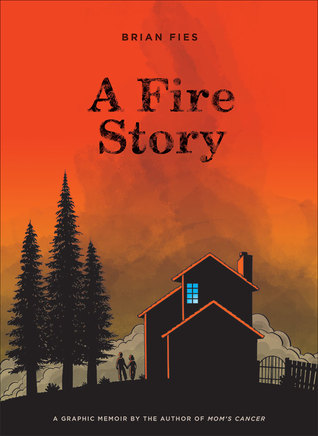
Early morning on Monday, October 9, 2017, wildfires burned through Northern California, resulting in 44 fatalities. In addition, 6,200 homes and 8,900 structures were destroyed. Author Brian Fies’s firsthand account of this tragic event is an honest, unflinching depiction of his personal experiences, including losing his house and every possession he and his wife had that didn’t fit into the back of their car. In the days that followed, as the fires continued to burn through the area, Brian hastily pulled together A Fire Story and posted it online—it immediately went viral. He is now expanding his original webcomic to include environmental insight and the fire stories of his neighbors and others in his community. A Fire Story is an honest account of the wildfires that left homes destroyed, families broken, and a community determined to rebuild.

Wow. If you’re looking for a powerful graphic novel to read, this is the one.

The 2017 fires in Northern California were absolutely devastating. I live in San Francisco, and while the fires themselves never came close to our city, the air was full of smoke for weeks — schools ending up closing, people were warned to stay inside and to wear masks while outside, and everyone had headaches and coughs from the lousy air quality. But of course, this is nothing compared to the suffering of those who perished as well as the thousands of people who lost their homes.

Author Brian Fies lived through it. A Fire Story is his memoir of the fire, starting with him and his wife waking up to red skies and the smell of smoke, grabbing a few items on their way out the door, and evacuating along with all of their neighbors — then returning the next morning to find that the entire neighborhood was just gone.

The author initially drew/wrote some of these pages in the moment, using sharpies and a pad of paper, to capture and process the experience as it unfolded. From the book’s notes, I understand that these images were initially shared online and went viral. He’s now expanded from the initial drawings to convey a more encompassing picture of what he and others went through. Sprinkled throughout are the “fire stories” of others who lost their homes, how they dealt with their losses, and how they’re still dealing with rebuilding and recovering. This is incredible stuff, truly.

Brian Fies shares his own experiences with candor and grace, and even some humor, as well as conveying the bigger picture of the reasons for the calamity and the scope of the loss — and manages to keep a focus on the human impact that can be lost when dealing with a disaster of this magnitude. We may hear about thousands of people losing their homes, but as the author points out in this excellent book, each of those thousands has a unique, individual story to tell.

For a taste of the book, check out:

From: A Santa Rosa Cartoonist’s ‘Fire Story’ Comes to Life
Kelly Whalen and Farrin Abbott, Producers for KQED Arts
Video courtesy KQED Arts


The author’s original postings: http://brianfies.blogspot.com/2017/10/a-fire-story-complete.html

_________________________________________

The details:

Title: A Fire Story
Author: Brian Fies
Publisher: Harry N. Abrams
Publication date: March 5, 2019
Length: 160 pages
Genre: Graphic novel
Source: Library

Take A Peek Book Review: Golden State by Ben H. Winters

“Take a Peek” book reviews are short and (possibly) sweet, keeping the commentary brief and providing a little peek at what the book’s about and what I thought. My newest “take a peek” book:

Synopsis:

(via Goodreads)

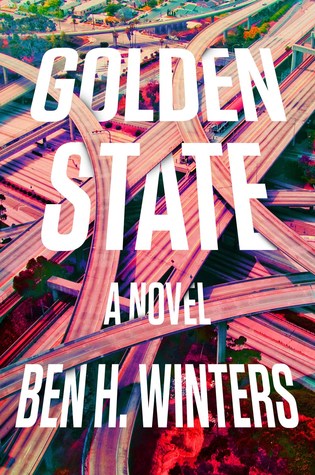
A shocking vision of our future that is one part Minority Report and one part Chinatown.

Lazlo Ratesic is 54, a 19-year veteran of the Speculative Service, from a family of law enforcement and in a strange alternate society that values law and truth above all else. This is how Laz must, by law, introduce himself, lest he fail to disclose his true purpose or nature, and by doing so, be guilty of a lie.

Laz is a resident of The Golden State, a nation resembling California, where like-minded Americans retreated after the erosion of truth and the spread of lies made public life, and governance, increasingly impossible. There, surrounded by the high walls of compulsory truth-telling, knowingly contradicting the truth–the Objectively So–is the greatest possible crime. Stopping those crimes, punishing them, is Laz’s job. In its service, he is one of the few individuals permitted to harbor untruths–to “speculate” on what might have happened in the commission of a crime.

But the Golden State is far less a paradise than its name might suggest. To monitor, verify, and enforce the Objectively So requires a veritable panopticon of surveillance, recording, and record-keeping. And when those in control of the truth twist it for nefarious means, the Speculators may be the only ones with the power to fight back.

My Thoughts:

Golden State is a weird mind-f*ck of a novel, and that’s what makes it so wonderful. In a society where adherence to the Objectively So is the primary goal, the crime of telling a lie can lead to lengthy imprisonment or even exile, a fate assumed to be equivalent to death. Law enforcement agents like Lazlo can feel when a lie has been told, and their ability to sense anomalies leads them in pursuit of those who attempt to subvert the State with their untruths. People greet each other on the street by stating absolute facts (“A cow has four stomachs.” “A person has one.”), and the ringing of clock bells leads to streams of statements about the time, hour after hour.

I loved the explanations for the rules and moral certainties of the Golden State, which we’re led to believe has been in existence for several generations already as of the start of this story:

You go back far enough in history, ancient history, and you find a time when people were never taught to grow out of it, when every adult lied all the time, when people lied for no reason or for the most selfish possible reasons, for political effect or personal gain. They lied and they didn’t just lie; they built around themselves whole carapaces of lies. They built realities and sheltered inside them. This is how it was, this is how it is known to have been, and all the details of that old dead world are known to us in our bones but hidden from view, true and permanent but not accessible, not part of our vernacular.

It was this world but it was another world and it’s gone. We are what’s left. The calamity of the past is not true, because it is unknown. There could only be hypotheses, and hypotheses are not the truth. So we leave it blank. Nothing happened. Something happened. It is gone.

Golden State is a book that I’ll need to revisit, probably a few times. The writing is spot-on, conveying the strange realities of its world from an insider’s perspective, immersing the reader in the weird double-speak of Speculators and Small Infelicities and Acknowledged Experts — it’s strange and alien, yet we inhabit it through the characters for whom it’s all just part of the normal lives they lead.

Reading Golden State is a treat. I wanted to stop to highlight passages practically everywhere — there’s so much clever wordplay and inversion of our understanding of what things mean. It’s a great read, highly recommended. Now I need to get back to the other books on my shelves by this author, because I’m pretty sure I’m going to love them.

_________________________________________

The details:

Title: Golden State
Author: Ben H. Winters
Publisher: Mulholland Books
Publication date: January 22, 2019
Length: 319 pages
Genre: Speculative fiction
Source: Review copy courtesy of the publisher via NetGalley

Take A Peek Book Review: The Dreamers by Karen Thompson Walker

“Take a Peek” book reviews are short and (possibly) sweet, keeping the commentary brief and providing a little peek at what the book’s about and what I thought.

Synopsis:

(via Goodreads)

In an isolated college town in the hills of Southern California, a freshman girl stumbles into her dorm room, falls asleep—and doesn’t wake up. She sleeps through the morning, into the evening. Her roommate, Mei, cannot rouse her. Neither can the paramedics who carry her away, nor the perplexed doctors at the hospital. Then a second girl falls asleep, and then another, and panic takes hold of the college and spreads to the town. As the number of cases multiplies, classes are canceled, and stores begin to run out of supplies. A quarantine is established. The National Guard is summoned.

Mei, an outsider in the cliquish hierarchy of dorm life, finds herself thrust together with an eccentric, idealistic classmate. Two visiting professors try to protect their newborn baby as the once-quiet streets descend into chaos. A father succumbs to the illness, leaving his daughters to fend for themselves. And at the hospital, a new life grows within a college girl, unbeknownst to her—even as she sleeps. A psychiatrist, summoned from Los Angeles, attempts to make sense of the illness as it spreads through the town. Those infected are displaying unusual levels of brain activity, more than has ever been recorded. They are dreaming heightened dreams—but of what?

Written in gorgeous prose, The Dreamers is a breathtaking novel that startles and provokes, about the possibilities contained within a human life—in our waking days and, perhaps even more, in our dreams.

My Thoughts:

While I love the premise of this book, the execution screams “literary fiction” rather than “science fiction”, and that may be why The Dreamers didn’t thrill me in the end. It’s an awesome set-up: A mysterious illness begins spreading through a remote college town, with no known cause or cure. People infected simply fall asleep, and stay that way. Without medical care, they’d die of malnutrition and dehydration, and soon the hospitals and emergency triage centers are overflowing with these strange sleepers. As the weeks drag on, those who remain awake find themselves trapped within the quarantined area, living in an eerie world of deserted homes and stray dogs.

Should be exciting, right? And yet, the narrative isn’t focused on the epidemiology or the science, but rather on the individuals, their relationships, and their meditations on the meaning of life, connection, time, and reality. How do we know that what we think is reality isn’t really a dream? How do we know that our dreams aren’t an alternate reality? When does the passing of time represent a loss? Can we mourn what we’ve never had? Is it more ethical to save many strangers than to save one person that you love? On and on.

While there are some interesting developments and characters, the metaphor-heavy presentation didn’t particularly work for me. As with this author’s previous novel (The Age of Miracles), I felt that a nifty sci-fi scenario became the canvas for a meditative literary piece, and that just wasn’t what I was hoping for. Perhaps this author just isn’t for me. I don’t regret reading The Dreamers, but I can’t help wondering how the story might have gone if written by a more action-driven, science-driven sci-fi writer.

_________________________________________

The details:

Title: The Dreamers
Author: Karen Thompson Walker
Publisher: Random House
Publication date: January 15, 2019
Length: 320 pages
Genre: Science fiction/comtemporary fiction
Source: I won this book in a Goodreads giveaway

**Save

Save

Save

Save

Save

Save

Save