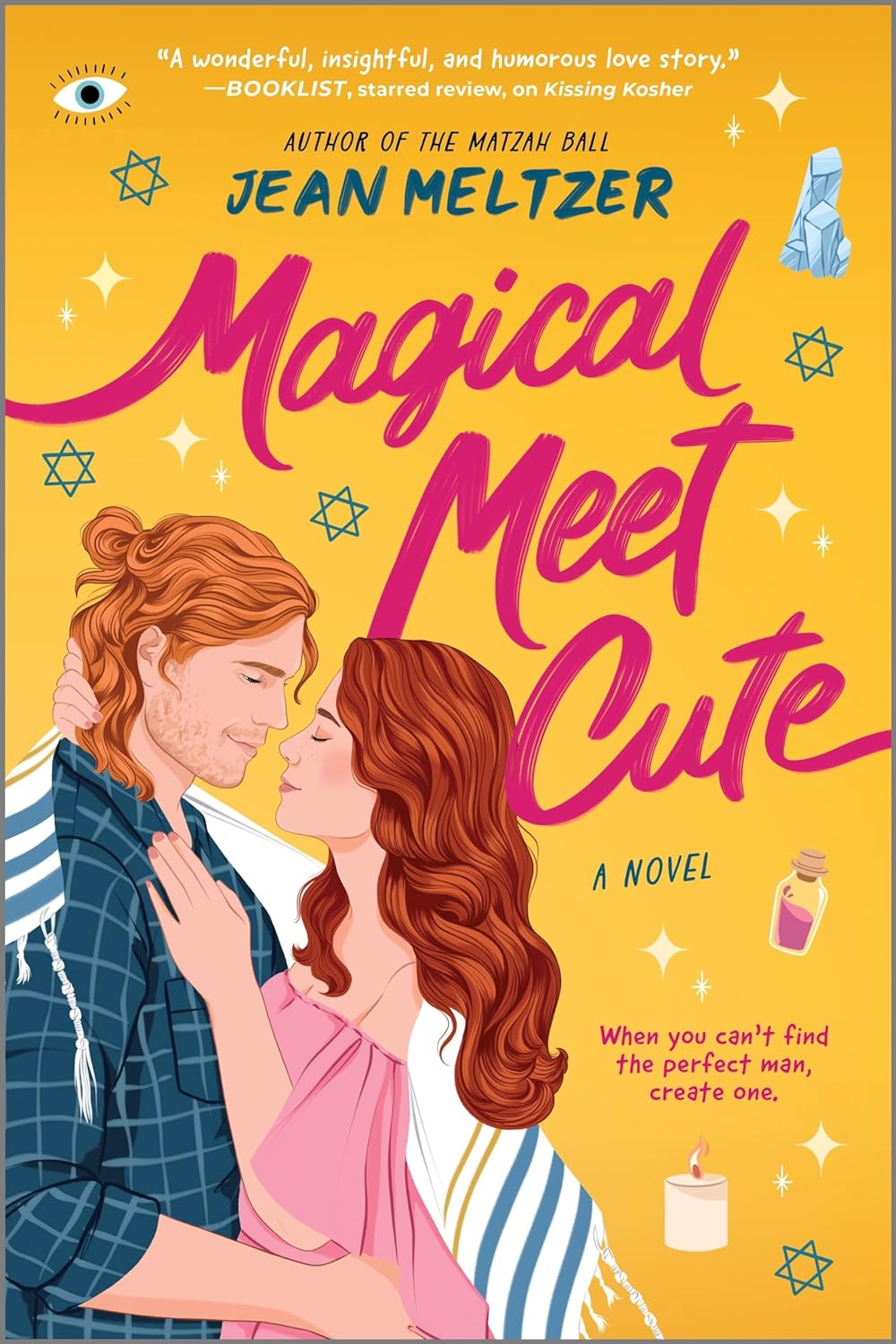
Book Review: Magical Meet Cute by Jean Meltzer

Title: Magical Meet Cute
Author: Jean Meltzer
Publisher: Mira
Publication date: August 27, 2024
Length: 400 pages
Genre: Contemporary romance
Source: Library
Rating:

Rating: 3 out of 5.

Is he the real deal…or did she truly summon a golem?

Faye Kaplan used to be engaged. She also used to have a successful legal practice. But she much prefers her new life as a potter in Woodstock, New York. The only thing missing is the perfect guy.

Not that she needs one. She’s definitely happy alone.

That is, until she finds her town papered with anti-Semitic flyers after yet another failed singles event at the synagogue. Desperate for comfort, Faye drunkenly turns to the only thing guaranteed to soothe her—pottery. A golem protector is just what her town needs…and adding all the little details to make him her ideal man can’t hurt, right?

When a seriously hot stranger mysteriously turns up the next day, Greg seems too good to be true—if you ignore the fact that Faye hit him with her bike. And that he subsequently lost his memory…

But otherwise, the man checks Every. Single. Box. Causing Faye to wonder if Greg’s sudden and spicy appearance might be anything but a coincidence.

In this Jewish-themed romance, Faye Kaplan enjoys her life in the close-knit community of Woodstock, New York. After her fiance dumped her several years earlier, she sold her Manhattan legal practice, moved to a quiet town, and rediscovered her love of ceramics and creating.

A self-described “Jewitch”, she also discovered Jewish magical rituals, which she imbues with her own sense of creativity and spirituality. She’s still hurt and lonely after her break-up, and carries deeper pain stemming from growing up with an abusive mother, who eventually injured her in such a way that her dreams of pursuing her artwork professionally were shattered. Mostly, though, Faye is happy with her circle of close friends and a supportive community.

Her sense of safety is shattered when anti-Semitic flyers appear in town. Suddenly, Faye feels targeted, even in her own home. After a night of self-soothing via wine and magical rituals, she’s ready to reengage with the town’s rally against hate — and then hits a stranger with her bike, landing him in the hospital.

The stranger is tall, muscular, gorgeous, and red-haired, and due to the accident, has a head injury and amnesia. His speech functions are impaired, and he doesn’t know who he is, nor does he have any ID on him. As the hospital prepares to send him to a shelter upon discharge, Faye feels it’s her responsibility to take care of the man she injured, and against the advice of everyone who cares for her, she decided to bring him back to her home until he recovers.

Somewhat randomly, he chooses the name Greg, and as he regains his powers of speech, he and Faye get to know one another. He seems to be the perfect man — he helps her with anything she needs, he plays Scrabble with her, he reads her books, he likes her temperamental dog. But as Faye realizes just how perfectly he matches everything she might want in a man, she thinks back to that wine-soaked night of magic… and wonders if Greg is actually real, or whether she accidentally created a golem, a mythical protector of Jewish legend, called forth to protect the Jewish community in times of need.

As the plot moves forward, we see a growing connection between Faye and Greg, increasing threats from the anti-Semitic element hidden within the town, and Faye’s confusion about who (or what) Greg really is. There’s a lot to like about this quirky romance, but I think the author is trying to do too much, and Faye’s belief that Greg is truly a golem strains all credulity.

The sense of community in Magical Meet Cute is lovely. It’s easy to see why this town has become a refuge and a place of safety for Faye, a woman not truly recovered from childhood trauma and heartbreak. I enjoyed seeing her close friends and the way the people of the town come together in a crisis.

The storyline about anti-Semitism has the potential to be powerful, but shoe-horned into a romance, it feels a bit discordant, especially once Greg decides that the best way to protect Faye is to infiltrate the local cell of anti-Semites and figure out who’s responsible for their threats and violence. Greg’s investigatory scenes are tonally a mismatch for the rest of the book, where the romantic and mystical elements are emphasized.

Faye’s belief that Greg is not a real person, but is in fact a golem… well, it’s just so out-there that I couldn’t help engaging in some heavy-duty eye-rolling. There’s a scene of Faye trying to banish the golem that’s perhaps intended to be funny… but just made me cringe. Hard.

This is now the 3rd book I’ve read by Jean Meltzer, and while all three have been enjoyable in many ways, I’ve realized that the author’s approach to humor just isn’t a good match for me. In each of the books, there are scenes that are clearly meant to be funny, usually involving some slapstick or physical comedy, but they fall flat and feel embarrassing, not silly or cute.

The writing itself is also a mixed bag. It feels to me that the author is trying too hard to incorporate Jewish bits. It’s nice to have the cultural flavor, but there are times in Magical Meet Cute where it’s over the top and doesn’t make sense. For example:

Goddess give her strength. The man was built like a challah.

What does that even mean? Are his muscles braided? Because that sounds like it would hurt.

I did like a lot about Magical Meet Cute, but as with some of the author’s other books, the balance between light and serious seems off. Anti-Semitism and childhood abuse that results in a permanent disability are heavy subjects… and mixing them into a story where (among other things) an octogenarian delights in showing off her stun gun, someone uses kosher salami as a weapon, and there’s a running gag about Faye’s dog leaving… um… surprises on the floor makes this feel as though the author couldn’t quite decide what story she was trying to tell.

It pains me to not be able to rave about this book (and the others I’ve read by Jean Meltzer), as I love the idea of incorporating Jewish elements in a romance novel, and want to support writers who create strong Jewish women as central characters. Something about the writing style and approach makes Magical Meet Cute a mixed experience for me, and at this point, I’m on the fence about reading future books by this author.
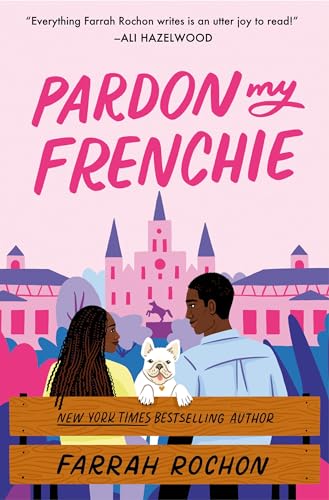

Book Review: Pardon My Frenchie by Farrah Rochon

Title: Pardon My Frenchie
Author: Farrah Rochon
Publisher: Forever
Publication date: June 4, 2024
Length: 384 pages
Genre: Contemporary romance
Source: Review copy courtesy of the publisher via NetGalley; audiobook via Boundless download (library loan)
Rating:

Rating: 4 out of 5.

The New York Times  bestselling author of  Almost There  delivers the start of a new rom-com series with an enemies-to-lovers romance, perfect for readers of Abby Jimenez and Jasmine Guillory.

Ashanti Wright is ecstatic over the success of her dog boarding business, Barkingham Palace. In fact, it has become so successful that Ashanti has plans to expand her empire with a doggie bake shop. There’s just one problem, the building she’s had her eye on has just been sold to the surly grandson of one of her favorite customers. 

Thaddeus Sims is not a dog person. He’s barely a person’s person. But when his grandmother is transferred to a senior living facility that doesn’t accept pets, the former army officer agrees to care for her annoying Standard Poodle, Puddin’. After all, it was with his grandmother’s help that Thad was able to buy the building that will soon house The PX, a sports bar/all-around hangout space for former servicemen that he plans to open.

Puddin’ and Ashanti’s French Bulldog, Duchess, have become a bit of a sensation on Barkingham Palace’s livestream because of their budding romance. When a video of the dogs sharing a doggy treat Lady and the Tramp-style goes viral, their owners are sucked into a media frenzy that captures the nation by storm…and creates some sparks for their owners too.

After loving Farrah Rochon’s The Boyfriend Project trilogy, I was really excited to see that she has a new contemporary romance series kicking off. The fact that it features adorable doggos and a business called Barkingham Palace is icing on the cake!

In Pardon My Frenchie (yes, that title is totally adorable), Ashanti Wright is a small business owner who works nonstop to keep her doggy day care going while also raising her twin teen-aged younger sisters. Ashanti’s business, Barkingham Palace, is very successful, but their small space means growth is limited. Meanwhile, Ashanti’s side business, home-baked doggy treats called Duchess Delights, is ready to take off — but there’s only so many treats she can produce in her home kitchen. Between that, and keeping an eye on her sisters’ school attendance, she more than has her hands full.

Ashanti’s dream is to buy a house she’s had an eye on, with a great location and room for her to expand both the day care and the baking — but she misses the opportunity when the grandson of one of her favorite customers arrives in New Orleans and buys it before she can even get an offer in. Thad is caring for his grandmother’s poodle Puddin’ and is skeptical of dogs in general and Ashanti’s business in particular, and the fact that she calls him out for buying “her” house doesn’t help them get off on the right foot.

However… Puddin’ and Ashanti’s French bulldog Duchess are in doggy love, and they’re a viral sensation thanks to getting caught in a super cute moment on the doggy cam. Puddin’ and Duchess’s wild popularity can be a huge boost to both Thad and Ashanti’s businesses, if they can get past their initial disagreements and work together. Of course, their immediate sense of attraction doesn’t hurt one bit.

Ashanti and Thad have great chemistry (just like Duchess and Puddin’), and despite complications, there’s no doubt that they’ll end up together — but it’s really sweet and enjoyable to watch them get there.

Farrah Rochon once again creates a compelling romance where the love story is just one piece of the greater story. Both Ashanti and Thad have really interesting businesses and backstories, and their family histories are well-developed too. They’re also surrounded by friends, coworkers, and family, providing them with much more in their lives beyond the will-they-won’t-they romantic entanglement.

I enjoyed Ashanti and Thad very much as people on their own, and appreciated each of them having a strong sense of commitment to their responsibilities, to the communities they serve, and to their families. Ashanti’s doggy business is adorable of course, and it’s really fun to see the ups and down of a day in the life of Barkingham Palace.

The book synopsis describes Pardon My Frenchie as the start of a new series, and while I don’t see anything online yet about a next book, I can imagine that Ashanti’s two best friends are likely to be the main characters in upcoming books, and I’ll be there to read them!

Pardon My Frenchie has terrific human interest elements, in addition to very cute dogs, and is sure to please readers who love a bit of canine fun mixed in with their romance.

A note on my reading experience: Although I had an e-ARC of the book, I ended up waiting for the audiobook to become available through the library, and really liked it. The dual narrators provide chapters from both Ashanti and Thad’s points-of-view, and give them each very warm, evocative voices. Highly recommended.

Save

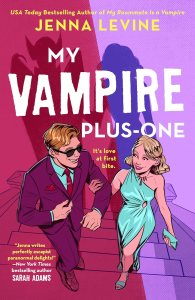
Book Review: My Vampire Plus-One by Jenna Levine

Title: My Vampire Plus-One
Author: Jenna Levine
Publisher: Berkley
Publication date: September 17, 2024
Length: 400 pages
Genre: Contemporary romance/fantasy
Source: Review copy courtesy of the publisher via NetGalley
Rating:

Rating: 4 out of 5.

Nothing sucks more than fake dating a vampire in this paranormal romantic comedy from the USA Today bestselling author of My Roommate Is a Vampire.

Amelia Collins is by definition successful. She would even go so far as to say successfully single. But not according to her family, and she’s tired of the constant questions about her nonexistent dating life. When an invitation to yet another family wedding arrives, she decides to get everyone off her back once and for all by finding someone–anyone–to pose as her date.

After a chance encounter with Reginald Cleaves, Amelia decides he’s perfect for her purposes. He’s a bit strange, but that’s fine; it’ll discourage tough questions from her family. (And it certainly doesn’t hurt that he’s very handsome.) For centuries-old vampire Reggie, posing as her plus-one sounds like the ultimate fun. And if it helps his ruse of pretending to be human, so much the better.

As Amelia and Reggie practice their fauxmance, it becomes clear that Reggie is as loyal to her as the day is long, and that Amelia’s first impressions could not have been more wrong. Suddenly, being in a real relationship with Reggie sounds pretty fang-tastic.

My Vampire Plus-One is the follow-up to last year’s My Roommate Is A Vampire — and if anything, it’s even cuter and sillier than the first book.

In My Vampire Plus-One, Amelia is a successful, hardworking accountant, whose large family seems to constantly have weddings — at which Amelia is on the nonstop receiving end of questions about why she’s single. She’d love to ditch the next wedding, but her parents would be so disappointed!

When Amelia has an unexpected, literal run-in with a good-looking but decidedly weird guy (he runs right into her as she’s leaving her office one day), he definitely leaves an impression, and when she sees him again at a coffee shop, they strike up a conversation. Reginald is a guy who is always up for a good practical joke, and he thinks the idea of posing as Amelia’s special someone at family events sounds hilarious. Also, he finds accountants incredibly hot (or maybe just a certain accountant named Amelia…), so that’s added incentive.

Amelia doesn’t know that Reggie (she refuses to call him Reginald) is a vampire, although she does clue in to the fact that he’s odd right from the start — both because of his interesting approach to style and the fact that he has absolutely no internet presence. But when he tells her straight-up that he’s a vampire during a middle-of-the-night phone call, she assumes it’s yet another of his jokes. A running stream of misunderstandings ensues, as he’s sure she knows something that she doesn’t actually know. You can imagine.

The fake dating trope works in romance because it inevitably leads to real dating, real feelings, real attraction… and yes, it all unfolds that way for Amelia and Reggie. Getting snowed in at an isolated cabin helps move things along — and Reggie listens to and seems to appreciate Amelia, accounting expertise and all, in a way no one else ever has.

“You have an exceptional flair for the dramatic for an accountant.”

“I have a completely average flair for the dramatic for an accountant,” I said, feeling a little unhinged. Talking to this man felt like trying to walk in a straight line on a listing ship. “Which is to say, I don’t have one.”

My Vampire Plus-One is utterly goofy, and that’s really its charm. You cannot for a second take this story seriously, and that’s okay. There’s a storyline that runs throughout about a group of disgruntled (and incompetent) vampires who are out to get Reggie due to a centuries-old grudge, leading to him constantly being on the run — but that’s just all part of the fun. This piece of the story ultimately connects back to Amelia’s work, and there’s an amusing showdown — there’s no real sense of threat or danger, and it’s resolved pretty quickly, but it’s entertaining to see how it all shakes out.

“Do you swear?”

“I swear it on the vows I took when I became a CPA.” There were, of course, no vows you had to take when you became a CPA. But he didn’t need to know that.

The only truly discordant note, from my perspective, is one explicit sex scene that’s way more graphic than it needs to be, and that seems out of place in a novel that’s otherwise full of silly banter and cutesy flirtation. Going a little more closed-door with this scene would have fit the overall tone of the book much better.

That aside, My Vampire Plus-One is goofy and funny, and is a great light read for when you’re in the mood for something fluffy. Reggie first appears in My Roommate is a Vampire as the main love interest’s annoying friend, so it’s fun to see him in a central role here… and having an accountant depicted as the ultimate sexy smart girlfriend is a total win.

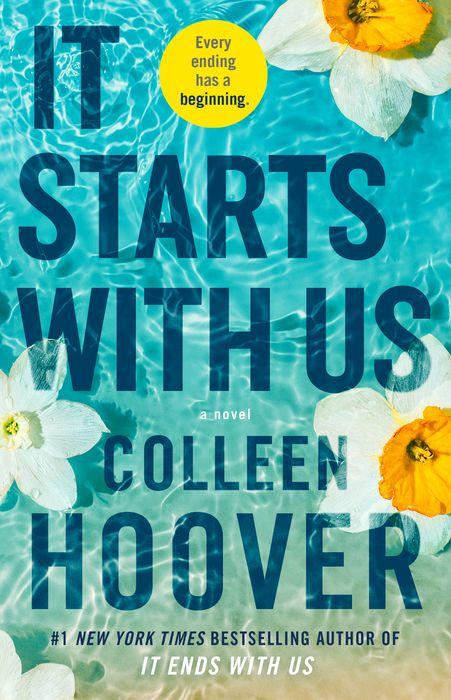
Book Review: It Starts with Us by Colleen Hoover

Title: It Starts with Us
Author: Colleen Hoover
Publisher: Atria
Publication date: October 18, 2022
Length: 323 pages
Genre: Contemporary fiction
Source: Library
Rating:

Rating: 2 out of 5.

Before It Ends with Us, it started with Atlas. Colleen Hoover tells fan favorite Atlas’s side of the story and shares what comes next in this long-anticipated sequel to the “glorious and touching” (USA TODAY) #1 New York Times bestseller It Ends with Us.

Lily and her ex-husband, Ryle, have just settled into a civil coparenting rhythm when she suddenly bumps into her first love, Atlas, again. After nearly two years separated, she is elated that for once, time is on their side, and she immediately says yes when Atlas asks her on a date.

But her excitement is quickly hampered by the knowledge that, though they are no longer married, Ryle is still very much a part of her life—and Atlas Corrigan is the one man he will hate being in his ex-wife and daughter’s life.

Switching between the perspectives of Lily and Atlas, It Starts with Us picks up right where the epilogue for the “gripping, pulse-pounding” (Sarah Pekkanen, author of Perfect Neighbors) bestselling phenomenon It Ends with Us left off. Revealing more about Atlas’s past and following Lily as she embraces a second chance at true love while navigating a jealous ex-husband, it proves that “no one delivers an emotional read like Colleen Hoover” (Anna Todd, New York Times bestselling author).

OK, I’ve paid my dues! I’ve read TWO Colleen Hoover books, and that’s enough for me.

It Starts with Us is the follow up to the author’s 2016 bestseller It Ends with Us, recently made into a movie and generating quite a bit of online chatter. It Starts with Us picks up immediately after the epilogue of the previous book. Read on to learn more… but note that there will be spoilers for both books.

Let’s start with the most important bit: The synopsis above refers to Ryle as a “jealous ex-husband”. Why doesn’t the promotional material for these books come right out and say what’s really going on? Ryle is abusive, physically and emotionally. In the first book, Lily eventually leaves Ryle after he bites her, pushes her down a flight of stairs, leaves her with a concussion and in need of stitches, and attempts to rape her. There’s no sugar-coating this… so no, “jealous” doesn’t even begin to cut it.

In It Starts with Us, Lily is navigating co-parenting with Ryle. While she retains full custody of their toddler daughter, Ryle has visitation rights. Further complicating matters is the fact that Lily’s best friend Allysa is Ryle’s sister, and she lives in the same building as Ryle.

When Lily runs into her first love Atlas (yes, that’s actually his name), they both know that their connection has never gone away, despite all the years apart. Lily is worried about how Ryle will react to her dating anyone post-divorce, but especially Atlas, the man who seems to trigger all of Ryle’s worst impulses just by existing.

Atlas’s life is also complicated by the introduction of a 12-year-old brother whom he never knew about, thanks to his estranged mother’s manipulations and emotional cruelty. Once Atlas meets Josh, he’s determined to get custody and give him a better life than Atlas had at that age.

And meanwhile, Atlas and Lily begin dating, and reignite all the sparks that ever existed between them.

It Starts with Us goes pretty much as you’d expect it to go. The main storyline is about Lily and Atlas’s romance, with chapters alternating between each of their perspectives. Atlas is, of course, simply too good to be true, patient and devoted and kind, refusing to be angered or driven to violence even when Ryle throws the first punch. He’s gentle, yet fiercely protective of Lily.

Lily is a puzzle, to be honest, and she seems to have gotten poor legal advice, among other problems. She never filed charges against Ryle and did not document his abuse as part of their divorce and custody agreements, so when he lashes out again, there’s no pattern to point to. Sure, she can file new charges, but there’s no documented history, and everyone seems to feel that she would have a hard time proving her case.

She also seems to worry a lot about Ryle’s reactions, how to talk to him about her dating life, and how he’ll feel about Atlas being back in her life. And why exactly is this his business? Since when does an ex get to have an opinion on who someone dates?

I’m stuck dealing with Ryle’s feelings forever, and frankly, I’m growing tired of always feeling sorry for him, worried for him, fearful of him, considerate of his feelings.

Lily can’t avoid Ryle, because she’s constantly over at Allysa’s house… but why continue to go there when confrontations seem inevitable? And why on earth would she agree to closed-door, isolated conversations with Ryle when she is fully aware of who he is and how easily his anger erupts?

Late in the book, she insists that he starts working on anger management… but why did no one push him in that direction years earlier?

Lily’s overall take on abuse is really concerning:

I realize in this moment that the hardest part about ending an abusive relationship is that you aren’t necessarily putting an end to the bad moments. The bad moments still rear their ugly heads every now and then. When you end an abusive relationship, it’s the good moments you put an end to.

In the world of these books, the abuse seems to be portrayed as especially awful because there’s so much love in the relationship. So if he was just nasty all the time, it would be easier? I’m not sure what message the author is trying to send here, but I don’t feel it’s a healthy one.

I could go on. There’s so much about this plot that bothers or frustrates me, and it’s not helped by shoddy writing and poor grammar. I suppose you could argue that the first-person narratives are reflecting how Lily and Atlas speak, rather than following grammar rules, but really, is it that hard to say “between Ryle and me”, rather than “between Ryle and I”, which is what actually appears in the book?

There are so many ridiculous elements — here are just a few more:

  • Lily gives Atlas her teen journals to read, to let him see what she felt and experienced when they were together all those years ago. Who on earth would actually do this?
  • Ryle’s sister, brother-in-law, and mother all seem to love and support him, are sad that his marriage failed, but place no restrictions on his role in their lives. His violence seems to be a feature, not a bug.
  • It takes Lily over a year post-divorce to get her house key back from Ryle.
  • Atlas talks to his friend’s 13-year-old son about his personal life and jokingly refers to him as his “therapist”.
  • Ryle continues in his work as a super-successful neurosurgeon… and I still think it strains credulity that he would work in such a high-stress profession and not have his anger issues leak out into his work life.

By the end of the book, Lily at least places restrictions on Ryle’s interactions with their daughter, pending his participation in anger management sessions… but the fact that it took her that long to do so also seems incredible. How does she know that his violence will only affect Lily herself and not their child? She places a degree of trust in him that’s unwarranted, to say the least.

That’s it for my rambles. Both of these books, while highly readable, are also problematic in so many ways. They’re fast reads, and I stuck with them — I did want to see where the author takes the characters and how I’d feel about the wrap-up.

However, I can now safely say that my curiosity about Colleen Hoover’s books has been more than satisfied, and I feel no need to explore further. I know her books are wildly popular… but she just isn’t an author for me.

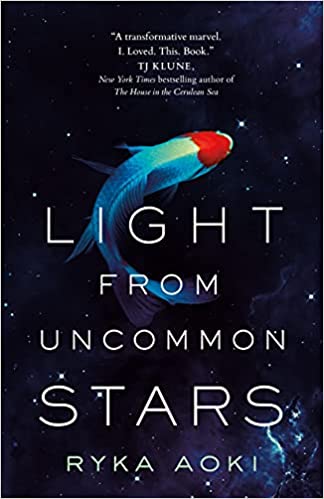
Book Review: Light from Uncommon Stars by Ryka Aoka

Title: Light from Uncommon Stars
Author: Ryka Aoki
Publisher: Tor
Publication date: September 28, 2021
Length: 384 pages
Genre: Science fiction / fantasy
Source: Purchased
Rating:

Rating: 3 out of 5.

A defiantly joyful adventure set in California’s San Gabriel Valley, with cursed violins, Faustian bargains, and queer alien courtship over fresh-made donuts.

Shizuka Satomi made a deal with the devil: to escape damnation, she must entice seven other violin prodigies to trade their souls for success. She has already delivered six. When Katrina Nguyen, a young transgender runaway, catches Shizuka’s ear with her wild talent, Shizuka can almost feel the curse lifting. She’s found her final candidate. But in a donut shop off a bustling highway in the San Gabriel Valley, Shizuka meets Lan Tran, retired starship captain, interstellar refugee, and mother of four. Shizuka doesn’t have time for crushes or coffee dates, what with her very soul on the line, but Lan’s kind smile and eyes like stars might just redefine a soul’s worth. And maybe something as small as a warm donut is powerful enough to break a curse as vast as the California coastline.

As the lives of these three women become entangled by chance and fate, a story of magic, identity, curses, and hope begins, and a family worth crossing the universe for is found.

Light from Uncommon Stars has been on my to-read shelf for a few years now, and even though I picked up a Kindle edition a while back, it’s taken me until now to finally read it. And while I sped through it and enjoyed the reading experience, my overall reaction is… mixed.

There is a lot going on in Light from Uncommon Stars. The three main characters are a transgender teen runaway, a violin teacher who made a deal with the devil many years earlier, and an alien starship captain hiding from intergalactic war in a donut shop. The characters come together in strange, quirky, and even touching circumstances, while also having individual challenges to overcome.

Katrina, the young runaway, is the most affecting of the characters. Escaping a cruel, abusive family and a world that judges and mistreats her, she has only her battered violin for comfort.

Yet, this student, this human being, had been forsaken not for ambition, nor revenge, nor even love, but for merely existing?

Who needs the Devil when people can create a hell like this themselves?

When Shizuka meets her in a park, she recognizes that Katrina may be the final protégé needed to fulfill her bargain — she needs to deliver one more soul to Hell in order to redeem her own soul. But as Shizuka starts to teach Katrina and provide her with a home, the protectiveness she feels for her student may prevent her from living up to the deal she’s made.

Meanwhile, Shizuka also meets Lan, the space-captain-turned-donut-shop-owner, and feels an unexpected connection — but Lan has her own family to protect and worry about as well, and can’t quite get why music is all that important to Shizuka.

There’s also a woman carrying out her family’s legacy of repairing violins, a nasty toad-like demon, Shizuka’s lovely housekeeper/confidante, and many, many more characters.

Light from Uncommon Stars has some important messages about belonging, kindness, fitting in, and treasuring one another. It recognizes that cruelty abounds in the world, yet beauty can still be found by those who are open to it.

The characters, especially Katrina, are quite special, and each of them is interesting in their own right, as well as in connection to one another. Again, Katrina’s journey is especially compelling, as she finally recognizes her own beauty in a world that tells her she doesn’t deserve it.

Her tonality had been honed by a lifetime of being concerned with her voice. Her fingerings were liquid, born of years of not wanting her hands to make ugly motions. And her ability to play to a crowd, project emotion, follow physical cues? Katrina had trained in that most of all.

The focus on music is where the book loses me along the way — there’s just so much about the composition and structure of violins, how they work, different pieces of music, composers, what the music means… honestly, it just doesn’t interest me that much, which meant that for big chunks of the book, I felt like an outsider looking in.

As I mentioned, there’s a LOT going on in this book… and for me, it was too much. Deals with the devil and extraterrestrials, cursed bows and spaceships? Plus, violin lessons and competitions and secrets of the violin-building trade? It’s all a bit messy, and doesn’t ever quite fully click into one coherent whole.

I do need to mention that the descriptions of the wide variety of food — Vietnamese, Mexican, Chinese — junk food and donuts and breads, and much, much more — is all mouth-watering and adds a richness to the characters’ experience that brings the Southern California setting to vivid life.

I expected to love this book — it’s gotten so much hype, and is blurbed by a bunch of authors I love, including T. J. Klune and John Scalzi, among others. I read the book quickly and felt absorbed enough to want to see how it would all work out… but taken as a whole, Light from Uncommon Stars was not the glorious reading experience I expected. Perhaps this just wasn’t the book for me. In any case, I’m glad to have read it, but couldn’t help feeling a bit let down.

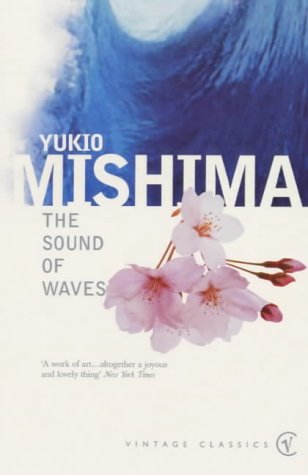
Book Review: The Sound of Waves by Yukio Mishima (Classics Club Spin #38)

Title: The Sound of Waves
Author: Yukio Mishima
Publication date: 1954
Length: 183 pages
Rating:

Rating: 5 out of 5.

Set in a remote fishing village in Japan, The Sound of Waves is a timeless story of first love. It tells of Shinji, a young fisherman and Hatsue, the beautiful daughter of the wealthiest man in the village. Shinji is entranced at the sight of Hatsue in the twilight on the beach and they fall in love. When the villagers’ gossip threatens to divide them, Shinji must risk his life to prove his worth.

I’ve had The Sound of Waves on my Classics Club spin list since I first started participating a couple of years ago, and I was so happy that its number finally came up!

Here’s why: I first read The Sound of Waves eons ago in a World Lit class in high school, and I remember loving it at the time. The main thing I remembered is that the class reading list seemed to consist of tragedy after tragedy. The whole time we were reading The Sound of Waves, I was holding my breath waiting for something terrible to happen… and it never did. Instead, it was a gentle, lovely story about first love, and it even had a happy ending.

I’ve always thought back on that book with warm feelings, and have wondered whether I’d still appreciate it all these years later. I’ve been wanting to reread it, and just needed a little push to do so… which the Classics Club spin provided.

In The Sound of Waves, the story centers on a small island called Uta-Jima, a fishing village that’s self-contained and bound by traditions, seemingly set apart from the larger world. Although it’s set in the post-war years (and was originally published in 1954), it’s easy to forget and imagine that the story is set much, much earlier. Every so often, reminders of the outside world and its modernity appear, and often feel startling. For the daily lives of the villagers, governed by the tides and the fishing seasons, we can easily imagine that nothing has change for centuries.

Shinji, the elder of two boys, is not yet twenty years old, but is responsible for his mother and brother, ever since his father’s death during the war. Shinji is large and strong, a devoted son, and earnest in his commitment to his family, his employer, the gods, and the people of the island. He’s struck by immediate love when he meets Hatsue, daughter of the wealthiest man on the island. Hatsue has lived away from the island for many years, but when she returns, her beauty and her father’s position make her the most sought after girl, especially since her father has declared that he intends to adopt her potential husband into his family.

Shinji and Hatsue’s love is sincere and pure, but when they become fodder for island gossip, Hatsue’s father bans them from seeing one another and forbids Hatsue to even leave the house. But despite the challenges and the odds stacked against them, they remain true to one another… and yes, there’s a happy ending.

The Sound of Waves is quite lovely, especially in its depiction of the natural beauty of the island and the seas. The author paints pictures with his words, showing us the changing seasons, the trees and plants and fish, the wave patterns, the steep hills and beautiful views that make up the setting.

From time to time the dying fire crackled a little. They heard this sound and the whistling of the storm as it swept past the high windows, all mixed with the beating of their hearts. To Shinji it seemed as though this unceasing feeling of intoxication, and the confused booming of the sea outside, and the noise of the storm among the treetops were all beating with nature’s violent rhythm. And as part of his emotion there was the feeling, forever and ever, of pure and holy happiness.

He also brings to life the villagers themselves, through simple dialogue, descriptions of routines and interactions, and quick sketches that show the inner nature of the people we meet. I particularly enjoyed scenes of the diving women, although the scenes on the fishing boats are also action-packed and compelling.

My one complaint, which is probably irrelevant in the grand scheme of things, is that there are a lot of descriptions of breasts! So many varieties, so many details… I could have done without all this, but that’s really my only quibble.

Other than that… The Sound of Waves is a beautifully written novel, and I’m happy that rereading this book proved to me that it is just as good as I’d remembered!

Once again, a very good outcome from a Classics Club spin.

Book Review: It Ends with Us by Colleen Hoover

Title: It Ends with Us
Author: Colleen Hoover
Publisher: Atria
Publication date: 2016
Length: 386 pages
Genre: Contemporary fiction
Source: Borrowed
Rating:

Rating: 2 out of 5.

Sometimes it is the one who loves you who hurts you the most.

Lily hasn’t always had it easy, but that’s never stopped her from working hard for the life she wants. She’s come a long way from the small town in Maine where she grew up — she graduated from college, moved to Boston, and started her own business. So when she feels a spark with a gorgeous neurosurgeon named Ryle Kincaid, everything in Lily’s life suddenly seems almost too good to be true.

Ryle is assertive, stubborn, maybe even a little arrogant. He’s also sensitive, brilliant, and has a total soft spot for Lily. And the way he looks in scrubs certainly doesn’t hurt. Lily can’t get him out of her head. But Ryle’s complete aversion to relationships is disturbing. Even as Lily finds herself becoming the exception to his “no dating” rule, she can’t help but wonder what made him that way in the first place.

As questions about her new relationship overwhelm her, so do thoughts of Atlas Corrigan — her first love and a link to the past she left behind. He was her kindred spirit, her protector. When Atlas suddenly reappears, everything Lily has built with Ryle is threatened.

Well, at least I can say that I’ve read a CoHo book…

I was pretty sure, based on everything I’ve heard, that Colleen Hoover’s books would not be for me. But the movie version of It Ends with Us has been generating so much buzz (negative and positive), and a friend was super excited to lend me this book… so yes, I finally read a Colleen Hoover book, and it went about as well as I’d expected.

Let me just note, right up front, that it is not okay that the synopsis of the book does not make the key point explicit: This book includes scenes of emotional and physical partner abuse and domestic violence. Readers need to know that ahead of time.

I’m not even sure what to say about this book. It’s the story of 23-year-old Lily, living on her own in Boston, who dreams of opening her own flower shop. She meets a gorgeous neurosurgeon on the roof of a building one night, and they start a game of “naked truths”, where they tell each other major secrets that they wouldn’t normally share with anyone. He’s not a relationship guy at all, but one of his naked truths is that he’d be happy to have a one-night stand with her (although he doesn’t phrase it quite that way). She’s looking for love, not sex, so it’s a no… but she’s mighty tempted.

As their paths continue to cross, the attraction grows, and eventually they do fall into a passionate relationship, but there are all sorts of warning signs.

Oh, why am I bothering to recap this book? Here’s what you need to know (spoilers ahead!):

  • Lily grew up with an abusive father who regularly beat, berated, and raped her mother.
  • Lily’s never forgotten her first love.
  • Ryle does a lot of love-bombing, and bursts into violence when he’s angry (although he claims that he blacks out when it happens)
  • Ryle is physically abusive to Lily, and she eventually leaves him, even though she loves him.

So much of the plot makes no sense. Randomly moving from least offensive to much more offensive… Lily’s flower shop, for one thing — she opens a business in Boston, with no business plan or firm idea of what to do, has a ridiculous description of the aesthetic she’s going for, and yet is instantly, wildly successful.

Ryle’s sister becomes Lily’s best friend and first employee, totally redecorates Lily’s business, and provides whatever Lily needs, whenever she needs. She’s also described as never having had a job in her life, because her husband struck it mega-rich in tech… but really, she’s a grown woman who’s been rich for only a few years and never even had a part-time job?

Lily’s teenaged diaries are written as letters to Ellen DeGeneres. Why? There’s a reason provided, but it’s odd and unnecessary. We learn about her relationship with Atlas through these diaries, which later become something that ignites Ryle’s rage. (Also, the author seems to gloss over the fact that 15-year-old Lily enters into a romantic and sexual relationship with an 18-year-old, I guess because he’s so special and awesome? Just, no.)

After Ryle hits Lily for the first time, she forgives him after warning him that if anything like that every happens again, she’ll dump him. And then they move forward, and all is well and happy and she’s super in love, and they even have a spur-of-the-moment wedding in Las Vegas… but at no point does relationship counseling get mentioned.

We eventually learn about the childhood trauma that’s shaped Ryle, but if his anger is so uncontrollable, how does he function as a neurosurgeon?

Okay, that’s enough rambling. I did not enjoy this book, so why did I give it 2 stars?

If you’d asked me early on, I would have said that 1 star, or maybe 1.5, would be the highest I’d go, and despite how awful I think most of the book is, it was oddly compelling too. My experience reading It Ends with Us was similar to my experience reading Fifty Shades of Grey (yes, I read it…) — I was aware that it was not good, but I also wanted to see where the story went.

I will say that by the end, I could see how the messaging around domestic violence and the exploration of the emotions involved could be important to share. Lily absolutely loves Ryle, and through her first-person narration, we see the inner turmoil she goes through in trying to sort out her love for her husband, dealing with the memories of what she witnessed in her parents’ marriage, and understanding what safety and trust mean for her going forward.

Still, the ending of the book leaves Lily and Ryle in a place that feels unrealistically positive. They’re divorced, but share a child, and their custody arrangements seem courteous… but how does Lily know that she can trust Ryle with their baby? She makes the decision to leave him to end the cycle of violence that she experienced and to create a healthy life for her daughter, but how does that ensure that his anger won’t explode in the future, with Lily, her daughter, or someone else?

Finally, I’ll just mention that the sex scenes earlier in the book, when they’re first falling in love, are unappealingly explicit. There’s one in particular, where he uses a stethoscope to monitor her racing heart rate as she gets more and more into it — I’m sure it’s meant to be hot, but it’s actually just icky.

Clearly, I did not like this book. But I finished it, and it held my attention… so 2 stars seems fair.

And — I hate to even admit this — I’m probably going to read the follow up book (It Starts with Us) too. Maybe some of my complaints will be addressed! Maybe I just need to see if it’s as ridiculous as this one is. Maybe I just can’t help gawking at a train wreck.

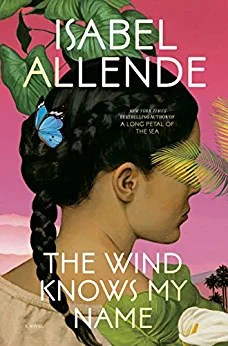
Book Review: The Wind Knows My Name by Isabel Allende

Title: The Wind Knows My Name
Author: Isabel Allende
Publisher: Ballantine Books
Publication date: June 6, 2023
Length: 253 pages
Genre: Historical/contemporary fiction
Source: Purchased
Rating:

Rating: 4 out of 5.

This powerful and moving novel from the New York Times bestselling author of A Long Petal of the Sea weaves together past and present, tracing the ripple effects of war and immigration on one child in Europe in 1938 and another in the United States in 2019.

Vienna, 1938. Samuel Adler was six years old when his father disappeared during Kristallnacht—the night their family lost everything. Samuel’s mother secured a spot for him on the last Kindertransport train out of Nazi-occupied Austria to the United Kingdom, which he boarded alone, carrying nothing but a change of clothes and his violin.

Arizona, 2019. Eight decades later, Anita Diaz, a blind seven-year-old girl, and her mother board another train, fleeing looming danger in El Salvador and seeking refuge in the United States. However, their arrival coincides with the new family separation policy, and Anita finds herself alone at a camp in Nogales. She escapes through her trips to Azabahar, a magical world of the imagination she created with her sister back home.

Anita’s case is assigned to Selena Duran, a young social worker who enlists the help of a promising lawyer from one of San Francisco’s top law firms. Together they discover that Anita has another family member in the United States: Leticia Cordero, who is employed at the home of now eighty-six-year-old Samuel Adler, linking these two lives.

Spanning time and place, The Wind Knows My Name is both a testament to the sacrifices that parents make and a love letter to the children who survive the most unfathomable dangers—and never stop dreaming.

The Wind Knows My Name is a compact but powerful story about lost children, sorrow, and resilience. It’s also quite political, which I didn’t have a problem with, but some may readers may wish to know that the author is very up front in her thoughts on a certain former President and the current, ongoing immigration crisis.

But beyond the politics and the highly charged topics, The Wind Knows My Name is deeply affecting because of the individual characters, their painful childhood experiences, and the way unexpected connections help them forge new paths forward.

The book opens in Vienna, 1938, as the horrors of Kristallnacht unfold. For young Samuel Adler, it’s the night his whole world falls apart. Eventually, to save his life, Samuel’s mother sends him off to England on a train filled with other Jewish children — and while Samuel does go on to live a long and fulfilling life, the early trauma never leaves him.

Later, we meet Leticia, a Salvadoran girl whose father crosses the border into the US with her after their entire family is murdered in the massacre of their small village.

And still later, closer to the present day, we meet Anita — also from El Salvador, cruelly separated from her mother at the border as they seek asylum from extreme danger back home.

As these three people come together, with assistance from Selena, a social worker, and Frank, the ambitious lawyer who finds his true calling in pro bono work helping undocumented children, their complicated pasts offer reflections of commons experiences, even while each has suffered in their own unique and unforgettable way.

At less than 300 pages, The Wind Knows My Name is a fast read, especially as it’s so compelling that it’s difficult to pause and come up for air once you start. Each character’s story is absorbing and tragic, and yet, there are rays of hope in each of their stories as well — even more so as they come together in an unusual but lovely found family.

My main quibble with this book has to do with the storytelling itself. Isabel Allende is a masterful writer and has a beautiful way with words, and she’s highly gifted when it comes to evoking her characters’ inner lives, dreams, and nightmares. However, the writing in this book relies too often on telling rather than showing. Especially in the later chapters, new interludes open with a recitation of what the characters have been doing. We don’t see these events unfold; we hear about them after the fact.

The story itself and what the characters experience is never uninteresting, but there’s a distance because of this narrative approach that left me feeling the emotional impact a little less than I’d expected.

I also felt disappointed that Samuel’s adult life is largely skipped and told in summary after the fact, when we meet up with him again in his 80s. I couldn’t help but feel that there was so much more to see and understand. Given the length of the book, perhaps there wasn’t room to go deeper into the characters’ lives, except in terms of how they all connect, but I wished for more, for Samuel and the others. The Wind Knows My Name might have been more satisfying if it had expanded further on all of the characters and let us go deeper into their worlds.

Overall, however, the events and experiences contained within The Wind Knows My Name are deeply moving, and I came to care deeply about all of its people and the relationships they create and nurture.

Highly recommended.

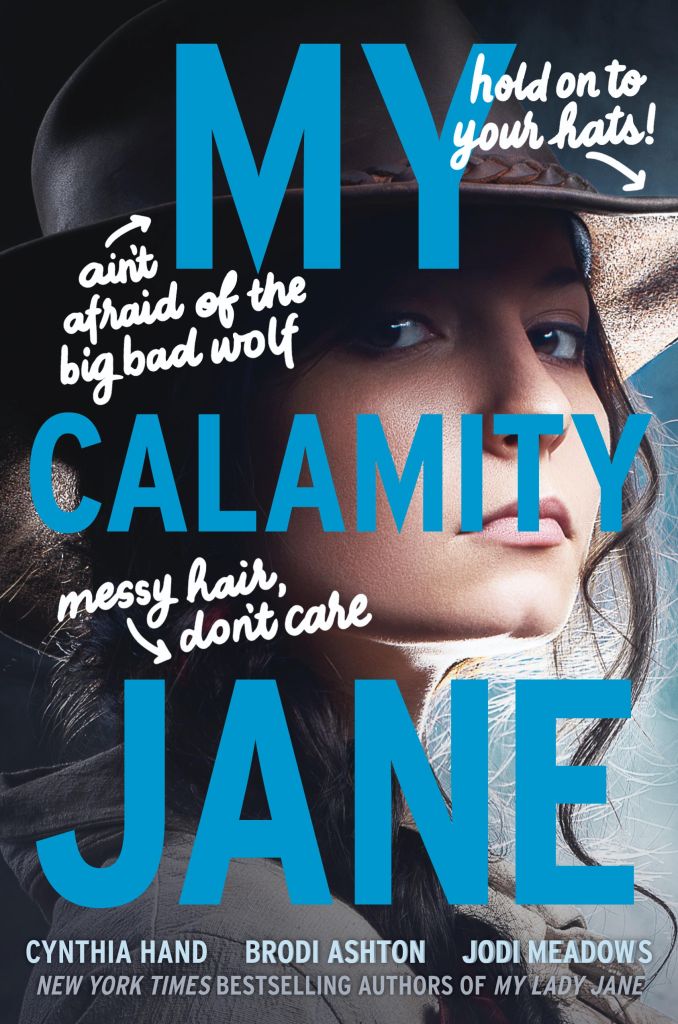
Book Review: My Calamity Jane by Cynthia Hand, Brodi Ashton, & Jodi Meadows

Title: My Calamity Jane
Series: The Lady Janies, #3
Author: Cynthia Hand, Brodi Ashton, Jodi Meadows
Publisher: HarperTeen
Publication date: June 2, 2020
Length: 544 pages
Genre: Young adult
Source: Purchased
Rating:

Rating: 4 out of 5.

Welcome ​to 1876 and a rootin’-tootin’ America bursting with gunslingers, outlaws, and garou.

JANE (a genuine hero-eene)

Calamity’s her name, and garou hunting’s her game—when she’s not starring in Wild Bill’s Traveling Show, that is. She reckons that if a girl wants to be a legend, she should just go ahead and be one.

FRANK (*wolf whistle*)
Frank “the Pistol Prince” Butler is the Wild West’s #1 bachelor. He’s also the best sharpshooter on both sides of the Mississippi, but he’s about to meet his match. . . .

ANNIE (get your gun!)
Annie Oakley (yep, that Annie) is lookin’ for a job, not a romance, but she can’t deny there’s something about Frank she likes. Really likes. Still, she’s pretty sure that anything he can do, she can do better.

A HAIRY SITUATION
After a garou hunt goes south and Jane finds a suspicious-like bite on her arm, she turns tail for Deadwood, where there’s been talk of a garou cure. But things ain’t always what they seem—meaning the gang better hightail it after her before they’re a day late and a Jane short.

The Lady Janies books are quickly becoming my go-to cheer-me-up reads… and the 3rd in the series, My Calamity Jane, absolutely hits the spot!

In this cheeky, silly reimagining of Wild West legends, Wild Bill Hickok’s traveling show is highly entertaining, super popular… and a front for a band of garou (werewolf) hunters. Calamity Jane herself is a 17-year-old who’s an ace at performing tricks with a bullwhip, and she’s also devoted to Wild Bill, who gave her a family when she had nowhere else to turn. Bill’s son Frank is Jane’s brother and best friend, and the tight-knit band travels from town to town, putting on great shows and dealing with garous who threaten public safety.

Things take a turn for the terrible when Jane is bitten during an attempt to bring down the garou Alpha, and their lives only get more complicated from there. Between fast-talker Annie Oakley insisting on joining their crew and the persistent attentions of a young woman reporter (who goes incognito as a young man, because writing just ain’t a career path for a woman, doncha know), Jane and the gang have to move and think fast… and their lives get even more dangerous once Jane decides to run off to Deadwood in pursuit of a rumored garou cure.

Ah, this book is fun! Lots of familiar names and places pop up — but if you’re like me, it’s helpful to keep Wikipedia handy too. I never watched the Deadwood TV series (although now I’m tempted!), and had only passing familiarity with most of these real-life people — so looking into their stories was a huge boost while reading My Calamity Jane.

Note: I do have a vague recollection of listening to some of the songs from the musical Annie, Get Your Gun as a child. Does anyone — besides devoted theater kids — still know this show? Parts of it looks really offensive, based on looking at the movie trailer, so I kind of hope not. Anyway, I digress…

The writing in My Calamity Jane, as in the other Lady Janies, is funny, tongue-in-cheek, and quite silly. The narrators pop in to comment throughout, which is always good for a laugh.

“Mama!” Annie turned around, horrified. “He’s near forty years old! He’s ancient”—(at this point, your faithful and likewise ancient narrators die inside)—“and he’s already married.”

The werewolf storyline fits surprisingly well within a Western setting, and the main villain of the piece offers some clever surprises (plus lots of sneering and manipulation). Even the portrayal of henchmen and lackeys is funny.

Jack McCall straightened his spine (although your narrators don’t know how he did it, considering we are pretty sure he was spineless).

The story includes a couple of quirky love stories, as well as shoot-’em-up action sequences and some familiar-sounding rivalry.

But that didn’t mean she couldn’t enjoy herself. She put on her sweetest smile. “Anything you can do, Mr. Butler,” she said, “I can do better.”

“No, you can’t.”

“Yes, I can.”

While the page count might seem a little much at the outset, trust me — it moves quickly. Even when we get the sadder moments of learning the characters’ backstories and childhood traumas, we’re never more than a page or two away from an exchange to lighten the mood.

“Oh, no,” gasped Winnie. “Oh, no, no, no. A story like this takes time.”

Frank drew out his pocket watch. “You’ve got, like, two hours.”

Jane snorted. “That’s loads of time. A person could write a whole book in two hours.” (To which we, as the narrators, say no. A person can’t. And now we’re crying a little.)

Plain and simple, My Calamity Jane is a hoot, just like the rest of the books in the series. The Lady Janies all work as stand-alones (or at least, the ones I’ve read so far do). So, if the Wild West isn’t necessarily your thing, but you’re a Jane Eyre fan, start with My Plain Jane, or if you love Tudor history, pick up My Lady Jane. You get the point — pick one that appeals to you, see if you like the approach, and then give the rest a try!

For me, I’m ready to dive into the Mary books!

And I’ll close with the words of Calamity Jane… just because she makes me laugh:

“Frank! Get the lead out! Annie! Get your gun!”

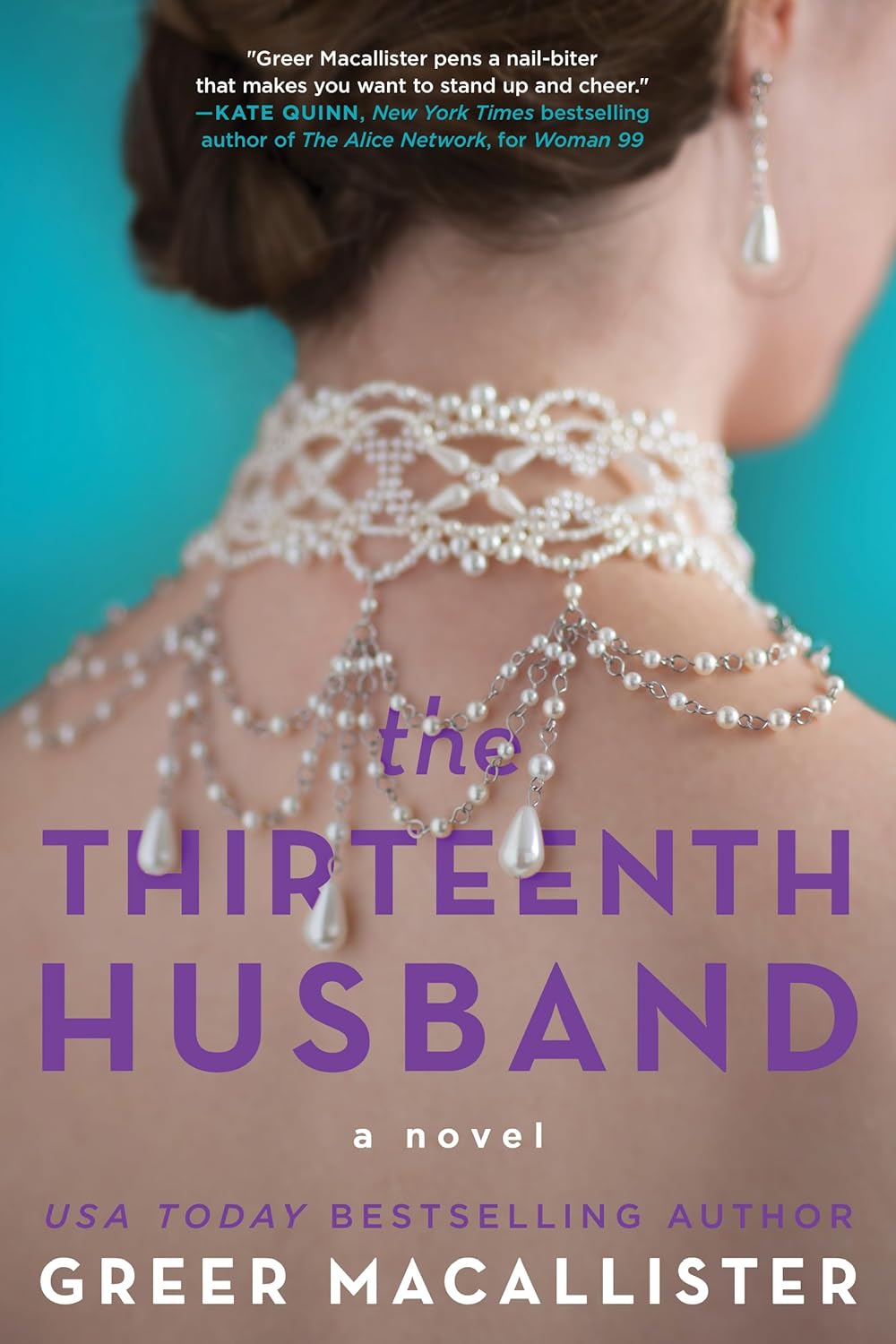
Book Review: The Thirteenth Husband by Greer Macallister

Title: The Thirteenth Husband
Author: Greer Macallister
Publisher: Sourcebooks Landmark
Publication date: August 6, 2024
Length: 336 pages
Genre: Historical fiction
Source: Review copy courtesy of the publisher via NetGalley
Rating:

Rating: 4 out of 5.

Based on a real woman from history, The Seven Husbands of Evelyn Hugo meets The Haunting of Hill House in this fictional tell-all narrated by the glamorous Aimee Crocker, revealing everything from her mischievous days in German finishing school to dinners with Hawaiian royalty to lavish Astor parties in Manhattan. But behind Aimee’s public notoriety, there’s private pain.

When Aimee is ten years old, as the night dips into the witching hour, the Woman in White appears to her. Minutes later, Aimee’s father is dead—and Aimee inherits a fortune. But the Woman in White never really leaves Aimee, appearing as a sinister specter before every tragedy in her life. Despite Aimee’s wealth, her cross-continental travels, and her increasingly shocking progression through husbands, Aimee is haunted by the unidentifiable Woman’s mysterious motivations.  

Tearing through millions of dollars, four continents, and a hearty collection of husbands, real-life heiress Aimee Crocker blazed an unbelievable trail of public scandal, private tragedy, and the kind of strong independent woman the 1880s had never seen. Her life was stranger than fiction and brighter than the stars, and she whirled through her days as if she was being chased by something larger than herself. Greer Macallister brilliantly takes us into her world and spins a tale that you won’t soon forget.

I’d never heard of Aimee Crocker before coming across this new historical novel by talented author Greer Macallister — but I suppose if I’d been around in the 1880s, there’d be no avoiding her. I get the feeling Aimee Crocker was Paris Hilton or Kardashian-level tabloid fodder back in her day. Her every move was analyzed, gossiped over, and fed through the scandal and rumor mill.

Amy (as she was originally named) was the daughter of an extremely wealthy man, and at age 10, upon her father’s death, inherited $10 million — in today’s economy, that would be equivalent to upwards of $275 million.

Amy was never exactly sedate, but in her earlier years, it seemed her mother at least attempted to keep her in line with society expectations. As portrayed in The Thirteenth Husband, Amy marries her first husband after he wins her in a poker game (well, he wins the right to propose to her) — and Amy, always up for adventure, decides to go along with it.

She’s quite the free spirit, as we see over and over again throughout The Thirteenth Husband. Not only does Amy divorce her husband at a time when being a  divorcée is considered shameful, she remarries, travels the world, takes and discards lovers, loses custody of her child in an ugly court case, gets tattooed, and embraces Buddhism, spiritualism, and even the occult.

Images of Amy (miscellaneous sources via Google)

The Thirteenth Husband is written as a first-person account of Amy’s life, through her ups and downs and many marriages. Her life is very much influenced by her interactions with a ghostly presence who visits her in her dreams and seems to offer warnings of loss and disaster. These dream visits propel Amy to seek out palm readers, mediums, and other spiritualists throughout her life, as she seeks the key to understanding her purpose and the hidden messages from the Woman in White.

It’s an interesting character study, as well as a look at the life of someone who refuses to play by society’s rules — and the good and bad outcomes that she faces as a result. Of course, it’s her millions that give her the freedom to behave as she does — someone without that huge fortune (and the power it conveys) could never have gotten away with these types of escapades.

She does make very questionable choices about men and marriage, and in fact (or at least, in the fictionalized version of her life), she only truly marries for love once out of all her relationships. (And no, she doesn’t actually have thirteen husbands… but there’s a reason for the book’s title).

I enjoyed The Thirteenth Husband, but it didn’t quick click for me as a flowing narrative. Amy herself is fascinating, of course, but the book feels very episodic. Each episode is interesting, especially when we learn that many of the most sensational events actually occurred in real life (such as a deadly train crash on her first honeymoon and the kidnapping of her daughter during her divorce proceedings). Still, each episode ends and the story moves on, and it can be difficult to see the connections between parts of her life or how they change her over time.

I’m glad to have read The Thirteenth Husband, and appreciated reading the author’s notes on sources and where she embellished versus sticking to the documented history. It’s also fun to learn that Amy herself was an author! During her lifetime, she published both a book of stories (which she refers to as “fantasies”) and a memoir (which has a defiant name that I love).

  • Moon-Madness and Other Fantasies is free to read/download via Project Gutenberg. (It’s quite short — I read it in one sitting, and was enchanted get a glimpse of Aimee’s imagination)
  • And I’d Do It Again: Aimee’s memoir, available through the usual new and used book sources. I definitely want to read it! Especially based on this preview of the opening pages:

I’m so glad to have been introduced to this remarkable woman through The Thirteenth Husband!