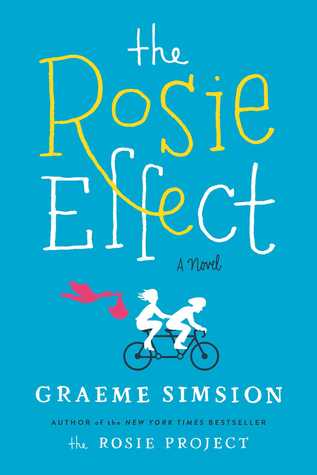
First things first: The Rosie Effect is a sequel, continuing the story begun in The Rosie Project. And really, if you haven’t read the first book, there’s no point in reading this one.
The Rosie Effect picks up soon after the end of The Rosie Project, following Rosie and Don to Manhattan as they begin their lives as a married couple, with the complications you’d expect from this unusual pair. No sooner have they started settling into their lives — Don as a visiting professor at Columbia Medical School, Rosie finishing up her PhD thesis and entering med school — than a bombshell of a surprise comes along: Rosie is pregnant. And Don is thrown for a loop.
Rosie and Don take very different approaches to pregnancy, of course. Don, ever the man of science, embarks on a plan to maximize Rosie’s health — and Rosie does not take kindly to Don’s constant input on everything from appropriate pregnancy nutrition to stress levels to exercise needs. The marriage is on the rocks, and it doesn’t seem like there’s much hope.
Meanwhile, Don finds himself in exactly the sort of absurd situations you’d expect. Upon getting advice from a friend that he should spend some time observing children in order to prepare for fatherhood, Don does exactly that… and ends up getting arrested after hanging out in a children’s playground taking videos of the kids playing.
Ultimately, the plot of The Rosie Effect boils down to a headline from a 1980s women’s magazine: Can this marriage be saved?
My reaction to this book is mixed. While there are certainly many amusing scenarios (let’s not forget the Bluefin Tuna Incident!), I’m not at all convinced that a sequel to The Rosie Project was necessary. In The Rosie Effect, it’s really just a lot of more of the same. Don is peculiar, highly intelligent, and emotionally stilted. He does some pretty amazing things, but always from a place of cluelessness. There’s a cast of supporting characters who are funny, unusual, and perfect complements to Don’s oddball nature. Rosie herself seems to be a bit absent in this book; while she’s always around and is on Don’s mind constantly, I wouldn’t have had much sense of her personality or desires without having read the first book.
Basically, everything that I found delightful and charming about the first book is repeated here in the second — and that’s the problem. The Rosie Project was new and different; The Rosie Effect is just a continuation. Without the newness, it’s treading familiar ground, and I simply wasn’t nearly as amused as I was the first time I encountered Don Tillman in all his glory.
The Rosie Effect is a quick read, but I actually think I could have done without it. It definitely picks up by the end, but there’s only so many time similar antics can play out before they become tedious. The Rosie Project was one of my favorite books of 2013, but in my opinion, should have been left as a stand-alone story. Sadly, this unnecessary sequel was mostly a disappointment to me. Still, the author is clearly quite talented, and I hope he’ll tell a new tale in whatever he publishes next.
_________________________________________
The details:
Title: The Rosie Effect
Author: Graeme Simsion
Publisher: Simon & Schuster
Publication date: US publication date: December 30, 2014
Length: 352 pages
Genre: Contemporary fiction
Source: Review copy via NetGalley
Jojo Moyes is quickly becoming one of my go-to, auto-buy authors. After reading a few of her more recent books, I decided to look into some of her previously published works, and picked up a copy of The Last Letter From Your Lover, which was originally released in 2010.
In Last Letter, we follow two timelines: a contemporary story bookending the novel and then a 1960s story, the major part of the book both in terms of length and where the heart of the tale is concentrated. Within the two timelines, we follow three different narrative arcs, all of which come together by the book’s end.
In the prologue, we meet journalist Ellie Haworth, whose career is suffering while her private life consumes her every waking thought. Ellie is one year into an ill-advised affair with a married man, and despite absolutely no evidence to support her hopes, Ellie can’t help dreaming of the day when she finally gets more from her lover. As part of a retrospective feature at work, Ellie starts going through her newspaper’s archives and comes across an old letter that knocks her socks off. Drenched in romance, the letter-writer (identified only as “B.”) declares:
I’ll be at Platform 4, Paddington, at 7:15 on Friday evening, and there is nothing in the world that would make me happier than if you found the courage to come with me… I’ll be waiting on the platform from a quarter to seven. Know that you hold my heart, my hopes, in your hands.
Ellie doesn’t know who wrote the letter or to whom it was addressed, but she’s reduced to tears by the passion and the emotion. The letter seems to awaken something in Ellie…
From there, the action switches to 1960, in which a pampered, sheltered wife of a very powerful man meets a brash and disrespectful reporter. Jennifer Stirling is beautiful but bored; Anthony O’Hare despises the spoiled society members who flit through life above and apart from the world’s real troubles. Of course, sparks fly between Jennifer and Anthony, but obstacles keep the lovers apart.
In yet a third narrative stream, we see Jennifer waking up in a hospital after a car accident, suffering from amnesia and brought back home by her husband Laurence to recover. Jennifer feels certain that she’s missing something important, but has no idea what has truly happened or what that key piece of information about her past might be.
Eventually, the story streams come together. Ellie traces the mysterious love letter to Jennifer, now in her 60s, and sets out to discover whether the lovers ever did manage to unite and start a new life together. At the same time, Ellie faces some unpleasant truths about her own love life, and must make decisions about who she is and who she wants to be.
I enjoyed Last Letter, although perhaps not quite as much as some of the author’s other novels. The mixed timelines didn’t especially work in favor of narrative tension. After meeting Ellie in the prologue, we don’t see her again until about halfway through the book. Meanwhile, the story of Jennifer and Anthony’s relationship is interwoven with Jennifer’s post-crash story, and sorting out what came first and what resulted is a bit of a challenge.
By the end of the book, I was very invested in Jennifer and Anthony’s story and in finding out what had happened between them, but given the mixed narratives and the shifting point-of-views, it was always a struggle to piece together the actual events versus the characters’ perceptions of events, which were often two different things. I didn’t quite buy the build-up of the love affair or believe how instantly and passionately they fell in love, yet as the story moved forward, it was the descriptions of their thwarted yearnings that were more convincing than their stolen moments together.
Jennifer reminded me strongly of Mad Men‘s Betty Draper, although a less childish and selfish version. Still, she’s the quintessential beautiful but useless society wife, a woman whose job is to be ornamental and a credit to her husband, with no actual skills or education and no chance of forging a life of her own. As the story progresses, it’s heartening to see Jennifer face up to her reality and try to find a way to take control and pursue a path that gives her life meaning, despite the cost.
Ellie’s story is a bit pale by comparison, and the parallels aren’t always comfortable ones. We’re meant to sympathize with and root for this young woman, but it’s hard to do so while she’s enmeshed in a very stupid affair, refusing to acknowledge the real damage she may be doing to herself and to others. An awakening eventually comes, of course, thanks in large part to Ellie’s growing fascination with Jennifer and her exposure to what real love looks like. Perhaps Ellie is meant to be the reader’s entry point into the story, but Jennifer is the far more compelling character.
One especially fun feature of this novel is the lead-in page for each chapter, each featuring an excerpt from a real break-up letter, text, or email. Some are wistful, some are harsh, and some are downright comical (like the text message “U n me finished”), but all add a touch of spice and poignancy to this sentimental and occasionally sorrowful book.
All in all, The Last Letter From Your Lover is an engaging and often moving look at how love doesn’t always work out, how life can get in the way, and how sometimes it isn’t too late to start over and find happiness. For those new to Jojo Moyes, I’d probably suggest starting elsewhere, but fans of the author shouldn’t miss this one.
Title: The Last Letter From Your Lover
Author: Jojo Moyes
Publisher: Pamela Dorman Books
Publication date: First published in UK in 2010
Length: 390 pages
Genre: Contemporary fiction
Source: Purchased
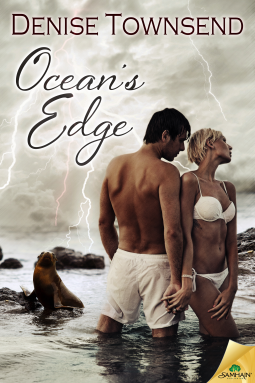
I don’t usually review erotica… and I tend to avoid like the plague book covers featuring chiseled male chests or artfully draped semi-clad torsos. You know the ones I’m talking about.
But I’m willing to make an exception for the works of Denise Townsend — Denise Townsend being the erotica-writing alter ego of one of my very favorite urban fantasy authors (whose more mainstream works still feature scorching hot sexytimes).
So when I saw NetGalley featuring an ARC of Ocean’s Edge by Denise Townsend, I jumped on it.
Here’s what you need to know about her Ocean stories — Ocean’s Touch, Ocean’s Surrender, and now Ocean’s Edge:
Each features a strong woman, recovering from pain or trauma in her past. Each also features a selkie, a super sexy magical being from the sea who appears on the beach as a smoking hot male who wants nothing more in life than to help the main character find her way back to health and happiness. And each involves some majorly hot and heavy action.
In Ocean’s Edge, the main character Rachel is a rape survivor who’s retreated into a shell, but is slowly regaining her confidence through her devotion to martial arts training. When she meets the selkie Conleth, she learns to reclaim her own sexuality, and with Con’s loving guidance, is able to turn to Jake, who runs the dojo where she trains. Between (and I mean literally between) Con and Jake, Rachel is given the support she needs to move past her attack, work with the police to track down her assailant, and start building a future that includes a healthy self-image and the love of a good man.
What I enjoy so much about these books is the strength of the women. Rachel is not a victim. She’s been through a terrible ordeal, but it’s her own inner core of strength and determination that enables her to survive and thrive. Denise Townsend’s main characters are not damsels in distress; they’re women who save themselves. The love interests are there for them when they triumph, but not to triumph on their behalf. These are women who fight their own battles, and also know what it takes to pursue the passion and pleasure that they deserve.
Plus, okay, these books are hot. And explicit. And steamy. And… yeah, hot. And hey: Selkies. If all of this appeals to you, then definitely check out Denise Townsend’s books. You can thank me later.
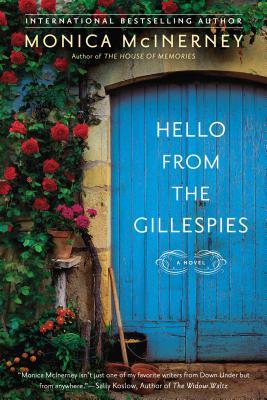
Welcome to the November pick for the Fields & Fantasies book club! Each month or so, in collaboration with my wonderful co-host Diana of Strahbary’s Fields, we’ll pick one book to read and discuss. Today, we’re looking at Hello From the Gillespies by Monica McInerney:
Synopsis (Goodreads):
For the past thirty-three years, Angela Gillespie has sent to friends and family around the world an end-of-the-year letter titled “Hello from the Gillespies.” It’s always been cheery and full of good news. This year, Angela surprises herself—she tells the truth….
The Gillespies are far from the perfect family that Angela has made them out to be. Her husband is coping badly with retirement. Her thirty-two-year-old twins are having career meltdowns. Her third daughter, badly in debt, can’t stop crying. And her ten-year-old son spends more time talking to his imaginary friend than to real ones.
Without Angela, the family would fall apart. But when a bump on the head leaves Angela with temporary amnesia, the Gillespies pull together—and pull themselves together—in wonderfully surprising ways….
My two cents:
In this slice-of-life family drama, we meet a seemingly perfect family — and then get to see what they’re really like. When Angela sits down to write her annual Christmas letter, she’s stuck and completely flustered at the idea of producing yet another glib, sugar-coated interpretation of her family’s current events. Instead, she starts a stream-of-consciousness rant, covering everything from her adult daughters’ career troubles, affairs, and debts, to her 10-year-old son’s weirdness, to the wall of coldness that’s come between her and her husband Nick.
Angela never intends to send the letter — but in the midst of a family crisis, Nick thinks he’s helping Angela out by hitting “send” on her Christmas email. And thus begins a touching and funny tale that explores the power of communication and family love.
This domestic drama was a huge change of pace for me, after reading a lot of horror and thrillers recently — but in truth, I loved it.
First of all, you can’t tell from the synopsis, but Hello takes place on a sheep station in the Australian outback. So, 10 bonus points for excellent setting! The landscape is described beautifully, and the isolation of the station is a big factor in how much the family has fallen apart.
The book takes some turns that I did not expect, with the crazy Christmas letter being dealt with much sooner than I would have thought. I was surprised by how honest Angela and her children ended up being with one another, and I loved the relationships between the daughters, who come with their own sets of problems and idiosyncrasies.
It’s much tougher for Angela and Nick to figure out their issues — and after a freak accident leaves Angela with a strange case of amnesia in which she believes her fantasy life to be real, her family’s nurturing and support help her find her way back to herself and to the life she and Nick truly want.
The characters here are all quirky and memorable, and I enjoyed the glimpses of the various Gillespie kids, their messed-up lives, and their great personalities. (Son Ig is my favorite, hands-down — funny, rambunctious, and with an endearingly oddball sense of creativity and imagination.) Angela and Nick have a bedrock of true love at the heart of their marriage, so it was quite moving to see the pain they each suffered along the way toward healing the rift between them.
As I said earlier, the Australian setting absolutely enhances the overall story and made it that much more enjoyable. And who hasn’t gotten tired of the annual Christmas letters, where every child is brilliant, every spouse is a success, every house is sparkling and lovely? Hello shows the fall-out from a massive dose of truth-telling. It’s fun, light reading, but with a real sense of heart as well.
This would be a great choice for someone looking for a holiday read that’s a bit different, but that still leaves you feeling warm and fuzzy when you’ve finished.
_________________________________________
The details:
Title: Hello From the Gillespies
Author: Monica McInerney
Publisher: Penguin Group/NAL Trade
Publication date: November 4, 2014
Length: 624 pages
Genre: Contemporary fiction
Source: Review copy via NetGalley
_________________________________________
Diana is sitting this month out, but check back next month when we’ll be back with full interactivity!
Next for Fields & Fantasies:
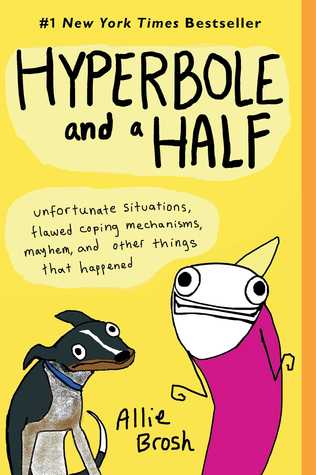
Our December book will be Hyperbole and a Half by Allie Brosh.
“Take a Peek” book reviews are short and (possibly) sweet, keeping the commentary brief and providing a little “peek” at what the book’s about and what I thought. This week’s “take a peek” book:
Synopsis:
(via Goodreads)
In a small New England town, in the early 60s, a shadow falls over a small boy playing with his toy soldiers. Jamie Morton looks up to see a striking man, the new minister. Charles Jacobs, along with his beautiful wife, will transform the local church. The men and boys are all a bit in love with Mrs Jacobs; the women and girls – including Jamie’s mother and beloved sister – feel the same about Reverend Jacobs. With Jamie, the Reverend shares a deeper bond, based on their fascination with simple experiments in electricity.
Then tragedy strikes the Jacobs family; the preacher curses God, mocking all religious belief, and is banished from the shocked town.
Jamie has demons of his own. In his mid-thirties, he is living a nomadic lifestyle of bar-band rock and roll. Addicted to heroin, stranded, desperate, he sees Jacobs again – a showman on stage, creating dazzling ‘portraits in lightning’ – and their meeting has profound consequences for both men. Their bond becomes a pact beyond even the Devil’s devising, and Jamie discovers that revival has many meanings. Because for every cure there is a price…
This rich and disturbing novel spans five decades on its way to the most terrifying conclusion Stephen King has ever written. It’s a masterpiece from King, in the great American tradition of Nathaniel Hawthorne and Edgar Allan Poe.
My Thoughts:
It’s really impossible to quibble with Stephen King. He’s a master writer, and even in his lesser works, his gifts shine through. But for me at least, Revival is a step down from some of his more recent brilliant novels.
Revival is never dull, but it does take a very long time to truly start building momentum. I was at the 200-page mark before I began feeling any urgency in my reading. Perhaps the problem lies in starting the story with Jamie as a six-year-old. A great deal of time is spent on his childhood and adolescence, and while these years matter in the overall story, it’s a very slow build.
The ending is nightmarish, no doubt about it. And yet, I never felt a strong sense of where this story was going. There isn’t a whole lot of black and white, good and bad. The bad guy isn’t, strictly speaking, a real bad guy. The climax is a bit out of the blue, although hints pile up prior to the big event. Jamie himself is an interesting character, and while I was invested in him and his ability to turn his life around, I didn’t quite buy the obsession with Charlie Jacobs or the level to which he influences Jamie’s life.
I enjoyed Revival, and lost a lot of sleep after finishing it at one in the morning. Yes, by the end I couldn’t put it down, and found it intensely creepy and unsettling. Still, overall, I wouldn’t rank it among the Stephen King books that I routinely describe as masterpieces. This feels second-tier to me — but even so, second-tier King is still better than so much else that’s out there, and if you want a book that blends boyhood nostalgia with the most awful feeling of impending doom, you really can’t go wrong with Revival… or pretty much anything else King has written.
(PS – Completely irrelevant to discussion of the merits of this book… but Outlander fans will be amused by the presence of characters named Jamie, Claire, and Brianna in Revival.)
_________________________________________
The details:
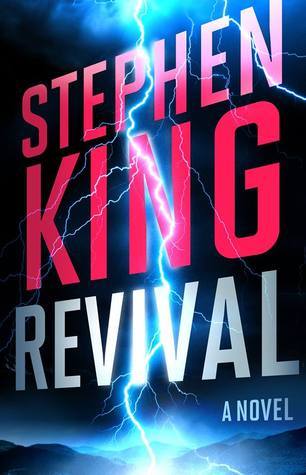
Title: Revival
Author: Stephen King
Publisher: Scribner
Publication date: November 11, 2014
Length: 403 pages
Genre: Horror
Source: Purchased
This is yet another book that makes me want to write a review that simply says:
Loved it. Read this book.
But that’s not terribly helpful, is it? Unless you trust me so very much that you’re willing to take my word for it, just because. No? Okay, I’ll tell you just what I loved about this smart, funny, dramatic, and utterly entertaining book.
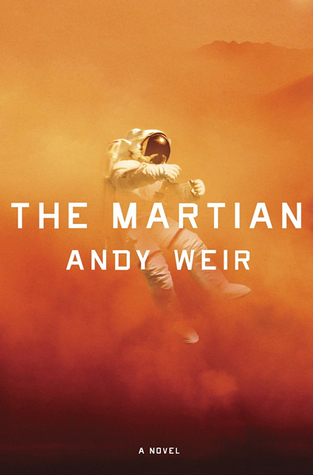
As you’d guess from the cover image, The Martian is the story of an astronaut. Mark Watney is part of a crew of astronauts participating in NASA’s third manned exploration of Mars. Six days into their mission, a massive dust storm prompts an evacuation of the planet, during which Mark is struck by flying debris and believed to be dead. With only minutes to spare before their emergency launch, the mission leader makes the tough call to leave Mark’s body and get the heck off the planet. The world mourns.
Surprise! Mark isn’t dead… but he may be soon. Mark is the sole human on all of Mars, left with the mission’s habitation structure and equipment, a 100-something day food supply, and no means of communication or rescue. The next mission to Mars won’t arrive for another four years. So what’s Mark to do? He has no intention of giving up, and sets about figuring just what it will take to breathe, drink water, and not starve to death in the years he’ll have to wait before he has a shot at returning to Earth.
When NASA finally realizes, thanks to satellite imagery, that they left a very much alive Mark behind, the entire world becomes obsessed with Mark’s survival, and it takes all the brains of NASA and then some, plus the determination of Mark’s crewmates, to figure out a rescue plan with any chance of success.
Ultimately, though, it’s all up to Mark and his incredible brain. As with all NASA missions, the crew members serve multiple roles, and Mark is the mission’s botanist/mechanical engineer. With his knowledge of botany, Mark figures out how to grow crops to sustain himself when the stored food runs out, and with his engineering skills, he’s able to jerry-rig solutions whenever equipment breaks — which is often.
You’d think a book in which the main character spends time calculating the square footage of arable soil needed to produce enough calories for survival or figuring out how to use rocket fuel to create water might get a little weighed down by science-speak… but you’d be dead wrong. I’ve never been more fascinating by geeky science talk. Stuff like this:
I can create the O2 easily enough. It takes twenty hours for the MAV fuel plant to fill its 10-liter tank with CO2. The oxygenator can turn it into the O2, then the atmospheric regulator will see the O2 content in the Hab is high, and pull it out of the air, storing it in the main O2 tanks. They’ll fill up, so I’ll have to transfer O2 over to the rovers’ tanks and even the space suit tanks as necessary.
The point is, the narration here is super-smart yet super engaging. Mark is in battle for survival — but he’s so extremely funny that even in his direst of straits, there’s plenty to make you laugh. Everything that can go wrong, does go wrong, and half the fun is seeing how crazily creative Mark’s solutions are.
One thing I learned after reading The Martian is that author Andy Weir created his own programming in order to figure out things like trajectories and orbits, and his need to make sure that the science works results in a book that’s full of compelling and weird details — which, strangely, don’t weigh down the narrative, but instead let us feel like we’re right there next to Mark, trying to figure out how to rig a heat supply without blowing things up. (I loved Entertainment Weekly’s recent write-up about Andy Weir – check it out here.)
Bottom line? I loved this book. With never a dull moment, The Martian is a treat for the brain as well as providing plenty of laughs along with true suspense and a nail-biting battle for survival. Mark’s voice is what makes reading The Martian such a fun experience, so I’ll leave you with a few choice selections from the logs of astronaut Mark Watney:
If you asked every engineer at NASA what the worst scenario for the Hab was, they’d all answer “fire”. If you asked them what the result would be, they’d answer “death by fire.”
About the e-mails that come pouring in once the world realizes Mark is alive:
One of them was from my alma mater, the University of Chicago. They say once you grow crops somewhere, you have officially “colonized” it. So technically, I colonized Mars.
In your face, Neil Armstrong!
In other news, it’s seven sols till the harvest, and I still haven’t prepared. For starters, I need to make a hoe. Also, I need to make an outdoor shed for the potatoes. I can’t just pile them up outside. The next major storm would case the Great Martian Potato Migration.
The airlock’s on its side, and I can hear a steady hiss. So either it’s leaking or there are snakes in here. Either way, I’m in trouble.
If you at all enjoy reading about space exploration, scientific discoveries, or incredibly inventive men with senses of humor, read The Martian!
_________________________________________
The details:
Title: The Martian
Author: Andy Weir
Publisher: Broadway Books
Publication date: 2014
Length: 369 pages
Genre: Science fiction
Source: Purchased
I’m delighted to be participating in the blog tour celebrating Us, the brand-new novel by David Nicholls, author of the amazing One Day. Thank you, TLC Book Tours, for inviting me to participate!
Us is the story of a marriage that may or may not be ending, how it got that way, and what a man in love will do to hold onto what he’s about to lose.
Main character Douglas Petersen is a desperate man. His wife has just informed him that once their teen son Albie leaves for college in the fall, she’s planning to leave too. According to Connie, their marriage has “run its course”, and it’s time for her to move on to the next chapter of life.
Douglas is an odd but determined man. He’s a scientist, very logical, very methodical; the opposite, in many ways, of free-spirit Connie, who was an artist when they first met but has since moved into the business side of the art world. And then there’s their son Albie, a typically sullen 17-year-old with nothing, it seems, but contempt for the father who just doesn’t get him.
The family has a European vacation planned for the summer, the classic “Grand Tour”, and Douglas views it as a last chance to save his marriage and hold his family together. And of course, it’s a complete disaster. Douglas has every step of the trip planned down to the minute, including viewing every piece of important art and historical artifact in Europe, with no time left in the schedule for spontaneity or fun — which pretty much encapsulates his approach to life in general. Finally, there’s a blow-up, and Albie takes off on his own, leaving Douglas to pursue him in a one-man quest to make amends and repair something that may be irreparable. And, Douglas thinks, if he can come home triumphantly with Albie by his side, Connie may see the error of her ways and stay with him after all.
Nothing goes as it should. Douglas is a crazy smart man, but his people skills are sorely lacking. Time and again, he does just the wrong thing at just the wrong time. It’s no wonder Connie wants out and Albie wants away. Douglas must be insufferable to be around — and yet, Us is Douglas’s first-person narrative, which is a wonderful trick on the part of the author. Seen from the outside, Douglas would be awful. But seeing through his eyes, the picture is quite different: Here’s a man, full of awkwardness, madly in love with his wife from the moment he met her, who tries his best, yet always comes up short. His perception of the world around him makes perfect sense; it just doesn’t necessarily mean that the world understands.
Us is a sad story of what happens to a marriage over the course of many years, no matter how much love it starts with and how much true caring exists between the partners. Over time, the newness erodes, and familiarity takes the place of discovery:
Of course, after nearly a quarter of a century, the questions about our distant pasts have all been posed and we’re left with “how was your day?” and “when will you be home?” and “have you put the bins out?” Our biographies involve each other so intrinsically now that we’re both on nearly every page. We know the answers because we were there, and so curiosity becomes hard to maintain; replaced, I suppose, by nostalgia.
The writing in Us is absolutely sparkling. This is one of those books that will make you very annoying to your friends and family, as you’ll be wanting to read the clever and funny bits out loud constantly — and there are clever and funny bits on every page.
She looked fresh, healthy and tasteful, and yet I found myself instinctively wanting to do up an extra button. I wondered if I might be the only man in the world to have dressed a woman with his eyes.
Douglas may be a rigid and opinionated middle-aged man, but he’s also funny, smart, and full of love, even though the love he feels never quite translates into dialogue that sits well with his wife and son. They’re constantly amused at his expense, seemingly cool and in the know in a way he can never be.
A humorous (yet sad) ongoing theme is Douglas’s inability to understand art — particularly sad, given that his wife is an artist. He’s always stuck for what to say in a museum, resorting to either parroting the audiotour narration or making inane observations on the colors or details of a painting. “Look at the reflection in his eye!” or “I love the blue!” And the more desperate he is to connect, the more he fails:
They stared and stared and I wondered, what was I meant to take from this? What were they seeing? Once again I was struck by the power of great art to make me feel excluded.
Finally, it takes Douglas’s hitting an emotional bottom of sorts and finding himself completely bereft of his usual resources and coping mechanisms before he’s able to achieve any measure of rapprochement with Albie. The father-son relationship is not easy, but there’s still love there, despite the years of snarkiness and incomprehension.
“Da-ad!” he growled, shielding his eyes against the light. “What’s up?”
“I got jumped. By some jellyfish.”
He sat up. “In the water?”
“No, on the land. They took my keys and wallet.”
Interestingly, towards the very end, the author takes a few pages to show us how the same story might have been told by Connie or by Albie, and of course, it’s completely different. And yet, it’s thanks to Douglas’s narration that the not so very unusual tale of a disintegrating marriage becomes something unique.
Us is funny and sad, familiar in its slice of life approach to ordinary people, and yet with many moments that are surprising and unexpected. Any family has its ups and downs; any long-term marriage has its pain, boredom, and exasperation — but there’s still hope, and tenderness, deep caring, and the possibility that there are still more surprises and fresh chapters to explore.
I recommend Us wholeheartedly. Full of crisp, snappy writing and quirky yet relatable characters, Us is a story of love, how it can change over time, and what it means to be a family. For anyone who enjoys contemporary fiction about people and relationships with a ring of truth, don’t miss this terrific new novel.
Find out more:
Check out the Goodreads link, or watch this book trailer:
David Nicholls’s most recent novel, the New York Times bestseller One Day, has sold over 2 million copies and been translated into thirty-seven languages; he also wrote the screenplay for the 2010 film adaptation starring Jim Sturgess and Anne Hathaway. Trained as an actor before making the switch to writing, Nicholls’s previous novels include Starter for Ten (originally published in the U.S. as A Question of Attraction), adapted into a film starring James McAvoy, for which Nicholls also wrote the screenplay; and The Understudy. He continues to write for film and TV as well as writing novels and adapting them for the screen, and has twice been nominated for the BAFTA awards. He lives in London with his wife and two children.
Find out more about David at his website and connect with him on Facebook.
_________________________________________
The details:
Title: Us
Author: David Nicholls
Publisher: Harper
Publication date: October 28, 2014
Length: 396 pages
Genre: Adult contemporary fiction
Source: Review copy courtesy of TLC Book Tours
For further information, stop by TLC Book Tours to view other blog tour hosts.
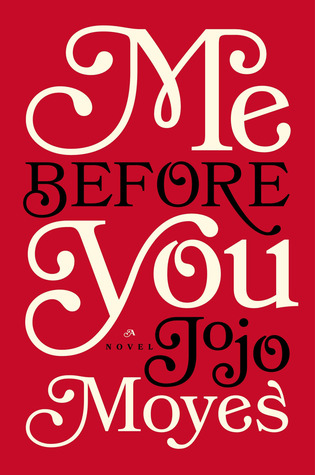
I’m a little late to the party here. I know people have been reading (and crying over) Me Before You for a couple of years now. In fact, I’d reached the point where I was hesitant to read it, simply because I’d heard from so many people about all the feels and all the tears caused by this book — and hype is pretty much the enemy of enjoying books, in my opinion.
But thanks to my book group, I finally buckled down to read Me Before You this week… and despite the choked up feeling in the back of my throat that still hasn’t gone away, I’m glad that I did.
Me Before You tells the story of two people who would never have met, had life gone the way they’d expected. Despite coming from the same small town, Louisa and Will could not be more different. Lou grew up in a working class family, where every bit of income matters, and where her super-smart sister was expected to be the first in the family to attend college, until she dropped out to have a baby. Will Traynor is the son of a wealthy family, accustomed to grabbing life and enjoying every moment, whether via corporate takeovers or extreme sports. The only way these two would have met would have been in some cafe, with Lou serving and Will barely looking up to notice the waitress standing by his table.
Yet life can change in an instant. Lou is informed by the owner of the cafe where she’s worked for years that he’s shutting the doors due to a slump in business, and Lou desperately seeks a new job, knowing that her parents count on her pay to keep the household running. But there’s nothing available for a 27-year-old with little education and few skills, other than a job in a chicken plant or working as a pole dancer. Finally, one more opportunity is presented, working as a carer for a quadriplegic. Despite having no relevant experience, Lou is hired to provide companionship and distraction — and meets Will, whose normal life was snatched away from him two years earlier on a rainy day in London in a freak motorcycle accident.
Will is mean, sarcastic, sullen, and withdrawn, and wants to be left alone. Lou is petrified that she’ll screw up, worried that she’ll lose the only decent-paying job she was able to find, and intimidated both by the wealthy Traynor family and by the silent man in the wheelchair who most emphatically does not seem to want her around. But bit by bit, Louisa, with her wildly colored clothes and ability to say just the wrong thing, starts to crack Will’s shell. She actually makes him laugh, and Will for his part seems to see Lou as a challenge: He’s determined that this small-town girl who’s never gone anywhere or done anything should try new things and expand her horizons. But Lou has set herself a challenge as well: To make Will realize that his life isn’t over, and that there’s still joy and hope for him in this world.
As we (and Louisa) discover early on, there’s a reason that Lou was only hired for a six-month assignment: Will has decided to die via Dignitas, a Swiss clinic offering assisted suicide services. He’s promised his parents to give them six months before proceeding, and in desperation, Will’s mother has hired Lou, hoping that her awkward yet charming demeanor and colorful personality will pull Will out of his despair the way the love of his family hasn’t been able to.
I won’t discuss the plot any further, but suffice it to say, it’s a doozy. It’s not all drama and tears, though. Louisa and Will are both smart and funny, and their interludes are full of laughter and awkward, silly moments. Lou is determined to make Will want to live, and plans a series of misbegotten outings, most of which end in disaster. Will, for his part, forces Lou to spread her wings, through little moments like watching her first subtitled movies or going to the symphony, ordering books from Amazon for her to read, or forcing her to read the newspaper every day so she can debate current issues with him.
Will’s parents are not the most sympathetic people in the world, but I couldn’t help feeling their pain, and while they seem cold and stand-offish at first, through Lou’s eyes we come to see the nightmare of these people who so desperately want to help their son. There are other memorable and wonderful supporting characters, especially Will’s nurse Nathan and Lou’s sister Treena. Lou’s clueless and self-centered boyfriend Patrick, who is so obsessed with triathlons and his fitness routine that he doesn’t see Lou’s needs or feelings, is a comically obnoxious yet cleverly written character. Lou’s parents, who come to play an important role as she makes more dramatic decisions about her intentions toward Will, are equally impressive, as the author portrays them with a convincing sense of heart and history.
But ultimately, this is the story of Lou and Will — how they change each other, and whether they can challenge each other to think differently, and perhaps to feel in new and unexpected ways. A few times, I was sure I knew exactly where this story was going, and yet I ended up surprised by the dramatic developments, the emotional depth, and the final twists of the story.
Because I’d been warned over and over again that I’d cry, naturally, I didn’t. But I did find it a little tough to breathe or talk by the time I got to the last 100 pages or so… and if I hadn’t been told so emphatically to expect tears, then I probably would have ended up a big, soggy mess.
Jojo Moyes is a gifted writer who has a beautiful way with words. She takes ordinary people and conveys the beauty and sadness of their lives and relationships. In all of the books by this author that I’ve read so far, I’ve seen gorgeously drawn love stories, evocative romances, and edge-of-your-seat suspense and dilemmas. The characters in her books feel like real people, and the skill with which she draws us in and makes us care is remarkable.
I’ve read a total of four books by Jojo Moyes by this point, and I’m eager both to explore her earlier works and to read anything new that she writes from this point forward. Meanwhile, my only complaint is that my book group discussion doesn’t start for several more days, and I just can’t wait to talk about Me Before You!
A quick note: I thought I’d try out a new book review format! My “Take a Peek” reviews will be short and (I hope) sweet, keeping the commentary brief and providing a little “peek” at what the book’s about and what I thought. Tell me if you like!
Synopsis:
(via Goodreads)
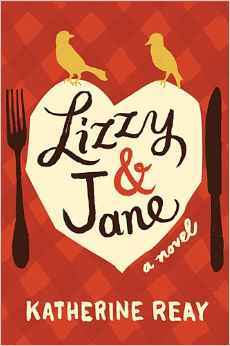
Lizzy and Jane never saw eye to eye. But when illness brings them together, they discover they may be more like Austen’s famous sisters after all.
Lizzy was only a teenager when her mother died of cancer. Shortly after, Lizzy fled from her home, her family, and her cherished nickname. After working tirelessly to hone her gift of creating magic in the kitchen, Elizabeth has climbed the culinary ladder to become the head chef of her own New York restaurant, Feast. But as her magic begins to elude her, Paul, Feast’s financial backer, brings in someone to share her responsibilities and her kitchen. So Elizabeth flees again.
In a desperate attempt to reconnect with her gift, Elizabeth returns home. But her plans are derailed when she learns that her estranged sister, Jane, is battling cancer. Elizabeth surprises everyone—including herself—when she decides to stay in Seattle and work to prepare healthy, sustaining meals for Jane as she undergoes chemotherapy. She also meets Nick and his winsome son, Matt, who, like Elizabeth, are trying to heal from the wounds of the past.
As she tends to Jane’s needs, Elizabeth’s powers begin to return to her, along with the family she left behind so long ago. Then Paul tries to entice her back to New York, and she is faced with a hard decision: stay and become Lizzy to her sister’s Jane, or return to New York and the life she worked so hard to create?
My Thoughts:
Lizzy & Jane is both sad and hopeful, a look at two sisters who have a seemingly impassable chasm between them after years of resentment, estrangement, and loneliness. Elizabeth is adrift in the world; she thinks that she’s put her painful family history behind her and that she’s found success as a top New York chef, but as the story opens, she’s forced to admit that her life just isn’t working any more.
Reunited with her sister and her father, Elizabeth slowly starts to find joy in her cooking again, as she cares for her sister, her sister’s kids, and even the other chemo patients she meets while keeping Jane company. As Elizabeth begins to open herself up to forgiveness and reconciliation, she finds her life taking on new meaning and finds a passion and purpose that she didn’t even know she needed.
I loved how neatly the author ties together literature and cooking in this lovely (and delicious) novel. I’m not a foodie, but even I appreciated Lizzy’s knack for understanding a person’s food tastes based on what they love to read. I don’t know if I’m quite convinced that it would work in real life, but in the context of fiction, it’s simply inspired!
Overall, I really enjoyed Lizzy & Jane. The main character is flawed and wounded, and it’s lovely to see her reconnect with her sister and rediscover herself in the process. The love story is a tad predictable, but still delicious in its own way. The portrayal of the fraught relationship between the sisters feels realistic and sensitive, and I couldn’t help cheering for the characters (and occasionally wanting to give them a little kick to get them talking again!). Filled with real emotion, satisfying personal growth, and a group of supporting characters who each add a little spice to the story, Lizzy & Jane is a great choice for anyone looking for a book to make you feel.
_________________________________________
The details:
Title: Lizzy & Jane
Author: Katherine Reay
Publisher: Thomas Nelson
Publication date: October 28, 2014
Length: 339 pages
Genre: Contemporary fiction
Source: Review copy courtesy of Thomas Nelson via NetGalley
I quickly learned, while reading Brood, that my habit of picking up a book whenever I sit down for a bite to eat is maybe not always the best idea. Because — ick. This book would be best read on an empty stomach. Preferably in broad daylight.
That is, assuming that most people would be squicked out by rat infestations, contemplation of which human body parts are edible, and random eviscerations. But, you know, if you’re okay with all that, then by all means, enjoy this book with a hamburger or something.
Brood is the sequel to last year’s Breed, Chase Novak’s horror-filled cautionary tale about the unintended consequences of medical experimentation and the narcissistic need of 1%ers to reproduce, fertility problems be damned.
[Caution: This review includes spoilers related to Breed. You’ve been warned.]
In Breed, ultra-wealthy Alex and Leslie Twisden have everything money can buy, except the ability to produce offspring. At the end of their quest for legitimate treatment, they turn to a hush-hush supposed miracle cure available through a shady doctor in Eastern Europe.
This is not a good idea.
Much mayhem ensues. It’s not pretty. But hey, they do at least have kids!
RIP, Alex and Leslie. And lots of cats and dogs and mice.
In Brood, the offspring — twins Adam and Alice — are 12 years old, and as the story picks up, their aunt Cynthia has just finalized adoption papers, bringing them back home after two years stuck in the foster system. The twins are small for their age, suffering from massive eating disorders, and not at all used to shelter, comfort, and parental love. Cynthia, previously childless, has the idea that she can be a true mother to the twins, and through the power of unconditional love, give them the normal adolescence they deserve and create an ideal home for their little family of three. She’s wrong, of course.
Meanwhile, packs of feral children roam Central Park, a new drug called Zoom is making the rounds of wealthy people looking for their next kick, and a shady research firm is paying a whack-job weirdo to kidnap the wild kids for non-voluntary medical research.
Brood is a quick read. Also a really gross read. (My Goodreads updates: 21%: Ew. 46%: Ew. 92%: Ew.) The action is heavy-duty, animalistic, stalkery/threatening, and — it bears repeating — gross. There’s a lot of time spent on Cynthia’s mental state, which isn’t actually as interesting as the author seems to think it is. Characters are introduced and then dropped. There’s follow-through from Breed, but not consistently.
Some interesting questions are raised about what it means to be human. The science is a bit iffy, but we don’t really know what that fertility treatment actually entailed, so sure, why not have a new breed of children with unknown DNA patterns, unpredictable development, unconventional appetites, and an undefined step along the evolutionary ladder?
Plus, the idea of preteens running on all fours through the streets of Manhattan? Kind of cool, to be honest.
Last year, after writing a review of Breed, I also wrote a post outlining what I saw as the major lingering questions. Brood ties up some, but not all, of the loose ends left at the end of Breed, which makes me wonder: Is there another installment planned? Or did the author simply feel that some story elements weren’t worth pursuing in the sequel? Brood ends with some finality, but with enough wiggle room left for there to be more yet to come.
Meanwhile, the blood, guts, and rats make Brood a singularly revolting piece of reading. Definitely not for the squeamish. But if you read Breed and remain curious about the fate of all those feral kids, by all means, give Brood a try. For people who enjoy their horror on the chewy side, it’s an *engrossing* (sorry) read.
_________________________________________
The details:
Title: Brood
Author: Chase Novak
Publisher: Mulholland Books
Publication date: October 7, 2014
Length: 320 pages
Genre: Horror
Source: Review copy courtesy of Mulholland Books via NetGalley
 First things first: The Rosie Effect is a sequel, continuing the story begun in The Rosie Project. And really, if you haven’t read the first book, there’s no point in reading this one.
 But I’m willing to make an exception for the works of Denise Townsend — Denise Townsend being the erotica-writing alter ego of one of my very favorite urban fantasy authors (whose more mainstream works still feature scorching hot sexytimes).