Take A Peek Book Review: Roses and Rot by Kat Howard

“Take a Peek” book reviews are short and (possibly) sweet, keeping the commentary brief and providing a little peek at what the book’s about and what I thought.
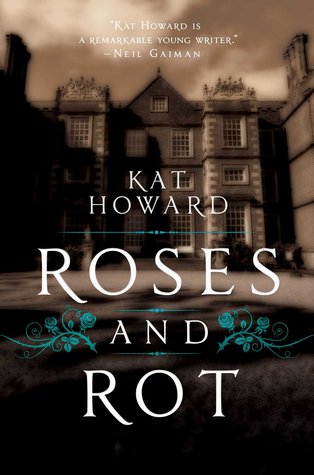
Roses and Rot

Synopsis:

(via Goodreads)

Imogen and her sister Marin have escaped their cruel mother to attend a prestigious artists’ retreat, but soon learn that living in a fairy tale requires sacrifices, be it art or love.

What would you sacrifice in the name of success? How much does an artist need to give up to create great art?

Imogen has grown up reading fairy tales about mothers who die and make way for cruel stepmothers. As a child, she used to lie in bed wishing that her life would become one of these tragic fairy tales because she couldn’t imagine how a stepmother could be worse than her mother now. As adults, Imogen and her sister Marin are accepted to an elite post-grad arts program—Imogen as a writer and Marin as a dancer. Soon enough, though, they realize that there’s more to the school than meets the eye. Imogen might be living in the fairy tale she’s dreamed about as a child, but it’s one that will pit her against Marin if she decides to escape her past to find her heart’s desire.


My Thoughts:

If a book has haunting imagery and some terrific passages, is that enough to get past a plot that doesn’t quite make sense? Perhaps not. In Roses and Rot, we follow two adult sisters who are accepted into an elite and mysterious artists’ retreat for a year. Imogen and Marin have lived apart for years, but their residency at Melete offers them a chance to both hone their art and mend their relationship.

Which all sounds terrific, but there’s more. The school borders Faerie, and the artists who achieve the stunning success that Melete is famous for do so at a cost. Imogen and Marin both want the guaranteed flourishing of talent that will come if they pay the price, but according to the twisted Fae rules, only one can be chosen.

Meanwhile, they and the other artists work and live in a dreamlike setting, with magical fairs popping up from time to time, when the borders between worlds become porous and the Fae walk freely among the humans across the campus.

Everyone seems to accept the existence of the Fae and the odd rules and opportunities without more than a blink of an eye. Imogen and Marin come to Melete with no knowledge of any of this, but they just fall right into it as if it were normal. Imogen has been fascinated by fairy tales her entire life, finding in them an escape from their horribly abusive mother, but it seems to me that it should have been a much bigger leap to accept the fantastic as real. The entire retreat, not to mention the lure of the Fae promises, makes even less sense for Marin, who already has a promising career in ballet just starting to take off when she enrolls in this voluntary seclusion for the year of her residency.

The story is kind of all over the place. I enjoyed the relationship between the sisters, and was moved (and horrified) by the memories of their mother’s incredible cruelty. The interplay between the artists’ success and the debt to Faerie just didn’t particularly work for me. There are pieces that made little or no sense, and some storylines that seem to drop in and then out again without much reason.

Overall, this is a book that includes some lovely writing, but the plot itself lost me somewhere along the way, and the characters seemed more like types than actual people. I just didn’t get swept up, and I think the success of the book as a whole depends on how much you can get lost in the atmosphere of the storytelling.

_________________________________________

The details:

Title: Roses and Rot
Author: Kat Howard
Publisher: Saga Press
Publication date: May 17, 2016
Length: 336 pages
Genre: Fantasy/contemporary/adult
Source: Review copy courtesy of the publisher via NetGalley
Book Review: Summer of Lost and Found by Rebecca Behrens

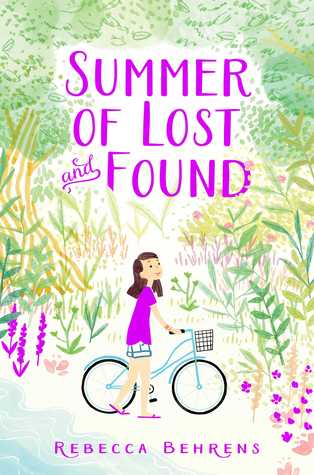
Summer of Lost and FoundSynopsis:

(via Goodreads)

Nell Dare expected to spend her summer vacation hanging out with her friends in New York City. That is, until her botanist mom dragged her all the way to Roanoke Island for a research trip. To make matters worse, her father suddenly and mysteriously leaves town, leaving no explanation or clues as to where he went—or why.

While Nell misses the city—and her dad—a ton, it doesn’t take long for her to become enthralled with the mysteries of Roanoke and its lost colony. And when Nell meets Ambrose—an equally curious historical reenactor—they start exploring for clues as to what really happened to the lost colonists. As Nell and Ambrose’s discoveries of tantalizing evidence mount, mysterious things begin to happen—like artifacts disappearing. And someone—or something—is keeping watch over their quest for answers.

It looks like Nell will get the adventurous summer she was hoping for, and she will discover secrets not only about Roanoke, but about herself.

My thoughts:

Such fun! This is a perfect summer book – particularly if you’re looking for something to tuck into a middle-grade reader’s suitcase on the way to a family vacation. I picture reading this one on a blanket on the beach, in between dips in the ocean, maybe while munching on watermelon slices…

Nell Dare is a terrific main character. She’s a city girl through and through, and can’t think of anything more perfect than spending the summer in Manhattan with her best friend. When her dad takes off and her mother forces her to spend time on a weird island to help with research about an old vine, things are definitely not going as planned.

Nell becomes enthralled by the mysteries of Roanoke Island, famous for its lost colonists — the early settlers in the late 1500s who disappeared without a trace, a mystery unsolved to this day. Nell makes a “frenemy” of another girl her age, Lila, who’s also determined to get to the bottom of the lost colony. The race is on! Nell pursues clues with the help of a charming but slightly odd boy, learning her way around the island — but also learning how to get along without subways or taxis, enjoying the forests and dunes and learning the fine art of traveling by bicycle.

There’s a lot of heart in the story, as Nell’s summer is spent worrying about her father’s disappearance and what it means. Neither parent will tell her straight out, so Nell is left to guess and feel bad. She worries too that her best friend back in New York will replace her while she’s gone, and the speed at which texts are answered become talismans for the state of their friendship.

Finally, Nell learns a lot about finding a direction and charting her own path, asking for answers, and sticking things out.

But that’s true, right? Sometimes it’s the places we think we know the best that hold the most secrets: our streets, our backyards, and even our homes.

Nell’s summer adventure, investigating the mysteries of Roanoke, ultimately allows her to find out more about herself and her family. Along the way, she explores friendship and loneliness, and figures out that she needs to stand up and makes things happen herself.

Summer of Lost and Found is a charming middle-grade novel about a summer of discoveries — discoveries about the past, about things that are lost, and about commitment and family. Highly recommended for moms and daughters — this would make a great summer book to share!

Interested in this author? Check out my review of her previous novel, When Audrey Met Alice.

_________________________________________

The details:

Title: Summer of Lost and Found
Author: Rebecca Behrens
Publisher: Aladdin
Publication date: May 24, 2016
Length: 288 pages
Genre: Middle grade fiction
Source: Review copy courtesy of Simon & Schuster Children’s Publishing

Take A Peek Book Review: Everyone Brave Is Forgiven by Chris Cleave

“Take a Peek” book reviews are short and (possibly) sweet, keeping the commentary brief and providing a little peek at what the book’s about and what I thought.

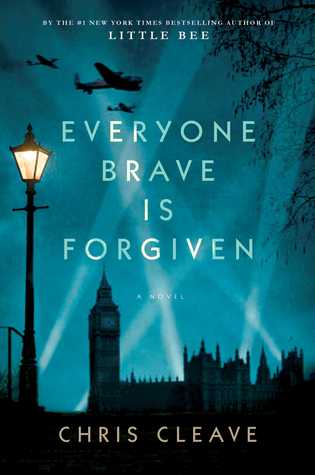
Everyone Brave is Forgiven


Synopsis:

(via Goodreads)

From the author of the #1 New York Times bestselling Little Bee, a spellbinding novel about three unforgettable individuals thrown together by war, love, and their search for belonging in the ever-changing landscape of WWII London.

It’s 1939 and Mary, a young socialite, is determined to shock her blueblood political family by volunteering for the war effort. She is assigned as a teacher to children who were evacuated from London and have been rejected by the countryside because they are infirm, mentally disabled, or—like Mary’s favorite student, Zachary—have colored skin.

Tom, an education administrator, is distraught when his best friend, Alastair, enlists. Alastair, an art restorer, has always seemed far removed from the violent life to which he has now condemned himself. But Tom finds distraction in Mary, first as her employer and then as their relationship quickly develops in the emotionally charged times. When Mary meets Alastair, the three are drawn into a tragic love triangle and—while war escalates and bombs begin falling around them—further into a new world unlike any they’ve ever known.

A sweeping epic with the kind of unforgettable characters, cultural insights, and indelible scenes that made Little Bee so incredible, Chris Cleave’s latest novel explores the disenfranchised, the bereaved, the elite, the embattled. Everyone Brave Is Forgiven is a heartbreakingly beautiful story of love, loss, and incredible courage.


My Thoughts:

I have such mixed feelings about this book. The story is grand and sweeping, encompassing the London air raids of World War II as well as the horrible conditions experienced by soldiers besieged on the island of Malta. In terms of setting and historical context, Everyone Brave Is Forgiven is powerful and hard-hitting, showing us the terror of the reality of war through the eyes of those attempting to live through it.

At the same time, the characters and the dialogue kept me at a distance throughout. The writing is so overdone, and there’s a jolly good, stiff upper lip, never say anything that isn’t a quip flavor to every line the characters speak. If I had to read one more sentence about what “one” did or didn’t do or feel, I might have pulled my hair out.

Overall, I found this a disappointing read. I will probably be in the minority on this one, as the book seems to be getting raves from all the big literary review sources. Sadly, the paths of the characters and the central love story didn’t have a ring of truth. The tragedies pile up, and there are scenes of raw destruction that are breathtakingly sad and shocking. Unfortunately, I couldn’t find the characters’ lives, actions, or relationships real enough to feel a true sense of connection to their stories.

_________________________________________

The details:

Title: Everyone Brave is Forgiven
Author: Chris Cleave
Publisher: Simon & Schuster
Publication date: May 3, 2016
Length: 432 pages
Genre: Historical fiction
Source: Review copy courtesy of the publisher via NetGalley
Book Review: The Midnight Watch by David Dyer

midnight watch2Synopsis:

(via Goodreads):

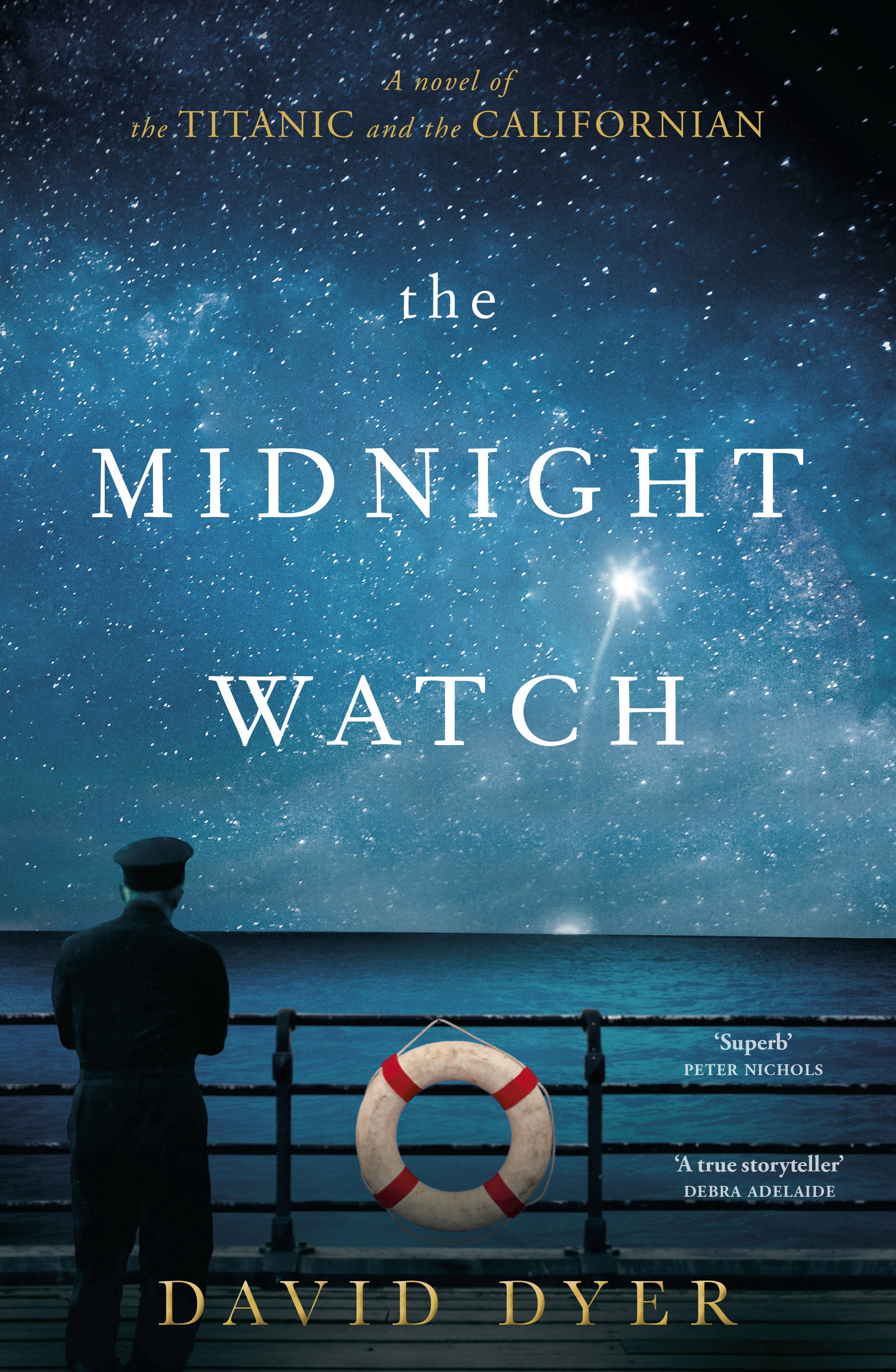
As the Titanic and her passengers sank slowly into the Atlantic Ocean after striking an iceberg late in the evening of April 14, 1912, a nearby ship looked on. Second Officer Herbert Stone, in charge of the midnight watch on the SS Californian sitting idly a few miles north, saw the distress rockets that the Titanic fired. He alerted the captain, Stanley Lord, who was sleeping in the chartroom below, but Lord did not come to the bridge. Eight rockets were fired during the dark hours of the midnight watch, and eight rockets were ignored. The next morning, the Titanic was at the bottom of the sea and more than 1,500 people were dead. When they learned of the extent of the tragedy, Lord and Stone did everything they could to hide their role in the disaster, but pursued by newspapermen, lawyers, and political leaders in America and England, their terrible secret was eventually revealed. The Midnight Watch is a fictional telling of what may have occurred that night on the SS Californian, and the resulting desperation of Officer Stone and Captain Lord in the aftermath of their inaction.

Told not only from the perspective of the SS Californian crew, but also through the eyes of a family of third-class passengers who perished in the disaster, the narrative is drawn together by Steadman, a tenacious Boston journalist who does not rest until the truth is found. The Midnight Watch is a powerful and dramatic debut novel–the result of many years of research in Liverpool, London, New York, and Boston, and informed by the author’s own experiences as a ship’s officer and a lawyer.

My thoughts:

The Midnight Watch is a strong debut novel built on meticulous research of the historical records. Prior to reading this book, I’d never even heard of the Californian, but a quick Google search shows just how real this nightmare story is. The Californian was nearby at the time that the Titanic was sinking, close enough to potentially have been able to save most or even all of those lost in the tragedy, and yet the ship did nothing in response to the Titanic’s distress signals.

The author does a painstaking job of recreating the events of that terrible night. In alternating chapters, we see events unfold through the eyes of the men onboard the Californian, especially Herbert Stone, and then learn of the Titanic and the possible involvement of the Californian through the perspective of John Steadman, a journalist who specializes in giving voice to those who’ve died in tragic circumstances.

It’s shocking to read that the officer of the watch saw the rockets, understood them to be distress signals, and then contacted the captain, only to do nothing once his captain chose to do nothing. The subsequent sets of lies and cover-ups and self-deceptions are equally disturbing and confusing. Why didn’t the Californian respond? How could Captain Lord live with himself afterward? Why didn’t the second officer do more if he truly believed he was witnessing a ship that needed help?

While The Midnight Watch lays out the events and presents a fictionalized accounting of what may have been going through the minds of the men involved, of course we’ll never actually know the truth or why this terrible inaction transpired while people were dying nearby.

The book is well-written and the character of John Steadman is appealingly flawed — a man who pursues the truth, even while drinking himself into oblivion and at the risk of his job. Captain Lord remains a haughty enigma. It’s impossible to truly understand his role in the Titanic’s sinking, but the portrayal of him here is certainly unflattering.

The piece of The Midnight Watch that carries the greatest emotional power comes toward the end, as the book includes the (fictional) account written by Steadman, called “Eight White Rockets”. Steadman’s piece describes events on the Californian that night, intercut with his recreation of the final hours spent on board the Titanic by a family of eleven — a mother, father, and their nine children — who all perished in the sinking. (This family, the Sage family, were real people who died in the disaster; the author has imagined what their experience might have been and why none survived.)

So many years later, the tragedy of the Titanic continues to fascinate us. The Midnight Watch describes a less well-known aspect of that terrible event, bringing to light facts and people that most with a casual interest in the Titanic today are probably unfamiliar with. The Midnight Watch blends historical details with a fictional story of journalistic research to create a compelling and moving tale. If you enjoy historical fiction and want to know more about the Titanic disaster, be sure to check this book out.

_________________________________________

The details:

Title: The Midnight Watch
Author: David Dyer
Publisher: St. Martin’s Press
Publication date: April 5, 2016
Length: 323 pages
Genre: Historical fiction
Source: Review copy courtesy of the publisher via NetGalley
A Mini-Review for a Mini-Book: Blockade Billy by Stephen King

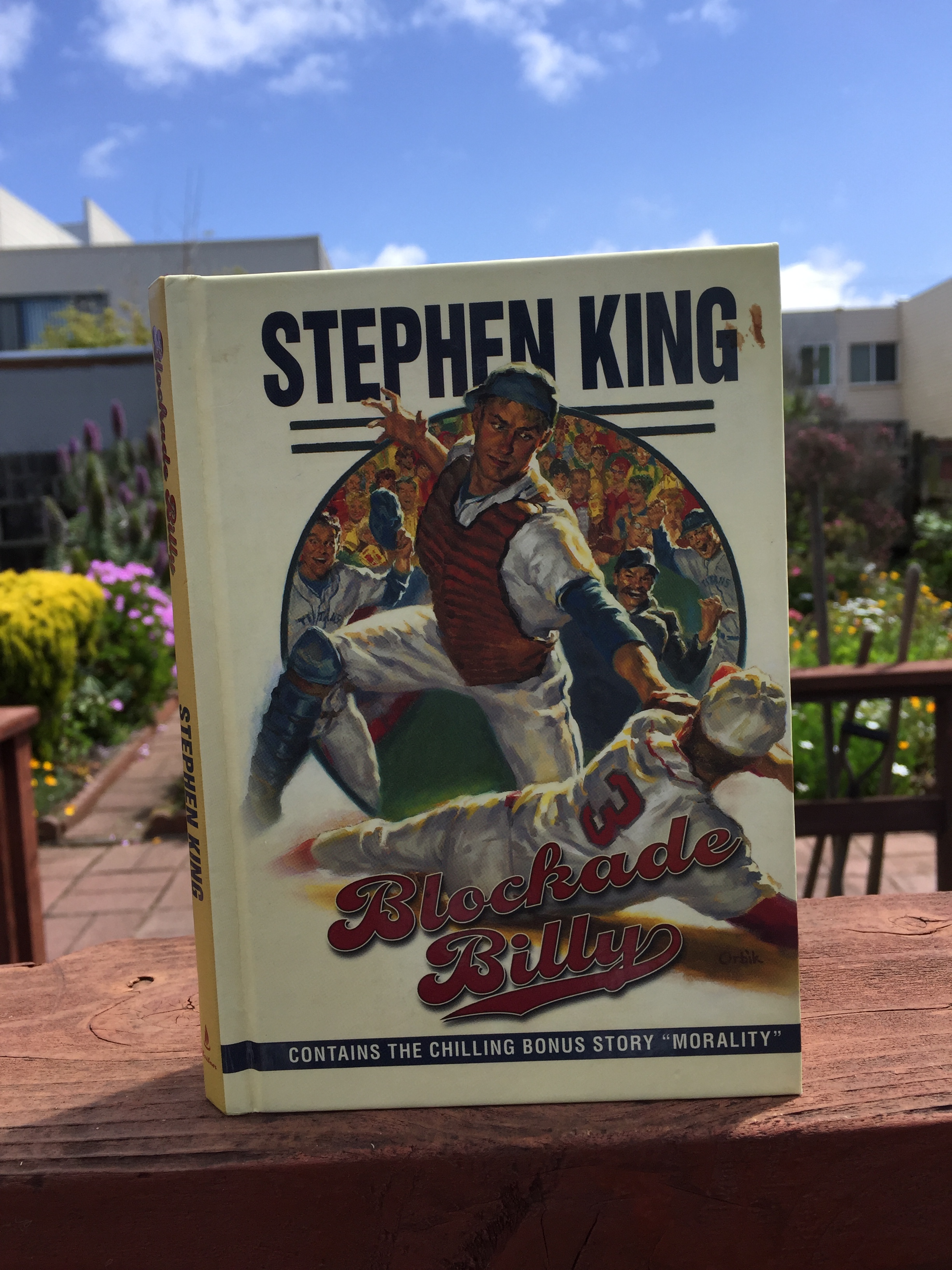
Blockade BillyI picked up this small book for a dollar at my library’s big book sale last month. Awesome find, right? I’ve been going to the library sales for years, and it seems that I come home from each one with at least one new Stephen King book to add to my collection.

Blockade Billy is a slim hardcover containing two novellas, the title story plus another called Morality. The whole thing was a quick read, so from that perspective you could call it light reading, although the subject matter is definitely lacking in rainbows and kitties.

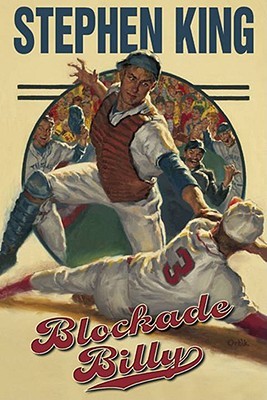
The first story, Blockade Billy, is (obviously, based on the cover) a baseball story. Not being much of a baseball fan, I didn’t expect to like it — but I did. The story is told in the first person by an old man who once coached a not-very-good major league baseball team. As the man tells the story to his listener, Mr. King (!), we enter the world of 1950s-era baseball. A young catcher joins the team to fill in for an injured player, and surprises everyone by being a fantastic player, even though he seems a little off in the head. After a glorious start to the season, Billy’s achievements and the team’s winning streak were struck from the record books. Why? Read the story to find out!

In Morality, we meet Chad and Nora, a couple in their 30s with mounting bills and little chance of paying them. When the elderly stroke patient in Nora’s care makes her an offer to earn a big pile of cash, the couple faces a moral dilemma. Shades of Indecent Proposal? Kind of. It’s disturbing to find out what the old man wants, and to see how and why Chad and Nora agree to his plan, as well as how they deal with the aftermath.

image

My copy… enjoying the sunny weather.

I ended up enjoying both stories, probably Morality more than Blockade Billy. Is enjoying even the appropriate word? Probably not, as both stories are disturbing. What’s great (again, not really the appropriate word) about both is that they’re not horror stories. The bad things that happen are driven by human nature, desires, and impulses. It’s people doing evil, not evil beings inflicting pain on ordinary people. There’s something sad and fascinating about watching the drama unfold in both of these stories — and of course, Stephen King is the master of keeping the reader guessing as a story builds. We may not have all the details until the end, but we’re hooked from start to finish.

If you’re a King fan and you haven’t read Blockade Billy, pick up a copy when you’re looking for a bite-sized book to pass the time with.

Note: As I finished writing this post, I found out that both of these stories are included in Stephen King’s new book of short stories, The Bazaar of Bad Dreams, published in November 2015. And while I’m not usually a short story reader, I’m thinking I might need to make an exception for this collection.

_________________________________________

The details:

Title: Blockade Billy
Author: Stephen King
Publisher: Scribner
Publication date: May 25, 2010
Length: 132 pages
Genre: Adult fiction
Source: Purchased

Book Review: A Spool of Blue Thread by Anne Tyler

Spool of Blue ThreadSynopsis:

(via Goodreads)

A freshly observed, joyful and wrenching, funny and true new novel from Anne Tyler

“It was a beautiful, breezy, yellow-and-green afternoon.” This is how Abby Whitshank always begins the story of how she fell in love with Red that day in July 1959. The Whitshanks are one of those families that radiate togetherness: an indefinable, enviable kind of specialness. But they are also like all families, in that the stories they tell themselves reveal only part of the picture. Abby and Red and their four grown children have accumulated not only tender moments, laughter, and celebrations, but also jealousies, disappointments, and carefully guarded secrets. from Red’s father and mother, newly-arrived in Baltimore in the 1920s, to Abby and Red’s grandchildren carrying the family legacy boisterously into the twenty-first century, here are four generations of Whitshanks, their lives unfolding in and around the sprawling, lovingly worn Baltimore house that has always been their anchor.

Brimming with all the insight, humour, and generosity of spirit that are the hallmarks of Anne Tyler’s work, A Spool of Blue Thread tells a poignant yet unsentimental story in praise of family in all its emotional complexity. It is a novel to cherish.

My thoughts:

It’s been years since I’ve last read an Anne Tyler novel — and picking up A Spool of Blue Thread is like cozying up with a comfy old blanket and curling up in a favorite chair. It’s homey and warm and familiar, but the familiarity doesn’t take away at all from the sheer pleasure of spending time with it.

In A Spool of Blue Thread, we meet the Whitshanks, a big, sprawling family whose lives seem centered around their beautiful family home with the big front porch, the home that’s been in the family for three generations and was in fact built by the first of the Whitshanks to live in it. The first characters introduced are Abby and Red, a married couple in their seventies who’ve raised four children, have a good, well-worn marriage, and seem to enjoy their lives.

Their children and grandchildren are a source of non-stop discussion and worry, particularly Denny, the black sheep of the family who can always be depended upon to be undependable. Denny disappears for months or years at a time, only to show up or call with an odd or worrying or unexpected announcement that throws the family into a tizzy.

As Abby and Red age, their children become increasingly worried about their ability to live on their own in their big house, and so various children and their children move in to provide care, manage things, and try to sort out the little rivalries and resentments that have built up over the years.

As the story unfolds, early hints about family history are unpacked for the reader. The family may never know much about Junior and Linnie Mae, the original Whitshanks to live in the family home, but late in the book, we finally get their story, and it’s not what it seemed. Likewise, when we finally hear Abby’s version of how she and Red met, it’s surprising and touching all at once.

A Spool of Blue Thread is a quintessential character-driven book. There’s not much plot to speak of — no big drama or mystery or climax. Instead, it’s a study of family and individuals, their desires and frustrations and misunderstandings and dynamics. It’s lovely to see a family unfold to reveal its heart and soul. The Whitshanks have had their share of disappointments and tensions, but they’re still there, together, figuring things out. Beyond a profile of a family, it’s also a moving depiction of the worries of aging parents, from both the parents’ viewpoint as well as the adult children who have to balance their own lives with the complications required by figuring out how to help parents who may or may not be able to function on their own any longer.

As I mentioned, it’s been quite a while since I’ve read anything by this author, although there was a time when I read all of her new books as soon as they came out. I think I’d reached my saturation point somewhere along the line, and I might not have picked up A Spool of Blue Thread if it hadn’t been my book club’s pick for April.

So, yet another reason to proclaim that I love my book club! A Spool of Blue Thread is a perfect domestic novel that’s touching, funny, and beautifully written. I’m so glad to have read it — and it makes me want to go figure out what other Anne Tyler books I’ve missed over the years.

_________________________________________

The details:

Title: A Spool of Blue Thread
Author: Anne Tyler
Publisher: Bond Street Books
Publication date: February 20, 2015
Length: 358 pages
Genre: Adult fiction
Source: Library

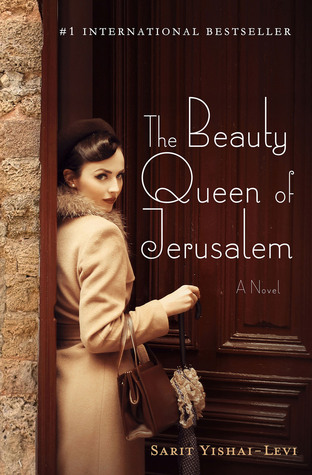
Book Review: The Beauty Queen of Jerusalem by Sarit Yishai-Levi

Beauty Queen of JerusalemFour generations of family traditions and doomed marriages form the heart of The Beauty Queen of Jerusalem, a family saga that takes place in the decades before, during, and after Israel’s war for independence.

Gabriela Siton is the youngest in a line of women belonging to the Ermosa family, a large Sephardic family — Jews of Spanish descent — living in Jerusalem, dealing with family secrets and turbulence during a time of war and upheaval in Israel itself.

The story opens with Gabriela’s mother’s death. Luna dies at a relatively young age from a deadly and fast-moving cancer, and Gabriela’s resulting grief is heavily laden with guilt. She and Luna had a fraught, difficult relationship all of Gabriela’s life, and she doesn’t quite know what to do with all of her emotions and the confusion she’s left with.

Bit by bit, over the course of the story, we hear more about the history of the Ermosa women. There’s the matriarch of the family, Mercada, who marries her beloved son off to a poverty-stricken orphan as punishment for his near-betrayal of his family. Mercada’s daughter-in-law, Rosa, faces life with a husband who doesn’t love her, a beloved brother who gets involved in the deadly underground movement leading up to independence, and three daughters — the oldest of whom is Luna. Luna is gorgeous, the most beautiful girl in Jerusalem, but with a selfish and combative personality. She’s prickly and self-centered, and she and Rosa never find a way to bond.

Later on, Gabriela is told that the curse of the Ermosa women is to marry men who don’t really love them, and that seems to be true in the three preceding generations. Each man is madly in love with a woman who isn’t appropriate or acceptable, and so marries out of obligation, leading to bitterness, lack of passion, and lack of respect.

In some ways, The Beauty Queen of Jerusalem reminded me of Isabel Allende’s masterpiece, The House of the Spirits. Like The House of the Spirits, the blessings and curses of each generation seems to be passed along to the next, as each set of relationships is influenced by, or damaged by, the ones that came before. Likewise, The Beauty Queen of Jersusalem, while telling the tale of a particular family, is set against a backdrop of a significant historical era. The history of pre-state Israel and its struggle for independence form a big piece of the picture here, as the Ermosa family is caught up in the violence and upheavals that surround them.

The title of this book is a misnomer, and a pretty unfortunate one at that. Luna is known for her remarkable beauty, and is referred to as the beauty queen of Jerusalem — although not, as you might expect, because she actually competed in pageants or won competitions or anything. She’s just a woman who was known for her beauty and style. What’s more, the book isn’t exclusively, or even mainly about Luna — it’s about all of the women of her family. In fact, Luna is a mostly unlikeable character who’s a terrible mother and is mostly portrayed as being awful to her own mother. Things happen later in the book that make her a slightly more sympathetic character, but the bottom line is that she isn’t solely what the book is about, and it took me a while to get past the preconception that I had from the title in order to see the breadth of the story.

On the plus side, there are many vignettes in this sweeping story that are completely enchanting. Rosa’s story is fabulous, and you can’t help but feel compassion for a woman who’s struggled all her life and gotten little in return. The story of Rosa’s three daughters (including Luna) and how they each met the men they’d end up marrying is varied and textured. The Sephardic heritage of the family is described through their rituals, their use of Ladino phrases, and the little details about food and customs that bring a sense of vitality to their daily lives.

The Jerusalem setting is wonderful, with the city forming a vibrant stage for the family drama. The historical elements are skillfully woven into the story, so that the loves and struggles within the family are set against their worries about English police, bombings in the streets, sieges and rationing, and men serving at the front.

While overall I enjoyed the book, I did hit a few stumbling blocks. The biggest issue for me was the language, which often felt a bit clunky. The book is an English translation from the Hebrew, and I’m afraid that something truly was lost in translation. The writing just doesn’t always flow, and the dialogue and use of Ladino and Spanish phrases seem a bit jammed in, not organic. I have a feeling this issue might not be an issue if the book were read in the original Hebrew.

The other element that might be problematic for American readers is the assumption of familiarity with details of Israeli history. The book was written and published in Israel in 2013, released in English in the United States for the first time this year. It occasionally feels a bit like “inside baseball” — the book is written for an Israeli audience, and there’s an assumption of a common culture and background. For me, having spent time there and understanding the history and culture, it wasn’t an issue, but I can imagine that some readers will have a harder time understanding the context or getting the full picture of the historical elements woven into the story, or even being able to identify some of the names, politicians, and organization that are referred to throughout the book.

The perspective and organization of the book is somewhat puzzling. We begin with Gabriela’s first-person narration, but the storytelling shifts. Sometimes, it’s another family member telling Gabriela about incidents from the past, set out as a dialogue with Gabriela, with the story appearing in quotation marks. But at other times, it’s a third-person narrative, filling in the gaps and telling other pieces of the family story. The narrative jumps from one character’s perspective to anothers, and it can be jarring to sometimes see the world according to a character who hasn’t had a POV before. Time-wise, it’s confusing as well, as we get a description from Gabriela early on about her mother’s death, but as the story jumps back and forth for most of the book, it’s jarring when the last few chapters jump back to an adult Gabriela and how she reconciles her grief and anger.

At its core, The Beauty Queen of Jerusalem is a moving story of a complicated and messed-up family. I really enjoyed parts of the story, especially those pieces that delve more deeply into the complicated emotions and wounds of the many family members. Unfortunately, the awkward writing/translation and the narrative inconsistency make this book more difficult than it needs to be, and overall I think the plot could have used a bit more focus. Still, it’s worth reading for the intergenerational conflicts and dynamics, and I enjoyed the nuggets of history that form the backbone of the story.

_________________________________________

The details:

Title: The Beauty Queen of Jerusalem
Author: Sarit Yishai-Levi
Publisher: Thomas Dunne
Publication date: April 5, 2016
Length: 384 pages
Genre: Historical fiction
Source: Review copy courtesy of the publisher via NetGalley
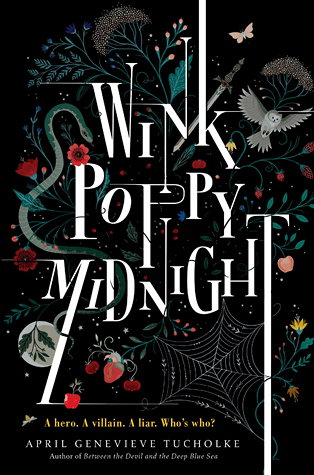
Take A Peek Book Review: Wink Poppy Midnight by April Genevieve Tucholke

“Take a Peek” book reviews are short and (possibly) sweet, keeping the commentary brief and providing a little peek at what the book’s about and what I thought.

Wink

Synopsis:

(via NetGalley)

Every story needs a hero.
Every story needs a villain.
Every story needs a secret.

Wink is the odd, mysterious neighbor girl, wild red hair and freckles. Poppy is the blond bully and the beautiful, manipulative high school queen bee. Midnight is the sweet, uncertain boy caught between them. Wink. Poppy. Midnight. Two girls. One boy. Three voices that burst onto the page in short, sharp, bewitching chapters, and spiral swiftly and inexorably toward something terrible or tricky or tremendous.

What really happened?
Someone knows.
Someone is lying.

My Thoughts:

I have no idea what to make of this dizzying book. Wink, Poppy, and Midnight take turns telling their versions of what happen in this mind-bendy tale. There are hints of fairy tales and ghost stories, as the three characters offer their views of themselves and each other, but only ever tell part of the story.

Mystical elements abound, from tarot readings and hauntings to certain evocative tastes and smells. The names in the story are odd and whimsical — not just the three main characters, but their various friends and family members, including Leaf, Buttercup, Alabama, and Peach. What seems a straightforward story of an ultra-mean mean girl, the people under her thumb, and the wild girl who offers a different path… isn’t. Wink, Poppy, and Midnight interact and become parts of each other’s stories. Midnight is our most relatable point of view in the story, the sweet and honest boy next door, but his perspective isn’t as reliable as he’d like to think, and he doesn’t really see beyond what’s in front of him.

It’s hard to describe this book without giving too much away. It’s frustrating that the book has been so built-up as a twisty, turny, surprising shocker. Even the cover blurb (“A hero. A villain. A liar. Who’s who?”) puts us on alert that we can’t believe what we’re told or take the characters at their word. I wish we didn’t have this heads-up. It would be much more powerful and shocking if we weren’t told ahead of time not to trust what we see.

I read Wink Poppy Midnight in a single day. It’s a book that just begs to be gulped up. I’m not sure that I’ve fully figured out why certain things happened as they did or what the motivation was — and I don’t know if that’s because I haven’t gotten there yet in my processing of the story, or if the resolution just wasn’t as clearly explained as it should have been. In any case, it was a fun, trippy, absorbing read that sucked me in completely and didn’t let me go until I got to the last page… even if I’m not convinced that it makes the slightest bit of sense.

But, hey, that’s one hell of a great cover!

If anyone else has read Wink Poppy Midnight, I’d love to hear what you thought.

_________________________________________

The details:

Title: Wink Poppy Midnight
Author: April Genevieve Tucholke
Publisher: Dial Books
Publication date: March 22, 2016
Length: 247 pages
Genre: Young adult fiction
Source: Library

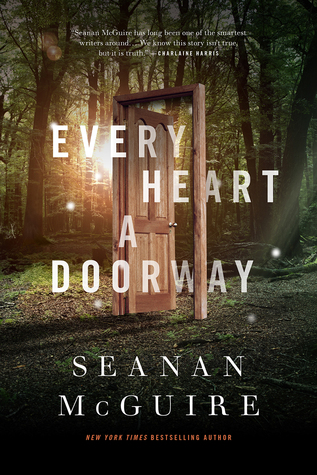
Book Review: Every Heart A Doorway by Seanan McGuire

Every HeartThis slim novel is beautiful and creepy, oddly disturbing and yet practically poetic.

In Every Heart a Doorway, Nancy is a 17-year-old who’s more disaffected than your typical disaffected teen. Nancy spent years in the Halls of the Dead after stumbling through a hidden doorway… and now that she’s back in the world that she grew up in, she doesn’t belong at all. So her parents send her to boarding school, hoping it’ll cure her of her oddness and delusions and turn her back into their “normal” daughter. But this isn’t just any boarding school — it’s Eleanor West’s Home For Wayward Children, and it’s filled with teens who’ve been dumped back in the so-called real world after traveling to strange and mysterious lands.

But how do you adapt to an ordinary life after experiencing something so extraordinary? For most, the simple answer is — you don’t. Most of these teens will spend their lives yearning for and searching for their doorways back to the place they consider their true homes.

As Nancy adjusts to this odd school, she meets a girl who lived in a Nonsense world, and one who walked on rainbows. There are strange terms used to describe the various destinations, like High Logic and High Virtue. There’s a boy who lived in a world populated by skeletons, where he fell in love with Skeleton Girl, and a boy who fell through a Prism and became a Goblin Prince in Waiting, but was rejected when it was discovered that he had been born a biological female. There are twin sisters who lived in a dark and menacing world called the Moors, where blood and body parts were the center of their lives.

What all these children have is common is the burning desire to return and the despair stemming from not knowing how to get there.

Every Heart a Doorway may sound odd, but it’s odd in the very best way. Some of the worlds describe are icky and creepy, some are filled with unicorns and rainbows, and Nancy’s Halls of the Dead is a colorless world where absolute stillness is the ultimate virtue. There’s a beauty to the descriptions, and the sense of longing and displacement that the children feel is palpable.

She stayed where she was for a count of ten, enjoying the stillness. When she had been in the Halls of the Dead, she had sometimes been expected to hold her position for days at a time, blending in with the rest of the living statuary. Serving girls who were less skilled at stillness had come through with sponges soaked in pomegranate juice and sugar, pressing them to the lips of the unmoving. Nancy had learned to let the juice trickle down her throat without swallowing, taking it in passively, like a stone takes in the moonlight. It had taken her months, years even, to become perfectly motionless, but she had done it: oh, yes, she had done it, and the Lady of Shadows had proclaimed her beautiful beyond measure, little mortal girl who saw no need to be quick, or hot, or restless.

Ah, I loved this book! It’s a short, quick read, but I would have loved to get even more! The writing is just so lovely — but then there are parts that cross from poetic to bluntly bloody, as when a group of friends has to dissolve a body in acid in order to free the bones from the flesh.

Of course, Every Heart a Doorway could also be taken as a metaphor for the teen experience. Parents mean well, but just don’t get it. They try to to “fix” their children — who don’t need fixing at all. Teens search for the place that feels like home, where they can be their true selves, rather than trying to conform to a world where they always feel out of place and misunderstood.

Or… you can just read it as a straight-up fantasy tale that takes us behind hidden portals into worlds of wonder and dread and eerie splendour. I kind of prefer that approach, to be honest.

I was surprised to see on Goodreads that this is the first in a three-part series, rather than a stand-alone. I will definitely want to read more from this world. Meanwhile, I’m thinking that I’ll follow up with the audiobook, so I can concentrate less on plot details and more on the sound of the language of the book.

Every Heart A Doorway casts a magical spell that veers between beautiful, sinister, and downright creepy. Highly recommended for readers who enjoy a touch of the magic and the macabre — and enjoy it even more when the borders between the two become blurred.

_________________________________________

The details:

Title: Every Heart a Doorway
Author: Seanan McGuire
Publisher: Tor
Publication date: April 5, 2016
Length: 173 pages
Genre: Fantasy
Source: Purchased

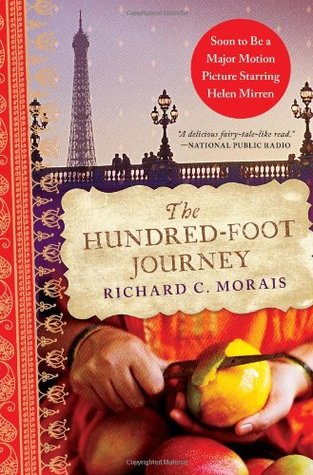
Audiobook Review: The Hundred-Foot Journey by Richard C. Morais

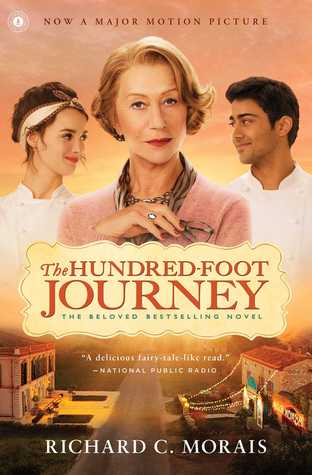
HFJThe Hundred-Foot Journey is the story of Hassan Haji, who travels over the course of the story from his boyhood in Mumbai to the pinnacle of the French culinary world as a Parisian chef and restaurateur. When we first meet Hassan, he is just a boy, growing up in a loud, boisterous Muslim family, with the family’s kitchen and restaurant the center of his world. The tastes and smells of Indian curries and spices are with him from birth, and his large, gregarious father is the heart that keeps them all going at top speed.

But after Hassan’s mother is killed, the family sells the restaurant and spends months traveling through Europe, finally stopping in the small village of Lumiere in the French Alps, when Hassan’s father declares that it’s time to set down new roots. He buys a vacant property and decides to open a new restaurant, Maison Mumbai, and all seems well with the family once more…

Except. Maison Mumbai is located just across the road from La Saule Pleureur, an upscale French inn and restaurant run by the indomitable Madame Mallory, practically an institution in the world of French cuisine. Madame Mallory is outraged by the impertinent Indian family and its noisy, uncouth intrusion into her refined world, and she sets out to make them feel as unwelcome as possible, going so far as to blackmail all the local vegetable and fish purveyors into not selling to the Hajis.

Madame Mallory’s greatest pain, though, comes after eating at Maison Mumbai. Hassan, now a teen-aged boy, is the head cook, and Madame Mallory cannot believe what she’s tasting. To her shock and dismay, she realizes that Hassan has a natural gift, which she describes as the food equivalent of having perfect pitch in music. Finally, Madame Mallory’s jealousy drives her to an act that causes real harm to the Haji family, and in penance and remorse, she asks Hassan’s father to allow Hassan to cross the street — the hundred-foot journey — and become her apprentice. Her greatest desire is to train Hassan in the art of French classical cuisine, and as it turns out, it is Hassan’s greatest wish as well.

All this occurs in roughly the first half of the book. From here, we follow Hassan’s training in Madame Mallory’s kitchen, his eventual departure for Paris, and ultimately the opening of his own restaurant, Le Chien Mechant. Hassan rises through the ranks of the elite chefs of France, a remarkable achievement for someone seen as an outsider.

And… that’s about it.

The book is weirdly anticlimactic, and wasn’t at all what I expected. It has a charming and engaging start, focusing on the Haji family and its eccentricities, especially with the outsized personality of Hassan’s irrepressible father. The conflict in Lumiere between the proper, elegant French restaurant and the noisy Indian restaurant, with its plastic menus and statues of elephants, is a funny, relatable portrait of a culture clash.

But from the moment Hassan moves over to Madame Mallory’s kitchen, the story loses all its steam. The second half of the book feel like a recitation of events, rather than a story. Hassan tells us about where he’s been, what he’s done, what he’s cooked, but it’s all just reporting. It simply does not feel lived in. As Hassan grows older and pursues the success he’s dreamed of, we see him doing it all, but I could not feel it. Even in relating what seems to be the emotional turning point of the second half, Hassan’s friendship with a star chef who is driven to suicide by the impending collapse of his business empire, there’s a lack of emotional connection. I didn’t feel that we got to know Paul particularly well, and while Hassan talks about their friendship, it seems more like listening to someone tell you about an old friend that actually meeting that friend yourself.

The narrator of the audiobook, Neil Shah, does a nice job with Hassan’s first-person narrative, and I loved his depiction of Hassan’s father. The voice for the female characters was not as convincing, bordering on mimicry, especially when putting on a French accent for Madame Mallory.

HFJIn terms of the writing style, I had a problem with the author’s descriptions of the female characters. Madame Mallory is a highly respected French chef in her mid-sixties when we meet her, yet the author persists in describing her as elderly and crone-like — and indeed, he’s not kind to any of the women in the novel. Do we need to know that a woman Hassan briefly dates is thick-thighed? I don’t think so, especially as he doesn’t bother to describe anything else about her. Madame Mallory acts awfully toward the Haji family but ultimately becomes important to Hassan, yet it’s hard to get past the incredibly negative descriptions of her looks that get so much emphasis.

I know The Hundred-Foot Journey was made into a movie (starring Helen Mirren), and I’d still like to see it as a point of comparison, even though I didn’t much care for the book. My impression from what I’ve read about the movie is that it focuses on the first half of Hassan’s story. I only wish the book had had the same focus. Sadly, the second half of the book often seems like a boring slog through lectures on food preparation, the French economy, and the challenges of the restaurant business. Without any drama or personal investment, it’s hard to care much at all about Hassan’s ultimate triumph.

Note: I read/listened to this book after my book group selected it for our March group read. I haven’t yet checked in with the group to see what they thought. For me, this was not one of our more successful picks.

_________________________________________

The details:

Title: The Hundred-Foot Journey
Author: Richard C. Morais
Narrator: Neil Shah
Publisher: Scribner
Publication date: 2008
Audiobook length: 8 hours, 551 minutes
Printed book length: 272 pages
Genre: Fiction
Source: Library (Overdrive)