Book Review: The Stolen Queen by Fiona Davis

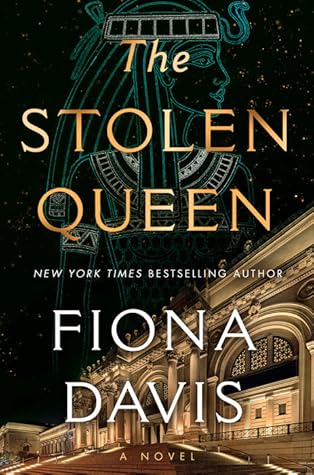
Title: The Stolen Queen
Author: Fiona Davis
Publisher: Dutton
Publication date: January 7, 2025
Length: 352 pages
Genre: Historical fiction
Source: Library
Rating:

Rating: 4 out of 5.

From New York Times bestselling author Fiona Davis, an utterly addictive new novel that will transport you from New York City’s most glamorous party to the labyrinth streets of Cairo and back.

Egypt, 1936: When anthropology student Charlotte Cross is offered a coveted spot on an archaeological dig in Egypt’s Valley of the Kings, she leaps at the opportunity. But after an unbearable tragedy strikes, Charlotte knows her future will never be the same.

New York City, 1978: Eighteen-year-old Annie Jenkins is thrilled when she lands an opportunity to work for iconic former Vogue fashion editor Diana Vreeland, who’s in the midst of organizing the famous Met Gala, hosted at the museum and known across the city as the “party of the year.” Though Annie soon realizes she’ll have her work cut out for her, scrambling to meet Diana’s capricious demands and exacting standards.

Meanwhile, Charlotte, now leading a quiet life as the associate curator of the Met’s celebrated Department of Egyptian Art, wants little to do with the upcoming gala. She’s consumed with her research on Hathorkare—a rare female pharaoh dismissed by most other Egyptologists as unimportant.

That is, until the night of the gala. When one of the Egyptian art collection’s most valuable artifacts goes missing . . . and there are signs Hathorkare’s legendary curse might be reawakening.

As Annie and Charlotte team up to search for the missing antiquity, a desperate hunch leads the unlikely duo to one place Charlotte swore she’d never return: Egypt. But if they’re to have any hope of finding the artifact, Charlotte will need to confront the demons of her past—which may mean leading them both directly into danger.

I seem to say this a lot: Thanks to my book group, I’ve read yet another book that I might not otherwise have picked up… and I’m so glad I did!

In The Stolen Queen, author Fiona Davis presents a dual-timeline story, alternating between events in Egypt in 1937 and in New York in 1978. The connection is Charlotte Cross, a curator at the Metropolitan Museum of Art specializing in Egyptian artifacts. In 1937, as a young student, she worked on an archaeological team in the Valley of the Kings, where she helped discover a previously unknown tomb. But tragedy struck, and she vowed never to return to Egypt.

Now, in 1978, she has a steady career at the Met, and pursues her passion project — an investigation into the woman pharaoh Hathorkare, whom most historians ignore or consider unimportant. Charlotte has uncovered evidence that disputes the generally held beliefs about Hathorkare, and just needs approval to move ahead with publication.

The other main character is Annie, a 19-year-old who works hard at menial jobs to support herself and her immature, selfish mother while dreaming of a future in fashion. When a chance encounter puts her into the orbit of Diana Vreeland, her dreams appear to be within reach — until a disaster at the Met Gala seems to entirely ruin her hopes.

When a priceless Egyptian artifact is stolen and Charlotte and Annie end up in the path of the thief, they join forces to track down the missing item. Charlotte is finally forced to confront her past as the search leads them to Egypt. Together, they not only trace clues to the theft, but uncover deeper secrets that have a huge impact on Charlotte’s life and change everything she thought she knew about her own past.

I picked up this book with some trepidation. I wasn’t entirely sure that I was in the mood for historical fiction, and was afraid (for whatever reason) that the story would be dry. I’m happy to report that my fears were unfounded! Once I started reading, I was hooked.

Both timelines are handled very well. The 1937 storyline gives us a strong foundation for who Charlotte is as a person, and is crucial for understanding the woman we meet in the later timeline. We get a very good sense of the status of women in the field of archaeology, as well as a vivid picture of the challenges and triumphs of life on a dig. The descriptions of working in Egypt — the heat, the sights and sounds and smells — bring the period and the setting to vibrant life.

In the 1978 timeline, we initially encounter a very different Charlotte, but as the book progresses, we can make the connection between who she once was and who she is now, as a 60-year-old woman with respected status in her field and a personal life that seems to teeter back and forth between being satisfying or just a holding pattern. The tragedy from Charlotte’s past is never forgotten, but also never spoken of — and as we learn, there are unresolved pieces that even Charlotte doesn’t fully understand.

I did question the inclusion of the Diana Vreeland storyline. I suppose if you’re writing a novel set at the Met, including the Met Gala adds glamour and excitement — but of all the various story threads, this is the one that interested me the least and seemed least successful. This is Annie’s entry into Charlotte’s life, but other than that, much of the Met Gala plot felt unnecessary to me.

My other quibble with the book is Charlotte’s focus on the curse associated with Hathorkare. As a scholar and an archaeologist, Charlotte’s belief in the curse and her suspicion that it was responsible for some of the tragedies in her life just isn’t credible. I couldn’t prevent a bit of eye-rolling whenever the subject of the curse cropped up.

On the other hand, I enjoyed the scenes in Egypt and the investigation that occurs there, as well as the development of the research into Hathorkare’s tomb and her history. Some events feel a bit too convenient or coincidental, but ultimately, I was able to overlook these as the overarching story kept me engaged throughout.

Themes of lost and found family tie the various elements of the plot together, as does the examination of women’s professional opportunities and how those have changed (or not) over the decades.

Through the characters’ discussions, we also gain insights into the ongoing debate about where antiquities belong. Does preservation or the ability to share with a greater public override the claims of the country of origin, even if that country doesn’t have the means to adequately preserve, protect, or display the antiquities? There aren’t any easy answers, but I appreciate the thoughtful way the issues are discussed in this book.

The Stolen Queen is the first book I’ve read by Fiona Davis, although I have a few others on my TBR list. If you have recommendations, please let me know!

Overall, I’m very glad to have read The Stolen Queen. It had me hooked right from the start. I loved the characters, the historical elements, and the several mysteries that are central to the plot. Definitely recommended for fans of historical fiction — and needless to say, recommended for book groups!

Purchase linksAmazon – Audible audiobook – Bookshop.orgLibro.fm
Disclaimer: When you make a purchase through one of these affiliate links, I may earn a small commission, at no additional cost to you.

Book Review: The Correspondent by Virginia Evans

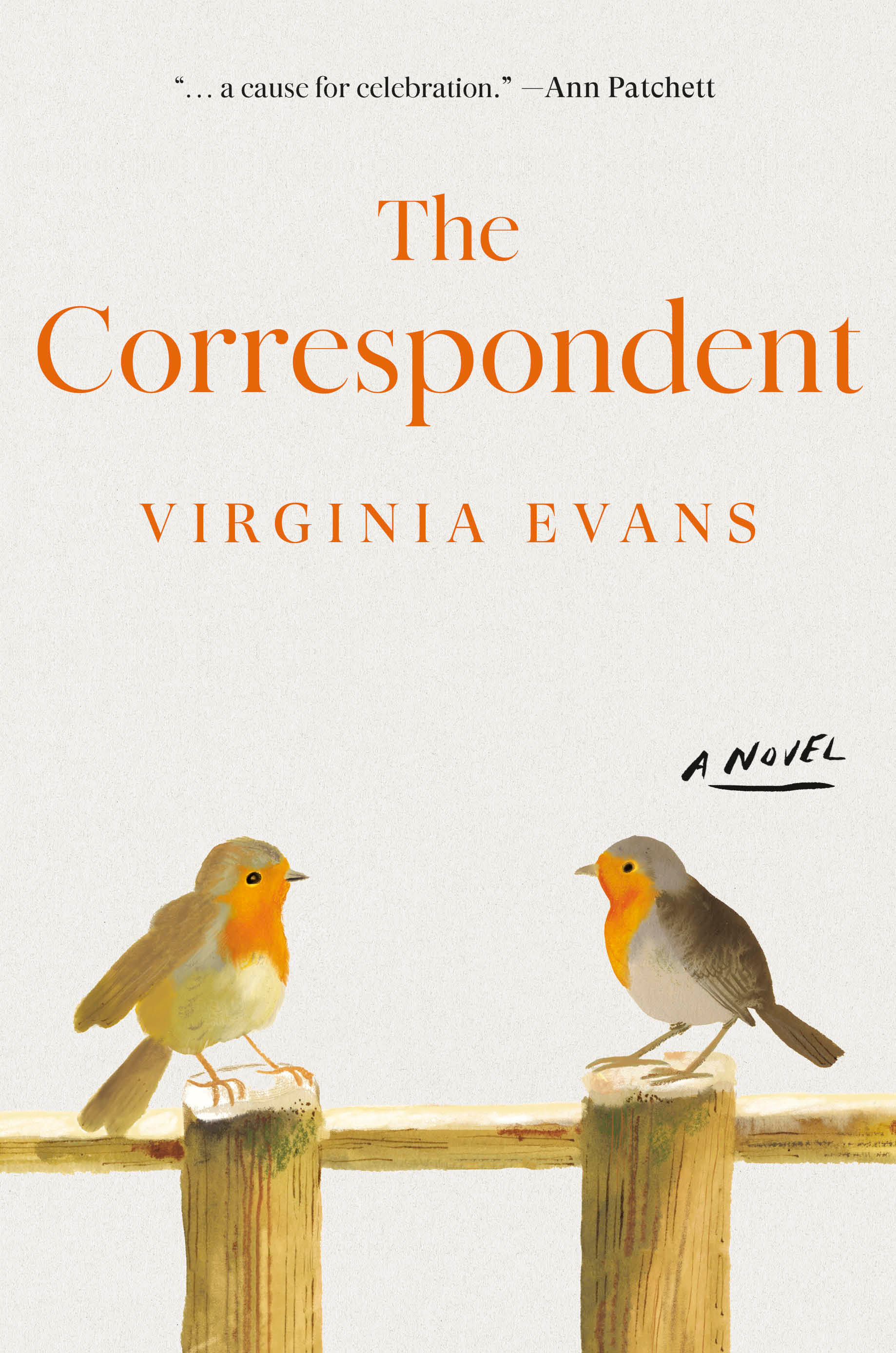
Title: The Correspondent
Author: Virginia Evans
Publisher: Crown
Publication date: April 29, 2025
Length: 291 pages
Genre: Contemporary fiction
Source: Purchased
Rating:

Rating: 4.5 out of 5.

Sybil Van Antwerp has throughout her life used letters to make sense of the world and her place in it. Most mornings, around half past ten, Sybil sits down to write letters—to her brother, to her best friend, to the president of the university who will not allow her to audit a class she desperately wants to take, to Joan Didion and Larry McMurtry to tell them what she thinks of their latest books, and to one person to whom she writes often yet never sends the letter.

Sybil expects her world to go on as it always has—a mother, grandmother, wife, divorcee, distinguished lawyer, she has lived a very full life. But when letters from someone in her past force her to examine one of the most painful periods of her life, she realizes that the letter she has been writing over the years needs to be read and that she cannot move forward until she finds it in her heart to offer forgiveness.

Filled with knowledge that only comes from a life fully lived, The Correspondent is a gem of a novel about the power of finding solace in literature and connection with people we might never meet in person. It is about the hubris of youth and the wisdom of old age, and the mistakes and acts of kindness that occur during a lifetime. Sybil Van Antwerp’s life of letters might be “a very small thing,” but she also might be one of the most memorable characters you will ever find.

The Correspondent is a lovely book about looking back at a life, understanding the past, making amends, and finding connections. It’s about a lot, actually — but isn’t life like that?

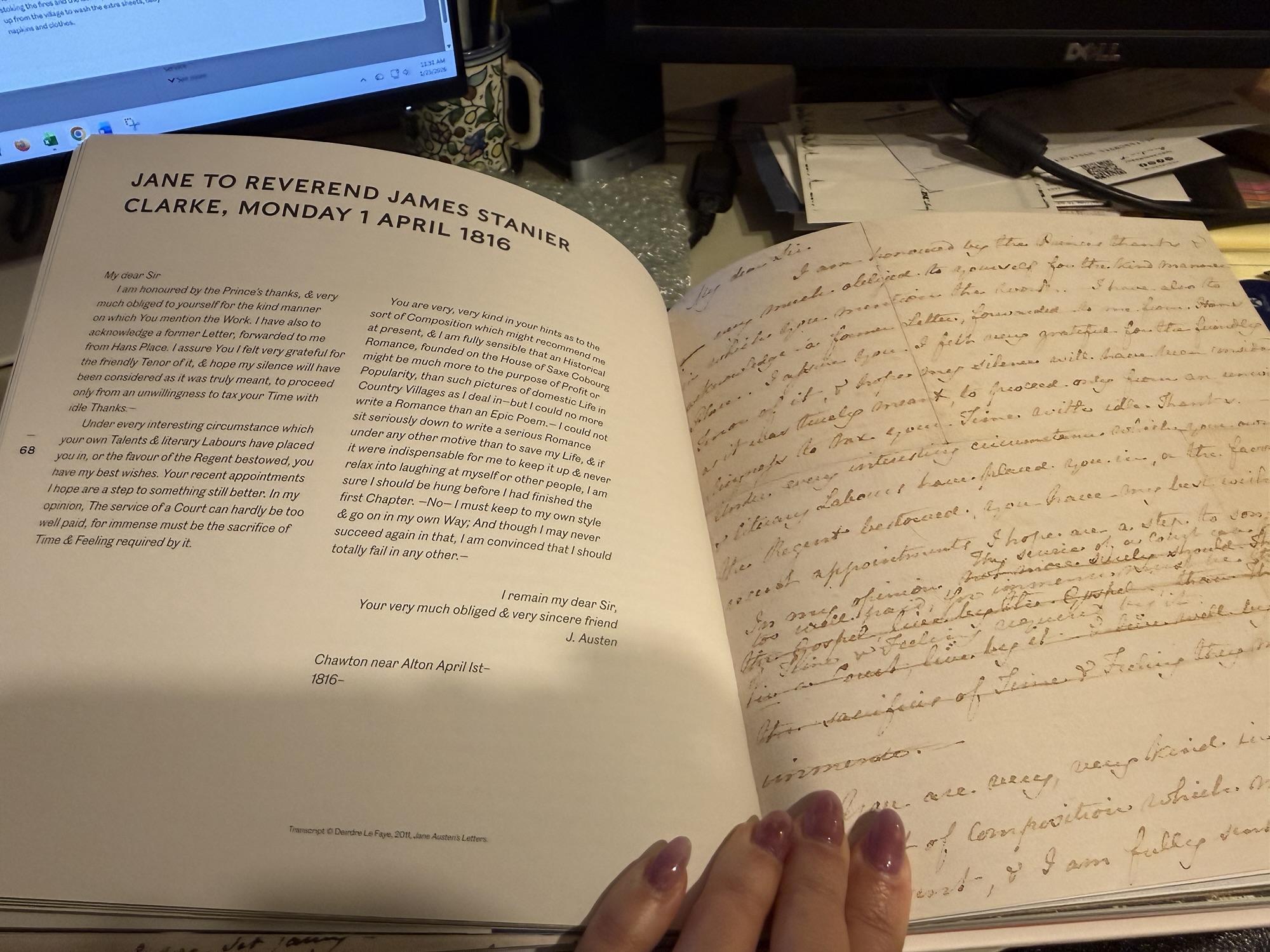
This epistolary novel takes place solely through the letters Sybil Van Antwerp writes and receives. Covering a span of ten years, we follow Sybil through her seventies, as she looks back on a life full of professional achievement, family joys and sorrows, good friends, and lots of literature. Through it all, she’s been a letter writer, sitting at her desk each day to write by hand on lovely paper. She writes to friends and family members, but also to a college dean, customer service representatives, obnoxious garden club members, and her favorite authors.

Sybil’s letters, one by one, provide readers with insight into the complicated inner life of a woman who, at first, seems like yet another somewhat cranky older woman character. But there’s so much more to discover: There’s a deep vein of grief that runs through all her letters, and as we learn, there are regrets from her past that she wishes to fix, if she can. Her family dynamics can be fraught, as we see in her often contentious relationship with her daughter, yet she displays a remarkable amount of kindness toward others in need, whether the son of a good friend with whom she corresponds throughout his difficult teen years or the high school student who reaches out for a school research project.

Themes of reconciliation and forgiveness add depth to the novel. Sybil affects others’ lives in big and small ways. A situation that seems threatening turns into an opportunity for making amends. Someone with whom Sybil interacts in a business capacity ends up having his life changed thanks to Sybil’s assistance.

And yet, we also see Sybil’s pain over a terrible loss, her ruminations on how and why her marriage ended, and her sorrow over her failures regarding her relationship with her daughter. Through her letters, Sybil communicates with others, but also investigates her own experiences. As we learn early on, Sybil has a condition that will lead to blindness, and while she doesn’t engage in self-pity, we see how deeply she fears the loss of vision, especially as a lifelong passionate reader who knows her time with books and writing may come to an end.

Lest this all sound quite dire, I must point out that The Correspondent has wonderful moments of joy and laughter as well. Sybil is courted by two very different men, and her descriptions of her experiences are sweet and funny. I loved her letters to authors. We might at first consider Sybil naive in her belief that a famous author might read her letters or remember her — but Sybil’s philosophy is to write to whomever she’s interested in communicating with, and who knows? She may actually get a response. There are several results of her letter-writing that absolutely delighted me — I won’t get into details, because these episodes are just too wonderful to spoil.

I’m so glad that I picked up The Correspondent. It’s a quick read that pulls on the heartstrings without becoming overly sentimental. There’s a deep sense of goodness here. Sybil isn’t perfect and hasn’t lived a perfect life. Through her letters, we understand her, and see what a difference one imperfect person can make.

Purchase linksAmazon – AudibleBookshop.orgLibro.fm
Disclaimer: When you make a purchase through one of these affiliate links, I may earn a small commission, at no additional cost to you.

Audiobook Review: Next Time Will Be Our Turn by Jesse Q. Sutanto

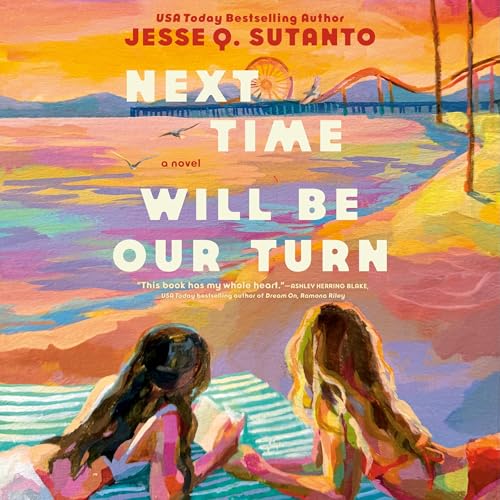
Title: Next Time Will Be Our Turn
Author: Jesse Q. Sutanto
Narrators: Emily Woo Zeller and Louisa Zhu
Publisher: Berkley
Publication date: November 11, 2025
Print length: 352 pages
Audio length: 11 hours 19 minutes
Genre: Contemporary / historical fiction
Source: Library (audiobook); ARC via NetGalley (ebook)
Rating:

Rating: 5 out of 5.

A grandmother tells her granddaughter about her twisty, often surprising, journey to who she is now in this sweeping love story by USA Today bestselling author Jesse Q. Sutanto.

Izzy Chen is dreading her family’s annual Chinese New Year celebration, where they all come together at a Michelin-starred restaurant to flaunt their status and successes in hopes to one up each other. So when her seventy-three-year-old glamorous and formidable grandmother walks in with a stunning woman on her arm and kisses her in front of everyone, it shakes Izzy to her core. She’d always considered herself the black sheep of the family for harboring similar feelings to the ones her Nainai just displayed.

Seeing herself in her teenage granddaughter’s struggles with identity and acceptance, Magnolia Chen tells Izzy her own story, of how as a teen she was sent by her Indo-Chinese parents from Jakarta to Los Angeles for her education and fell in love with someone completely forbidden to her by both culture and gender norms—Ellery, an American college student who became Magnolia’s best friend and the love of her life. Stretching across decades and continents, Magnolia’s star-crossed love story reveals how life can take unexpected turns but ultimately lead you to exactly who you’re meant to be.

If you are only familiar with Jesse Q. Sutanto through her uproariously funny Aunties and Vera Wong series (as I was), you may not be prepared for the emotional, beautiful journey that is Next Time Will Be Our Turn. This lovely book surprised me in all the best ways, and is one of the most moving books I’ve had the pleasure to read this year.

The story is framed through a sixteen-year-old Chinese-Indonesian girl’s experiences at her huge family’s Chinese New Year part in Jakarta. Izzy considers herself an outcast — she doesn’t fit it amongst her boisterous aunts, uncles, and cousins; would rather read in a corner than socialize or draw attention to herself; and knows that if anyone knew the truth about her interest in girls — in a society that’s very much rooted in traditional marriage — she’d be even more of a black sheep than she already is.

The party is shocked into silence when Izzy’s glamorous, successful businesswoman grandmother enters the party on the arm of a statuesque white woman… and proceeds to kiss her in a way that’s clearly non-platonic. Izzy is thrown for a loop, drowning in confusion and her own tumult of emotions. Later, her grandmother Magnolia meets her outside her home for a late-night walk, and proceeds to tell Izzy her own story.

And what a story it is! Magnolia takes us back to her youth when, at age 16, her parents send her to LA to join her older sister Iris at community college. Magnolia knows exactly the future that’s expected of her: Go to America, get a college degree, then return to Indonesia and marry a successful young man who’ll then be a successor to the family business (a medical practice), while Magnolia fulfills her role as a good, respectable, accomplished wife and bears lots of children. But something inside Magnolia itches at the idea of following this path. Her sister Iris certainly isn’t doing what’s expected of her — she’s loud, rebellious, impatient, and seemingly has no interest in making life easy for her little sister. She’d rather be with her American friends and pursue a career, not think about landing a good husband just to please her parents.

Everything changes for Magnolia when, on her very first day on campus, she meets Ellery — whom she describes (to Izzy’s shock) as the love of her life. Ellery is beautiful, tall, American… and warm and funny, and open to life in a way that Magnolia hasn’t seen before. The two becomes immediate friends. Magnolia doesn’t know what to make of her feelings for Ellery — back home, girls often had “girl crushes”, so that’s all this is… right? Ellery herself has a girlfriend, and what she offers Magnolia is friendship, but the intensity between the two makes it clear that there’s much more beneath the surface.

What follows is an incredibly moving story spanning decades, as Magnolia is torn — over and over again — between family expectations, societal demands, and her heart’s deepest wishes. She and Ellery go through periods of painful separation, but their deep connection is never broken. When Magnolia eventually returns to Jakarta and follows the path set out for her, she settles into a life that doesn’t fulfill her, but sees no other real options, until a reconciliation with her sister Iris brings the two closer together than they’d ever been. Iris helps Magnolia realize that she yearns for more than a life as a trophy wife, and helps her start to make her dreams come true.

As Magnolia tells her story to Izzy, she covers the years of longing and absence, the memories of Ellery that never left her, and the beautiful story of her love for Iris. Much isn’t entirely straightforward — because yes, Izzy is at first horrified to hear Magnolia describe some woman she’s never heard of as the love of her grandmother’s life. What about her grandfather? It’s complicated, to say the least.

We get interludes throughout where Izzy responds to Magnolia, but this is truly Magnolia’s story. With a well-developed narrative voice, Magnolia shares the confusion of her teens, the hopes and fears of her early adulthood, and the sometimes bitter realities of what it means to be a woman in Indonesia. As she shares her secrets, her emotions are plain to see. She’s trying to knock Izzy out of her own sense of despair and hopelessness, and it works: By telling her own story, with nothing prettied up or hidden, Magnolia shows Izzy that there are in fact other options and other ways to live a life.

I need to pause here and give a huge shout-out to the audiobook narrators, especially Emily Woo Zeller, who is simply magnificent as the voice of Magnolia. As I mentioned, this is really Magnolia’s story. The narrator accomplishes the tricky feat of making the listener feel like we really are hearing a grandmother tell her story to her granddaughter — but at the same time, her voice shifts enough while narrating Magnolia’s younger years that we also feel that we’re hearing her authentic voice at that age.

The book itself lends itself perfectly to the audiobook experience, because almost the entire narrative is a woman telling her story out loud. And at various places, she interjects with comments to Izzy — so she may be describing a romantic scene with her future husband, and will pause to tell Izzy to stop freaking out, and yes, she’ll spare her the intimate details!

I really don’t think I can say enough good things about Next Time Will Be Our Turn. Having only read this author’s comedic works, I did not expect the depth of this story or the emotional impact. I laughed throughout at Magnolia’s wry, sharp delivery — but believe me, there were so many tears too. This book left me both uplifted and heartbroken, and I loved every moment.

I know the Aunties and Vera Wong books are hugely popular — but I do hope the author continues to also write books in the spirit and feel of Next Time Will Be Our Turn.

It’s a beautiful book. Don’t miss it.

Purchase linksAmazon – Audible – Bookshop.org – Libro.fm
Disclaimer: When you make a purchase through one of these affiliate links, I may earn a small commission, at no additional cost to you.
Save

Book Review: Snake-Eater by T. Kingfisher

Title: Snake-Eater
Author: T. Kingfisher
Publisher: 47North
Publication date: November 11, 2025
Length: 267 pages
Genre: Fantasy
Source: Purchased
Rating:

Rating: 4 out of 5.

From New York Times bestselling and Hugo Award–winning author T. Kingfisher comes an enthralling contemporary fantasy seeped in horror about a woman trying to escape her past by moving to the remote US desert—only to find herself beholden to the wrath of a vengeful god.

With only a few dollars to her name and her beloved dog Copper by her side, Selena flees her past in the city to claim her late aunt’s house in the desert town of Quartz Creek. The scorpions and spiders are better than what she left behind.

Because in Quartz Creek, there’s a strange beauty to everything, from the landscape to new friends, and more blue sky than Selena’s ever seen. But something lurks beneath the surface. Like the desert gods and spirits lingering outside Selena’s house at night, keeping watch. Mostly benevolent, says her neighbor Grandma Billy. That doesn’t ease the prickly sense that one of them watches too closely and wants something from Selena she can’t begin to imagine. And when Selena’s search for answers leads her to journal entries that her aunt left behind, she discovers a sinister truth about her new home: It’s the haunting grounds of an ancient god known simply as “Snake-Eater,” who her late aunt made a promise to that remains unfulfilled.

Snake-Eater has taken a liking to Selena, an obsession of sorts that turns sinister. And now that Selena is the new owner of his home, he’s hell-bent on collecting everything he’s owed.

With Snake-Eater, author T. Kingfisher journeys into the realm of folk horror and fantasy, presenting one woman’s struggle to reclaim her life in a desert setting full of spirits and gods… and a bunch of terrific human (and canine) characters too.

Selena arrives in the remote desert town of Quartz Creek with just a few dollars to her name, accompanied by her very good dog Copper. She’s come in search of her aunt Amelia, but discovers upon arrival that Amelia has died the year before. The local postmaster/mayor/police officer Jenny encourages Selena to at least spend the night before deciding to leave — and since Selena can’t afford the return train ticket, and Amelia’s house is sitting empty, she agrees.

But the longer Selena stays in this odd little town in the middle of nowhere, the more settled she becomes. She insists she hasn’t decided to stay — but meanwhile, she becomes close with her nearest neighbor, Grandma Billy, learns to tend Amelia’s garden, attends the community potlucks at Father Aguirre’s church, and figures out how to earn a few bucks here and there, enough to buy Copper’s dog food. And meanwhile, the locals are warm and welcoming, and seem to want Selena to stay,

Selena leaves behind a relationship with a man who gaslit her into believing herself incapable of social interactions. Through insidious comments and continual undermining, Walter had Selena convinced that she was bad with people and could only interact by using carefully memorized scripts. As she settles into life in Quartz Creek, she comes to realize how deeply the gaslighting affected her, and painfully starts to unlearn what she’d come to believe about herself.

Quartz Creek has its own set of oddities and mysteries, especially the locals’ seemingly casual acceptance of the existence of gods and spirits. Even the Catholic priest acknowledges that places can have powerful non-human “people” who affect the lives of those who live there, for good or bad. Selena is startled by the strange figure she sees in her garden, and even more alarmed to hear Grandma Billy casually inform him that it’s a god of the squash plants. Selena is inclined to think that this must be a sign of Grandma Billy declining with age — but no; all the other folks of Quartz Creek back up Grandma Billy’s version. Gods live among them, just as humans and dogs and a stray peacock do.

Selena’s life is complicated by Snake-Eater, a god of roadrunners who appears to have transferred his obsession with Amelia to her niece Selena. And when Selena objects to the god’s attention, he gets very nasty indeed. She and her closest allies, Grandma Billy and Father Aguirre, must venture into the desert to free her from Snake-Eater if she’s to have any hope of living a good life in her newfound community.

What a great story! I adored the desert vibe. The author evokes the heat, the dirt, the plant and animal life, and makes all of this feel real and gritty. It’s easy to see why Selena would want to stay in this harsh but beautiful environment. The community itself is delightful. The people of Quartz Creek are an odd bunch, but they’re committed to their town and one another, and have figured out how to make it work. What’s more, there’s a beautiful sense of love and acceptance. Many of these people have unusual histories, but it doesn’t matter: The community comes together, again and again, and their connection makes them strong.

Selena’s story is so sad to start with. She’s a smart, likable woman whose partner undermined her to such a degree that when we first meet her, we’re tempted to believe the lie that she’s socially awkward and inept as well. Why does she practice scripts in her head? Why can’t she just talk to people? But as we see, Walter’s emotional abuse takes the form of seemingly supportive “help”, shredding Selena’s confidence through comments meant to keep her dependent on him. As Selena spends time in Quartz Creek, she’s able to slowly overcome the doubts that had been trained into her, and learn to trust herself and her new relationships. It’s a joy to see.

As always, T. Kingfisher spins a compelling story full of memorable characters, entertaining set-pieces, and fabulous writing. Snake-Eater is yet another terrific read from an author who never disappoints. Highly recommended.

Purchase linksAmazon – AudibleBookshop.org
Disclaimer: When you make a purchase through one of these affiliate links, I may earn a small commission, at no additional cost to you.

Novella review: Kirkyards & Kindness (A Rip Through Time, #4.5) by Kelley Armstrong

Title: Kirkyards & Kindness
Series: A Rip Through Time, #4.5
Author: Kelley Armstrong
Publisher: KLA Fricke Inc
Publication date: December 2, 2025
Length: 158 pages
Genre: Historical fiction / mystery
Source: Purchased
Rating:

Rating: 4 out of 5.

Mallory Mitchell and Dr. Duncan Gray take a break from investigating murder to find the most famous dog in Victorian Scotland.

A year ago, twenty-first-century detective Mallory found herself in 1869 Edinburgh, in the body of Catriona Mitchell, a housemade working for Dr. Duncan Gray, pioneer in forensic science. Shortly after she arrived, she made the unfortunate acquaintence of Catriona’s former criminal mentor, Davina, an entanglement that nearly got Mallory killed. Now she’s about to meet Davina again.

Greyfriars Bobby has disappeared. The little terrier is already a legend, and Davina has made a tidy living showing him off on graveyard tours…while picking the pockets of her guests. When the elderly dog vanishes, Davina calls in a favor from her old student. Mallory agrees to help find Bobby in return for the one thing she’s been unable to get from Davina—the mysterious Catriona’s life story.

Kirkyards & Kindness is a sweet little novella that allows readers to spend time in the world of the A Rip Through Time series — without the heavy doses of murder and mayhem that take place in the full-length novels.

Quick explanation of the series: 21st century detective Mallory ends up falling through time into Victorian Edinburgh, where she inhabits the body of a beautiful but nasty housemaid. There, she works with her employer, undertaker/scientist Duncan Gray, to solve crimes while also adapting to life in this very different era and attempting to introduce forensics to Victorian crime scenes.

In Kirkyards & Kindness, Mallory and Duncan are called upon to find a missing dog — the famous Greyfriars Bobby, beloved by locals and tourists alike. The person who hires them is an old associate of the person whose body Mallory inhabits. In exchange for finding Bobby, Mallory will finally have a chance to learn important information about Catriona’s unknown past.

The mystery has a rather jaunty tone, as Mallory and Duncan traverse Edinburgh in search of witnesses and clues. While a crime is discovered and addressed, there are also some rather sweet moments, and it all comes together with a satisfyingly happy resolution.

The novellas in the series are by necessity “extras”, in that they don’t resolve any of the central storylines of the overarching series. Mallory’s future, some abiding unresolved questions, her future with Duncan — all remain to be addressed in the main books of the series. But for reader of the A Rip Through Time books, these novellas are a nice little treat that bridges the waiting time between novels, and it’s always enjoyable to spend time with these characters and enjoy their unique predicaments.

Greyfriars Bobby was a real dog! Bobby was the beloved companion of a police constable in the 1850s. After the death of his owner, Bobby refused to leave his grave, and became a permanent, much loved resident of the Greyfriars Kirkyard. A statue in Bobby’s memory was erected in 1873, and is a popular tourist photo op in Edinburgh to this day.

For more about Greyfriars Bobby: https://www.historic-uk.com/HistoryUK/HistoryofScotland/Greyfriars-Bobby/

Interested in this series? Here are my reviews for the previous books:
A Rip Through Time
The Poisoner’s Ring
Disturbing the Dead
Schemes & Scandals (novella)
Death at a Highland Wedding

Up next:

An Ordinary Sort of Evil (A Rip Through time, #5) — May 2026

Audiobook Review: Anne of Avenue A (For the Love of Austen, #3) by Audrey Bellezza and Emily Harding

Title: Anne of Avenue A
Series: For the Love of Austen, #3
Author: Audrey Bellezza and Emily Harding
Narrators: Brittany Pressley and Teddy Hamilton
Publisher: Gallery Books
Publication date: October 28, 2025
Print length: 336 pages
Audio length: 8 hours 5 minutes
Genre: Contemporary romance
Source: Library
Rating:

Rating: 4 out of 5.

Jane Austen’s Persuasion meets the Big Apple in this swoon-worthy holiday romance from the authors of the “charming” (Kristy Woodson Harvey, New York Times bestselling author) Elizabeth of East Hampton and Emma of 83rd Street.

Eight years ago, Anne Elliot broke Freddie Wentworth’s heart when she refused to give up her five-year plan for the sake of adventure. But despite big dreams, Anne, now thirty, is still living at home with hardly a plan in sight. Anne tries to be optimistic—she knows better than anyone that regret will get you nowhere—but that goes out when the window when, thanks to her father’s bad spending habits, her childhood apartment in is rented out to the very man still living in her head rent-free.

Freddie Wentworth never thought he would see Anne Elliot again after she dumped him for accepting a job overseas. He spent years trying to forget her, and he’s been mostly successful. So when a job opportunity takes him back to New York, he’s shocked to find out that Anne is not only his new neighbor, but also the former resident of his new Greenwich Village penthouse.

Nearly a decade after Anne and Freddie’s fateful romance, the only thing they still have in common is a desire to leave their relationship firmly in the past. But between a disastrous off-Broadway show and a drunken Thanksgiving dinner, nosey neighbors, and flirtatious friends, Anne and Freddie suddenly find their lives more intertwined than ever before. When old feelings start rising to the surface, they must decide whether to put their hearts on the line or walk away all over again.

Welcome back to the world of For the Love of Austen, a delightful series of contemporary retellings of Jane Austen classics by author duo Audrey Bellezza and Emily Harding. In this third installment, the authors tackle Persuasion, transposing it to a modern-day New York setting, and finding a way to make this tale of regret and second chances feel fresh and believable.

Anne Elliot and Freddie Wentworth dated throughout their college years at NYU and thought they’d be together forever, until a late-in-the-game discovery that their future plans didn’t match up led to a devastating break-up. Now, eight years later, Freddie has returned to New York — and inadvertently buys the apartment that Anne has just been forced to move out of thanks to her father’s financial messiness. Neither Anne nor Freddie has ever truly gotten over their breakup, and running into one another in the building is shocking, to say the least.

As they reunite in Anne of Avenue A, both are older and wiser, with professional accomplishments under their belts, yet both are also at a crossroads in terms of what to do next with their careers. As they slowly reconnect and learn to trust again, they have to balance what they want in their own lives against the risk of considering a future together. It’s quite delicious to see them start to warm up and spend time together, especially as they realize that the feelings they’ve never been able to fully let go of are shared by the other person.

I love that the authors present the basics of the Austen storyline without following it point by point. Yes, this modern-day version of Anne was also persuaded to refuse Freddie for practical reasons — but the advice she follows does actually make sense, and Anne’s reasoning is solid (if unromantic). She and Freddie hadn’t discussed their long term plans or the post-graduate programs they’d applied to. Anne may not have known exactly what she wanted to do career-wise, but following Freddie on his adventures was a risk she didn’t feel she could take. And while Freddie would have given up his own plans to stay with Anne, she knew she couldn’t ask that of him, and ended the relationship instead.

The supporting characters are lots of fun — mainly some quirky characters from the building, plus assorted family members. The male leads from the previous two books are back as well, since Freddie is close friends with Will Darcy and George Knightly — this gives us a nice opportunity to see what the couples from the other books are up to now, and it’s great to see Emma, Lizzie, and Anne spending time together and becoming friends.

Many familiar Persuasion beats are included. I was very curious about how the dramatic fall-from-the-Cobb scene might be included in Anne of Avenue A… and it’s decidedly nondramatic here, with a silly New York slice-of-life twist to it that prevents it from bringing down the generally upbeat vibe. I’m consistently entertained throughout this series by spotting the Austen moments and how they’ve been reshaped to fit the modern world.

You might be wondering if Anne of Avenue A could possibly find a way to fit in some of the best Persuasion lines… and the answer is yes!

“You pierce my soul. I am half agony, half hope.”

If these words make you swoon, well… you may be amused by how the authors incorporate these words into their story, and you certainly won’t be unsatisfied!

As with the previous two audiobooks, the narrators do a terrific job presenting chapters from Anne and Freddie’s perspectives. Brittany Pressley is especially delightful to listen to in these books, and she’s truly up there on my list of favorite audiobook narrators. Teddy Hamilton’s delivery doesn’t always quite work for me, but I suppose I’ve gotten used to him at this point. Overall, the audiobook experience moves quickly and feels lively and engaging.

Three books in, I know by now to expect that there will be at least one or two open door sex scenes. As I’ve said in my other reviews for this series, I really don’t need to see Austen characters having explicit sex! It feels weirdly intrusive… but I’ll also acknowledge that I prefer a closed door approach in general when it comes to romance novels, so my objection here is not only related to this particular series.

My minor quibble with the story is that Anne finds a new career in the blink of an eye, and it seems like a lovely opportunity for her… but I wasn’t convinced that her new business made sense in terms of what we’d come to know about her interests. Also, from a practical standpoint, I didn’t quite buy that she was able to become an equal business partner in her new venture without (seemingly) any financial investment — rather than, say, coming on board as an employee — but who am I to argue with a woman’s professional success in a romance novel?

Overall, I really enjoyed Anne of Avenue A. The stakes are perhaps a little lower than in the other books, but I still found it engaging, warm, and full of Austen-esque spark.

I’ve been seeing the For the Love of Austen books being referred to as a trilogy, and I’m hoping that’s because there are three books SO FAR, and not because they’re stopping at just three! Here’s hoping that retellings of Sense and Sensibility, Northanger Abbey, and Mansfield Park are in the works!

Previous books in this series:
Emma of 83rd Street
Elizabeth of East Hampton

Purchase linksAmazon – Audible – Bookshop.org – Libro.fm
Disclaimer: When you make a purchase through one of these affiliate links, I may earn a small commission, at no additional cost to you.
Save

Book Review: The Heir Apparent by Rebecca Armitage

Title: The Heir Apparent
Author: Rebecca Armitage
Publisher: Cardinal
Publication date: December 2, 2025
Length: 409 pages
Genre: Contemporary fiction
Source: Library
Rating:

Rating: 5 out of 5.

An irresistible modern fairy tale about a British princess who must decide between her duty to her family—or to her own heart.

It’s New Year’s Day in Australia and the life Lexi Villiers has carefully built is working out nicely: she’s in the second year of her medical residency, she lives on a beautiful farm with her two best friends Finn and Jack, and she’s about to finally become more-than-friendly with Jack—when a helicopter abruptly lands.

Out steps her grandmother’s right-hand-man, with the tragic news that her father and older brother have been killed in a skiing accident. Lexi’s grandmother happens to be the Queen of England, and in addition to the shock and grief, Lexi must now accept the reality that she is suddenly next in line for the throne—a role she has publicly disavowed.

Returning to London as the heir apparent Princess Alexandrina, Lexi is greeted by a skeptical public not ready to forgive her defection, a grieving sister-in-law harboring an explosive secret, and a scheming uncle determined to claim the throne himself.

Her recent life—and Jack—grow ever more distant as she feels the tug of tradition, of love for her grandmother, and of obligation. When her grandmother grants her one year to decide, Lexi must choose her own destiny: will it be determined by an accident of birth—or by love?

The Heir Apparent is the newest pick for Reese’s Book Club, and it’s a great choice. Luckily for me, I was browsing my library’s website on the day this was announced, and was able to snag a copy right away.

Let’s start by talking about what this book isn’t, before I get into all the marvelous things it is. If all you’re going by are the cover and the blurb, you might be tempted to slot this book into the romance category, and that would be a mistake. Don’t be fooled by the “modern fairy tale” description — it’s really no such thing. This isn’t a story about a commoner suddenly discovering she’s secretly royal or getting swept away by a romance with a prince. In fact, while there is a love story embedded within the novel, it’s just one thread out of many that weave together to form a compelling whole.

I actually think the Australian cover and synopsis do a much better job of conveying the book’s tone and content:

Lexi Villiers is a 29-year-old Englishwoman doing her medical residency in Hobart, working too hard, worried about her bank balance, and living with friends. It’s a good life, and getting even better, because as the dawn is breaking on New Year’s Day, Lexi is about to kiss the man she loves for the very first time. But by midnight, everything will change. Because Lexi is in fact not an ordinary young woman. She is Princess Alexandrina, third in line to the British throne – albeit estranged from the rest of her family and living in voluntary exile on the other side of the world. Following a terrible accident, Lexi finds herself the heir apparent. Called back to do her duty, she arrives in London to a Palace riven with power plays and media leaks, all the while guarding painful secrets of her own.

Doesn’t that sound very different?

In The Heir Apparent, Lexi is a medical resident in Tasmania, living in a shared cottage on a vineyard with her two closest friends, possibly about to admit the deep feelings she has for one of them. She’s also the granddaughter of Queen Eleanor of England, third in line to the throne after her father and twin (but two-minutes-older) brother Louis.

As the book opens, a helicopter arrives to inform Lexi that her father and brother have been killed in an avalanche while skiing in the Alps. Lexi is whisked back to England to take her place with the family for the elaborate rituals of mourning — and to take up her new position as heir apparent.

Lexi is all too aware of what this means. No more medical career, a life lived fully under the microscope of public (and paparazzi) scrutiny, the never-ending drama of palace intrigue and back-biting and scandalous leaks. And she should know, better than anyone: Her mother was the tragic Princess Isla, living in a loveless marriage while her husband pined (and carried on with) his first true love, eventually divorced, stripped of titles and protection, and the most gossiped about woman in the world. Lexi is still haunted by nightmares related to Isla’s tragic death when Lexi and Louis were teens. How can Lexi embrace a life that destroyed her mother so thoroughly?

At the same time, Lexi loves her grandmother and was raised with duty to the Crown as the highest calling. As Lexi navigates a return to life as a royal, she must weight the responsibilities and privileges hurtling toward her. The Queen gives her a year to make a decision: Accept her place as heir apparent and all that entails, or walk away permanently.

If the general outline of the royal family sounds familiar, but slightly changed, there’s a reason. In the world of The Heir Apparent, royal history veered from our own centuries earlier, when Barbara Villiers — historically, mistress to King Charles II — became Queen. Here, the royal family is of the House Villiers, and Barbara is revered as the strong, intelligent queen who created a dynasty.

And yet, the parallels to the real-life royal family are obvious, from the long-lived Queen Eleanor to the scandals surrounding Lexi’s parents’ marriage and divorce, to her mother’s heroism in visiting war-torn countries and speaking out for children, to the unending speculation surrounding Isla’s death. Lexi is in some ways a stand-in for a certain prince, as she walked away from her role as a working royal years earlier in order to achieve a life of her own far, far away, resulting in estrangement from her father and brother. And of course, the palace leaks and manipulations in the novel are quite as devious and inescapable as we’ve heard described over and over again in real life.

What I loved about The Heir Apparent is the inner look at what this life means to Lexi. It’s not cut and dried; she’s bound by tradition, love for family, and the respect for the Crown that’s been drilled into her since birth. At the same time, she’s seen just how poisonous such a life can be, as the secrets that haunted her closest family members led to pain and suffering, over and over again. Lexi is a complex character who’s fought hard to pursue a life of meaning, choosing service as a medical professional over the much loftier type of service life as a royal entails, and she’s found joy in it. But she can’t walk away, once she becomes the heir apparent, before truly giving this alternate life a chance, weighing whether she can be the future Queen that her grandmother expects, as the world watches to judge whether she succeeds or fails.

The book is structured around the events following the helicopter’s arrival, but interspersed chapters take us back to Lexi’s childhood, teen, and early adult years. Secrets are teased and slowly doled out. We know there’s more than Lexi is sharing about her past; we know she’s haunted by the family estrangement and how she cut ties with her brother over the past several years. But as we see in the chapters set earlier, they were once incredibly close. How their lives split and fell apart is key to understanding who Lexi is now, as are the rest of the secrets that eventually get revealed as the story progresses.

An underlying theme throughout The Heir Apparent, beyond the family drama and palace intrigue, is the overarching question about the role and relevancy of a monarchy in the modern age, as well as the dark side of the monarchy’s history of colonialism and empire. The author does not shy away from these aspects, and this subtext provides yet another layer to Lexi’s struggle to understand her role, what’s expected of her, and what her choices ultimately mean.

For those who enjoy the peek-behind-the-scenes vibe of royal-themed novels and movies, there’s plenty of that here as well, as we see Lexi poked, prodded, smoothed, painted, and shaped into a princess worthy of public display. The inner workings of palace life are revealed, with scenes involving the various aides and assistants and vastly complex protocols that control every inch and second of royal family life.

The Heir Apparent is certain to appeal to fans of The Crown. Those who read and enjoyed Prince Harry’s Spare will find certain emotional resonances here as well in areas where Lexi’s experiences feel achingly familiar. I’ll throw in a more offbeat reference too: The Heir Apparent strongly brought to mind The Goblin Emperor, which is a stellar example of fantasy genre storytelling and world-building. The Goblin Emperor revolves around a character so far down the line of succession that he’s considered worthless — until a freak accident kills off the Emperor and all of the older heirs. In that book as well as this one, the main characters must navigate finding themselves heir to the throne when it was absolutely never even considered a possibility. It’s fascinating to compare the parallels in these very different stories.

Summing it all up…

Well-written, emotional, and utterly gripping, The Heir Apparent tells a great story while also providing food for thought and an emotionally relatable main character. I felt completely invested in Lexi’s choice, battling with myself over what the right decision might be, and unable to put the book down before we finally learn what Lexi’s path will be.

Even for readers who don’t normally take an interest in royalty, the experiences of the main character here make for compelling reading. Highly recommended.

Resources and information:

Blog post via Reese’s Book Club: https://reesesbookclub.com/how-do-you-trust-your-loved-ones-when-every-secret-is-a-weapon/
Author bio: https://rebeccaarmitage.com/about/
NPR review: https://www.npr.org/2025/12/07/nx-s1-5600903/a-royal-romance-novel-with-the-british-throne-at-stake
Publishers Weekly review: https://www.publishersweekly.com/9781538776308

Purchase linksAmazon – AudibleBookshop.orgLibro.fm
Disclaimer: When you make a purchase through one of these affiliate links, I may earn a small commission, at no additional cost to you.

Book Review: The House Saphir by Marissa Meyer

Title: The House Saphir
Author: Marissa Meyer
Publisher: Faber & Faber
Publication date: November 4, 2025
Length: 432 pages
Genre: Young adult fantasy
Source: Library
Rating:

Rating: 3 out of 5.

This is the tale of Bluebeard as it’s never been told before–a romantasy murder mystery.

Mallory Fontaine is a fraud. Though she comes from a long line of witches, the only magic she possesses is the ability to see ghosts, which is rarely as useful as one would think. She and her sister have maintained the family business, eking out a paltry living by selling bogus spells to gullible buyers and conducting tours of the infamous mansion where the first of the Saphir murders took place.

Mallory is a self-proclaimed expert on Count Bastien Saphir—otherwise known as Monsieur Le Bleu—who brutally killed three of his wives more than a century ago. But she never expected to meet Bastien’s great-great grandson and heir to the Saphir estate. Armand is handsome, wealthy, and convinced that the Fontaine Sisters are as talented as they claim. The perfect mark. When he offers Mallory a large sum of money to rid his ancestral home of Le Bleu’s ghost, she can’t resist. A paid vacation at Armand’s country manor? It’s practically a dream come true, never mind the ghosts of murdered wives and the monsters that are as common as household pests.

But when murder again comes to the House Saphir, Mallory finds herself at the center of the investigation—and she is almost certain the killer is mortal. If she has any hope of cashing in on the payment she was promised, she’ll have to solve the murder and banish the ghost, all while upholding the illusion of witchcraft.

But that all sounds relatively easy compared to her biggest challenge: learning to trust her heart. Especially when the person her heart wants the most might be a murderer himself.

I had high hopes for The House Saphir — I’m always up for a good fairy tale retelling, and I loved this author’s Lunar Chronicles series. Unfortunately, weak world-building, odd word choices, and an unconvincing plot all resulted in a reading experience that was squarely so-so.

The story revolves around Mallory, a con artist from a line a witches who lost her own powers due to a spell gone wrong during her youth. Now, she and her sister support themselves through fake card readings and unauthorized tours of a supposedly haunted house (complete with cheap knock-off heirlooms that they sell to their gullible customers). Not everything is fake, however; the one magical gift that Mallory still has left is the ability to see and communicate with ghosts. At the Saphir mansion, home of the notorious murderer known as Monsieur Le Bleu, Mallory communicates with Trephine, the first of his three murdered wives.

After a botched tour, Mallory and her sister end up hired by Armand Saphir, descendent of the murderer, to rid his country estate of the evil spirit of Le Bleu. And despite having no actual ability to carry out an exorcism, they take the job. After all, money is tight, and they’ve been threatened with arrest for fraud. So… take the job, fake it for a while, get paid, and take off.

All sorts of complications ensue. The world of The House Saphir include an array of monsters, who’ve apparently reentered the mortal realm once the veil fell years earlier. There’s a religion that worships the seven gods, and witches and magic are quite real. But it all is rather muddled. The religion, the monsters, the common beliefs, the reasons for why things are as they are — nothing gets much explanation, and feels like the thinnest of plot scaffolding, only there to explain Mallory’s actions.

I was baffled by the setting. This is a fictional world, European-esque but not actually Europe or countries that exist in our world — but characters have French names and speak French, and a visiting magician named Constantino speaks Italian (“buona sera!”). Why?

One relatively minor thing that bugged me throughout — the author’s use of the word “boy” when talking about a young man. When Mallory pounces on someone coming up behind her, she’s startled to see a “boy”, which made me assume this was someone in the 10 -12 year old range. Nope — the various “boys” Mallory encounters all appear to be upwards of 18 or thereabouts. Annoying, and this took me right out of the story each time.

Overall, I was underwhelmed by the plot and character development, and found the action sequences pretty messy as well. On a positive note, I enjoyed the ghost wives quite a bit, and appreciated that their scenes tended to add a touch of humor to otherwise grim events.

The House Saphir appears to be a stand-alone, although I could imagine a spin-off involving the monster hunters. Perhaps future books might provide more substance for the world-building.

Purchase linksAmazon – Audible audiobook – Bookshop.orgLibro.fm
Disclaimer: When you make a purchase through one of these affiliate links, I may earn a small commission, at no additional cost to you.

Book Review: Witchcraft for Wayward Girls by Grady Hendrix

Title: Witchcraft for Wayward Girls
Author: Grady Hendrix
Publisher: Berkley
Publication date: January 14, 2025
Length: 482 pages
Genre: Horror
Source: Purchased
Rating:

Rating: 5 out of 5.

There’s power in a book…

They call them wayward girls. Loose girls. Girls who grew up too fast. And they’re sent to the Wellwood Home in St. Augustine, Florida, where unwed mothers are hidden by their families to have their babies in secret, give them up for adoption, and most important of all, to forget any of it ever happened.

Fifteen-year-old Fern arrives at the home in the sweltering summer of 1970, pregnant, terrified and alone. Under the watchful eye of the stern Miss Wellwood, she meets a dozen other girls in the same predicament. There’s Rose, a hippie who insists she’s going to find a way to keep her baby and escape to a commune. And Zinnia, a budding musician who knows she’s going to go home and marry her baby’s father. And Holly, a wisp of a girl, barely fourteen, mute and pregnant by no-one-knows-who.

Everything the girls eat, every moment of their waking day, and everything they’re allowed to talk about is strictly controlled by adults who claim they know what’s best for them. Then Fern meets a librarian who gives her an occult book about witchcraft, and power is in the hands of the girls for the first time in their lives. But power can destroy as easily as it creates, and it’s never given freely. There’s always a price to be paid…and it’s usually paid in blood.

Grady Hendrix writes marvelously inventive horror novels, with psychological and physical terrors around every corner. Here in Witchcraft for Wayward Girls, the greatest horror is not in the supernatural elements, but in the treatment of the pregnant teens sent in disgrace to the Wellwood Home.

“You are here because you acted like a barnyard animal,” Miss Wellwood said. “You took the glory of your womanhood and threw it in the mud.”

The girls at the home are young, and at the complete mercy of their families, the staff of the home, and the doctors. They are never allowed to forget just how awful they are, how little they matter, and how little control they have over anything that happens to their bodies. They are all utterly ignorant as well — they know what they did to get pregnant, but have no idea what childbirth actually entails.

“You all don’t need to worry yourselves about what’s going to happen when you go to the hospital,” he said. “Because it’s none of your business. You just do what the doctors say and you’ll be fine.”

Fern is distraught when her father angrily bustles her off the home and leaves her there without even a good-bye. “Fern” isn’t even her name — all girls are given new names upon arrival, to preserve anonymity and to make the entire experience as separate from their real lives as possible. All Fern wants is to go home, to forget this ever happened, and to get back to her school, her friends, and the senior play.

But the harsh realities of pregnancy are impossible to ignore, especially once Fern witnesses another girl go into early labor in the bathroom and has to face the awful truth of what lies ahead for her. When the biweekly book mobile shows up, Fern asks the librarian for a book on what really happens during childbirth — which would be considered contraband at the home, where pleasant middle grade books seem to be the only allowed reading material.

The book the librarian passes along is anything but benign children’s fiction. Instead, she hands Fern is a hidden copy of a book titled How to Be a Groovy Witch (how awesome is that?!?!). The book’s contents are mostly incomprehensible, but Fern, Rose, Zinnia, and Holly are able to figure out a spell to cure Zinnia’s unrelenting morning sickness… by transferring it to someone else, with shockingly effective results.

The girls are drawn in by the lure of witchcraft and the power it promises, not seeing until it’s too late that nothing is given for free.

In this world there is one truth: everything has a price, and every price must be paid. Perhaps you will not pay it today, maybe you can put it off until tomorrow, but one day there will be a knock at your door in the middle of the night, a voice in the darkness beside your bed, a letter laid upon the table when you believe yourself to be alone, and it will contain a bill that must be paid, and you will pay it in blood.

Witchcraft for Wayward Girls is an absolutely compelling read. It’s a little on the longer side, but it flies by. The girls’ terror and helplessness feel palpable, and the book is a stark reminder of how far we’ve come in so many ways… and how awful it would be to move backward.

There are several gross-out scenes resulting from the girls’ spells, as well as scenes of supernatural power and strange, other-worldly phenomena. Some parts can be truly scary. And yet, the most horrifying scene is a hospital delivery. Nothing goes wrong medically, but it’s a detailed, horrible depiction of what labor and delivery in the 1970s entailed for so many women. That, to me, is the truly disturbing part of this book. Well, that, plus the girls’ utter lack of agency, the casual cruelty of the adults controlling them, and the soul-crushing sense of shame forced on them from every direction.

They said she could go back to her old life. They said it wouldn’t hurt. They said she’d never have to think about it again. They lied.

I loved the girls’ character development, and how each of them struggles to find strength to face their own particular hell. The girls’ power truly lies in their connection and support of one another, even more so than in the gifts they discover through the book and the librarian’s coven. Despite their individual suffering, they still find joy and friendship, as they band together to take back control and figure out how to survive.

Witchcraft for Wayward Girls is a moving, powerful, absorbing read. The depiction of the historical time and place feels spot-on. 1970s slang and attitudes provide some needed moments of fun and entertainment, despite the overall seriousness of the subject matter. (It’s shocking to see the pregnant girls constantly smoking cigarettes… but hey, it’s 1970!)

Grady Hendrix writes terrific horror, always with unique, clever twists and set-ups. I believe I have one more of his books yet to read (and I’m looking forward to it!); meanwhile, I’m thrilled that I finally got my hands on Witchcraft for Wayward Girls. Highly recommended.

For more by this author:
Horrorstör
My Best Friend’s Exorcism
Paperbacks from Hell: The Twisted History of ’70s and ’80s Horror Fiction
We Sold Our Souls
The Final Girl Support Group
The Southern Book Club’s Guide to Slaying Vampires

Purchase linksAmazon – Audible audiobook – Bookshop.org – Libro.fm
Disclaimer: When you make a purchase through one of these affiliate links, I may earn a small commission, at no additional cost to you.
Book Review: The Everlasting by Alix E. Harrow

Title: The Everlasting
Author: Alix E. Harrow
Publisher: Tor
Publication date: October 28, 2025
Length: 320 pages
Genre: Fantasy
Source: Review copy courtesy of the publisher via NetGalley
Rating:

Rating: 5 out of 5.

From Alix E. Harrow, the New York Times bestselling author of Starling House, comes a moving and genre-defying quest about the lady-knight whose legend built a nation, and the cowardly historian sent back through time to make sure she plays her part–even if it breaks his heart.

Sir Una Everlasting was Dominion’s greatest hero: the orphaned girl who became a knight, who died for queen and country. Her legend lives on in songs and stories, in children’s books and recruiting posters―but her life as it truly happened has been forgotten.

Centuries later, Owen Mallory―failed soldier, struggling scholar―falls in love with the tale of Una Everlasting. Her story takes him to war, to the archives―and then into the past itself. Una and Owen are tangled together in time, bound to retell the same story over and over again, no matter what it costs.

But that story always ends the same way. If they want to rewrite Una’s legend―if they want to tell a different story–they’ll have to rewrite history itself.

The Everlasting by Alix E. Harrow is a beautifully written, slow-burn heartbreaker, with time twists that are truly mind-boggling. After finishing the book a few days ago, I’m still trying to put all the pieces together, but I’m also just basking in the overall feel of the story.

The story of Dominion had many villains over the years, shifting along with the borders of her empire, and many storytellers. But it only ever had one hero, and her name was Una Everlasting.

The country of Dominion has a long, bloody history of war and conquest. Generations of soldiers return home damaged mentally and physically, if they return home at all. Historian Owen Mallory is one of these, suffering recurring trauma and carrying scars from his time at the front. Now, he devotes his time to research the foundational national mythology of Dominion — the story of Sir Una Everlasting, the greatest knight the country has ever known.

“In order to have a future worth fighting for, you must have a past worth remembering.”

Everyone knows the story of Una, a young orphan who found greatness after pulling a legendary sword from a tree, then pledging herself to find for her queen and country. Hers is a tale of strength, courage, and devotion. From her battles to her seemingly impossible quests to her tragic death, the tale of Sir Una Everlasting has motivated and inspired the people of Dominion for centuries.

When a mysterious book arrives on Owen’s desk, it seems to hold the answers to his obsessive research: It’s impossible… but it appears to be the story of Una, written in her own time. Such a thing has never been found before, or even rumored to exist. The arrival of the book plunges Owen into a journey through time, as he ends up transported back into Una’s lifetime — where he discovers that there is more to the story than he ever could have imagined.

The intricate storytelling is best experienced without too much information in advance, as seeing it unfold is part of the book’s power. I went into The Everlasting knowing nothing more than what was in the book’s cover blurbs… and found myself both shocked and entranced as the story unfolded.

The Everlasting conveys several powerful themes; among the most fascinating is the power of shared legends to shape history. Countries experience a sense of shared pride in their foundational stories. But what happens when those stories have holes in them, or when the glorious past is perhaps not so glorious after all? The Everlasting shows the power of these stories to motivate, but also to be used to manipulate. In the hands of corrupt, power-seeking leaders, tales of sacrifice and nobility can be the excuse needed to conquer, kill, and engage in endless wars.

The Everlasting is also a love story, which isn’t obvious at the beginning. There’s a slow awakening, a sense of devotion and yearning that builds over time, and ultimately, a gorgeous connection that’s a meeting of hearts, souls, and bodies. And yet, a sense of tragedy hangs over the love story. By the time the love between the characters fully blossoms, we already know that there can be no happy endings for these two.

I love you by then, or would soon, or always had.

In terms of the reading experience, I found the opening chapters a bit slow, but once the book arrives and Owen gets drawn into Una’s story, it’s un-put-down-able. A few oddities make the reading experience challenging but worthwhile: Large chunks of the story are written in the second person, but in places, the person telling the story changes. I had to stop at several points to remind myself of who was narrating a particular section and who the “you” was.

The main challenging aspect is the time factor. Time loops in all sorts of interesting ways, and the weaving and changing of history becomes more and more complicated as the story progresses. I couldn’t always quite make the “how” of it all make sense… but I also couldn’t look away. The puzzle pieces do fit, but at some point, I stopped trying to apply logic to certain elements and just let myself be swept away by the lush, gorgeous writing.

I highly recommend The Everlasting. It’s a remarkable piece of writing, with powerful messages about power, propaganda, and corruption, told through the vehicle of an achingly beautiful love story. This is a story that will stick with me for a long time to come.

Purchase linksAmazon – Audible audiobook – Bookshop.org – Libro.fm
Disclaimer: When you make a purchase through one of these affiliate links, I may earn a small commission, at no additional cost to you.