Audiobook Review: Close Knit by Jenny Colgan

Title: Close Knit
Author: Jenny Colgan
Narrator: Eilidh Beaton
Publisher: Avon
Publication date: August 6, 2024
Print length: 318 pages
Audio length: 10 hours, 31 minutes
Genre: Contemporary fiction
Source: Purchased (audiobook); E-book ARC from the publisher/NetGalley
Rating:

Rating: 5 out of 5.

Follow Gertie MacIntyre from knitting circle to air stewardess in this glorious and romantic summer novel set in Scotland’s windswept Northern isles, by beloved New York Times bestselling author Jenny Colgan.

In the northernmost reaches of Scotland, where a string of little islands in the North Sea stretches towards Norway, lives Gertie MacIntyre, a proud island girl by birth. Her social circle is small but tight: family and friends, particularly the women in her knitting circle. In the whitewashed cottages of their hometown, everyone knows everyone, and the ladies of the knitting circle know more than most. In a place of long dark winters and geographic isolation, the knitting circle is a precious source of gossip, home, laughter, and comfort for them all. And while she knits, Gertie’s busily plotting what to do with the rest of her life.

When Gertie develops a crush on Callum Frost, who owns the local airline, she dares herself to take a job as an air stewardess on the little plane that serves the local islands. Terrifying at first, the sixteen-seat puddle jumper also offers the first taste of real freedom she’s ever known. Will Gertie’s future lie in the skies? Or will she need to go further afield to find the adventure she craves?

Yet another gem from Jenny Colgan! Her books are opportunities to be swept away to beautiful places and experience lovely communities — but also, to laugh, to be amused, and to see people doing both amazing and silly things.

(Quick note: The synopsis — above — found on Goodreads, NetGalley, Amazon and elsewhere gets the main character’s name wrong! Her name is Gertie Mooney, and she ends up working for MacIntyre Air. Moving on…)

Close Knit takes place in the small town of Carso, located “in the very North of Scotland” on the sea. From Carso, across the water, is a chain of small islands, accessible only by ferry or by air — and MacIntyre Air’s small planes are the primary way the locals and tourists get there, taking off from the tiny airport (really, more like a tin shed) and flown by Morag, her grandfather, or another long-time pilot.

Gertie, born and raised in Carso, lives with her mother and grandmother, and has never flown in an airplane or ventured away from her small community. Her life revolves around her job at the supermarket and knitting — her tiny home is stuffed to the brim with wool and knitwear, and every day, the KCs — the women of the Knitting Circle — come to the Mooney home to knit and gossip, and to tell Gertie what to do with her life.

Gertie is sweet and very shy, and finds comfort in constant daydreaming (and knitting). She dreams of romance, but after one daring attempt to woo an older boy in school (which did not end well), she rarely steps out of her safe routines.

When two girls she remembers from her school days end up in her store, she feels her own sense of inadequacy pop up — they were two years older, and seemed impossibly cool at the time. She doubts they’d even remember her now, but after seeing Gertie kindly take charge of a potentially awkward situation in the store, they make an unexpected offer. The two women are Morag, the pilot, and Nelitha, her very pregnant best friend who works as the airline’s ground crew. They need someone to take over for Nelitha as she starts her maternity leave… and although Gertie has no flight or airline experience, she clearly has a knack for dealing with customers.

The fact that Gertie has recently developed a crush on the man whose larger airline acquired MacIntyre Air is an added enticement — maybe she’ll get to see him regularly, and she can give him some beautiful handmade knitwear, and he’ll realize that this local girl is really the woman of his dreams! Ready to make a change in her life, Gertie accepts the job, as well as the offer of becoming Morag’s roommate… and her entire life changes.

Close Knit is not just Gertie’s story. Through Gertie, we meet a cast of characters that includes the town’s schoolchildren, the women of the KCs, musicians and teachers, airline crew, and a variety of other locals. Morag — introduced in the author’s previous book, The Summer Skies — gets her own chapters, and Gertie’s one-time crush/local schoolteacher Struan is also important to the overall story.

The town, the land and seascapes, and the islands are lovingly drawn, with descriptions so gorgeous that a reader will have a hard time refraining from immediately googling Carso and how to get there. (Sadly, it’s fictional). It’s not just the physical setting that’s wonderful — Jenny Colgan excels at creating a full community, with its quirky characters and habits, idle gossip and town lore, even its best places for coffee, ice cream, or chips. A section of the book set at the town’s cèilidh (dance) is delightfully engaging — and made me want to immediately head out and learn to dance Strip the Willow and The Gay Gordons.

In terms of The Summer Skies, in which Morag is the main character, I’d say Close Knit is more of a companion novel than a sequel. Timewise, it’s set after the events of The Summer Skies, but Close Knit can certainly be read as a stand-alone. The two novels together paint a picture of life in Carso. There’s a continuation of Morag’s story, but a reader picking up Close Knit can very comfortably follow the entire story and never feel lost, even without reading the previous book.

Lest you think that Close Knit is all just lovely people in a lovely place doing lovely things (okay, it is that, but there’s more!), the later part of the book centers around a dangerous situation that requires Morag and Gertie to get involved in a rescue operation. The tension is high and the action is compelling — and it’s an opportunity for the characters to shine, each in their own way. It’s an effective mix of great storytelling and showing the heart and inner strength of the characters, and makes for a completely absorbing reading/listening experience.

Some words on the audiobook itself: Once again, Eilidh Beaton is the narrator, and she is a marvel. She narrates several of Jenny Colgan’s books, and excels at voicing the variety of characters, from sweet Gertie to hesitant children to the suave-but-shallow airline owner, and really, each of the townspeople, older, younger, gruff, or kind. Each is quite distinctive and easily identifiable — and for this American listener, the Scottish accents are delightful to hear.

While Close Knit might be shelved by some readers as a romance, I’d categorize it as contemporary fiction that includes a romantic subplot. Yes, there is a love story in Close Knit, but it’s such a slowly building element of the story that it’s just one piece of the whole. Gertie’s growth and development is the main story here — over the course of the book, she learns to take chances, stop living only in her dreams, and create a new and meaningful life for herself. (As an introvert, I loved seeing such a shy, dreamy girl get a chance to shine!)

Gertie is a wonderful main character, and the town of Carso is a community I hope Jenny Colgan continues to explore in future books. Close Knit is a cozy, sweet, utterly enjoyable book, but that’s really no surprise. This author’s books have become can’t-miss reading experiences for me, and as always, I’ll be waiting for whatever she writes next!
Book Review: The Wedding People by Alison Espach

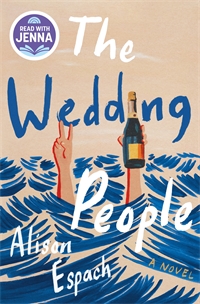
Title: The Wedding People
Author: Alison Espach
Publisher: Henry Holt and Co.
Publication date: July 30, 2024
Length: 384 pages
Genre: Contemporary fiction
Source: Library
Rating:

Rating: 4.5 out of 5.

A propulsive and uncommonly wise novel about one unexpected wedding guest and the surprising people who help us start anew.

It’s a beautiful day in Newport, Rhode Island, when Phoebe Stone arrives at the grand Cornwall Inn wearing a green dress and gold heels, not a bag in sight, alone. She’s immediately mistaken by everyone in the lobby for one of the wedding people, but she’s actually the only guest at the Cornwall who isn’t here for the big event. Phoebe is here because she’s dreamt of coming for years―she hoped to shuck oysters and take sunset sails with her husband, only now she’s here without him. Meanwhile, the bride has accounted for every detail and every possible disaster the weekend might yield except for, well, Phoebe―which makes it that much more surprising when the women can’t stop confiding in each other.

In turns uproariously, absurdly funny and devastatingly tender, Alison Espach’s The Wedding People is a look at the winding paths we can take to places we never imagined―and the chance encounters it sometimes takes to reroute us.

When Phoebe arrives at the Cornwall Inn, she’s literally at the end of the line. She’d dreamed of coming to this elegant Newport inn with her husband, except now he’s her ex, her dreams of starting a family ended with unsuccessful IVF rounds and a terrible miscarriage, and her work life — she’s an adjunct professor of literature who can’t seem to finish the books she’s been writing for far too many years — is stagnant and unfulfilling. After the devastation of her husband’s betrayal, the only bright spot remaining to Phoebe was her beloved cat — but finding him dead one day removed the last ray of light in her life. And so, Phoebe has come to this fancy inn for a final night of luxury before taking pills and slipping away.

Except life seems to have other plans for her. Upon arrival, Phoebe finds the Cornwall stuffed full of “wedding people” — she’s the only guest in the entire place not connected with the over-the-top, super-expensive, weeklong wedding extravaganza.

They laugh and then trade war stories of their terrible flights here and Phoebe does her best to ignore them, to keep her eyes focused on the magnificence of the lobby. But it’s hard. Wedding people are much louder than regular people

Mistaken for a wedding guest by the bride, Lila, Phoebe ends up on the receiving end of Lila’s gifts and confidences.

The bride steps out of the elevator and into the lobby wearing a glittering sash that says BRIDE so there is no confusion. Not that there could be any confusion. She is clearly the bride; she walks like the bride and smiles like the bride and twirls bride-ishly when she approaches High Bun and Neck Pillow in line, because the bride gets to do things like this for two or three days. She is a momentary celebrity, the reason everybody has paid thousands of dollars to come here.

Lila is self-centered and outspoken, and when she learns the truth about Phoebe’s reason for coming to the Cornwall, she’s aghast — a suicide will ruin her wedding!

Phoebe realizes that she does not truly want to end her life, and instead begins to reengage. Finding herself pulled into the wedding people’s stories and intrigues, she becomes an active part of the events, the planning, and the secrets and woes of the various people involved. Through Phoebe, we also learn much more about Lila and her family, as well as about the groom, Gary, whose story is sad and sympathetic, and his preteen daughter, who is not at all a fan of his young bride.

I initially found The Wedding People slow and not entirely interesting, but once Phoebe starts interacting with Lila and the “wedding people”, it becomes much more compelling. This is not an action-driven story by any means — instead, through the events of each day leading up to the wedding itself, we get to know the various characters, their feelings and movitations, and get a deeper understanding of how loneliness, loss, and family complications can lead people down paths they didn’t expect to follow.

Naturally, The Wedding People is also a send-up of wedding culture and the wedding industry, where the bride is always right, the wedding must be spectacular, and every detail — from napkins to chairs to the shoes of the wedding party — much be exactly right. The bachelorette party activities are so ridiculous that they’re both funny and pathetic, and each attempt of the bride’s to create a uniquely fabulous pre-wedding event is a testament to how out-of-control the focus on having a perfect wedding has become.

She can’t destroy a wedding. This wedding is too big to fail. This wedding is like the revolution of the earth. It’s going to happen whether Phoebe says anything or not.

The Wedding People is also unexpectedly touching. I found myself moved by Phoebe’s story, the emotional suffering she’s been through with the collapse of her marriage and the end of her dreams of starting a family with her husband. Because we understand so deeply what brought her to the low point where we first meet her, it’s quite lovely to see her find a new sense of self and purpose as the week goes on.

She wonders if her feelings for [spoiler] could be a new form of love, one she’s never known before: love without expectation. Love that you are just happy enough to feel. Love that you don’t try to own like a painting. But she doesn’t know if that is a real thing. She hopes it is.

Needless to say, the overarching concept of the book is funny in itself: Can you imagine being stuck at a fancy inn overrun by wedding people? It really does sound dreadful.

The Wedding People has many lighter, humorous moments, but overall, it’s an affecting story of loss, connection, endings, and beginnings. Highly engaging and readable — highly recommended.

Book Review: Magical Meet Cute by Jean Meltzer

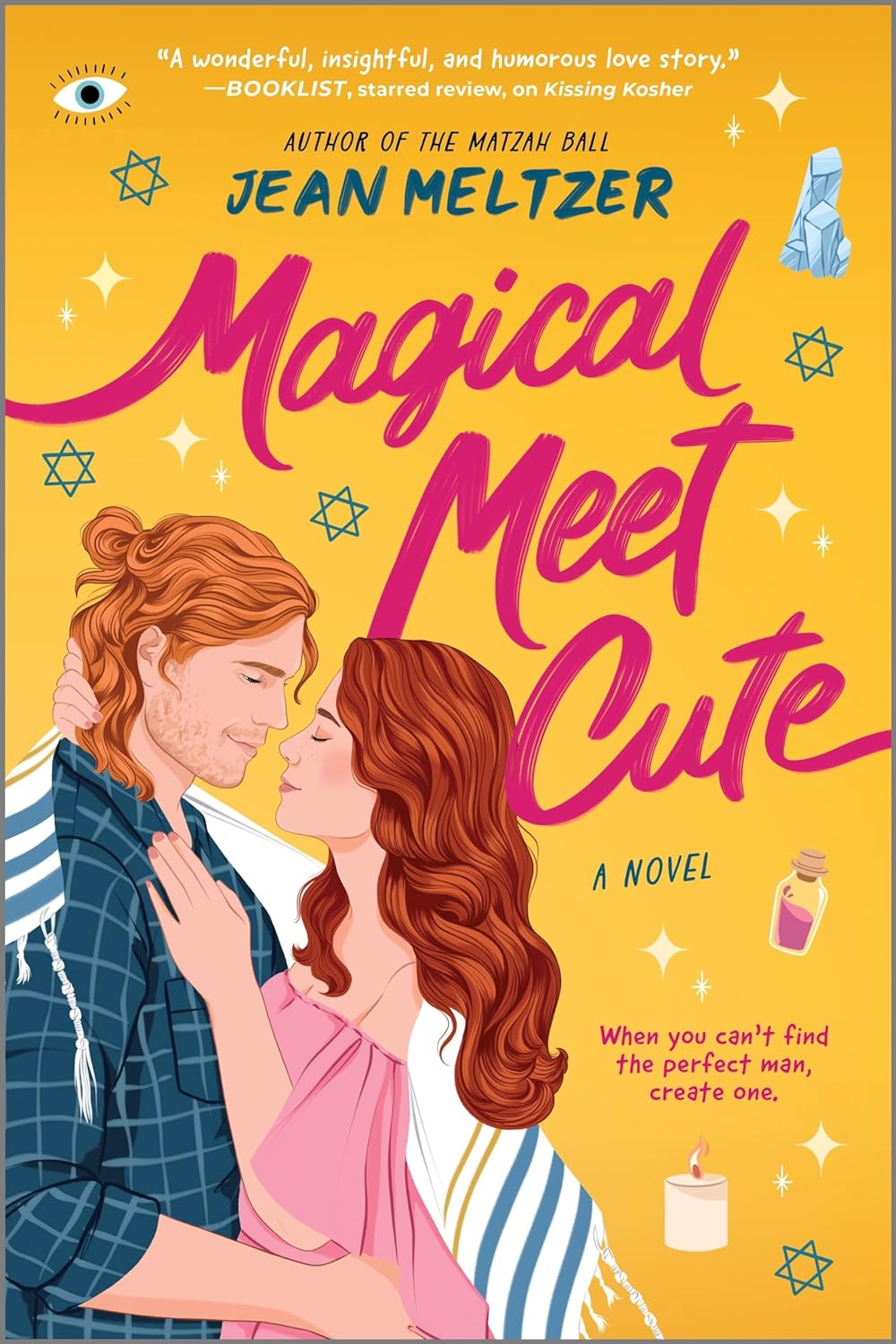
Title: Magical Meet Cute
Author: Jean Meltzer
Publisher: Mira
Publication date: August 27, 2024
Length: 400 pages
Genre: Contemporary romance
Source: Library
Rating:

Rating: 3 out of 5.

Is he the real deal…or did she truly summon a golem?

Faye Kaplan used to be engaged. She also used to have a successful legal practice. But she much prefers her new life as a potter in Woodstock, New York. The only thing missing is the perfect guy.

Not that she needs one. She’s definitely happy alone.

That is, until she finds her town papered with anti-Semitic flyers after yet another failed singles event at the synagogue. Desperate for comfort, Faye drunkenly turns to the only thing guaranteed to soothe her—pottery. A golem protector is just what her town needs…and adding all the little details to make him her ideal man can’t hurt, right?

When a seriously hot stranger mysteriously turns up the next day, Greg seems too good to be true—if you ignore the fact that Faye hit him with her bike. And that he subsequently lost his memory…

But otherwise, the man checks Every. Single. Box. Causing Faye to wonder if Greg’s sudden and spicy appearance might be anything but a coincidence.

In this Jewish-themed romance, Faye Kaplan enjoys her life in the close-knit community of Woodstock, New York. After her fiance dumped her several years earlier, she sold her Manhattan legal practice, moved to a quiet town, and rediscovered her love of ceramics and creating.

A self-described “Jewitch”, she also discovered Jewish magical rituals, which she imbues with her own sense of creativity and spirituality. She’s still hurt and lonely after her break-up, and carries deeper pain stemming from growing up with an abusive mother, who eventually injured her in such a way that her dreams of pursuing her artwork professionally were shattered. Mostly, though, Faye is happy with her circle of close friends and a supportive community.

Her sense of safety is shattered when anti-Semitic flyers appear in town. Suddenly, Faye feels targeted, even in her own home. After a night of self-soothing via wine and magical rituals, she’s ready to reengage with the town’s rally against hate — and then hits a stranger with her bike, landing him in the hospital.

The stranger is tall, muscular, gorgeous, and red-haired, and due to the accident, has a head injury and amnesia. His speech functions are impaired, and he doesn’t know who he is, nor does he have any ID on him. As the hospital prepares to send him to a shelter upon discharge, Faye feels it’s her responsibility to take care of the man she injured, and against the advice of everyone who cares for her, she decided to bring him back to her home until he recovers.

Somewhat randomly, he chooses the name Greg, and as he regains his powers of speech, he and Faye get to know one another. He seems to be the perfect man — he helps her with anything she needs, he plays Scrabble with her, he reads her books, he likes her temperamental dog. But as Faye realizes just how perfectly he matches everything she might want in a man, she thinks back to that wine-soaked night of magic… and wonders if Greg is actually real, or whether she accidentally created a golem, a mythical protector of Jewish legend, called forth to protect the Jewish community in times of need.

As the plot moves forward, we see a growing connection between Faye and Greg, increasing threats from the anti-Semitic element hidden within the town, and Faye’s confusion about who (or what) Greg really is. There’s a lot to like about this quirky romance, but I think the author is trying to do too much, and Faye’s belief that Greg is truly a golem strains all credulity.

The sense of community in Magical Meet Cute is lovely. It’s easy to see why this town has become a refuge and a place of safety for Faye, a woman not truly recovered from childhood trauma and heartbreak. I enjoyed seeing her close friends and the way the people of the town come together in a crisis.

The storyline about anti-Semitism has the potential to be powerful, but shoe-horned into a romance, it feels a bit discordant, especially once Greg decides that the best way to protect Faye is to infiltrate the local cell of anti-Semites and figure out who’s responsible for their threats and violence. Greg’s investigatory scenes are tonally a mismatch for the rest of the book, where the romantic and mystical elements are emphasized.

Faye’s belief that Greg is not a real person, but is in fact a golem… well, it’s just so out-there that I couldn’t help engaging in some heavy-duty eye-rolling. There’s a scene of Faye trying to banish the golem that’s perhaps intended to be funny… but just made me cringe. Hard.

This is now the 3rd book I’ve read by Jean Meltzer, and while all three have been enjoyable in many ways, I’ve realized that the author’s approach to humor just isn’t a good match for me. In each of the books, there are scenes that are clearly meant to be funny, usually involving some slapstick or physical comedy, but they fall flat and feel embarrassing, not silly or cute.

The writing itself is also a mixed bag. It feels to me that the author is trying too hard to incorporate Jewish bits. It’s nice to have the cultural flavor, but there are times in Magical Meet Cute where it’s over the top and doesn’t make sense. For example:

Goddess give her strength. The man was built like a challah.

What does that even mean? Are his muscles braided? Because that sounds like it would hurt.

I did like a lot about Magical Meet Cute, but as with some of the author’s other books, the balance between light and serious seems off. Anti-Semitism and childhood abuse that results in a permanent disability are heavy subjects… and mixing them into a story where (among other things) an octogenarian delights in showing off her stun gun, someone uses kosher salami as a weapon, and there’s a running gag about Faye’s dog leaving… um… surprises on the floor makes this feel as though the author couldn’t quite decide what story she was trying to tell.

It pains me to not be able to rave about this book (and the others I’ve read by Jean Meltzer), as I love the idea of incorporating Jewish elements in a romance novel, and want to support writers who create strong Jewish women as central characters. Something about the writing style and approach makes Magical Meet Cute a mixed experience for me, and at this point, I’m on the fence about reading future books by this author.

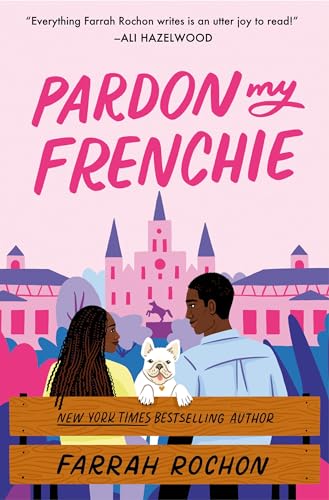
Book Review: Pardon My Frenchie by Farrah Rochon

Title: Pardon My Frenchie
Author: Farrah Rochon
Publisher: Forever
Publication date: June 4, 2024
Length: 384 pages
Genre: Contemporary romance
Source: Review copy courtesy of the publisher via NetGalley; audiobook via Boundless download (library loan)
Rating:

Rating: 4 out of 5.

The New York Times  bestselling author of  Almost There  delivers the start of a new rom-com series with an enemies-to-lovers romance, perfect for readers of Abby Jimenez and Jasmine Guillory.

Ashanti Wright is ecstatic over the success of her dog boarding business, Barkingham Palace. In fact, it has become so successful that Ashanti has plans to expand her empire with a doggie bake shop. There’s just one problem, the building she’s had her eye on has just been sold to the surly grandson of one of her favorite customers. 

Thaddeus Sims is not a dog person. He’s barely a person’s person. But when his grandmother is transferred to a senior living facility that doesn’t accept pets, the former army officer agrees to care for her annoying Standard Poodle, Puddin’. After all, it was with his grandmother’s help that Thad was able to buy the building that will soon house The PX, a sports bar/all-around hangout space for former servicemen that he plans to open.

Puddin’ and Ashanti’s French Bulldog, Duchess, have become a bit of a sensation on Barkingham Palace’s livestream because of their budding romance. When a video of the dogs sharing a doggy treat Lady and the Tramp-style goes viral, their owners are sucked into a media frenzy that captures the nation by storm…and creates some sparks for their owners too.

After loving Farrah Rochon’s The Boyfriend Project trilogy, I was really excited to see that she has a new contemporary romance series kicking off. The fact that it features adorable doggos and a business called Barkingham Palace is icing on the cake!

In Pardon My Frenchie (yes, that title is totally adorable), Ashanti Wright is a small business owner who works nonstop to keep her doggy day care going while also raising her twin teen-aged younger sisters. Ashanti’s business, Barkingham Palace, is very successful, but their small space means growth is limited. Meanwhile, Ashanti’s side business, home-baked doggy treats called Duchess Delights, is ready to take off — but there’s only so many treats she can produce in her home kitchen. Between that, and keeping an eye on her sisters’ school attendance, she more than has her hands full.

Ashanti’s dream is to buy a house she’s had an eye on, with a great location and room for her to expand both the day care and the baking — but she misses the opportunity when the grandson of one of her favorite customers arrives in New Orleans and buys it before she can even get an offer in. Thad is caring for his grandmother’s poodle Puddin’ and is skeptical of dogs in general and Ashanti’s business in particular, and the fact that she calls him out for buying “her” house doesn’t help them get off on the right foot.

However… Puddin’ and Ashanti’s French bulldog Duchess are in doggy love, and they’re a viral sensation thanks to getting caught in a super cute moment on the doggy cam. Puddin’ and Duchess’s wild popularity can be a huge boost to both Thad and Ashanti’s businesses, if they can get past their initial disagreements and work together. Of course, their immediate sense of attraction doesn’t hurt one bit.

Ashanti and Thad have great chemistry (just like Duchess and Puddin’), and despite complications, there’s no doubt that they’ll end up together — but it’s really sweet and enjoyable to watch them get there.

Farrah Rochon once again creates a compelling romance where the love story is just one piece of the greater story. Both Ashanti and Thad have really interesting businesses and backstories, and their family histories are well-developed too. They’re also surrounded by friends, coworkers, and family, providing them with much more in their lives beyond the will-they-won’t-they romantic entanglement.

I enjoyed Ashanti and Thad very much as people on their own, and appreciated each of them having a strong sense of commitment to their responsibilities, to the communities they serve, and to their families. Ashanti’s doggy business is adorable of course, and it’s really fun to see the ups and down of a day in the life of Barkingham Palace.

The book synopsis describes Pardon My Frenchie as the start of a new series, and while I don’t see anything online yet about a next book, I can imagine that Ashanti’s two best friends are likely to be the main characters in upcoming books, and I’ll be there to read them!

Pardon My Frenchie has terrific human interest elements, in addition to very cute dogs, and is sure to please readers who love a bit of canine fun mixed in with their romance.

A note on my reading experience: Although I had an e-ARC of the book, I ended up waiting for the audiobook to become available through the library, and really liked it. The dual narrators provide chapters from both Ashanti and Thad’s points-of-view, and give them each very warm, evocative voices. Highly recommended.

Save

Book Review: My Vampire Plus-One by Jenna Levine

Title: My Vampire Plus-One
Author: Jenna Levine
Publisher: Berkley
Publication date: September 17, 2024
Length: 400 pages
Genre: Contemporary romance/fantasy
Source: Review copy courtesy of the publisher via NetGalley
Rating:

Rating: 4 out of 5.

Nothing sucks more than fake dating a vampire in this paranormal romantic comedy from the USA Today bestselling author of My Roommate Is a Vampire.

Amelia Collins is by definition successful. She would even go so far as to say successfully single. But not according to her family, and she’s tired of the constant questions about her nonexistent dating life. When an invitation to yet another family wedding arrives, she decides to get everyone off her back once and for all by finding someone–anyone–to pose as her date.

After a chance encounter with Reginald Cleaves, Amelia decides he’s perfect for her purposes. He’s a bit strange, but that’s fine; it’ll discourage tough questions from her family. (And it certainly doesn’t hurt that he’s very handsome.) For centuries-old vampire Reggie, posing as her plus-one sounds like the ultimate fun. And if it helps his ruse of pretending to be human, so much the better.

As Amelia and Reggie practice their fauxmance, it becomes clear that Reggie is as loyal to her as the day is long, and that Amelia’s first impressions could not have been more wrong. Suddenly, being in a real relationship with Reggie sounds pretty fang-tastic.

My Vampire Plus-One is the follow-up to last year’s My Roommate Is A Vampire — and if anything, it’s even cuter and sillier than the first book.

In My Vampire Plus-One, Amelia is a successful, hardworking accountant, whose large family seems to constantly have weddings — at which Amelia is on the nonstop receiving end of questions about why she’s single. She’d love to ditch the next wedding, but her parents would be so disappointed!

When Amelia has an unexpected, literal run-in with a good-looking but decidedly weird guy (he runs right into her as she’s leaving her office one day), he definitely leaves an impression, and when she sees him again at a coffee shop, they strike up a conversation. Reginald is a guy who is always up for a good practical joke, and he thinks the idea of posing as Amelia’s special someone at family events sounds hilarious. Also, he finds accountants incredibly hot (or maybe just a certain accountant named Amelia…), so that’s added incentive.

Amelia doesn’t know that Reggie (she refuses to call him Reginald) is a vampire, although she does clue in to the fact that he’s odd right from the start — both because of his interesting approach to style and the fact that he has absolutely no internet presence. But when he tells her straight-up that he’s a vampire during a middle-of-the-night phone call, she assumes it’s yet another of his jokes. A running stream of misunderstandings ensues, as he’s sure she knows something that she doesn’t actually know. You can imagine.

The fake dating trope works in romance because it inevitably leads to real dating, real feelings, real attraction… and yes, it all unfolds that way for Amelia and Reggie. Getting snowed in at an isolated cabin helps move things along — and Reggie listens to and seems to appreciate Amelia, accounting expertise and all, in a way no one else ever has.

“You have an exceptional flair for the dramatic for an accountant.”

“I have a completely average flair for the dramatic for an accountant,” I said, feeling a little unhinged. Talking to this man felt like trying to walk in a straight line on a listing ship. “Which is to say, I don’t have one.”

My Vampire Plus-One is utterly goofy, and that’s really its charm. You cannot for a second take this story seriously, and that’s okay. There’s a storyline that runs throughout about a group of disgruntled (and incompetent) vampires who are out to get Reggie due to a centuries-old grudge, leading to him constantly being on the run — but that’s just all part of the fun. This piece of the story ultimately connects back to Amelia’s work, and there’s an amusing showdown — there’s no real sense of threat or danger, and it’s resolved pretty quickly, but it’s entertaining to see how it all shakes out.

“Do you swear?”

“I swear it on the vows I took when I became a CPA.” There were, of course, no vows you had to take when you became a CPA. But he didn’t need to know that.

The only truly discordant note, from my perspective, is one explicit sex scene that’s way more graphic than it needs to be, and that seems out of place in a novel that’s otherwise full of silly banter and cutesy flirtation. Going a little more closed-door with this scene would have fit the overall tone of the book much better.

That aside, My Vampire Plus-One is goofy and funny, and is a great light read for when you’re in the mood for something fluffy. Reggie first appears in My Roommate is a Vampire as the main love interest’s annoying friend, so it’s fun to see him in a central role here… and having an accountant depicted as the ultimate sexy smart girlfriend is a total win.

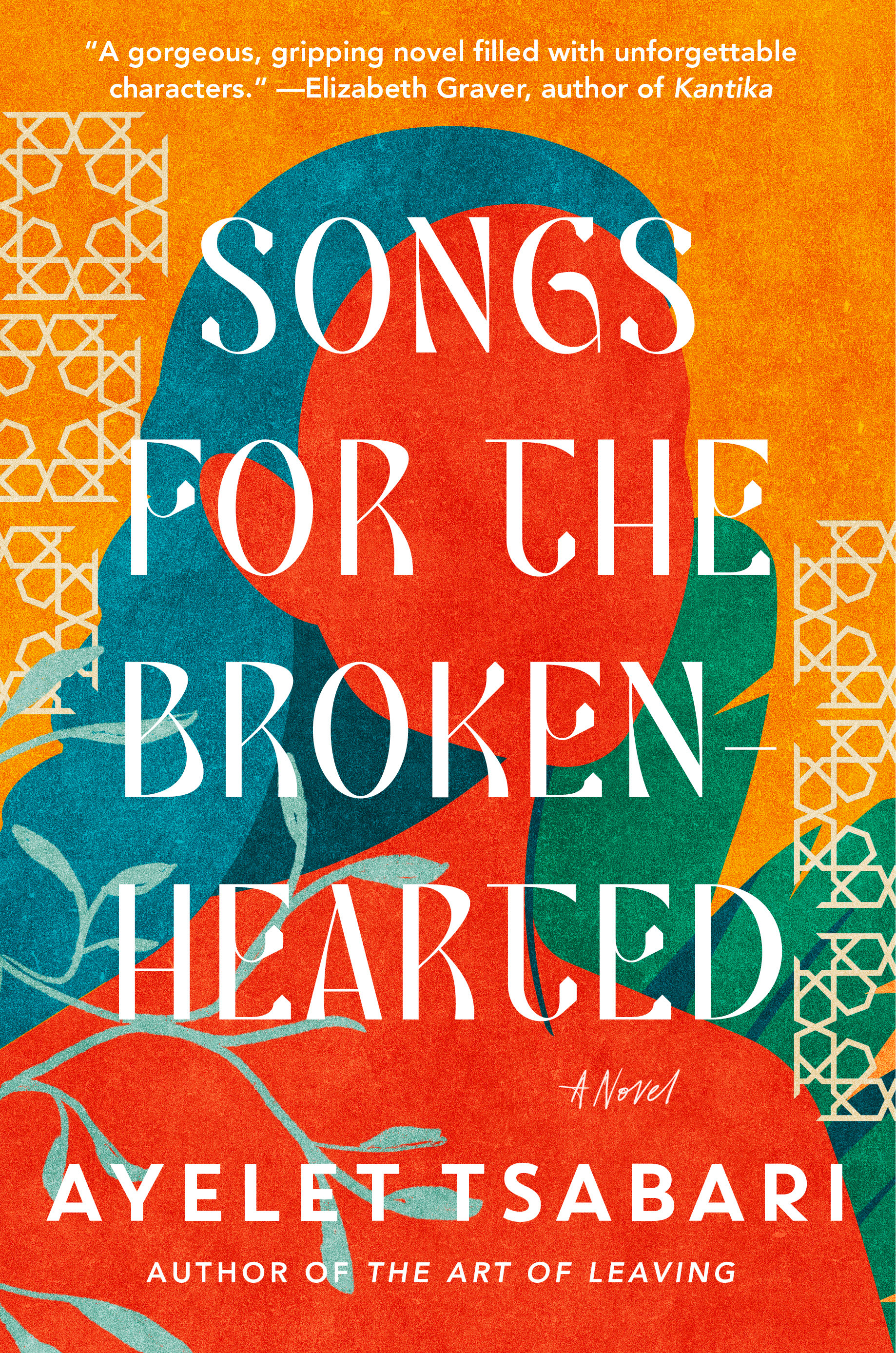
Book Review: Songs for the Broken-Hearted by Ayelet Tsabari

Title: Songs for the Broken-Hearted
Author: Ayelet Tsabari 
Publisher: Random House
Publication date: September 10, 2024
Length: 352 pages
Genre: Historical fiction
Source: Review copy courtesy of the publisher via NetGalley
Rating:

Rating: 5 out of 5.

A young Yemeni Israeli woman learns of her mother’s secret romance in a dramatic journey through lost family stories, revealing the unbreakable bond between a mother and a daughter—the debut novel of an award-winning literary voice.

“A gorgeous, gripping novel filled with unforgettable characters.”—Elizabeth Graver, author of Kantika

1950. Thousands of Yemeni Jews have immigrated to the newly founded Israel in search of a better life. In an overcrowded immigrant camp in Rosh Ha’ayin, Yaqub, a shy young man, happens upon Saida, a beautiful girl singing by the river. In the midst of chaos and uncertainty, they fall in love. But they weren’t supposed to; Saida is married and has a child, and a married woman has no place befriending another man.

1995. Thirty-something Zohara, Saida’s daughter, has been living in New York City—a city that feels much less complicated than Israel, where she grew up wishing that her skin was lighter, that her illiterate mother’s Yemeni music was quieter, and that the father who always favored her was alive. She hasn’t looked back since leaving home, rarely in touch with her mother or sister, Lizzie, and missing out on her nephew Yoni’s childhood. But when Lizzie calls to tell her their mother has died, she gets on a plane to Israel with no return ticket.

Soon Zohara finds herself on an unexpected path that leads to shocking truths about her family—including dangers that lurk for impressionable young men and secrets that force her to question everything she thought she knew about her parents, her heritage, and her own future.

Songs for the Broken-Hearted is a beautiful look into women’s lives, intergenerational misunderstandings and traumas, and the hidden histories of women’s communities and their art. Above all, it’s the story of a woman processing grief over the loss of a mother she never fully knew, learning more about herself through learning about her mother’s life.

It’s 1995, and Zohara is on a break from her doctoral program in New York, vacationing in Thailand, when she’s summoned back home to Israel with the news that her mother Saida has died. The youngest daughter in this Yemeni Israeli family, Zohara has felt disconnected from her homeland and her family, and has never really known her mother in a deep way.

Upon her return, Zohara is confronted by just how much she may have missed, as she begins to learn more about Saida’s role within the family and community, and discovers tapes of her beautiful singing. As Zohara eventually learns, Saida wrote her own songs — and within the world of Yemeni Jewish women, singing is the art form that allows expression, creativity, and emotion, especially important for the immigrant generation who arrived in Israel with limited or no knowledge of Hebrew and were illiterate, as learning was the domain of men.

Through Zohara, we learn more about the history of the Yemeni community within Israel, and as we meet others in her family, we also see the extreme political upheaval of the time. The Oslo accords had only recently been signed, and while Yitzhak Rabin is seen as a hero by some, there’s an increasingly strident and violent opposition building, deeply opposed to the planned concessions of the peace process.

Meanwhile, interspersed with Zohara’s experiences, we have chapters sets in 1950, told from the perspective of Yakub, a young man who meets Saida in the immigrant camp to which they’re assigned upon arrival in Israel from Yemen. Amidst the squalor and deprivations of the camp and the discrimination experienced by the new immigrants, Yakub and Saida find an unexpected connection, as he hears her singing by the river, and they bond over their love of words.

Through Yakub and Saida’s story, as well as the dominant storyline focused on Zohara, we get an inside view of the experience of Yemeni immigrants to Israel, including the horrifying (and real) events surrounding the disappearance of Yemeni children and other children of Jewish immigrants from Arab countries. And yet, there’s also the uplifting elements as we see more of the Yemeni culture, from food to music to family traditions, language, observances, and more.

Songs for the Broken-Hearted is truly a beautiful book, telling a powerful story about family connections and secrets, and showing how grief in its many forms can change the course of individual lives and carry down through generations.

Zohara’s story is affecting, and while it can be frustrating as a reader to see this smart woman make unwise choices, we can easily understand how her loss turns her life upside down and leads her down unexpected paths. Grief also leads to renewed hope, as only through her loss does Zohara come to discover and then immerse herself in the world of women’s songs that was so important to Saida. Through these songs and the community of women who keep them alive, Zohara finds new meaning, learns deeper truths about her mother, and even manages to reignite the passion missing from her academic life.

As Zohara reimmerses herself in family, she also reengages with Israel itself, and is there to witness the upheaval and divisions that culminate in Rabin’s assassination. It’s very heavy, and for readers familiar with that chapter of history, the inevitability of the coming violence can be very painful to experience alongside the characters.

What I loved most about Songs for the Broken-Hearted is the tangible, evocative way the author shares the Yemeni culture. References to specific foods and spices, particular singers and pieces of music — all bring this world to life in a way that feels immersive and immediate.

Songs for the Broken-Hearted is powerful on so many levels, and is an absorbing work of fiction that pulls the reader in right from the start. I loved the cultural aspects as well as the exploration of family bonds, the relationships between mothers and children, and the process of grief and healing.

Highly recommended.

Songs for the Broken-Hearted is author Ayelet Tsabari’s debut novel. She’s previously published a collection of stories (The Best Place on Earth), and a memoir, The Art of Leaving, which I’d especially like to read.

For a taste of Yemeni women’s music, check out the samples below (or search for Yemenite music by Ofra Haza or Gila Beshari, as a starting place — there’s much more available with a bit of looking):

Book Review: The Night Guest by Hildur Knútsdóttir 

Title: The Night Guest
Author: Hildur Knútsdóttir 
Translated by: Mary Robinette Kowal
Publisher: Tor Nightfire
Publication date: September 3, 2024
Length: 208 pages
Genre: Horror
Source: Review copy courtesy of the publisher via NetGalley
Rating:

Rating: 4 out of 5.

Hildur Knutsdottir’s The Night Guest is an eerie and ensnaring story set in contemporary Reykjavík that’s sure to keep you awake at night.

Iðunn is in yet another doctor’s office. She knows her constant fatigue is a sign that something’s not right, but practitioners dismiss her symptoms and blood tests haven’t revealed any cause.

When she talks to friends and family about it, the refrain is the same ― have you tried eating better? exercising more? establishing a nighttime routine? She tries to follow their advice, buying everything from vitamins to sleeping pills to a step-counting watch. Nothing helps.

Until one night Iðunn falls asleep with the watch on, and wakes up to find she’s walked over 40,000 steps in the night . . .

What is happening when she’s asleep? Why is she waking up with increasingly disturbing injuries? And why won’t anyone believe her?

This Icelandic horror novel first came to my attention through Mary Robinette Kowal, who apparently met the author, read the book (in Icelandic!), and then asked to translate it once she learned that it wasn’t available yet in English. Thanks to MRK’s involvement, The Night Guest is being published by Tor Nightfire in September — and it’s sure to be a hit with anyone who loves creepy, ambiguous horror stories.

The main character, Iðunn, wakes up exhausted every day. Not just the kind of exhausted that comes from a rough night’s sleep, but with aching muscles and body pains. Everything hurts. But doctor after doctor find nothing wrong with her. She suspect ALS or other frightening diseases, but when her blood work all comes back fine, it’s not a relief. Something is wrong… and no one can tell her what.

Socially, Iðunn is a little awkward, always feeling like an outsider. We learn much more about her background and why her family and social life are the way they are — but I appreciated the way the information unfolds and offers an unexpected twist, so I won’t reveal it here.

Eventually, Iðunn takes even more drastic measures to figure out what’s going on at night and to make it stop. Her efforts to stop it fail in rather spectacular, dramatic ways, and she progresses from waking up sore to waking up bloody and injured — still without knowing why.

Without revealing too much else about the plot, I’ll just say that the tension builds in a way that get more and more disturbing, and as the clues to Iðunn’s nightly experiences pile up, we find ourselves increasingly at a loss to explain it all. Is it psychosis, as one doctor believes? Is it something otherworldly acting upon her? I wasn’t quite sure where I landed on these questions at the end of the book — I like clean answers, and the book doesn’t provide a simple solution. We’re left to sort out what we ourselves think might have happened — which is disturbing, yet very effective.

The storytelling is terrific. What seems straightforward at the start becomes more complicated as we go along. The horror elements creep in when least expected, until it all becomes more explicitly horrifying by the end.

Iðunn is a great example of an unreliable narrator, and we’re left to wonder right alongside her just what the hell is going on. It’s a unique story, and the short length of the book (just over 200 pages) keeps it tight and fast-moving.

The Night Guest becomes more gory and violent by the end; earlier, it leans more toward psychological horror. I’m so glad I got to experience this unusual gem, and recommend for anyone who enjoys questionable lead characters and weird, terrifying premises. If you’re a horror fan, don’t miss this one!

Final note: As an added bonus, the use of technology (especially the fitness tracker) is awesome! Also, I don’t believe I’ve ever read an Icelandic book before, and I loved the setting, the names, and the overall vibe.

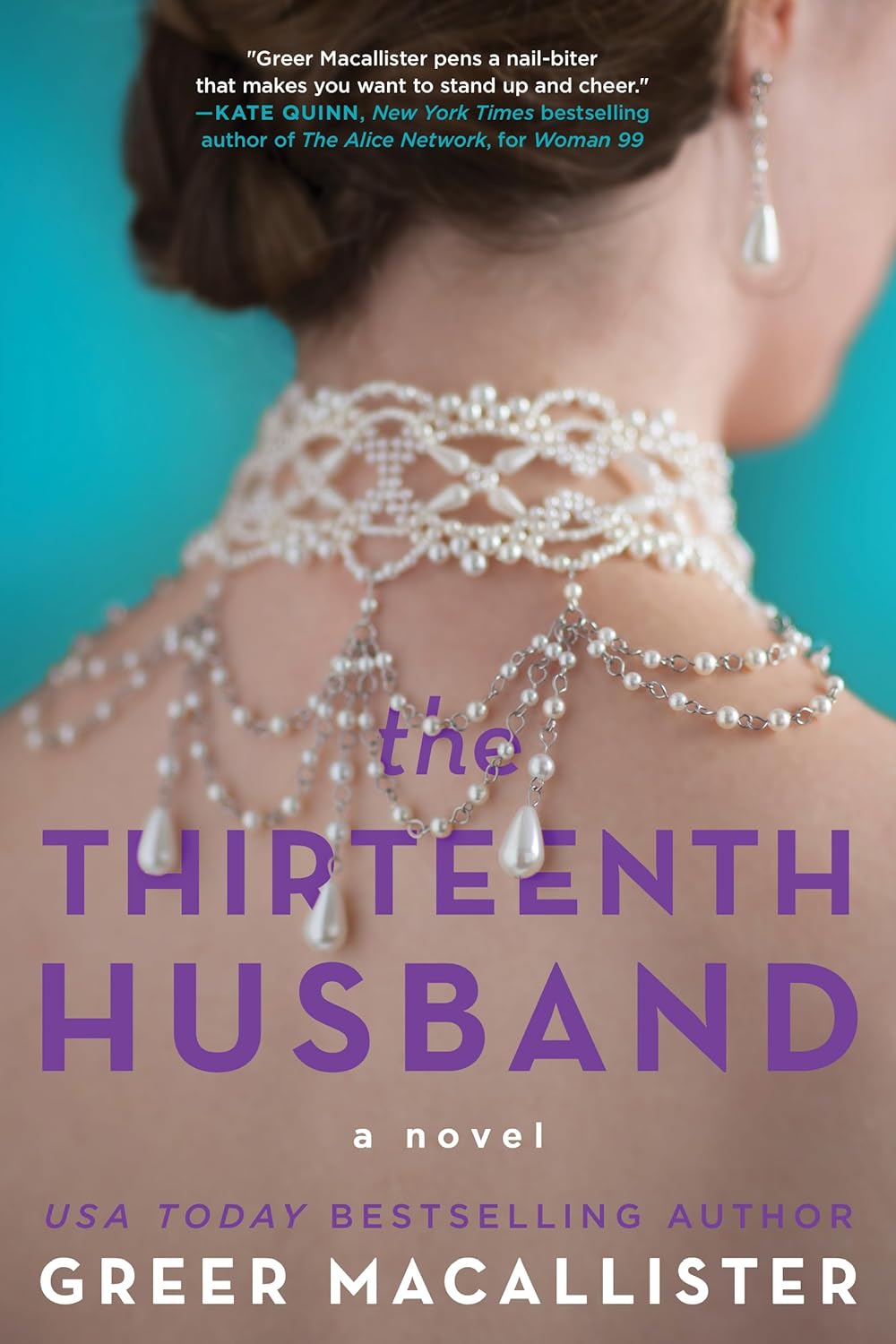
Book Review: The Thirteenth Husband by Greer Macallister

Title: The Thirteenth Husband
Author: Greer Macallister
Publisher: Sourcebooks Landmark
Publication date: August 6, 2024
Length: 336 pages
Genre: Historical fiction
Source: Review copy courtesy of the publisher via NetGalley
Rating:

Rating: 4 out of 5.

Based on a real woman from history, The Seven Husbands of Evelyn Hugo meets The Haunting of Hill House in this fictional tell-all narrated by the glamorous Aimee Crocker, revealing everything from her mischievous days in German finishing school to dinners with Hawaiian royalty to lavish Astor parties in Manhattan. But behind Aimee’s public notoriety, there’s private pain.

When Aimee is ten years old, as the night dips into the witching hour, the Woman in White appears to her. Minutes later, Aimee’s father is dead—and Aimee inherits a fortune. But the Woman in White never really leaves Aimee, appearing as a sinister specter before every tragedy in her life. Despite Aimee’s wealth, her cross-continental travels, and her increasingly shocking progression through husbands, Aimee is haunted by the unidentifiable Woman’s mysterious motivations.  

Tearing through millions of dollars, four continents, and a hearty collection of husbands, real-life heiress Aimee Crocker blazed an unbelievable trail of public scandal, private tragedy, and the kind of strong independent woman the 1880s had never seen. Her life was stranger than fiction and brighter than the stars, and she whirled through her days as if she was being chased by something larger than herself. Greer Macallister brilliantly takes us into her world and spins a tale that you won’t soon forget.

I’d never heard of Aimee Crocker before coming across this new historical novel by talented author Greer Macallister — but I suppose if I’d been around in the 1880s, there’d be no avoiding her. I get the feeling Aimee Crocker was Paris Hilton or Kardashian-level tabloid fodder back in her day. Her every move was analyzed, gossiped over, and fed through the scandal and rumor mill.

Amy (as she was originally named) was the daughter of an extremely wealthy man, and at age 10, upon her father’s death, inherited $10 million — in today’s economy, that would be equivalent to upwards of $275 million.

Amy was never exactly sedate, but in her earlier years, it seemed her mother at least attempted to keep her in line with society expectations. As portrayed in The Thirteenth Husband, Amy marries her first husband after he wins her in a poker game (well, he wins the right to propose to her) — and Amy, always up for adventure, decides to go along with it.

She’s quite the free spirit, as we see over and over again throughout The Thirteenth Husband. Not only does Amy divorce her husband at a time when being a  divorcée is considered shameful, she remarries, travels the world, takes and discards lovers, loses custody of her child in an ugly court case, gets tattooed, and embraces Buddhism, spiritualism, and even the occult.

Images of Amy (miscellaneous sources via Google)

The Thirteenth Husband is written as a first-person account of Amy’s life, through her ups and downs and many marriages. Her life is very much influenced by her interactions with a ghostly presence who visits her in her dreams and seems to offer warnings of loss and disaster. These dream visits propel Amy to seek out palm readers, mediums, and other spiritualists throughout her life, as she seeks the key to understanding her purpose and the hidden messages from the Woman in White.

It’s an interesting character study, as well as a look at the life of someone who refuses to play by society’s rules — and the good and bad outcomes that she faces as a result. Of course, it’s her millions that give her the freedom to behave as she does — someone without that huge fortune (and the power it conveys) could never have gotten away with these types of escapades.

She does make very questionable choices about men and marriage, and in fact (or at least, in the fictionalized version of her life), she only truly marries for love once out of all her relationships. (And no, she doesn’t actually have thirteen husbands… but there’s a reason for the book’s title).

I enjoyed The Thirteenth Husband, but it didn’t quick click for me as a flowing narrative. Amy herself is fascinating, of course, but the book feels very episodic. Each episode is interesting, especially when we learn that many of the most sensational events actually occurred in real life (such as a deadly train crash on her first honeymoon and the kidnapping of her daughter during her divorce proceedings). Still, each episode ends and the story moves on, and it can be difficult to see the connections between parts of her life or how they change her over time.

I’m glad to have read The Thirteenth Husband, and appreciated reading the author’s notes on sources and where she embellished versus sticking to the documented history. It’s also fun to learn that Amy herself was an author! During her lifetime, she published both a book of stories (which she refers to as “fantasies”) and a memoir (which has a defiant name that I love).

  • Moon-Madness and Other Fantasies is free to read/download via Project Gutenberg. (It’s quite short — I read it in one sitting, and was enchanted get a glimpse of Aimee’s imagination)
  • And I’d Do It Again: Aimee’s memoir, available through the usual new and used book sources. I definitely want to read it! Especially based on this preview of the opening pages:

I’m so glad to have been introduced to this remarkable woman through The Thirteenth Husband!

Book Review: The Mercy of Gods (The Captive’s War, #1) by James S. A. Corey

Title: The Mercy of Gods
Series: The Captive’s War, #1
Author: James S. A. Corey
Publisher: Orbit
Publication date: August 6, 2024
Length: 433 pages
Genre: Science fiction
Source: Review copy courtesy of the publisher via NetGalley
Rating:

Rating: 5 out of 5.

How humanity came to the planet called Anjiin is lost in the fog of history, but that history is about to end.

The Carryx—part empire, part hive—have waged wars of conquest for centuries, destroying or enslaving species across the galaxy. Now, they are facing a great and deathless enemy. The key to their survival may rest with the humans of Anjiin.

Caught up in academic intrigue and affairs of the heart, Dafyd Alkhor is pleased just to be an assistant to a brilliant scientist and his celebrated research team. Then the Carryx ships descend, decimating the human population and taking the best and brightest of Anjiin society away to serve on the Carryx homeworld, and Dafyd is swept along with them.

They are dropped in the middle of a struggle they barely understand, set in a competition against the other captive species with extinction as the price of failure. Only Dafyd and a handful of his companions see past the Darwinian contest to the deeper game that they must play to survive: learning to understand—and manipulate—the Carryx themselves.

With a noble but suicidal human rebellion on one hand and strange and murderous enemies on the other, the team pays a terrible price to become the trusted servants of their new rulers.

Dafyd Alkhor is a simple man swept up in events that are beyond his control and more vast than his imagination. He will become the champion of humanity and its betrayer, the most hated man in history and the guardian of his people.

This is where his story begins.

I’m not sure how an author (or in this case, an author duo) manages to start something new after completing what could easily be considered their magnum opus. Fortunately for readers, James S. A. Corey has done just that, and have published their first novel since the conclusion of The Expanse series. And it’s a doozy.

The Mercy of Gods opens by introducing us to humans on their home world, Anjiin. No one quite knows how humans ended up on this planet**, whose native flora and fauna are not compatible with human biology — but there they are, and have been for thousands of years. As the story opens, another year of scientific achievement is wrapping up with a celebration, and no one is more lauded than rockstar scientist Tonner Freis and his team of researchers.

**I’m sure this is just me going off on a wild goose chase, but could these humans on Anjiin have originally passed through the gate in the Expanse series to a new world? Perhaps this is all happening several thousand years later… just a thought.

Trouble looms when lowly research assistant Dafyd Alkhor catches wind that their team may be acquired and split up by rival labs. That devastating news is quickly overshadowed by a world-changing cataclysm, as Anjiin is attacked and quickly defeated by the invading forces of the Carryx — proving for the first time that humans are not alone in the universe.

The Carryx are vastly superior in technology and firepower, and humans don’t stand a chance. The research team and countless others are rounded up, taken aboard a Carryx ship, and transported back to their world, where the nature of their new lives soon becomes apparent. The Carryx evaluate humans and all other captive species by one metric — how useful are they? If Dafyd and the others want to survive, they have to demonstrate their utility. Species that can’t or won’t live up to this standard are eliminated. There’s no mercy, there’s no kindness — and hope seems pointless. Humans are chattel; Carryx see them as animals, just the same as the many other species they’re penned up with.

As the first in a series, The Mercy of Gods has a lot of heavy lifting to do in terms of world building, and this is literally the case as life on Anjiin is established, as is the new world the human captives find themselves in after being captured. It’s a lot to take in, and requires a great deal of concentration, but it’s well worth the effort.

The plot of The Mercy of Gods is complicated, and the authors throw a lot at readers right from the start, with terminology and structures and societal norms introduced without explanation. We can figure it out, eventually, but at least for me, it was a struggle for the first third or so of the book to find a rhythm. (Oddly, once the alien invasion begins, I found the plot and writing easier to follow, and ended up completely immersed.)

Does The Mercy of Gods live up to The Expanse? Well, it’s probably not fair to compare the first book in a series to a series that’s already complete. Still, I have opinions! While I found the plot, the conflicts, and the concepts in The Mercy of Gods fascinating, I didn’t feel the same sort of connection to the characters themselves as I did with the characters of The Expanse. Yes, the characters of The Mercy of Gods are interesting, some more so than others, and the relationships, needs, and motivations of the characters make for compelling conflicts and circumstances. Still, I didn’t feel an emotional connection to these people — but perhaps that will come with the rest of the books in the series, as the story continues to build and deepen.

The synopsis, as well as some asides early in the book, all make clear that Dafyd will be a driving force in whatever is yet to come. He’s referred to as “champion of humanity and its betrayer, the most hated man in history and the guardian of his people” — and I haven’t seen that yet, or at least, not more than just the earliest steps toward what’s to come. I’m frustrated to not know more… but also appreciate how well the suspense is built up by the end of The Mercy of Gods. I need the next book!

All in all, The Mercy of Gods is a fantastic read. While initially a bit challenging to get into, it quickly becomes an absorbing, frightening, high stakes story that’s impossible to put down.

Book Review: Haunted Ever After by Jen DeLuca

Title: Haunted Ever After
Series: Boneyard Key, #1
Author: Jen DeLuca
Publisher: Berkley
Publication date: August 13, 2024
Length: 352 pages
Genre: Contemporary romance
Source: Review copy courtesy of the publisher via NetGalley
Rating:

Rating: 3.5 out of 5.

It’s love at first haunting in a seaside town that raises everyone’s spirits from USA Today bestselling author Jen DeLuca.

Small Florida coastal towns often find themselves scrambling for the tourism dollars that the Orlando theme parks leave behind. And within the town limits of Boneyard Key, the residents decided long ago to lean into its ghostliness. Nick Royer, owner of the Hallowed Grounds coffee shop, embraces the ghost tourism that keeps the local economy afloat, as well as his spectral roommate. At least he doesn’t have to run air-conditioning.

Cassie Rutherford possibly overreacted to all her friends getting married and having kids by leaving Orlando and buying a flipped historic cottage in Boneyard Key. Though there’s something unusual with her new home (her laptop won’t charge in any outlets, and the poetry magnets on her fridge definitely didn’t read “WRONG” and “MY HOUSE” when she put them up), she’s charmed by the colorful history surrounding her. And she’s catching a certain vibe from the grumpy coffee shop owner whenever he slips her a free slice of banana bread along with her coffee order.

As Nick takes her on a ghost tour, sharing town gossip that tourists don’t get to hear, and they spend nights side-by-side looking into the former owners of her haunted cottage, their connection solidifies into something very real and enticing. But Cassie’s worried she’s in too deep with this whole (haunted) home ownership thing… and Nick’s afraid to get too close in case Cassie gets scared away for good.

“The Most Haunted Small Town in Florida” — Boneyard Key — is the setting of Jen DeLuca’s first book in a new romance series, where the locals and their residents ghosts seem to live in a friendly sort of coexistence.

When Cassie relocates to Boneyard Key from the Orlando area, it’s for purely practical reasons — rents are out of control and her social group is no longer a fun place for a single, childless woman… so maybe buying an affordable home in a new town (with ocean views!) is just what she needs to reinvigorate herself. The renovated little cottage is adorable, although the electricity is a bit wonky. Luckily, there’s a cute coffee shop with reliable wifi nearby. Added bonus: The owner is hot and makes a mean banana bread.

At first, Cassie is skeptical about the town’s claim to fame and assumes the ghost fixation is all for the sake of tourism, but after some weird experiences in her new house, she’s willing to admit there may be more to it than she realized. And as Cassie learns more about the town history and her house’s former occupants, she comes to understand that she may need to find a way to connect with — and make peace with — the ghost she shares a home with.

Meanwhile, after a bumpy start with Nick, the cafe owner, a very nice little romance seems to be brewing (!) … until his behavior becomes concerning when he visits her house. Is he secretly a sexist ass… or is something else going on?

I love a good ghost story, but I’m not sure that Haunted Ever After really delivers one. Most of the ghosts we meet are perfectly nice, and their presence is more or less on the amusing side. There’s one nasty ghost — the rest are all lovely, and even offer dating advice and company for binge-watching trashy reality shows. As for the nasty ghost, it represents a key plot point that is really obvious to the reader, if not to the characters involved, and gets resolved by the end of the book.

Haunted Ever After is lots of fun, and makes an entertaining bit of fluffy summer diversion. I’m a big fan of the author’s Ren Faire series (Well Met plus three more books), so I had high expectations going into this book. Haunted Ever After is cute, but doesn’t quite live up to the richness of the other series — the characters aren’t as engaging, and the premise itself takes a bit more of a “just roll with it” attitude.

Haunted Ever After is cute, and the romance is sweet. As I mentioned, it’s pretty fluffy — but it’s enjoyable fluff, and made for a nice bit of reading over a few days when I needed something on the light side. It’ll be interested to see where the author goes next with Boneyard Key — I’d imagine that future books will focus on some of the side characters we meet in Haunted Ever After — and while they didn’t especially stand out for me, I’m guessing they’ll be much more interesting once they get leading roles of their own.

Overall, Haunted Ever After is a good choice for a late summer read… or save it and read in October, if you’re in the mood for a non-scary haunted house book!