Book Review: Ship Wrecked (Spoiler Alert, #3) by Olivia Dade

Title: Ship Wrecked
Series: Spoiler Alert, #3
Author: Olivia Dade
Publisher: Avon
Publication date: November 15, 2020
Length: 400 pages
Genre: Romance
Source: Review copy courtesy of the publisher via NetGalley

Rating: 4 out of 5.

After All the Feels and Spoiler Alert, Olivia Dade once again delivers a warm and wonderful romantic comedy about two co-stars who once had an incredible one-night stand—and after years of filming on the same remote island, are finally ready to yield to temptation again…

Maria’s one-night-stand—the thick-thighed, sexy Viking of a man she left without a word or a note—just reappeared. Apparently, Peter’s her surly Gods of the Gates co-star, and they’re about to spend the next six years filming on a desolate Irish island together. She still wants him…but he now wants nothing to do with her.

Peter knows this role could finally transform him from a forgettable character actor into a leading man. He also knows a failed relationship with Maria could poison the set, and he won’t sabotage his career for a woman who’s already walked away from him once. Given time, maybe they can be cooperative colleagues or friends—possibly even best friends—but not lovers again. No matter how much he aches for her.

For years, they don’t touch off-camera. But on their last night of filming, their mutual restraint finally shatters, and all their pent-up desire explodes into renewed passion. Too bad they still don’t have a future together, since Peter’s going back to Hollywood, while Maria’s returning to her native Sweden. She thinks she needs more than he can give her, but he’s determined to change her mind, and he’s spent the last six years waiting. Watching. Wanting.

His shipwrecked Swede doesn’t stand a chance.

Ship Wrecked is the 3rd book in Olivia Dade’s romance series centered around the fictional TV series Gods of the Gates, a not-at-all-veiled reference to Game of Thrones. Gods of the Gates is one of the biggest television phenomena ever, but once the show moves past its book source material, the showrunners manage to complete derail the storylines and character arcs.

Ship Wrecked‘s story overlaps time-wise with the first two books in the series. Here, we meet new characters who join the show for its second season — Cyprian and Cassia, shipwrecked enemies who spend years learning to work together in order to survive on a deserted, treacherous island, and who naturally fall madly in love.

Peter Reedton, a character actor with a respected but not-flashy career up to this point, knows that his shot at Cyprian could finally show that he has what it takes to be a lead actor. But when he auditions against an unknown, inexperienced Swedish actress, he worries that she may drag him down and ruin his chances.

But that’s not really why he’s upset… The night before the audition, Peter has an amazing one-night stand with an incredible woman named Maria, who then disappears in the morning without leaving a note, contact information, or even her full name. And of course, the Swedish actress he meets the next day turns out to be Maria, and Peter’s anger is really all about his feelings of abandonment.

Still, the two have amazing chemistry on camera, and before they know it, they’re off to a remote Irish island to start what will be years of filming together. They soon discover that they like each other and work well together, but Peter is determined that, for the sake of the production, they should not get romantically involved.

Ship Wrecked continues the entertaining behind-the-scenes look at a huge TV production introduced in the first two books, and introduces two compelling new characters, Peter and Maria, who are easy to love and to root for. Their personality and culture clashes are funny, and I really liked their dynamic together.

The overall plot is perhaps a bit less engaging than the other books, as we see less of the rest of the cast — but when we do get snippets of the cast text threads or quick appearances, they’re always good for a laugh.

Maria and Peter’s relationship, when they finally get there, is steamy as well as rooted in true caring and affection. I didn’t quite buy the tropey breakup required in all romances before the big reunion and romantic finish — their relationship troubles didn’t seem as dire as they presented them to be, and reasonable adults should have been able to work through their issues without torpedoing the relationship.

In terms of steam factor, this book definitely falls on the graphic end of the scale. Sex scenes are explicit, no filmy curtains or fade to black. In fact, the very first paragraph of the very first chapter should give you a good idea about the content of the rest of the book:

When Maria’s hazy brown eyes blinked back open after her orgasm, Peter held her gaze for another dozen thrusts. Then, braced on his forearms, fingers tangled in her hair, he pushed deep one last time and groaned into her mouth.

If you find that completely off-putting, then this may not be a great reading choice for you. I don’t usually go for graphic in my romance reading, but these books are just so much fun that I didn’t mind the occasional cringing brought on by the more detailed scenes.

Ship Wrecked has great characters, plenty of laughs, and is decidedly fat-positive and body-positive, which is refreshing and (sadly) still not all that common. Peter and Maria are both great characters, and I love how the author depicts them as both fat and sexy.

I’ve seen other readers refer to Ship Wrecked as the final book in the series, and I don’t actually know if that’s correct or not. The world of Gods of the Gates is just so much fun — I’d gladly read more about these and other characters.

If you’re interested in Ship Wrecked, I’d really recommend starting from the beginning and reading Spoiler Alert and All the Feels first. Ship Wrecked could work on its own, I suppose, but then you’d miss out on the deliciously ridiculous bigger picture of Gods of the Gates, and really, that would be a shame.

Book Review: Even Though I Knew the End by C. L. Polk

Title: Even Though I Knew the End
Author: C. L. Polk
Publisher: Tor
Publication date: November 8, 2022
Length: 136 pages
Genre: Fantasy
Source: Review copy courtesy of the publisher via NetGalley
Rating:

Rating: 3.5 out of 5.

A magical detective dives into the affairs of Chicago’s divine monsters to secure a future with the love of her life. This sapphic period piece will dazzle anyone looking for mystery, intrigue, romance, magic, or all of the above.

An exiled augur who sold her soul to save her brother’s life is offered one last job before serving an eternity in hell. When she turns it down, her client sweetens the pot by offering up the one payment she can’t resist―the chance to have a future where she grows old with the woman she loves.

To succeed, she is given three days to track down the White City Vampire, Chicago’s most notorious serial killer. If she fails, only hell and heartbreak await.

In this noir-ish novella, Helen Brandt is a private investigator who specializes in occult-related crime scenes. She’s also a woman who, years earlier, sold her soul in exchange for her mortally-wounded brother’s life.

With only days left before her bargain comes due, all Helen wants is private time with the woman she loves. But when a particularly gruesome murder takes place, she’s pulled into a battle between demonic forces, powerful magicians, and fallen angels.

As a novella, the action by necessity is fast-paced, and the storytelling moves quickly from one set-piece to another. I’m not that big a fan of stories about bargains with the devil or battles between angels and demons, but what really sucked me in was the love story and the desperate need for just a bit more time.

The title comes from Helen’s thoughts about The Great Gatsby, and the essence of love and hope:

Jay Gatsby knew a lot about hope. Hope felt a little painful, on account of it not being a sure thing. In fact, there was almost no hope for him, which made that tiny flashing light all the more precious. I’d read this book a dozen times, two dozen. I always held my breath, waiting for Daisy to come to him. Jay hoped every single time, and I hoped right along with him, even though I knew the end.

A week after finishing this short but powerful story, I couldn’t tell you the specifics about the outcome of the murder plot… but I absolutely remember how Helen and Edith’s love story made me feel. Even when the end is inevitable, even when a deal with the devil is coming due, Helen will savor every moment, because every moment with the woman she loves is worth much more than the pain of thinking about losing it.

They love, even though they know the end.

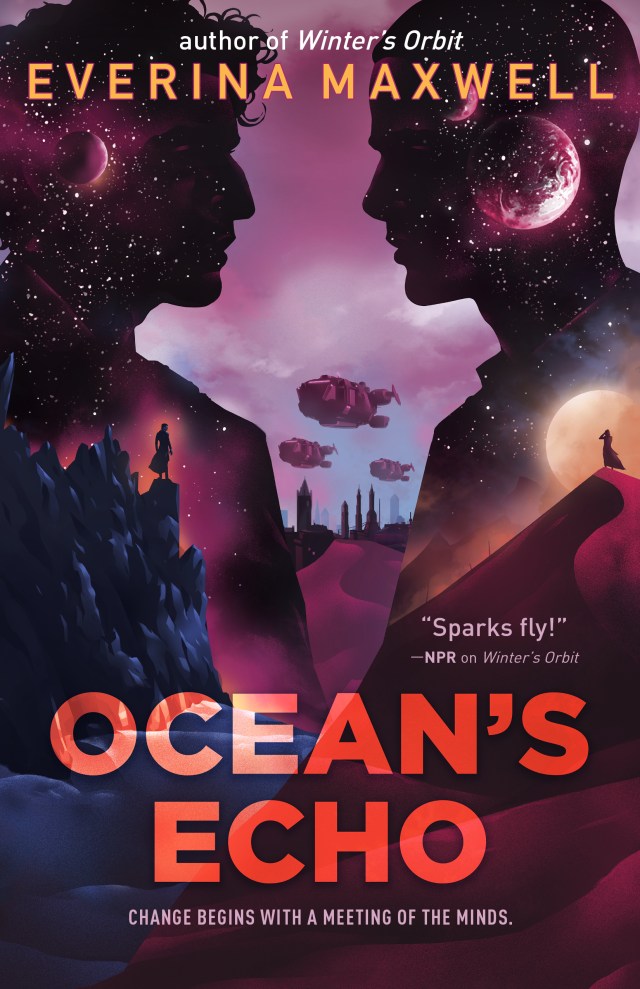
Book Review: Ocean’s Echo by Everina Maxwell

Title: Ocean’s Echo
Author: Everina Maxwell
Publisher: Tor Books
Publication date: November 1, 2022
Length: 484 pages
Genre: Science fiction
Source: Review copy courtesy of the publisher via NetGalley
Rating:

Rating: 4 out of 5.

Ocean’s Echo is a stand-alone space adventure about a bond that will change the fate of worlds, set in the same universe as Everina Maxwell’s hit debut, Winter’s Orbit.

Rich socialite, inveterate flirt, and walking disaster Tennalhin Halkana can read minds. Tennal, like all neuromodified “readers,” is a security threat on his own. But when controlled, readers are a rare asset. Not only can they read minds, but they can navigate chaotic space, the maelstroms surrounding the gateway to the wider universe.

Conscripted into the military under dubious circumstances, Tennal is placed into the care of Lieutenant Surit Yeni, a duty-bound soldier, principled leader, and the son of a notorious traitor general. Whereas Tennal can read minds, Surit can influence them. Like all other neuromodified “architects,” he can impose his will onto others, and he’s under orders to control Tennal by merging their minds.

Surit accepted a suspicious promotion-track request out of desperation, but he refuses to go through with his illegal orders to sync and control an unconsenting Tennal. So they lie: They fake a sync bond and plan Tennal’s escape.

Their best chance arrives with a salvage-retrieval mission into chaotic space—to the very neuromodiifcation lab that Surit’s traitor mother destroyed twenty years ago. And among the rubble is a treasure both terrible and unimaginably powerful, one that upends a decades-old power struggle, and begins a war.

Tennal and Surit can no longer abandon their unit or their world. The only way to avoid life under full military control is to complete the very sync they’ve been faking.

Can two unwilling weapons of war bring about peace?

Once I started reading Winter’s Orbit last year, I basically couldn’t put it down — so I was very excited to get my hands on a copy of Everina Maxwell’s follow-up novel, Ocean’s Echo. Ocean’s Echo is a stand-alone, but it is set in the same universe as Winter’s Orbit. There are no cross-over characters, but the basics of the galactic system and some key political and scientific aspects connect the two books.

In Ocean’s Echo, Tennal is about age 20, from a powerful family (his aunt is the head of government of the Orshan planets), and is incapable of (and has no interest in) staying out of trouble. After one scandal too many, his aunt orders his conscription into the army. As if that’s not bad enough, she’s also ordered him to be synced. Tennal is a talented reader — he can read other people’s thoughts — but readers are both rare and considered very dangerous if left uncontrolled. Control is exactly what his aunt wants, and so Tennal will be forced into a sync, where an architect — someone who can telepathically influence others’ minds — will force a sort of mind-meld with Tennal. From that point on, the architect will be able to control Tennal’s actions. Worst of all, the sync is permanent — a broken sync results in death for both reader and architect.

Needless to say, Tennal is not at all happy about his fate, but he truly has no choice. He’s surprised, therefore, when he meets Surit, a young lieutenant with strong architect abilities and an even stronger moral compass. Despite orders, he knows deep down that a forced sync is wrong, and he suggests that he and Tennal fake it. They’re successful in their deception at first, until they are pulled further and further into an impending civil war where their own survival and the fate of their world is at stake.

Tennal and Surit are both terrific characters, with very distinct characters and personality traits. While the chapters alternate between their perspectives, there’s never any confusion about whose point of view we’re getting. They are definitely a case of opposites attracting, and while the intricacies of the reader-architect dynamic are the main focus, there’s a romantic chemistry as well that keeps bubbling to the surface.

The world-building is very detailed, but occasionally confusing. While Ocean’s Echo is a stand-alone, I think it would be somewhat baffling for a reader who hasn’t first read Winter’s Orbit. Without a basic understanding of the books’ universe, I’m not sure that talk of the Resolution, the Link, and remnants, among other concepts, would make a whole lot of sense. As is, even having read the first book, some of the high-concept military and scientific scenarios went over my head. That’s okay, though — I didn’t have to fully grasp every single detail in order to appreciate the characters, their connection, and the big picture stakes of the storyline.

Overall, I really enjoyed Ocean’s Echo. The writing pulled me in, and even when concepts such as chaotic space started boggling my mind, some nifty turns of phrase would get me back on track and impress me with the author’s creativity and descriptive skill.

Since the moment they’d synced, the sea had come in roaring, a glorious, terrible torrent. Where there had been ordinary rooms and cabinets and stairs in Surit’s neat mental house, there was now a tumult of swirling water, deep-sea caverns instead of foundations, whirlpools instead of floors.

You need to have an appreciation for space battles and sci-fi drama and high stakes military adventures to truly love this book, I think… but if you do, then don’t miss out on this book (and check out Winter’s Orbit too!).

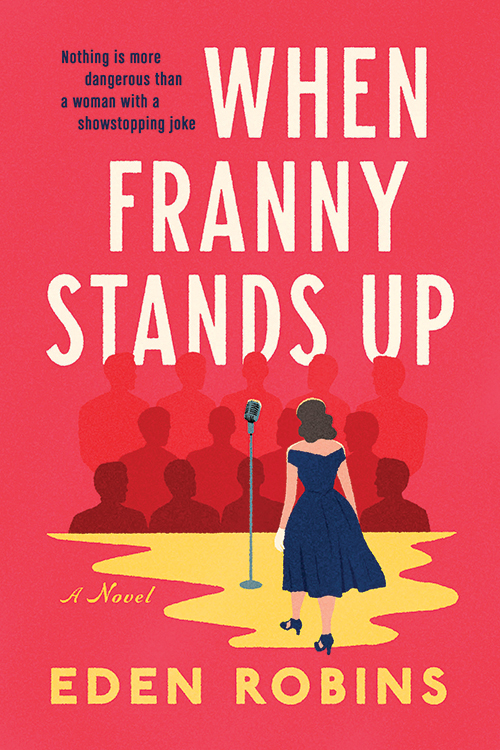
Book Review: When Franny Stands Up by Eden Robins

Title: When Franny Stands Up
Author: Eden Robins
Publisher: Sourcebooks Landmark
Publication date: November 1, 2022
Length: 400 pages
Genre: Historical/speculative fiction
Source: Review copy courtesy of the publisher via NetGalley
Rating:

Rating: 2.5 out of 5.

Nothing is more dangerous than a woman with a showstopping joke.

Franny Steinberg knows there’s powerful magic in laughter. She’s witnessed it. With the men of Chicago off fighting WWII on distant shores, Franny has watched the women of the city taking charge of the war effort. But amidst the war bond sales and factory shifts, something surprising has emerged, something Franny could never have expected. A new marvel that has women flocking to comedy clubs across the nation: the Showstopper.

When Franny steps into Chicago’s Blue Moon comedy club, she realizes the power of a Showstopper—that specific magic sparked when an audience laughs so hard, they are momentarily transformed. And while each comedian’s Showstopper is different, they all have one thing in common: they only work on women.

After a traumatic flashback propels her onstage in a torn bridesmaid dress, Franny discovers her own Showstopper is something new. And suddenly she has the power to change everything…for herself, for her audience, and for the people who may need it most.

I first became aware of When Franny Stands Up when an author I love recommended it. I’ve since read a couple of stellar reviews. And all this leaves me wondering — what did I miss?

In When Franny Stands Up, women’s comedy clubs are struggling to survive in the 1950s, after male comedians become popular on TV and grab all the attention. But women know a secret: in the live stand-up shows for women only, certain talented comedians have Showstoppers — moments of magic where the performer induces certain special effects on the women in the audience as they laugh.

For Franny, she first encounters a Showstopper years earlier, sneaking away from her protective parents’ home in a Chicago suburb to see the famous Boopsie Baxter perform. But Franny is not at all prepared for her powerful reaction to Boopsie’s Showstopper, and runs back home in shame and fear, only to discover that her soldier brother has gone missing in action in Europe. For Franny, these two events become very much linked, and she determines to be good and give up her interest in comedy forever.

But as the main part of the story opens, 23-year-old Franny is burdened by her daily life, her worries over her brother, now home but suffering from PTSD, and her alienation from her former best friend, who’s about to get married, and whose family is responsible for one of Franny’s worst memories. When events at the wedding go badly, Franny runs off yet again, and finds herself at the Blue Moon club, where a whole new world awaits.

Sadly, so much of this story simply didn’t make sense to me. Franny’s interest in comedy, especially in becoming a stand-up comedian, seems to come out of nowhere, and isn’t well explained. And why the club owner and other performers take an interest in Franny or immediately sense her potential talent — well, I have no idea.

There are many interesting concepts scattered throughout the story, but whether it’s the writing itself or the approach to the plot, it never particularly gelled for me. I found the writing style choppy, with descriptions and plot actions not quite making sense to me. As new occurrences and situations popped up, I often felt like I must have accidentally skipped some pages — just how did we get from point A to point B? Some characters as well just never made sense — I can think of one in particular who, by the end of the story, I still didn’t know if she was supposed to be sympathetic or an antagonist, and that definitely did not seem like an intentional construction of a morally gray characters. Instead, it was just another example of a writing approach that didn’t work for me.

The idea of the Showstopper concept is pretty cool, absolutely — but the plot, inconsistent character depictions, dropped or under-developed storylines, and unclear character motivation all got in the way of my enjoyment of When Franny Stands Up. There are some interesting ideas here, but sadly, the book as a whole just didn’t work for me.

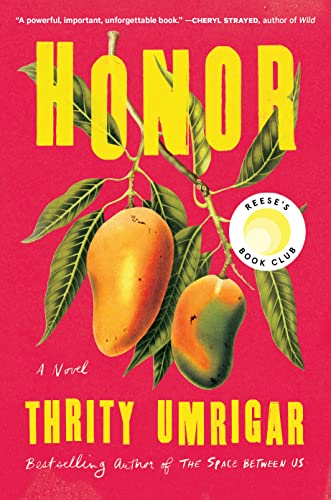
Book Review: Honor by Thrity Umrigar

Title: Honor
Author: Thrity Umrigar
Publisher: Algonquin Books
Publication date: January 4, 2022
Length: 326 pages
Genre: Contemporary fiction
Source: Purchased
Rating:

Rating: 4 out of 5.

In this riveting and immersive novel, bestselling author Thrity Umrigar tells the story of two couples and the sometimes dangerous and heartbreaking challenges of love across a cultural divide.

Indian American journalist Smita has returned to India to cover a story, but reluctantly: long ago she and her family left the country with no intention of ever coming back. As she follows the case of Meena—a Hindu woman attacked by members of her own village and her own family for marrying a Muslim man—Smita comes face to face with a society where tradition carries more weight than one’s own heart, and a story that threatens to unearth the painful secrets of Smita’s own past. While Meena’s fate hangs in the balance, Smita tries in every way she can to right the scales. She also finds herself increasingly drawn to Mohan, an Indian man she meets while on assignment. But the dual love stories of Honor are as different as the cultures of Meena and Smita themselves: Smita realizes she has the freedom to enter into a casual affair, knowing she can decide later how much it means to her.

In this tender and evocative novel about love, hope, familial devotion, betrayal, and sacrifice, Thrity Umrigar shows us two courageous women trying to navigate how to be true to their homelands and themselves at the same time.

Honor is a powerful, painful book — it’s impossible to put down, and yet left me feeling practically bruised by the trauma experienced by its characters.

In Honor, expat Smita returns to India after 20 years abroad to fill in for her best friend and fellow journalist while she recovers from an injury. Smita’s friend was covering a sensational trial: A Hindu woman, Meena, horribly disfigured by the fire that killed her Muslim husband, is suing her two brothers, the men responsible for the horrendous attack. If she wins, they could face life imprisonment — but even if she does win, Meena can never get back what she lost.

Meena’s story of life in a small village stuck in old oppressive traditions and belief systems is counter-balanced by Smita’s own experiences and memories, which unfold slowly over the course of the novel. Smita and her family relocated to the US when she was a teen, but we don’t learn the circumstances until late in the book. Still, we know that something bad happened, enough for Smita to have sworn never to return to her homeland, instead living an austere, independent life, traveling the globe to report on gender issues worldwide. Meena’s case is perhaps too close and personal for Smita. She’s outraged and furious, struggling to maintain her journalistic distance, all the while becoming more invested in Meena’s life and in her own growing connection to Mohan, the man who acts as her travel companion and protector as she journeys to Meena’s village.

The interviews with the men of the village are simply terrible to read — the bigotry, sexism, and cruelty is impossible to fully express. Meena, now living in her husband’s village with her mother-in-law, fares no better there. She’s blamed for her husband’s death, considered a burden and a curse, and lives a life of pain and suffering, brightened only by her young daughter, the only remnant of her dream of a life with her beloved husband.

Through flashback scenes, we see Meena’s quiet bravery as she defies her brother’s control to first take a factory job (thereby supporting her brothers), then falling in love with someone she never should have met. The story of Meena and Abdul’s romance is sweet but piercing — we know already that tragedy awaits the couple, and that love can’t save them.

By the end of this tragic novel, Smita comes to understand more about herself, her childhood, and her country, and also finds a new sense of purpose in the aftermath of the trial. The ending is as uplifting as such an awful story can be, but there is hope left, even after all the terrible events and experiences.

Meena’s story is haunting and makes the bigger impression, but Smita’s personal journey is inspiring and moving as well.

All in all, Honor is a deeply moving and upsetting look at the concept of honor, both in a more modern society and in a tradition-bound, repressive community. I can see why it was chosen as a Hello, Sunshine pick earlier this year — it would make a great book group book, with plenty to discuss and ponder.

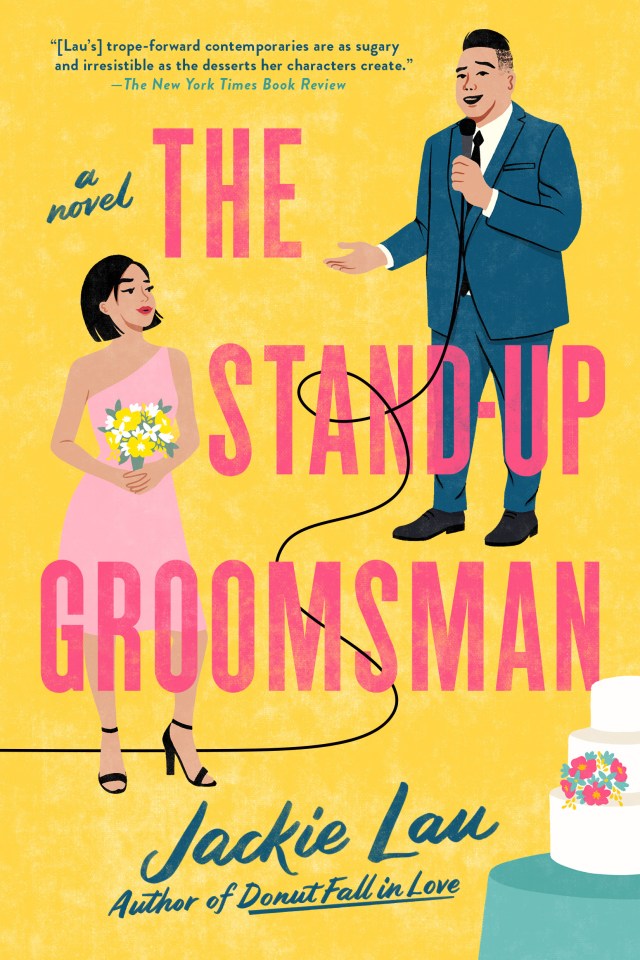
Book Review: The Stand-Up Groomsman by Jackie Lau

Title: The Stand-Up Groomsman
Author: Jackie Lau
Publisher: Berkley
Publication date: October 25, 2022
Length: 368 pages
Genre: Contemporary romance
Source: Review copy courtesy of the publisher via NetGalley
Rating:

Rating: 4 out of 5.

A bridesmaid and groomsman put their differences aside to get their friends down the aisle in this opposites-attract steamy romantic comedy.

They say to never meet your heroes, but when Vivian Liao’s roommate gets engaged to her favorite actor’s costar, she has no choice but to come face-to-face with Melvin Lee again. He’s just as funny and handsome as he is on-screen…but thinks she is a snob and a sellout. It’s none of his business how she chooses to live her life, no matter how charismatic he is.

Mel is used to charming audiences as an actor and stand-up comedian but can’t connect to Vivian. She’s a smart, talented artist–which is why he thinks she’s wasting her life as a corporate finance drone. The only thing uniting them is their goal for the wedding to go off without a hitch.

As they collaborate on wedding cake and karaoke parties, Mel realizes he might have seriously misjudged this bridesmaid, while Vivian discovers the best man might just be as dazzling off-screen as he is on. With the wedding underway, maybe more than one happily ever after is in the future.

In this follow-up to Donut Fall In Love, a self-contained finance professional falls for a loud, outrageous stand-up comedian, and sparks fly — despite the fact that on the surface, at least, they’re complete opposites, and what’s worse, had an awful first meeting.

When Vivian meets Mel, she’s thrilled to be meeting the star of one of her favorite sitcoms. I mean, she’s done fan art about him! But he makes the mistake of assuming she’s like he used to be — someone pursuing a corporate paycheck rather than taking a chance and following their muse. Vivian is furious and would be happy to never see him again. Unfortunately for her, they’re going to be forced together over the coming year, as her roommate Lindsay has just become engaged to his best friend Ryan, and they’re both going to be in the wedding party.

As the wedding events seem designed to throw Vivian and Mel together, they form a tentative sort of connection, realizing that their outward differences mask some life experiences and personality quirks that make them more alike than they realized. Of course, the more time they spend together, they more their chemistry heats up, and it’s only for so long that they can deny that they’re better off as lovers than as enemies (or even frenemies).

The Stand-Up Groomsman is lots of fun, with tons of cute flirting, silly gift-giving, and shedding of inhibitions and defense mechanisms. I was impressed with the author’s ability to peel back the outer layers of the characters to show us how they’ve ended up where they are. Vivian confused me for much of the story — why was she so closed off? Why did she seem so unable to make connections or get involved with other people? But eventually, we learn more about her childhood and her parents’ expectations of her, and it finally all clicks and makes sense.

Melvin himself is all sorts of adorable. He and Vivian are both bisexual, and their frank conversations about sexuality are very refreshing — I haven’t come across all that many contemporary romance tales with such positive bi representation. (Mel’s bi identity is one of the many pieces of himself that becomes fodder for his stand-up routines, and it’s both sweet and funny to see how he works it into his set).

As the title indicates, Mel is a stand-up comedian as well as being a comedic actor. We see his stand-up shows throughout the book, and while some bits are quite funny, this is actually one part of the novel that perhaps didn’t work all that well for me. Reading a stand-up routine as part of a book’s narrative is just not the same as seeing a stand-up performance — and without the personality and physical presence, I just didn’t feel like the comedy translated all that well to the printed page.

That’s really just a minor quibble. Overall, The Stand-Up Groomsman is silly, sweet, and romantic, with some sexytimes in the mix too. (In terms of just how sexy, I’d rank this one as somewhere between steamy and graphic on my non-scientific, inexact ratings scale — it’s detailed and shows everything, but doesn’t cross into downright overly anatomical descriptions, if that makes any sense.)

On Goodreads, The Stand-Up Groomsman is listed as Donut Fall In Love, #2 — and yes, it is a sequel, but if you’re interested in this book, no need to get too hung up on reading the first book first. The couple from the first book are the wedding couple in this one, but really, you can read The Stand-Up Groomsman as a stand-alone and it’ll work just fine. (That said, Donut Fall In Love is super enjoyable, so why not read both?)

I’d definitely recommend The Stand-Up Groomsman for anyone looking for a light, contemporary romance with unusual characters and a sense of whimsy. Really a fun read!

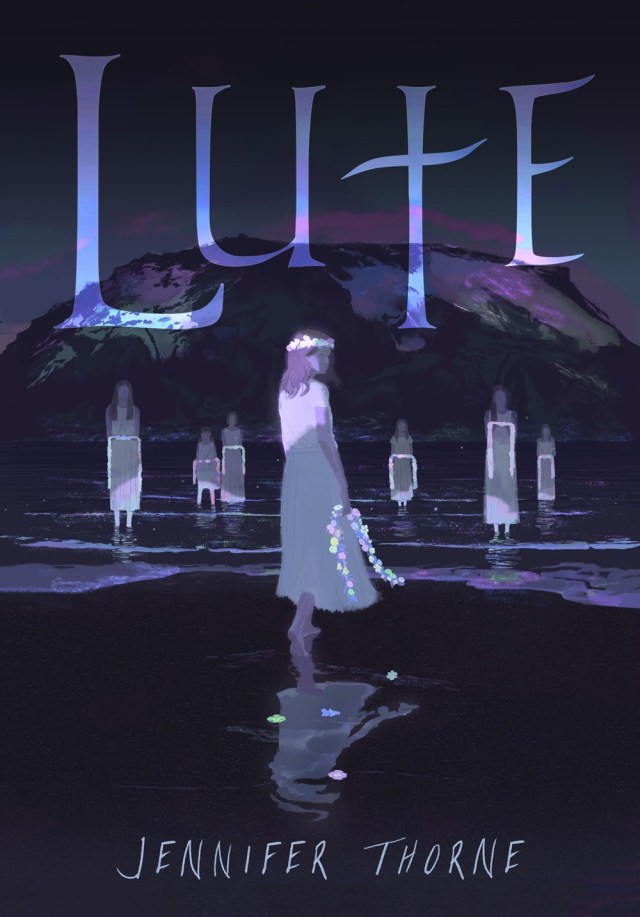
Book Review: Lute by Jennifer Thorne

Title: Lute
Author: Jennifer Thorne
Publisher: Tor Nightfire
Publication date: October 4, 2022
Length: 288 pages
Genre: Horror/fantasy/thriller
Source: Review copy courtesy of the publisher via NetGalley
Rating:

Rating: 5 out of 5.

On the idyllic island of Lute, every seventh summer, seven people die. No more, no less.

Lute and its inhabitants are blessed, year after year, with good weather, good health, and good fortune. They live a happy, superior life, untouched by the war that rages all around them. So it’s only fair that every seven years, on the day of the tithe, the island’s gift is honored.

Nina Treadway is new to The Day. A Florida girl by birth, she became a Lady through her marriage to Lord Treadway, whose family has long protected the island. Nina’s heard about The Day, of course. Heard about the horrific tragedies, the lives lost, but she doesn’t believe in it. It’s all superstitious nonsense. Stories told to keep newcomers at bay and youngsters in line.

Then The Day begins. And it’s a day of nightmares, of grief, of reckoning. But it is also a day of community. Of survival and strength. Of love, at its most pure and untamed. When The Day ends, Nina―and Lute―will never be the same. 

In the world of Lute, the residents of this peaceful place truly live in an island paradise. Lute is located in the Bristol Channel, a small place with one little village, a grove of trees, some goats, gorgeous views, and a manor house that’s been occupied by the Treadway family for centuries.

Lute is also a haven from a war-torn world. We’re never told exactly when this story is taking place, but it’s set at some indefinite point in the future when the entire world is engulfed in a devastating war… the entire world except for Lute, that is. While many of Lute’s residents have been drafted or volunteered to serve, the war itself has never touched the island — no invasions, no air raids. All is peaceful.

Nina Treadway, the main character, has lived on Lute for almost seven years, after meeting the son of Lord Treadway on an ocean voyage and then returning to the island with him after his father’s sudden death. After all her years on Lute with her husband and two children, Nina feels settled, but not truly a part of the island community. She doesn’t quite fit in with the townsfolk, and she accepts as quaint tradition the island lore about The Day.

What is The Day? Going back thousands of years, the islanders believe they live under the blessings of the old gods. In exchange for seven deaths on midsummer every seventh year, the island enjoys good weather, good fortune, and mostly importantly, peace. Nina scoffs at the stories, and really doesn’t believe that the good people of Lute actually believe in these stories that they tell.

But this is the seventh year, and as The Day approaches, the mood shifts to one of anticipation and dread. It can’t really be true… can it? These people can’t truly think that seven deaths are inevitable… can they?

Told in chapters that creep forward from three days before, to two days before, all the way through to The Day, which then unfolds pretty much hour by hour, Lute carries a growing feeling of anxiety and fear that’s hard to describe, but so impossible not to feel.

I wouldn’t describe Lute as a horror story — there’s very little in the way of gore or jump scares, and there’s no big bad lurking in corners. Still, I haven’t been this terrified reading a book in quite some time. The quiet creeping dread that builds and builds had my stomach in knots — and while part of me just absolutely did not want to know what was coming, another part simply couldn’t look away.

Lute is a fairly short book, and I think it’s probably best enjoyed in one big marathon read. I wish I’d been able to do that. By having to break up my reading time, it would take me a few beats before feeling immersed again, and that’s not at all the fault of the writing. This is a haunting, absorbing story that I think is best read by just diving in and staying with it to the end.

I’m not sure that I loved the wrap-up in the epilogue, although it does work. I also really did want to know more about the war and what was happening in the wider world… but then that would be a very different book. Those are my only quibbles, really.

All in all, I simply loved this book. The writing is beautiful and evocative and sets such an eerie, otherworldly tone. I loved getting to know the people of Lute, the history of the island, the origin of their legends, and the way the very rocks, waves, and trees seem to bring the mythology of the place to life. The beauty and isolation of Lute is presented as a blessing that comes with a price, and over the course of the book, we come to understand why the people of Lute are willing to pay that price, despite the pain and sorrows that come with it.

Lute is a very special reading experience. I highly recommend it.

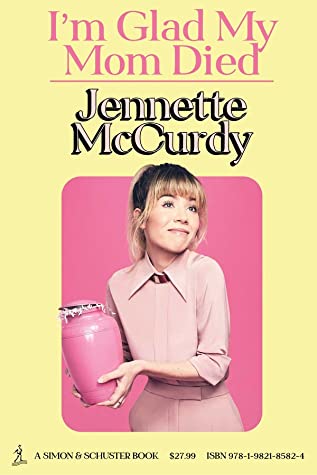
Audiobook Review: I’m Glad My Mom Died by Jennette McCurdy

Title: I’m Glad My Mom Died
Author: Jennette McCurdy
Narrator: Jennette McCurdy
Publisher: Simon & Schuster
Publication date: August 9, 2022
Print length: 320 pages
Audio length: 6 hours, 26 minutes
Genre: Memoir
Source: Library
Rating:

Rating: 4.5 out of 5.

A heartbreaking and hilarious memoir by Jennette McCurdy about her struggles as a former child actor—including eating disorders, addiction, and a complicated relationship with her overbearing mother—and how she retook control of her life.

Jennette McCurdy was six years old when she had her first acting audition. Her mother’s dream was for her only daughter to become a star, and Jennette would do anything to make her mother happy. So she went along with what Mom called “calorie restriction,” eating little and weighing herself five times a day. She endured extensive at-home makeovers while Mom chided, “Your eyelashes are invisible, okay? You think Dakota Fanning doesn’t tint hers?” She was even showered by Mom until age sixteen while sharing her diaries, email, and all her income.

In I’m Glad My Mom Died, Jennette recounts all this in unflinching detail—just as she chronicles what happens when the dream finally comes true. Cast in a new Nickelodeon series called iCarly, she is thrust into fame. Though Mom is ecstatic, emailing fan club moderators and getting on a first-name basis with the paparazzi (“Hi Gale!”), Jennette is riddled with anxiety, shame, and self-loathing, which manifest into eating disorders, addiction, and a series of unhealthy relationships. These issues only get worse when, soon after taking the lead in the iCarly spinoff Sam & Cat alongside Ariana Grande, her mother dies of cancer. Finally, after discovering therapy and quitting acting, Jennette embarks on recovery and decides for the first time in her life what she really wants.

Told with refreshing candor and dark humor, I’m Glad My Mom Died is an inspiring story of resilience, independence, and the joy of shampooing your own hair. 

My kids and I spent countless hours watching iCarly, and we always loved that crazy Sam character, with her wild antics and silly schemes and out-there sense of humor. But now, having read Jennette McCurdy’s painful, raw memoir, I don’t think I could ever watch iCarly in quite the same way again.

The Goodreads synopsis (above) doesn’t really do justice to this book — if anything, it goes light on the depths of abuse and trauma portrayed through Jennette’s story. There’s very little here I’d describe as “hilarious” — and the “joy of shampooing your own hair”? Please. As we find out in the book, she was not allowed to shower on her own until late in her teens. There’s nothing joyful about it.

From an absurdly young age, Jennette was conditioned to make her mother’s happiness the absolute focus of her life. From the annual family ritual of watching an old video of her mother’s dying message to her kids (from an earlier bout with cancer, which she survived for another 20 years or so) to her mother’s emotional meltdowns if Jennette voiced her desire to quit acting, the mother’s narcissism and need to be in control was the dominant influence in the family’s lives.

As she describes so meticulously and painfully, every aspect of her life and career was dictated by her mother’s wishes and need for the spotlight, even if only available vicariously through her daughter. Jennette’s preferences didn’t matter. She was forced into auditions, acting classes, hours of dance lessons per week, and the pursuit of any other skill that casting directors might want. In one anecdote, she relates that after not getting cast for a part that required bouncing on a pogo stick, her mother immediately bought a pogo stick and forced her to practice on it in their backyard until she could get to a bazillion bounces in a row. Anything in pursuit of fame and success.

Much more dire than the endless lessons and “beauty” treatments is the eating disorder. As she began developing breasts on the cusp of puberty, Jennette’s mother offered to help her stay childlike (and therefore, more castable) by teaching her about “calorie restriction”. Essentially, the mother taught her own child how to be anorexic.

In addition to the severely unhealthy mother-daughter relationship, further trauma was inflicted by the toxic working conditions on the Nickelodeon set, in particular in regard to the man referred to in the book as “The Creator”, whose behavior paints him as creepy, emotionally abusive, and invasive — as well as being the person who gave the very young actress her first taste of alcohol.

I listened to the audiobook, narrated by the author, and I have to be honest, it’s a very tough listen. Jennette McCurdy’s delivery is full of personality, and she certainly knows how to use her voice to evoke and portray emotion — but the story she tells is so gut-wrenching that it can be really hard to hear. Somehow, listening to her voice her own story makes it that much more painful — it feels very personal and real.

I’m Glad My Mom Died has a provocative and controversial title, but I think her point is very well articulated through her writing. She examines how there’s a whole culture built up around putting mothers on pedestals, and how incredibly difficult it can be for someone with an abusive mother to understand that she wasn’t perfect, and that she was in fact responsible for so much of the trauma in her child’s life.

As I’ve said, this book is not easy. While there are some funny moments, and the actress’s trademark deadpan delivery can be really offbeat and startle a laugh out of the listener, it’s overall quite serious and heartbreaking. As well as the emotional, mental, and physical abuse, there are very frank discussions of eating disorders and addiction, so readers for whom those topics are triggering may want to consider whether this is the right choice for them.

Overall, I’m Glad My Mom Died is a strong, deeply sad memoir, told with honestly and blistering forthrightness. It’s uplifting to learn how far the author has come in her personal growth and recovery, but that doesn’t change the harrowing truths about her childhood, adolescence, and young adulthood. Jennette McCurdy bravely shares her truth in this book and makes a lasting impression.

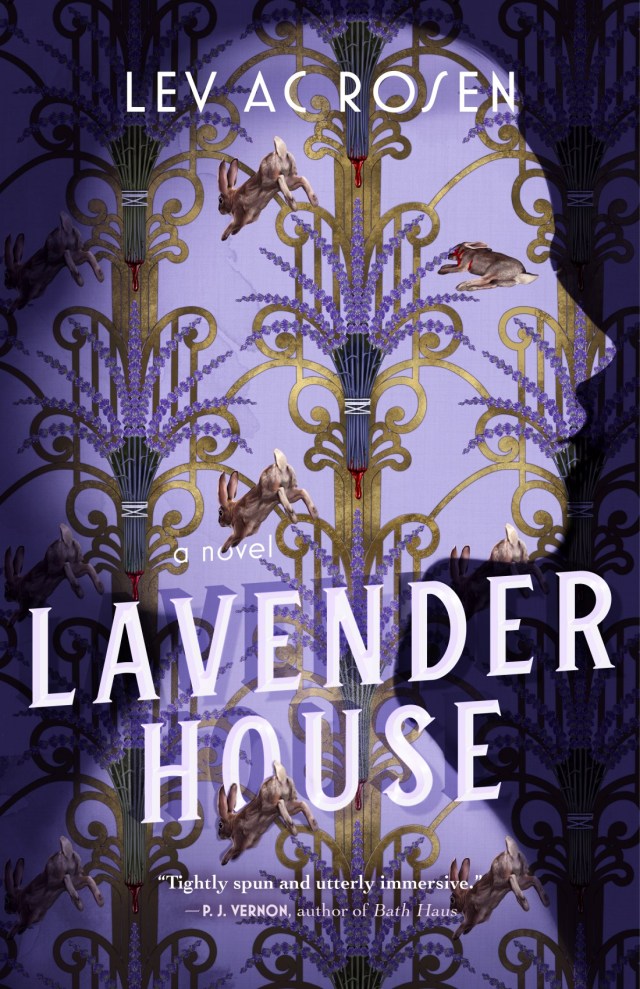
Book Review: Lavender House by Lev AC Rosen

Title: Lavender House
Author: Lev AC Rosen
Publisher: Forge Books
Publication date: October 18, 2022
Length: 288 pages
Genre: Historical fiction/mystery
Source: Review copy courtesy of the publisher via NetGalley
Rating:

Rating: 5 out of 5.

A delicious story from a new voice in suspense, Lev AC Rosen’s Lavender House is Knives Out with a queer historical twist.

Lavender House, 1952: the family seat of recently deceased matriarch Irene Lamontaine, head of the famous Lamontaine soap empire. Irene’s recipes for her signature scents are a well guarded secret—but it’s not the only one behind these gates. This estate offers a unique freedom, where none of the residents or staff hide who they are. But to keep their secret, they’ve needed to keep others out. And now they’re worried they’re keeping a murderer in.

Irene’s widow hires Evander Mills to uncover the truth behind her mysterious death. Andy, recently fired from the San Francisco police after being caught in a raid on a gay bar, is happy to accept—his calendar is wide open. And his secret is the kind of secret the Lamontaines understand.

Andy had never imagined a world like Lavender House. He’s seduced by the safety and freedom found behind its gates, where a queer family lives honestly and openly. But that honesty doesn’t extend to everything, and he quickly finds himself a pawn in a family game of old money, subterfuge, and jealousy—and Irene’s death is only the beginning.

When your existence is a crime, everything you do is criminal, and the gates of Lavender House can’t lock out the real world forever. Running a soap empire can be a dirty business.

Lavender House opens with a desperate man in a bar having one last drink while contemplating suicide — before a broad in bright colors walks in.

She has a deep, sharp voice, and it cuts through the fog of drunkenness in my mind. She’s right out of a movie — she could ask me to kill her husband any second now.

In this noir-tinged murder mystery set in 1950s San Francisco, there’s no place to hide if you’re queer, and that’s especially true if you’re a cop. Our main character, Andy Mills, has just been fired from the SFPD after being caught in the act during a police sweep of gay bars. Broken, beaten, and with no hope, he’s having one last drink while considering throwing himself into the Bay, when Pearl walks into the bar.

Pearl is a classy older woman with an aura of money, and as Andy listens to her pitch, he learns something truly shocking: Pearl refers to her long-time companion Irene as her “wife”. How can two women possibly live a domestic, committed life together without persecution? Soon, Andy learns much more: Irene is the head of the Lamontaine family, who own a fabulously successful soap company known for its lush floral scents and secret formulations. With the Lamontaine money, Irene and Pearl are able to live a rich, free life within their secluded, gated estate in Marin, along with their son Henry, Henry’s partner Cliff (who poses publicly as Henry’s secretary), Henry’s wife Margo (again, a public-facing role), and Margo’s lover Elsie, who runs one of the most successful queer clubs in San Francisco, sheltered by generous payoffs to the police.

Henry turns and kisses him on the forehead. And everyone acts like it’s the most natural thing in the world. No one even seems to notice it happen. I’ve seen affection like that in the clubs before, sure. But here, in morning light, at a breakfast table, it’s like they’re so bright it makes my eyes hurt.

The Lamontaine’s idyllic life is devastated, however, by the event that’s brought Pearl to Andy: Irene is dead, and Pearl suspects murder. While the rest of the household believe the death was an unfortunate accident, Pearl thinks there’s something more sinister at play, and she invites Andy back to the mansion to investigate. As he takes up residence in a guest room and gets to know the family, Andy uncovers many secrets, but also sees both the freedoms and limitations of the family’s isolated lives, and considers whether he might ever find a way to live a freer, truer life himself.

There’s so much to love about Lavender House! First, the murder mystery itself is well developed, with an intriguing set-up, plenty of clues and red herrings, and a cast of characters who all seem like good people, until we’re forced to see other sides of them and wonder what lies beneath the friendly surfaces. This is a manor house mystery — an isolated, grand house, with each resident a suspect, and a detective in their midst, who may end up in grave danger himself. It’s quite deliciously built, as we get to know and like the various characters — but like Andy, we need to also look beyond the smiles and sympathetic conversations and to hold ourselves at a bit of a distance while we assess which of these people is a murderer.

Beyond the mystery itself, there’s also the historical setting and the depiction of gay life in the 1950s. The era shines through via the author’s descriptions of the bars and alleys and criminal life, as well as the music, clothing, and cars. But it’s the narration of Andy’s inner turmoil, the constant threat of discovery and the very real danger of beatings and abuse that give this book such a gritty, sad, realistic feel.

Even amidst the seemingly open life of the Lamontaine house, Andy is constantly aware of the redwood trees that line the drives, looking like prison bars, and the heavy gates that must be kept locked to keep the world out — and by extension, to keep the family locked within their private haven, unable to leave without putting on masks to shield them from the world.

As long as the world out there stays the same, a paradise like this keeps you in as much as it keeps you safe.

There’s so much sorrow in Andy’s experiences of living a secret life, his attempts to keep himself safe and his shame at not having done more to help others like him, his knowledge that the camaraderie he once experienced on the police force was erased in an instant the moment his true self was exposed, and the physical danger he faces simply by being spotted by someone who might recognize him. Through Andy’s investigation, we also learn more about the backgrounds of the various other inhabitants of Lavender House, and it’s a sad litany of secrets, shame, family disgrace, and abuse.

The murder is, of course, tied up neatly by the end of the book, and I thought the resolution was quite clever and not at all obvious. Andy’s life seems on the verge of a new beginning, and it’s wonderful to be able to leave him with a sense of hope. Life in the 1950s hasn’t magically changed, but he at least has options and a vision for how his life might be better. It felt as though the ending might be leaving the door open for additional mysteries starring Andy, and that would be amazing! Here’s hoping this is just the first in a continuing series.

I’m not at all surprised that I ended up loving this book. The author, Lev AC Rosen, has written some fabulous books already, including two gems that I think deserved much more attention than they got (All Men of Genius and Depth — go look them up and check them out!!). I haven’t read his YA novels yet, but they’re on my TBR list. In any case, Lavender House seems to be generating lots of buzz and is getting a big, splashy release, so I hope this is the book that will finally provide this talented author with a much bigger audience.

Lavender House is a fast-paced, intriguing mystery with a deep inner core of emotional impact and sensitivity, and I loved the sharp way the characters’ experiences enhanced the murder genre aspects of the story. This is a terrific new release for October — don’t miss it!

Book Review: Fairy Tale by Stephen King

Title: Fairy Tale
Author: Stephen King
Publisher: Scribner
Publication date: September 6, 2022
Length: 608 pages
Genre: Fantasy
Source: Purchased
Rating:

Rating: 4.5 out of 5.

Legendary storyteller Stephen King goes deep into the well of his imagination in this spellbinding novel about a seventeen-year-old boy who inherits the keys to a parallel world where good and evil are at war, and the stakes could not be higher—for their world or ours.

Charlie Reade looks like a regular high school kid, great at baseball and football, a decent student. But he carries a heavy load. His mom was killed in a hit-and-run accident when he was ten, and grief drove his dad to drink. Charlie learned how to take care of himself—and his dad. Then, when Charlie is seventeen, he meets Howard Bowditch, a recluse with a big dog in a big house at the top of a big hill. In the backyard is a locked shed from which strange sounds emerge, as if some creature is trying to escape. When Mr. Bowditch dies, he leaves Charlie the house, a massive amount of gold, a cassette tape telling a story that is impossible to believe, and a responsibility far too massive for a boy to shoulder.

Because within the shed is a portal to another world—one whose denizens are in peril and whose monstrous leaders may destroy their own world, and ours. In this parallel universe, where two moons race across the sky, and the grand towers of a sprawling palace pierce the clouds, there are exiled princesses and princes who suffer horrific punishments; there are dungeons; there are games in which men and women must fight each other to the death for the amusement of the “Fair One.” And there is a magic sundial that can turn back time.

A story as old as myth, and as startling and iconic as the rest of King’s work, Fairy Tale is about an ordinary guy forced into the hero’s role by circumstance, and it is both spectacularly suspenseful and satisfying.

In Fairy Tale, master author Stephen King takes a kind-hearted 17-year-old and sends him on an epic quest to battle forces of evil and save a kingdom.

Also, there’s a very good dog. And because I know this is important for many readers to know up front: The dog will be fine! (Stories that treat book doggos badly can be a deal-breakers for many readers, so now you can rest easy and proceed).

Charlie is a strong, self-reliant boy who loves his father, but he’s also had to shoulder far too heavy a burden in his short life. After his mother’s tragic death, his father became lost to alcoholism, and Charlie had to care for himself and his father through the dark years until his father finally found sobriety. For all that, Charlie is remarkably well-adjusted, but he does think back with regret on the mean-spirited pranks and cruel behaviors he indulged in during the worst of days.

When he hears a dog barking from behind the large, spooky house on the hill, he intends to just move on, until he hears a faint voice crying for help. Charlie discovers Mr. Bowditch, the old man who lives alone in the house, severely injured in the backyard. He calls for help, then makes a decision that this perhaps is his opportunity to atone for the bad behavior in his past, and becomes completely devoted to Mr. Bowditch and his elderly dog Radar.

While Mr. Bowditch is hospitalized, Charlie takes on caring for Radar, and begins work on cleaning and repairing the house. After Mr. Bowditch is released, it’s Charlie who takes on the responsibility of daily care, going far above and beyond would might be expected of a teenager (or even most adults). Through their time together, the two become very close, but Mr. Bowditch holds onto his secrets tightly — although he does tell Charlie how to access his safe and the bucket full of gold pellets stored within, and how to exchange the pellets for the money needed to pay the hospital bills.

When Mr. Bowditch suffers a fatal heart attack some months later, Charlie and his father are shocked to learn that Charlie has inherited the house, the property, and everything it contains. Even more shocking is the cassette tape Mr. Bowditch has left, telling Charlie a strange tale about a journey to a hidden world and the magical device there that allows one to regain youth and health. With Radar in sharp decline, Charlie realizes that following the instructions on the tape might be his only option for saving Radar’s life. And so the quest begins.

Fairy Tale in many ways embodies the traditional Hero’s Journey, with Charlie receiving a call to action, setting out on a quest, gaining allies along the way, sinking to darkest depths (in this case, spending weeks/months (?) in a literal dungeon), before finding redemption and reemergence. It’s brilliantly constructed — we can see the framework and understand what King is doing, while still becoming totally immersed in the magical and dangerous world that Charlie enters.

At the same time, Charlie himself recognizes the influence of stories and how they seep through worlds into realities. Rumpelstiltskin, the Goose Girl, the Little Mermaid, Jack and the Beanstalk — all are present in some variation here, not as literal retellings but as universal tropes that inform the reality that Charlie now finds himself in.

Based on the synopsis, I’d expected the portal elements to kick in pretty early in the story, but in fact, it’s not until around 30% that Charlie first ventures through the passage to the alternate world. The first third of the story is devoted to Charlie’s family’s backstory and his growing relationship with Mr. Bowditch (and Radar!). This is really effective, as it grounds everything that follows in a realistic beginning in our own world, and gives a solid basis for why Charlie acts as he does, both his devotion to providing care to Mr. Bowditch and his actions on his portal adventure.

The flow does seem to lag for a bit in the middle of the story. As I mentioned, there’s a dungeon involved, and Charlie’s time imprisoned there drags on long enough that my interest flagged. Likewise, the sections about Charlie and his fellow prisoners being forced to train for and then compete in a Hunger Games-like tournament to the death felt overly long and drawn out.

Those elements aside, the plot is mostly fast-paced, full of surprises, odd-ball and quirky characters, memorable settings, and a superbly crafted sense of wonder and menace that hangs over every step of Charlie’s journey. Charlie himself is wonderful — smart, caring, and sensitive, but flawed enough that he’s not too good to be true.

Fairy Tale is a big, thick book, but absolutely worth the time and attention. I was captivated, often scared on behalf of the characters, and fully invested in the outcome and the stakes. The world Charlie visits is fascinating, and I would have loved to have spent even more time exploring it at the conclusion of the quest.

Wrapping this up… I highly recommend Fairy Tale! It’s a treat for King fans, but also an easily accessible entry point for those who haven’t read his books before or who feel that his books are too terrifying for them! Yes, there are some frights and scary beings, and as I said, plenty of menace, but this book doesn’t have the absolute terror of, say, Pet Sematary or It.

Fairy Tale is both a coming-of-age story and a tale of a mythical, magical adventure, and it’s a wonderfully engaging read, start to finish. Don’t miss it!