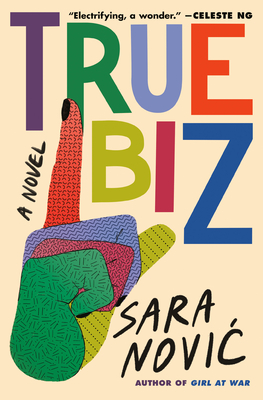
Book Review: True Biz by Sara Nović

Title: True Biz
Author: Sara Nović
Publisher: Random House
Publication date: April 5, 2022
Length: 386 pages
Genre: Contemporary fiction
Source: Library
Rating:

Rating: 5 out of 5.

A transporting novel that follows a year of seismic romantic, political, and familial shifts for a teacher and her students at a boarding school for the deaf, from the acclaimed author of Girl at War.

True biz (adj/exclamation; American Sign Language): really, seriously, definitely, real-talk

True biz? The students at the River Valley School for the Deaf just want to hook up, pass their history final, and have doctors, politicians, and their parents stop telling them what to do with their bodies. This revelatory novel plunges readers into the halls of a residential school for the deaf, where they’ll meet Charlie, a rebellious transfer student who’s never met another deaf person before; Austin, the school’s golden boy, whose world is rocked when his baby sister is born hearing; and February, the headmistress, who is fighting to keep her school open and her marriage intact, but might not be able to do both. As a series of crises both personal and political threaten to unravel each of them, Charlie, Austin, and February find their lives inextricable from one another–and changed forever.

This is a story of sign language and lip-reading, cochlear implants and civil rights, isolation and injustice, first love and loss, and, above all, great persistence, daring, and joy. Absorbing and assured, idiosyncratic and relatable, this is an unforgettable journey into the Deaf community and a universal celebration of human connection. 

This book was an impulse read for me… and I’m so glad I gave in to my whims! True Biz was the Hello Sunshine book club pick for April, and while I don’t always follow celebrity book clubs, I find the Reese picks often include terrific stories I might not have come across otherwise. Such is the case with True Biz.

In this excellent novel, we follow the lives of the River Valley School for the Deaf’s headmistress, a hearing woman named February whose parents were deaf, as well as several of the school’s students. As the book opens, we learn that three students have disappeared from the school, leaving their cell phones behind. This is potentially a catastrophe, and a police search is launched. From this opening, we go back six months to learn how these events unfold.

The school, located in the Ohio rust belt, has served generations of deaf students, providing a safe haven, a home, a community, and a chance for education and language not available in mainstream programs. Some of the students come from families with long histories of deafness; for others, they’re the outliers in their families, and receive varying levels of support — or sometimes, almost none at all — before coming to RVSD.

While True Biz tells a compelling story about the lives of the characters and their personal stakes and struggles, it also provides a window into the Deaf community. I’m ashamed to admit that I’ve been ignorant about many of the issues described in the book, and the most shocking and eye-opening for me was the discussion about language deprivation and cochlear implants.

As depicted by the characters in this book, while cochlear implants (technical devices that include a piece implanted in a baby or child’s head, that allows sound signals to bypass the ears and be received and decoded by the brain) are often seen as miraculous solutions to a problem, they represent something potentially cataclysmic to the Deaf community. As part of “fixing” deafness, the recommended approach for implanted children is to make them completely reliant on the implants so they’re forced to learn to interpret sounds and speak out loud. Often, this means denying them access to American Sign Language.

But CIs are often imperfect, and for some children, don’t work well enough for them to get by or truly learn to master verbal English. Without ASL, the children are essentially language deprived — they grow up without mastery of any language and suffer throughout their education and beyond because of this.

The other large issue with CIs seems to be the impact on the Deaf community itself. By “fixing” deafness, the devices (and those who advocate for them) seem to be pushing an agenda that erases the Deaf world, which is a culture unto itself, with a rich history and linguistic traditions.

I loved that the book includes illustrations of ASL words, as well as explanations of grammar and syntax, historical notes, and all sorts of other information about the Deaf community that I had little to no awareness of. As I said earlier, I’m somewhat embarrassed that so much of the cultural elements portrayed in this book are new to me, and that’s something I want to remedy.

A note on presentation and style: Initially, I was put off by the lack of quotation marks when characters speak — in general, a pet peeve of mine when it comes to fiction. Here, though, the stylistic choices appear to be deliberate. Depending on the placement and format of the different lines being spoken, we can tell by looking at the way the words are written whether the characters are speaking ASL or English, when a signing character finger-spells a word, and when a character misses a word that’s being spoken out loud or signed. It’s very effective and very clever.

I also want to point out that while I’ve mostly written about the issues depicted and brought to life in the book, the characters and plot are excellent and make for engrossing, compelling reading. In fact, my only complaint is that the ending felt too abrupt, as if the author simply decided to stop rather than go a little bit further in the timeline and wrap it up. I was left with questions about what comes next and feeling unsatisfied… but that’s okay.

The reading journey was enjoyable every step of the way, and I came to really care about the characters of True Biz. A lovely book — I highly recommend it.

Book Review: Nettle & Bone by T. Kingfisher

Title: Nettle & Bone
Author: T. Kingfisher
Publisher: Tor Books
Publication date: April 26, 2022
Length: 256 pages
Genre: Fantasy
Source: Review copy courtesy of the publisher via NetGalley
Rating:

Rating: 4 out of 5.

After years of seeing her sisters suffer at the hands of an abusive prince, Marra—the shy, convent-raised, third-born daughter—has finally realized that no one is coming to their rescue. No one, except for Marra herself.

Seeking help from a powerful gravewitch, Marra is offered the tools to kill a prince—if she can complete three impossible tasks. But, as is the way in tales of princes, witches, and daughters, the impossible is only the beginning.

On her quest, Marra is joined by the gravewitch, a reluctant fairy godmother, a strapping former knight, and a chicken possessed by a demon. Together, the five of them intend to be the hand that closes around the throat of the prince and frees Marra’s family and their kingdom from its tyrannous ruler at last.

This is my 4th book by T. Kingfisher, and I’ve never once been disappointed! Nettle & Bone is another terrific tale from this gifted author.

I’m not sure why I expected horror (well, it was probably a misinterpretation of the cover), but this isn’t that! Nettle & Bone is a fairy tale about curses and kingdoms and doomed princesses — but forget all the traditional stories about dashing princes riding to the rescue. Here, the rescuer is none other than one of the princesses, the overlooked third daughter of a king and queen whose tiny kingdom is constantly threatened by the larger kingdoms along its borders.

To save their kingdom, the royal couple marry off their oldest daughter Damia to Prince Vorling of the Northern Kingdom, but soon after their marriage, the princess dies. The Northern Kingdom still has its eyes on the smaller kingdom’s ideally located ports, and to keep their land safe, the king and queen send their second daughter Kania to be the prince’s new bride. The prince longs for the day when he and his heirs are the sole rulers of both kingdoms, and to that end, he insists that the third daughter, Marra, remain unmarried, so that there will be no competing heirs to the thrown.

Marra is perfectly content with this arrangement, and spends the next years of her life as an “almost” nun at a convent that’s much more about female empowerment than strict rules or deprivations. Over time, however, Marra becomes aware that something is seriously wrong with Kania’s marriage. Fearing for her sister’s life, Marra sets out to save her, enlisting the aid of a dustwife (a woman with the ability to speak to the dead), a godmother, and a disgraced knight whom she frees from enslavement to the fae.

With her strange band of allies, Marra sets off to the Northern Kingdom, determined to rescue her sister, break an ancient curse, and protect her own kingdom… and hopefully, not get killed along the way.

Nettle & Bone is often funny, and the author has a light touch with humor and clever dialogue. At the same time, Kania’s situation is disturbing and serious, and the book manages to balance the adventurous tone with the heavier themes related to Marra’s quest and its dire nature.

The situations the band of allies encounter are often absurd, but quite entertaining, and I loved how the fairy tale tropes used here receive fresh, new twists.

T. Kingfisher excels at depicting creepy scenes too, as is evident from the book’s opening lines:

The trees were full of crows and the woods were full of madmen. The pit was full of bones and her hands were full of wires.

From this opening, I expected a much more sinister feel overall to the book, and was happily surprised to find many lighter-spirited moments and even downright silliness amidst the high stakes perils and quests.

All in all, Nettle & Bone is a terrific read. The author has another new book coming out this summer, and meanwhile, I have a few of her backlist books yet to read on my Kindle!

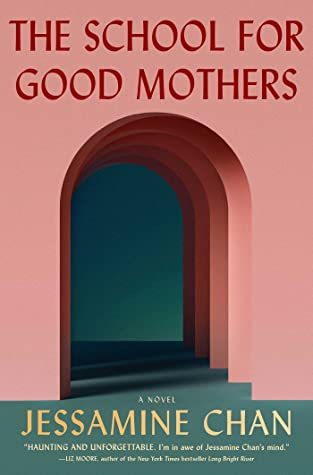
Book Review: The School for Good Mothers by Jessamine Chan

Title: The School for Good Mothers
Author: Jessamine Chan
Publisher: Simon & Schuster
Publication date: January 4, 2022
Length: 336 pages
Genre: Thriller
Source: Purchased
Rating:

Rating: 2.5 out of 5.

In this taut and explosive debut novel, one lapse in judgement lands a young mother in a government reform program where custody of her child hangs in the balance.

Frida Liu is struggling. She doesn’t have a career worthy of her Chinese immigrant parents’ sacrifices. She can’t persuade her husband, Gust, to give up his wellness-obsessed younger mistress. Only with Harriet, their cherubic daughter, does Frida finally attain the perfection expected of her. Harriet may be all she has, but she is just enough.

Until Frida has a very bad day.

The state has its eyes on mothers like Frida. The ones who check their phones, letting their children get injured on the playground; who let their children walk home alone. Because of one moment of poor judgment, a host of government officials will now determine if Frida is a candidate for a Big Brother-like institution that measures the success or failure of a mother’s devotion.

Faced with the possibility of losing Harriet, Frida must prove that a bad mother can be redeemed. That she can learn to be good.

A searing page-turner that is also a transgressive novel of ideas about the perils of “perfect” upper-middle class parenting; the violence enacted upon women by both the state and, at times, one another; the systems that separate families; and the boundlessness of love, The School for Good Mothers introduces, in Frida, an everywoman for the ages. Using dark wit to explore the pains and joys of the deepest ties that bind us, Chan has written a modern literary classic. 

A “modern literary classic”? An “everywoman for the ages”? I’m thinking that whoever wrote the book synopsis did not read the same book I read.

The School for Good Mothers tells the story of Frida, a Chinese-American 39-year-old woman who makes a terrible, life-changing mistake. Sleepless, worn out, frantic, Frida leaves her toddler alone in the house for a few hours — absolutely a horrible action, one that’s hard to fathom and that should definitely have consequences. But the consequences here go beyond a rational response. Frida is cut out of Harriet’s life, and is presented with just one chance to ever see her daughter again: attend a year-long retraining program where she’ll learn to be a good mother. If she passes the program, she may have a chance to be in her daughter’s life. If she fails, her parental rights will be terminated.

While it’s hard to sympathize with Frida initially, it soon becomes clear that the price of her error is cruelly harsh, depriving her of all contact with her daughter and, more shockingly, depriving the daughter of her mother. From the moment of the incident, Frida’s contact with Harriet is strictly controlled and monitored. Surveillance cameras are installed in her home and all her devices are monitored. Her every action and expression is analyzed: Is she remorseful enough? Does she demonstrate empathy? Is she capable of providing care? Does she deserve to be a mother?

Once Frida enters the school, the monitoring becomes even more extreme. Her voice, her heartbeats, her diet — every aspect of her is measured and assessed. At stake is her future with Harriet. Weekly phone calls are granted less frequently than they’re suspended. And the training program is weirdly sinister, involving robot “children” whom the wayward mothers must bond with, care for, shower with love, and train to be good people. It’s creepy, to be sure.

The problem for me is — what was the point of all this? It’s a story about a society similar to our own, but where children’s welfare is controlled and through state-sponsored surveillance and reporting, and where seemingly arbitrary decisions can ruin a family in the blink of an eye. The book is apparently set in a not-too-distant future, but it’s not clear what has changed or in what degree to allow this new approach to child welfare to flourish. And while some of the mothers seem to have been sentenced to the program for infractions that seem better suited to counseling or supportive services, others have clearly been cruel, harmful, or dangerously neglectful. (Sorry, Frida, but I’d place her in the dangerously neglectful category). We’re supposed to feel that the school is extreme (and it is), but some of the parents there do seem to be suited to a more extreme response, so the book’s ability to make the reader feel sympathy isn’t particularly successful across the board.

The story touches on class, race, and gender issues, but it tends to feel performative rather than truly thought-provoking. Frida’s upbringing, by professionally-focused immigrant parents, have shown her one way to parent, but in the world of The School For Good Mothers, there’s no room for deviation from what’s considered to be “good” mothering.

A sad hopelessness pervades much of the book, and while the program at the school is disturbing, it never felt prescient or even slightly believable to me. In a world like our own where social services continue to be underfunded and overstretched, it’s hard to grasp how such a huge societal change could take place in the book’s world, when everything else seems relatively familiar and current.

It seemed to me as though this book was trying very hard to be daring and dramatic, but it’s strangely unmoving in lots of ways. The plot is so over the top that I couldn’t truly buy into it, and therefore never felt like the stakes were real.

The School for Good Mothers is a fast page-turner, but ultimately it left me cold.

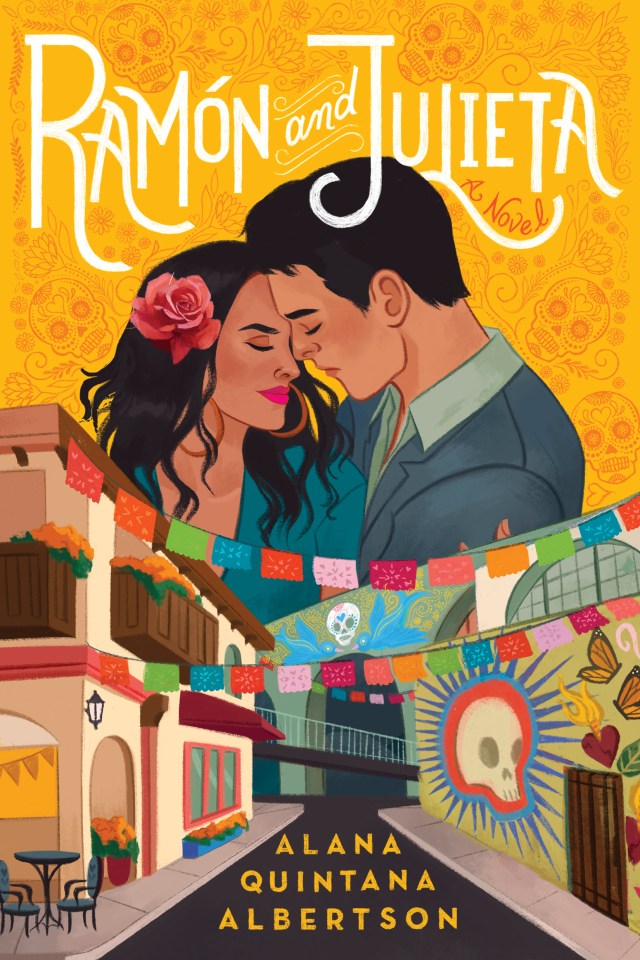
Audiobook Review: Ramón and Julieta by Alana Quintana Albertson

Title: Ramón and Julieta
Author: Alana Quintana Albertson
Narrators:  Alexander Amado, Vanessa Vasquez
Publisher: Berkley
Publication date: February 1, 2022
Print length: 304 pages
Audio length: 8 hours, 25 minute
Genre: Contemporary romance
Source: Library
Rating:

Rating: 3 out of 5.

When fate and tacos bring Ramón and Julieta together on the Day of the Dead, the star-crossed pair must make a choice: accept the bitter food rivalry that drives them apart or surrender to a love that consumes them.

Ramón Montez always achieves his goals. Whether that means collecting Ivy League degrees or growing his father’s fast-food empire, nothing sets Ramón off course. So when the sexy señorita who kissed him on the Day of the Dead runs off into the night with his heart, he determines to do whatever it takes to find her again.

Celebrity chef Julieta Campos has sacrificed everything to save her sea-to-table taqueria from closing. To her horror, she discovers that her new landlord is none other than the magnetic mariachi she hooked up with on Dia de los Muertos. Even worse, it was his father who stole her mother’s taco recipe decades ago. Julieta has no choice but to work with Ramón, the man who destroyed her life’s work–and the one man who tempts and inspires her.

As San Diego’s outraged community protests against the Taco King take-over and the divide between their families grows, Ramón and Julieta struggle to balance the rising tensions. But Ramón knows that true love is priceless and despite all of his successes, this is the one battle he refuses to lose. 

The vibrancy of Mexican culture in a San Diego neighborhood is threatened by gentrification — and in this contemporary romance version of Romeo and Juliet (spoiler alert — with a much happier ending!), a Day of the Dead meet-cute throws together members of rival families with a long, bitter history.

from the author’s website

Dia de los Muertos is a very big deal in Old Town, San Diego. Besides attracting tourists, for the Mexican community, it’s a day of beautiful traditions honoring their loved ones who’ve passed away. Julieta, chef at a popular, authentic local restaurant in Barrio Logan, plans to sell her specialty tacos at a pop-up stand at the festival, and Ramón, CEO of the multi-million-dollar family business that owns a hugely successful chain of Taco King fast food joints, is planning to schmooze up the local politicians and gain a little last-minute publicity before sealing the deal to buy an entire block of Barrio Logan.

Dressed in full Dia de los Muertos costumes and face paint, when Ramón and Julieta have a chance encounter in a garden near the festival, there’s instant attraction and a deeper connection as well — but they don’t exchange real names and can’t see one another’s faces. Tired of her responsiblities and lack of pleasure in her life, Julieta makes the impulsive decision to go home with Ramón, but once back in his La Jolla mansion, about to remove her face paint, she realizes who he really is — he’s the enemy.

Decades earlier, as Julieta’s been told countless times, her mother was a young woman selling home-made fish tacos at a stand in Mexico, when a Mexican-American student on a surfing trip during spring break fell in love with her and her tacos. He never returned as promised, but he stole her family’s secret recipe and turned it into the key to Taco King’s success. When Julieta realizes that Ramón is the son of her family’s nemesis, who profited off of her family’s recipe all these years without ever acknowledging or compensating them, she’s livid and appalled.

Things become even worse the following day when Ramon’s offer on the block in Barrio Logan is accepted. Ramón’s father plans to raise all the rents, force the existing businesses out, and replace Julieta’s lovely restaurant with a flagship location for a new Taco King. This is war! But also, this is love… because despite their stance on opposing sides of this gentrification battle, Ramón and Julieta can’t deny their feeling or their attraction for one another.

from the author’s website

I enjoyed the depiction of the close-knit community of Barrio Logan, the sense of tradition and pride in the Mexican culture of the residents, and the absolutely amazing-sounding descriptions of spices and flavors and foods. But, these great elements are in many ways background to the romance, and that’s where the book didn’t particularly work for me.

First of all, the characters: Not only is Ramón CEO of the family empire, he’s also Stanford and Harvard educated. Not only is Julieta an amazing chef, but she’s been trained at Michelin-starred restaurants. [Side note: Why does every romance novel about foodies throw around Michelin stars? Why does everyone in business need a Harvard MBA?] They’re both gorgeous and have amazing bodies, of course. They’re not just reasonably nice people who meet and connect — they’re both stellar in every way. It’s too much.

Second, I just couldn’t help cringing over their dialogue and their inner thoughts. Within seconds of meeting, Julieta is admiring how good Ramón looks in his costume, including “that huge bulge in his pants”. But don’t worry, the ogling is two-sided, as Ramón notes about Julieta: “That ass was the kind that songs were written about”.

The supposedly romantic moments are super corny, and the sexy/steamy scenes are unnecessarily specific and graphic. Then again, I recognize that preferences about graphic vs implied sex vary widely among romance readers, so while this aspect didn’t work for me, it may not be a deal-breaker for other readers.

The audiobook features different narrators for chapters from Ramón and Julieta’s perspectives, although they each still have to depict the other character whenever there are scenes together, which means there are two different voices each for Ramón and Julieta — a little weird at times, since they sound so different. It’s a light listen, and overall, the audiobook presentation is well done and entertaining.

I gave Ramón and Julieta 3 stars: I really liked the creative use of Shakespearean inspiration in telling a modern tale and the way the story honors and depicts elements of Mexican heritage and the strong sense of community. It doesn’t rise above 3 stars for me, though, because of the hokiness of the love story — which, in a romance, should be its strongest element.

Ramón and Julieta is enjoyable, despite the cringe-factor. Apparently, it’s the first in a planned series called Love and Tacos. The pieces that didn’t work for me are enough to make me doubt whether I’d want to come back for more.

Book Review: To Marry and To Meddle by Martha Waters

Title: To Marry and To Meddle (The Regency Vows, #3)
Author: Martha Waters
Publisher: Atria
Publication date: April 5, 2022
Length: 336 pages
Genre: Historical fiction/romance
Source: Review copy courtesy of the publisher via NetGalley
Rating:

Rating: 3.5 out of 5.

The “sweet, sexy, and utterly fun” (Emily Henry, author of The People We Meet on Vacation) Regency Vows series continues with a witty, charming, and joyful novel following a seasoned debutante and a rakish theater owner as they navigate a complicated marriage of convenience.

Lady Emily Turner has been a debutante for six seasons now and should have long settled into a suitable marriage. However, due to her father’s large debts, her only suitor is the persistent and odious owner of her father’s favorite gambling house. Meanwhile, Lord Julian Belfry, the second son of a marquess, has scandalized society as an actor and owner of a theater—the kind of establishment where men take their mistresses, but not their wives. When their lives intersect at a house party, Lord Julian hatches a plan to benefit them both.

With a marriage of convenience, Emily will use her society connections to promote the theater to a more respectable clientele and Julian will take her out from under the shadows of her father’s unsavory associates. But they soon realize they have very different plans for their marriage—Julian wants Emily to remain a society wife, while Emily discovers an interest in the theater. But when a fleeing actress, murderous kitten, and meddlesome friends enter the fray, Emily and Julian will have to confront the fact that their marriage of convenience comes with rather inconvenient feelings.

The Regency Vows series is a fun, fresh look at love and friendship in (obviously) the Regency era. The books focus on a trio of friends, Violet (lead character of the first book, To Have and To Hoax), Diana (starring in To Love and To Loathe), and Emily, the main character of this 3rd book, To Marry and To Meddle.

Lady Emily Turner is the perfectly mannered daughter of a respectable society family. At age 23, she is unmarried, largely because her parents have promised her to an awful man to whom the family is ruinously in debt. She’s desperately unhappy, but would never dream of disobeying her parents… until Julian comes along.

Lord Julian Belfry is the younger son of a titled family. No one expects much of a younger son, but they certainly don’t expect and can’t tolerate his ownership of a (gasp!) theater — especially a theater that has the reputation of being a place for gentleman to spend a night out with their mistresses.

In Emily, Julian sees a way to attain respectability for his theater. In Julian, Emily sees a path to freedom. At a country party (the setting of much of the previous book), Julian comes up with a plan that might solve both of their problems: He proposed marriage. With Emily’s good social standing, he hopes to repair the theater’s reputation and draw in the right crowd. And with Julian’s money, Emily’s family can be freed from their debts, saving Emily from being forced into a terrible marriage.

The arrangement would clearly be a win-win situation, and the fact that they enjoy one another’s company is an added bonus. Emily accepts, and the two are married right away. Emily soon learns that there’s one more unexpected benefit to the marriage — she and Julian are very compatible, and they enjoy a steamy start to their married life (interrupted only by the appearance of a homeless kitten, whom Julian christens Cecil Lucifer Beelzebub).

While quite enjoyable, I found TM&TM a little… flat. There just isn’t much dramatic conflict in the plot. The key tension is around whether Emily spends her time wooing society ladies by paying calls, when what she really wants is to spend more time with Julian and participate in running the theater. Julian’s conflict has to do with running the theater in a way that will prove it’s respectable, when what he really and truly wants is his own father’s approval. And, as expected, they each must reluctantly face the fact that they’ve fallen in love — how to admit to one’s spouse that a mutually beneficial arrangement now involves one’s feelings?

Because of course she loved him — how could she not? But, more importantly, how could she ensure that he did not know, did not ever discover her secret? Because, after all, in a marriage of convenience, love would the most inconvenient surprise of all.

It’s all very pleasant and often quite funny, but there just isn’t much there there when it comes to the plot. The stakes are fairly low, after all, when it comes to the plotlines related to the theater. The book is at its best when it focuses on relationships, and it was touching to see how both Emily and Julian stand up to their families and repair their damaged connections.

To Marry and To Meddle has the fun, light tone of the previous books, and as Emily continues her close friendship with Violet and Diana, we get to spend more time with these entertaining characters, which is lovely. One of the things I really appreciate about these books is how the women’s friendship is so central to the stories. Even though each book focuses on a different romantic relationship, the time spent with the trio of women is what connects them all, and their support and affection for one another feels very special.

The dialogue and overall writing can be a real hoot:

Predictably, she blushed. Perversely, he was delighted.

Julian clearly know the way to a woman’s heart:

[…] After Julian had rung for tea and crossed to the sideboard to busy himself with the decanter stored there, he said, almost casually, “You must buy any books you wish to add to our collection.”

Something within Emily warmed at these words. She’d always been faintly envious of Violet’s library at the house she shared with Lord James, and felt a small thrill run through her at the thought that she, too, could have a room full of books to call her own.

Amidst the funnier moments…

“You’re not…” Violet trailed off, a look of dawning horror on her face. “Sick of tea?” She uttered the words in a hushed whisper, as though afraid to speak them into truth.

… there are also scenes of coming into one’s own power and strength:

Here, a woman could take up space, speak loudly, draw the eyes of a crowd — or, alternatively, could slip into a role behind the scenes, quietly doing her work just as well as the men who surrounded her — and Emily found both prospects not shocking but… exhilarating.

I do recommend this book, but suggest starting at the beginning of the series, or you’ll miss the backstories of the characters and their social circle. I don’t know if there will be a 4th book, but I can guess which side character might get her own book next, and I hope my prediction comes true!

Book Review: The Younger Wife by Sally Hepworth

Title: The Younger Wife
Author: Sally Hepworth
Publisher: St. Martin’s Press
Publication date: April 5, 2022
Length: 352 pages
Genre: Thriller/contemporary fiction
Source: Review copy courtesy of the publisher via NetGalley
Rating:

Rating: 3.5 out of 5.

THE HUSBAND

A heart surgeon at the top of his field, Stephen Aston is getting married again. But first he must divorce his current wife, even though she can no longer speak for herself.

THE DAUGHTERS

Tully and Rachel Aston look upon their father’s fiancée, Heather, as nothing but an interloper. Heather is younger than both of them. Clearly, she’s after their father’s money.

THE FORMER WIFE

With their mother in a precarious position, Tully and Rachel are determined to get to the truth about their family’s secrets, the new wife closing in, and who their father really is.

THE YOUNGER WIFE

Heather has secrets of her own. Will getting to the truth unleash the most dangerous impulses in all of them? 

I could not put this book down… and yet now that I’m done, I really don’t know what to think!

As the book opens, we’re at the wedding of Stephen and Heather. They make a beautiful couple, and everyone is so pleased that Stephen has found love again after going through the pain of his former wife’s slide into dementia. And how lovely that he thought to include his ex-wife in this special day! But after the vows, something goes wrong in the next room. There’s blood and an ambulance…

And that’s just the prologue!

From there, we go back some months to Heather’s first meeting with Stephen’s adult daughters, Tully and Rachel. Heather is actually younger than both of them, and they’re prepared to hate her. They’re none too pleased with their father either, but they’re trying to be supportive. He’s done right by their mother, finding her a good nursing home and excellent care, making sure there’s no worry about finances… so why shouldn’t he have the opportunity for love once again?

As the story unfolds, we get chapters from Tully, Rachel, and Heather’s perspectives. No one’s life is as perfect as it seems. Rachel, a magnificent baker, has been dealing with a trauma from her teens for almost 20 years. Tully, a suburban wife and mother, has anxiety through the roof and very unhealthy coping mechanisms. And Heather certainly has not shared the true story of her family’s sordid past.

Each of the three women evokes sympathy in her own way. For Tully and Rachel, they’re dealing not only with issues from their pasts, but also grieving the loss of a beloved mother, mourning a bit more with each visit to the nursing home and the realization that the woman who was so central to their lives has slipped away from them bit by bit. Heather’s childhood was awful, but she’s built a fresh start for herself, even as the occasional doubts about her perfect new life creep in.

It’s hard to say much without giving away key spoilers, so I’ll proceed with caution. As I mentioned, I simply couldn’t put this book down, and finished it over two days of intense reading. Not that that’s surprising — Sally Hepworth’s book always bring out the compulsive reader in me! With short, sharp chapters and fascinating POV characters, The Younger Wife sucked me in from page 1 and just never let me go.

And yet… I felt oddly flat after the end. I really and truly can’t say more, but the resolution left me confused and weirdly disappointed. I need to go back and poke around in earlier chapters to see if I missed anything and reexamine how the pieces fit together.

Do I recommend this book? Yes, but perhaps with tempered expectations. Sally Hepworth is a terrific teller of tales, and she creates fascinating, memorable characters. The Younger Wife did not move and engage my emotions the way The Good Sister did, but that’s a very high mark to meet.

The Younger Wife is a fast page-turner, and I enjoyed the reading experience. Now I just need to think about that ending some more…

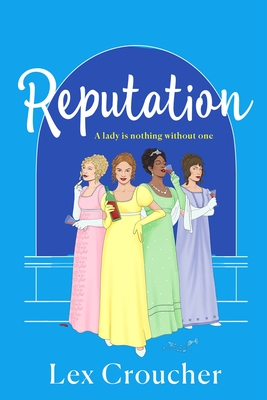
Book Review: Reputation by Lex Croucher

Title: Reputation
Author: Lex Croucher
Publisher: St. Martin’s Griffin
Publication date: April 5, 2022
Length: 338 pages
Genre: Historical romance
Source: Review copy courtesy of the publisher via NetGalley
Rating:

Rating: 3.5 out of 5.

The hilarious debut novel from Lex Croucher. A classic romcom with a Regency-era twist, for fans of Mean Girls and/or Jane Austen.

Abandoned by her parents, middle-class Georgiana Ellers has moved to a new town to live with her dreary aunt and uncle. At a particularly dull party, she meets the enigmatic Frances Campbell, a wealthy member of the in-crowd who lives a life Georgiana couldn’t have imagined in her wildest dreams.

Lonely and vulnerable, Georgiana falls in with Frances and her unfathomably rich, deeply improper friends. Georgiana is introduced to a new world: drunken debauchery, mysterious young men with strangely arresting hands, and the upper echelons of Regency society.

But the price of entry to high society might just be higher than Georgiana is willing to pay …

Sex, drugs, and… Regency?

It all began at a party, as almost everything of interest does.

In this historical romance, 20-year-old Georgiana longs for some excitement in her life, but gets more than she bargained for. Sent off to stay with her nice but boring aunt and uncle after her parents decide to basically ditch her for some seaside living, she’s just bursting for fun and interesting conversation. At a weird and disappointing party, she encounters rich girl Frances Campbell, who plies her with drinks and entices her to invade the hostess’s closet… and that’s mild for Frances.

She was certainly no swashbuckling adventurer or windswept nobleman, but Georgiana knew at once that she was in the presence of a Main Character.

Frances takes a shine to the new girl, and begins inviting Georgiana to her own crowd’s parties — filled with the young adults of the upper class, who seem to take every opportunity to drink to excess and engage in every sort of debauched behavior they can imagine. What’s in that pipe they’re passing around? Georgiana doesn’t know, but it does make her feel silly and floaty, and leads to a bizarre interaction with the man she’s crushing on.

As the novel progresses, the pressure to keep up with Frances’s behavior and to fit in with her friends leads Georgiana to lie to her aunt and uncle, repeatedly sneak out of the house for unchaperoned and inappropriate outings and parties, and to be rude to someone who actually might make a true and positive friend.

She seemed to have forgiven Georgiana for whatever wrongdoings she had previously attributed to her at the picnic; Georgiana wondered if she was very kind or if she simply had an extraordinarily short memory, like an octogenarian or a goldfish.

While mostly silly, there are some heavier plot points, including a man of Frances’s circle who in reality is a sexual predator, although no one seems willing to call him on it. Meanwhile, Frances seems to become more desperate and out of control as her love interest turns out to be much less than honorable, and Georgiana’s tenuous position with the in-crowd becomes harder and harder to hold on to.

Reputation is billed as a mix of Austen and Mean Girls, and I see the Mean Girls comparison much more so than the Austen! As in Mean Girls, an outsider is drawn to the popular crowd and does what she needs to do in order to fit in and be accepted, despite the fact that these people really are pretty awful.

While Reputation is set in the Regency era, the behavior of the characters bears very little relation to anything we might read in a Jane Austen novel. Yes, there are balls and parties, but the behavior! I don’t pretend to be an expert by any means, but I’ve never read another novel that depicts the behavior of the upper crust as so debauched — non-stop alcohol, outrageous pranks and games, the mysterious pipe contents mentioned above, drugs in people’s drinks (which I suppose must have been laudanum, although it’s not specified).

Georgiana was beginning to suspect that this game was designed solely to give everybody involved a socially acceptable excuse to feel one another up.

Sticking with this book was challenging for the first 25% or so. The Mean Girls behavior cannot be overemphasized, Georgiana makes some very poor choices, and the writing, while mostly on the clever and witty side, also includes some clunkier and/or modern phrasing that’s jarring in this setting.

In fact, ignore the shifts and waistcoats and reticules, and many of the party scenes could be plunked down into a frat house party with little to no difference. It was difficult to reconcile the supposed theme of reputations being all with the blatantly disreputable behavior that the characters seem to all indulge in. In fact, the reputation aspect aspect only seems to be addressed head-on on rare occasions, including a scene in which an upper class girl explains some basics to Georgiana:

“I don’t say this to do you harm. I am simply laying out the facts. You would not be unhappy, I think, with an ordinary life befitting your station. Here — now — you have truly stumbled into the lion’s den. The potential for unhappiness here is vast. Nobody here will be shamed or cast out for the many sins I’m sure they’ll commit before Monday. There is almost nothing we can do that will not be excused because of our wealth, our standing. Our parentage. Can you say the same?”

This being a romance, of course there’s a happy ending, but not without drama, fights, and scandal before getting there. As the end approached, I found myself cheering for Georgiana, especially as she starts making better choices, including showing appreciation for the people in her life who truly care for her and taking a stand when it’s most needed.

Reputation, all in all, is a fun book. As I said, I’m no expert and have no idea if the wealthy of the period really did indulge in such extremely decadent behavior behind closed doors, rather than sticking with the polite balls and card parties of Jane Austen novels. For me, since almost everything I know about the era comes from Austen and the Bridgerton books (not a well-rounded historical education!), the behavior of the characters in Reputation was downright shocking.

Still, I did find myself caught up in the story by the conclusion and quite entertained. So, take the historical representation with grains of salt as needed, don’t accept drinks that have passed through Frances’s hands, and enjoy Reputation for the sheer silly romp of it all.

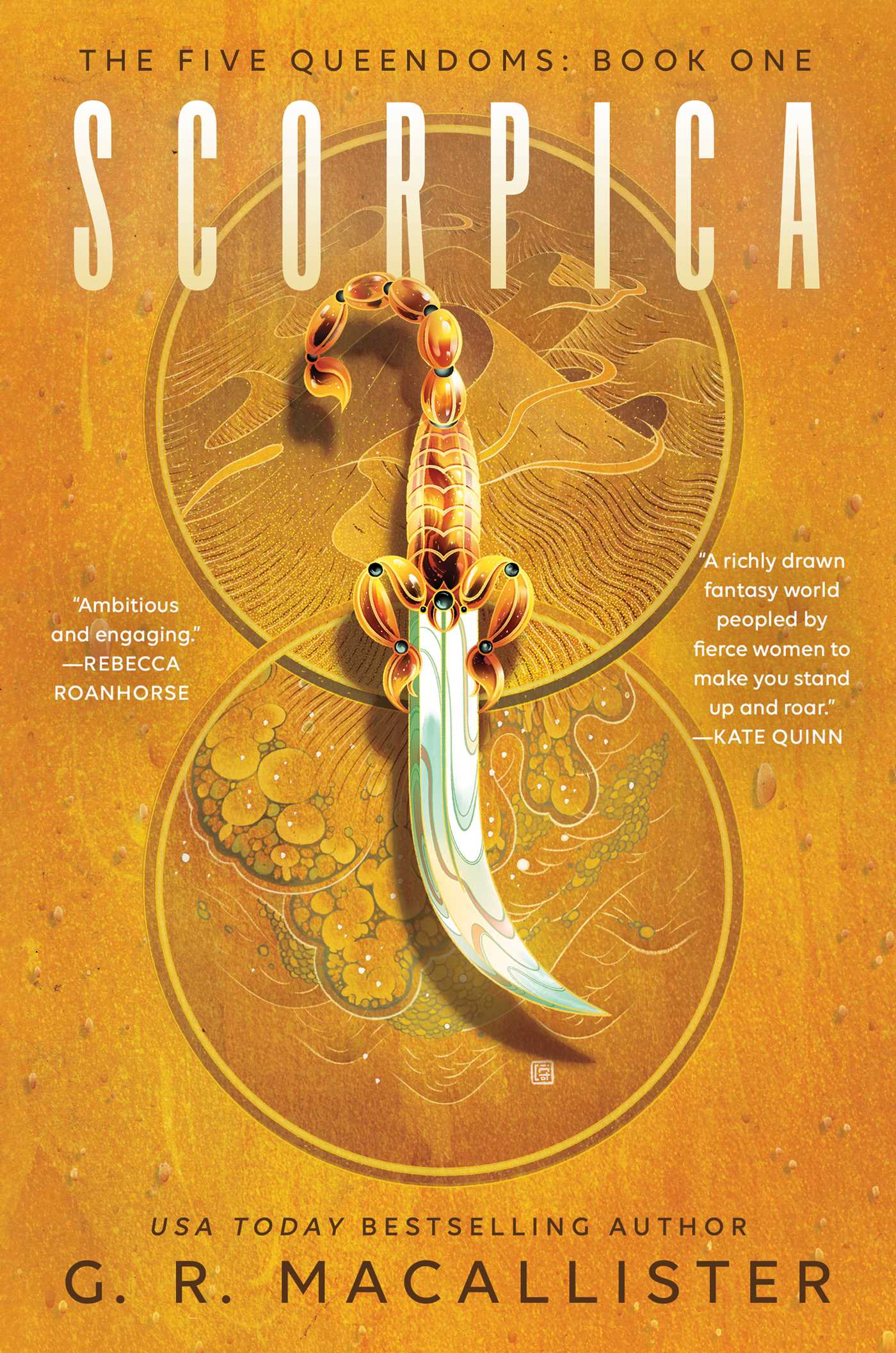
Book Review: Scorpica by G. R. Macallister

Title: Scorpica
Series: The Five Queendoms, #1
Author: G. R. Macallister
Publisher: Saga Press
Publication date: February 22, 2022
Length: 448 pages
Genre: Fantasy
Source: Review copy courtesy of the publisher via NetGalley
Rating:

Rating: 3.5 out of 5.

A centuries-long peace is shattered in a matriarchal society when a decade passes without a single girl being born in this sweeping epic fantasy that’s perfect for fans of Robin Hobb and Circe.

Five hundred years of peace between queendoms shatters when girls inexplicably stop being born. As the Drought of Girls stretches across a generation, it sets off a cascade of political and personal consequences across all five queendoms of the known world, throwing long-standing alliances into disarray as each queendom begins to turn on each other—and new threats to each nation rise from within.

Uniting the stories of women from across the queendoms, this propulsive, gripping epic fantasy follows a warrior queen who must rise from childbirth bed to fight for her life and her throne, a healer in hiding desperate to protect the secret of her daughter’s explosive power, a queen whose desperation to retain control leads her to risk using the darkest magic, a near-immortal sorcerer demigod powerful enough to remake the world for her own ends—and the generation of lastborn girls, the ones born just before the Drought, who must bear the hopes and traditions of their nations if the queendoms are to survive.

In this ambitious novel, historical fiction author Greer Macallister turns her talents to the world of fantasy, writing as G. R. Macallister. Because I’ve enjoyed her historical novels, and since I generally enjoy fantasy fiction, I thought I’d give Scorpica a try.

In Scorpica, the known world is divided into five queendoms, each with its own strengths and gifts. The land of Scorpica raises and trains warriors; Arca is known for magic; The Bastion is a stronghold for scholars and archives; Paxim is a crossroads and a center of trade and negotiation; and Sestia is a fertile land with thriving agriculture. The different lands worship different gods and goddesses and have different cultures and societal structures, but one thing they all have in common is that women rule.

The queendoms are matriarchal societies, where power belongs to women alone. From queens to warriors to any and all positions of power, all roles of importance are held by women. Men are subservient, there to support women and offer pleasure and participate in making babies, but they do not wield authority or take any role in combat.

The coexistence of the five queendoms and their continued survival are thrown into turmoil when baby girls stop being born. Known as the Drought of Girls, this lack of girl babies means there can be no future queens and no future warriors. As each of the queendoms struggles to figure out what to do if the drought doesn’t end, there’s another force at work in the shadows seeking to overthrow the queendoms entirely.

As the story progresses, we see events unfold from multiple perspectives, mainly through the Queens of Scorpica and Arca and various women of their queendoms. We get to learn the customs of the different lands, their superstitions and fears and politics, and for some of the characters, get insight into their more personal emotions and challenges.

There are a lot of characters to keep track of, and that’s not always easy. Fortunately, there’s a map of the Five Queendoms included at the front of the book, which helps a lot in terms of visualizing the basic geography and how that influences the plot. This is one of the rare occasions where a glossary of characters would have been helpful, although usually I shy away from those.

The premise of the book is quite interesting, and I liked a lot about the development of this world, how the queendoms interact, and the internal functioning of Scorpica and Arca. Where I think there’s some weakness is in the individual character development and, perhaps consequentially, in the emotional impact.

While there are some characters we spend more time with than others, this is a big book with a lot of ground and time to cover, and the individuals often get lost in the shuffle. There weren’t many that I felt I really knew well, and so I wasn’t able to develop an emotional connection with more than two or three of the characters — and even with these few, they only appear from time or time or in limited capacities.

The fantasy-world-speak is a little over the top at times:

She’d returned to Scorpica with a belly set to swell, as did so many warrior sisters, their seed watered with a man’s rain.

Okay, I’ve never heard it called rain before… Still, awkward phrasing like this (which makes me laugh despite — I’m sure — not being intended to be funny) doesn’t really detract from the generally well written world-building, descriptions, and forward motion of the major plot points.

I did enjoy the overall concepts of the book. It’s quite large in scope, and is supposedly the first in a series. I’d guess that there will be a book titled for each of the five queendoms, and that should help fill out and broaden the world quite a bit. In Scorpica, we mainly spend time with characters from Scorpica and Arca, and I imagine that there’s future action planned that will bring the other three lands into greater focus and importance.

Assuming the next book in the series comes out soon enough that I’ll still remember the details, I’d like to keep reading. Scorpica ends with a lot of loose-ends — major conflicts and problems are resolved, but there’s a sort-of cliff-hanger about what comes next, and plenty more to explore in this fantasy world.

Top Ten Tuesday: Top ten books on my TBR list for spring 2022

Top Ten Tuesday is a meme hosted by That Artsy Reader Girl, featuring a different top 10 theme each week. This week’s topic is about our spring 2022 reading plans. So many exciting new books to choose from!

Here are 10 books I’m especially looking forward to this spring:

  1. Leviathan Falls (Expanse #9) by James S. A. Corey
  2. The Kaiju Preservation Society by John Scalzi
  3. Nettle & Bone by T. Kingfisher
  4. The Lioness by Chris Bohjalian
  5. The Emma Project by Sonali Dev
  6. Reputation by Lex Croucher
  7. To Marry and To Meddle by Martha Waters
  8. The Younger Wife by Sally Hepworth
  9. Spear by Nicola Griffith
  10. Something Wilder by Christina Lauren

What books will you be reading this spring? Share your links, and I’ll come check out your top 10!

Book Review: One Italian Summer by Rebecca Serle

Title: One Italian Summer
Author: Rebecca Serle
Publisher: Atria
Publication date: March 1, 2022
Length: 272 pages
Genre: Contemporary fiction
Source: Review copy via NetGalley
Rating:

Rating: 3 out of 5.

When Katy’s mother dies, she is left reeling. Carol wasn’t just Katy’s mom, but her best friend and first phone call. She had all the answers and now, when Katy needs her the most, she is gone. To make matters worse, their planned mother-daughter trip of a lifetime looms: two weeks in Positano, the magical town Carol spent the summer right before she met Katy’s father. Katy has been waiting years for Carol to take her, and now she is faced with embarking on the adventure alone.

But as soon as she steps foot on the Amalfi Coast, Katy begins to feel her mother’s spirit. Buoyed by the stunning waters, beautiful cliffsides, delightful residents, and, of course, delectable food, Katy feels herself coming back to life.

And then Carol appears—in the flesh, healthy, sun-tanned, and thirty years old. Katy doesn’t understand what is happening, or how—all she can focus on is that she has somehow, impossibly, gotten her mother back. Over the course of one Italian summer, Katy gets to know Carol, not as her mother, but as the young woman before her. She is not exactly who Katy imagined she might be, however, and soon Katy must reconcile the mother who knew everything with the young woman who does not yet have a clue.

When Katy’s mother dies, Katy is wrecked — which is completely to be expected. She reflects on how her mother was her person, the one she turned to for everything, who knew her better than anyone.

My mother, you see, is the great love of my life. She is the great love of my life, and I have lost her.

Beyond that, she also relied on her mother for everything, even as an adult. Carol knew how to do everything well — cooking, decorating, planning, socializing, running a life — and as Katy acknowledges to herself throughout the book, because she had Carol at the center of her life, she never really learned how to do much of anything without her.

How could she do this to me? How could she tell me year over year that it was okay, that I didn’t need to know, that I didn’t need to have all the answers, because I had her? How could she make herself so indispensible, so much a part of my life, my very heart — so woven into the fabric of who I am — only to leave? Didn’t she know? Didn’t she know that one day I’d be left without her?

This is problematic in a lot of ways, not least because Katy has been married for years. She and Eric met and fell in love in college, got married, and bought a house just 15 minutes away from Katy’s parents. Carol’s advice and involvement has been central to their marriage as well. Katy just doesn’t know who she is without her mother, and in the months leading up to Carol’s death, everything falls apart, to the point that Katy tells Eric that she’s done with their marriage.

Going to Italy on what was supposed to be the ultimate mother-daughter trip, mere weeks after Carol’s death, is an emotionally momentous undertaking for Katy. They’d always dreamed of going together, so Carol could show Katy the place that meant so much to her as a young woman. Arriving on her own, Katy is immediately wowed by the beauty of Positano, and settles in to soak up the surroundings and try to create one more connection with her mother.

But as the synopsis says, as Katy sets out the next day, she meets a woman in the hotel lobby who is all too familiar: It’s Carol, at age 30 — living in Positano, carefree, beautiful, and without a clue as to Katy’s identity. Once she recovers from the shock, Katy is determined to take this strange opportunity to know her mother in a whole new way, and the women strike up a friendship.

Meanwhile, Katy also explores Positano, meeting people, experiencing the sun, the food, and the sea, and developing a connection to an attractive man she meets at her hotel. As the days pass, she balances her time with Carol and Adam, and delves deeper into her own feelings about where she is in her life and what might come next.

That’s a lot of synopsis, so I’ll hit pause and share some thoughts.

There’s a lot to love about One Italian Summer… and seriously, where do I sign up for this exact trip to Italy? I want to stay in that specific hotel, meet those people, eat that food, go to those beaches. Now. It all sounds incredibly gorgeous and delicious and amazing.

But…

I have a lot of “buts” about this book.

Carol and Katy’s mother-daughter relationship is beautiful in many ways. They love each other and are completely devoted to one another, and that’s lovely. But the more we learn, the less healthy it seems. Carol is too central to Katy’s life — everything she has or does seems connected back to Carol in some way, and even her marriage to Eric keeps Katy’s parents, especially Carol, firmly at its center. Even small-ish things, like why they never actually cook — it’s because their home-cooked meals always happen at Carol’s house, and Carol never taught anyone in her life, Katy or her own husband, to manage without her.

Now, as for central concept of this novel, in which Katy encounters Carol as a younger woman…

There are hints (like the selection of books on the hotel’s shelves) that Katy is somehow spending time 30 years in the past, but it takes her an awfully long time to figure that part out. She just accepts Carol’s presence and doesn’t think much further about it, although it’s pretty obvious to the reader. (Aha, so that’s why Adam has never heard of the movie Jurassic Park and she can’t reach Eric when she tries to call him!)

Katy just accepts that she’ll be able to spend time with Carol as a gift, and that’s that. Yet, Carol has her own life in Positano, which means that Katy has plenty of time on her own too. She follows the itinerary that real-world Carol created for the two of them and connects to her mother’s memory through what she experiences, but she also has plenty of time for Adam.

Spoilers ahead! Does it count as cheating if it happens 30 years in the past in a weird alternate pocket of time? I’d say yes, but it doesn’t seem to trouble Katy all that much. And it’s not at all clear whether what happens during this Italian vacation will carry through to Katy’s present. Is there a man out there who has memories of the young woman he had a fling with in Italy all those years earlier?

Beyond the Adam storyline — well, it’s nice that Katy gets both closure and a new perspective on who her mother was. As she spends time with young Carol, she learns new facts about her mother’s life that she’d never known, and also has time to understand that Carol always had parts of her life that didn’t revolve around Katy.

In some ways, it’s a moving look at loss and grieving, and how the loss of a loved one can force someone to take a fresh look at everything in their life. There are some moments of reflection that I found startlingly real and emotionally honest.

But…

Bottom line, this book makes no sense. I can’t go with a storyline that takes place “because magic” without any explanation whatsoever. Why is Katy experiencing this time 30 years in the past? How is she able to be there? Why did it start and why did it end?

Your guess is as good as mine. There’s no explanation. And I can’t just shrug and accept it as just the way things happened — not when it’s clear that this wasn’t a dream state or alternate reality or coma-dream or even a time slip in the fabric of the world. It just happens, and then it stops, and Katy just accepts it all.

On a more positive note, the author has a lovely way with words, bringing tastes and sounds and smells to life quite vividly. The Italy of Katy’s visit is beautifully described and presented — it’s an immersive experience just reading about it.

I’ve enjoyed Rebecca Serle’s two other books for adults (The Dinner List and In Five Years), although even in both of these, there’s a magical element that happens to advance the plot but has no real explanation. Somehow, this aspect bothered me much more in One Italian Summer than it did in the other books.

Overall, there are a lot of enjoyable aspects to this book, but the plot holes kept me from fully engaging. On top of that, what I initially felt was an incredibly beautiful mother-daughter relationship was revealed to be less healthy than I first imagined, and that left a somewhat bitter taste in my mouth. Still, it’s a quick and often emotionally engaging read, and I do appreciate the author’s ability to cast a spell with her writing. I’ll look forward to whatever she writes next.