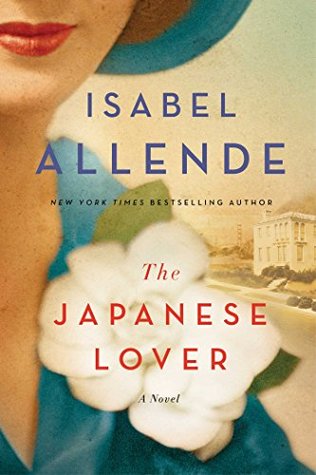
Take A Peek Book Review: The Japanese Lover by Isabel Allende

“Take a Peek” book reviews are short and (possibly) sweet, keeping the commentary brief and providing a little peek at what the book’s about and what I thought.

japanese lover2

Synopsis:

(via Goodreads)

In 1939, as Poland falls under the shadow of the Nazis, young Alma Belasco’s parents send her away to live in safety with an aunt and uncle in their opulent mansion in San Francisco. There, as the rest of the world goes to war, she encounters Ichimei Fukuda, the quiet and gentle son of the family’s Japanese gardener. Unnoticed by those around them, a tender love affair begins to blossom. Following the Japanese attack on Pearl Harbor, the two are cruelly pulled apart as Ichimei and his family, like thousands of other Japanese Americans are declared enemies and forcibly relocated to internment camps run by the United States government. Throughout their lifetimes, Alma and Ichimei reunite again and again, but theirs is a love that they are forever forced to hide from the world.

Decades later, Alma is nearing the end of her long and eventful life. Irina Bazili, a care worker struggling to come to terms with her own troubled past, meets the elderly woman and her grandson, Seth, at San Francisco’s charmingly eccentric Lark House nursing home. As Irina and Seth forge a friendship, they become intrigued by a series of mysterious gifts and letters sent to Alma, eventually learning about Ichimei and this extraordinary secret passion that has endured for nearly seventy years.


My Thoughts:

While The Japanese Lover tells what should be fascinating stories of suffering and survival, the key problem I had with it was the telling. As in, show — don’t tell. Somehow, most of the narrative of this novel felt like a third party summarizing events, rather than allowing me to witness events for myself. There are a lot of shared stories and memories, but they mostly lack immediacy or a sense of real texture.

Additionally, the overall storyline felt a bit kitchen-sinky to me. Alma is sent off to American by her parents who stay behind in Poland and perish in the Holocaust. Irina’s mother was a victim of sex trafficking and ultimately causes horrible abuse to Irina herself. Ichimei and his family are forced into an internment camp during World War II. Alma’s husband leads a closeted life and dies of AIDS. Horrible things happen, but somehow I barely felt any of them.

The Japanese Lover is a fast read, and parts were quite interesting, but I simply couldn’t engage emotionally with much of it due to the style of the storytelling. This was actually pretty surprising to me, as I’ve read and loved many books by this author in the past. The individual stories all should have been compelling, but the mashing up of them all into one novel just doesn’t work. Add to this the fact that Alma and Ichimei’s love story felt flat and unexciting, and I have to say that The Japanese Lover just isn’t the best example of an Isabel Allende novel.

_________________________________________

The details:

Title: The Japanese Lover
Author: Isabel Allende
Publisher: Atria
Publication date: November 3, 2015
Length: 322 pages
Genre: Historical fiction
Source: Purchased

Save

Save

Book Review: A Spool of Blue Thread by Anne Tyler

Spool of Blue ThreadSynopsis:

(via Goodreads)

A freshly observed, joyful and wrenching, funny and true new novel from Anne Tyler

“It was a beautiful, breezy, yellow-and-green afternoon.” This is how Abby Whitshank always begins the story of how she fell in love with Red that day in July 1959. The Whitshanks are one of those families that radiate togetherness: an indefinable, enviable kind of specialness. But they are also like all families, in that the stories they tell themselves reveal only part of the picture. Abby and Red and their four grown children have accumulated not only tender moments, laughter, and celebrations, but also jealousies, disappointments, and carefully guarded secrets. from Red’s father and mother, newly-arrived in Baltimore in the 1920s, to Abby and Red’s grandchildren carrying the family legacy boisterously into the twenty-first century, here are four generations of Whitshanks, their lives unfolding in and around the sprawling, lovingly worn Baltimore house that has always been their anchor.

Brimming with all the insight, humour, and generosity of spirit that are the hallmarks of Anne Tyler’s work, A Spool of Blue Thread tells a poignant yet unsentimental story in praise of family in all its emotional complexity. It is a novel to cherish.

My thoughts:

It’s been years since I’ve last read an Anne Tyler novel — and picking up A Spool of Blue Thread is like cozying up with a comfy old blanket and curling up in a favorite chair. It’s homey and warm and familiar, but the familiarity doesn’t take away at all from the sheer pleasure of spending time with it.

In A Spool of Blue Thread, we meet the Whitshanks, a big, sprawling family whose lives seem centered around their beautiful family home with the big front porch, the home that’s been in the family for three generations and was in fact built by the first of the Whitshanks to live in it. The first characters introduced are Abby and Red, a married couple in their seventies who’ve raised four children, have a good, well-worn marriage, and seem to enjoy their lives.

Their children and grandchildren are a source of non-stop discussion and worry, particularly Denny, the black sheep of the family who can always be depended upon to be undependable. Denny disappears for months or years at a time, only to show up or call with an odd or worrying or unexpected announcement that throws the family into a tizzy.

As Abby and Red age, their children become increasingly worried about their ability to live on their own in their big house, and so various children and their children move in to provide care, manage things, and try to sort out the little rivalries and resentments that have built up over the years.

As the story unfolds, early hints about family history are unpacked for the reader. The family may never know much about Junior and Linnie Mae, the original Whitshanks to live in the family home, but late in the book, we finally get their story, and it’s not what it seemed. Likewise, when we finally hear Abby’s version of how she and Red met, it’s surprising and touching all at once.

A Spool of Blue Thread is a quintessential character-driven book. There’s not much plot to speak of — no big drama or mystery or climax. Instead, it’s a study of family and individuals, their desires and frustrations and misunderstandings and dynamics. It’s lovely to see a family unfold to reveal its heart and soul. The Whitshanks have had their share of disappointments and tensions, but they’re still there, together, figuring things out. Beyond a profile of a family, it’s also a moving depiction of the worries of aging parents, from both the parents’ viewpoint as well as the adult children who have to balance their own lives with the complications required by figuring out how to help parents who may or may not be able to function on their own any longer.

As I mentioned, it’s been quite a while since I’ve read anything by this author, although there was a time when I read all of her new books as soon as they came out. I think I’d reached my saturation point somewhere along the line, and I might not have picked up A Spool of Blue Thread if it hadn’t been my book club’s pick for April.

So, yet another reason to proclaim that I love my book club! A Spool of Blue Thread is a perfect domestic novel that’s touching, funny, and beautifully written. I’m so glad to have read it — and it makes me want to go figure out what other Anne Tyler books I’ve missed over the years.

_________________________________________

The details:

Title: A Spool of Blue Thread
Author: Anne Tyler
Publisher: Bond Street Books
Publication date: February 20, 2015
Length: 358 pages
Genre: Adult fiction
Source: Library

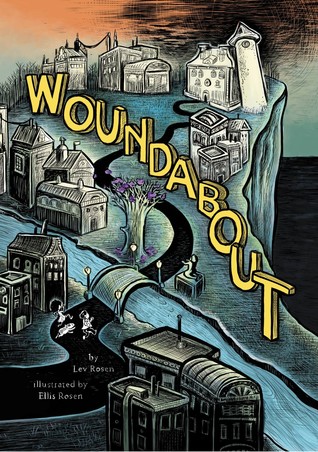
Middle Grade Fiction: Woundabout by Lev Rosen

woundabout


Synopsis:

(via Goodreads)

Welcome to Woundabout, where routine rules and change is feared. But transformation is in the wind….

In the wake of tragedy, siblings Connor and Cordelia and their pet capybara are sent to the precariously perched town of Woundabout to live with their eccentric aunt. Woundabout is a place where the mayor has declared that routine rules above all, and no one is allowed to ask questions–because they should already know the answers.

But Connor and Cordelia can’t help their curiosity when they discover a mysterious crank that fits into certain parts of the town, and by winding the crank, places are transformed into something beautiful. When the townspeople see this transformation, they don’t see beauty–they only see change. And change, the mayor says, is something to fear. With the mayor hot on their trail, can Connor and Cordelia find a way to wind Woundabout back to life?


My Thoughts:

I can’t say enough about this wonderful middle grade novel! Woundabout is the touching — yet not heavy — story of orphaned siblings Connor and Cordelia, who go to live with their aunt Marigold in the very weird town of Woundabout after the death of their parents. Woundabout is a strange, strange place, under the firm control of a dictatorial mayor who hates questions and any deviation from routine. The park is brown and dried up, the river barely flows, and wind constantly buffets the cliffs of the town. Connor and Cordelia, still reeling from their loss, have to adjust to their new lives, and decide to figure out the mysteries of Woundabout, both as diversion and to see if they can somehow find a place for themselves.

The writing is wonderful. There’s humor and a light touch, even on the darkest of subjects. I love the portrayal of Connor and Cordelia (ages 11 and 9), who are tightly bonded, yet each have their own personality and interests. There’s a recurring theme in the writing that takes shared moments and shows how each child sees it:

When the meal was finished, as she had promised, Aunt Marigold took the children into the living room, where they sat on either side of her on a big green sofa and looked at the photos in the album on her lap. It was weird seeing their dad at their age. Connor would have said it was like X-ray vision you couldn’t turn off — seeing through buildings to the beams and metal holding them up; Cordelia would have said it was like uploading your photos to your computer and finding a whole group of pictures you didn’t take. But they both knew it was the same thing.

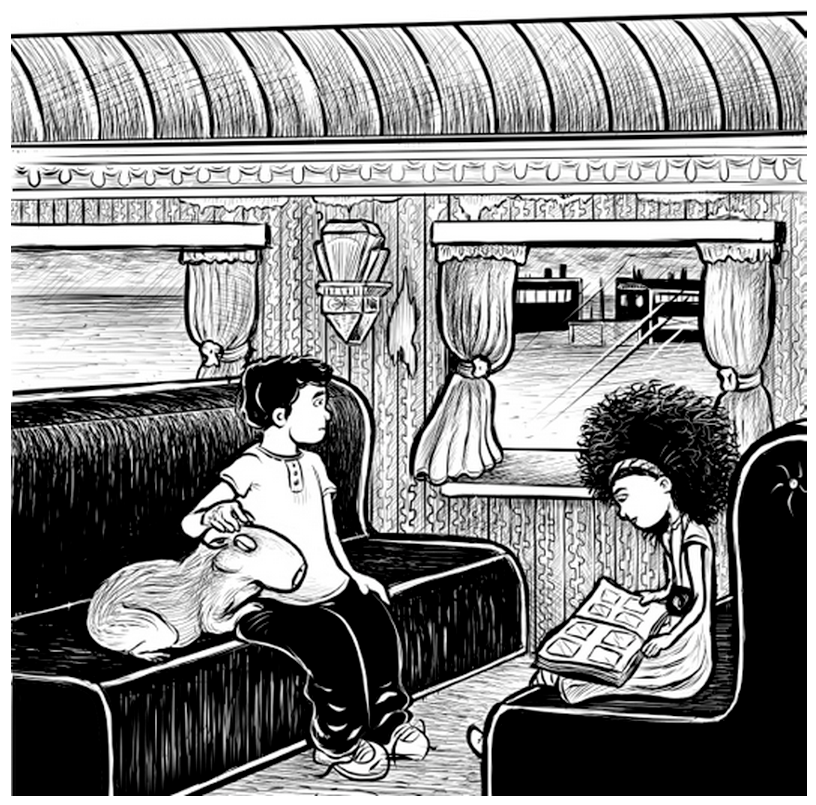
The author and illustrator, who are brothers, are clearly in sync. The marvelous black and white illustrations throughout the book are wonderfully detailed and expressive, and perfectly capture the personalities of the characters and the town.

Woundabout_Siblings_p6

Cordelia and Connor — and Kip, the capybara.

I picked up Woundabout because the author, Lev AC Rosen, has written two excellent books for adults, All Men of Genius and Depth (review), both of which I love and always end up recommending to people. How could I not read his fiction for kids as well?

Woundabout is a terrific read — whether you’re an adult who enjoys reading good children’s books for your own enjoyment, or you’re looking for a book to share with the younger folks in your life, or you want a book to give to a young reader. Woundabout strikes me as a good choice for an adult/child read-aloud, or a great book for an independent reader in the 8 – 12 age range (or so — I hate pinning a label on a book that older and younger kids would enjoy too.)

Check it out… for yourself, or for a kid you’d like to treat to a great read.

_________________________________________

The details:

Title: Woundabout
Author: Lev Rosen
Illustrator: Ellis Rosen
Publisher: Little, Brown Books for Young Readers
Publication date: June 23, 2015
Length: 288 pages
Genre: Middle grade fiction
Source: Library

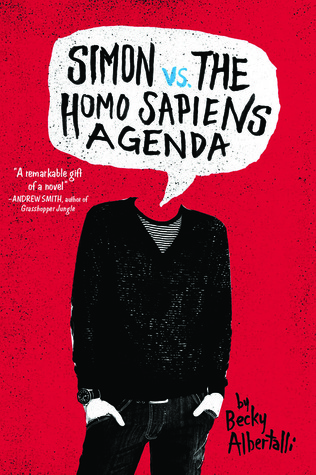
Book Review: Simon vs. the Homo Sapiens Agenda by Becky Albertalli

SimonI dare anyone to read this book and not fall at least a little bit in love with Simon, the main character of this sweet, funny, touching young adult novel.

Simon is a 17-year-old high school junior, a good student, in the school musical (Oliver!), and with a reliable circle of friends, among them his life-long besties Nick and Leah and his new BFF Abby. What Simon hasn’t shared with anyone is that he’s gay. It’s not that he’s unsure — he’s quite, quite certain about his identity. He’s just not quite ready to stop being private and have to deal with the reactions he’s sure to face.

But life gets complicated. On the Tumblr where students from his school share secrets, he’s found a kindred spirit — a kind, smart boy going by the name of Blue, who is also a junior at the same school. Simon and Blue start an intense email correspondence, each using his “secret” gmail account to maintain anonymity. Over the course of the weeks and then months since they began emailing, they’ve opened up to one another to  a remarkable degree. Simon wants to meet; Blue isn’t sure that it’s a good idea.

And then Simon makes the ultimate online error — he checks his email using the computers in the school library and forgets to log back out. Before long, he’s facing a geeky, awkward student named Martin who lets Simon know that he has screenshots of his emails and will let the entire school know that Simon’s gay unless Simon helps him get Abby to go out with him. It’s blackmail, but carried out with a smile. Martin refuses to see that he’s doing something evil, and apart from this unforgivable act, Martin isn’t a terrible person or a bully, which makes it all the more confusing for Simon.

Simon himself is a sweetheart. He’s funny and smart, tries to do the right thing, and has good intentions, although he still manages to hurt some of his friends along the way. Above all, he’s a boy who’s falling in love with someone from the inside out, learning everything about Blue but still not knowing which of the boys he sees at school everyday is the actual man of his dreams.

Simon’s voice in the novel is engaging and full of humor. Even in his moments of doubt or discouragement, he’s funny as hell.

I take a sip of my beer, and it’s — I mean, it’s just astonishingly disgusting. I don’t think I was expecting it to taste like ice cream, but holy fucking hell. People lie and get fake IDs and sneak into bars, and for this? […] Anyway, it really makes you worry about all the hype surrounding sex.

Simon’s email flirtation with Blue is incredibly adorable:

I’m glad I was cute and grammatical. I think you’re cute and grammatical, too.

The truth eventually comes out, and Simon comes out, and all is finally revealed. I don’t want to say more, because seeing it unfold is a big part of the fun.

Beneath all the humor and cute teen escapades are real feelings, beautifully expressed, about family, identity, safety, trust, and friendship. Simon’s journey in Simon vs. the Homo Sapiens Agenda involves sharing himself, really and truly, with the people in his life, and pursuing his truth even when it means taking risks.

It’s a lovely and engaging story, full of flirting and happy moments as well as heartache, and I loved every bit of it. Highly recommended — check it out!

_________________________________________

The details:

Title: Simon vs. the Homo Sapiens Agenda
Author: Becky Albertalli
Publisher: Balzer + Bray
Publication date: April 7, 2015
Length: 303 pages
Genre: Young adult fiction
Source: Purchased


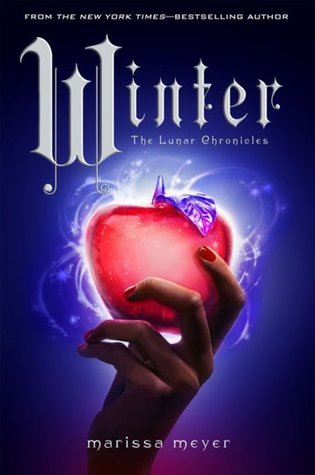
Book Review: Winter by Marissa Meyer

WinterAt long last, I’ve read the final volume in Marissa Meyer’s stunning Lunar Chronicles series! By now, all the die-hard fans have probably gobbled it up, maybe more than once. Being a fan but not quite as die-hard, I waited for my library to finally gets its copies and make one available to me… and I’ve spent the entire past week reading this big, long-awaited book.

I won’t bother with a recap or synopsis. If you’re still reading this review, it’s likely because you’ve either read Winter already or have read at least part of the series and want to know how it turns out.

Well, maybe a teensy bit of a recap. Here’s what you need to know: Winter is the 4th novel in the series (with a novella, Fairest, the most recently published, prior to Winter). The overarching storyline is about a mistreated cyborg mechanic named Cinder, her crush on the Prince (later Emperor) of the Commonwealth, Kai, and the struggle against the evil Queen Levana of Luna.

Woven throughout the four books are reimaginings of fairy tale characters: Cinder is Cinderella, Scarlet is Red Riding Hood, Cress is Rapunzel, and Winter is Snow White. Each gets to headline her own book, but Cinder is the ultimate hero, and hers is the through-story that ties it all together.

I binge-read the earlier books at the beginning of 2015, and adored them. However, it was a little tough getting into Winter at first, after a gap of so many months, and I had to rely on online recaps to feel up to speed enough to be able to move forward.

So what did I think of Winter?

First, the good:

All the action and world-building that we’ve come to love in this series continues in Winter, which plunges us immediately back into the battle for world domination. Cinder and her gang are the underdogs, trying to find a way to take down Levana, who seems to have every advantage possible. She has incredibly powerful mind-control abilities (the Lunar gift), and can make almost anyone within her reach do anything she wants, including self-mutilation, harming a loved one, and worse. How can you fight against power like that?

It’s pretty great to see Cinder’s transformation from unloved outcast to worthy leader. She’s fighting the good fight, standing up for the little guy, trying to take the throne not for her own glory, but for the freedom of the people. All the familiar friends are by her side, doing their parts for the greater good, all at great personal risk to themselves. Winter is a nice addition to the cast of characters, although… well, I’ll get into my “althoughs” below.

The ending is just as satisfying as you’d expect. This is a YA series based on fairy tales, and there’s just no way it’s not going to work out to a happily-ever-after. It’s the getting there that’s such fun.

What I didn’t love quite so much:

Oh, where to start? It’s hard to criticize a series that I mostly loved. I mean, really, it’s just so incredibly rich, detailed, and inventive. That said, there are a few things that felt a bit off to me.

WARNING: LIGHT SPOILERS AHEAD!

  • Artemisia: Is it just me, or did everyone else immediately think “oh hey, it’s the Capitol from The Hunger Games!”? A glittery, extravagantly beautiful city, filled with the privileged upper class, who are pampered, silly, and frivolous, wearing ridiculous fashions, utterly reliant on the underfed, overworked laborers from the outer districts in order to keep up their wealth and resources.
  • Length: Each book in the series has been longer than the one before. Cinder is 390 pages; Scarlet, 452; Cress, 550 — and Winter is a whopping 824. Yes, it’s the wrap-up to the entire series, and perhaps deserves to be big. But, there are scenes and chapters that could have been cut or whittled down, and the book would have been fine. It felt a little overstuffed to me.
  • Winter and Jacin: Look, I like them both — it just feels a bit late in the game to get invested in yet another couple.
  • Cast of characters: What can I say? The story sometimes loses focus because of the need to involve every single character in the story. The series is really and truly Cinder’s story, and while the others may be wonderful, by Winter, many of them are serving mostly a supporting function. We continue seeing them all because they’re a part of the series, but honestly, Scarlet didn’t seem all that important here, and while I understand that she had to be included, she’s just one of many who didn’t seem particularly necessary.

Finally, my two big issues:

  • Romance: I get it, these are fairy tales, and fairy tales need a happily ever after. But does every single character need to be coupled off? Is each love story so truly perfect and meant to be? It’s too much. Each of the four power couples is just so, so, so devoted and right and madly, truly, self-sacrificingly in love from the bottom of their perfect hearts.
  • Teens and politics: The incongruities get harder and harder to ignore, the further along we go in the series. Kai is the son of the Emperor when we first meet him, a teen heartthrob, adorable, a bit unruly, the boy every girl in the Commonwealth swoons over. Okay, fine. When his father dies, Kai becomes Emperor. Still fine. But there’s something off when we see Kai bouncing between the role of world leader and adorable boy crush. The better he gets at ruling and making the hard decisions needed to protect his people, the weirder it becomes to see him interacting with Cinder and the others — a politician hanging out with a gang of teen rebels. This little exchange made me laugh and wince at the same time:

(Again, spoilers!)

Levana sighed. “Why, Selene? Why do you want to take everything from me?”

Cinder narrowed her eyes. “You’re the one who tried to kill me, remember? You’re the one sitting on my throne. You’re the one who married my boyfriend!”

Wrapping it all up:

This may make it sound like I didn’t enjoy Winter, and that’s just not the case. I did enjoy it, quite a bit in fact. The writing is fresh and fun, mixing humorous moments with absolutely horrific scenes and pulse-pounding action.

The author takes a moment that was making me uncomfortable — showing the true face of Levana, scarred and burned, that lurks beneath the outward glamour she shows the world. At first, it felt as though her looks alone were being shown as making her worthy of contempt, but fortunately, that’s not what we end up getting:

Cinder hated her own mind for labeling the queen as grotesque. She had once been a victim, as Cinder had once been a victim. And how many had labeled Cinder’s own metal limbs as grotesque, unnatural, disgusting?

No. Levana was a monster, but it wasn’t because of the face she’d kept hidden all these years. Her monstrosities were buried much deeper than that.

Sometimes even a little throwaway moment is so well-written that it shines:

She wiped her nose with the back of her hand. She was not pretty when she cried, and Winter liked this about her.

So really, what’s the deal?

I liked Winter. I really did. Somehow, the plot felt a bit overcomplicated and jumbled, and the large cast of characters kept the focus scattered rather than firmly on Cinder, which would have created greater dramatic tension. The book is clearly a must-read for anyone who’s been reading the series, and it’s a much more satisfying series ender than a few others I can think of (like Mockingjay or Breaking Dawn). The book didn’t need to be 800+ pages long, and I missed some of the awkward quirkiness and self-doubt that made Cinder so special earlier on in the series. Still, I’m glad to have read it, and overall, I still give high marks to the series as a whole.

Reading tip:

Truly, my best advice for someone thinking about getting involved with this series is to read Cinder, decide if you want to continue, and then read straight through. I think one of the reasons Winter fell a little short of my hopes is that I had about a 10-month gap in between the rest of the series and this book. The Lunar Chronicles is a series that demands to be binge-read. I’d lost all momentum by the time I read Winter, but I think if I’d read it right after Cress and Fairest, I might still have been so swept up in the energy of the story that the little irritants I mentioned wouldn’t even have caught my notice.

Interested in the series? Check out my post about binge-reading the earlier books, here.

_________________________________________

The details:

Title: Winter
Author: Marissa Meyer
Publisher: Feiwel & Friends
Publication date: November 10, 2015
Length: 824 pages
Genre: Young adult/science fiction/fairy tale reimagining
Source: Library

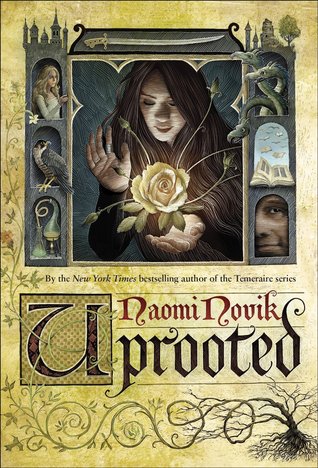
Audiobook Review: Uprooted by Naomi Novik

Uprooted“Our Dragon doesn’t eat the girls he takes, no matter what stories they tell outside our valley. We hear them sometimes, from travelers passing through. They talk as though we were doing human sacrifice, and he were a real dragon. Of course that’s not true: he may be a wizard and immortal, but he’s still a man, and our fathers would band together and kill him if he wanted to eat one of us every ten years. He protects us against the Wood, and we’re grateful, but not that grateful.”

Agnieszka loves her valley home, her quiet village, the forests and the bright shining river. But the corrupted Wood stands on the border, full of malevolent power, and its shadow lies over her life.

Her people rely on the cold, driven wizard known only as the Dragon to keep its powers at bay. But he demands a terrible price for his help: one young woman handed over to serve him for ten years, a fate almost as terrible as falling to the Wood.

The next choosing is fast approaching, and Agnieszka is afraid. She knows—everyone knows—that the Dragon will take Kasia: beautiful, graceful, brave Kasia, all the things Agnieszka isn’t, and her dearest friend in the world. And there is no way to save her.

But Agnieszka fears the wrong things. For when the Dragon comes, it is not Kasia he will choose.


This tale of magic and love is infused with an old-world fairy tale sensibility, and the entire experience is truly special.

Agnieszka is a simple village girl, but she’s well aware of the danger of the Wood. When she is chosen by the Dragon to be the next girl to be kept in his tower, she’s startled and resentful, and feels completely out of place. She’s always messy, unable to get through an hour without ripping her dress, snarling her hair, and coming out stained and mussed. This irks the fastidious Dragon no end. But as she spends time with him, Agnieszka slowly comes to realize that she has magic of her own — not the formal, “scientific” magic of the Dragon, but something uniquely hers, rooted in her beloved Valley and infused with the power of the earth, water, and sky around her, much like her inspiration, the legendary Baba Yaga.

Little by little, Agnieszka and the Dragon discover an ability to work together and combine their magic into something that’s greater than either can do on their own. Before they can get too far with their discovery, though, disaster strikes as Kasia is taken by the Wood, and it’s up to Agnieszka to find a way to reclaim her best friend before she’s consumed by corruption.

The Wood stared back at me out of Kasia’s face: an endless depth of rustling leaves, whispering hatred and longing and rage. But the Dragon paused; my hand had clenched on his. Kasia was there, too. Kasia was there. I could see her, lost and wandering in that dark forest, her hands groping ahead of her, her eyes staring without seeing as she flinched away from branches that slapped in her face, thorns that drank blood from deep scratches on her arms. She didn’t even know she wasn’t in the Wood anymore. She was still trapped, while the Wood tore at her little by little, drinking up her misery.

The stakes build and build throughout the story, as the entire kingdom is plunged into strife and ultimately war as the Wood’s influence extends to the capitol city and threatens the world beyond as well. Agnieszka and the Dragon have to lead the fight against the Wood, but more than that, they have to find a way to get to the source of the Wood’s malignant power if their home and their people are to survive.

Uprooted is a captivating tale, start to finish. Agnieszka is an unusual main character — strong willed, able to stand up for herself, and devoted to those she loves. It’s thrilling to see her develop from a young, unskilled girl full of self-doubt into a talented, capable, strong woman. She thinks on her feet, defies authority when she knows she needs to, and devotes herself to figuring out what’s right and what’s wrong.

The evil of the Wood is terrifying. At times, all seems lost. The descriptions of the Wood’s poisonous intent and seemingly undefeatable power are scary and haunting, creating a mood of despair and horror.

The story culminates with a battle between good and evil, but even there, there are nuances and shades of grey. There’s a deeply affecting story beneath the Wood’s awful terror, and Agnieszka has the wisdom to understand that finding out the past is the only way to see a path toward the future.

The language and imagery of the story is beautiful, especially Agnieszka’s growing magical powers and the descriptions of her spell-weaving and enchantments.

And what’s a good fantasy without a love story? The love story in Uprooted is mostly a quiet thread woven throughout the greater tale of good and evil, malice and redemption — but when it comes to a boiling point, it’s steamy and sexy in all the right ways.

I listened to the audiobook of Uprooted, which was both a great and frustrating experience. The narrator, Julia Emelin, is not (as far as I could tell) a native English speaker. Her Russian accent was an irritant at the beginning, as I found some of her phrasing and rhythm slightly odd and off-putting. But, as I got more into the story, I started to find the narrator’s accent a plus. The people and place names in Uprooted are all Polish and Russian-flavored (Dvernik, Marek, Rosya, Alosha, Marisha), and the voice of the narrator became, for me, yet another piece of the whole, creating a mood that felt magical and outside of the everyday.

As to why the audiobook was frustrating: If I’d had a physical copy of this book in my hands, there’s no doubt that I would have binge-read until all hours of the morning. Uprooted is the kind of story that I’d normally gobble up as quickly as possible. It was so difficult to go at the speed of the recording. I ended up listening in 1.25x speed, because I didn’t have the patience to listen at normal speed, but even so, I was so caught up in the story that I couldn’t wait to keep going. I came close a few times to switching over to a hard copy, but by then, I was under the spell of the narrator’s voice and didn’t want to lose the mood created by the audio, which made me feel as though I was listening to Agnieszka telling her own tale.

Ultimately, listening to Uprooted was a magical experience. The story itself is gorgeous, and the audiobook’s rhythms add to the total effect. I loved the narrative, the characters, and the folktale feel of the book, and know that it’s one I’ll want to read again… and perhaps again after that.

_________________________________________

The details:

Title: Uprooted
Author: Naomi Novik
Narrator: Julia Emelin
Publisher: Del Ray
Publication date: May 19, 2015
Audiobook length: 17 hours, 43 minutes
Printed book length: 435 pages
Genre: Fantasy
Source: Library (Overdrive)

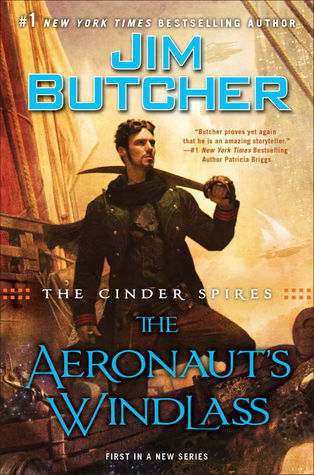
Book Review: The Aeronaut’s Windlass by Jim Butcher

Aeronauts WindlassI’ll admit it up front: I’m a Jim Butcher fan. I’ve read all of the Dresden Files novels (15 so far), and various and sundry related stories, novellas, and graphic novels. Heck, I own the DVD of the (sadly short-lived) Dresden Files TV series. I binge-read the six volumes of the Codex Alera series a few years back. So, I guess you could say there was a decent chance that I’d love The Aeronaut’s Windlass too.

Yup. I did. Loved it a bunch.

The Aeronaut’s Windlass is the first book in a new series (The Cinder Spires), and it’s a remarkable feat of world-building. The book is set in a world in which mankind lives in huge, multi-storied towers (which are miles high and about two miles in diameter) that function as independent countries. The surface of Earth is dangerous and uninhabitable, covered by mists that conceal all sorts of dangers. Commerce is conducted in the air by fleets of airships that use etheric currents and power crystals to swoop, soar, dive, and attack.

Our loyalty is to Spire Albion (which I assume is more or less England, between the name and all the tea-drinking), and we meet a sprawling cast of characters right from the start. The main hero is Captain Grimm, commander of the AMS Predator, a non-military ship that makes its money from privateering. Grimm has a shadowy past that includes a dishonorable discharge from the Fleet, but from the first instant, it’s clear that he’s brave, noble, and a kick-ass air captain.

In addition to Captain Grimm and the crew of the Predator, we meet Gwen, a military recruit who stems from the very upper crust Lancaster family, which basically holds the monopoly on crystal production; Gwen’s cousin Benedict, who is a genetically-mixed warriorborn human; and Bridget, a large, self-conscious girl who finds an inner core of strength and courage.

And let’s not forget my very favorite character (and I suspect he’d resent anyone but himself being considered the hero of the piece): Rowl of the Silent Paws tribe, kit to Maul, chief of the Silent Paws. Rowl is a cat, and the cats in this book absolutely rock. They’re fierce warriors with an elegant and intricate system of power dynamics, clan politics, and etiquette. They mostly look down on clumsy humans, apart from the few (like Bridget, whom Rowl refers to as Littlemouse) who can speak Cat fluently.

Littlemouse was in danger, doubtless a prisoner, and the humans could not be trusted to handle her rescue with appropriate violence. They might be willing to leave someone alive, and Rowl was not prepared to tolerate incompetence where his personal human was concerned. He had just gotten her properly trained.

The action kicks into high gear when Spire Albion is attacked by a Marine contingent from Spire Aurora (Spain, as far as I can figure). The attack is sudden and devastating, and seems to have a sinister mastermind behind it whose motives are unclear. The good guys seems to be constantly outnumbered and outgunned, and the danger is vivid and terrifying — especially when highly venomous icky things called silkweavers seem to be serving the Aurorans, killing and maiming everything in their path.

Our little band of heroes is aided by a master etherealist, who has strange and inexplicable powers that allow him to see the unseen currents all around him, and his apprentice Folly, who’s another amazing and wonderful character. Folly is odd and off-kilter, but is possessed of incredible skill and instinct and comes to the rescue more than once (or twice, or thrice).

It’s all quite thrilling and absorbing. Jim Butcher does many things well, and he truly excels at writing action sequences. The extended airship battles are breathtaking, with booming cannons and swooping maneuvers, and a brave captain who never waivers in the face of enemy attack. (Okay, maybe I have just a teensy crush on Grimm at this point, but can you blame me?)

As always, Butcher knows just how to mix tense drama and high danger with sparkling, witty dialogue. The scenes narrated by Rowl are, of course, my favorites, but you don’t have to turn many pages in a Butcher book to find some clever wordplay or smart-ass retorts to lighten the mood.

Gwen sighed, and fetched another pair of mugs for the etherealist.

“Lovely,” Ferus said, and gulped some more. “Perceptions of etheric energy change from mind to mind, just as you and Sir Benedict demonstrate with your weapons crystals. And if one changes one’s mind, that also changes the nature of those perceptions. This will allow me to perceive those energies in ways in which I would not normally be able to do so.”

“You’re getting drunk,” Gwen said slowly, “so that you can experience etheric energy differently?”

Ferus held up his mug and said solemnly, “Think of it as goggles for one’s mind, instead of one’s eyes.”

The Aeronaut’s Windlass is a BIG book, over 600 pages. That would be huge, in and of itself, but considering this is just the first in a series, reading it feels like a pretty major undertaking. If I didn’t already know and love Jim Butcher’s books, I might be scared off, I suppose. There’s obviously much more yet to come in this series. While the book’s conclusion wraps up the first wave of battle, it’s clear that the war is just getting underway, and there are major questions left unanswered.

I struggled a bit at the beginning to understand the structure of the Spires and some of the fundamentals of the world of this book, but the action and the characters drew me in immediately, and it didn’t really take all that long for the more obscure elements to start to make sense and feel natural. By about the midpoint, I really hated to put the book down. And now that I’ve finished, I can say with certainty that I’m all in. I can’t wait for more of this excellent series, and just wish I could move straight on to the next book, instead of having to wait the year or two it’ll probably take for #2 to be released.

You really can’t go wrong with a Jim Butcher series. Fans will absolutely want to dive into the world of The Cinder Spires, and I think The Aeronaut’s Windlass is a great introduction for people who haven’t read his books too. (Although, if you haven’t read any Butcher, I’d urge you to run right out and find a copy of Storm Front, the first Dresden book).

So there you have it — a lengthy review which all boils down to: I loved this book. Go read it.

I’ll let Rowl have the final word, because he deserves it:

Each creature had something it excelled at, he supposed. Humans could manage knots easily, and cats could do everything else.

_________________________________________

The details:

Title: The Aeronaut’s Windlass (The Cinder Spires, #1)
Author: Jim Butcher
Publisher: Roc
Publication date: September 29, 2015
Length: 630 pages
Genre: Fantasy/steampunk
Source: Purchased

Book Review: Stand-Off by Andrew Smith

Stand-Off

front cover

Stand-off is the name of a position in rugby. Stand-Off is also the name of the newly published sequel to Winger, Andrew Smith’s 2013 young adult novel that both made me laugh and broke my heart into little, tiny pieces.

Ryan Dean West is the main character in both books. Please note that his name is Ryan Dean, not Ryan — it irks him no end when people get it wrong. In Winger, Ryan Dean is a 14-year-old junior at Pine Mountain, a co-ed boarding school located in rural Oregon. He’s used to being different, and considers himself somewhat of a loser, and yet he’s incredibly funny, a great rugby player, a talented cartoonist, and a good friend.

Winger ends with an absolute gut-punch, and that’s all I’ll say about it here. If you haven’t read it, you really should. Check out my review for my rather emotional reaction to Winger, and then rush out to the library to pick up a copy. Seriously.

In Stand-Off, it’s the beginning of senior year, and Ryan Dean is kind of screwed. He’s stuck in a ground-floor, teeny-tiny dorm room — and what’s worse, he’s sharing it with a 12-year-old freshman named Sam Abernathy, an adorable, eager little kid who favors soccer ball pajamas, cooking shows on TV, and leaving doors and windows open to stave off his raging claustrophobia. Needless to say, this does not sit well with Ryan Dean, who just wants to get through senior year, and maybe, just maybe, finally find a private place to have sex with his amazing girlfriend Annie.

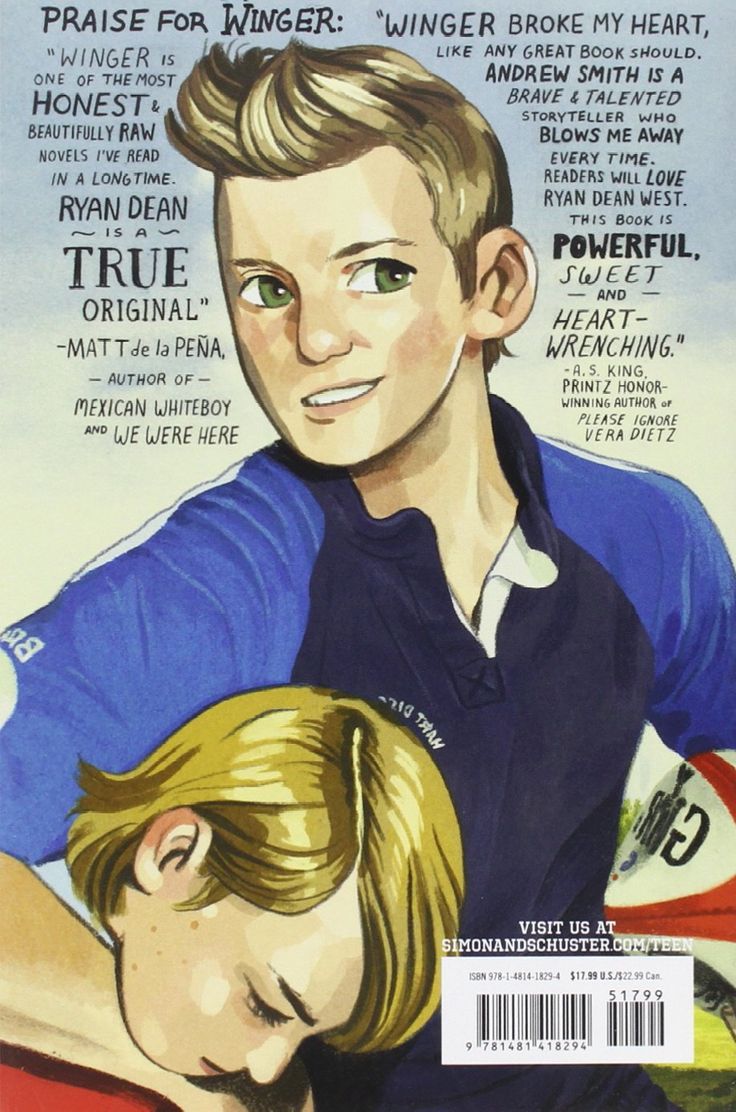
Stand-Off back

back cover

Of course, nothing goes as planned for Ryan Dean, and the real problem is not Sam or the dorm room — it’s Nate. Nate is Ryan Dean’s abbreviation for the Next Accidental Terrible Experience, and Nate seems to be waiting to pounce on Ryan Dean at every turn, behind every corner, and in every dream. Ryan Dean suffers a series of panic attacks and night terrors, and it just seems to get worse and worse. How will he make it through senior year?

That’s the general overview of the plot. Trust me, it’s great.

One of the most delightful ingredients of Andrew Smith’s books is the language, and the writing in Stand-Off is no exception. Told in the first-person, Stand-Off is pure Ryan Dean, with all the horniness of a 15-year-old boy, plenty of snark, and tons of laughs. Open to any random page, and there are priceless gems. For example — page 193 (see, I’m being random):

“Hey, Ryan Dean, do you know what these cherry tomatoes remind me of all of a sudden?”

No. Just no.

Now cherry tomatoes were officially on the Ryan Dean West Things-I-Will-Never-Ever-Eat-Again List.

Or, again randomly, page 309:

Then I saw the Abernathy — all suited up in his perfectly creased Pine Mountain size extra-small boy suit (he must have thrown all the guys’ clothes in the washers and then waited for everyone to leave the locker room before changing) — winding his way like a malnourished albino chipmunk through a redwood forest of rugby players, balancing a plate of food in his hands while everyone he passed smeared their fingers through his hair.

One of the recurring patterns in this book is Ryan Dean’s questioning paragraphs, which start with “Okay. So, you know how…” and go on from there in a glorious stream of semi-connected thoughts and non-sequiturs:

Okay, so you know how sometimes when you really want to do something and so you make a promise to someone you don’t completely trust because somehow that person has just magically evolved into, like, the greatest human being you have ever known but there’s still some deep-down warning signal saying what the fuck did you just promise to do, Ryan Dean but you don’t care because you really want to believe that whatever Spotted John wants is not going to include multiple things that will ruin your life, so you hurriedly grab the pen and sign the contract on the dotted line?

Yeah. That.

It’s hard to pinpoint any one thing that makes this book so great. The characters are terrific, the writing is just so funny and poignant and honest, the cartoons interspersed throughout are so on-point and off-beat — and really, I just care so much about Ryan Dean after reading Winger that I spent all of Stand-Off just wishing for him to be okay and to be happy.

I’ll stop gushing, and just say: Read both books. I never would have thought that I’d love books about a pubescent teen boy in boarding school… but to whichever person in whichever publication wrote the review of Winger that caught my eye when it first came out: Thank you.

If you enjoy well-written young adult fiction that can make you laugh and cry, sometimes in the same chapter, you’ve just got to read Winger and Stand-Off.

_________________________________________

The details:

Title: Stand-Off
Author: Andrew Smith
Publisher: Simon & Schuster
Publication date: September 8, 2015
Length: 418 pages
Genre: Young adult fiction
Source: Library

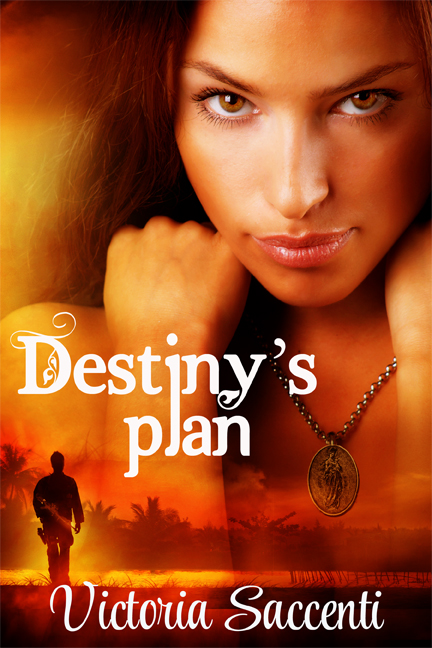
Take a Peek Book Review: Destiny’s Plan by Victoria Saccenti

“Take a Peek” book reviews are short and (possibly) sweet, keeping the commentary brief and providing a little peek at what the book’s about and what I thought.

DestinysPlan72


Synopsis:

(via Goodreads)

When Raquelita Muro and Matthew Buchanan meet by chance on a Greyhound bus between Texas and Tallahassee, neither suspects Fate is about to take over.

Raquelita, a gentle girl under the heel of her abusive mother, finds this kind young man a miracle.  Matthew, an idealistic young soldier, discovers this sweet-natured girl is an angel in need of a guardian.  However, the next stop on Matthew’s journey is Fort Benning to report for deployment to Vietnam, while Raquelita’s destination is set at her mother’s whim.  Regardless of the forces tearing them apart, they discover a way to secretly span the distance, to end up closer than ever.  But Fate is rarely kind.  The vagaries of war—and the unstable tempers of Raquelita’s mother—intervene, leaving both ill-fated lovers feeling there is no hope for their love.

Set in the turbulent era of the Vietnam War, Raquelita’s and Matthew’s story is one of love, loss, lost faith, shattered memories, deferred dreams and broken promises.  Will Fate tear apart these two damaged souls, leaving them desperately alone forever, or will they finally overcome Fate, their bond stronger than they ever thought possible?

My Thoughts:

Debut author Victoria Saccenti has written a complex, heart-wrenching tale of a chance meeting that changes lives, and the intricate ways that bonds of family and obligation can both hurt and heal. The love story here is startlingly sudden, but also quite sweet, as Raquelita and Matthew recognize their connection within moments of meeting and somehow manage to establish a bond so strong that it can withstand physical and emotional trauma.

Destiny’s Plan has a plot that spans eras and continents, as the author weaves in not only the Vietnam War but also goes back to an important family episode during the Spanish Civil War. The author has clearly done her research, as the historical elements are well presented. Not only do we get the facts of a deployment to Vietnam and what that might look like, but we also get the sights and sounds of the late 1960s through the inclusion of the music, fashion, and political and social upheavals of the time.

Raquelita’s life is hard and complicated. One of the pieces of the story that I most enjoyed was getting to know the members of her family, from her damaged and cruel mother Isabel to her mysterious godfather Xavi, her loving father Emilio, and the aunt, uncle and cousin who give Raquelita a chance to experience a normal, loving home life. Raquelita’s younger sister Marité is adorable, and I understand she’ll be the central figure in her own book next.

Another element that really appealed to me in Destiny’s Plan was the fact that love is shown in different ages and stages in this book. Yes, Raquelita and Matthew are the main characters and love story, but we also see several more mature adult relationships as well, and it’s both unusual and refreshing to see true love, emotional and physical, shown as not only the territory of the younger generation.

A slight disclaimer: I’m not usually a romance reader, and so I don’t have much in the way of comparison. I have a feeling that the plot elements that didn’t really work for me in this book are probably things that would appeal to someone who enjoys romances — but as this is not a preferred genre for me, I had to push myself a bit to get over it. Likewise, I was a bit taken aback by the many explicitly intimate scenes, but again, I think I just generally don’t read romances and didn’t know what to expect.

Overall, I’d say the time period gives this book an interesting and unusual flavor, and the characters are well-developed and memorable. If you enjoy swooningly romantic stories with underlying drama and painful obstacles, check out Destiny’s Plan!

To learn more about the author, check out my spotlight post here.

_________________________________________

The details:

Title: Destiny’s Plan
Author: Victoria Saccenti
Publisher: Smashwords Editions
Publication date: September 15, 2015
Length: 435 pages
Genre: Historical romance
Source: Purchased

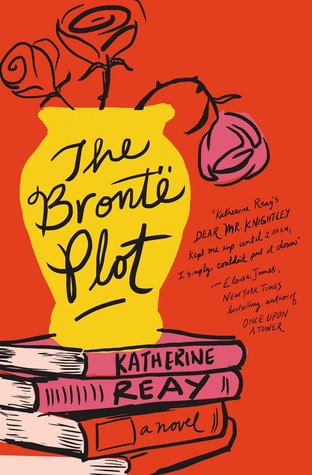
Take a Peek Book Review: The Brontë Plot by Katherine Reay

“Take a Peek” book reviews are short and (possibly) sweet, keeping the commentary brief and providing a little peek at what the book’s about and what I thought.

Bronte

Synopsis:

(via Goodreads)

Lucy Alling makes a living selling rare books, often taking suspicious measures to reach her goals. When her unorthodox methods are discovered, Lucy’s secret ruins her relationship with her boss and her boyfriend James—leaving Lucy in a heap of hurt, and trouble. Something has to change; she has to change.

In a sudden turn of events, James’s wealthy grandmother Helen hires Lucy as a consultant for a London literary and antiques excursion. Lucy reluctantly agrees and soon discovers Helen holds secrets of her own. In fact, Helen understands Lucy’s predicament better than anyone else.

As the two travel across England, Lucy benefits from Helen’s wisdom, as Helen confronts the ghosts of her own past. Everything comes to a head at Haworth, home of the Brontë sisters, where Lucy is reminded of the sisters’ beloved heroines, who, with tenacity and resolution, endured—even in the midst of change.

Now Lucy must go back into her past in order to move forward. And while it may hold mistakes and regrets, she will prevail—if only she can step into the life that’s been waiting for her all along.


My Thoughts:

I’ve enjoyed author Katherine Reay’s previous two novels, Dear Mr. Knightley and Lizzy & Jane, and I had high hopes for The Brontë Plot as well. Unfortunately, while there are some interesting elements, the overall story just doesn’t hold up.

Lucy is a flawed character, someone with obvious talent and enthusiasm, but who makes questionable choices when it comes to achieving her ends. Her actions eventually catch up to her and cause a rupture with the people she cares most about, but her trip with Helen seems to represent a second chance — even though Lucy goes right on fabricating stories to suit her needs even while trying to start fresh.

Lucy’s relationships with James and with her boss Sid are engaging, and it’s hard not to care while she deals with the fall-out once James discovers her dishonesty. Still, it’s difficult to feel a whole lot of sympathy for a main character who takes such foolish actions, and I felt that the resolution of the various conflicts and disappointments was a bit too easy.

The pacing of the book seems to sag once Lucy sets off for England with Helen, where far too much time is spent on the details of their tourism, their hotel accommodations, and their meals. I was never particularly engaged by the family secrets that Lucy and Helen seek to come to peace with, and the literary theme, walking in the footsteps of the Brontës and their contemporaries, with constant references to Jane Eyre, Heathcliff and Catherine, and more, felt forced and not an organic part of the story.

The author creates interesting, multi-faceted characters in this book, but the plot itself didn’t really go anywhere, in my opinion. While I’ll continue to follow this author and hope to read more by her in the future, I’d say The Brontë Plot is mostly skippable.

_________________________________________

The details:

Title: The Brontë Plot
Author: Katherine Reay
Publisher: Thomas Nelson
Publication date: November 3, 2015
Length: 336 pages
Genre: Contemporary fiction
Source: Review copy courtesy of Thomas Nelson via NetGalley