Blog Tour & Book Review: Us by David Nicholls

usI’m delighted to be participating in the blog tour celebrating Us, the brand-new novel by David Nicholls, author of the amazing One Day. Thank you, TLC Book Tours, for inviting me to participate!

Us is the story of a marriage that may or may not be ending, how it got that way, and what a man in love will do to hold onto what he’s about to lose.

Main character Douglas Petersen is a desperate man. His wife has just informed him that once their teen son Albie leaves for college in the fall, she’s planning to leave too. According to Connie, their marriage has “run its course”, and it’s time for her to move on to the next chapter of life.

Douglas is an odd but determined man. He’s a scientist, very logical, very methodical; the opposite, in many ways, of free-spirit Connie, who was an artist when they first met but has since moved into the business side of the art world. And then there’s their son Albie, a typically sullen 17-year-old with nothing, it seems, but contempt for the father who just doesn’t get him.

The family has a European vacation planned for the summer, the classic “Grand Tour”, and Douglas views it as a last chance to save his marriage and hold his family together. And of course, it’s a complete disaster. Douglas has every step of the trip planned down to the minute,  including viewing every piece of important art and historical artifact in Europe, with no time left in the schedule for spontaneity or fun — which pretty much encapsulates his approach to life in general. Finally, there’s a blow-up, and Albie takes off on his own, leaving Douglas to pursue him in a one-man quest to make amends and repair something that may be irreparable. And, Douglas thinks, if he can come home triumphantly with Albie by his side, Connie may see the error of her ways and stay with him after all.

Nothing goes as it should. Douglas is a crazy smart man, but his people skills are sorely lacking. Time and again, he does just the wrong thing at just the wrong time. It’s no wonder Connie wants out and Albie wants away. Douglas must be insufferable to be around — and yet, Us is Douglas’s first-person narrative, which is a wonderful trick on the part of the author. Seen from the outside, Douglas would be awful. But seeing through his eyes, the picture is quite different: Here’s a man, full of awkwardness, madly in love with his wife from the moment he met her, who tries his best, yet always comes up short. His perception of the world around him makes perfect sense; it just doesn’t necessarily mean that the world understands.

Us is a sad story of what happens to a marriage over the course of many years, no matter how much love it starts with and how much true caring exists between the partners. Over time, the newness erodes, and familiarity takes the place of discovery:

Of course, after nearly a quarter of a century, the questions about our distant pasts have all been posed and we’re left with “how was your day?” and “when will you be home?” and “have you put the bins out?” Our biographies involve each other so intrinsically now that we’re both on nearly every page. We know the answers because we were there, and so curiosity becomes hard to maintain; replaced, I suppose, by nostalgia.

The writing in Us is absolutely sparkling. This is one of those books that will make you very annoying to your friends and family, as you’ll be wanting to read the clever and funny bits out loud constantly — and there are clever and funny bits on every page.

She looked fresh, healthy and tasteful, and yet I found myself instinctively wanting to do up an extra button. I wondered if I might be the only man in the world to have dressed a woman with his eyes.

Douglas may be a rigid and opinionated middle-aged man, but he’s also funny, smart, and full of love, even though the love he feels never quite translates into dialogue that sits well with his wife and son. They’re constantly amused at his expense, seemingly cool and in the know in a way he can never be.

A humorous (yet sad) ongoing theme is Douglas’s inability to understand art — particularly sad, given that his wife is an artist. He’s always stuck for what to say in a museum, resorting to either parroting the audiotour narration or making inane observations on the colors or details of a painting. “Look at the reflection in his eye!” or “I love the blue!” And the more desperate he is to connect, the more he fails:

They stared and stared and I wondered, what was I meant to take from this? What were they seeing? Once again I was struck by the power of great art to make me feel excluded.

Finally, it takes Douglas’s hitting an emotional bottom of sorts and finding himself completely bereft of his usual resources and coping mechanisms before he’s able to achieve any measure of rapprochement with Albie. The father-son relationship is not easy, but there’s still love there, despite the years of snarkiness and incomprehension.

“Da-ad!” he growled, shielding his eyes against the light. “What’s up?”

“I got jumped. By some jellyfish.”

He sat up. “In the water?”

“No, on the land. They took my keys and wallet.”

Interestingly, towards the very end, the author takes a few pages to show us how the same story might have been told by Connie or by Albie, and of course, it’s completely different. And yet, it’s thanks to Douglas’s narration that the not so very unusual tale of a disintegrating marriage becomes something unique.

Us is funny and sad, familiar in its slice of life approach to ordinary people, and yet with many moments that are surprising and unexpected. Any family has its ups and downs; any long-term marriage has its pain, boredom, and exasperation — but there’s still hope, and tenderness, deep caring, and the possibility that there are still more surprises and fresh chapters to explore.

I recommend Us wholeheartedly. Full of crisp, snappy writing and quirky yet relatable characters, Us is a story of love, how it can change over time, and what it means to be a family. For anyone who enjoys contemporary fiction about people and relationships with a ring of truth, don’t miss this terrific new novel.

Find out more:

Check out the Goodreads link, or watch this book trailer:


Buy the book!

Amazon,
IndieBound
Barnes & Noble

About the Author:

David NichollsDavid Nicholls’s most recent novel, the New York Times bestseller One Day, has sold over 2 million copies and been translated into thirty-seven languages; he also wrote the screenplay for the 2010 film adaptation starring Jim Sturgess and Anne Hathaway. Trained as an actor before making the switch to writing, Nicholls’s previous novels include Starter for Ten (originally published in the U.S. as A Question of Attraction), adapted into a film starring James McAvoy, for which Nicholls also wrote the screenplay; and The Understudy. He continues to write for film and TV as well as writing novels and adapting them for the screen, and has twice been nominated for the BAFTA awards. He lives in London with his wife and two children.

Find out more about David at his website and connect with him on Facebook.

_________________________________________

The details:

Title: Us
Author: David Nicholls
Publisher: Harper
Publication date: October 28, 2014
Length: 396 pages
Genre: Adult contemporary fiction
Source: Review copy courtesy of TLC Book Tours

tlc logoFor further information, stop by TLC Book Tours to view other blog tour hosts.
Take a Peek Book Review: Lizzy & Jane by Katherine Reay

A quick note: I thought I’d try out a new book review format! My “Take a Peek” reviews will be short and (I hope) sweet, keeping the commentary brief and providing a little “peek” at what the book’s about and what I thought. Tell me if you like!

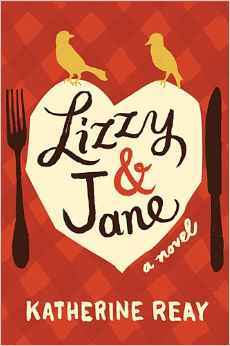
Lizzy and Jane

Synopsis:

(via Goodreads)

Lizzy and Jane never saw eye to eye. But when illness brings them together, they discover they may be more like Austen’s famous sisters after all.

Lizzy was only a teenager when her mother died of cancer. Shortly after, Lizzy fled from her home, her family, and her cherished nickname. After working tirelessly to hone her gift of creating magic in the kitchen, Elizabeth has climbed the culinary ladder to become the head chef of her own New York restaurant, Feast. But as her magic begins to elude her, Paul, Feast’s financial backer, brings in someone to share her responsibilities and her kitchen. So Elizabeth flees again.

In a desperate attempt to reconnect with her gift, Elizabeth returns home. But her plans are derailed when she learns that her estranged sister, Jane, is battling cancer. Elizabeth surprises everyone—including herself—when she decides to stay in Seattle and work to prepare healthy, sustaining meals for Jane as she undergoes chemotherapy. She also meets Nick and his winsome son, Matt, who, like Elizabeth, are trying to heal from the wounds of the past.

As she tends to Jane’s needs, Elizabeth’s powers begin to return to her, along with the family she left behind so long ago. Then Paul tries to entice her back to New York, and she is faced with a hard decision: stay and become Lizzy to her sister’s Jane, or return to New York and the life she worked so hard to create?

My Thoughts:

Lizzy & Jane is both sad and hopeful, a look at two sisters who have a seemingly impassable chasm between them after years of resentment, estrangement, and loneliness. Elizabeth is adrift in the world; she thinks that she’s put her painful family history behind her and that she’s found success as a top New York chef, but as the story opens, she’s forced to admit that her life just isn’t working any more.

Reunited with her sister and her father, Elizabeth slowly starts to find joy in her cooking again, as she cares for her sister, her sister’s kids, and even the other chemo patients she meets while keeping Jane company. As Elizabeth begins to open herself up to forgiveness and reconciliation, she finds her life taking on new meaning and finds a passion and purpose that she didn’t even know she needed.

I loved how neatly the author ties together literature and cooking in this lovely (and delicious) novel. I’m not a foodie, but even I appreciated Lizzy’s knack for understanding a person’s food tastes based on what they love to read. I don’t know if I’m quite convinced that it would work in real life, but in the context of fiction, it’s simply inspired!

Overall, I really enjoyed Lizzy & Jane. The main character is flawed and wounded, and it’s lovely to see her reconnect with her sister and rediscover herself in the process. The love story is a tad predictable, but still delicious in its own way. The portrayal of the fraught relationship between the sisters feels realistic and sensitive, and I couldn’t help cheering for the characters (and occasionally wanting to give them a little kick to get them talking again!). Filled with real emotion, satisfying personal growth, and a group of supporting characters who each add a little spice to the story, Lizzy & Jane is a great choice for anyone looking for a book to make you feel.

_________________________________________

The details:

Title: Lizzy & Jane
Author: Katherine Reay
Publisher: Thomas Nelson
Publication date: October 28, 2014
Length: 339 pages
Genre: Contemporary fiction
Source: Review copy courtesy of Thomas Nelson via NetGalley


Book Review: Brood by Chase Novak

broodI quickly learned, while reading Brood, that my habit of picking up a book whenever I sit down for a bite to eat is maybe not always the best idea. Because — ick. This book would be best read on an empty stomach. Preferably in broad daylight.

That is, assuming that most people would be squicked out by rat infestations, contemplation of which human body parts are edible, and random eviscerations. But, you know, if you’re okay with all that, then by all means, enjoy this book with a hamburger or something.

Brood is the sequel to last year’s Breed, Chase Novak’s horror-filled cautionary tale about the unintended consequences of medical experimentation and the narcissistic need of 1%ers to reproduce, fertility problems be damned.

[Caution: This review includes spoilers related to Breed. You’ve been warned.]

In Breed, ultra-wealthy Alex and Leslie Twisden have everything money can buy, except the ability to produce offspring. At the end of their quest for legitimate treatment, they turn to a hush-hush supposed miracle cure available through a shady doctor in Eastern Europe.

This is not a good idea.

Much mayhem ensues. It’s not pretty. But hey, they do at least have kids!

RIP, Alex and Leslie. And lots of cats and dogs and mice.

In Brood, the offspring — twins Adam and Alice — are 12 years old, and as the story picks up, their aunt Cynthia has just finalized adoption papers, bringing them back home after two years stuck in the foster system. The twins are small for their age, suffering from massive eating disorders, and not at all used to shelter, comfort, and parental love. Cynthia, previously childless, has the idea that she can be a true mother to the twins, and through the power of unconditional love, give them the normal adolescence they deserve and create an ideal home for their little family of three. She’s wrong, of course.

Meanwhile, packs of feral children roam Central Park, a new drug called Zoom is making the rounds of wealthy people looking for their next kick, and a shady research firm is paying a whack-job weirdo to kidnap the wild kids for non-voluntary medical research.

Brood is a quick read. Also a really gross read. (My Goodreads updates: 21%: Ew. 46%: Ew. 92%: Ew.) The action is heavy-duty, animalistic, stalkery/threatening, and — it bears repeating — gross. There’s a lot of time spent on Cynthia’s mental state, which isn’t actually as interesting as the author seems to think it is. Characters are introduced and then dropped. There’s follow-through from Breed, but not consistently.

Some interesting questions are raised about what it means to be human. The science is a bit iffy, but we don’t really know what that fertility treatment actually entailed, so sure, why not have a new breed of children with unknown DNA patterns, unpredictable development, unconventional appetites, and an  undefined step along the evolutionary ladder?

Plus, the idea of preteens running on all fours through the streets of Manhattan? Kind of cool, to be honest.

Last year, after writing a review of Breed, I also wrote a post outlining what I saw as the major lingering questions. Brood ties up some, but not all, of the loose ends left at the end of Breed, which makes me wonder: Is there another installment planned? Or did the author simply feel that some story elements weren’t worth pursuing in the sequel? Brood ends with some finality, but with enough wiggle room left for there to be more yet to come.

Meanwhile, the blood, guts, and rats make Brood a singularly revolting piece of reading. Definitely not for the squeamish. But if you read Breed and remain curious about the fate of all those feral kids, by all means, give Brood a try. For people who enjoy their horror on the chewy side, it’s an *engrossing* (sorry) read.

_________________________________________

The details:

Title: Brood
Author: Chase Novak
Publisher: Mulholland Books
Publication date: October 7, 2014
Length: 320 pages
Genre: Horror
Source: Review copy courtesy of Mulholland Books via NetGalley

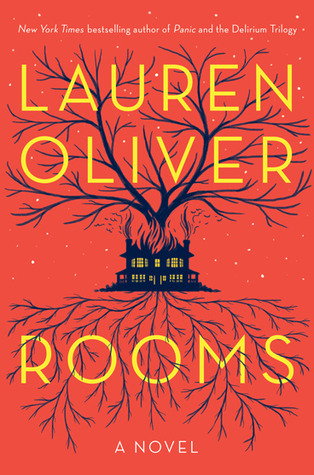
Book Review: Rooms by Lauren Oliver

roomsFamily secrets boil to the surface in this debut adult novel by YA and kid lit author Lauren Oliver.

When Richard Walker dies after a long illness, cared for only by hired health aides, his estranged family returns to their old home to divvy up the wealth and clear up the detritus of his life. Along with the living family members sorting through the accumulated memories and clutter are two ghosts, Alice and Sandra, who have their own histories in the house as well.

Richard’s living relations — ex-wife Caroline, troubled daughter Minna and her daughter Amy, and tortured teen Trenton — bring all their dysfunctional strife and trauma with them as they examine the rooms of the house and make sense of what’s left. And for Alice and Sandra, the reappearance of the family members brings up their own sets of memories of their long years spent haunting the house, as well as the living years that came before.

I read Rooms expecting a ghost story, but it’s really more of a sad story of all the various ways people can hurt each other and hurt themselves. No one is happy here; in different ways, the Walkers and the ghosts have suffered sorrows in which they’ve had a hand.

The concept of the ghosts is rather interesting. Not just shades who inhabit the building, Alice and Sandra have really become one with the house. They feel each draft and splinter; the various rooms are like their organs. While the house stands and remains whole, they remain tethered to this world and to their old lives.

Rooms isn’t dull, but it also never particularly grabbed me or created any sense of suspense. Over the course of the book, each of the characters confronts the secrets and hidden truths of their lives. There’s tragedy and deception, pain and loss. What these people, alive and dead, have experienced is worthy of pity and compassion, but somehow a connection is missing. Perhaps because the book is so short, I didn’t feel that I got to know any one person well enough to truly care, so I had no investment in the outcome.

Rooms is well-written and flows quickly from one vignette to another. It’s sad rather than spooky, and lacks the oomph I would have expected in a story about ghosts and their connection to the living. Ultimately, Rooms really wasn’t my cup of tea. I prefer my Halloween reads on the edgier side.

_________________________________________

The details:

Title: Rooms
Author: Lauren Oliver
Publisher: Ecco
Publication date: September 23, 2014
Length: 320 pages
Genre: Adult fiction
Source: Library

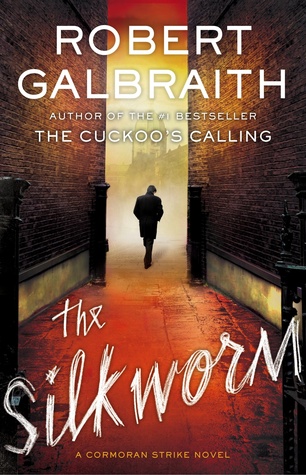
Book Review: The Silkworm by Robert Galbraith

Here’s a quick look at the 2nd book in Robert Galbraith’s detective series:

(Okay, we all know the author is J. K. Rowling, right?)

The Silkworm (Cormoran Strike, #2)Synopsis (Goodreads):

When novelist Owen Quine goes missing, his wife calls in private detective Cormoran Strike. At first, Mrs. Quine just thinks her husband has gone off by himself for a few days—as he has done before—and she wants Strike to find him and bring him home.

But as Strike investigates, it becomes clear that there is more to Quine’s disappearance than his wife realizes. The novelist has just completed a manuscript featuring poisonous pen-portraits of almost everyone he knows. If the novel were to be published, it would ruin lives—meaning that there are a lot of people who might want him silenced.

When Quine is found brutally murdered under bizarre circumstances, it becomes a race against time to understand the motivation of a ruthless killer, a killer unlike any Strike has encountered before…

J. K. Rowling made quite a stir when news of her authorship of the pseudonymously published mystery book, The Cuckoo’s Calling, was leaked last year. Rowling said in several interviews that she wanted the experience of being a new writer, outside the glare of the intense media scrutiny that follows her every move. The Cuckoo’s Calling was Rowling’s 2nd book for adults (after The Casual Vacancy), written in her post-Potter years — and once author Robert Galbraith was revealed to be Rowling, sales of The Cuckoo’s Calling skyrocketed. I enjoyed The Cuckoo’s Calling quite a bit; you can read my review here.

In this second Galbraith book (of a reportedly 7-book series), we pick right back up with detective Cormoran Strike, a truly wonderful character and probably the best element of these books. Strike is a big man, fearsome to behold, despite his missing leg stemming from a war injury suffered during his army service in Afghanistan. Strike is smart, obstinate, and unswerving once on the scent of a clue. He makes enemies fairly easily, and has gained notoriety in the wake of the high-profile murder he solved in The Cuckoo’s Calling. He’s also the illegitimate son of a superstar rocker, and the press loves to dwell on all the sordid details that Strike would just as soon ignore.

In the months since his brush with fame, Strike finds himself in high demand to solve cases for the rich and powerful, usually involving infidelity and general skeeviness, and perhaps that’s why he feels both pity and interest when sad-sack Leonora Quine shows up in his office asking for his help. At first, it’s a missing person case, as Leonora’s author husband has disappeared — and unlike his previous periods of hiding out and sulking, he hasn’t shown up again. As Strike begins to dig, he discovers that Owen Quine is a not terribly successful writer whose newest unpublished work skewers allies and enemies alike. There are a lot of powerful people who’d like to make sure this book never sees the light of day — and once Quine’s mutilated body is discovered, all of the book’s subjects become murder suspects.

Plot-wise, The Silkworm teeters on the edge of being overly complicated. There are dates, times, objects, motives, and secrets to unravel, on top of which, the plot synopsis for Quine’s book is a seemingly coded key to each of the main players and their hidden shames and scandals. My main complaint about The Silkworm has to do with Quine’s writing. Honestly, it’s every bit as terrible as it’s supposed to be, and his book is so heavily symbolic that only the most inside of insiders could possibly have any clue who the people being lambasted might be. I just couldn’t quite buy the idea that this awful manuscript by a washed-up, one-hit-wonder of an author could generate that much attention and kick off such a publishing world crisis.

The Silkworm is densely plotted and moves forward at an incredibly fast pace — so even though it felt a bit more convoluted than strictly necessary, I still couldn’t look away. When Strike finally solves the murder, we more or less just have to take his word for it. Yes, it’s all explained, but I’m not sure that I believe that even the brilliant Cormoran Strike could really make the intuitive leap necessary to put it all together.

Still, I enjoyed spending more time with Cormoran Strike and his terrific assistant Robin Ellacott quite a bit. They’re both fantastic characters, and the book is at its most engaging when we follow their interplay and their own inner lives and struggles. The murder mystery is twisted and suspenseful, but eventually it starts to feel like a bit too much. Full disclosure: I’m not much of a mystery fan in general, so my opinion of the case and its resolution is probably colored by that. I’d love to hear what people who are bigger mystery/thriller fans have to say about The Silkworm!

Do I recommend The Silkworm? Yes! Will I read more by Robert Galbraith? Absolutely yes! I’m really looking forward to the next installment in the Cormoran Strike series, mostly for the pleasure of spending time with Strike himself — although we all know that Rowling/Galbraith can spin a good yarn, and I’m always up for seeing whatever she chooses to do next.

_________________________________________

The details:

Title: The Silkworm
Author: Robert  Galbraith (aka J. K. Rowling)
Publisher: Mulholland Books/Little, Brown and Company
Publication date: June 24, 2014
Length: 455 pages
Genre: Mystery
Source: Purchased


Book Review: The Ship of Brides by Jojo Moyes

20510869In 1946, thousands of war brides set sail to join the men they married and start their new lives. Can you imagine the bravery involved? Around the world, in the midst of the second World War, local girls fell into hasty, romantic marriages with soldiers stationed in their towns. Is there a more swoon-worthy ideal than the heroic GI, on leave for a few days, wooing the local girl and then heading back into battle?

Following the war, the British government made it their business to reunite the brides and their men, commissioning ships to transport the young women to England. Competition to get onboard was fierce; the brides lived in suspense, waiting for their letters to arrive to confirm that it would finally be their turn.

In The Ship of Brides by Jojo Moyes, originally published in 2005 and getting its first US release this month, we follow the journeys of four Australian war brides as they embark on their life-changing journeys. As the story progresses, we get to know more about each young woman, what makes her tick, and how she ends up crossing oceans for the sake of love. We meet:

  • Jean, the 16-year-old party girl, uneducated and slightly crass, but with a taste for fun and a daring spirit. Jean seems to 1373381genuinely love her soldier Stan, whom she married in a flurry of flirtation.
  • Avice, a wealthy society girl who always strives to be seen as the epitome of proper wifey-ness. Avice always has to be just that much better than everyone else.
  • Maggie, a farm girl who’s devoted herself to caring for her father and brothers for the last few years. She’s never been away from home until now — but can a carefree country girl find happiness among strangers in England?
  • Frances, a nurse who’s seen the horrors of war first-hand caring for released POWs in army hospitals. Frances has a reserve and dignity about her, and doesn’t appear to be caught up in the girlish frivolity of the other brides. There’s something going on behind the quiet appearance; Frances is clearly a woman with secrets.

As The Ship of Brides begins, we find out that the bride program is winding down. Some earlier voyages were made aboard luxury liners — but disappointingly for Avice and some of the others, the ship available for our group is the HMS Victoria, a British aircraft carrier that’s seen better days. Rather than sailing in comfy staterooms and dining in formal dining rooms, these brides are provided with hastily built dorm-style cabins in the nooks and crannies of the naval ship, allowed up on deck for exercise, and eating in the converted mess areas. Oh, and the sailors’ areas are strictly off-limits: Yes, these are newly married brides — but they’re also young women spending six weeks at sea in close quarters with a bunch of sailors… and you really can’t be too careful, at least as far as the Navy is concerned.

The Ship of Brides provides a vivid depiction of life on board the ship, aptly showing the unlikely contrast of frilly women’s fashions and the need for a makeshift hair salon with a naval vessel full of planes, fuel, gray walls, and a company of Marines. It’s not just the brides venturing into life-changing territory. For the men on board, the journey represents their voyage home from war — a return to normalcy, to civilian life, and to a peace-time existence that has only been a distant memory during the war years. For the brides as well as for the sailors and soldiers, the six weeks of the voyage are full of uncertainty, hope, and fear.

1172548Fear especially comes into play for the brides as they look ahead toward their married lives. Most had whirlwind romances and hasty marriages; for many, their time spent thus far with their new husbands can be counted in days or weeks. And yet, here they are, sailing around the world and leaving everything behind in pursuit of love and happiness. Nothing is guaranteed, though. After the initial giddiness of the departure from Sydney, the brides inhabit a sort of purgatory, an in-between time with no assurance of a happily-ever-after. Over the course of the journey, several brides receive the dreaded Not Wanted Don’t Come telegram — and once the husband has changed his mind, the journey is over for that bride, who is taken off ship at the next available port and sent back home to pick up her life in Australia once again. No matter how excited and in love the brides are, no matter how romantic their stories of wartime wooing, each knows that this could possibly be her own fate, and the nervous energy of uncertainly underlies each waking hour.

The book gets off to a somewhat slow start, and it’s not immediately clear at the outset who the main characters are and about whom we’re really intended to care. But within a few chapters, we begin to know the brides more deeply, and as the story progresses, we become completely invested in their fates and their potential for finding happiness.

The characters themselves are sharply defined, each with her own story to tell. Frances is the most interesting of the lot and the one whose journey I found the most compelling. There’s a noble tragedy to her tale, and I couldn’t help feeling her pain and her hope as the story unfolded. In many ways, The Ship of Brides is an old-fashioned love story, but with a sense of honor and hopefulness that I found utterly romantic. The young women are often depicted as silly girls, chasing dreams of glamorous love that can’t possibly hold up in real life, and yet there’s something so brave and vulnerable in their commitment to their dreams, stepping out into the unknown in pursuit of their hopes for happiness.

The Ship of Brides is truly a lovely book, perfectly capturing the heady adventure of wartime love, and the bravery of countless young women who took the ultimate risk in pursuit of a dream. I’d never really known much about the war bride phenomenon, and found this book to be an eye-opening peek at a unique little corner of history. I learned a lot, and yet never felt like I was reading a history lesson. Instead, I became swept up by the personalities and courage of the characters, and felt like I was on the edge of my seat, hoping and praying for a happy ending.

If you enjoy a well-written love story with unique characters and a moving narrative, check out The Ship of Brides! As for me, I’ll be reading as many books by this author as I possibly can, starting with Me Before You for a November book group selection.

See my reviews of more books by Jojo Moyes:
The Girl You Left Behind
One Plus One

_________________________________________

The details:

Title: The Ship of Brides
Author: Jojo Moyes
Publisher: Penguin Books
Publication date: October 28, 2014 (originally published in UK in 2005)
Length: 464 pages
Genre: Historical fiction
Source: Review copy courtesy of Penguin Books via NetGalley

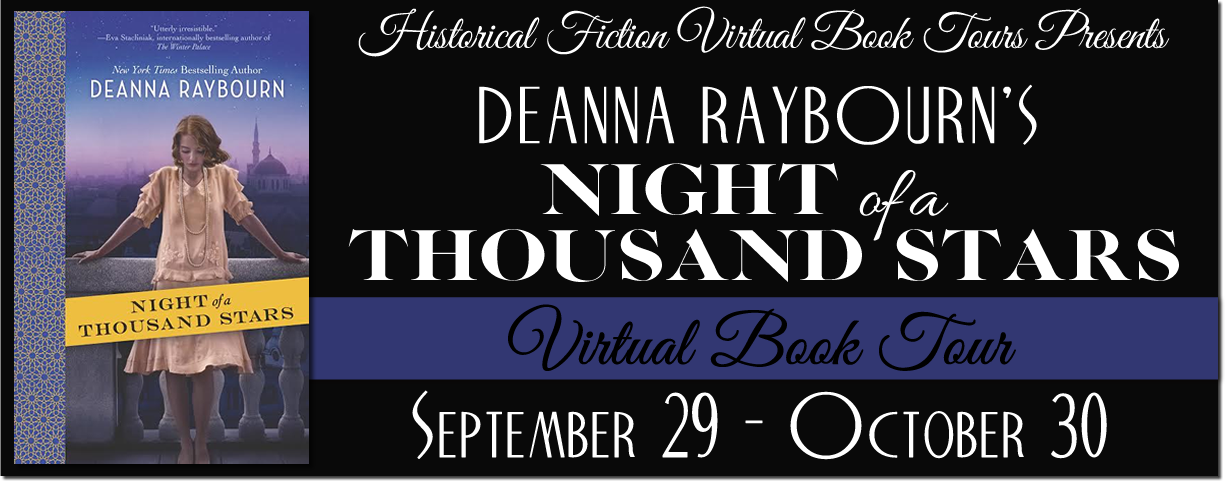
Blog Tour & Giveaway: Night of a Thousand Stars by Deanna Raybourn

04_NOATS_Blog Tour Banner_FINAL

I’m delighted to be participating in the blog tour ( courtesy of Historical Fiction Virtual Book Tours) for the newest historical fiction release from Deanna Raybourn, author of A Spear of Summer Grass, City of Jasmine, and the Lady Julia Grey mystery series.

Publication Date: October 1, 2014
Harlequin MIRA
Formats: eBook, Paperback
Genre: Historical Fiction
New York Times bestselling author Deanna Raybourn returns with a Jazz Age tale of grand adventure…

On the verge of a stilted life as an aristocrat’s wife, Poppy Hammond does the only sensible thing—she flees the chapel in her wedding gown. Assisted by the handsome curate who calls himself Sebastian Cantrip, she spirits away to her estranged father’s quiet country village, pursued by the family she left in uproar. But when the dust of her broken engagement settles and Sebastian disappears under mysterious circumstances, Poppy discovers there is more to her hero than it seems.

With only her feisty lady’s maid for company, Poppy secures employment and travels incognita—east across the seas, chasing a hunch and the whisper of clues. Danger abounds beneath the canopies of the silken city, and Poppy finds herself in the perilous sights of those who will stop at nothing to recover a fabled ancient treasure. Torn between allegiance to her kindly employer and a dashing, shadowy figure, Poppy will risk it all as she attempts to unravel a much larger plan—one that stretches to the very heart of the British government, and one that could endanger everything, and everyone, that she holds dear.


My thoughts:

Deanna Raybourn excels at creating strong, sassy heroines with a flair for adventure, who aren’t afraid to break from the confines of society’s expectations and seize life (and love) whenever they get the chance.

Poppy Hammond certainly fits the bill. After her dramatic exit as a runaway bride, Poppy is restless and yearning, knowing only that she needs more in her life. The nice man who helped her flee the wedding is someone she’d like to at least thank for his efforts, leading to an impulsive escapade in which Poppy winds up in Damascus under an assumed identity… right in the midst of political upheaval, treasure hunters, danger and intrigue. Definitely all the ingredients needed to please a girl seeking adventure!

Sebastian is a heroic leading man, insultingly misunderstood by Poppy to start with, only revealing his true character and capabilities to her over time, as they plunge from one dangerous situation to another, fleeing across deserts, hiding out in old ruins, and evading bad guys with a flair that would put Indiana Jones to shame.

As in City of Jasmine, the Middle East of the 1920s offers just the right combination of beauty, danger, and old-timey espionage thrills to make Night of a Thousand Stars a romantic, exciting adventure story. The politics and history of the region in that tumultuous time are well-explained, but never in a way that’s boring or instructional. Instead, the intrigue serves as an exhilarating backdrop to Poppy and Sebastian’s growing flirtation and affections, and the two play off each other marvelously, displaying the mingled exasperation and amusement you might encounter in an old movie à la The African Queen.

While Night of a Thousand Stars works as a stand-alone novel, characters from the author’s earlier works (City of Jasmine, the Lady Julia books) are referenced. There’s no reason that you couldn’t enjoy Night on its own, but if you’re so inclined, I’d recommend reading City of Jasmine (and its companion novella, Whisper of Jasmine) first.

Overall, I found Night of a Thousand Stars to be a fun, engaging, romantic read. If you’re a fan of romantic espionage tales, don’t miss it!

Other reviews:

Interested in Deanna Raybourn’s other books? See my previously posted reviews:
A Spear of Summer Grass
City of Jasmine

Buy the Book

Amazon (Kindle)
Amazon (Paperback)
Barnes & Noble (Paperback)
Books-a-Million
iTunes
Kobo

About the Author

03_Deanna RaybournA sixth-generation native Texan, Deanna Raybourn grew up in San Antonio, where she met her college sweetheart. She married him on her graduation day and went on to teach high school English and history. During summer vacation at the age of twenty-three, she wrote her first novel. After three years as a teacher, Deanna left education to have a baby and pursue writing full-time.

Deanna Raybourn is the author of the bestselling and award-winning Lady Julia series, as well as, The Dead Travel Fast, A Spear of Summer Grass, and City of Jasmine.

For more information please visit Deanna Raybourn’s website and blog. You can also find her on Facebook, Twitter, and Goodreads.


Giveaway:

With thanks to Historical Fiction Virtual Book Tours, I’m delighted to be able to offer a paperback edition of Night of a Thousand Stars (available to US residents only). Click the link below to enter:

a Rafflecopter giveaway

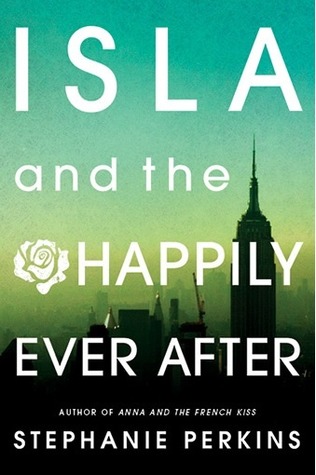
Book Review: Isla and the Happily Ever After by Stephanie Perkins

Isla and the Happily Ever After (Anna and the French Kiss, #3)

Stephanie Perkins excels at writing young adult novels that shine with honest emotion, likeable but flawed characters, and an unflinching look at how young people in love behave in real life. There’s no sugar-coating or fake revelations or makeovers leading to perfect relationships: The people in her novels feel alive and familiar — not an adult’s idea of what teens might be like, but real people channeled through the writer’s mind and pen (or keyboard).

Isla and the Happily Ever After is Stephanie Perkins’s third book in a loosely connected trio, following Anna and the French Kiss and Lola and the Boy Next Door. Like Anna, Isla is set in Paris at a private, expensive boarding school for Americans. In Isla, the gang from Anna has graduated and moved on, and we focus on Isla, a quiet New Yorker whom we glimpsed in the background in earlier books.

Isla (pronounced Eye-la, thank you very much) has been crushing on cute, artistic Josh since their freshman year, but when we last saw him in Anna, he had a girlfriend and didn’t seem aware of Isla’s existence. A chance encounter in a coffee shop during which Isla is extra flirty (thanks to post-dental-work Vicodin) leads to a very cute huddle in the rain, a spark of attraction, and the very big possibility that Josh might actually like Isla back.

It’s not long before Isla and Josh reconnect in Paris as their senior year begins, and before you know it, the two are hot and heavy and falling in love. But wait! The book is called Isla and the Happily Ever After, and she seems to have found her HEA… but the book is only half-way through. Whaaaaat?

Well, naturally, there are complications. Obstacles. Misunderstandings and heartbreak.

What might seem predictable or trite in a lesser piece of work feels sad but completely real here. It makes sense that these two bring all of their individual baggage to the relationship and can’t conjure an instantaneously happy life out of thin air, no matter how much they love each other. Eighteen is a tricky time to plan a future, whether it’s thinking about college plans or even longer term. Isla and Josh love each other so much, and they still fall apart. The question then becomes, can they figure it all out?

(Okay, yeah, the book title kind of flashes a big neon clue about what sort of ending we’ll get…)

I enjoyed Isla very much. The Paris setting doesn’t hurt a bit, and it’s quite fun to see Josh’s artwork through the eyes of his besotted girlfriend. Likewise, it’s great to see a central female character who’s a good person, but still has a lot to learn. The characters’ friendships and family complications add interesting twists to the plot and help make the story feel richer and fuller than it would if the love story were the only focus.

Granted, the fact that the book is set in Paris and that all of the characters have zero money problems tends to lend the story a fairy-tale feel. Maybe that would become obnoxious in a different sort of book, but in Isla, it just means that we get to enjoy these wonderful Parisian settings (and even  Barcelona) with Isla and Josh, and we readers get just as swept up by the magic of it all as the characters do.

I recommend the entire trio by Stephanie Perkins for anyone who enjoys upbeat, contemporary YA which includes gritty, romantic love and urban settings that practically scream “come here to fall in love!”.

See my reviews of Stephanie Perkins’s other books:
Anna and the French Kiss
Lola and the Boy Next Door

_________________________________________

The details:

Title: Isla and the Happily Ever After
Author: Stephanie Perkins
Publisher: Dutton
Publication date: August 14, 2014
Length: 339 pages
Genre: Young adult contemporary fiction
Source: Library


Thursday Quotables: Isla and the Happily Ever After

quotation-marks4

Welcome back to Thursday Quotables! This weekly feature is the place to highlight a great quote, line, or passage discovered during your reading each week.  Whether it’s something funny, startling, gut-wrenching, or just really beautifully written, Thursday Quotables is where my favorite lines of the week will be, and you’re invited to join in!


Isla and the Happily Ever After (Anna and the French Kiss, #3)

 Isla and the Happily Ever After by Stephanie Perkins
(published August 14, 2014)

I pull away, he tugs me close, I pull away. “Be right back,” I say. “Bathroom.”

After I pee, I return for my toothbrush and toothpaste. He follows me in, and we brush our teeth. We can’t stop smiling at each other. I can’t believe that adults get to do this every day. And I don’t even mean sex, though it’s wonderful, but things like this. Brushing our teeth at the same sink. Do adults realize how lucky they are? Or do they forget that these small moments are actually small miracles? I don’t want to ever forget.

I thought this passage was so simple yet so lovely. Remember how new and amazing all these little moments were, exploring first love? This terrific YA novel really captures the ups and downs and intense emotions of that once-in-a-lifetime feeling of falling in love for the first time. Stay tuned — my review will be up in the next few days.

What lines made you laugh, cry, or gasp this week? Do tell!

If you’d like to participate in Thursday Quotables, it’s really simple:

  • Write a Thursday Quotables post on your blog. Try to pick something from whatever you’re reading now. And please be sure to include a link back to Bookshelf Fantasies in your post (http://www.bookshelffantasies.com), if you’d be so kind!
  • Leave your link in the comments — or, if you have a quote to share but not a blog post, you can leave your quote in the comments too!
  • Visit other linked blogs to view their Thursday Quotables, and have fun!

Book Review: Lies We Tell Ourselves by Robin Talley

LiesAuthor Robin Talley gives us a stunning look at the school integration wars of the 1950s in her debut novel, Lies We Tell Ourselves. Seen through the eyes of two high school girls — one black, one white — caught up in the terror and day-to-day struggles of the early days of a Virginia high school’s forced integration, Lies takes us behind the historical record into the hearts and minds of the young people who had to actually live it all.

We’ve all read about integration in our history books and seen the photos of the Little Rock Nine being escorted into school by police through a jeering crowd. But what must it have been like for the students themselves? What did they feel, and what did they want?

In Lies We Tell Ourselves, we see both sides of the struggle through the two main characters, Sarah and Linda. Sarah is an honors student at the black high school in town; Linda is the white daughter of the town’s virulently anti-integration newspaper editor. When the court ruling comes down which forces the local white school to open its doors to black students, Sarah, her younger sister Ruth, and eight other students become the living symbols of integration. Once the NAACP wins its case, it’s the children who have to walk the path laid out for them by their parents and other adults. Everyone is just looking for an excuse to call integration a failure, so the pro-integration side lays out strict rules for the children: No fighting, no arguing, no answering back, no defending oneself, no extracurricular activities. Go along, get along — just walking the halls is an achievement, so don’t do anything that’ll hand the other side an excuse to say it doesn’t work.

The experiences of Sarah and the others are horrifying. Yelled at, spit upon, assaulted, impeded, harrassed, and threatened, entering the school and walking to their classrooms each day is like walking through a minefield. When someone spits on Sarah or dumps milk over her head, she can’t react, but must simply move on through the day. If she gives any hint that she’s upset, it’ll give the segregationists fuel for their argument that no one is ready for mixing of the races.

I wipe the tears away and stare at my reflection until my face smooths out and my eyes go empty. This is how they have to see me. If they know I feel things, they’ll only try to make me feel worse. Maybe if I keep trying, I really won’t feel anything.

From Linda’s perspective, the “agitators” — the black students — are just ruining her senior year. Why couldn’t they stay in their own schools? Why do they need to come and cause such chaos in her own perfect little world? Even worse for Linda is her internal conflict — is it possible that the “Southern values” she’s been raised with are wrong? Is it possible that the behavior she witnesses on a daily basis isn’t about preserving tradition, but is simply ugliness and hatred?

For eighteen years, I’ve believed what other people told me about what was right and what was wrong. From now on, I’m deciding.

The day to day realities of 1959 in Virginia are simply awful to read about through the lens of our 21st century, post-Civil Rights sensibilities. The actions within the school are revolting. The verbal harassment, including the most disgusting racial epithets, are constant. The teachers and administration routinely turn a blind eye. In home ec class, Sarah is given her own sets of pots and pans to use, so that white kids don’t have to handle implements dirtied by black hands. It goes on and on, and reading about it through the words of students living it is incredibly painful.

Complicating matters even further for Sarah and Linda is that they’re thrown together as partners on a project for French class, and as they begin to know one another, each is reluctantly aware of a growing attraction toward the other. The girls spend much of their time together arguing, but beneath the racial divide, there’s a simmering interest that has nothing to do with skin color. As each girl realizes that dating boys and pretending to fit in doesn’t really work for her, entirely different questions about shame, sin, and what’s “natural” and “normal” surface.

I almost felt like telling Sarah and Linda, “don’t you have enough on your plates right now?” Just attempting a friendship is enough to get Linda ostracized and ridiculed and for Sarah to become even more of a target for the thuglike white boys from school. To pursue a same-sex relationship in the South of the 1950s seems foolhardy in the extreme, and while it was moving to see what the girls go through and how caught in a web of hatred they each find themselves, I’m not sure that the story needed one more element to put the characters at risk.

That said, I found Lies We Tell Ourselves to be a moving, important, and brave book. It’s eye-opening to take a well-known chapter of history and revisit it through the perspectives of people who lived through it. I’d thought I could imagine what it must have been like to live through those days, based on reading history books and watching documentaries. But sometimes, it takes fiction to make facts come alive, and that’s what the author achieves here. By giving us a personal point of entry to the experience, we walk the halls of the high school with Sarah and Linda and experience the fear, the hate, the humiliation, and the absolutely insane level of courage it must have required simply to take the few steps from one classroom to another.

Sarah and Linda are remarkable, unforgettable characters, and while the book ends at the conclusion of their high school careers, I can’t help thinking about how much better their lives will be from this point forward. They’ve each changed dramatically, and they’ve stood at the center of social change and survived.

Lies We Tell Ourselves would make a fantastic addition to any US History class curriculum, but more than that, its story of two brave girls trying to find their way and do what’s right should be widely read by teens and adults, in school or out. Robin Talley’s fine writing gives us a front-row seat to a difficult and important chapter of our nation’s recent history — but beyond the social value, she’s also written just a really good novel that conveys true emotion and personal growth.

_________________________________________

The details:

Title: Lies We Tell Ourselves
Author: Robin Talley
Publisher: Harlequin Teen
Publication date: September 30, 2014
Length: 304 pages
Genre: Young adult historical fiction
Source: Review copy courtesy of Harlequin Teen via NetGalley