My Monday tradition, including a look back and a look ahead — what I read last week, what new books came my way, and what books are keeping me busy right now. Plus a smattering of other stuff too.
Life.
Three cheers for a three-day weekend! After an intense workweek, I really needed this long weekend. And really, I mostly did nothing! We had some friends stop by, spent some time outdoors, worked on odds and ends around the house… all very low-key, and that’s just what I wanted.
What did I read during the last week?
The Neighbor Favor by Kristina Forest: An audiobook romance that focuses on booklovers — what’s not to enjoy? My review is here.
Shelterwood by Lisa Wingate: Historical fiction with timelines in 1909 and 1990. Interesting, although I didn’t get particularly emotionally involved. My review is here.
Pop culture & TV:
Lots of sampling of different shows this week, no new binges. I caught up on the first two episodes of Interview with the Vampire (season 2) — not overly impressed so far this season, but let’s see if it gets better. Survivor season 46 wrapped up, and I posted some thoughts here.
Fresh Catch:
No new books this week.
What will I be reading during the coming week?
Currently in my hands:
The Rom-Commers by Katherine Center: A yummy delight. Almost done! Should have a review up in the next few days.
Now playing via audiobook:
The Guncle Abroad by Steven Rowley: The sequel to The Guncle, which I loved! The author is the audiobook narrator, and he’s terrific. What fun!
Ongoing reads:
My longer-term reading commitments:
Daniel Deronda by George Eliot: My book group’s current classic read. We’re reading and discussing two chapters per week. Progress: 94%. We’re getting close to the end — just three more weeks to go!
Damn Rebel Bitches: The Women of the ’45 by Maggie Craig: Over at Outlander Book Club, we’ve started a group read of this non-fiction book, discussing one chapter each Friday. Progress: 13%.
It’s been a minute since I’ve written a Survivor post (okay, only two seasons of the show, but still)… and since season 46 just ended this week, I thought I’d spill some random thoughts on the season overall as well as the finale and results.
The season had a rough start, and honestly, I teetered on the edge of abandoning ship during the early episodes, largely due to poor casting. One participant, Bhanu, came close to totally tanking the season. This is someone who described himself as a super fan, but had no business being anywhere near the island. He had no game, and his outbursts and unpredictability were disastrous for his teammates, who had to resort to intensely coaching him to try to keep him from spilling their strategies (and that didn’t even work). The early episodes were just awful to watch because of Bhanu — there’s just no other way to put it.
Some of the issue comes down to the basic setup of teams: Now that Survivor starts with three teams of six instead of two larger teams, one bad teammate can doom the entire team. Bhanu’s team (Yanu) seemed on the verge of disintegrating completely. The episode edits focused so heavily on Bhanu that we saw very little of other teams, and the main focus was constantly Bhanu’s impact on the Yanu tribe. I felt bad for his teammates, and in terms of viewer experience, this wasn’t a fun or good mess — just bad TV.
Things did pick up with Bhanu’s departure finally (he lasted much longer than he should have). Still, until about the midpoint of the season, I found very few contestants to care about, and many of the early vote-outs left zero impression. Jem who? Moriah who? (Oh, right, Moriah was the person who seemingly didn’t know how to jump.)
Fast-forward to the latter batch of episodes. Yes, post-merge, more interesting characters got more screen time and there were some fun elements, challenges, etc. But it was an uphill slog, not entirely successful, to regenerate any energy or sense of excitement after the terrible beginning.
Several decent players made it past the merge, although my favorites (Tevon, Hunter, Tiff) all got voted out earlier than I’d hoped for. And a couple were just so plain odd that they stole the spotlight, but not in a good way. In particular, let’s talk for a minute about Liz and Q:
Liz claimed all the way to the end that if she made it to the final tribal, she’d beat everyone. And all I can say is… huh? I know some viewers found her entertaining. Not me. A weird vibe, heavy on entitlement. After a challenge that she didn’t win, she screamed at another player for not choosing her for reward, and everyone else seemed to feel a need to comfort her. Why? Why would she feel that she deserved the reward more than anyone else? (She claimed it was because she was allergic to everything on the island and hadn’t eaten… but girl, you knew what would be available to you before you signed up to play. Maybe make better choices to start with.) She was not a good player, and was memorable only for her outbursts.
Q, agent of chaos: He claims that it was all part of his gameplay, but Q upended all strategy at multiple tribal councils by asking to be voted off, but then stating that he wanted to stay. He became totally unpredictable after initially appearing much more strategic. Still, he did provide a few unexpectedly entertaining moments. Shout-out to Q for organizing a game of hide and seek — his teammates thought they were just having fun, but Q viewed it as a chance to analyze each person’s psyche. Hilarious.
Some of my frustration with this season comes down to frustration with the show in general. 46 seasons in, some pieces just don’t work very well. Enough with the hidden immunity idols! Which (LOL) were continuously found this season, yet never used. Every person who found an idol ended up voted out with the idol still in their pockets. Use your idols, people!
I also don’t love the starvation element. Host Jeff Probst really drills into contestants having to earn everything, including a flint to make fire, but I think that skews results in an unpleasant way. As of the “new era” of Survivor, teams earn their flint by winning challenges, and forfeit their flints when they lose — but then the losing teams seem to end up in a downward spiral. They lose, they have no fire, they get weaker than the other teams… and as a result, they’re less likely to win the next challenge, so they still have no fire, and still get weaker… on and on. I say start the teams with the basics — a flint, a cooking pot, a machete, even (gasp!) a bag of rice. It was a tough game even back when teams started with the basics. Where’s the fun in watching people become so incapacitated that they can’t speak in full sentences? (Yes, that happened this season too.)
Many of the challenges have been seen before, and still seem to skew toward rewarding those who can solve puzzles. Game rules need to be clearer — Kenzie (who ended up winning the season) won a crucial challenge in the final episode, defeating the biggest threat to win it all (Maria), because Liz helped her with the puzzle. Liz didn’t just cheer her on or offer hints from the sideline — she actively ran back to get Kenzie the item she needed to win the challenge. Seemed unfair to me, but Jeff allowed it. So, officially not cheating… but it doesn’t quite smell right to me.
In my posts about previous seasons, I’ve talked about how much I dislike the final fire-making challenge. And yup, that’s still the case. As has been established, whoever wins the final immunity challenge (out of four remaining players) chooses one person to take to final tribal, and the remaining two compete at fire-making for the 3rd spot. But who cares? Why should making a single fire make a difference? There’s got to be a better way to set up the finalists.
Personally, I’d rather the show go back to a final two. In so many of the past few seasons, at least one of the final three has absolutely no shot at winning, and is just there because they never posed a big enough threat to be voted out. What’s the point?
I’d rather see a final battle between all three of the people who didn’t win immunity at the last challenge… or do one more tribal, then a final challenge at three, and the top two finishers make the finale. I don’t like one person getting to decide who to bring, just because they happened to win a key immunity challenge. (Maybe some combination of this suggested approach — still have a final challenge at four, but the top three finishers become the three finalists, period.)
Okay, jumping ahead to the final tribal…
Fine, the three finalists were Charlie, Kenzie, and Ben. Of the three, Charlie was the person most clearly shown to be using strategy, partnerships, and cleverness throughout the season. Before the voting, he was my prediction to win. I liked Kenzie a lot, and she made a good impression overall, but I didn’t see her building her gameplay in quite as thoughtful a way. Ben never stood a change — he came across as a likable person who got brought along as a number for most of the game.
The key to winning Survivor is supposed to be: Outwit. Outplay. Outlast. And these are the touchstones that supposedly help the jury determine who to vote for.
Except not.
Because this time around, two jury members ignored gameplay and based their decisions on what the finalists said they’d do with the prize money. Q explicitly asked this question during final tribal, and stated that whoever gave the answer he liked best would get his vote. After a shocking voting choice (more in a moment), Maria later explained that it was Kenzie’s answer to Q’s question that convinced her to vote for Kenzie.
What does this have to do with the game? I’m still baffled, days later. We’ve seen occasions in past seasons where contestants have talked about who does or doesn’t need the money… but making the finalist’s plans for using the million dollars the key factor in how to vote? That’s just ridiculous. They could have saved 26 days of dirt and hunger and just found this out on day one.
As for Maria… she and Charlie were rock-solid allies throughout the entire game. Even when they reached the point where they had to aim to take each other out, realizing that they were each other’s biggest competition for the win, they were committed to voting for one another to win at the end. And yet… Maria voted for Kenzie instead, based on Kenzie’s plans for the money, and by doing so, handed her a million dollars that most likely would have gone to Charlie.
With Maria’s vote, it was 5-3 to Kenzie. Had she voted for Charlie, it would have been a 4-4 tie, and Ben would have cast the deciding vote. Since the finale, Ben has stated in interviews that he would have voted for Charlie. So there you have it: Maria took $1 million from Charlie and handed it to Kenzie.
Don’t get me wrong. I like Kenzie a lot and I’m happy for her. But in terms of gameplay, it feels like Charlie got robbed, specifically by Maria, who has bitter jury syndrome written all over her. I don’t have a problem with my predicted winner not actually winning, but the circumstances of this vote really leave me with a bad taste when it comes to this season.
On a final note, I’ll repeat the complaint I’ve been making ever since the post-pandemic era of Survivor:
If I wanted to dwell on a #2 complaint (which has nothing to do with gameplay), I’d say ditch the immediate reading of votes and the afterparty. Granted, it must suck to be a player and have to wait a year for the reunion show and reading of the votes, as they used to handle this pre-pandemic. Still, how can the finalists — especially the two who didn’t end up winning — get into the mood of the party when they literally JUST found out they lost, and they’re still sitting there unwashed and tired after 26 days? Let them at least take showers and put on clean clothes first!
Overall… this season was more or less a bust, certainly less satisfying and enjoyable than the previous two. I do feel that the format has become stale — the twists, idols, challenges, etc are all so expected at this point that I think production needs to do a bit of reinventing or going back to basics. Get rid of the gimmicks!
Oh, and is anyone else absolutely over the Sanctuary as a reward? Remember the good old days of being flown by helicopter to a private retreat? Or even the amazing one where the people on reward got to visit a local children’s school and deliver supplies and toys? Mix it up, Survivor!
After all of this complaining, will I continue to watch Survivor?
Yes. Yes, I will.
Hope springs eternal, and I think there’s enough that (mostly) works about the show’s core concepts that will keep me coming back for more. And as I mentioned last time I wrote about Survivor, I’d still like to go back and watch some of the earlier seasons that I missed when they originally aired.
Let’s see what happens when Survivor returns in the fall. Will anything have changed? Will the production have adapted in any meaningful way, or will it just be more of the same? We’ll find out in September!
Title: Shelterwood Author: Lisa Wingate Publisher: Ballantine Books Publication date: June 4, 2024 Length: 368 pages Genre: Historical fiction Source: Review copy courtesy of the publisher via NetGalley Rating:
⭐⭐⭐
Rating: 3 out of 5.
From the #1 New York Times bestselling author of Before We Were Yours comes a sweeping novel inspired by the untold history of women pioneers who fought to protect children caught in the storm of land barons hungry for power and oil wealth.
Oklahoma, 1909. Eleven-year-old Olive Augusta Radley knows that her stepfather doesn’t have good intentions toward the two Choctaw girls boarded in their home as wards. When the older girl disappears, Ollie flees to the woods, taking six-year-old Nessa with her. Together they begin a perilous journey to the rugged Winding Stair Mountains, the notorious territory of outlaws, treasure hunters, and desperate men. Along the way, Ollie and Nessa form an unlikely band with others like themselves, struggling to stay one step ahead of those who seek to exploit them . . . or worse.
Oklahoma, 1990. Law Enforcement Ranger Valerie Boren O’dell arrives at Horsethief Trail National Park seeking a quiet place to balance a career and single parenthood. But no sooner has Valerie reported for duty than she’s faced with local controversy over the park’s opening, a teenage hiker gone missing from one of the trails, and the long-hidden burial site of three children deep in a cave. Val’s quest to uncover the truth wins an ally among the neighboring Choctaw Tribal Police but soon collides with old secrets and the tragic and deadly history of the land itself.
In this emotional and enveloping novel, Lisa Wingate traces the story of children abandoned by the law and the battle to see justice done. Amid times of deep conflict over who owns the land and its riches, Ollie and Val traverse the wild and beautiful terrain, each leaving behind one life in search of another.
In Shelterwood, the newest novel by the bestselling author of Before We Were Yours, a dual timeline narrative traces events in Oklahoma in 1909 and 1990, eventually revealing threads that bind the two story arcs together.
In 1909, the story focuses on 11-year-old Olive (Ollie), whose stepfather terrorizes her and the two young orphaned Choctaw girls that live with her family, while her mother is lost to the fog of opium addiction. When the stepfather’s sexual abuse of the older girl, Hazel, leads to her disappearance, and he turns his attention to young Nessa, Ollie orchestrates their escape.
In 1990, Valerie is a park ranger who has relocated with her young son Charlie to Oklahoma for the opening of the new Horsethief Trail National Park. She’s looking for a fresh start for the two of them after her husband’s death, but almost immediately she becomes embroiled in local controversies, as bodies are found in the park and a local girl comes to Val for help.
What connects the two stories is the subject of land rights and manipulation. In 1909, robber barons and other powerful men force adoptions, marriages, or guardianships on native orphans in order to claim their land rights. In 1990, corrupt businesses encroach on both park land and ancestral native land for illegal profits. In both timelines, those without power find themselves fighting for survival as well as to maintain their independence and heritage.
The 1909 story follows Ollie and Nessa as they desperately struggle to avoid detection, hiding out in the wild in a place they call Shelterwood and creating a small community with other cast-off, runaway, or abandoned children. And in 1990, as Val digs into a potential missing persons case, she uncovers patterns of abuse and theft that go back decades.
Each storyline has interesting elements, but I found the 1909 chapters more compelling, as they paint a picture of the societal fractures and political pressures of the era. It was interesting to see real historical figures, such as politician and activist Kate Barnard, interacting with the local community, and to see how the hotly debated topics of child labor laws and land rights so directly impact Ollie, Nessa, and the other children.
Val’s story takes a while to find its footing, but ultimately there’s a good payoff in terms of resolving the missing person case and making the connection back to the 1909 plot.
Somehow, though, I found myself mostly disengaged from the characters. On the surface, their situations are interesting and challenging — and yet, I never felt emotionally invested or that I got to know them on a deeper level.
Part of the problem for me was a lack of information. In both timelines, we’re dropped straight into the action, and have to piece together what the historical context means for the characters. Starting the book without much familiarity with that particular time and place, it was often confusing to sort out the reasons for the various conditions and the political forces at play. I don’t always love flat-out exposition in novels, but this book could have used some more establishment of context in order to more firmly ground the story.
I was interested enough to stick with the book all the way to the end, but found myself a bit checked out for chunks of the story. I’m glad I saw it through, but was left feeling a bit flat about the overall experience.
Still, it was eye-opening to learn more about life in both 1909 and 1990 Oklahoma, and I appreciated how the two timelines fit together in the end. I could see this being a good book group pick for people who enjoy historical fiction set in the 20th century.
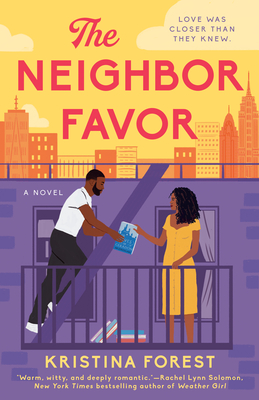
In this heart-fluttering romance by Kristina Forest, a shy bookworm enlists her charming neighbor to help her score a date, not knowing he’s the obscure author she’s been corresponding with.
Shy, bookish, and admittedly awkward, Lily Greene has always felt inadequate compared to the rest of her accomplished family, who strive for Black excellence. She dreams of becoming an editor of children’s books but has been frustratingly stuck in the nonfiction division for years without a promotion in sight. Lily finds escapism in her correspondences with her favorite fantasy author, and what begins as two lonely people connecting over e-mail turns into a tentative friendship and possibly something else Lily won’t let herself entertain–until he ghosts her.
Months later, still crushed but determined to take charge of her life, Lily seeks a date to her sister’s wedding. And the perfect person to help her is Nick Brown, her charming, attractive new neighbor, whom she feels drawn to for unexplainable reasons. Little does she know that Nick is an author–her favorite fantasy author.
Nick, who has his reasons for using a pen name and for pushing people away, soon realizes that the beautiful, quiet woman from down the hall is the same Lily he fell in love with over e-mail months ago. Unwilling to complicate things even more between them, he agrees to set her up with someone else, though this simple favor between two neighbors is anything but–not when he can’t get her off his mind.
The Neighbor Favor is a sweet contemporary romance, set in the world of book publishing and sure to set booklovers’ hearts a-flutter! A random email exchange between a book fan and the book’s author turns into a deeper connection… and while it ends badly, the two people involved still manage to find one another and explore what it means to open up in real life.
Lily emails the author of her favorite fantasy novel on a whim when she discovers that the mysterious author finally has a website. She loved his book, but it seems to have faded away into obscurity after publication by a small indie press. She’s thrilled to hear back from N. R. Strickland, and soon their correspondence turns into an ongoing series of honest exchanges, where each reveals more of themselves than they ever have to other people. But when “Strick” reaches the point where he’ll have to truly show himself to Lily, he breaks off contact abruptly and leaves her heartbroken.
Months later, Lily keeps running into the new guy who just moved into the apartment down the hall from her. And he’s hot. Oh, and seems like a really nice guy, and she’s even noticed him carrying books with him — always a good sign. Of course, he notices Lily too, despite her shyness and awkwardness around new people. As they strike up an acquaintance and set off some early sparks, Nick puts the brakes on — so Lily asks him (as you do) to help her find a date for her sister’s wedding. (It’s complicated).
Of course, Nick IS N. R. Strickland, and he realizes pretty quickly that this Lily is the Lily from the emails, and knows he should stay far, far away. His life is messy and he’s sure he’d be no good for her, so despite how much he likes her and how attractive he finds her, he’s determined to stay away. But fate seems to keep throwing them together, and their chemistry really is undeniable.
Meanwhile, both are dealing with their own family situations and career struggles — and yet, it’s only a matter of time before they get together. Even when they do, they have to deal with the fallout of hidden identities and cover-ups, and figure out whether they can truly trust enough to let one another in.
I liked quite a bit about The Neighbor Favor, although in general, I think I’ve run out of patience for romances where a significant lie is the main obstacle between the love interests. Nick could have come clean much earlier, or he could have stayed away. Getting involved but not being honest feels like an overworn romance trope, and it irritated me here. Nick and Lily are both such likable people — it’s no fun seeing them tied up in knots over a problem caused by base-level dishonesty.
On the other hand, the fact that these two are such book lovers, and especially, that they love fantasy so much, makes this book a delight. The author has the characters name-drop a ton of great books (Ella Enchanted, Riot Baby, How to Win the Time War, The Poppy War) — some of which I’ve read, some I’ve immediately added to my TBR list — and it’s a geeky joy to see them gush over how much they love their favorite books and authors. (Although, I was so frustrated to learn their shared favorite author, Elena Masterson, and her books, The Nermana Chronicles, are fictional — I want them to be real!) (And I’d also love to read Nick’s books, The Elves of Ceradon… it sounds amazing!)
I listened to the audiobook, and it was very entertaining, with gifted narrators. In the Lily chapters, the narration did become kind of screechy while voicing certain characters (especially one of Lily’s sisters), but otherwise, the narrators did a fine job bringing Lily, Nick, and their friends to life. A downside, however, is the fact that part one of The Neighbor Favor is the initial email relationship between Lily and Nick… and at least as it comes across via audio, it goes on for a really, really long time. Maybe it’s better in print, but listening to this endless email exchange gets really tiresome after a while.
Other than that, I enjoyed the audiobook. The plot moves quickly, and there are lots of fun side characters and situations that sparkle. Sure, the plot relies a bit too heavily on coincidence (really? he moved not only to New York but into Lily’s apartment building? and the very same floor?), but given how much I liked the characters, I decided to just accept it and enjoy the ride.
The Neighbor Favor is an entertaining story about relatable characters who may make questionable choices, but are still fundamentally good people. The author has a new book that released earlier this year, The Partner Plot, with Lily’s older sister as the main character. It’s supposedly a stand-alone, but in the same general world as The Neighbor Favor. While I didn’t love this particular sister in The Neighbor Favor, the description of this book makes it sound like it’ll be another fun one to experience.
Meanwhile, if you enjoy contemporary romance with booklovers front and center, be sure to check out The Neighbor Favor!
Top Ten Tuesday is a meme hosted by That Artsy Reader Girl, featuring a different top 10 theme each week. This week’s topic is Authors I’d Love a New Book From.
The prompt includes: These could be authors that have passed away, who have retired from writing, who have inexplicably gone quiet, or who might jut not be able to keep up with how quickly you read their books!)
My focus is on authors whose next book I’m eagerly awaiting. And while I can definitely come up with some no-longer-with-us authors I’d love another book from (hi, Jane Austen and L. M. Montgomery!), I’m sticking with living, breathing, writing authors for this list.
My ten are:
Diana Gabaldon — of course! Waiting for the 10th Outlander book…
Amy Stewart — She’s shifted her focus to non-fiction and artwork, but I’d love more in the Kopp Sisters series (or any new fiction, for that matter).
Becky Chambers — I haven’t found any info on what her next book will be, but I’ve loved every single book of hers so far.
Travis Baldree — I can’t wait to see what he writes next!
Lily Chu – I really enjoyed the audiobooks she’s released up to now, and hope there will be a new one soon.
Trish Doller – I loved the Beck Sisters trilogy (which I read last year), but haven’t been able to find info on whether there are any new books coming up.
Susanna Kearsley — On the other hand, there is a new book on the way for this author! But while it has a 2024 release date in the UK, we readers here in the US will have to wait until 2025.
Sarah Gailey — I don’t see any new books since 2022, and I’d love to read whatever they write next.
Fredrik Backman — Another author who doesn’t have a next book listed yet on Goodreads! Whatever it is, and whenever it arrives, I’m sure it’ll be great.
George R. R. Martin — I mean, I debated whether to even include GRRM on this list, because honestly, I’m not sure I even care any more. Will book #6 ever actually be released??
What authors made your list this week?
If you wrote a TTT post this week, please share your link!
My Monday tradition, including a look back and a look ahead — what I read last week, what new books came my way, and what books are keeping me busy right now. Plus a smattering of other stuff too.
Life.
Not that I expect anyone but me to notice… but yes, I skipped a week last week! This is my first Monday post since 5/6, and that’s because my husband and I took a quick trip to New York last weekend for a family graduation.
And while the graduation was the prompt for the weekend, we decided to make a mini-vacation out of it. We stayed in the city, did a ton of walking around Central Park, mid-town, and elsewhere, saw an amazing show, visited with various family members, and all in all, just lived it up!
Of course, the flying and overall hectic pace meant I was exhausted by the time I got home (and went straight back to work) — but it was worth it!
What did I read during the last (two) weeks?
With flights and some random moments of down time, I did manage to do quite a bit of reading (yay!). Here’s what I finished reading over the last two weeks:
The Paradise Problem by Christina Lauren: A total blast. My review is here.
The House that Horror Built by Christina Henry: A haunted house story with an unusual setup and main character. My review is here.
The Return of Ellie Black by Emiko Jean: A dark, disturbing thriller with plenty of twists. My review is here.
Where Have All the Boys Gone? by Jenny Colgan: A backlist book by a favorite author which shows (sadly) that some books just don’t stand the test of time. My review is here.
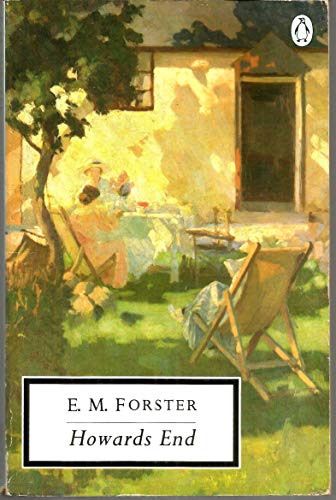
Howards End by E. M. Forster: My Classics Club Spin book for spring! Loved it. Check out my reaction, here.
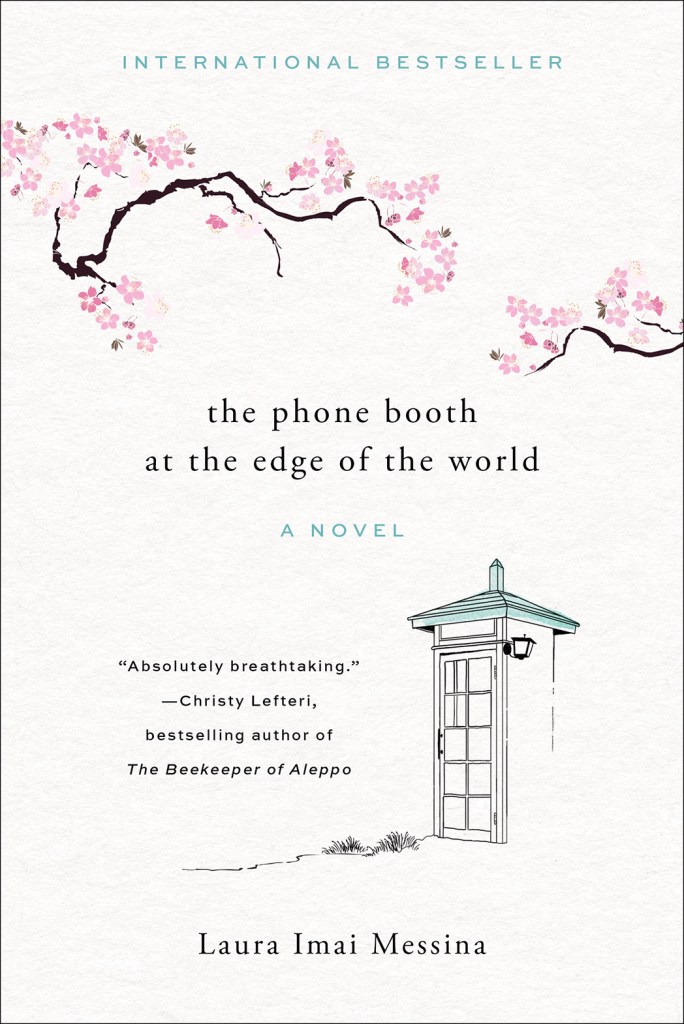
The Phone Booth at the Edge of the World by Laura Imai Messina: My book group’s book for May. Lovely and moving. Review to follow.
All’s Fair in Love and War by Virginia Heath: A cute Regency romance between a busy naval officer and the governess he hires to care for his nieces and nephew. My review is here.
And, from the prior week — a review for a book read earlier but not yet shared:
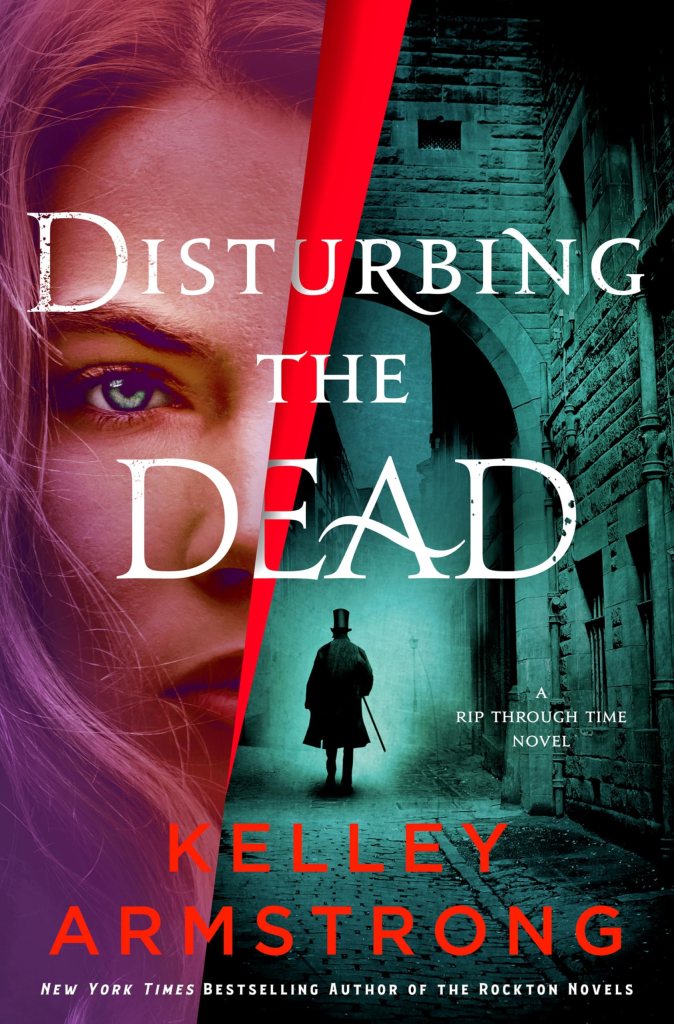
Disturbing the Dead (A Rip Through Time, #3) by Kelley Armstrong: Another excellent installment in a favorite series. My review is here.
Pop culture & TV:
Bridgerton is back! I don’t really understand why Netflix is releasing season 3 in two parts — I’ve already devoured the four episodes released this past week. and it’s frustrating to have to wait a few more weeks for more. Still… loving Penelope in the spotlight!
On a different pop culture note, my weekend in New York included a night on Broadway! We went to see & Juliet, and absolutely loved it. What a great production — so upbeat and entertaining! Highly recommended if you find yourself in New York, dying for a musical!
Fresh Catch:
Since I was away… no new books! (Okay, yes, I did grab a few deals for my Kindle, but no physical books purchased in the last two weeks)
What will I be reading during the coming week?
Currently in my hands:
Shelterwood by Lisa Wingate: Just getting started — seems like this will be interesting and intense.
Now playing via audiobook:
The Neighbor Favor by Kristina Forest: This audiobook popped up when I was browsing my library’s app, and since it was available right away, I decided to give it a try. Pretty fun so far, especially since book lovers are at the heart of the story.
Ongoing reads:
My longer-term reading commitments:
Daniel Deronda by George Eliot: My book group’s current classic read. We’re reading and discussing two chapters per week. Progress: 91%.
Damn Rebel Bitches: The Women of the ’45 by Maggie Craig: Over at Outlander Book Club, we’ve started a group read of this non-fiction book, discussing one chapter each Friday. Progress: 11%.
Title: All’s Fair in Love and War Author: Virginia Heath Publisher: St. Martin’s Griffin Publication date: May 28. 2024 Length: 384 pages Genre: Historical romance Source: Review copy courtesy of the publisher via NetGalley Rating:
⭐⭐⭐
Rating: 3 out of 5.
In the first installment of a Regency romp of a series, a governess who believes in cultivating joy in her charges clashes with the children’s uncle who hired her, only to find herself falling in love.
When the flighty older sister of former naval captain, Henry Kincaid, decides on a whim to accompany her explorer husband on an expedition to Egypt, he finds himself unwittingly left in the lurch with her three unruly children and her giant, mad dog. With no clue how to manage the little rascals, a busy career at the Admiralty that requires all of his attention, and no idea when his sister is coming back, Harry has to hire an emergency governess to ensure that everything in his ordered house continues to run shipshape. In desperation, he goes to Miss Prentice’s School for Girls prepared to pay whatever it takes to get a governess quick sharp to bring order to the chaos.
Thanks to her miserable, strict upbringing, fledgling governess Georgina Rowe does not subscribe to the ethos that children should be seen and not heard. She believes childhood should be everything that hers wasn’t, filled with laughter, adventure, and discovery. Thankfully, the three Pendleton children she has been tasked with looking after are already delightfully bohemian and instantly embrace her unconventional educational ethos. Their staid, stickler-for-the-rules uncle, however, is another matter entirely…
Georgie and Harry continue to butt heads over their differences, but with time it seems that in this case, their attraction is undeniable—and all is indeed fair in love and war.
All’s Fair in Love and War is a cutesy Regency romance with a kinda, sorta enemies-to-lovers vibe going on. The main characters aren’t truly enemies, but they definitely get off on the wrong foot and make terrible impressions on one another.
Harry is an up and coming naval officer run ragged by his duties, working practically around the clock in pursuit of an anticipated promotion (and ultimately, the goal of becoming admiral). When he gets saddled with his young nieces and nephew with no prior warning, he’s in desperate need of help, and is willing to pay any price to get a graduate of Miss Prentice’s School for Girls, reputed to turn out the very best governesses in England.
Who he ends up with is Georgina Rowe, a headstrong protégé of Miss Prentice who, despite years of excellent training, seems incapable of landing a governess job, largely due to her inability to stay quiet and meek when she disagrees or witnesses injustice. Harry’s desperate circumstances are a perfect opportunity for Georgie, and she starts her new job immediately… only to discover that the Captain and she have very different ideas of what constitutes a good learning environment for children.
Harry believes in discipline, serious study, and always following the clock (as evidenced by the two pocket watches he constantly wears). Georgie believes in a more holistic approach to learning, incorporating the children’s interests and getting them out of the classroom and into nature as much as possible. Harry is incensed to see his neatly ordered (dull) classroom transformed into chaos on the very first day of Georgie’s teaching tenure, and it would appear that her employment could be short-lived indeed.
And yet… the children seem to be thriving, and despite their anger and annoyance at one another, Harry and Georgie have both already noticed how very attractive they find one another. Smoldering looks abound, and before long, Harry thinks of Georgie in his more private moments as a siren, whose lure he’s having trouble resisting.
There are some pleasantly diverting scenes of Georgie’s chaotic influence on the household, comedy bits involving the children’s large dog, Harry being horrified by the lack of order, and even some sweeter moments when Harry and Georgie get a chance to recognize how great the other person is, underneath the outer annoying elements.
You can absolutely see where all this is going, but still, it’s fun to get there. Harry and Georgie are each hampered by their upbringings and consequent worldviews, so it takes quite a lot for each to unbend enough to recognize where they’re getting in their own way and what a compromise might look like.
The writing is a bit uneven. A generous view might be that the florid prose is showing the over-the-top thoughts of the characters, rather than just being how these scenes are written. Such as:
After their oddly charged moment on his landing ten days ago, the vixen had infested his mind and inserted herself so deep beneath his dermis that her essence had haunted him ever since.
And…
She was the sort who lured a man willingly onto the treacherous rocks of forever.
I also found some odd phrases here and there that sound much too modern, such as a man explaining that his wife has no boundaries, or a conversation between Harry and Georgie that starts “Well, this is awkward.”
All’s Fair in Love and War is a fun but not especially remarkable read. It’s light entertainment, but I didn’t love the writing style, and found the somewhat explicit sex scenes to be more cringe than steam. Still, it’s a quick book and a nice enough way to pass the time, and upbeat Regency romances in general have a way of boosting my spirits.
I see on Goodreads that this book is listed as first in a new series (Miss Prentice’s Protegees), which I assume will continue by focusing on Georgie’s friends in future books. I’m on the fence about whether I’ll continue, given that the writing didn’t totally suit my tastes. I also have an earlier book by Virginia Heath in my Kindle library (Never Fall for Your Fiancée), so if I do read more by this author, that’s probably where I’d go next. If you’ve read her books and have recommendations, please let me know!
Title: Where Have All the Boys Gone Author: Jenny Colgan Publisher: Avon Publication date: 2005 Length: 368 pages Genre: Contemporary fiction Source: Purchased Rating:
⭐⭐
Rating: 2 out of 5.
From New York Times bestselling author Jenny Colgan comes this hilarious romance about a woman who trades in the comforts of city life in hopes of finding love in a small Scottish town in the middle of nowhere.
Faced with the harsh reality that there are 25,000 more women than men in London, Katie’s dating prospects are at an all-time low. While she’s glad it’s not a man’s world anymore, it wouldn’t hurt if there were more eligible bachelors.
More likely to get murdered than married, according to gleeful media reports, Katie resigns herself to the fact that there’s no sex in the city for her and decides to head for the hills—or the Scottish Highlands to be exact. Despite the fact she’s never been one for muddy rain boats—and Fairlish is in the middle of nowhere—the tiny town does have one major draw: men. LOTS of them!
But while Katie relishes the chance to do battle with armies of admirers, she’s not excited about going head to head with her shady new boss, Harry. At least there’s the local eye-candy to distract her, including gorgeous newshound Iain. But he is at loggerheads with Harry, and she can’t afford to get on Harry’s bad side any more than she already has.
Life in the country might not be one big roll in the hay, but now that Katie has taken the plunge, can she ever turn her back on the delights of Fairlish and return to city life…?
Jenny Colgan is a go-to author for me, and since I’ve read all of her more recent books, I’ve decided to go deeper into the backlist. Sadly, Where Have All the Boys Gone? was not the fun reading/listening experience I was looking for.
In this book, originally published in 2005, a London-based young woman who’s suffered through bad date after bad date gets assigned to a temporary job in a small town in the Scottish Highlands. Along with gorgeous forests and landscapes, Fairlish is also home to men — lots and lots of them. And they all seem super excited by the arrival of Katie and her bestie Louise.
Much silliness ensues. Katie’s job in Fairlish is doing PR for the local forest preservation society, whose director seems to believe it’s better to keep quiet about the threat of a new golf course moving in rather than upsetting all the locals. Doesn’t exactly make sense, but okay. Katie has to convince him to go public and make a splash — otherwise, the greedy corporate types will be chopping down Harry’s beloved forests in the blink of an eye.
Meanwhile, Katie and Louise get into all sorts of mishaps, such as inadverently sharing secrets over a hot mic at a country fair, pissing off the local baker, and breaking the rules of their starchy, food-withholding boarding-house owner. Katie also gets drawn into a love triangle (the outcome seems pretty obvious), has to deal with a spoiled, irresponsible sister, and yet somehow manages to pull off a gala that’s the social event of the season (Ewan McGregor even attends!).
This is a lightweight novel, and it shows its age. At almost 20 years past its original release, Where Have All the Boys Gone? feels dated and full of cringey observations about dating, what men want, what women want, relationships, and more. Perhaps it might have felt more fun and breezy back in 2005; as a 2024 read, the attempts at humor seem slapstick, the sexism on display isn’t quaint or endearing, and there’s one element of the fundraiser that’s just awful. (A slave auction! They actually call it a slave auction. Noooooo. It’s just a terrible scene).
I usually love Jenny Colgan books, so it pains me to say that this one is a bust. I wholeheartedly recommend her more recent books — the Mure series is wonderful, the Little Beach Street Bakery books are terrific, and I loved the Sweetshop of Dreams books, not to mention some great stand-alones. But reading Where Have All the Boys Gone? has reminded me that sometimes backlist books are best left unexplored.**
**I do actually have a couple of other older Jenny Colgan books on my Kindle, so… never say never, but I’ll approach those with caution.
Title: Howards End Author: E. M. Forster Publication date: 1910 Length: 246 pages Rating:
⭐⭐⭐⭐⭐
Rating: 5 out of 5.
‘Only connect…’
Considered by many to be E. M. Forster’s greatest novel, Howards End is a beautifully subtle tale of two very different families brought together by an unusual event. The Schlegels are intellectuals, devotees of art and literature. The Wilcoxes are practical and materialistic, leading lives of “telegrams and anger.” When the elder Mrs. Wilcox dies and her family discovers she has left their country home—Howards End—to one of the Schlegel sisters, a crisis between the two families is precipitated that takes years to resolve. Written in 1910, Howards End is a symbolic exploration of the social, economic, and intellectual forces at work in England in the years preceding World War I, a time when vast social changes were occurring. In the Schlegels and the Wilcoxes, Forster perfectly embodies the competing idealism and materialism of the upper classes, while the conflict over the ownership of Howards End represents the struggle for possession of the country’s future. As critic Lionel Trilling once noted, the novel asks, “Who shall inherit England?”
Forster refuses to take sides in this conflict. Instead he poses one of the book’s central questions: In a changing modern society, what should be the relation between the inner and outer life, between the world of the intellect and the world of business? Can they ever, as Forster urges, “only connect”?
To be honest, I don’t feel especially qualified to “review” Howards End. It’s a beautifully written, thought-provoking, even funny book, and I loved it, really and truly. But I’m no literary expert — not even an English major!! — so I’ll skip any attempt at deep analysis.
Instead, I’ll just mention what I especially liked:
The contrast between the Wilcox and Schlegel families. The Wilcoxes are wealthy thanks to the nonstop busy-ness of business. Life is practical, efficient, and sensible. The Schlegels, on the other hand, are dreamers and art-lovers, especially sisters Margaret and Helen. Left comfortably wealthy after the death of their parents, they don’t have to worry about work or practicality. They enjoy discussions of the more esoteric elements of life.
Excellent dialogue: Whether it’s scenes of Margaret and Helen engaged in yet another argument, or pointed examples of how obtuse and stubborn the Wilcox eldest son Charles can be, the bickering and disagreements are quite entertaining.
Examinations of class, without preachiness: We also meet clerk Leonard Bast, who is desperate to claw his way out of poverty despite his low beginnings and extremely low-class wife. Leonard’s aspirations make him susceptible to the influence of the Schlegels, whose attempt at do-gooderism instead dooms poor Leonard to an even worse situation than where they found him.
Lush descriptions of places, especially the beauty of Howards End itself.
A wide cast of characters that provides peeks at so many aspects of the society of the time.
A few selections to enjoy:
We are not concerned with the very poor. They are unthinkable and only to be approached by the statistician or the poet. This story deals with gentlefolk, or with those who are obliged to pretend that they are gentlefolk.
A funeral is not death, any more than baptism is birth or marriage union. All three are the clumsy devices, coming now too late, now too early, by which Society would register the quick motions of man.
If a man cannot lead up to passion he can at all events lead down from it […]
The interlude closes. It has taken place in Charles’s garden at Hilton. He and Dolly are sitting in deckchairs, and their motor is regarding them placidly from its garage across the lawn. A short-frocked edition of Charles also regards them placidly; a perambulator edition is squeaking; a third edition is expected shortly. Nature is turning out Wilcoxes in this peaceful abode, so that they may inherit the earth.
I so enjoyed the writing and the story, and heartily recommend Howards End. I’d love to read it again with a book group at some point — there’s so much in it that I’d love to pull apart and really examine at leisure.
As is, I read this book via Serial Reader, intending to stick to one little installment per day (out of 40 installments in total). Instead, by about the halfway point, I was too impatient to take it slowly, and read straight through to the end.
All in all, a very happy experience with this round of the Classics Club Spin!
Several years ago, I watched the excellent four-part adaptation of Howards End, starring Hayley Atwell and Matthew Macfadyen. Now that I’ve read the book, I’d love to watch it again!
Title: The Return of Ellie Black Author: Emiko Jean Publisher: Simon & Schuster Publication date: May 7, 2024 Length: 320 pages Genre: Thriller Source: Review copy courtesy of the publisher via NetGalley Rating:
⭐⭐⭐⭐
Rating: 3.5 out of 5.
Detective Chelsey Calhoun’s life is turned upside down when she gets the call Ellie Black, a girl who disappeared years earlier, has resurfaced in the woods of Washington state—but Ellie’s reappearance leaves Chelsey with more questions than answers.
“I stayed up late into the night turning the pages until I learned the truth of what happened to Ellie—and gasped when Jean delivered a truly jaw-dropping twist.” —Jessica Knoll, New York Times bestselling author of Luckiest Girl Alive and Bright Young Women
It’s been twenty years since Detective Chelsey Calhoun’s sister vanished when they were teenagers, and ever since she’s been searching: for signs, for closure, for other missing girls. But happy endings are rare in Chelsey’s line of work.
Then a glimmer: local teenager Ellie Black, who disappeared without a trace two years earlier, has been found alive in the woods of Washington State.
But something is not right with Ellie. She won’t say where she’s been, or who she’s protecting, and it’s up to Chelsey to find the answers. She needs to get to the bottom of what happened to Ellie: for herself, and for the memory of her sister, but mostly for the next girl who could be taken—and who, unlike Ellie, might never return.
The debut thriller from New York Times bestselling author Emiko Jean, The Return of Ellie Black is both a feminist tour de force about the embers of hope that burn in the aftermath of tragedy and a twisty page-turner that will shock and surprise you right up until the final page.
The Return of Ellie Black is certainly a departure for author Emiko Jean, whose three most recent books are on the light, upbeat, quirky side. That description does not fit this new book at all — it’s a dark, disturbing book about abduction and abuse.
In The Return of Ellie Black, detective Chelsey Calhoun’s life is defined by sorrow. As a teen, her beloved older sister was murdered, and she’s never gotten over the pain. As an adult, Chelsey investigates missing girls, dedicating herself to these difficult cases to the point of obsession. Loss is a constant for Chelsey, and despite being married to a lovely man who supports her every way he can, Chelsey has an emptiness inside that’s constantly with her.
As the story opens, Ellie Black — missing for two years — suddenly turns up on a hiking trail. She’s disoriented, has wounds on her body, and is wearing a bloody sweatshirt. Ellie is clearly traumatized, and although she initially speaks with Chelsey, she soon declares that she wants to be left alone and refuses to participate in the investigation.
But Chelsey doesn’t want to give up. Whoever took Ellie is still out there, and what’s to stop them from taking another girl? As Chelsey refuses to leave the case alone, she unearths an unexpected pattern, and before long, it’s clear that Ellie is far from the only victim of this unknown predator — and it’s also clear that there still may be girls to locate and save before it’s too late.
(Content warnings in the next paragraph — skip if you prefer not to know)
The Return of Ellie Black is very, very dark. (I know I said that already, but it bears repeating). Content includes kidnapping, imprisonment, mind control, cult-like conditions, sexual abuse, rape, physical assault, intimidation, and more. I don’t often get too into the details when it comes to trigger warnings, but this may be a very upsetting book for some readers.
(End of content warnings)
The case itself is fascinating. Chelsey is a complicated, damaged character, and her childhood traumas are all very much a part of her day-to-day life, informing her investigations and her approach toward evidence and witnesses.
In sections interspersed throughout the book, we also get glimpses of Ellie’s memories of her experiences while a captive, and it’s very harrowing and difficult to read.
As for the mystery element, there are clues that come together, as well as false leads and missteps. I didn’t love the ultimate resolution, largely because there were too many coincidences and overlaps for my liking. (Can’t really say more without getting into spoiler territory…) Still, the suspense is terrific, and the mounting sense of time running out and looming disaster is very well developed. I was on the edge of my seat throughout, and couldn’t put the book down.
The Return of Ellie Black is a gripping thriller that’s almost painful to read — but I’m glad I hung in there. The story is unfailingly interesting, with some unusual and unexpected twists, and Chelsey herself is a terrific, complicated main character. If you enjoy thrillers, definitely check it out.












 Bookshelf Fantasies