Flashback Friday: Smoke and Mirrors

Flashback Friday is my own little weekly tradition, in which I pick a book from my reading past to highlight. If you’d like to join in, here are the Flashback Friday book selection guidelines:

  1. Has to be something you’ve read yourself
  2. Has to still be available, preferably still in print
  3. Must have been originally published 5 or more years ago

Other than that, the sky’s the limit! Join me, please, and let us all know: what are the books you’ve read that you always rave about? What books from your past do you wish EVERYONE would read? Pick something from five years ago, or go all the way back to the Canterbury Tales if you want. It’s Flashback Friday time!

My picks for this week’s Flashback Friday:

 Smoke and Mirrors

Smoke and Mirrors by Neil Gaiman

(published 1998)

From Goodreads:

In the deft hands of Neil Gaiman, magic is no mere illusion… and anything is possible. In this, Gaiman’s first book of short stories, his imagination and supreme artistry transform a mundane world into a place of terrible wonders — a place where an old woman can purchase the Holy Grail at a thrift store, where assassins advertise their services in the Yellow Pages under “Pest Control,” and where a frightened young boy must barter for his life with a mean-spirited troll living beneath a bridge by the railroad tracks. Explore a new reality — obscured by smoke and darkness, yet brilliantly tangible — in this extraordinary collection of short works by a master prestidigitator. It will dazzle your senses, touch your heart, and haunt your dreams.

I know I’ve said about a thousand times that I just don’t do short stories. Smoke and Mirrors is one of my happy exceptions. This collection includes pieces short and long, creepy and mysterious, and just about all are genius. In my humble opinion. My very favorites are Nicholas Was,  a one-page story that will guarantee that you never think about Christmas in quite the same way, Snow, Glass, Apples, the most disturbing version of the Snow White story that I’ve ever read, and The Wedding Present, which is actually a wonderful story embedded in the book’s introduction.

Really, you can’t go wrong with any of the stories in this superb collection. And coming from a person who just does not get into short stories, that’s saying a lot!

So, what’s your favorite blast from the past? Leave a tip for your fellow booklovers!

Note from your friendly Bookshelf Fantasies host: To join the Flashback Friday fun, write a blog post about a book you love (please mention Bookshelf Fantasies as the Flashback Friday host!) and share your link below. Don’t have a blog post to share? Then share your favorite oldie-but-goodie in the comments section. Jump in!

Thursday Quotables: A Spear of Summer Grass

tq7Welcome back to Thursday Quotables! This weekly feature is the place to highlight a great quote, line, or passage discovered during your reading each week.  Whether it’s something funny, startling, gut-wrenching, or just really beautifully written, Thursday Quotables is where my favorite lines of the week will be, and you’re invited to join in!

If you’d like to participate, it’s really simple:

  • Follow Bookshelf Fantasies, if you please!
  • Write a Thursday Quotables post on your blog. Try to pick something from whatever you’re reading now!
  • Link up via the linky below (look for the cute froggy face).
  • Make sure to include a link back to Bookshelf Fantasies in your post (http://www.bookshelffantasies.com).
  • Have fun!

tq5This week’s Thursday Quotable:

Don’t believe the stories you have heard about me. I have never killed anyone, and I have never stolen another woman’s husband. Oh, if I find one lying around unattended, I might climb on, but I never took one that didn’t want taking. And I never meant to go to Africa.

Source:  A Spear of Summer Grass
Author: Deanna Raybourn
Harlequin MIRA, 2013

What lines made you laugh, cry, or gasp this week? Do tell!

Link up, or share your quote of the week in the comments.

Wishlist Wednesday

Welcome to Wishlist Wednesday!

The concept is to post about one book from our wish lists that we can’t wait to read. Want to play? Here’s how:

  • Follow Pen to Paper as host of the meme.
  • Do a post about one book from your wishlist and why you want to read it.
  • Add your blog to the linky at the bottom of the post at Pen to Paper.
  • Put a link back to Pen to Paper somewhere in your post.
  • Visit the other blogs and enjoy!

My Wishlist Wednesday book is:

 The Abominable: A Novel

The Abominable by Dan Simmons
(to be released October 2013)

From Goodreads:

It’s 1926, and the desire to summit the world’s highest mountain has reached a fever-pitch among adventurers. Three young friends, eager to take their shot at the top, accept funding from a grieving mother whose son fell to his death on Mt. Everest two years earlier. But she refuses to believe he’s dead, and wants them to bring him back alive.

As they set off toward Everest, the men encounter other hikers who are seeking the boy’s body for their own mysterious reasons. What valuable item could he have been carrying? What is the truth behind the many disappearances on the mountain? As they journey to the top of the world, the three friends face abominable choices, actions–and possibly creatures. A bone-chilling, pulse-pounding story of supernatural suspense, THE ABOMINABLE is Dan Simmons at his best.

Why do I want to read this?

Sometimes, there’s nothing like a good horror story to really hit the spot! I haven’t read that much by Dan Simmons, but what I have been has been intense, disturbing, and scary. Perfect!

Plus, I’ve always been fascinated by Mt. Everest and the people who feel compelled to climb it. The idea of a horror novel centering on an early Everest expedition just sounds like something I’d love. Can’t wait!

So what are you doing on Thursdays and Fridays? Come join me for my regular weekly features, Thursday Quotables and Flashback Friday! You can find out more here — come share the book love!

Book Review: A Spear of Summer Grass by Deanna Raybourn

Book Review: A Spear of Summer Grass by Deanna Raybourn

Is this an awesome cover or what? I know, I know, don’t judge a book by its… but hey, this really is lovely. I love the white flapper dress, the image of a woman outside of her natural element, and the gorgeous African landscape. Aren’t you just dying to know what it’s all about? This is definitely what I would consider a successful cover — it draws you in, piques your interest, and makes you want to know more.

A Spear of Summer Grass opens in Paris, 1923, with a young woman in a great deal of trouble. Delilah Drummond thrives on scandal. The quintessential flapper, she’s the life of the party, basking in male attention, always the center of the action, never known to turn down a drink, a cigarette, or a lover. But when the latest uproar refuses to die down and Delilah’s escapades threaten to embarrass not just her hard-partying mother but her moneybags grandfather, drastic action is needed, and Delilah is packed off to her stepfather’s Kenyan estate to cool her heels and wait for the media vultures to move on to the new scandal du jour.

Delilah is not one to go quietly — anywhere — and as she settles into life in Africa, she makes waves among the colonial government officials as well as among the upper class white settlers in her social mix. Yet at the same time, Delilah is charmed by the wildness and danger of her African surroundings and throws herself into the responsibilities of being mistress of an estate, treating the Kikuyu and Masai tribespeople with friendship and dignity.

Not that Delilah has abandoned her wild ways. She attracts the eyes of every adult male in the vicinity, and proceeds to wrap each and every one around her little finger, keeping them as objects of flirtation and sometimes more, but never letting anyone close enough to actually touch her heart. Only one man, enigmatic hunter Ryder White, seems immune to her wiles, and it’s this man who both captivates Delilah and is perhaps an equal for her strong-willed nature.

Delilah and Ryder have a bit of a Scarlett and Rhett vibe going for them. She’s used to being the belle of the ball, accustomed to having every man fall all over her to please and pamper her, hoping for just a bit of her attention and favor. Ryder is somewhat of a scoundrel; he’s respectable enough, but he goes his own way, society’s opinion be damned. They attract, repel, and frustrate each other. The physical attraction is certainly strong, and Ryder is perhaps the one man who can hold his own against Delilah. The outcome of the will-they, won’t-they dynamic is never really in question — it’s clear that these two are made for one another — but the getting there is tumultuous, to say the least.

There’s a lot to really like about A Spear of Summer Grass. The African landscapes and wildlife are described in lush detail. You can practically hear the wind through the savannah and smell the wildness in the air. It’s easy to see how the various characters, often against their will, get caught up in their lives in Kenya and can’t pull themselves away. I enjoyed Delilah’s transformation from spoiled party princess to something more, a woman of character. Delilah’s past is hinted at from the start, but over the course of the book we come to understand the suffering she endured as a result of world war, the losses that caused her to wall off her heart from any hint of vulnerability, and the slow evolution she undergoes as she starts, finally, to live and feel once again.

Ryder is, of course, a typical manly man with a heart of gold, quick to punish wrongdoers but dedicated to protecting the weak, whether people or animals, and righting wrongs wherever he sees them. Of course, he’s incredibly handsome in a rugged, Indiana Jones-ish way, and that doesn’t hurt in the least.

The author does a skillful job of portraying the flavor of expatriate life in colonial Kenya, showcasing the decadent lifestyle of the rich, white settlers, their loose morality, and their unwise indifference to the non-white majority of the country. The scandals, gossip, drinking, and sexual looseness all work perfectly to create a sense of a society adrift and out of touch with the world around them. Visually, there are some remarkable small moments, such as Delilah’s fine silks and delicate shoes falling victim to the blood and dust of Africa — details that convey deliciously the feeling of life lived on the edge of the wild.

What worked less well for me was the inevitability of the romance between Delilah and Ryder. The battle of wills notwithstanding, it’s obvious from the start that Delilah and Ryder are going to end up together, and there was nothing about their developing relationship that didn’t feel like something I’ve seen before. In fact — although this might be contrary to how these things usually go in popular fiction — I think A Spear of Summer Grass might have been a stronger story without the romantic subplot. In and of herself, Delilah is an interesting, strong-willed, trouble-making heroine, and I would have been perfectly content reading a novel that focused on her personal journey without the complication of her lovers and admirers.

That said, I did absolutely enjoy reading A Spear of Summer Grass, so much so that I stayed up past midnight to finish it and had dreams full of safaris and African skies. After finishing this book, I discovered that the author has also published a prequel, Far in the Wilds, as an ebook, and yes, of course I’m going to read it!

Review copy courtesy of Harlequin MIRA via Netgalley.

Top Ten Tuesday: Top Ten Topics That Draw Me To A Book

Top Ten Tuesday is a meme hosted by The Broke and the Bookish, featuring a different top 10 theme each week.

This week’s theme is Top Ten Words/Topics That Instantly Make Me Buy/Pick Up A Book. I can’t say that there are any words or topics that make a book an automatic buy for me — but here are a few that at least make me think about it!

These topics will get me to pick up the book, read the back cover, and at least consider whether I want to read it:

1) Time/Time Travel: I’m an absolute sucker for a good time travel story. Really, include any plot detail that’s at all timey-wimey, and there’s a good chance I’m going to want to check it out. Tops for me are the Outlander series by Diana Gabaldon, The Time Traveler’s Wife by Audrey Niffenegger, Replay by Ken Grimwood, any of Susanna Kearsley’s books, and The Revisionists by Thomas Mullen.

2) Scotland: If it’s set in Scotland, particularly Scotland of a few centuries ago, I at least want to hear about it. Kilts? Highlands? Clans? Castles? Yum. Best examples: Outlander (again) and The Winter Sea by Susanna Kearsley (yes, again).

3) Secret societies: I love books with mysterious organizations secretly pulling the strings behind the scenes and controlling, oh, just about everything. Great examples: The Guild in The River of No Return by Bee Ridgway; The Checquy in The Rook by Daniel O’Malley; the Department of Historical Integrity in The Revisionists.

4) Manuscripts or rare books: I adore books about books! I love stories set in musty old libraries, where the characters chase after obscure old documents and the stakes are life and death. A few great ones: A Discovery of Witches by Deborah Harkness; The Historian by Elizabeth Kostova; The Physick Book of Deliverance Dane by Katherine Howe.

5) Sisters/Twins: Let me be clear — I don’t actually find twins creepy in real life. Yet in books, they’re often at the center of twisted psychological thrillers or horror stories. Two good examples: The Night Strangers by Chris Bohjalian and Her Fearful Symmetry by Audrey Niffenegger. (Don’t even get me started on Jaime and Cersei Lannister — that is not what I had in mind!).

6) Retellings: Either retellings of classics (Pride and Prejudice and Zombies, anyone?) or — especially — fairy tale retellings. I’ll be honest, the field is getting a little overcrowded right now, but if it’s a good one, I’m in. My favorites would be anything by Robin McKinley, especially Beauty and Spindle’s End.

7) Graveyards/Cemeteries: Ooh, spooky! Best examples: The Graveyard Book by Neil Gaiman; Alive in Necropolis by Doug Dorst; Her Fearful Symmetry by Audrey Niffenegger.

8) Wheels/Gears/Clockworks: Although interestingly enough (or not), I didn’t care for the Cassandra Clare/Clockwork books. But I do love a good use of gears and gadgets, generally in a steampunk setting, as in All Men of Genius by Lev AC Rosen or The Parasol Protectorate series by Gail Carriger.

9) Fae/Faeries: Usually with a hint of menace. If there are faerie curses or changelings involved, all the better. Favorite examples: Impossible by Nancy Werlin, Jonathan Strange and Mr. Norrell by Susanna Clarke, Some Kind of Fairy Tale by Graham Joyce, The Stolen Child by Keith Donohue.

10) End of the world/Natural disasters: I just can’t turn away from a good end-of-the-world-as-we-know-it story. Volcanoes, asteroids, flu epidemics, what have you — when a catastrophe knocks out civilization as we know it and survival is on the line, there’s a good chance I’m going to want to read about it. Favorite recent examples: The Dog Stars by Peter Heller; The Last Survivor series by Susan Beth Pfeffer; The Age of Miracles by Karen Thompson Walker; Ashfall by Mike Mullin.

So, no, I don’t have any words or topics that are ALWAYS going to get me to buy a book. But if the plot includes one of the topics on my top ten list, there’s a good chance I’ll at least consider it.

How about you? What topics are you always (or almost always) ready to read about? Sound off!

If you enjoyed this post, please consider following Bookshelf Fantasies! I’m so happy you stopped by!

The Monday agenda 4/29/2013

MondayAgendaNot a lofty, ambitious to-be-read list consisting of 100+ book titles. Just a simple plan for the upcoming week — what I’m reading now, what I plan to read next, and what I’m hoping to squeeze in among the nooks and crannies.

How did I do with last week’s agenda?

A Monster Calls by Patrick Ness: Done! My review is here. Beautiful, heart-breaking book.

Attachments by Rainbow Rowell: Done! Delightful. My review is here.

A Spear of Summer Grass by Deanna Raybourn: I’ve read about 30% by now. So far, so good.

Fresh Catch:

First of all, this arrived:

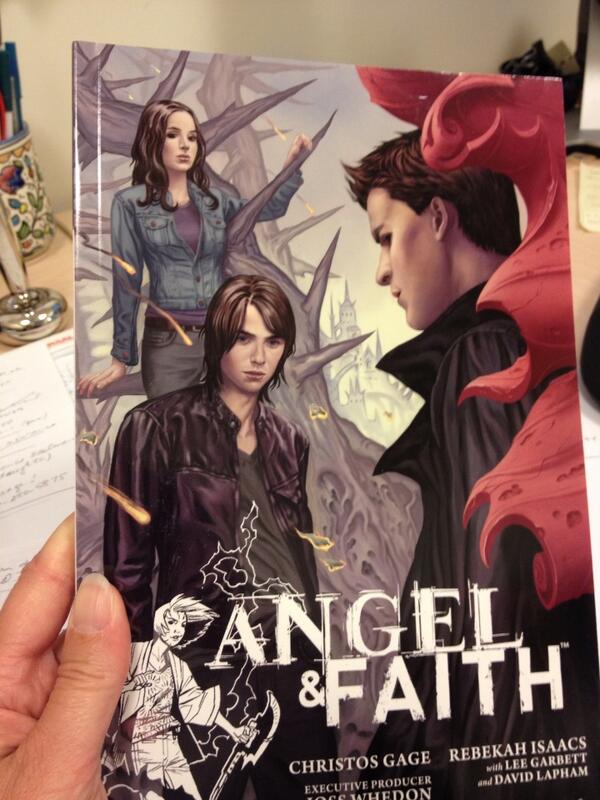
Angel & Faith, volume 3: Family Reunion. My inner fangirl nerd is squealing with delight right now.

I did end up with a few library books this week as well. I don’t understand how that happened — all I did was stop at the library to return a book, and somehow I ended up with these:

I just can’t get ahead.

What’s on my reading agenda for the coming week?

After A Spear of Summer Grass, I need to get through a few more books sitting on my Kindle, including The First Rule of Swimming and Questions of Travel. But I’m highly fickle these days, as well as easily distracted, so who knows what shiny new cover may catch my eye?

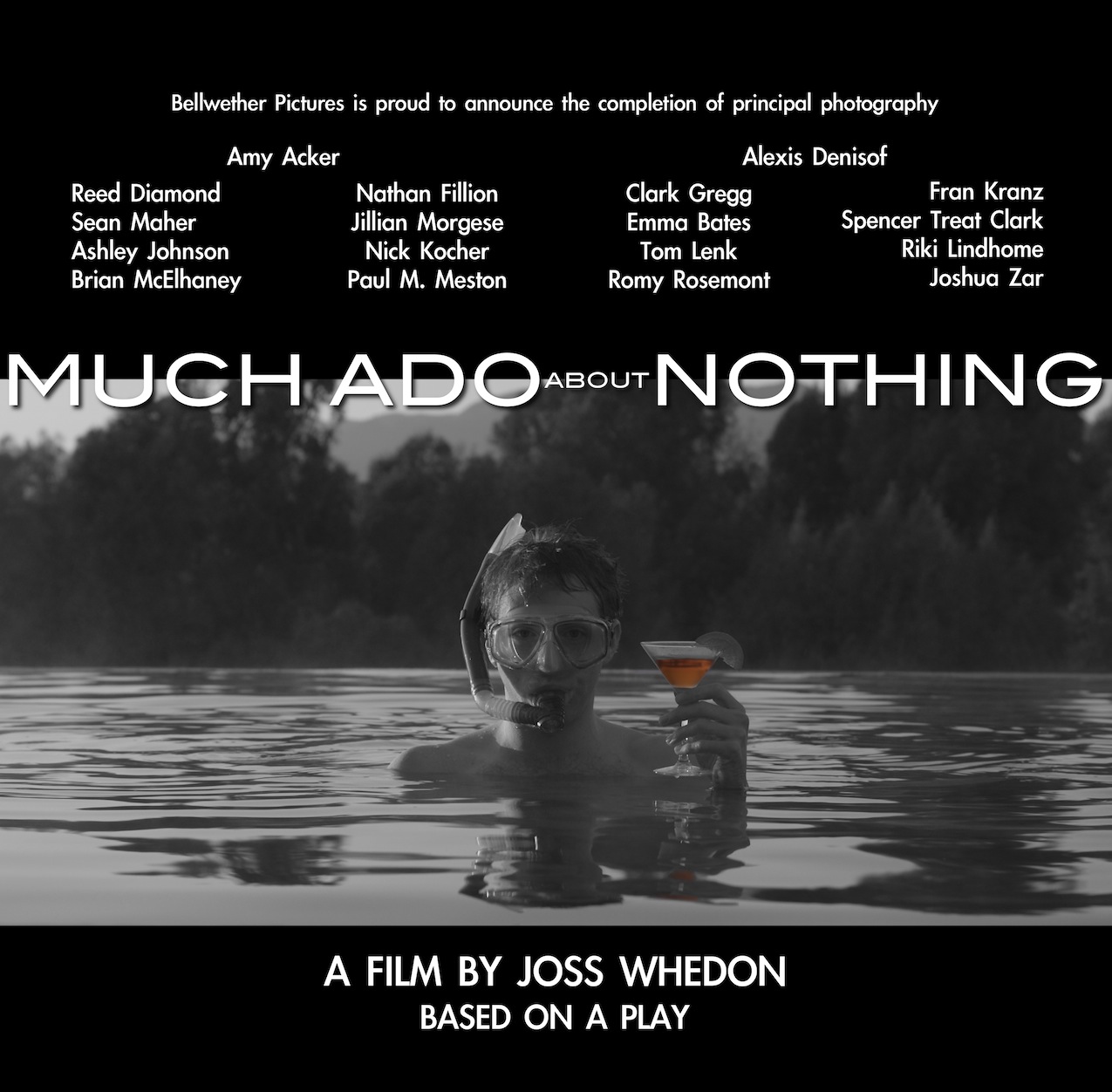
On the “call me ambitious” front, after seeing the amazing new movie version of Much Ado About Nothing this past weekend (see my reaction here), I’ve decided that I really need to read a Shakespearean comedy or two to make up for what are apparently some very sad deficiencies in my education. So, I pulled my massive Riverside Shakespeare off the shelf and plan to read through Much Ado in the next week or two. And I’m sure I’m going to be perfectly insufferable about the whole thing.

My son and I are continuing with The Magician’s Nephew by C. S. Lewis. We’ve just about reached the half-way mark at this point, and we’re finding it a quick and entertaining read.

So many book, so little time…

That’s my agenda. What’s yours? Add your comments to share your bookish agenda for the week.

Much Ado: A fangirl goes to the movies

Today, I had the absolute pleasure of seeing the newest movie version of Much Ado About Nothing, which was screened as part of the San Francisco International Film Festival.

What can I say? It was fantastic.

I’m an unabashed fangirl when it comes to Joss Whedon and his world, and the fact that so many actors from the Whedon-verse — Amy Acker, Alexis Denisof, Fran Kranz, Nathan Fillion, Sean Maher, and more — had key roles in Much Ado made it all the sweeter to see.

On top of which, I’m a book geek with a fondness for Shakespeare, and although I’m much more familiar with the tragedies, I’m always up for a good Shakespearean comedy. Much Ado About Nothing happens to be one that I’ve never read and had never seen before, and I did have a bit of trepidation ahead of time as to whether I’d actually “get” it. Not to worry, though. From the opening scenes, it was easy to pick up the rhythms of the language, and it all flowed beautifully.

Filmed in black and white in a modern setting, the art direction and style of the movie is contemporary and quick. The staging allows the actors to shine, particularly in their use of body language and interactions, and their comedic timing is impeccable. Nathan Fillion in particular was hilarious, Amy Acker and Alexis Denisof were sharp and witty as Beatrice and Benedick, and Fran Kranz as the love-smitten Claudio was both puppy-dog sweet and quietly dangerous. Really, I could go on and on about the cast, but suffice it to say that there was not a one that I could find fault with. Their line deliveries were as smooth as they’d be if they were, well, in some other Joss production. For the man who perfected the art of quippiness, directing Shakespeare must have been a natural fit.

Both Amy Acker and Alexis Denisof were present for the screening, both to introduce the film and to participate in a Q&A session afterward. They were funny and charming, and got Joss on speakerphone before the movie to say hi to the audience. Adorable.

So here’s the trailer:

The movie opens June 7th in New York, Los Angeles, and San Francisco. Don’t miss it!

A Monster Calls: Review and reflection

Book Review: A Monster Calls by Patrick Ness

What can I say about a book like this? Beautiful and awful are two words that come to mind, but neither do justice to the power of A Monster Calls.

A Monster Calls is the story of Conor O’Malley, a 13-year-old so isolated by suffering that he’s become practically invisible to the world around him. Conor’s mother has cancer, and despite her cheery reassurances, the latest round of chemo does not seem to be going well. Conor’s father departed years ago for a new life with a new wife and baby in America, and Conor lives alone with his mother in a small English town, where he attends school in a fog of despair and loneliness.

At night, though, the nightmares start. Until one night, Conor is visited by a monster — a giant creature formed from the yew tree that Conor can see from his bedroom window. The monster seems like a creature from hell, bent on destruction and threatening to eat Conor — but what it wants is a story. The monster tells Conor its conditions: The monster will tell Conor three different stories, and then it will be Conor’s turn to tell the monster a story, but it must be the truth. Conor knows which story the monster wants from him, and it’s the one thing he absolutely does not want to give voice to.

The monster isn’t all that it seems, and as the story-telling proceeds, the monster becomes the voice of reason and honesty for Conor. Through the monster, Conor is forced to confront his own rage and sorrow, the fact that belief in something — anything — matters, and the subjective nature of terms like “good” and “evil”.

The illustrations in A Monster Calls are stark and glorious. Jim Kay’s black and white inks are stunning — scary and bleak, portraying the monster as otherworldly and frightening, yet also as something natural that seems to belong in the mundane world of garden sheds, grandfather clocks, and schoolyards.

I don’t know that I can really articulate my feelings about this book without going off on a personal tangent. I know that I have certain emotional triggers in books, and A Monster Calls hits all of  the most powerful ones for me.

When I was eleven, my mother was diagnosed with breast cancer. After four years of struggle, illness, and suffering, she died at the young age of forty-four. I was fifteen at the time, and although many years have passed and for the most part I don’t actively think about those years any longer, the emotions still lurk below the surface, never far away. Reading A Monster Calls brought my experiences from those years right back to me.

Conor is overwhelmed by rage — a rage that literally destroys whatever is in its path. All-consuming too is his guilt, a guilt that fuels his nightmares and drives him further and further from the people around him. He goes through the motions of a normal kid’s life, but it’s as if he’s an alien in the midst of humans. His experiences and inner life are so separate, so “other”, that it’s no wonder the kids at his school seem to see right through him. He’s scared for his mother, but he’s also scared for himself. He wants to keep her with him, but he wants her to stop suffering. He’s angry, he’s sad, and he just has no idea what to do with all of the emotions that threaten to engulf him at any second.

I get it. The scariness of watching the parent you count on turn into someone who needs protection. The helplessness of seeing a good and kind person suffer — and seeing that person worry more about her child’s well-being than her own. Being on the receiving end of well-intentioned reassurances that cannot possibly come true. It’s awful and it’s painful and it’s a reminder, especially to a child, of just how little in life can be controlled.

So yes, I read A Monster Calls and could barely breathe by the end. Reading Conor’s story was an instant and visceral reminder of my own experiences during the terrible years of my mother’s illness. The book feels real and true. It’s not a soapy melodrama, but an honest look at the messy emotions that are bundled up in loss and grief.

In spare but lovely prose, Patrick Ness captures all of this and more, and the illustrations are stunningly perfect. A Monster Calls is an award winning children’s book, geared for ages 12 and up, but it’s certainly something that adults should seek out as well.

My 10-year-old, having seen me absorbed by this book all week, has asked if I’d read it to him when I finished. I think he’s mostly fascinated by the artwork — understandably so. I hate to turn down a request for a book. As someone who always read “up” (grabbing whatever books my older sister was reading whenever she wasn’t looking), I don’t usually pay too much attention to recommended age ranges for reading materials. And yet, I don’t think my kiddo is really ready for something like this yet. It’s one thing to read about loss and grief in a fantasy setting such as Harry Potter — quite another to read about a boy going through a horrible loss in a real, recognizable world. I do think I’d like him to read A Monster Calls eventually — but perhaps in a few years, when he’s ready to read it on his own and really be prepared to think and reflect about Conor’s experiences.

According to the Author’s Note, the characters and premise of this story were created by the author Siobhan Dowd, who herself died from cancer before she was able to bring the concept to fruition. Patrick Ness was asked to take her initial concepts and turn them into a book, and he has done so in way that feels like both a beautiful achievement on its own and a lovely tribute to Siobhan Dowd. A Monster Calls is quite an accomplishment on so many levels, and all I can say is that it shouldn’t be missed.

Flashback Friday: The Basil and Josephine Stories

Flashback Friday is my own little weekly tradition, in which I pick a book from my reading past to highlight. If you’d like to join in, here are the Flashback Friday book selection guidelines:

  1. Has to be something you’ve read yourself
  2. Has to still be available, preferably still in print
  3. Must have been originally published 5 or more years ago

Other than that, the sky’s the limit! Join me, please, and let us all know: what are the books you’ve read that you always rave about? What books from your past do you wish EVERYONE would read? Pick something from five years ago, or go all the way back to the Canterbury Tales if you want. It’s Flashback Friday time!

My picks for this week’s Flashback Friday:

 The Basil and Josephine Stories

The Basil and Josephine Stories by F. Scott Fitzgerald

(Stories first written from 1928 – 1931; collection published 1962)

From Goodreads:

Fourteen of F. Scott Fitzgerald’s best-loved and most beguiling stories, together in a single volume In 1928, while struggling with his novel Tender Is the Night, Fitzgerald began writing a series of stories about Basil Duke Lee, a fictionalized version of his younger self. Drawing on his childhood and adolescent experiences, Fitzgerald wrote nine tales that were published in the Saturday Evening Post about his life from the time he was an eleven-year-old boy living in Buffalo, New York, until he entered Princeton University in 1913. Then from 1930 to 1931, with Tender Is the Night still unfinished, Fitzgerald wrote five more stories (also published in the Post) that centered around Josephine Perry, Basil’s female counterpart. Although Fitzgerald intended to combine the fourteen Basil Lee and Josephine Perry stories into a single work, he never succeeded in doing so in his lifetime. Here, The Basil and Josephine Stories brings together in one volume the complete set, resulting in one of Fitzgerald’s most charming and evocative works.

F. Scott Fitzgerald is certainly having a moment, isn’t he? Between the soon-to-be-released movie extravaganza of The Great Gatsby and the newly published Z: A Novel of Zelda Fitzgerald by Therese Anne Fowler,  there’s an absolute Fitzgerald revival going on right now. Which got me to thinking… Yes, I read The Great Gatsby in high school, just like everyone else. I also, at various times, read This Side of Paradise, The Beautiful and the Damned, and Tender Is the Night. But the Fitzgerald work that has really stuck with me over the years is the collection of stories found here in The Basil and Josephine Stories. These stories, focusing on two young, privileged characters and their pursuits and struggles, beautifully convey a time and a society that continue to fascinate. This is one story collection that I don’t mind reading, over and over again.

So, what’s your favorite blast from the past? Leave a tip for your fellow booklovers!

Note from your friendly Bookshelf Fantasies host: To join the Flashback Friday fun, write a blog post about a book you love and share your link below. Don’t have a blog post to share? Then share your favorite oldie-but-goodie in the comments section. Jump in!

Book Review: Attachments by Rainbow Rowell

Book Review: Attachments by Rainbow Rowell

Attachments is a love story, albeit one that’s a bit outside the usual boy-meets-girl mold. In this version of 20th century love, boy doesn’t meet girl, exactly — he snoops through her email files instead.

Lincoln is a midwestern loner in his late twenties, so badly burned by getting dumped by his first love during their freshman year of college that he’s just never tried again. Lincoln lives with his mom, works the graveyard shift in the IT department of a newspaper, and has a social life that consists primarily of Saturday night Dungeons & Dragons sessions. When Lincoln is assigned to work internet security, his job mainly entails reviewing emails flagged for violating company policy and sending warning memos to the offenders. But mostly, he sits around with not much to do, killing time in his lonely workspace and having dinner in the break room with Doris, the 60-something-year-old vending machine lady — who, incidentally, has a better love life than Lincoln does.

But as soon as Lincoln reads the first flagged email between Beth, a movie reviewer, and Jennifer, a copy editor, he’s captivated. He knows he should warn them and move on, but instead, he gets caught up in their daily chit-chat, their ruminations on life, their ongoing relationship woes, and most of all, their easy yet deep friendship. At some point, there’s no return: There’s no way for Lincoln to suddenly tell them to stop sending personal emails without revealing that he’s been reading their emails for months, and so it goes on. On the one hand, Lincoln gets more and more deeply involved and begins to really fall for Beth — but on the other hand, Lincoln starts to really despise himself for what he can no longer consider anything but creepy snooping.

There are surprises in store. We hear about Lincoln only from his own perspective, and he really does not think well of himself. So when Beth starts emailing Jennifer about the cute guy at work, it takes a few beats to realize that they’re discussing Lincoln. Wait, he’s cute? He’s big and handsome, kind of like the Brawny paper towel guy? You’d never know it, considering how little Lincoln thinks of himself.

Beth’s got self-image issues too. She’s been involved with a gorgeous guitar player for years — but most of the time, he barely knows she’s there. She wants to get married, but mostly he just wants to perform and listen to music. Beth’s sisters are married, her friends seem to all be married or on their way to the altar, she thinks her upper arms are hideous, and she has a sad collection of bridesmaids dresses that taunt her from the closet.

This is, ultimately, a very romantic book, and so it’s clear early on that Beth and Lincoln are destined to finally connect. How they get there and what they go through is where all the fun lies. Attachments is a quick, quirky read. The Beth-and-Jennifer parts of the story are told via their emails, and really, these two women are people you’d just love to hang out with. They’re funny, they’re snarky, and they’re really there for each other, with an honesty that only best friends can truly afford. Lincoln’s chapters are the meat of the book, and their narrative flow is both sad and humorous. You can’t help but root for Lincoln as he takes baby steps toward manning up and moving forward — look, he went out to a bar! Look, he arranged a weekend outing! Look, he started going to the gym and bought some new clothes!

Attachments starts out in late 1999, with the world starting to seriously worry about Y2K and whether technology will grind to a halt. There ‘s a charm to the millenial internet jargon, the coding frenzies, the gradual introduction of email privacy (or lack thereof). This book was written in 2011, and I’m not entirely sure that I think the nostalgic look back at 1999/2000 is really necessary to the storyline — although I suppose things couldn’t happen this way today, with our firewalls, spam filters, and tech-savvy social media obsessions. There’s a certain sweet innocence to the emails between Beth and Jennifer, blithely talking about their personal lives with no thoughts about anyone reading their words, forwarding their emails, or posting embarrassing quotes on their Facebook walls.

Office settings are rare in contemporary fiction as anything but backdrop — the places the main characters go when they’re not on stage in their homes or other more action-packed or glamorous settings. In Attachments, the office is a bit of a social melting pot, where Lincoln is finally dragged out of his cocoon and forced to acknowledge himself as a person who needs and wants other people.

I decided to read Attachments after reading Eleanor & Park, the new (and amazing) young adult novel by Rainbow Rowell. I loved the author’s voice and approach to her characters so much that I decided to seek out anything else she’d written, and as it turned out, Attachments was her first and only other novel. If not for Eleanor & Park, I doubt I would have come across Attachments… but I’m so glad that I did.

Attachments is sweet, romantic, funny, and warm-hearted, and surprised me by being much more affecting than I’d anticipated. It’s a great love story, well-suited to a lonely world in which people connect best via their devices and screens. At its heart, Attachments is about real, live, human connection — how rare it is to find it, and how special it can be. Check it out! It’s a quick, satisfying read that’ll leave you with a smile on your face.

Rainbow Rowell has a new book, Fangirl, due out in the fall. You can bet I’ll read it!

If you liked this post, please consider following Bookshelf Fantasies!