
A few weeks ago, I wrote about the book Brazzaville Beach for my Flashback Friday post. And I discovered that my dominant thoughts about this book had less to do with the plot itself and more to do with the memories I have associated with the process of reading it. I read Brazzaville Beach during a family vacation to Israel one summer, several years ago, when the weather was unbearably hot and we spent quite a bit of time visiting my husband’s relatives. My son was still a toddler at that point and couldn’t take the heat very well, so by mid-afternoon each day, I’d usually take him off for a nap in one of the spare rooms, crank up the AC as high as it would go, and then, while he slept, I’d pull out my book and read. As soon as I picked up my copy of Brazzaville Beach again, I was tranported back to that little room, the cold air, and the sensation of snuggling in bed with my napping child.
In thinking about this, I started considering the ability that books have to transport us to another time and place. I don’t mean the obvious: When I read the Outlander series, for example, I imagine myself wandering through the Scottish Highlands. When I read Anna and the French Kiss, I couldn’t help daydreaming about walking the boulevards of Paris — and perhaps stopping for a baguette and café au lait along the way.
But that’s not what I’m talking about. Instead, what I really mean here is how strongly a particular book can evoke the memory of the time and place in which it was read. Of course, this makes me think of my high school French teacher, who — bless her heart (luv ya, Mademoiselle Littlefield!) — poured her heart and soul into getting us to understand not just French grammar but also what it means to be French. I remember her detailed explanations of Marcel Proust and his madeleines — those particular cookies that, with one bite, evoke such strong involuntary memories of a time, a place, and sensations of pleasure and love.
I think books work this way for me. On one level, there’s the pleasure of remembering a particularly beloved book, thinking about the characters, the plots, the feelings I experienced while reading the story, the puzzles and thought processes involved in figuring out or responding to an especially thorny dilemma or mystery. But on another level, my responses to certain books have almost nothing to do with the book’s content itself and everything to do with where I was and what I was experiencing at the time that I read it.

A Yosemite meadow. Not a bad place for a good book.
Another example: If you’ve read any of my top 10 lists or other posts about favorite things, you’ll know that I’m an ardent fan of Diana Gabaldon’s Outlander series. But here’s a twist to why I love these books so much. When I first picked up Outlander, it had been sitting on my shelf for several months already — a somewhat beat-up mass market paperback edition that I’d found at a used book sale for $2. My husband, son, and I were packing for a family camping trip and I needed something I could throw in my bag and not worry about too much, but preferably something that would take me a few days to read. In went Outlander. So there we were, on the outskirts of Yosemite, staying in a rustic cabin on the edge of a meadow. Each morning, I’d grab a thermos of coffee and head out to a large rock out in the meadow, to bask in the sun, get my morning infusion of caffeine, and read for a little while before starting our day’s activities. And that’s where I started Outlander. I’ve read the book several times since, but each time I pick it up, my first association is with that rock in the sun, spring breezes, mountain fresh air, and peace. Lovely! I have to honestly say that those memories are part and parcel of my Outlander reading experiences — not that I wouldn’t have loved the book anyway, but I think those connections add to the reasons why it’s so special to me.
And another, maybe less positive but still strong (and forgive me if I’m entering TMI territory here): I read The Pact by Jodi Picoult about 12 years ago, while I was spending a few days at home in the midst of going through fertility treatments while trying to conceive my beloved son. The Pact is certainly a difficult book to read, regardless, but in that moment, so focused on children, it was perhaps a very bad choice to read a book about teen suicide and parents struggling to cope with the loss of a child. When I think about The Pact now, my strongest memories are of my experience at the time — sitting in the window seat of my house, trying to distract myself, but never really able to stop wondering whether my treatments had worked.
Other memories as well: Under the Dome by Stephen King makes me think about the hospital waiting room where I sat reading it while waiting to hear the outcome of a relative’s surgery. When I think about Deerskin by Robin McKinley, I think about a flight to visit my father soon after he’d retired and moved to Florida. A Discovery of Witches by Deborah Harkness makes me think of the hotel balcony in Sedona, Arizona where I sat reading each afternoon on vacation, watching the sun set over the red rocks.

Sedona views. Perfect reading location.
Tastes, smells, sounds — all can take us back to a particular time or place, bring up memories of what we were doing, who we were with, how we were feeling. And I think books work the same way. A book can be savored for its own sake, but on top of that, there are the emotions and connections associated with experiencing a particular book at a certain significant time or location in our lives.
I’d love to hear the experiences of other readers. Do you have certain books that you especially cherish because of where you were when you read them? Please share your thoughts!


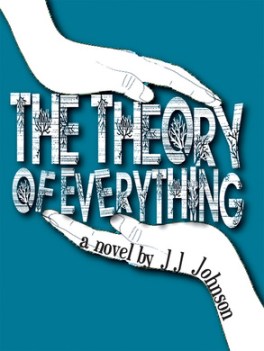 I stumbled across this sweet, sad young adult novel at my library, quite by chance, and just happened to take a peek inside. Once I saw the Venn diagrams, I was hooked!




 Verity Grey is a 29-year-old freelance archaeologist, newly resigned from the British Museum and ready for a new assignment. When invited to interview for a secret new project in the Scottish Borderlands, Verity is intrigued… and intrigue turns to shock when she finds out the purpose of the dig. Peter Quinnell, considered by many to have detoured from the straight path of sanity in the wake of personal tragedies, is on the hunt for the fabled Ninth Roman Legion, which disappeared without a trace centuries earlier somewhere in the Northern British Isles. Peter thinks he’s found the Ninth at last, and he wants Verity on his team. His evidence? The say-so of a psychic 8-year-old boy, who reports seeing the ghostly figure of “The Sentinel”, a lonely Roman soldier who wanders the moors, beckoning young Robbie to discover his secrets.







 Astrid Jones is a smart, funny girl who you can easily imagine having an amazing life in New York, hanging out in the Village perhaps, exploring the city with quirky and artsy friends. Unfortunately for Astrid, she does not live in the city. Born a New Yorker, Astrid and her family moved to Unity Valley, Pennsylvania — quintessential small-town USA — when she was 10 years old, and has been stuck in a rut ever since.
 One evening several months ago, my kid launched, quite seriously, into a discussion at the dinner table. Topic? “Which came first, the chicken or the egg?” Not new ground by any means for adults, but for him, it was a fun debate topic.
 Bookshelf Fantasies