The Fault in My Stars (or, why I don’t use a ratings system)

If you’ve read any of my book reviews — well, first of all, thank you!

But as I was saying, if you’ve read my reviews, you’ll notice something missing that seems to be almost standard on book blogs — a ratings system. And that’s a deliberate choice, not just an oversight or poor planning.

I’ve debated adding in a ratings system off and on since I started blogging. And I always come back to the same conclusion — stars or their like just don’t really work for me.

Let’s look at Goodreads: The ratings system on Goodreads does actually have an official set of definitions:

1-star: Did not like it
2-stars: It was ok
3-stars: Liked it
4-stars: Really liked it
5-stars: It was amazing

That’s kind of vague, isn’t it? How do you differentiate between “it was ok” and “liked it”? If all I can say about a book is that I liked it, then that probably means that it was okay. Hmm. *scratching head in befuddlement*

So are the stars meants to be a comparison? A 5-star book should be the best ever, a 3-star book would be average among all books read, and a 1-star book would be the bottom of the barrel. But compared to what? Here’s where I get completely mixed up.

If I read a YA novel by a new writer and I think it was really good, I’ll give it four stars. Fine.

But then what does that mean in terms of well established, truly excellent writers? Is a 4-star debut YA novel equivalent in quality to, say, The Two Towers by J. R. R. Tolkien? Of course not. Yet by the Goodreads ratings scale definitions, I’d give The Two Towers four stars because, while I really liked it, I wouldn’t call it amazing.

And then I fall into the same-author-relativity trap. I love Stephen King, but I love some of his books more than others. My absolute favorites get 5 stars, without a doubt. But when I read a Stephen King book that doesn’t appeal to me as much, do I give it 3 stars because relative to other SK books, I only liked it? Or would I say that in the grand scheme of all books ever, any SK book should be at least 4 or 5 stars simply because even at his less-stellar, he outwrites a good percentage of other writers?

Argh. I’m overthinking things, I know. And on Goodreads, I play along and assign stars. I try to have some level of consistency, and reserve 5-stars only for books that stand out as the best of the best. But below that, it gets murky. I tend to give 4-stars to any book that I like a lot, but wouldn’t consider the very tip-top. Three stars tend to be my “fine” books — you know, the book was fine, but I wouldn’t write home about it or anything. Two-stars are already in the realm of not liking. My two-star books aren’t “okay” (as Goodreads would have us think) — they’re books that I didn’t care for. And one-star? Hated. That’s all, plain and simple. (For the sake of fairness, I don’t give any rating to DNF books, since I don’t have enough information to assess the overall quality — unless I quit because the writing was atrocious, in which case, 1-star!)

How does that relate to what I do here on my blog? It’s the same thing, really. When I read a book, I have so many feels. Did it make me laugh? Did I tear up just a bit? Maybe I gave an unladylike snort over a particularly snarky passage, or I shook my head in bewilderment over some bone-headed plot twist. Did I like the characters but thought their actions were silly? Did I think it was well-written, but something about it just didn’t really appeal to me? Was it a foray into a genre I don’t typically read, and therefore I don’t feel well-equipped to judge its success?

How do I boil all that down to a quantitative rating, whether it’s stars, happy faces, or dancing bears?

Generally speaking, I can’t. I can tell you if I enjoyed reading a book, and if so, what I especially liked about it. I can tell you when I have mixed feelings about a book, and what are the different factors that play into my reaction. If I think some people might enjoy a book, but not others, I’ll say so. And on and on and on. So much goes into reacting to a book, and for me, I need to write it all out.

On the flip side, I do sometimes appreciate it when I’m visiting other book blogs and see a review for a book I’m curious about. Especially if it’s one I still plan to read, I’d rather not know much about it ahead of time, but I do want to know if the blogger liked it or not. So seeing someone else giving a book 5-stars or 3-stars or 1-star is helpful in that case — a quick and easy summary of the person’s opinion that I can get at a glance without reading through the details.

If anything, I could see myself using a report card style of ratings. I think I know what an A+ means, relative to a C or a D-. If I graded the books I read, rather than tried to assign stars, I think I could achieve a greater level of consistency in terms of what the grade means.

Of course, there’s still the Stephen King problem. Is second-tier Stephen King (or Tolkien or Austen or whoever you consider top of the heap) still better than some other writer’s absolutely best work? Is it fair to grade everyone relative to the best? Are there different standards for different genres, different topics, different levels of comedy and tragedy?

I keep coming back to the same old conclusion: For me, as a reviewer, I need words to express my thoughts, not stars. (Or smiley faces. Or dancing bears.) I don’t seem to be capable of assigning a number — which I think of as objective, definite, and purely quantitative — to something that is essentially subjective, personal, and qualitative.

What do you think? As a reviewer, do you like using ratings or do you feel boxed in by them? When you read reviews, do you prefer the written word or to see a grade or star-rating?

Please share your thoughts!

Book Review: Breathe, Annie, Breathe by Miranda Kenneally

Breathe Annie BreatheIn Breathe, Annie, Breathe, the main character is a 17-year-old girl facing one of life’s cruelest moments: The boy she loved, her boyfriend of three years, died in a tragic accident. Annie’s whole life had revolved around Kyle. The two were inseparable, and so long as Annie had Kyle, she didn’t need other friends or anything else in her life.

As we meet Annie, Kyle has been dead for about six months, and Annie can barely function. Somehow she’s arrived at the idea that to honor Kyle’s memory, she’ll run the marathon he’d wanted to run but didn’t live long enough to accomplish. Annie is not a runner, however, so she joins a training program where, over the course of six months, she’ll push her body and mind into shape for the upcoming October marathon.

At first, she’s in constant pain and doesn’t believe she can do it. But her stubborn determination that she has to do this for Kyle keeps her moving forward. And then, on the trail, she encounters Jeremiah, the adrenaline-junkie brother of her running coach, and she feels something that she never thought she’d feel again. Sparks fly. It doesn’t hurt that he’s gorgeous and muscle-y, and seems instantly drawn to Annie as well.

Stop rolling your eyes! My description might make this book sound run-of-the-mill, but it’s not. True, on the surface, it’s “poor bereaved girl learns to love again”, and that’s been done before. But there are many elements that make Breathe, Annie, Breathe a cut above typical YA fare.

For starters, Annie herself is an interesting, conflicted, smart girl who doesn’t always make good choices. She’s the daughter of a single mom, Annie’s dad having walked out before she can even remember, and she, her mom, and her brother live in a trailer park. And that’s totally okay — Annie doesn’t feel shame, and the trailer park isn’t the stereotypical redneck, trashy place that you see in so many books and movies.

Because of her low economic status, Annie has to work for whatever she wants. She sees herself as weak many times, but it takes a lot of strength and commitment to do what she’s doing. The only way she can afford her running program is through hard work. Every shift at the restaurant matters; every bit of her tip money is accounted for, whether it’s her running gear, her living expenses for college the next year, or the cost of her school books. Annie doesn’t begrudge her mother anything or resent anyone — this is just her life, and she deals with it.

For another thing, Kyle is never torn down or criticized. In many books, the heroine finally moves on when she realizes that the dead boyfriend/lover/husband isn’t as perfect as she’s made him out to be. Not here. Kyle wasn’t perfect, but neither was Annie. Their relationship had flaws, but Annie does not for a moment stop wishing that they could have had the life they’d dreamed of. She moves forward by cherishing her memories of Kyle while also setting her sights on a life that no longer revolves around him.

From the early descriptions, I thought Jeremiah would be the bad-boy-saved-by-a-good-girlfriend stereotype, but that’s also not the case. Jeremiah is a great guy, a Southern gentleman, whose only flaw is his need to do extreme sports, to the extent that he’s been hurt so many times that his mother has kicked him out unless he promises to slow it down. He treats Annie with the utmost respect, and there’s never a doubt that he’ll be good to her and for her.

An added element that really makes this book a treat is the community it’s set in. Miranda Kenneally’s books take place in small-town Tennessee, with a rural setting, a close-knit community, and a Southern sensibility that involves hospitality and good manners. Characters from her previous novels show up in minor roles in Breathe, Annie, Breathe — but it doesn’t matter if you’ve read those books or not. It’s like getting a visit from old friends, which makes it fun if you recognize them, but their backstories don’t contribute to the plot of Breathe, Annie, Breathe in any way that would be confusing to someone unfamiliar with them.

I really enjoyed Breathe, Annie, Breathe. Annie’s emotional journey is portrayed with sensitivity, and her struggles and conflicts feel real. The guilt she feels over her attraction toward Jeremiah, the growing awareness that she needs to rebuild her life, reconnect with the friends she lost over the years by her own negligence, and think about what she truly wants for her future — all seem realistic and are easy to relate to. Meanwhile, Annie’s running journey is the backbone of the story, and it’s fascinating and inspiring to see how a person can transform herself if she’s willing to commit and throw herself into it.

Although categorized as young adult fiction, I’m not entirely sure that that’s the right place for this book. It skews a little older than YA, covering both the end of high school and the start of college. The sexual content is somewhat more explicit than I’ve seen in a lot of the contemporary YA that I’ve read lately, all of which seem to be more focused on flirting, popularity, and high school drama rather than on actual relationships with emotional and physical connections.

I’ve read one other book by Miranda Kenneally, Racing Savannah (reviewed here last year), and after reading Breathe, Annie, Breathe, I’d like to read more. Her books center on girls striving for success in typically male-dominated athletic pursuits, while at the same time sorting out their lives, their dreams, and their relationships.

In Breathe, Annie, Breathe, the story is quick-moving, but doesn’t skimp on emotional challenges or character development. Annie is a terrific main character, and readers will be cheering for her to succeed, in running and in rebuilding her life. The book tackles the subject of terrible loss without becoming maudlin; instead, the loss is acknowledged and honored in a way that feels appropriate and respectful. I recommend Breathe, Annie, Breathe — and Miranda Kenneally’s work in general — for readers who enjoy their YA a little on the older side.

A final, personal note: I hate to say it, but I’m mostly a couch potato at this point, with my exercise routine limited to long walks on the weekends and not much else. I loved reading about Annie’s training, though — and this book has made me start thinking that I should break out my old running shoes and give it another go!

_________________________________________

The details:

Title: Breathe, Annie, Breathe
Author: Miranda Kenneally
Publisher: Sourcebooks Fire
Publication date: July 15, 2014
Length: 306 pages
Genre: Young adult contemporary fiction
Source: Library

New! Improved???

Hey, all — check it out! I’m trying out a new theme and color scheme for Bookshelf Fantasies. After a year and half with my old layout, I was itching for something new to look at. What do you think?

I’ll still be fiddling and making adjustments for a bit… so let me know if you have any suggestions, please.

I hope you like it!

ARCs. Argh.

I think I’m giving up on ARCs.

More specifically, I’ve just had it up to here with badly formatted e-ARCs.

In theory, digital review copies should make my life as a reader, reviewer, and blogger easier, but lately, I’m finding them nothing but frustrating.

tux-161439_1280My most recent DNF was an e-ARC, and while the story itself didn’t particularly grab me, there were substantial formatting issues that certainly didn’t help. This historical novel included a map at the beginning showing key story locations and landmarks. Unfortunately, whether I tried using my Kindle, IPad, or phone app, the map appeared in three separate sections and was impossible to read. Funny, but if there had been no map, I wouldn’t have missed it. But knowing that I should be able to see it, but having it be unreadable, just ticked me off.

Beyond that, it was the usual litany of digital ARC woes:

No paragraph breaks. Dialogue without line breaks. No chapter breaks built into the document — so flipping back to the beginning of a chapter to check a date or a title is impossible.

Problems like these just make the reading experience so unenjoyable. I’ve read digital ARCS where the sections breaks were missing, so from one paragraph to another, a whole week has gone by in the narrative. I’m sure that would be clearer in the printed version, but until I figured this out, I just thought it was a badly written book!

And that’s really the crux of the matter: When the formatting gets in the way of being able to follow the story, or is so clunky that I have to stop and think about whose line of dialogue I just read, then my brain is focused on the wrong thing. How can I concentrate on the narrative and enjoy it if I’m constantly having to figure out the book’s layout issues?

girl-160172_1280If I had one suggestion to make to publishers, it would be to provide Kindle-ready ARCs rather than PDF versions.

I hate to say it, but even knowing that the finished product will not have all the format flaws, they’re really hard to ignore. I know better than to criticize the formatting in my reviews, but at the same time, I do believe I feel less favorably toward books when I have to struggle with bad formatting to get through them. If I don’t enjoy the reading experience, how can I enjoy the book itself?

At this point, I think I’ve reached some sort of moment of truth when it comes to digital ARCs. Right now, I have a backload of eARCs from NetGalley, and I want to honor my commitments and work my way through them… slowly. But going forward, I’ve more or less decided to cut back on (or eliminate altogether) any new NetGalley requests.

Let’s face it. I have plenty of books to read without getting digital review copies. Plenty. Piles. Boatloads. And if I don’t read the newest new releases the second they come out, I’ll survive. Hey, that’s what libraries are for.

Meanwhile, I’m happy to read physical ARCs (hint, hint, in case anyone who cares is reading this!) — but mostly, I’ll stick to the books on my shelf, the books I borrow from the library or my kind bookish friends, and the perfectly formatted books on my Kindle.

After all…

Life’s too short to read badly formatted books.

How about you? Does bad formatting get in the way of your enjoyment of ARCs? Or do you consider it a reasonable trade-off for access to early copies of upcoming releases?

Please share your thoughts!
Thursday Quotables: Bad Feminist

quotation-marks4

Welcome back to Thursday Quotables! This weekly feature is the place to highlight a great quote, line, or passage discovered during your reading each week.  Whether it’s something funny, startling, gut-wrenching, or just really beautifully written, Thursday Quotables is where my favorite lines of the week will be, and you’re invited to join in!


bad feminist

Bad Feminist by Roxane Gay
(published August 5, 2014)

I haven’t gotten very far, but so far I’m really enjoying these entertaining and thought-provoking essays. Here’s a little sample:

I embrace the label of bad feminist because I am human. I am messy. I’m not trying to be an example. I am not trying to be perfect. I am not trying to say I have all the answers. I am not trying to say I’m right. I am just trying — trying to support what I believe in, trying to do some good in this world, trying to make some noise with my writing while also being myself: a woman who loves pink and likes to get freaky and sometimes dances her ass off to music she knows, she knows, is terrible for women and who sometimes plays dumb with repairmen because it’s just easier to let them feel macho than it is to stand on the moral high ground.

And another:

Even from a young age I understood that when a girl is unlikable, a girl is a problem. I also understood that I wasn’t being intentionally mean. I was being honest (admittedly, without tact), and I was being human. It is either a blessing or a curse that those are rarely likable qualities in a woman.

What lines made you laugh, cry, or gasp this week? Do tell!

If you’d like to participate in Thursday Quotables, it’s really simple:

  • Write a Thursday Quotables post on your blog. Try to pick something from whatever you’re reading now. And please be sure to include a link back to Bookshelf Fantasies in your post (http://www.bookshelffantasies.com), if you’d be so kind!
  • Leave your link in the comments — or, if you have a quote to share but not a blog post, you can leave your quote in the comments too!
  • Visit other linked blogs to view their Thursday Quotables, and have fun!

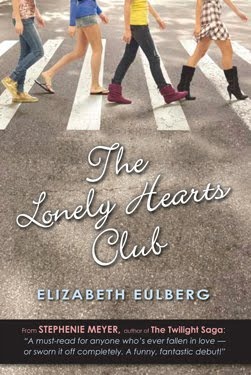
Take A Peek Book Review: The Lonely Hearts Club by Elizabeth Eulberg

“Take a Peek” book reviews are short and (possibly) sweet, keeping the commentary brief and providing a little peek at what the book’s about and what I thought. This week’s “take a peek” book:

Lonely Hearts Club

Synopsis:

(via Goodreads)

Love is all you need… or is it? Penny’s about to find out in this wonderful debut.

Penny is sick of boys and sick of dating. So she vows: no more. It’s a personal choice. . .and, of course, soon everyone wants to know about it. And a few other girls are inspired. A movement is born: The Lonely Hearts Club (named after the band from Sgt. Pepper). Penny is suddenly known for her nondating ways . . . which is too bad, because there’s this certain boy she can’t help but like. . . .

My Thoughts:

I’ve read and completely enjoyed Elizabeth Eulberg’s two most recent books, Revenge of the Girl With the Great Personality and Better Off Friends. When I happened to stumble across her debut, The Lonely Hearts Club, at the library this week, I thought I’d give it a try.

Elizabeth Eulberg excels at portraying the ups and downs of the high school pecking order. Her female characters tend to question the norm and make their own way. Penny isn’t a revolutionary, though — she’s just a girl who’s been dumped on and duped by one too many jerky boys. She’s not looking to start a movement, but by taking a stand for herself, she sets the stage for a lot of soul-searching.

Suddenly, the girls at school begin to realize that being with a boy who treats you badly is not actually better than not having a boyfriend at all. Penny and her small circle rediscover the value of having friends to rely on, friends who put their friends first and don’t dump them the second a boy comes calling (or texting).

It isn’t preachy, though: No one here is saying that boys are bad, or that feeling pretty and popular is shallow, or that strong girls should never flirt or care about dating. It’s really about balance, and the takeaway here seems to be that girls have the right to expect to be treated with respect, to decide whether they want a relationship or to go it alone, to pursue what makes them happy and not just what makes them popular.

One great little tidbit that you don’t get from the synopsis: Penny’s parents are Beatles fanatics. Penny’s full name is Penny Lane Bloom, and her older sisters are Rita (Lovely Rita) and Lucy (in sky with diamonds…). Mom and Dad are quirky and hip, occasionally embarrassing, but also unabashedly pro-independence and nonconformity in their daughters — so, for example, it’s no surprise that they take Penny’s side against the principal who tries to crush the club. So what if they call her “Penny Lane” in public? They’re still great parents.

A teeny example — following Penny’s disclosure that she’s in a club:

“Penny started it. It’s called The Lonely Hearts Club,” Rita chimed in.

“Oh, oh, Penny Lane, that’s so, so wonderful!” Mom put her hand up to her chest, thrilled that I’d named something after the Beatles, although she had no idea what the Club stood for. I could’ve started a club called the Yellow Submariners that went out in the ocean and clubbed baby seals and they still would’ve been proud.

“Kiddo, it’s so great you’re taking an interest in your heritage. Goo goo g’joob!” Dad beamed.

The writing is cute and clever, with snappy dialogue that never feels too over-the-top or that it’s trying to hard to be hip. The story is fast-paced, and this is a quick, zippy read.

I’d happily recommend The Lonely Hearts Club to teens, parents of teens, anyone who enjoys contemporary YA, and — of course — to Beatles fans. I understand the sequel (We Can Work It Out) is coming soon, and I’ve already put in my request for it at the library.

_________________________________________

The details:

Title: The Lonely Hearts Club
Author: Elizabeth Eulberg
Publisher: Point
Publication date: 2010
Length: 290 pages
Genre: Young adult contemporary fiction
Source: Library

Wishing & Waiting on Wednesday: The Alex Crow

There’s nothing like a Wednesday for thinking about the books we want to read! My Wishing & Waiting on Wednesday post is linking up with two fabulous book memes, Wishlist Wednesday (hosted by Pen to Paper) and Waiting on Wednesday (hosted by Breaking the Spine).

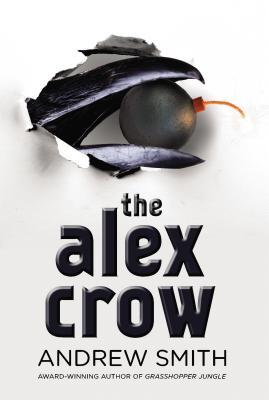
This week’s pick:The Alex Crow

The Alex Crow by Andrew Smith
(to be released March 10, 2015 )

Synopsis via Goodreads:

Once again blending multiple story strands that transcend time and place, Grasshopper Jungle author Andrew Smith tells the story of 15-year-old Ariel, a refugee from the Middle East who is the sole survivor of an attack on his small village. Now living with an adoptive family in Sunday, West Virginia, Ariel’s story of his summer at a boys’ camp for tech detox is juxtaposed against those of a schizophrenic bomber and the diaries of a failed arctic expedition from the late nineteenth century. Oh, and there’s also a depressed bionic reincarnated crow. 

This sounds crazy and out-there… and given how much I loved Grasshopper Jungle, I can’t wait to read it!

What are you wishing for this Wednesday?

Looking for some bookish fun on Thursdays? Come join me for my regular weekly feature, Thursday Quotables. You can find out more here — come play!

♥♥♥♥♥♥♥♥

Do you host a book blog meme? Do you participate in a meme that you really, really love? I’m building a Book Blog Meme Directory, and need your help! If you know of a great meme to include — or if you host one yourself — please drop me a note on my Contact page and I’ll be sure to add your info!

Top Ten Tuesday: Top Ten 2014 Releases I Meant To Read (But Didn’t)

Top 10 Tuesday new

Top Ten Tuesday is a meme hosted by The Broke and the Bookish, featuring a different top 10 theme each week. This week we’re talking about books from 2014 that we really wanted to read… but didn’t. Some of these I actually own; some are just books that I thought sounded great, but then never actually pursued. Oh well, there’s always 2015!

My top 10:

locke

1) Locke & Key, volume 6: Alpha & Omega by Joe Hill: I was DYING for this one, the final volume in the awesomely creepy and brilliant Locke & Key series. And then when I got a copy, I realized I should re-read volumes 1 – 5 to get the maximum enjoyment out of the series wrap-up. But somehow, I still haven’t made it happen.

mr. mercedes

2) Mr. Mercedes by Stephen King: I practically jump up and down whenever Stephen King publishes new books and read them immediately — except for this one. I still intend to… eventually.

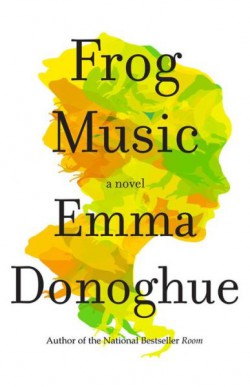
Frog Music

3) Frog Music by Emma Donoghue: Loved the sound of Frog Music, and I hope to read it in the next month or so.

invention of wings

4) The Invention of Wings by Sue Monk Kidd: I was hoping that my book group would choose this book, so I held off. It hasn’t happened yet, so I’ll probably end up going for it on my own.

100 year house

5) The One-Hundred Year House by Rebecca Makkai: Another one that sounds great, and I just haven’t found the right time.

Vacationers

6) The Vacationers by Emma Straub: I read a review of The Vacationers when it was released and made a mental note to borrow a copy from the library, and then completely forgot about it.

lock in

7) Lock In by John Scalzi: I had this one on preorder and everything — then decided it wasn’t urgent and that I didn’t need another hardcover on my bookshelf. Now I’m waiting for the paperback release this coming summer.

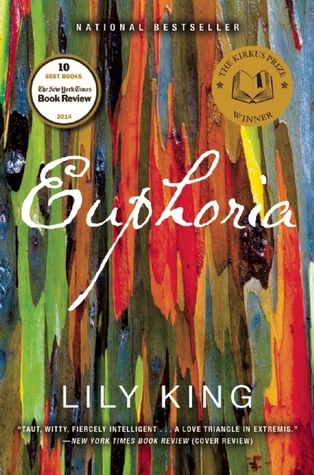
Euphoria

8) Euphoria by Lily King: I didn’t pay attention to Euphoria at first, but after seeing it pop up on so many “best of 2014” lists, I have a renewed interest in reading it. Another great possibility for my book group, I think.

hollow

9) Hollow City by Ransom Riggs: I can’t believe it’s been about a year since this book came out, and I still haven’t read it. The question is, am I still interested at this point?

infinite sea

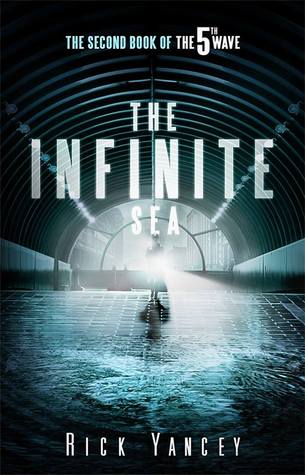
10) The Infinite Sea by Rick Yancey: This should probably be up at the top of my list, as it’s the one I intend to read ASAP. I bought a copy when it came out last year, then decided I should re-read The 5th Wave first. I got side-tracked, big time… and finally finished the audiobook version of The 5th Wave last week. So, hurray! I’m ready for The Infinite Sea!

Have you read any of the books on my list? Which do you think should be my top priority? And what books from 2014 do you still need to read?

Share your thoughts! And leave me your links, please, so I can come check out your top 10.

If you enjoyed this post, please consider following Bookshelf Fantasies! And don’t forget to check out my regular weekly feature, Thursday Quotables. Happy reading!

♥♥♥♥♥♥♥♥

Do you host a book blog meme? Do you participate in a meme that you really, really love? I’m building a Book Blog Meme Directory, and need your help! If you know of a great meme to include — or if you host one yourself — please drop me a note on my Contact page and I’ll be sure to add your info!

The Monday Check-In ~ 1/12/2015

cooltext1850356879 My Monday tradition, including a look back and a look ahead — what I read last week, what new books came my way, and what books are keeping me busy right now. Plus a smattering of other stuff too.

What did I read last week?

I'll Give You the Sun

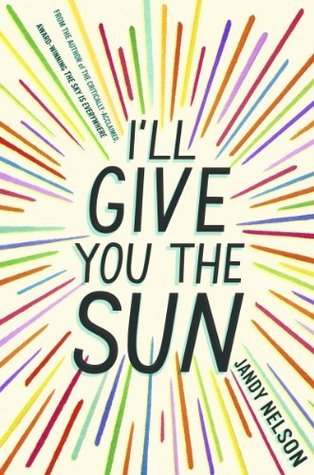
I ended up loving I’ll Give You the Sun by Jandy Nelson. My review is here.

Perdita

Not so much with Perdita by Hilary Scharper. I tried to stick it out, but by the 25% mark, I realize that it just wasn’t happening for me. Sadly, this book is my first DNF of the year.

Adventures of Superhero Girl

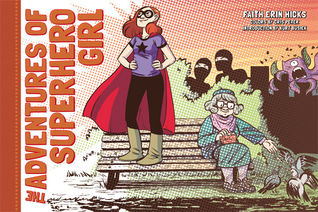
I had a great time doing some graphic novel catch-up. I adored The Adventures of Superhero Girl by Faith Erin Hicks. Read about it here.

Through the Woods

Through the Woods by Emily Carroll was perfectly dark and disturbing and twisted. Perfect for when you want a creepy story or two before bedtime, so you can lie awake all night and listen to the wind.

talking to dragons

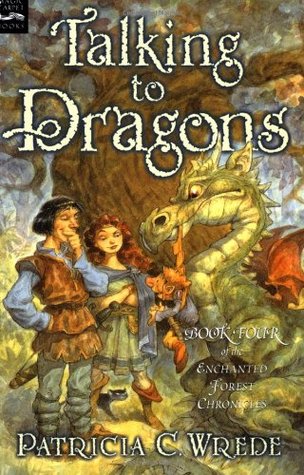
Finally (!!!), my kiddo and I finished Talking to Dragons, the conclusion of the Enchanted Forest Chronicles by Patricia C. Wrede. Boy, was this series a mixed bag. I posted a series wrap-up here.

Fresh Catch:

My only NEW new book this week was Through the Woods — but I did come home with a big armful of books from the library, including a few novels…

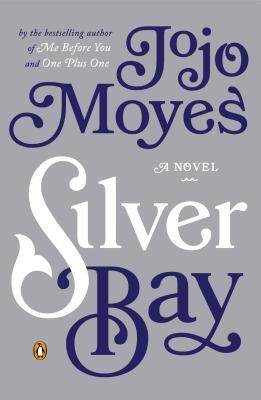
100 Sideways Miles Breathe Annie Breathe Silver Bay

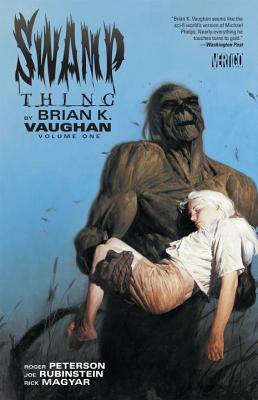
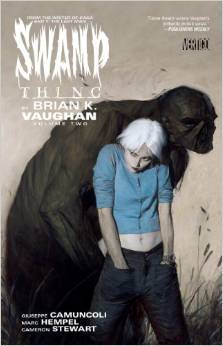
… and a couple of graphic novels (by my super-favorite, Brian K. Vaughan):

Swamp Thing vol 1 Swamp Thing vol 2

What will I be reading during the coming week?

Currently in my hands:

bad feminist

I’ve started Bad Feminist by Roxane Gay. I’m reading just a few essays at a time, so this one will be on my nightstand (and in my Monday Check-In posts!) for the next few weeks.

Lonely Hearts Club

And just for fun, I’m reading The Lonely Hearts Club by Elizabeth Eulberg. I’ve read a couple of her more recent YA books, and always enjoy her smart, strong, and funny characters.

Now playing via audiobook:

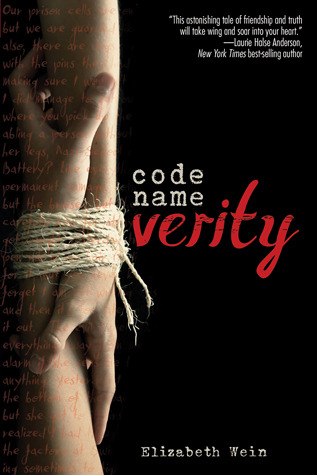
verity

Code Name Verity by Elizabeth Wein: I’ve read the book, but I’m finding new shades and depths as I listen to the audiobook. I’m about halfway through, and I’m pretty blown away by the excellence of the narrator of part 1.

Reading with my kiddo:

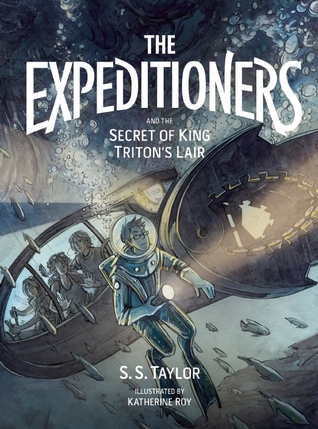
exped

The Expeditioners and the Secret of King Triton’s Lair by S. S. Taylor: We’re so excited to start this one! The first Expeditioners book was great fun, and I was lucky enough to win a signed copy of #2 from Goodreads (thank you, Goodreads!).

Book club reading:

scarletABOSAAhenna house

Classic read: The Scarlet Pimpernel by Baroness Emmuska Orczy. (One chapter per week)

A Breath of Snow and Ashes by Diana Gabaldon: Reading and discussing two chapters per week, from now through the end of 2015!

OBC Book of the Month: Henna House by Nomi Eve (discussion starts January 21st).

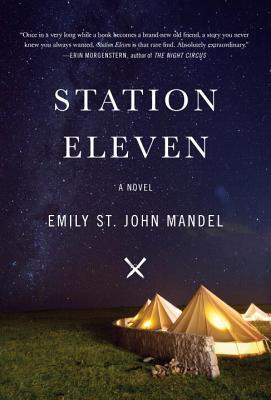
station eleven

Fields & Fantasies Book Club pick for January: Station Eleven by Emily St. John Mandel

Want to join any of the group reads? Let me know and I’ll provide the links!

So many book, so little time…

boy1

Series Wrap-Up: The Enchanted Forest Chronicles by Patricia C. Wrede

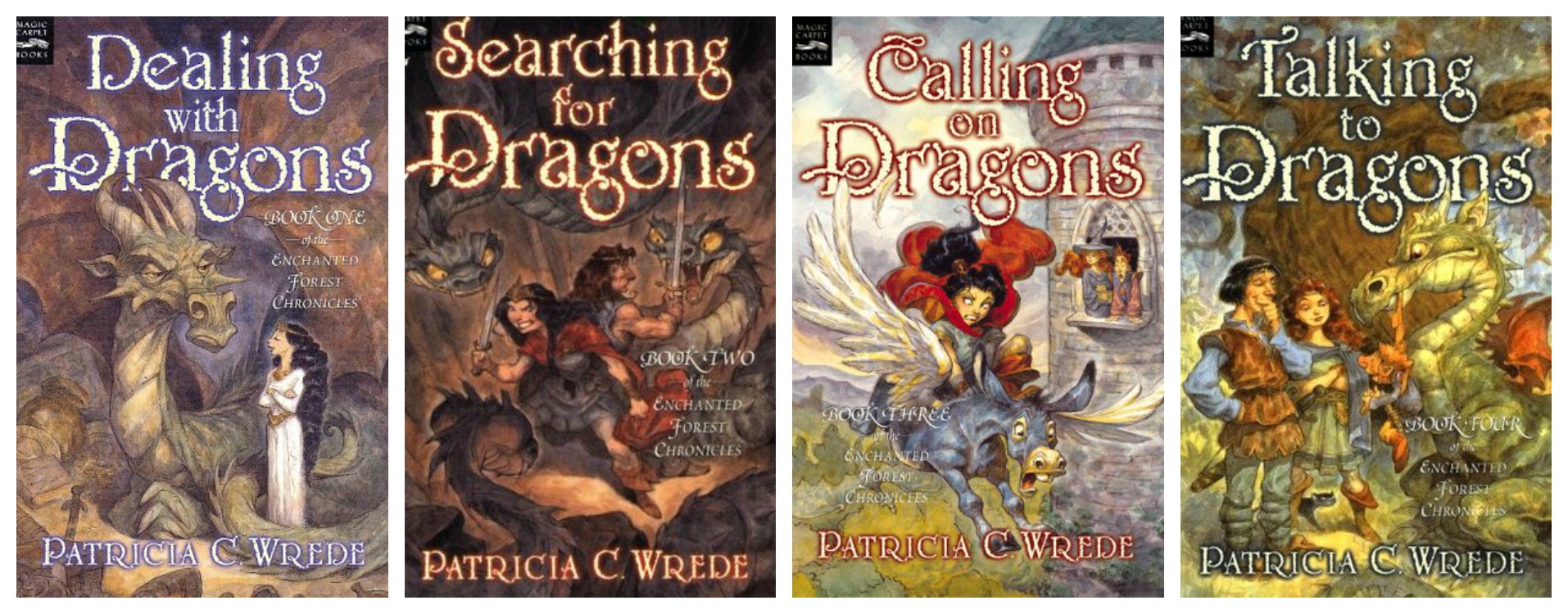
Enchanted Forest collage

The Enchanted Forest Chronicles by Patricia C. Wrede encompasses four novels set in one world — and be warned ahead of time: Your enjoyment of this series is by no means guaranteed just because you liked the first book. Each book is quite different, and that’s not necessarily a good thing.

First things first: If we were only talking about book #1, Dealing with Dragons, my enthusiasm would be much higher. In Dealing with Dragons, we meet Cimorene, a princess who doesn’t want the typical Happily Ever After with a handsome prince, fine gowns, and a kingdom to be pampered in. So Cimorene runs away and finds herself a large dragon, Kazul, who just so happens to need a princess of her own. In this world, princesses serve dragons — some willingly, some not so much — usually until they are rescued by a brave knight who comes to free them from “captivity”. Cimorene has no patience for such nonsense, and soon finds herself an indispensable assistant to Kazul, keeping house, observing dragon politics, learning about magic, and warding off dangerous wizards who want to steal the dragon’s magic. The book breaks gender roles in all sorts of interesting and unusual ways; my favorite is that the leader of the dragons is called King, which denotes a position, not a person. Kazul is a female dragon, but is still able to vie for the position of King…. and woe to anyone who mistakenly refers to her as the Queen.

Unfortunately, in my view, the focus shifts from book to book. Dealing with Dragons is the only book of the series I rated as 5 stars on Goodreads. I loved Cimorene’s courage and brains, the clever wordplay, and the way Cimorene defies expectations to become the person she wants to be. But suddenly, in book #2 (Searching for Dragons), Cimorene is a supporting player, and instead, the story is told from the point of view of Mendanbar, the reluctant king of the Enchanted Forest. Mendanbar’s story intersects with Cimorene’s as they go on a quest together to find out who is draining magic out of the Enchanted Forest and to rescue the kidnapped Kazul. Mendanbar and Cimorene have good chemistry, and Mendanbar is a fine leading man, but unfortunately, the zippiness of Cimorene’s grrrl power is a bit more subdued here.

In Book #3 (Calling on Dragons), we barely see our familiar characters at all, as the focus shifts once again, this time to the witch Morwen, a supporting player in the earlier books. I came close to abandoning the series altogether early on in this book. True confession: I have a dislike for talking animals, particularly when there’s an overabundance of them — and this book has more than enough to go around. Within the first few chapters, we meet all twelve of Morwen’s cats, each of whom has a name and a distinct personality and contributes to conversation, as well as a bewitched bunny named Killer who transforms first into a six-foot-tall bunny and eventually into a blue, winged, flying donkey. Killer is meant to be the comic relief, but is more annoying than funny most of the time. There’s a quest and an adventure that ends up involving Cimorene and Mendanbar, but they’re quite peripheral. The magical adventure aspects of the book become more enjoyable by the end, but there’s a lot of space taken up by new characters, odd magical rules, and never-ending journeying.

And then we come to the final book, Talking to Dragons, in which there’s a brand-new main character, Daystar, who must travel into the Enchanted Forest and figure out for himself what the purpose of his quest is. There he meets a temperamental young fire-witch named Shiara — clearly there as his love interest — and encounters talking lizards, elves, dragons, and dwarves before arriving at a climactic battle scene. I won’t tell you how Daystar’s story intersects with the characters from the earlier books (spoilers!), but they are all connected and come together for an exciting and satisfying conclusion.

As a series, the Enchanted Forest Chronicles feels a bit disjointed. The shift in main characters from book to book didn’t really appeal to  me. I suppose the intent is to broaden the scope of the world of the Enchanted Forest, but in my opinion, Cimorene and Kazul are the most interesting characters — and once they leave center stage, the story loses some of its charm. I was never bored exactly (although I was awfully close during the talking cat chapters), but I did find my attention wandering from time to time, and I found it a challenge to get into each new book, where we readers are required to leave behind the characters we’ve become fond of and start fresh with with a whole bunch of new ones.

All that said, let me now point out that I read this series in partnership with my 12-year-old son — and from that regard, I’d say the series was a success. My kiddo is a very reluctant reader, and so to encourage him, we read these books in tandem. He enjoyed the stories quite a bit, liked the action sequences involving dragons and wizards especially, and liked that there were plenty of funny scenes, humorous dialogue, and even some hints of danger (nothing too life-threatening, but still risky business).

Bottom line: While the Enchanted Forest Chronicles doesn’t strike me as strong enough to really hold adult attention, I do think it’s a great choice for middle grade readers, either to read on their own or as a very fun parent-kiddo reading partnership. And as an alternative for those who aren’t looking for a multi-book series or don’t like the sound of the focus changing from book to book, I think Dealing with Dragons would work perfectly well as a stand-alone. As the best of the bunch, it’s certainly a great read — and maybe if I’d stopped there, I’d have avoided the frustrations I had with the subsequent books.