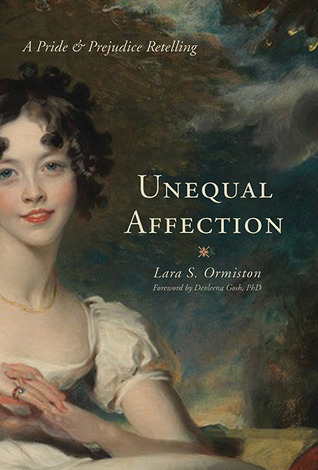
Book Review: Unequal Affection: A Pride and Prejudice Retelling by Lara S. Ormiston

When Elizabeth Bennet first knew Mr. Darcy, she despised him and was sure he felt the same. Angered by his pride and reserve, influenced by the lies of the charming Mr. Wickham, she never troubled herself to believe he was anything other than the worst of men–until, one day, he unexpectedly proposed.Mr. Darcy’s passionate avowal of love causes Elizabeth to reevaluate everything she thought she knew about him. What she knows is that he is rich, handsome, clever, and very much in love with her. She, on the other hand, is poor, and can expect a future of increasing poverty if she does not marry. The incentives for her to accept him are strong, but she is honest enough to tell him that she does not return his affections. He says he can accept that–but will either of them ever be truly happy in a relationship of unequal affection?

Diverging from Jane Austen’s classic novel Pride and Prejudice at the proposal in the Hunsford parsonage, this story explores the kind of man Darcy is, even before his “proper humbling,” and how such a man, so full of pride, so much in love, might have behaved had Elizabeth chosen to accept his original proposal.

While I’m a fan of Pride and Prejudice (and all of Jane Austen’s works), I’ve never read a P&P spin-off or retelling or any of the other hundreds of variations on the story. Somehow, I stumbled across Unequal Affection, and thought the premise was interesting enough to make me want to give it a try. And I’m glad I did.

In a nutshell, what would have happened if Elizabeth Bennet had not refused Mr. Darcy’s initial proposal?

Yes, all the circumstances leading to this moment remain the same as in the original. Elizabeth is stuck on her initial impressions of Darcy, dislikes him, and believes he dislikes her. She’s flabbergasted by his proposal, and insulted by his presentation of it, especially by his statements about how inferior she and her family are to him.

But what if? It’s not unreasonable to think that a young woman in Elizabeth’s situation might actually pause and consider. Here’s a very wealthy, very prominent man, educated and handsome, who says he’s in love with her. He’s offering her a life beyond anything she could imagine. And what’s more, he’s prepared to care for her mother and sisters and provide them with a secure future, rather than the poverty that seems to be lurking just over the horizon.

Now, we know that Elizabeth is an unusual woman for her time. She’s outspoken in her likes and dislikes, and has sworn that she’ll marry for love. But, here is a man who loves her and is offering her a secure life. Is it so farfetched to think she’d at least consider his offer?

In Unequal Affection, she does just that. She asks for time to consider, rather than rejecting him on the spot. She’s stunned to learn of his regard for her, and realizes that she may need to rethink her former opinions of him. From there, the story follows the seven weeks from Darcy’s proposal to the agreed-upon wedding, during which both have time to get to know one another properly and to acknowledge their faulty assumptions and mistreatment of one another.

It’s interesting to see how some familiar scenes play out. Lady Catherine’s visit to Longbourn still takes place, with much the same tone, but with the circumstances rather different. Lydia’s elopement is prevented before it ever happens, because with Darcy as the future brother-in-law, her well-being is now his concern as well. Certain secrets come out much later, so that Wickham’s undermining of Darcy is allowed to continue much longer — but even so, this gives Elizabeth time to start to realize that Wickham’s charm might be a cover for a lack of character.

Overall, Unequal Affection is quite charming and well-written. This clever retelling lets us see familiar events unfold differently, and yet the dialogue and writing style feel very true to the spirit of Jane Austen’s masterpiece. The developing understanding and affection between Elizabeth and Darcy work in light of what we already know about them, and this different path to marriage feels quite natural and plausible.

I was surprised by how much I enjoyed this book. I mean, if the original is perfect, why tinker with it? Author Lara Ormiston proves that there can still be something new to say about a classic, and presents an engaging, compelling tale about favorite characters in a brand new way.

And now, a question: For those of you who have read Austen spin-offs, are there any in particular that you consider outstanding and worth checking out? I’ve read three of the Austen Project books, and have Eligible on tap for future reading. How about any others? Recommendations welcome here!

_________________________________________

The details:

Title: Unequal Affection
Author: Lara S. Ormiston
Publisher: Skyhorse Publishing
Publication date: January 7, 2014
Length: 352 pages
Genre: Fiction
Source: Purchased

Save

Save

Save

Save

Save

Save

Book Review: Six Wakes by Mur Lafferty

A space adventure set on a lone ship where the clones of a murdered crew must find their murderer — before they kill again.

It was not common to awaken in a cloning vat streaked with drying blood.

At least, Maria Arena had never experienced it. She had no memory of how she died. That was also new; before, when she had awakened as a new clone, her first memory was of how she died.

Maria’s vat was in the front of six vats, each one holding the clone of a crew member of the starship Dormire, each clone waiting for its previous incarnation to die so it could awaken. And Maria wasn’t the only one to die recently…

Talk about a powerful opening! The first chapter of this exhilarating sci-fi novel introduces us to the world of Six Wakes with a bang, as six clones wake up in their cloning vats… with their previous bodies, all brutally murdered, floating in zero gravity in front of them. None of the crew members has any memory of what happened. In fact, their last memories are of the reception on Luna as the Dormire was about to launch.

But as they look at their murdered bodies, they discover a startling fact: The bodies are all much older then they expected. While they only remember just joining the ship’s crew, it becomes apparent that they’ve been traveling in space for 25 years. All memories are gone. All ship logs have been purged. The ship’s AI is down. There’s a murderer among them, but even the murderer has no memory of what’s happened.

Wow. Now that’s tension!

In Mur Lafferty’s terrific space adventure, clones have existed within human civilization for hundreds of years. There are a set of strict laws governing clone management and clone rights, which are spelled out in the Codicils that appear at the beginning of the book. In the world of Six Wakes, people’s mindmaps are saved, then loaded into their new cloned bodies — produced to approximate age 21 for peak physical condition — when the old body dies. Clones are sterile; they become their own descendants. Clones essentially live for hundreds of years, from one body to the next.

Let me just pause here for a moment and admire the world-building of this novel. We’re thrust immediately into this brave new world, and it’s fascinating, but the author lays it out in such a way that it’s easy to grasp and get totally immersed. There are so many twists and turns and nuances to be revealed, but we get the set-up and big picture from the start. Amazing.

Meanwhile, on the Dormire, the crew have to solve their own murders, but more urgently, get the ship’s systems working again if they have any chance of survival. They’re intended to be on a 400-year journey to settle a new planet, with hundreds of humans saved in cryo, but they’ll all die if they can’t take control of navigation, get the grav drive working, and bring their AI back on line. Oh, and a piece I just loved — there’s a food printer! Think 3-D printing, but able to create any food desired, based on analysis of crew members’ tastes and programmed to synthesize any food stuff requested. It’s just cool.

The matter of identifying the murderer is crucial, of course. The tension and suspicions run high, and as the story progresses, we learn the truth about each crew member’s past. Each has secrets they’d rather keep hidden, but it’s those secrets that will help them piece together the events leading up to the murders… and hopefully enable them to prevent another round. And since the initial sabotage included destruction of the cloning vats, cloning software, and mindmap backups, if they die again, they’ll really and truly be dead.

At times, Six Wakes made me think a bit of Westworld… but my strongest comparison would have to be to Agatha Christie! Kind of a Murder on the Orient Express vibe, but in space! Everyone is a suspect, and everyone may have his or her own motives. They certainly have plenty of secrets to protect.

It’s just so cool.

Clearly, you have to enjoy science fiction to really get into Six Wakes — although I’d think anyone who enjoys a mystery would love this plot, assuming they accept all the cloning/space/technology pieces of the story.

As for me, I loved it. The story is intricate and requires paying attention to the small details, but the payoff is an amazing read that’s fast-paced, entertaining, and ultra fascinating. I loved the set-up, the human/clone history, the individual crew members’ stories, and the characters themselves, all intriguing in their own ways.

I rarely feel the urge to start a book again from the beginning once I finish it, but I definitely did with this one. I’m dying to go back, start over, and see all the clues I missed the first time around.

I strongly recommend checking out Six Wakes! So much fun. So different. So awesome.

Want to know more about this author? Check out my reviews of two other books by Mur Lafferty:
The Shambling Guide to New York City
Ghost Train to New Orleans

_________________________________________

The details:

Title: Six Wakes
Author: Mur Lafferty
Publisher: Orbit
Publication date: January 31, 2017
Length: 364 pages
Genre: Science fiction
Source: Purchased

Save

Save

Save

Save

Save

Save

A little break — see you next week!

Hello, lovely readers! Bookshelf Fantasies is taking a wee break this week as I head out of town for a combination of vacation time and family business.

While I’m away, my two weekly memes, Shelf Control and Thursday Quotables, are taking a rest too — but if you do posts for either one this week, please feel free to share your links in the comments!

Shelf Control


quotation-marks4

Have a great week. See you soon!

A little taste of where I am right now…

Save

The Monday Check-In ~ 3/27/2017

cooltext1850356879 My Monday tradition, including a look back and a look ahead — what I read last week, what new books came my way, and what books are keeping me busy right now. Plus a smattering of other stuff too.

Life:

A blogging note: I’m away this week, and will probably only be checking in here sporadically. I hope to get a lot of great reading in, so I’ll have lots to share next week!

What did I read last week?

Binti Home by Nnedi Okorafor: The 2nd Binti novella is just as amazing as the first.

The Secret Scripture by Sebastian Barry: A terrific book group pick! My thoughts are here.

Pop culture goodness:

Season 2 of The Magicians (Syfy) has been consistently awesome — and I think the show hit a new high note (pun intended) with this past week’s outstanding episode, including this scene that had me giggling with delight:

The Magicians: One Day More

Fresh Catch:

No new books this week!

What will I be reading during the coming week?

Currently in my hands:
 

I’m juggling two books right now — one paper and one on my Kindle:

  • Six Wakes by Mur Lafferty: Science fiction about murdered clones on a spaceship. Awesome, right?
  • Unequal Affection by Lara S. Ormiston: A Pride and Prejudice retelling, which starts right after the scene of Darcy’s first proposal to Elizabeth and ponders what might have happened if Elizabeth had said yes.
Now playing via audiobook:

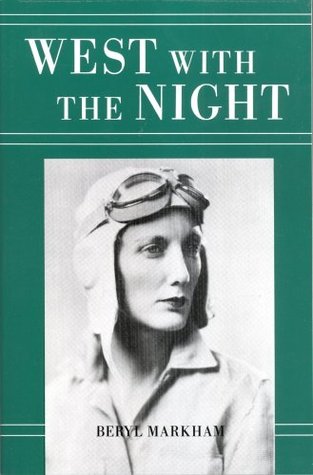
West with the Night by Beryl Markham: I listened to about a third before leaving on my trip. I’ll either continue when I get home, or (more likely) switch over to print. Meanwhile, I’ve been spending more of my listening time on this, rather than audiobooks:

I have to be ready for when I see the show in May!

Ongoing reads:

MOBYOne Hundred Years of Solitude

My book group is reading and discussing Written in My Own Heart’s Blood by Diana Gabaldon — 2 chapters per week — with an end date coming up in June.

Outlander Book Club’s group read of One Hundred Years of Solitude continues! We’re discussing one chapter per week.

So many books, so little time…

boy1Save

Save

Save

Save

Save

Save

Save

Save

Save

Save

Save

Save

Save

Save

Save

Save

Save

Save

Save

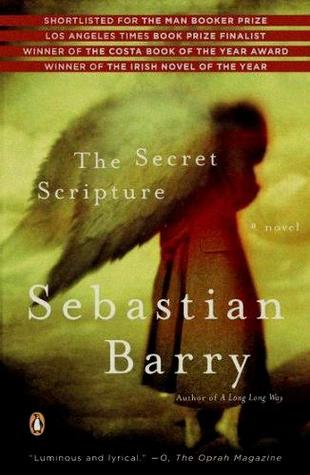
Book Review: The Secret Scripture by Sebastian Barry

When she was a young woman, Roseanne McNulty was one of the most beautiful and beguiling girls in County Sligo, Ireland. Now, she is a patient at Roscommon Regional Mental Hospital, and nearing her hundredth year. As the story of Roseanne’s life unfolds, so does the life of her caregiver, Dr. Grene, who has been asked to evaluate the patients to decide if they can return to society when the hospital closes down. But as Dr. Grene researches her case, he discovers a document that tells a very different version of Roseanne’s life from what she can recall.

Yet another book I might never have picked up were it not for my book group!

The Secret Scripture is a book of secrets and sorrow, told through the journals of 100-year-old Roseanne McNulty, a mental hospital resident, and Dr. Grene, the psychiatrist evaluating her as the institution is about to close. Although he’s treated her for decades, it’s only as the hospital reaches its end that the doctor begins to dig further into Roseanne’s shadowy past.

Roseanne has spent upwards of 60 years in institutions, and the question is not only whether she’s sane now, but whether she was ever truly insane. As Roseanne’s story comes to light, she unveils memories of her early childhood in Sligo during the Irish Civil War of the early 1920s. Roseanne tells a story of a loving father who raises his young daughter with compassion and curiosity — yet the doctor’s research reveals reports of political entanglements that Roseanne apparently knew nothing about.

A key tragedy during these years sets Roseanne up for a hard and lonely life, until she meets the man she falls in love with. But her life with Tom runs into its own set of tragedies, the upshot of which is Roseanne’s lifelong institutionalization.

I won’t say too much more about the plot details, as they’re best discovered as they unfold. The book has a somewhat slow start, but as the pieces come together, the mysteries and the clues gain a greater sense of urgency. The secrets that come out are truly shocking, simply because they convey the horror of simple cruelty and the easy way in which some people can dismantle others’ lives.

I would have if not happily, at least gladly, open-heartedly, fiercely, finely murdered him.

The doctor’s pieces of the narration are a bit frustrating at times. There are segments about his own life and his marriage that seem disconnected from the rest of the story, although taken as a whole, they do make more sense in the greater scheme of things.

The twin narratives show the unreliability of memory, but also the inherent biases of written documentation. After all, even eye-witness reports depend on the objectivity of the one making the report in the first place. Should we trust Roseanne’s memories of her earlier life, or rely more heavily on the documents that the doctor manages to unearth? Or does the truth lie in some middle ground, with bits of each making up the real course of events?

I did find myself a bit confused at times by the historical references from the war, as I’m not terribly familiar with the details of the conflict and had a hard time figuring out who was on which side. Still, the author manages to evoke the time period quite well, with small details of dress and music to add flavor and bring the scenes to life.

Roseanne is a tragic figure, yet one who ultimately endures whatever life throws at her during her long lifetime. While I was horrified by so much of her story and ached for what she experienced, I was left with a hopeful feeling by the end.

What can I tell you further? I once lived among humankind, and found them in their generality to be cruel and cold, and yet could mention the names of three or four that were like angels.

The Secret Scripture is quite a lovely book with an unusual story to tell. The writing and pacing take a bit of patience, especially for about the first third, but if you stick with it, you’ll be rewarded by the building tension and dramatic revelations toward the end. I’m glad my book group picked this one to discuss! It’s always great to encounter a book that I might otherwise have missed completely.

_________________________________________

The details:

Title: The Secret Scripture
Author: Sebastian Barry
Publisher: Penguin
Publication date: April 2, 2008
Length: 300 pages
Genre: Historical fiction
Source: Purchased

Save

Save

Save

Save

Save

Save

Thursday Quotables: West With the Night

quotation-marks4

Welcome to Thursday Quotables! This weekly feature is the place to highlight a great quote, line, or passage discovered during your reading each week.  Whether it’s something funny, startling, gut-wrenching, or just really beautifully written, Thursday Quotables is where my favorite lines of the week will be, and you’re invited to join in!

West With the Night by Beryl Markham
(published 1942)

I’ve listened to the first few chapters of this audiobook so far, but because my listening time has been very choppy this week, I may switch over to the print edition. West With the Night, the memoir by famed aviator Beryl Markham, is a book I’ve meant to read for years. The writing is just gorgeous. From the very chapter, here’s a lovely passage:

Three hundred and fifty miles can be no distance in a plane, or it can be from where you are to the end of the earth. It depends on so many things. If it is night, it depends on the depth of the darkness and the height of the clouds, the speed of the wind, the stars, the fullness of the moon. It depends on you, if you fly alone — not only on your ability to steer your course or to keep your altitude, but upon the things that live in your mind while you swing suspended between the earth and the silent sky. Some of those things take root and are with you long after the flight itself is a memory, but, if your course was over any part of Africa, even the memory will remain strong.

What lines made you laugh, cry, or gasp this week? Do tell!

If you’d like to participate in Thursday Quotables, it’s really simple:

  • Write a Thursday Quotables post on your blog. Try to pick something from whatever you’re reading now. And please be sure to include a link back to Bookshelf Fantasies in your post (http://www.bookshelffantasies.com), if you’d be so kind!
  • Add your Thursday Quotables post link in the comments section below… and I’d love it if you’d leave a comment about my quote for this week too.
  • Be sure to visit other linked blogs to view their Thursday Quotables, and have fun!

391px-quotation_marks_svg1391px-quotation_marks_svg1391px-quotation_marks_svg1391px-quotation_marks_svg1391px-quotation_marks_svg1391px-quotation_marks_svg1391px-quotation_marks_svg1391px-quotation_marks_svg1

Save

Save

Save

Save

Save

Shelf Control #75: The Gate To Women’s Country

Shelves final

Welcome to Shelf Control — an original feature created and hosted by Bookshelf Fantasies.

Shelf Control is a weekly celebration of the unread books on our shelves. Pick a book you own but haven’t read, write a post about it (suggestions: include what it’s about, why you want to read it, and when you got it), and link up! Fore more info on what Shelf Control is all about, check out my introductory post, here.

Want to join in? Shelf Control posts go up every Wednesday. See the guidelines at the bottom of the post, and jump on board!

cropped-flourish-31609_1280-e1421474289435.png

My Shelf Control pick this week is:

Title: The Gate To Women’s Country
Author: Sheri S. Tepper
Published: 1987
Length: 382 pages

What it’s about (synopsis via Goodreads):

Tepper’s finest novel to date is set in a post-holocaust feminist dystopia that offers only two political alternatives: a repressive polygamist sect that is slowly self-destructing through inbreeding and the matriarchal dictatorship called Women’s Country. Here, in a desperate effort to prevent another world war, the women have segregated most men into closed military garrisons and have taken on themselves every other function of government, industry, agriculture, science and learning.

The resulting manifold responsibilities are seen through the life of Stavia, from a dreaming 10-year-old to maturity as doctor, mother and member of the Marthatown Women’s Council. As in Tepper’s Awakeners series books, the rigid social systems are tempered by the voices of individual experience and, here, by an imaginative reworking of The Trojan Woman that runs through the text. A rewarding and challenging novel that is to be valued for its provocative ideas.

How I got it:

I bought it at a used book store.

When I got it:

A couple of years ago.

Why I want to read it:

This is considered a feminist sci-fi classic, so I’m a bit embarrassed never to have read it. The reviews on Goodreads are all over the place, from 5-stars (including from reviewers I usually trust) to a whole slew of 1-star ratings from people who absolutely hated the book. I think I owe it to myself to at least give it a try.

__________________________________

Want to participate in Shelf Control? Here’s how:

  • Write a blog post about a book that you own that you haven’t read yet.
  • Add your link in the comments!
  • If you’d be so kind, I’d appreciate a link back from your own post.
  • Check out other posts, and…

Have fun!

Save

Save

Save

Save

Save

Save

Save

Save

Top Ten Tuesday: Ten short books that are perfect for a quick read

tulips-65036_1280

Top Ten Tuesday is a meme hosted by The Broke and the Bookish, featuring a different top 10 theme each week. This week’s topic is:

Read In One Sitting Theme: ten of the shortest books I’ve read, top ten books I read in one sitting, ten books to read when you are short on time, top ten books that will make you read the whole day away, etc.

Here are a bunch of great read, all under 200 pages, that I think are excellent ways to sneak in a quick read!

1) Binti by Nnedi Okorafor. 97 pages. An amazing sci-fi adventure with a remarkable African woman as its main character. (Also, the sequel — Binti: Home — is also a short and sweet 176 pages!)

2) Our Souls at Night by Kent Haruf (179 pages): Simply beautiful. (review)

3) Isis by Douglas Clegg (113 pages): A wonderful, spooky little ghost story.

4) The Uncommon Reader by Alan Bennett (120 pages): A quirky little novel which imagines Queen Elizabeth suddenly becoming an avid fiction reader.

5) Blockade Billy by Stephen King (112 pages): My edition includes two separate stories, both memorable and worth reading. (review)

6) The Travelling Bag and other Ghostly Stories by Susan Hill (160 pages): A collection of four ghost stories in a pint-sized hardcover edition, easy to read and certain to chill.

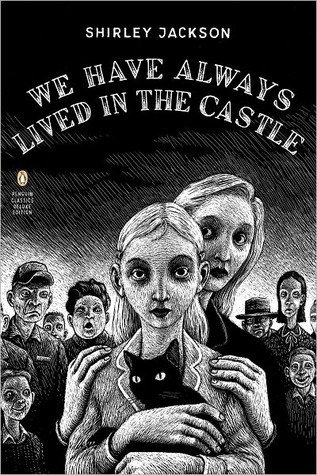
7) We Have Always Lived in the Castle by Shirley Jackson (160 pages): Without meaning to, I seem to have picked some truly creepy books for this list. This book is a gothic horror delight — and I think it’s even better as an audiobook.

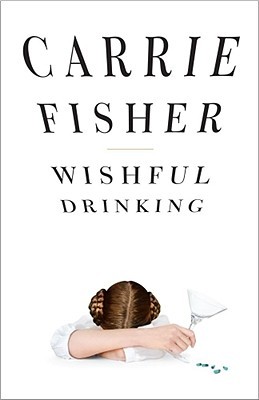
8) Wishful Drinking by Carrie Fisher (163 pages): A quick, funny, quirky look at the ups and down of Carrie Fisher’s life.

9) The Lover’s Dictionary by David Levithan (211 pages): Okay, slightly over 200 pages, but it’s such a quick read, and so powerful, that it just must be on this list! (review)

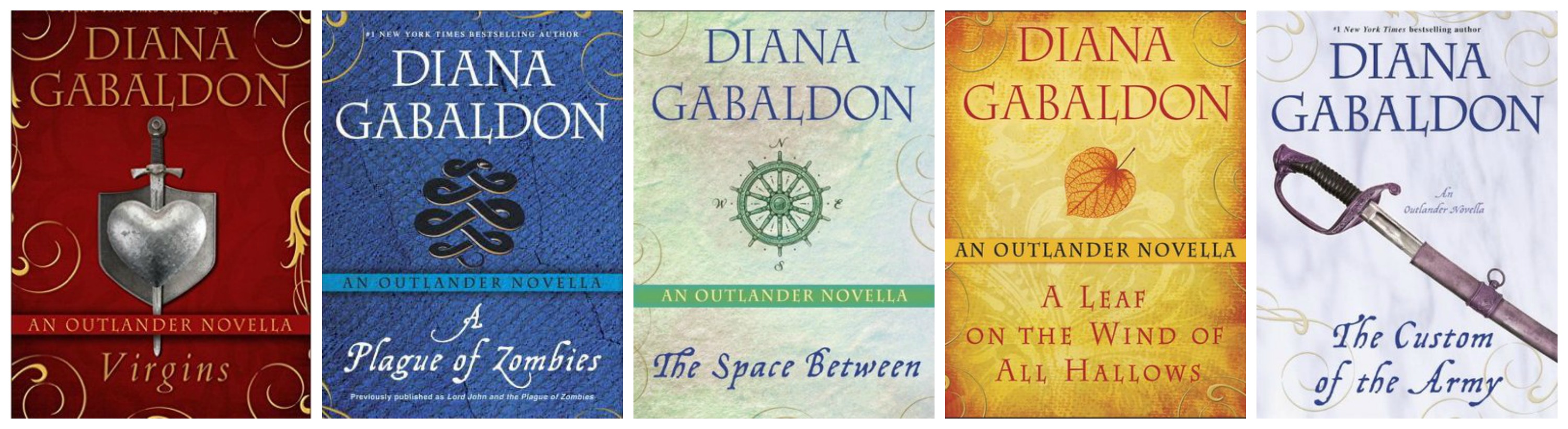
10) What’s a TTT list without an Outlander mention? Yes, the Outlander books are HUGE — but the novellas that fit into and alongside the series are not. For quick, wonderful reads sure to delight Outlander fans, check out any of these:

What are your favorite short and quick reads?

Whatever your spin on this week’s topic, please share your link so I can check out your list!

♥♥♥♥♥♥♥♥

Do you host a book blog meme? Do you participate in a meme that you really, really love? I’m building a Book Blog Meme Directory, and need your help! If you know of a great meme to include — or if you host one yourself — please drop me a note on my Contact page and I’ll be sure to add your info!

Save

Save

Save

Save

Save

The Monday Check-In ~ 3/20/2017

cooltext1850356879 My Monday tradition, including a look back and a look ahead — what I read last week, what new books came my way, and what books are keeping me busy right now. Plus a smattering of other stuff too.

Life:

A blogging note: I’ll be out of town for a week starting next Saturday, so I may or may not keep up with my usual weekly blogging schedule. Let’s play it by ear, shall we?

What did I read last week?

Silence Fallen by Patricia Briggs: I LOVED the newest Mercy Thompson book! My review is here.

Mrs. Palfrey at the Claremont by Elizabeth Taylor: This brief novel is a look at the loneliness of aging, as seen through the eyes of a strong woman who moves into a retirement hotel to live out her remaining days. Very sad and sweet, and beautifully written. My review is here.

Binti by Nnedi Okorafor: An amazing sci-fi novella! Loved it.

In audiobooks…

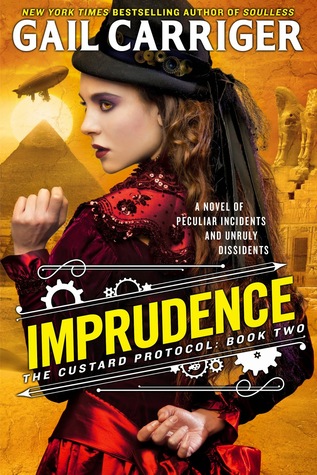
Imprudence by Gail Carriger: I finished the 2nd book in the Custard Protocol series — and now what am I supposed to do? I love the series so far, but alas! Book #3 is probably a year away, and I can’t stand having to wait. Terrific series, and the audiobooks are just such fun.

Fresh Catch:

I rediscovered a childhood favorite — check out my post, here.

And I splurged on sci-fi this week, treating myself to four books I’d really been wanting:

What will I be reading during the coming week?

Currently in my hands:
 

I’m just finishing up the 2nd Binti book, and then I’ll be starting The Secret Scripture by Sebastian Barry, which is a book club book for this month.

Now playing via audiobook:

West with the Night by Beryl Markham: Changing things up a bit with this classic autobiography. My book club will be discussing this book in April, so I thought I’d get a head start with the audiobook.

Ongoing reads:

MOBYOne Hundred Years of Solitude

My book group is reading and discussing Written in My Own Heart’s Blood by Diana Gabaldon — 2 chapters per week — with an end date coming up in June.

It’s week #6 of Outlander Book Club’s group read of One Hundred Years of Solitude. I’m lagging a bit behind, and may hold off a bit, then do a reading binge.

So many books, so little time…

boy1Save

Save

Save

Save

Save

Save

Save

Save

Save

Save

Save

Save

Save

Save

Save

Save

Save

Save

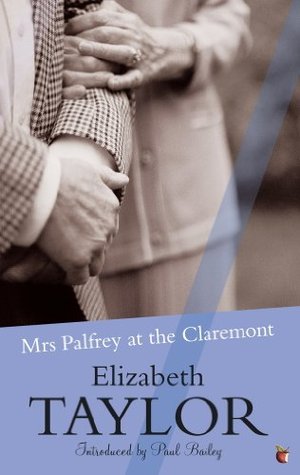
Take A Peek Book Review: Mrs Palfrey at the Claremont by Elizabeth Taylor

“Take a Peek” book reviews are short and (possibly) sweet, keeping the commentary brief and providing a little peek at what the book’s about and what I thought.

Synopsis:

(via Goodreads)

On a rainy Sunday in January, the recently widowed Mrs. Palfrey arrives at the Claremont Hotel where she will spend her remaining days. Her fellow residents are magnificently eccentric and endlessly curious, living off crumbs of affection and snippets of gossip. Together, upper lips stiffened, they fight off their twin enemies—boredom and the Grim Reaper. Then one day Mrs. Palfrey strikes up an unexpected friendship with Ludo, a handsome young writer, and learns that even the old can fall in love.


My Thoughts:

What a lovely book! With beautiful, often sharp, but never mean descriptions, author Elizabeth Taylor presents regal Mrs. Palfrey, a sturdy elderly woman who finds herself alone in the world. Her daughter is rather disinterested, and her lone grandson, whom she’d counted on for regular visits now that she’s moved to London, can’t be bothered. When a sidewalk slip lands her in front of Ludo’s basement apartment, he comes to her rescue and ends up as her stand-in grandson, providing a spark of life in an otherways dreary existence.

The characters are both quirky and sad. Each of the hotel residents has a life they remember fondly as they pass each slow day by sitting in the parlor, waiting for the dinner menu to be posted, and silently criticizing each others’ foibles. I should point out that the synopsis, above and on the back cover, is a little misleading when it describes Mrs. Palfrey as falling in love. That’s not how it struck me at all; the relationship is full of love, but of a different sort. Meanwhile, we see the ups and downs of these people’s lives, trapped together but also quite alone.

While the subject matter strikes a little too close for comfort for me, in relation to recent events with family members, there’s no denying the craft with which the author has created a representation of loneliness and the fear of aging. These characters, hungry for contact with the outside world and desperate for anything new to interrupt the sameness of their days, feel very much true to life and deserving of compassion, even at their most ornery or ridiculous.

Mrs Palfrey at the Claremont is a sweet, touching, short novel, and I look forward to exploring more by this author.

_________________________________________

The details:

Title: Mrs Palfrey at the Claremont
Author: Elizabeth Taylor
Publisher: Algonquin Books
Publication date: 1971
Length: 206 pages
Genre: Contemporary fiction
Source: Library


About the author:

Elizabeth Taylor (née Coles) was a popular English novelist and short story writer. Elizabeth Coles was born in Reading, Berkshire in 1912. She was educated at The Abbey School, Reading, and worked as a governess, as a tutor and as a librarian.

In 1936, she married John William Kendall Taylor , a businessman. She lived in Penn, Buckinghamshire, for almost all her married life.

Her first novel, At Mrs. Lippincote’s, was published in 1945 and was followed by eleven more. Her short stories were published in various magazines and collected in four volumes. She also wrote a children’s book.

Taylor’s work is mainly concerned with the nuances of “everyday” life and situations, which she writes about with dexterity. Her shrewd but affectionate portrayals of middle class and upper middle class English life won her an audience of discriminating readers, as well as loyal friends in the world of letters.