Book Review: Game Changer by Neal Shusterman

Title: Game Changer
Author: Neal Shusterman
Publisher: Quill Tree Books
Publication date: February 9, 2021
Length: 400 pages
Genre: Young adult
Source: Review copy
Rating:

Rating: 4 out of 5.

All it takes is one hit on the football field, and suddenly Ash’s life doesn’t look quite the way he remembers it.

Impossible though it seems, he’s been hit into another dimension—and keeps on bouncing through worlds that are almost-but-not-really his own.

The changes start small, but they quickly spiral out of control as Ash slides into universes where he has everything he’s ever wanted, universes where society is stuck in the past…universes where he finds himself looking at life through entirely different eyes.

And if he isn’t careful, the world he’s learning to see more clearly could blink out of existence…

Ash Bowman is a straight, white, 17-year-old male, a lineman on the high school football team, son of working class parents, a good student, and a good friend. He considers himself pretty woke, not particularly a social activist, but sensitive and caring, and certainly not making the world any worse.

As the book starts, in the middle of a high school football game during a particular hard tackle, Ash has a weird sensation, but it’s over in a moment. Probably just the impact from the tackle, nothing to worry about. It’s not until Ash is driving home and nearly gets hit by a truck in an intersection that he realizes something is wrong. The friend in the passenger seat points out that Ash blew through a stop sign. Impossible, Ash thinks, until he gets to the next intersection and sees the familiar shape of a stop sign — but it’s blue. And to everyone but Ash, that’s completely normal. Stop signs have always been blue.

Ash knows something is wrong, but can’t pinpoint what. But at the next football game, during his next hard tackle, there’s another strange moment, and this time, there’s an even bigger shift in reality. When he heads to the parking lot, instead of his beat-up old car, Ash realizes that he drives a BMW. Rather than living in a poorer part of town, his family now lives in a gated community. Rather than leaving behind his football dreams in high school Ash’s dad is a retired NFL star who now owns a successful business chain, and the family lives in luxury. And once again, Ash is the only person who remembers that the world was once different, although those closest to him seem to have some almost-memories that they can’t quite explain.

With each impact at each game, Ash’s world shifts further and further from his own. He finds changes within himself, as well as in the world around him. Ash suddenly finds himself needing to confront racism, homophobia, and sexism in ways that were never quite as immediate in his original life. And as he learns to control the shifts, he faces a dilemma — does he continue to aim for a better world, or to go back to his own flawed world and try to be a voice for change?

The hows and whys of Game Changer have to do with some sci-fi mumbo jumbo that’s fun but not all that important. It’s not meant to be real quantum physics or anything, just a bit of hand-waving to set up the story and what happens. And that’s okay. The mechanics behind Ash’s world-shifting aren’t what matter here — the heart of the story is about Ash standing in different versions of his life and finally understanding other perspectives from the inside.

Some of these realizations are a little simplistic, as he lives out the concept of walking in someone else’s shoes. Still, it’s interesting to see this character, who’s always considered himself one of the good guys, come to grips with what it’s like to be someone else, what it’s like to lose privilege, and finally get what a friend has been telling him over the years — you can’t explain someone else’s experiences to them if you’re not them.

In some ways, Game Changer reminded me of David Levithan’s Every Day, in which the main character wakes up in a different person’s body each day and has to adapt to living as them, whatever their gender, orientation, race, economic status, or body type. In Game Changer, Ash is always Ash, but with the shifts in worlds, he becomes different versions of himself, and must learn to inhabit that self in the world he finds himself in.

Game Changer is a quick, intriguing read, and I think the target YA demographic will really find it though-provoking and a great jumping-off point for some intense discussions. Definitely worth checking out.

Book Review: The Four Winds by Kristin Hannah

Title: The Four Winds
Author: Kristin Hannah
Publisher: St. Martin’s Press
Publication date: February 2, 2021
Length: 464 pages
Genre: Historical fiction
Source: Review copy courtesy of the publisher via Netgalley
Rating:

Rating: 5 out of 5.

From the #1 New York Times bestselling author of The Nightingale and The Great Alone comes an epic novel of love and heroism and hope, set against the backdrop of one of America’s most defining eras—the Great Depression.

Texas, 1934. Millions are out of work and a drought has broken the Great Plains. Farmers are fighting to keep their land and their livelihoods as the crops are failing, the water is drying up, and dust threatens to bury them all. One of the darkest periods of the Great Depression, the Dust Bowl era, has arrived with a vengeance.

In this uncertain and dangerous time, Elsa Martinelli—like so many of her neighbors—must make an agonizing choice: fight for the land she loves or go west, to California, in search of a better life. The Four Winds is an indelible portrait of America and the American Dream, as seen through the eyes of one indomitable woman whose courage and sacrifice will come to define a generation.

The Four Winds is a powerful, dramatic, and heart-breaking book set during the Great Depression, with an incredibly strong and memorable woman as its lead character and emotional core.

Elsa is the oldest daughter of a wealthy Texas family when we first meet her in 1921. At age 25, she’s considered a spinster. For reasons that are impossible to fathom, her parents have treated her as someone unworthy of love all her life. Their scorn and dismissal have led to Elsa’s internalization of their cruelty — she sees her self as unattractive and uninteresting. Despite her love of reading and interest in education, her parents won’t even consider her request to attend college.

Elsa is doomed to a solitary life, until one day, a rebellious moment leads her to venture out in a pretty dress to go to a speakeasy, and she meets a young man, Rafe, whose interest will change her life. When Elsa’s parents realize that she’s pregnant, they force her to pack a suitcase and drive her to Rafe’s parents’ farm, where they drop her on their doorstep and never look back.

Against all odds, it’s here that Elsa truly finds love and purpose in life — not with her unexpected husband, but in his family’s home. Suddenly, Elsa has family and a place, and learns to embrace the farm, the household, the culture, and the people. Her devotion to her new family only grows once she gives birth to her daughter Loreda. She’s determined to raise her children with love and with a connection to the land, their heritage.

Tragically, the happiness on the farm is not to last. The Dust Bowl years descend, with their punishing drought and horrific dust storms, and Elsa and the Martinellis, like all of their neighbors, are helpless and powerless in the face of this disaster. Over the years, they watch their crops fail, their lands dry up, their livestock starve and die. Many pack up and leave, lured by the promise of opportunity and jobs in California. The Martinellis vow never to leave, but this changes once the children’s health is threatened by the lack of food and the damage caused by constantly breathing in dirt and dust.

Ultimately, Elsa has no choice but to take her children and head west in pursuit of a new, healthier life. At first glance, it looks like they’ve found the promised land. As they drive into California, they see field after field of crops growing, green and healthy. But the dream is elusive for migrants. Overwhelmed by the flood of displaced people from the Dust Bowl states, California wants to shut its borders to “Okies”, and treats the newcomers as little more than vermin.

Elsa and her children learn that they’ve left one type of hell for another. There’s no place to live except in squatters’ camps, amid mud and filth, and no work available except toiling in the fields for minimal pay in terrible conditions. There are more workers than work, so they quickly learn to keep quiet and accept whatever comes their way, because the alternative is to starve.

The cruelty of the treatment of migrants is horrible to read about. Hospitals won’t treat them, even in life-threatening emergencies. They’re not wanted in schools, and are told to keep to their own kind. State relief is only available after living in the state for a year, but even then, the big farmers put pressure on the state to cut off relief to anyone who’s able to “pick” — if they can work, they should be in the fields.

When Elsa gets a lucky break and is able to move her family into a cabin on a growers’ land, it’s finally a roof over their heads, but with strings. To keep the cabin, they have to stay put, but there’s no work until the cotton is ready to pick. If they leave to pick elsewhere, they give up their home and have to go back to squatting. To stay, they get credit at the company store for rent, supplies, and food. The only way to pay back the credit is through picking — even when relief payments come through and Elsa has cash in hand, she can’t use it to get out of debt, since the company store doesn’t allow payment in cash.

Over the years, we witness Elsa’s determination to protect her children and provide for them. Midway through the book, as Loreda enters her teens, she also becomes a point-of-view character, and we have the opportunity to see Elsa through her daughter’s eyes. The mother-daughter relationship isn’t easy, but the love between them is always real and palpable.

Reading The Four Winds repeatedly brought me to tears. Through her evocative writing, Kristin Hannah makes us feel the sorrow and hopelessness of the characters, the desperation to provide a better life for their children, the despair each time a new degradation is revealed. The pain of the Martinelli family is visceral, as they face trauma after trauma.

Still, it’s impossible not to admire Elsa’s courage. She doesn’t give up, because she can’t. Her purpose is to keep her children alive and healthy, and to make sure that some day, they’ll have better opportunities. Eventually, her devotion to her children leads her into the world of social activism and the fight for workers’ rights, but it’s her love of family that drives her into acts of defiance and bravery.

The Four Winds is a beautiful and tragic book about a time in American history that’s not as distant as it might seem. Sadly, the attitudes and prejudices toward the migrant families are all too familiar — it’s the haves versus the have-nots, the consolidation of power by denying others, the lack of recognition of basic human dignity, and a complete lack of compassion for those less fortunate.

I highly recommend The Four Winds. This is a book that kept me awake each night, because I couldn’t get the images and situations out of my mind. Ultimately, the characters (especially Elsa) make the biggest impression, but overall, the story is moving, disturbing, memorable, and important. Don’t miss it.

******************

A final note: Two songs kept coming up for me in relation to The Four Winds. The first is Sixteen Tons, which is about coal miners, but some lines really resonate: “You load sixteen tons and what do you get? Another day older and deeper in debt” and “St. Peter don’t you call me, ’cause I can’t go – I owe my soul to the company store.” The song was originally written by Merle Travis, and has been recorded by lots of artists over the years. Here’s a version by LeAnn Rimes:

The other song which was in my head throughout my entire reading of this powerful book is These Troubled Fields by Nancy Griffith. It’s a beautiful song that I’ve loved for years, and it’s only as I was reading The Four Winds that I realized that her song directly references the Dust Bowl era. Check it out.
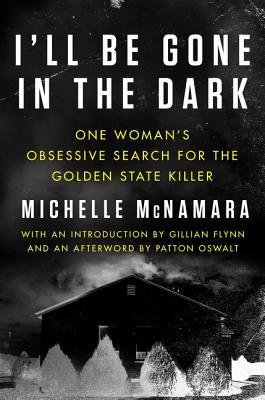
Shelf Control #254: I’ll Be Gone in the Dark by Michelle McNamara

Shelves final

Welcome to Shelf Control — an original feature created and hosted by Bookshelf Fantasies.

Shelf Control is a weekly celebration of the unread books on our shelves. Pick a book you own but haven’t read, write a post about it (suggestions: include what it’s about, why you want to read it, and when you got it), and link up! For more info on what Shelf Control is all about, check out my introductory post, here.

Want to join in? Shelf Control posts go up every Wednesday. See the guidelines at the bottom of the post, and jump on board!

Title: I’ll Be Gone in the Dark
Author: Michelle McNamara
Published: 2018
Length: 352 pages

What it’s about (synopsis via Goodreads):

A masterful true crime account of the Golden State Killer—the elusive serial rapist turned murderer who terrorized California for over a decade—from Michelle McNamara, the gifted journalist who died tragically while investigating the case.

“You’ll be silent forever, and I’ll be gone in the dark.”

For more than ten years, a mysterious and violent predator committed fifty sexual assaults in Northern California before moving south, where he perpetrated ten sadistic murders. Then he disappeared, eluding capture by multiple police forces and some of the best detectives in the area.

Three decades later, Michelle McNamara, a true crime journalist who created the popular website TrueCrimeDiary.com, was determined to find the violent psychopath she called “the Golden State Killer.” Michelle pored over police reports, interviewed victims, and embedded herself in the online communities that were as obsessed with the case as she was.

At the time of the crimes, the Golden State Killer was between the ages of eighteen and thirty, Caucasian, and athletic—capable of vaulting tall fences. He always wore a mask. After choosing a victim—he favored suburban couples—he often entered their home when no one was there, studying family pictures, mastering the layout. He attacked while they slept, using a flashlight to awaken and blind them. Though they could not recognize him, his victims recalled his voice: a guttural whisper through clenched teeth, abrupt and threatening.

I’ll Be Gone in the Dark—the masterpiece McNamara was writing at the time of her sudden death—offers an atmospheric snapshot of a moment in American history and a chilling account of a criminal mastermind and the wreckage he left behind. It is also a portrait of a woman’s obsession and her unflagging pursuit of the truth. Framed by an introduction by Gillian Flynn and an afterword by her husband, Patton Oswalt, the book was completed by Michelle’s lead researcher and a close colleague. Utterly original and compelling, it is destined to become a true crime classic—and may at last unmask the Golden State Killer. 

How and when I got it:

A family member sent me her copy after she finished reading it, over a year ago.

Why I want to read it:

True crime is not a go-to genre for me, but I’ve been hearing so much about this book ever since it came out, and I’m intrigued. My family member (who loves true crime) has been raving about this book, and thinks it’s one of the best in the genre.

The more I hear, the more fascinated I am by the topic, and want to learn more about the author’s investigative techniques, her sources, and the work she did to uncover a killer.

Have you read this book? Would you want to?

Please share your thoughts!


__________________________________

Want to participate in Shelf Control? Here’s how:

  • Write a blog post about a book that you own that you haven’t read yet.
  • Add your link in the comments or link back from your own post, so I can add you to the participant list.
  • Check out other posts, and…

Have fun!

Top Ten Tuesday: Favorite Kid-Lit Books Written Before I Was Born

snowy10

Top Ten Tuesday is a meme hosted by That Artsy Reader Girl, featuring a different top 10 theme each week. This week’s topic is Books Written Before I Was Born.

Oh dear. Is this topic just an under-handed way to get me to disclose how old I am???? Because I’ll tell you, relative to the majority of the book bloggers I know, sometimes I feel like I’m ANCIENT. (OK, so I’m in my 50s, which isn’t completely over the hill just yet!)

Anyhoo… I thought I’d zoom in on children’s books, written before I was born, that stand the test of time! Almost all of these are books that I read myself as a child, and then shared with my own kids too.

  • Charlotte’s Web by E. B. White (1952)
  • All-of-a-Kind Family by Syndey Taylor (1951)
  • Little Women by Louisa May Alcott (1868)
  • The Witch of Blackbird Pond by Elizabeth George Speare (1958)
  • My Side of the Mountain by Jean Craighead George (1959)
  • A Wrinkle in Time by Madeline L’Engle (1962)
  • Island of the Blue Dolphins by Scott O’Dell (1960)
  • Dr. Seuss’s Sleep Book by Dr. Seuss (1962)
  • Knight’s Castle by Edward Eager (1956)

Honorable mention: I’d include these books as well, but I didn’t read them until I was an adult! Still, they definitely belong on a list of favorite children’s books — and they were certainly written before I was born:

  • The Lion, The Witch, and the Wardrobe by C. S. Lewis (1950)
  • Anne of Green Gables by L. M. Montgomery (1908)
  • The Fellowship of the Ring by J. R. R. Tolkien (1954)

Are any of these your favorites too?

What books written before you were born do you really love?

Please share your link so I can check out your top 10!

The Monday Check-In ~ 2/1/2021

cooltext1850356879 My Monday tradition, including a look back and a look ahead — what I read last week, what new books came my way, and what books are keeping me busy right now. Plus a smattering of other stuff too.

Life.

Wait, how is it February already???

Nothing exciting to report here. It’s been a crazy week at work, and I was desperate for the weekend so I could sleep in, get outside, and not stare at spreadsheets. Mission accomplished!

What did I read during the last week?

Valiant and Ironside by Holly Black: The 2nd and 3rd books in the Modern Faerie Tales trilogy. My reviews are here and here.

Other than catching up on Don Quixote (and that was an uphill climb for sure!), that’s all the reading I did!

Pop culture & TV:

I just started Queen Sugar, and it’s amazing! I’m close to the end of season 1, and will probably just keep going until I’m all caught up.

Puzzle of the week:

I finally started one this weekend! No photos to share, because I’ve only just started… but it’s fun so far. 

Fresh Catch:

Hurray! An ARC for a book being published in April arrived this week:

What will I be reading during the coming week?

Currently in my hands:

The Four Winds by Kristin Hannah: I’m getting started a little later than I intended, but I’m exciting to be reading this. I’m 10% in, and really liking it!

Now playing via audiobook:

Meg & Jo by Virginia Kantra: A Little Women retelling, obviously. It’s pretty light and easy so far. We’ll see. 

Ongoing reads:
  • Outlander Book Club is re-reading Outlander! We’re reading and discussing one chapter per week. This week: Chapter 34, “Dougal’s Story”. 
  • Our current classic read is part 2 of Don Quixote. I’d fallen behind by a few weeks, but this past week, I put in the effort to catch back up. Now I just need to keep going.
  • I’m slowly reading The Heroine’s Journey by Gail Carriger. Another week with no progress, alas.

So many books, so little time…

boy1

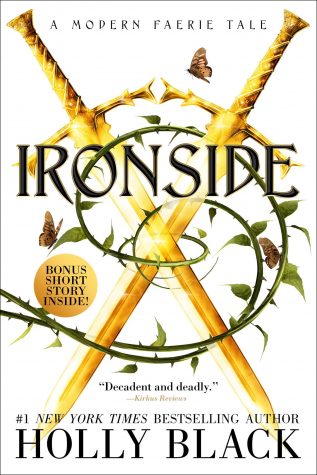
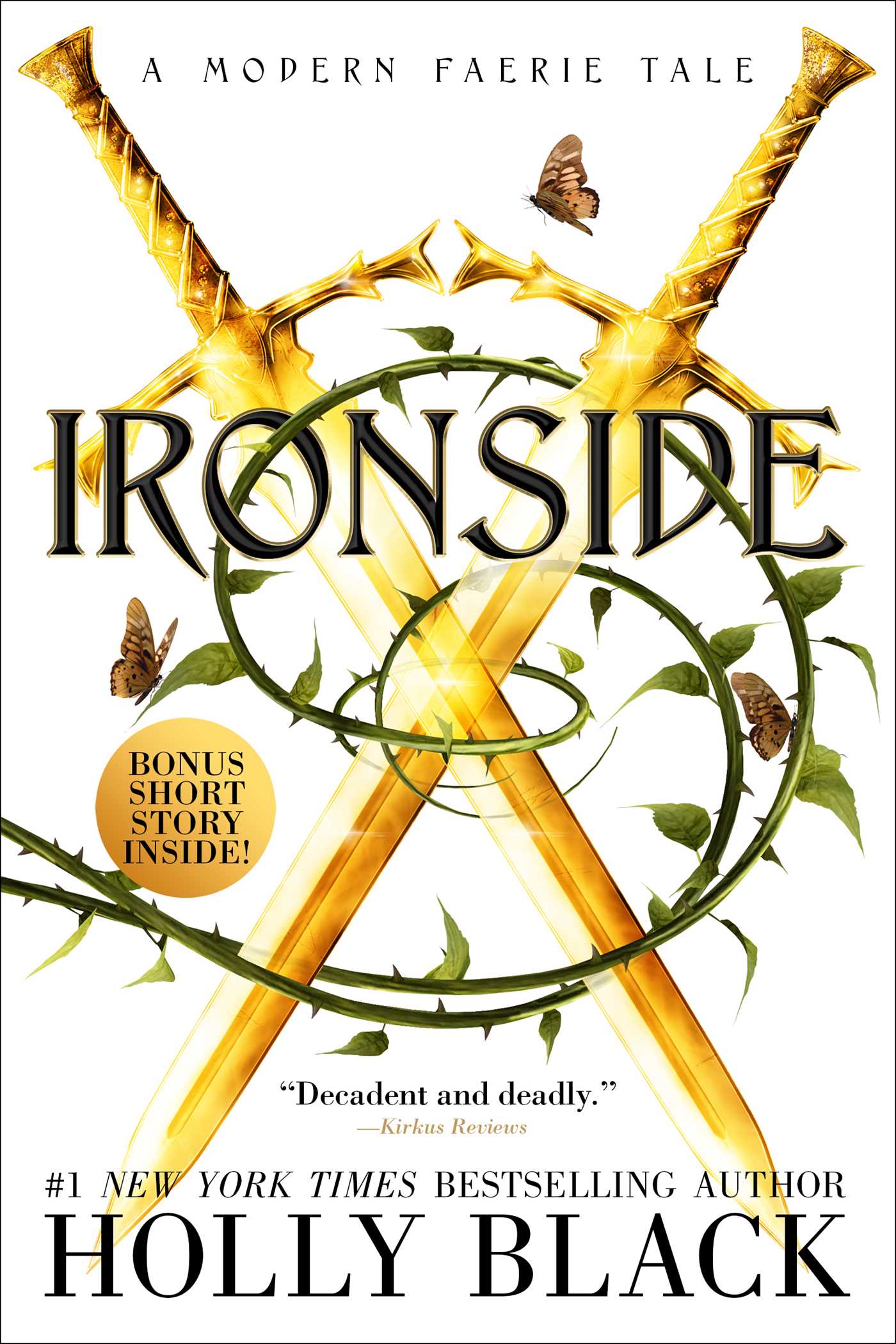
Book Review: Ironside (Modern Faerie Tales, #3) by Holly Black

Title: Ironside
Author: Holly Black
Publisher: McElderry Books
Publication date: 2007
Length: 323 pages
Genre: Young adult fantasy
Source: Purchased
Rating:

Rating: 3 out of 5.

In the realm of Faerie, the time has come for Roiben’s coronation. Uneasy in the midst of the malevolent Unseelie Court, pixie Kaye is sure of only one thing — her love for Roiben. But when Kaye, drunk on faerie wine, declares herself to Roiben, he sends her on a seemingly impossible quest. Now Kaye can’t see or speak to Roiben unless she can find the one thing she knows doesn’t exist: a faerie who can tell a lie.

Miserable and convinced she belongs nowhere, Kaye decides to tell her mother the truth — that she is a changeling left in place of the human daughter stolen long ago. Her mother’s shock and horror sends Kaye back to the world of Faerie to find her human counterpart and return her to Ironside. But once back in the faerie courts, Kaye finds herself a pawn in the games of Silarial, queen of the Seelie Court. Silarial wants Roiben’s throne, and she will use Kaye, and any means necessary, to get it. In this game of wits and weapons, can a pixie outplay a queen?

Holly Black spins a seductive tale at once achingly real and chillingly enchanted, set in a dangerous world where pleasure mingles with pain and nothing is exactly as it appears. 

I’m going to keep this post short, because I just don’t find myself having all that much to say about Ironside. But hey, I posted reviews for the first two books in the trilogy (Tithe and Valiant), so I might as well be complete about it!

In Ironside, we go back to the main character from Tithe — Kaye, the pixie raised as a human, who has fallen in love with Lord Roiben, the ruler of the Unseelie Court. He sets her on what seems to be an impossible quest, and meanwhile, is on the brink of war with the Seelie court, which his outnumbered people seem destined to lose.

Alongside her best friend, the mortal Corny, and their new friend Luis (who was introduced in Valiant), Kaye has to try to solve the riddle of her quest and find a way to prevent the war that’s likely to end with Roiben’s death, while also keeping Corny from the endless disasters that seem to pop up wherever he goes.

As in the other books in the trilogy, Ironside is set in New York, where faeries need magical powders of protection to live amidst all the poisonous iron of the human world. This book is not as bleak and grim as the 2nd book. There’s still danger, but the focus is mostly on events involving the faerie courts, and it doesn’t have quite the same sense of urban grittiness.

I’m not mad that I finished the trilogy, but I didn’t love the overarching story as a whole. Some characters are endearing, but the plot didn’t grab me, and key moments felt kind of brief and lacking in substance.

My edition of the trilogy (a three-in-one volume) includes The Lament of Lutie-Loo, a short story (written in 2019) about Kaye’s sprite companion and the visit she makes to Elfhame. I liked this a lot — it’s light and fun, and I think I particularly liked it for the glimpses of beloved characters from the Folk of the Air trilogy.

I’d been curious about these books, and they were on my list of series I wanted to read this year, so I’m glad to have accomplished what I set out to do. This trilogy as a whole didn’t thrill me, but I do love Holly Black’s writing and imagination, and look forward to reading a few more of her books.

Book Review: Valiant (Modern Faerie Tales, #2) by Holly Black

Title: Valiant
Author: Holly Black
Publisher: McElderry Books
Publication date: 2002
Length: 256 pages
Genre: Young adult fantasy
Source: Purchased
Rating:

Rating: 3 out of 5.

Return to New York Times bestselling author Holly Black’s enthralling realm of faerie in the second Modern Faerie Tales novel, where danger and magic come hand-in-hand in the dark underground of New York City.

When seventeen-year-old Valerie runs away to New York, she’s trying to escape a life that has utterly betrayed her. Sporting a new identity, she takes up with a gang of squatters who live in the city’s labyrinthine subway system. But there’s something eerily beguiling about Val’s new friends that sets her on edge.

When Val is talked into tracking down the lair of a mysterious creature, she must strike a bargain to make it out with her life intact. Now drawn into a world she never knew existed, Val finds herself torn between her affection for an honorable monster and her fear of what her new friends are becoming.

While Valiant is the 2nd book in Holly Black’s Modern Faerie Tales trilogy, don’t pick it up expecting to continue where Tithe left off. In Valiant, we meet a completely new cast of characters in a mostly new setting, and it’s only toward the end that there’s some cross-over with the previous book’s characters.

Val is 17 years old when she discovers a major betrayal by the people she trusted the most. Distraught, she takes a train into Manhattan to get away for a few hours — but then can’t bring herself to go back home. She shaves her head and takes to the street, fortunately meeting up with a few other teen runaways who welcome her into their circle. She soon finds herself squatting with them at an abandoned subway platform, where they can be relatively safe, keep warm, and have a regular place to sleep.

Val’s new friends — Lolli, Dave, Luis — have secrets. It turns out that they do odd jobs for the faerie underground in the city, making deliveries of a special potion that helps the Fae stay healthy in a world full of poisonous iron. What Val’s friends have discovered is that when a human uses this potion, especially by injecting it, it gives them all sorts of delicious borrowed power. It’s also highly addictive, and none of them seem able to resist it for long.

Meanwhile, someone is murdering solitary fae, and suspicion falls on Ravus, the bridge toll who creates and distributes the magical potion. Val has grown closer to Ravus, but being in his circle becomes more and more dangerous. There’s adventure and chaos, friendship and betrayal, growing up and going home. There’s a LOT going on this book.

Val & Ravus fan art via https://hollyblack.tumblr.com/

In some ways, Valiant could be seen as a metaphor for the dangers of being a runaway. Remember how people used to talk a lot about how Buffy is really a metaphor for the teen years (high school is hell!)? You could look at Valiant in a similar fashion. There’s a point to be made here: The experiences of Val and her friends are dark and grim and in no way glamorous or magical. The book shows their daily struggle to get enough to eat, find a bathroom to clean up in, sleep where they won’t be robbed or assaulted, and figure out who to trust. Several characters fall quickly into addiction, and the fact that it’s a magical drug doesn’t change the fact that it’s destroying them more and more each day. Through the constant threats and uncertainties, this book makes clear that running away shouldn’t be seen as the answer. Home may be hard, but being on the streets isn’t the “magical” solution either.

At the same time, this is a faerie tale, although a very dark one. It’s bleak and hard, the fae the characters meet are mostly cruel, and the stakes are high — if they survive their lives on the streets, they can still be killed by creatures that want to hurt them just for fun.

This isn’t a pleasant read, but it did keep me interested. I liked Val and Ravus as characters, and I’m interested in seeing how the 3rd book, Ironside, wraps up the plots of Tithe and Valiant. As I mentioned in my review of Tithe, I don’t feel these books are anywhere near the greatness of the Folk of the Air trilogy — but considering that the Modern Faerie Tales books were written about 20 years earlier, it’s nice to be able to compare and see the author’s development of her craft and the worlds she creates.

Onward to #3!

Shelf Control #253: Black Swan by Mercedes Lackey

Shelves final

Welcome to Shelf Control — an original feature created and hosted by Bookshelf Fantasies.

Shelf Control is a weekly celebration of the unread books on our shelves. Pick a book you own but haven’t read, write a post about it (suggestions: include what it’s about, why you want to read it, and when you got it), and link up! For more info on what Shelf Control is all about, check out my introductory post, here.

Want to join in? Shelf Control posts go up every Wednesday. See the guidelines at the bottom of the post, and jump on board!

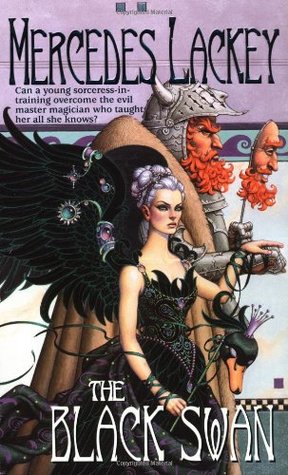
Title: Black Swan
Author: Mercedes Lackey
Published: 1999
Length: 416 pages

What it’s about (synopsis via Goodreads):

As the only child of a powerful sorcerer, Odile Von Rothbart has studied the magical arts under her father’s stern tutelage all her life. Yet she feels only fear toward him. For considering his wife’s untimely death the ultimate betrayal, Baron Von Rothbart scours the land in the shape of a great bird of prey. His personal mission is to capture woman who arouse his wrath and inspire his rage for vengeance against all womankind. These poor souls he turns into swans—forcing them to spend their lives as beautiful but powerless animals who only regain their human forms briefly each night by the transitory light of the moon.

Yet though Odile is terrified of him, she has learned far more than her father, the baron, intended to teach her—both of the magical arts and of Von Rothbart’s idiosyncratic nature. And both as a woman and the guardian of his swan flock, her heart goes out to each and every young maiden ensorcelled by her vindictive father.

And then the noblest of Von Rothbart’s enchanted flock, the Princess Odette, finds the courage to confront her captor, wresting from him a pact which could lead to freedom for herself and all the swan-maidens. Knowing Von Rothbart will use all of his magical cunning to avoid honoring this pact, will Odile have the strength to face him in a final magical confrontation which, if she fails, will lead to her death and the murder of all in her flock? 

How and when I got it:

Found at a library sale, of course! I’ve had Black Swan on my shelf for at least 3 or 4 years now.

Why I want to read it:

This is my second time featuring a Mercedes Lackey book as a Shelf Control pick — even though I still haven’t gotten around to reading the previous one yet. Her books just sound so good!

I’ve seen this book referred to as a fairy tale retelling, but it’s actually unclear (as far as I can tell) whether there was a specific fairy tale that inspired Swan Lake, or simply that the ballet includes elements that were common in folklore of the time.

In any case, I’ve always loved Swan Lake, and Black Swan is definitely a reinterpretation of the story told in the ballet. I think it sounds amazing, closely following the ballet’s plot, but focusing on Odile and giving her magical gifts and a feminist agenda.

Have you read this book? Does it sound like something you’d want to read? And do you have any other Mercedes Lackey books to recommend?

Please share your thoughts!


__________________________________

Want to participate in Shelf Control? Here’s how:

  • Write a blog post about a book that you own that you haven’t read yet.
  • Add your link in the comments or link back from your own post, so I can add you to the participant list.
  • Check out other posts, and…

Have fun!

Top Ten Tuesday: New-to-Me Authors I Read in 2020

snowy10

Top Ten Tuesday is a meme hosted by That Artsy Reader Girl, featuring a different top 10 theme each week. This week’s topic is New-to-Me Authors I Read in 2020.

There were so many great authors whose works I got to experience for the first time in 2020! Here are 10 favorites (although I think I could come up with a lot more!)

  • Stephen Graham Jones
  • Constance Sayers
  • Emily M. Danforth
  • Paulette Jiles
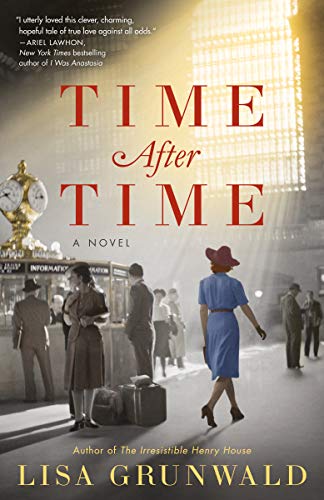
  • Lisa Grunwald
  • Andrzej Sapkowski
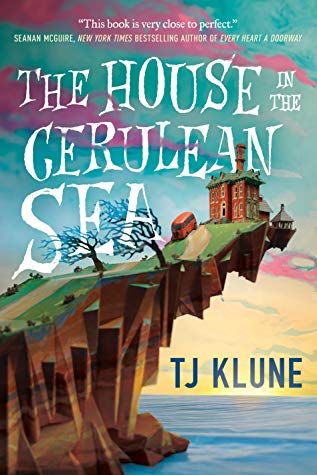
  • TJ Klune
  • Veronica Roth
  • V. E. Schwab
  • Silvia Moreno-Garcia

What new-to-you authors did you discover in 2020? Any particular favorites? Do we have any in common?

Please share your link so I can check out your top 10!

The Monday Check-In ~ 1/25/2021

cooltext1850356879 My Monday tradition, including a look back and a look ahead — what I read last week, what new books came my way, and what books are keeping me busy right now. Plus a smattering of other stuff too.

Life.

I loved everything about the inauguration — Lady Gaga, Jennifer Lopez, the amazing Amanda Gorman, seeing the Obamas and Clintons, even the guy whose job it was to sanitize the podium in between speakers. (Could have done without Garth Brooks, but oh well.) And of course, the main event — seeing our new President and Vice President taking their oaths of office — brought me to tears. It feels like a bright and shining new day, although I think it’s going to take all of us a while to get used to how it feels not having to hear about the latest awful thing the 2x-impeached person said or did on a daily basis. A return to normalcy and decency!

I’m loving all the Bernie memes, although I think this is my favorite graphic related to the inauguration:

In terms of my own life, I’ve spent most of this past week sick with persistent headaches and chills — but I tested negative for COVID, so that’s at least a relief. I was supposedly taking sick days, but ended up working practically every day anyway, because apparently work stops for no woman. Starting to feel a bit better finally, and hey, at least I was able to read!

What did I read during the last week?

Nemesis Games by James S. A. Corey: The fabulous 5th book in the Expanse series. My review is here.

We Came Here to Shine by Susie Orman Schnall: My book group’s pick for January — historical fiction set at the 1939 New York World’s Fair. My review is here.

Tithe by Holly Black: The 1st book in the Modern Faerie Tales trilogy. My review is here.

The Viscount Who Loved Me (Bridgertons, #2) by Julia Quinn: Just couldn’t resist reading more Bridgertons books! My review is here.

Pop culture & TV:

I mean, obviously the highlight was watching the inauguration!

Beyond that, I watched bits and pieces of a few different things:

  • Finished The Great on Hulu. Awesome! Can’t wait for season 2.
  • Started two Masterpiece shows: All Things Great & Small and Miss Scarlet and the Duke. Liking both so far.

I’m trying to decide what binge to start next, and I think it’s down to either Killing Eve or Queen Sugar. Any recommendations?

I’m also feeling pretty annoyed that there doesn’t seem to be a free option, despite how many streaming subscriptions I have, to watch the new season of A Discovery of Witches. Argh.

Puzzle of the week:

I didn’t do any. Between my achy head and my lack of focus, just couldn’t get into it this week.

Fresh Catch:

Two new books:

What will I be reading during the coming week?

Currently in my hands:

Valiant by Holly Black: The 2nd book in the Modern Faerie Tale trilogy. I decided to keep going, and plan to read #3, Ironside, right after this one. 

Now playing via audiobook:

Nothing at the moment, which is really weird for me. Because of how I was feeling this week, I just wasn’t up to listening to anything, and ended up finishing up my most recent audiobook (The Viscount Who Loved Me) by switching to the print version. Hopefully, I’ll get back to my audiobook routine in the next few days.

Ongoing reads:
  • Outlander Book Club is re-reading Outlander! We’re reading and discussing one chapter per week. This week: Chapter 33, “The Watch”. 
  • Our current classic read is part 2 of Don Quixote. My book group is reading and discussing three chapters per week. 
  • I’m slowly reading The Heroine’s Journey by Gail Carriger. I’m reading this in small bites, but didn’t make any progress this week.

So many books, so little time…

boy1