Book Review: Anxious People by Fredrik Backman

Title: Anxious People
Author: Fredrik Backman
Publisher: Atria
Publication date: September 8, 2020
Length: 352 pages
Genre: Contemporary fiction
Source: Review copy courtesy of the publisher via NetGalley
Rating:

Rating: 3 out of 5.

This is a poignant comedy about a crime that never took place, a would-be bank robber who disappears into thin air, and eight extremely anxious strangers who find they have more in common than they ever imagined.

Viewing an apartment normally doesn’t turn into a life-or-death situation, but this particular open house becomes just that when a failed bank robber bursts in and takes everyone in the apartment hostage. As the pressure mounts, the eight strangers slowly begin opening up to one another and reveal long-hidden truths.

As police surround the premises and television channels broadcast the hostage situation live, the tension mounts and even deeper secrets are slowly revealed. Before long, the robber must decide which is the more terrifying prospect: going out to face the police, or staying in the apartment with this group of impossible people.

In Anxious People, an ill-prepared and not very talented bank robber inadvertently seeks shelter in an apartment that’s open for viewing, turning a failed robbery into a hostage situation. For the people at the apartment viewing, being held hostage (by a robber none view as particularly dangerous) is the least of their worries.

The eight people present at the apartment all have stories to share, which we learn over the course of the book. How and why they all end up at this apartment on New Year’s Eve is complicated, and as they open up to one another, we see common threads of worry over relationships, living up to expectations, family drama, success, and finding meaning in life.

The narrative jumps around in time, taking us back 10 years to a suicide that occurred on a bridge visible from the apartment balcony, through the events of the day of the viewing, plus the police interviews that take place after the hostages are released.

We also get to know two police officers in this small Swedish town, Jim and Jack, father and son, whose professional interactions are more than a little influenced by their sometimes difficult personal relationship and their shared losses and fears. The deeper they delve into the witness statements, the more the bank robber’s motivations and actions become clear, but that doesn’t answer the fundamental question of what happened once the hostages were released.

Naturally, Jim did his best to act like he definitely had experience, seeing as dads like teaching their sons things, because the moment we can no longer do that is when they stop being our responsibility and we become theirs.

This was a quick, captivating read, and yet the level of whimsy in the storytelling is set very, very high. Your tolerance for this kind of quirky, whimsical storytelling will determine whether you’ll enjoy this book. For me, it was mixed. I’ve loved some of Fredrik Backman’s books in the past, yet there’s at least one (My Grandmother Asked Me To Tell You She’s Sorry) where I couldn’t get past the first few chapters because of the whimsy factor. It was just too much.

He presses his thumbs hard against his eyebrows, as if he hopes they’re two buttons, and if he keeps them pressed at the same time for ten seconds he’ll be able to restore life to its factory settings.

Here, the quirky storytelling leads to some very funny observations and comments, yet it’s all a bit much as a whole. The writing veers toward the precious at times, which tried my patience. A lot. I often enjoy quirky writing, but the sheer volume of it throughout Anxious People made it tough for me to enjoy.

Overall, I really liked the strange bunch of characters who find unexpected common ground through this one weird experience, an experience that teaches them all about how lives becomes mingled and how random occurrences can lead to profound change.

The truth? The truth about all this? The truth is that this was a story about many different things, but most of all about idiots. Because we’re doing the best we can, we really are. We’re trying to be grown-up and love each other and understand how the hell you’re supposed ot insert USB-leads. We’re looking for something to cling onto, something to fight for, something to look forward to. We’re doing all we can to teach out children how to swim. We have all of this in common, yet most of us remain strangers, we never know what we do to each other, how your life is affected by mine.

This wasn’t my favorite Backman book (I’d have to go with A Man Called Ove or Beartown), but I do look forward to continue reading his books, and have at least two from his backlist that I still need to read.

Anxious People is recommended for readers who enjoy character studies and quirkiness, with a smattering of deeper life lessons threaded throughout.

Book Review: The White Coat Diaries by Madi Sinha

Title: The White Coat Diaries
Author: Madi Sinha
Publisher: Berkley
Publication date: September 15, 2020
Print length: 304 pages
Genre: Contemporary fiction
Source: Review copy courtesy of the publisher via NetGalley
Rating:

Rating: 3.5 out of 5.

Grey’s Anatomy meets Scrubs in this brilliant debut novel about a young doctor’s struggle to survive residency, love, and life.

Having spent the last twenty-something years with her nose in a textbook, brilliant and driven Norah Kapadia has just landed the medical residency of her dreams. But after a disastrous first day, she’s ready to quit. Disgruntled patients, sleep deprivation, and her duty to be the “perfect Indian daughter” have her questioning her future as a doctor.

Enter chief resident Ethan Cantor. He’s everything Norah aspires to be: respected by the attendings, calm during emergencies, and charismatic with the patients. As he morphs from Norah’s mentor to something more, it seems her luck is finally changing.

When a fatal medical mistake is made, pulling Norah into a cover-up, she must decide how far she’s willing to go to protect the secret. What if “doing no harm” means risking her career and the future for which she’s worked so hard?

In this debut novel, written by a physician, we get a close-up-and-personal view of the life of a medical intern through the eyes and experiences of Norah Kapadia.

Norah is just starting out as an intern at the prestigious Philadelphia General Hospital, hoping to live up to her personal dream of becoming a doctor that her late father would be proud of. Internship, as we all know, is one of the roughest years in a young doctor’s professional development. Insane hours, lack of experience, lack of sleep — all contribute to the frenetic pace and intense pressure on Norah and the other interns in her cohort. Not all will make it through the year.

In addition to the professional challenges, Norah is also dealing with a demanding family who basically want her to quit, take a boring lab job, and devote herself to her hypochondriac mother’s 24/7 care. Nothing she does is good enough, despite her huge achievements thus far.

As an intern, Norah learns that her stellar book learning and years of studying to the exclusion of having a life have not truly prepared her for the real work of treating patients in a hospital. She makes some big mistakes, but so do the others, and their supervising residents vary between supportive and absolutely demeaning.

The tone of the book is very mixed. From the synopsis above, with its comparison to Scrubs, you might expect this book to be comedic in tone, and while there are some humorous episodes, it’s really not a funny book overall. In fact, it’s pretty dire at times, and the situations facing Norah and the other interns can be distressing and disturbing.

We’ve all heard about interns’ crazy hours and lack of sleep. Here, in The White Coat Diaries, we see how it feels to be an intern, and it’s not pretty. The mistakes can be devastating, and I found the lack of compassion and true caring about patients pretty upsetting. There’s one patient who gets passed from department to department and is known by the hospital staff as “Fat Dan”, and honestly, if that’s based on a real life experience, that’s just a really sad commentary on the state of medical practice today.

I wanted to like Norah, but she makes some very questionable decisions in her personal life that really affected my view of her. And then there’s the major ethical crisis stemming from a critical medical mistake (mentioned in the synopsis), which is horribly handled and left me feeling that none of the characters, including Norah, had any integrity whatsoever. From that point onward, it was very difficult to care about Norah or any of the characters in the slightest.

I also felt that Norah’s home life and family should have been explored further. We get snippets of her background and how her Indian-American upbringing affect her career choices and work ethic, but I wished it had been a little more fleshed out and developed.

Overall, The White Coat Diaries is a fast and absorbing read, but definitely isn’t as light or cheerful as the cover and description might make it seem. If The White Coat Diaries is a somewhat accurate depiction of the intern experience, then we should all be very worried about the future of the medical profession in the US.

Book Review: The Ghost Tree by Christina Henry

Title: The Ghost Tree
Author: Christina Henry
Publisher: Berkley
Publication date: September 8, 2020
Print length: 432 pages
Genre: Horror
Source: Review copy courtesy of the publisher via NetGalley
Rating:

Rating: 5 out of 5.

When people go missing in the sleepy town of Smith’s Hollow, the only clue to their fate comes when a teenager starts having terrifying visions, in a chilling horror novel from national bestselling author Christina Henry.

When the bodies of two girls are found torn apart in the town of Smiths Hollow, Lauren is surprised, but she also expects that the police won’t find the killer. After all, the year before her father’s body was found with his heart missing, and since then everyone has moved on. Even her best friend, Miranda, has become more interested in boys than in spending time at the old ghost tree, the way they used to when they were kids.

So when Lauren has a vision of a monster dragging the remains of the girls through the woods, she knows she can’t just do nothing. Not like the rest of her town. But as she draws closer to answers, she realizes that the foundation of her seemingly normal town might be rotten at the center. And that if nobody else stands for the missing, she will.

Now THAT’s how you write horror.

The Ghost Tree is chilling and disturbing, fascinating and unforgettable. I could not put this book down.

Set in a small idyllic Midwestern town, The Ghost Tree reveals the darkness that lies underneath the town’s peaceful, prosperous surface.

14-year-old Lauren is our main character. It’s the summer of 1985, and Lauren is looking forward to starting high school, even though she and her best friend Miranda have been growing apart. Lauren wants to keep playing in the woods and riding bikes, but Miranda is more interested in reading Cosmo and flirting with the older boys who drive cool cars.

Lauren is also dealing with her father’s death during the previous year, and her ongoing battles with her critical mother. Fortunately, her 4-year-old brother David is the bright spot in her life.

As the story starts, the awful, racist woman down the street discovers the dismembered bodies of two girls in her back yard. The girls are clearly outsiders, perhaps runaways passing through. But after the initial shock, these gruesome deaths don’t seem to make much of an impact on the town or its small police force, and it’s only through great effort that newcomer Officer Lopez can remember that there’s something odd that he should look into.

Told through multiple points of view, we get to see how the various townspeople have strange perceptions and faulty memories of the events that happen in Smith’s Hollow, and nothing seems to alter the pleasant lives of the town’s residents.

When Lauren’s grandmother shares a disturbing tale with her, Lauren is shocked and angry that her Nana would say such terrible things and expect her to believe them… but little by little, she comes to realize that there’s a dark truth lurking in the town’s memories, and that she and David might be the keys to preventing further bloodshed.

The Ghost Tree is so creepy and SO GOOD. The author does such a great job of letting us into Lauren’s mind, showing the uncertainties that a girl her age feels about all the changes in her life, but also showing her taking a stand and starting to own her opinions and take a stand.

The more we get to know about the town history and the secrets that everyone seems to have forgotten, the creepier and more disturbing the story becomes. And yes, there’s gore and bloodshed, but for me anyway, the scariest parts have to do with the mind control that the town seems to be under, and how inescapable its dark secrets seem to be.

I’ve read other books by Christina Henry, and already knew how talented she is. The Ghost Tree proves that she’s just as amazing at horror as she is at more fantasy-heavy stories.

I think I’m going to be thinking about this story for days. This is a story that sticks with you. Check it out!

Audiobook Review: Shades of Milk and Honey by Mary Robinette Kowal

Title: Shades of Milk and Honey (Glamourist Histories, #1)
Author: Mary Robinette Kowal
Narrator:  Mary Robinette Kowal
Publisher: Tor Books
Publication date: July 26, 2010
Print length: 306 pages
Audio length: 7 hours, 32 minutes
Genre: Fantasy
Source: Purchased
Rating:

Rating: 4.5 out of 5.

Shades of Milk and Honey is an intimate portrait of Jane Ellsworth, a woman ahead of her time in a world where the manipulation of glamour is considered an essential skill for a lady of quality. But despite the prevalence of magic in everyday life, other aspects of Dorchester’s society are not that different: Jane and her sister Melody’s lives still revolve around vying for the attentions of eligible men. 

Jane resists this fate, and rightly so: while her skill with glamour is remarkable, it is her sister who is fair of face, and therefore wins the lion’s share of the attention. At the ripe old age of twenty-eight, Jane has resigned herself to being invisible forever. But when her family’s honor is threatened, she finds that she must push her skills to the limit in order to set things right–and, in the process, accidentally wanders into a love story of her own.

This debut novel from an award-winning talent scratches a literary itch you never knew you had. Like wandering onto a secret picnic attended by Pride and Prejudice and Jonathan Strange & Mr NorrellShades of Milk and Honey is precisely the sort of tale we would expect from Jane Austen…if only she had been a fantasy writer.  

What a delight! Just like the synopsis promises, Shades of Milk and Honey is Austen-inspired fiction, set in a world just like Austen’s — except magic is real, and is a highly coveted art form.

Men in search of a worthy wife look for someone who can create a warm and lovely home, and someone skilled in the art of glamour can turn a bare room into something beautiful, or can create music and light that enhance any gathering.

At age 28, Jane expects to remain an old maid. Her best chance for a fulfilled life is likely dependent on her younger sister marrying well, then bringing Jane into her household as companion.

Melody, ten years younger, is beautiful and flighty, without any real patience for the careful study and effort needed to reach heights of glamour similar to Jane’s talents. Melody comes across as a mix of Lydia Bennet and Marianne Dashwood, delighting in emotion, eager to flirt and captivate, and not above resorting to a little conniving to make sure every eligible man’s attention is fixed on her.

When the famous glamourist Mr. Vincent is commissioned by a wealthy neighbor to create a glamural for her home, Jane finds herself in the gruff artist’s company more than feels comfortable. At the same time, she pines for the upright Mr. Dunkirk, whose younger sister she befriends, but she fears that his attention is far more focused on Melody than on her.

The story is charming and enchanting, mixing Austen-esque society and manners with clever magical artistry and talent. Jane is a wonderful main character, gifted yet lacking the passion to lift her illusions from technical skill to true art. While she’s brutal in her self-reflection, considering herself plain at best, she’s warm-hearted and generous with the people she cares about, and ends up caught in the snares of polite society etiquette and keeping confidences.

I listened to the audiobook of Shades of Milk and Honey, which is a very entertaining way to enjoy this story. The pacing and style work really well in audio format, and the clever dialogue and social niceties come across as both polite and very funny.

Author Mary Robinette Kowal is a talented audiobook narrator, and it’s fun to listen to her narrate her own story. (She narrates Seanan McGuire’s October Daye audiobooks, which are amazing.). My only complaint about the narration is that the accent used comes across as fake from time to time, but on the whole, I was swept up enough in the story not to mind it too much.

I’m happy that this book is the first in a series. While it seems like a full and complete story, I’m looking forward to exploring more of this world in the four books that follow.

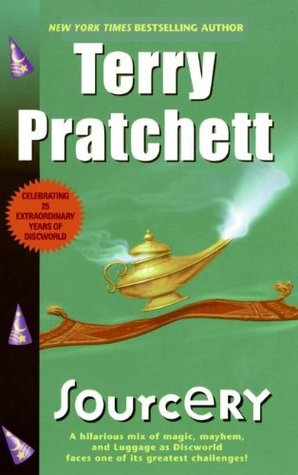
Discworld, #2, The Light Fantastic

The Light Fantastic
Published 1986
293 pages

My Discworld Challenge:

Over the summer, I committed to reading the Discworld series! I’m starting a new Discworld book on the 1st of each month, going in order of publication date.

Synopsis for The Light Fantastic:

In The Light Fantastic only one individual can save the world from a disastrous collision. Unfortunately, the hero happens to be the singularly inept wizard Rincewind, who was last seen falling off the edge of the world…

My rating:

Rating: 2 out of 5.

My reaction:

The Light Fantastic proves that you can dislike a book’s plot and still enjoy the writing.

I’m not sure I can even describe what happens in this book. The failed wizard Rincewind has further difficulties because of the powerful spell hidden in his brain, there’s a comet that threatens to collide with Discworld and destroy it, there are helpful trolls, an elderly warrior named Cohen the Barbarian, dastardly conspiracies, and of course, the tourist Twoflowers and his amazing Luggage.

It was all just kind of one random scene after another, sometimes ridiculous, sometimes funny, but none of it felt like a compelling narrative that made any sense at all. My eyes were glazed over for at least half of this book! And it drives me crazy that there are no chapters, just one long story.

At the same time, I do appreciate Terry Pratchett’s cleverness and awesome use of words, so even though this Discworld book’s plot left me unengaged and even bored at times, I loved so many passages. I’ll wrap up by sharing a few random samples:

He felt that the darkness was full of unimaginable horrors—and the trouble with unimaginable horrors was that they were only too easy to imagine . . .

They had dined on horse meat, horse cheese, horse black pudding, horse d’oeuvres and a thin beer that Rincewind didn’t want to speculate about.

Horse d’oevres! I had an uncle who would have loved that joke (and/or said it himself.)

It wasn’t that he was particularly wise. Every wizard considered himself a fairly hot property, wisewise; it went with the job.

Another voice, dry as tinder, hissed, “You would do well to remember where you are.” It should be impossible to hiss a sentence with no sibilants in it, but the voice made a very good attempt.

It was not a grin to inspire confidence. More horrible grins had probably been seen, but only on the sort of grinner that is orange with black stripes, has a long tail and hangs around in jungles looking for victims to grin at.

“… Rincewind, all the shops have been smashed open, there was a whole bunch of people across the street helping themselves to musical instruments, can you believe that?”

“Yeah,” said Rincewind, picking up a knife and testing its blade thoughtfully. “Luters, I expect.” 

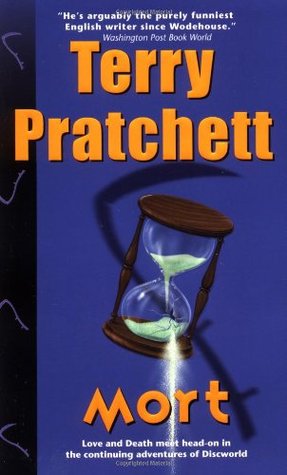
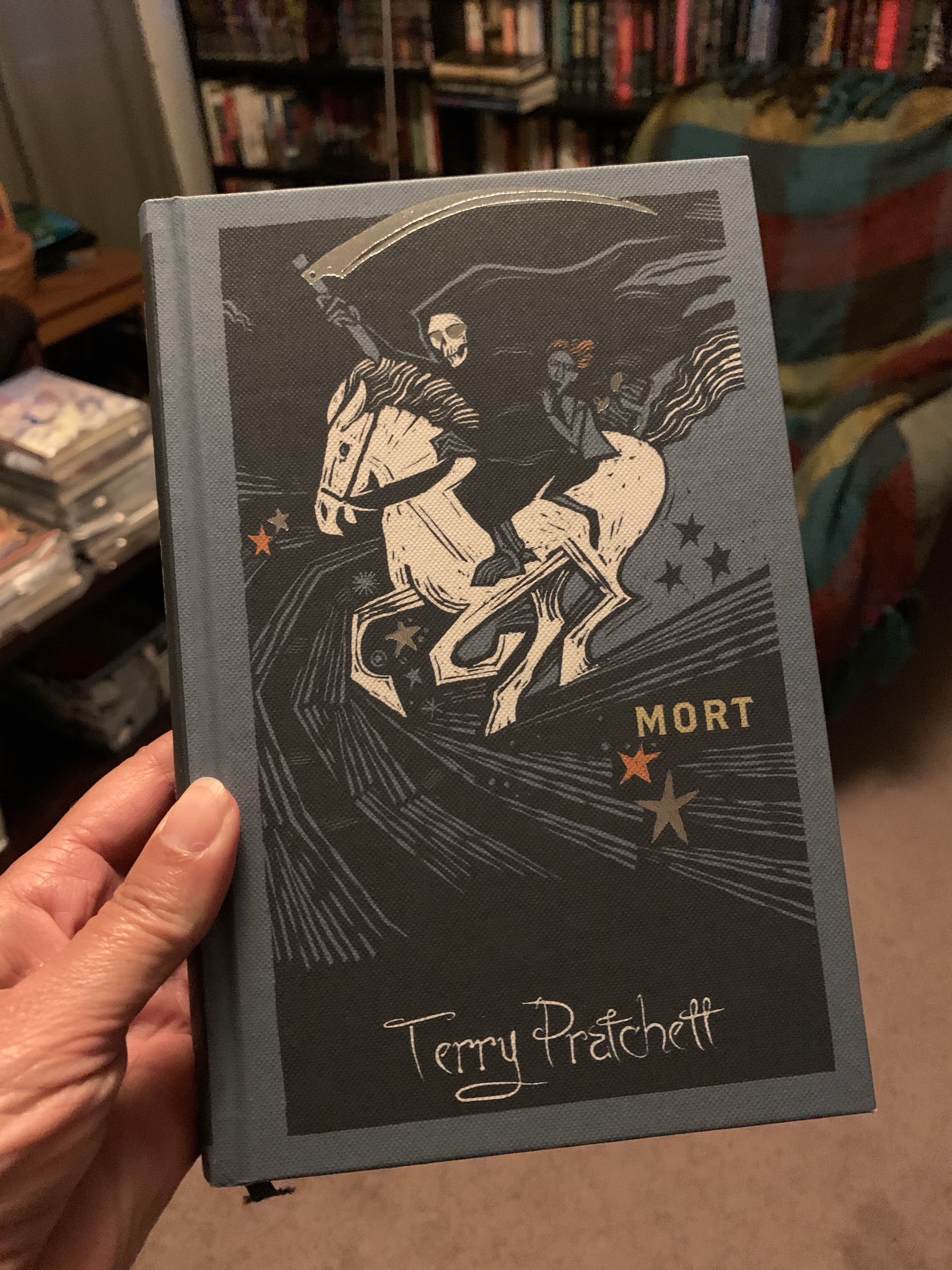
I’m not giving up on Discworld! I’d heard from the start that the first few books aren’t great, so I’m hanging in there. Next month’s book looks good, and I’m dying (ha! see what I did there?) to get to #4, Mort.

Up next:

October 2020: Equal Rites

Book Review: The Silent Patient by Alex Michaelides

Title: The Silent Patient
Author: Alex Michaelides
Publisher: Celadon Books
Publication date: August 18, 2020
Print length: 325 pages
Genre: Thriller
Source: Purchased
Rating:

Rating: 3 out of 5.

Alicia Berenson’s life is seemingly perfect. A famous painter married to an in-demand fashion photographer, she lives in a grand house with big windows overlooking a park in one of London’s most desirable areas. One evening her husband Gabriel returns home late from a fashion shoot, and Alicia shoots him five times in the face, and then never speaks another word.

Alicia’s refusal to talk, or give any kind of explanation, turns a domestic tragedy into something far grander, a mystery that captures the public imagination and casts Alicia into notoriety. The price of her art skyrockets, and she, the silent patient, is hidden away from the tabloids and spotlight at the Grove, a secure forensic unit in North London.

Theo Faber is a criminal psychotherapist who has waited a long time for the opportunity to work with Alicia. His determination to get her to talk and unravel the mystery of why she shot her husband takes him down a twisting path into his own motivations—a search for the truth that threatens to consume him… 

I’ll be blunt — this book annoyed the hell out of me. It’s super hyped, has tons of buzz, and I have friends who’ve insisted that I just had to read it. When my book club picked it as our August book, I knew my time had come.

In brief, this is a psychological thriller about Alicia, a woman who was convicted of murdering her husband and has been confined to a mental institution ever since. From the time she was discovered near her husband’s bloody body, she hasn’t spoken a word. Alicia, a talented artist, made only one communication since Gabriel’s death — a self-portrait, with the mysterious word “Alcestis” written at the bottom.

Theo Faber is a psychotherapist who became fascinated by Alicia’s story and the ensuing notoriety. Years later, he has the opportunity to work at the hospital where she’s a patient, and there he dives into her case, determined to understand why she hasn’t spoken in six years.

From the start, I was annoyed by Theo, and because he’s our point of view character, I felt impatient with the book as a whole. Theo overcame a horrible childhood to achieve professional success, and yet from the moment he transfers to the Grove, he seems to be flouting every rule of professionalism in his obsession with uncovering Alicia’s secrets.

It’s clear that there’s more to the story of the murder than what people accept as the truth. As Theo digs, several potentially shady people emerge as either witnesses or possibly perpetrators of some terrible acts. Aaaaaand… I won’t say too much more about the plot.

The resolution to the mystery took me by surprise, but I felt that the author only managed to achieve this through some sleight-of-hand involving the plot timelines that left me feeling manipulated, rather than pleasantly shocked by the cleverness of it all.

Theo’s actions often make no sense in the big picture, and I’m not sure that I buy the crime scene set-up and explanation as presented either. Yes, it’s twisty and full of unexpected revelations, but I felt too often that I was being “handled”.

I know I’m in the minority on this one. My book group seems to have loved The Silent Patient, and so did my husband and a few other friends. It’s a very quick read, and I was never bored — I think I tore through this book in about a day and a half, and reached a point where I couldn’t put it down.

So yes, it’s an absorbing read and I needed to keep going once I started. But something about it doesn’t sit well with me, and that’s why I gave it three stars.

Book Review: A Killing Frost (October Daye, #14) by Seanan McGuire

Title: A Killing Frost (October Daye, #14)
Author: Seanan McGuire
Publisher: DAW
Publication date: September 1, 2020
Print length: 336 pages
Genre: Urban fantasy
Source: Review copy courtesy of the publisher via NetGalley
Rating:

Rating: 5 out of 5.

When October is informed that Simon Torquill—legally her father, due to Faerie’s archaic marriage traditions—must be invited to her wedding or risk the ceremony throwing the Kingdom in the Mists into political turmoil, she finds herself setting out on a quest she was not yet prepared to undertake for the sake of her future…. and the man who represents her family’s past.

14 books in, what is there left to say about my super-duper favorite urban fantasy series? I love these books, and A Killing Frost is no exception!

For those unfamiliar with the series, October Daye is a changeling, born of a human man and a powerful Fae woman. Over the course of the series, October (Toby) has come into her own as a knight and a Hero of the Realm, gaining strength in her magical abilities and gifts and setting out on quests to right wrongs. As she so readily admits, hardly a day goes by when she doesn’t end up covered in blood.

Toby is an amazing character, and the series as a whole is a richly detailed world, set in and around human San Francisco, with complex rules, hierarchies, relationships, and power dynamics. The characters are so much of what makes these books so good — Toby has a found family by this point in the series, including her sort-of sister May, her fiance Tybalt, her squire Quentin, and an odd assortment of friends and associates who love Toby and keep her always on her toes.

In A Killing Frost, Toby and Tybalt (King of Cats) are getting closer to setting a wedding date, when Toby is informed that if she doesn’t invite her stepfather Simon to the wedding, he or anyone connected to him can claim offense. And in Faerie, that can lead to dire consequences, including forced servitude or other truly unpleasant outcomes.

Simon, however, is lost. In book #11, he traded his own way home in order to rescue his long-lost daughter. After having reformed his nastier ways, he’s back to being a bad guy, having forgotten all the good in his life. Toby’s only option is to search for Simon, bring him back, and find a way to break the spell so that he can truly be found again.

I won’t give too much away. Naturally, Toby ends up covered with blood — mostly, but not only, her own. There’s danger to her and to her companions, and the damage is truly gruesome at times.

I was scared for Toby, especially toward the end, when I couldn’t see a way that her actions wouldn’t end in disaster. Naturally, I ended up surprised in all sorts of ways, especially by a huge new development that will have major ripple effects from here on out.

I feel confident saying that if you’ve loved the October Daye series so far, you’ll love A Killng Frost too. If you haven’t started the series yet… well, go ahead!

Obviously, I adore October Daye, and I love basically everything written by Seanan McGuire.

A Killing Frost is a total treat. And now it’s back to the sad state of waiting a year for the next book in the series!

Book Review: The Switch by Beth O’Leary

Title: The Switch
Author: Beth O’Leary
Publisher: Flatiron Books
Publication date: August 18, 2020
Print length: 336 pages
Genre: Contemporary fiction
Source: Review copy courtesy of the publisher via NetGalley
Rating:

Rating: 3.5 out of 5.

Eileen is sick of being 79.
Leena’s tired of life in her twenties.
Maybe it’s time they swapped places…

When overachiever Leena Cotton is ordered to take a two-month sabbatical after blowing a big presentation at work, she escapes to her grandmother Eileen’s house for some overdue rest. Eileen is newly single and about to turn eighty. She’d like a second chance at love, but her tiny Yorkshire village doesn’t offer many eligible gentlemen.

Once Leena learns of Eileen’s romantic predicament, she proposes a solution: a two-month swap. Eileen can live in London and look for love. Meanwhile Leena will look after everything in rural Yorkshire. But with gossiping neighbours and difficult family dynamics to navigate up north, and trendy London flatmates and online dating to contend with in the city, stepping into one another’s shoes proves more difficult than either of them expected.

Leena learns that a long-distance relationship isn’t as romantic as she hoped it would be, and then there is the annoyingly perfect – and distractingly handsome – school teacher, who keeps showing up to outdo her efforts to impress the local villagers. Back in London, Eileen is a huge hit with her new neighbours, but is her perfect match nearer home than she first thought?

Switching lives is a fiction trope that’s always fun and entertaining, and that’s true for the new novel by Beth O’Leary.

In The Switch, a grandmother and granddaughter decide to switch lives for two months, each being stuck in a frustrating rut. For Eileen, she’s 79 years old, her lackluster husband has just left her for another woman, and she already knows all the single men her age in her little village. She’s ready to get back out and start dating, but the pickings are slim.

Meanwhile, Leena is afraid that she’s torpedoed her career after suffering a major panic attack in the middle of a client pitch. Her boss (kindly, I thought) insists that Leena take a 2-month paid holiday to rest and recenter herself.

Both Leena and Eileen are dealing with loss and grief, in addition to their career/dating woes. Leena’s younger sister Carla died a year earlier after a battle with cancer. Leena has been quietly falling apart ever since, and Eileen has thrown herself into looking after her daughter Marion, who is fragile and shaky. On top of all this, Leena isn’t speaking to Marion, since she blames her for allowing Carla to stop treatment rather than pursuing an experimental option in America.

Once Leena is forced to take time off, she comes up with the idea of switching places with her grandmother. While there are no eligible men for Eileen where she lives, there are plenty in London, and Leena realizes that the peace of the village might provide her with a fresh start.

Naturally, they’re both fish out of water. Eileen moves in with Leena’s twenty-something flatmates and immediately begins making waves, insisting on getting to know the neighbors, rather than observing the time-honored city dweller tradition of ignoring everyone around you. Eileen does not take no for an answer, and soon has the entire building socializing and coming together for a good cause. Not only that, but her online dating profile leads her to a few good prospects, including a suave, attractive actor who’s clearly just looking for a no-strings lover — something Eileen is all too eager to give a try.

For Leena, small-town life is not as quiet as she’d anticipated. She’s expected to fill Eileen’s role on town committees, to socialize with Eileen’s friends, and to pitch in whenever needed. The town gossip immediate includes Leena and her misadventures, but she’s determined to break through some of the walls that the town’s grumpier residents put up.

Of course, each woman ends up finding love — and I can’t really say it’s where you’d least expect it, because I could see the love stories coming from a mile away. Leena starts off with a serious boyfriend, but it’s easy for the reader to see the couple’s issues, even if Leena doesn’t, and naturally the right guy is right under her nose, once she opens her eyes.

The Switch is a warm book, definitely lightened up by Eileen’s quirkiness and feistiness. I enjoyed Leena’s interactions in the village too. The emotional beats related to Carla’s death and the aftermath of her loss are often powerful, although the plot thread showing Leena and her mother finding their way back together could have benefited from more showing and less telling.

Overall, this is a sweet, lovable book. It’s perky and charming, and even though it’s mostly predictable, I still found it a hug-worthy, engaging read — just the right blend of lightness and real-life emotion to make it a good summer escape.

Audiobook Review: Bookish and the Beast by Ashley Poston

Title: Bookish and the Beast (Once Upon a Con, #3)
Author: Ashley Poston
Narrator:  Caitlin Kelly, Curry Whitmire
Publisher: Quirk Books
Publication date: March 29, 2016
Print length: 288 pages
Audio length: 7 hours, 21 minutes
Genre: Young adult fiction
Source: Digital review copy courtesy of the publisher via NetGalley; audiobook purchased from Audible
Rating:

Rating: 4.5 out of 5.

In the third book in Ashley Poston’s Once Upon a Con series, Beauty and the Beast is retold in the beloved Starfield universe.

Rosie Thorne is feeling stuck—on her college application essays, in her small town, and on that mysterious General Sond cosplayer she met at ExcelsiCon. Most of all, she’s stuck in her grief over her mother’s death. Her only solace was her late mother’s library of rare Starfield novels, but even that disappeared when they sold it to pay off hospital bills.

On the other hand, Vance Reigns has been Hollywood royalty for as long as he can remember—with all the privilege and scrutiny that entails. When a tabloid scandal catches up to him, he’s forced to hide out somewhere the paparazzi would never expect to find him: Small Town USA. At least there’s a library in the house. Too bad he doesn’t read.

When Rosie and Vance’s paths collide and a rare book is accidentally destroyed, Rosie finds herself working to repay the debt. And while most Starfield superfans would jump at the chance to work in close proximity to the Vance Reigns, Rosie has discovered something about Vance: he’s a jerk, and she can’t stand him. The feeling is mutual.

But as Vance and Rosie begrudgingly get to know each other, their careful masks come off—and they may just find that there’s more risk in shutting each other out than in opening their hearts.

It’s no surprise that Bookish and the Beast is completely charming. After the delightful Geekerella and the lovable The Prince and the Fangirl, how can Ashley Poston miss?

For those unfamiliar with the Once Upon a Con series, these books take us into the world of Starfield fandom, as devoted fans cross paths with stars of the movie reboot, all structured along the lines of classic fairy tales with a modern twist.

Starfield is a (fictional) cult TV series with a huge, obsessed fan base. In Geekerella, Starfield is being rebooted as a movie, and fans are up in arms over what they see as questionable casting and a fear that their beloved characters will be sacrificed in the name of box office success.

Two books later, the Starfield movie franchise has completely filming the second movie, and the fans are ecstatic. Unfortunately, the bad boy of the movie’s cast, Vance Reigns, who plays anti-hero General Sond, can’t stay out of the tabloids. At age 17, he parties hard and gets in trouble endlessly. Finally, fed up and wanting some serious damage control, his parents arrange for him to hide out in a small town in North Carolina at the home of the film’s director, along with a guardian to keep him in check. And Vance is not happy.

Meanwhile, in the same town, Rosie Thorne is entering her senior year of high school. She has two amazing best friends, Annie and Quinn, and lives with her dad (a former punk rocker who causes her friends to swoon, and who they refer to as Space Dad — because “he’s so beautiful that his beauty is out of this world…”. Rosie lost her mother the previous year, and she’s both still deeply grieving and also sick of everyone seeing her as the girl with the dead mother and nothing more.

Rosie and her dad’s finances are shaky, having spent all their savings and then some on medical bills, but they get by. A chance encounter with Vance’s dog leads her into his orbit, and after she accidentally ruins a rare Starfield book from his borrowed house’s library, she agrees to pay it off by working in the house, tasked with organizing and cataloging the cartons and shelves full of books.

What neither Rosie nor Vance realize is that they’ve met once before, at ExcelsiCon, the annual convention dedicated to Starfield. Wearing masks, they spent one magical evening together, but left without disclosing their true names or faces. Neither has been able to shake the memory of their first meeting or the feelings it stirred up, but both have accepted that they’ll never know who that special person was.

Until…

Well. It’s a Beauty and the Beast retelling, so you know where this is going. The house where Vance is living is known locally as the “Castle House” — a vanity project of some millionaire, not usually inhabited, with moats and turrets, located at the end of a hidden lane through the trees. Rosie stumbles upon it (at night, of course) while trying to rescue a dog that ran in front of her car, and when she follows the dog (uninvited and unannounced) into the spooky, dark house, she runs right into Vance, who is outraged by the intrusion and behaves… um… beastly.

I loved all the little B&tB references, from a diner waitress named Mrs. Potts to the rose symbolism to the library as a way to a young woman’s heart. Little lines thrown in made me smile:

They probably got sick of being the middle of nowhere and left to have grand adventures in the great wide somewhere.

… and also:

… it’s pretty, and at least — unlike most of the houses around here — it doesn’t use antlers in all of the decorating.

Then there’s the story’s villain, Garrett Taylor, a handsome, popular jock who can’t believe someone like Rosie could even dream of turning him down. Like Gaston, he’s decided Rosie is the prettiest, therefore the best, and he deserves the best. His persistence goes from annoying to overboard to damaging, and he simply won’t listen to Rosie’s rejections.

The story is sweet and clever, and keeps the Beauty & the Beast storyline going without it ever feeling forced or overdone. At the same time, Rosie and Vance are fleshed-out characters with inner lives, each dealing with pain and emotional challenges, each striving to find a new future.

The author shows us Rosie’s grief and the depths of her loss, and how dramatically losing a parent can devastate a teen’s entire world, leaving her feeling not just the loss, but also the isolation and the rootlessness that comes with being different and losing a mother’s love and support.

I really loved this book, and enjoyed the through-story bits that continue expanding the world of Starfield, its characters, and its plot twists. One of the characters refers to Fangirl by Rainbow Rowell, and like Fangirl, the story within the story always leaves me wanting more. Might Ashley Poston actually write a Starfield book? Because I’d love to get more Carmindor, Amara, and Sond into my reading life!

The audiobook is really well done, with two different narrators — one for Rosie, one for Vance. They keep it light and entertaining, and let me feel like I was listening to the characters telling their own stories.

I have one complaint about the audiobook, and it’s a pretty big one that, days later, still makes no sense to me. Vance’s last name is Reigns, which I assume is pronounced like “rains” — there are even some tabloid headline puns about Vance needing to be “reigned” in.

So why, then, does the Rosie narrator (and occasionally the Vance narrator too) pronounce his last name as “re-gins” (with a hard G, kind of like begins, but with the accent on the first syllable). I couldn’t figure out what I was listening to at first, and had to go back to the print version to see if I’d misunderstood. Like, is Vance Reigns his stage name, but the family name is actually Reagans or something? Nope, it’s Reigns throughout the book.

So why does the audiobook have a different pronunciation? No idea. But it’s super annoying, and constantly distracting. Did they finish recording, realize it was wrong, and decided not to go back and fix it? Honestly, it makes no sense at all.

I realize I’m harping on about this, but it was distracting throughout the entire audiobook, so as much as I loved it overall, this one thing made it really frustrating too.

Putting that aside… I wholeheartedly recommend Bookish and the Beast. I think this is my favorite of the Con books, and I really hope there are more to come! And while this could possibly be read on its own, I really recommend reading the books in order, because you might not get the Starfield elements and what they mean otherwise.

Don’t miss these wonderful books!

Me, after finishing Bookish & the Beast

Book Review: Midnight Sun by Stephenie Meyer

Title: Midnight Sun
Author: Stephenie Meyer
Publisher: Little Brown Books for Young Readers
Publication date: August 4, 2020
Print length: 662 pages
Genre: Young adult fiction
Source: Purchased
Rating:

Rating: 3 out of 5.

When Edward Cullen and Bella Swan met in Twilight, an iconic love story was born. But until now, fans have heard only Bella’s side of the story. At last, readers can experience Edward’s version in the long-awaited companion novel, Midnight Sun.

This unforgettable tale as told through Edward’s eyes takes on a new and decidedly dark twist. Meeting Bella is both the most unnerving and intriguing event he has experienced in all his years as a vampire. As we learn more fascinating details about Edward’s past and the complexity of his inner thoughts, we understand why this is the defining struggle of his life. How can he justify following his heart if it means leading Bella into danger? 

Midnight Sun — the Twilight retelling we either needed or didn’t need, depending on who you ask.

I’m not going to hate on this book. I mean, hey, I compulsively read the Twilight series (multiple times) way back when, attended a midnight release party for Breaking Dawn, saw all the movies… I may even have had a T-shirt and calendar, but I’ll never admit it.

And yes, I’m a grown-ass woman. Anyhoo…

While my tastes and opinions related to the Twilight series have changed substantially over the years, I can’t deny that no matter how ridiculous the plotting and the writing, there’s something weirdly compelling and readable about these books. Despite my better instincts, they’ve always managed to just suck me in completely.

So, Midnight Sun. This is the long promised and often-leaked book that Stephenie Meyer wrote, retelling the events of Twilight from Edward’s tortured and brooding perspective. Does it work? Well, yes, but you have to decided for yourself whether you actually want to need to hear it all.

First, be aware of the length. From an interview on Amazon, the author explains:

The reason Midnight Sun is a hundred pages longer than Twilight is because the font is much, much smaller. The word count gives you a better picture: Twilight is around 119,000 words; Midnight Sun is about 240,000. It’s literally twice as long. It was obvious from the beginning that Edward’s version would be quite a bit longer. First of all, Edward never sleeps. Secondly, he’s quite the overthinker. Third, he’s lived a lot longer than Bella and thus has a bunch of flashbacks. The length wasn’t something I decided to do 14 years later; the story always demanded this.

You read that correctly: If you’re looking just at word count, which is a better measure for comparison, Midnight Sun is TWICE as long as Twilight, even though it’s telling the same exact story. Living inside Edward’s head must be exhausting!

So let’s get on with my reactions to this book.

Yes, the length was annoying. I felt like I was reading this book non-stop, and it still took me all week to finish. And while I was entertained at first, I got a little weary after a while.

Everything that’s ridiculous and/or annoying about the original is still ridiculous/annoying here. Vampire baseball is still stupid. The Cullens always seeming to pick up Bella and carry her instead of trusting her to walk on her own two feet is all sorts of awkward, and really funny to visualize. Going to hide in Phoenix because the bad guy would assume Bella isn’t stupid enough to hide in Phoenix is… stupid.

The idea that the Cullens could actually attend human high school and blend in somehow is utterly nonsensical. Of course, I do blame the movie version a bit for this, because before seeing the movie, it maybe wasn’t quite as startling in my head how white and nonhuman they all look. But even just reading Midnight Sun, it’s absolutely clear that don’t fit in.

Never mind that fact that if I’d been alive for decades, not to mention a century, the last thing I’d want to do would be to sit through high school over and over again. How utterly awful. Especially given that 4 of the 5 Cullen “children” attending high school are living in partnered adult relationships. Are they teens or adults? It’s weird and confusing every time Edward thinks of himself as being 17.

It’s also funny to realize how much my memory of the Twilight story is influenced by scenes from the movie. I was 100% sure that the big confrontation between Bella and Edward, when she admits that she knows he’s a vampire, takes place in the forest. Right? Right?

Well, sorry, that’s wrong. They’re in Edward’s car. Not quite as dramatic a setting.

But let’s switch over to the positive. It IS actually interesting to see events from Edward’s perspective, to get more of a detailed look at why he reacts to Bella the way he does. Funnily enough, the most interesting parts of Midnight Sun for me are the scenes without Bella, when we see what else was going on when we were following Bella in Twilight.

We get a lot more of the Cullens, and they’re always the best part of the story. We learn a lot about the family history, Edward’s relationships with his different siblings, and how they behave amongst themselves when it’s just them, with no fragile little humans in their midst.

The best character, as always, is Alice. There’s just so much more of her here, and she’s a treat. Through Edward and Alice’s interactions, we get a much better view of how her visions of the future and Edward’s mind-reading work together, and honestly? It’s kind of cool.

Also, through Alice’s visions, we find out more about how Edward sees the future. Alice continually shows him possible outcomes as he falls deeper and deeper in love (or obsession) with Bella, and most aren’t pretty at all. No wonder he’s so torn up inside all the frickin’ time. On the other hand, it’s adorable how Alice tries to steer Edward in certain directions, because she’s seen already that she’s going to love Bella, even before she knows her, and doesn’t want to ruin the chance of being her friend. Awwwww.

Emmett is also pretty awesome as Edward’s closest brother and friend, always having his back and all-around pretty chill. Jasper is a bit enigmatic in this version, and Rosalie isn’t particularly likable, even though Edward repeatedly explains why she feels the way she does about Bella.

I really liked a dramatic car chase scene toward the end where the family basically acts as Edward’s GPS, with Alice monitoring the future for road conditions and speed traps, and the other family members acting as rear and side mirrors, watching the road so Edward can view it through their eyes. Kind of ridiculous, but also pretty fun.

I mean, sure, the more problematic aspects of Twilight are still as problematic in Midnight Sun. Edward is such an obsessive stalker — but I guess because he acknowledges it to himself, it’s supposed to be okay? Sorry, but there’s no way to make his behavior (like lurking in Bella’s bedroom while she sleeps) not creepy, even if he justifies it through his compulsion to keep her safe every second of the day.

And the writing? Well, I suppose tastes may vary, but here are a couple of snippets that prompted me to have to close the book for a minute or two and refocus.

It felt like simmering coals, as though a dull version of my thirsting burn had spread throughout my entire body.

I’m not entirely sure what that means, to be honest.

With her wet hair looping in long seaweed tangles around her shoulders, and her face glowing in the moonlight, she looked more than good. The English language needed a word that meant something halfway between a goddess and a naiad.

Oh, Edward. You’re just too much.

And I guess “too much” is about how I feel overall about this book. I liked it, gotta be honest. It was fun in spots. But Edward is SO broody and introspective, and he just never stops. And even at the end, he’s still planning to leave Bella, which really isn’t the impression I had from the end of Twilight. So that’s a good twist, but I’m not convinced that the new and different outlooks really justify the length of this doorstop of a book.

Please don’t ask me if I’d read more books set in the Twilight world, if Stephenie Meyer decides to keep going.

I think we all know the answer to that question.