Book Review: Sprig Muslin by Georgette Heyer

Title: Sprig Muslin
Author: Georgette Heyer
Publisher: Sourcebooks Casablanca
Publication date: 1956
Length: 298 pages
Genre: Historical fiction/romance
Source: Purchased
Rating:

Rating: 4.5 out of 5.

A dashing man of honor…

En route to propose to his sensible acquaintance Lady Hester, Sir Gareth Ludlow finds young, pretty Amanda wandering unattended and knows it is his duty to bring her back to her family. This turns out to be a challenge as Amanda seems to possess an imagination as intriguing as it is dangerous.

A shocking refusal…

Lady Hester stuns both him and her family when she refuses him. At her age, no one would expect her to turn down such an eligible suitor. But Lady Hester has met the indomitable Amanda. How can the quiet, intelligent Hester hope to compete with such a lively young lady?

After finishing Georgette Heyer’s Cotillion, I felt like my appetite for her books was reignited, and turned to Sprig Muslin, a paperback I’d picked up a few years ago. I’m so happy I did! Sprig Muslin is silly, sweet-natured, fun — and a refreshing contrast to some of Heyer’s more dramatic books about rakes and rogues and dashing men with terrible reputations.

In Sprig Muslin, the two anchors of the story are good-natured, respectable adults who nonetheless find themselves caught up in a whirlwind of shenanigans. Sir Gareth Ludlow, at age 35, is fashionable, well-off, and after losing his fiancée in a tragic accident many years earlier, still single. It’s time for him to take a wife and start producing heirs.

Sir Gareth decides to propose to Lady Hester Theale, a kind, intelligent woman he’s been friends with all his life. Lady Hester, at age 29, is on the shelf and seemingly content with her lot, although she does seem to get bossed around by her overbearing brother and sister-in-law quite a bit. Hester is appalled to learn that Sir Gareth has declared his intentions to her father and is en route to propose to her; although she won’t give a reason, she definitely does not want this proposal.

Sir Gareth’s plans are interrupted when he stops for refreshment along the way and discovers a young girl on the verge of trouble. Amanda, not quite 17, has apparently run away and is determined to remain at large. Clearly belonging to an upper class family, she states that she intends to marry an up-and-coming soldier, and by running away, she intends to force her grandfather to give his consent. Amanda is headstrong and passionate, and Gareth realizes that his duty is to see her safely returned to her family rather than leaving her to make her way unchaperoned and without an actual plan.

There’s a hitch, however: Amanda refuses to name her family, where they live, or even who her soldier fiancé is. She spins story upon story, and while initially thankful that Gareth seems willing to help her, she soon realizes that he’s going to keep her from her schemes, and attempts to get away from him too.

Thus begins a madcap series of escapades, as Amanda creates one fabulous story after another to explain her situation, drawing in Gareth and then others met along the way. Each tale leads to further complications, and before too long even Hester is drawn into Amanda’s web of stories and fake identities.

Sprig Muslin is utterly delightful. As Amanda’s stories get more and more inventive, various bystanders take on roles, and her tales result in all sorts of rescue attempts, misguided escapes, and even a daring kidnap attempt that goes disastrously wrong. It’s all quite ludicrous, and so very, very enjoyable.

As with all Georgette Heyer books, the unusual words and expressions make the reading experience extra entertaining — here are a few from Sprig Muslin that I highlighted:

  • nodcock (fool or idiot)
  • marplot (one who ruins a plan through meddling)
  • bosky (drunk)
  • daffish (stupid, silly)
  • spinney (small area of trees and bushes)
  • gammon (trick)
  • nonesuch (a person or thing unrivaled or unequaled)
  • gaby (a foolish person)
  • elbow-crooker (drinker)
  • bobbery (a squabble, a noisy disturbance)
  • humdudgeon (loud complaint or noise)
  • flat (as in, “A flat, my child, is one who is easily duped”)

And as for phrases, can’t beat:

  • a fashionable fribble
  • a real top-of-the-trees, slap up to the echo (top-of-the-trees = someone of high esteem)
  • chuffy thing to do
  • in the petticoat line (associating with women of “easy virtue)

While I always enjoy Georgette Heyer’s books, Sprig Muslin may have just become my new favorite. It’s so good-natured, and the sense of fondness for Kitty’s exploits makes this a sweet read. I came away from it really appreciating all the main characters, and had plenty of giggles along the way. If you’re looking for a GH book but aren’t crazy about rakish men being cast as heroes, Sprig Muslin is a great choice!

Book Review: Don’t Forget to Write by Sara Goodman Confino

Title: Don’t Forget to Write
Author: Sara Goodman Confino
Publisher: Lake Union Publishing
Publication date: September 1, 2023
Length: 334 pages
Genre: Historical fiction
Source: Prime First Reads (free during August)
Rating:

Rating: 4 out of 5.

In 1960, a young woman discovers a freedom she never knew existed in this exhilarating, funny, and emotional novel by the bestselling author of She’s Up to No Good.

When Marilyn Kleinman is caught making out with the rabbi’s son in front of the whole congregation, her parents ship her off to her great-aunt Ada for the summer. If anyone can save their daughter’s reputation, it’s Philadelphia’s strict premier matchmaker. Either that or Marilyn can kiss college goodbye.

To Marilyn’s surprise, Ada’s not the humorless septuagenarian her mother described. Not with that platinum-blonde hair, Hermès scarf, and Cadillac convertible. She’s sharp, straight-talking, takes her job very seriously, and abides by her own rules…mostly. As the summer unfolds, Ada and Marilyn head for the Jersey shore, where Marilyn helps Ada scope out eligible matches—for anyone but Marilyn, that is.

Because if there’s one thing Marilyn’s learned from Ada, it’s that she doesn’t have to settle. With the school year quickly approaching and her father threatening to disinherit her, Marilyn must make her choice for her future: return to the comfortable life she knows or embrace a risky, unknown path on her own.

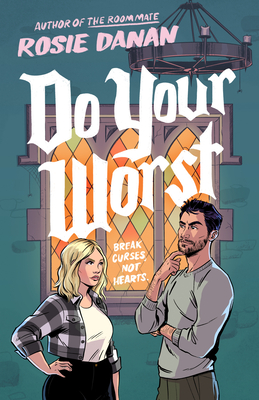
What a treat to take a chance on a book I’d never heard of… and end up loving it! I came across Don’t Forget to Write through a promotional email for this month’s free Prime Reading choices. The cover caught my eye, and I once I read the description, I figured… why not?

Set in the summer of 1960, Don’t Forget to Write starts with a bang, as a rebellious 20-year-old — whose father only agreed to send her to college so she could find a husband — decides to make out with the cute son of the rabbi during Saturday morning services… and ends up crashing through a stained glass window with him, mid-kiss, in front of everyone. It’s a scandal — a scandal, I tell you!

While the rabbi and Marilyn’s parents all seem to feel that the only solution is for Marilyn and Daniel to get married, Marilyn has no intention of doing so. She’s grown up seeing her mother’s boredom as a housewife (dinner is often burned because her mother is too busy reading to check on the food), and she’s determined that she will not have that same fate.

Facing parental wrath, Marilyn is forced into the only acceptable alternative: She’ll go spend the summer with her great-aunt Ada, a matchmaker in Philadelphia, with a reputation for strictness and keeping a tight rein on anyone under her control. Upon arrival, Marilyn finds that Ada is a no-nonsense free spirit, and yes, she has very strict rules for Marilyn, but she’s also fierce, outspoken, generous, and a big believer in thinking for oneself.

Before long, the two head for Ada’s home on the island of Avalon on the Jersey Shore, where further adventures await, including glamorous nights out in Atlantic City and sunbathing (with Coppertone!) on the beach while wearing the latest fashionable bikini. Ada is not what Marilyn expected, and under her care, Marilyn starts to bloom into the independent young woman she was meant to be.

Don’t Forget to Write is such an enjoyable read, in so many ways. I loved the depiction of the era — we know the looser vibe of the late 60s is just a little way in the future, but for Marilyn, those freedoms will be too late unless she comes up with her own plans. She’s very much still a hostage to the morals and traditions of the 1950s, when any woman who breaks the mold of wife and mother is judged and scorned.

Avalon is described wonderfully, as is the sense of Atlantic City in its heyday. Ada herself is marvelous — feisty, smart, strong, entrepreneurial, seemingly hard as nails but with quite a loving heart underneath her tough exterior.

The Jewish elements are really engaging as well, and I couldn’t help but laugh at the scenes of scandal in the synagogue! While this takes place before my own time, it definitely mirrors the era in which my parents were young adults, and knowing their stories, I could really relate to some of the scenes and dialogue here.

The relationship between Marilyn and Ada deepens over the course of the book, and is both funny and touching. Marilyn’s growth and the realizations she has about her life and her choices are well-developed, and I really enjoyed seeing her figure out what she wants out of life, what she’s willing to accept, and what she’s prepared to fight for.

The ending may have been a smidge predictable, but that’s okay. Overall, Don’t Forget to Write is an entertaining look at women’s lives in a bygone era, with a terrific mix of nostalgia, summer breezes, and strong characters.

I’m so happy I decided to pick up this book! It’s rare these days that I read something that I know nothing about ahead of time — what fun to just go for it and have it turn out so well!

Book Review: Mika in Real Life by Emiko Jean

Title: Mika in Real Life
Author: Emiko Jean
Publisher: William Morrow
Publication date: August 2, 2022
Length: 384 pages
Genre: Contemporary fiction
Source: Purchased
Rating:

Rating: 5 out of 5.

One phone call changes everything.

At thirty-five, Mika Suzuki’s life is a mess. Her last relationship ended in flames. Her roommate-slash-best friend might be a hoarder. She’s a perpetual disappointment to her traditional Japanese parents. And, most recently, she’s been fired from her latest dead-end job.

Mika is at her lowest point when she receives a phone call from Penny—the daughter she placed for adoption sixteen years ago. Penny is determined to forge a relationship with her birth mother, and in turn, Mika longs to be someone Penny is proud of. Faced with her own inadequacies, Mika embellishes a fact about her life. What starts as a tiny white lie slowly snowballs into a fully-fledged fake life, one where Mika is mature, put-together, successful in love and her career.

The details of Mika’s life might be an illusion, but everything she shares with curious, headstrong Penny is real: her hopes, dreams, flaws, and Japanese heritage. The harder-won heart belongs to Thomas Calvin, Penny’s adoptive widower father. What starts as a rocky, contentious relationship slowly blossoms into a friendship and, over time, something more. But can Mika really have it all—love, her daughter, the life she’s always wanted? Or will Mika’s deceptions ultimately catch up to her? In the end, Mika must face the truth—about herself, her family, and her past—and answer the question, just who is Mika in real life?

Perfect for fans of Kiley Reid’s Such a Fun Age, Gayle Honeyman’s Eleanor Oliphant is Completely Fine, and Rebecca Serle’s In Five Years, Mika in Real Life is at once a heart-wrenching and uplifting novel that explores the weight of silence, the secrets we keep, and what it means to be a mother.

In this brilliant new novel by from Emiko Jean, the author of the New York Times bestselling young adult novel Tokyo Ever After, comes a whip-smart, laugh-out-loud funny, and utterly heartwarming novel about motherhood, daughterhood, and love—how we find it, keep it, and how it always returns.

I loved Emiko Jean’s YA duology Tokyo Ever After and Tokyo Dreaming, and had my eye on this adult novel ever since I first saw it announced. Finally, I had the opportunity to read it… and loved it.

In Mika in Real Life, Mika’s life really is a mess. She lives with her best friend in a house that’s a disaster zone, doesn’t speak to her parents, has lost yet another meaningless job, and has no romantic life to speak of. Mika’s thoughts are haunted by memories and what-ifs. At age 19, she gave a baby daughter up for adoption, and not a day goes by when she doesn’t think of Penny with longing and love.

When Penny contacts Mika out of the blue, Mika is delighted. She’s received annual letters from Penny’s adoptive parents with updates on her life, but nothing prepares her for the joy of connecting with this vibrant teen. As they progress from phone calls and texts to regular FaceTime chats, Penny wants to know more and more about Mika’s life — but Mika feels like more and more of a failure. She just wants to be someone Penny can be proud of, and begins fudging details, only to be thrown into a panic when Penny announces she’s coming to Portland for a visit in two weeks.

A rational response might be to own up to the deception, but instead Mika doubles down. With the help of her friends, she creates a fake life to show Penny, including everything from having her ex pose as her current (and very loving) boyfriend to borrowing an artist’s workspace to stage an opening for what she’s described as her very own gallery. As expected, the lies all blow up in Mika’s face and threaten to permanently ruin her developing relationship with Penny and her father Thomas.

While I cringed throughout this section — because of course it was all going to go wrong! — fortunately, this is not the ultimate storyline of the entire book. Instead, from this point, Mika ends up reexamining her life, her relationships, and how she got to this point. Yes, it’s a terrible moment, but we can understand Mika’s choices and root for her to make amends.

There’s so much more going on this book, and it’s deep and powerful. Without getting into spoiler territory, the more we learn about Mika’s childhood as well as her pregnancy, the more we see how much sorrow and pain Mika carries, and why the choices she’s made feel out of her own control so much of the time. She’s had to cope the best she could, not always well or in a way that’s rational or healthy, but she’s survived, and that’s a lot.

I loved seeing Mika’s bumpy road to connecting with Penny, as well as seeing the lovely friendship she has with her best friend. Mika’s troubled relationship with her own mother is very sad, but well explained. The deeper story about the traumas in Mika’s past and her ongoing struggles is very thoughtful, emotional, and powerful. I also appreciated how sensitively the cultural issues related to the adoption were handled — it’s clear that Penny’s adoptive parents were loving and nurturing, but they also were either unable or unwilling to give her the exposure to her Japanese heritage that teen Penny is hungry for.

Another powerful theme running throughout Mika in Real Life is about mother-daughter relationships, and how the disappointments, deferred dreams, and painful moments of one generation can spill over into the next. Seeing Mika recognize and then attempt to break the cycle of disapproval and living for another person’s dreams is very relatable and emotional.

“How does this end? Mika wondered. Not how she wanted it to. She thought of Caroline dressing Penny in clothes that matched her own. Of Hiromi forcing Mika to take dance lessons. How mothers see their daughters as echos, as do-overs, as younger versions of themselves who might have the life they didn’t or have the same life as they did, but better. But children aren’t second chances, Mika realized with a start. It was unfair for Hiromi to believe her desires should live inside Mika. Children are made to take a parent’s love and pass it along.”

The synopsis describes Mika in Real Life as “laugh-out-loud funny” — and I’d say, no, it isn’t. There are definitely some lighter, funny moments, but this book is much more on the thoughtful, moving side. I’d hate for someone to approach it expecting humor to be dominant and then feel let down. “Heart-wrenching and uplifting” is far more accurate, as are “whip-smart” and “utterly heartwarming”.

I listened to the audiobook, and loved the narrator’s gifted depiction of Mika’s internal life, as well as the well-voiced characters surrounding Mika, especially Penny. The narration also offers the experience of hearing the Japanese words and phrases spoken accurately, which I really appreciated.

Overall, this is a powerful depiction of resilience and love, with memorable characters and a strong, well-developed plot. Highly recommended.

Book Review: What Would Jane Austen Do? by Linda Corbett

Title: What Would Jane Austen Do?
Author: Linda Corbett
Publisher: One More Chapter
Publication date: June 16, 2023
Length: 385 pages
Genre: Contemporary fiction
Source: Purchased
Rating:

Rating: 3 out of 5.

It’s a truth often acknowledged that when a journalist and Jane Austen fan girl ends up living next door to a cynical but handsome crime writer, romantic sparks will fly!

When Maddy Shaw is told her Dear Jane column has been cancelled she has no choice but to look outside of London’s rental market. That is until she’s left an idyllic country home by the black sheep of the family, long-not-so-lost Cousin Nigel.

But of course there’s a stipulation… and not only is Maddy made chair of the committee for the annual village literary festival, she also has to put up with bestselling crime author –and romance sceptic – Cameron Massey as her new neighbour.

When Maddy challenges Cameron to write romantic fiction, which he claims is so easy to do, sparks fly both on and off the page…

What Would Jane Austen Do? was a spur-of-the-moment read for me, after seeing positive comments about it by another blogger (and once again, I failed to make a note of where I found the recommendation… sorry). (The $2.99 price tag on the Kindle edition didn’t hurt either…)

This contemporary romance has a sweet, upbeat air as it follows a few well-trodden but well-loved tropes: We have a city girl relocating to a small town, quirky neighbors, and grumpy-sunshine dynamics, to name but a few. Add to that a lovable dog, a ramshackle large house in need of repair, a literary festival to organize, and lots of Jane Austen references, and it’s got all the ingredients needed for this particular type of book.

Main character Maddy is successful in her writing career, writing a “Dear Jane” column for a popular magazine in which she provides “agony aunt” advice by channeling Jane Austen — until she’s let go for suspect reasons and has to figure out next steps. Conveniently, she receives word that the black sheep of the family, cousin Nigel (whom no one has heard from in decades) has passed away and left her his house in the countryside, with the stipulation that she must live in it for at least one year, or forfeit rights to it entirely.

With nothing else pending workwise, Maddy figures she’ll move in, clean the please up, then sell in a year and move back to London. She doesn’t count on the beauty of the old house or the community she’s soon pulled into, nor does she expect to learn that Nigel was totally beloved in this small town where he’d resided (unbeknownst to the family) for over twenty years.

At the same time, Maddy discovers that bestselling crime author Cameron Massey (whose real name is Luke) also lives in the same town, which doesn’t exactly thrill her: They’d had a recent on-air spat when they were guests on a radio show focusing on the romance and crime genres, during which Cameron was gruff and condescending. But Maddy starts to see another side of him when he’s foisted upon her as a lodger while his own home is being renovated. Soon, the two bond over his dog Buster as well as the rest of the shenanigans in their small town.

As if Maddy doesn’t have enough on her plate, she also learns that Nigel had been the chair of a local (unsuccessful) literary festival and she’s expected to step into his shoes, and also stumbles across a decades-old mystery about Nigel’s past and how the family misfit ended up so well-off and well-loved.

What Would Jane Austen Do? is a pleasant, engaging read. There are no major surprises here, but it’s still a fun bit of entertainment. Does Maddy chairing the festival make sense? No. Does the mystery about Nigel — with a connection to a formerly famous rock band as well as one of Luke’s bestsellers — really matter or get resolved in a big, “aha!” sort of way? Nope. Does the Big Misunderstanding of Luke and Maddy’s developing romance feel significant or get explained satisfactorily? No again. But all this is okay — the ups and downs are part of the whole, and overall, Maddy’s experiences adapting to small town life and finding a place to belong are sweet and enjoyable enough to make this a nice escapist read.

A final note: The Jane Austen bits don’t actually make all that much of a difference to the story. There are quotes from Austen’s novels at the start of each chapter (which is really fun), and every once in a while Maddy compares her own experiences to those of Austen characters, but the theme is a bit underplayed and ultimately not very central to the plotlines.

Overall, What Would Jane Austen Do? is a fluffy, light book that I read in a day — a great choice for a lazy summer day when you just want to relax and enjoy a comfort read.

Book Review: Cotillion by Georgette Heyer

Title: Cotillion
Author: Georgette Heyer
Publisher: Sourcebooks Casablanca
Publication date: 1953
Length: 355 pages
Genre: Historical fiction/romance
Source: Purchased
Rating:

Rating: 4 out of 5.

Almost an heiress
Country-bred, spirited Kitty Charings is on the brink of inheriting a fortune from her eccentric guardian — provided that she marries one of his grand-nephews. Kitty has spent her secluded life pining for the handsome, rakish Jack, who is well aware of her attachment.

A plan of her own
But when Jack fails to respond to his great-uncle’s ultimatum, Kitty hatches a strategy of her own — a counterfeit betrothal to mild-mannered Freddy Standen (who neither needs nor wants the money).

A most unlikely hero
And when Kitty’s generous heart leads to all sorts of unintended troubles, there is only one man who can rescue her from more than one dreadful fix, pick up the pieces of her plotting and in the process, win her heart…

Cotillion is a light-hearted addition to Georgette Heyer’s huge collection of Regency romances, and it’s a silly read that still manages to surprise.

Main character Kitty is the ward of a grumpy, gouty, rich old man who has named her his heiress — but only if she marries one of her many eligible cousins-by-adoption. Great-uncle Matthew summons the lot of them to his gloomy estate, but not all show up: Jack, the dashing rake whom Kitty has loved since girlhood, has declined the invitation.

Several others do arrive as ordered — Lord Biddenden, the oldest cousin — already married and there to keep an eye on things; Lord Dolphinton, the sweet but slow-witted Earl of an Irish estate (and apparently Irish nobility isn’t considered nearly as impressive as English nobility); Hugh, a rector who’s entirely too upright and stodgy to suit Kitty… and then there’s Freddy, a “Pink” of the ton, a nice guy who likes Kitty well enough but has no interest in Great-uncle Matthew’s schemes (and as an eldest son, doesn’t need the money that comes with marrying Kitty).

Kitty is stuck — she’ll get nothing if she doesn’t marry one of the cousins, and she’s more than a little heart-broken that Jack hasn’t come to her rescue. She’s been raised in this boring home with no opportunity for society, and is desperate for at least a taste of what’s she’s missing before resigning herself to a life working as a governess or a chambermaid. What Kitty wants above all else is the chance to spend time in London — even just a month would be a treat! And so she comes up with a scheme — she asks Freddy to “offer” for her and enter into a fake betrothal. If they were betrothed, it would be proper for him to take her to London to stay with his family and introduce her to society. If they don’t publicly announce the betrothal, there will be no harm in calling it off after a month. Kitty feels quite sure that after that small taste of fun and freedom, she’ll be ready to face the rest of her life.

Freddy is a friendly, affable sort and agrees to the plan, which soon gets even more complicated. Freddy’s mother is unavailable to chaperone, so he installs her with his married sister, who’s quite a lot of fun, and soon Kitty is enjoying fashion, parties and outings. She also can’t refrain from befriending unusual people and wanting to help them, and before long, she’s caught up in the affairs of two different couples who seem to have all the odds stacked against them — but Kitty is determined to sort out their challenges and get them all a happy ending.

A note on the title: According to an essay on Tor.com:

A cotillion is a Regency dance where you change partners, and Georgette Heyer’s Cotillion is a Regency Romance where everybody twirls and faces their partners and ends up in a happy set of not-entirely predictable couples. 

What’s more, a cotillion is a dance for four couples, and that’s pretty apt for this book.

Cotillion is quite a fun read. Sure, I could quibble with the terribly sexist attitudes portrayed here, but they’re a product of their time — so I can despise the seemingly admirable rake who’s known for his string of mistresses without despising the book itself.

Reading Georgette Heyer’s Regency books is a lesson in idioms, slang, and speech patterns. Freddy in particular speaks without including subjects in his sentences:

“Thing is,” said Freddy, recognizing his cue, “never thought my uncle would permit it. Thought it was useless to approach him. As soon as I read his letter — bespoke a chaise and came at once! Trust you’ll allow me to speak to him in the morning.”

And here are just a few of the words or phrases I had to stop, highlight, and look up:

  • objurgations (harsh reprimands or criticisms)
  • retroussé (a nose that turns up at the tip)
  • wear the willow (to grieve a death)
  • fustian (pompous or pretentious speech)
  • out-and-outer (possessing a particular quality to an extreme degree)
  • bamming (hoaxing, tricking, cheating)
  • percipience (perceptiveness)
  • gudgeon (a credulous or easily fooled person)
  • Joliffe-shallow (type of hat)
  • cognomen (nickname)
  • cicisbeo (the professed gallant or lover of a woman)
  • havey-cavey (dubious, shady)

And as for dialogue, here are a few choice selections:

“Dashed bacon-brained notion to take into your to your cockloft!”

Jack’s too downy to play cards with a leg. But he ain’t a flat either.

When I go into wedded shackles in will be in my own time, and in my own fashion.

Kitty’s adventures are not to be taken terribly seriously. Having read a bunch of GH’s Regency romances already, I was sure from the start that I knew where the story was going, but — surprise!! — about midway through I realized that my expectations were way off base, and the way it all worked out really charmed me. (I’ve seen a few Goodreads reviews say that the surprise is most effective if you’ve read at least a few other Heyer romances first — and that makes sense to me!)

I can’t say that Cotillion is my favorite of Georgette Heyer’s books, but I’m certainly glad to have read it, and found it really entertaining the whole way through.

Any Georgette Heyer fans out there? Which of her books do you recommend? This is #8 for me, and I’ll happily read more (although I think about 1 or 2 per year is probably the most I can handle).

Book Review: Happiness for Beginners by Katherine Center

Title: Happiness for Beginners
Author: Katherine Center
Publisher: Griffin
Publication date: March 24, 2015
Length: 352 pages
Genre: Contemporary fiction
Source: Purchased
Rating:

Rating: 4 out of 5.

A year after getting divorced, Helen Carpenter, thirty-two, lets her annoying, ten years younger brother talk her into signing up for a wilderness survival course. It’s supposed to be a chance for her to pull herself together again, but when she discovers that her brother’s even-more-annoying best friend is also coming on the trip, she can’t imagine how it will be anything other than a disaster. Thus begins the strangest adventure of Helen’s well-behaved life: three weeks in the remotest wilderness of a mountain range in Wyoming where she will survive mosquito infestations, a surprise summer blizzard, and a group of sorority girls.

Yet, despite everything, the vast wilderness has a way of making Helen’s own little life seem bigger, too. And, somehow the people who annoy her the most start teaching her the very things she needs to learn. Like how to stand up for herself. And how being scared can make you brave. And how sometimes you just have to get really, really lost before you can even have a hope of being found.

Katherine Center has become a go-to author for me, but I hadn’t gone back and read any of her earlier books. My introduction to this author was the 2018 novel How to Walk Away, and I’ve read all her books published since then. Fortunately, I stumbled across Happiness for Beginners, and I’m so glad that I finally gave it a try.

As the story opens, Helen is a 32-year-old teacher whose life for the past few years has, frankly, sucked. She’s divorced from her alcoholic husband and has been stuck in her own sadness for quite a while now, desperately in need of a change. Despite her rocky relationship with her younger brother Duncan, whom she barely tolerates, she grabs onto his suggestion of a wilderness backpacking course as a way to shake up her life, but then is dismayed to learn that Duncan’s best friend Jake will be participating as well — and what’s more, that Duncan has promised Jake that Helen will drive him to Wyoming for the start of the course.

The wilderness course is a 3-week backcountry hiking adventure that has a reputation for being incredibly difficult and dangerous. Helen could have gone to Paris, but she feels like this is how she’ll find a new outlook on life. She does not need Jake tagging along, although she’s surprised to learn just what a great companion he can be during their road trip. Still, an ill-advised kiss later, she decides that any closeness with Jake is a mistake, and informs him that once the backpacking trip starts, they’re to act like strangers.

As the group sets off into the wilderness, Helen finds herself both the oldest in the group and a total outsider. The others are mostly college-aged jocks and sorority sisters, many participating for the sake of college credits, and most are in much better shape than she is. Helen finds herself stumbling along at the back of the pack, picked on by the trip leader, and excluded from the easy companionship she sees developing between the rest of the group.

Her situation improves over time as she proves herself through determination and picking up wilderness skills (she’s an awesome map-reader!), and she becomes friends with a younger woman on the trip whose academic focus is the study of happiness. With Windy’s coaching, Helen begins to learn to center herself with appreciation and being present in the good moments, and the trip eventually brings the personal transformation she’d so hoped for… although she has to deal with heartache along the way too.

At first, I was annoyed by the plot of Happiness for Beginners. I think I may have been ruined for this sort of fiction by Cheryl Strayed’s Wild (which bugged the hell out of me). Call me old-fashioned, but I have little patience for characters who set off on adventures that they’re totally unprepared for and shrug off warnings about the risks — and even less patience for stories where these unprepared characters end up totally fine and triumphant, making it seem like anyone could… I don’t know… hike the entire Appalachian Trail on a whim.

Putting that aside, though, Helen really grew on me as a character, particularly as we learn more about her childhood and difficult family situation. Having her brother’s best friend as her companion and love interest is an unusual set-up. Beyond their great chemistry, one of the elements I appreciated about Helen and Jake as a couple is how her developing appreciation for Jake helped her begin to see Duncan in a new and better light.

The adventure elements are great, and I really enjoyed vicariously hiking up and down trails, camping under the stars, and seeing the glorious sites. (I was happy it was only a vicarious experience, though, given the descriptions of how gross and smelly they all were by the end of the three weeks). In fact, I got a little miffed that we didn’t get even more of the hike — the narrative skips ahead days at a time in some points, and I get it — seeing them hike trails for twenty-one straight days could get repetitive — but at the same time, I wanted just a few more days of hiking.

The characters are terrific, the love story elements are believable and nicely built, and I loved the setting and the overall premise. For fans who’ve discovered Katherine Center through her more recent novels, I definitely recommend checking out Happiness for Beginners too.

Netflix released a movie version of Happiness for Beginners last month, and even though at first glance the casting and tone seem different from what I’d expect after reading the book, I’m up for giving it a shot sometime soon. Here’s the trailer:

What do you think? Would you watch this movie?

Book Review: The Invisible Hour by Alice Hoffman

Title: The Invisible Hour
Author: Alice Hoffman
Publisher: Atria
Publication date: August 15, 2023
Length: 272 pages
Genre: Contemporary/historical fiction
Source: Review copy courtesy of the publisher via NetGalley
Rating:

Rating: 3 out of 5.

From the beloved New York Times bestselling author of The Marriage of Opposites and the Practical Magic series comes an enchanting novel about love, heartbreak, self-discovery, and the enduring magic of books.

One brilliant June day when Mia Jacob can no longer see a way to survive, the power of words saves her. The Scarlet Letter was written almost two hundred years earlier, but it seems to tell the story of Mia’s mother, Ivy, and their life inside the Community—an oppressive cult in western Massachusetts where contact with the outside world is forbidden, and books are considered evil. But how could this be? How could Nathaniel Hawthorne have so perfectly captured the pain and loss that Mia carries inside her?

Through a journey of heartbreak, love, and time, Mia must abandon the rules she was raised with at the Community. As she does, she realizes that reading can transport you to other worlds or bring them to you, and that readers and writers affect one another in mysterious ways. She learns that time is more fluid than she can imagine, and that love is stronger than any chains that bind you.

As a girl Mia fell in love with a book. Now as a young woman she falls in love with a brilliant writer as she makes her way back in time. But what if Nathaniel Hawthorne never wrote The Scarlet Letter ? And what if Mia Jacob never found it on the day she planned to die?

Nathaniel Hawthorne “A single dream is more powerful than a thousand realities.”

This is the story of one woman’s dream. For a little while it came true.

When teenaged Ivy becomes pregnant, her wealthy Boston family treats her with scorn and decides — without her consent — that she’ll give birth and then give the baby away. In desperation, Ivy runs away, and a chance encounter with a stranger leads her to the Community, a farm outside the western Massachusetts town of Blackwell, led by a charismatic man named Joel Davis. At first, the Community seems like a haven. Ivy is welcomed, given a home, and captures the attention of Joel, who eventually marries her.

But the Community is not merely a peaceful communal farm — it’s a structure, highly regulated, isolated world completely controlled by Joel and his dictates. Women must dress simply, vanity is not allowed, children belong to the Community at large and not to their biological parents, and books of any kind are forbidden. Punishments are harsh — from lettered signs hung around necks for initial or minor offenses to having letters branded on the offenders’ arms for more serious infractions. But by the time Ivy realizes the truth of the Community, she’s stuck — she’s given birth to her daughter Mia, and Joel has made it clear that if she ever leaves, she’ll never see Mia again.

As Mia grows, Ivy and Mia maintain a secret bond despite its forbidden nature, and Ivy shares the stories and fairy tales she remembers from her own youth during their secret meetings in the woods. As Mia grows up, Ivy encourages her to sneak away to the Blackwell public library while working at the Community’s farmstand in town, and soon Mia’s life revolves around the books she hides in the barn.

Mia now understood that Joel was well aware that once a girl walked into a library she could never be controlled again.

After tragic events, Mia is more trapped than ever. In despair, Mia takes a random book from the library shelves and then heads to the river, where she intends to load her pockets with stones and drown herself, the only escape she can envision. But when she opens the books and begins to read, she’s awed to find that this particular book speaks directly to her, and offers her a new way to think about her life and her future.

The book is The Scarlet Letter by Nathaniel Hawthorne, and it literally changes Mia’s life. Without going too much further into the plot points, I’ll just say that Mia finds a way to escape and start over, thanks to the help of a kind librarian (librarians rock!), and her love for Nathaniel Hawthorne eventually leads to a timeslip element that takes her into his world.

It’s hard to summarize my feelings about The Invisible Hour. As with all of Alice Hoffman’s books, the writing here is beautiful, with some passages and ideas that just take my breath away. And while some of the author’s books are among my very favorites, there are also many where I love the writing and feel disconnected from or let down by the plot. Sadly, The Invisible Hour mostly fits into the second category.

I was deeply engrossed in the first half of the book, where Mia’s childhood and youth at the Community are the focus, as well as her escape and her discovery of a future filled with books, autonomy, loving found family, and the ability to set her own path. When the timeslip elements come into play in the second half of the book, that’s where it loses me to a great extent.

It’s not that I have a problem with time travel or timeslip novels, not by a long shot! Somehow, the introduction of the time element in The Invisible Hour felt jarring and not at all believable to me. Perhaps it was the introduction of Nathaniel Hawthorne as a character that broke the spell for me. In any case, despite the seeming intention to show this as a magical element brought about by a special book, I just couldn’t buy it, and felt dissatisfied for much of the rest of the book.

On the other hand, I do love how beautifully the power of books and reading is shown throughout The Invisible Hour. Books literally save and then change Mia’s life

… he believed it was possible to see inside a person’s soul once you knew which books mattered to them.

I wish I had loved The Invisible Hour. As I’ve already said, the writing is gorgeous and evocative, and makes this book well worth reading. I just wish I’d felt as strongly about the plot itself as I do about the way it’s written. Mia’s story is sad yet ultimately lovely and full of hope, but the timeslip elements fell flat for me and detracted from the impact of the whole.

Side note: I don’t have particularly good memories of reading The Scarlet Letter way back in high school, but after reading The Invisible Hour, I’m very tempted to give it another try.

Book Review: California Golden by Melanie Benjamin

Title: California Golden
Author: Melanie Benjamin
Publisher: Delacorte Press
Publication date: August 8, 2023
Length: 368 pages
Genre: Historical fiction
Source: Review copy courtesy of the publisher via NetGalley
Rating:

Rating: 3.5 out of 5.

Two sisters navigate the turbulent, euphoric early days of California surf culture in this dazzling saga of ambition, sacrifice, and longing for a family they never had, from the New York Times bestselling author of The Aviator’s Wife

Southern California, 1960s: endless sunny days surfing in Malibu, followed by glittering neon nights at Whisky A-Go-Go. In an era when women are expected to be housewives, Carol Donelly is breaking the mold as a legendary female surfer struggling to compete in a male-dominated sport–and her daughters, Mindy and Ginger, bear the weight of her unconventional lifestyle.

The Donnelly sisters grow up enduring their mother’s absence–physically, when she’s at the beach, and emotionally, the rare times she’s at home. To escape questions about Carol’s whereabouts–and chase their mom’s elusive affection–they cut school to spend their days in the surf. From her first time on a board, Mindy shows a natural talent, but Ginger, two years younger, feels out of place in the water.

As they grow up and their lives diverge, Mindy and Ginger’s relationship ebbs and flows. Mindy finds herself swept up in celebrity, complete with beachside love affairs, parties at the Playboy Club, and USO tours to Vietnam. Meanwhile, Ginger–desperate for a community of her own–is tugged into the vibrant counterculture of drugs and cults. Through it all, their sense of duty to each other survives, as the girls are forever connected by the emotional damage they carry from their unorthodox childhood.

A gripping, emotional story set at a time when mothers were expected to be Donna Reed, not Gidget, California Golden is an unforgettable novel about three women living in a society that was shifting as tempestuously as the breaking waves.

Content warning: Parental neglect, child abandonment, partner abuse, cults, violence.

In California Golden, a legacy of neglectful parenting leads sisters Mindy and Ginger to the Southern California surf culture of the 1960s. Ignored and starved for affection by their mother Carol, whose own dreams were cut short by an unplanned pregnancy and the marriage that followed, the sisters throw themselves into surfing as a way to follow their mother and make sure she doesn’t abandon them completely. But while Mindy takes to surfing almost instinctively and displays a huge talent for it, Ginger struggles to keep up.

Over time, Mindy becomes a champion surfer, a surfing stand-in for the stars of beach party movies, and a spokesmodel for sponsors keen to have her sunny good looks and popularity attached to their brands. As Mindy becomes more involved with the club and music scene, Ginger instead gets caught up in the personal aura of a self-proclaimed “Surf God”, a charismatic beach bum who deplores surfing’s commercialization and who demands absolute devotion.

As years go by, Mindy and Ginger are pulled farther and farther apart by their different worlds — Mindy immersed in celebrity and stardom, while Ginger falls deeper into an abusive, all-encompassing relationship that leaves her powerless and penniless.

Meanwhile, Carol seems to live in her own world, always resentful of the sacrifices she had to make for the sake of motherhood, and wanting more than anything to reclaim her own body and her own passions.

With the Vietnam War ramping up and the surfing craze finally passing its peak, the lives of these three women intersect again and again, not always in ways that they’d expected or wanted.

Through these characters, California Golden shows the incredibly strong pressure (and hypocritical stances) imposed on women of the late 1950s and 1960s — to fit in, to become wives and mothers, to put men and children first, and to always do it with a smile. Carol is a hard person to sympathize with, but when later in the book, we get more of the story of her younger years, it’s clear that she faced a no-win situation where every last ounce of agency was stripped away from her. It’d hard to feel sorry for a neglectful mother, but at least we get to see how she ended up where she did.

The dynamic between Mindy and Ginger is complicated and sad, and it’s excruciating to see Ginger become pulled further and further into abuse, neglect, and a cult-like life revolving around drug smuggling and obedience.

The depiction of SoCal surf culture is evocative, although Mindy’s time in the music and celebrity life of the Sunset Strip feels somewhat repetitive of other books set in that era — the surf elements feel new and fresh, but the rest less so.

I appreciated the web of relationships and connections, but would have liked certain romantic connections to have more time to grow and breathe, and a conflict over racism isn’t especially well developed. I got the sense at various points that this book was trying to cram in too many iconic elements of the 1960s, sometimes to the point of overwhelming the central focus on the sisters and their mother.

The chapters focused on Mindy and Ginger’s childhood are so hard to read, so that when we do finally get the opportunity late in the book to learn about events from Carol’s perspective, it’s too late to salvage much in the way of good feelings toward her… but at least we get the chance to understand, even if we don’t condone or feel much empathy.

Reading California Golden, it’s impossible not to be grateful for reliable birth control and freedom of choice, endangered as that may be. If you want to convince someone that pregnancy and childbirth are traumatic, you might want to give them a copy of this book.

After a slow start (hampered by some weird chronology early on), the book begins to pick up steam — so while I wasn’t sure about it at first, by the midpoint, I was hooked and couldn’t put the book down. While I eventually got very caught up in the characters’ lives, I felt the ending tried to shoe-horn in too much, and left me with questions that I couldn’t ignore, despite the deliberate emotional fireworks.

Overall, I found California Golden entertaining, but questioned some of the plot choices, and didn’t feel that certain 1960s touchpoints added anything new or fresh to the book. It’s an interesting work of historical fiction, and for anyone interested in the era, it’s worth checking out.

Book Review: The Celebrants by Steven Rowley

Title: The Celebrants
Author: Steven Rowley
Publisher: G.P. Putnam’s Sons
Publication date: May 30, 2023
Length: 320 pages
Genre: Contemporary fiction
Source: Review copy courtesy of the publisher via NetGalley
Rating:

Rating: 5 out of 5.

A Big Chill for our times, celebrating decades-long friendships and promises—especially to ourselves—by the bestselling and beloved author of The Guncle.

It’s been a minute—or five years—since Jordan Vargas last saw his college friends, and twenty-eight years since their graduation when their adult lives officially began. Now Jordan, Jordy, Naomi, Craig, and Marielle find themselves at the brink of a new decade, with all the responsibilities of adulthood, yet no closer to having their lives figured out. Though not for a lack of trying. Over the years they’ve reunited in Big Sur to honor a decades-old pact to throw each other living “funerals,” celebrations to remind themselves that life is worth living—that their lives mean something, to one another if not to themselves.

But this reunion is different. They’re not gathered as they were to bolster Marielle as her marriage crumbled, to lift Naomi after her parents died, or to intervene when Craig pleaded guilty to art fraud. This time, Jordan is sitting on a secret that will upend their pact.

A deeply honest tribute to the growing pains of selfhood and the people who keep us going, coupled with Steven Rowley’s signature humor and heart, The Celebrants is a moving tale about the false invincibility of youth and the beautiful ways in which friendship helps us celebrate our lives, even amid the deepest challenges of living.

The shortest of short reviews: I loved this book.

Want to know more? Okay, here goes…

The Celebrants is a funny, human, touching story of lasting friendship and chosen family, as well as a deeply impactful reminder to show love and appreciation to the people we care about while we still can.

In The Celebrants, a group of six best friends attending Berkeley in the mid-90s becomes a bereaved group of five after Alec dies tragically shortly before graduation. Numb, the friends gather after his funeral and talk about all the things they wish they’d told Alec while he was alive.

And so a pact is born: The five friends vow to hold “living funerals” for each other, to be held whenever someone needs a reminder that they’re loved and valued. Each person can trigger the pact when they feel they need it, and they each get one (and only one).

As they move into adulthood and into their own lives, the pact is largely forgotten, until almost twenty years later, when Marielle summons everyone back to the Big Sur house we’re they’d congregated after Alec’s death. With her marriage falling apart, feeling adrift and without purpose, Marielle calls upon the group to remind her of all that she has to live for.

From there, we see the group reconvene over the years at various crisis points in their 30s, 40s, and 50s. The gatherings are sentimental, funny, and ultimately, meaningful in different ways. Each person may need something different at their funeral, but the group is there to celebrate them no matter what.

I can’t say enough good things about The Celebrants. I came to really love the characters, both as individuals and as members of a friend group that’s based on love even at its snarkiest and most critical. The book is written with compassion and humor, and flows quickly from one funeral to the next, interspersed with the “now” storyline that drives the momentum of the novel as a whole.

In fact, the only discordant note for me was a scene where the group does mushrooms before going on an outing, which was probably meant to be much funnier than I found it and came across as fairly cringey.

Other than that, the writing is funny and emotional, a hard balance to pull off, but accomplished here incredibly well. The message of the book is powerful and left me thinking quite a bit — it’s all about celebrating life and the important people in it while they’re here, not waiting to tell people how and why they matter to us, because there’s no guarantee that there will be time later on.

None of them would leave this Earth without knowing that they were loved.

So much of this book resonated with me — holding onto lifelong friends, relishing small moments, sharing and facing difficult truths, and making space for the important people in our lives, even when we feel busy or overwhelmed ourselves.

I ended up listening to the audiobook of The Celebrants, which is narrated by the author. I’ve often found author narrations less than satisfactory, but not so in this case — he does a wonderful job of bringing the characters to life and conveying the humor and flavor of their banter and conversations.

I highly recommend The Celebrants. Don’t miss this lovely book.

Book Review: Mrs. Porter Calling by AJ Pearce

Title: Mrs. Porter Calling
Author: AJ Pearce
Publisher: Scribner
Publication date: August 8, 2023
Length: 320 pages
Genre: Historical fiction
Source: Review copy courtesy of the publisher via NetGalley
Rating:

Rating: 4 out of 5.

London, April 1943. A little over a year since she married Captain Charles Mayhew and he went away to war, Emmy Lake is now in charge of “Yours Cheerfully,” the hugely popular advice column in Woman’s Friend magazine. Cheered on by her best friend Bunty, Emmy is dedicated to helping readers face the increasing challenges brought about by over three years of war. The postbags are full and Woman’s Friend is thriving.

But Emmy’s world is turned upside down when glamorous socialite, the Honorable Mrs. Cressida Porter, becomes the new publisher of the magazine, and wants to change everything the readers love. Aided by Mrs. Pye, a Paris-obsessed fashion editor with delusions of grandeur, and Small Winston, the grumpiest dog in London, Mrs. Porter fills the pages with expensive clothes and frivolous articles about her friends. Worst of all, she announces that she is cutting the “Yours Cheerfully” column and her vision for the publication’s future seems dire. With the stakes higher than ever, Emmy and her friends must find a way to save the magazine that they love.

Emmy Lake is back! Mrs. Porter Calling is the third in a series of books about a magazine journalist and her group of close friends and colleagues, navigating life on the homefront in WWII-era London. In the first two books, Dear Mrs. Bird and Yours Cheerfully, we see Emmy land a job at Woman’s Friend magazine, where she eventually takes over the advice column, seeing it as her mission to offer compassionate, practical advice to women in need. Over the course of these two books, she also meets and marries a lovely man, and supports her best friend through horrible loss and recovery.

As Mrs. Porter Calling opens, the year is 1943, and Emmy continues her work at Woman’s Friend as well as with the fire service, which monitors and responds to disasters caused by air raids. Emmy’s beloved husband Charles is off on the front lines, the couple having had only a few short days together following their wedding before his deployment. Emmy shares a home with her best friend Bunty, and they lead busy, productive lives — they’ve learned to adapt and carry on, despite the constant fear and rationing.

Emmy’s professional life is thrown into a tailspin when the magazine’s owner dies. He’s bequeathed ownership to his niece, who turns out to be a spoiled upper-class woman who feigns delight with the magazine, provided they implement just a few of her “tiny ideas”. She finds the current version “A Bit Mis” — miserable — and decides that what the readers really need is more stories that are pleasant. Rather than focus on food columns about how to make good meals with limited rations or knitting/sewing clothing when supplies aren’t available, she wants glamour, fashion, and a focus on the beautiful lives of her own class. The staff of the magazine is appalled — this is not what their readers rely on them for — but having no choice, the magazine is changed to Mrs. Porter’s standards, and of course, readership and then advertising drop off. Soon, the future of Woman’s Friend is in doubt, and Emmy and her colleagues become desperate to save it.

Meanwhile, at home, Emmy and Bunty welcome a woman with three young children into their home, and soon their days are filled with activity and joyful chaos — but the realities of war are always present, and soon enough Emmy’s woes at the magazine are eclipsed by a more personal tragedy.

I enjoyed Mrs. Porter Calling so much! Mrs. Porter herself is an insidiously vapid character who acts sweetly haughty, until she hits the team with her “ideas”, all with the most saccharine of smiles and eyelash batting. As Emmy reflects:

I was beginning to feel as if I was being run over by a steamroller made from petals and kittens. It was delightful, but also somewhat immobilizing.

Beyond the work crises, where we can’t help but root for the underdogs — the hardworking, dedicated team of Woman’s Friend — the book delves sensitively into the lives of the women and children struggling to make ends meet on the home front.

“Don’t worry, Em, we’ll do what all the other women in Britain are doing.”

“What’s that?” I said.

“Cope,” said Bunty.

Again and again, Emmy, Bunty, and their circle of friends show what true bravery is, as well as devotion and determination.

While there’s sorrow and conflict in Mrs. Porter Calling, there’s a chipper, upbeat air that carries the story along — the “Keep Calm and Carry On” attitude that lets the characters find happiness even in the darkest of days. I loved the found family aspect of the characters’ lives — despite fears for loved ones on the battlefield or sorrow for those lost, they bond together to get through it all, and clearly show how love and friendship can mend broken hearts.

“War’s bad enough as it is. Imagine if you’re trying to get through this on your own.”

The Emmy Lake books are emotional, entertaining, and heart-warming. I recommend starting at the beginning of the series, and continuing on from there. I understand there’s at least one more book planned, and also read a comment by the author that she hopes to continue writing books that will take Emmy and friends through to the end of the war. I hope that’s the case! I’d really love to see more of Emmy’s story (and will be waiting to see what I hope will be a happy ending for her once the war ends).