Book Review: The Expeditioners and the Treasure of Drowned Man’s Canyon by S. S. Taylor

Book Review: The Expeditioners and the Treasure of Drowned Man’s Canyon by S. S. Taylor

The Expeditioners and the Treasure of Drowned Man's CanyonIf you love adventurous kids, mysterious maps, hidden canyons, and steam-powered everything, you won’t want to miss The Expeditioners, the first installment in what promises to be a very exciting middle grade series.

The West kids — Zander, Kit, and MK — are the orphaned children of famous explorer Alexander West, who rose to fame and fortune exploring new lands, then died under mysterious circumstances, leaving the three kids to fend for themselves. And when I say new lands, I really mean New Lands: Several decades earlier, after computers and electricity were proven unreliable and were discarded, explorers discovered New Lands hidden amidst the lands already known. Apparently, all those earlier maps were wrong, and the globes we all rely upon are really just quaint relics. The current world includes places such as the New North Polar Sea, Fazia, and Deloia, and exploring and cartography are among the most esteemed and  sought-after vocations.

Unfortunately, the BNDL (Bureau of Newly Discovered Lands) is in control and is awfully shady. Current policy seems to be to discover resource-rich new worlds and then plunder them for all they’re worth. It’s becoming clear to the West kids that perhaps their dad wasn’t entirely pleased with BNDL’s approach — and it’s starting to seem that the feeling was mutual. The kids are being watched, and when our narrator, Kit, receives a package from a stranger in the market, it sets off a chain of events that will lead the kids into danger as well as excitement.

As The Expeditioners moves forward, Kit and his siblings, along with their new friend Sukey, daughter of a famous explorer herself, set out to solve a puzzle left behind by Alexander. Hidden maps and secret codes lead the gang to a daring escape from BNDL agents and on a mad cross-country dash toward a legendary treasure lost centuries earlier in the canyons of Arizona. The government wants the treasure too, and it’s a race to see who will find it first — if it exists at all.

I read this book with my 11-year-old (who still likes me to read to him at bedtime — hurray!). Let me just cut to the chase here — we both loved The Expeditioners.

The world-building is terrific, as we are introduced to a steampunky society in which the ability to build, tinker, and create is of utmost importance, as are big heaps of courage and a willingness to leap into the unknown. The author takes our own world and technology and spins it into something at once familiar yet completely new. There are no cars, but that’s okay: People travel by steam trains, dirigibles, even steam-powered bicycles and IronSteeds, steam-powered mechanical horses.

The West kids are all talented and honorable. Zander, the oldest at 14, is brave and protective; Kit is a budding cartographer like his dad, and little sister MK can fix anything. Along with their pilot friend Sukey, they demonstrate courage and conviction over and over again, relying on their smarts to get in and out of tight scrapes, with an absolute devotion to one another and to their mission.

A hint of preachiness creeps in when the kids begin to understand the unscrupulous dealings of BNDL and realize how poorly the indigenous populations of the new worlds are being treated. Of course, the PC-lecture tone didn’t faze my son, but I found it a bit heavy-handed.

The storyline is tightly woven and packed with action. After the initial chapters, which seemed about to bog down in exposition, the pace picks up, and we get to truly know the West kids through their adventure, seeing their initiative and daring, as well as their commitment to their father’s memory and to their family as a whole.

Black and white illustrations by Katherine Roy add to the hip feel of the book, bringing the kids to life and adding in details such as gears, clockwork, and goggles that really enhance the story.

The ending makes clear that there is more to come, as the children complete their treasure-seeking adventure and are given a fresh opportunity for new experiences in a new setting. (I’m being intentionally vague here — you won’t get spoilers out of me!) My kiddo and I are both looking forward to seeing how Zander, Kit, and MK fare along their new path, and we really can’t wait for the next Expeditioners book!

Summing it all up: The Expeditioners seems like a perfect choice for middle grade readers, and it’s smart, savvy, and hip enough that parents will enjoy it too. A decidedly different adventure story that’s full of intellectual challenges too, with brave, independent characters of both genders and a range of ages, set in a steampunky American Southwest — this book is one I could see appealing to a wide audience for years to come.

__________________________________________

The details:

Title: The Expeditioners and the Treasure of Drowned Man’s Canyon
Author: S. S. Taylor; illustrated by Katherine Roy
Publisher: McSweeney’s McMullens
Publication date: 2012
Genre: Middle grade fiction
Source: Library

Book Review: Parasite by Mira Grant

Book Review: Parasite by Mira Grant

Parasite (Parasitology, #1)In the year 2027, human beings are healthier than ever thanks to the Intestinal Bodyguard™, a leap forward in healthcare brought to us by the biomedical geniuses behind billion-dollar corporation SymboGen. Nearly everyone now has an Intestinal Bodyguard, which is a safe, effective method of providing ongoing medical care, such as effectively eliminating allergies and other medical issues stemming from our society’s over-reliance on anti-bacterial soaps and other sterilizing methods — which, according to the “hygiene hypothesis”, have led to a decrease in our ability to defend ourselves from our own environments.

And, oh yes, did I mention that the Intestinal Bodyguard is a genetically modified tapeworm?

All together now: Ewwwwww.

Our narrator and point-of-view character in this engrossing (and sometimes just gross) novel is Sally Mitchell, a sort of medical miracle herself. Sally was in a devastating car accident six years prior to the beginning of Parasite, as a result of which Sally was declared brain dead and her family was forced to confront the decision to discontinue life support. But… miracle! Sally’s Intestinal Bodyguard implant seems to have jump-started her body’s healing, and she survived with no lasting physical impairment, other than a complete and seemingly permanent case of amnesia.

Sally — now preferring to go by Sal — has had to rebuild herself and her life from the ground up, relearning language, social niceties, and how to read, among other tasks. In some respects, when we meet her, she’s been alive for only six years, as she has no knowledge of the person she was before, and is told repeatedly that she seems like a completely different person. Sal also owes her life to SymboGen, which provides her with all of her ongoing medical care and therapy at no cost, in return for which she is required to submit to regular check-ups and testing.

But this is a medical thriller, and as you might expect, when humans start tinkering, things have a tendency to go very wrong, very quickly. Cases of a bizarre type of sleepwalking start popping up, as people seem to check out suddenly and become completely non-responsive, even as their bodies continue to live and move. And once in the sleepwalking state, people don’t wake up again. As the cases mount and incidents escalate, both the government and SymboGen take an active interest, as it becomes clear that the danger is growing and that an epidemic may be underway.

Conveniently, Sal’s boyfried Nathan is a parasitologist, and as the clues pile up, Sal and Nathan start to realize that SymboGen may not be telling the whole story, and there are secrets to be discovered if they dare to look for them.

Parasite is creepy good, and so hard to look away from! Interspersed within the narrative are interviews, journal entries, and other documentation of the processes behind SymboGen’s discoveries, and these let us know that all is not as it seems. The tension and dread mount, chapter by chapter, as we readers discover well ahead of the characters that something is very, very wrong.

Mira Grant tackles the science head-on, providing a LOT of explanation of parasites in general, the science surrounding genetic engineering, and how biotech companies approach testing and FDA approval. At times, the amount of exposition involved verges on information overload, as it involves page after page of scientists explaining their research methods and innovations. Interesting, yes, but also just a heap of information provided in intensive doses.

Sal is an interesting and sympathetic character — and even in her moments of abject terror and confusion, she shows a certain feistiness and humor that help break the tension. (Want examples? See this week’s Thursday Quotables post!). Many of the secondary characters are quite strong as well, including one who is memorable in a disturbing, slightly psychotic yet endearing sort of way. I liked the San Francisco setting, which the author uses effectively to ground the story in a real place with recognizable social and geographic markers.

Overall, I’d rate Parasite quite highly. It’s definitely disturbing and will give you a big case of the ickies. I mean, if reading about tapeworms makes you happy, then you’ll love this book — but otherwise, you’ll shudder and shiver from start to end. There are sections that I thought went on a bit too long, and at 500+ pages, I did feel that I would have appreciated a little tightening up in general. That said, though, the story is original and compelling, hard to put down, and utterly impossible to get out of your mind after an up-too-late reading session.

I’m hooked, and may have actually squeaked out a “No! Don’t make me wait!” slightly after midnight last night, when I reached the final page and saw those three little words I hate so much: To Be Continued. From what I understand, Parasite is book one in a duology, and while I couldn’t find a release date for book #2, I did see that it has a title, Symbiont. In my opinion, it can’t come soon enough!

Meanwhile, I think I’ll seek out the author’s Newsflesh trilogy, just to make sure I don’t run out of creepy, upsetting, icky things to read before Parasitology #2 is released. Which is worse — zombies or tapeworms? I’ll get back to you on that one.

__________________________________________

The details:

Title: Parasite (Parasitology series, #1)
Author: Mira Grant
Publisher: Orbit Books
Publication date: 2013
Genre: Science fiction
Source: Review copy courtesy of Orbit via NetGalley

Book Review: Reality Boy by A. S. King

Book Review: Reality Boy by A. S. King

Reality Boy

Synopsis (Goodreads):

Gerald Faust knows exactly when he started feeling angry: the day his mother invited a reality television crew into his five-year-old life. Twelve years later, he’s still haunted by his rage-filled youth—which the entire world got to watch from every imaginable angle—and his anger issues have resulted in violent outbursts, zero friends, and clueless adults dumping him in the special education room at school.

Nothing is ever going to change. No one cares that he’s tried to learn to control himself, and the girl he likes has no idea who he really is. Everyone’s just waiting for him to snap…and he’s starting to feel dangerously close to doing just that.

In this fearless portrayal of a boy on the edge, highly acclaimed Printz Honor author A.S. King explores the desperate reality of a former child “star” who finally breaks free of his anger by creating possibilities he never knew he deserved.

I don’t know why, but I picked up this book expecting something a bit on the whimsical side. Maybe shades of The Truman Show, but grittier and without Jim Carrey.

But. Wow. I was wrong. No whimsy to be found in Reality Boy.

This is a hard and upsetting and disturbing book. Not to say that it’s not also powerful and compelling. But boy, did this one knock me for a loop.

For starters, the early chapters are just uncomfortable to read and left me feeling kind of squicked out.

The synopses are all a big vague, but the truth is this: Gerald had a horrific childhood, terrified by an older sister who took every opportunity to torment Gerald and his other sister, even to the point of attempted drownings and suffocations. And Gerald’s parents, instead of protecting him, were either absent or willfully ignored the facts staring them in the face. To deal with it, Gerald’s mother invited Network Nanny into their home, who set above trying to instill proper behavior in Gerald and his sisters via reward charts and 24-hour cameras. Little Gerald, five years old and simply not being heard, acts out in the only ways he can. He gets angry, he punches holes in the walls, and when he still gets no protection against his crazy sister, starts… umm… protesting in a way that earns him the indelible nickname of The Crapper.

Oh, it’s nasty.

What’s worse is that all of this is being filmed and broadcasted, and those scenes of Gerald acting out live on forever on YouTube.

So when the book opens and we first meet Gerald, he’s an angry, angry 17-year-old who has no friends, who’s still referred to by schoolmates as The Crapper, and who’s been relegated to the special ed classroom because of his violent streak. But when he meets Hannah, an equally messed up kid who works at the sports center concession stand with him, Gerald finally starts to envision a life in which he may actually get what he wants. A life in which death or jail are not the only options — and a life where he might actually find friendship and possibly even love.

This book is just painful to read. The amount of suffering Gerald endures is unimaginable, and to then have his humiliations made so public compounds all of his problems to the nth degree. I was just infuriated by Gerald’s parents, who shrugged their shoulders and allowed all of this happen, both during the filming of the TV show and in all the years since, during which the oldest sister continues to demonstrate a huge sadistic streak and still retains her parents’ support and affection.

Author A. S. King draws Gerald as a multi-layered young man. He’s much more than just his anger. Underneath his ready-to-snap facade is a boy who has been deeply wounded and who feels that he needs to wrap himself in an invisible layer of plastic and war paint just to make it through each day. And when life gets too intense, he retreats into the imaginary world inside his head, where the streets are paved with ice cream and marshmallows and he and his nice sister live without fear. The downside of having a girlfriend, Gerald finds out, is that she expects you to actually be present — and being with Hannah is what finally forces Gerald to face his present and start making the demands for himself that someone should have made for him long, long ago.

This is an intense and upsetting book. I’m a peaceful person, but I wanted to punch walls on Gerald’s behalf. The neglectful parenting here is just appalling. Gerald’s family is well-off and lives in a lovely home in a gated community — but that outward security does nothing for a small boy who is terrorized continuously whenever the adults’ backs are turned. I really hated reading parts of this book, seeing how the clueless parents failed to protect their son and then made it so much worse by allowing his most humiliating moments to be preserved forever in the media and Internet.

At the same time, over the course of the novel we see Gerald finally start to emerge from a hopeless, angry existence into a life where he just might have a future, and where happiness might actually be attainable. Watching Gerald discover the possibility of a different way of living is lovely and inspiring. This is a boy who deserves to finally have something good happen to him!

Along the way, the criticism of today’s reality TV culture is unavoidable, and as Gerald points out repeatedly, what you saw on TV isn’t what really happened. Here’s a boy who was forever scarred by, essentially, a bad edit. How many other people’s lives are recorded, edited, and twisted for the benefit of public consumption? How can people allow cameras to follow them 24/7 and then believe that it’s a good thing? How can living under a microscope, with all of one’s mistakes and embarrassing moments preserved forever, possibly be healthy for any child, much less the adults in their lives?

We don’t meet any other child “stars” of reality TV, so the message isn’t necessarily universalized as much as it might be, but the author makes clear just how much damage can be done for the sake of a moment or two in the spotlight. Adults have a choice; children don’t. I’m not a fan of reality TV in any case, but after reading Reality Boy, I don’t think I’ll be able to even think about children on TV without a shudder or two.

A. S. King’s previous works include Ask The Passengers (which I reviewed here) and several other highly acclaimed books for young adults. Her gift for getting inside the heads of troubled, complex teens is remarkable, and her stories flow and demand every bit of your attention. I’ll be looking forward to whatever she writes next.

__________________________________________

The details:

Title: Reality Boy
Author: A. S. King
Publisher: Little, Brown Books for Young Readers
Publication date: 2013
Genre: Young Adult
Source: Review copy courtesy of Little, Brown via NetGalley

Book Review: How To Be A Good Wife by Emma Chapman

Book Review: How To Be A Good Wife by Emma Chapman

How To Be a Good WifeDon’t let the title fool you: This is not a feel-good story, it’s not a happy story about marriage, and it’s certainly not chick lit.
In How To Be A Good Wife, Marta is a sad and lonely middle-aged housewife suffering terribly from empty nest syndrome now that her only child, son Kylan, has grown up and moved to the city. Marta is left behind in her spotlessly clean home in an unnamed small Scandinavian village, where she compulsively keeps an eye on the clock and makes sure everything is perfect for her husband Hector. As a new bride some 25 years earlier, Marta’s mother-in-law gave her a gift of the how-to guide “How To Be A Good Wife”, and Marta follows it to the letter: “Make your home a place of peace and order”, “Your husband belongs in the outside world. The house is your domain, and your responsibility”, and “Never hurry or nag him along. His time is precious, and must be treated as such” are some of the words of wisdom which Marta has memorized and tries to live by.

Marta has been on medication for years — anti-depressants, I initially assumed, although soon enough it becomes clear that there’s more going on here than just depression. Marta decides to go off her meds, just for the sake of making something happen — and something does indeed happen. She starts having flashes, seeing things and hearing things that aren’t there. She begins seeing a young girl in pajamas, who starts appearing more and more frequently, until Marta cannot tell what is real and what is not. As these flashes become more frequent, Marta becomes convinced that they are buried memories coming to the surface — but are they?

Bit by bit, Marta’s rediscovered memories present to her a version of her marriage that doesn’t match at all with what she’s believed all these years. Early on, I found it curious that all of Marta’s memories of her wedding and a vacation are couched in terms of how Hector described the events. Why doesn’t she have her own memories to rely on? As the bits and pieces keep popping up, we see a new twist on what we’ve been told, and the picture shifts dramatically toward terror and nightmares.

But is any of it real? Marta has lived in isolation for so many years; apparently, she has no friends or real connections in the village. Hector and Kylan are her entire world, but if what she remembers is true, then Hector is not what he seems. As Marta becomes desperate to discover what really happened and to escape from what she perceives as a dangerous life, she has to try to convince Kylan of the truth of her memories — but at the same time realizes that if she succeeds, Kylan may very well be the one to suffer the most.

How To Be A Good Wife is a gripping psychological thriller that reminded me in some ways of Before I Go To Sleep by S. J. Watson. Memory is the key here — but in this book, the reliability of Marta’s memories is not at all certain. Her instability and fear could very well stem from the memories that have resurfaced — but they could also be signs of a deep psychosis.

I suppose this book could also be looked at in a more symbolic way, showing how the old-fashioned expectations of a wife’s role completely eat away at a woman’s individuality, until she can’t even be sure of who she really is without guidance from her husband. But for me, I found myself pretty convinced by Marta’s memories, and thus found it especially painful as she is continuously treated as someone with a mental illness needing treatment rather than being listened to and taken seriously.

The writing here flows quickly, and even the detailed descriptions of housework take on an ominous tone as they paint a picture of a woman trapped in a sterile, outwardly beautiful environment that is empty at its core. Marta does exhibit signs of being “off” — her obsession with the time, her desperate clinging to her grown son, her attention to every smudge and mark in her perfect house — so when she also starts acting out based on her flashes of memory, it’s understandable that it might look like crazy to an observer.

How To Be a Good Wife moves quickly and is practically impossible to put down once you get past the mid-point. It’s chilling and disturbing and utterly engrossing. Even when I thought I knew what had happened and what was going on, I kept being surprised by the way things turned out, and found myself getting VERY upset on Marta’s behalf as she struggles to be heard and to be believed.

And really, if a book can upset its reader in such a personal way, then you know the author is doing something right! If you like suspenseful writing and characters with depth, check out How To Be A Good Wife. Just don’t expect a tidy ending with rainbows and sunshine. The ending is bleak and ambiguous, and totally in keeping with the tone of the entire story. I think this is one book that will stay with me and eat away at me for quite a while, and that’s a testament to its power.

Whew. I feel like I’ve really been put through the ringer with this one. If you’ve read it, let me know! You know how some books just beg to be discussed? How To Be a Good Wife definitely is one of those.

Note: After finishing the book, I Googled the title and found out that there really was a small book published in the 1930s called How To Be A Good Wife, which I assume is the same book that Marta receives here. It’s been reprinted and is available from Amazon and other online booksellers — not that I want to buy it, but it might be amusing to read through someday.

__________________________________________

The details:

Title: How To Be a Good Wife
Author: Emma Chapman
Publisher: St. Martin’s Press
Publication date: 2013
Genre: Contemporary fiction
Source: Review copy courtesy of St. Martin’s Press via NetGalley

Recently Read: The Incrementalists by Steven Brust and Skyler White

The Incrementalists by Steven Brust and Skyler White

The Incrementalists

The Incrementalists—a secret society of two hundred people with an unbroken lineage reaching back forty thousand years. They cheat death, share lives and memories, and communicate with one another across nations, races, and time. They have an epic history, an almost magical memory, and a very modest mission: to make the world better, just a little bit at a time. Their ongoing argument about how to do this is older than most of their individual memories.

Phil, whose personality has stayed stable through more incarnations than anyone else’s, has loved Celeste—and argued with her—for most of the last four hundred years. But now Celeste, recently dead, embittered, and very unstable, has changed the rules—not incrementally, and not for the better. Now the heart of the group must gather in Las Vegas to save the Incrementalists, and maybe the world.

My reaction:

I’ve been fascinated by the concept behind The Incrementalists since I first stumbled across a “coming soon” mention of it several months ago. In fact, back in July, this was one of my Wishlist Wednesday selections, and I was really excited to finally get my hands on a copy.

So did it live up to my expectations?

Yes and no.

I’m reminded of the line from Julius Caesar (oh, shush, stop rolling your eyes at me just because I’m quoting Shakespeare!): “The fault, dear Brutus, is not in our stars but in ourselves…”

In the case of The Incrementalists, I think the fact that this book didn’t entirely work for me is less about the book itself than about me.

Me, me, me… and now I sound incredibly self-centered. It’s all about me!

But seriously… I think I expected much more of a paranormal thriller of some sort. Secret societies! Shared memories! Cheating death! But that’s not really what The Incrementalists is.

Instead, it’s a smart, intellectual science fiction brain-teaser centered almost entirely around something called The Garden, an “exo-brain” or virtual world that all Incrementalists can access mentally. It’s a non-material space in which Incrementalists can store (or “seed”) their memories, then invite other members of the group to “graze” their “seeds”. When an Incrementalist’s body dies, the others choose a new “Second” to receive the deceased’s “stub” — his or her essence, which will then basically fight the recipient’s personality for dominance until the weaker personality is integrated into the stronger. In this way, the personalities live on in an unbroken chain for hundreds or even thousands of years, being “spiked” into new bodies whenever needed.

The terminology of the Incrementalists includes terms like “switches”, “pivots”, and “sugar spoons”, and just boggled my mind after a while. While the plot is fast-paced and included some really clever and unusual characters, I often felt that I was missing something.

More about me — I consider myself a fairly smart reader and it’s not often that I feel that I can’t keep up. The Incrementalists made me feel like a cave-dweller at times. As the virtual worlds — and virtual chase scenes — became more and more complex, I increasingly felt like I was losing the plot thread and didn’t understand what was going on.

Which was frustrating. Because I like The Incrementalists quite a bit, and especially liked main characters Phil and Ren. Their story and their growing relationship was marvelous and tricky and intellectual and challenging. And yet, I finished the book feeling like I’d only understood a portion of the details, and while I got the big picture, I couldn’t tell you exactly why it had worked out the way it did, or even what specifically had transpired.

To sum it all up: For someone who enjoys virtual worlds, artificial intelligence and constructs, symbols and multiple realities, this would probably be a great choice. It’s certainly not your run-of-the-mill thriller, and it definitely will send your brain into overdrive. I do think The Incrementalists is quite a good book. I just think that perhaps I wasn’t the right reader for it.

__________________________________________

The details:

Title: The Incrementalists
Author: Steven Brust and Skyler White
Publisher: Tor/Forge
Publication date: 2013
Genre: Science Fiction
Source: Review copy courtesy of Tor/Forge via NetGalley

Book Review: Longbourn by Jo Baker

Book Review: Longbourn by Jo Baker

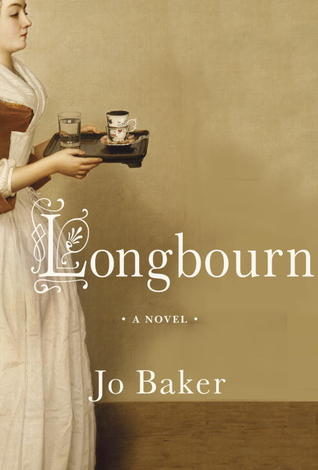
longbournThose Bennet girls! What a delight to be around them! But do you think the servants found them all quite so lovely? In Longbourn, we find out.

Longbourn is Pride and Prejudice turned upside down… or rather, as viewed from below-stairs. I think every blurb I’ve seen about Longbourn so far has described it as “Downton Abbey meets Pride and Prejudice“, and that’s a fairly good place to start.

In Longbourn, maidservant Sarah is our main point-of-view character. Sarah has been in service to the Bennet family since she was a small girl, and while we readers of P&P all probably share a rather rosy view of the Bennet’s idyllic country life, it’s not quite as pretty when presented by Sarah. Through Sarah, we see what it really takes to run a household of that nature — laundry days, incessant scrubbing, tending to the girls’ bodily needs, turning pig fat into soap. Author Jo Baker doesn’t shy away from the nastier bits, and there are plenty.

It’s all very well to admire Elizabeth Bennet for her pluck and adventurous streak, but as Sarah ruminates:

If Elizabeth had the washing of her own petticoats, Sarah often thought, she’d most likely be a sight more careful with them.

In P&P, all is managed. Dirty clothes are taken care of. We never hear about chamber pots or dirty dishes, sweaty clothing or soiled sheets. In Longbourn, these are all the stuff of daily life. Through the effluvia of the Bennet household, the serving staff get to know the family intimately, and while it’s agreed that they are a decent sort to work for, it’s still shocking as a P&P fan to realize the utter cluelessness that the girls have regarding what a servant’s life is really like.

Even wonderful Elizabeth — so beloved by all of us! — comes across as unaware at best or insensitive at worst, as her interactions with Sarah make clear that Sarah’s life is of no concern. Not that Elizabeth has harsh feelings toward Sarah — just that it doesn’t really occur to her that Sarah has feelings or issues of her own to deal with.

Besides the household muck and mire, we see the country in quite different terms than in P&P as well. Yes, the important families and estates have their dinners and balls… but in the town, there are people going hungry, young men are enlisted to fight in pointlessly brutal foreign wars, and meanwhile the local garrison of the militia strut around like heroes while conducting their dirty business elsewhere. We may think of pretty BBC productions when we think of the Regency era, but in Longbourn, that pretty illusion is shattered. Make no mistake, this was not an easy time to live in without family money and connections, and the lives of the working class are not to be envied. Even for Mr. and Mrs. Hill, long established as head of the Longbourn staff and considered to hold a very desirable place in the household, it’s clear that this is not a comfortable or secure life.

The lives of the servants are harsh and yet full of vitality. They are not shielded by manners and customs from the realities of their world. Matters such as fashion and reputation and whispers and inheritances are of small matter to people whose future security rests entirely on the whims of those they serve, who can be turned out at any moment into a world in which decent work is scarce, and whose ability to even secure a position is completely dependent on the willingness of a former employer to provide a reference. Seen through the servants’ eyes, the possible tarnishing of a young lady’s reputation is small potatoes compared to the specter of starvation and homelessness.

Interestingly, for me Longbourn is at its strongest when it goes “off-book” entirely. The third section of Longbourn goes outside of the confines of the P&P world and explores the lives, secrets, and histories of the Longbourn characters in a way that’s completely unrelated to P&P. I loved this part of the book the most. The characters really feel alive to me here, and perhaps they need this extra freedom from the original story in order to become fully formed, with purposes and hidden desires of their own.

Jo Baker clearly knows P&P inside and out, and as she explains in the author’s note: “When a meal is served in Pride and Prejudice, it has been prepared in Longbourn. When the Bennet girls enter a ball in Austen’s novel, they leave the carriage waiting in this one.” It’s fascinating to page back through P&P at random and find all of these points of intersection — the meals, the guests arriving at the door, the gowns fetched and fluffed — and seeing the work involved on the part of the Longbourn servants to make all of these things happen.

The writing in Longbourn is simply splendid, both in passages exposing the darker side of the pretty pictures we’re used to from Austen’s world and in simple sentences that convey quite a bit about the Bennets and the servants alike:

Some of my favorites:

Jane and Elizabeth confided with each other in anxious virginal huddles, whispering over letters, scandalized by the gossip that was now leaking back to them.

And another:

Life was, Mrs. Hill had come to understand, a trial by endurance, which everybody, eventually, failed.

And one more:

The house was all up and down and front and back, and nothing sideways to it at all.

Sarah is the main character, but we also read sections told from the perspectives of footman James, Mr. and Mrs. Hill, and the small serving-girl Polly. Sarah is a strong, smart, determined, and utterly wonderful main character, and James too becomes completely fascinating as we get to know him better. Early on in the book, the shifting voices are a bit jarring, but as Longbourn progresses and we get to know each one on their own, the story is enhanced by allowing readers to see  unfolding events through different eyes — especially as each character often has access to a different piece of the puzzle, and so a fuller picture emerges as we witness multiple views of the people and actions involved.

Jo Baker is very faithful to the overall characterizations of the Bennets and their associates, although Mr. Bennet comes off in a less favorable light, and surprisingly, Mrs. Bennet and Mr. Collins are both much more sympathetic. In fact, I doubt that I’ll ever allow myself to feel my usual scorn for Mrs. Bennet, now that Jo Baker has given me a quite plausible (and sad) explanation for how she ended up the way she is.

Overall, I’d say that there’s a lot to love about Longbourn. P&P afficionados will be pleased by the respect shown by the author toward Austen’s original text — and yet she also doesn’t hesitate to pull back the curtains and show us what else might be going on in this familiar world.

Longbourn certainly stands on its own outside of the shadow of Pride and Prejudice. In fact, I could see the story of Sarah and the serving class making a fine novel without needing the framework of P&P — although undoubtedly the connection to P&P will help tremendously with the marketing and publicity for Longbourn.

While I enjoyed the brief glimpses of the Bennets (and even Mr. Darcy, who makes only fleeting appearances in this book), Longbourn‘s main characters are compelling and their struggles and challenges held me captive. I didn’t need to see Elizabeth and Jane and the Bingleys — I had Sarah and James, and they’re pretty spectacular.

__________________________________________

The details:

Title: Longbourn
Author: Jo Baker
Publisher: Knopf
Publication date: 2013
Genre: Historical fiction
Source: Review copy courtesy of Knopf via Edelweiss

Coming Soon in Graphic Novels: Bad Houses by Sara Ryan and Carla Speed McNeil

Bad Houses by Sara Ryan and Carla Speed McNeil

Bad HousesSynopsis:

Lives intersect in the most unexpected ways when teenagers Anne and Lewis cross paths at an estate sale in sleepy Failin, Oregon. Failin was once a thriving logging community. Now the town’s businesses are crumbling, its citizens bitter and disaffected. Anne and Lewis refuse to succumb to the fate of the older generation as they discover – together – the secrets of their hometown and their own families. Bad Houses is a coming-of-age tale about love, trust, hoarding, and dead people’s stuff from award-winning creators Sara Ryan (Empress of the World) and Carla Speed McNeil (Finder).

Bad Houses is an interesting, unusual graphic novel about sad lives in a run-down, has-been town. Failin, Oregon is on a long, downhill slide, with shuttered stores and abandoned industries. Anne and Lewis represent the next generation, seeing the lives that have come before by means of estate sales and other people’s stuff. As they grow closer and learn more about their own families’ histories and mysteries, they try to find a way not to repeat their parents’ pasts, but to create a more hopeful future for themselves.

The story is warm and affecting, and often incredibly sad. The town itself just reeks of melancholy and failure, and it’s no wonder that the people still living there seem so downtrodden and disillusioned. Bad Houses is, among other things, a meditation on things — the objects that fill up our lives, which we imbue with meaning, yet which ultimately have little or no intrinsic value beyond the emotional attachments we form. We come to understand a character who is a serious hoarder; her attachment to physical representations of the loss in her life is the explanation for why her home is so dangerously cluttered. It’s no wonder that her daughter craves nothing more than empty spaces — an absolutely clean slate where life can be lived in the present without being under the constant threat of being buried by the past.

The black-and-white illustrations in Bad Houses are clean and sparse, with well-drawn and well-defined characters. Anne is especially cute, with funky hair and clothes, and it’s fun to see her adapt to new situations by changing her look as well.

I recommend Bad Houses for anyone who enjoys a creative approach to storytelling and a narrative that gives its characters room to breathe and grow.

__________________________________________

The details:

Title: Bad Houses
Author: Sara Ryan and Carla Speed McNeil
Publisher: Dark Horse Books
Publication date: November 12, 2013
Genre: Graphic novel
Source: Review copy courtesy of Dark Horse Books via NetGalley

Book Review: Will in Scarlet by Matthew Cody

Book Review: Will in Scarlet by Matthew Cody

Will in ScarletIn this exciting middle grade adventure story, Robin Hood takes a backseat to young Will Scarlet, born the son of a nobleman, now a refugee on the run from the evil lord who has captured his father’s castle and betrayed the king. When we first meet Will, he is the 13-year-old son of the estate, born to privilege and prone to mischief. Now on the verge of manhood, it’s time for him to grow up and start acting like a lord — but when his family is betrayed, Will escapes to Sherwood Forest, where he meets up with a band of thieves and outlaws. Will the Merry Men kill Will, ransom him, or make him one of their own? Will is forced to finally figure out who he is and what he stands for — and whether he going to allow his thirst for vengeance to take over his life.

In the forest, Will meets Much the Miller’s Son (who is really a girl in disguise), John Little, a big, strong but fair fighting man, and the drunken, smelly man whose tent Will shares — the prickly and rather repulsive Rob. But once Rob sobers up on a key mission, Will starts to realize what a natural-born leader this man is — as well as an expert hand with a longbow.

It’s terrific fun to read this version of the Robin Hood story. Will In Scarlet serves very much as an origin story. Instead of focusing on Robin Hood himself, we see the band of outlaws through Will’s eyes, and as Will comes to appreciate their bravery and honor, so do we. The story is told mostly from Will’s perspective, although Much gets her fair share of the action as well, and she’s… well… awesome, for lack of a better word! Much is clever, skilled with a knife or a lock-pick, fierce and determined — and bloody well certain that she does NOT want anyone to know she’s a girl.

As Will and Much discover each other’s secrets, they also form a strong bond based on trust, respect — and something more as well. They’re both such delightful characters, and it’s wonderful to get to know them and see how they grow and change during the course of the story.

The plot of Will in Scarlet zips along with never a dull moment. There are battles, sword fights, ambushes, trickery, and daring escapes. There are also moments of great kindness, and we see how Will changes from spoiled little rich kid to young man with a conscience. In this version of the Robin Hood legend, it’s Will who is responsible for the “rob from the rich and give to the poor” ethos of the Merry Men, and this turning point for Will and the gang is given a meaningful and powerful context within the story.

There are serious moments and moments of pain and suffering as well, but overall Will in Scarlet is an upbeat adventure story with terrific characters, some cleverly concealed and revealed secrets, and a storyline that bounces right along. With Will and Much as the two lead characters, I can see this story appealing to boys and girls alike, and highly recommend it for kids in the middle grade zone.

While I couldn’t find anything to confirm this, Will in Scarlet certainly seems like it should be the first in a series. Nothing is left hanging at the end, and the wrap-up is well-earned and satisfying — but in Will in Scarlet, we’re seeing the early days of Robin Hood as the leader of his band of Merry Men. I really and truly hope that author Matthew Cody will give us more! I’d love to see what happens next for Will, Much, Rob and the rest of the gang!


__________________________________________

The details:

Title: Will in Scarlet
Author: Matthew Cody
Publisher: Random House Children’s Books
Publication date: 2013
Genre: Middle grade fiction/adventure/historical fiction
Source: Review copy courtesy of Random House Children’s Books via NetGalley


Book Review: Before I Met You by Lisa Jewell

Book Review: Before I Met You by Lisa Jewell

Before I Met YouWhen 11-year-old Elizabeth moves to the island of Guernsey with her mother and stepfather, she has no idea that she’s about to meet a woman who will change her life. Arlette, Elizabeth’s stepfather’s mother, is the grande dame of the crumbling old mansion, always immaculately dressed, with an air of sophistication and glamour that seems out of keeping with a woman who’s spent her entire life isolated on an island. She takes an immediate shine to Elizabeth, renames her Betty (a much snazzier name, to be sure), and takes her into her heart as a full-fledged granddaughter.
Years later, Betty is a young woman who takes care of the ailing Arlette in her final days, deferring the possibility of university somewhere more glamorous in order to live with Arlette and be by her side 24/7. And when Arlette passes, she leaves a strange bequest. To be sure, Betty is mentioned favorably in Arlette’s will and receives a nice amount of money and worldly goods — but a mystery woman is also mentioned, someone that no one in the family has ever heard of. The last known address for this person is in London, and Betty sees this as an opportunity to set out on an adventure while also honoring Arlette’s wishes. Finally free and somewhat independent at age 23, Betty heads to London, sets herself up in a cramped Soho studio, and dives into life in the big city.

Before I Met You employes the device of a split narrative, so that we follow Betty in 1995 and Arlette in 1920, both young women entering London’s excitement on their own, looking for purpose, for connection, and for fun.

In Arlette’s timeline, we see the world of the jazz age, as Arlette is taken up by the fun-loving class of painters and musicians, the “Bright Young People” of the day, and is swept away on a current of passion, excitement, and danger. Betty’s story, by comparison, is somewhat tamer. She’s a fish out of water, trying to play detective to track down Arlette’s mysterious heir, but at the same time trying to support herself and feel a part of life in the big city.  In bits and pieces, we see both young women start to establish themselves and find their own way, and their stories are vaguely parallel in some ways.

Ultimately, of course, we know to expect a tragedy of some sort in Arlette’s story. Why else would she end up living her life back on Guernsey, with her entire London adventure a complete unknown to those who knew and loved her? Tragic and awful events do occur, and it’s not until the end of the book that we fully understand why Arlette’s life turned out as it did.

Meanwhile, Betty works at unpleasant jobs, meets a rock star (for real), parties quite a bit, has a creepy downstairs neighbor, and attracts the attention of a dreamy guy who sells record albums in the market outside her building. As she explores the clues to Arlette’s past, she gains confidence and starts to figure out what she really wants, and who she wants to be with.

Given the drama of Arlette’s story, it’s hard to stay interested in the Betty interludes, which take up a greater portion of the narrative. As a main character, she didn’t strike me as particularly deep, and she seems to make a string of not very well thought out decisions. The tonal shifts are a bit jarring: In Arlette’s story, we’re immersed in the glamour of the 1920s, and the narrative takes on a dramatic and somewhat elegant tone. But in the Betty sections, there are moments of absolute crassness that feel like too abrupt a shift from the style in the other timeline, so that it was often  hard to make the shift between stories and continue to feel involved in both timelines.

Overall, I enjoyed Before I Met You quite a bit. Once the London storylines get underway, it’s easy to get swept up in the swift storytelling, and I often had to force myself to put the book down rather than reading straight through. As I’ve said, I found Arlette’s story much more compelling than Betty’s, which is problematic in a split-narrative story. Ideally, both halves of the story should carry equal weight, so that the reader feels excited to pick up the threads of the plot each time the focus shifts. Instead, I found Betty’s challenges and dilemmas rather trivial when compared to Arlette’s pieces of the story, so that it was always a bit of a let-down to return to the 1990s-era sections.

That said, I was very interested in the central mystery of the book, and found a few twists in the resolution that I really hadn’t foreseen or even guessed at. Arlette is  wonderful character, both strong and tragic, and I did love seeing the tight bond between Arlette as an old woman and Betty as a displaced young girl. Their relationship and its impact on Betty is moving and lovely, and I think that even when I found myself shaking my head at Betty’s choices in London, I was able to continue feeling warmly toward her in large part due to the respect I had for her because of her dedication to Arlette.

If you enjoy dual timeline stories and reading about young women — in any era — finding their way in the world, then I’d suggest checking out Before I Met You.

__________________________________________

The details:

Title: Before I Met You
Author: Lisa Jewell
Publisher: Atria Books
Publication date: 2013
Genre: Adult Fiction (contemporary/historical)
Source: Review copy courtesy of Atria via NetGalley

Book Review: Charming by Elliott James

Book Review: Charming by Elliott James

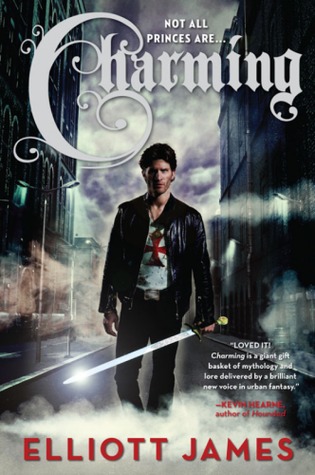
Charming (Pax Arcana, #1)Fans of urban fantasy fiction are sure to enjoy the world of Charming, book one in a projected series (Pax Arcana) by debut author Elliott James.

John Charming is a descendant of a long-line of monster-fighters, all of whom share the surname Charming and are compelled by their bloodline’s oath to preserve the ignorance of ordinary humans for as long as possible. In the world of Charming, the supernatural is all around us, but thanks to a concept called the Pax Arcana, we can’t see it. Basically, the Pax Arcana is a powerful magic that prevents mortal humans from noticing supernatural activity. You know the creepy feeling you get when  you feel like something’s sneaking up on you, but there’s really nothing there? Well, chances are, there really is something there, but thanks to the Pax Arcana, you just can’t see it.

John is one of the Knights — that would be the Knights Templar — and has trained all his life to carry out his secret oath. Unfortunately for John, he’s also at least part werewolf, and that makes him tainted and subject to elimination as far as the order of Knights is concerned. So John lives on the run, under assumed identities, and finds that anonymity is working fairly well for him… until one night a blonde and a vampire walk into his bar. (See chapter one, “A Blonde and a Vampire Walk Into a Bar”).

The plot of Charming moves quickly to establish a team of good guys — mortal and supernatural — who set out to eliminate a deadly vampire threat. The action is fast and furious, but it’s built on solid character development as well. The team members are well-defined and all have their own quirks, which makes this often-violent romp a lot of fun as well.

John himself is a dashing and likable main character, with enough tragedy in his backstory to make him sympathetic, but with the fighting skills and more-than-human sensory abilities to make him deadly dangerous as well. Lead female Sig is gorgeous (this is urban fantasy, after all) — but also a kick-ass warrior with a great mind and an unwavering dedication to doing what’s right.

The writing in Charming is snarky and humorous, with heaping doses of gore and mayhem to boot. John Charming is a Dresden-esque wise-ass, relying on quips and sarcasm as a first line of defense — and with unmatchable speed, strenth, and fighting smarts to back it all up.

I liked the author’s introduction of new-ish elements to the field of urban fantasy. Here, the vampires may look gorgeous, but as John quickly explains, it’s all a ruse. Vampires in real life are just gross, smelly, undead things — whose true talent is in projecting such a powerful glamor that humans see them the way they’d like to be seen, all Edward Cullen-ish and sexy. As John puts it, “Popular young adult novels notwithstanding, vampires only sparkle when they burn.”

On the other hand, a few minor points felt unnecessary — as if the author was trying too hard to come up with something new and different in an already crowded field. For example, in the world of Charming, vampires can only drink from humans whose blood types match the vampires’ pre-death blood types.  This may be a new twist, but it doesn’t actually add anything to the story.

Overall, I’d say that Charming is a lot of fun and a great introduction to a noirish new world of creatures, ghoulies, and magic. With a “charming” main character (sorry, it’s just begging to be said) and an interesting cast of supporting characters, Charming establishes an urban fantasy world that’s well-planned out and has room to grow. It’s clear that there are many more stories to be told and secrets to be revealed, and I’ll be interested to see if the promise of this first installment turns into something terrific in books to come.

As for me, I liked it enough to want more. If you like your magical worlds on the tough and gritty side, check out Charming.

__________________________________________

The details:

Title: Charming
Author: Elliott James
Publisher: Orbit
Publication date: 2013
Genre: Urban fantasy
Source: Review copy courtesy of Orbit via NetGalley