Book Review: That Time I Joined The Circus by J. J. Howard

Book Review: That Time I Joined The Circus by J. J. Howard

That Time I Joined the Circus

I’m a New Yorker; smugness is my birthright.

Lexi is most assuredly an avid New Yorker, so when calamity strikes and she’s forced to set out in search of her long-gone mother, a random hick town in Florida is probably the last place she wants to end up. And yet there she is, with no money and nowhere to turn, seeking out her mother’s last known employer — who happens to be the owner of a traveling circus. Lexi’s mom has come and gone already, and left no forwarding address, but the circus folk are willing to take Lexi in if she can work and if she’ll commit to staying through the end of the season.

From New York prep school student to shoveler of elephant manure and midway salesgirl — to say that Lexi’s life has been turned upside down is an understatement.  Back in her upscale school, Lexi never quite fit in among all the pampered Barbie-like rich girls. With her best friends Eli and Bailey, she had a small but dependable trio, until Eli and Bailey became romantically involved and Lexi was left out in the cold. Bad decisions and bad luck lead to Lexi’s flight from New York, and as she settles into her new life in the circus, Lexi is forced to confront her own role in her recent disasters. With new friends and some newly discovered talents, Lexi starts to finally understand some key things about herself, about friendship, and about the different shapes and sizes of family.

Author J. J. Howard has a good ear for teen dialogue and sentiment, and makes nice use of pop-culture and social media references as well:

Okay, so I stopped posting status updates on Facebook a long time ago. I noticed that whenever someone posts something completely mundane and stupid, like Sushi 2nite! seventeen people have to comment on that. I Y Sushi! and Spicy Tuna 4 meee! But if you ever try to actually say something serious about your feelings or, like, your life, every one of your 386 “friends” is suddenly mute. So there you have it: My life is a post with no comments. Less interesting than spicy tuna.

Lexi herself is an dynamic, engaging character, not perfect by a long shot, but well-intentioned, self-aware, and trying to finally do right and do good. Many of the supporting characters, including the circus crowd and Lexi’s parents, are well-drawn as well, with quirks, charm, and depth.

The circus scenes are a lot of fun, with behind-the-scenes glimpses of the daily life of a show and its various social strata, finicky personalities, and immense amounts of work to be done each day.

While overall an entertaining read, I do have a couple of quibbles:

– The love interests and love triangle in this story feel a little two-dimensional. Neither of the boys in Lexi’s life are given enough individual personality. In particular, I felt that the older boy who Lexi meets in Florida was never much more than a cardboard character, and didn’t truly buy Lexi’s interest in him.

– The solution to Lexi’s problems — join the circus! — seemed too rushed and easy. Maybe she didn’t have a whole lot of other options, but being given shelter by the circus and then forming such deep connections to the circus family just didn’t strike me as entirely realistic. I understood why this would feel like a solution to Lexi, but didn’t necessarily understand why the circus owner and his family would take Lexi into their lives so enthusiastically and so quickly. Not that Lexi’s not a great person! But I didn’t feel that the other characters would have had enough to go on to reach that assessment in quite so short a time.

That Time I Joined The Circus is not a very long book, and in some ways that’s a problem. The premise and the storyline are really quite good, but I would have liked to see more of everything — more circus scenes, more time spent on Lexi’s developing friendships within the circus world so that these friendships would feel a bit more true, and more character development for some of the people who come into Lexi’s life over the course of the book.

Lexi herself is a nicely described and fleshed-out character, and I think the author is at her strongest in giving Lexi a clear, authentic voice. Good use of song quotes both fit the narrative and help illustrate Lexi’s mindset at any given point in the story. The plot unfolds through alternating chapters set in Lexi’s “before” life in New York and her current life with the circus, and this narrative choice keeps the momentum moving nicely as we readers must piece together what we know in order to understand why Lexi has ended up with no choices and no one to turn to for help.

That Time I Joined The Circus should appeal to teen readers who enjoy romance, family drama, unlikely friendships, and a hip, urban tone. It’s fun, it’s got great characters and snappy dialogue, and the circus setting is certainly different and unusual. Definitely not your typical high school drama!

Review copy courtesy of Scholastic via Netgalley.

Book Review: Eleanor & Park by Rainbow Rowell

Book Review: Eleanor & Park by Rainbow Rowell

There are some books that are bad choices for staying up past midnight to finish… simply because they are so powerful that they haunt your dreams when you finally go to sleep. Eleanor & Park is one of these. It will take me quite a while to get this lovely, sad story and its unforgettable characters out of my head.

Main characters Eleanor and Park are sixteen, growing up in the Flats, an undesirable Omaha neighborhood where keeping your head down might be your best strategy for getting through high school. It’s worked so far for Park, the only Asian kid around, son of an American army vet who married the girl he fell in love with during his service in Korea. Park listens to punk music, reads comic books, is a mostly obedient son, and tries hard not to attract attention from the loud and obnoxious crowd at the back of the bus.

Everything changes on the day that new girl Eleanor shows up on the school bus. Park — and everyone else — can’t help but notice her:

The new girl took a deep breath and stepped farther down the aisle. Nobody would look at her. Park tried not to, but it was kind of a train wreck/eclipse situation.

The girl just looked like exactly the sort of person this would happen to.

Not just new — but big and awkward. With crazy hair, bright red on top of curly. And she was dressed like… like she wanted people to look at her. Or maybe like she didn’t get what a mess she was. She had on a plaid shirt, a man’s shirt, with half a dozen weird necklaces hanging around her neck and scarves wrapped around her wrists. She reminded Park of a scarecrow or one of the trouble dolls his mom kept on her dresser. Like something that wouldn’t survive in the wild.

Eleanor takes the only vacant seat available to her, next to Park, who desperately wants to be left alone. If Eleanor pays any mind to Park at all, it’s only as the “stupid Asian kid” that she has to endure twice a day. But gradually, their silent daily bus rides turn into a kind of silent communion. Park notices Eleanor reading his comic books from her seat next to him, and soon starts bringing in a supply for her every day. Before much time passes, the daily rides turn into intense conversations about comics, then music, then life in general. The bond between Eleanor and Park is sudden and all-encompassing, and soon they both realize that their connection is soul-deep and earth-shattering. But is it enough?

Eleanor lives in a tiny, falling-down house with her four younger siblings, her fragile, abused mother, and her mother’s new husband, who is, quite frankly, scary and deeply creepy. The bathroom has no door, so Eleanor has to rush home each day if she has any hope of taking a bath before the awful stepfather gets home. She has only the clothes her mother can scrounge from Goodwill, and washes her hair with whatever soap she can find in the house on any given day. There simply is no one on Eleanor’s side. Her mother is too broken down to even protect herself, let alone Eleanor. On top of her horrible home life, Eleanor — as a new girl who doesn’t fit the mold — is teased and tormented at school. My heart broke again and again for this strong, difficult girl, who is too fearful of the consequences to go to her guidance counselor for salvation from her family life — but thinks that maybe she could at least ask her for a toothbrush.

Eleanor is a prickly character, who pushes Park away every time he gets too close. She lives in fear and shame, and can’t fully accept that someone as wonderful as Park would want to know her. Park is Eleanor’s ray of sunshine, someone who cares, who wants to protect her and to love her, but even Park can’t save her from the nightmarish home she’s forced to return to each day. Park, for his part, and much to his surprise, falls deeply and passionately in love with Eleanor.

The descriptions of Eleanor and Park’s experiences with first love and passion are just beautiful. For example, their first time holding hands on the bus is electric:

Holding Eleanor’s hand was like holding a butterfly. Or a heartbeat. Like holding something complete, and completely alive.

If someone had been watching, what would they have seen? Park couldn’t imagine what his face had looked like when he touched Eleanor. Like somebody taking the first drink in a Diet Pepsi commercial. Over-the-top bliss.

And from Eleanor’s perspective:

All through first and second and third hours, Eleanor rubbed her palm.

Nothing happened.

How could it be possible that there were that many nerve endings all in one place?

And were they always there, or did they just flip on whenever they felt like it? Because, if they were always there, how did she manage to turn doorknobs without fainting?

The trajectory of Eleanor and Park’s relationship is fast and sharp. Soon, their entire worlds revolve around each other. But an inevitable sense of disaster lurks above and around them constantly. Eleanor’s volatile home life is always on the verge of exploding — and when it finally does, the repercussions are devastating and heartbreaking.

I found myself holding my breath through the final chapters of Eleanor & Park, on edge, scared, and trying to hold back the tears. No spoilers here — not what happens, nor what happens after that. Suffice it to say that it was clear from the start that the odds of a happy ending were slim to none. And yet, there is a beauty and a truth in this love story that make it so worth reading. At the risk of sounding sappy, I’d describe Eleanor and Park as having a purity to their relationship, not in the usual context of sex, but in terms of the absolutely pure emotions they feel toward one another — love, caring, and a selflessness toward one another that is completely believable even while recognizing how rare such a thing is in any relationship, much less a teen relationship.

On a final note, I just loved Rainbow Rowell’s writing. It’s emotional and expressive, but not at all overdone or trite. The conversations between Eleanor and Park are funny, smart, and snappy, and I never felt that I was reading adult dialogue via a teen mouth, as I’ve occasionally experienced in other young adult novels. Throughout the book, we get alternating point-of-view sections, so that we’re often able to see the same event through both Eleanor and Park’s eyes — for example, these two views of their first intense kiss:

Eleanor looked at Park’s face so full of something she couldn’t quite place. His chin hung forward, like his mouth didn’t want to pull away from her, and his eyes were so green, they could turn carbon dioxide into oxygen.

He was touching her all the places she was afraid to be touched…

Eleanor tried one last time to be embarrassed.

He relaxed against the door.

He felt Eleanor’s hand on this throat, on his chest, then took her other hand and pressed it to his face. He made a noise like he was hurt and decided to feel self-conscious about it later.

If he was shy now, he wouldn’t get anything that he wanted.

Two loners, ready but scared, each making conscious decisions to let the other person in and, for once, to stop worrying about how they might look or what others might think. Eleanor and Park are two stand-out characters in the world of YA fiction. I loved everything about Eleanor & Park, and have no hesitation in recommending it to anyone who enjoys good fiction, period.

Spike — A Dark Place: Comfort Food for the Buffy-phile

Mini-review: Buffy the Vampire Slayer: Spike — A Dark Place by Victor Gischler, Paul Lee, Jo Chen et. al.
(Release date: June 18, 2013)

The world has been a darker, lonelier, and far less quippy place since the TV series Buffy the Vampire Slayer went off the air almost ten years ago, in May of 2003. (Bow your heads for a moment of silence, please. Thank you). But the devoted fans of the Buffy-verse had not heard the last of the Slayer and the Scoobies. In 2007, Dark Horse Comics began publication of Buffy the Vampire Slayer: Season 8 — in comic book format! Legions of fans cheered! Currently up to season 9 and going strong, the comics are written under the imprimatur of Buffy creator and geek god Joss Whedon, and are considered “canon”, for those who care about such distinctions. The comic follows Buffy and the gang forward from the end of the TV series, and it’s a wonder to behold.
Coming in June 2013, Spike – A Dark Place is somewhat of a sidebar to the main storyline of season 9, picking up right after the events of On Your Own (season 9, volume 2), and focusing on everyone’s favorite bad-boy-vampire-with-a-soul (and amazing cheekbones), our dearly beloved Spike. Spike’s going through some stuff and has fallen into a deep depression, and even his trusty team of adoring spaceship-flying bugs (it’s a long story) can’t quite get him to snap out of it. Of course, bad guys pop in, as bad guys do, and Spike is caught up in the action once again.

I realize that none of the above (bugs! who fly spaceships!) will make sense to anyone who hasn’t kept up with seasons 8 and 9. Which raises the question: What are you waiting for? If you watched the TV show, then good gods — get thee to a comic book store at once! Of course, if you never watched Buffy at all… well, first of all, I’m not sure that we have anything left to say to one another (kidding!), and second of all — drop whatever else you’re doing and get yourself some Buffy DVDs! And don’t stop until you’ve watched all seven seasons of Buffy, five seasons of Angel, and you’re ready to read some amazing comics!

Okay, so this supposedly-a-book-review has devolved into a fan rant. Sorry ’bout that.

But check out the comics. The new Spike book features terrific artwork, especially Jo Chen’s magnificent covers, which represent Spike actor James Marsters in all his Buffy-era glory. The storyline is funny, action-packed, and quite faithful to the Spike character that we know and love. Once I picked up Spike – A Dark Place, I couldn’t put it down, and I’m eager for more, more, more — more Spike, more Buffy, more of the entire wonderful Buffy-verse! Please, Dark Horse, don’t ever stop! I’d happily continue reading the Buffy comics and spin-offs for years — decades — to come.

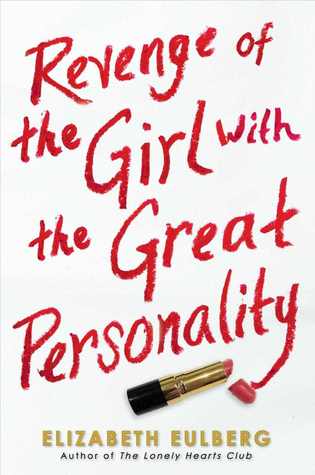
Book Review: Revenge Of The Girl With The Great Personality by Elizabeth Eulberg

Book Review: Revenge Of The Girl With The Great Personality by Elizabeth Eulberg

16-year-old Lexi has had it up to here. She spends every weekend acting as lackey to her younger sister Mackenzie at beauty pageant after beauty pageant. She works a part-time job to pay for basics while her mother spends thousands of dollars they don’t have on endless gowns and “necessities” for Mac. Her sister is turning into the world’s biggest spoiled brat. And to top it all off, she’s sixteen and has never had a date. She may be considered a Girl With A Great Personality, but is it too much to hope that a cute boy will take notice one of these days?

In this charming, engaging young adult novel, main character Lexi isn’t exactly unpopular — everyone likes her well enough —  but she’s not one of the Beautiful People at school by a long shot:

“In other words, I’m the girl that all the guys go to because, well, I’m the cool chick who they can talk to about the girl they really like.”

Lexi had it drummed into her head long ago that her sister got the looks in the family, so she has basically just stopped trying. She’s great at making people laugh, but her daily look at school is jeans, baggy T-shirt, ponytail, and no make-up. Ironically, Lexi’s dream in life is to study fashion in New York and pursue a career as a designer. She’s got a gift for clothes and wardrobe, but uses it to help everyone but herself.

Finally, on a dare from her best friend, Lexi decides to give glamor a whirl. She gets hair and make-up tips from an expert on the pageant circuit, puts on a dress, and voila! Suddenly, she’s turning heads, getting noticed, and getting boys. While Lexi basks in the glow of her new-found social success, she’s uncomfortable as well. The question remains: Should she have to be a different person in order to get people (boys) to like her? And if a boy who never gave her the time of day is now falling all over her, should she be flattered — or insulted?

Revenge is not just a book about a makeover. Lexi has it pretty tough in her home life. Her parents split up soon after Mac was born, and her mother’s emotional neediness has led her to unhealthy overeating, morbid obesity, horrible money management, and an obsession with pageants. Lexi’s dad is a benign absence; he means well, but just isn’t around. Lexi watches in growing dismay as her mother ignores past-due bills in order to buy new tooth covers (called “flippers” in pageant lingo) so that 7-year-old Mackenzie can have a smile just as perfect as all the other wanna-be beauty princesses.

It would have been easy, I think, for an author to take a preachy approach to this subject matter — beauty is only skin deep, beauty is in the eye of the beholder, blah blah blah. That’s all well and good, but that doesn’t help a teen girl who feels invisible every single day of her life. In Revenge, author Elizabeth Eulberg gives the reader (and Lexi) food for thought, but there are no pat, easy answers. Lexi really does feel better when she likes the way she looks. She really does have more confidence when she goes into school and people notice that she’s pretty. She seems to get a new burst of energy once she starts dressing herself with the same care that she puts into advising others on their fashion choices. And yet, she’s very much aware that the boy of her dreams never once saw her as a love interest until she changed her beauty routine, and that the party invitations only started coming her way once she changed who she was on the outside.

So should she have to change to be liked? Where’s the limit between making yourself feel good and remaking yourself to please others? If people only let you into their inner circles if they approve of your looks, is that circle really worth entering?

Lexi is a terrifically likeable main character. She’s smart, she’s funny, she’s a good friend, and she tries her best to make her mother see reason. Her home life is a disaster, and I couldn’t help but feel horribly sad for her. Lexi has to shoulder a burden that’s simply unfair for a girl her age, and she struggles through admirably, trying to find a balance between duty and protecting her own wants and needs. When a final disaster pushes her over the edge, Lexi decides to take a stand once and for all, and to say that there are fireworks is an understatement.

Revenge of the Girl With the Great Personality zips along, with plenty of quirk and humor to offset the sadness and pain that Lexi experiences. The writing is fast-paced and never dull, and the characters feels relatable and true to life. The biggest take-away message from Revenge seems to be that dressed up or dressed down, you have to be able to live with yourself and the choices you make. It’s not wrong to make changes to try to fit in better, if that’s what you want. The point is to be true to your own happiness, to your friends, and to your own sense of what quality of person you want to be. As Lexi puts it so winningly, as she confronts the school queen of mean:

“I have tried to be like you guys, to be liked by you. And say what you want, but I did it. You all didn’t have time for a loser like me unless I was entertaining you or doing something for you. So I guess deep down, we’re all losers who have something we want to cover up… We’re all the same. So you’re not better than me… You just like to pretend that you are. Why? To make you feel better about yourself.

So I can take off the makeup, but I’m still a good person… But there’s no such thing as bitch remover.”

Oh, snap! Lexi is on fire!

I truly enjoyed Revenge of the Girl With the Great Personality. Great characters, convincingly told truths, and a plot with tons of zing — what’s not to love? Highly recommended for teen girls… and their moms, too.

Review copy courtesy of Scholastic via Netgalley.

Book Review: The Best of All Possible Worlds by Karen Lord

Book Review: The Best of All Possible Worlds by Karen Lord

The Best of All Possible WorldsThe Best of All Possible Worlds opens with catastrophe. The planet of Sadira has been destroyed by a poison gas attack that leaves the planet uninhabitable and exterminates most of the Sadiri people. The only survivors are those who were off planet at the time of the attack. This near-genocide will result in the extinction of the Sadiri people, unless those who survive establish new settlements and find a way to perpetuate their genetic line.
With that as the background, The Best of All Possible Worlds takes off into a study of culture clashes and cooperation. The Sadiri are a people known for their unparalleled mastery of the “mental disciplines” — telepathy, the ability to control emotions, the ability to travel with their minds, and more. When a contingent of Sadiri diplomats and scientists arrive on Cynus Beta, their goals are twofold: One, establish homesteads and rebuild a community, and two, seek out taSadiri communities — people descended from long-ago emigrants from Sadira, who share physical and possibly mental traits with the dwindling Sadiri population, in hopes of establishing marriages resulting in a resurgence of the Sadiri people. Initially viewing the Sadiri representatives as objects of pity, the Cygnians are eager to assist, and assign a team of cultural and scientific experts to set out with the Sadiri contingent on a mission to travel their world and explore the far-flung communities who may bear taSadiri genetic markers.

Key members of this mission are our two main characters: Grace Delarua is a Cygnian biotechnician who is smart, tough, wise-cracking, prone to laughter and chatter, and with unexplored empathic talents.  Dllenahkh is the Sadiri Councillor heading up the mission, who is stoic, in complete control of his emotions, and a master of the mental disciplines. These two opposites seem to fit, despite their differences, and over the course of the book, we see their partnership deepen into a connection that explores both the Sadiri mental abilities and Grace’s tendency toward emotionalism and expression. Opposites attract, although these two are a long time in realizing what’s obvious to everyone else.

Not to say that The Best of All Possible Worlds is a love story (although it is). The book presents a deep and thoughtful look at cross-cultural misunderstandings, the imperative to survive, the many ways that friendship and respect can grow and develop, and the varieties of love and relationships that are possible. Along the way, the details of the different communities encountered during the mission are fascinating, each representing a branch on the Sadiri family tree. In these far-flung communities, each has chosen its own path toward adaptation and evolution, emphasizing different traits and values. In some communities, the mental disciplines allow all members to communicate telepathically throughout the settlement. In others, the inhabitants are sharply Sadiri in appearance but generations past have abandoned all study of the mental disciplines. In each, Dllenahkh and his team must recommend whether to encourage the community to send members to the new Sadiri homestead — in essence, determining whether they’d make good breeding stock for the continuation of the Sadiri race.

Let me get this part out of the way: I loved this book. The writing is at once zippy, clever, and achingly sad, depending on the perspective and the circumstances. Grace is a wonderful heroine. She’s not flawless — she can be insecure, she has demons from her past to overcome, and she does tend to babble a bit, but at the same time, she cares deeply about her friends and family, she’s willing to put herself at risk and even sacrifice her career to right wrongs, and she’s open to the wonders and joys of exploring new worlds, new thoughts, and new possibilities. Dllenahkh is seemingly unreachable at first, masked by his tight control and walled off by his people’s tragedy, yet he too manages to reach out and explore, and demonstrates his ability to feel even when making emotional declarations in completely non-emotional, rational terms. A favorite interaction of mine shows just how different, yet how well-suited, Grace and Dllenahkh are:

“I have identified you as the most appropriate mate, probably through an unconscious assessment of pheromones, mental capacity, and, of course, social compatibility.”

“So, you’re saying you like how I smell, you like how I think, and you like to hang out with me?”

I read The Best of All Possible Worlds on my Kindle, for which I found a new appreciation as I started highlighting lines and paragraphs that I found especially moving, entertaining, or generally noteworthy. By the end of the book, my highlights were everywhere. This book is rich in detail, and I was consistently impressed with the author’s ability to capture and portray the distinct voices of so many different characters, representing so many different cultures.

Curiously, one of the dominant populations on Cygnus Beta is the Terran community, which seems to consist of descendants of our Earth. There are references to watching old holovids of classic Terran movies such as Indiana Jones, E.T., and Casablanca. Various origin myths exist, among them that a mysterious group called The Caretakers brought representatives from different planets to Cygnus Beta in order to give them the best chance of survival. Are The Caretakers gods? Scientists? Simply a myth? Did the Caretakers bring the Terrans of Cygnus Beta from our Earth before the Terran planet became unreachable? There are no answers, and fortunately the story doesn’t bog down in exploring this mystery, but simply presents it as one key to understanding the world as it exists on Cygnus Beta and its universe.

I did have one “WTF” moment in reading The Best of All Possible Worlds, when there suddenly appeared a chapter called “The Faerie Queen”, in which the mission arrives at a community ruled by, yes, a Faerie Queen. The people consider themselves the Seelie Court, and live in a treetop world almost identical to the forests of Lothlorien in Lord of the Rings. Coincidence? Hardly, given the popularity of Terran classic movies. Right when I was exclaiming, “Wait! This is supposed to be science fiction! Why are there faeries??”, we get what I thought was an ingenious answer: In this community’s earlier history, two separate tribes were battling over whose traditions should dominate. Peace was achieved when the people decided to instead follow a new, created path that both tribes could embrace as a new beginning, and so they chose to consider their mental gifts as faerie traits and to model their faerie kingdom on cultural myths and legends that they could adapt to their lives.

The Best of All Possible Worlds has a very episodic rhythm to its narrative. Each chapter is a new stage in the progress of the mission, and while the events build one upon the other, each does have a feel of sitting down with a master storyteller to hear a new bit of the yarn. The writing is fresh and funny, and Grace is an engaging and honest narrator. At the same time, the author, via Grace’s descriptions, does not shy away from confronting the harshness and cruelty witnessed by the mission team in various new settlements or the painful family secrets both Grace and Dllenahkh confront over the course of the novel.

Simply put, I was swept away by the world created by Karen Lord in this masterful, moving story. The characters are unforgettable, and some are immensely lovable as well. The world of Cygnus Beta and beyond is a fascinating study of developing cultures, the impact of contact on isolated populations, and the role of creativity and compromise in a people’s drive to survive. On top of all this, the “mental disciplines” and other aspects of Cygnian science and technology are quite fun to imagine, but never to the extent that they distract from the human focus of this excellent story.

I highly recommend The Best of All Possible Worlds. Not just for science fiction fans, this book should appeal to any reader who appreciates good storytelling, strong characters, deeply-felt emotions, and moments of laughter as well.

Review copy courtesy of Random House Publishing Group – Del Rey Spectra via NetGalley.

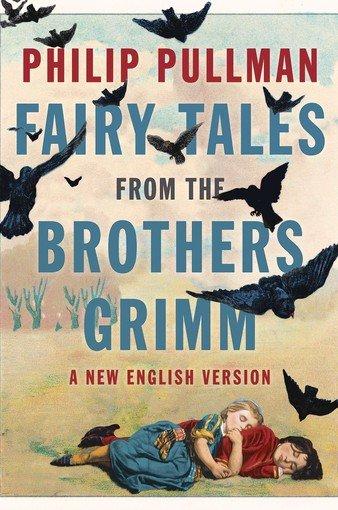
Book Review: Fairy Tales From The Brothers Grimm by Philip Pullman

Book Review: Fairy Tales From The Brothers Grimm by Philip Pullman

First of all, for those of you who have been following my struggles: I did it! I actually finished a book of short stories! I’ve mentioned a few times now that I have a big problem with story collections, and generally avoid them like the plague. I made an exception, however, for Fairy Tales From The Brothers Grimm by Philip Pullman, because a) fairy tales! and b) Philip Pullman!

And now that that’s out of the way… what can I tell you about this collection? We all — or at least, those of us above a certain age — grew up with the color-themed fairy books, right? I was a bit obsessed with these as a child, and read whichever volumes were available on my library’s shelves at any given book-bingeing visit. It’s been years since I’ve revisited fairy tales in the written form, as opposed to all the Disnified versions that I’ve watched countless times with my kids.

In Fairy Tales From The Brothers Grimm (let’s just call if FTFTBG for now, okay?), Philip Pullman presents fifty Grimm tales which he’s rewritten in modern, simple English. The language is straightforward and pure, without archaisms that abound in more “traditional” Grimm collections. At the conclusion of each story, the author includes source information as well as his own comments on the story itself and any changes he may have made from the original narratives. He is quite faithful to Grimm, identifying which edition of the Grimm stories he’s pulled from, and only deviates from the source material when he feels that the story is missing a connection or a conclusion.

Pullman’s comments vary from factual — stating source and context — to highly opinionated, and it’s these latter types of comments that are the most entertaining. When the author has something to say, he really says it. Here’s one of my favorites:

However, the tale itself is disgusting. The most repellent aspect is the cowardice of the miller, which goes quite unpunished. The tone of never-shaken piety is nauseating, and the restoration of the poor woman’s hands simply preposterous… Instead of being struck by wonder, here we laugh. It’s ridiculous. This tale and others like it must have spoken very deeply to many audiences, though, for it to spread so widely, or perhaps a great many people like stories of maiming, cruelty and sentimental piety. (Comments on story #21, “The Girl With No Hands”)

The introduction to FTFTBG is wonderful, outlining the history of the Brothers Grimm and their efforts to record and retell folk tales. Philip Pullman gives a very useful overview of common characteristics of fairy tales, among them the immediacy of the characters and narrative: The characters tend to have no backstory, and often lack names other than “the miller”, “the tailor”, “the youngest son”, etc. The stories are tales of actions and consequences, with little to no time spent on descriptions of settings or the natural world, character motivations, or personal growth or development:

There is no psychology in a fairy tale. The characters have little interior life; their motives are clear and obvious. If people are good, they are good, and if bad, they’re bad… The tremors and mysteries of human awareness, the whispers of memory, the promptings of half-understood regret or doubt or desire that are so much part of the subject matter of the modern novel are absent entirely.

I am not an academic; I have no fancy degrees in folklore, ethnography, or comparative literature. I can’t compare Philip Pullman’s retellings to other versions, reinterpretations, or new translations. What I can assess is how this particular collection of stories worked for me as a reader — and the answer is, it worked very well indeed!

I truly enjoyed this collection, which includes both familiar tales (“Cinderella”, “Rapunzel”, “Snow White”, “Little Red Riding Hood”) as well as tales (with wonderful titles!) that I’d never heard of, such as “Hans-my-Hedgehog”, “The Mouse, the Bird and the Sausage”, and “The Singing, Springing Lark”. Even for the most familiar tales, I was surprised to realize how far my own memory of the stories had strayed from the Grimm version into the land of Disney princesses and happily-ever-afters. There’s something oddly appealing — at least to me, with my appreciation for the dark and off-beat — in realizing that even a story that ends with kisses and marriage (such as “Cinderella”) also includes self-mutilation, horrific cruelty, and shoes filled with blood. In real Grimm stories, fairy tales are definitely not soothing stories to lull children into peaceful dreams!

Some of the stories which were new to me were quirky and funny, such as “The Boy Who Left Home to Find Out About The Shivers” and “Lazy Heinz”. Then again, there are plenty of truly disturbing stories. “Thousandfurs”, for me, is the most disturbing in the collection, not specifically because of Pullman’s retelling, but because “Thousandfurs”  is one of the origin stories for the brilliant yet wildly upsetting novel Deerskin by Robin McKinley.

And perhaps that’s the point and the beauty of reading such a well-written and thoughtful collection of traditional fairy tales: We’ve all encountered these stories in so many ways, with so many different interpretations. In reading them anew, we’re instantly reminded of all the associations we’ve developed with these stories, from reinterpretations in modern novels to our grandparents’ versions of fairy tales as bed-time stories to cautionary tales about greed and duplicity. What’s most interesting to me is that the stories resonate so deeply and so widely; your Rapunzel and my Rapunzel may be very different, but the bottom line is that fairy tales like these give us a common language and cultural points of reference. On my bookshelf, I have a wonderful collection of short fiction by women writers entitled We Are The Stories We Tell. Given the depth of experiences we all share thanks to fairy tales such as those in FTFTBG, I’d say that we are also the stories we read.

Book Review: Frost Burned by Patricia Briggs

Book Review: Frost Burned by Patricia Briggs

Frost Burned (Mercy Thompson, #7)

Mercy is back! Mercy is back! Mercy is back!

Clearly, my babbling inner fangirl is dominant at the moment, as I get practically giddy over the return of my favorite urban fantasy heroine and her pack of strong, conflicted, devoted werewolves.

Frost Burned is book #7 in the outstanding Mercy Thompson series by Patricia Briggs. Fingers crossed — here’s hoping there are many more stories set in Mercy’s world yet to come. Brief spoiler alert: While I won’t give away too much from Frost Burned, from this point forward you may encounter spoilers for some of the earlier books. You have been warned!

For the uninitiated, Mercy Thompson is a talented VW mechanic living in the Tri-Cities region of Washington, who also happens to be a shapeshifter. Thanks to her Native American lineage, Mercy can shift at will into coyote form and has certain other magical predispositions as well. At the outset of the series, Mercy lived in a trailer adjacent to the property of werewolf pack Alpha Adam Hauptmann, which gave Mercy all sorts of childish pleasure as she found new and creative ways to annoy the bejeesus out of Adam.

Flash forward to book #7, and Mercy and Adam are happily married, completely in love, and enjoying life surrounded by their pack and their friends. When Adam and the pack are attacked and kidnapped, Mercy has to use all the power at her disposal and call in some significant favors in order to find the wolves and rescue them before disaster strikes.

That’s the two-second version of the plot, and I won’t go further. If you’re a Mercy fan, you’ll want to read this book at the first possible second. And if you’re not already a Mercy fan — what are you waiting for? Go get book #1 (Moon Called) immediately, and don’t stop reading until you get through Frost Burned!

I don’t often gush so enthusiastically, but I have to say that these books are really special. The characters are unique and unforgettable. By this point in the series, I’m in love with at least half of the pack, and would want the rest at my side in any dark alley imaginable.

What I really love about these books is the wonderful world that Patricia Briggs has built, especially when it comes to creating a fully-formed werewolf social structure. The pack dynamics echo those of wolf packs in the wild. Dominance is a key theme, and each werewolf in Adam’s pack knows exactly where he stands in the pack rankings. There’s a magic involved as well — Adam can call on the strength of the pack when he needs an extra boost, or he can send his power to a wolf who’s in trouble. Likewise, the mate bond between Adam and Mercy isn’t just about love. They have a connection that they can use to reach one another, to strengthen one another, and rather surprisingly, to physically save one another when in danger.

The author’s depictions of dominance struggles among the wolves is fascinating. Even in human form, the pack members know better than to look the Alpha in the eye. When in a crowded or unfamiliar location, it’s difficult for the dominant wolves to relax, as their instinctive need to control their surroundings and protect those packmembers who are weaker can push them toward a violence that always lurks below the surface. As we learn in Frost Burned, even a simple card game used to pass the time can end in bloodshed when two dominant wolves are involved, and it’s a bad idea to get too close to a wounded werewolf, when his aversion to showing vulnerability might just trigger an attack.

Mercy herself is a wonderful hero. She’s physically strong and capable, and even stronger willed. She’s driven to protect her loved ones, even when doing so puts her own life on the line. Mercy dives in and takes action. She never waits to be rescued; she’s the rescuer. Of course, she suffers for it, too — over the course of the series, very bad things have happened to Mercy, and they do leave scars, both emotional and physical. Unlike some lead females in ongoing paranormal series, Mercy doesn’t get bogged down in her beauty routines or other silliness. She works hard, she takes care of her family, she pays attention to her pack… and she pretty much never has a dull moment.

I suppose you could complain that the books are so action-packed that the characters never have a quiet moment to breathe. Well, that’s true, but that’s not necessarily a bad thing. The plots in the Mercy Thompson books are hyper-fueled by danger, threats, conspiracies, and various and sundry super-scary bad guys. While there are tender, domestic moments built in, I suppose we just have to imagine that in the months that go by in Mercy’s life in between the books in the series, she and Adam and their wolfy gang are able to catch up on their sleep, enjoy their families, go out on runs, and play intense rounds of video games.

By now, I’m sure that it’s clear that I adore the Mercy Thompson series, and I’m wild about the spin-off Alpha & Omega series as well. My chief unhappiness at the moment? Having read the book the absolute second I got my hands on it, I have no more Mercy adventures to read! I understand that at least nine Mercy books are planned, and that #8 is due out in 2014. I don’t want to wait!

Seriously, read these books. You can thank me later.

Book Review: Spellbinding by Maya Gold

Book Review: Spellbinding by Maya Gold

Sixteen-year-old Abby is used to fading into the woodwork, lurking in shadows, never being noticed. Whether at home or at school, Abby is one of those girls who’s always in the background, not especially scorned, not surrounded by friends — just kind of there. She’s used to her lot in life and more or less knows her place, although she can’t help sighing over golden boy Travis, her life-long crush ever since he showed her kindness on the playground years ago when they were both small. Travis is dating perfect-but-mean Megan, and Abby can only watch from the sidelines and blush whenever anyone takes notice of her. Sensitive and shy, Abby is the quintessential high school wallflower:

Maybe this is the flip side of being invisible: Nobody sees me, but I notice everything.

Abby’s life takes a dramatic turn when a teacher assigns the class a genealogy research project: Trace your family back from the current generation to the family member who first set foot in America. Abby knew her late mother’s side of the family arrived centuries earlier, but is startled to discover a connection to Salem in the 1600s — the Salem of the witch hunts and trials, located just a short distance from Abby’s home town.

As Abby digs further, she seems to awaken her own magical powers and a deep connection to the dimpled, adorable Rem, a mysterious boy who seems to know a lot more than he’s willing to admit. Will Abby embrace the power promised by her newly discovered abilities? Can she change her life by using magic? Should she?

Even without her magical awakening, Abby was already facing a slew of mundane problems. Since her mother’s death years earlier, Abby feels overlooked by her father, who focuses instead on her soccer-star younger brother. As her father begins dating, Abby – the household cook –  is full of resentment towards the woman she sees usurping her role in the kitchen and, not incidentally, in her father’s heart. Abby’s best friend moved away the summer before, leaving Abby without the security of a BFF. Abby is smart and has talents, but not the kind to make her admired or sought after at school. This is a girl with enough to deal with — and now she has to figure out if she’s crazy or if she’s a witch, and if she’s a witch, what should she do about it?

Abby’s inner struggles are what make this book particularly interesting. She clearly has a gift, but she’s also keenly aware of a sense of right and wrong. When Abby uses a love spell to get her crush to notice her, she does it as a lark, to see if she can. But once she realizes that her magic works, she’s not so sure that she wants it. Is it satisfying to have your dream boy suddenly devoted to you, when you know that you forced it to happen? How can you be happy in a relationship if you know, deep-down, that it’s not real?

A nice twist in Abby’s growing power is that it clearly doesn’t have all the answers. Abby gains greater confidence and starts letting her hair down — literally — no longer  afraid to be noticed. But she quickly finds that the notice she gets isn’t what she wanted, as the school mean girls subject her to a campaign of gossip, bullying, and Internet abuse, all of which escalate as Abby gets her guy and becomes golden boy’s new girlfriend. Greater visibility is no protection against ridicule and scorn.

Author Maya Gold has a way with words, using surprise twists and references in ways that made me sit up and pay attention as I read. A few prime examples:

It’s as if the morning is posing for June on a calendar.

There aren’t evil earth witches who look like Keith Richards with blood in their eyes.

If I’m having some kind of schizophrenic breakdown, the voices inside my head sound like Gandalf the Grey.

What I especially liked about Spellbinding is how real Abby’s inner life seems. Given the mean girls and their nastiness, having Abby consider using magic as revenge doesn’t seem like power gone mad — more like a reasonable response to intolerable circumstances. When you’re backed into a corner, who wouldn’t use their secret strength to get back into control?

Another noteworthy aspect of Spellbinding — and one that really differentiates it from the plethora of supernatural-tinged YA novels saturating the market these days — is that “normal” life is clearly the better choice. Yes, magic exists and is tempting, but it’s made clear that if Abby journeys down the path toward embracing her witchiness, she’ll be forever giving up an everyday life of family, friends, achievements, and true connections. Despite the temptations, Abby has a good head on her shoulders, and quickly comes to realize that power is no substitute for relationships that come from the heart.

Spellbinding does a great job of weaving magical elements into the broader story of a girl trying to find her way, come out of her shell, and find her place in the world. It’s not Abby’s witch heritage that really matters in the end; it’s the connections she’s made that give her strength and enable her to look forward toward a brighter and happier future. I’m very glad to have read Spellbinding. It’s a quick read, but one that should resonate with teen girls (and their moms!). The combination of romance, suspense, magic, and girl power is quite fun and full of (ahem) charm.

Review copy courtesy of Scholastic via Netgalley

Book Review: The Imposter Bride by Nancy Richler

Book Review: The Imposter Bride by Nancy Richler

Nancy Richler The Imposter Bride

In the wake of World War II, the world was filled with refugees, some seeking shelter, some seeking new homes, some seeking forgiveness, some seeking peace. In Nancy Richler’s The Imposter Bride, one determined young woman arrives in Montreal seeking a new life, and more importantly, a new self. But can a person really reinvent herself? And what happens when her old life catches up to her?

Lily Azerov arrives by train in Montreal as a mail-order bride for Sol Kramer, whose family had settled in Canada one generation earlier and is now established within the Jewish community there. But for whatever reason, Sol sees Lily at the train station and changes his mind, leaving Lily without a plan or a future until Sol’s brother Nathan steps in and marries Lily instead. Nathan is drawn to Lily’s fierceness and determination, and falls for her almost instantly. And what does Lily feel for Nathan? Is he more than just a solution to a problem?

The Imposter Bride is layered throughout with mysteries. Lily, we quickly discover, is not who she says she is. We don’t know who she was exactly, but this stranger in a strange land has picked up the name and history of another girl. The original Lily and her entire family, like so may others, lie dead in Europe, leaving no trace behind. The new Lily does not have long to hide behind her new self, as the original Lily’s cousin also lives in Montreal and is quick to sniff out the deception.

After a dramatic first chapter, in which the point of view shifts radically from character to character, so that we see events through the eyes of Lily, Nathan, Sol, and others, we learn in the second chapter that the new Lily is long gone. Lily stuck around only long enough to give birth to a baby girl, and then left suddenly one day, never to return. From this point forward, we hear parts of the story through the words of Ruth, Lily and Nathan’s daughter, who narrates a life lived amongst a large, loving family and yet with a key piece of her own identity permanently denied her.

Throughout the remainder of the story, Ruth and other family members pour out their thoughts and emotions as they recount their experiences with faux Lily as well as the paths their lives have taken after her departure. The shifting points of view are quite effective in places, as we hear, one after the other, radically different interpretations of the same set of events.

The author skillfully creates distinct voices for the characters, each easily recognizable and with his or her own story to tell. The older generation recounts their stories of losses and loves; we see Ruth growing up from early childhood through middle age; we even get brief moments of Lily’s thoughts and experiences.

Sadly, for me at least, the pieces never really gel into a whole that’s greater than the sum of its parts. Key elements of the central mystery are left unresolved — or are finally revealed in such a brief overview that I couldn’t relate to the events at all. What happened to the original Lily? What was her connection to the faux/new Lily? Why did new Lily choose to start over in Canada, despite knowing she’d have little chance of maintaining her charade? Who, really, was new Lily before she found her new name and new life? And why did she feel that she had to leave her husband and baby girl? There are answers provided, mostly, but I found them unsatisfying and not entirely convincing.

On the positive side, The Imposter Bride is richly detailed, and the author’s language is heartfelt and lovingly crafted. Through the words of the characters, the deep sense of loss so central to the Jewish community in the wake of the Holocaust is finely portrayed, as each of the characters are impacted in different ways by the horrors and suffering of that time.

A central theme that emerges is the pain of not knowing. Many of the characters simply do not know what has become of the families they left behind in Europe. While the pain and questioning may become less acute over time, the absence never really goes away. So too is the case with Ruth, who has lost her mother, but spends most of her life not knowing how or why. Finding a way to keep going, to create a life for oneself, and to find joy despite deprivation and pain is a challenge for all of the characters in The Imposter Bride. Both Ruth and her missing mother are forced by their losses to redefine themselves and figure out just what kind of new identities they can forge. Do they let themselves be defined by the events that have happened to them? Or do they decide for themselves who they want to be and how they want to live, and find a way forward?

Overall, reading The Imposter Bride was a mixed experience for me. The details are wonderful, the characters feel real, and yet the narrative itself fails to coalesce into a powerful whole, so that the novel felt to me more like a collection of moving stories and vignettes rather than a solid work of fiction with a begininng, middle, and end. I’m glad to have read it, but unfortunately, I didn’t enjoy The Imposter Bride or feel its impact nearly as much as I’d hoped to. Still, Nancy Richler is clearly a gifted and sensitive writer, and I’m sure I’ll seek out her works in the future.

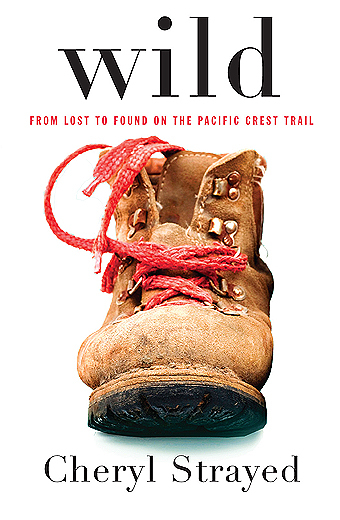
Book Review: Wild by Cheryl Strayed

Book Review: Wild: From Lost to Found On The Pacific Crest Trail by Cheryl Strayed

Why on earth would a 26-year-old woman with no backpacking experience whatsoever set out on a grueling solo trek of over 1,000 miles? The answer lies in the powerful memoir Wild: From Lost To Found On The Pacific Crest Trail by Cheryl Strayed.

The Pacific Crest Trail is a nationally designated hiking route stretching from the California border with Mexico all the way north to Washington’s border with Canada. Along the way, the PCT traverses formidable mountain ranges including the Sierra Nevada and the Cascade, as well as the Mojave Desert and points in between that most of us have never even heard of. Each year, people travel from around the globe to hike all or part of the PCT. For many, tackling the PCT is the fulfillment of a lifelong dream.

And yet Cheryl Strayed, with practically no preparation, sets out on the PCT for a three month journey, a mere seven months after first hearing of the PCT. For Cheryl, it must have sounded rather like a last grab at a lifeline. Four years after her mother’s wrenching death from cancer, the author found herself in a downward spiral. Her remaining family had scattered; she’d let her young marriage to a good man disintegrate as she herself fell apart, pursuing infidelities, bad decisions, and even a brief involvement with heroin in an attempt to detach and shield herself from the grief she’d never fully dealt with.

When Cheryl picked up the PCT trail guide in a check-out line, it was purely on a whim, but something drew her back. And thus, a few short months later, she began the extraordinary adventure with a tremendously over-stuffed backpack (nicknamed “Monster”) weighing her down so greatly that she was unable to even stand upright… and yet somehow, she set out on the trail, one foot in front of the other, to escape her woes and to find something — anything — to give her reason to keep going.

The story of Cheryl’s journey and transformation is remarkable. As she accumulates the miles, pushing her body beyond any limits she could have imagined, she slowly finds an inner strength and manages to come to terms with her personal demons.

At the outset, I could only shake my head in wonder. Despite her guidebooks and helpful advice from the staff at her local REI, the author really had no idea what she was doing and had no business doing it. Her mistakes were enormous, and easily could have gotten her killed. Her first day on the trail was her first day of backpacking, ever. She had only the smallest cash reserves for the trip, and so time after time found herself stumbling into the next resupply location after days on the trail with only 60 cents (or less) in her pockets. The extent to which she basically let herself jump without a safety net is rather scary to read about. We know because we’re reading a memoir that the author survived her incredible journey, but in chapter after chapter in Wild, we can see that Cheryl’s survival had a lot to do with good fortune. At any one of at least a dozen points, events could have taken a different turn, resulting in injury at the least or perhaps even a tragic fatality. A more spiritual person might even say that someone or something must have been watching over her, because there’s no way that a person so completely unprepared should expect to come out of the experience in one piece.

Despite my disbelief — verging on disapproval — for the shaky decision-making that the author applied toward her trek, I could only end up in admiration of her courage and fortitude. How many of us would have the nerve to take such a giant leap into the unknown? Granted, perhaps the fact that Cheryl had hit bottom helped propel her forward. There really was nothing left for her in her old life, so a dramatic departure was pretty much required. As the book progressed, I was increasingly impressed both by her physical stamina, despite unimaginable pain (she lost half her toenails along the PCT!) and her mental determination to see this quest through, no matter how many obstacles she encountered. Her gradual acceptance of the good and bad in her own life and her growing belief in her ability to change, move forward, and make a new start is quite beautiful to witness.

Along the PCT, Cheryl meets a number of fellow hikers who for a wide variety of reasons have also decided to make the journey. It’s lovely to encounter these strangers and see the instant bonds that form, as these individuals who perhaps overlap in their treks for only a few days form a community that stretches the length of the trail.

The book wraps up at the conclusion of Cheryl’s trek, and I wasn’t ready for it to end. Having come that far with her, I wanted to know what happened next — how did she manage to start a new life? Did it go the way she’d hoped? How did she readjust to civilization? I actually have tickets to hear the author speak in April, and I’m so looking forward to learning a bit more about her thoughts along the trail and the challenges she faced afterward.

The only minor detail in the book that still bothers me — but I’m not a long-distance hiker, so perhaps I simply cannot understand — is Cheryl’s approach toward reading along the PCT. She read throughout her journey, usually alone in her tent at night, and each day before setting out again she’d burn the pages that she’d just read so as to continually lighten her load. I’m sorry, but the idea of burning book pages for any reason gives me the shivers. At each resupply location, people would leave unwanted items in a “free” box for other hikers. Couldn’t she have kept the books intact and simply left them for another person to read? I know, it’s probably petty for me to focus on this, but as someone who practically cries over dog-eared pages or a dented book cover, this felt fairly horrifying. But that’s a very small complaint.

Overall, I’m very glad to have read Wild… although I did come away from it with the probably completely wrong idea that if she could do it, as poorly prepared as she was, then so could I. Not that I would. But, you know, I could! (Ha! Yeah, right…)

Wild is the story of one woman’s journey away from grief and loss and toward a new personal strength and a future of hope. I recommend it highly.