Blog Tour & Giveaway: Night of a Thousand Stars by Deanna Raybourn

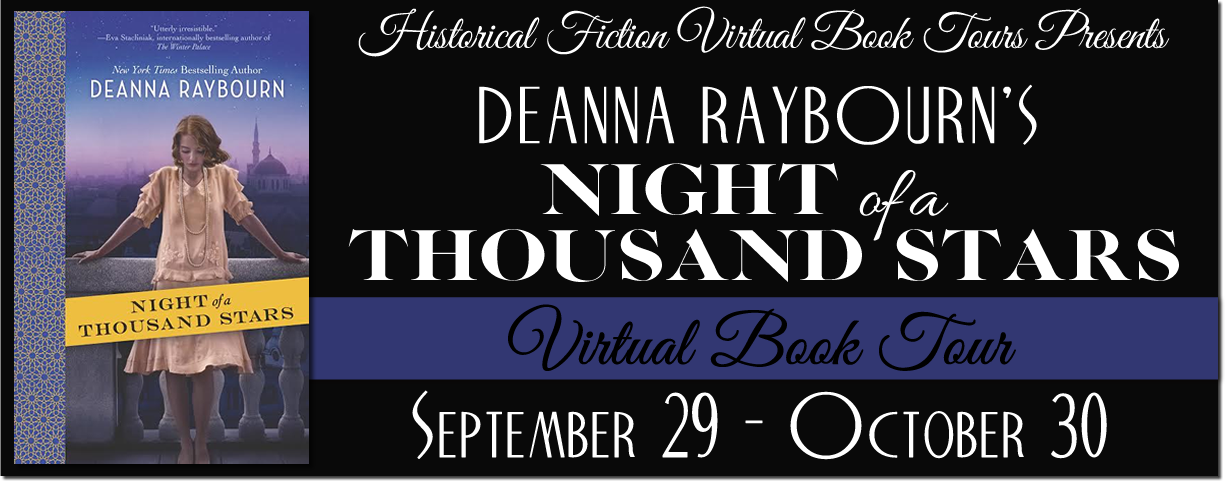
04_NOATS_Blog Tour Banner_FINAL

I’m delighted to be participating in the blog tour ( courtesy of Historical Fiction Virtual Book Tours) for the newest historical fiction release from Deanna Raybourn, author of A Spear of Summer Grass, City of Jasmine, and the Lady Julia Grey mystery series.

Publication Date: October 1, 2014
Harlequin MIRA
Formats: eBook, Paperback
Genre: Historical Fiction
New York Times bestselling author Deanna Raybourn returns with a Jazz Age tale of grand adventure…

On the verge of a stilted life as an aristocrat’s wife, Poppy Hammond does the only sensible thing—she flees the chapel in her wedding gown. Assisted by the handsome curate who calls himself Sebastian Cantrip, she spirits away to her estranged father’s quiet country village, pursued by the family she left in uproar. But when the dust of her broken engagement settles and Sebastian disappears under mysterious circumstances, Poppy discovers there is more to her hero than it seems.

With only her feisty lady’s maid for company, Poppy secures employment and travels incognita—east across the seas, chasing a hunch and the whisper of clues. Danger abounds beneath the canopies of the silken city, and Poppy finds herself in the perilous sights of those who will stop at nothing to recover a fabled ancient treasure. Torn between allegiance to her kindly employer and a dashing, shadowy figure, Poppy will risk it all as she attempts to unravel a much larger plan—one that stretches to the very heart of the British government, and one that could endanger everything, and everyone, that she holds dear.


My thoughts:

Deanna Raybourn excels at creating strong, sassy heroines with a flair for adventure, who aren’t afraid to break from the confines of society’s expectations and seize life (and love) whenever they get the chance.

Poppy Hammond certainly fits the bill. After her dramatic exit as a runaway bride, Poppy is restless and yearning, knowing only that she needs more in her life. The nice man who helped her flee the wedding is someone she’d like to at least thank for his efforts, leading to an impulsive escapade in which Poppy winds up in Damascus under an assumed identity… right in the midst of political upheaval, treasure hunters, danger and intrigue. Definitely all the ingredients needed to please a girl seeking adventure!

Sebastian is a heroic leading man, insultingly misunderstood by Poppy to start with, only revealing his true character and capabilities to her over time, as they plunge from one dangerous situation to another, fleeing across deserts, hiding out in old ruins, and evading bad guys with a flair that would put Indiana Jones to shame.

As in City of Jasmine, the Middle East of the 1920s offers just the right combination of beauty, danger, and old-timey espionage thrills to make Night of a Thousand Stars a romantic, exciting adventure story. The politics and history of the region in that tumultuous time are well-explained, but never in a way that’s boring or instructional. Instead, the intrigue serves as an exhilarating backdrop to Poppy and Sebastian’s growing flirtation and affections, and the two play off each other marvelously, displaying the mingled exasperation and amusement you might encounter in an old movie à la The African Queen.

While Night of a Thousand Stars works as a stand-alone novel, characters from the author’s earlier works (City of Jasmine, the Lady Julia books) are referenced. There’s no reason that you couldn’t enjoy Night on its own, but if you’re so inclined, I’d recommend reading City of Jasmine (and its companion novella, Whisper of Jasmine) first.

Overall, I found Night of a Thousand Stars to be a fun, engaging, romantic read. If you’re a fan of romantic espionage tales, don’t miss it!

Other reviews:

Interested in Deanna Raybourn’s other books? See my previously posted reviews:
A Spear of Summer Grass
City of Jasmine

Buy the Book

Amazon (Kindle)
Amazon (Paperback)
Barnes & Noble (Paperback)
Books-a-Million
iTunes
Kobo

About the Author

03_Deanna RaybournA sixth-generation native Texan, Deanna Raybourn grew up in San Antonio, where she met her college sweetheart. She married him on her graduation day and went on to teach high school English and history. During summer vacation at the age of twenty-three, she wrote her first novel. After three years as a teacher, Deanna left education to have a baby and pursue writing full-time.

Deanna Raybourn is the author of the bestselling and award-winning Lady Julia series, as well as, The Dead Travel Fast, A Spear of Summer Grass, and City of Jasmine.

For more information please visit Deanna Raybourn’s website and blog. You can also find her on Facebook, Twitter, and Goodreads.


Giveaway:

With thanks to Historical Fiction Virtual Book Tours, I’m delighted to be able to offer a paperback edition of Night of a Thousand Stars (available to US residents only). Click the link below to enter:
a Rafflecopter giveaway

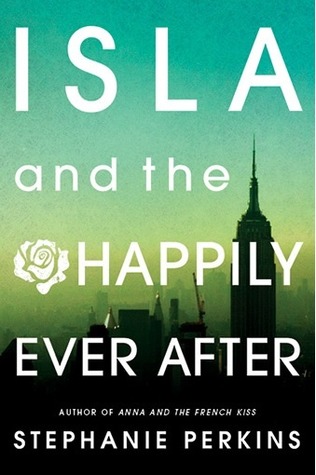
Book Review: Isla and the Happily Ever After by Stephanie Perkins

Isla and the Happily Ever After (Anna and the French Kiss, #3)

Stephanie Perkins excels at writing young adult novels that shine with honest emotion, likeable but flawed characters, and an unflinching look at how young people in love behave in real life. There’s no sugar-coating or fake revelations or makeovers leading to perfect relationships: The people in her novels feel alive and familiar — not an adult’s idea of what teens might be like, but real people channeled through the writer’s mind and pen (or keyboard).

Isla and the Happily Ever After is Stephanie Perkins’s third book in a loosely connected trio, following Anna and the French Kiss and Lola and the Boy Next Door. Like Anna, Isla is set in Paris at a private, expensive boarding school for Americans. In Isla, the gang from Anna has graduated and moved on, and we focus on Isla, a quiet New Yorker whom we glimpsed in the background in earlier books.

Isla (pronounced Eye-la, thank you very much) has been crushing on cute, artistic Josh since their freshman year, but when we last saw him in Anna, he had a girlfriend and didn’t seem aware of Isla’s existence. A chance encounter in a coffee shop during which Isla is extra flirty (thanks to post-dental-work Vicodin) leads to a very cute huddle in the rain, a spark of attraction, and the very big possibility that Josh might actually like Isla back.

It’s not long before Isla and Josh reconnect in Paris as their senior year begins, and before you know it, the two are hot and heavy and falling in love. But wait! The book is called Isla and the Happily Ever After, and she seems to have found her HEA… but the book is only half-way through. Whaaaaat?

Well, naturally, there are complications. Obstacles. Misunderstandings and heartbreak.

What might seem predictable or trite in a lesser piece of work feels sad but completely real here. It makes sense that these two bring all of their individual baggage to the relationship and can’t conjure an instantaneously happy life out of thin air, no matter how much they love each other. Eighteen is a tricky time to plan a future, whether it’s thinking about college plans or even longer term. Isla and Josh love each other so much, and they still fall apart. The question then becomes, can they figure it all out?

(Okay, yeah, the book title kind of flashes a big neon clue about what sort of ending we’ll get…)

I enjoyed Isla very much. The Paris setting doesn’t hurt a bit, and it’s quite fun to see Josh’s artwork through the eyes of his besotted girlfriend. Likewise, it’s great to see a central female character who’s a good person, but still has a lot to learn. The characters’ friendships and family complications add interesting twists to the plot and help make the story feel richer and fuller than it would if the love story were the only focus.

Granted, the fact that the book is set in Paris and that all of the characters have zero money problems tends to lend the story a fairy-tale feel. Maybe that would become obnoxious in a different sort of book, but in Isla, it just means that we get to enjoy these wonderful Parisian settings (and even  Barcelona) with Isla and Josh, and we readers get just as swept up by the magic of it all as the characters do.

I recommend the entire trio by Stephanie Perkins for anyone who enjoys upbeat, contemporary YA which includes gritty, romantic love and urban settings that practically scream “come here to fall in love!”.

See my reviews of Stephanie Perkins’s other books:
Anna and the French Kiss
Lola and the Boy Next Door

_________________________________________

The details:

Title: Isla and the Happily Ever After
Author: Stephanie Perkins
Publisher: Dutton
Publication date: August 14, 2014
Length: 339 pages
Genre: Young adult contemporary fiction
Source: Library


Book Review: Lies We Tell Ourselves by Robin Talley

LiesAuthor Robin Talley gives us a stunning look at the school integration wars of the 1950s in her debut novel, Lies We Tell Ourselves. Seen through the eyes of two high school girls — one black, one white — caught up in the terror and day-to-day struggles of the early days of a Virginia high school’s forced integration, Lies takes us behind the historical record into the hearts and minds of the young people who had to actually live it all.

We’ve all read about integration in our history books and seen the photos of the Little Rock Nine being escorted into school by police through a jeering crowd. But what must it have been like for the students themselves? What did they feel, and what did they want?

In Lies We Tell Ourselves, we see both sides of the struggle through the two main characters, Sarah and Linda. Sarah is an honors student at the black high school in town; Linda is the white daughter of the town’s virulently anti-integration newspaper editor. When the court ruling comes down which forces the local white school to open its doors to black students, Sarah, her younger sister Ruth, and eight other students become the living symbols of integration. Once the NAACP wins its case, it’s the children who have to walk the path laid out for them by their parents and other adults. Everyone is just looking for an excuse to call integration a failure, so the pro-integration side lays out strict rules for the children: No fighting, no arguing, no answering back, no defending oneself, no extracurricular activities. Go along, get along — just walking the halls is an achievement, so don’t do anything that’ll hand the other side an excuse to say it doesn’t work.

The experiences of Sarah and the others are horrifying. Yelled at, spit upon, assaulted, impeded, harrassed, and threatened, entering the school and walking to their classrooms each day is like walking through a minefield. When someone spits on Sarah or dumps milk over her head, she can’t react, but must simply move on through the day. If she gives any hint that she’s upset, it’ll give the segregationists fuel for their argument that no one is ready for mixing of the races.

I wipe the tears away and stare at my reflection until my face smooths out and my eyes go empty. This is how they have to see me. If they know I feel things, they’ll only try to make me feel worse. Maybe if I keep trying, I really won’t feel anything.

From Linda’s perspective, the “agitators” — the black students — are just ruining her senior year. Why couldn’t they stay in their own schools? Why do they need to come and cause such chaos in her own perfect little world? Even worse for Linda is her internal conflict — is it possible that the “Southern values” she’s been raised with are wrong? Is it possible that the behavior she witnesses on a daily basis isn’t about preserving tradition, but is simply ugliness and hatred?

For eighteen years, I’ve believed what other people told me about what was right and what was wrong. From now on, I’m deciding.

The day to day realities of 1959 in Virginia are simply awful to read about through the lens of our 21st century, post-Civil Rights sensibilities. The actions within the school are revolting. The verbal harassment, including the most disgusting racial epithets, are constant. The teachers and administration routinely turn a blind eye. In home ec class, Sarah is given her own sets of pots and pans to use, so that white kids don’t have to handle implements dirtied by black hands. It goes on and on, and reading about it through the words of students living it is incredibly painful.

Complicating matters even further for Sarah and Linda is that they’re thrown together as partners on a project for French class, and as they begin to know one another, each is reluctantly aware of a growing attraction toward the other. The girls spend much of their time together arguing, but beneath the racial divide, there’s a simmering interest that has nothing to do with skin color. As each girl realizes that dating boys and pretending to fit in doesn’t really work for her, entirely different questions about shame, sin, and what’s “natural” and “normal” surface.

I almost felt like telling Sarah and Linda, “don’t you have enough on your plates right now?” Just attempting a friendship is enough to get Linda ostracized and ridiculed and for Sarah to become even more of a target for the thuglike white boys from school. To pursue a same-sex relationship in the South of the 1950s seems foolhardy in the extreme, and while it was moving to see what the girls go through and how caught in a web of hatred they each find themselves, I’m not sure that the story needed one more element to put the characters at risk.

That said, I found Lies We Tell Ourselves to be a moving, important, and brave book. It’s eye-opening to take a well-known chapter of history and revisit it through the perspectives of people who lived through it. I’d thought I could imagine what it must have been like to live through those days, based on reading history books and watching documentaries. But sometimes, it takes fiction to make facts come alive, and that’s what the author achieves here. By giving us a personal point of entry to the experience, we walk the halls of the high school with Sarah and Linda and experience the fear, the hate, the humiliation, and the absolutely insane level of courage it must have required simply to take the few steps from one classroom to another.

Sarah and Linda are remarkable, unforgettable characters, and while the book ends at the conclusion of their high school careers, I can’t help thinking about how much better their lives will be from this point forward. They’ve each changed dramatically, and they’ve stood at the center of social change and survived.

Lies We Tell Ourselves would make a fantastic addition to any US History class curriculum, but more than that, its story of two brave girls trying to find their way and do what’s right should be widely read by teens and adults, in school or out. Robin Talley’s fine writing gives us a front-row seat to a difficult and important chapter of our nation’s recent history — but beyond the social value, she’s also written just a really good novel that conveys true emotion and personal growth.

_________________________________________

The details:

Title: Lies We Tell Ourselves
Author: Robin Talley
Publisher: Harlequin Teen
Publication date: September 30, 2014
Length: 304 pages
Genre: Young adult historical fiction
Source: Review copy courtesy of Harlequin Teen via NetGalley

Book Review: Prototype by M. D. Waters

PrototypeEarlier this year, I was blown away reading Archetype by M. D. Waters, a sci-fi novel set a few hundred years in the future and focusing on the desperate measures a male-dominated society takes to reverse declining fertility rates. Did I mention the scorching hot sex scenes? Because yeah, there are those too, mixed in amidst the hospital labs and surveillance tech firms and art gallery openings (don’t ask).

In a particularly wise move, Dutton has given readers the gift of a speedy resolution, publishing the sequel, Prototype, only a few months after the first book, and I couldn’t be happier. There’s nothing I hate more* than finishing a terrific book and then holding my breath for the years it takes for the sequel to come out… by which point I’ll have either lost interest or forgotten all the details and stopped caring.

*Okay, I do hate world hunger, war, and a few other things more, but you get what I mean, right?

How do I write about Prototype without revealing any spoilers from Archetype? Very, very carefully.

In Prototype, we follow main character Emma’s journey of self-discovery as she attempts to recover from the horrifying events and revelations of the first book. And… well, damn it all, I really can’t write much of anything about this book, can I?

Emma is a terrific main character, and her world and its secondary characters are well developed and quite believable. An especially exciting sequence is set on “San Francisco Island”, and I loved every bit of the descriptions of the floating cities, intricate roadways, and newly created terrain. But that’s just a drop in the bucket.

Do you enjoy science fiction, love stories, lots of sexy times, and tons of adrenaline-fueled action sequences? How about mad scientists, illegal experiments, revolutionaries trying to free the oppressed, and a male lead who’s almost too perfect?

Well, then. All you need to know is that Prototype is the book for you. I re-read Archetype so I’d be able to go full-steam ahead into Prototype, and I highly recommend reading the two books in a row. The books flow together seamlessly and tell one complete story, and it’s hard to slow down and draw breath anywhere past page 15 or so of the first book or before the final page of the second.

Check out Archetype and Prototype. You won’t be sorry… but don’t blame me for your sleepless nights.

Want to know more? Here’s my review of Archetype.

_________________________________________

The details:

Title: Prototype
Author: M. D. Waters
Publisher: Dutton Adult
Publication date: July 24, 2014
Length: 372 pages
Genre: Science fiction
Source: Review copy courtesy of Dutton

Book Review: Season of Storms by Susanna Kearsley

Season of Storms

In the early 1900s, in the elegant, isolated villa Il Piacere, the playwright Galeazzo D’Ascanio lived for Celia Sands. She was his muse and his mistress, his most enduring obsession. And she was the inspiration for his most stunning and original play. But the night before she was to take the stage in the leading role, Celia disappeared. Now, decades later, in a theatre on the grounds of Il Piacere, Alessandro D’Ascanio is preparing to stage the first performance of his grandfather’s masterpiece. A promising young actress – who shares Celia Sands’ name, but not her blood – has agreed to star. She is instantly drawn to the mysteries surrounding the play – and to her compelling, compassionate employer. And even though she knows she should let the past go, in the dark – in her dreams – it comes back.

Sourcebooks Landmark has been reissuing Susanna Kearsley’s older books with new, gorgeous covers, and I wholeheartedly approve. Let’s take a moment to appreciate the beauty of these books:

This slideshow requires JavaScript.

But back to Season of Storms. Originally published in 2001, Season of Storms mostly holds up, although (as the author acknowledges in a preface to the new edition), old technology makes certain passages and exchanges feel clunky. Still, the emotions and connections have a timeless quality to them that makes the plot work, more or less, despite the occasional awkwardness. (Remember using someone else’s computer to send an email, then getting the response printed out on a piece of paper courtesy of the computer owner? And don’t even get me started on the whole telephone issue…)

The book is much more about modern-day Celia Sands than her predecessor, whom we know only through her portraits and through the stories that have come down over the years about her mysterious disappearance. Our Celia is a bit of a blank, to be honest. She’s a 20-something aspiring actress, having very limited stage success in tiny roles, supporting herself as a waitress, and realizing that her funds are about to run out, when she’s offered the role of a lifetime, taking on the lead role in the play that the original Celia never got a chance to perform. Off our Celia goes to a lovely Italian villa, with cast members, the director, a few shady characters, and the dreamy grandson of the playwright. Gee, where is this going?

What I liked: Quite a bit, actually. Susanna Kearsley simply excels at creating a feeling of gothic romance among lush and beautiful settings, mixing in a sense of menace and otherworldly threat with the more mundane stories of people finding their way and working through their pains and sorrows. The setting in the Italian countryside evokes a luxurious time gone by, an air of mystery, and a sense of being removed from the real world. The concept of family here is very au courant: Celia’s mother is a self-centered actress with no moral compass. Celia instead was mostly raised by Rupert and Bryan, a gay couple who provided her with stability, love, and responsible role models during her mother’s self-absorbed absences and misadventures. In Season of Storms, family is where you find it — the people, regardless of blood or legality, who take you in and nurture you unconditionally.

What I didn’t like quite so much: This book, at 500+ pages, is slow and long. The first half is mostly the set-up, and it takes far too long to get to the heart of the romance, the mystery, and the adventure. Celia’s character is not well enough defined for us to really care all that much about her. I never felt a connection with her character — I knew about events in her life, but in the current drama, didn’t get a true sense of how she would feel or why. Additionally, her acting chops aren’t really established. Apparently, she’s brilliant on stage, but I found this hard to believe.

But back to the plus side: Once we finally get to the mystery in the latter half of the book, it’s quite good. There’s intrigue, red herrings, and danger. The resolution to certain parts of the mystery were truly a surprise. Also to the good: The secondary characters are all nicely drawn, with interesting lives and quirks, all unique but not too far-fetched, with personalities that stand out, are believable, and quite enjoyable.

Overall, as with all of Susanna Kearsley’s books, I enjoyed Season of Storms and was glad to have read it. It’s not her strongest, and I felt it suffered by the lack of truly interesting people in the two lead romantic roles. Still, for atmospheric romance with a touch of doomed longing, it’s hard to beat a Susanna Kearsley novel. I’d still recommend Marianna or The Winter Sea as better starting points for newbies — but for the author’s fans, Season of Storms is yet another must-read.

If you’re interested in learning more about this author’s works, check out my reviews of some of her other books:
Mariana
The Firebird
Shadowy Horses
The Splendour Falls

_________________________________________

The details:

Title: Season of Storms
Author: Susanna Kearsley
Publisher: Sourcebooks Landmark
Publication date: Originally published 2001; reissued September 2, 2014
Length: 504 pages
Genre: Romantic fiction
Source: Purchased

Book Review: Horrorstör by Grady Hendrix

HorrorstorYou’ll be forgiven for mistaking this unusual novel for an Ikea catalog. That’s the whole point, after all.

This square, chunky book features the Swedish design elements we know so well, where pieces of furniture have unpronounceable names and the product is really a lifestyle, not just individual items to buy. Glancing at Horrorstör quickly, you’ll see a floor map of the showroom, a guide to ordering and assembly, and even a job announcement… only the tiniest bit ominous, perhaps:

It’s Not Just a Job.

It’s the Rest of Your Life.

Hmmmm.

Welcome to Horrorstör, and the world of Orsk. Orsk is a US-based company acknowledged to be a cheap knock-off version of Ikea. At Orsk, you can buy a Brooka sofa or a Liripip wardrobe, enjoy meatballs in the cafe and let the children play, then stroll through the market floor, picking up a cart full of impulse buys before finally hitting the registers. The whole point of Orsk is to immerse the consumer, to make the process slightly disorienting, to ensure that no one just comes in and buys a chair, but rather, walks through the entire showroom viewing all the various lifestyles available for purchase.

Main character Amy is a floor partner, showing up each day to her low-paying hourly job, resentfully not quite buying the corporate-speak that is the foundation of the Orsk experience. In her early 20s, Amy is a bit of a mess, with no career plan, no drive, and no money to fall back on. She needs Orsk, even if she doesn’t want to. Her manager, Basil, is the embodiment of everything she hates. He’s drunk the Kool-Aid, and spouts inspirational drivel like “Way to live the ethos, man!”

On the verge of being fired, Amy is instead offered one last chance to prove she has what it takes: Basil needs her to stay at night after closing, along with him and one other Orsk employee. Weird things have been happening overnight in the store — stray acts of vandalism, damaged products — and no one can figure out how. The trio plan to spend the night in the empty Orsk establishment, patrolling the floors and keeping an eye out, with the goal of catching someone in the act and becoming company heroes — and maybe even getting a shot at the next step up the corporate ladder.

Joined by two other Orsk partners, Matt and Trinity, who sneak in to shoot a Ghost Hunters-style video, the night gets off to a bumpy start as Amy spots creepy graffiti in the women’s room and later encounters a rat. And that’s only the beginning. An ill-advised seance unleashes a true influx of terror, and the nightmare begins, full of creeps and horrors galore, and threatening not just the employees’ jobs but also their sanity and even their lives.

A scream ripped through the dark. Ruth Anne’s scream.

This place is tricking you, she reminded herself. That’s what it does does.

Orsk is all about scripted disorientation.

It wants you to surrender to a programmed experience.

Horrorstör starts off as satire, but about midway shifts into truly scary horror. Suddenly, the featured products in the “catalog” shift: No longer just couches and seating units, the products are suddenly reconfigured Orsk items that double as torture devices. Orsk is built on the remains of a horrifying prison run by a deranged warden, and as the penitents come out of the walls to ensnare new prisoners for reform, Amy and the rest are in a fight for survival.

It’s an odd tonal shift, but somehow it works. I’m not sure that I’ll ever look at an Ikea store the same way again. If you enjoy your horror stories with a touch of sarcasm and snark, check out Horrorstör — althought I’d recommend reading it during daylight hours, with a teddy bear to hug and a fully charged cell phone nearby, just in case.

_________________________________________

The details:

Title: Horrorstor
Author: Grady Hendrix
Publisher: Quirk Books
Publication date: September 23, 2014
Length: 256 pages
Genre: Horror/satire
Source: Review copy courtesy of Quirk Books

Book Review: The Moment of Everything by Shelly King

moment everythingHave we readers become a bunch of bookstore fetishists? How else to explain the popularity of the bookstore trope in contemporary fiction? You know what I mean — a main character who hits a roadblock with either relationships, career, or both, suddenly finds the key to happiness by working in (and reinvigorating) a dusty old bookshop. I feel like I keep seeing this pattern in books lately… not that that’s not my own personal fantasy!! Me, a bookstore, piles of books, a cup of coffee or two… bliss!

Author Shelly King addresses this idealization of bookstore ownership toward the end of her fine new novel, The Moment of Everything:

Bookstores are romantic creatures. They seduce you with their wares and break your heart with their troubles. All great readers fantasize about owning one. They think spending a day around all those books will be the great fulfillment of their passion.

Of course, she goes on to point out:

They don’t yet know about the sorting of what comes in, the tracking of what goes out, the backaches from carrying and shelving, and the little money that comes from any of it. All those readers just think about the wedding without giving much thought to the marriage. Books make for a heavy load, and there’s no getting around it.

What’s it all about? In The Moment of Everything, main character Maggie has come unmoored. After being laid off from the Silicon Valley tech company that she helped start, Maggie spends her days lounging in a big comfy chair at Dragonfly Books, consuming romance novels by the armload. She doesn’t really want to put any effort into a job search, and definitely doesn’t want her overbearing Southern mama to interfere either. Maggie coasts along, until the day she encounters a beat-up old copy of Lady Chatterley’s Lover, and discovers love notes written in the book margins by two mysterious souls named Henry and Catherine.

Suddenly, Maggie has a mission. She decides to track down the book-loving lovers, using her best social media strategies, and coincidentally backs into a supposedly temporary job at Dragonfly. Meanwhile, she forms a family of sorts with store owner Hugo, a 50-something mellowed hippy, and Jason, her prickly coworker (and ardent D&D player, among his other nerdy habits). And then there’s sexy Rahjit, who breezes into Maggie’s life and may (or may not) have the key to her heart.

The Moment of Everything has romance, true, but it’s also about connections, friendship, and finding a place to belong. The weird and off-beat folks who prowl the Dragonfly stacks form a community of sorts. The more deeply involved Maggie becomes, the less appealing a return to a shiny corporate career seems. Ultimately, Maggie has to figure out what truly makes her happy — and that involves making decisions about work, love, family, and friends.

I enjoyed The Moment of Everything very much. True, I wasn’t particularly surprised by much that happens here. Wanna guess whether Maggie takes a new tech job or sticks with the bookstore? The romantic subplot takes a twist that I hadn’t seen coming, and that was probably the nicest unexpected element of the book — the fact that the Henry and Catherine mystery doesn’t have the neat and tidy answer that we’d most likely predict. (I did think the Lady Chatterley’s Lover piece of the story was mostly unnecessary; as plot device, it was a tad clunky at times.)

The writing is funny and fresh, with enough honesty to make even the more clichéd plot elements feel new and engaging. Even in the more serious or even sorrowful moments, the writing keeps it all human and down-to-earth — and in the lighter moments, the prose crackles with wit, humor, and unusual descriptions. Some prime examples:

I spotted Gloria’s porthole glasses scanning the titles as if we weren’t there, like one of those dinosaurs who could see you only if you moved.


I hooked my fingers into the neck of his T-shirt, pulled him to me, and kissed him. It was a soft thank-you kiss at first, full of a certain compatible comfort. But then there was more. We held each other tighter, leaning back on the ladder, and I felt my cells fly in the air like confetti.


Like everything in Avi’s home, the room felt feminine, but powerful. It was the room of a woman who knew exactly who she was and her place in the world. A chenille-covered Fortress of Fuck You. Someday, I told myself. Someday.


And finally, a long one but a good one, an ode to fanboys everywhere:

Because they actually did read the books they bought, instead of skimming over the trivial stuff and getting to the good parts like I did. They remembered impossibly complex names, alliances, languages, cultures, and family trees… They were in a constant search for that one, that special book that would satisfy their desire for mind-blowing plots, jaw-dropping wizardry, and emotional knife-twisting all at once. And when they found it they treated the author like a god, traveling across the country and sometimes oceans to attend conventions to meet anyone attached to the stories they loved. They lived in fear of  sequels being scrapped by the nonbelievers running the publishing houses, or the author dying before finishing the series. Laugh if you like. Call them pathetic even. But I’d like to see Jonathan Franzen inspire that kind of passion.

Do I recommend The Moment of Everything? Yes, absolutely. It’s a sweet and thoughtful contemporary romance with enough nitty-gritty, dusty book love thrown in to appeal to all book lovers… especially those who nurture that not-so-secret fantasy of quitting their day jobs and opening up a cute little used book store, preferably with a big comfy armchair and a cranky cat meandering through the stacks.

_________________________________________

The details:

Title: The Moment of Everything
Author: Shelly King
Publisher: Grand Central Publishing
Publication date: September 2, 2014
Length: 288 pages
Genre: Adult contemporary fiction
Source: Review copy via NetGalley

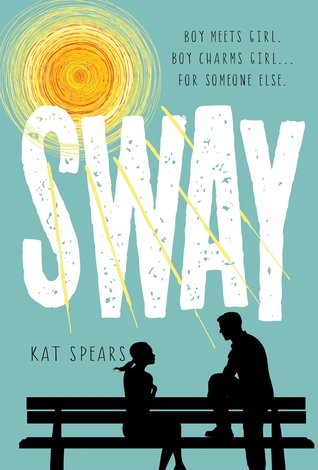
Book Review: Sway by Kat Spears

SwayThe synopsis for Sway, on Goodreads and elsewhere, describes the book as “hilarious” — and that’s not the way I’d put it.

Snarky, snide, clever, with humorous dialogue? Yes. But a laugh riot? No.

Sway is told from the point-of-view of high school senior Jesse Alderman, a kid who knows how to make things happen and get things done. He’s a fixer. People come to him for solutions, for answers, for connections. He’ll take on any job, it would seem. He arranges protection for a kid who’s being bullied. He makes sure that the bane of the principal’s existence gets expelled. He guarantees that a school fundraiser is a success — for a cut of the earnings. He also deals drugs (more on this later) and term papers, and seems to be welcomed everywhere he goes.

Jesse doesn’t really have many friends, though, having shut himself off emotionally after a family tragedy a year before. He doesn’t allow himself to feel, doesn’t even play his beloved guitar any longer. He floats through life, living by his wits, seemingly above it all. And then Ken, the star football player, hires Jesse to help him win a certain girl… and the girl is amazing. Jesse has never met anyone like Bridget before — beautiful, yet not focused on her beauty, and truly committed to doing good works. As Jesse gets to know Bridget in order to carry out his task, he can’t quite recognize what’s happening to himself at first, but slowly it becomes clear: He’s falling in love.

That doesn’t stop Jesse from completing his mission, and before you know it, Ken is dating Bridget, Jesse has earned his money, and all should be well. Except Jesse is now friends with Bridget as well as with her younger brother Pete, who’s a pissed-off kid with cerebral palsy and a chip on his shoulder, and Jesse can’t quite pull himself away. Things go south, as you’d expect, and it’s interesting to see Jesse pick up the pieces and finally start to repair the damage to his own life.

Along the way, Jesse falls more and more into good-guy mode, although he’d never admit it. As part of his ruse to get to know Bridget, he befriends an old man in an assisted living facility — but even after the ruse has been completed, Jesse continues to hang out with Mr. D., each providing the other with the sense of family both are missing. Jesse would consider himself a heartless business person, but his actions continually lead to good, even selfless results.

More troubling? Jesse’s drug dealing is just no big deal throughout most of the book. Jesse is a charmer and a welcome addition to every party — but how much of this is his personality and how much of it is the pot and X that he supplies? I found the morality of the drug aspects a bit slippery. Even when Jesse wants out of the drug business, he finds another kid from the high school to take his place with his pot connection, and it’s presented as a good thing for the kid, a way to win friends and fit in. The situation with the X dealer is a lot hairier and scarier, but even that dire situation is resolved fairly quickly.

There are a few loose plot threads that could have used more explanation, particularly in regard to Jesse’s two closest allies. I’d have liked to get to know each of them better and to find out more about how they connected with Jesse in the first place and why their bonds are so strong. I would also have liked to know more about Jesse’s family life and his childhood; we know about the tragedy from a year prior and have a sketchy understanding of what his life had been like prior to that, but I think a bit more fleshing out of that part of the story would have been helpful. Perhaps the biggest omission is an explanation of how Jesse came to be the success he is at influencing and fixing — when did he get started, and how? And how much of his business was already in place prior to a year ago?

Overall, I found Sway to be fast-moving and captivating. I read it all in one day, and had a hard time taking a break for little things like eating and talking to my family. Jesse is a wounded boy who acts out in all sorts of ways, and yet he’s clearly smart and funny… and underneath the gruff, never ruffled exterior lurks a kid who actually cares.

For what it’s worth, I’d say ignore the book blurbs that describe Sway as “a Cyrano de Bergerac story with a modern twist”. The comparison is only vaguely relevant, and doesn’t really set the right expectations for reading this young adult novel. Just go into knowing that it’s a well-written, clever story with heart, focused on unusual characters, and enjoy!

_________________________________________

The details:

Title: Sway
Author: Kat Spears
Publisher: St. Martin’s Griffin
Publication date: September 16, 2014
Length: 320 pages
Genre: Young adult contemporary fiction
Source: Review copy via NetGalley

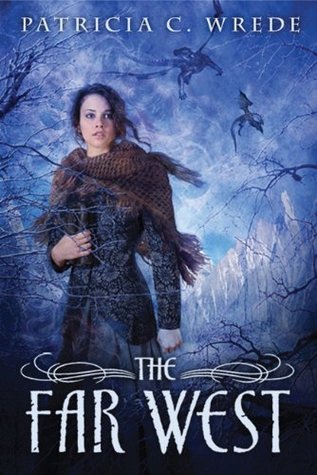
Series Wrap-Up: Frontier Magic by Patricia C. Wrede

Thirteenth Child (Frontier Magic, #1)Across the Great Barrier (Frontier Magic, #2)The Far West (Frontier Magic, #3)

The Frontier Magic trilogy by Patricia C. Wrede presents a puzzling dilemma for me as a reviewer:

On the one hand, I never doubted that I wanted to finish reading the trilogy — and even more importantly, my son remained engaged throughout, which is no small accomplishment.

On the other hand, these books contain certain problematic pieces that remain consistent across all three books.

Is it contradictory to say that I wouldn’t rate this series any higher than three stars, and at the same time state that I mostly enjoyed it all?

In Frontier Magic, we view an alternate America (known here as Columbia) through the eyes of Eff. Eff is one of twins, and is the family’s thirteenth child, in a society which believes that the 13th child will be full of bad magic. Because, yes, in the world of Frontier Magic, magic is part of the every day fabric of life. Magic is an advanced scientific field of study in the academic world, and even mundane tasks are routinely done by means of magic. In this tale of westward exploration and discovery, the civilized world stops at the Mammoth River (think Mississippi), and all land east of the river is protected by the Great Barrier Spell, which keeps out dangerous creatures like steam dragons and medusa lizards. Yet exploration of the West beckons, and expeditions regularly set out across the river, some never to return.

I wrote quite a bit about my reaction to the first book in the series, Thirteenth Child, in my review here. And the same issues that I had with the first book continue into the second. As I wrote on Goodreads about Across the Great Barrier:

Book #2 in the Frontier Magic series continues — for good and for not-so-good — along the same path as the first book, Thirteenth Child.

On the plus side, we continue to explore this alternate history of the United States, in which magic is commonplace and an actual necessity. The challenges and adventure of living life on the frontier are still here, and main character Eff is still pursuing her own non-standard magical skills.

On the negative side, the same problems that detract from the overall success of the first book are still present. The magical systems are overly complicated, so that it’s never quite clear what’s happening, and the solutions and big confrontations are so full of this jargon-heavy magical hoo-ha that it’s hard to tell who did what or why. Eff should be a powerful character, but she never really comes into her own. That is, she clearly has talents that are rare, but she doesn’t get to do a whole lot with them. She’s always just a part of, not the lead actor — she assists a professor, she participates in expeditions, she’s on the team when danger strikes — but she never is out in front, making decisions and standing out. Finally, the plot suffers from odd pacing. Many of the chapters (as in the first book) have time jumps that basically say, well, for the rest of that year, not much happened, or for the next few months, I kept doing my job. There’s a lot of summarizing, with action sequences popping up occasionally, but overall there’s a static feeling, as if the whole plot was being described in synopsis rather than actually taking place.

The Frontier Magic series thus far strikes me as a very interesting idea without the execution to fully back it up.

As for book #3, my feelings are pretty much the same. There’s further adventure, and Eff, now in her early 20s, finally comes into own in terms of flexing her magical powers and being recognized as having unique talents. She’s invited to participate in the most far-reaching expedition yet, and the group’s travels are full of danger and excitement. And yet, the same issues that plague the earlier books show up here as well. Nothing ever feels terribly urgent, despite the fact that a lot does actually happen. Events are described in a way that feels very episodic, and the point-of-view has a distant to feel to it. Eff narrates all that happens, and her voice simply isn’t particularly distinct. We never do really get a full picture of what Eff is capable of, although we do see her pretty much save the day.

The most serious problem, for me, is that the magical systems are fairly incomprehensible. We get long passages describing how Eff uses her magic to save the expedition (and perhaps civilization as a whole) — but it’s practically impossible to envision what she and the others are actually doing or how any of their magic truly works.

There’s quite a bit of outrage expressed in the reviews on Goodreads and elsewhere over the absence of a native population in the world of Frontier Magic. Others have gone into great detail on this issue; I don’t need to repeat them. Suffice it to say that the books are controversial because of this omission, and if you want to know more, there’s quite a lot written elsewhere on the topic.

Approaching these books, then, purely as an adventure tale and leaving aside the social commentary, I find myself back where I started. Unmitigated success? No. But enjoyable and engaging? Yes.

Even when my own attention wandered from time to time, my son remained interested throughout. Neither of us was exactly on the edge of our seats… but we still wanted to see it through and find out more. So all in all, not a bad choice for advanced middle grade readers or for adults who enjoy middle grade fiction featuring magical world-building.

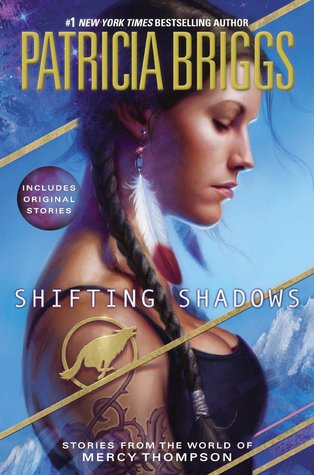
Book Review: Shifting Shadows by Patricia Briggs

Shifting Shadows: Stories from the World of Mercy ThompsonIn a way, it’s silly to write a review of a book of stories such as Shifting Shadows. If you’re a fan of the Mercy Thompson series by Patricia Briggs, then you’ll want to read this. If you’re not, this is not the place to enter Mercy’s world. Which, by the way, is amazing… so if you like urban fantasy filled with unique characters, exciting plots, and fascinating relationships, start with Moon Called, and then keep reading! I dare you to stop.

Shifting Shadows is definitely a gift for fans, and it’s a pretty wonderful gift at that. There are 10 stories in Shifting Shadows, all set in Mercy’s world. Six stories have appeared previously in various anthologies, and four stories are new. Although I’d read all  of the six older stories already, I still enjoyed re-reading them in the context of this collection.

The previously published stories are:

“Fairy Gifts”  – Set in Butte, Montana, this is a short, sweet tale of redemption and old debts focusing on a vampire and a fae, with a distinctly old West feel to it.

“Gray” – A ghost story/love story set in Chicago, “Gray” is quite lovely. This story of vampire Elena and her quest to reconnect with her late husband has both action and emotion.

“Seeing Eye” – The story of werewolf Tom and white witch Moira, set in Seattle.

“Alpha & Omega” – Even though I’ve read this story 3 or 4 times already, I never get tired of it. This novella was the original work that started the Alpha & Omega spin-off series of novels, and tells the story of Charles and Anna’s first meeting. Such wonderful characters, and a truly great addition to the Mercy-verse.

“The Star of David” – Focusing on werewolf David Christiansen, this is a holiday tale of family connection and personal redemption. Action-packed, and touching as well.

“In Red, With Pearls” – Werewolf Warren is the star of this one. Need I say more? Warren rocks, always.

New stories include:

“Silver” – An origin story for Bran and Samuel, which mostly focuses on Samuel’s first encounter with Ariana. I would have liked more Bran, but that wasn’t the point of this story. Still, quite interesting to finally hear the tale of how Bran and Samuel were turned.

“Roses in Winter” – Tells the story of Kara, a young girl introduced in the Mercy books, and how old wolf Asil cares for her when her life is on the line.

“Redemption” – Ben gets a story! I’ve always loved the character of Ben — so outwardly awful at first, until we learn more about his history and the traumas and abuse he’s suffered. Here, he really gets a chance to shine and be the good guy — even a hero! — for once. Plus, this story is really funny. Loved it.

“Hollow” – Mercy finally shows up in one of the stories! “Hollow” isn’t really about Mercy for the most part, but more about a troubling case of a haunting that Mercy helps solve. But hey, all Mercy is good Mercy, and we even get some Adam!

In addition, Shifting Shadows wraps up with two outtakes from published novels — deleted scenes, I suppose — from Silver Borne and Night Broken.

If any or all of the above made any sense to you, then congratulations! You’re a Mercy fan! And in that case, make sure you grab a copy of Shifting Shadows, and enjoy.

And just to repeat myself… if all of this seems like gobbledegook to you, that’s a sure sign that you haven’t yet been introduced to the wonderful world of Mercy Thompson. Moon Called is waiting for you…

_________________________________________

The details:

Title: Shifting Shadows
Author: Patricia Briggs
Publisher: Ace Hardcover
Publication date: September 2, 2014
Length: 450 pages
Genre: Urban fantasy (short stories)
Source: Purchased