Book Review: Breathe, Annie, Breathe by Miranda Kenneally

Breathe Annie BreatheIn Breathe, Annie, Breathe, the main character is a 17-year-old girl facing one of life’s cruelest moments: The boy she loved, her boyfriend of three years, died in a tragic accident. Annie’s whole life had revolved around Kyle. The two were inseparable, and so long as Annie had Kyle, she didn’t need other friends or anything else in her life.

As we meet Annie, Kyle has been dead for about six months, and Annie can barely function. Somehow she’s arrived at the idea that to honor Kyle’s memory, she’ll run the marathon he’d wanted to run but didn’t live long enough to accomplish. Annie is not a runner, however, so she joins a training program where, over the course of six months, she’ll push her body and mind into shape for the upcoming October marathon.

At first, she’s in constant pain and doesn’t believe she can do it. But her stubborn determination that she has to do this for Kyle keeps her moving forward. And then, on the trail, she encounters Jeremiah, the adrenaline-junkie brother of her running coach, and she feels something that she never thought she’d feel again. Sparks fly. It doesn’t hurt that he’s gorgeous and muscle-y, and seems instantly drawn to Annie as well.

Stop rolling your eyes! My description might make this book sound run-of-the-mill, but it’s not. True, on the surface, it’s “poor bereaved girl learns to love again”, and that’s been done before. But there are many elements that make Breathe, Annie, Breathe a cut above typical YA fare.

For starters, Annie herself is an interesting, conflicted, smart girl who doesn’t always make good choices. She’s the daughter of a single mom, Annie’s dad having walked out before she can even remember, and she, her mom, and her brother live in a trailer park. And that’s totally okay — Annie doesn’t feel shame, and the trailer park isn’t the stereotypical redneck, trashy place that you see in so many books and movies.

Because of her low economic status, Annie has to work for whatever she wants. She sees herself as weak many times, but it takes a lot of strength and commitment to do what she’s doing. The only way she can afford her running program is through hard work. Every shift at the restaurant matters; every bit of her tip money is accounted for, whether it’s her running gear, her living expenses for college the next year, or the cost of her school books. Annie doesn’t begrudge her mother anything or resent anyone — this is just her life, and she deals with it.

For another thing, Kyle is never torn down or criticized. In many books, the heroine finally moves on when she realizes that the dead boyfriend/lover/husband isn’t as perfect as she’s made him out to be. Not here. Kyle wasn’t perfect, but neither was Annie. Their relationship had flaws, but Annie does not for a moment stop wishing that they could have had the life they’d dreamed of. She moves forward by cherishing her memories of Kyle while also setting her sights on a life that no longer revolves around him.

From the early descriptions, I thought Jeremiah would be the bad-boy-saved-by-a-good-girlfriend stereotype, but that’s also not the case. Jeremiah is a great guy, a Southern gentleman, whose only flaw is his need to do extreme sports, to the extent that he’s been hurt so many times that his mother has kicked him out unless he promises to slow it down. He treats Annie with the utmost respect, and there’s never a doubt that he’ll be good to her and for her.

An added element that really makes this book a treat is the community it’s set in. Miranda Kenneally’s books take place in small-town Tennessee, with a rural setting, a close-knit community, and a Southern sensibility that involves hospitality and good manners. Characters from her previous novels show up in minor roles in Breathe, Annie, Breathe — but it doesn’t matter if you’ve read those books or not. It’s like getting a visit from old friends, which makes it fun if you recognize them, but their backstories don’t contribute to the plot of Breathe, Annie, Breathe in any way that would be confusing to someone unfamiliar with them.

I really enjoyed Breathe, Annie, Breathe. Annie’s emotional journey is portrayed with sensitivity, and her struggles and conflicts feel real. The guilt she feels over her attraction toward Jeremiah, the growing awareness that she needs to rebuild her life, reconnect with the friends she lost over the years by her own negligence, and think about what she truly wants for her future — all seem realistic and are easy to relate to. Meanwhile, Annie’s running journey is the backbone of the story, and it’s fascinating and inspiring to see how a person can transform herself if she’s willing to commit and throw herself into it.

Although categorized as young adult fiction, I’m not entirely sure that that’s the right place for this book. It skews a little older than YA, covering both the end of high school and the start of college. The sexual content is somewhat more explicit than I’ve seen in a lot of the contemporary YA that I’ve read lately, all of which seem to be more focused on flirting, popularity, and high school drama rather than on actual relationships with emotional and physical connections.

I’ve read one other book by Miranda Kenneally, Racing Savannah (reviewed here last year), and after reading Breathe, Annie, Breathe, I’d like to read more. Her books center on girls striving for success in typically male-dominated athletic pursuits, while at the same time sorting out their lives, their dreams, and their relationships.

In Breathe, Annie, Breathe, the story is quick-moving, but doesn’t skimp on emotional challenges or character development. Annie is a terrific main character, and readers will be cheering for her to succeed, in running and in rebuilding her life. The book tackles the subject of terrible loss without becoming maudlin; instead, the loss is acknowledged and honored in a way that feels appropriate and respectful. I recommend Breathe, Annie, Breathe — and Miranda Kenneally’s work in general — for readers who enjoy their YA a little on the older side.

A final, personal note: I hate to say it, but I’m mostly a couch potato at this point, with my exercise routine limited to long walks on the weekends and not much else. I loved reading about Annie’s training, though — and this book has made me start thinking that I should break out my old running shoes and give it another go!

_________________________________________

The details:

Title: Breathe, Annie, Breathe
Author: Miranda Kenneally
Publisher: Sourcebooks Fire
Publication date: July 15, 2014
Length: 306 pages
Genre: Young adult contemporary fiction
Source: Library
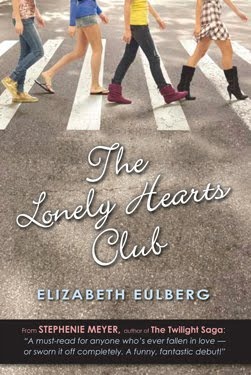
Take A Peek Book Review: The Lonely Hearts Club by Elizabeth Eulberg

“Take a Peek” book reviews are short and (possibly) sweet, keeping the commentary brief and providing a little peek at what the book’s about and what I thought. This week’s “take a peek” book:

Lonely Hearts Club

Synopsis:

(via Goodreads)

Love is all you need… or is it? Penny’s about to find out in this wonderful debut.

Penny is sick of boys and sick of dating. So she vows: no more. It’s a personal choice. . .and, of course, soon everyone wants to know about it. And a few other girls are inspired. A movement is born: The Lonely Hearts Club (named after the band from Sgt. Pepper). Penny is suddenly known for her nondating ways . . . which is too bad, because there’s this certain boy she can’t help but like. . . .

My Thoughts:

I’ve read and completely enjoyed Elizabeth Eulberg’s two most recent books, Revenge of the Girl With the Great Personality and Better Off Friends. When I happened to stumble across her debut, The Lonely Hearts Club, at the library this week, I thought I’d give it a try.

Elizabeth Eulberg excels at portraying the ups and downs of the high school pecking order. Her female characters tend to question the norm and make their own way. Penny isn’t a revolutionary, though — she’s just a girl who’s been dumped on and duped by one too many jerky boys. She’s not looking to start a movement, but by taking a stand for herself, she sets the stage for a lot of soul-searching.

Suddenly, the girls at school begin to realize that being with a boy who treats you badly is not actually better than not having a boyfriend at all. Penny and her small circle rediscover the value of having friends to rely on, friends who put their friends first and don’t dump them the second a boy comes calling (or texting).

It isn’t preachy, though: No one here is saying that boys are bad, or that feeling pretty and popular is shallow, or that strong girls should never flirt or care about dating. It’s really about balance, and the takeaway here seems to be that girls have the right to expect to be treated with respect, to decide whether they want a relationship or to go it alone, to pursue what makes them happy and not just what makes them popular.

One great little tidbit that you don’t get from the synopsis: Penny’s parents are Beatles fanatics. Penny’s full name is Penny Lane Bloom, and her older sisters are Rita (Lovely Rita) and Lucy (in sky with diamonds…). Mom and Dad are quirky and hip, occasionally embarrassing, but also unabashedly pro-independence and nonconformity in their daughters — so, for example, it’s no surprise that they take Penny’s side against the principal who tries to crush the club. So what if they call her “Penny Lane” in public? They’re still great parents.

A teeny example — following Penny’s disclosure that she’s in a club:

“Penny started it. It’s called The Lonely Hearts Club,” Rita chimed in.

“Oh, oh, Penny Lane, that’s so, so wonderful!” Mom put her hand up to her chest, thrilled that I’d named something after the Beatles, although she had no idea what the Club stood for. I could’ve started a club called the Yellow Submariners that went out in the ocean and clubbed baby seals and they still would’ve been proud.

“Kiddo, it’s so great you’re taking an interest in your heritage. Goo goo g’joob!” Dad beamed.

The writing is cute and clever, with snappy dialogue that never feels too over-the-top or that it’s trying to hard to be hip. The story is fast-paced, and this is a quick, zippy read.

I’d happily recommend The Lonely Hearts Club to teens, parents of teens, anyone who enjoys contemporary YA, and — of course — to Beatles fans. I understand the sequel (We Can Work It Out) is coming soon, and I’ve already put in my request for it at the library.

_________________________________________

The details:

Title: The Lonely Hearts Club
Author: Elizabeth Eulberg
Publisher: Point
Publication date: 2010
Length: 290 pages
Genre: Young adult contemporary fiction
Source: Library
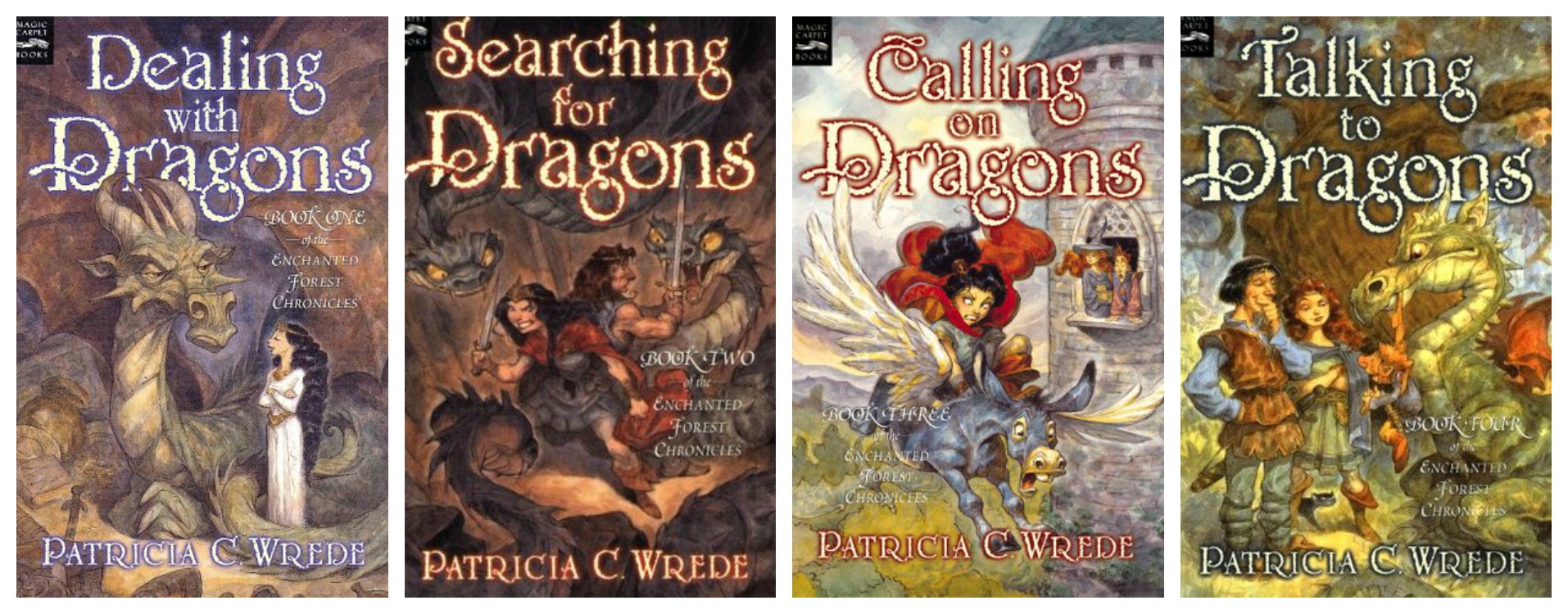
Series Wrap-Up: The Enchanted Forest Chronicles by Patricia C. Wrede

Enchanted Forest collage

The Enchanted Forest Chronicles by Patricia C. Wrede encompasses four novels set in one world — and be warned ahead of time: Your enjoyment of this series is by no means guaranteed just because you liked the first book. Each book is quite different, and that’s not necessarily a good thing.

First things first: If we were only talking about book #1, Dealing with Dragons, my enthusiasm would be much higher. In Dealing with Dragons, we meet Cimorene, a princess who doesn’t want the typical Happily Ever After with a handsome prince, fine gowns, and a kingdom to be pampered in. So Cimorene runs away and finds herself a large dragon, Kazul, who just so happens to need a princess of her own. In this world, princesses serve dragons — some willingly, some not so much — usually until they are rescued by a brave knight who comes to free them from “captivity”. Cimorene has no patience for such nonsense, and soon finds herself an indispensable assistant to Kazul, keeping house, observing dragon politics, learning about magic, and warding off dangerous wizards who want to steal the dragon’s magic. The book breaks gender roles in all sorts of interesting and unusual ways; my favorite is that the leader of the dragons is called King, which denotes a position, not a person. Kazul is a female dragon, but is still able to vie for the position of King…. and woe to anyone who mistakenly refers to her as the Queen.

Unfortunately, in my view, the focus shifts from book to book. Dealing with Dragons is the only book of the series I rated as 5 stars on Goodreads. I loved Cimorene’s courage and brains, the clever wordplay, and the way Cimorene defies expectations to become the person she wants to be. But suddenly, in book #2 (Searching for Dragons), Cimorene is a supporting player, and instead, the story is told from the point of view of Mendanbar, the reluctant king of the Enchanted Forest. Mendanbar’s story intersects with Cimorene’s as they go on a quest together to find out who is draining magic out of the Enchanted Forest and to rescue the kidnapped Kazul. Mendanbar and Cimorene have good chemistry, and Mendanbar is a fine leading man, but unfortunately, the zippiness of Cimorene’s grrrl power is a bit more subdued here.

In Book #3 (Calling on Dragons), we barely see our familiar characters at all, as the focus shifts once again, this time to the witch Morwen, a supporting player in the earlier books. I came close to abandoning the series altogether early on in this book. True confession: I have a dislike for talking animals, particularly when there’s an overabundance of them — and this book has more than enough to go around. Within the first few chapters, we meet all twelve of Morwen’s cats, each of whom has a name and a distinct personality and contributes to conversation, as well as a bewitched bunny named Killer who transforms first into a six-foot-tall bunny and eventually into a blue, winged, flying donkey. Killer is meant to be the comic relief, but is more annoying than funny most of the time. There’s a quest and an adventure that ends up involving Cimorene and Mendanbar, but they’re quite peripheral. The magical adventure aspects of the book become more enjoyable by the end, but there’s a lot of space taken up by new characters, odd magical rules, and never-ending journeying.

And then we come to the final book, Talking to Dragons, in which there’s a brand-new main character, Daystar, who must travel into the Enchanted Forest and figure out for himself what the purpose of his quest is. There he meets a temperamental young fire-witch named Shiara — clearly there as his love interest — and encounters talking lizards, elves, dragons, and dwarves before arriving at a climactic battle scene. I won’t tell you how Daystar’s story intersects with the characters from the earlier books (spoilers!), but they are all connected and come together for an exciting and satisfying conclusion.

As a series, the Enchanted Forest Chronicles feels a bit disjointed. The shift in main characters from book to book didn’t really appeal to  me. I suppose the intent is to broaden the scope of the world of the Enchanted Forest, but in my opinion, Cimorene and Kazul are the most interesting characters — and once they leave center stage, the story loses some of its charm. I was never bored exactly (although I was awfully close during the talking cat chapters), but I did find my attention wandering from time to time, and I found it a challenge to get into each new book, where we readers are required to leave behind the characters we’ve become fond of and start fresh with with a whole bunch of new ones.

All that said, let me now point out that I read this series in partnership with my 12-year-old son — and from that regard, I’d say the series was a success. My kiddo is a very reluctant reader, and so to encourage him, we read these books in tandem. He enjoyed the stories quite a bit, liked the action sequences involving dragons and wizards especially, and liked that there were plenty of funny scenes, humorous dialogue, and even some hints of danger (nothing too life-threatening, but still risky business).

Bottom line: While the Enchanted Forest Chronicles doesn’t strike me as strong enough to really hold adult attention, I do think it’s a great choice for middle grade readers, either to read on their own or as a very fun parent-kiddo reading partnership. And as an alternative for those who aren’t looking for a multi-book series or don’t like the sound of the focus changing from book to book, I think Dealing with Dragons would work perfectly well as a stand-alone. As the best of the bunch, it’s certainly a great read — and maybe if I’d stopped there, I’d have avoided the frustrations I had with the subsequent books.

Take A Peek Book Review: The Adventures of Superhero Girl by Faith Erin Hicks

“Take a Peek” book reviews are short and (possibly) sweet, keeping the commentary brief and providing a little peek at what the book’s about and what I thought. This week’s “take a peek” book:

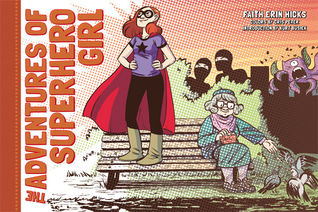
Adventures of Superhero Girl

Synopsis:

(via Goodreads)

What if you can leap tall buildings and defeat alien monsters with your bare hands, but you buy your capes at secondhand stores and have a weakness for kittens? Cartoonist Faith Erin Hicks brings charming humor to the trials and tribulations of a young, female superhero, battling monsters both supernatural and mundane in an all-too-ordinary world.

* A lighthearted twist on the superhero genre!

My Thoughts:

Superhero Girl rocks! I giggled my way through this delightful collection of Faith Erin Hicks’s comics. Superhero Girl can jump over tall buildings, throw disgusting alien monsters into outer space, and defeat ninjas with a few well-delivered pows and bams. She also rescues kitties from trees, worries about how to pay the rent, and feels particularly out of place when her roommate drags her to parties. And then there’s her brother Kevin, a chiseled,  handsome success of a superhero who has crowds of cheering fans and lots of merchandising value as well. Superhero Girl is just looking to fight crime and do good, but also suffers the challenges and humiliations of being 20-ish and looking to find her place in life.

And oh, the horror of wearing her mask on a sunny day but forgetting to put on sunscreen! Or finding herself at a job interview up against King Ninja. Or getting kicked out of college because the university’s insurance won’t cover superhero fights.

This is a quick book, but lots of fun. Highly recommended for when you need a break and just want to kick back and enjoy. The drawings are terrific, and Superhero Girl herself is a quirky, flawed, loveable main character — who is super talented when it comes to defeating evil ninjas and helping old ladies cross the street.

I’m looking forward to reading more by Faith Erin Hicks! And if you want a recommendation for another of her books, check out my review of Friends With Boys.

_________________________________________

The details:

Title: The Adventures of Superhero Girl
Author: Faith Erin Hicks
Publisher: Dark Horse Books
Publication date: 2013
Length: 112 pages
Genre: Graphic novel
Source: Library

Book Review: I’ll Give You the Sun by Jandy Nelson

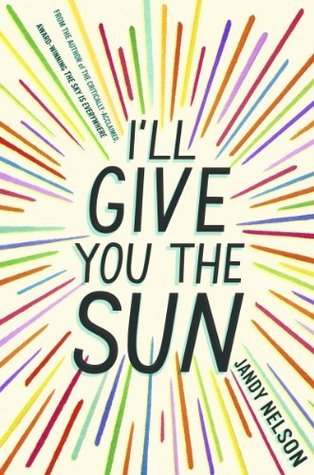
I'll Give You the SunIn this unusual and affecting young adult novel, colors explode off the page, ghosts of dead relatives give sassy advice and float off the ground, and a girl’s hair smells like “sad flowers”.

I’ll Give You the Sun is the story of twins Noah and Jude and the tumultuous, tragic events that propel their lives onto unexpected trajectories in their teen years. Noah and Jude are an inseparable, mind-melded duo up until age 13. They’re so close that they can never play Rochambeau — they always choose the same option: rocks/rocks, scissors/scissors, paper/paper. But then their lives explode into pain, jealousy, and hurt, and nothing is the same.

The story is told in two voices and in two timelines. Noah narrates the 13-year-old pieces of the story. Noah is a gifted artist, who paints in his head when he doesn’t have paper at hand. His imagination is wild and bold, and he sees the world as art constantly. He’s also a misfit, picked on and bullied by the local “surftards”, the older, cooler surfer boys who dominate the teen social life in their small Northern California town. When a new boy, Brian, moves in next door, Noah falls instantly and utterly  in love, and is in a constant, euphoric torment as he spends all his time with Brian, best of friends — yet wondering if he’s interpreting Brian’s reactions correctly.

Jude, at 13, is an aspiring artist too, creating wild sand sculptures on the beach that get washed away as the tides change. But when their mother seems to home in on Noah as the gifted one, Jude turns away and focuses on becoming a hellion of a teen girl, wearing too much make-up, too short skirts, and flirting excessively with boys who are not going to treat her well.

From meeting Jude through Noah’s eyes, we jump to Jude’s piece of the story, when she is 16, enrolled in a prestigious art school for sculpture, worried that her dead mother is haunting her, and in desperate need of a way out of her misery. From a 13-year-old sex kitten, Jude has become a girl in hiding, dressed in baggy tshirts and jeans with her hair cropped short and hidden under a hat. Jude worries about Noah, who’s the epitome of normalcy, running cross-country, hanging out and drinking with the in-crowd as his public high school, and not doing a shred of art.

What happened to these two? How did their lives goes so completely off the rails? What cataclysmic event caused the 13-year-olds we knew to become 16-year-olds we can barely recognize?

To say that it’s complicated is an understatement.

As the plot moves forward, we get bits and pieces of story from both Noah and Jude, and come to understand both the terrible loss they’ve suffered and the crushing guilt each bears. Noah and Jude each feel responsible for what’s happened, but they don’t talk about it with each other. Each feels that they deserve whatever punishment comes their way; each feels the need to atone and make amends, but both feel that they’ve already screwed up and are beyond forgiveness.

I won’t give away much more of the plot. Suffice it to say that as new people enter their lives, Noah and Jude each learn more about what they did and didn’t do, what else contributed to the events in their family’s life, and start to understand why and how their lives changed so dramatically.

I’ll Give You the Sun is a celebration of the artistic impulse, the need to create and make, the innate ability to see the world in colors, shapes, and textures that the rest of us miss out on. There’s a sense of magic in the air, as Jude converses with her dead grandmother and observes her folk superstitions about love and healing. The writing is full of imagery, letting us inside the brains of two characters whose senses inform everything they see and do:

I start to run, start to turn into air, the blue careening off the sky, careening after me, as I sink into green, shades and shades of it, blending and spinning into yellow, freaking yellow, then head-on colliding into the punk-hair purple of lupine: everywhere.

flourish-31609_1280The sky’s overflowing with orange clouds and each time one floats down, Brian bats is back up like a balloon. I watch him hypnotize the girls as he does the fruit in the trees, the clouds in the sky, as he did me.

flourish-31609_1280Sometimes now, I swear I can see sound, the dark green howling wind, the crimson crush of rain – these sound-colors swirling around my room while I lie on my bed thinking about Brian. His name, when I say it aloud: azul.

In terms of pacing, I found myself a little impatient at first. After a relatively short Noah section to start the book, there’s next a very lengthy Jude section, and I just didn’t feel that I knew her well enough to care that much or spend that much time with her — I wanted more Noah! Eventually, by mid-book, the stories seem to reach a better balance, each one absorbing in its own way, so that I didn’t mind bouncing between the two time lines. I think it was at this point that the threads connecting the two sides of the story become clearer, so that in a way we end up in a detective role, seeking the clues to the mystery of how before turned into after for these two unique but matched people.

By the end, I was deeply moved by the story and the way Noah and Jude lost and then found each other again. With a cast of interesting and unusual supporting characters, the world of I’ll Give You the Sun feels full and well developed. It’s interesting to see the lines of connection between the different players, and how each played a part both in the earlier events and in how Jude and Noah finally find a way forward.

If you enjoy your fiction with a touch of magic and wild flights of imagination, you’ll love the writing in I’ll Give You the Sun. I know I did. With unusually lovely language and a plot full of heart-wrenching emotion, this book should be savored for its sounds and textures as well as for its plot.

_________________________________________

The details:

Title: I’ll Give You the Sun
Author: Jandy Nelson
Publisher: Dial
Publication date: September 16, 2013
Length: 371 pages
Genre: Young adult fiction
Source: Library

Review & Reaction: Winger by Andrew Smith

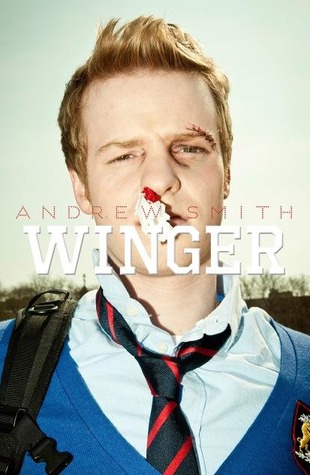
WingerSpeechless.

That was my first reaction after finishing this powerful book at 1 am last night. After a restless night’s sleep in which I couldn’t stop thinking about this book, I thought I should at least attempt to capture a few words about my reaction to Winger.

All I knew ahead of time was what the blurbs told me: Winger is the story of Ryan Dean West, a 14-year-old eleventh-grader attending a posh boarding school in the Pacific Northwest. Ryan Dean (both parts are his first name — he does not go by just Ryan) has a tendency to get into trouble, as evidenced by his placement in O-Hall (Opportunity Hall), the dorm for kids on disciplinary lockdown, for his junior year. Despite being super-smart (hence being two years ahead in school), Ryan Dean considers himself a loser, a little kid hanging with kids two years older than him, never quite grown up enough to really fit in.

Ryan Dean thinks about girls and sex constantly, when he’s not thinking about rugby. Rugby is the center of his life at PM (Pine Mountain). All students are required to play a team sport, and playing wing on the rugby team, Ryan Dean is part of a greater whole, where’s he’s valued, has mates, and is really good at what he does. His small size doesn’t matter — he’s fast, and he throws himself into it with gleeful passion.

Meanwhile, Ryan Dean is madly in love with his best friend Annie, shares an awful dorm room with a dense and menacing large rugby player named Chas, and is determined to get out of O-Hall as soon as possible so he can pick up with his normal life back in the regular dorms.

But there’s so much more to this chunky book, and before I go any further, take note!

SPOILERS: While I won’t discuss specifics, I think this book is best read without knowing too much ahead of time, so look away if you haven’t read the book! From here on out, I’ll be referencing the book’s ending, not in terms of what happens, but in terms of impact and weight, and you’re really better off not seeing this part before reading the book.

Look away now.

I mean it.

Are you gone?

Good.

Moving on…

Winger is light-hearted and funny and heart-warming and utterly charming for about 80% of the journey. I absolutely adored Ryan Dean and his messy life. He’s not the loser he thinks he is. He charms everyone around him, when he’s not pissing them off. He’s obviously smart to the point of brilliance, draws amazing comics, and has a sense of humor that’s just killer. He may be on the little side for a junior, but the girls seem to like him just fine. He’s a terrific athlete, and isn’t afraid to throw himself physically into any conflict (as evidenced by his array of bruises, cuts, stitches, and general state of injury at all times).

Ryan Dean has a big heart, and is a good friend. Even when he’s mad or not quite doing what he should, he’s a decent guy. And I so want things to work out for him.

And then there’s the end of the book, which hit me like a freight engine. I was destroyed. Seriously, utterly destroyed. I could not believe where this book went, seemingly out of nowhere, although of course, the warning signs are all there. And the sense of complete shock and out-of-the-blue tragedy are what Ryan Dean must be experiencing as well. There’s nothing in the earlier parts of this book that warned me to expect such an awful turn of events, and I was simply horrified beyond belief by the way this story ended.

Which is not to say that it’s not a wonderful and beautiful book. It is. But it also knocked me for a complete loop, and here I am, 24 hours later, unable to stop thinking about it.

The writing in this book is empathetic and full of respect for the characters. I felt that the author captured the heart of the story so well, making me see inside the world of this unusual 14-year-old — a pretty remarkable feat, considering I’m nowhere near 14 and I’ve never been a teen-age boy. Still, I could feel Ryan Dean’s joy and pain, and glory with him in the true friendships he forms along his journey. That the end of the book is devastating in no way detracts from the overall success of Winger; and there’s a certain character who is so wonderful and noble and good that he’ll remain with me for a long, long time to come.

I read and loved Andrew Smith’s Grasshopper Jungle last year, and I’ve requested a copy of 100 Sideways Miles from the library. At this point, I think I’ll read whatever he writes! I love the humor, the courage, and the heart of his characters, and have found the two books I’ve read by him to be compelling, enjoyable, and thoroughly unique reads.

Okay, final note: I just saw on Goodreads that there’s a sequel coming this year! Stand-Off will be published in September, and will focus on Ryan Dean’s senior year. To which I say… where do I sign up?

_________________________________________

The details:

Title: Winger
Author: Andrew Smith
Publisher: Simon & Schuster
Publication date: May, 2013
Length: 439 pages
Genre: Young adult fiction
Source: Library

Book Review: As You Wish: Inconceivable Tales from the Making of The Princess Bride by Cary Elwes

As You WishIf you randomly find yourself uttering things like “Anybody want a peanut?”, “Have fun storming the castle,” or “I’m not a witch. I’m your wife!” — then face it: You’re a hopeless Princess Bride fanatic… and you’ll probably enjoy As You Wish: Inconceivable Tales From the Making of The Prince Bride very, very much.

Written by Cary Elwes (Westley!!!), the book is a nice jaunt back in time, telling tales from behind the scenes of the production, from his casting and the early days of filming all the way through the cast’s reunion for a 25th anniversary celebration of this amazing movie.

Surprisingly, The Princess Bride was not a huge success when it was first released — perhaps due to completely bungled marketing on the part of the studio. Audiences who saw the movie loved it; the problem was, not that many people actually saw it. But with the advent of VHS (remember those?), the popularity of the movie took off until it became the cult classic it is today.

In As You Wish, Cary (can I call him Cary? I feel like we’re connected…) tells about his early meetings with director Rob Reiner and with his co-stars, and how the movie was made, start to finish. His reminiscences about the late, great André the Giant are particularly sweet and heartfelt, and his obviously sincere praise for the rest of the cast is quite lovely and a lot of fun to read. Side notes from Reiner, Billy Crystal, Robin Wright, and other cast members help round out the story of the movie-making, sharing other perspectives and anecdotes related to events that Cary describes.

I especially enjoyed the little tidbits that I hadn’t known before. Did you know that Cary Elwes and Mandy Patinkin did all of their own sword fighting in the movie? They trained rigorously for months to pull off The Greatest Swordfight in Modern Times, which makes it extra fun to watch and rewatch, now that I know.

If you’re a fan of The Princess Bride, this quick book is a fun way to spend an afternoon or two. It’s not especially earthshaking or surprising in any way, and there’s certainly no gossip or scandalous escapades here. As You Wish is a tribute to a movie that so many of us know and love, and it’s clear from reading this book that Cary Elwes and the rest of the cast and crew consider being a part of The Princess Bride a once-in-a-lifetime, extra special experience. Consider this a lovely little gift to the fans, straight from Cary Elwes’s heart… and enjoy.

_________________________________________

The details:

Title: As You Wish: Inconceivable Tales From the Making of The Princess Bride
Author: Cary Elwes (with Joe Layden)
Publisher: Touchstone
Publication date: October, 2014
Length: 259 pages
Genre: Entertainment/memoir/non-fiction
Source: Purchased as a gift… then borrowed it back to read!

Fields & Fantasies presents… Hyperbole and a Half by Allie Brosh

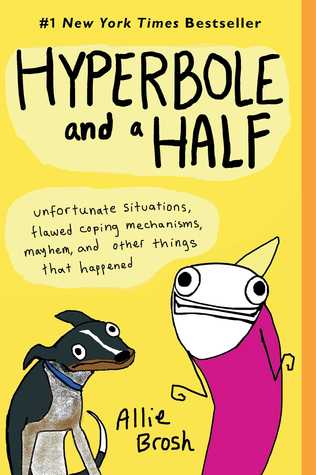
Welcome to the December pick for the Fields & Fantasies book club! Each month or so, in collaboration with my wonderful co-host Diana of Strahbary’s Fields, we’ll pick one book to read and discuss. Today, we’re looking at Hyperbole and a Half: Unfortunate Situations, Flawed Coping Mechanisms, Mayhem, and Other Things That Happened by Allie Brosh:

hyperbole

Synopsis (Goodreads):

This is a book I wrote. Because I wrote it, I had to figure out what to put on the back cover to explain what it is. I tried to write a long, third-person summary that would imply how great the book is and also sound vaguely authoritative–like maybe someone who isn’t me wrote it–but I soon discovered that I’m not sneaky enough to pull it off convincingly. So I decided to just make a list of things that are in the book:

Pictures
Words
Stories about things that happened to me
Stories about things that happened to other people because of me
Eight billion dollars*
Stories about dogs
The secret to eternal happiness*

*These are lies. Perhaps I have underestimated my sneakiness!

My two cents:

How do I even begin to describe a book like Hyperbole and a Half? Besides saying that I found myself bursting into uncontrollable giggles while reading — and you can ask my family: I’m not usually the uncontrollable giggles type.

So — Allie Brosh is well-known for her web comic/blog (also called Hyperbole and a Half). I’d never read anything by her prior to reading this book. But I understand she has quite a following, and I can see why.

Unflinchingly honest, the author splits this book between odd childhood behavior, her two dogs (the “simple” dog and the “helper” dog), and her own struggle with depression. I’ll admit it straight out — the dog stories are the ones that really cracked me up. How to even describe the glory of her test of the simple dog’s IQ? Or the helper dog’s hatred of the fact that other dogs exist anywhere at all? And then there’s the story of the mad goose that came into her house one night, like some evil spirit out of a horror movie.

If you were sitting quietly on your couch, waiting for your girlfriend to come back inside so you could finish watching your movie, and while you were waiting, someone called you up and said “I’ll give you a million dollars if you can guess what’s going to happen next,” you absolutely would not guess “I am going to be brutally and unexpectedly attacked by a goose in my own home.” Even if you had a hundred guesses, you would not guess that.

I absolutely loved the first piece in the book, about finding a letter from herself at age 10, written to her adult self. I won’t even try to describe it — but let’s just say that by page 2, my first laughing fit had kicked in.

And then there’s the cake story from when she was three years old:

I had tasted cake and there was no going back. My tiny body had morphed into a writhing mass of pure tenacity encased in a layer of desperation. I would eat all of the cake or I would evaporate from the sheer power of my desire to eat it.

Seriously, read the cake story. It’s been a long time since I’ve laughed until I cried…

Her ruminations on depression are eye-opening and informative — and somehow manage to convey all the depths of nothingness inherent in depression while still being human and even humorous. A friend who has struggled on and off with depression for years informs me that this book is one of the few she’s read where she really could see herself on the page.

Likewise, I loved the author’s honesty in a section in which she delves into identity and believing herself to be a good person –without actually having to back it up most of the time:

I like to believe that I would behave heroically in a disaster situation. I like to think this because it makes me feel good about myself. Conveniently, it is very unlikely that I will ever actually have to do anything to prove it. As long as I never encounter a disaster situation, I can keep believing I’m a hero indefinitely.

She ‘fesses up to the fact that she likes to be proud of herself for being a good person, but suspects that without seeking that internal approval for her own good deeds, she might actually be a horrible person.

I don’t just want to do the right thing. I want to WANT to do the right thing. This might seem like a noble goal to strive for, but I don’t actually care about adhering to morality. It’s more that being aware of not wanting to do the right thing ruins my ability to enjoy doing the right thing after I’m forced into doing it through shame.

Hyperbole and a Half is a very quick read. The primitive, brightly-colored drawing are hilarious, and the interplay between words and pictures is perfect.

Not many books can make you burst into giggles and at the same time force you to examine your inner self and take a hard look at your actions and motivations. Reading Hyperbole and a Half is a surprisingly thought-provoking and moving experience for something that’s just so damned funny.

___________________________________

And just to show that intelligent people can disagree, I’ll point out that while I gave this book 5 stars on Goodreads, Diana gave it only 2 stars — and doesn’t seem to have liked it at all. I’ll add the link to Diana’s review once it’s up!

_________________________________________

The details:

Title: Hyperbole and a Half
Author: Allie Brosh
Publisher: Touchstone
Publication date: 2013
Length: 369 pages
Genre: Humor
Source: Purchased

_________________________________________

Next for Fields & Fantasies:

station elevenOur January book will be Station Eleven by Emily St. John Mandel.


Binge! Saga by Brian K. Vaughan

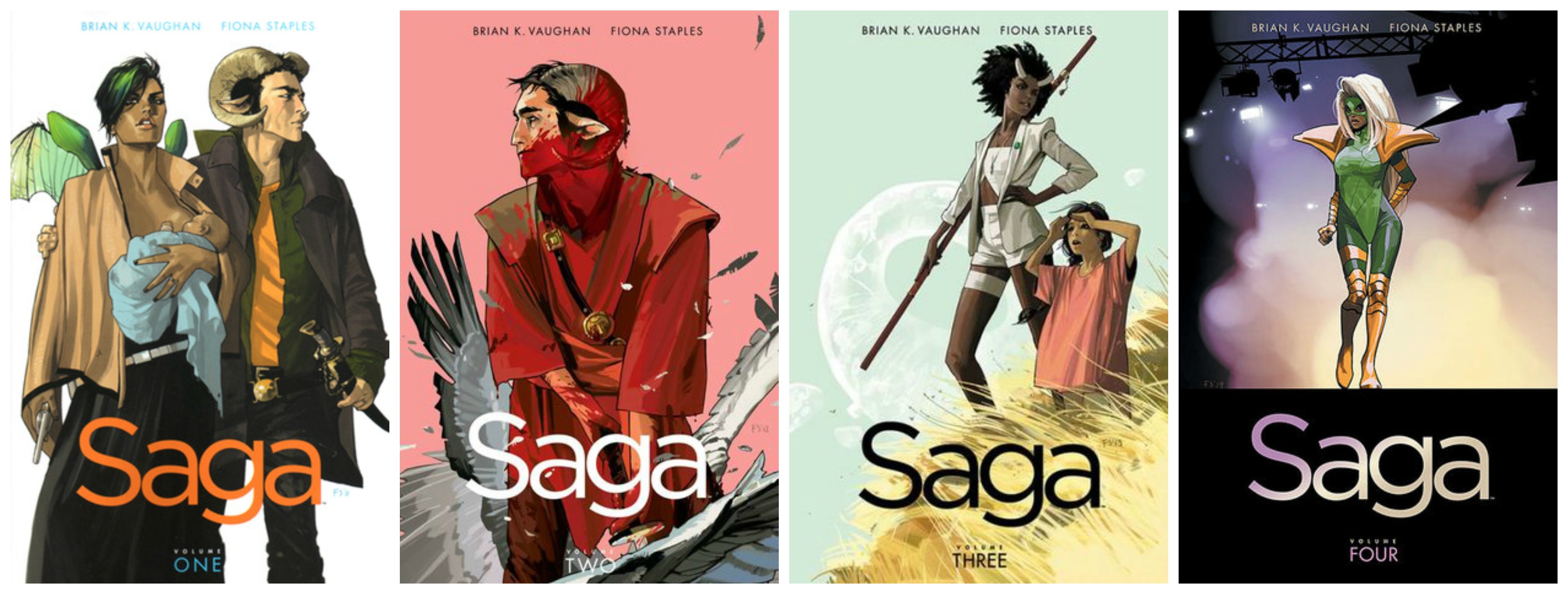
saga collage

Let us now praise the glory that is Saga.

I’m in love with this series. Really and truly. It’s always exciting to read a series of books — novels, comics, or whatever — and feel as thrilled by the last as you were with the first. Not that volume 4 is the end of Saga, but it’s the last one I read, and I loved it just as much as volumes 1, 2, and 3.

Okay, deep breaths.

Saga is a comic series available in trade paperback collections (as well as a new deluxe collection now out in hardcover). Saga is ongoing, with the next individual comic edition (#25) scheduled for release in February. Meanwhile, the volume 4 paperback edition has just been released this month, taking us up through issue #24. Does all this make sense?

saga1

So what’s it all about? In a nutshell:

The planet of Landfall is inhabited by winged people who have been locked in an unending cycle of war with the horned, magic-wielding residents of Wreath, Landfall’s moon. The two populations absolutely hate and want to eradicate each other. However, generations earlier, both Landfall and Wreath recognized the huge toll the war was taking on their planets — so they outsourced the war to other worlds.

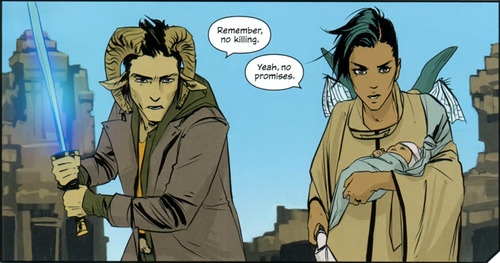
Alana is a Landfall soldier, and Marko is a prisoner of war from Wreath. The two fall for each other and escape, making themselves the most-wanted fugitives in the galaxy. Absolutely no one is on their side; their union is considered disgusting and treasonous by both peoples. And not only are they in love — they’ve had a baby, which is an unheard-of abomination. We follow Alana and Marko on the run, meet the various bounty hunters and government agents trying to track them down, and see the crew of allies they slowly build.

saga3

That’s the basic idea. The plot goes off in all sorts of interesting directions, with new characters showing up and new worlds being introduced. Alana and Marko are gorgeous to look at, have strong and interesting personalities, and feel as fully-developed as the characters you’d encounter in the best of traditional novels.

Plus, did I say gorgeous already? The artwork is amazing, thanks to the fabulous skills of Fiona Staples. While not shying away from bloody gore or fairly explicit sex, the illustrations are also tremendously nuanced, fully capturing emotions and connections (as well as all the action, of which there is plenty).

I’d read volumes 1 and 2 last year, then re-read them this past week before moving straight ahead with #3 and #4. Reading all four volumes in a row is an engrossing experience. I was completely sucked into the world of Saga, and shouted a loud “NOOOOOO” when I reached the end, which was quite a bit cliff-hanger-y and left me all agitated and anxious. I want more!

I cannot wait for the next installment. (Well, to be truthful, I suppose I can, since I’m waiting for the next collection to become available rather than reading the individual comic issues.) If you enjoy terrifically written adventures with fresh and exciting characters, intense passion, and high-stakes conflict, check out Saga.

saga2

PS – This is Lying Cat. Lying Cat is awesome. You’re welcome.

Series Binge: The Lunar Chronicles by Marissa Meyer

lunar_collage2

Curse you, Marissa Meyer! (Okay, not really).

This is why I hold back. This is why I don’t let myself start new series. Because THIS happens. I read one book. Do I stop? No. I keep going. And before I know it, I’ve read three novels, three short stories, and I’m pulling my hair out over the fact that THERE ARE NO MORE BOOKS. For now.

Last week, I wrote a review of Cinder. And since then, I gobbled up Scarlet and Cress, plus the stories Glitches, The Little Android, and The Queen’s Army.

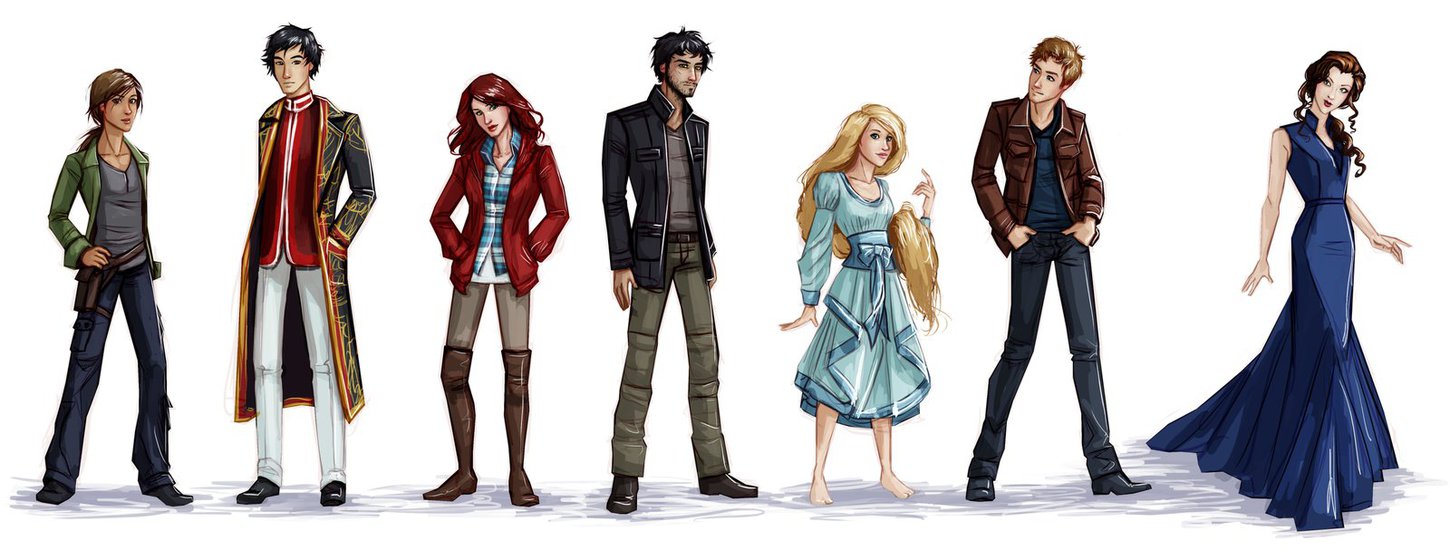
For those who aren’t familiar with the series, here’s the general idea: In a world set at some point far into the future, over a hundred years since the end of World War Four, planet Earth is divided into large commonwealths who live at peace with one another — but the Earthen peace is threatened by hostilities from Luna. The moon was settled and colonized generations earlier, and over the generations, the Lunar population has developed its own characteristics, most notably the ability to control bioelectricity — basically, the ability to control actions, perceptions, and emotions of others. This makes Lunars very dangerous and very scary to “normal” Earthens.

The Lunar Chronicles books take classic fairy tales and plunk them down in this futuristic landscape, creating a mash-up that’s surprisingly original — and which surprised me by how good it really is.

Cinder herself (think Cinderella) is our #1 heroine, a lowly cyborg mechanic who’s discovered to have a secret connection to the Lunar world. When she catches the eye of Prince Kai, heir to the throne of the Eastern Commonwealth, a chain of events is set into motion that makes Cinder the planet’s most-wanted fugitive.

By the 2nd book, Cinder is joined in her struggle by Scarlet (Red Riding Hood), the farm girl whose grandmother was involved in a royal deception many years earlier. Scarlet is tracked by bioengineered super-soldier Wolf — but she can’t quite tell if he’s the man of her dreams, or the most dangerous thing she’s ever encountered.

In book 3, Cress (Rapunzel) enters Cinder’s world. Cress has been trapped on a satellite in Earth orbit for seven years, completely alone (and with no sharp objects, hence no haircuts). Cress is a master hacker under the control of the Lunar high command, but her true sympathies lie with Cinder and her ragtag band… and the daring, wise-ass space captain Carswell Thorne who comes along to rescue Cress.

And now? Two more books are scheduled for release in 2015: Fairest, focusing on Luna’s evil Queen Levana, comes out in January, and Winter will be released in November. Both relate to the Snow White story — the queen’s version and then the princess’s.

Why do I love these books? Many reasons, but for starters:

In many fairy tale retellings, the fairy tale structure is too obvious. Sure, maybe the story is set in a different time, but the overall story is preserved and presented more or less intact. In The Lunar Chronicles, the fairy tale framework is a supporting structure, but doesn’t dominate or force the story into a shape that restricts the characters or action in any way. So yes, in Cinder, there’s an unloved stepsister, a ball, and a handsome prince — but beyond that, there’s a plague, the second-class citizen status of cyborgs, and geopolitical maneuvering that goes way beyond a rags-to-riches love story.

Likewise, in Scarlet, we have a girl in a red hoodie seeking her grandmother and menaced by a wolf — but also a secret army, mind control, a Big Brother-ish tracking system, and desperate fugitives. In Cress, there’s a girl with long hair locked away, and a dashing hero who is blinded in the rescue attempt — but also space chases, gun battles, kidnappings, and royal subterfuge. The through-stories are never obscured by the fairy tale structure, so Cinder remains the key person of interest throughout the following books, even though the titles would indicate that they’re not about her.

What maybe doesn’t work for me quite as much is the over-emphasis on romance and coupledom. Clearly, with fairy tales as their base, the romance will not be ignored. Still, is it truly necessary for each book to match up its main character with her soulmate? This, I think, is where the fairy tale retelling maybe gets in the way a bit. With so much action, with the intrigue of this sci-fi world — full of new mechanical wonders, genetic mutations and manipulations, and political danger and strategy — we don’t necessarily need so many supercouples. By the end of Cress, there are three clearly defined couples — all of whom seem to have achieved instant soulmate status — and the love story of Winter has been more than hinted at as well.

There is some amazing fan art out there. This one is from http://lostie815.deviantart.com/art/Lunar-Chronicles-Characters-421566528 -- check it out, there's lots more!

There is some amazing fan art out there. This one is from http://lostie815.deviantart.com/art/Lunar-Chronicles-Characters-421566528 — check it out, there’s lots more!

The super-coupledom is really a minor issue, though. I’d call it a gnat-sized irritant in the midst of an absolute smorgasbord of sci-fi, futuristic, female-powered adventure. I love the ultra-imaginative world-building in this series, the distinctive voices of the characters, and the way that the shifting narrative viewpoints add on top of one another to keep expanding our knowledge of this world and all its hidden nooks and crannies.

If you’re a curmudgeonly old hold-out (like I was until about a week ago), resisting the hype and refusing to give in to yet another YA series craze… well, come on! If I can do it, so can you! Sure, I’m a little bent out of shape about having to wait for more, but *sigh* I’m sure I can find other books to read in the meantime.

And hey, if I need a dose of more of the Lunar Chronicles, I’m sure there are a thousand or so Pinterest boards to lose a few hours to.

Final note: The three short stories are all available free online, and are definitely worth checking out. Of the three, The Little Android actually broke my heart just a little. It’s a stand-alone, in that it does not include any characters from the main novels, but it is set in the same world. And it just happens to be a retelling of The Little Mermaid — the non-Disney version, which is one of the saddest fairy tales ever.

Don’t say I never did anything for you. Here are the links to the stories:
Glitches
The Little Android
The Queen’s Army

And now, back to my resolution not to start any more series!

Until the next irresistible one comes along…