Stars Above by Marissa Meyer: What’s Inside?

Stars AboveThe fantastic Lunar Chronicles series came to a close in 2015 with the publication of the final novel in the series, Winter. But wait! It’s not quite as finished as it seemed… because here we are in 2016 and we have a final FINAL volume in our hands.

Stars Above is a collection of stories that tie in and around the main characters and events of the novels, with most taking place in the years prior to the start of the series. The collection includes four previously published stories and five that are brand new.

So what’s inside Stars Above? Read on…

“The Keeper” (new): Ah, some backstory! “The Keeper” focuses on Michelle Benoit and her role in Cinder’s early years. As readers of the series know, Cinder was rescued from an almost successful murder attempt by her aunt Levana and hidden on Earth for years, while all of Luna believed her dead. In “The Keeper”, we see how Cinder was first entrusted to Michelle’s care and how she kept Cinder hidden and safe, all the while trying to provide a loving, secure home for her niece Scarlet. It’s a sweet story, and gives us a glimpse of events that we’ve heard reference to, but which we’d never learned many details about.

“Glitches” (previously published): “Glitches” follows “The Keeper” chronologically, as we see Cinder’s arrival in New Beijing and her introduction to the family of Linh Garan, her protector and adoptive father. Cinder is newly awakened and adjusts both to her new environment and her new status as a cyborg.

“The Queen’s Army” (previously published): This story shows Wolf’s transition from ordinary Lunar child to fierce, modified soldier serving the queen, showing his physical transformation and emotional struggles as well as his development into the pack Alpha.

“Carswell’s Guide To Being Lucky” (previously published): What was Carswell Thorne like as a teen-aged boy? Probably exactly what you’ve imagined — a total flirt, a guy who uses his charm to get his way, and a consummate swindler who seems to always know how to work the crowd. But even as a self-satisfied teen, Carswell still dreams of his future in space…

“After Sunshine Passes By” (new): Oh, so sweet and sad. This new tale introduces us to 9-year-old Cress, a Lunar shell kept alive with other outcasts like herself just for their value as scientific specimens. But Cress is a sweetie and a dreamer and imagines someday being of actual value, maybe even finally being accepted into society. What she gets instead is years of isolation in an orbiting jail… and this story shows how it all came about.

“The Princess and the Guard” (new): Lovely little Princess Winter’s early years are shown in this story, as we see her growing up in the palace and being trained to use her Lunar gift, until she begins to become aware of the danger and cruelty inherent in having such manipulative power. We see Winter’s decision to abandon her gift, even at the risk of madness, the cruelty of Levana, and how Jacin set his course in life with protecting Winter as his top priority.

“The Little Android” (previously published): I loved this story when I first read it, and I love it still. “The Little Android” is only tangentially connected to the characters of the Lunar Chronicles, as the android of the title has a brief meeting with the mechanic Linh Cinder. What this story truly is is an imaginative and moving retelling of the Little Mermaid fairy tale — not the pretty Disney version, but the tragic yet lovely story by Hans Christian Andersen. “The Little Android” makes a great stand-alone, but as part of this collection, shows yet another side of the Lunar Chronicles world.

“The Mechanic” (new): We’ve seen Kai and Cinder’s first meeting in the marketplace from Cinder’s perspective already. Here in “The Mechanic”, we get the same meeting as seen through Kai’s eyes. It’s fun to get the royal view, and to see the crown prince already struggling to fulfill his responsibilities to his people while at the same time being a teen boy who has just spotted a fascinating and surprising girl.

“Something Old, Something New” (new): As the title suggests, this final story in the collection is all about the Happily Ever After that our beloved characters have truly earned! The whole gang gathers for Scarlet and Wolf’s wedding, and there are romantic moments galore for all of the couples. This story really ties up the entire series with all the hearts and flowers and giddy joy we readers could possibly hope for.

Stars Above includes an excerpt from Heartless, the new stand-alone novel by Marissa Meyer scheduled for publication this coming fall. The blurb reads:

Long before she was the terror of Wonderland — the infamous Queen of Hearts — she was just a girl who wanted to fall in love.

Sounds good, right? I generally prefer not to read excerpts, so I skipped this one… but for those who can’t resist a sneak peek at the next book, it’s yet another reason to pick up a copy of Stars Above.

All in all, Stars Above is a must-read for fans of the Lunar Chronicles. It’s like Marissa Meyer has given a final gift to her readers…

present-307984_1280… and as a grateful reader, my response to Marissa Meyer is:
thank-you-907818_1920


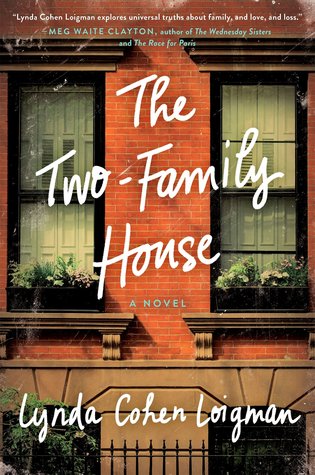
Book Review: The Two-Family House by Lynda Cohen Loigman

Two-Family HouseSynopsis:

(via Goodreads)

Brooklyn, 1947: in the midst of a blizzard, in a two-family brownstone, two babies are born minutes apart to two women. They are sisters by marriage with an impenetrable bond forged before and during that dramatic night; but as the years progress, small cracks start to appear and their once deep friendship begins to unravel. No one knows why, and no one can stop it. One misguided choice; one moment of tragedy. Heartbreak wars with happiness and almost but not quite wins.

From debut novelist Lynda Cohen Loigman comes The Two-Family House, a moving family saga filled with heart, emotion, longing, love, and mystery.

My thoughts:

The Two-Family House is the story of sisters-in-law Helen and Rose. Helen is married to Abe, a kindhearted, loving man who, along with his younger brother Mort, owns and runs Box Brothers, a box manufacturing company. Helen and Abe have four sons; Rose and Mort have three daughters. Mort is a bitter, closed-off man whose life has been a series of disappointments. He has little attention or love to spare for his children, and resents Abe’s happiness and success. The two families share a brownstone, with Abe and Helen living just up the stairs from Rose and Mort.

Rose and Helen are best friends, and the two of them and all of their children are constantly in and out of one another’s apartments, sharing holidays, birthdays, and really, just about every moment of every day, as well as their innermost hope and dreams. In 1947, both women became pregnant, the first time they’ve been expecting together. Mort is convinced that he’ll finally get the son he longs for, and treats Rose with more respect and tenderness than he’s ever shown before.

But a blizzard hits New York while Abe and Mort are away on business and, snowed in and unable to get to a hospital, both women go into labor at home. A midwife is fetched from down the street, and two healthy babies are delivered. Helen has a baby girl — her first daughter — and Rose finally succeeds in giving Mort the son he’s always wanted.

All is perfect. Right?

Well, no. From the time that Natalie and Teddy are born, the relationship between Helen and Rose seems to change. Rose withdraws, becoming increasingly unfriendly, and shows all the signs of postpartum depression. She takes little interest in her new baby and often leaves him to cry, until Helen swoops in to the rescue from upstairs. Helen takes care of both babies, and tries to reach out to Rose, but to no avail: The closeness between the two seems permanently broken.

The novel travels through the years that follow, ending more than 20 years later. Through those years, we see the children grow up and how the various relationships all change. The story is told through chapters with an alternating array of points of view, so we get chapters from the perspectives of Abe, Mort, Rose, Helen, and some of the children.

The shifting points of view yield an uneven results. Some characters are simply more interesting than others. There are stretches of time where the main occurrences are quiet rifts or disruptions, or pieces where we mainly hear how unhappy various characters are. Tragedy ensues, but time keeps marching forward. The parents age; the children grow up. Relationships change, and in some cases, fracture.

Through it all, it all comes down to the birth of the children in 1947, what really happened, and how that one night changed everything for everyone.

MINOR SPOILERS FROM HERE ON!

Listen, if you’ve read what I’ve written so far, it’s not a stretch to figure out what happened during the blizzard. Heck, we pretty much know within the first couple of chapters. So yes, I’ll just go ahead and say it: The babies were switched. Sorry, but this barely counts as a spoiler — it’s obvious right from the beginning.

So the question in the novel is — why did this happen? How did it happen? And how do the characters go forward with their lives once it has happened?

The why and how are answered, but not entirely satisfactorily. I just didn’t buy it. Would a mother who’s just delivered a newborn willingly trade under any circumstances? Well, maybe… but in the circumstances provided in The Two-Family House, I didn’t believe it. The motivation, at least on one side of the equation, just didn’t seem strong enough to me.

But accepting the premise, it’s interesting to see the dynamics play out in the days, months, and years that follow — the guilt, the resentment, and the willful dishonesty that’s required to perpetuate a lie. Once the initial deception has happened, even if there’s regret or second-thoughts, there seems to be no way to undo what’s been done (and actually, we never see either of the women contemplate or consider switching back). And despite the fact that these events were only possible because of the incredibly strong bond between Helen and Rose, it’s the switch itself that cause the rupture in their relationship, creating an insurmountable obstacle that hinders every interaction from that moment forward.

The plot of The Two-Story House is interesting, but somehow the execution lacks true drama or momentum. The fact of the switch is obvious from the start, and the resolution at the end of the book and what drives it is also something that pretty much any reader will see coming from a mile away. I enjoyed the family dynamics and the shifting relationships between all of the various combinations of characters, but wished there had been something a bit more to truly make me care about the outcome.

Overall, this is an enjoyable book, particularly when viewed as a period piece and a character study. But in terms of the plot, I never quite bought the actions or motivations of Helen and Rose, and since this is what drives the entire story, I always ended up feeling like something was missing.

Still, I do think readers who enjoy contemporary fiction with a domestic focus will appreciate this novel, and I look forward to seeing what this debut author will do next.

_________________________________________

The details:

Title: The Two-Family House
Author: Lynda Cohen Loigman
Publisher: St. Martin’s Press
Publication date: March 8, 2016
Length: 304 pages
Genre: Adult fiction
Source: Review copy courtesy of the publisher via NetGalley

Book Review: All the Winters After by Seré Prince Halverson

All the Winters AfterI have apparently developed a full-blown Alaska fetish. I just can’t get enough. So when I discover a book that’s an A+ read and is also set in Alaska, I want to do a crazy-feet happy dance of joy.

*stepping away from the keyboard to dance a little bit*

Okay, deep breath. I’m back.

All the Winters After is an absolutely beautiful book about family, loss, love, and new beginnings. All this, and a gorgeous setting too!

Set in Caboose, Alaska — a fictionalized version of Homer — All the Winters After is the story of two sad, lonely people. Kachemak Winkel (Kache — pronounced “catch”  — for short) has been away from Alaska for 20 years, ever since the tragic plane crash that took the lives of his parents and brother. Kache has spent most of this time just going through the motions, feeling guilt over his family’s death and feeling not much more of anything, about anything.

When he finally returns to Alaska at the behest of his aunt to see his ailing grandmother, he steps foot for the very first time in his family’s home, a homestead located in the wilderness a short drive from Caboose. Expecting ruin after 20 years, instead Kache finds something more like a museum or a time capsule. Everything from his former life, every knick-knack and family photo, is perfectly preserved. But instead of an empty house, he finds a mysterious young woman living there — a frightened woman named Nadia, hiding out with her dog, caring for the house and lands, who has apparently lived there for the last ten years.

Kache and Nadia cautiously start to become acquainted. Nadia fled the community of Old Believers — a closed community of Russian Orthodox descendants who follow the old ways and old religion — after her arranged marriage to a newcomer turned into a nightmare. Nadia has lived in Kache’s family homestead, wearing the family’s clothes, reading his mother’s books over and over again, and in essence, inhabiting the life and heritage he left behind. It’s a tangled web of emotions that grow between them, as trust and dependence begin to take the place of fear and resentment.

Meanwhile, Kache reconnects with the town, the land, and the memories he left behind, and starts to find a way forward thanks to Nadia’s kind and supportive presence.

I don’t think my simple description does justice to the loveliness of this book. The descriptions of the land, the wilderness, and the wildlife are gorgeous. We go through a full year over the course of the novel, seeing the changing of the seasons and the resulting changes in the landscape, all told with a breathtaking yet simple approach.

The characters here are complex and multi-dimensional. In addition to Kache and Nadia, we also get to know Kache’s aunt Eleanor (known as Snag), who has spent her whole life hiding a big secret and shouldering her own sense of guilt related to the plane crash, and Kache’s grandmother Lettie, who first settled the homestead all those years earlier. Both of these women get the chance to share their own stories, and the various parts come together to paint a moving picture of a family rooted by love but torn apart by secrets and doubts.

I did find a climactic moment toward the end of the book a bit jarring, more like something out of a crime novel than a fitting part of this one, but at the same time, it was clear from early on that a scene like this would have to happen before the end of the book. (Sorry, being intentionally vague here.) Likewise, while the ending made complete sense, I was wishing for something different (as I suspect most readers will be). Still, the stories ends on a positive and hopeful note, and brings the story full-circle in a way that seems just right.

Overall, I simply can’t say enough good things about All the Winters After. It’s a beautiful read about a beautiful place, with fascinating characters and a real emotional depth. All the Winters After is a book that will stay with you long after you finish the final chapter and close the covers. Highly recommended.

_________________________________________

The details:

Title: All the Winters After
Author: Seré Prince Halverson
Publisher: Sourcebooks Landmark
Publication date: February 16, 2016
Length: 370 pages
Genre: Contemporary fiction
Source: Review copy courtesy of the publisher

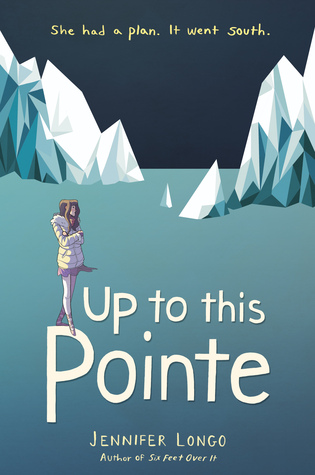
Book Review: Up To This Pointe by Jennifer Longo

Up to this PointeYou may be thinking, “What on earth are ballet and Antarctica doing in the same novel?”

That’s a very good question, but fortunately, Up To This Pointe, the new YA novel by the author of Six Feet Over It (review), has some very good answers.

Harper Scott has been absolutely certain about her future for her entire life. Along with her best friend Kate, Harper has a plan. Which they call The Plan. And it’s very simple: Work their butts off with constant ballet lessons and rehearsals. Graduate a semester early from high school. Audition for and get accepted by the San Francisco Ballet. Live and work together in their hometown, the best city in the world, being ballerinas and having careers doing what they love best.

There’s a small hitch: Kate is a gifted ballet dancer with the perfect ballet body and innate talent. Harper is a very good dancer who works harder than anyone and pours her heart and soul into ballet — but as she learns when she finally gets the honest talk she should have gotten years earlier, she lacks that indefinable “it” that would propel her into success and acceptance by a ballet company.

When Harper’s dreams come crashing down, she takes refuge by running away, pretty much as far as she can go.

Harper, you see, is a Scott — as in, a descendant of the famous South Pole explorer Robert Falcon Scott. Beyond the name cachet, her mother is a scientist with lots of colleagues who are willing to help out her daughter. And in the blink of an eye, Harper finagles herself into a six-month internship available to high school students, to live and work at the McMurdo Station in Antarctica during the extreme dark of a sunless winter. [Note: As the author points out in the afterword, there is no such internship. High school students would never be permitted to winter over in Antarctica — but hey, this is fiction!]

To Harper, this is a perfect solution. Her whole life has become nothing but emptiness. Her dreams and plans have amounted to nothing. Harper’s despair drives her away from her loving family, the very cute boy she’s only just started to know, and especially, from Kate and a perceived betrayal. She rushes headlong into a commitment that she can’t break until the sun rises again six months later, and meanwhile is thrust into an experience unlike anything she’s ever known.

While the idea of a ballerina at the South Pole may sound funny, Up To This Pointe works, and works well. Harper is a lovely character, with deep commitments, a strong sense of purpose, and absolute love for her family, her art, and her little ballet students who adore her madly. The book gives us a sharp picture of what life is like for an aspiring ballet dancer — the absolute commitment required, the years of training and self-denial, the toll on body and mind — and the risk that what someone devotes herself to all her life may not be what she can end up succeeding at.

The book also give us a fascinating introduction to what life at an Antarctic science station is like during the long winter months, the craziness and even illness that can be caused by winters there, and the unusual friendships and relationships that come from being marooned with a small group of people for so many months on end. Likewise, the beauty of Antarctica is lovingly described… as well as the bitter, piercing cold. The author finds a clever way to include the three most famous Antarctic explorers — Scott, Amundsen, and Shackleton — as almost spirit guides to Harper. Their stories give her hope, courage, and a way forward just when she needs it most.

Author Jennifer Longo has clearly spent a lot of time in San Francisco, as she makes the city a perfect backdrop for Harper’s world. The San Francisco of Up To This Pointe is much more than just famous bridges and crooked streets. It’s the avenues and neighborhoods and cafes and parks that Harper and her friends and family inhabit and love that really bring the city to life.

The writing in Up To This Pointe is both funny and real. There’s a lot of humor here, even as Harper deals with heartbreak and horrible loss. Her pain and inner turmoil are portrayed sensitively and realistically, and because this is a first-person narrative, we’re in Harper’s head with her as she sorts through her sorrow and desires and figures out what to do with herself.

From the book’s opening lines:

The thing about Antarctica that surprises me most? The condoms. They’re absolutely everywhere.

…to descriptions of the Antarctic sky:

Paintbrush strokes of color, flung from a palette of violet and crimson, of green and blue. Vivid, pure color, and it seems to move and shimmer, not like the pearly nacreous clouds; these are ribbons of pigment.

Aurora australis.

This is a really crazy time of year for the southern lights to show.

It’s a sign.

Of something.

… and back again to San Francisco:

Ocean Beach smells like my childhood. Sounds like my future. I breathe the salt and cold and then, nearer the park, the evergreens and cypress and juniper berry and the lawn, new soil. I’m in a tank top. No coat. The fog moves in my hair. I want to hug it.

Up To This Pointe is a sweet, fun, hopeful and highly readable story of a talented young woman figuring out what home is all about, what a Plan is for, and what matters most.

_________________________________________

The details:

Title: Up To This Pointe
Author: Jennifer Longo
Publisher: Random House Books for Young Readers
Publication date: January 19, 2016
Length: 368 pages
Genre: Young adult
Source: Library

Take A Peek Book Review: It’s All Your Fault by Paul Rudnick

“Take a Peek” book reviews are short and (possibly) sweet, keeping the commentary brief and providing a little peek at what the book’s about and what I thought.

It's All Your Fault

Synopsis:

(via Goodreads)

My name is Caitlin and up until forty-eight hours ago I had never:

Tasted alcohol, kissed a boy, sang in public at the top of my lungs, kidnapped anyone or—WHAT? STOLEN A CONVERTIBLE?

Now I’m in jail and I have no idea what I’m going to tell:

The police, my parents, the mayor, all of those camera crews and everyone on Twitter.

I have just noticed that:

My nose is pierced and I have—WAIT? IS THAT A TATTOO?

I blame one person for this entire insane weekend:

My famous cousin.

Who is also my former best friend.

Who I have HATED for the past four years.

Who I miss like crazy. NO I DON’T!!!!

IT’S ALL YOUR FAULT, HELLER HARRIGAN!!!!


My Thoughts:

Be prepared to giggle, snort, and perhaps even LOL. It’s All Your Fault is a quirky, silly story of opposites exploding… and then giving each other exactly what they need.

Main character Caitlin is the very definition of a goody-two-shoes: homeschooled, impeccably dressed in polyester blazer and white knee socks, and part of her family’s musical act, the Singing Singleberries. Caitlin is a good Christian girl who eats wholesome food, never swears, drinks or smokes, and yet has crippling anxiety attacks that stop her in her tracks.

Caitlin has been estranged from her cousin Heller, her previous best friend, for the past four years, during which Heller has become one of the top teen stars in America. Heller starred for years in the kid TV show Anna Banana, playing a simple small town girl with a secret identity as a supermodel. (Hello, Hannah Montana!) Now Heller is about to become a major movie star, as the first movie based on the epic Angel Wars book trilogy is about to premiere… but Heller needs to stay clean, sober, and out of trouble long enough to make it through the publicity juggernaut required to launch the movie.

To say that Caitlin (who Heller sneeringly refers to as K-Bop) and Heller are like oil and water is an understatement:

“K-Bop’s parents are named Calvin and Carol and they have eight hundred children who all have names starting with C, like Cucumber and Cockatoo and Colostomy…”

“I only have eight brothers and sisters and my parents like the letter C because it stands for Caring, Cooperation and our Creator.”

But it’s Caitlin to the rescue! Caitlin is recruited to be glued to Heller’s side for the premiere weekend, to keep her in line, keep her from generating any more bad press, and to make sure the screaming Angel Wars fans have the time of their lives, putting to bed all the nasty gossip about Heller’s bad habits and making sure her movie career moves forward without a hitch. Of course, Caitlin is convinced that she’s there to save Heller’s soul, but hey, how hard could it be?

What follows is a comedy of capers and pranks, as Caitlin’s good intents collide with Heller’s need for mischief — and ultimately, both girls know that sooner or later they’ll have to face up to the events of four years earlier that drove a wedge between them and kept them separated ever since.

Along the way, there are crazy fans, daring escapes, a raid on a cupcake factory, and silly scenes galore, such as Caitlin trying to convince a table full of Hollywood teen stars to drink wholesome glasses of milk or Caitlin teaching Heller to substitute the names of New Jersey towns every time she has the urge to swear.

“You’re at one of your filthy nightclubs, or at a degenerate Hollywood party. Someone approaches you and offers you an illegal substance. What do you say?”

Heller thought about this, furrowing her brow.

“Go Teaneck yourself, you Dunellen piece of motherfucking Mount Kittatinny!”

“HELLER!”

The book pokes gentle fun at crazy, obsessive fandom, the YA trilogies that dominate books and movies today, and their almighty influence over the entire world, not just the entertainment industry. (There’s even a judge whose three daughters are named Katniss, Bella, and Hermione.)

It’s All Your Fault is a girl-power delight of wild adventure, personality clashes, and Hollywood backstage shenanigans. Heller and Caitlin are fun, well-developed characters who break out of their molds and display real humor and strength that go beyond their one-dimensional outer appearance. This is a light, silly, sometimes hilarious read, very quick and enjoyable, and is sure to make fans of teen movie and book franchises giggle in recognition.

Note: For more by this author, check out my review of Gorgeous.

_________________________________________

The details:

Title: It’s All Your Fault
Author: Paul Rudnick
Publisher: Scholastic
Publication date: January 26, 2016
Length: 294 pages
Genre: Young adult fiction
Source: Library

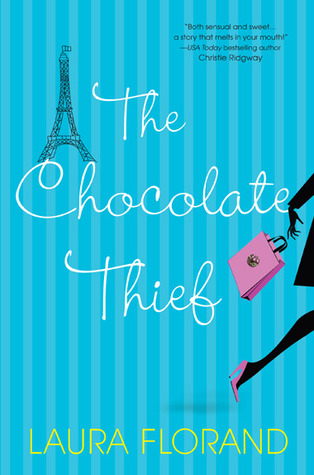
Book Review: The Chocolate Thief by Laura Florand

Chocolate ThiefLet’s be perfectly clear: This is not my usual kind of read.

My lovely online book group picked The Chocolate Thief by Laura Florand for our February group read. Don’t get me wrong — I have nothing against chocolate! And if you don’t believe me, just send me some and see if I eat it.

I do have a problem, though, with romance novels, and The Chocolate Thief belongs firmly on the romance shelf.

All that being said, I will admit that I didn’t hate The Chocolate Thief, and actually, once I accepted that I was reading this book and sticking with it, I kind of got sucked in — at least, enough to read for a couple of hours straight this morning so I could see how it all turned out.

Enough preamble.

In The Chocolate Thief, 20-something American businesswoman Cade Corey has come to Paris to see if she can make a dream come true. Cade is the youngest generation of the Corey chocolate dynasty of Corey, Maryland. Think Hershey — Corey is a multi-billion dollar corporation that thrives off of its 33-cent chocolate bars sold at Walmarts and in supermarket checkout lines across America.

Cade’s dream is to launch a line of gourmet, high-end chocolate as a flagship enterprise for Corey, but to make it happen, she needs a Parisian chocolatier to sign on to the scheme, agree to let Cade buy him for millions, and then mass-produce his type of chocolate, stamped with his name, as part of the Corey brand.

Cade gets a nasty awakening when she pursues the #1 chocolatier in Paris, Sylvain Marquis, and is given an angry and emphatic NO. (Or “non”, I suppose). Not one to give up, Cade eventually ends up breaking into Sylvain’s laboratoire, fingering all of his chocolate-making supplies, leaving chocolatey fingerprints everywhere, and winding up covered by gourmet blogs as the mysterious “Chocolate Thief”.

Needless to say, it doesn’t hurt a bit that Sylvain is gorgeous and manly and has beautiful hands. Cade falls hard. He falls right back. The chemistry grows and the heat rises. And it goes pretty much where you’d expect it to go.

still-life-715153_1920

Okay, my thoughts:

Well, as I said, I did read all the way to the end, so clearly, it’s a compelling story. Of course, there are things that bugged me. Such as Cade stubbornly running around the city in heels while thinking about how much her feet hurt. Or having to describe every outfit she wears and how much makeup she puts on. Or the fact that Sylvain’s early refusal and dismissal of Cade seems to be the key to what keeps her coming back. Or looking at every attractive woman as competition.

There are positives: I liked that the main character is a successful professional who’s devoted to her family and to the family business. I liked that she and Sylvain are both outwardly cool and confident, but have lurking insecurities underneath — she, that men only want her for her money, and he, that women only want him for his chocolate.

They spend a lot of the book mistrusting each other’s motives and getting either hurt or angry, when if they’d only talked a bit more, they’d have reached an understanding (and happiness) a lot sooner.

The writing is a bit bumpy. Lots and lots (and lots) of decadent, sensuous descriptions of the flavors of chocolate, the way it melts on the tongue, the scents and textures of every food, every piece of clothing, every touch of skin. These bits are all quite delicious (sorry…), if occasionally overdone. By the time I was further in the book, it was like — enough already! We get how good the chocolate smells. Can we get on with the plot?

Where was I? Yes, the writing. Some bits just made me groan, and not from ecstasy:

Long, phallic eclairs in shades of coffee, chocolate, and pistachio stretched in rows like some nymphomaniac’s dream.

Okay…

Chocolate melted on her tongue, melted into her body. Its warm, rich sweetness combined with the pounding adrenaline until she felt … the closest she could think of was aroused. Desperately, intensely aroused, as if someone could come out of the shadows with his sorcerer eyes glinting and lay her down on the dark counters and …

Is it getting hot in here?

This clunker just did not work for me:

She had hunted him. She had tethered herself out there like some kid goat to his Tyrannosaurus rex.

Wait, what? Goats hunt T-Rexes? Not sure this makes the least bit of sense.

The plot is a fairly standard romance arc — two beautiful people, intense instant attraction, lots of tingly bits leading up to hot sex, misunderstandings and obstacles, and finally, the HEA you know is coming at the end. Sorry, that’s not a spoiler — that’s just how these things go.

Speaking of hot sex — there’s quite a bit, including two especially… um, let’s say VIVID… scenes, one on the marble countertops of Sylvain’s workplace, and one quite memorable escapade taking place during the ascent of several flights of stairs.

Do I recommend this book?

Well, that depends. I actually had fun reading it, despite not being a fan of the genre, and despite the muscle strain I developed from all the eye-rolling. The Chocolate Thief isn’t a book I would seek out on my own, and I probably would have stopped after a chapter or two if not for not wanting to bail on a book club book. But, it wasn’t unpleasant to read, I did end up getting caught up enough in the story to want to see it through, and overall found it pretty fun. Especially all the chocolate. Yummmmmm.

For readers who enjoy romances with aloof, strong but secretly fragile men and the powerful but secretly looking for love women who break through their defenses, well, this might be just about perfect.

Overall, it’s sweet and romantic and full of the sights of Paris and an absolute walllowing in flavors. Not a bad choice for a quick and light read. And if you just want to get to the… um… vivid bits:

There in his arms. Yielding to him. Pulling at him. Yielding. Her mouth, her tongue, her body that flexed to him and grew softer and softer, as if all strength failed her, even as he grew stronger and stronger, too hard, hard to bursting with himself and his power over her.

… turn to chapters 13 and 18. You’re welcome.

Word to the wise: Stock up on chocolate before reading The Chocolate Thief, and splurge on the good stuff.

_________________________________________

The details:

Title: The Chocolate Thief
Author: Laura Florand
Publisher: Kensington
Publication date: July 31, 2012
Length: 303 pages
Genre: Romance
Source: Library

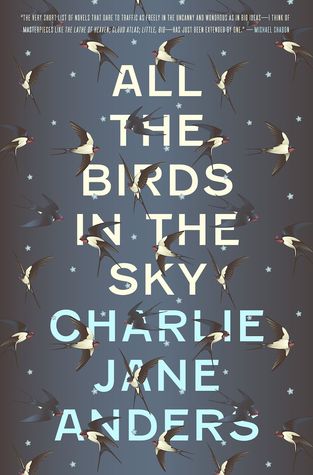
Take A Peek Book Review: All the Birds in the Sky by Charlie Jane Anders

“Take a Peek” book reviews are short and (possibly) sweet, keeping the commentary brief and providing a little peek at what the book’s about and what I thought.

All the Birds


Synopsis:

(via Goodreads)

From the editor-in-chief of io9.com, a stunning novel about the end of the world–and the beginning of our future

Childhood friends Patricia Delfine and Laurence Armstead didn’t expect to see each other again, after parting ways under mysterious circumstances during high school. After all, the development of magical powers and the invention of a two-second time machine could hardly fail to alarm one’s peers and families.

But now they’re both adults, living in the hipster mecca San Francisco, and the planet is falling apart around them. Laurence is an engineering genius who’s working with a group that aims to avert catastrophic breakdown through technological intervention into the changing global climate. Patricia is a graduate of Eltisley Maze, the hidden academy for the world’s magically gifted, and works with a small band of other magicians to secretly repair the world’s ever-growing ailments. Little do they realize that something bigger than either of them, something begun years ago in their youth, is determined to bring them together–to either save the world, or plunge it into a new dark ages.

A deeply magical, darkly funny examination of life, love, and the apocalypse.


My Thoughts:

What a weird and wonderful book!

All the Birds in the Sky mashes together magic and crazy science to create a whole that’s odd and unique and utterly engaging. We first meet the lead characters Patricia and Laurence as outcast kids — bullied, friendless, and with home lives that just scream abuse. When they finally meet, they provide each other with refuge and support, but ultimately part ways until a seemingly random reconnection as adults.

The story switches perspectives between both characters, showing us the life of Patricia the witch, cursing and healing people, always being cautioned against the #1 sin for witches, Aggrandizement… and Laurence, the genius mad scientist working on anti-gravity and the possible salvation — or destruction — of the planet.

The writing is often quite funny, although the subject matter can get pretty heavy, what with the impending end of the world and all. The witches and the scientists have plans to save everyone, but each plan may also bring the apocalypse. Patricia and Laurence battle their own factions as well as each others’ in order to avert disaster, even while dealing with their own inner turmoil and competing interests and emotions.

This book truly brings together science fiction and fantasy in a way very few do. As the author said in an introduction to the book on the io9 website, “A young witch and a wild science genius—the characters in my new novel All the Birds in the Sky don’t even belong in the same book together.” Read more from this piece, here.

If you enjoy oddball fiction with a science-y, magical flair, check out All the Birds in the Sky!

PS – Bonus points to Charlie Jane Anders for making excellent use of San Francisco — not just the obvious tourist attractions, but all the odd little corners and neighborhoods that make SF so SF!

_________________________________________

The details:

Title: All the Birds in the Sky
Author: Charlie Jane Anders
Publisher: Tor Books
Publication date: January 26, 2016
Length: 316 pages
Genre: Science fiction/fantasy
Source: Purchased

Audiobook Review: The Immortal Life of Henrietta Lacks by Rebecca Skloot

Immortal Life

Her name was Henrietta Lacks, but scientists know her as HeLa. She was a poor black tobacco farmer whose cells–taken without her knowledge in 1951–became one of the most important tools in medicine, vital for developing the polio vaccine, cloning, gene mapping, and more. Henrietta’s cells have been bought and sold by the billions, yet she remains virtually unknown, and her family can’t afford health insurance. This phenomenal New York Times bestseller tells a riveting story of the collision between ethics, race, and medicine; of scientific discovery and faith healing; and of a daughter consumed with questions about the mother she never knew.

The Immortal Life of Henrietta Lacks is a book I’d been hearing about for years, but as I rarely pick up non-fiction, I’d never gotten around to actually reading it. Finally, I decided to give the audiobook a try.

Henrietta Lacks was a poor African-American woman with five children who was diagnosed and treated for cervical cancer in the early 1950s, before finally dying of the disease in 1951. Doctors treating Henrietta removed samples of her tumor during her treatments, and these cells grew in culture at an unprecedented rate, becoming the first immortal cells ever created in medical history.

In the years since, HeLa cells have been used worldwide for medical research, and it is said that without the HeLa line, many of our current medical advances and treatments would not exist.

In The Immortal Life, author Rebecca Skloot explores both the scientific journey of Henrietta’s cells and their impact on modern medicine, and the lives of the family that Henrietta left behind. Amazingly, while HeLa was incredibly important and famous among the scientific community since the early 1950s, it was not until decades later that Henrietta’s family had any inkling that her cells had been preserved and were still being used for scientific advancement.

The author describes Henrietta’s early life and marriage, the birth of her children, and her suspicion around age 30 that something was wrong with her, leading to her treatment at Hopkins and ultimately, her death from a particularly virulent strain of cervical cancer. Henrietta is portrayed as an energetic, spirited woman and a devoted mother, who never fully understood her condition or her treatment.

Henrietta’s treatment at the time was probably not unusual, and there’s no indication that the medical care she received was not up to the standards of the 1950s. Henrietta was not asked for permission to take her cells for study, but again, that was not the practice at the time.

The book has many chapters describing the scientific impact of the HeLa cells, their use, their impact, and their study over the years. The book also covers topics concerning medical ethics, questions still under debate today, such as who “owns” the tissues removed from patients and who can and should profit from their commercialization. Some interesting examples are given, such as cases where millions of dollars in profit are made by the medical industry while the donor patient receives nothing.

Along those lines, we spend quite a bit of time with the Lacks family, most particularly with Henrietta’s daughter Deborah. Deborah becomes Rebecca Skloot’s companion in her quest to understand Henrietta’s life and death, and her spirit and energy infuse much of the book. The author traces their travels together to the family’s rural home and through the bits and pieces of medical records which they manage to uncover. It’s clear that the family received little information about HeLa or what the cells actually were, so that Deborah often referred to them as being parts of her mother still alive, imagining her mother being experimented upon, and becoming agitated over the types of experiments conducted — describing at various times that parts of her mother were shot into space, used to test nuclear bombs, and infected with AIDS (all actually types of scientific work done using HeLa cells).

There’s a lot of fascinating information in The Immortal Life of Henrietta Lacks, but overall, something about this book didn’t quite fit together for me. There are at least two distinct pieces here — the scientific elements related to the HeLa cell line, the use of tissue cultures, and the biomedical ethical issues; and the story of the Lacks family, their hardships, and the impact upon them of the fame of HeLa and the resultant loss of privacy for the family.

The author, in the book’s afterword, states that one of her purposes in writing this book was to bring to life the woman behind the cells, to make it clear to the world that HeLa is more than just nameless cells, but rather the living remnants that once were part of a real woman who had a name, a life and a family. I think the book absolutely succeeds in this regard.

Still, I couldn’t quite decide what the ultimate point was, or what we are to conclude about the scientific and ethical issues raised here. Was it wrong to use Henrietta’s cells for research? I really can’t believe that. Should patients have control over what happens to their tissues? Should patients have a monetary stake in research involving their tissues? What would that mean for ongoing research? These are big issues, but I felt that the nuances became a little muddy when mixed with the story of the Lacks family. It’s wonderful that Henrietta herself is finally getting recognition, but I’m not sure that this case proves anything when it comes to the confusing, often contradictory elements of the bioethical issues.

Regarding the audiobook itself, I question some of the production decisions made regarding the narration. Most of the narration is a straightforward read of the book, but quotes are read by a different narrator, with ethnic accents and dramatization. It’s not just the Lacks family that gets this treatment — a doctor of Chinese descent is read with a heavy Chinese accent, and there are a few others as well. This is a work of non-fiction, and adding this interpretive treatment of the text felt unnecessary to me, and ultimately, it was distracting.

The book itself is organized in a way that feels muddled and confusing. The chapters jump from present to past, from science to personal, and the transitions are quite abrupt. Particularly via audiobook, this jumping around makes the narrative hard to follow, and the logical sequence is occasionally lost.

I did find much of The Immortal Life of Henrietta Lacks quite interesting, and I was moved by the family’s story, particularly Deborah’s. Still, the combination of the two halves of the story didn’t quite gel for me, and the book as a whole wasn’t nearly as satisfying as I’d hoped it would be.

_________________________________________

The details:

Title: The Immortal Life of Henrietta Lacks
Author: Rebecca Skloot
Narrator: Cassandra Campbell, Bahni Turpin
Publisher: Crown Publishing Group
Publication date: February 2, 2010
Audiobook length: 12 hours, 30 minutes
Printed book length: 370 pages
Genre: Non-fiction (science/biography)
Source: Library (Overdrive)

Take A Peek Book Review: Catching Jordan by Miranda Kenneally

“Take a Peek” book reviews are short and (possibly) sweet, keeping the commentary brief and providing a little peek at what the book’s about and what I thought.

Score_CVR.indd

Synopsis:

(via Goodreads)

What girl doesn’t want to be surrounded by gorgeous jocks day in and day out? Jordan Woods isn’t just surrounded by hot guys, though — she leads them as the captain and quarterback of her high school football team. They all see her as one of the guys and that’s just fine. As long as she gets her athletic scholarship to a powerhouse university.

But everything she’s ever worked for is threatened when Ty Green moves to her school. Not only is he an amazing QB, but he’s also amazingly hot. And for the first time, Jordan’s feeling vulnerable. Can she keep her head in the game while her heart’s on the line?


My Thoughts:

Miranda Kenneally’s young adult novels take place in and around Hundred Oaks High School in the fictional town of Franklin, Tennessee. Each book has a teen girl at its center, and while the stories interweave a bit, with familiar faces from earlier books popping up later in supporting roles, each book stands alone nicely as well.

I stumbled across these books more or less accidentally, when I picked up an ARC of the 4th book, Racing Savannah. Since then, I’ve read two more, and now I’m finally going back and trying to read the first three Hundred Oaks books, starting with the author’s very first novel, Catching Jordan.

Jordan Woods is a high school senior, an amazing quarterback, and captain of her school football team. She’s the daughter of a world-famous NFL quarterback, and sees no reason why she shouldn’t follow in his footsteps and pursue her dreams of QBing a top-tier college team — despite her dad’s lack of support due to fear of her getting injured.

Jordan’s closest friends are the guys from the team, especially Sam Henry, the quintessential boy next door who’s been her absolute best friend since childhood. Jordan and Sam’s friendship is tested when a hot new guy moves to town — a guy who not only is competition for the QB role but also wants to date Jordan.

Jordan is a total jock, and she’s not ashamed of it. She also refuses to cede any ground in her fight to be taken seriously, and throws herself into her love of football wholeheartedly. (I’m a big fan of Jordan’s, even if I’m not at all a jock myself!)

One of the things I love about these books is the fresh take on teen friendships and social roles. Yes, there are some mean, gossipy cheerleaders — but there are also a couple of nice, positive cheerleaders who actually are supportive friends, once Jordan drops her guard and allows herself to hang out with girls. Jordan is always afraid of looking soft in front of the guys, but she eventually learns that she can wear a dress and makeup if she wants to (and she very rarely wants to) without giving up any ground as the football authority.

I also appreciate the honest look at high school relationships in Catching Jordan. These teens definitely do hook up, and sex is a pretty casual thing for most. Jordan faces her first kiss and losing her virginity within the space of a week, and it’s not because she’s taken a stand or hasn’t been interested. She’s just never before figured out how to balance having a love life with her status as captain and one of the guys.

I almost hesitated to include the book synopsis while writing this “Take a Peek” review, because frankly, the synopsis makes the book sound kind of cheesy and stereotypical, and that’s so misleading. I mean, “what girl doesn’t want to be surrounded by gorgeous jocks day in and day out?” and “amazingly hot”? Really?

Ignore all that, and just pay attention to this: Catching Jordan is a terrific young adult novel about a strong, self-sufficient young woman who values friendship and loyalty, knows what she wants out of life, but has to figure out who really matters to her and how to find the kind of love she really craves. The small-town, Southern vibe is lots of fun, and I’m eagerly looking forward to reading the two remaining Hundred Oaks books that are calling my name.

Interested in this author? Check out my reviews of other books by Miranda Kenneally:
Racing Savannah
Breathe, Annie, Breathe
Jesse’s Girl

_________________________________________

The details:

Title: Catching Jordan
Author: Miranda Kenneally
Publisher: Sourcebooks Fire
Publication date: November 11, 2011
Length: 283 pages
Genre: Young adult contemporary fiction
Source: Purchased

Book Review: The Storyteller by Jodi Picoult

The Storyteller

(Goodreads): Sage Singer befriends an old man who’s particularly beloved in her community. Josef Weber is everyone’s favorite retired teacher and Little League coach. They strike up a friendship at the bakery where Sage works. One day he asks Sage for a favor: to kill him. Shocked, Sage refuses… and then he confesses his darkest secret—he deserves to die, because he was a Nazi SS guard. Complicating the matter? Sage’s grandmother is a Holocaust survivor.

What do you do when evil lives next door? Can someone who’s committed a truly heinous act ever atone for it with subsequent good behavior? Should you offer forgiveness to someone if you aren’t the party who was wronged? And most of all—if Sage even considers his request—is it murder, or justice?

How do I even begin to describe a book as powerful and devastating as The Storyteller? While I knew the basic premise, I had no idea what I was in for when I first started reading it.

At the outset, we meet Sage, a reclusive young woman bearing scars of a tragic accident that cost her her parents. Sage lives alone in a small town in New Hampshire, where she works nights — again, alone — baking a miraculous, marvelous assortment of breads for the small bakery that employs her. Baking is both Sage’s passion and an escape, providing her with distraction and a focus, as well as a good excuse to avoid almost everyone.

It’s silly to anthropomorphize bread, but I love the fact that it needs to sit quietly, to retreat from touch and noise and drama, in order to evolve.

I have to admit, I often feel that way myself.

Sage is forced out of her comfort zone only when she attends a grief support group, where she meets and befriends a newer member, Josef, a sweet old man in his 90s who seems to be just as lonely as Sage. Gradually, the two connect and begin to share bits and pieces of their lives, but Sage’s pleasure in the friendship grinds to a crashing halt when Josef confesses his Nazi past to Sage and asks her to help him die.

Sage is aware that her beloved grandmother Minka is a Holocaust survivor, and remembers catching a brief glimpse of the tattoo on her arm. But Minka has never said a word about her experiences and refuses to answer questions. Sage doesn’t know where to turn. Josef is a well-respected member of the community, a man known as an excellent teacher, kind to all, a man who always did his best to help the town. How can he be a Nazi? In desperation and disgust, Sage tries to connect with law enforcement, and is finally directed to the Federal agency which investigates alleged war criminals, where an agent named Leo Stein takes Sage’s call. Leo encourages Sage to get more information. It’s not enough to know that Josef has claimed to be a former SS agent. In order to take any action, they’ll need to be able to tie him to the historical records through facts, witness reports, or other details that can’t be fabricated.

Why is this book called The Storyteller? Within the novel, we get story upon story. The book opens with a scene that seems like something out of a different world — a tale with a folkloric flavor set in a small Polish village, in which the main character is the baker’s daughter, who feels a growing attraction to a strange young man who’s just arrived in the town, which is also beset by strange animal attacks. It’s not obvious, at first, how this tale, which weaves in between chapters of the contemporary story, actually fits into the main narrative, but it does, and is worth paying attention to.

After the initial section of the book sets up the story of Sage and Josef, we move into the heart of the book, which consists of two more sets of stories. First, we hear from Josef, who tells Sage that he is not Josef Weber after all, but Reiner Hartmann, an SS officer whom Leo is able to find in the historical record. Josef relates the story of his life to Sage, from his childhood in a typical German family to his growing success in Hitler Youth, to enrolling in the SS and becoming a part of the death machine that rolled through Poland. His story includes unflinching looks at the horrors in which he participated, slaughtering men, women, and children in village after village, and finally becoming a lead officer at Auschwitz, overseeing all female prisoners.

Josef’s confession to Sage isn’t enough, though. In order for Leo to take legal action and start the long process that could lead to extradition, deportation, and facing trial for his crimes, they need to be able to tie Josef’s story to something contained in the secret files on Reiner Hartmann, something that couldn’t have been gleaned from the public record. And at this point, Sage takes Leo to meet Minka — and Minka breaks her decades of silence by relating the terrible story of her girlhood, the fate of her family, and her own experiences in Auschwitz.

Minka’s story is the true center of the book, and Minka herself most aptly fits the role of the title, The Storyteller. Minka’s tale is lengthy, detailed, heartbreaking, and horrific. This is the longest section of the book, and is simply devastating to read. I won’t go into detail here; on the one hand, anyone who’s read the stories of Holocaust survivors will recognize some of the common elements here, yet on the other hand, Minka’s narrative is so personal and closely-observed that each loss and each degree of suffering feels like it happened to people we know. Within Minka’s narrative of what she lived through are more bits and pieces of the village tale that’s sprinkled throughout The Storyteller, and we finally discover the link between the book’s characters and the events of the tale.

The central question in The Storyteller is one of forgiveness and atonement. Can someone truly be forgiven for past crimes? Whose job, and whose right, is it to forgive? Can someone who’s committed evil acts ever make up for them? Do 50 years of helping others erase a heinous past? Does it make sense to prosecute a 95-year-old man for the crimes he committed almost seventy years earlier?

I don’t know what this person did you you, and I am not sure I want to. But forgiving isn’t something you do for someone else. It’s something you do for yourself. It’s saying, You’re not important enough to have a stranglehold on me. It’s saying, You don’t get to trap me in the past. I am worthy of a future.

There are no easy answers here. Sage does what she feels to be the right thing by bringing in Leo and cooperating in the investigation, yet she feels a moral obligation toward Josef too. When she looks at him, she sees the horrors he committed, but at the same time she see a lonely, frail old man who loves his dog and mourns his wife of fifty years. Can she feel sorry for him even while feeling repulsed by all she knows? And how does hearing her grandmother’s story affect her ability to listen to the request Josef continues to make of her?

While painting a vivid portrait of a period of history that must not be forgotten, the author is also making an important statement about the power of stories:

Fiction comes in all shapes and sizes. Secrets, lies, stories. We all tell them. Sometimes, because we hope to entertain. Sometimes, because we need to distract.

And sometimes, because we have to.

Jodi Picoult’s fiction tends not to come with easy answers. Of the four or five of her books which I’ve read, all include moral quandaries — people put in difficult or almost impossible positions, where the path forward is murky and ethical questions abound. The same is true of The Storyteller. There’s much food for thought here, and no matter what you think of Josef himself, his request, and Sage’s actions, you’ll definitely find yourself replaying scenes in your mind over and over. I’d imagine that the ending will be controversial for many, and there are certainly plenty of arguments to be made as to why it is or isn’t the right ending, or what the characters should or should not have done.

Ultimately, The Storyteller is a tale of pain and loss, but at the same time, it inspires hope simply by allowing the reader to bear witness to the courage and sacrifice that accompany all the horrors which Minka shares through her story. The Storyteller is not a light or easy read, but it’s an important one, and I applaud the author for creating a work of fiction that explores such a horrible piece of history with grace and honesty.

_________________________________________

The details:

Title: The Storyteller
Author: Jodi Picoult
Publisher: Atria
Publication date: February 26, 2013
Length: 460 pages
Genre: Contemporary fiction
Source: Purchased