Book Review: Flirting Lessons by Jasmine Guillory

Title: Flirting Lessons
Author: Jasmine Guillory
Publisher: Berkley
Publication date: April 8, 2025
Length: 416 pages
Genre: Contemporary romance
Source: Review copy courtesy of the publisher via NetGalley
Rating:

Rating: 3 out of 5.

The exciting new contemporary romance—and her first to feature a queer romance—by New York Times bestselling author Jasmine Guillory

Avery Jensen is almost thirty, fresh off a breakup, and she’s tired of always being so uptight and well-behaved. She wants to get a hobby, date around (especially other women), flirt with everyone she sees, all the fun stuff normal people do in their twenties. One Avery doesn’t know how to do any of that. She doesn’t have a lot of dating experience, with men or women, and despite being self-assured at work, she doesn’t have a lot of confidence when it comes to romance.

Enter Taylor Cameron, Napa Valley’s biggest flirt and champion heartbreaker. Taylor just broke up with her most recent girlfriend, and her best friend bet her that she can’t make it until Labor Day without sleeping with someone. (Two whole months? Without sex? Taylor?!?!) So, she offers to give Avery flirting lessons. It will keep her busy, stop her from texting people she shouldn’t. And it might distract her from how inadequate she feels compared to her friends, who all seem much more settled and adult than Taylor.

At first, Avery is stiff and nervous, but Taylor is patient and encouraging, and soon, Avery looks forward to their weekly lessons. With Taylor’s help, Avery finally has the life she always wanted. The only issue is: now she wants Taylor. Their attraction becomes impossible to ignore, despite them both insisting to themselves and everyone else that it isn’t serious. When Taylor is forced to confront her feelings for Avery, she doesn’t know what to do—and most importantly, if she’s already ruined the best thing she’s ever had.

Mega-popular author Jasmine Guillory returns to Napa Valley, setting of her previous novel, Drunk on Love, for her newest romance. As the blurb tells us, this is the author’s first foray into queer romance, with a love story featuring two women who start as friends and become much more.

Taylor is the woman everyone loves to be around, and she’s dated practically every woman in wine country at one point or another. She’s famous (or infamous) for not doing relationships — everyone knows that she’s great for a fling, but not someone to get serious with.

At an event at the winery where she works, Taylor runs into Avery, the best friend of a former coworker. Avery is gorgeous and a bit reserved. She’s excellent at her event planning business, but comes across as shy and self-conscious in social settings. After a couple of glasses of wine, she admits to Taylor that she’s tired of being seen as reliable and predictable — in other words, boring. She wishes she knew how to to have fun, flirt, and grab onto life.

Meanwhile, Taylor’s best friend Erica has just bet Taylor that she can’t stay celibate for the entire summer, and Taylor never can resist a dare. Since sleeping with anyone new is off the table, she needs a distraction, and offers to be Avery’s dating guru. She’ll give her flirting lessons! Avery has never dated women before, but wants to, and Taylor offers to take her out, put her in high-potential flirting situations, and teach her how to flirt like a champ.

What follows is a series of very fun lessons, where Avery is given challenges such as talking to five new people or trying something outside her comfort zone. The goal isn’t going to bed — it’s empowering Avery to feel more confident with new people, and to stop the self- talk that holds her back.

Of course, Taylor and Avery end up catching feelings for one another, and their flirting lessons turn into much, much more…

Flirting Lessons is at its best when it’s focused on the social settings and activities that Taylor orchestrates for Avery’s lessons. An author event at a bookstore, queer salsa dancing, trivia night at a bar, community gardening — all are terrific venues for seeing the two women interact with each other and with new people, and provide different ways for Avery to spread her wings and try something new.

I appreciated that honesty was an important part of what both women needed to learn — how to accept a compliment without deflection, how to express what they actually feel rather than what they think the other person wants, how to stop undermining themselves by wondering if they’re interesting enough or match what others want to see. It’s also nice to see that they have other friends. Their relationship is not their sole focus, and for each, paying attention to the other people in their lives is yet another element that helps them grow and acknowledge their own strengths and blindspots.

Despite the positives, I can’t say this was more than just a so-so read for me, and here’s why:

I’m not sure that I entirely bought Avery and Taylor’s chemistry. Avery is just too tentative and walled off to make true sense as a partner for Taylor, or to hold Taylor’s attention long enough for her growth to give them a more equal footing. Further, the plot as a whole is a bit dull. Sure, the various dates and events are fun, and the ups and downs of Taylor and Avery’s relationship are nice to see unfolding, but it’s entirely predictable. Even the potential breakup is easy to see coming, as is its solution.

On the whole, Flirting Lessons is a bit longer than it needs to be, and doesn’t cover much new ground or provide a ton of surprises. I enjoyed the book enough to want to keep going, but now that I’m done, it’s not likely to stick with me in any meaningful way.

Still, Flirting Lessons could be a good choice for a light summer read — and the Wine Country setting provides a nice sense of a sun-filled getaway.

Purchase linksAmazon – Bookshop.org
Disclaimer: When you make a purchase through one of these affiliate links, I may earn a small commission, at no additional cost to you.

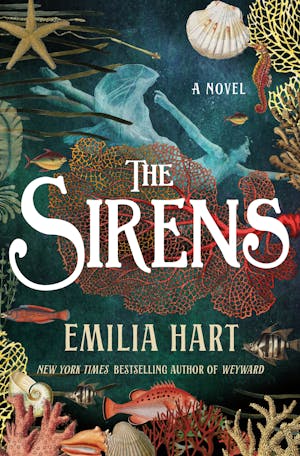
Book Review: The Sirens by Emilia Hart

Title: The Sirens
Author: Emilia Hart
Publisher: St. Martin’s Press
Publication date: April 1, 2025
Length: 352 pages
Genre: Fantasy
Source: Purchased (hardcover); eARC via NetGalley
Rating:

Rating: 5 out of 5.

A story of sisters separated by hundreds of years but bound together in more ways than they can imagine

2019: Lucy awakens in her ex-lover’s room in the middle of the night with her hands around his throat. Horrified, she flees to her sister’s house on the coast of New South Wales hoping Jess can help explain the vivid dreams that preceded the attack—but her sister is missing. As Lucy waits for her return, she starts to unearth strange rumours about Jess’s town—tales of numerous missing men, spread over decades. A baby abandoned in a sea-swept cave. Whispers of women’s voices on the waves. All the while, her dreams start to feel closer than ever.

1800: Mary and Eliza are torn from their loving home in Ireland and forced onto a convict ship heading for Australia. As the boat takes them farther and farther away from all they know, they begin to notice unexplainable changes in their bodies.

A breathtaking tale of female resilience, The Sirens is an extraordinary novel that captures the sheer power of sisterhood and the indefinable magic of the sea.

After reading author Emilia Hart’s debut novel Weyward last fall, I knew I’d read whatever she wrote next. I’m happy to report that The Sirens more than lives up to expectations, and is a beautiful, compelling story that matches the greatness of Weyward.

The Sirens follows two different sets of women across two different timelines. Our main viewpoint throughout is Lucy, a college student who’s had to deal with a strange skin ailment all her life, which leaves her with scars and marks across her body. When she wakes from a sleepwalking episode to discover that she’s attempting to strangle someone, she flees.

Lucy decides to seek shelter with her older sister Jess, whom she’s always loved, but who’s distanced herself from Lucy and their parents. Jess lives in Comber Bay, a small seaside village in New South Wales. Comber Bay has a certain notoriety thanks to a popular podcast focused on a string of disappearances in the town — over the past few decades, eight different men, seemingly with nothing in common, have vanished without a trace.

When Lucy arrives at Jess’s last known address — Cliff House, a ramshackle, dilapidated old house perched precariously over the wild sea — Jess is not there, although her keys, car, and phone are. With few options, Lucy settles in to wait for Jess’s return. She’s intrigued and disturbed by Jess’s paintings, depicting two young women and an old sailing ship. The paintings are beautiful, but the women in them exactly match the sisters Lucy sees in a series of recurring dreams. How is this possible?

Meanwhile, in 1800, sisters Mary and Eliza have been sentenced to transportation to Australia, leaving behind their home and beloved father in Ireland. Two of eighty women convicts crammed into the prison hold onboard the Naiad, they’re subjected to a terrifying sea journey in horrific conditions, with barely enough food or water to sustain them. Mary and Eliza are devoted to one another, terrified by their experiences and the rumors of what await them all in Australia, and desperate for survival. As they bond with the other women on the ship, the sense of community sustains them — but Mary is also concerned by the physical changes she and Eliza seem to be experiencing, and can’t help but wonder over what this might mean for them.

Without giving anything away, I’ll just say that the connections between Lucy and Jess’s story and Mary and Eliza’s becomes clear over time. What unfolds is a story of women living through harsh but recognizable experiences, yet also a tale filled with fantastical elements that add a haunting sense of beauty and magic to the overall feel of the novel.

The writing here is absolutely gorgeous. With every chapter, the author provides insights into the characters’ lives and inner turmoil, but also shows us the beauty of their surroundings, especially the sea, cliffs, and caves of Comber Bay.

I loved the two sets of sisters — each pair has their own special relationship and shared trauma, and obviously the different eras they live in play a huge role in what they go through, yet their stories also share common elements and resonate one to the other across time.

Reading The Sirens is an immersive experience that’s powerful, emotional, and practically hypnotic. I hated to pull away and put the book down, and was sad at the end, not because of unhappiness with the concluding chapters, but because I didn’t want to leave these characters and their world.

The Sirens is a must-read. Don’t miss it!

Purchase linksAmazon – Bookshop.org
Disclaimer: When you make a purchase through one of these affiliate links, I may earn a small commission, at no additional cost to you.

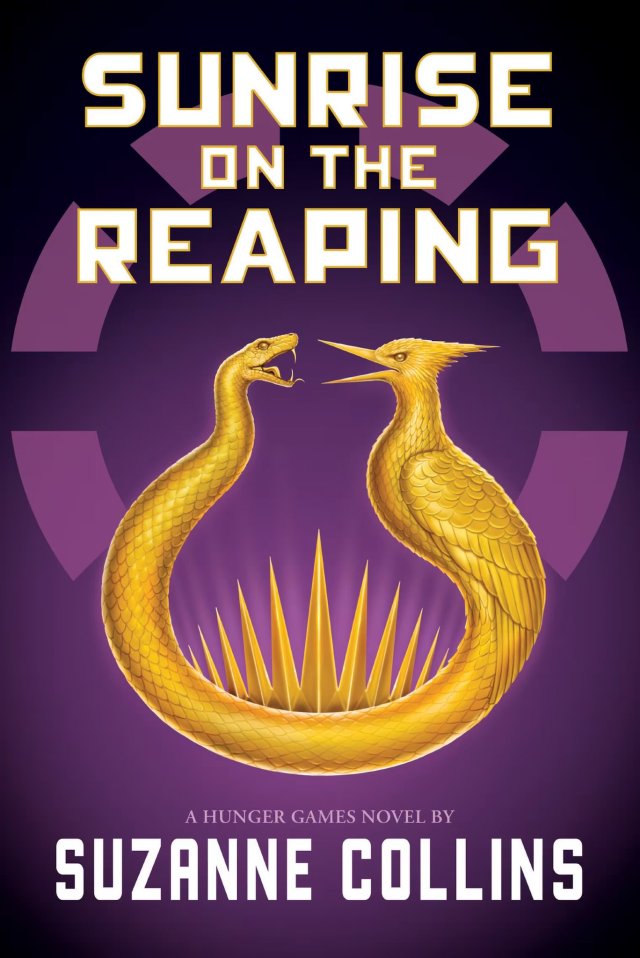
Book Review: Sunrise on the Reaping by Suzanne Collins

Title: Sunrise on the Reaping
Author: Suzanne Collins
Publisher: Scholastic
Publication date: May 18, 2025
Length: 382 pages
Genre: Young adult
Source: Purchased
Rating:

Rating: 4.5 out of 5.

When you’ve been set up to lose everything you love, what is there left to fight for?

As the day dawns on the fiftieth annual Hunger Games, fear grips the districts of Panem. This year, in honor of the Quarter Quell, twice as many tributes will be taken from their homes.

Back in District 12, Haymitch Abernathy is trying not to think too hard about his chances. All he cares about is making it through the day and being with the girl he loves.

When Haymitch’s name is called, he can feel all his dreams break. He’s torn from his family and his love, shuttled to the Capitol with the three other District 12 tributes: a young friend who’s nearly a sister to him, a compulsive oddsmaker, and the most stuck-up girl in town. As the Games begin, Haymitch understands he’s been set up to fail. But there’s something in him that wants to fight . . . and have that fight reverberate far beyond the deadly arena.

We all know about the District uprisings that finally overthrew the Capital and freed Panem of the horrors of the Hunger Games… but 25 years earlier, a tribute named Haymitch Abernathy did his best to break the Games. He failed… but as author Suzanne Collins shows us in Sunrise on the Reaping, his story is worth telling.

I was skeptical, to be honest. Do we need another Hunger Games book? About Haymitch, of all people? When we meet Haymitch in the very first book in the series, he’s the District 12 drunkard, a pathetic former victor of the Hunger Games who’s lived alone in his Victor’s Village house all these years, failing each year to keep to keep any of the tributes he mentors alive, and doing his best to drink himself to death.

Eventually, he gets his act together enough to actually be of use to Katniss and Peeta, and later plays a role in the rebellion… but that’s all later. How did Haymitch, seemingly so pathetic when we meet him, manage to win his Hunger Games in the first place?

We never, none of us, had any choices.

In Sunrise on the Reaping, we find out. At age 16, Haymitch works hard to support his widowed mother and younger brother by doing odd jobs for the local bootlegger. He’s strong, devoted to his family, and madly in love with his Covey girlfriend, Lenore Dove. His birthday is never a happy one, as it coincides with the day of the reaping, and this year’s reaping promises to be especially bad: It’s the 50th Hunger Games, the Quarter Quell, and to mark the significant anniversary, the reaping will select not two tributes per District, but four. Haymitch knows he has a high chance of being selected, but initially he appears to have been spared — until an unpredictable event at the reaping forces him into the games anyway.

Haymitch knows he’s doomed. Only one person from District 12 has ever won the Hunger Games, although no one actually knows who this was — all records have disappeared. (We know, of course, that this was Lucy Gray Baird, victor of the 10th Hunger Games, as depicted in The Ballad of Songbirds and Snakes). As Haymitch leaves his family, friends, and District, Lenore Dove asks him to do whatever he can to put an end to the Games, once and for all.

“And that’s part of our trouble. Thinking things are inevitable. Not believing change is possible.”

“I guess. But I can’t really imagine the sun not rising tomorrow.”

A crease forms between her eyebrows as she puzzles out a response. “Can you imagine it rising on a world without a reaping?”

The best outcome Haymitch had envisioned was a quick death, to spare his family the agony of watching him die in some prolonged, awful way, and then a reunion with Lenore Dove in the afterlife — but now, he’s determined to fulfill the mission she’s set for him. If he can’t survive, at least he can try his best to break everything before his death. Maybe, just maybe, he can find a way to be disruptive enough to end the Hunger Games for good.

(We know he can’t, since we know the Games continue for another 25 years… )

As we follow Haymitch from District 12 to the Capital and then into the arena, we see a young man who’s very different than the bitter, ruined adult we know from the earlier books. Haymitch is determined but realistic. He knows he has no chance against the Careers, the tributes from the wealthier districts who train all their lives for a shot at Hunger Games glory. But Haymitch is not without skills of his own, and he’s caring to a fault: As he meets the weaker, more vulnerable tributes, he takes on the role of protector, and becomes desperate to find a way to shield his band of allies for as long as possible.

Alas, as we all know, the Hunger Games only ends with death for all but one of the tributes. As the Games in Sunrise on the Reaping get underway, the violence and death toll mount at a speed that’s inevitable. Here’s where the book feels a bit weak: Sure, it’s compelling and there are bursts of intensity and action — but, while the window dressing is different from the version of the Games we saw in The Hunger Games and Catching Fire, it’s still ultimately an arena full of traps, an environment designed to kill in horrific ways, and teens who can only survive by murdering one another. It’s certainly not boring… but it’s also not new.

Sunrise on the Reaping does fill in some blanks for devoted Hunger Games fans. It finally allows us to connect the dots and understand who Haymitch was before the main trilogy of books, because that’s always been a bit hard to fathom — we know he’s the only identified victor from District 12, but it’s impossible to picture him as anything but the wreck he is when we meet him. How could he possibly have won?

The Haymitch we meet here is someone to be admired and pitied. We see the cruelty to which he’s subjected as everything and everyone he loves is taken from him — but also the mission which Lenore Dove assigns to him, which he can’t fully abandon even after everything is lost.

With that, she condemns me to life.

It is fascinating to see the origins of certain elements of the later versions of the Games, as well as earlier generations of main characters’ families. On the other hand, seeing what’s become of Coriolanus Snow, now fully embodying the cruel, murderous persona of the Panem President as we first met him in the original trilogy, has its own impact. We knew, of course, how Snow would end up — but for brief glimmers in Ballad, we also got to see a hint of what else he might have been, had the world been just a bit different.

Adding to the depth of Sunrise on the Reaping is its exploration of propaganda and how authoritarianism thrives in the absence of a free press. Haymitch has several big moments of defiance that he expects to be captured for the rest of Panem to see, but of course, President Snow’s approved versions show nothing of the sort. Adding to the horror of all of Haymitch’s tragic losses is the way the televised record twists his actions and shreds his dignity and honor. When the media is under the tight control of the rulers, rebellion can be squashed simply by not showing it.

Lastly, I’ll mention the bonds among the tributes. When the weaker, non-Career districts recognize that individually, they don’t stand a chance, they form an alliance based on strength in numbers. Tactically, this is smart — and it also gives readers the opportunity to see a different way of surviving in the Games, not by murdering every single person you meet, but by protecting the people you care about and forming genuine connections. Sure, they’re still all doomed, knowing the Gamemakers will only let one person out alive, but meanwhile, they’re able to compete with some sense of purpose and dignity.

Ultimately, I’m glad to have read Sunrise on the Reaping, but I still question how effective a prequel can ever really be. The book gives us insight into a chapter of Panem’s history that we hadn’t seen before, and lets us see a character’s tragic backstory, which helps make sense of his later trajectory. Still, the problem with prequels remains that the outcome is predetermined: We know Haymitch will be the victor, so any dangers are easy to discount. Others may die (and do) — but he won’t, and we know it.

I wonder whether this is it for the world of The Hunger Games, or if the author will continue to add prequels to fill in the blanks. The original trilogy’s ending wraps up the characters’ stories neatly, so I can’t see there being sequels taking place later in their lives… but who knows? I feel like the stories of Panem have been told, and told well, and don’t feel a need for more. Then again, that’s what I said prior to reading both Ballad and Sunrise, and ended up enjoying both quite a lot.

All in all, I’d say that if you’re a fan of The Hunger Games, it’s worth reading Sunrise on the Reaping. Despite my hesitation (and the problem of knowing the big-picture ending all along), it’s well worth the time to dive in and explore Haymitch’s story. And having read Sunrise, I’m tempted to go back and do a full re-read of the original books too.

The snow may fall, but the sun also rises.

Purchase links: AmazonBookshop.org
Disclaimer: When you make a purchase through one of these affiliate links, I may earn a small commission, at no additional cost to you.

Audiobook Review: When the Moon Hits Your Eye by John Scalzi

Title: When the Moon Hits Your Eye
Author: John Scalzi
Narrator: Wil Wheaton
Publisher: Tor
Publication date: March 25, 2025
Print length: 326 pages
Audio length: 10 hours 5 minutes
Genre: Science fiction
Source: Purchased
Rating:

Rating: 5 out of 5.

From the New York Times bestselling author of Starter Villain comes an entirely serious take on a distinctly unserious subject: what would really happen if suddenly the moon were replaced by a giant wheel of cheese.

It’s a whole new moooooon.

One day soon, suddenly and without explanation, the moon as we know it is replaced with an orb of cheese with the exact same mass. Through the length of an entire lunar cycle, from new moon to a spectacular and possibly final solar eclipse, we follow multiple characters — schoolkids and scientists, billionaires and workers, preachers and politicians — as they confront the strange new world they live in, and the absurd, impossible moon that now hangs above all their lives.

If you’re shocked to see a 5-star rating for a book about the moon turning to cheese… well, join the club!

Actually, I can’t even pretend to be all that surprised. We’re talking about a John Scalzi book, after all. No matter how silly or ridiculous the plot synopsis sounds, it’s a safe bet that the execution will be delicious.

So it goes with When the Moon Hits Your Eye. As the book opens, a moon rock on display in a space museum has been replaced by… something. The display case hasn’t been tampered with, and yet, the rock is clearly no longer there. Instead, it’s something distinctly un-rocklike… and why does the sliver of crescent moon visible in the night sky seem so unusually bright?

Within 24 hours, it becomes clear: It’s not just the museum’s artifact (and every other sample of moon rock anywhere on Earth) — the entire moon is now composed of cheese. Or, the NASA scientists put it, an organic matrix. But really, it’s cheese. How? Why? What does this all mean? As the ensuing month unfolds, the effects of this cheesy mystery are felt far and wide.

The story is told day by day, with each chapter highlighting a new setting and group of characters experiencing life following the great moon-to-cheese change. It’s a terrific and bizarre mix of subject matter and people, including a small-town pastor and his flock, a team of astronauts who’d been about to launch on the first moon mission in decades, an egotistical tech billionaire who happens to own a space company (hmmmm…..), the President and his staff, a popular science writer, a cheese shop proprietor, and many, many more. Through these characters, we see how ordinary people’s lives — as well as the lives of the rich, famous, and powerful — are dramatically affected by the moon. Their stories weave together to create a rich, meaningful story of human connection, scientific inquiry, and big helping doses of WTF situations.

I listened to the audiobook, and of course, Wil Wheaton’s delivery make this a funny, fast-moving, totally engaging experience.

I’m finding myself at a loss for what else to say about this book. YES, IT’S ABOUT THE MOON TURNING TO CHEESE. And also, yes, it’s simply awesome and utterly entertaining. You’ve just got to experience it for yourself.

One final note: The author photo on the back flap of the book should win its own award:

Purchase links: AmazonBookshop.org
This post contains affiliate links. If you click and buy, we may earn a small commission at no extra cost to you.

Book Review: The Frozen River by Ariel Lawhon

Title: The Frozen River
Author: Ariel Lawhon
Publisher: Doubleday
Publication date: December 5, 2023
Length: 432 pages
Genre: Historical fiction
Source: Purchased
Rating:

Rating: 5 out of 5.

A gripping historical mystery inspired by the life and diary of Martha Ballard, a renowned 18th-century midwife who defied the legal system and wrote herself into American history.

Maine, 1789: When the Kennebec River freezes, entombing a man in the ice, Martha Ballard is summoned to examine the body and determine cause of death. As a midwife and healer, she is privy to much of what goes on behind closed doors in Hallowell. Her diary is a record of every birth and death, crime and debacle that unfolds in the close-knit community. Months earlier, Martha documented the details of an alleged rape committed by two of the town’s most respected gentlemen—one of whom has now been found dead in the ice. But when a local physician undermines her conclusion, declaring the death to be an accident, Martha is forced to investigate the shocking murder on her own.

Over the course of one winter, as the trial nears, and whispers and prejudices mount, Martha doggedly pursues the truth. Her diary soon lands at the center of the scandal, implicating those she loves, and compelling Martha to decide where her own loyalties lie.

Clever, layered, and subversive, Ariel Lawhon’s newest offering introduces an unsung heroine who refused to accept anything less than justice at a time when women were considered best seen and not heard. The Frozen River is a thrilling, tense, and tender story about a remarkable woman who left an unparalleled legacy yet remains nearly forgotten to this day.

Once again, I need to give a big shout-out to my book group, for giving me the motivation to read The Frozen River — a book that’s been on my TBR for over a year! I’m so glad to have finally read it. The Frozen River is a captivating look at a historical figure who led a remarkable life, but who seems to not be widely known or remembered.

The Frozen River is a fictionalized version of Martha Ballard’s life, drawn from her meticulously kept diaries but also liberally embellished by the author, as she explains in the notes at the end. For purposes of clarity, let me stipulate that when I refer to Martha from here on out, I’m talking about her as depicted in this novel.

Martha is the town midwife of Hallowell, Maine. She’s 54 years old, married to a lovely man, Ephraim, who runs a local lumber mill, and mother of nine children, six of whom are still living. She’s delivered hundreds of babies over the years, and has never lost a mother. She comes when calls, and is a trusted medical professional — at least among the women of the area. When an arrogant but inexperienced Harvard-educated doctor comes to town, some of the Martha’s patients (or really, their husbands) choose his services instead, with disastrous results.

One of Martha’s responsibilities is to question unwed women — in the middle of labor!! — to ascertain the name of the baby’s father, and then testify about it in court. Yes, really. (It’s believed that a laboring woman is more likely to tell the truth in the middle of all the pain…) Her role is clear, but as the book shows, when she steps out of line or questions the powerful men of the town, she’s dismissed or undermined.

As the story opens, a body is found under the ice of the frozen Kennebec River. Martha is called to examine the body and determine cause of death, which is clear to her experienced eyes: He’s been badly beaten and then hanged, and his dead body was tossed into the river. The man is identified as one of two men recently accused of violently raping the pastor’s wife. Between the murder investigation and the rape trial, at which Martha is a lead witness supporting the woman bringing charges, Martha’s credibility and expertise are constantly being challenged and called into question.

Beyond the mystery of the dead man and the drama of the rape case, The Frozen River is a powerful story of a strong, professional woman who refuses to back down, and who serves the women of her community whenever needed, even at risk to her own health and well-being. Martha’s home life is also lovely to see. She has a passionate, devoted relationship with her husband, and is an involved, caring mother to her children.

Memory is a wicked thing that warps and twists. But paper and ink receive the truth without emotion, and they read it back without partiality. That, I believe, is why so few women are taught to read and write. God only knows what they would do with the power of pen and ink at their disposal.

Martha’s journal entries are interspersed throughout the novel, giving us a view into her daily life. Her understated record of her days hide the drama that each entails, whether a breech birth or a contentious day in court or the worries of a mother whose sons may have secrets.

The writing in The Frozen River is lovely, giving a vivid sense of day-to-day life in late 18th century Maine. The harsh winter, the frozen river, the external elements that make the environment a challenge — all are in contrast to the warm interiors of Martha’s home, the tavern that’s a community gathering spot, and the various homes to which Martha is called to care for the women who need her.

As for the connected dramatic plotlines surrounding the rape case and the murdered man, these are presented masterfully, with building tension and suspense. Hints and new clues are dispensed slowly throughout the book; the picture emerges in bits and pieces, and it’s a sign of the author’s skill that the full story doesn’t truly become clear until the very end.

I was completely wrapped up in The Frozen River from start to finish. Martha is a wonderful main character, and I felt connected to her immediately. The characters, setting, and plotlines all come together to make this a compelling and unforgettable read. Highly recommended.

The Frozen River is my first book by Ariel Lawhon, but it won’t be my last. I’m thinking of trying I Was Anastasia next — if you’ve read it, let me know your thoughts!

To learn more about the real Martha Ballard:

Purchase links: AmazonBookshop.org
This post contains affiliate links. If you click and buy, we may earn a small commission at no extra cost to you.

Book Review: The Martian Contingency (Lady Astronaut, #4) by Mary Robinette Kowal

Title: The Martian Contingency
Series: Lady Astronaut, #4
Author: Mary Robinette Kowal
Publisher: Tor Books
Publication date: March 18, 2025
Length: 400 pages
Genre: Science fiction
Source: Review copy courtesy of the publisher via NetGalley
Purchase links: AmazonBookshop.org
Rating:

Rating: 4.5 out of 5.

Years after a meteorite strike obliterated Washington, D.C.—triggering an extinction-level global warming event—Earth’s survivors have started an international effort to establish homes on space stations and the Moon.

The next step – Mars.

Elma York, the Lady Astronaut, lands on the Red Planet, optimistic about preparing for the first true wave of inhabitants. The mission objective is more than just building the infrastructure of a habitat – they are trying to preserve the many cultures and nuances of life on Earth without importing the hate.

But from the moment she arrives, something is off.

Disturbing signs hint at a hidden disaster during the First Mars Expedition that never made it into the official transcript. As Elma and her crew try to investigate, they face a wall of silence and obfuscation. Their attempts to build a thriving Martian community grind to a halt.

What you don’t know CAN harm you. And if the truth doesn’t come to light, the ripple effects could leave humanity stranded on a dying Earth…

The Martian Contingency is an outstanding addition to the excellent Lady Astronaut series — and while my understanding was that this was meant to be the 4th and final book in the series, I can’t actually find anything definitive that says that this is the last book.

The first Lady Astronaut book, The Calculating Stars (published 2018), is one of my all-time favorites. To set the stage for those new to the series: This alternate history version of the space race starts with a catastrophic meteor strike in 1952, which obliterates much of the eastern seaboard of the US and plunges the world into an escalating sequence of climate disasters that will, eventually, lead to planet-wide extinction.

In response to the disaster, there’s an international focus on space exploration. Humanity’s future on Earth is doomed; to survive, people must look beyond the planet for new homes. In this version of history, as envisioned by author Mary Robinette Kowal, the space race begins about ten years ahead of real-world historical events, fueled by an urgent, desperate need find solutions to Earth’s life-threatening problems.

Our point-of-view character throughout much of the series is Dr. Elma York, a scientist, mathematician, and WWII-era pilot who becomes one of the first women astronauts — used by NASA and the IAC (International Aerospace Coalition) for publicity purposes, and gaining fame as the “Lady Astronaut”. (Which, by the way, is better than how some refer to the women in the space program — would you want to be called an “astronette”?)

Elma and her husband Nathaniel (also Dr. York — he’s a brilliant engineer) are vital to the emerging space program. Read the earlier books in the series to find out more! Here in The Martian Contingency, Elma and Nathaniel have finally made it to Mars, as part of the Second Mars Expedition. Their job is to build out the Mars base, expanding it and making it safe for future expeditions, with the ultimate goal of creating a livable, viable, long-term home for humans.

Elma is a gifted pilot, an amazing human “computer”, and an adept leader. She’s appointed to the role of deputy administrator for the Mars base, and is devoted to her colleagues and to the mission. But as she settles in on Mars, she starts noticing some oddities — a patched wall that hadn’t been reported, a mural that clearly been painted to cover up something else, hatch marks etched into an airlock. Something must have happened during the First Expedition — something that didn’t make it into the official reports — but no one is talking. As Elma tries to dig, she’s told clearly that it was nothing, that everything is fine, and that she should leave it alone. But as her time on Mars progresses, the aftereffects of whatever happened show up in shocking ways, and have ripple effects that could imperil the people Elma cares about and the entire mission.

The world of this series is brilliantly depicted, as always. The author’s attention to details is meticulous. Each chapter opens with a news article from the era (most fictitious, although she includes one or two tidbits of real news from the same time period) — and even more amazing, indicates the date. What’s so amazing about the date? She provides both the Earth date and the Mars date — read the afterward of the book to learn more about her approach (and the “massive spreadsheet” she used to figure it all out). Not only does she have to provide both sets of dates, but she also layers in the many different cultural and religious holidays observed by the multicultural crew on Mars — it’s an impressive feat.

The Martian Contingency opens in 1970. In the world of these books, the global disaster has sped up not just science, but also social reckonings that came later in our own history. Because the IAC is truly an international presence, certain social issues come to the fore in startling ways — such as the acceptance of women into male-dominated roles, expedited racial integration at a time when being a racist was more normalized (South Africa is still an apartheid state at this time, which has repercussions for the mission), and the slow recognition that humanity’s future off-planet will by necessity include people of all ethnic, racial, religious, and national identities.

One example that provides a powerful storyline in The Martian Contingency centers on abortion rights and a woman’s right to choose. In the IAC, the norm is for each astronaut to be bound by their country of origin’s laws — so if a woman seeking an abortion is from a country that bans it, it would not be available to her, and likewise, a doctor from a country that bans abortions would not legally be allowed to perform the procedure, even if it were legal for the patient to receive it. It’s complicated, and the dilemmas and political pressures involved are remarkably well portrayed.

The heart of The Martian Contingency is Elma’s marriage with Nathaniel. Theirs is a beautiful love story. They’ve gone through disasters together, and have journeyed into space together, and their love never flags, despite stress, disagreements, and the separations forced upon them by their missions. There’s heartache and despair, but overall, a wonderful, mature, mutually beneficial connection that’s lovely to see.

There are times when the plot in The Martian Contingency doesn’t quite progress as evenly as I’d like, especially as relates to uncovering what happened on the First Mars Expedition. I would have liked some of those events to have surfaced and been explained more clearly, and earlier in the story. That’s a minor quibble — it does all come together eventually, and the story works.

One other truly small quibble: There’s a scene late in the book in which Elma and Nathaniel add to quotes etched into a wall in various languages. Elma (whose Judaism is an important part of her identity) adds a Hebrew phrase — but the Hebrew in the book is printed backwards! (The words themselves are fine; the sentence order is printed left to right, rather than right to left, as it should be.) I’ll note here that I read an e-ARC of the book; I’ll provide an update once my hard copy arrives and I cross-check against the finished book.

UPDATE: I’m pleased to report that the Hebrew issue is fixed in the finished version of the book! It now reads right to left… which is right!

For fans of the series, its been a long wait for The Martian Contingency! The previous book, The Relentless Moon, was published in 2020. As I mentioned, it’s not clear whether The Martian Contingency is the final book in the series — but if it is, it’s not a bad place to stop! The story wraps up with a satisfying ending, and while there could definitely be more stories to tell in the world of the Lady Astronaut, The Martian Contingency provides us with a conclusion to the book itself that resolves the key storylines, makes sense overall, and provides hope for the future.

I highly recommend The Martian Contingency — but do start at the beginning of the series with The Calculating Stars. You won’t want to miss a moment!

Final note: This fictional world all started with the short story Lady Astronaut of Mars — a wonderful work of fiction originally published in 2012. It’s a terrific story — and basically, the entire series of novels is a prequel to this story, which is set much later, when Elma is in her 60s and facing impossible choices. You can read Lady Astronaut of Mars online via Reactor Magazine, download a PDF version via the author’s website here, or find it as an e-book standalone as well as in the story collection Word Puppets through any book retailer.

Purchase links: AmazonBookshop.org
This post contains affiliate links. If you click and buy, we may earn a small commission at no extra cost to you.

Audiobook Review: Dracula by Bram Stoker (Classics Club Spin #40)

Title: Dracula
Author: Bram Stoker
Publication date: 1897
Print length: 454 pages
Audio length: 15 hours, 27 minutes
Rating:

Rating: 5 out of 5.

When Jonathan Harker visits Transylvania to help Count Dracula purchase a London house, he makes horrifying discoveries in his client’s castle. Soon afterwards, disturbing incidents unfold in England: an unmanned ship is wrecked; strange puncture marks appear on a young woman’s neck; and a lunatic asylum inmate raves about the imminent arrival of his ‘Master’. In the ensuing battle of wits between the sinister Count and a determined group of adversaries, Bram Stoker created a masterpiece of the horror genre, probing into questions of identity, sanity and the dark corners of Victorian sexuality and desire.

Details on the Audible edition:

Because of the widespread awareness of the story of the evil Transylvanian count and the success of numerous film adaptations that have been created over the years, the modern audience hasn’t had a chance to truly appreciate the unknowing dread that readers would have felt when reading Bram Stoker’s original 1897 manuscript. Most modern productions employ campiness or sound effects to try to bring back that gothic tension, but we’ve tried something different. By returning to Stoker’s original storytelling structure – a series of letters and journal entries voiced by Jonathan Harker, Dr. Van Helsing, and other characters – with an all-star cast of narrators, we’ve sought to recapture its originally intended horror and power.

This production of Dracula is presented by what is possibly the best assemblage of narrating talent ever for one audiobook: Emmy Award nominees Alan Cumming and Tim Curry plus an all-star cast of Audie award-winners Simon Vance (The Millenium Trilogy), Katherine Kellgren (Pride and Prejudice and Zombies), Susan Duerden (The Tiger’s Wife), John Lee (Supergods) and customer favorites Graeme Malcolm (Skippy Dies), Steven Crossley (The Oxford Time Travel series), Simon Prebble (The Baroque Cycle), James Adams (Letters to a Young Contrarian), Nicola Barber (The Rose Garden), Victor Villar-Hauser (Fun Inc.), and Marc Vietor (1Q84). These stellar narrators have been cast as follows:

Alan Cumming as Dr. Seward
Simon Vance as Jonathan Harker
Katy Kellgren as Mina Murray/Harker
Susan Duerden as Lucy Westenra
Tim Curry as Van Helsing
Graeme Malcolm as Dailygraph correspondent
Steven Crossley as Zookeeper’s account and reporter
Simon Prebble as Varna
James Adams as Patrick Hennessey
Nicola Barber as Sister Agatha
Victor Villar-Hauser as Arthur Holmwood
Marc Vietor as Quincey Morris
John Lee as Introductory paragraph, various letters

Once again, I’m thrilled with the results of my Classics Club Spin!

I first read Dracula decades ago, at some point during my high school or college years — but after so much time, my memory of the book had become fuzzy. At the same time, it’s impossible not to be familiar with the general story of Dracula — and in some ways, even more so with all the interpretations, adaptations, and parodies that are associated with the story.

What a treat to go back to the original! I’d forgotten just how brilliantly written this story is. From the terror conveyed via Jonathan Harker’s diary, to the innocent joy of Mina Harker and Lucy Westenra’s friendship, to the unraveling of the mystery by Doctors Seward and Van Helsing, to the breathtaking chase scenes that form the climax of the story — it’s all conveyed with masterful storytelling, sharply building suspense, and beautiful character development.

As for the audiobook version, it was an absolute delight. This full cast, unabridged recording features the talents of Tim Curry, Alan Cumming, Simon Vance, and more. The narrators brings the characters to life, and while this is a long audiobook, it never feels too long — it’s a pleasure to listen to, from start to finish.

Dracula is, of course, the most influential of all vampire books, and there are countless books that are spin-offs, retellings, or inspired by the original. Some recent reimaginings have caught my eye, and I’d like to check them out — ideally at least one this year. They are:

  • Lucy Undying by Kiersten White (published 2024)
  • Dracul by Dacre Stoker (Bram Stoker’s great-grand-nephew) and J. D. Barker (published 2018)
  • A Dowry of Blood by S. T. Gibson (published 2022)

Have you read any of these? Do you have any other Dracula retellings to recommend?

Amazon purchase links
Dracula audiobookLucy UndyingDraculA Dowry of Blood 
This post contains affiliate links. If you click and buy, we may earn a small commission at no extra cost to you.

Book Review: The Third Rule of Time Travel by Philip Fracassi

Title: The Third Rule of Time Travel
Author: Philip Fracassi
Publisher: Orbit
Publication date: March 18, 2025
Length: 325 pages
Genre: Science fiction
Source: Review copy courtesy of the publisher via NetGalley
Rating:

Rating: 3.5 out of 5.

Rule One: Travel can only occur to a point within your lifetime.
Rule Two: You can only travel for ninety seconds.
Rule Three: You can only observe.
The rules cannot be broken.

In this riveting science fiction novel from acclaimed author Philip Fracassi, a scientist has unlocked the mysteries of time travel. This is not the story you think you know. And the rules are only the beginning.

Scientist Beth Darlow has discovered the unimaginable. She’s built a machine that allows human consciousness to travel through time—to any point in the traveler’s lifetime—and relive moments of their life. An impossible breakthrough, but it’s not perfect: the traveler has no way to interact with the past. They can only observe.

After Beth’s husband, Colson, the co-creator of the machine, dies in a tragic car accident, Beth is left to raise Isabella—their only daughter—and continue the work they started. Mired in grief and threatened by her ruthless CEO, Beth pushes herself to the limit to prove the value of her technology.

Then the impossible happens. Simply viewing personal history should not alter the present, but with each new observation she makes, her own timeline begins to warp.

As her reality constantly shifts, Beth must solve the puzzles of her past, even if it means forsaking her future.

The Third Rule of Time Travel is a fast-paced, compelling story about (obviously) time travel, altered realities, consequences, and corporate greed. You won’t want to stop once you start… but when you do take the inevitable pause, there’s room enough for some doubts and quibbles to slide in.

Beth Darlow and her late husband Colson have done the seemingly impossible. They’ve created a time travel machine, but it’s not like something out of H. G. Wells or Doctor Who. The “traveler” doesn’t actually — physically — go anywhere at all. Instead, using negative energy, the traveler’s consciousness is sent through a wormhole into their own past. The destination can’t be set in advance; the machine targets a random point in the traveler’s life, where they relive the event they’ve already experienced. It’s like they become a visitor to themselves — they see what’s going on from behind their own eyes, but they’re a second consciousness present in the moment.

The traveling has absolute rules — the traveler is powerless to actually change anything or interact with the moment they’re visiting, and they can only visit for 90 seconds, which is all the machine can sustain. What would happen if they’re not pulled back within 90 seconds? Beth’s not really sure… but the guess is, it would be disastrous for the traveler, and could result in their consciousness never returning to their body.

Years earlier, Beth and Colson sold their machine to the Langan Corporation in order to get the funding investment needed to continue their work. Jim Langan, the CEO, treats them like his prize pet scientists and keeps the money flowing — but something seems to be going wrong at Langan. Fewer and fewer cars are in the employee parking lot, security is even tighter than ever, and long-time colleagues seem to be disappearing as projects are cancelled and departments close. When Jim starts pressuring Beth to move faster and to show the machine to a hand-picked reporter, Beth balks at the idea, but she really has no choice. Forced to travel more often than is safe, Beth’s experiences leave her emotionally battered… and worse, seem to have had consequences that no one expected.

The action in The Third Rule of Time Travel is nonstop, making for a propulsive reading experience. The story is fascinating, and the author does a great job of weaving together Beth’s professional and personal lives. She’s a hard-charging, brilliant scientist, but she’s also devoted to her young daughter and is a loving mother, although getting home from the lab in time for dinner and bedtime with Isabella is a challenge.

As the continued traveling starts to unravel Beth’s life, causing her emotional distress, physical exhaustion, and questions about pieces that seem to have gone missing, the stakes get higher and higher. Traveling via the machine is supposed to be purely observational… but after each round of travel, Beth feels as though something isn’t right. Could the machine have done something unimaginable — could visiting the past have changed Beth’s present?

I mostly enjoyed this book, and really couldn’t stand having to put it down and take breaks for, you know, life and stuff. Still, I had some quibbles, especially later in the book, that make me drop my star rating a bit:

  • The purpose of the machine doesn’t really make sense. Maybe as a first step toward achieving actual time travel, but I fail to see the point of witnessing random past moments for 90 seconds. Call me a skeptic — I didn’t buy how the machine is treated as the most significant scientific achievement of all time.
  • When I read books like this, at some point the science-y bits go over my head and I just have to accept that things like negative energy and quantum entanglement and wormholes make sense as depicted. Even so, the book’s approach to altered realities, with a hint of higher powers and cosmic woo-woo, rang a bit false. Some elements just don’t quite fit together.
  • Certain characters play a role and are never mentioned again; some scenes aren’t quite explained.
  • The CEO, the clear villain of the piece, is so mustache-twirlingly evil by the end that it’s a bit comical. He even gets to do some villain monologuing, and it feels quite over the top.
  • I didn’t buy the ending. Can’t say why, without getting into spoilers, but it all felt a bit neat and convenient..

Okay, that’s a whole bunch of quibbles; hence my 3.5 stars. I enjoyed myself while reading The Third Rule of Time Travel, but my doubts about some of the plot elements kept me at a distance, and the final third or so of the book felt less credible the further along it went.

Still, as someone who’s read a lot of variations on the time travel theme, I was interested in this different approach, and felt invested in the characters’ lives and dilemmas — and couldn’t peel my eyes away once the unintended consequences started to pile up. Readers who enjoy speculative sci-fi — and the brain twistiness of thinking about alternate realities — will likely find plenty to puzzle over and savor with The Third Rule of Time Travel.

Purchase linksAmazon – Bookshop.org
This post contains affiliate links. If you click and buy, we may earn a small commission at no extra cost to you.

Book Review: The Tomb of Dragons by Katherine Addison

Title: The Tomb of Dragons
Author: Katherine Addison
Publisher: Tor Books
Publication date: March 11, 2025
Length: 352 pages
Genre: Fantasy
Source: Purchased (hardcover); ARC via NetGalley
Rating:

Rating: 4 out of 5.

Thara Celehar has lost his ability to speak with the dead. When that title of Witness for the Dead is gone, what defines him?

While his title may be gone, his duties are not. Celehar contends with a municipal cemetery with fifty years of secrets, the damage of a revethavar he’s terrified to remember, and a group of miners who are more than willing to trade Celehar’s life for a chance at what they feel they’re owed.

Celehar does not have to face these impossible tasks alone. Joining him are his mentee Velhiro Tomasaran, still finding her footing with the investigative nature of their job; Iäna Pel-Thenhior, his beloved opera director friend and avid supporter; and the valiant guard captain Hanu Olgarezh.

Amidst the backdrop of a murder and a brewing political uprising, Celehar must seek justice for those who cannot find it themselves under a tense political system. The repercussions of his quest are never as simple they seem, and Celehar’s own life and happiness hang in the balance.

The Tomb of Dragons is the 3rd book in author Katherine Addison’s Cemeteries of Amalo series (or the 4th book in the Chronicles of Osreth series, depending on how you look at all these inter-related books). The start of it all is the superb book The Goblin Emperor — but the three Cemeteries of Amalo books are set in the same world, which is always a great place to visit.

We first met Thara Celehar in The Goblin Emperor, and have followed him as the main character in The Witness for the Dead and The Grief of Stones. Celehar serves the god Ulis and is a witness for the dead — someone gifted with the ability to speak with the deceased and gain final words, requests, or information from them. His charge then becomes acting on behalf of the deceased, whether to bring peace to their family, settle a dispute, or seek justice for the wrongs committed against them. Celehar is an honest man who’s devoted to his work: As he reminds those who thank him, he follows his calling.

But the end of The Grief of Stones showed Celehar suffering a terrible blow, by which he loses the ability to speak with the dead. Without his calling, he lacks purpose or official status. Still, he has the favor of the top cleric in the empire, who assigns him tasks to carry out on his behalf, and manages to do good for others even when not able to pursue his calling.

The plot becomes complicated when Celehar is kidnapped and forced into a dangerous situation, which soon embroils him in a pursuit of justice that threatens to shake the foundations of the empire. We follow him on his day-to-day tasks and errands, but also on the greater mission that he takes on. The book as a whole is a mix of the mundane with more tension-filled dramatic moments. After a somewhat slow start, the pace picks up quite a bit.

Let’s be clear: You absolutely cannot start with The Tomb of Dragons and hope to get anywhere at all. This series is dense and detailed. The world-building is pretty awe-inspiring, but even the very language is a barrier to getting situated within the books’ world. I don’t think a reader coming to these books without starting with The Goblin Emperor would have the slightest chance of making it past the first page or two.

Don’t believe me?

“We are Thara Celehar, a prelate of Ulis. We have come about the revethmerai of Ulnemenee.”

Got that?

How about…

But that was nonsense. There couldn’t be such a thing as a revethvezvaishor’avar. Could there?

I could go one. From forms of address to official titles to place and ethnicity names, not to mention names of building, families, locations, and religious sects, there is just an overwhelming amount to keep track of. Because it’s been three years since the last book in the series was released, I had a very difficult time readjusting to the language of this world. Fortunately, the addenda to The Goblin Emperor (an explanation of language plus a glossary/guide to people) and a wiki page all helped me through it.

After struggling a bit with the first third or so of The Tomb of Dragons, I found myself pulled back into Celehar’s life and pursuits, and ended up very absorbed by the story. It’s a worthy addition to the series, and for those who’ve read the earlier books, I think it’ll be a hit.

The Tomb of Dragons is apparently the final book in the Cemeteries of Amalo series, and it makes me a bit sad to think that Katherine Addison may be signing off for good from this incredible fantasy world that she’s created. I do hope we’ll see more in the future, perhaps focusing on another character or location within the empire.

Meanwhile, we’ll always have The Goblin Emperor… and although I’ve read it twice already, reading The Tomb of Dragons makes me want to go back to it (at least!) once again.

Book Review: The Jackal’s Mistress by Chris Bohjalian

Title: The Jackal’s Mistress
Author: Chris Bohjalian
Publisher: Doubleday Books
Publication date: March 11, 2025
Length: 336 pages
Genre: Historical fiction
Source: Review copy courtesy of the publisher via NetGalley
Rating:

Rating: 5 out of 5.

In this Civil War love story, inspired by a real-life friendship across enemy lines, the wife of a missing Confederate soldier discovers a wounded Yankee officer and must decide what she’s willing to risk for the life of a stranger, from the New York Times bestselling author of such acclaimed historical fiction as Hour of the Witch and The Sandcastle Girls.

Virginia, 1864—Libby Steadman’s husband has been away for so long that she can barely conjure his voice in her dreams. While she longs for him in the night, fearing him dead in a Union prison camp, her days are spent running a gristmill with her teenage niece, a hired hand, and his wife, all the grain they can produce requisitioned by the Confederate Army. It’s an uneasy life in the Shenandoah Valley, the territory frequently changing hands, control swinging back and forth like a pendulum between North and South, and Libby awakens every morning expecting to see her land a battlefield. 

And then she finds a gravely injured Union officer left for dead in a neighbor’s house, the bones of his hand and leg shattered. Captain Jonathan Weybridge of the Vermont Brigade is her enemy—but he’s also a human being, and Libby must make a terrible decision: Does she leave him to die alone? Or does she risk treason and try to nurse him back to health? And if she succeeds, does she try to secretly bring him across Union lines, where she might negotiate a trade for news of her own husband? 

A vivid and sweeping story of two people navigating the boundaries of love and humanity in a landscape of brutal violence, The Jackal’s Mistress is a heart-stopping new novel, based on a largely unknown piece of American history, from one of our greatest storytellers.

Chris Bohjalian is a prolific author — The Jackal’s Mistress is his 25th novel!! — and while he’s such a great writer that every single book is engrossing, it’s his historical fiction novels that truly draw me in and leave me in awe. Fortunately for me, his 2025 new release is historical fiction, set in the Shenandoah Valley of Virginia during the final year of the Civil War. Put simply: It’s excellent.

And the writing is gorgeous — every description brings the scene to life:

Jonathan Weybridge sat on a camp stool atop the crest of a small hill and watched the elegant tendrils of fog in the ravine, the steepled tips of the fir trees piercing the misty clouds like the finials of a wrought-iron fence.

Libby Steadman, at age 25, works tirelessly at her farm’s gristmill, able to keep herself, her 12-year-old niece Jubilee, and freed married couple Joseph and Sally fed by selling grain to the Confederate army. Libby’s husband Peter freed his family’s slaves immediately after he inherited the farm from this father, but he’s still enough of a Southerner to have joined the rebel army. Now, in the fall of 1864, all Libby knows is that Peter was wounded and taken to a Union prison, but it’s been month since she’s had word of him. The household is in constant peril from marauders, rangers, and deserters, not to mention the battles they can hear from not too far away, and Libby is barely holding on most days.

Jonathan Weybridge is a captain with the Vermont Brigade; he’s a former professor who’d prefer to be home with his wife and sons, his books and students, but ends up fighting on the side of what he knows to be right and just. After a fierce battle, he’s severely wounded, and as the Union army leaves the territory, he’s left behind — abandoned to what will surely be a slow, painful death.

By chance, Sally stumbles across Jonathan, and Libby makes a risky choice. She does what she can only hope a Northern woman might do for Peter: She decides to bring Jonathan back to her own home and see if his life can be saved.

It’s highly doubtful at the start. He’s lost a leg and several fingers on one hand. After days of suffering, with no food or medicine, he’s emaciated, in pain, and has untended, bloody injuries that may never heal. Libby is stubborn, though, and she’s determined to keep him alive.

The story of The Jackal’s Mistress is built around thoughtful character development, and rooted in a firm sense of the time and place in which it’s set. Readers can feel the danger from moment to moment. Hearing hoofbeats is enough to set one’s heart racing — any visitor can mean potential disaster, whether by outright violence or the threat of unintended discovery of the household’s secret. The risk Libby takes is profound, and endangers every one under her roof: Sally and Joseph, although free, are subject to much harsher laws, and would likely be hanged on the spot; Libby would be considered a traitor; and of course, Joseph, at best, would be taken prisoner, although given the state of his health, death is the likely outcome.

[He] has met men like Morgan before. On the surface, they were civilized. And, perhaps, without war they would have remained that way. But war gave them permission to be who they really were, men who were comfortable killing all the kindness and magic and beauty in the world, men whose souls were bleak and, therefore, dangerous.

We’re never asked to sympathize with the Southern cause, and yet, we can feel pity for Libby, caught up in a war she doesn’t believe in, trying to save her home and maintain the far-fetched hope of seeing her husband again someday, and not being able to count on the goodwill of neighbors or the army supposedly fighting for her own side to keep her safe. Her bravery is off the charts, yet believable: She’s an ordinary woman who chooses to do extraordinary things because it’s what she feels she must do.

Jonathan is a wonderful character as well. We feel his pain as well as his helplessness. He’s a man of peace, devoted to literature and education, caught up in terrible violence. He cares about the men under his command, misses his family, and yearns for the end of war. The descriptions of his suffering and helplessness are terrible to read, which is a sign of just how powerfully written this book is. As Jonathan begins to recover, he’s able to interact with Libby and the other members of the household, and each interaction has a spark of life and engagement that bring new facets of the characters’ balancing acts into focus.

The Jackal’s Mistress provides a finely woven blend of introspection, character development, and action sequences. It works remarkably well, and brings to life a handful of people caught up in a terrible time, making choices of conscience that could doom them all at any moment. The book is fascinating, moving, and thought-provoking. It’s impossible to put down

The author’s notes explain the real-life people whose story inspired The Jackal’s Mistress, and provides an interesting look at his research and some recommended resources for further reading. Don’t skip the notes when you finish the novel!

I’d rank The Jackal’s Mistress as one of Chris Bohjalian’s best. While his contemporary thrillers are always compelling, twisty reads, it’s his historical novels that truly capture my imagination and my heart. I highly recommend The Jackal’s Mistress — but you really can’t go wrong with any of his books!

For more historical fiction by this author, check out a few of my favorites: