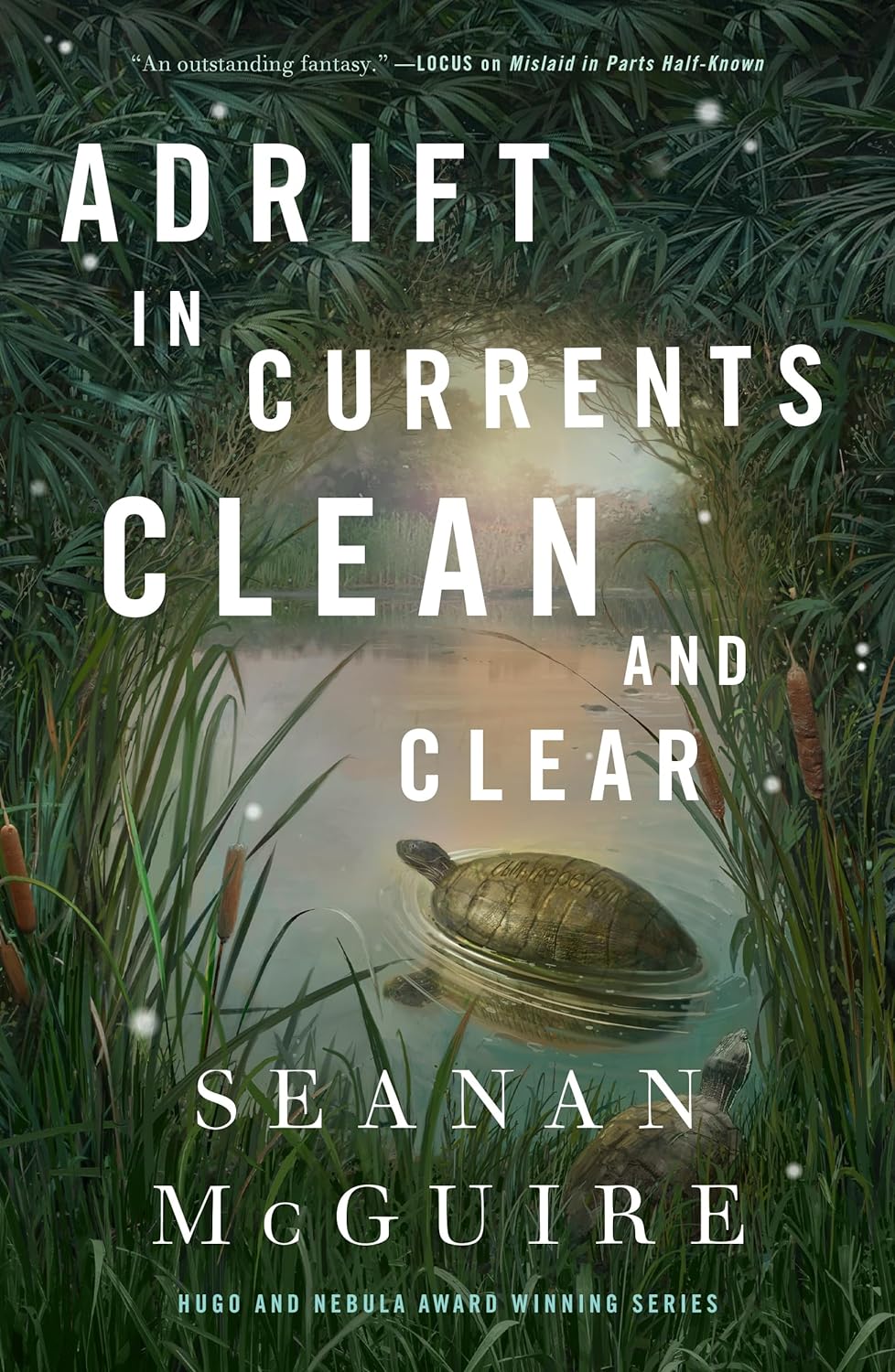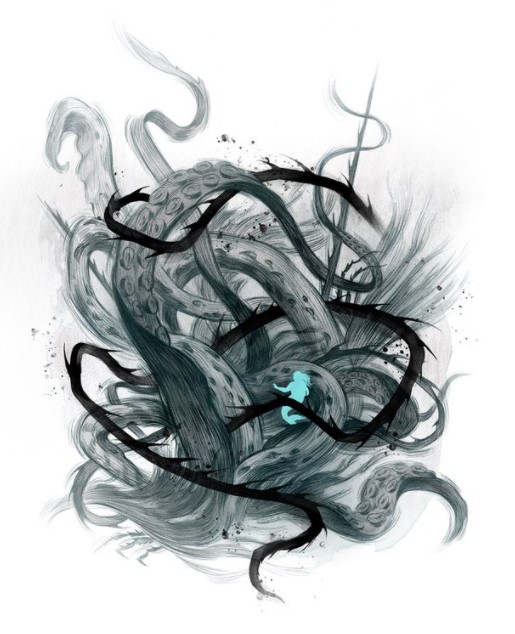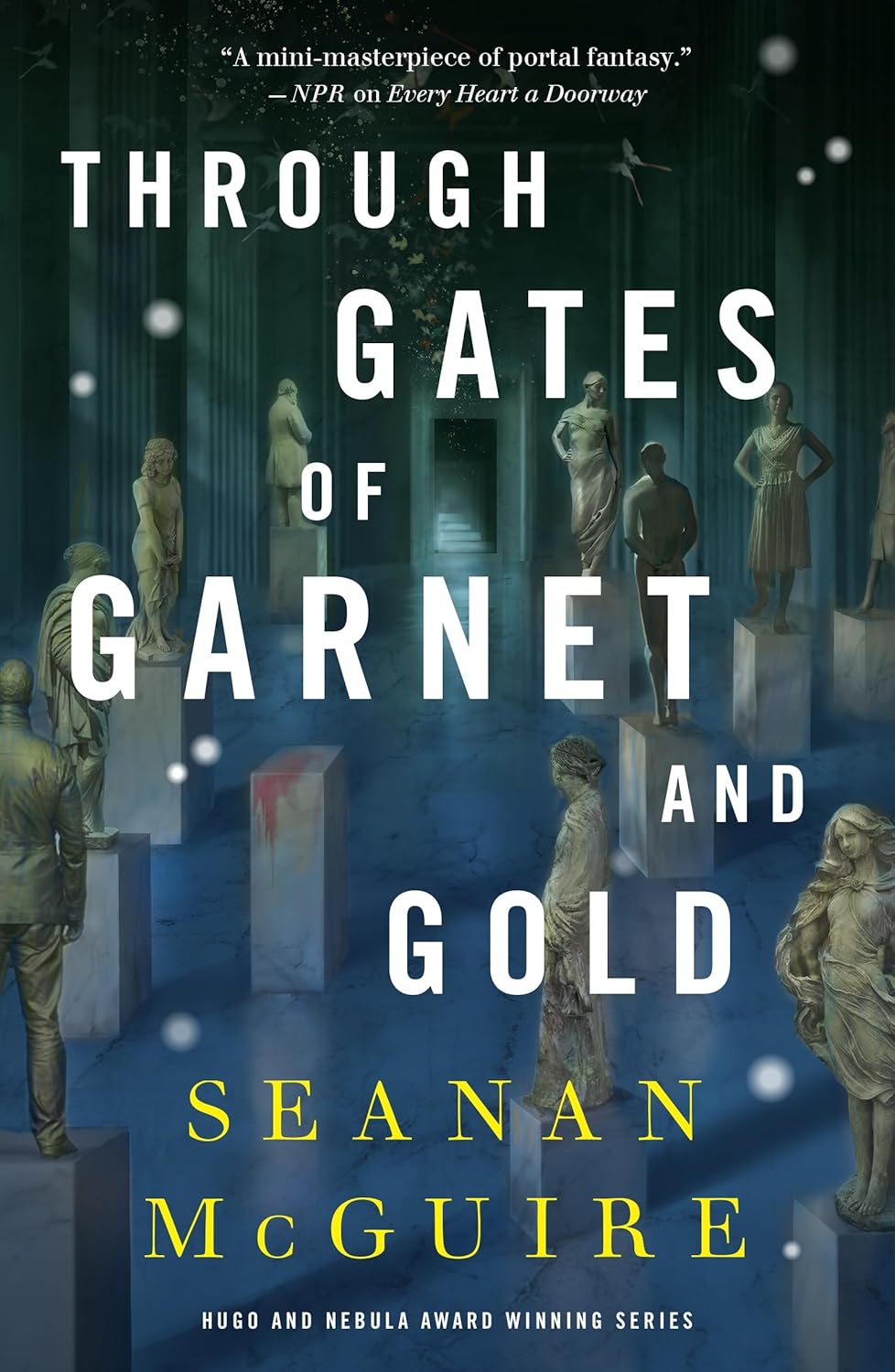
Book Review: Adrift in Currents Clean and Clear (Wayward Children, #10) by Seanan McGuire

Title: Adrift in Currents Clean and Clear
Series: Wayward Children, #10
Author: Seanan McGuire
Publisher: Tor
Publication date: January 7, 2025
Length: 160 pages
Genre: Fantasy
Source: Review copy courtesy of the publisher via NetGalley

Rating: 4.5 out of 5.

Giant turtles, impossible ships, and tidal rivers ridden by a Drowned girl in search of a family in the latest in the bestselling Hugo and Nebula Award-Winning Wayward Children series from Seanan McGuire.

Nadya had three mothers: the one who bore her, the country that poisoned her, and the one who adopted her.

Nadya never considered herself less than whole, not until her adoptive parents fitted her with a prosthetic arm against her will, seeking to replace the one she’d been missing from birth.

It was cumbersome; it was uncomfortable; it was wrong.

It wasn’t her.

Frustrated and unable to express why, Nadya began to wander, until the day she fell through a door into Belyrreka, the Land Beneath the Lake–and found herself in a world of water, filled with child-eating amphibians, majestic giant turtles, and impossible ships that sailed as happily beneath the surface as on top. In Belyrreka, she found herself understood for who she was: a Drowned Girl, who had made her way to her real home, accepted by the river and its people.

But even in Belyrreka, there are dangers, and trials, and Nadya would soon find herself fighting to keep hold of everything she had come to treasure.

Adrift in Currents Clear and Clean is the 10th book in Seanan McGuire’s Wayward Children series, and I’m pleased to say that the series is going strong. In fact, Adrift stands out as one of the best in the series, as far as I’m concerned.

In this 10th book, the story never actually ventures into Eleanor West’s Home for Wayward Children, the setting that anchors the series and creates a connection between all of the books and their characters. Instead, Adrift tells the story of one particular Wayward Child, Nadya, and what happens to her in the world of Belyrreka.

Nadya is not a new character — although, if you’re like me, it might take more than a slight hint to put the pieces together. Readers of the series were introduced to Nadya in the 3rd book, Beneath the Sugar Sky. In that book, Nadya was a student at Eleanor West’s home, having gone through a portal to another world and then been returned to our own. Nadya, like the other characters in the series, was left to yearn for the world that feels like her true home and wait for the day when that world might call her back.

Adrift in Currents Clear and Clean takes us back to Nadya’s origin story. Abandoned at birth, Nadya is raised in a Russian orphanage — a bright child who thrives on caring for the other children and helping them find forever homes.

She was young and sweet and innocent and hard, in the way of children raised in job lots rather than individually; she was doing her best to be a good person, and to figure out what that meant in the context of the world she knew and had and understood.

Born without a right arm below the elbow, Nadya has never felt that she was disabled or missing anything at all; this is who she is, and she manages perfectly well. But at age nine, Nadya is finally adopted herself, by an American missionary couple who see taking in an imperfect child as a good deed. They don’t love her for herself; they love having her as proof of their own goodness.

Nadya’s new life in American is filled with things and luxuries that she wouldn’t have had in the land of her birth, and she knows that she must be compliant and grateful at all times — until the day that her adoptive parents take her to the doctor to receive a prosthetic arm. Nadya doesn’t want it — she’s fine as she is — but her objections don’t matter. She’s forced into wearing the prosthetic, which is clunky and hurts her skin. Now, for the first time, children at school see her as other; she’s not Nadya their playmate any longer, but the girl with the strange fake arm.

Miserable, Nadya goes for a walk to her favorite place, the turtle pond near her home. When she sees a strange shadow on the water that looks almost like a door, she leans in for a closer look, and falls in. Instead of drowning, Nadya wakes on the shores of a strange river in a strange world — and finds a wonderful place where she belongs, finds purpose and connection and true family, and knows that she’s finally home.

Nadya’s life in Belyrreka is wondrous. It’s a world of water — people live beneath the river and the lake, in cities where water has different weights. Some water is for breathing, some for swimming. Heavier water is deeper, and people ride boats and turtles through the lighter water to the dry world above, where they fish and farm and bring back sustenance to the cities. I can understand why Nadya would never want to leave Belyrreka — I would willingly have read much, much more about it.

Of course, if you’ve read Beneath the Sugar Sky, you’ll know that in that book, Nadya is introduced as a girl who returned from a watery world — so Adrift in Currents Clean and Clear is a prequel, of sorts, to that book. We read Adrift knowing that Nadya will inevitably be wrenched away from Belyrreka. Seeing her happiness in this world is a special kind of sadness for the reader; we know that her time is limited, even if she does not.

Beneath the Sugar Sky also provides a coda to Nadya’s story in Adrift. When I finished Adrift — with a lump in my throat — I went back to Beneath the Sugar Sky and read the conclusion of Nadya’s part of that story. Without saying too much, I’ll just note that the payoff made my tears goes away!

Many readers note having uneven experiences with the Wayward Children series. For me, it’s been generally wonderful all the way through, although yes, some books in the series are more memorable or powerful or affecting than others. We all have our favorites — and now that I’ve read Adrift in Currents Clean and Clear, I can say with certainty that it’s one of the best.

As I’ve said with my review of each books in the series, I highly recommend starting at the beginning and continuing from there. Adrift in Currents Clean and Clear is a self-contained story that can be read on its own; there are no other characters or plotlines in it that require knowledge of earlier events in the series. Still, I recommend reading it as part of the whole, in order to get the full impact.

Nadya’s story is incredibly moving, and the world of Belyrreka is a delight. Adrift in Currents Clean and Clear is a terrific addition to an inventive, always-changing series. Don’t miss it.

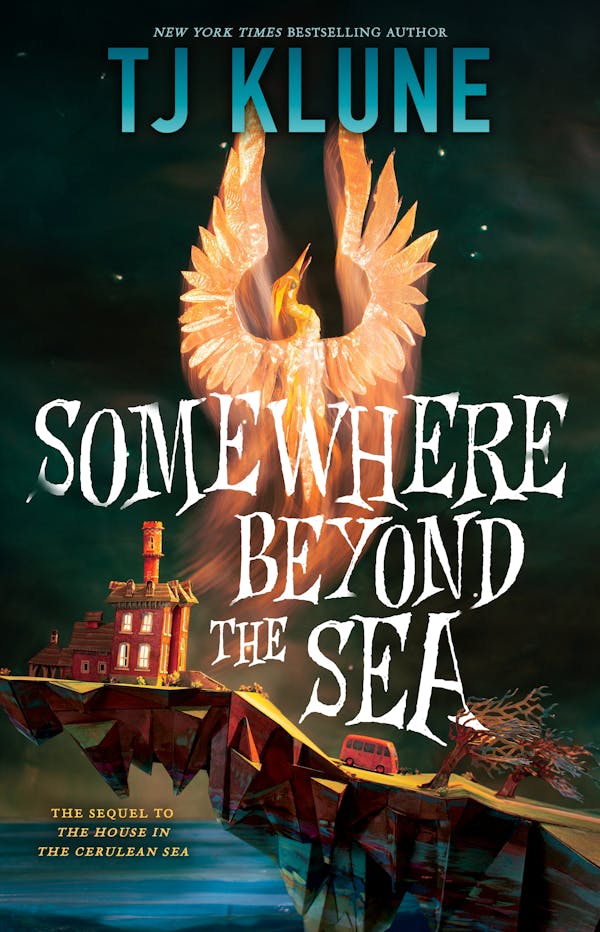
Book Review: Somewhere Beyond the Sea by TJ Klune

Title: Somewhere Beyond the Sea
Series: Cerulean Chronicles, #2
Author: TJ Klune
Publisher: Tor Books
Publication date: September 10, 2024
Length: 416 pages
Genre: Fantasy
Source: Purchased
Rating:

Rating: 5 out of 5.

Somewhere Beyond the Sea is the hugely anticipated sequel to TJ Klune’s The House in the Cerulean Sea, one of the best-loved and best-selling fantasy novels of the past decade.

A magical house. A secret past. A summons that could change everything.

Arthur Parnassus lives a good life built on the ashes of a bad one.

He’s the master of a strange orphanage on a distant and peculiar island, and he hopes to soon be the adoptive father to the six dangerous and magical children who live there.

Arthur works hard and loves with his whole heart so none of the children ever feel the neglect and pain that he once felt as an orphan on that very same island so long ago. He is not alone: joining him is the love of his life, Linus Baker, a former caseworker in the Department In Charge of Magical Youth. And there’s the island’s sprite, Zoe Chapelwhite, and her girlfriend, Mayor Helen Webb. Together, they will do anything to protect the children.

But when Arthur is summoned to make a public statement about his dark past, he finds himself at the helm of a fight for the future that his family, and all magical people, deserve.

And when a new magical child hopes to join them on their island home—one who finds power in calling himself monster, a name that Arthur worked so hard to protect his children from—Arthur knows they’re at a breaking point: their family will either grow stronger than ever or fall apart.

Welcome back to Marsyas Island. This is Arthur’s story.

I absolutely loved The House in the Cerulean Sea, and I’m happy to report that the newly released follow-up book, Somewhere Beyond the Sea, is just as lovely and wonderful as the first book.

In The House in the Cerulean Sea, Linus Baker is the main character — a caseworker with the Department in Charge of Magical Youth (DICOMY) who is sent to evaluate the Marsyas Island orphanage, run by the kindly Arthur Parnassus.

Somewhere Beyond the Sea is Arthur’s story, showing his past as well as his continuing story after the events of the first book. As we pick up from where we left off, Arthur and Linus are in love, and are happily providing a warm, safe home for the magical children in their care. But outside forces are aligned against them and seem poised to rip apart everything they’ve built.

Once again, we get to spend time with the wonderful children of Marsyas, who are joined by a new addition, a yeti named David. David is funny, dramatic, and enjoys scaring people (just for fun — he doesn’t have a mean bone in his body) — yet he’s also sensitive, and cries ice cubes when he’s upset.

The child at the center of much of the action, and whose mere existence sends DICOMY into a tizzy, is Lucy… short for Lucifer. Lucy is the Antichrist… but he’s also a seven-year-old child who loves old-timey music and needs comforting when his nightmares strike.

Lucy also gets some of the funniest lines in the book:

“Are we going to sleep in the forest?” Lucy asked, tugging on his pant leg. “I’ve always wanted to see if there were night monsters. I bet they’re big with fangs and claws and filled with rage that only subsides when sucking out the marrow from the bones of unsuspecting—”

“There will be no marrow sucking,” Linus said sternly.

Lucy hung his head, shoulders slumped. “Yet another thing we can’t do with bones. What’s the point of even having bones if we don’t get to play with them?”

“Anarchy!” Lucy shrieked, eyes burning red. “Chaos! Buffets with a never-ending supply of macaroni and cheese! Hellfire!”

The evil representative of DICOMY who arrives at Marsyas to inspect the home and the children is absolutely awful, and is startlingly reminiscent of Dolores Umbridge, which I can only assume is entirely deliberate on the part of the author. (Read his afterward to understand his thoughts on J. K. Rowling).

The lesson proceeded with minimal interruption, usually from Miss Marblemaw coughing pointedly or clearing her throat when Linus or the children said something that she obviously did not approve of. Linus attempted to ignore her, but the longer the lesson went on—going from the wide and mysterious world of mathematics to history—the more Miss Marblemaw made a nuisance of herself, muttering under her breath as she scribbled on her clipboard.

TJ Klune’s writing is, once again, imaginative and funny and heartwarmingly sweet. The characters shine with warmth and humor, and the relationship between Linus and Arthur is romantic and loving and oh-so-perfect.

The ultimate showdown between the forces who want to shut down Marsyas and control the children and all magic, versus Arthur, Linus, and the people of Marsyas village, is a wonder. It’s pure delight to see the townspeople rally around the magical children and declare them a part of their community. Somewhere Beyond the Sea shows found family at its best.

Somewhere Beyond the Sea is a lovely, cozy read, with both surface-level entertainment and deeper emotional impact. If you loved The House in the Cerulean Sea (didn’t we all?), Somewhere Beyond the Sea is a must-read.

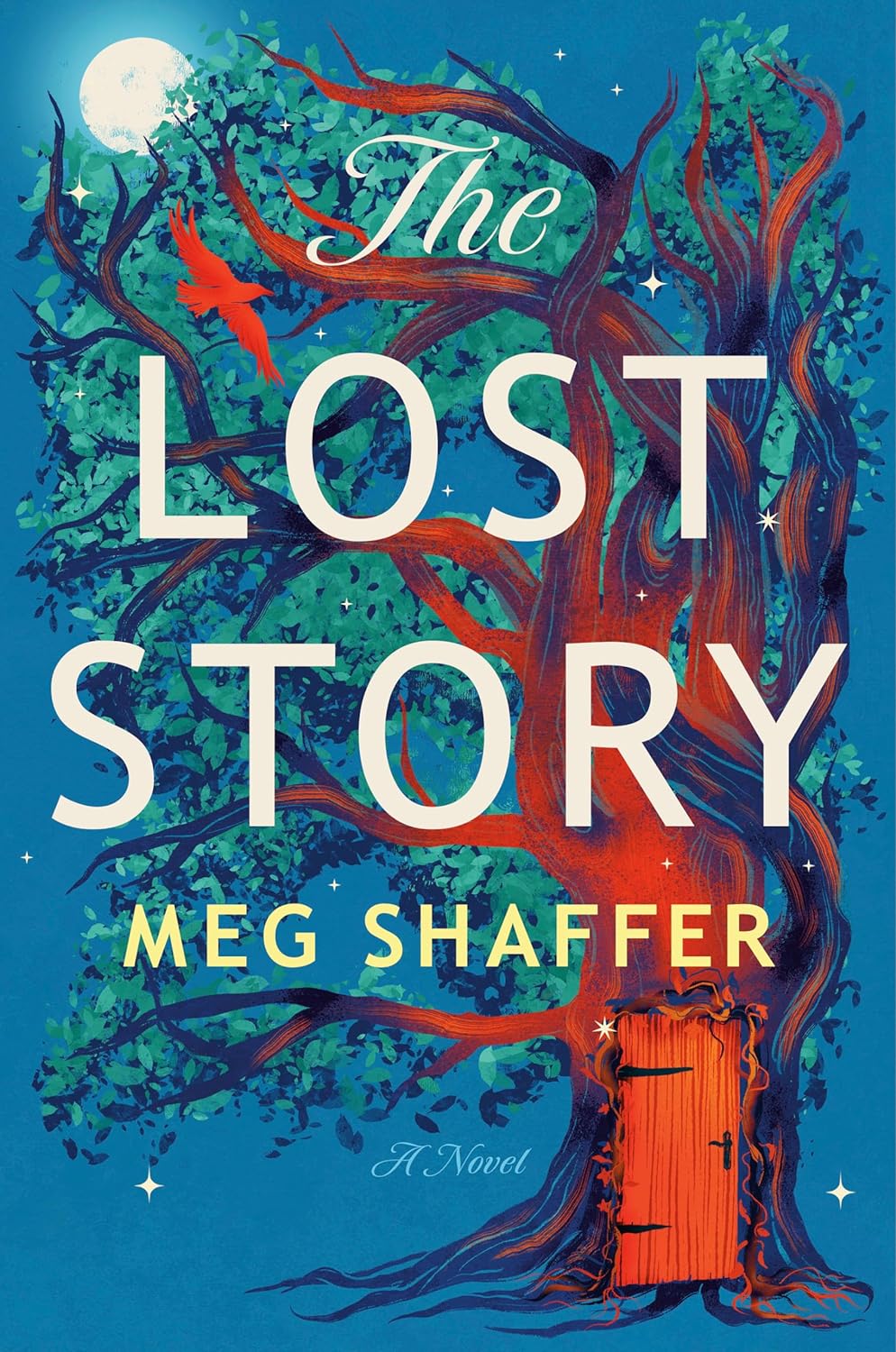
Book Review: The Lost Story by Meg Shaffer

Title: The Lost Story
Author: Meg Shaffer
Publisher: Ballantine Books
Publication date: July 16, 2024
Print length: 352 pages
Genre: Fantasy
Source: Review copy courtesy of the publisher via NetGalley

Rating: 5 out of 5.

Inspired by C. S. Lewis’s The Chronicles of Narnia, this wild and wondrous novel is a fairy tale for grown-ups who still knock on the back of wardrobes—just in case—from the author of The Wishing Game.

As boys, best friends Jeremy Cox and Rafe Howell went missing in a vast West Virginia state forest, only to mysteriously reappear six months later with no explanation for where they’d gone or how they’d survived.

Fifteen years after their miraculous homecoming, Rafe is a reclusive artist who still bears scars inside and out but has no memory of what happened during those months. Meanwhile, Jeremy has become a famed missing persons’ investigator. With his uncanny abilities, he is the one person who can help vet tech Emilie Wendell find her sister, who vanished in the very same forest as Rafe and Jeremy.

Jeremy alone knows the fantastical truth about the disappearances, for while the rest of the world was searching for them, the two missing boys were in a magical realm filled with impossible beauty and terrible danger. He believes it is there that they will find Emilie’s sister. However, Jeremy has kept Rafe in the dark since their return for his own inscrutable reasons. But the time for burying secrets comes to an end as the quest for Emilie’s sister begins. The former lost boys must confront their shared past, no matter how traumatic the memories.

Alongside the headstrong Emilie, Rafe and Jeremy must return to the enchanted world they called home for six months—for only then can they get back everything and everyone they’ve lost.

Let’s cut right to the chase: The Lost Story is a break-out 5-star read for me!

I went into this reading adventure without expectations. I hadn’t read the author’s previous novel, and didn’t know a whole lot about The Lost Story, other than blurbs about this being a Narnia for grown-ups.

And yes, that’s kind of true… and it’s also its own wonderful experience entirely.

In The Lost Story, the central mystery focuses on two lost-then-found boys. As teens, Rafe and Jeremy disappeared on a school outing to Red Crow State Forest in West Virginia, only to reappear — suddenly, and without explanation — six months later. For Rafe, the missing months are simply gone from his memory. Jeremy sticks to an undetailed story: they were lost, managed to survive, and then were rescued.

Fifteen or so years later, the boys are men in their mid-thirties. Jeremy has achieved fame as a missing person finder, carrying out seemingly impossible rescues in hopeless situations. Rafe, on the other hand, lives alone in a cabin in the woods, preferring to cut himself off from the world. Jeremy and Rafe have had no contact since their return, despite formerly being best of friends.

They’re brought back into one another’s lives when Emilie contacts Jeremy, asking for help in locating her long-lost sister Shannon — a person Emilie only recently learned even existed. Shannon was lost in the same woods as Jeremy and Rafe, but years earlier, and was long ago presumed dead. But Emilie feels a desperate need to know more. and Jeremy agrees to help her — only if Rafe joins in as well.

As the trio journeys from Red Crow into a magical realm beyond their own, their story hits traditional quest beats while also offering an original take on the magical portal genre. One fascinating element is the fact that the characters are adults. We’ve learned from Narnia and other fantasy classics that children are best suited to these portal journeys — a sense of innocence is essential to crossing over and being being open to the reality of alternate worlds. Seeing adult characters embrace the magic, even while acknowledging the unlikelihood of it all, adds a unique flavor to the tale.

Where to even begin to explain just how wonderful this book is? I don’t want to reveal much up front, but as the synopsis makes clear, there are other worlds involved, and the answers to the mysteries of these disappearances involve magic and otherworldly forces.

When you begin to question your sanity, remind yourself that the fact that something impossible happened doesn’t mean it didn’t happen.

There’s joy and sorrow, love and friendship, adventure and danger — all this and more awaits Jeremy, Rafe, and Emilie as they set out on their quest. The quest itself is filled with wonder and beauty, but even more special is the relationships discovered and revealed as the characters move fully into a world beyond their own.

Reading The Lost Story is a beautiful, funny, emotional, transporting experience. I never expected to fall for this book the way I did. I just wish I could live in Jeremy, Rafe, and Emilie’s world a bit longer. Highly recommended.

Now that I’ve read The Lost Story, I’m eager to read the author’s debut novel, The Wishing Game… just as soon as I can fit it into my reading schedule.

Fun side note: After finishing The Lost Story, I read the author bio and discovered that Meg Shaffer is married to author Andrew Shaffer, who has written some supremely silly parodies and novels (including the Obama/Biden mystery books). I can only imagine how entertaining their dinner table conversations must be!

Book Review: The Hob’s Bargain by Patricia Briggs

Title: The Hob’s Bargain
Author: Patricia Briggs
Publisher: Ace Fantasy
Publication date: 2001
Length: 288 pages
Genre: Fantasy
Source: Purchased
Rating:

Rating: 3 out of 5.

Beauty and The Beast

Hated and feared, magic was banished from the land. But now, freed from the spells of the wicked bloodmages, magic—both good and evil—returns. And Aren of Fallbrook feels her own power of sight strengthen and grow…

Overcome by visions of mayhem and murder, Aren vows to save her village from the ruthless raiders who have descended upon it—and killed her family. With the return of wildlings to the hills and forests, she strikes a bargain with the Hob, a magical, human-like creature imbued with the power of the mountains. But the Hob is the last of his kind. And he will exact a heavy price to defend the village—a price Aren herself must pay…

I adore the Mercy Thompson and Alpha & Omega series by Patricia Briggs — intricately plotted urban fantasy with stand-out characters, relationships, and group dynamics, high stakes, and even plenty of humor. Each new release is an event to celebrate!

I’ve always been curious about the author’s earlier works. Prior to Mercy, she’d published a few different fantasy books — a couple of duologies and a four-book series — and one stand-alone, The Hob’s Bargain. And while I’ve had The Hob’s Bargain on my shelf for years now, this week was the week when I finally decided to read it.

The book starts with a bang: Aren wakes up the morning after her wedding night feeling happy and hopeful, only to be struck by a vision. Aren has the sight, something she’s kept hidden all her life, since mages are hunted down and forced to either join the evil Bloodmages who support the land’s rulers through death magic or be executed. Aren’s vision is too late to prevent what she sees: A horde of raiders descends upon her peaceful village, and kills everyone who opposes them. Within a few short hours, Aren loses her parents, her pregnant sister, and her husband.

From here, conditions in Fallbrook get even worse. A binding that has kept the land’s natural magic under tight control is removed, and the resulting earthquake causes mountains to fall, shutting off all passages in and out of the village. The wildlings — magical creatures of the earth, forests, rivers, and mountains — begin to stir, and they’re not happy with the humans. Fallbrook is threatened by both the wildlings and the continued presence of the raiders. Once Aren reveals her sight and her access to magical gifts, she finds herself despised by many of the villagers — but also in a position where she may be the only one who can save them.

The Hob’s Bargain is an entertaining read, although the plot and characters feel a tad underbaked and rushed. At various points, I found myself confused by new developments or statements, not entirely clear how we got from point A to point B.

Still, it’s quite fun to read this early book and see seeds of themes and patterns that feature in the Mercy-verse — different types of magic and magical beings, the way humans and non-humans interact, and the dynamics between humans with powers and those without.

Overall, I’m glad to have read The Hob’s Bargain — but for those looking to experience the joys of a Patricia Briggs book, I strongly urge you to jump straight to Moon Called, the very first Mercy book. I can pretty much guarantee that once you read one, you won’t want to stop.

For a complete reference guide to all Patricia Briggs book, see here.

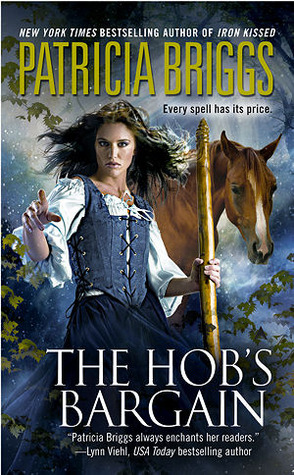
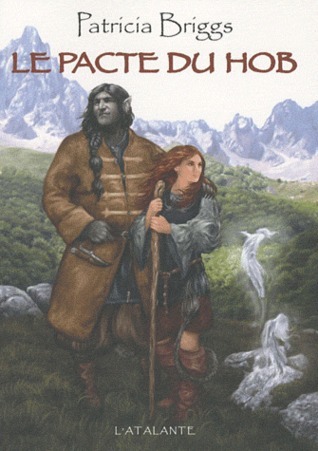
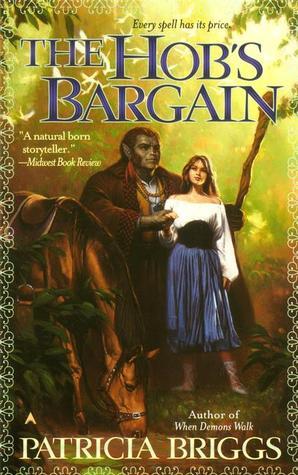
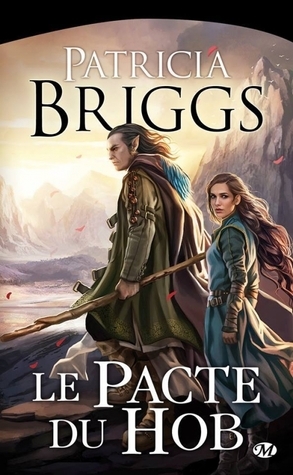
And enjoy these other covers for The Hob’s Bargain:

Book Review: Mislaid in Parts Half-Known (Wayward Children, #9) by Seanan McGuire

Title: Mislaid in Parts Half-Known
Series: Wayward Children, #9
Author: Seanan McGuire
Publisher: Tor
Publication date: January 9, 2024
Length: 160 pages
Genre: Fantasy
Source: Review copy courtesy of the publisher

Rating: 4.5 out of 5.

Dinosaurs and portals, and a girl who can find both in the latest book in the Hugo and Nebula Award-Winning series.

Antsy is the latest student to pass through the doors at Eleanor West’s School for Wayward Children.

When her fellow students realize that Antsy’s talent for finding absolutely anything may extend to doors, she’s forced to flee in the company of a small group of friends, looking for a way back to the Shop Where the Lost Things Go to be sure that Vineta and Hudson are keeping their promise.

Along the way, temptations are dangled, decisions are reinforced, and a departure to a world populated by dinosaurs brings untold dangers and one or two other surprises!

A story that reminds us that finding what you want doesn’t always mean finding what you need.

What can you say about the 9th book in a series? Other than that’s it’s terrific, of course! The book opens with a paragraph that beautifully sums up the overarching plot of the series:

Children of the doors know about being mislaid. They are well-acquainted with stepping through an opening or following a passage that should lead from here to there, and finding themselves someplace entirely else, someplace entirely new. It is possibly their only truly unifying experience, the one thing they have so completely in common that there’s no need to even question it: once upon a time, they took an impossible step, opened an impossible portal, and ended up in a terribly, horribly possible place.

As the newest Wayward Children book, Mislaid in Parts Half-Known keeps the overarching storylines of the series moving forward while introducing some new twists, rules, and situations for the characters to deal with. Some of the installments in the series have more of a stand-alone feel, although they’re all connected, but this is not one of those. Mislaid is absolutely a sequel, mainly in regard to book #8 and its main character Antsy, but it also continues the stories of several other characters, and it’s helpful (I’d even say critical) to be familiar with them.

The previous book, Lost in the Moment and Found, focused on a young girl named Antsy, who runs away from a dangerous situation in her home and finds herself in the world of a store that’s actually a nexus point between worlds. Antsy’s new home in the store is mostly delightful — she’s safe, after all, and has the opportunity to visit countless new worlds through the portal doors that appear and disappear. But, as she discovers by the end of the book, there’s a price to be paid, and the book ends with Antsy returning, quite changed, to her home world and finding her way to Eleanor West’s Home for Wayward Children.

In Mislaid in Parts Half-Known, Antsy is settling in at the school, but doesn’t actually quite fit. She’s actually much younger than the other students, and their portal worlds are all so different that she can’t seem to connect with many of them. When a particularly dangerous student threatens Antsy’s safety, she and a handful of others escape through another door and begin a new quest.

Readers of the prior books in the series will be familiar with Antsy’s companions — Sumi, Kade, Christopher, Cora and a few newer faces too. As they flee, they’re also searching for possibilities. Most of the students yearn to return “home” — that is, to their lost worlds beyond the doors — and Antsy has the unique ability to find any door. So if they can actually go home, should they?

There are some interesting discussions about what it means to be sure about a choice, and how they’ll know when or if they’re ready, as well as conversations about whether someone truly still belongs in the place they consider home. These introspective bits are lovely, as the various characters get a chance to shine and express themselves, even in the midst of fleeing from dangerous goblins and dinosaurs.

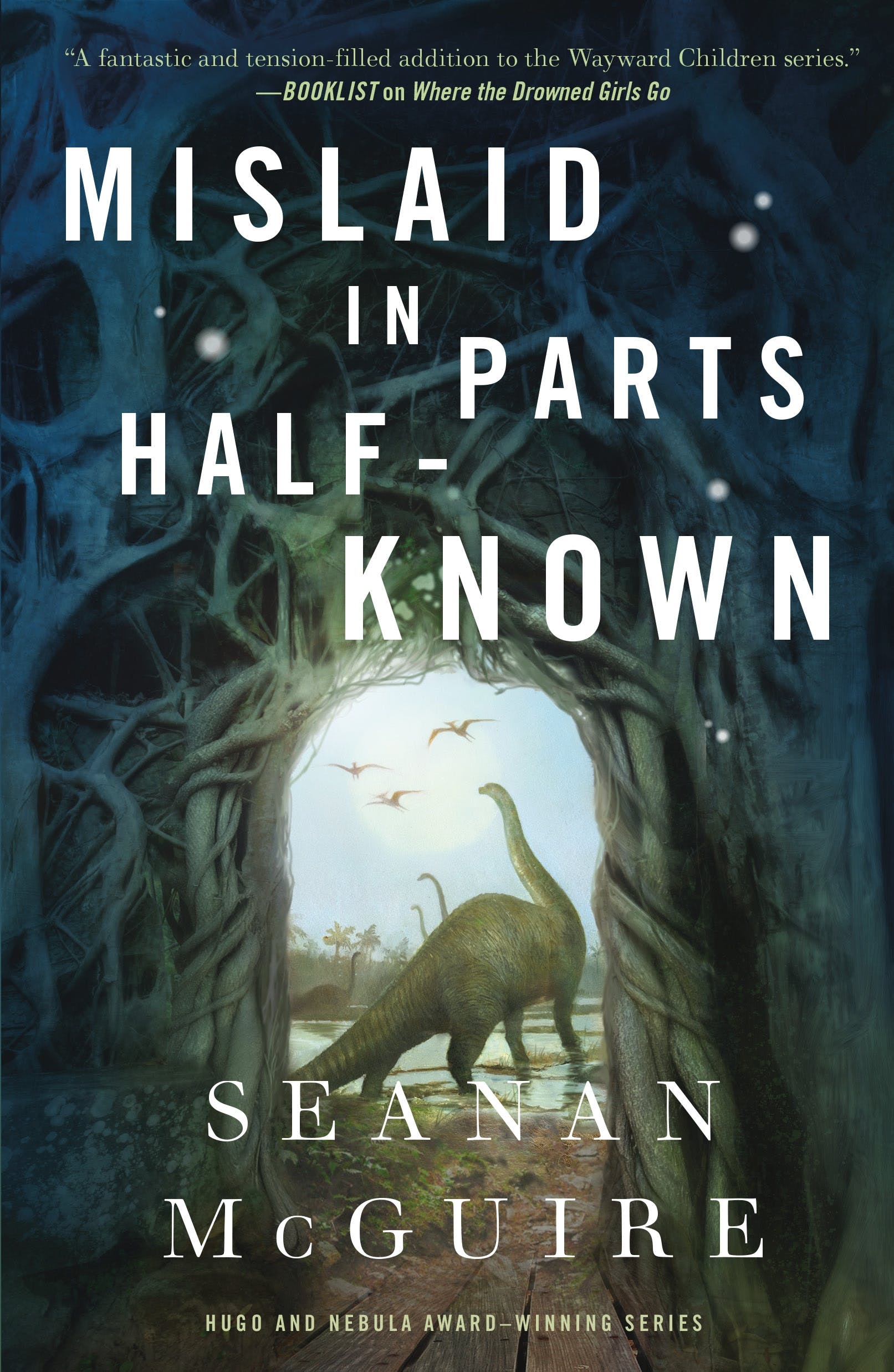
Yes, dinosaurs. The cover doesn’t lie! The group does visit a primeval world populated by dinosaurs, and it’s amazing. I’m not going into further detail — read it and find out!

The challenge I had with this book, as hinted at earlier, is keeping track of the characters. Yes, I’ve read the entire series so far, but since they’re released at a rate of one per year, it’s been a few years since I’ve thought about some of these characters. Thank goodness there are wikis out there! I definitely had to go look up some backstories. At some point, rereading the whole series from the beginning might be a good idea!

If you’ve been curious about the Wayward Children series, I would recommend against starting with this book. It won’t make any sense! It’s such a great series, though, that I would strongly recommend picking up a copy of Every Heart a Doorway — I bet you’ll want to keep going!

I really enjoyed Mislaid in Parts Half-Known. It ends with certain characters spinning off into new directions, and leaves much still to be discovered in the wider world of the school. I can’t wait to find out where Wayward Children goes next.

Book Review: Lost in the Moment and Found (Wayward Children, #8) by Seanan McGuire

Title: Lost in the Moment and Found
Series: Wayward Children, #8
Author: Seanan McGuire
Publisher: Tor
Publication date: January 10, 2023
Length: 160 pages
Genre: Fantasy
Source: Review copy courtesy of the publisher

Rating: 4.5 out of 5.

A young girl discovers an infinite variety of worlds in this standalone tale in the Hugo and Nebula Award-winning Wayward Children series from Seanan McGuire, Lost in the Moment and Found.

Welcome to the Shop Where the Lost Things Go.

If you ever lost a sock, you’ll find it here.
If you ever wondered about favorite toy from childhood… it’s probably sitting on a shelf in the back.
And the headphones that you swore that this time you’d keep safe? You guessed it….

Antoinette has lost her father. Metaphorically. He’s not in the shop, and she’ll never see him again. But when Antsy finds herself lost (literally, this time), she finds that however many doors open for her, leaving the Shop for good might not be as simple as it sounds.

And stepping through those doors exacts a price.

Lost in the Moment and Found tells us that childhood and innocence, once lost, can never be found.

You might wonder whether, by the 8th book in a series, an author might run out of fresh stories to tell.

If the author is Seanan McGuire, then the answer is — not a chance! In Lost in the Moment and Found, she puts a fresh spin on the ongoing Wayward Children series, once again moving the focus to a completely new character in a completely new circumstance.

While all the Wayward Children books feature children who’ve had lousy childhoods in one way or another, the circumstances here are particularly awful — enough so that the author includes a note prior to the opening of the story:

While all the Wayward Children books have dealt with heavy themes and childhood traumas, this one addresses an all-too-familiar monster: the one that lives in your own home. Themes of grooming and adult gaslighting are present in the early text. As a survivor of something very similar, I would not want to be surprised by these elements where I didn’t expect them.

I just want to offer you this reassurance: Antsy runs. Before anything can actually happen, Antsy runs.

I have to say, I very much appreciated the warning. While the sense of dread builds in the early part of the book, at least I could proceed without fearing the absolute worst. And as the author promises, the main character, Antsy, does in fact run. When her fear and sense of isolation and lack of support gets to the point that she can no longer stand it, she finds a way out and escapes.

… as she got older, she would come to think that the ability to cry was the third thing she’d lost in a single day.

Antsy, at age six, a year after a terrible loss, gains a stepfather whom she never wanted, but she hopes her mother’s happiness will allow her to feel happy too. It doesn’t work that way. Her sense of wrongness and unease whenever she’s around her stepfather only continues to grow. He’s insidious, undermining Antsy in small ways through lies and contradictions, so that Antsy knows that if she goes to her mother with her big worries, she won’t be believed. It’s utterly heartbreaking.

When Antsy finally does reach her breaking point and runs away, she ends up at a strange little thrift shop that she never noticed before, with the words “Be Sure” written over the door frame. Once inside, the door she entered through disappears, and Antsy finds herself in a new home with an odd elderly woman and a talking magpie as companions.

As she stays in this store, she discovers new doors leading to new worlds, where she meets all sorts of strange and fascinating people and brings back more goods for the infinite shelves of the store she lives in. And for a long time, she forgets that there’s anything else out there and doesn’t think to question certain very odd occurrences…

Eventually, Antsy realizes that there’s a steep price to be paid for all the miraculous new worlds she visits — and that she may run out of options sooner than expected. The ending is moving and fitting, very sad, but with a small sliver of hope too.

Yes, I’m being vague!

As in all the Wayward Children books, the writing is simply gorgeous. These stories are never just straight-forward action — there’s a sense of mythic scope embedded in the descriptions of sad, lost children, and loss permeates so much of the storytelling.

The toll of childhood trauma becomes literal here: Antsy’s loss of safety and innocence leads to her new reality in the strange world of endless doors and lost things:

She should have had a childhood, ice cream and matinees and sunshine and cookies, not working in a dusty shop while she grew up faster than she should have been able to, rocketing toward adulthood, spending hours she’d never be able to recover! She should have had time. It was hers, and she had never agreed to give it away.

Antsy’s story is particularly tragic — obviously, no small child should ever have to doubt whether the one person they count on will actually believe them when they speak up. We can cheer Antsy on as she saves herself, but still, we can’t avoid mourning her shattered childhood and sense of faith in family and love.

The Wayward Children books include beautiful drawings by the very talented Rovina Cai. See more at https://www.rovinacai.com/portfolio/wayward-children-series/

As a whole, the Wayward Children series is beautiful, sad, emotional, and full of heartache and redemption. There’s hope and joy to offset the sorrow, but an undercurrent of sadness never quite leaves the stories or their characters.

I love the series, and I’m so happy that Lost in the Moment and Found lives up to my (very high) expectations. Please do start from the beginning if you haven’t read any of these yet! Each book is novella -length, but don’t rush through them — the lovely writing should be savored.

Shelf Control #326: In Other Lands by Sarah Rees Brennan

Shelves final

Welcome to Shelf Control — an original feature created and hosted by Bookshelf Fantasies.

Shelf Control is a weekly celebration of the unread books on our shelves. Pick a book you own but haven’t read, write a post about it (suggestions: include what it’s about, why you want to read it, and when you got it), and link up! For more info on what Shelf Control is all about, check out my introductory post, here.

Want to join in? Shelf Control posts go up every Wednesday. See the guidelines at the bottom of the post, and jump on board!

Title: In Other Lands
Author: Sarah Rees Brennan
Published: 2019
Length: 487 pages

What it’s about (synopsis via Goodreads):

The Borderlands aren’t like anywhere else. Don’t try to smuggle a phone or any other piece of technology over the wall that marks the Border — unless you enjoy a fireworks display in your backpack. (Ballpoint pens are okay.) There are elves, harpies, and — best of all as far as Elliot is concerned — mermaids.

Elliot? Who’s Elliot? Elliot is thirteen years old. He’s smart and just a tiny bit obnoxious. Sometimes more than a tiny bit. When his class goes on a field trip and he can see a wall that no one else can see, he is given the chance to go to school in the Borderlands.

It turns out that on the other side of the wall, classes involve a lot more weaponry and fitness training and fewer mermaids than he expected. On the other hand, there’s Serene-Heart-in-the-Chaos-of-Battle, an elven warrior who is more beautiful than anyone Elliot has ever seen, and then there’s her human friend Luke: sunny, blond, and annoyingly likeable. There are lots of interesting books. There’s even the chance Elliot might be able to change the world.

In Other Lands is the exhilarating new book from beloved and bestselling author Sarah Rees Brennan. It’s a novel about surviving four years in the most unusual of schools, about friendship, falling in love, diplomacy, and finding your own place in the world — even if it means giving up your phone.

How and when I got it:

I bought the paperback early in 2021.

Why I want to read it:

I’m not sure why, but for several weeks straight in early 2021, my social media feeds kept pushing this book at me. Hey, it’s the power of marketing — it worked! I kept seeing this mermaid cover popping up whenever I went to check up on my friends’ latest updates, and eventually, I gave in to my curiosity. I mean, who doesn’t love a mermaid cover?

The paperback edition is big and chunky, and at first glance, the plot seems to skew younger than what I usually prefer. This sounds very much like middle grade to younger young adult fiction, which I haven’t been gravitating toward much in recent years.

Still, between the magical school setting, the strange new world, and the fantastical beings that the main character meets, it does sound quite charming. I think I initially bought the book without looking very far into the details, which may be why it’s been sitting on my shelf (unread) since I got it.

I’m a little torn. I see a lot of very positive reviews on Goodreads, but I’m not convinced that this is something I want to devote much time to.

What do you think? Would you read this book?

Please share your thoughts!


__________________________________

Want to participate in Shelf Control? Here’s how:

  • Write a blog post about a book that you own that you haven’t read yet.
  • Add your link in the comments or link back from your own post, so I can add you to the participant list.
  • Check out other posts, and…

Have fun!

Book Review: Where the Drowned Girls Go (Wayward Children, #7) by Seanan McGuire

Title: Where the Drowned Girls Go
Series: Wayward Children, #7
Author: Seanan McGuire
Publisher: Tor
Publication date: January 4, 2022
Length: 150 pages
Genre: Fantasy
Source: ARC via Netgalley; hardcover purchased

Rating: 4.5 out of 5.

Welcome to the Whitethorn Institute. The first step is always admitting you need help, and you’ve already taken that step by requesting a transfer into our company.

There is another school for children who fall through doors and fall back out again.
It isn’t as friendly as Eleanor West’s Home for Wayward Children.

And it isn’t as safe.

When Eleanor West decided to open her school, her sanctuary, her Home for Wayward Children, she knew from the beginning that there would be children she couldn’t save; when Cora decides she needs a different direction, a different fate, a different prophecy, Miss West reluctantly agrees to transfer her to the other school, where things are run very differently by Whitethorn, the Headmaster.

She will soon discover that not all doors are welcoming…

If it’s January, it must be time for a new Wayward Children book!

Children have always been drawn to the doors.

In the 7th in the series, Where the Drowned Girls Go, the main character is Cora, whom we’ve met in previous installments as a secondary character. Here, she takes center stage.

Cora is a mermaid. That is, she was an ordinary human child until she went through a door to the world of the Trenches, an undersea world where Cora became a hero and a mermaid. Even though she was returned to her “real” world, she knows she belongs back in the Trenches… or she did, until (in book #5, Come Tumbling Down), she accompanies her friends through a door to the Moors, where she has a fateful encounter with the Drowned Gods.

She used to put her head down on the pillow and let the night take her away, off into dreams full of deep, diamond-dappled water, diving down where the currents were warm and the waters were always welcoming.

Since the Moors, though… since the Moors, her dreams were still full of water and waves, but the sea she swam in while she slept was no longer remotely kind. It was filled with teeth, and colder than she would have believed the water could be.

Now, back at Eleanor West’s Home for Wayward Children, Cora can’t shake the memories of the Moors and the awful whispers of the Drowned Gods, who want to drag her back down to their terror-filled realm. Feeling hopeless, Cora requests a transfer to the Whitethorn Institute, the other school for children who journey through portals to strange worlds and come back again. Against Eleanor West’s advice, Cora insists on the transfer, and soon finds herself in a very different type of school.

Days at the Whitethorn Institute always followed the same pattern, as perfect and predictable as a spider’s web.

At Whitethorn, the emphasis in on conformity. The students are urged through behavioral control to abandon any thought of other worlds. They must learn that this is the only world that exists, and give up the fantasies and delusions of other lives. It’s harsh, full of punishments and insistence on obedience, with an overwhelming grayness to it all.

But Cora is still a mermaid at heart, and soon comes to realize what an awful mistake she’s made. And when her friend Sumi shows up at Whitethorn on a rescue mission… well, things really get interesting.

I love the world of the Wayward Children, and despite the bleakness of the new school, there’s still plenty of magic and nonsense to appreciate in Where the Drowned Girls Go.

One of the truly special things about this series is how it celebrates otherness. The children in these books struggle to fit in in their “normal” worlds, and finding their doors is key to discovering who they truly are. What’s clear throughout this series is that the children’s differences aren’t the problem — the problem is a world that has no place for children who don’t conform.

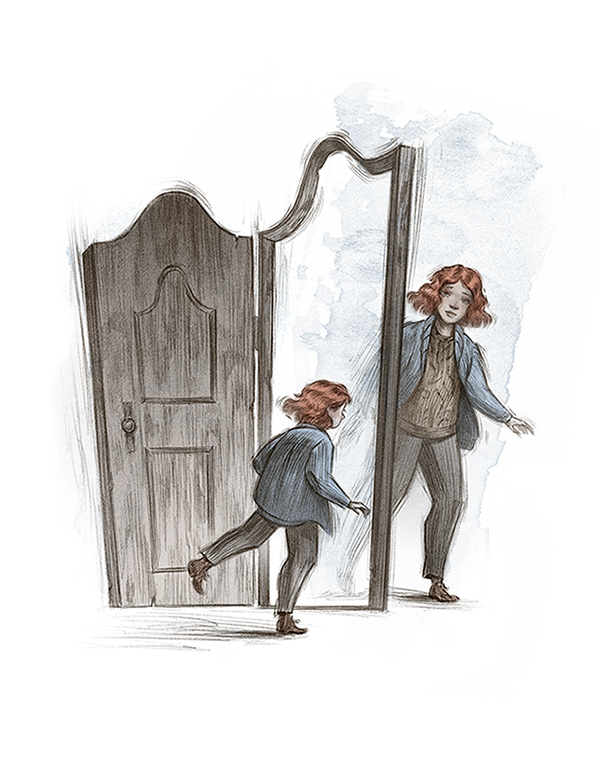
As always, the writing is spectacular. Rovina Cai is back as the illustrator, and her drawings (again, as always) are beautiful and perfectly in tune with the narrative of the story.

Illustration by @RovinaCaiArt

I love this series so, so much. If you haven’t tried these books yet, start at the beginning! I’m thrilled that three more books in the series are listed on Goodreads — here’s hoping the Wayward Children thrive for years to come!

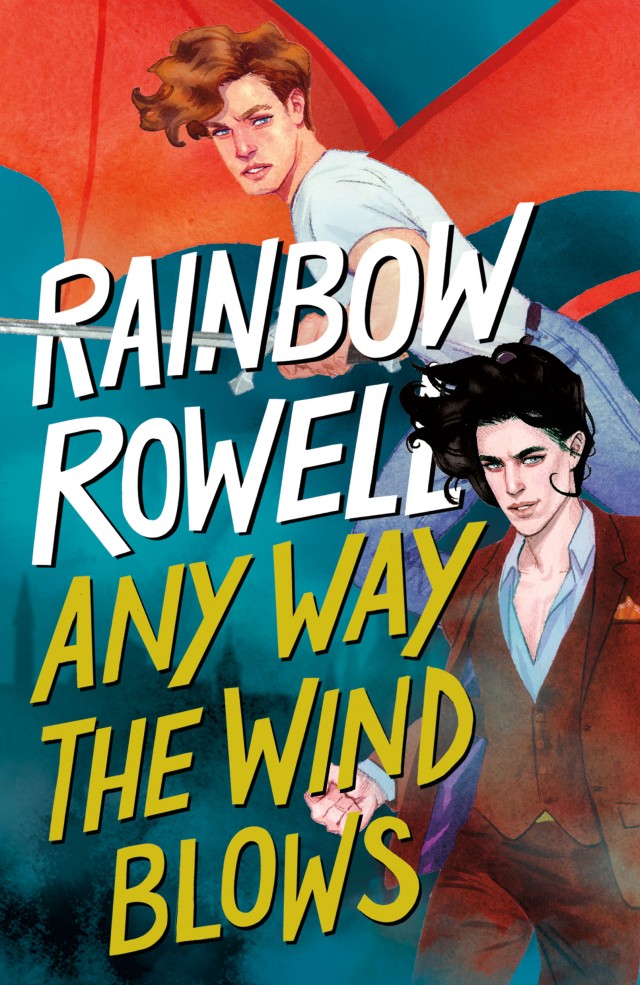
Book Review: Any Way the Wind Blows (Simon Snow, #3) by Rainbow Rowell

Title: Any Way the Wind Blows (Simon Snow, #3)
Author: Rainbow Rowell
Publisher: Wednesday Books
Publication date: July 6, 2021
Length: 579 pages
Genre: Young adult fantasy
Source: Purchased
Rating:

Rating: 4.5 out of 5.

In Carry On, Simon Snow and his friends realized that everything they thought they understood about the world might be wrong. And in Wayward Son, they wondered whether everything they understood about themselves might be wrong.

In Any Way the Wind Blows, Simon and Baz and Penelope and Agatha have to decide how to move forward.

For Simon, that means deciding whether he still wants to be part of the World of Mages — and if he doesn’t, what does that mean for his relationship with Baz? Meanwhile Baz is bouncing between two family crises and not finding any time to talk to anyone about his newfound vampire knowledge. Penelope would love to help, but she’s smuggled an American Normal into London, and now she isn’t sure what to do with him. And Agatha? Well, Agatha Wellbelove has had enough.

Any Way the Wind Blows takes the gang back to England, back to Watford, and back to their families for their longest and most emotionally wrenching adventure yet.

This book is a finale. It tells secrets and answers questions and lays ghosts to rest.

Carry On was conceived as a book about Chosen One stories; Any Way the Wind Blows is an ending about endings. About catharsis and closure, and how we choose to move on from the traumas and triumphs that try to define us.

Note: I’ll try not to be too spoiler-y about Any Way the Wind Blows, but since this is the 3rd book in a trilogy, there will be spoilers for the first two books. You have been warned!

In Carry On, we meet Simon Snow, the most powerful magician of his generation. Simon is the Chosen One, the boy destined to save the World of Mages from its most dastardly threats. Carry On is very much a Harry Potter-esque story — Simon is an orphan, brought to Watford, England’s school of magic, and nurtured as the protégé of the Mage, the school’s powerful, dashing headmaster who exerts influence over all elements of the magical world.

But what would have happened to Harry Potter if, rather than killing the evil Lord Voldemort, he grew in power only to discover that his beloved mentor Albus Dumbledore was actually the villain, set on gathering all power for himself and bending the magical world to his own wishes? This is more or less where Simon finds himself at the end of Carry On. He and his friends confront the greatest evil, ready for the ultimate showdown, only to discover that it’s the Mage himself who’s behind all the bad. And then, inadvertently, Simon kills him.

The end.

But what happens to Simon next? What happens after you face your biggest foe and win, but cause death and the end of the life you knew?

In Wayward Son, Simon and his friends go on a roadtrip in America, experiencing challenges and dangers and adventure, while also giving Simon time to process how very upended his life has become. It’s very action-packed, and there isn’t a whole lot of time for contemplation.

But in Any Way the Wind Blows, back in England, it’s time to confront their futures. For Simon, he’s finally romantically involved with Baz, who was his nemesis and awful roommate during their years at Watford, only to eventually realize that beneath their mutual distrust and dislike was a simmering attraction and depth of feelings. For Simon’s bestie Penelope, she’s ready to resume being the cleverest magician around, except she’s brought a Normal (Muggle) back from American on a mission to cure him of a demonic curse — and as a result, has to not only put all her magical skills to the test, but also challenge magical society’s prejudices about non-magical people. And for Agatha, Simon’s former school girlfriend, she has to find a way to make sense of her life apart from being the beautiful girl always being rescued by Simon.

They all have a lot to deal with, clearly.

Simon suffers the most of all of them. At the end of Carry On, he lost all his magic, but ended up with dragon wings and a tail. He’s madly and passionately in love with Baz, and they’re trying to have a relationship, but at the same time, Simon absolutely doesn’t know how to be intimate or open with another person. It’s not just about physical intimacy — he loves Baz and knows that Baz loves him, but he has literal panic attacks when they get too close. Simon has spent his early life in foster homes, has no family, and has spent his formative years being a savior. What does he do when he has no magic, can’t save anyone, and no longer belongs in the world he thought he was meant to save? And how does he let Baz in when he doesn’t understand himself or who he is?

Simon and Baz’s relationship has ups and downs throughout the book, and parts are painful to read. They’re awkward, and Simon is so clearly suffering. He’s so full of want, but also so fearful, and he just doesn’t know how to be. Baz is absolutely lovely with Simon, even as he also learns more about his own (vampiric) nature and what that might mean for the rest of his life.

To be honest, while I wasn’t exactly bored at any point, I did find Penelope and Agatha’s storylines less interesting than Simon and Baz’s, and since the book alternates focus between the characters from chapter to chapter and section to section, I was always a little reluctant to move away from the main points of interest to delve into the supporting plotlines.

At almost 600 pages, this book is much longer than the previous one, and while I loved it as a whole, I think a large part of that is due to how much I love the characters. When you read a long, involved series, the characters can become more than just people on a page — or at least, that’s true for me when reading really excellent stories with amazing world-building and character development. It’s something of a double-edged sword though, because I become so invested in the characters I love that I don’t particularly want any plot points to get in the way of their happiness… which wouldn’t lead to a very interesting story.

In the case of Any Way the Wind Blows, this means that I was unhappy whenever Simon and Baz were unhappy, even if their unhappiness was part of their journey toward finding their way forward in their relationship. (If I’m making any sense at all…)

In terms of the plot, I enjoyed a lot of this book, although the overarching mystery/drama about the rise of a new Chosen One didn’t particularly resonate for me. There were things I was hoping would happen by the end of the book that didn’t (being cryptic here), and even though that’s hard for me to accept, it makes sense. At the same time, I felt unsatisfied by the lack of answers to certain questions, and felt that the story just kind of ended. There’s an epilogue that gives a lovely ending situation to one character, but it’s a year after the main events of the book… so what happened to everyone else and where are they now??

I love the Simon Snow books as a whole, and I love Simon and Baz so much (and yes, even Penelope and Agatha)… but I wish I’d felt a little more fulfilled when all was said and done. I may need to let this one simmer for a bit and come back to it again, to see if my feelings change over time.

Meanwhile, I think I’ll go back and listen to Carry On all over again, to revisit the origin story with full knowledge of how it all turns out. Carry On is an introduction to a trilogy that — with Wayward Son and Any Way the Wind Blows — ends up not being about a powerful magician in a magical world, but what happens to a formerly powerful magician who doesn’t fit in in any world.

Overall, it’s a fabulous journey with characters who can make my heart happy and also break it into pieces. Come for the magic wands, stay for the Simon and Baz lovefest. And Agatha. And goats (yes, really). And even Penelope and her Normal. As a whole, I heartily recommend the Simon Snow trilogy. It’s not what it seems like it’s going to be, but what it is is very, very cool.

**********

Through affiliate programs, I may earn commissions from purchases made when you click through these links, at no cost to you.

Buy now at Amazon – Book Depository – Bookshop.org

Book Review: Across the Green Grass Fields (Wayward Children, #6) by Seanan McGuire

Title: Across the Green Grass Fields (Wayward Children, #6)
Author: Seanan McGuire
Publisher: Tor
Publication date: January 12, 2021
Length: 176 pages
Genre: Fantasy
Source: ARC via Netgalley; hardcover purchased

Rating: 4.5 out of 5.

A young girl discovers a portal to a land filled with centaurs and unicorns in Seanan McGuire’s Across the Green Grass Fields, a standalone tale in the Hugo and Nebula Award-wining Wayward Children series.

“Welcome to the Hooflands. We’re happy to have you, even if you being here means something’s coming.”

Regan loves, and is loved, though her school-friend situation has become complicated, of late.

When she suddenly finds herself thrust through a doorway that asks her to “Be Sure” before swallowing her whole, Regan must learn to live in a world filled with centaurs, kelpies, and other magical equines―a world that expects its human visitors to step up and be heroes.

But after embracing her time with the herd, Regan discovers that not all forms of heroism are equal, and not all quests are as they seem…

A new Wayward Children book is always cause for celebration, and Across the Green Grass Fields is no exception.

In this book, the 6th in the series, we’re introduced to a young girl named Regan. She has lovely, loving parents, and is crazy about horses and riding lessons. At school, she originally had two best friends, Heather and Laurel, but when Heather dared to express interest in something Laurel deemed un-girl-like, Heather became shunned — and Regan learned her lesson. To retain her place as Laurel’s best friend, conformity is all that matters. She has to embrace Laurel’s strict rules about what girls do and don’t do and do and don’t like, if she wants to not end up like poor Heather.

Laurel was one of the “lucky ones,” according to the girls who flocked around her in their ribbons and flounces, praising her developing breasts like they were something she’d accomplished through hard work and personal virtue, not hormones and time.

But when Regan learns an unexpected truth from her parents, she makes the awful mistake of confiding in Laurel, and then realizes that she’s just blown up her own world. Distraught, Regan runs away into the woods, where she sees an unusual door, with the words “Be Sure”. In that moment, Regan is sure that anything would be better than where she is now, and she steps through into an entirely new world.

In the Hooflands, Regan is the only human in a world peopled by different hooved species — unicorns, centaurs, kelpies, and more. She is taken in by a family of centaurs, who adopt her as one of their own and love her fiercely. With the love of the centaurs, Regan grows and thrives — missing her parents, of course, but feeling more and more that she’s finally found a place to just be herself, a place that feels like a real home. And it’s Chicory, the centaur daughter, who shows Regan what a real friend can be:

In Chicory, she had finally found a friend who liked her for who she was, not for how well she fit an arbitrary list of attributes and ideals.

The only downside is that everyone in the Hooflands believes that humans have a destiny. Humans show up rarely, but when they do, they’re meant to save the world…. and then they disappear. No one really knows the how and why of it all, but all believe that sooner or later, Regan will have to confront the Queen of the Hooflands and do whatever it is that’s needed to save the world.

Destiny wasn’t real. Destiny was for people like Laurel, who could pin everything they had to an idea that the world was supposed to work in a certain way, and refuse to let it change. If these people said her destiny was to see the Queen, she would prove them wrong. She wasn’t their chosen one. She was just Regan, and as Regan, she ran.

Through her years in the Hooflands, Regan learns about listening to people and seeing beyond their surfaces, about true friendship and family, among making choices and remaining true to oneself, and about accepting and appreciating oneself, putting aside the unrealistic notions of “normal” and “destiny”. Regan learns to be Regan, and sees that she can be strong and pursue the people and activities that make her feel whole and good.

Across the Green Grass Fields is the first book in the Wayward Children series that does not include the Home for Wayward Children at all, although I imagine that that’s where Regan will be headed next. None of the characters from previous books pop up here either, so this book really can be read as a stand-alone. Still, it fits into the great world of the Wayward Children series, with its portal worlds and missing children and quests for meaning and one’s true place. Obviously, as a fan of the series, I’d recommend starting from the beginning and reading them all!

Across the Green Grass Fields includes illustrations by the amazingly talented Rovina Cai, and although I haven’t received my hard copy of the book yet, I’m already enchanted by the images available on Tor’s website, including this one of the centaur family:

Illustration by Rovina Cai; from Tor.com

The Wayward Children series as a whole is a delightful, magical experience, and Across the Green Grass Fields introduces a wonderful new world and heroine. Highly recommended.