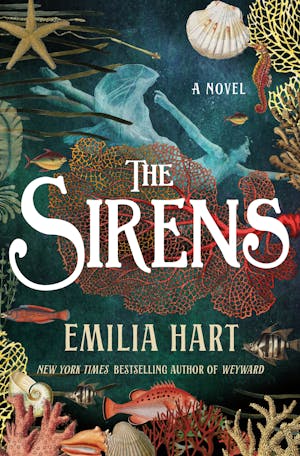
Book Review: The Sirens by Emilia Hart

Title: The Sirens
Author: Emilia Hart
Publisher: St. Martin’s Press
Publication date: April 1, 2025
Length: 352 pages
Genre: Fantasy
Source: Purchased (hardcover); eARC via NetGalley
Rating:

Rating: 5 out of 5.

A story of sisters separated by hundreds of years but bound together in more ways than they can imagine

2019: Lucy awakens in her ex-lover’s room in the middle of the night with her hands around his throat. Horrified, she flees to her sister’s house on the coast of New South Wales hoping Jess can help explain the vivid dreams that preceded the attack—but her sister is missing. As Lucy waits for her return, she starts to unearth strange rumours about Jess’s town—tales of numerous missing men, spread over decades. A baby abandoned in a sea-swept cave. Whispers of women’s voices on the waves. All the while, her dreams start to feel closer than ever.

1800: Mary and Eliza are torn from their loving home in Ireland and forced onto a convict ship heading for Australia. As the boat takes them farther and farther away from all they know, they begin to notice unexplainable changes in their bodies.

A breathtaking tale of female resilience, The Sirens is an extraordinary novel that captures the sheer power of sisterhood and the indefinable magic of the sea.

After reading author Emilia Hart’s debut novel Weyward last fall, I knew I’d read whatever she wrote next. I’m happy to report that The Sirens more than lives up to expectations, and is a beautiful, compelling story that matches the greatness of Weyward.

The Sirens follows two different sets of women across two different timelines. Our main viewpoint throughout is Lucy, a college student who’s had to deal with a strange skin ailment all her life, which leaves her with scars and marks across her body. When she wakes from a sleepwalking episode to discover that she’s attempting to strangle someone, she flees.

Lucy decides to seek shelter with her older sister Jess, whom she’s always loved, but who’s distanced herself from Lucy and their parents. Jess lives in Comber Bay, a small seaside village in New South Wales. Comber Bay has a certain notoriety thanks to a popular podcast focused on a string of disappearances in the town — over the past few decades, eight different men, seemingly with nothing in common, have vanished without a trace.

When Lucy arrives at Jess’s last known address — Cliff House, a ramshackle, dilapidated old house perched precariously over the wild sea — Jess is not there, although her keys, car, and phone are. With few options, Lucy settles in to wait for Jess’s return. She’s intrigued and disturbed by Jess’s paintings, depicting two young women and an old sailing ship. The paintings are beautiful, but the women in them exactly match the sisters Lucy sees in a series of recurring dreams. How is this possible?

Meanwhile, in 1800, sisters Mary and Eliza have been sentenced to transportation to Australia, leaving behind their home and beloved father in Ireland. Two of eighty women convicts crammed into the prison hold onboard the Naiad, they’re subjected to a terrifying sea journey in horrific conditions, with barely enough food or water to sustain them. Mary and Eliza are devoted to one another, terrified by their experiences and the rumors of what await them all in Australia, and desperate for survival. As they bond with the other women on the ship, the sense of community sustains them — but Mary is also concerned by the physical changes she and Eliza seem to be experiencing, and can’t help but wonder over what this might mean for them.

Without giving anything away, I’ll just say that the connections between Lucy and Jess’s story and Mary and Eliza’s becomes clear over time. What unfolds is a story of women living through harsh but recognizable experiences, yet also a tale filled with fantastical elements that add a haunting sense of beauty and magic to the overall feel of the novel.

The writing here is absolutely gorgeous. With every chapter, the author provides insights into the characters’ lives and inner turmoil, but also shows us the beauty of their surroundings, especially the sea, cliffs, and caves of Comber Bay.

I loved the two sets of sisters — each pair has their own special relationship and shared trauma, and obviously the different eras they live in play a huge role in what they go through, yet their stories also share common elements and resonate one to the other across time.

Reading The Sirens is an immersive experience that’s powerful, emotional, and practically hypnotic. I hated to pull away and put the book down, and was sad at the end, not because of unhappiness with the concluding chapters, but because I didn’t want to leave these characters and their world.

The Sirens is a must-read. Don’t miss it!

Purchase linksAmazon – Bookshop.org
Disclaimer: When you make a purchase through one of these affiliate links, I may earn a small commission, at no additional cost to you.
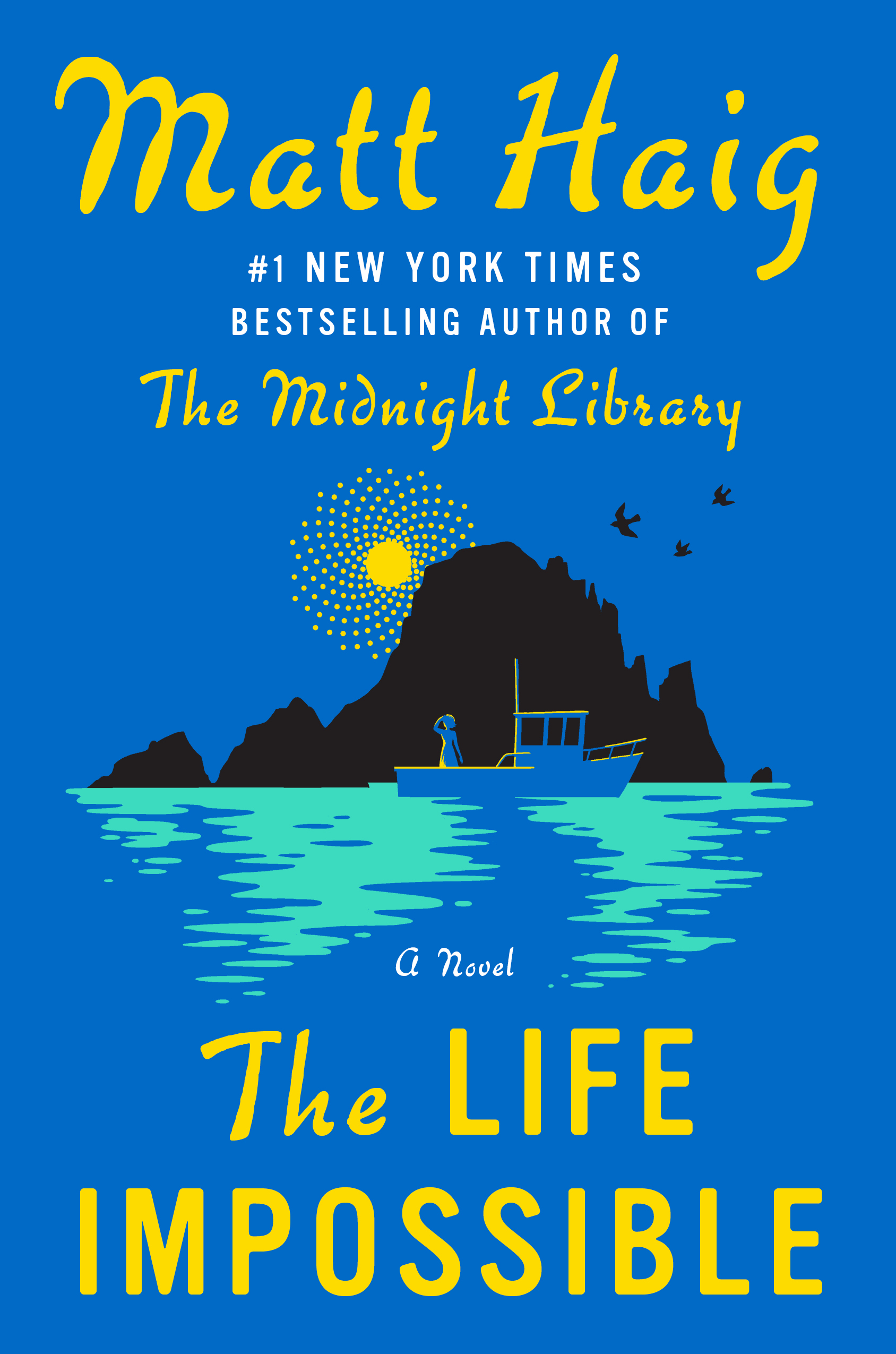
Book Review: The Life Impossible by Matt Haig

Title: The Life Impossible
Author: Matt Haig
Publisher: Viking
Publication date: September 3, 2024
Length: 324 pages
Genre: Contemporary fiction
Source: Purchased
Rating:

Rating: 3.5 out of 5.

The remarkable next novel from Matt Haig, the author of #1 New York Times bestseller The Midnight Library, with more than nine million copies sold worldwide

“What looks like magic is simply a part of life we don’t understand yet…”

When retired math teacher Grace Winters is left a run-down house on a Mediterranean island by a long-lost friend, curiosity gets the better of her. She arrives in Ibiza with a one-way ticket, no guidebook and no plan.

Among the rugged hills and golden beaches of the island, Grace searches for answers about her friend’s life, and how it ended. What she uncovers is stranger than she could have dreamed. But to dive into this impossible truth, Grace must first come to terms with her past.

Filled with wonder and wild adventure, this is a story of hope and the life-changing power of a new beginning.

The Life Impossible was my book group’s selection this month, which suited me just fine — since I bought a copy when it first came out and hadn’t quite gotten around to reading it yet! I’ve loved several of Matt Haig’s books, especially The Midnight Library and How to Stop Time, so I felt perfectly primed to love this one too.

However, I can’t quite say that The Life Impossible worked for me as well as the author’s other books, and it’s a bit hard to say just why.

The Life Impossible is the story of Grace Winters, a 72-year-old widow who lives a quiet, isolated life in her small bungalow in England, still grieving and guilt-stricken over the death of her young son forty years earlier. Her story unfolds in response to a letter from a former student who remembers her kindness, and in a dark phase of his life, reaches out to connect with someone who’d once seemed to care. In response, she writes back to him and sends him a manuscript — her tale of what happened to her at a time when she thought life had nothing left to offer her.

The point of life is life. All life. We need to look after each other. And when it feels like we are truly, deeply alone, that is the moment when we most need to do something in order to remember how we connect.

Grace’s life changes when she’s notified that a former colleague has left her a house in Ibiza. Grace is shocked. She remembers Christina well — a teacher whom she invited home for Christmas many years earlier and offered support to when she most needed it — but after Christina moved away, they hadn’t kept in touch. And yet, apparently Grace’s kindness stuck with Christina. Grace hasn’t been able to truly feel happiness — or really, anything at all — for many years, but lacking a reason not to go to Ibiza, decides to see if maybe a change of scenery might be a good idea.

Once there, the mystery of why Christina chose to leave the house to Grace deepens. The house itself is shabby and run down. Upon arrival, Grace learns that Christina’s death is considered suspicious by local authorities, that Christina was very involved in protesting a major hotel development that would destroy natural resources, and that she often set up a stall in the hippie market telling people’s fortunes. Grace is skeptical, especially after finding a book on Christina’s shelves about ESP, but she’s curious enough to follow Christina’s clues and seek out a strange man named Alberto who promises that she’ll soon have the answers she needs.

You see, if you want to visit a new world, you don’t need a spacecraft. All you need to do is change your mind.

What follows is a tale of wonder, as Grace encounters something from beyond this world that opens her mind in new and unexpected ways. In contrast to her old life, where she felt nothing, she begins to feel everything, finding joy in the simplest of experiences and finding connection with everyone she meets. Grace realizes that she’s been given these gifts not just for her own sake, but to continue Christina’s mission, and sets out to finish the dangerous task of protecting Ibiza from the greedy, uncaring people who’d destroy it for their own gain.

The writing in The Life Impossible is often dreamy, as Grace gives voice to the strange and unexpected sensations and visions she experiences, and ruminates on the meaning of her own life, human life in general, loss and grief, and what being connected really means. What she conveys is odd, but the writing brings us into Grace’s world and lets us see through her eyes. We’re with Grace as things beyond her belief happen, and we see how her perception of the world is dramatically shifted in ways she could never have anticipated.

People say that love is rare. I am not so sure. What is rare is something even more desirable. Understanding. There is no point in being loved if you are not understood. They are simply loving an idea of you they have in their mind. They are in love with love. They are in love with their loving. To be understood. And not only that, but to be understood and appreciated once understood. That is what matters.

Grace herself is a lovely character, as are the various people she encounters on Ibiza. It’s inspiring to read about a woman of her age and stage of life finding new hope and engagement, after so many years believing that her life was essentially over and she was just waiting for the end.

And yet… I felt oddly unaffected through major sections of the books that should have been touching. Perhaps it’s the meandering storytelling style. This is a thoughtful, reflective book, and while there are scenes and incidents that have hints of excitement or action, much of the book is devoted to exploring Grace’s inner life. It’s often interesting, but still, there are more than a few interludes where the narrative bogs down in philosophizing and the entire forward momentum of the novel grinds to a halt.

By the end, I was ready to be done — hence my not-quite-stellar 3.5 star rating. Yes, I enjoyed this book as a whole, but didn’t fall in love with it… and despite it being a relatively short book, it still felt like more than what was needed to tell this particular story. If you enjoy Matt Haig’s writing, do check out The Life Impossible! There are enough lovely elements to make it a worthwhile reading experience.

End note: There are many wonderful passages about books and reading, and I simply can’t end this review without sharing a few:

I always think that the quickest way to understand someone is to look at what’s on their bookshelves.

I suppose that is one of the purposes of all reading. It helps you live lives beyond the one you are inside. It turns our single-room mental shack into a mansion.

All reading, in short, is telepathy and all reading is time travel. It connects us to everyone and everywhere and every time and every imagined dream.

Purchase linksAmazon – Bookshop.org
This post contains affiliate links. If you click and buy, we may earn a small commission at no extra cost to you.

Book Review: Before the Coffee Gets Cold by Toshikazu Kawaguchi


Title: Before the Coffee Gets Cold
Author: Toshikazu Kawaguchi
Publisher: Picador
Publication date: September 19, 2019
Length: 213 pages
Genre: Contemporary fiction
Source: Purchased
Rating:

Rating: 4.5 out of 5.

What would you change if you could go back in time?

In a small back alley in Tokyo, there is a café which has been serving carefully brewed coffee for more than one hundred years. But this coffee shop offers its customers a unique experience: the chance to travel back in time.

In Before the Coffee Gets Cold, we meet four visitors, each of whom is hoping to make use of the café’s time-travelling offer, in order to: confront the man who left them, receive a letter from their husband whose memory has been taken by early onset Alzheimer’s, to see their sister one last time, and to meet the daughter they never got the chance to know.

But the journey into the past does not come without risks: customers must sit in a particular seat, they cannot leave the café, and finally, they must return to the present before the coffee gets cold . . .

Toshikazu Kawaguchi’s beautiful, moving story explores the age-old question: what would you change if you could travel back in time? More importantly, who would you want to meet, maybe for one last time?

I’ve been hearing about Before the Coffee Gets Cold for years now, and finally made the time to sit and enjoy this cozy, sweet tale.

The setup is simple: A tiny basement cafe in Tokyo has only three tables plus a counter, has three clocks on the wall that show different times (although no one knows why), and is the focus of an urban legend that just happens to be true:

If you sit in a particular chair and focus on a time you want to visit, you can travel to the past — but you can’t leave that chair, nothing you do actually changes the future, and you have to finish your coffee before it gets cold, at which point you return to the present.

For many people, the rules are deal-breakers. What’s the point of going back in time if you can’t actually change anything? But as we see through the four chapters of this slim book, each of which highlights a different person’s reason for time traveling, there’s much to be gained with an open heart and open mind.

At just over 200 pages, Before the Coffee Gets Cold is a fast read, and it felt easy and natural to read it pretty much straight through. The storyline is very calm — there’s little action here; rather, it’s a book about connections, emotions, and getting the chance to say the things we wish we’d said in the first place.

Without going into details about the characters and their particular stories, I’ll just say that the cafe staff and its regular visitors have simple yet strong connections, and as their stories unfold, the emotional impact builds as well.

Before the Coffee Gets Cold is a lovely, sweet reading experience — a warm hug of a book that I recommend enjoying on a day when you especially need something bright and uplifting.

Since Before the Coffee Gets Cold was published, four more books have been added to the series. Before the Coffee Gets Cold feels very complete on its own, so while I’d like to eventually read more of these books — assuming the rest will be as lovely as the first! — I feel like I can take my time and pick up the next book on a whim, on a day when I need it.

Shelf Control #249: Blackberry Wine by Joanne Harris

Shelves final

Welcome to Shelf Control — an original feature created and hosted by Bookshelf Fantasies.

Shelf Control is a weekly celebration of the unread books on our shelves. Pick a book you own but haven’t read, write a post about it (suggestions: include what it’s about, why you want to read it, and when you got it), and link up! For more info on what Shelf Control is all about, check out my introductory post, here.

Want to join in? Shelf Control posts go up every Wednesday. See the guidelines at the bottom of the post, and jump on board!

Title: Blackberry Wine
Author: Joanne Harris
Published: 1999
Length: 336 pages

What it’s about (synopsis via Goodreads):

From the author of Chocolat, an intoxicating fairy tale of alchemy and love where wine is the magic elixir.

Jay Mackintosh is a 37-year-old has-been writer from London. Fourteen years have passed since his first novel, Jackapple Joe, won the Prix Goncourt. His only happiness comes from dreaming about the golden summers of his boyhood that he spent in the company of an eccentric vintner who was the inspiration of Jay’s debut novel, but who one day mysteriously vanished. Under the strange effects of a bottle of Joe’s ’75 Special, Jay decides to purchase a derelict yet promising château in Lansquenet-sous-Tannes. There, a ghost from his past waits to confront him, and his new neighbour, the reclusive Marise – haunted, lovely and dangerous – hides a terrible secret behind her closed shutters. Between them, there seems to be a mysterious chemistry. Or could it be magic?

How and when I got it:

I actually have no idea, but I assume I picked it up at a library sale at some point in the last 5 years or so.

Why I want to read it:

I’ve read Chocolat and one other book by this author, and I know I really enjoyed her writing. I’m assuming the cover was one of the things that attracted me to this book — so pretty!

The synopsis makes the plot sound intriguing — hints of magical realism? It’s hard to get a true sense of what it might be about, but I’d like to give it a try.

What do you think? Would you read this book?

Please share your thoughts!


__________________________________

Want to participate in Shelf Control? Here’s how:

  • Write a blog post about a book that you own that you haven’t read yet.
  • Add your link in the comments or link back from your own post, so I can add you to the participant list.
  • Check out other posts, and…

Have fun!

Shelf Control #231: What Should Be Wild by Julia Fine

Shelves final

Welcome to Shelf Control — an original feature created and hosted by Bookshelf Fantasies.

Shelf Control is a weekly celebration of the unread books on our shelves. Pick a book you own but haven’t read, write a post about it (suggestions: include what it’s about, why you want to read it, and when you got it), and link up! For more info on what Shelf Control is all about, check out my introductory post, here.

Want to join in? Shelf Control posts go up every Wednesday. See the guidelines at the bottom of the post, and jump on board!

cropped-flourish-31609_1280-e1421474289435.png

Title: What Should Be Wild
Author: Julia Wild
Published: 2018
Length: 368 pages

What it’s about (synopsis via Goodreads):

In this darkly funny, striking debut, a highly unusual young woman must venture into the woods at the edge of her home to remove a curse that has plagued the women in her family for millennia—an utterly original novel with all the mesmerizing power of The Tiger’s Wife, The Snow Child, and Swamplandia!

Cursed. Maisie Cothay has never known the feel of human flesh: born with the power to kill or resurrect at her slightest touch, she has spent her childhood sequestered in her family’s manor at the edge of a mysterious forest. Maisie’s father, an anthropologist who sees her as more experiment than daughter, has warned Maisie not to venture into the wood. Locals talk of men disappearing within, emerging with addled minds and strange stories. What he does not tell Maisie is that for over a millennium her female ancestors have also vanished into the wood, never to emerge—for she is descended from a long line of cursed women.

But one day Maisie’s father disappears, and Maisie must venture beyond the walls of her carefully constructed life to find him. Away from her home and the wood for the very first time, she encounters a strange world filled with wonder and deception. Yet the farther she strays, the more the wood calls her home. For only there can Maisie finally reckon with her power and come to understand the wildest parts of herself.

How and when I got it:

I bought the paperback version last year.

Why I want to read it:

Forests and curses? Yes, please! I remember reading the description when the book was released — I love books that are dark and mysterious, with hints of magic in a natural setting. The family’s curse sounds like something I need to know more about!

What do you think? Would you read this book? 

Please share your thoughts!


__________________________________

Want to participate in Shelf Control? Here’s how:

  • Write a blog post about a book that you own that you haven’t read yet.
  • Add your link in the comments or link back from your own post, so I can add you to the participant list.
  • Check out other posts, and…

Have fun!

Book Review: Roar by Cecelia Ahern


From the bestselling author of P.S., I Love You, a fiercely feminist story collection that illuminates–sometimes in fantastical ways–how women of all kinds navigate the world today.

In this singular and imaginative story collection, Cecelia Ahern explores the endless ways in which women blaze through adversity with wit, resourcefulness, and compassion. Ahern takes the familiar aspects of women’s lives–the routines, the embarrassments, the desires–and elevates these moments to the outlandish and hilarious with her astute blend of magical realism and social insight.

One woman is tortured by sinister bite marks that appear on her skin; another is swallowed up by the floor during a mortifying presentation; yet another resolves to return and exchange her boring husband at the store where she originally acquired him. The women at the center of this curious universe learn that their reality is shaped not only by how others perceive them, but also how they perceive the power within themselves.

By turns sly, whimsical, and affecting, these thirty short stories are a dynamic examination of what it means to be a woman in this very moment. Like women themselves, each story can stand alone; yet together, they have a combined power to shift consciousness, inspire others, and create a multi-voiced ROAR that will not be ignored.

Roar is a collection of fantastical stories, rooted in the real world, in which the unnamed women at the heart of the different tales experience life through a series of metaphors that have somehow become reality.

The titles of these 30 stories all begin with the words The Woman Who. Each focuses on a woman experiencing some sort of literal manifestation of the types of issues we all encounter more figuratively in our worlds.

The collection opens strong with The Woman Who Slowly Disappeared. The premise is very reminiscent of the season 1 Buffy episode Out of Mind, Out of Sight, about a high school girl whose peers never seem to notice her, and who ends up becoming invisible. In this story, the main character is a woman in her 50s who has gradually faded, becoming less seen over time as she ages, becoming unnoteworthy to the crowds of people around her:

On the worst days, she would go home feeling completely overwhelmed and desperate. She would look in the mirror just to make sure she was still there, to keep reminding herself of that fact; she even took to carrying a pocket mirror for those moments on the subway when she was sure she had vanished.

After fading away to just a glimmer, the woman finally finds hope in the care of a doctor who provides a diagnosis and treatment plan:

“Women need to see women, too,” Professor Montgomery says. “If we don’t see each other, if we don’t see ourselves, how can we expect anybody else to?”

In The Woman Who Was Kept on a Shelf, a woman’s husband builds her a shelf where he can display and admire her, but over the years of her marriage, she finds the shelf keeps her on the sidelines of the life around her.

She’s spent so many years sitting up here representing an extension of  Ronald, of his achievements, that she no longer has any idea what she represents to herself.

Other favorites of mine are the stories The Woman Who Walked in Her Husband’s Shoes, The Woman Who Was a Featherbrain, and the The Woman Who Was Pigeonholed. But really, they’re all terrific. The tales are simple. You might at first glance find the premise a little obvious, but really, taken as a whole, these fables illustrated different aspects of what it means to be a woman, how we are defined by society, ourselves, and each other, and how perception and awareness can change everything. There’s a lightness and humor in many stories, even as the situations, taken to their logical (or illogical) conclusion can be nightmarish.

In The Woman Who Wore Pink, there’s an actual Gender Police that issues warnings and fines as people step outside their prescribed gender roles, with all of one’s interactions — even down to the daily Starbucks order, being identified as either “penis” or “vagina”. It takes the woman’s six-year-old daughter’s angry argument, “If I”m not me, who else am I supposed to be?” for the woman to open her eyes and consider the pointlessness of separating all habits and options into either penis or vagina categories. There’s a particularly funny episode after the daughter is denied the “penis” Happy Meal that comes with a dinosaur, as the woman starts to question why dinosaurs are considered boy-appropriate only:

“I’m just saying. I mean, there were female dinosaurs, too, you know, and I don’t think any of them were pink.”

I ended up loving this entire collection. The thirty stories are a mix of far-fetched, grounded in the familiar, comedic, and painful. All are told in a straight-forward manner, where we take the fantastical elements as reality and are faced with considering how our world’s definitions of women’s lives and women’s roles might look if all the euphemisms and catchphrases for the assumptions and barriers facing women became literal parts of the everyday world.

Roar is a fun, thought-provoking set of stories with plenty to chew on. I think it would be a great choice for a book club to discuss. Reading this book made me wish for a group of friends with copies in their hands, so we could each pick a favorite story and compare notes — and imagine ourselves literally falling through the floor, unraveling, melting down, or discovering our very own strong suit.

Check it out!

_________________________________________

The details:

Title: Roar
Authors: Cecelia Ahern
Publisher: Grand Central Publishing
Publication date: April 16, 2018
Length: 288 pages
Genre: Short stories
Source: Review copy courtesy of the publisher via NetGalley