Shelf Control #343: The Heretic’s Daughter by Kathleen Kent

Shelves final

Welcome to Shelf Control — an original feature created and hosted by Bookshelf Fantasies.

Shelf Control is a weekly celebration of the unread books on our shelves. Pick a book you own but haven’t read, write a post about it (suggestions: include what it’s about, why you want to read it, and when you got it), and link up! For more info on what Shelf Control is all about, check out my introductory post, here.

Want to join in? Shelf Control posts go up every Wednesday. See the guidelines at the bottom of the post, and jump on board!

Title: The Heretic’s Daughter
Author: Kathleen Kent
Published: 2008
Length: 332 pages

What it’s about (synopsis via Goodreads):

Martha Carrier was one of the first women to be accused, tried and hanged as a witch in Salem, Massachusetts. Like her mother, young Sarah Carrier is bright and willful, openly challenging the small, brutal world in which they live. Often at odds with one another, mother and daughter are forced to stand together against the escalating hysteria of the trials and the superstitious tyranny that led to the torture and imprisonment of more than 200 people accused of witchcraft. This is the story of Martha’s courageous defiance and ultimate death, as told by the daughter who survived.

Kathleen Kent is a tenth generation descendant of Martha Carrier. She paints a haunting portrait, not just of Puritan New England, but also of one family’s deep and abiding love in the face of fear and persecution.

How and when I got it:

I have no idea! I’ve had a paperback edition on my shelf for many years now, but I’m not sure how I ended up with a copy. (Library sale is a likely suspect!)

Why I want to read it:

The subject of the Salem witch trials is an endlessly fascinating (and terribly tragic) topic to read about. Until I sat down to write this post, I didn’t realize that the author of this book is a descendant of the real-life person this historical novel is about.

While I’ve read several novels focused on the Puritan era and witch trials, this one sounds like it has a different perspective from what I’ve read so far, and I’m interested to see how the author presents this mother-daughter story.

What do you think? Would you read this book?

Please share your thoughts!


__________________________________

Want to participate in Shelf Control? Here’s how:

  • Write a blog post about a book that you own that you haven’t read yet.
  • Add your link in the comments or link back from your own post, so I can add you to the participant list.
  • Check out other posts, and…

Have fun!

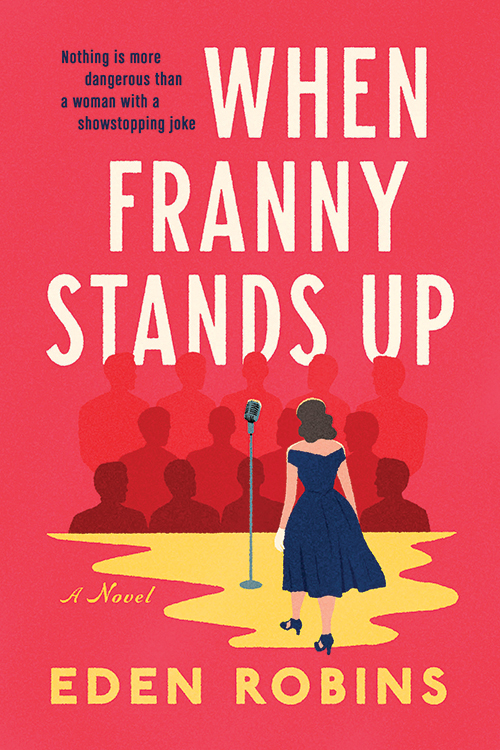
Book Review: When Franny Stands Up by Eden Robins

Title: When Franny Stands Up
Author: Eden Robins
Publisher: Sourcebooks Landmark
Publication date: November 1, 2022
Length: 400 pages
Genre: Historical/speculative fiction
Source: Review copy courtesy of the publisher via NetGalley
Rating:

Rating: 2.5 out of 5.

Nothing is more dangerous than a woman with a showstopping joke.

Franny Steinberg knows there’s powerful magic in laughter. She’s witnessed it. With the men of Chicago off fighting WWII on distant shores, Franny has watched the women of the city taking charge of the war effort. But amidst the war bond sales and factory shifts, something surprising has emerged, something Franny could never have expected. A new marvel that has women flocking to comedy clubs across the nation: the Showstopper.

When Franny steps into Chicago’s Blue Moon comedy club, she realizes the power of a Showstopper—that specific magic sparked when an audience laughs so hard, they are momentarily transformed. And while each comedian’s Showstopper is different, they all have one thing in common: they only work on women.

After a traumatic flashback propels her onstage in a torn bridesmaid dress, Franny discovers her own Showstopper is something new. And suddenly she has the power to change everything…for herself, for her audience, and for the people who may need it most.

I first became aware of When Franny Stands Up when an author I love recommended it. I’ve since read a couple of stellar reviews. And all this leaves me wondering — what did I miss?

In When Franny Stands Up, women’s comedy clubs are struggling to survive in the 1950s, after male comedians become popular on TV and grab all the attention. But women know a secret: in the live stand-up shows for women only, certain talented comedians have Showstoppers — moments of magic where the performer induces certain special effects on the women in the audience as they laugh.

For Franny, she first encounters a Showstopper years earlier, sneaking away from her protective parents’ home in a Chicago suburb to see the famous Boopsie Baxter perform. But Franny is not at all prepared for her powerful reaction to Boopsie’s Showstopper, and runs back home in shame and fear, only to discover that her soldier brother has gone missing in action in Europe. For Franny, these two events become very much linked, and she determines to be good and give up her interest in comedy forever.

But as the main part of the story opens, 23-year-old Franny is burdened by her daily life, her worries over her brother, now home but suffering from PTSD, and her alienation from her former best friend, who’s about to get married, and whose family is responsible for one of Franny’s worst memories. When events at the wedding go badly, Franny runs off yet again, and finds herself at the Blue Moon club, where a whole new world awaits.

Sadly, so much of this story simply didn’t make sense to me. Franny’s interest in comedy, especially in becoming a stand-up comedian, seems to come out of nowhere, and isn’t well explained. And why the club owner and other performers take an interest in Franny or immediately sense her potential talent — well, I have no idea.

There are many interesting concepts scattered throughout the story, but whether it’s the writing itself or the approach to the plot, it never particularly gelled for me. I found the writing style choppy, with descriptions and plot actions not quite making sense to me. As new occurrences and situations popped up, I often felt like I must have accidentally skipped some pages — just how did we get from point A to point B? Some characters as well just never made sense — I can think of one in particular who, by the end of the story, I still didn’t know if she was supposed to be sympathetic or an antagonist, and that definitely did not seem like an intentional construction of a morally gray characters. Instead, it was just another example of a writing approach that didn’t work for me.

The idea of the Showstopper concept is pretty cool, absolutely — but the plot, inconsistent character depictions, dropped or under-developed storylines, and unclear character motivation all got in the way of my enjoyment of When Franny Stands Up. There are some interesting ideas here, but sadly, the book as a whole just didn’t work for me.

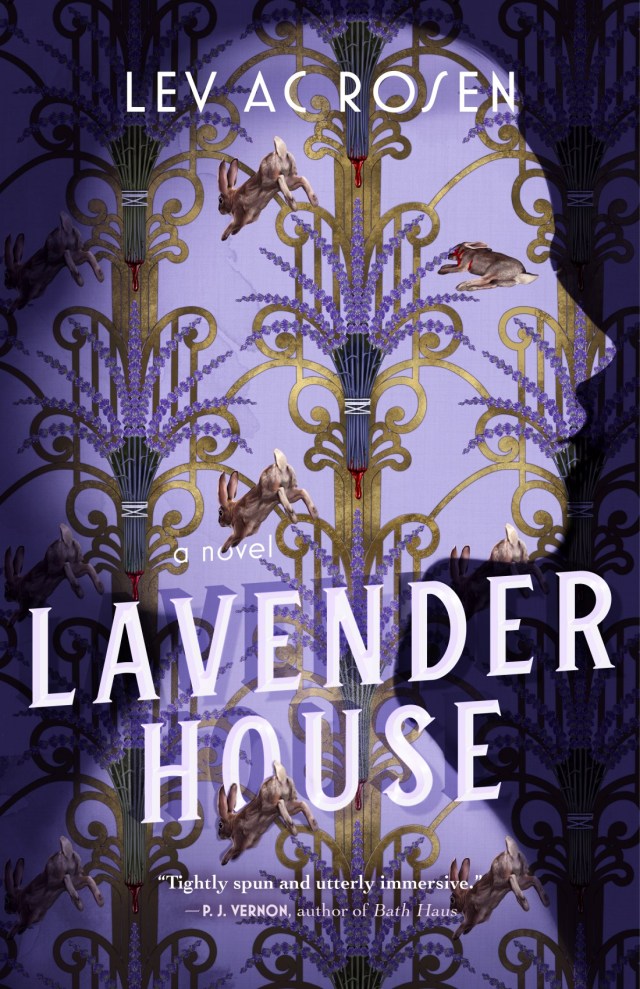
Book Review: Lavender House by Lev AC Rosen

Title: Lavender House
Author: Lev AC Rosen
Publisher: Forge Books
Publication date: October 18, 2022
Length: 288 pages
Genre: Historical fiction/mystery
Source: Review copy courtesy of the publisher via NetGalley
Rating:

Rating: 5 out of 5.

A delicious story from a new voice in suspense, Lev AC Rosen’s Lavender House is Knives Out with a queer historical twist.

Lavender House, 1952: the family seat of recently deceased matriarch Irene Lamontaine, head of the famous Lamontaine soap empire. Irene’s recipes for her signature scents are a well guarded secret—but it’s not the only one behind these gates. This estate offers a unique freedom, where none of the residents or staff hide who they are. But to keep their secret, they’ve needed to keep others out. And now they’re worried they’re keeping a murderer in.

Irene’s widow hires Evander Mills to uncover the truth behind her mysterious death. Andy, recently fired from the San Francisco police after being caught in a raid on a gay bar, is happy to accept—his calendar is wide open. And his secret is the kind of secret the Lamontaines understand.

Andy had never imagined a world like Lavender House. He’s seduced by the safety and freedom found behind its gates, where a queer family lives honestly and openly. But that honesty doesn’t extend to everything, and he quickly finds himself a pawn in a family game of old money, subterfuge, and jealousy—and Irene’s death is only the beginning.

When your existence is a crime, everything you do is criminal, and the gates of Lavender House can’t lock out the real world forever. Running a soap empire can be a dirty business.

Lavender House opens with a desperate man in a bar having one last drink while contemplating suicide — before a broad in bright colors walks in.

She has a deep, sharp voice, and it cuts through the fog of drunkenness in my mind. She’s right out of a movie — she could ask me to kill her husband any second now.

In this noir-tinged murder mystery set in 1950s San Francisco, there’s no place to hide if you’re queer, and that’s especially true if you’re a cop. Our main character, Andy Mills, has just been fired from the SFPD after being caught in the act during a police sweep of gay bars. Broken, beaten, and with no hope, he’s having one last drink while considering throwing himself into the Bay, when Pearl walks into the bar.

Pearl is a classy older woman with an aura of money, and as Andy listens to her pitch, he learns something truly shocking: Pearl refers to her long-time companion Irene as her “wife”. How can two women possibly live a domestic, committed life together without persecution? Soon, Andy learns much more: Irene is the head of the Lamontaine family, who own a fabulously successful soap company known for its lush floral scents and secret formulations. With the Lamontaine money, Irene and Pearl are able to live a rich, free life within their secluded, gated estate in Marin, along with their son Henry, Henry’s partner Cliff (who poses publicly as Henry’s secretary), Henry’s wife Margo (again, a public-facing role), and Margo’s lover Elsie, who runs one of the most successful queer clubs in San Francisco, sheltered by generous payoffs to the police.

Henry turns and kisses him on the forehead. And everyone acts like it’s the most natural thing in the world. No one even seems to notice it happen. I’ve seen affection like that in the clubs before, sure. But here, in morning light, at a breakfast table, it’s like they’re so bright it makes my eyes hurt.

The Lamontaine’s idyllic life is devastated, however, by the event that’s brought Pearl to Andy: Irene is dead, and Pearl suspects murder. While the rest of the household believe the death was an unfortunate accident, Pearl thinks there’s something more sinister at play, and she invites Andy back to the mansion to investigate. As he takes up residence in a guest room and gets to know the family, Andy uncovers many secrets, but also sees both the freedoms and limitations of the family’s isolated lives, and considers whether he might ever find a way to live a freer, truer life himself.

There’s so much to love about Lavender House! First, the murder mystery itself is well developed, with an intriguing set-up, plenty of clues and red herrings, and a cast of characters who all seem like good people, until we’re forced to see other sides of them and wonder what lies beneath the friendly surfaces. This is a manor house mystery — an isolated, grand house, with each resident a suspect, and a detective in their midst, who may end up in grave danger himself. It’s quite deliciously built, as we get to know and like the various characters — but like Andy, we need to also look beyond the smiles and sympathetic conversations and to hold ourselves at a bit of a distance while we assess which of these people is a murderer.

Beyond the mystery itself, there’s also the historical setting and the depiction of gay life in the 1950s. The era shines through via the author’s descriptions of the bars and alleys and criminal life, as well as the music, clothing, and cars. But it’s the narration of Andy’s inner turmoil, the constant threat of discovery and the very real danger of beatings and abuse that give this book such a gritty, sad, realistic feel.

Even amidst the seemingly open life of the Lamontaine house, Andy is constantly aware of the redwood trees that line the drives, looking like prison bars, and the heavy gates that must be kept locked to keep the world out — and by extension, to keep the family locked within their private haven, unable to leave without putting on masks to shield them from the world.

As long as the world out there stays the same, a paradise like this keeps you in as much as it keeps you safe.

There’s so much sorrow in Andy’s experiences of living a secret life, his attempts to keep himself safe and his shame at not having done more to help others like him, his knowledge that the camaraderie he once experienced on the police force was erased in an instant the moment his true self was exposed, and the physical danger he faces simply by being spotted by someone who might recognize him. Through Andy’s investigation, we also learn more about the backgrounds of the various other inhabitants of Lavender House, and it’s a sad litany of secrets, shame, family disgrace, and abuse.

The murder is, of course, tied up neatly by the end of the book, and I thought the resolution was quite clever and not at all obvious. Andy’s life seems on the verge of a new beginning, and it’s wonderful to be able to leave him with a sense of hope. Life in the 1950s hasn’t magically changed, but he at least has options and a vision for how his life might be better. It felt as though the ending might be leaving the door open for additional mysteries starring Andy, and that would be amazing! Here’s hoping this is just the first in a continuing series.

I’m not at all surprised that I ended up loving this book. The author, Lev AC Rosen, has written some fabulous books already, including two gems that I think deserved much more attention than they got (All Men of Genius and Depth — go look them up and check them out!!). I haven’t read his YA novels yet, but they’re on my TBR list. In any case, Lavender House seems to be generating lots of buzz and is getting a big, splashy release, so I hope this is the book that will finally provide this talented author with a much bigger audience.

Lavender House is a fast-paced, intriguing mystery with a deep inner core of emotional impact and sensitivity, and I loved the sharp way the characters’ experiences enhanced the murder genre aspects of the story. This is a terrific new release for October — don’t miss it!

Shelf Control #335: The Book of Speculation by Erica Swyler

Shelves final

Welcome to Shelf Control — an original feature created and hosted by Bookshelf Fantasies.

Shelf Control is a weekly celebration of the unread books on our shelves. Pick a book you own but haven’t read, write a post about it (suggestions: include what it’s about, why you want to read it, and when you got it), and link up! For more info on what Shelf Control is all about, check out my introductory post, here.

Want to join in? Shelf Control posts go up every Wednesday. See the guidelines at the bottom of the post, and jump on board!

Title: The Book of Speculation
Author: Erika Swyler
Published: 2015
Length: 339 pages

What it’s about (synopsis via Goodreads):

Simon Watson, a young librarian, lives alone in a house that is slowly crumbling toward the Long Island Sound. His parents are long dead. His mother, a circus mermaid who made her living by holding her breath, drowned in the very water his house overlooks. His younger sister, Enola, ran off six years ago and now reads tarot cards for a traveling carnival.

One June day, an old book arrives on Simon’s doorstep, sent by an antiquarian bookseller who purchased it on speculation. Fragile and water damaged, the book is a log from the owner of a traveling carnival in the 1700s, who reports strange and magical things, including the drowning death of a circus mermaid. Since then, generations of “mermaids” in Simon’s family have drowned–always on July 24, which is only weeks away.

As his friend Alice looks on with alarm, Simon becomes increasingly worried about his sister. Could there be a curse on Simon’s family? What does it have to do with the book, and can he get to the heart of the mystery in time to save Enola?

In the tradition of Sara Gruen’s Water for Elephants, Erin Morgenstern’s The Night Circus, and Elizabeth Kostova’s The Historian, The Book of Speculation–with two-color illustrations by the author–is Erika Swyler’s moving debut novel about the power of books, family, and magic.

How and when I got it:

I picked up a paperback in 2016, and it’s been on my shelf ever since.

Why I want to read it:

As I’m writing this post, it occurs to me that perhaps I never even read the synopsis before today! The plot sounds kind of bonkers, in a really good way, but doesn’t seem in the slightest bit familiar. So, I’m thinking I may have grabbed this book at a library sale based solely on the cover. I mean, can’t go wrong with a book with books on the cover, right?

Now that I’ve read what it’s about, I’m much more interested in finally giving the book a try. Generations of circus mermaids? A mystery curse? Count me in!

What do you think? Would you read this book?

Please share your thoughts!


__________________________________

Want to participate in Shelf Control? Here’s how:

  • Write a blog post about a book that you own that you haven’t read yet.
  • Add your link in the comments or link back from your own post, so I can add you to the participant list.
  • Check out other posts, and…

Have fun!

Book Review: Hamnet by Maggie O’Farrell

Title: Hamnet
Author: Maggie O’Farrell
Publisher: Tinder Press
Publication date: March 31, 2020
Length: 372 pages
Genre: Historical fiction
Source: Purchased
Rating:

Rating: 5 out of 5.

Drawing on Maggie O’Farrell’s long-term fascination with the little-known story behind Shakespeare’s most enigmatic play, Hamnet is a luminous portrait of a marriage, at its heart the loss of a beloved child.

Warwickshire in the 1580s. Agnes is a woman as feared as she is sought after for her unusual gifts. She settles with her husband in Henley street, Stratford, and has three children: a daughter, Susanna, and then twins, Hamnet and Judith. The boy, Hamnet, dies in 1596, aged eleven. Four years or so later, the husband writes a play called Hamlet.

Award-winning author Maggie O’Farrell’s new novel breathes full-blooded life into the story of a loss usually consigned to literary footnotes, and provides an unforgettable vindication of Agnes, a woman intriguingly absent from history.

New York Times Notable Book (2020), Best Book of 2020: GuardianFinancial TimesLiterary Hub, and NPR.

Hamnet is a powerful, emotional, beautifully written story about grief, mourning, and sorrow. Also, Shakespeare.

In Hamnet, the main point-of-view character is Agnes, although we do get passages from the perspectives of Agnes’s children and husband too. Agnes is gifted with sight and special powers. A talented healer, she can also see people’s futures simply by touching them. About herself, she has one clear vision: She will be the mother of two children.

When Agnes meets her husband, the son of a disreputable glovemaker and Latin tutor to her stepbrothers, they’re immediately drawn to one another, and eventually marry. Agnes can see her husband’s unhappiness casting a shadow over their lives. He lacks purpose, a means of fulfilling his own pursuits — so she sends him off to London, ostensibly to further his father’s business interests there. They plan for him to get settled, then send for Agnes and their children.

But all does not go as intended. Already the parents of a healthy girl, Agnes soon delivers not the 2nd child she expects, but a 2nd and 3rd. The twins are a girl and a boy, the girl born so weak and fragile that she was not expected to survive. She names the babies Hamnet and Judith, and they are inseparable. It soon becomes clear that moving to London will never be an option for Agnes and her children — Judith’s health is too delicate to allow her to live in a crowded, dirty city. And so Agnes and her husband live apart, with him returning for visits when he can, although he’s achieving success as a playwright and creating a separate life for himself in the world of theater.

But Agnes can never quite forget her own vision, of herself as the mother of two children.

She fears her foresight; she does. She remembers with ice-cold clarity the image she had of two figures at the foot of the bed where she will meet her end. She now knows that it’s possible, more than possible, that one of her children will die, because children do, all the time. But she will not have it. She will not. She will fill this child, these children, with life. She will place herself between them and the door leading out, and she will stand there, teeth bared, blocking the way. She will defend her three babes against all that lies beyond this world. She will not rest, not sleep, until she knows they are safe. She will push back, fight against, undo the foresight she has always had, about having two children. She will. She knows she can.

When “pestilence” — the Black Death — reaches the family’s home in Stratford, it’s Judith who is stricken. But Hamnet will not abide the idea of losing his twin, and eventually, he is lost while Judith survives. Agnes and the family are plunged into the horrors of loss, the devastating death of a child punching a hole through the fabric of their lives.

In Hamnet, Shakespeare himself is never named (he’s always the husband or the father or the son), but we know who we’re reading about. It feels appropriate for him to be presented in this way — if the story were about him, his life and career would overshadow all the rest. Here, though, it’s a story about a family, and especially about a mother, trying to find a way to live in the shadow of unbearable grief. The father’s way of dealing with the loss, through the power of his words, is just one aspect of what the family experiences.

The writing in Hamnet is absolutely gorgeous. I’m not usually a fan of “literary” fiction, but this novel is an exception for me. The carefully constructed characters, the lyrical descriptions of their world and their lives, and even the passages describing the transmission of the plague are all presented in a way that’s beautiful and haunting and powerful.

Hamnet is a special book, and I’m so glad my book group chose it for this month’s discussion. Once again, thanks to the group, I’ve read an excellent book I might otherwise have missed!

Very highly recommended.

To read more about Hamnet:

New York Times review (written by Geraldine Brooks)
NPR review
Washington Post review

Shelf Control #329: Salt to the Sea by Ruta Sepetys

Shelves final

Welcome to Shelf Control — an original feature created and hosted by Bookshelf Fantasies.

Shelf Control is a weekly celebration of the unread books on our shelves. Pick a book you own but haven’t read, write a post about it (suggestions: include what it’s about, why you want to read it, and when you got it), and link up! For more info on what Shelf Control is all about, check out my introductory post, here.

Want to join in? Shelf Control posts go up every Wednesday. See the guidelines at the bottom of the post, and jump on board!

Title: Salt to the Sea
Author: Ruta Sepetys
Published: 2016
Length: 221 pages

What it’s about (synopsis via Goodreads):

While the Titanic and Lusitania are both well-documented disasters, the single greatest tragedy in maritime history is the little-known January 30, 1945 sinking in the Baltic Sea by a Soviet submarine of the Wilhelm Gustloff, a German cruise liner that was supposed to ferry wartime personnel and refugees to safety from the advancing Red Army. The ship was overcrowded with more than 10,500 passengers — the intended capacity was approximately 1,800 — and more than 9,000 people, including 5,000 children, lost their lives.

Sepetys (writer of ‘Between Shades of Gray’) crafts four fictionalized but historically accurate voices to convey the real-life tragedy. Joana, a Lithuanian with nursing experience; Florian, a Prussian soldier fleeing the Nazis with stolen treasure; and Emilia, a Polish girl close to the end of her pregnancy, converge on their escape journeys as Russian troops advance; each will eventually meet Albert, a Nazi peon with delusions of grandeur, assigned to the Gustloff decks.

How and when I got it:

I have a paperback edition on my shelf, which I think I bought at a used book store at least 3 or 4 years ago.

Why I want to read it:

This book had so many great reviews when it came out! I remember reading newspaper reviews (all positive) at the time, plus so many bloggers talked about how powerful it is.

I’ve read one book by Ruta Sepetys before — Out of the Easy — set in 1950s New Orleans. I liked it, but not as much as I’d expected to, and while I’ve heard good things about other books by this author, I haven’t gotten around to exploring any other of her works.

I’m drawn to Salt to the Sea based on the premise — because yes, while I’m quite familiar with the Titanic and the Lusitania, before picking up this book, I’d never heard of the Wilhelm Gustloff. There’s something so awful about ships sinking — the idea of it is absolutely terrifying to me, and the scale of this particular tragedy is so huge that it’s hard to comprehend.

I’m glad I stumbled across my copy of Salt to the Sea while thinking about what book to feature this week! It sounds like an emotional read, and I’m interested in the historical aspects as well as the stories of the individual characters.

What do you think? Would you read this book?

Please share your thoughts!


__________________________________

Want to participate in Shelf Control? Here’s how:

  • Write a blog post about a book that you own that you haven’t read yet.
  • Add your link in the comments or link back from your own post, so I can add you to the participant list.
  • Check out other posts, and…

Have fun!

Book Review: The Book of Lost Friends by Lisa Wingate

Title: The Book of Lost Friends
Author: Lisa Wingate
Publisher: Ballantine
Publication date: April 7, 2020
Print length: 388 pages
Genre: Historical fiction
Source: Review copy courtesy of the publisher via NetGalley
Rating:

Rating: 3 out of 5.

A new novel inspired by historical events: a story of three young women on a journey in search of family amidst the destruction of the post-Civil War South, and of a modern-day teacher who rediscovers their story and its connection to her own students’ lives.

Lisa Wingate brings to life stories from actual “Lost Friends” advertisements that appeared in Southern newspapers after the Civil War, as freed slaves desperately searched for loved ones who had been sold off.

Louisiana, 1875 In the tumultuous aftermath of Reconstruction, three young women set off as unwilling companions on a perilous quest: Lavinia, the pampered heir to a now-destitute plantation; Juneau Jane, her illegitimate free-born Creole half-sister; and Hannie, Lavinia’s former slave. Each carries private wounds and powerful secrets as they head for Texas, following dangerous roads rife with ruthless vigilantes and soldiers still fighting a war lost a decade before. For Lavinia and Juneau Jane, the journey is one of inheritance and financial desperation, but for Hannie, torn from her mother and eight siblings before slavery’s end, the pilgrimage westward reignites an agonizing question: Could her long-lost family still be out there? Beyond the swamps lie the seemingly limitless frontiers of Texas and, improbably, hope.

Louisiana, 1987 For first-year teacher Benedetta Silva, a subsidized job at a poor rural school seems like the ticket to canceling her hefty student debt–until she lands in a tiny, out-of-step Mississippi River town. Augustine, Louisiana, seems suspicious of new ideas and new people, and Benny can scarcely comprehend the lives of her poverty-stricken students. But amid the gnarled oaks and run-down plantation homes lies the century-old history of three young women, a long-ago journey, and a hidden book that could change everything.

After reading and enjoying this author’s previous novel (Before We Were Yours), I was excited to get an ARC of The Book of Lost Friends… and yet I left it unread until now, somehow never quite feeling in the mood to get started. So, I was glad when my book group chose The Book of Lost Friends as our July 2022 Book of the Month — finally, a commitment to get me motivated!

Unfortunately, while I finished the book, I can’t say that I loved it. In fact, I’ve been wavering between rating this one 2.5 or 3 stars.

The narrative alternates between a historical timeline set in 1875 and a more modern timeline set in 1987. Both stories are situated in Augustine, Louisiana, and in both timelines, the Gossett family is at the center of the community.

In 1875, the Gossett plantation has been transformed post-war into sharecropper properties, still dominated by the plantation’s former mistress, who seems determined to undermine and cheat the formerly enslaved people now working to secure their own land. Her husband has disappeared to Texas in search of his wayward son, and the future of the land and its people is very much up in the air. The main character, Hannie, ends up accompanying the former master’s two daughters (one white and legitimate, the other biracial and illegitimate) on a dangerous journey to find their father and find the missing documents needed to secure their inheritance. Hannie’s own goal is more personal: To find the missing members of her family, all of whom were sold off while enslaved and stolen by an unscrupulous relative of the plantation owners.

In 1987, the main character is Benny (Benedetta) Silva, a young teacher who accepts a rural posting in exchange for student loan forgiveness. Benny is ill-prepared to teach in a school where there are inadequate resources, apathetic staff, and students who lack the most rudimentary skills or interest needed to pursue an education. Benny is determined to find a way to connect with her students, and begins a research project that puts her at odds with powerful town leaders.

I don’t want to go too far down the road of discussing the dual plots, so I’ll stick to some key concerns and takeaways.

In both timelines, the plot is often confusing and muddled. We alternate chapters between the two timelines, and yet as we pick up a storyline after a chapter away from it, there’s often a gap in the action from where we left off. Intervening events do get explained, but the initial impression is always that something has been missed or that the pieces don’t quite connect.

The family chronologies and connections are not well explained, and neither is the make-up of the town itself or its history. There’s a lot of detail thrown around in the book, but often through exposition rather than incorporation into the plot. The details often felt muddy to me, leading to my feelings of disengagement.

Benny’s role, in my opinion, is problematic. Her character really smacks of white saviorism. She arrives in town as an outsider, and immediate becomes the catalyst for changing the lives of the poor children and disempowered community members of Augustine. Why did it take Benny’s arrival to make this happen? Why was it Benny and the (white) descendants of the Gossett slaveowners who enable the discovery of the town’s history and the revelations that ensue?

I did appreciate learning about the Lost Friends advertisements, which were a real historical phenomenon used by formerly enslaved people to try to track down and reunite with family members. The inclusion of real Lost Friends ads is touching and powerful.

However, overall, the plot didn’t build in a way that connected the dots, and the action sequences and outcomes felt disjointed. I did not feel emotionally involved with the characters, and while certain moments elicit sympathy or sorrow or horror, these responses related more to the general circumstances described rather than being connected to actual care or concern for the specific characters.

I was also turned off by a weirdness to the ending, in which a big revelation about a character’s backstory is shared literally on the last two pages of the book. Why?? It felt awkward and unnecessary — perhaps it was intended to provide an “aha!” moment about the character, but really, it just felt tacked-on and beside the point.

Overall, this was not a great reading experience, and if not for my book group commitment, I probably would not have finished. The “Lost Friends” element is interesting from a historical perspective, but the fictional storylines built up around this element just never made me feel connected or invested.

Final note: I will add that many of my book group friends enjoyed this book more than I did, and one person who is herself an educator commented that she found Benny’s work with the students and the challenges she faced very relatable and well done. In other words… while I didn’t particularly enjoy this book, your mileage may vary!

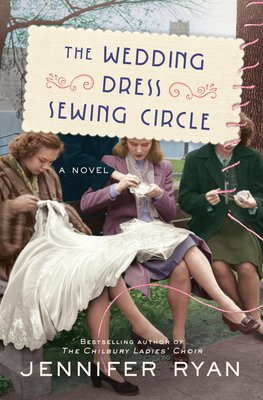
Book Review: The Wedding Dress Sewing Circle by Jennifer Ryan

Title: The Wedding Dress Sewing Circle
Author: Jennifer Ryan
Publisher: Ballantine Books
Publication date: May 31, 2022
Print length: 432 pages
Genre: Historical fiction
Source: Review copy courtesy of the publisher via NetGalley
Rating:

Rating: 4 out of 5.

Three plucky women lift the spirits of home-front brides in wartime Britain, where clothes rationing leaves little opportunity for pomp or celebration–even at weddings–in this heartwarming novel based on true events, from the bestselling author of The Chilbury Ladies’ Choir.

After renowned fashion designer Cressida Westcott loses both her home and her design house in the London Blitz, she has nowhere to go but the family manor house she fled decades ago. Praying that her niece and nephew will be more hospitable than her brother had been, she arrives with nothing but the clothes she stands in, at a loss as to how to rebuild her business while staying in a quaint country village.

Her niece, Violet Westcott, is thrilled that her famous aunt is coming to stay–the village has been interminably dull with all the men off fighting. But just as Cressida arrives, so does Violet’s conscription letter. It couldn’t have come at a worse time; how will she ever find a suitably aristocratic husband if she has to spend her days wearing a frumpy uniform and doing war work?

Meanwhile, the local vicar’s daughter, Grace Carlisle, is trying in vain to repair her mother’s gown, her only chance of a white wedding. When Cressida Westcott appears at the local Sewing Circle meeting, Grace asks for her help–but Cressida has much more to teach the ladies than just simple sewing skills.

Before long, Cressida’s spirit and ambition galvanizes the village group into action, and they find themselves mending wedding dresses not only for local brides, but for brides across the country. And as the women dedicate themselves to helping others celebrate love, they might even manage to find it for themselves.

The Wedding Dress Sewing Circle is now the 4th book I’ve read by Jennifer Ryan, and like her earlier books, it presents a warm-hearted look at the homefront challenges and triumphs of women during wartime.

The year is 1942, London is being terrorized by air raids, and in the countryside, families are making do with less and less. Even clothing is rationed — materials are prioritized for the benefit of the war effort, so the local sewing circles are forced to become skilled at repairing and reworking the clothing that they do have.

In the village of Aldhurst, the vicar’s 24-year-old daughter is soon to be married. Grace and her widowed father find her mother’s wedding dress stored away, but the years have not been kind to the once-beautiful gown. Grace is looking forward to her marriage to a young curate, although she’s mostly motivated by duty and a need to be useful to the parish rather than by sentiments of true love.

But when Cressida, a famous designer whose home and business are both destroyed in a night-time bombing raid, returns to her family’s manor in Aldhurst, life in the village starts to change. Cressida lends her skills to the local sewing circle, encourages Grace to think bigger and explore her own talents, and even manages to get her niece Violet to see that there’s more to life than being the pretty little wife of an aristocrat.

As the women spend time together, they become tightly bonded, and manage to find creative inspiration in their sewing projects, eventually coming up with the idea of organizing what’s essentially a wedding dress lending library. Soon, women from all across Britain are donating their wedding dresses, and eager brides are now able to have the beautiful weddings they’ve dreamed of, rather than getting married in uniforms or practical clothing.

The Wedding Dress Sewing Circle focuses on friendship and finding purpose. The women at the heart of the book all, in their own ways, reevaluate the assumptions they’ve made about their lives and find different, more meaningful paths for themselves. Through Cressida’s example, they learn to think differently, challenge expectations, and pursue careers and lives that are more fulfilling than what they’d thought they should want or expect.

I enjoyed getting to know the main characters and seeing each of them blossom in different ways. Each has a love story as well, none of which run particularly smoothly — but never fear, there are plenty of happy endings to go around.

As in her other books, Jennifer Ryan uses village life and characters to portray the effects of war on ordinary people. Her characters aren’t out risking their lives on battlefields or engaging in high-stakes espionage; these are the everyday women and men who must do the best they can in the face of shortages and hardships, holding on to their homes, their friends, and their communities the best they can. The Wedding Dress Sewing Circle is a portrait of a generous community, whose individuals come together to not just make do, but make better.

This is a gentle read, with drama on the more intimate and personal side. While the opening scenes of Cressida’s experiences in the air raid are very frightening and dramatic, and while there’s another incident later on of an air raid on a neighboring village that’s also quite scary and intense, the rest of the book is quieter and more restrained. The focus is on day to day life and the people of the village — the war is the constant backdrop, but it’s filtered through the experiences of the women and families on the homefront.

I enjoyed The Wedding Dress Sewing Circle very much. In fact, my only slight complaint is that it seems to echo the author’s other books in certain ways, so that the overall story feels less fresh this time around. In three of the four books of hers that I’ve now read, the main story is about plucky women in a small town who come together to make it through the war years — in one book, it’s about a choir, in another, a cooking competition, and here, a sewing group. The plots arcs and characters here feel familiar, not because we’ve seen them before, but because the overall tone is so similar to those of her previous novels.

That said, I did think it was an engaging, often moving read, and I enjoyed seeing the characters grow and change over the course of the story. Jennifer Ryan has a gift for bringing out the beauty in simple lives, and I always enjoy her light touch when it comes to dialogue and banter.

If you enjoy historical fiction, especially historical fiction focused on women’s lives, don’t miss The Wedding Dress Sewing Circle!

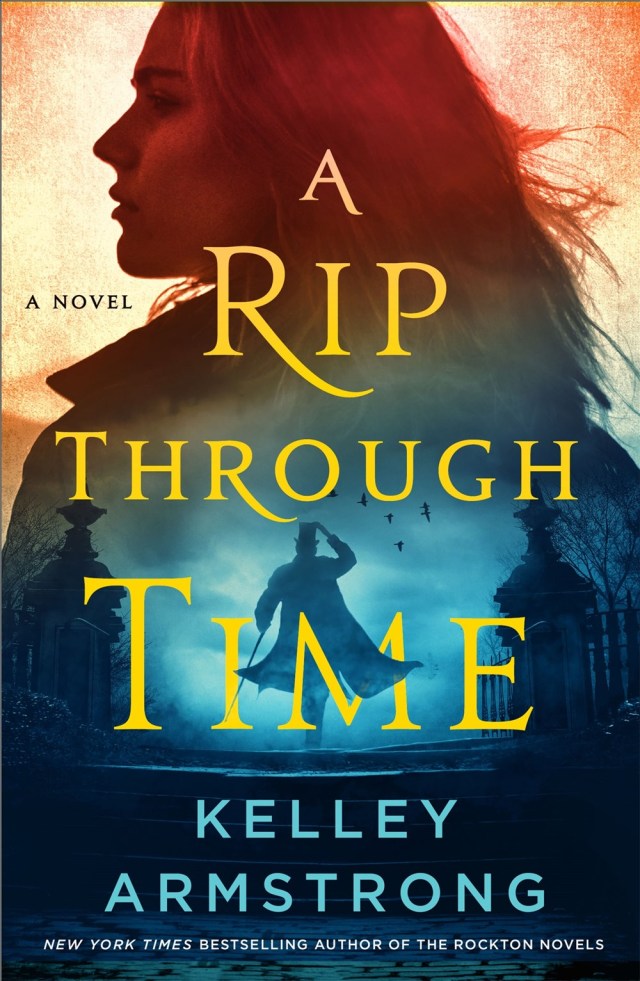
Book Review: A Rip Through Time by Kelley Armstrong

Title: A Rip Through Time
Author: Kelley Armstrong
Publisher: Minotaur Books
Publication date: May 31, 2022
Length: 352 pages
Genre: Historical fiction/mystery
Source: Review copy courtesy of the publisher via Netgalley
Rating:

Rating: 4.5 out of 5.

In this series debut from New York Times bestselling author Kelley Armstrong, a modern-day homicide detective finds herself in Victorian Scotland—in an unfamiliar body—with a killer on the loose.

May 20, 2019: Homicide detective Mallory is in Edinburgh to be with her dying grandmother. While out on a jog one evening, Mallory hears a woman in distress. She’s drawn to an alley, where she is attacked and loses consciousness.

May 20, 1869: Housemaid Catriona Mitchell had been enjoying a half-day off, only to be discovered that night in a lane, where she’d been strangled and left for dead . . . exactly one-hundred-and-fifty years before Mallory was strangled in the same spot.

When Mallory wakes up in Catriona’s body in 1869, she must put aside her shock and adjust quickly to the reality: life as a housemaid to an undertaker in Victorian Scotland. She soon discovers that her boss, Dr. Gray, also moonlights as a medical examiner and has just taken on an intriguing case, the strangulation of a young man, similar to the attack on herself. Her only hope is that catching the murderer can lead her back to her modern life . . . before it’s too late.

Outlander meets The Alienist in Kelley Armstrong’s A Rip Through Time, the first book in this utterly compelling series, mixing romance, mystery, and fantasy with thrilling results. 

In this engrossing start to a new series, Canadian detective Mallory is visiting her dying grandmother in Edinburgh when she stops to investigate a woman’s cries down a dark alley. As Mallory is attacked, she sees a strange optical illusion, but quickly passes out as the unknown assailant strangles her.

When she wakes up, she’s in a strange house, in strange clothing, including — of all things — a corset. Weirdly true despite being hard to believe, it would appear that Mallory has been transported into the body of a housemaid named Catriona, who was attacked and strangled in the same alley as Mallory — but 150 years earlier.

Quick-thinking Mallory figures out the truth of her situation fairly quickly, and uses her head injury as an explanation for her severe memory loss and marked change in personality. The housemaid who’d claimed illiteracy previously can suddenly read and write, and what’s more, takes an interest in her master’s forensic work that’s decidedly new and different.

As Mallory spends more time as Catriona, she realizes that while she doesn’t have an obvious way back to her own life, she can make a contribution where she is by applying her knowledge of 21st century police procedures to help solve the case of a potential serial killer haunting Edinburgh. Unfortunately for Mallory, she also discovers that Catriona was not a sweet, innocent 19-year-old, but a young woman with a gift for thievery, deceit, and no moral compass. As Mallory struggles to make sense of her new life, she also is confronted by the mistrust and dislike earned by the person who’s body she inhabits.

Can’t say I’ve ever read a plot like this one before!

A Rip Through Time is fascinating and utterly immersive, exploring a fish-out-of-water situation through the eyes of a strong, accomplished woman forced into a life where she has none of the “womanly” qualities deemed necessary to fit in. Mallory is a terrific character, confronting her bizarre circumstances with intelligence and determination, applying her years of experience as a detective to both help her employer solve the mysteries he sees in his line of work as well as to solve the huge unknowns about her own case.

Not only is Mallory in the wrong century in the wrong body, but she’s been targeted at least once by a killer, and as her time in Edinburgh of the 1860s continues, she learns that she/Catriona is still in danger. There’s a mystery to solve and a killer to catch, and the action is fast-paced and totally fun to unpack and follow along.

This may all sound like an unbelievable set-up for a story, and I suppose in a less-skilled writer’s hands, that might make it unreadable — but here, Kelley Armstrong confidently weaves a story about crime, women’s roles, time travel, connections, independence, and family, and makes it all work.

It’s really fun to see Mallory’s takes on her life in this new time and place:

If I had to cast him in a period drama, it’d be somewhere between “mad scientist” and “brooding lord with his wife locked in the attic”.

I love how she compares everything she encounters to the way the era is portrayed in film and fiction:

I’m trying to pass back through time by returning to the place where I crossed over. My brain says that makes logical sense, but I am well aware that it only makes sense because I’ve seen it in movies and read it in books. […] I am basing my entire theory on the imagination of fiction writers. Not scientists, because there is no science. People can’t travel through time. Therefore, writers don’t need to worry about “getting it right.” They make up whatever they want.

{…]

If so many writers used that particular trope, maybe there was a kernel of truth to it. It’s like meeting a vampire while holding a vial of holy water and not throwing it at him.”

The writing throughout is fresh and fun, and while there is plenty of danger and some more serious moments, Mallory’s 21st-century voice keeps the story from feeling like a stodgy historical piece.

I was a little bit hesitant at first when I learned that A Rip Through Time is the first in a series, rather than a stand-alone. However, now that I’ve finished, I’m delighted that there will be more! I can’t say much about the ending or what I might expect from book #2 without entering spoiler territory… but let’s just say that I found the ending of this book very satisfying, and yet with plenty more to explore in future books. I can’t wait to see what’s next!

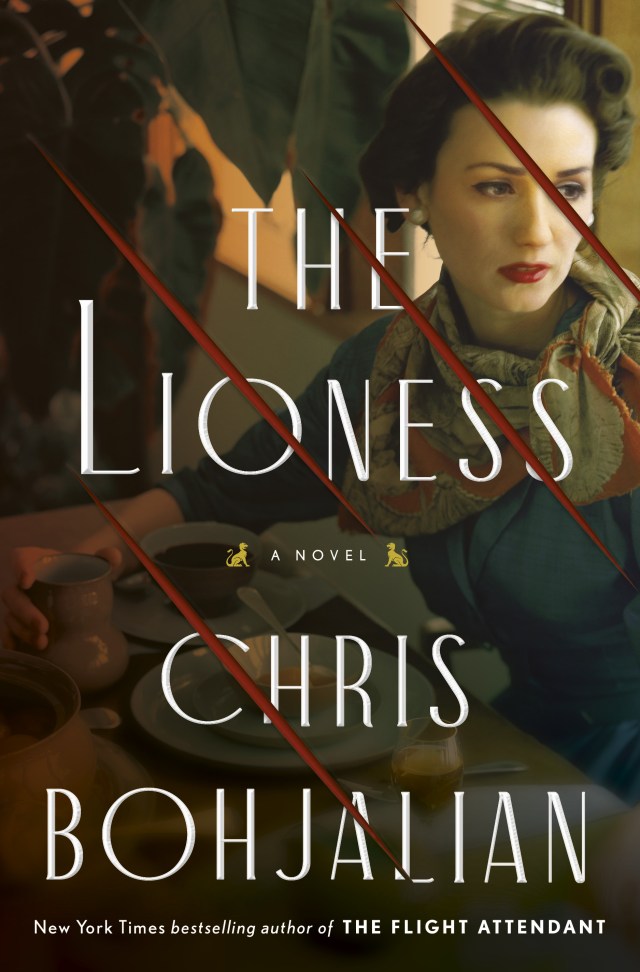
Book Review: The Lioness by Chris Bohjalian

Title: The Lioness
Author: Chris Bohjalian
Publisher: Doubleday Books
Publication date: May 10, 2022
Length: 336 pages
Genre: Historical fiction
Source: Review copy courtesy of the publisher via NetGalley
Rating:

Rating: 5 out of 5.

A luxurious African safari turns deadly for a Hollywood starlet and her entourage in this riveting historical thriller from the New York Times bestselling author of The Flight Attendant

Tanzania, 1964. When Katie Barstow, A-list actress, and her new husband, David Hill, decide to bring their Hollywood friends to the Serengeti for their honeymoon, they envision giraffes gently eating leaves from the tall acacia trees, great swarms of wildebeests crossing the Mara River, and herds of zebra storming the sandy plains. Their glamorous guests—including Katie’s best friend, Carmen Tedesco, and Terrance Dutton, the celebrated Black actor who stars alongside Katie in the highly controversial film “Tender Madness”—will spend their days taking photos, and their evenings drinking chilled gin and tonics back at camp, as the local Tanzanian guides warm water for their baths. The wealthy Americans expect civilized adventure: Fresh ice from the kerosene-powered ice maker, dinners of cooked gazelle meat, and plenty of stories to tell over lunch back on Rodeo Drive.

What Katie and her glittering entourage do not expect is this: A kidnapping gone wrong, their guides bleeding out in the dirt, and a team of Russian mercenaries herding them into Land Rovers, guns to their heads. As the powerful sun gives way to night, the gunmen shove them into abandoned huts and Katie Barstow, Hollywood royalty, prays for a simple thing: To see the sun rise one more time. A blistering story of fame, race, love, and death set in a world on the cusp of great change, The Lioness is a vibrant masterpiece from one of our finest storytellers.

Chris Bohjalian proves once again that he can tell a story with any subject, in any genre, and make it unputdownable. The only reason I didn’t read The Lioness straight through was the pesky issue of needing to sleep. (And even once I stopped for the night, did I dream about kidnappings and safaris? You bet I did.)

From his devastating, engrossing novel about a Puritan woman accused of witchcraft in 1660s Boston (The Hour of the Witch), the author shifts tone and subject matter completely with The Lioness, bringing us a tale of Hollywood glamor, deadly Cold War proxy wars, and the terror of being utterly defenseless in a place that has far too many ways to kill a human.

Katie Barstow is the biggest movie star of 1964 when, at age 30, she marries art gallery owner David Hill, then brings their closest friends and family with them on a luxury African safari. Led by renowned “great white hunter” Charlie Patton, they’ll travel through the Serengeti viewing wildlife and taking photographs, “roughing it” with canvas bathtubs filled by porters and living in tents, while protected by rangers and having their every need catered to. For Katie, a warm-hearted friend and sister who truly cares about the people with her, it’s the adventure and experience of a lifetime.

But within a few days, things go very, very wrong. The expedition’s camp is attacked by armed men — white men with Russian accents and over-the-top firepower — who kill several of the group’s guides ruthlessly before taking the Americans hostage. As the group is divided in two, they’re left at the mercy of their kidnappers, who don’t hesitate to use violence. The deeper they’re taken into the Serengeti, the worse their odds of survival look: Even if they do manage to escape their captors, then what? Unarmed, without provisions, alone in the wild, how long could they survive the leopards, hyenas, and other predatory animals who stalk their every movement?

In chapters that shift perspective amongst the nine members of Katie’s entourage, we follow the events of the kidnapping as they unfold, but also see each character’s thoughts and memories of their lives before the trip and the events leading up to this point. We come to understand their inner lives, their early struggles, and the individualized fears they carry with them into this moment of extreme crisis.

I won’t say too much more about the plot. It’s complex and includes twists and red herrings, but we’re always fully present in the moment with the characters. We experience the terror of these events alongside the characters, never knowing from moment to moment what might be happening to the others, what the kidnappers’ plans are, or whether what’s coming might be even worse than what’s happening at that very moment. The characters must react and choose what to do based on very limited information, always weighing the odds of survival — is it better to attack their kidnappers, or to wait and hope for rescue or ransom? Which way offers the best chance of living for one more hour, one more day?

I did find myself lacking some key information about the state of affairs in East Africa in the mid-1960s, and relied on many quick Wikipedia searches to shore up my historical knowledge enough to get better context for the plot developments. The plot is so character-driven that the historical details are really more background than essential, but it helped me a lot to have quick access to the information I needed, and helped round out the stakes, the players, and the settings of the Cold War machinations that drive the story from behind the scenes.

The Lioness is a totally engrossing read, I was low-key anxious and/or terrified throughout my reading experience. We know right from the prologue that most of the characters will not survive — but it’s not clear who survives or how events wind up until the very end. Meanwhile, we get to know each of them as individuals, and while not all are people I’d want to actually hang out with, it’s still tragic and terrible to see how, one by one, those who die meet their ends.

I rarely give 5-star ratings — I think of 5-star books as being those where I wouldn’t change a thing. And with that in mind, I couldn’t give The Lioness any less than 5 stars. I was immediately captivated, and then couldn’t look away. My emotions and my brain were engaged right from the start.

This isn’t an easy read — the subject matter is very tough to take — but the book itself is impossible to put down once you start. I’m a big fan of Chris Bohjalian’s books, and The Lioness doesn’t disappoint in the slightest. (In fact, despite having an e-ARC, I think I’m going to need a hard copy for my shelves as well).

Don’t miss The Lioness. I have a feeling it’s destined to end up on many of the “best of” lists for 2022.