Book Review: Henna House by Nomi Eve

Henna HouseHenna House tells the tale of the little-known world of the Jews of Yemen in the early 20th century, taking place largely during the tumultuous years of the 1920s and 1930s. As seen through the eyes of Adela Damari, whom we meet for the first time at age five, the Jewish community of the village of Qaraah is small and isolated, steeped in a tradition and a simple way of life that seems at odds with the modernity of the time period.

The Jewish community of Yemen at that time was by law an underclass, kept subservient and oppressed through a string of harsh restrictions and edicts, none more feared than the Orphan Decree. According to the Orphan Decree, an unmarried Jewish child left orphaned would be confiscated by local authorities, adopted by a Muslim family, and permanently removed from his or her relatives, community, and faith. Families lived in fear of confiscation, taking the preventive measure of betrothing children at birth so that hasty marriages could be enacted when needed.

Adela first enounters the Confiscator when she is five years old, and is terrified. This official routinely visits her father’s marketplace stall, observing her father’s illness, and practically counting the days until his death so that Adela can be taken. Despite having a very  large family, Adela is at risk, as all of her potential betrothals have come to naught. One day, however, her young cousin Asaf comes to live in Qaraah, and the two children become fast friends — and more. Despite their young age, they form a deep bond, and it’s only natural that their betrothal is announced.

Other arrivals in Qaraah further change Adela’s life. Her uncle Barhun moves to the village with his wife Rahel, a skilled henna artist, and their daughter Hani, who quickly becomes Adela’s closest friend and confidante. Adela is introduced to the women’s henna rituals, in which symbols and patterns are painstakingly painted onto the skin to celebrate happy occasions, commemorate significant events, and represent a secret language full of mystical power and meaning.

That first night I was a novitiate. Soon, like the others, I would learn about the stars in the heavens by reading the astronomical tables they inscribed on my feet, shins, and fingers. Soon, I would grow to believe that I myself was an actual text, and that my skin without henna was like a holy book without words — a shameful, almost blasphemous, thing. Without henna, I wouldn’t know how to read myself. With henna, I was as sacred as a sanctified Torah. With henna, I was the carrier of ancient tales — a living girl-scroll replete with tales of sorrow, joy, and salvation.

The story of Henna House moves from the small mountain village of Adela’s birth to the city of Aden, through the anti-Jewish riots of the 1940s to the rescue of the Yemenite Jews by the newly declared nation of Israel. The story of Adela is at once large in scope, covering the significant events in the global Jewish community during the devastating years during and after the Holocaust, and at the same time, is a deeply personal tale.

Adela herself is a girl and then a young woman finding her way through an ever shifting series of homes and relations, experiencing both joy and love as well as terror and grief. She values the traditions of her people and the rituals of the henna house, yet also finds an inner strength that sees her through horrible loss and betrayals.

I was incredibly moved by this lovingly crafted story. The writing is often poetic, rich with tradition and symbolism, yet the pace never slackens or drags. The forward momentum of the story is engaging while also allowing the emotions of the characters room to breathe.

I was quite taken with the use of traditional rituals and foods to highlight the lives of the Jewish families, and found the depiction of their lives in Yemen completely fascinating.

Henna House is an intimate look at a time, a place, and a people, at a by-gone world with rich yet mysterious traditions. As historical fiction, it’s deeply affecting as well as informative and revealing. And as a novel, Henna House succeeds in telling a story full of love, wonder, loss, and excitement.

_________________________________________

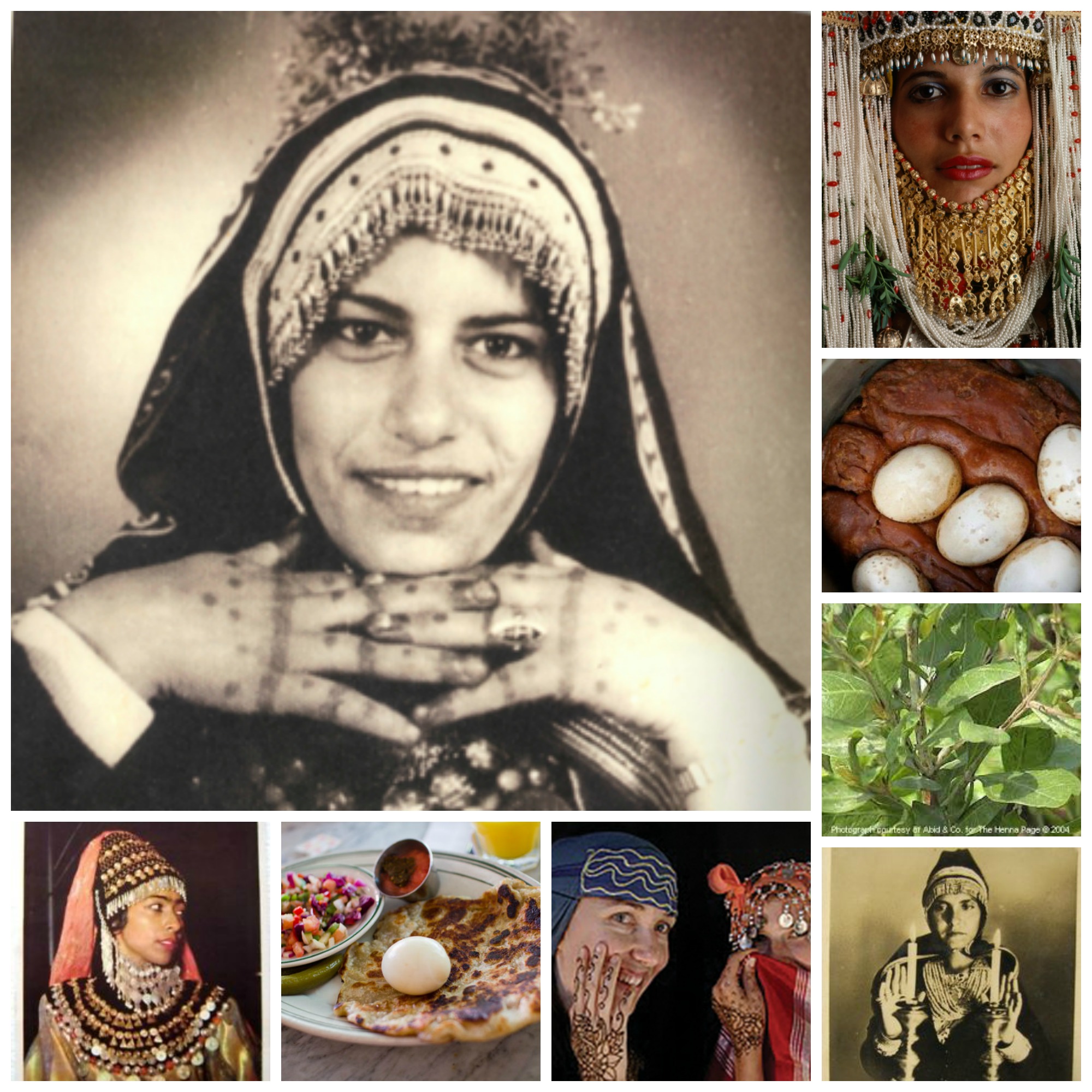
I leave you with a collage of images (scavenged from Pinterest, thank you very much…) which bring to mind some of the people and food mentioned in Henna House.

HH collage

_________________________________________

The details:

Title: Henna House
Author: Nomi Eve
Publisher: Scribner
Publication date: August 12, 2014
Length: 320 pages
Genre: Historical fiction
Source: Review copy courtesy of Scribner via NetGalley

A 4th of July Flashback Friday: The Bastard

ffbutton2Flashback Friday is a weekly tradition started here at Bookshelf Fantasies, focusing on showing some love for the older books in our lives and on our shelves. If you’d like to join in, just pick a book published at least five years ago, post your Flashback Friday pick on your blog, and let us all know about that special book from your reading past and why it matters to you. Don’t forget to link up!

This week on Flashback Friday:

6782034

The Bastard (Kent Family Chronicles, book 1) by John Jakes
(published 1974)

 Synopsis (Goodreads):

One man’s quest for his destiny leads him to the New World and into the heart of the American Revolution

Meet Phillipe Charboneau: the illegitimate son and unrecognized heir of the Duke of Kentland. Upon the Duke’s death, Phillipe is denied his birthright and left to build a life of his own. Seeking all that the New World promises, he leaves London for America, shedding his past and preparing for the future by changing his name to Philip Kent. He arrives at the brink of the American Revolution, which tests his allegiances in ways he never imagined. The first volume of John Jakes’s wildly successful and highly addictive Kent Family Chronicles, The Bastard is a triumph of historical fiction


Happy 4th of July! In honor of Independence Day, I thought it would be appropriate to choose an historical novel set during the American Revolution — and how can you beat The Bastard, book #1 in John Jakes’s eight-book Kent Family Chronicles?

The books has had several reprintings over the years, but in my mind, you really need this particular cover — with that cheese-tastic 70s feel — to truly grasp the glory of The Bastard. Does it help to know that this was made into an oh-so-popular mini-series as well?

But seriously, beneath the melodrama, The Bastard does what historical fiction does best: Invest historical events with a personal story revolving around compelling fictional characters, drawing readers in and making the real events from the past come alive on the page.

So… Happy 4th, one and all! And tonight, while you’re watching the fireworks, raise a cup to fictional heroes like Philip Kent as well!

What flashback book is on your mind this week?

Note from your friendly Bookshelf Fantasies host: To join in the Flashback Friday fun:

  • Grab the Flashback Friday button
  • Post your own Flashback Friday entry on your blog (and mention Bookshelf Fantasies as the host of the meme, if you please!)
  • Leave your link in the comments below
  • Check out other FF posts… and discover some terrific hidden gems to add to your TBR piles!

♥♥♥♥♥♥♥♥

Do you host a book blog meme? Do you participate in a meme that you really, really love? I’m building a Book Blog Meme Directory, and need your help! If you know of a great meme to include — or if you host one yourself — please drop me a note on my Contact page and I’ll be sure to add your info!

Flashback Friday: The Feast of All Saints

ffbutton2Flashback Friday is a weekly tradition started here at Bookshelf Fantasies, focusing on showing some love for the older books in our lives and on our shelves. If you’d like to join in, just pick a book published at least five years ago, post your Flashback Friday pick on your blog, and let us all know about that special book from your reading past and why it matters to you. Don’t forget to link up!

This week on Flashback Friday:

The Feast of All Saints

The Feast of All Saints by Anne Rice
(published 1979)

 Synopsis (Goodreads):

They were New Orleans’ gens de couleur libre – the copper-skinned half-castes who lived recklessly and loved passionately, trapped in a world between black and white.

Marcel – the young, blue-eyed scholar, sensitive, and longing always for Paris. Marie – his breathtakingly beautiful sister, cursed with the ability to pass for white. Cristophe – novelist and teacher, the idol of all the young gens. Anna Bella – light in skin, African in feature, chosen for the white man.

And from Amazon:

In the days before the Civil War, there lived a Louisiana people unique in Southern history. Though descended from African slaves, they were also descended from the French and Spanish who enslaved them. Called the Free People of Color, this dazzling historical novel chronicles the lives of four of them–men and women caught perilously between the worlds of master and slave, privilege and oppression, passion and pain.

Last week, I focused on Cry to Heaven, and heard from several people who were surprised that Anne Rice had written books outside of the vampire/witch/otherworldly realm. And here is another, The Feast of All Saints, which is Anne Rice’s second published novel, released just a few years after her debut novel Interview With The Vampire.

In Feast of All Saints, we get a slice of New Orleans history centered around the “free people of color” the young mixed-race inhabitants of the city who held a special status, at once admired and coveted, and yet manipulated and treated as less than equal.

The historical elements are fascinating, and the drama is rich, filled with emotional depth and tragic twists. When I read Isabel Allende’s Island Beneath the Sea a few years ago, I was immediately reminded of this early work by Anne Rice. If you’re fond of historical fiction and enjoy a New Orleans setting, I recommend tracking down a copy of The Feast of All Saints.

What flashback book is on your mind this week?

Note from your friendly Bookshelf Fantasies host: To join in the Flashback Friday fun:

  • Grab the Flashback Friday button
  • Post your own Flashback Friday entry on your blog (and mention Bookshelf Fantasies as the host of the meme, if you please!)
  • Leave your link in the comments below
  • Check out other FF posts… and discover some terrific hidden gems to add to your TBR piles!

♥♥♥♥♥♥♥♥

Do you host a book blog meme? Do you participate in a meme that you really, really love? I’m building a Book Blog Meme Directory, and need your help! If you know of a great meme to include — or if you host one yourself — please drop me a note on my Contact page and I’ll be sure to add your info!

Author Q&A: Meet Erin Lindsay McCabe, author of I Shall Be Near To You

By now, anyone who reads my blog has seen me raving about the outstanding debut novel I Shall Be Near To You by Erin Lindsay McCabe. Today, I’m thrilled to welcome Erin to Bookshelf Fantasies, where she very kindly (and patiently) takes the time to answer my over-abundance of questions:

IShallBeNearWhat first inspired you to write this book?

The original inspiration for I Shall Be Near To You was the collected letters of Sarah Rosetta Wakeman, who disguised as a man and served in the 153rd New York State Volunteers for two years. I found An Uncommon Soldier, the book of her letters, in 1998 while looking for a primary source upon which to write the final paper for the US Women’s History class I was taking. I had no idea women had fought in the Civil War until I came across that book. When I saw Rosetta’s picture and then read her letters, I was just taken with her—her feisty spirit, her tenderness, her determination. Of course, I didn’t know then that I was going to eventually write a book inspired by her. I just thought her story, and the stories of the other women who fought, was fascinating and I had so many questions that weren’t answered by the historical records available.

How long did the writing process take for I Shall Be Near To You?

I started writing the book in the Spring of 2007. It took me two years to write a complete draft, and then I spent another year revising it in my MFA program. Then I worked with two different agents over the next two years, revising it more. The book sold in December 2012, and then of course there were more edits after that! So, I guess I worked on it for 6 years all told, plus the 10 years I spent wishing I could figure out what to do with the real Rosetta’s story other than write a college paper about her.

Was Rosetta a real historical figure? Were there many women who did what Rosetta did in the Civil War?

Yes, Sarah Rosetta Wakeman was a real woman. She is one of about 250 documented women who disguised as men and enlisted in both the Union and Confederate armies. Their service is beautifully surveyed in the book They Fought Like Demons. And of course, estimates are that there were even more women who were just never found out—perhaps as many as 400-1000 total.

What was it about Rebel Rose and Clara Barton that made you want to include them in the story, rather than sticking solely to fictional characters?

I’ve gotten some criticism for including real characters—that it seems too coincidental that the fictional Rosetta would have run into these women. But one of the moments the real Rosetta wrote about in her letters home was her experience guarding both a female soldier who was imprisoned after leading her men into battle for “not doing according to regulation” and two female Rebel spies. I was so curious about what that must have been like—to be guarding women who were imprisoned for doing what she herself was doing—but it’s just mentioned in passing in Rosetta’s letters. So I knew I wanted to explore that more in a fictionalized context. I also really wanted to include women in the novel who represented the variety of ways women served during the war. I loved the idea of showing Clara Barton doing something that is considered very feminine (nursing wounded soldiers) but doing it in a context that was very unconventional at the time. She was the first official female combat nurse but she had to fight for the right to be on the battlefields. I had also discovered when I visited Antietam, that the memorial commemorating Clara Barton’s service at Antietam is placed right near where the 97th New York State Volunteers (the fictional Rosetta’s regiment) encamped the night before the battle and Clara Barton served in battlefield hospitals near The Cornfield where the 97th fought. So it seemed entirely plausible to me that as Rosetta searches the hospitals after the battle, she might come across Clara Barton. And then, finally, Clara Barton is known to have nursed a wounded female soldier named Mary Galloway after Antietam.

What would someone like Rosetta have experienced after the war? Admiration, scorn, something else?

That’s one of the questions I really pondered as I wrote the book, and the larger question of how any soldier goes back to civilian life after having experienced the horrors of battle. Unfortunately, there’s so little known about the female soldiers during their time in the military, and even less is known about what they did after. A few (Jennie Hodgers, Otto ) are known to have continued living as men. Some (Sarah Emma Edmonds, Martha Parks Lindley, Mary Galloway) went back to living as women, marrying and having children. Most of the rest just disappeared from the historical record. My sense is that most of them didn’t talk about their experience, and when they did, it was within the confines of their family. A few did, in later years, apply for veteran’s benefits and receive them, thanks to the support of their comrades who seemed to hold the women in high regard.

I really admired the amount of detail included about life in the army camps and what a foot soldier’s daily routine might have looked like. How did you compile all of this information?

It was a challenge! A lot of my information came straight out of soldiers’ letters. For instance, in one letter the real Rosetta says that the skirmish drill was “the prettiest drill ever was drill” so then I knew I had to find out about how to do a skirmish drill. I consulted an officer’s handbook and also a soldier’s handbook to get details about the actual drills, the way orders might be called out, the kinds of food and supplies soldiers might carry, and so on. I talked to the battlefield historian at Antietam about what kinds of duties the soldiers had after the battle ended. But one of my frustrations was that the kinds of things I was most interested in (the everyday, day-in and day-out life of a soldier) were not the kinds of things that made it into the history books, which so often focus on the generals and strategies and the movements of the troops. So it was really about finding the details I needed hidden away in first-hand accounts. Fortunately the soldiers often wrote about the food they ate or the duties they had. I also gleaned many of the battlefield and wound descriptions from soldiers’ letters. I was initially surprised at how many of the soldiers just completely glossed over those kinds of details, but I was equally surprised by how gruesome their descriptions were when they chose to include them. And finally, I attended a reenactment, which really helped me with the details about camp life and also with what a group of muskets firing all at once sounded like, what the smoke from the cannons looked like, and so on.

What were your main priorities and/or challenges in researching the book?

I think my first two priorities were to tell a story that I would want to read myself and to write a story that would pay tribute to and honor the women and men who served during the Civil War. After that, the biggest challenge was getting the historical details right without making the book feel research-y. It was really important to me that the book be as accurate as possible—I didn’t want there to be any reason for a reader to discount the story of the women who fought because I hadn’t done my research well enough. I think there is probably something on every single page that is researched—whether it’s a detail about farm life, or a word that I had to double-check to make sure was in usage, to a song the soldiers might sing, to what the scenery looked like. It sounds daunting when I think about it now, but as I was working on it, it was just part of the process, and the research really fed my creativity. There were some things I never got cut-and-dried answers for despite my best attempts—like how fast news might travel or how quickly a letter could be sent—and sometimes I spent hours and hours trying to figure out a tiny detail (did the upper bridge at Antietam have two arches or three?) that doesn’t probably matter to most readers, but that I knew would matter to anyone who spent time at Antietam. The research about the battles themselves, particularly the movement of the troops, was a huge challenge. Trying to figure out where exactly my soldiers would be on the battlefield and at what point was hard. I pored over battlefield maps and photos trying to get it right. And then writing the battle scenes themselves was very difficult emotionally, but it was incredibly important to me that readers would get a sense of what it was like to be there in the thick of the battle—because so many women were!

And a few questions for Erin about her writing career:

When did you first realize you wanted to be a writer?

I’m really not sure! I have always loved writing—the physical act of my pen moving across paper. I was that annoying kid in high school who thought writing essays was fun. And I remember thinking when I was pretty young—in elementary or junior high school—that I wanted to write a novel, but I just didn’t know what about.

What did your early writing days look like?

I started keeping a diary when I was seven, and in junior high I had about a hundred pen pals (that’s not an exaggeration). I was always writing little stories or sock puppet plays or designing magazines (all the articles written by yours truly). In junior high I started trying to write poetry, and in college I tried writing some short stories, but they always kept getting longer and longer. I started dabbling with writing a novel a few years before I wrote I Shall Be Near To You, kind of on a dare from my husband. It turned out to be a wonderful thing because I discovered I could actually write a cohesive story that was novel-length (though it wasn’t all that good) and I learned a lot about what my writing process is like. When I got to the middle of I Shall Be Near To You and it felt like it was all falling apart, I was able to remember I had felt the same way before (and I feel the same way again, working on my current project), which is oddly comforting.

Do you have a background in history? Is the Civil War a period of special interest?

When I look back at what I read as a kid, it often had a historical bent to it though I wasn’t all that interested in history as it was taught in school—dates, facts, battles, generals, politicians. Studying literature in college though, I really began to see the overlap between what authors write about and what’s happening in history. That’s when I became a history minor. I’m just so interested in the stories of real people’s daily lives and what life was like in the past. I’ve had a fascination with the Civil War since watching Ken Burns’ Civil War documentary as a 13 year old, and I think that’s one thing that documentary really does well—you get a sense of what individuals experienced. Though I wouldn’t call myself a history buff, in the sense that there’s one period of time that I am a real expert in, I am always drawn to the Victorian and Edwardian periods, probably because a) there’s horses and b) it’s the time right before and at the beginning of the suffrage movement. I’m really interested in how women coped with having so little political, economic, and social freedom.

Do you intend to make historical fiction your specialty, or will we see future books in other genres?

Historical fiction is what I gravitate toward, but I’m not ruling out exploring other genres.

What are you working on now/next?

Right now I’m working on another historical novel—this one is inspired by the adopted daughter of a female serial killer. I’m maybe half to two thirds done with a first draft of it, so I’m right in the middle of the phase where I feel like the whole thing is falling apart.

What is your writing routine like? Do you have a particular spot or time that you prefer for writing?

I try to write at least five days a week and I try to hit a daily goal of 1000 words. I used to always write in the morning after walking my dog, before I went off to teach. And for much of the time I was working on I Shall Be Near To You, I wrote late at night after my husband was asleep. I like having a good chunk of time (two to three hours) so that I feel like I can really dig in. Now my routine is much more scattered because I have a three-year old son. I used to write during his naps, but now that he’s stopped napping I’ve had to figure out a new routine. I’m still working on that—right now I have a babysitter come twice a week in the morning and then sometimes my son and I meet my husband at the coffee shop after he gets off work and when they leave I stay and work for a couple hours. I’m finding it harder and harder to write late at night, because I just get too sleepy (and sleep-writing, while very amusing to re-read in the morning, is not very productive)! But I do still write after everyone else is asleep.

Anything about you as a person you’d like to share? Favorite foods, movies, music?

I think anyone who knows me knows that I love all things potato. Also anything sugary and chocolatey and buttery. I adore female musicians—I listened to so much Neko Case and Gillian Welch while writing I Shall Be Near To You. But I also love Regina Spektor, Tori Amos, Sarah Maclachlan, The Yeah Yeah Yeahs, Sleater Kinney, Sharon Jones, Adele, Liz Phair, Tracy Chapman, Amy Winehouse, Lily Allen… In general I like music that has something deeper to say about the human experience, that is layered instrumentally and lyrically, that has a moment of poetic realization or surprise to it, when the musician reveals something with their words or with the music that you didn’t realize before or weren’t expecting—Weezer, System of a Down, The Decemberists, Interpol, Iron & Wine, REM, TV on the Radio, Morphine all come to mind. My husband says my iPod is a 1990s time capsule, and looking at this list I realize he’s probably right! He also says that to figure out which song on an album is my favorite, just find the slowest, saddest one. And I’m a sucker for anything with a banjo or a fiddle or bagpipes in it. As for movies, I’ll pretty much watch any costume drama (recently, I really liked the new version of Wuthering Heights, and this little movie called Meek’s Cutoff, and the new Jane Eyre). I love a love story, especially a quirky one (Princess Bride, Amelie, Moulin Rouge, Silver Linings Playbook). I was blown away by Winter’s Bone. I don’t watch too many new movies these days, but that last movie I saw in the theater was Baz Luhrman’s The Great Gatsby. I think I giggled through the whole thing, it tickled me so much.

What were your favorite books as a child?

The Little House on the Prairie books for sure. Anne of Green Gables. I was a voracious reader—I read a lot of the classics, things like Heidi, Jane Eyre, Little Women, The Secret Garden, The Little Princess, Chronicles of Narnia—and then I read stuff like Nancy Drew, The Saddle Club, tons of Lurlene MacDaniel books (I loved when a book made me cry), and anything with horses in it (My Friend Flicka, Misty of Chincoteague, The Black Stallion books). I have great memories of my dad reading The Adventures of Tom Sawyer and Huck Finn to my brother and me. He did really good voices for the characters and he always quit reading for the night at a cliffhanger.

What books have you read recently that you loved?

When I’m actively writing, I have a hard time reading fiction, partially because I’m doing non-fiction reading for research, partially because I so often have to choose between either writing or reading, and partially because I get worried if I read certain books, I’ll be unduly influenced by them. That said, I read a bunch of books this Fall and Winter that I really liked—Burial Rites, The Kept, Bittersweet (which I read as an ARC, it’s out this 5/12), Quiet Dell, The Maid’s Version. But I think the book that I loved the most was Boleto. I guess it’s a western and a coming of age story, but it’s so much more than that. It’s quiet and beautiful and poignant and the main character is endearing and heartbreaking. It’s a slim little thing, but it feels deep and it’s just so well-written. I envy and admire the way Alison Hagy has managed to write about horses without being sentimental or cheesy.


 Thank you, Erin, for your insights and your time!

To learn more about Erin Lindsay McCabe and her writing, visit her website at http://erinlindsaymccabe.com.

See previous Bookshelf Fantasies posts about I Shall Be Near To You:
Guest Review: I Shall Be Near To You
Five Reasons Why You Should Read I Shall Be Near To You… ASAP!
 

Five Reasons Why You Should Read I Shall Be Near To You… ASAP!

My spotlight book this week is I Shall Be Near To You by Erin Lindsay McCabe. Earlier this week, my wonderful guest reviewer Mary shared her thoughts on this beautiful novel. (Click here for Mary’s review.) Later on, I’ll be featuring a Q&A with the author. For today, I’m here to tell you why you NEED to read this book!

IShallBeNear

Here are my top five reasons why this may be the book for you:

1) Strong female character: Simply put, Rosetta Wakefield is one awesome woman. A young bride who decides that she will not sit home while the man she loves marches off to war, Rosetta takes her future into her own hands. Ignoring family disapproval and potential shame, not waiting for her husband’s agreement, Rosetta sets a course for herself and doesn’t look back. She joins the Union army, drills with the troops, pushes past overwhelming fear, and marches into battle — and simply won’t take no for an answer. Sure, there are fictional fantasy characters who use fancy martial arts, or stakes, or bows and arrows to face down bad guys. But Rosetta is a real-world heroine, based on historical records, who arms herself with her mind and her will to fight, steels herself with her love for her husband, and dares everything in order to achieve her own ends.

2) Bringing history to life: If you’re like me, you learned about the Civil War, about the battles of Bull Run and Antietam, in history class during middle school or high school. Maybe you had to learn the details, or write an essay on the strategic importance of certain battles. Maybe you had to memorize the dates or the names of the generals. Boring, right? Put all that aside, and read I Shall Be Near To You. I don’t think I’ve read another book that brings the battlefield’s sights, sounds, and smells to life quite so viscerally. As seen through Rosetta’s eyes, war truly is hell. It’s bloody and confusing and terrifying, consisting of little more than marching into almost certain death because that’s what the troops have been ordered to do. There’s no place to hide, no refuge, and no rhyme or reason to the chaos and horror.

3) An intense, passionate love story: Rosetta and Jeremiah are childhood sweethearts whose love is sincere, deep, and committed. Rosetta can’t be anywhere but by Jeremiah’s side, and despite his worries about what’s proper and safe for his wife, Jeremiah loves Rosetta too much to send her away. Their stolen moments are deeply emotional, deeply sexual, and absolutely pure in their mutual love and devotion.

4) Nitty-gritty, nuts-and-bolts details: What would enlisted troops eat in between battles? Where did the food come from? Or more essential questions: How could a woman hide in plain sight among an army of men? What about bathroom needs and other bodily functions? Ever notice how some of those “sweeping”, “epic” romances or historical novels gloss over the less-pleasant realities of day-to-day life? It’s all gowns and swords and drama… but not here. In I Shall Be Near To You, Rosetta’s adventure is believable because it is so deeply grounded in real life. Yes, there are obstacles. Yes, there are all sorts of things that Rosetta has to figure out in order to manage in a male environment without detection. The author gives us enough to make us feel just how much Rosetta has to overcome in order to achieve her goals — and just how much she has to sacrifice and put up with in order to stay by Jeremiah’s side.

5) Writing that’s just right: Rosetta is a young woman with some education but not a lot, raised on a farm and taught the essentials, but she’s never been a fine, sophisticated lady — and her speech is pitch-perfect in reflecting just who she is. Speaking plainly but not without her own sense of poetry, Rosetta is forthright to the point of almost impropriety, speaking out when nice young girls should demur to their men or their mothers-in-law or to practically anyone else. Rosetta speaks in colloquialisms, but it’s not overdone or cloying. Instead, her narration tells us just who she is simply by the words she uses and how she describes her life, her dreams, and the man she loves. It’s not fancy, but it consistently rings true, and Rosetta conveys such a depth of emotions in her plain words that it’s like being hit by a lightning bolt at times.

That’s five. Need more?

At just over 300 pages, I Shall Be Near To You tells a tightly crafted tale that wastes no energy and never goes astray. I walked away from this book with a greater understanding of love and loss, the terrors of warfare, and the simple joys of being with the right person and sharing a dream.

It’s beautiful. It’s powerful. Read this book.

Guest Review: I Shall Be Near To You by Erin Lindsay McCabe

Please join me in welcoming my wonderful friend Mary, who consistently recommends superb books to me. Mary is the one who first encouraged me to read I Shall Be Near To You, and so I thought it only fitting to invite her to write a review.

***Guest Review: I Shall Be Near To You by Erin Lindsay McCabe***

***Reviewed by Mary***

IShallBeNear

“His arms pull me tight against his chest and I bury my face in his shoulder. He shakes and it is dark enough I can still say I ain’t ever seen him cry. My heart goes to cracking wide open, but at least I am alive to feel it. I am a different kind of woman now, a wife who knows what this war really is. At least I am part of this war, part of the things Jeremiah’s done here, things that will always be hiding somewhere in his heart.”

New York, 1862. Rosetta marries her childhood sweetheart just before he leaves to enlist with the Union Army. Jeremiah is naive and optimistic about the war, thinking he’ll be gone a short while and return with money enough for them to buy their own farm. Even so, Rosetta doesn’t want him to go. Without Jeremiah, she has to play the role of wife, cooking, mending, making soap, when she’d rather be outside tending the animals or helping with the harvest. Rosetta is stubborn and spirited, and it isn’t long before she hacks off her braid, dresses in Jeremiah’s old clothes and follows her husband to war.

Rosetta is a force, a fighting wife, a woman brave enough to follow her husband into hell. Their love is both fierce and tender, and their connection to one another endures long stretches of boredom, constant hunger, and short bursts of battle-born terror. Neither of them truly understood what war would be, and the author, with well-placed poetic imagery and necessary grit, conveys the realities of a soldier’s life.


“I aim careful in the dying light and fire two rounds…the first don’t hit a thing, but the second shot makes a space in the line advancing. Something heavy settles in my belly when the stain blooms on that soldier’s chest, the hole in the line, the tear in the fabric of some other family.”


Rosetta’s voice is strong and straightforward; her struggles and fears are authentic and entirely relatable. The supporting characters are well-drawn, compelling, easy to get attached to. There is just the right amount of historic detail to capture the essence of the time period without inundating the reader with “research.” The way the story is told, the structure and pacing, seems effortless (though I am sure it wasn’t), and thankfully, there is no epilogue to stitch up every last detail. In short, this is as close to perfect as it can get. If you love historical fiction – if you love great fiction – read this book. But read it slowly. Savour your time with these unforgettable characters and their heart-wrenching story. 

And…when you read the last page, close the book and still find yourself unable to let go of the story, read these interesting links:

The title of the book was inspired by a real letter from Union soldier Sullivan Ballou to his wife Sarah. Read it here.

The author’s playlist. Music can strike an emotional chord with me, and I love that the author included the songs she listened to while writing. These echo the mood of the book so well. Make sure you listen to “My Father’s Father” when you have finished the book. So, so moving.

An interview with the author. I love hearing about the process of getting this book revised and published. It was obviously a labor of love.

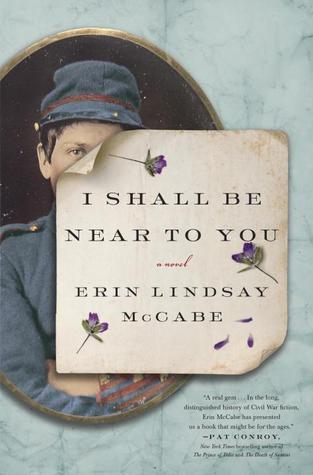
The original photo from the cover.Were you, like me, curious about the soldier pictured on the front of the novel? I wanted to see his (her?) whole face, and I was surprised to discover that the soldier was actually a Confederate.

A Savage Day in American History. A little more information about the Battle of Antietam.


About the reviewer:

MaryMary is a life-long reader and self-professed book-nerd. She carries a book with her wherever she goes, and if she isn’t reading, she’s either sleeping or dead.
Want to read more of Mary’s reviews? You can find her here on Goodreads — just tell her Bookshelf Fantasies sent you!

Stay tuned:

I Shall Be Near To You is my spotlight book this week, and there are more related blog posts to come!

At A Glance: Burial Rites by Hannah Kent

Book Review: Burial Rites by Hannah Kent

Burial Rites

Synopsis:

In northern Iceland, 1829, Agnes Magnusdottir is condemned to death for her part in the brutal murder of two men.

Agnes is sent to wait out the time leading to her execution on the farm of District Officer Jon Jonsson, his wife and their two daughters. Horrified to have a convicted murderess in their midst, the family avoids speaking with Agnes. Only Toti, the young assistant reverend appointed as Agnes’ spiritual guardian, is compelled to try to understand her, as he attempts to salvage her soul. As the summer months fall away to winter and the hardships of rural life force the household to work side by side, Agnes’ ill-fated tale of longing and betrayal begins to emerge. And as the days to her execution draw closer, the question burns: did she or didn’t she?

Based on a true story, Burial Rites is a deeply moving novel about personal freedom: who we are seen to be versus who we believe ourselves to be, and the ways in which we will risk everything for love. In beautiful, cut-glass prose, Hannah Kent portrays Iceland’s formidable landscape, where every day is a battle for survival, and asks, how can one woman hope to endure when her life depends upon the stories told by others?

My thoughts:

Burial Rites, by debut author Hannah Kent, received heaps of critical praise when it was released in 2013. I finally caught up to this unusual book in time for its paperback release this month, prompted by my commitment to a book group.

Burial Rites is based on real events in Iceland’s history, and provides a fascinating look into a little seen world. The landscape is bleak, harsh, and unforgiving, and the people who live there must deal with the elements and the isolation of their land. Even the families who are well enough off to have servants live in dirt-walled crofts heated by dung fires and peat; the cold is everywhere, and the indoors is consistently portrayed as smoky, dark, and generally unhealthy.

In this world, a woman on her own has no chance to change her life. When we meet Agnes, her death sentence has been declared, and all she can do is wait for it to be carried out. Escape is not an option; there’s no place to run to, and no way to survive in the wild. Agnes is feared and reviled, treated with utter contempt and placed into inhuman living conditions, until she is transferred into the care of a farm family for her last months. With no district jails, the burden and responsibility for housing prisoners falls on the local population, and Agnes moves in with a minor official’s family, where she sleeps in the same room with them and works alongside them. Over time, the family begins to view her as a person rather than as a fearsome murderess, and Agnes in turn opens up and finally reveals the truth about the night of the murders.

I started reading Burial Rites not knowing the outcome of the story, and it wasn’t until I was about 50 pages into it that I finally read the back flap and found out the historical facts of the matter. In a way, I’m sorry that I did; my mood while reading the book changed very much once I knew what would happen — but given that the synopsis above doesn’t give much away, I won’t go into details about it either.

The feel of life in 19th century Iceland really comes through in the writing, and we get a sense of the vastness of the empty landscapes, the far-removed farms, and the struggle to make ends meet that features in all of the characters’ lives. Agnes is an enigma when we first meet her, but as her story unfolds, we receive insights into her wants and fears, and it’s impossible not to feel our hearts break for her by the end of the book. The family dynamic is quite interesting, as a simple, hard-working family with two daughters is forced to live alongside a convicted criminal, and the author does an effective job of showing their feelings change from mistrust and dislike to sympathy and even affection.

I struggled a bit early on to get into the story as it unfolded slowly, and found the place and people names quite difficult to decipher and keep straight at first. Once I got into it, though, the story pulled me along, and I ultimately found Burial Rites to be both very interesting and very moving.

Part true-crime story, part psychological profile, Burial Rites is an intriguing story of a notorious woman trapped in a harsh world. I’d recommend Burial Rites for readers who enjoy historical fiction with everyday characters, unusual settings, and literary, descriptive writing.

_________________________________________

The details:

Title: Burial Rites
Author: Hannah Kent
Publisher: Back Bay Books
Publication date: 2013
Length: 352 pages
Genre: Historical fiction
Source: Purchased

Book Review: The Mapmaker’s Daughter by Laurel Corona

Book Review: The Mapmaker’s Daughter by Laurel Corona

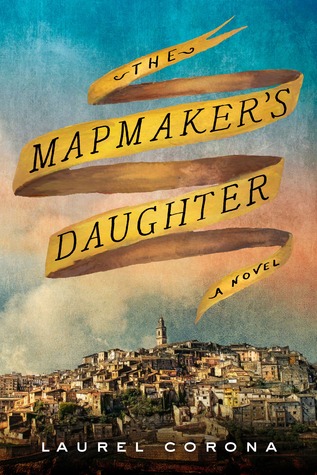
The Mapmaker's DaughterIn Sevilla, Spain in 1432, Amalia Cresques is the young daughter of a famous cartographer, whose own father was renowned for his cartography skills as well. But the family has a secret: Amalia, her sisters, and her parents conceal their Jewish heritage by living as conversos — Jews who have converted to Catholicism for the sake of survival, but who secretly practice their own religion in hiding. Amalia makes sure to be seen with dirty hands as the Jewish Sabbath approaches on Friday afternoons and buys pork and ham at the butcher shop, so that no prying neighbors can accuse the family of “Judaizing”, a crime that carries harsh punishments if caught.

In The Mapmaker’s Daughter, we follow Amalia from 1432, when she is a little girl of six, through 1492 when, as an old woman, she and her remaining family must leave the land they love as part of the Jewish expulsion from Spain ordered by King Ferdinand and Queen Isabella. Along the way, we view the life of this one woman as well as the shared experiences of the Jews of Spain and Portugal — experiences including forced conversions, hidden identities, persecution, scapegoating, ghettos, and finally banishment.

Amalia is raised from an early age to cherish her heritage, but at the same time to keep it as her most closely guarded secret. Once she and her father move to Portugal in order to accept a court appointment, Amalia begins to explore what it might mean to be more open about her religion, and ultimately finds refuge with an openly Jewish family, the Abravanels, who are esteemed by the Jewish community and who have a great influence at court. With the Abravanels, Amalia is able to embrace the rhythms and rituals of Jewish life, as well as to find a place as an adopted daughter and cherished family member.

And yet, danger is never far away. The fear of persecution is ever-present, and the risks become even greater as Torquemada’s Inquisition grows in power, threatening everyone and everything dear to Amalia.

The Mapmaker’s Daughter covers a period of history that’s both fascinating and frightening. Already familiar with the general history of the time, I still found much to learn from this book. As with all good historical fiction, The Mapmaker’s Daughter makes real events tangible by introducing us to them through the eyes of a character we care about a great deal, which only serves to heighten the impact of the great and awful circumstances that Amalia encounters.

Amalia herself is an interesting character, strong in her convictions, aching for love and connection, never giving up on her inner truths even when they put her at great risk. Desperate for passion and belonging, Amalia’s love life is not easy, but does lead to some remarkable adventures and experiences. Amalia serves as her father’s right hand during her youth, and becomes a skilled polyglot and translator, later an adept poet and tutor, and refuses to take the easier paths available to women at that time. Above all, Amalia believes in her own personal family heritage as well as the heritage of the Jewish people, and holds on to her family’s great atlas, created by her father and grandfather, as a symbol of where she came from and her family’s roots in Spain.

The story as a whole is quite interesting and moving, and yet I found it hard at times to feel emotionally connected. Perhaps this is because the earliest parts of the book are told through the eyes of Amalia as a very young girl, starting at age six, and her narrative voice doesn’t feel entirely true for her age. The pacing of the novel is somewhat problematic: We spend quite a lot of time on Amalia’s childhood, youth, and 20s, then rush through the remainder of her life in the last quarter of the book. This ending section is crammed full of relatives and descendants, children’s children, marriages and pursuits, and it just feels like a lot.

The Mapmaker’s Daughter is filled with historical figures — not just the nobility who are a more well-known part of the historical record, but also the characters who people Amalia’s life. The Cresques were in fact a well-known family of cartographers, and their masterwork, the Catalan Atlas, is considered one of the most important sets of maps of the period. Likewise, the Abravanels were a real family of Jewish scholars, philosophers, and royal advisers, and played a key role in the fate of the Jews of Spain and Portugal during this period. I only wish that I had had this information prior to reading the novel, rather than finding out via the extras at the end of the book. I think knowing which characters are in fact real people would have helped make the impact of the story even stronger.

Overall, I enjoyed reading The Mapmaker’s Daughter very much. The author brings to life a chapter of history that may not be well known today, but which is certainly powerful and frightening. Using such an unusual and admirable woman as a main character helps make the plight of the Jews feel real in a much more visceral way, perhaps, than just reading a straightforward history. Despite my reservations about the book’s structure and certain issues around the narrative flow, I’m very glad to have read The Mapmaker’s Daughter, and recommend it for fans of historical fiction, particularly those who enjoy reading about time periods less heavily represented in popular literature and learning about the struggles of real people.

________________________________________

The details:

Title: The Mapmaker’s Daughter
Author: Laurel Corona
Publisher: Sourcebooks Landmark
Publication date: March 1, 2014
Length: 360 pages
Genre: Historical fiction
Source: Review copy courtesy of Sourcebooks Landmark via Netgalley

Book Review: City of Jasmine by Deanna Raybourn

Book Review: City of Jasmine by Deanna Raybourn

City of JasmineLove, intrigue, and adventure are set against a backdrop of gorgeous desert vistas and an ancient Middle Eastern city in this new novel from Deanna Raybourn, author of A Spear of Summer Grass and the Lady Julia Grey series.

In City of Jasmine, lovely but broke Evie Merriweather Starke is gaining lots of attention as an aviatrix setting out to fly over the seven seas of antiquity — hoping to keep sponsorships coming in just a little while longer before her cash and stamina run out. Evie has spunk and daring, but she’s also still nursing the heartbreak of her failed marriage. Evie eloped with Gabriel Starke on the day she met him, ringing in the new year of 1915 together. But their marriage quickly soured, and when Gabriel was lost at sea with the sinking of the Lusitania, no one but Evie knew that she’d been about to divorce him.

Now, five years later, Evie is trying her best to move on with her life, with her eccentric Aunt Dove for companionship, when she receives an anonymous piece of mail containing a picture of Gabriel, dated 1920 and captioned “Damascus”. What does it mean, and why would someone send it to Evie? Seeing how she’s in the area anyway, Evie sets off for the ancient city to either find her presumed dead husband or to lay his memory to rest for good.

Adventure awaits. Damascus is dusty, confusing, and full of old-world glamor and mystery. Evie finds herself in the company of a group of archaeologists, who have apparently made a startling discovery way out in the desert at their dig site. Meanwhile, the Middle East is simmering with post-War political tensions, as the European powers attempt to carve up the former Ottoman Empire — which doesn’t necessarily sit very well with the Arab locals and the desert-dwelling Bedouin tribes.

City of Jasmine is at heart a romance, and that shines through despite occasional dives into historical politics that get a bit too dry at times. The love story is really what this book is all about, and it’s at its best when the mystery of Evie and Gabriel’s marriage and estrangement is explored. Why did the lovely man Evie married turn into a cold-eyed stranger so quickly? Why did he fake his own death? What is he doing in Damascus, disguised as an antiquities expert in dusty robes and a nasty beard? And why, even now, must he treat Evie with such aloofness and mockery?

There’s quite a bit of action in City of Jasmine, and at times it has a frantic, almost Indiana Jones-ish feel to it. There are double-crosses and triple-crosses, chases through the desert, gunfire, escapes via camel, truck and airplane, hostile tribes and friendly tribes, and all sorts of talk of relics, artifacts, and priceless treasures. This being a romance, though, there are also quite luxurious descriptions of Turkish baths and spa treatments, flowing robes, absolutely scrumptious-sounding food, and desert tents filled with lovely carpets and cushions.

The history feels somewhat shoe-horned in. There’s a lot of talk about the politics of the time and their implications, but this mostly just scratches the surface of the complicated issues involved. I suppose the political atmosphere of the day is necessary for the events and setting to make sense, but between that and the archaelogy and the action sequences, the romantic elements are often in danger of being buried by plot.

I did enjoy City of Jasmine, but felt that the relationship between Evie and Gabriel needed to be explored further. Interestingly, the publisher released a prequel novella entitled Whisper of Jasmine in early February, several weeks before City of Jasmine‘s release. Whisper of Jasmine tells the story of Evie and Gabriel’s first meeting at a New Year’s Eve party, their intense and immediate attraction, and their elopement. It’s all quiet breathless and passionate and very, very romantic. I have to wonder, though, if the overarching story might have been better served by including this prequel as a prologue within City of Jasmine itself. Without having read the prequel, it’s hard to see the marriage as anything but an impulsive decision that ended in failure, and we don’t see enough of Evie and Gabriel together to get a sense of the feelings between them. Of course, I can’t really judge since I did read the prequel first — but I wonder what impressions a reader might have who hadn’t read Whisper of Jasmine ahead of time.

If you’ve read A Spear of Summer Grass by Deanna Raybourn, then you’ll be happy to recognize a few familiar characters popping up here in City of Jasmine, kind of like encountering old friends unexpectedly. If you haven’t read A Spear, no worries. It’s nice to have the connection to the previous novel, but not essential to understanding the characters and events of City of Jasmine.

I enjoyed the flapper-esque sensibility and dialogue of Evie and her aunt, who is the quintessential elderly relative with a notorious, scandalous past:

“We’re travel-fatigued,” Aunt Dove pronounced. “It happens when one passes too quickly from one culture into another. I’ve always said trains were uncivilized. One ought only ever to travel by steamship or camel.”

Likewise, there are moments of prime bantering between Evie and Gabriel that are quite charming:

When I reached his side, he paused and gave me a penetrating look. “How much did you enjoy pulling that trigger at me?”

I thought a moment. “Less than I expected but more than I should have.”

He nodded. “That sounds about right.”

Overall, I found City of Jasmine — while overly hectic in places — an engaging, romantic tale of adventure and love. If you enjoy a light taste of history mixed in with your exotic locations and passionate pairings, give City of Jasmine a try!

And if you’ve read City of Jasmine, I’d also recommend:

  • A Spear of Summer Grass by Deanna Raybourn: A terrific historical romance set in colonial Africa in the 1920s, with a remarkable, memorable heroine.
  • Dreamers of the Day by Mary Doria Russell: For those wanting a deeper dive into the history and politics of the Middle East in the years following World War I, you really can’t do better than this brilliant historical novel.

_________________________________________

The details:

Title: City of Jasmine
Author: Deanna Raybourn
Publisher: Harlequin MIRA
Publication date: February 25, 2014
Length: 354 pages
Genre: Romance/historical fiction
Source: Review copy courtesy of Harlequin MIRA via NetGalley

Wishing & Waiting on Wednesday: I Shall Be Near To You

There’s nothing like a Wednesday for thinking about the books we want to read! My Wishing & Waiting on Wednesday post is linking up with two fabulous book memes, Wishlist Wednesday (hosted by Pen to Paper) and Waiting on Wednesday (hosted by Breaking the Spine).

My most wished-for book this week is:

I Shall Be Near to You: A Novel

I Shall Be Near To You by Erin Lindsay McCabe
(published January 28, 2014)

Synopsis via Goodreads:

An extraordinary novel about a strong-willed woman who disguises herself as a man in order to fight beside her husband, inspired by the letters of a remarkable female soldier who fought in the Civil War.
   Rosetta doesn’t want her new husband Jeremiah to enlist, but he joins up, hoping to make enough money that they’ll be able to afford their own farm someday. Though she’s always worked by her father’s side as the son he never had, now that Rosetta is a wife she’s told her place is inside with the other women. But Rosetta decides her true place is with Jeremiah, no matter what that means, and to be with him she cuts off her hair, hems an old pair of his pants, and signs up as a Union soldier.
With the army desperate for recruits, Rosetta has no trouble volunteering, although she faces an incredulous husband. She drills with the men, proves she can be as good a soldier as anyone, and deals with the tension as her husband comes to grips with having a fighting wife. Rosetta’s strong will clashes with Jeremiah’s while their marriage is tested by broken conventions, constant danger, and war, and she fears discovery of her secret even as they fight for their future, and for their lives. Inspired by more than 250 documented accounts of the women who fought in the Civil War while disguised as men, I Shall Be Near To You is the intimate story, in Rosetta’s powerful and gorgeous voice, of the drama of marriage, one woman’s amazing exploits, and the tender love story that can unfold when two partners face life’s challenges side by side.

I absolutely love the sound of this one — and one of my most trusted book friends has been raving about it. The book is already out, and I really can’t wait to get my hands on a copy!

And besides sounding like a fascinating book, it made me think of this… which brings back tons of old camp memories, near and dear to my heart:

What are you wishing for this Wednesday?

Looking for some bookish fun on Thursdays and Fridays? Come join me for my regular weekly features, Thursday Quotables and Flashback Friday! You can find out more here — come share the book love!

♥♥♥♥♥♥♥♥

Do you host a book blog meme? Do you participate in a meme that you really, really love? I’m building a Book Blog Meme Directory, and need your help! If you know of a great meme to include — or if you host one yourself — please drop me a note on my Contact page and I’ll be sure to add your info!