Book Review: The Frozen River by Ariel Lawhon

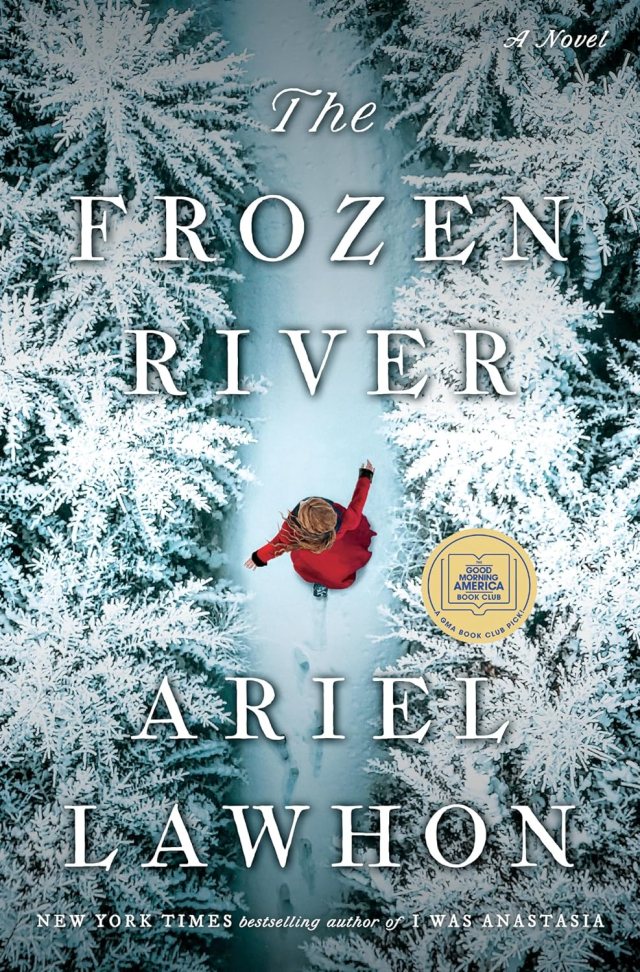
Title: The Frozen River
Author: Ariel Lawhon
Publisher: Doubleday
Publication date: December 5, 2023
Length: 432 pages
Genre: Historical fiction
Source: Purchased
Rating:

Rating: 5 out of 5.

A gripping historical mystery inspired by the life and diary of Martha Ballard, a renowned 18th-century midwife who defied the legal system and wrote herself into American history.

Maine, 1789: When the Kennebec River freezes, entombing a man in the ice, Martha Ballard is summoned to examine the body and determine cause of death. As a midwife and healer, she is privy to much of what goes on behind closed doors in Hallowell. Her diary is a record of every birth and death, crime and debacle that unfolds in the close-knit community. Months earlier, Martha documented the details of an alleged rape committed by two of the town’s most respected gentlemen—one of whom has now been found dead in the ice. But when a local physician undermines her conclusion, declaring the death to be an accident, Martha is forced to investigate the shocking murder on her own.

Over the course of one winter, as the trial nears, and whispers and prejudices mount, Martha doggedly pursues the truth. Her diary soon lands at the center of the scandal, implicating those she loves, and compelling Martha to decide where her own loyalties lie.

Clever, layered, and subversive, Ariel Lawhon’s newest offering introduces an unsung heroine who refused to accept anything less than justice at a time when women were considered best seen and not heard. The Frozen River is a thrilling, tense, and tender story about a remarkable woman who left an unparalleled legacy yet remains nearly forgotten to this day.

Once again, I need to give a big shout-out to my book group, for giving me the motivation to read The Frozen River — a book that’s been on my TBR for over a year! I’m so glad to have finally read it. The Frozen River is a captivating look at a historical figure who led a remarkable life, but who seems to not be widely known or remembered.

The Frozen River is a fictionalized version of Martha Ballard’s life, drawn from her meticulously kept diaries but also liberally embellished by the author, as she explains in the notes at the end. For purposes of clarity, let me stipulate that when I refer to Martha from here on out, I’m talking about her as depicted in this novel.

Martha is the town midwife of Hallowell, Maine. She’s 54 years old, married to a lovely man, Ephraim, who runs a local lumber mill, and mother of nine children, six of whom are still living. She’s delivered hundreds of babies over the years, and has never lost a mother. She comes when calls, and is a trusted medical professional — at least among the women of the area. When an arrogant but inexperienced Harvard-educated doctor comes to town, some of the Martha’s patients (or really, their husbands) choose his services instead, with disastrous results.

One of Martha’s responsibilities is to question unwed women — in the middle of labor!! — to ascertain the name of the baby’s father, and then testify about it in court. Yes, really. (It’s believed that a laboring woman is more likely to tell the truth in the middle of all the pain…) Her role is clear, but as the book shows, when she steps out of line or questions the powerful men of the town, she’s dismissed or undermined.

As the story opens, a body is found under the ice of the frozen Kennebec River. Martha is called to examine the body and determine cause of death, which is clear to her experienced eyes: He’s been badly beaten and then hanged, and his dead body was tossed into the river. The man is identified as one of two men recently accused of violently raping the pastor’s wife. Between the murder investigation and the rape trial, at which Martha is a lead witness supporting the woman bringing charges, Martha’s credibility and expertise are constantly being challenged and called into question.

Beyond the mystery of the dead man and the drama of the rape case, The Frozen River is a powerful story of a strong, professional woman who refuses to back down, and who serves the women of her community whenever needed, even at risk to her own health and well-being. Martha’s home life is also lovely to see. She has a passionate, devoted relationship with her husband, and is an involved, caring mother to her children.

Memory is a wicked thing that warps and twists. But paper and ink receive the truth without emotion, and they read it back without partiality. That, I believe, is why so few women are taught to read and write. God only knows what they would do with the power of pen and ink at their disposal.

Martha’s journal entries are interspersed throughout the novel, giving us a view into her daily life. Her understated record of her days hide the drama that each entails, whether a breech birth or a contentious day in court or the worries of a mother whose sons may have secrets.

The writing in The Frozen River is lovely, giving a vivid sense of day-to-day life in late 18th century Maine. The harsh winter, the frozen river, the external elements that make the environment a challenge — all are in contrast to the warm interiors of Martha’s home, the tavern that’s a community gathering spot, and the various homes to which Martha is called to care for the women who need her.

As for the connected dramatic plotlines surrounding the rape case and the murdered man, these are presented masterfully, with building tension and suspense. Hints and new clues are dispensed slowly throughout the book; the picture emerges in bits and pieces, and it’s a sign of the author’s skill that the full story doesn’t truly become clear until the very end.

I was completely wrapped up in The Frozen River from start to finish. Martha is a wonderful main character, and I felt connected to her immediately. The characters, setting, and plotlines all come together to make this a compelling and unforgettable read. Highly recommended.

The Frozen River is my first book by Ariel Lawhon, but it won’t be my last. I’m thinking of trying I Was Anastasia next — if you’ve read it, let me know your thoughts!

To learn more about the real Martha Ballard:

Purchase links: AmazonBookshop.org
This post contains affiliate links. If you click and buy, we may earn a small commission at no extra cost to you.

Book Review: The Jackal’s Mistress by Chris Bohjalian

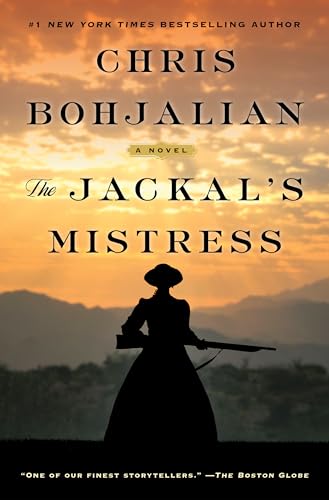
Title: The Jackal’s Mistress
Author: Chris Bohjalian
Publisher: Doubleday Books
Publication date: March 11, 2025
Length: 336 pages
Genre: Historical fiction
Source: Review copy courtesy of the publisher via NetGalley
Rating:

Rating: 5 out of 5.

In this Civil War love story, inspired by a real-life friendship across enemy lines, the wife of a missing Confederate soldier discovers a wounded Yankee officer and must decide what she’s willing to risk for the life of a stranger, from the New York Times bestselling author of such acclaimed historical fiction as Hour of the Witch and The Sandcastle Girls.

Virginia, 1864—Libby Steadman’s husband has been away for so long that she can barely conjure his voice in her dreams. While she longs for him in the night, fearing him dead in a Union prison camp, her days are spent running a gristmill with her teenage niece, a hired hand, and his wife, all the grain they can produce requisitioned by the Confederate Army. It’s an uneasy life in the Shenandoah Valley, the territory frequently changing hands, control swinging back and forth like a pendulum between North and South, and Libby awakens every morning expecting to see her land a battlefield. 

And then she finds a gravely injured Union officer left for dead in a neighbor’s house, the bones of his hand and leg shattered. Captain Jonathan Weybridge of the Vermont Brigade is her enemy—but he’s also a human being, and Libby must make a terrible decision: Does she leave him to die alone? Or does she risk treason and try to nurse him back to health? And if she succeeds, does she try to secretly bring him across Union lines, where she might negotiate a trade for news of her own husband? 

A vivid and sweeping story of two people navigating the boundaries of love and humanity in a landscape of brutal violence, The Jackal’s Mistress is a heart-stopping new novel, based on a largely unknown piece of American history, from one of our greatest storytellers.

Chris Bohjalian is a prolific author — The Jackal’s Mistress is his 25th novel!! — and while he’s such a great writer that every single book is engrossing, it’s his historical fiction novels that truly draw me in and leave me in awe. Fortunately for me, his 2025 new release is historical fiction, set in the Shenandoah Valley of Virginia during the final year of the Civil War. Put simply: It’s excellent.

And the writing is gorgeous — every description brings the scene to life:

Jonathan Weybridge sat on a camp stool atop the crest of a small hill and watched the elegant tendrils of fog in the ravine, the steepled tips of the fir trees piercing the misty clouds like the finials of a wrought-iron fence.

Libby Steadman, at age 25, works tirelessly at her farm’s gristmill, able to keep herself, her 12-year-old niece Jubilee, and freed married couple Joseph and Sally fed by selling grain to the Confederate army. Libby’s husband Peter freed his family’s slaves immediately after he inherited the farm from this father, but he’s still enough of a Southerner to have joined the rebel army. Now, in the fall of 1864, all Libby knows is that Peter was wounded and taken to a Union prison, but it’s been month since she’s had word of him. The household is in constant peril from marauders, rangers, and deserters, not to mention the battles they can hear from not too far away, and Libby is barely holding on most days.

Jonathan Weybridge is a captain with the Vermont Brigade; he’s a former professor who’d prefer to be home with his wife and sons, his books and students, but ends up fighting on the side of what he knows to be right and just. After a fierce battle, he’s severely wounded, and as the Union army leaves the territory, he’s left behind — abandoned to what will surely be a slow, painful death.

By chance, Sally stumbles across Jonathan, and Libby makes a risky choice. She does what she can only hope a Northern woman might do for Peter: She decides to bring Jonathan back to her own home and see if his life can be saved.

It’s highly doubtful at the start. He’s lost a leg and several fingers on one hand. After days of suffering, with no food or medicine, he’s emaciated, in pain, and has untended, bloody injuries that may never heal. Libby is stubborn, though, and she’s determined to keep him alive.

The story of The Jackal’s Mistress is built around thoughtful character development, and rooted in a firm sense of the time and place in which it’s set. Readers can feel the danger from moment to moment. Hearing hoofbeats is enough to set one’s heart racing — any visitor can mean potential disaster, whether by outright violence or the threat of unintended discovery of the household’s secret. The risk Libby takes is profound, and endangers every one under her roof: Sally and Joseph, although free, are subject to much harsher laws, and would likely be hanged on the spot; Libby would be considered a traitor; and of course, Joseph, at best, would be taken prisoner, although given the state of his health, death is the likely outcome.

[He] has met men like Morgan before. On the surface, they were civilized. And, perhaps, without war they would have remained that way. But war gave them permission to be who they really were, men who were comfortable killing all the kindness and magic and beauty in the world, men whose souls were bleak and, therefore, dangerous.

We’re never asked to sympathize with the Southern cause, and yet, we can feel pity for Libby, caught up in a war she doesn’t believe in, trying to save her home and maintain the far-fetched hope of seeing her husband again someday, and not being able to count on the goodwill of neighbors or the army supposedly fighting for her own side to keep her safe. Her bravery is off the charts, yet believable: She’s an ordinary woman who chooses to do extraordinary things because it’s what she feels she must do.

Jonathan is a wonderful character as well. We feel his pain as well as his helplessness. He’s a man of peace, devoted to literature and education, caught up in terrible violence. He cares about the men under his command, misses his family, and yearns for the end of war. The descriptions of his suffering and helplessness are terrible to read, which is a sign of just how powerfully written this book is. As Jonathan begins to recover, he’s able to interact with Libby and the other members of the household, and each interaction has a spark of life and engagement that bring new facets of the characters’ balancing acts into focus.

The Jackal’s Mistress provides a finely woven blend of introspection, character development, and action sequences. It works remarkably well, and brings to life a handful of people caught up in a terrible time, making choices of conscience that could doom them all at any moment. The book is fascinating, moving, and thought-provoking. It’s impossible to put down

The author’s notes explain the real-life people whose story inspired The Jackal’s Mistress, and provides an interesting look at his research and some recommended resources for further reading. Don’t skip the notes when you finish the novel!

I’d rank The Jackal’s Mistress as one of Chris Bohjalian’s best. While his contemporary thrillers are always compelling, twisty reads, it’s his historical novels that truly capture my imagination and my heart. I highly recommend The Jackal’s Mistress — but you really can’t go wrong with any of his books!

For more historical fiction by this author, check out a few of my favorites:

Book Review: The Wrong Lady Meets Lord Right by Suzanne Allain

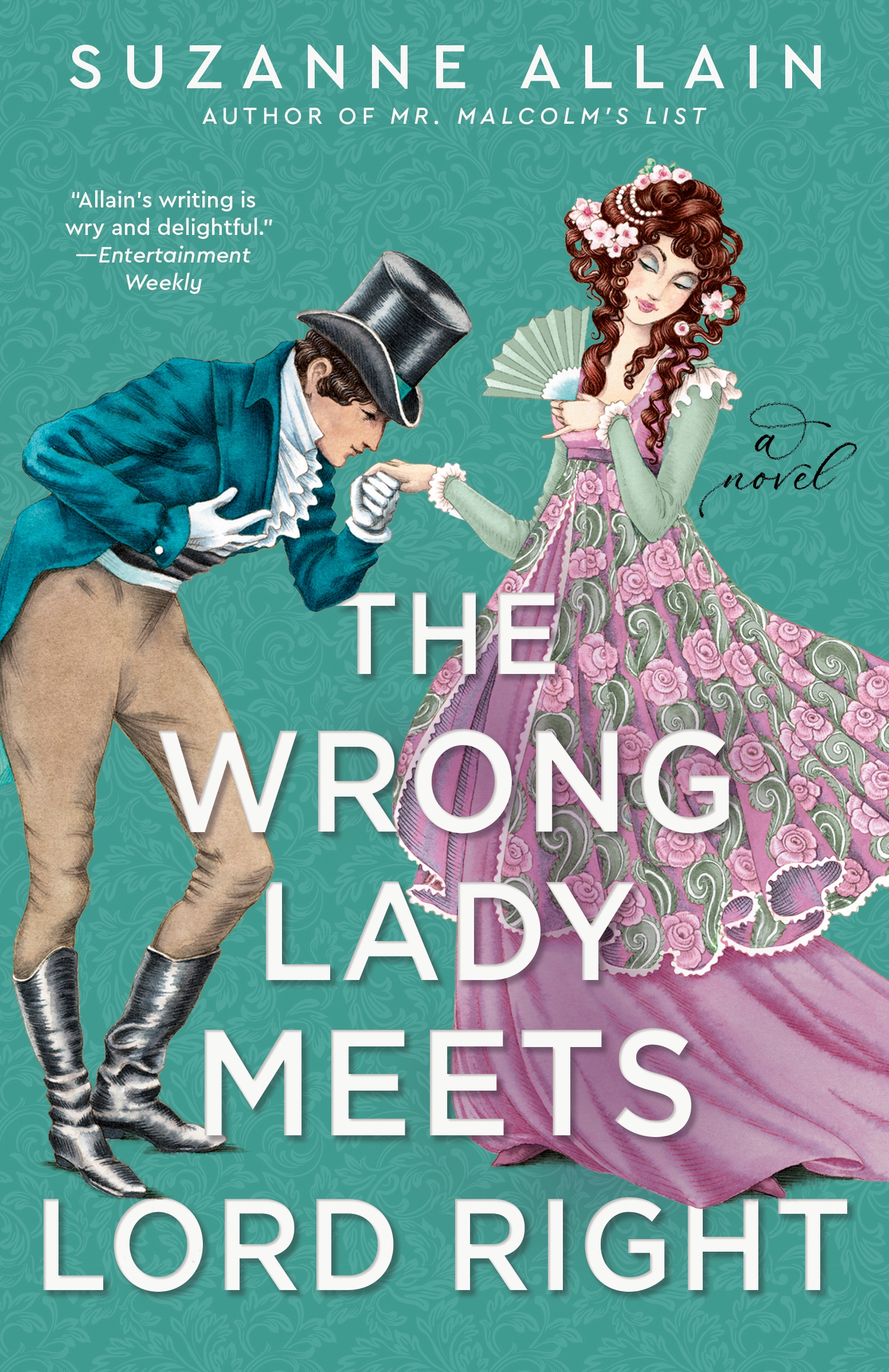
Title: The Wrong Lady Meets Lord Right
Author: Suzanne Allain
Publisher: Berkley
Publication date: December 3, 2024
Length: 271 pages
Genre: Historical fiction
Source: Review copy courtesy of the publisher via NetGalley
Rating:

Rating: 4.5 out of 5.

When a young woman trades places with her noble cousin, their innocent ruse leads to true love in this sparkling new Regency-era romantic comedy of manners from the author of Mr. Malcolm’s List.

When Arabella Grant’s wicked aunt dies suddenly, both Arabella and her cousin Lady Isabelle cannot help but feel relieved. She’d made their lives miserable, and now Lady Issie is free to read to her heart’s content, and Bella is free from taunts about her ignoble birth. 

Their newfound freedom is threatened, however, when Issie’s great-aunt commands her to travel to London for a come-out Issie has never wanted. Issie, who is in poor health, is convinced she’ll drop dead like her mother did if she drops into a curtsy before the queen. So when her great-aunt turns out to be nearsighted and can’t tell the noble Lady Isabelle from her commoner cousin Arabella, Issie convinces Bella to take her place. Bella can attend all the exclusive entertainments that her lower birth would typically exclude her from, and Issie can stay in bed, her nose in a book.

Bella agrees to the scheme for her cousin’s sake, but matters turn complicated when she meets the irresistible Lord Brooke. He begins courting her while under the impression she’s the rich and aristocratic Lady Isabelle, who, unlike Bella, is a suitable bride for an eligible young earl. And Bella, who is convinced that she has met “Lord Right,” worries what will happen when she reveals that he’s actually fallen for…the wrong lady.

Suzanne Allain’s last several books have all been delightfully frothy — yet empowering — reads, and The Wrong Lady Meets Lord Right fits right in!

In this charming new Regency novel, two cousins take on a Prince and the Pauper-esque switcheroo, with silly, laugh-out-loud results. When Lady Strickland — a nasty woman if ever there was one — dies suddenly, her entire fortune is left for her daughter Isabelle. Isabelle was treated terribly by her mother all her life, and only the presence of her beloved cousin Arabella brought joy to Issie during her younger years.

Now, freed from Lady Strickland’s tyranny, Issie and Bella look forward to enjoying their freedom — only to be summoned to London by Issie’s aunt, Lady Dutton, as soon as their year of “mourning” has passed. Lady Dutton insists that Issie’s mother intended for her to have a London season and to be presented at court, and intends to make it happen, with herself as chaperone.

Issie is terrified — she’d rather stay home and read her books. Meanwhile, Bella — always treated by Lady Strickland as the unwanted poor relation — expects more of the same in London. However, Lady Dutton is quite nearsighted and can’t tell the two girls apart. Frantic with nerves and feeling unwell from all their travel, Issie begs Bella to take her place at court — and when that works well, pleads with her to continue the ruse for the full season.

Bella loves Issie and would do anything for her, and agrees to play along if that’s what Issie needs. What Bella doesn’t expect is to encounter the charming Lord Brooke, who seems quite smitten with Bella — although he believes that she’s Isabella, known in society as Lady Belle.

Confused yet? The plot is a merry-go-round of mistaken identities, as Bella pretends to be Issie, Issie pretends to be Bella, each meets the man of her dreams, but each man believes he’s in love with the other cousin. All sorts of near-misses and shenanigans ensue, leading to delightful set pieces, a few touching moments of heartache, and (not exactly a spoiler) a very happy ending, once all the mix-ups are sorted out.

Bella is our point-of-view character, and she’s a treat. Raised alongside Issie but never considered an equal (by anyone but Issie), Bella is good-hearted, devoted to her cousin, and clear-eyed about her own future and prospects. She doesn’t expect to enjoy the game of pretend she ends up playing, and it’s entertaining and touching to see her struggle with herself about doing the right thing, especially once she has to weigh honoring promises to her cousin against deceiving the man she cares for.

The class issues are well-presented, and naturally, society’s contempt and intolerance for the lower classes is not a good look. Still, we do meet some decent members of the nobility, amidst the many pretentious and often cruel snobs, and Bella gets some true surprises about her own connections and origins.

The Wrong Lady Meets Lord Right is a fast, funny read, filled with silly capers but also genuine commitment, loyalty, and love. The relationship between Issie and Bella is the heart of the story and is especially enjoyable, and the romantic elements are quite fun too.

I really enjoyed the author’s previous two books, The Ladies Rewrite the Rules and Miss Lattimore’s Letters. After reading The Wrong Lady Meets Lord Right, I’m definitely counting Suzanne Allain as an auto-buy author, and can’t wait to see what she writes next!

Book Review: Lady Tan’s Circle of Women by Lisa See

Title: Lady Tan’s Circle of Women
Author: Lisa See
Publisher: Scribner
Publication date: June 6, 2023
Print length: 352 pages
Genre: Historical fiction
Source: Purchased
Rating:

Rating: 5 out of 5.

An immersive historical novel inspired by the true story of a woman physician in 15th-century China.

According to Confucius, “an educated woman is a worthless woman,” but Tan Yunxian—born into an elite family, yet haunted by death, separations, and loneliness—is being raised by her grandparents to be of use. Her grandmother is one of only a handful of female doctors in China, and she teaches Yunxian the pillars of Chinese medicine, the Four Examinations—looking, listening, touching, and asking—something a man can never do with a female patient.

From a young age, Yunxian learns about women’s illnesses, many of which relate to childbearing, alongside a young midwife-in-training, Meiling. The two girls find fast friendship and a mutual purpose—despite the prohibition that a doctor should never touch blood while a midwife comes in frequent contact with it—and they vow to be forever friends, sharing in each other’s joys and struggles. No mud, no lotus, they tell themselves: from adversity beauty can bloom.

But when Yunxian is sent into an arranged marriage, her mother-in-law forbids her from seeing Meiling and from helping the women and girls in the household. Yunxian is to act like a proper wife—embroider bound-foot slippers, recite poetry, give birth to sons, and stay forever within the walls of the family compound, the Garden of Fragrant Delights.

How might a woman like Yunxian break free of these traditions and lead a life of such importance that many of her remedies are still used five centuries later? How might the power of friendship support or complicate these efforts? A captivating story of women helping each other, Lady Tan’s Circle of Women is a triumphant reimagining of the life of one person who was remarkable in the Ming dynasty and would be considered remarkable today.

Lisa See’s books are consistent hits for me, and Lady Tan’s Circle of Women is no exception. I was hesitant about getting started, not sure if I was ready to go quite that far back in time. It should not have surprised me that this book was a compelling, excellent reading experience that pulled me in right from the start.

As the book opens, main character Yunxian is an eight-year-old girl, already learning from her mother about how to be a proper wife and fulfill her role as a woman in 15th-century noble Chinese society. When her mother, always referred to as Respectful Lady, dies of infection stemming from her bound feet, Yunxian is sent away to live with her grandparents, who begin training her as a doctor.

As Yunxian matures and then marries, her skills as doctor grow, but she’s limited in her ability to practice by the strict rules surrounding the family’s household, as dictated by society’s norms for the upper class and enforced by the iron rule of Yunxian’s mother-in-law. Her friendship with the midwife Meiling is frowned upon, as midwives are considered practically taboo — they’re necessary, yet because of their dealing with blood, are considered improper for a lady to associate with.

Without delving too deeply into plot, I’ll just say that Lady Tan’s Circle of Women is both an eye-opening exploration of the roles of women in that time and place, and a personal story of one particularly brave and talented woman, the effect she had on those around her, and the struggles with friendship, marriage, and motherhood she endured and overcame. While some of the details of individual encounters and scenes are purely fiction, Yunxian was a real person whose published works on medicine are considered groundbreaking — especially considering that they were written by a woman and focused on treating women, a field male doctors of that time had little interest or experience with.

The book sheds lights on customs that, to modern and Western eyes, seem not only archaic but cruel. In particular, the subject of foot-binding is covered extensively (as in the author’s earlier novel, Snow Flower and the Secret Fan). Some scenes can be hard to read, and it’s especially heartbreaking to read about a woman binding her own daughters’ feet, and to accept that in that society, it was an expected ritual of girlhood, crucial to being marriageable and viewed as a decent, honorable young woman.

Other elements are fascinating from a more historical/sociological perspective — learning about family structure, the running of a household, and of course, the practice of medicine at that time, especially since many of the basic tenets of Yunxian’s medical practice are still considered important elements of Traditional Chinese Medicine.

The friendship between Yunxian and Meiling is especially moving. It’s not without conflict, as the two women’s very different stations in life lead to barriers that cause resentments and sorrows. Ultimately, though, it’s this relationship that provides one of the core emotional threads of the story.

Friendship is a contract between two hearts. With hearts united, women can laugh and cry, live and die together.

Lady Tan’s Circle of Women is a beautifully written look into the life of a fascinating woman, while also presenting an immersive reading experience about a time and place that’s so very different from our modern lives. I enjoyed every moment, and simply couldn’t put the book down once I started. Highly recommended — this book should not be missed!

Want to know more? Check out the wonderful resources available on the author’s website: https://lisasee.com/step-inside/traditions-and-culture/#welcome

Book Review: Return to Valetto by Dominic Smith

Title: Return to Valetto
Author: Dominic Smith
Publisher: Farrar, Straus and Giroux
Publication date: June 13, 2023
Print length: 336 pages
Genre: Historical/contemporary fiction
Source: Library
Rating:

Rating: 3 out of 5.

A captivating and moving new novel from the international bestselling author of The Last Painting of Sara de Vos.

A nearly abandoned Italian village, the family that stayed, and long-buried secrets from World War II.

On a hilltop in Umbria sits Valetto. Once a thriving village-and a hub of resistance and refuge during World War II-centuries of earthquakes, landslides and the lure of a better life have left it neglected. Only ten residents remain, including the widows Serafino – three eccentric sisters and their steely centenarian mother – who live quietly in their medieval villa. Then their nephew and grandson, Hugh, a historian, returns.

But someone else has arrived before him, laying claim to the cottage where Hugh spent his childhood summers. The unwelcome guest is the captivating and no-nonsense Elisa Tomassi, who asserts that the family patriarch, Aldo Serafino, a resistance fighter whom her own family harboured, gave the cottage to them in gratitude. Like so many threads of history, this revelation unravels a secret – a betrayal, a disappearance and an unspeakable act of violence – that has impacted Valetto across generations. Who will answer for the crimes of the past?

Dominic Smith’s Return to Valetto is a riveting journey into one family’s long-buried story, a page-turning excavation of the ruins of history and our commitment to justice in a fragile world. For fans of Amor Towles, Anthony Doerr and Jess Walter, it is a deeply human and transporting testament to the possibility of love and understanding across gaps of all kinds – even time.

Return to Valetto is a story of family secrets and promises, set in a nearly abandoned hilltop village in the Umbria region of Italy. Valetto is now empty save for the Serafino villa, inhabited by three elderly sisters and their even older mother.

A fourth sister, the youngest, died years earlier, and as the story opens, her son Hugh — a history professor specializing in abandoned towns — arrives on sabbatical. But his arrival is marred by an unwanted presence: A squatter of sorts has taken up residence in the villa’s cottage, which Hugh’s mother had bequeathed to him. The squatter, Elisa, claims that the long-lost patriarch of the Serafino family had gifted it to her family years earlier, after they saved him in the closing days of the war. The sisters scoff at her claim, but Hugh wonders whether there might be a kernel of truth in Elisa’s tale.

As we learn, Aldo Serafino was a partisan fighter during World War II, and was last seen by his family in 1944. They never learned what became of him, but Elisa is able to fill in the blanks. He found shelter with her family, who hid him while partisans were being hunted down — and later, as he lay dying of an infection, they cared for him in his final days. She has a letter to prove his intentions, instructing his wife to give the cottage to the Tomassi family as repayment for their kindness on his behalf. The letter was never sent — and now more than half a century later, no one is willing to believe its validity.

As Hugh spends time with Elisa, he comes to see her sincerity and her devotion to her aged mother. Through this connection, he also finally starts to take an interest in life again, after spending years mourning his late wife. As Hugh and Elisa come closer to the truth about how their families intersected so many years ago, he becomes caught up in a search for truth and justice, with unexpected consequences.

Return to Valetto was my book group’s book of the month, and I can see that we’ll have lots to discuss. At the same time, I never felt any urgency about this book, and remained emotionally distant from it throughout, even at times of major revelations about traumatic events of the past.

The storytelling is slow-paced, full of descriptions and inner thoughts. It’s contemplative and shows an appreciation of history, geography, and the sense of loss and abandonment that informs the characters’ lives, as well as their town and surroundings. Shocking elements of the family’s wartime experiences gradually come to light, but even there, a lack of true drama keeps the reader at arm’s-length.

As for the conflict over the cottage, it fizzles away by the midpoint of the novel and is replaced by more dramatic conflict concerning the former townspeople of Valetto and the roles they played during the war. There are several key turning points, but somehow the narrative never truly feels compelling.

I enjoyed the depiction of the feisty older characters, as well as the descriptions of life in this empty town, and there’s a feast scene that’s just mouth-watering. The book presents several moral dilemmas to contemplate, which are interesting to think about, even while the storytelling itself feels a bit uneventful for large stretches.

I would likely not have picked up Return to Valetto without my book group — but I don’t regret reading it. I usually enjoy historical fiction, but somehow, the pacing and tone of this book work against the drama I believe it was trying to achieve, and many of the historical elements would have benefited from just a bit more exposition to set the scene.

Return to Valetto has many interesting elements in it, but it’s not a book that earns raves from me.

Book Review: The Love Elixir of Augusta Stern by Lynda Cohen Loigman

Title: The Love Elixir of Augusta Stern
Author: Lynda Cohen Loigman
Publisher: St. Martin’s Press
Publication date: October 8, 2024
Length: 320 pages
Genre: Contemporary/historical fiction
Source: Review copy courtesy of the publisher via NetGalley

Rating: 4 out of 5.

It’s never too late for new beginnings.

On the cusp of turning eighty, newly retired pharmacist Augusta Stern is adrift. When she relocates to Rallentando Springs—an active senior community in southern Florida—she unexpectedly crosses paths with Irving Rivkin, the delivery boy from her father’s old pharmacy—and the man who broke her heart sixty years earlier.

As a teenager growing up in 1920’s Brooklyn, Augusta’s role model was her father, Solomon Stern, the trusted owner of the local pharmacy and the neighborhood expert on every ailment. But when Augusta’s mother dies and Great Aunt Esther moves in, Augusta can’t help but be drawn to Esther’s curious methods. As a healer herself, Esther offers Solomon’s customers her own advice—unconventional remedies ranging from homemade chicken soup to a mysterious array of powders and potions.

As Augusta prepares for pharmacy college, she is torn between loyalty to her father and fascination with her great aunt, all while navigating a budding but complicated relationship with Irving. Desperate for clarity, she impulsively uses Esther’s most potent elixir with disastrous consequences. Disillusioned and alone, Augusta vows to reject Esther’s enchantments forever.

Sixty years later, confronted with Irving, Augusta is still haunted by the mistakes of her past. What happened all those years ago and how did her plan go so spectacularly wrong? Did Irving ever truly love her or was he simply playing a part? And can Augusta reclaim the magic of her youth before it’s too late?

This dual timeline novel tells the story of Augusta Stern, first in her teens and twenties, then nearing age eighty, and shows the turning points of her life in the 1920s and how they affected everything that came after.

Augusta is the daughter of a trusted pharmacist in Brooklyn. She’s drawn to her father’s knowledge and the way he helps the community, and as soon as she’s allowed, begins apprenticing in his store. There, she meets Irving Rivkin, her father’s delivery boy, who admires Augusta’s intelligence and always has a kind word for her.

Augusta’s father provides financially for his two daughters, but their home has been cold and lifeless since the death of Augusta’s mother. When her great-aunt Esther arrives to keep house for the family, Augusta is initially turned off by this older woman, dressed always in drab clothing and with little tolerance for nonsense. But Esther’s incredible soup and other foods soon bring a sense of warmth back to the family — and what’s more, Esther has a secret, old-world knowledge of herbs, plants, and natural remedies. Is she a homeopathic healer, or is there magic behind her powders and potions?

In the 1980s timeline, Augusta has finally retired from her career as a pharmacist and, upon her niece’s urging, has moved into a Florida retirement village. Much to her dismay, she almost immediately runs into Irving — whom she hasn’t seen in sixty years. He broke her heart all those years ago by disappearing suddenly and marrying another woman. He seems to want to reconnect with Augusta now, but how can she forgive him, much less trust him again?

The Love Elixir of Augusta Stern is a charming story on many levels. The chapters focused on Augusta’s younger years bring 1920s Brooklyn to life, as she navigates her way through a society that doesn’t have much patience or respect for women’s knowledge or professionalism. The women of the neighborhood seek out Esther’s help in secret, while getting “official” prescriptions from Augusta’s father. Augusta is torn: She’s eager to follow in her father’s footsteps, but can’t help seeing that Esther’s knowledge and skills provide help, relief, and cures for women who’ve been failed by more modern approaches. Watching Augusta puzzle out how to fit both aspects of healing into her life is fascinating, and her romance with Irving is innocent and lovely before it all falls apart.

The 1980s chapters are lighter in tone, with some comical moments of conflict between the various residents of the retirement village. Still, Augusta is never portrayed as silly, and in fact, it’s quite special to see this vibrant 80-year-old woman as the focal point of a love story.

The two pieces of the story come together well in the end, as the author draws meaningful connections between the events of then and now, and offers hopeful messages about finding love, no matter one’s age or how much time has passed.

The Love Elixir of Augusta Stern is a heart-warming, uplifting story about love, family, and second chances. It’s a fast read, and kept my attention from start to finish. Highly recommended.

Book Review: Rough Pages (Evander Mills, #3) by Lev AC Rosen

Title: Rough Pages
Series: Evander Mills, #3
Author: Lev AC Rosen
Publisher: Forge Books
Publication date: October 1, 2024
Length: 272 pages
Genre: Historical fiction/mystery
Source: Review copy courtesy of the publisher via NetGalley
Rating:

Rating: 4.5 out of 5.

Private Detective Evander “Andy” Mills has been drawn back to the Lavender House estate for a missing person case. Pat, the family butler, has been volunteering for a book service, one that specializes in mailing queer books to a carefully guarded list of subscribers. With bookseller Howard Salzberger gone suspiciously missing along with his address book, everyone on that list, including some of Andy’s closest friends, is now in danger.

A search of Howard’s bookstore reveals that someone wanted to stop him and his co-owner, Dorothea Lamb, from sending out their next book. The evidence points not just to the Feds, but to the Mafia, who would be happy to use the subscriber list for blackmail.

Andy has to maneuver through both the government and the criminal world, all while dealing with a nosy reporter who remembers him from his days as a police detective and wants to know why he’s no longer a cop. With his own secrets closing in on him, can Andy find the list before all the lives on it are at risk?

Set in atmospheric 1950s San Francisco, Rough Pages asks who is allowed to tell their own stories, and how far would you go to seek out the truth.

Author Lev AC Rosen takes us back once again to the world of San Francisco in the 1950s — a time and place where being gay could get someone threatened, beaten, fired, or even killed, for no greater offense than simply being themselves.

This is true for main character Andy (Evander) Mills, an ex-cop brutally expelled from the police force after being caught in a raid on a gay club. He was lucky to escape with a severe beating and broken ribs; he’s been warned that if his story ever goes public, his life in on the line.

As the 3rd book in this outstanding series opens, Andy is invited back to Lavender House, the setting (and title) of the first book. At Lavender House, a chosen family of gay couples lives a secluded life and have recently adopted a child (under the pretense of being a straight family). Their happy home is at risk — one member of the household is a subscriber to a queer book delivery service, and the man who runs the service is missing, along with his mailing list. If that list gets into the wrong hands, every single person on it could be in danger, including the family at Lavender House, who face the very real threat of losing their child.

As Andy looks into the missing bookseller, he discovers connections to the local mob. Would they have had a reason to kill Howard? What would they do with the list? Or is it possible that Howard has been arrested for crimes related to his use of the postal service for mailing queer books? And if so, who will they come after next?

The more Andy digs, the more risks he discovers, including risks to himself. A reporter has latched onto his investigation, and seems poised to expose his past with the police force. The police chief has made it clear to Andy that if the story of a gay cop ever gets out, he’ll see to it personally that Andy’s life will be destroyed, along with the lives of everyone he cares about. And yet, there’s a truth to be found about Howard’s disappearance — and if Andy doesn’t find out what really happened, the people he loves will never be safe.

Lev AC Rosen is a stellar writer who has a gift for writing in a multitude of genres. I’ve loved his YA books, especially Emmett and Camp, his steampunk debut novel All Men of Genius, and of course, I’m loving this queer noir detective series.

In the Evander Mills series, tightly woven, intriguing mysteries drive the plot, but the evocation of 1950s San Francisco is what truly elevates the books and makes them unique. The characters are well-defined and cover a range of personalities, expressions, identities, and statuses, yet come together to give a vibrant picture of gay life in that era.

In Rough Pages, the mystery itself is expertly laid out, with plenty of misleading clues, shady suspects, and what-ifs. An added treat for book lovers is how central the bookstore is, not only to the mystery plot but also to the depiction of a community. As Howard and other characters illustrate, it matters who gets to tell their stories. For readers, these shared stories may be the key to understanding themselves and realizing for the very first time that they’re not alone. While some of Howard’s approaches may strike us as risky or foolish, perhaps naively trusting to a false sense of safety, what he tries to do with his book subscription service is a beautiful thing. The stacks of letters from subscribers demonstrates the impact of books, and their power to change lives.

Rough Pages is a terrific read on so many levels. I recommend the series as a whole, and suggest starting at the beginning with Lavender House in order to get the full picture of the characters and the setting. I look forward to the next installment in the series!

Book Review: The Underground Library by Jennifer Ryan

Title: The Underground Library
Author: Jennifer Ryan
Publisher: Ballantine Books
Publication date: March 12, 2024
Print length: 368 pages
Genre: Historical fiction
Source: Review copy courtesy of the publisher via NetGalley
Rating:

Rating: 4 out of 5.

When the Blitz imperils the heart of a London neighborhood, three young women must use their fighting spirit to save the community’s beloved library in this heartwarming novel from the author of The Chilbury Ladies’ Choir

When new deputy librarian, Juliet Lansdown, finds that Bethnal Green Library isn’t the bustling hub she’s expecting, she becomes determined to breathe life back into it. But can she show the men in charge that a woman is up to the task of running it, especially when a confrontation with her past threatens to derail her?

Katie Upwood is thrilled to be working at the library, although she’s only there until she heads off to university in the fall. But after the death of her beau on the front line and amid tumultuous family strife, she finds herself harboring a life-changing secret with no one to turn to for help.

Sofie Baumann, a young Jewish refugee, came to London on a domestic service visa only to find herself working as a maid for a man who treats her abominably. She escapes to the library every chance she can, finding friendship in the literary community and aid in finding her sister, who is still trying to flee occupied Europe.

When a slew of bombs destroy the library, Juliet relocates the stacks to the local Underground station where the city’s residents shelter nightly, determined to lend out stories that will keep spirits up. But tragedy after tragedy threatens to unmoor the women and sever the ties of their community. Will Juliet, Kate, and Sofie be able to overcome their own troubles to save the library? Or will the beating heart of their neighborhood be lost forever?

The Underground Library is the newest book by talented historical fiction author Jennifer Ryan, showing the strengths and struggles of women on the homefront during World War II.

Three main characters are our points of focus, each with a memorable story of her own. Through these characters and their friends and connections, a sense of a strong, resilient community is beautifully presented.

The lead characters, Juliet, Katie, and Sofie, each end up at the Bethnal Green library in London by different paths. Juliet leaves her small town, where she lives with uncaring parents, after her fiancé disappears during battle and is believed to be a deserter. Juliet needs both a fresh start and a chance to make something of herself, and is delighted to land a role as deputy librarian — a role available to a woman only because qualified men are scarce during wartime.

Katie, a Bethnal Green local, works at the library temporarily as she prepares to leave for university, eager to pursue her education and escape the pressures of her social-climbing father and a mother who only cares about reputation and what the neighbors think. When Katie receives word that her boyfriend is missing and presume dead, her world falls apart in more ways than one.

Sofie is a Jewish resident of Berlin whose family urges her to leave while she still can, and secures her a British visa conditional on domestic employment — something Sofie has never done before, having been raised in a well-off family with domestic help of their own. She’s reluctant to leave her family, but is finally convinced of the necessity of doing so. After a hair-raising and dangerous trip, she arrives in London. There, she finds safety from the Nazi terrors of Germany, but at a price: Her employer is cruel, demanding, and abusive, and she lives in constant fear for the family she left behind. When she happens to stop by the library while on an errand for her employer, a new world opens to her, as she’s welcomed and encouraged to keep coming back.

As the women meet and come together, new opportunities for community emerge. The head librarian is stuffy and bound by tradition, wanting to keep the library a quiet, dignified space for the privileged, but Juliet is determined to infuse new life into it, planning book discussions and activities during the hours when her boss is away.

When air raids begin, the people of Bethnal Green eventually begin using the underground station as a shelter, and it becomes a place of refuge, where night after night, people sleep, share stories, seek medical care, and find a place of relative safety while bombs are dropped overhead. When the library itself is hit in an air raid, the head librarian wants to shut it down, but Juliet has another idea: With the help of her trusted group of friends and the women who form the inner circle of her reading groups, she relocates as many books and resources as possible down into the shelter, and the underground library is born.

The Underground Library is a wonderful portrayal of women’s strength and the glory of friendship, as well as the absolutely awesome power of books to bring people together, provide an escape from the harsh realities of daily life, and offer inspiration and hope. It’s also a realistic depiction of life during wartime, showing the struggles of people on the homefront to feed and clothe their families, find medical care, and find safety from nightly dangers — all while worrying about loved ones serving on the front and mourning terrible losses.

Juliet, Katie, and Sofie each have their own struggles and heartbreaks, and each is given ample space to grow as characters and face their challenges. Each of their storylines is well developed and affecting. In some books with multiple main characters, there’s often one who outshines the others, but here, all three are interesting and provoke sympathy and emotional connection.

In addition to the main characters, it’s fascinating to see how their friends and associates find their own paths forward and take on new and different roles through their involvement with the Underground Library. By the end of the book — which includes plenty of tears but is ultimately uplifting — we see how friends can become family, how families can rebuild, and how people who’ve suffered loss can find reasons to keep going.

The Underground Library has a gentle tone, even when frightening events are happening around the characters. The focus is on the people — this is less a story about war and more a story about how people impacted by war find hope and strength in unexpected ways. I came to care deeply about the characters and their lives, and felt thoroughly immersed in the book as a whole. In fact, my only complaint is that there are some secondary characters I wish we’d gotten to see more of — I felt like there were even more stories to be told about the people who made up the Bethnal Green community.

The Underground Library is Jennifer Ryan’s 5th novel, and I’ve enjoyed each and every one. She has a talent for showing the ordinary people affected by historical events, and especially, the importance of community during times of great struggles.

Book Review: Songs for the Broken-Hearted by Ayelet Tsabari

Title: Songs for the Broken-Hearted
Author: Ayelet Tsabari 
Publisher: Random House
Publication date: September 10, 2024
Length: 352 pages
Genre: Historical fiction
Source: Review copy courtesy of the publisher via NetGalley
Rating:

Rating: 5 out of 5.

A young Yemeni Israeli woman learns of her mother’s secret romance in a dramatic journey through lost family stories, revealing the unbreakable bond between a mother and a daughter—the debut novel of an award-winning literary voice.

“A gorgeous, gripping novel filled with unforgettable characters.”—Elizabeth Graver, author of Kantika

1950. Thousands of Yemeni Jews have immigrated to the newly founded Israel in search of a better life. In an overcrowded immigrant camp in Rosh Ha’ayin, Yaqub, a shy young man, happens upon Saida, a beautiful girl singing by the river. In the midst of chaos and uncertainty, they fall in love. But they weren’t supposed to; Saida is married and has a child, and a married woman has no place befriending another man.

1995. Thirty-something Zohara, Saida’s daughter, has been living in New York City—a city that feels much less complicated than Israel, where she grew up wishing that her skin was lighter, that her illiterate mother’s Yemeni music was quieter, and that the father who always favored her was alive. She hasn’t looked back since leaving home, rarely in touch with her mother or sister, Lizzie, and missing out on her nephew Yoni’s childhood. But when Lizzie calls to tell her their mother has died, she gets on a plane to Israel with no return ticket.

Soon Zohara finds herself on an unexpected path that leads to shocking truths about her family—including dangers that lurk for impressionable young men and secrets that force her to question everything she thought she knew about her parents, her heritage, and her own future.

Songs for the Broken-Hearted is a beautiful look into women’s lives, intergenerational misunderstandings and traumas, and the hidden histories of women’s communities and their art. Above all, it’s the story of a woman processing grief over the loss of a mother she never fully knew, learning more about herself through learning about her mother’s life.

It’s 1995, and Zohara is on a break from her doctoral program in New York, vacationing in Thailand, when she’s summoned back home to Israel with the news that her mother Saida has died. The youngest daughter in this Yemeni Israeli family, Zohara has felt disconnected from her homeland and her family, and has never really known her mother in a deep way.

Upon her return, Zohara is confronted by just how much she may have missed, as she begins to learn more about Saida’s role within the family and community, and discovers tapes of her beautiful singing. As Zohara eventually learns, Saida wrote her own songs — and within the world of Yemeni Jewish women, singing is the art form that allows expression, creativity, and emotion, especially important for the immigrant generation who arrived in Israel with limited or no knowledge of Hebrew and were illiterate, as learning was the domain of men.

Through Zohara, we learn more about the history of the Yemeni community within Israel, and as we meet others in her family, we also see the extreme political upheaval of the time. The Oslo accords had only recently been signed, and while Yitzhak Rabin is seen as a hero by some, there’s an increasingly strident and violent opposition building, deeply opposed to the planned concessions of the peace process.

Meanwhile, interspersed with Zohara’s experiences, we have chapters sets in 1950, told from the perspective of Yakub, a young man who meets Saida in the immigrant camp to which they’re assigned upon arrival in Israel from Yemen. Amidst the squalor and deprivations of the camp and the discrimination experienced by the new immigrants, Yakub and Saida find an unexpected connection, as he hears her singing by the river, and they bond over their love of words.

Through Yakub and Saida’s story, as well as the dominant storyline focused on Zohara, we get an inside view of the experience of Yemeni immigrants to Israel, including the horrifying (and real) events surrounding the disappearance of Yemeni children and other children of Jewish immigrants from Arab countries. And yet, there’s also the uplifting elements as we see more of the Yemeni culture, from food to music to family traditions, language, observances, and more.

Songs for the Broken-Hearted is truly a beautiful book, telling a powerful story about family connections and secrets, and showing how grief in its many forms can change the course of individual lives and carry down through generations.

Zohara’s story is affecting, and while it can be frustrating as a reader to see this smart woman make unwise choices, we can easily understand how her loss turns her life upside down and leads her down unexpected paths. Grief also leads to renewed hope, as only through her loss does Zohara come to discover and then immerse herself in the world of women’s songs that was so important to Saida. Through these songs and the community of women who keep them alive, Zohara finds new meaning, learns deeper truths about her mother, and even manages to reignite the passion missing from her academic life.

As Zohara reimmerses herself in family, she also reengages with Israel itself, and is there to witness the upheaval and divisions that culminate in Rabin’s assassination. It’s very heavy, and for readers familiar with that chapter of history, the inevitability of the coming violence can be very painful to experience alongside the characters.

What I loved most about Songs for the Broken-Hearted is the tangible, evocative way the author shares the Yemeni culture. References to specific foods and spices, particular singers and pieces of music — all bring this world to life in a way that feels immersive and immediate.

Songs for the Broken-Hearted is powerful on so many levels, and is an absorbing work of fiction that pulls the reader in right from the start. I loved the cultural aspects as well as the exploration of family bonds, the relationships between mothers and children, and the process of grief and healing.

Highly recommended.

Songs for the Broken-Hearted is author Ayelet Tsabari’s debut novel. She’s previously published a collection of stories (The Best Place on Earth), and a memoir, The Art of Leaving, which I’d especially like to read.

For a taste of Yemeni women’s music, check out the samples below (or search for Yemenite music by Ofra Haza or Gila Beshari, as a starting place — there’s much more available with a bit of looking):

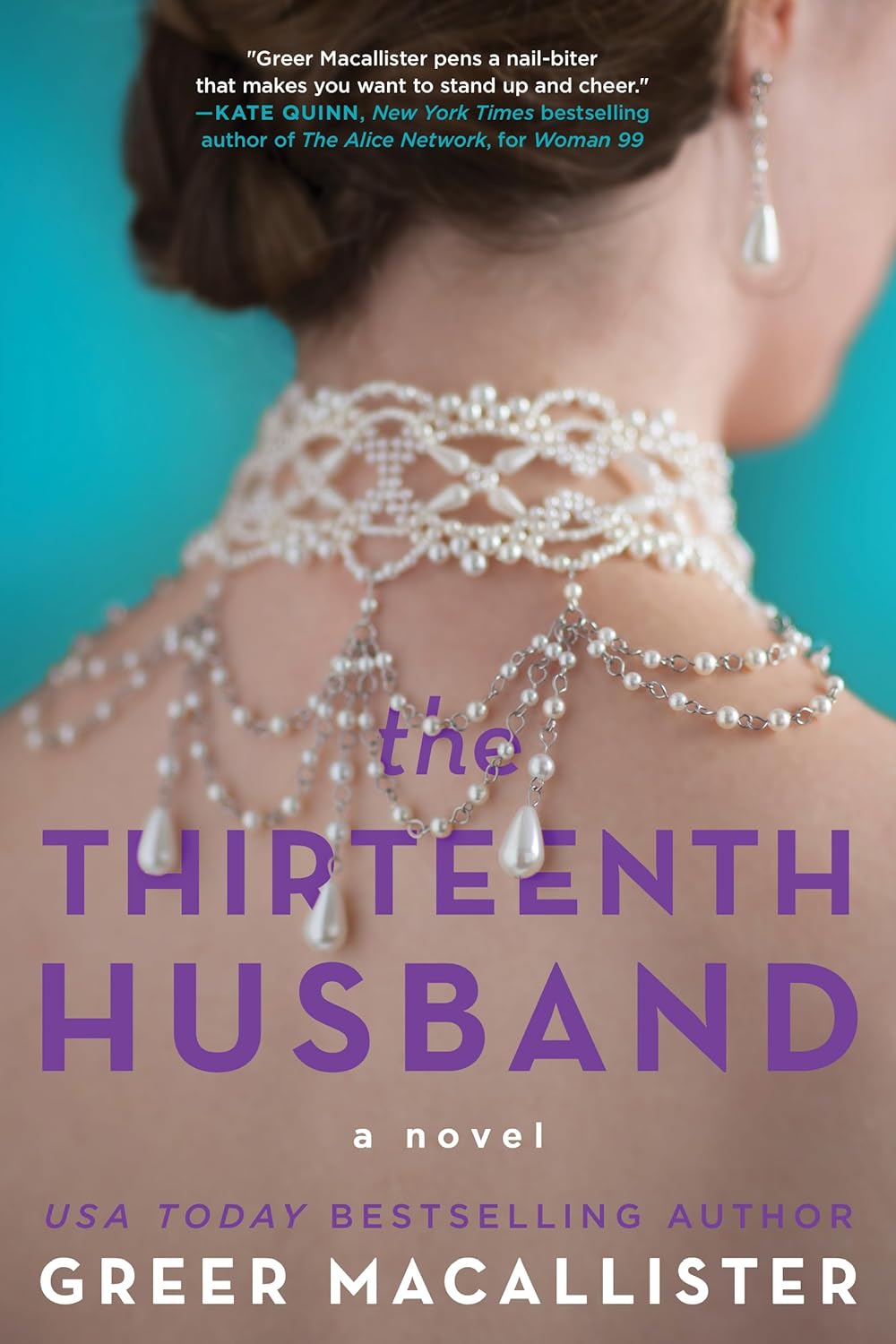
Book Review: The Thirteenth Husband by Greer Macallister

Title: The Thirteenth Husband
Author: Greer Macallister
Publisher: Sourcebooks Landmark
Publication date: August 6, 2024
Length: 336 pages
Genre: Historical fiction
Source: Review copy courtesy of the publisher via NetGalley
Rating:

Rating: 4 out of 5.

Based on a real woman from history, The Seven Husbands of Evelyn Hugo meets The Haunting of Hill House in this fictional tell-all narrated by the glamorous Aimee Crocker, revealing everything from her mischievous days in German finishing school to dinners with Hawaiian royalty to lavish Astor parties in Manhattan. But behind Aimee’s public notoriety, there’s private pain.

When Aimee is ten years old, as the night dips into the witching hour, the Woman in White appears to her. Minutes later, Aimee’s father is dead—and Aimee inherits a fortune. But the Woman in White never really leaves Aimee, appearing as a sinister specter before every tragedy in her life. Despite Aimee’s wealth, her cross-continental travels, and her increasingly shocking progression through husbands, Aimee is haunted by the unidentifiable Woman’s mysterious motivations.  

Tearing through millions of dollars, four continents, and a hearty collection of husbands, real-life heiress Aimee Crocker blazed an unbelievable trail of public scandal, private tragedy, and the kind of strong independent woman the 1880s had never seen. Her life was stranger than fiction and brighter than the stars, and she whirled through her days as if she was being chased by something larger than herself. Greer Macallister brilliantly takes us into her world and spins a tale that you won’t soon forget.

I’d never heard of Aimee Crocker before coming across this new historical novel by talented author Greer Macallister — but I suppose if I’d been around in the 1880s, there’d be no avoiding her. I get the feeling Aimee Crocker was Paris Hilton or Kardashian-level tabloid fodder back in her day. Her every move was analyzed, gossiped over, and fed through the scandal and rumor mill.

Amy (as she was originally named) was the daughter of an extremely wealthy man, and at age 10, upon her father’s death, inherited $10 million — in today’s economy, that would be equivalent to upwards of $275 million.

Amy was never exactly sedate, but in her earlier years, it seemed her mother at least attempted to keep her in line with society expectations. As portrayed in The Thirteenth Husband, Amy marries her first husband after he wins her in a poker game (well, he wins the right to propose to her) — and Amy, always up for adventure, decides to go along with it.

She’s quite the free spirit, as we see over and over again throughout The Thirteenth Husband. Not only does Amy divorce her husband at a time when being a  divorcée is considered shameful, she remarries, travels the world, takes and discards lovers, loses custody of her child in an ugly court case, gets tattooed, and embraces Buddhism, spiritualism, and even the occult.

Images of Amy (miscellaneous sources via Google)

The Thirteenth Husband is written as a first-person account of Amy’s life, through her ups and downs and many marriages. Her life is very much influenced by her interactions with a ghostly presence who visits her in her dreams and seems to offer warnings of loss and disaster. These dream visits propel Amy to seek out palm readers, mediums, and other spiritualists throughout her life, as she seeks the key to understanding her purpose and the hidden messages from the Woman in White.

It’s an interesting character study, as well as a look at the life of someone who refuses to play by society’s rules — and the good and bad outcomes that she faces as a result. Of course, it’s her millions that give her the freedom to behave as she does — someone without that huge fortune (and the power it conveys) could never have gotten away with these types of escapades.

She does make very questionable choices about men and marriage, and in fact (or at least, in the fictionalized version of her life), she only truly marries for love once out of all her relationships. (And no, she doesn’t actually have thirteen husbands… but there’s a reason for the book’s title).

I enjoyed The Thirteenth Husband, but it didn’t quick click for me as a flowing narrative. Amy herself is fascinating, of course, but the book feels very episodic. Each episode is interesting, especially when we learn that many of the most sensational events actually occurred in real life (such as a deadly train crash on her first honeymoon and the kidnapping of her daughter during her divorce proceedings). Still, each episode ends and the story moves on, and it can be difficult to see the connections between parts of her life or how they change her over time.

I’m glad to have read The Thirteenth Husband, and appreciated reading the author’s notes on sources and where she embellished versus sticking to the documented history. It’s also fun to learn that Amy herself was an author! During her lifetime, she published both a book of stories (which she refers to as “fantasies”) and a memoir (which has a defiant name that I love).

  • Moon-Madness and Other Fantasies is free to read/download via Project Gutenberg. (It’s quite short — I read it in one sitting, and was enchanted get a glimpse of Aimee’s imagination)
  • And I’d Do It Again: Aimee’s memoir, available through the usual new and used book sources. I definitely want to read it! Especially based on this preview of the opening pages:

I’m so glad to have been introduced to this remarkable woman through The Thirteenth Husband!